What Type Of Codicil Do You Need In The United Kingdom?
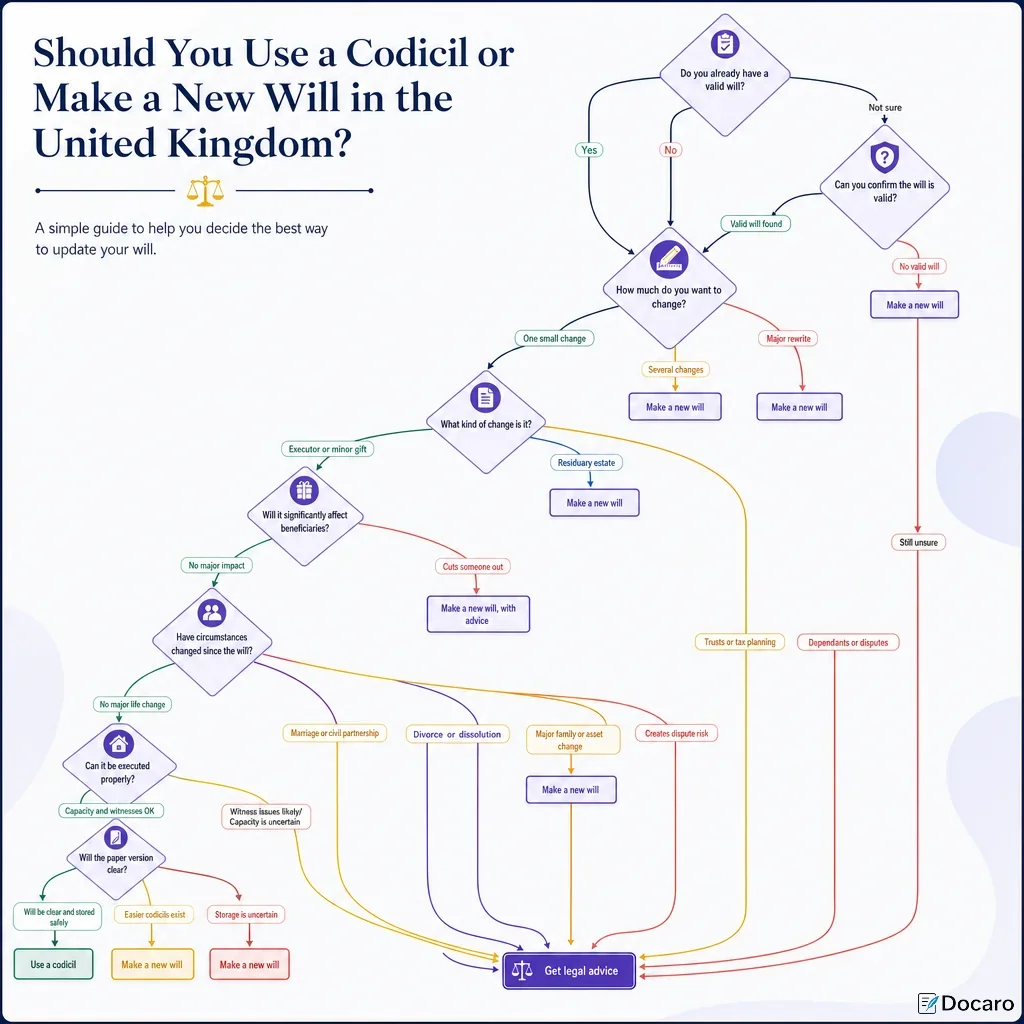
Do you already have a valid will?
Why Is Choosing The Right Codicil Important In The UK?
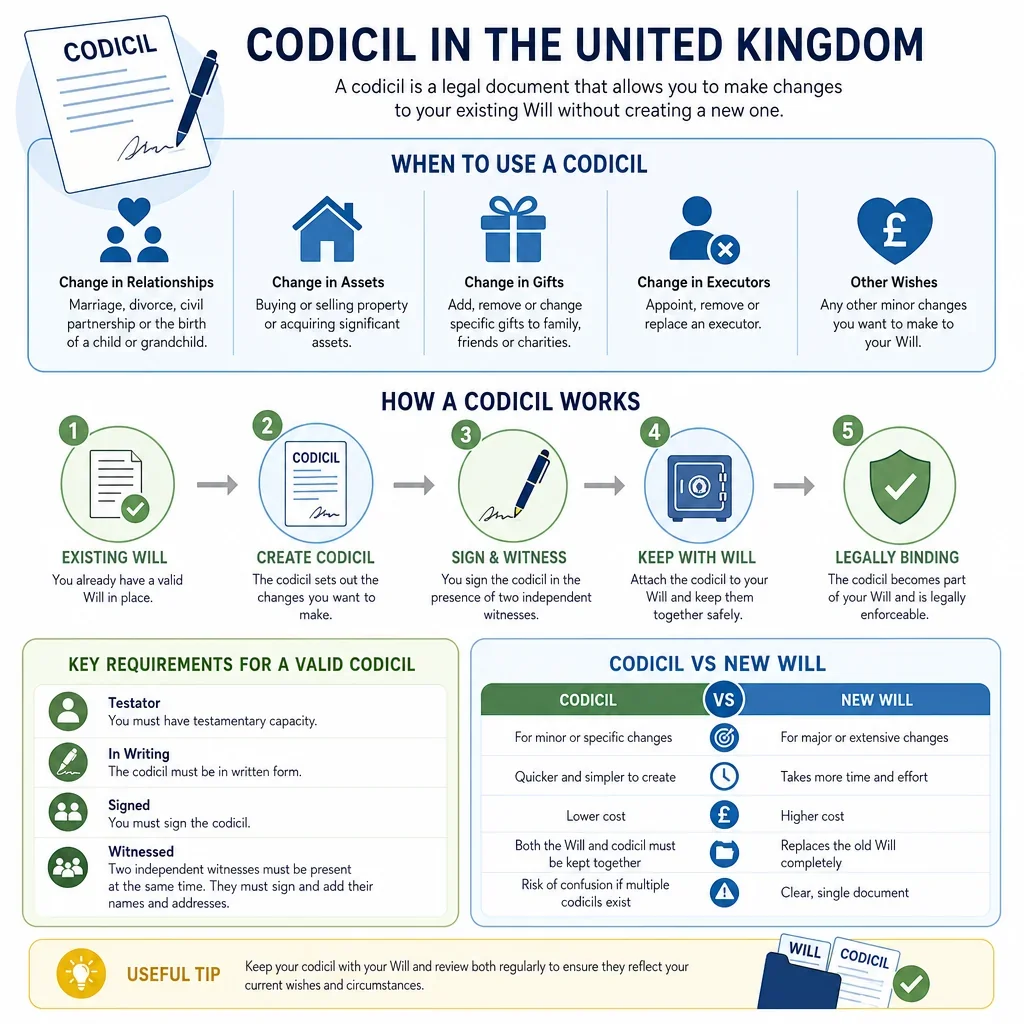
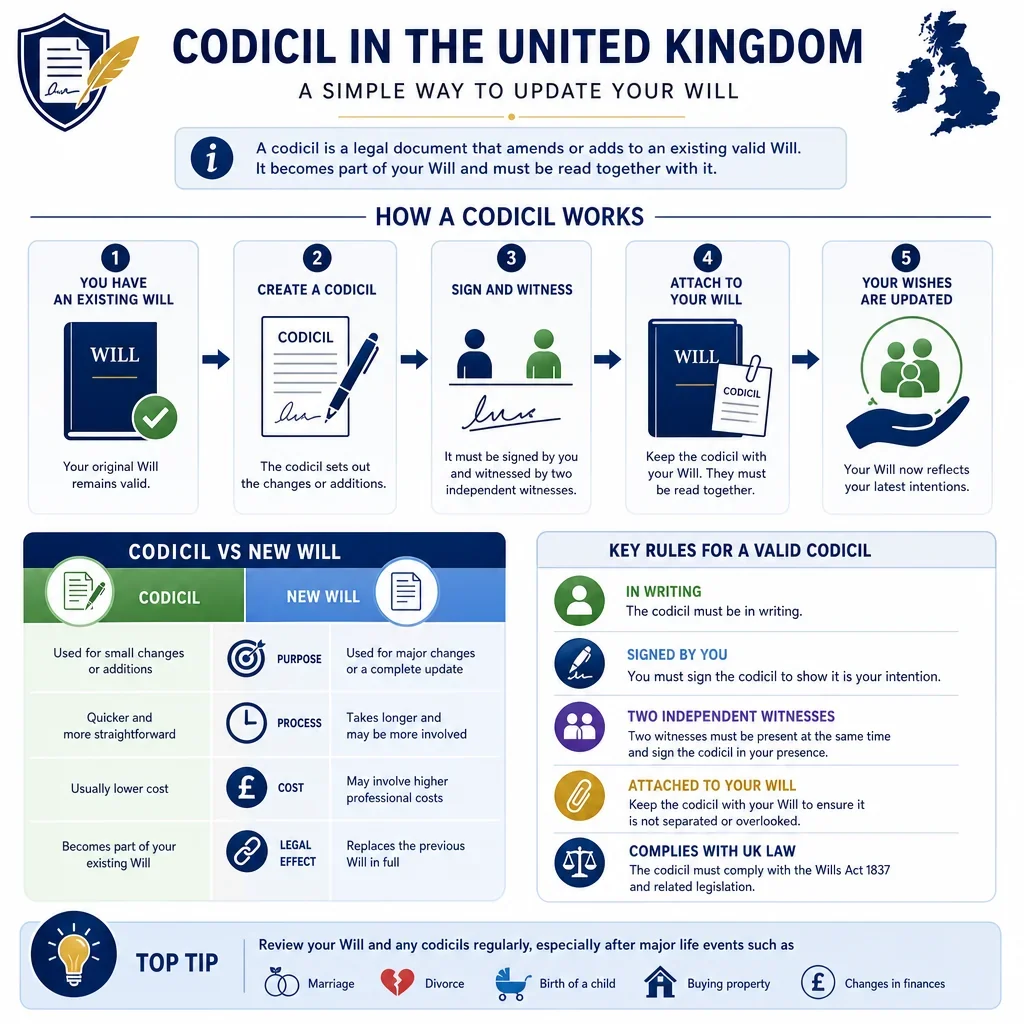
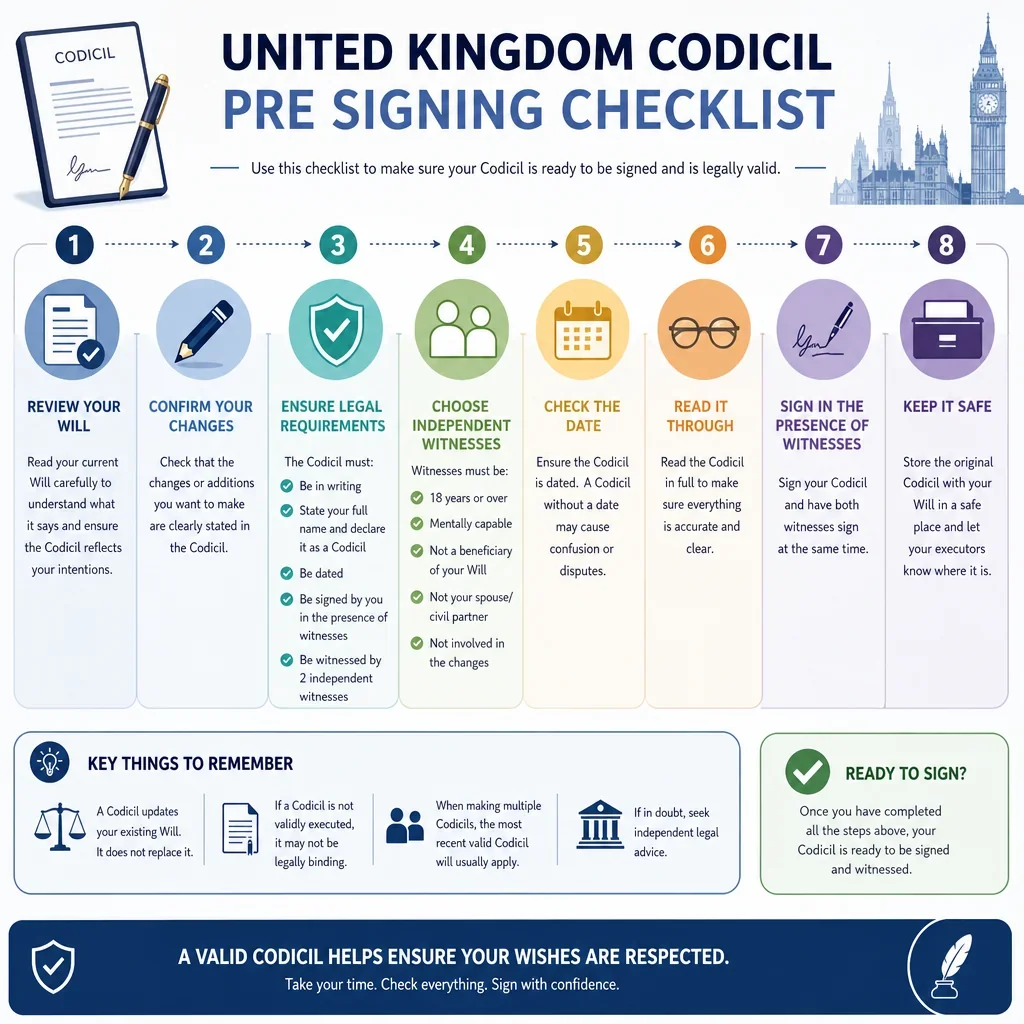
A codicil changes an existing will, so the wrong document can create uncertainty about your final wishes. In the United Kingdom, a codicil must be executed correctly and must work clearly with the original will. If it is unclear, invalid or inconsistent, executors may face delays, extra costs or a dispute during probate.
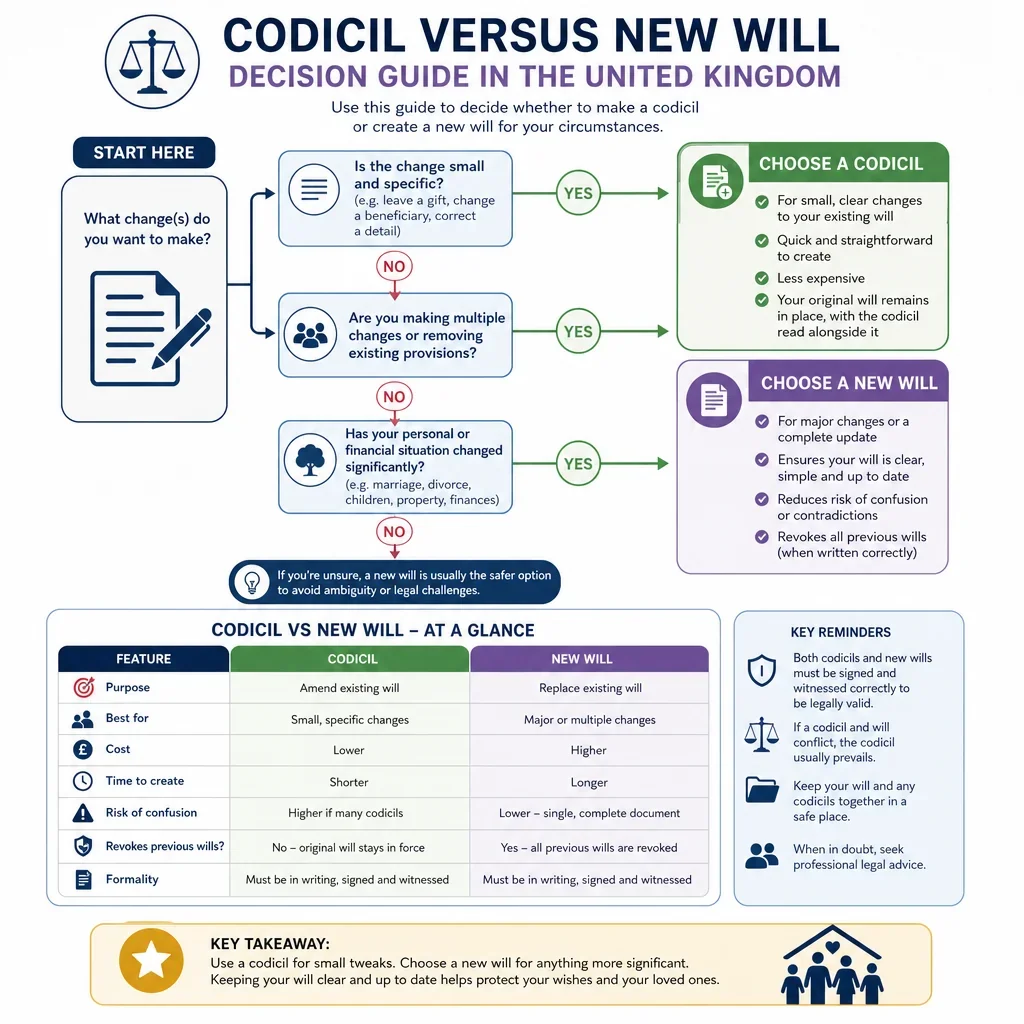
When Is A Codicil Better Than A New Will?
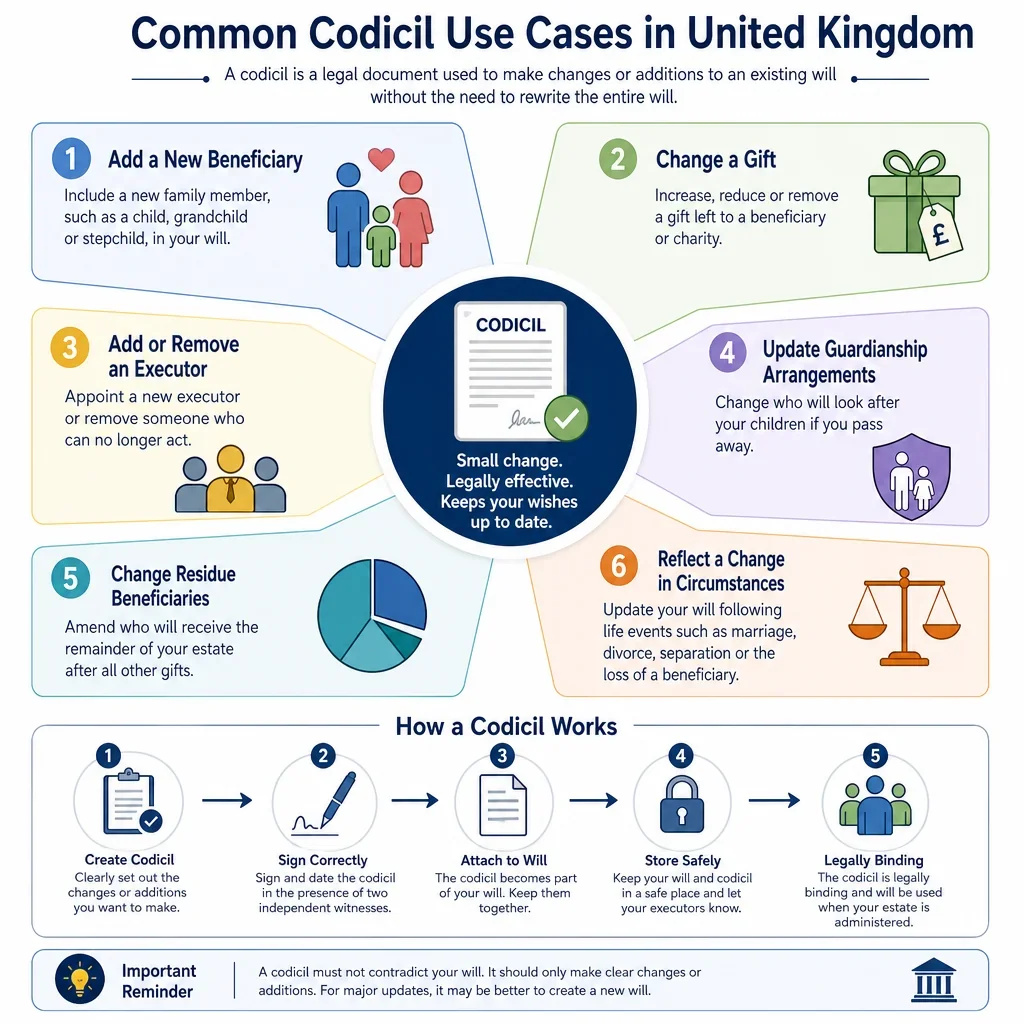
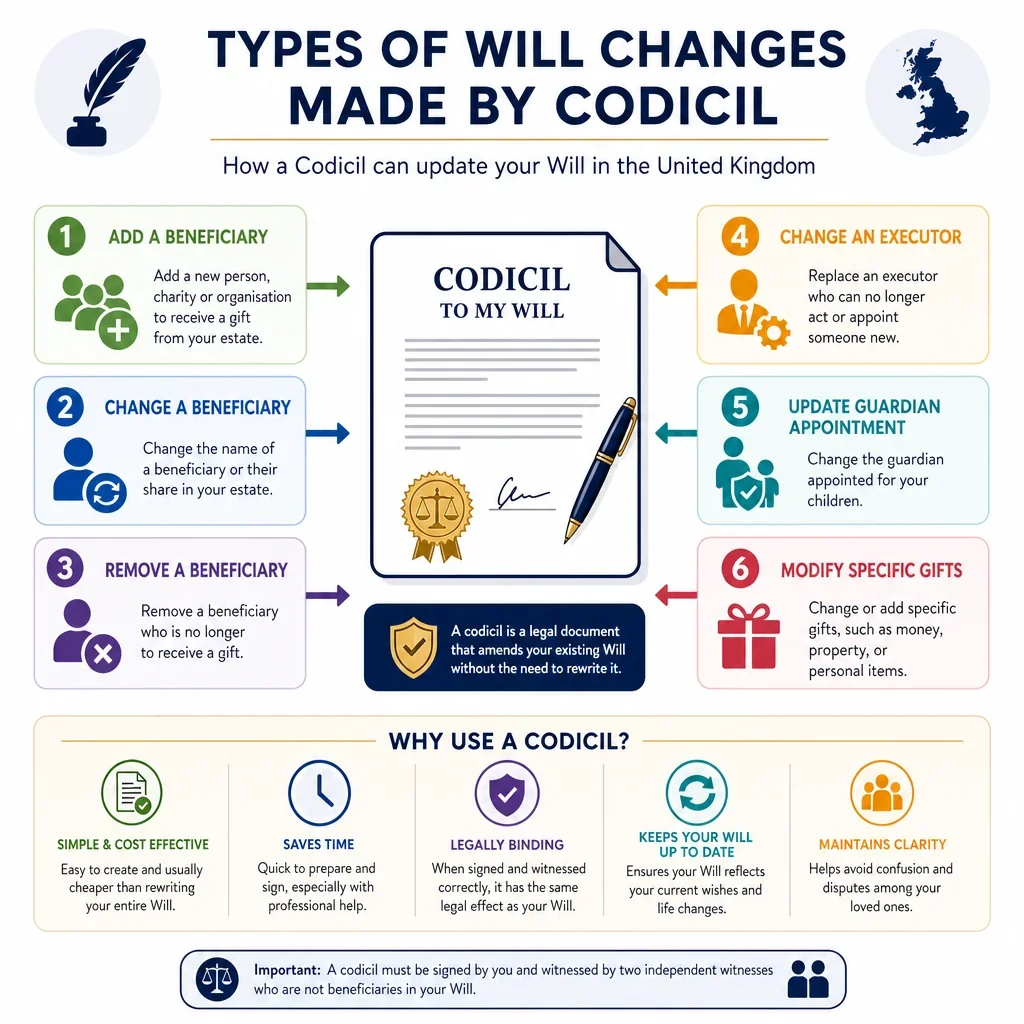
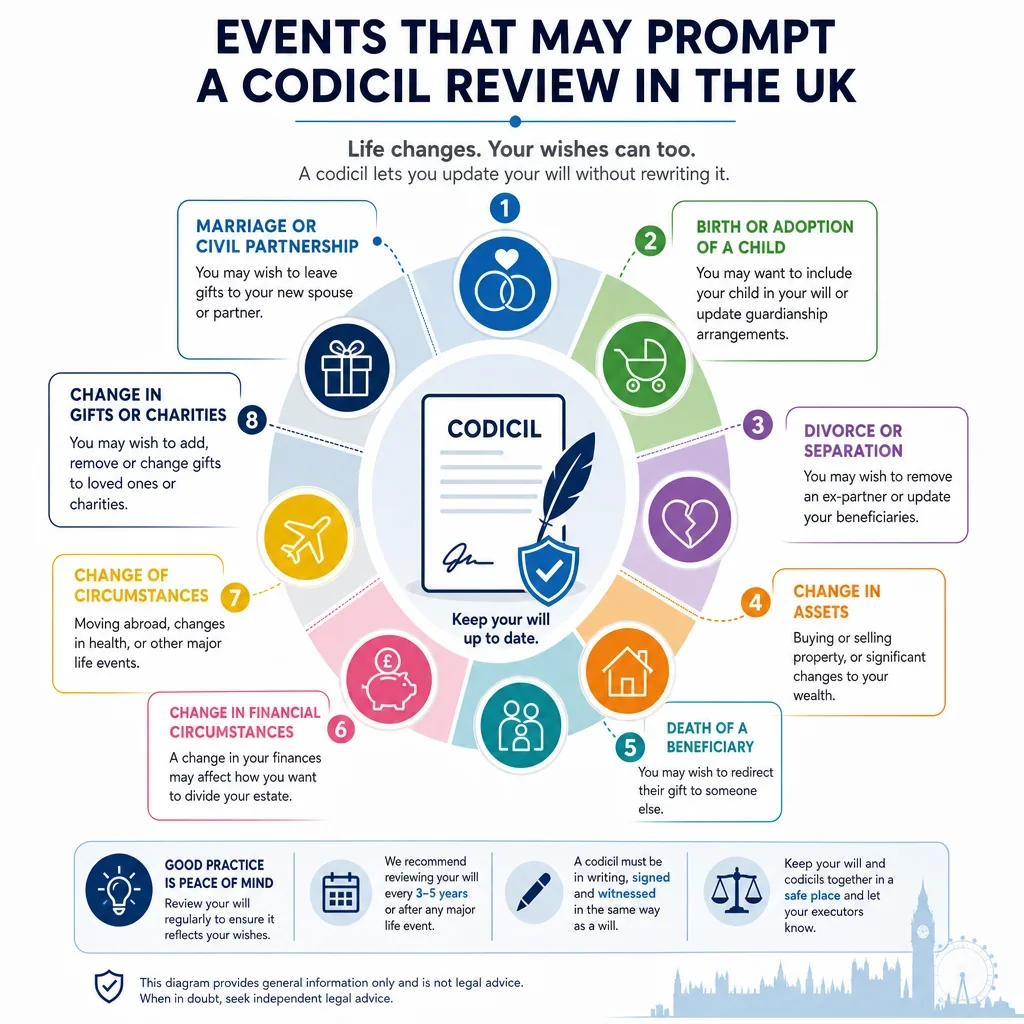
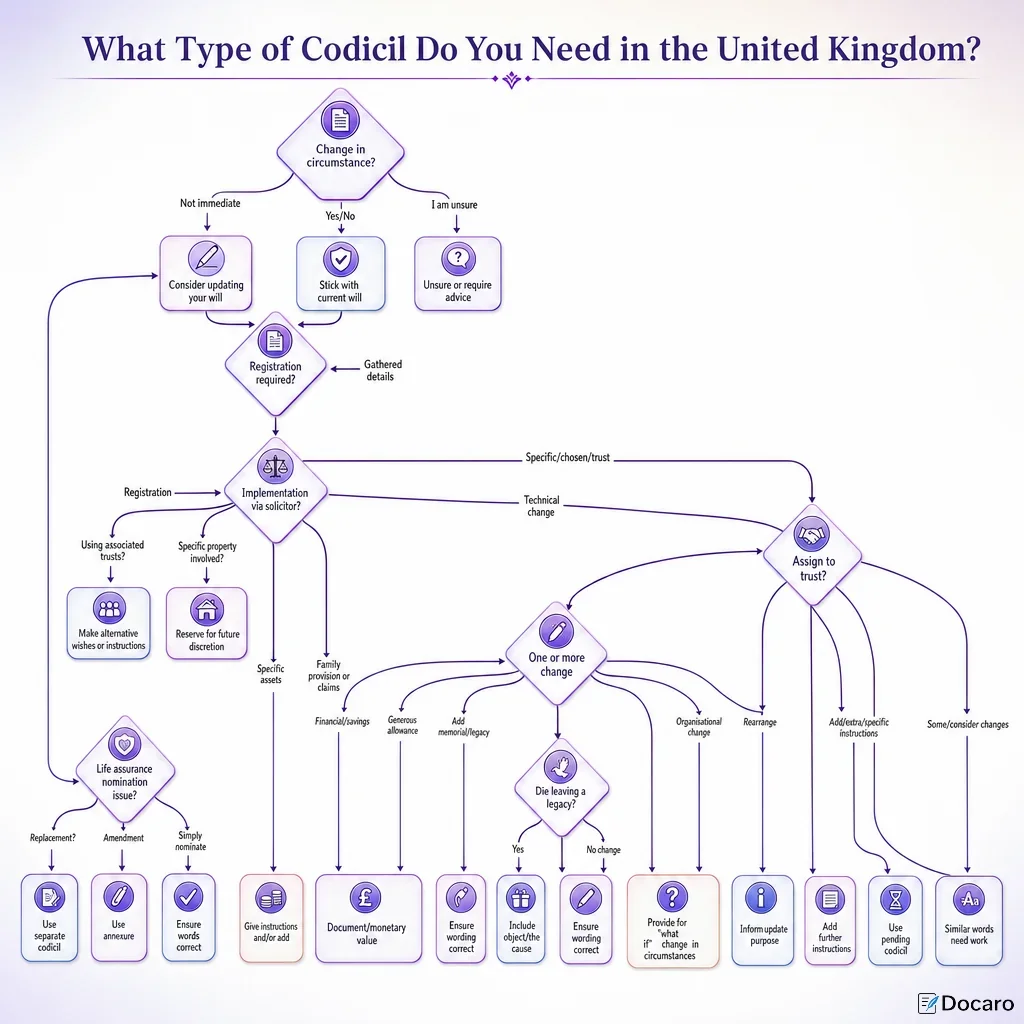
A codicil is usually best for a small, precise change, such as replacing an executor, adding a specific gift or correcting a name. A new will is usually safer where you are changing the main beneficiaries, rewriting several clauses or responding to marriage, divorce or a major family change.
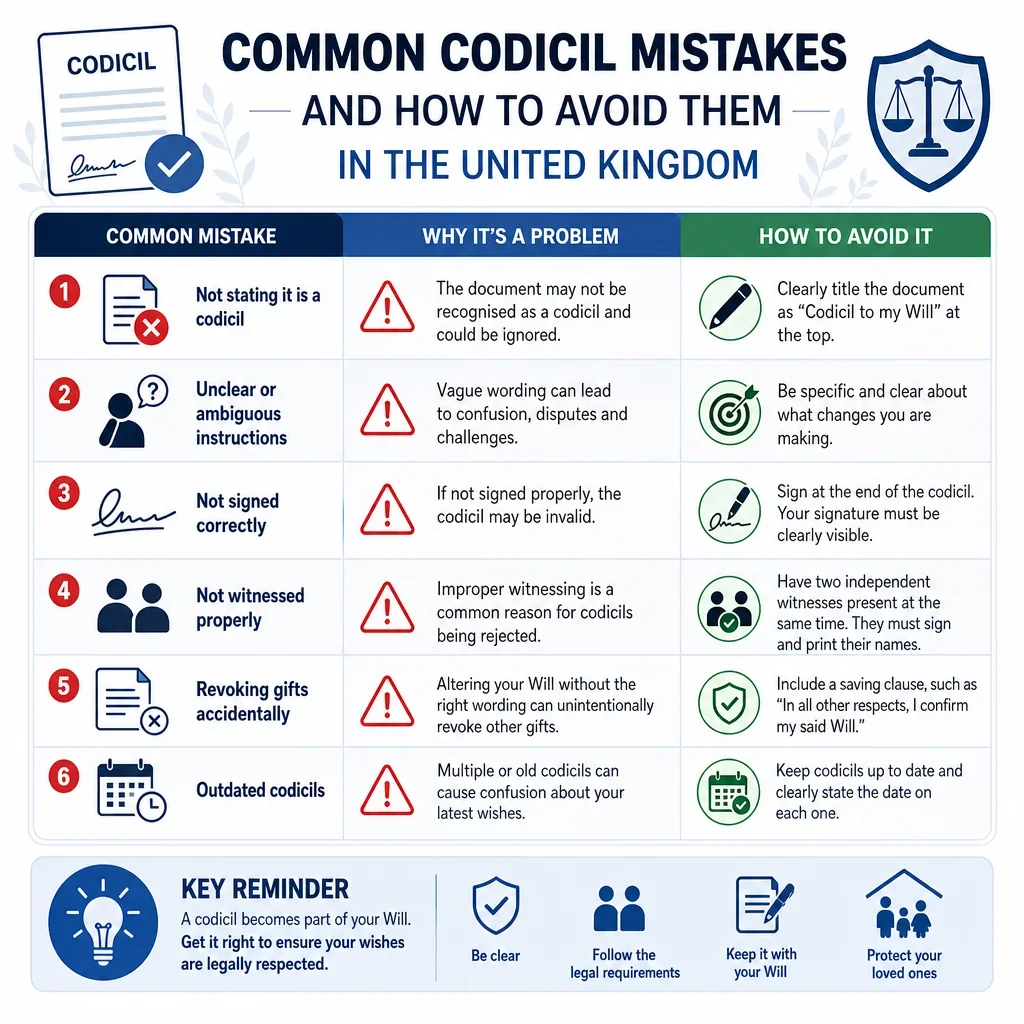
What Can Go Wrong If The Codicil Is Wrong?
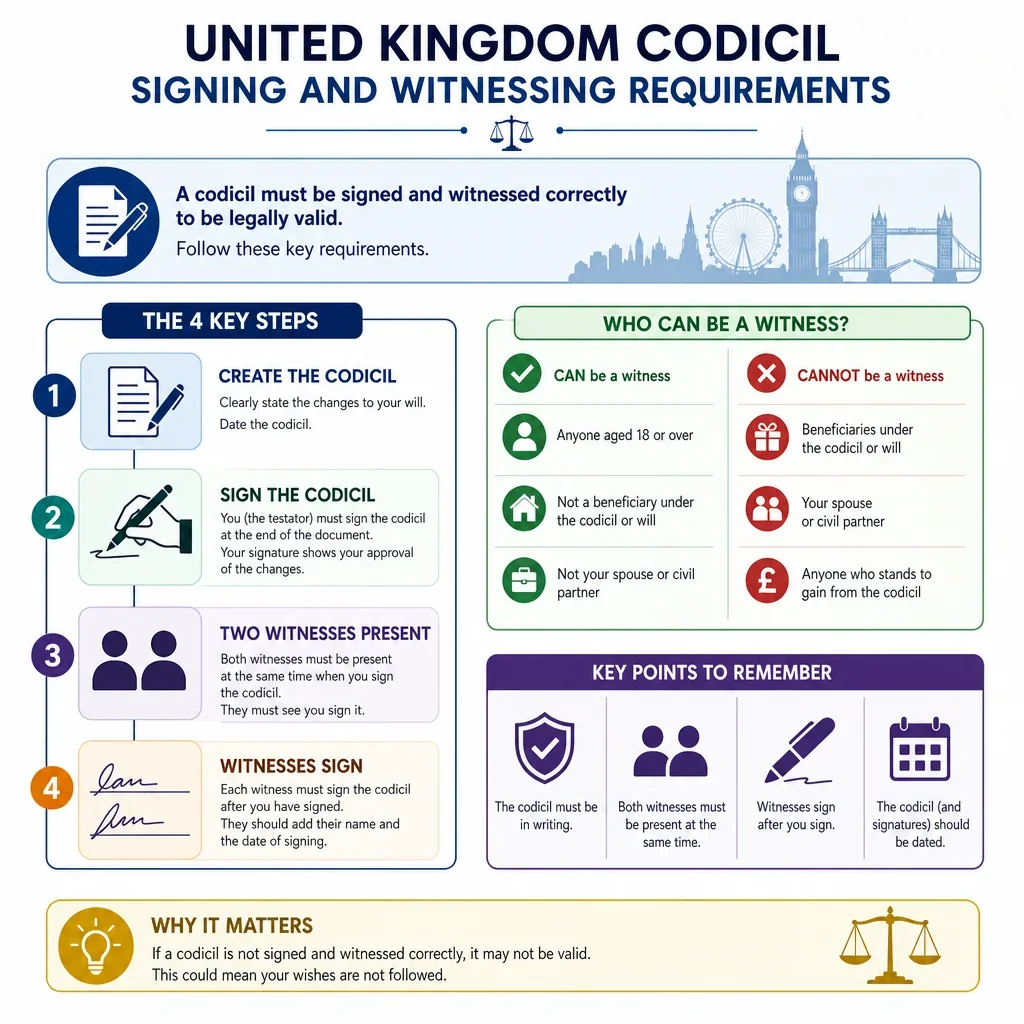
- Invalid execution: the codicil may fail if it is not signed and witnessed according to the relevant UK rules.
- Conflicting wording: unclear amendments can make it hard to know whether the will or codicil controls.
- Family disputes: changes affecting spouses, civil partners, children or dependants can increase the risk of a challenge.
- Tax consequences: changing gifts or residue may affect inheritance tax planning.
- Probate delays: executors may need extra evidence or legal advice before administering the estate.
Where Can You Check Official UK Guidance?
For general information about wills, see GOV.UK guidance on making a will. For Scotland, see mygov.scot guidance on making a will. These resources are helpful starting points, but complex estates or disputed situations should be reviewed by a qualified legal professional.
FAQs
You Might Also Be Interested In