Should You Use A Codicil Or Make A New Will In The United Kingdom?
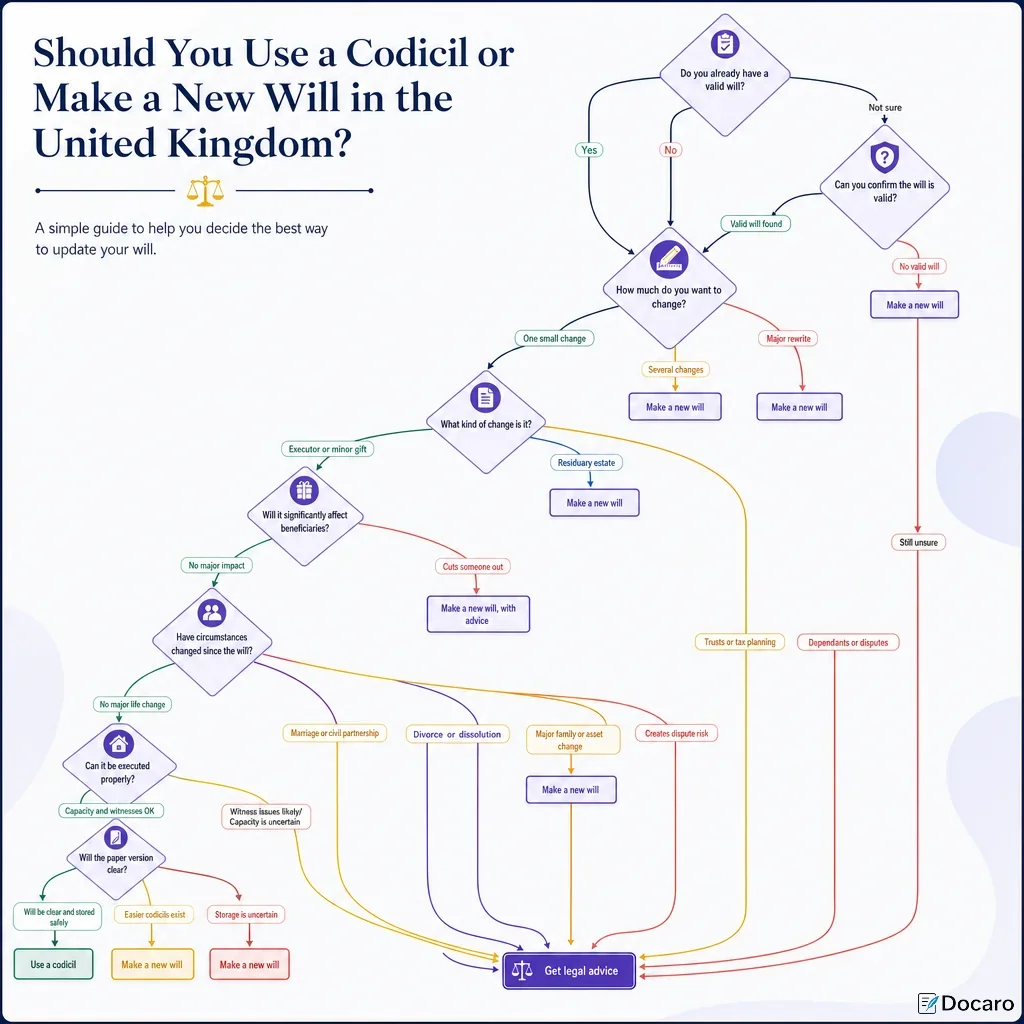
Do you already have a valid will?
Should You Use A Codicil Or Make A New Will In The UK?
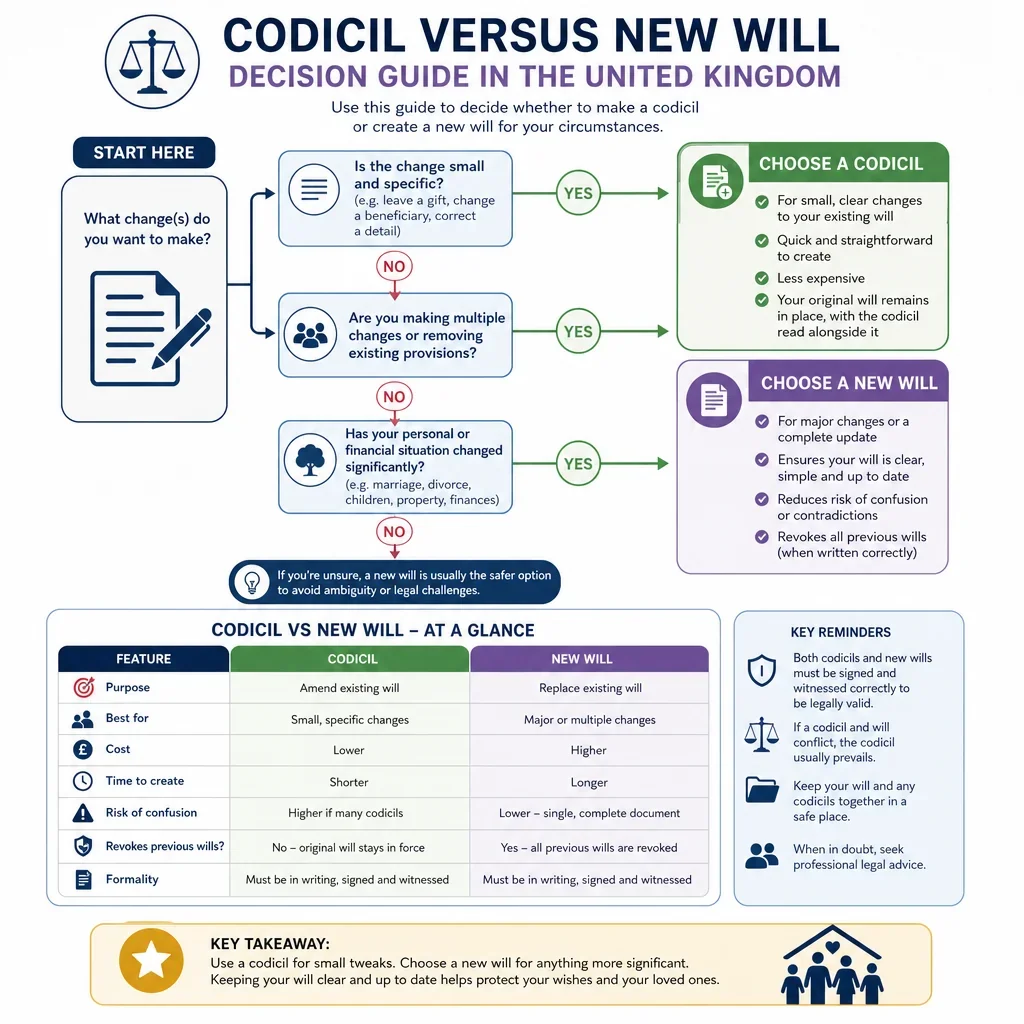
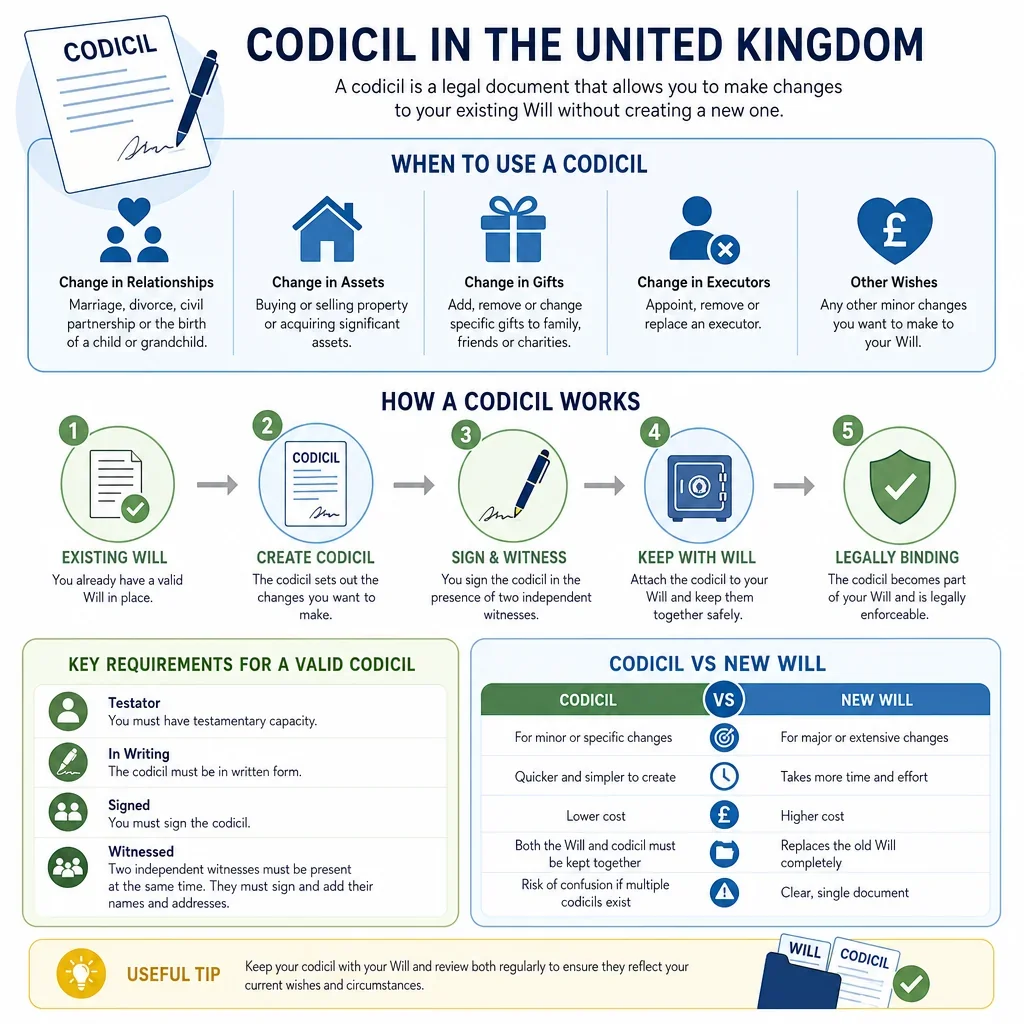
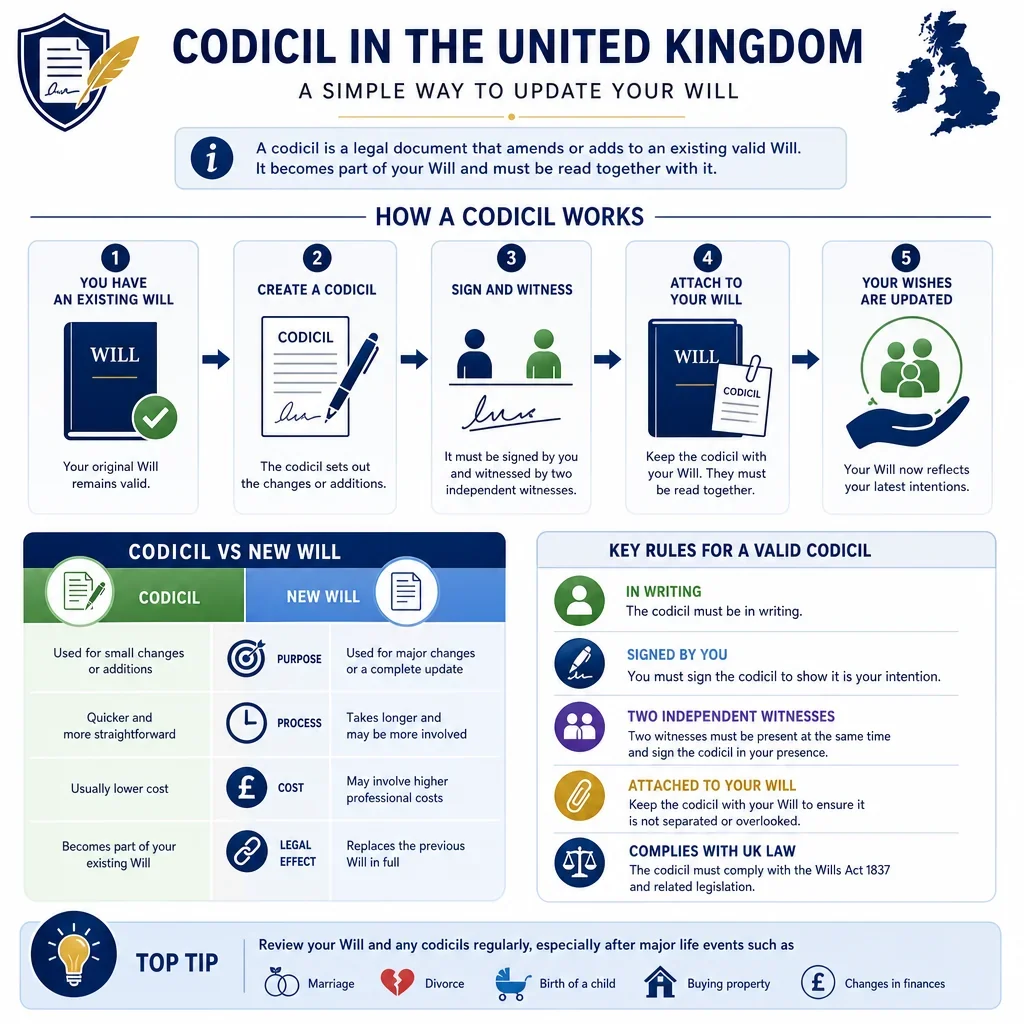
Choosing between a codicil and a new will matters because both documents can affect who inherits your estate, who acts as executor, and how easily your wishes can be followed after death. A codicil can be efficient for a small amendment, but a new will is often clearer where the changes are significant.
Why Can The Wrong Choice Cause Problems?
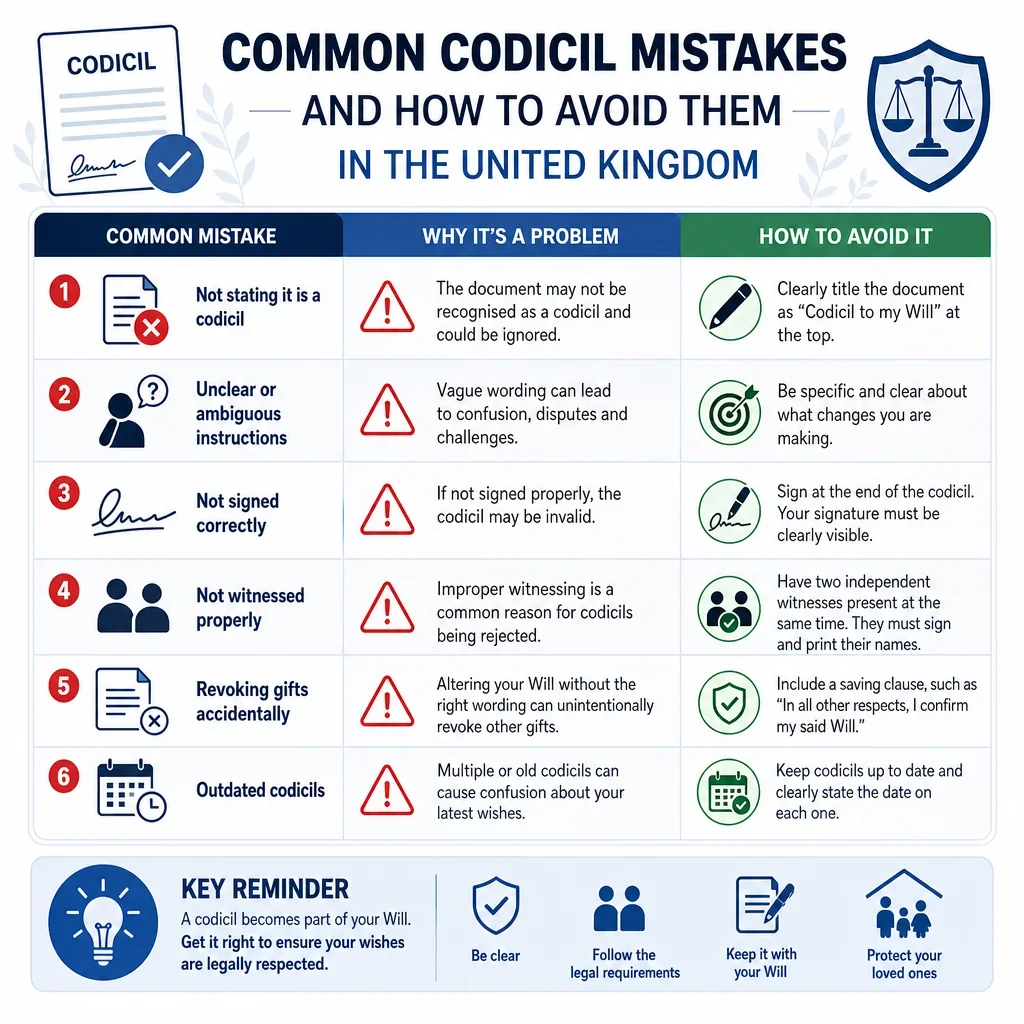
If a codicil is unclear, lost, badly witnessed, or inconsistent with the original will, executors may face delays or disputes. Beneficiaries may disagree about what you intended, and the estate may need extra legal work before probate can progress.
When Is A Codicil Usually Appropriate?
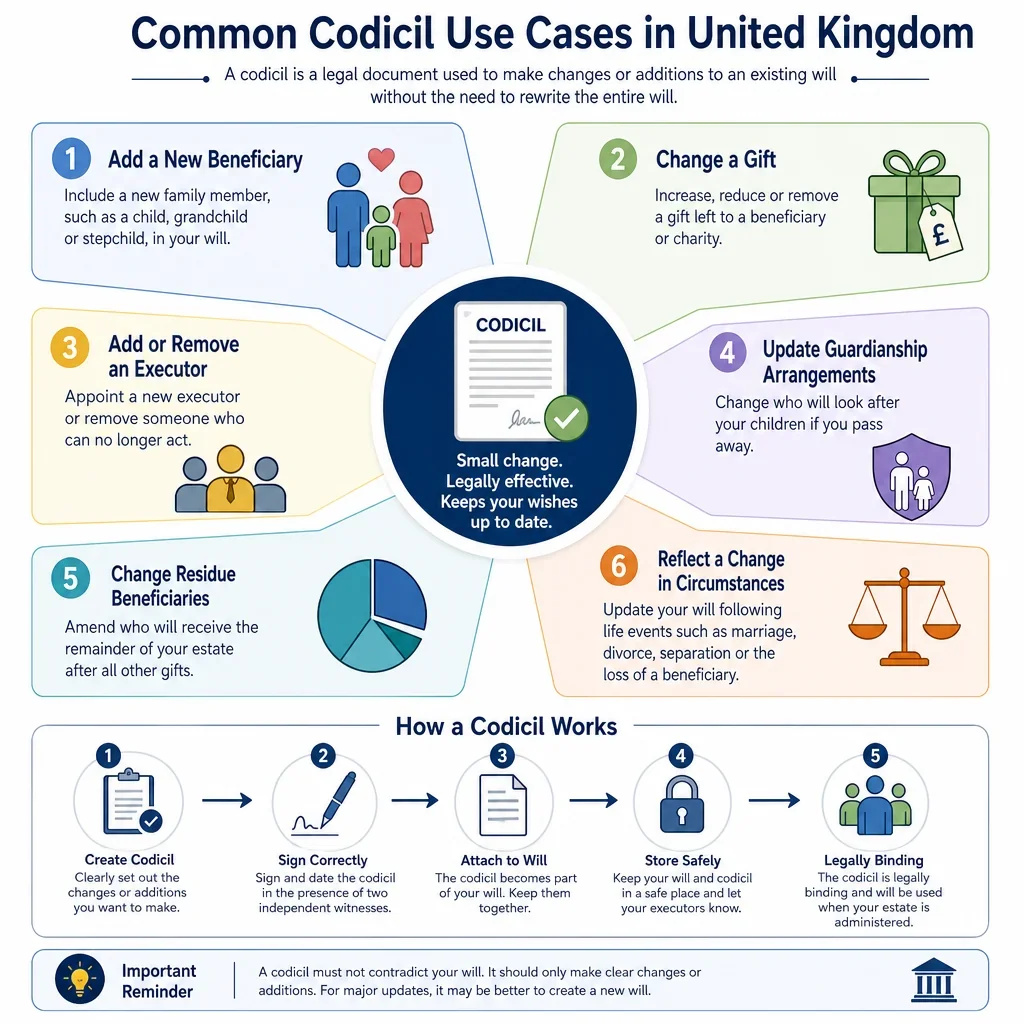
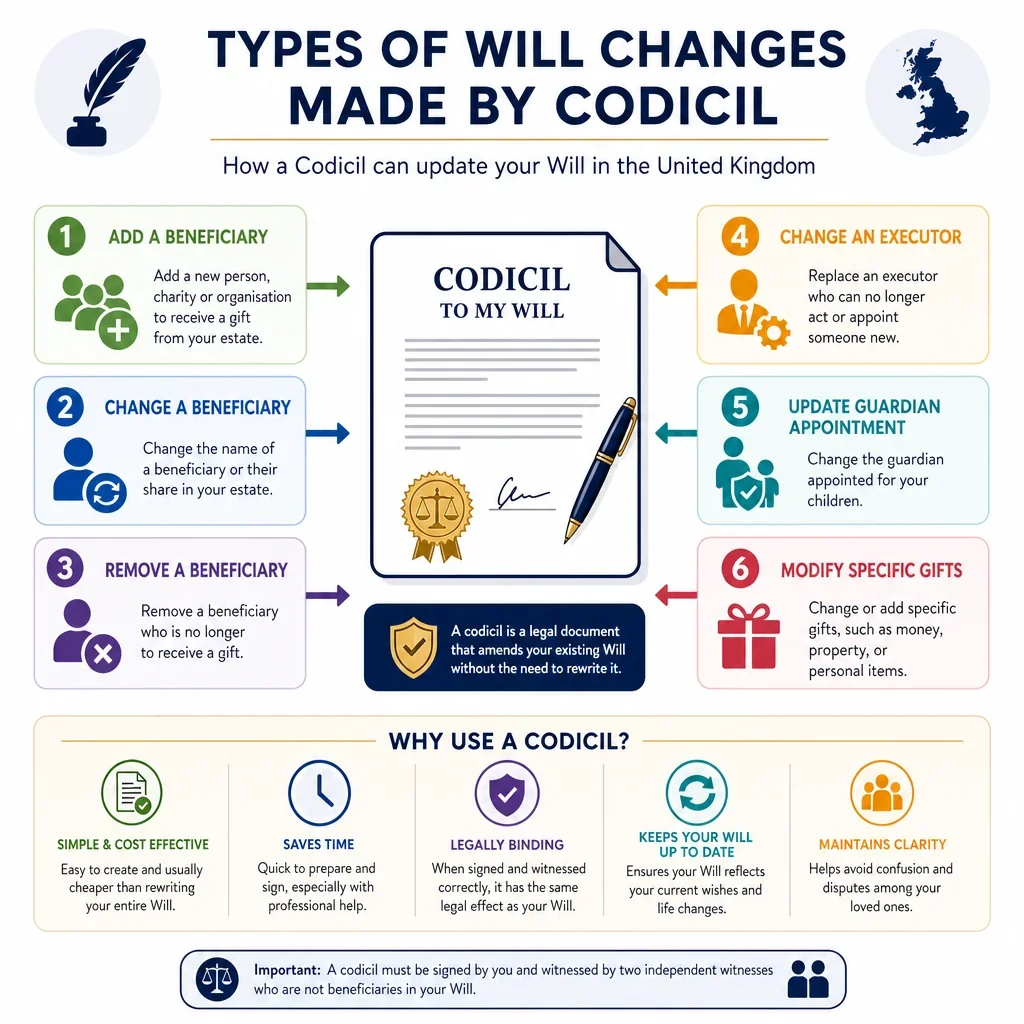
A codicil may be suitable for a simple change, such as replacing an executor or adding a modest gift, where the rest of the will remains accurate. It must still be signed and witnessed correctly under the rules that apply in your part of the United Kingdom.
When Is A New Will Usually Better?
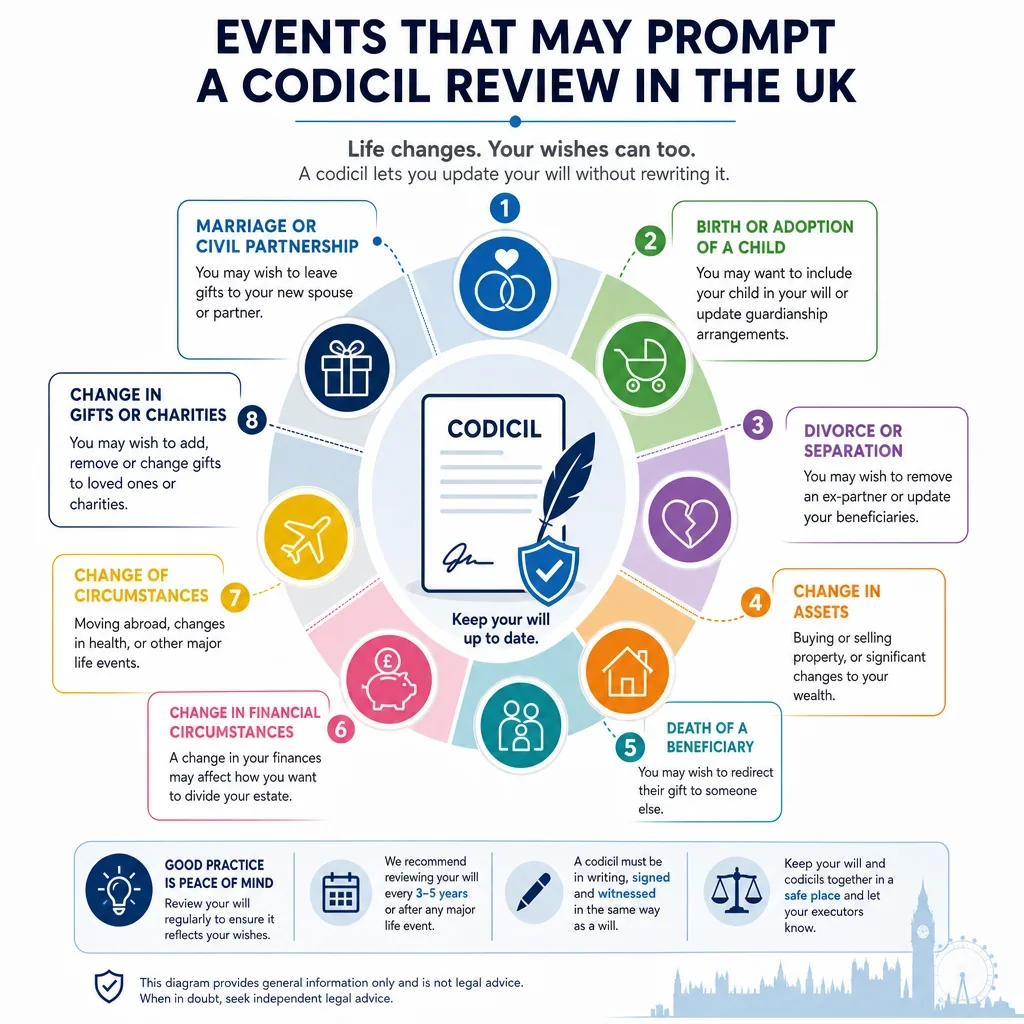
A new will is usually better if you want several changes, need to alter the residuary estate, have married, divorced, had children, acquired major assets, or already have earlier codicils. One complete document can reduce the risk of confusion.
What Should UK Users Check Before Deciding?
- Validity: the existing will must be valid before a codicil can amend it.
- Capacity: the person making the change must understand the effect of the document.
- Witnessing: signing rules must be followed, and beneficiaries should not act as witnesses.
- Clarity: executors should be able to read the will and codicil together without doubt.
- Jurisdiction: rules can differ between England and Wales, Scotland, and Northern Ireland.
For general guidance, see GOV.UK guidance on making a will. For complex estates, tax planning, capacity concerns, or potential disputes, professional legal advice is strongly recommended.
FAQs
You Might Also Be Interested In