AI Generated British Asset Sale Agreement
PDF & Word - 2026 Updated
Docaro Pricing
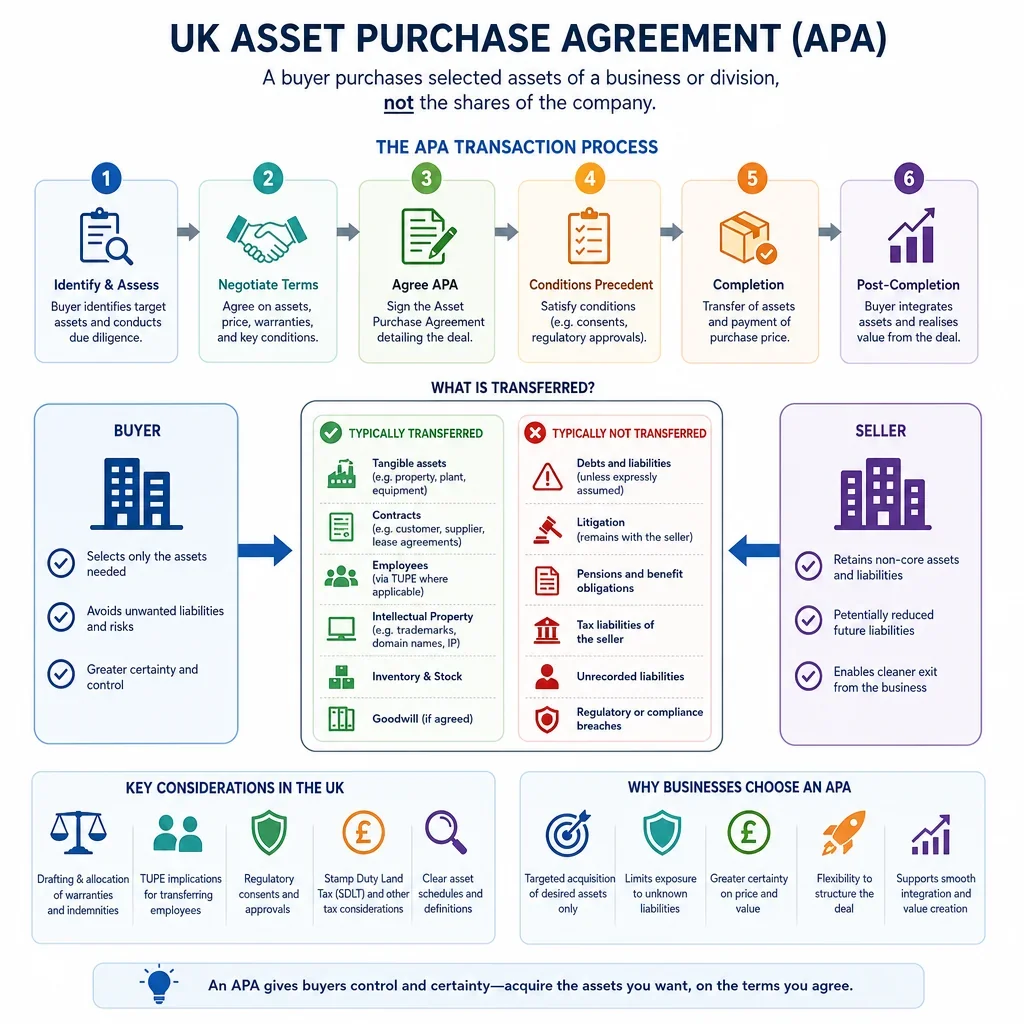
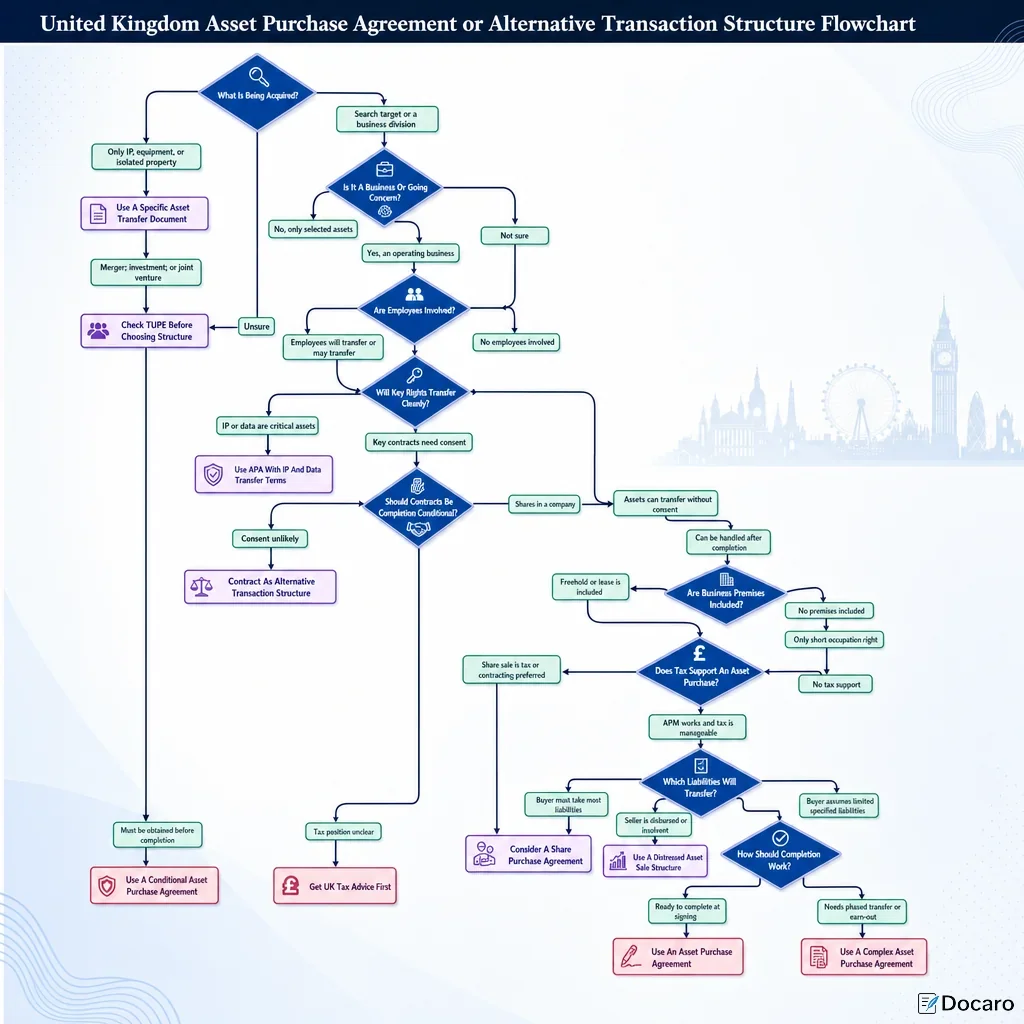
When do you need an Asset Purchase Agreement in the United Kingdom?
British Legal Rules for an Asset Purchase Agreement
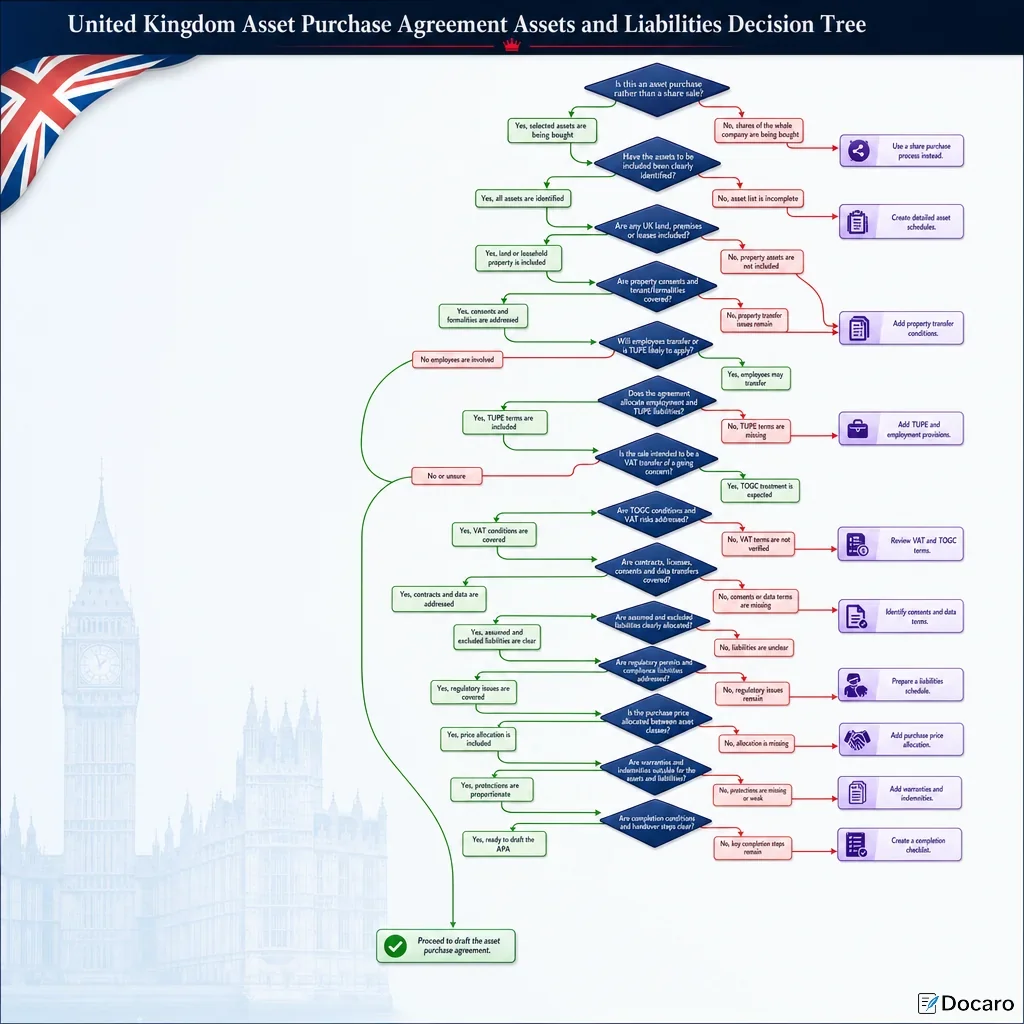
Using the wrong structure for an asset purchase agreement can result in unintended tax liabilities or invalid transfers of ownership.
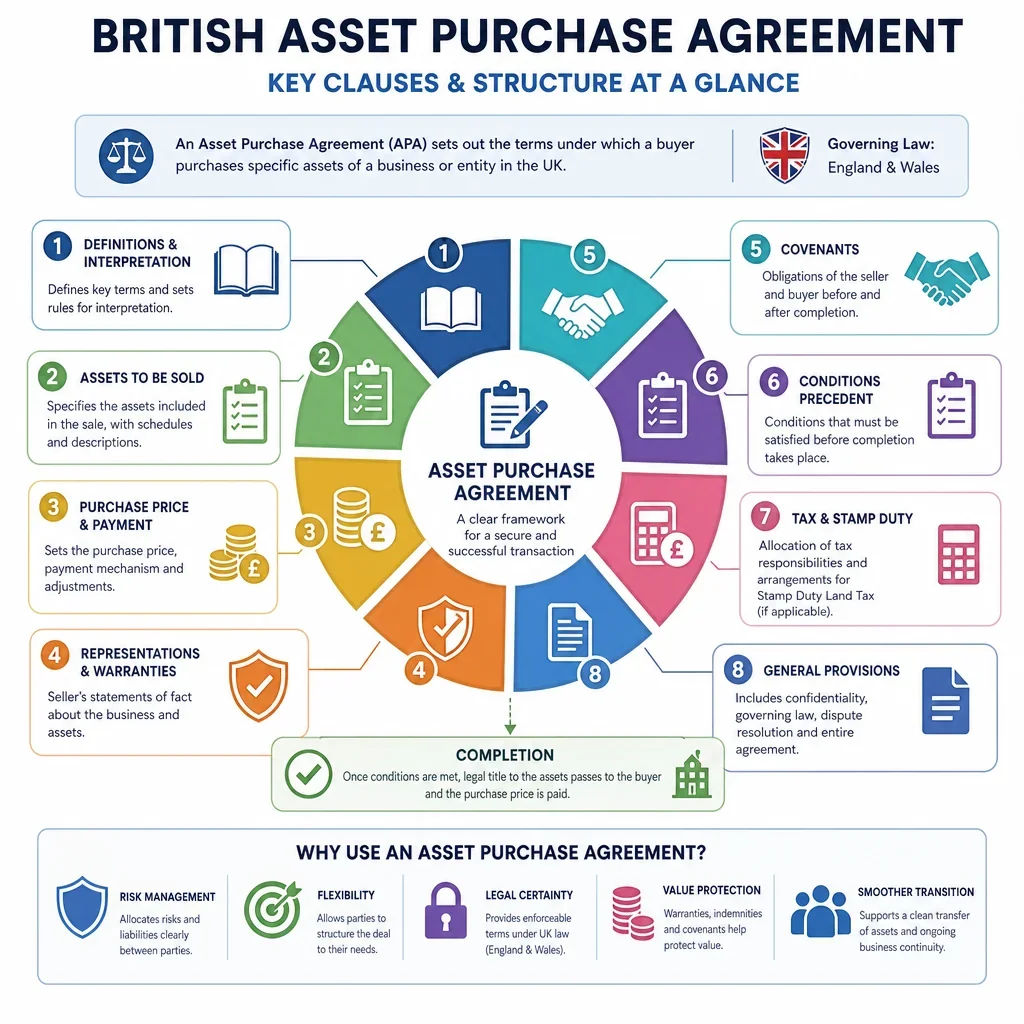
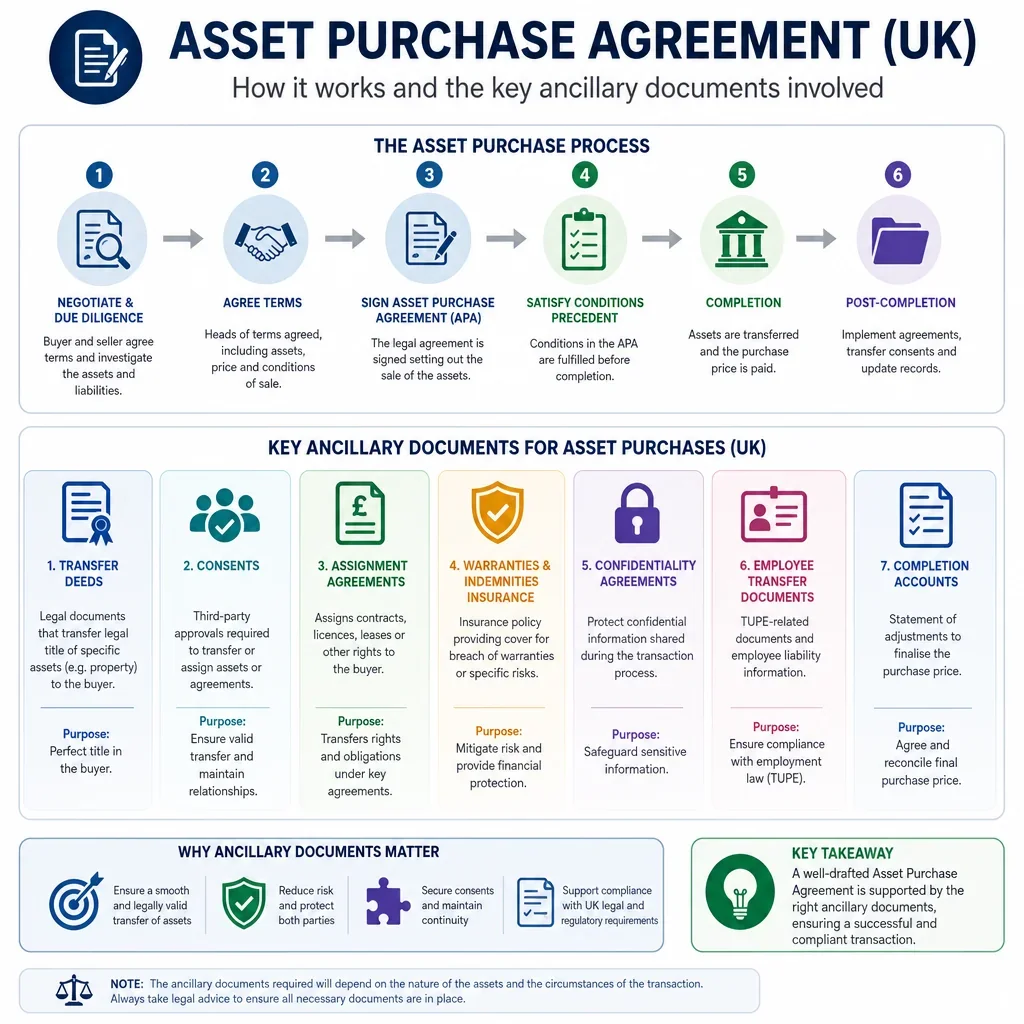
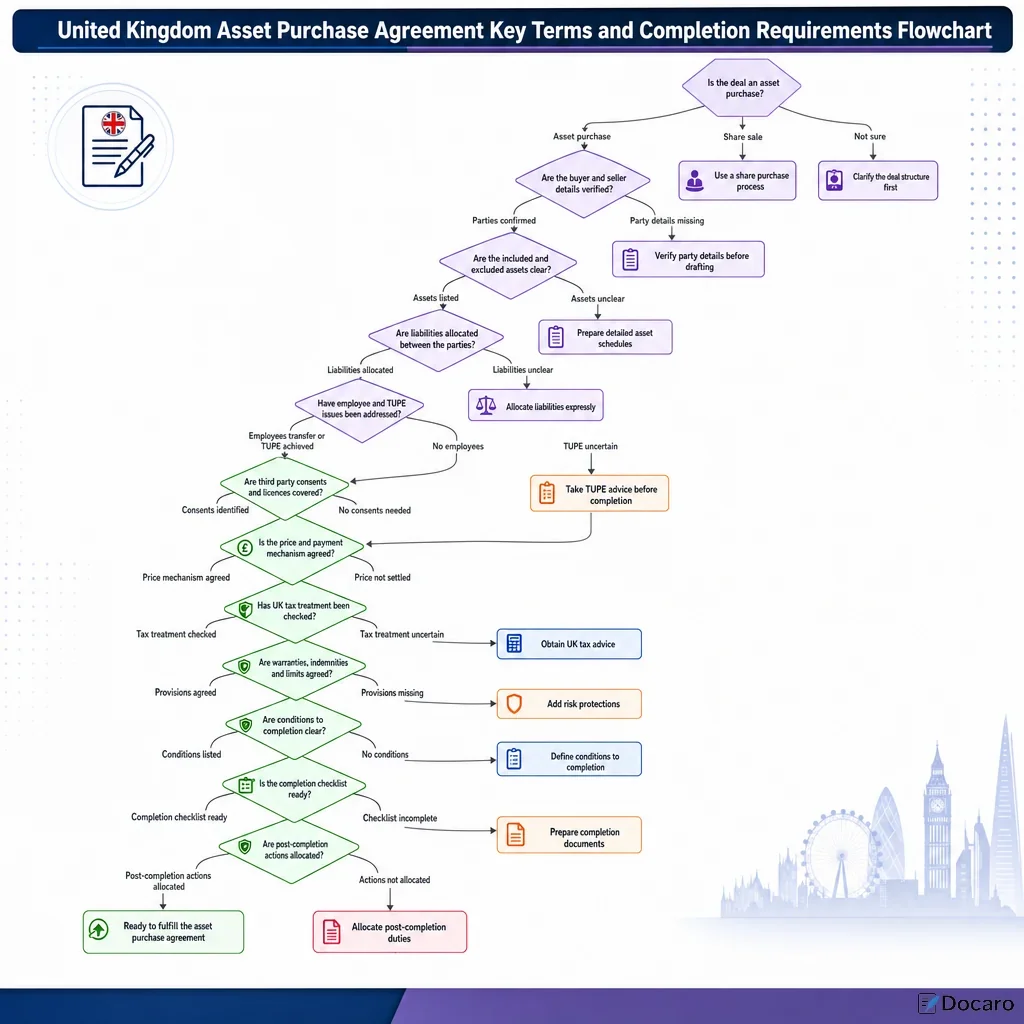
What a Proper Asset Purchase Agreement Should Include
- Parties InvolvedClearly identifies the buyer and seller, including their full legal names and addresses.
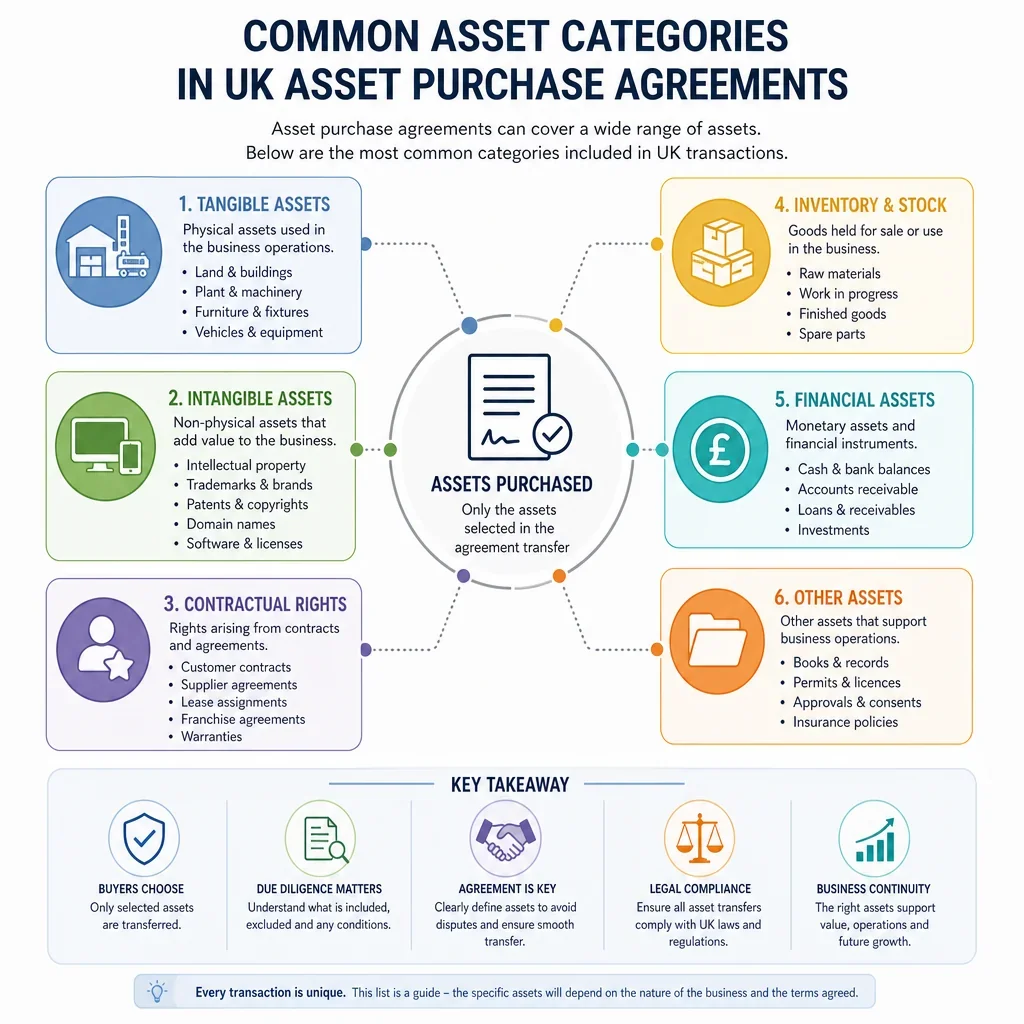
- Assets Being SoldLists all items, property, or rights being transferred, such as equipment, inventory, or intellectual property.
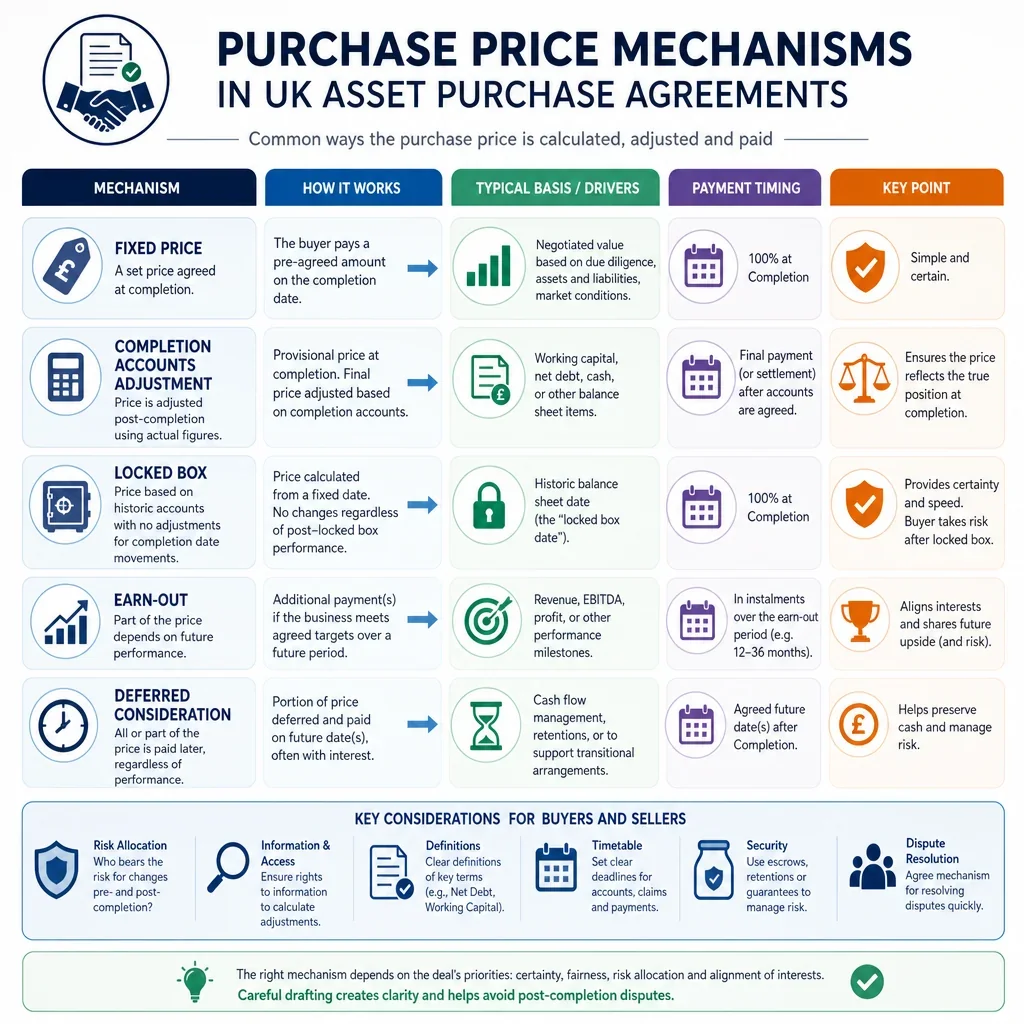
- Purchase Price and Payment TermsSpecifies the total amount to be paid and how and when payments will be made.
- Conditions for CompletionOutlines any requirements that must be met before the deal can be finalized, like approvals or checks.
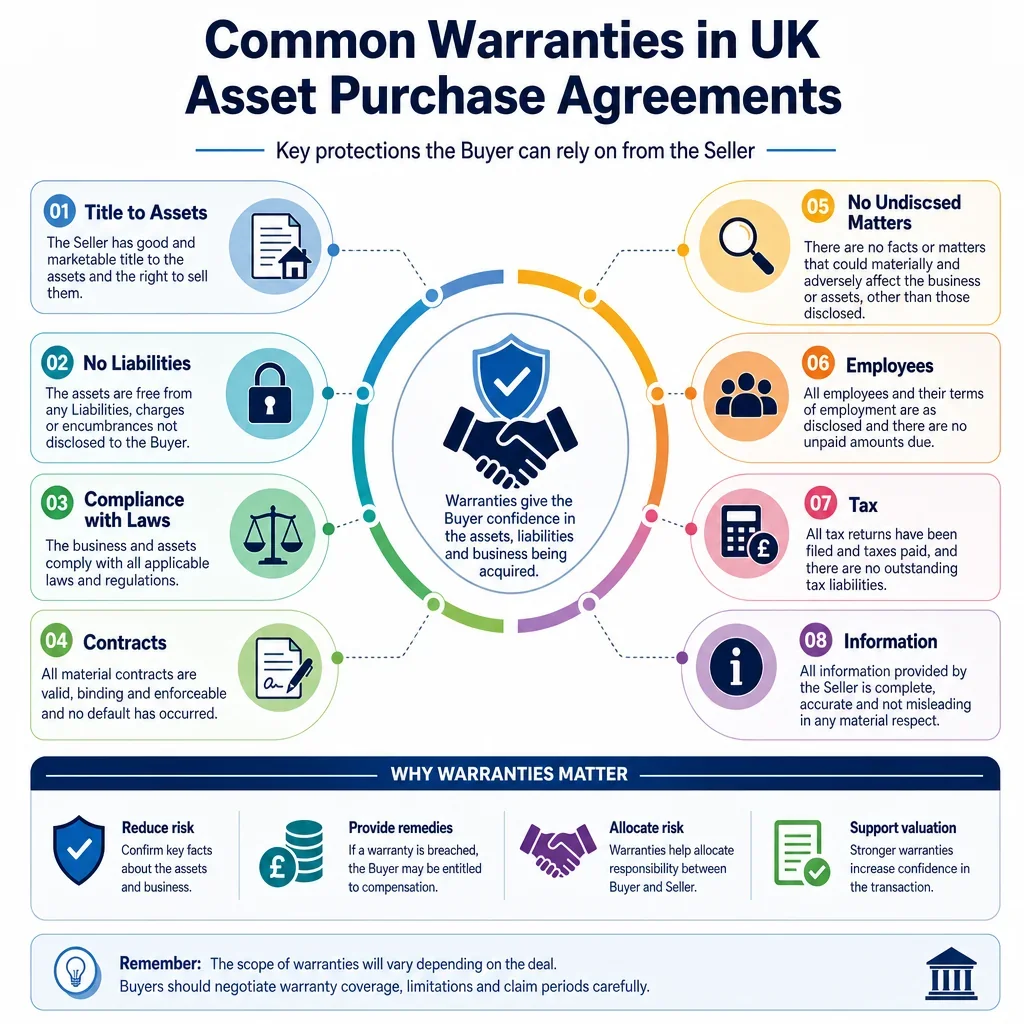
- Warranties and RepresentationsProvides assurances from the seller about the condition and ownership of the assets.
- IndemnitiesProtects the buyer by having the seller agree to cover losses from issues like hidden debts or claims.
- ConfidentialityRequires both parties to keep sensitive information private during and after the deal.
- Dispute ResolutionDescribes how any disagreements will be handled, such as through mediation or court in the UK.
- Signatures and DatesIncludes spaces for both parties to sign and date the agreement to make it legally binding.
Generate Your Document in 4 Easy Steps
Why Use Docaro?
 United Kingdom
Free Example Asset Purchase Agreement Template
Below is a free template example of a Asset Purchase Agreement for use in the United Kingdom generated by our AI model.
The clauses in your actual Asset Purchase Agreement will vary from this example as they will be entirely bespoke to your requirements as set out in the questionnaire you complete.
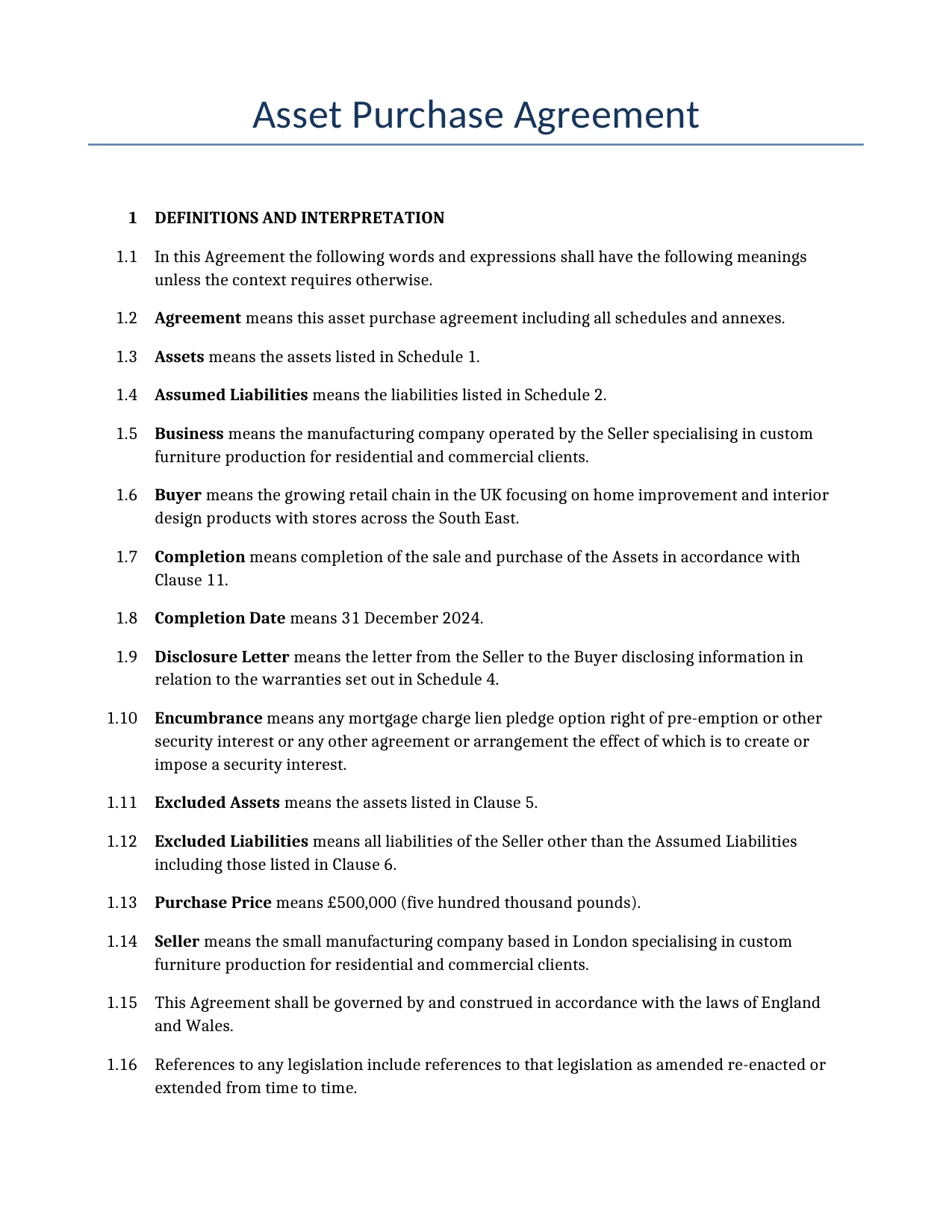
Asset Purchase Agreement
1DEFINITIONS AND INTERPRETATION
In this Agreement the following words and expressions shall have the following meanings unless the context requires otherwise.
Agreement means this asset purchase agreement including all schedules and annexes.
Assets means the assets listed in Schedule 1.
Assumed Liabilities means the liabilities listed in Schedule 2.
Business means the manufacturing company operated by the Seller specialising in custom furniture production for residential and commercial clients.
Buyer means the growing retail chain in the UK focusing on home improvement and interior design products with stores across the South East.
Completion means completion of the sale and purchase of the Assets in accordance with Clause 11.
Completion Date means 31 December 2024.
Disclosure Letter means the letter from the Seller to the Buyer disclosing information in relation to the warranties set out in Schedule 4.
Encumbrance means any mortgage charge lien pledge option right of pre-emption or other security interest or any other agreement or arrangement the effect of which is to create or impose a security interest.
Excluded Assets means the assets listed in Clause 5.
Excluded Liabilities means all liabilities of the Seller other than the Assumed Liabilities including those listed in Clause 6.
Purchase Price means £500,000 (five hundred thousand pounds).
Seller means the small manufacturing company based in London specialising in custom furniture production for residential and commercial clients.
This Agreement shall be governed by and construed in accordance with the laws of England and Wales.
References to any legislation include references to that legislation as amended re-enacted or extended from time to time.
2INTERPRETATION
In this Agreement (including the Recitals and the Schedules) unless the context otherwise requires:
words in the singular shall include the plural and vice versa;
references to Clauses Schedules and Annexes are to the clauses schedules and annexes of or to this Agreement;
references to a person include a body corporate a partnership an unincorporated association and a person in his capacity as trustee of a trust;
references to a statute or statutory provision include that statute or provision as modified amended or re-enacted from time to time and any subordinate legislation made under it;
headings shall not affect the interpretation of this Agreement;
references to time are to London time;
the words 'including' and 'in particular' and any similar words or expressions shall not limit the generality of any preceding words;
references to currency or to '£' or 'pounds' are to pounds sterling.
3BACKGROUND
WHEREAS the Seller is a small manufacturing company based in London specialising in custom furniture production for residential and commercial clients;
WHEREAS the Buyer is a growing retail chain in the UK focusing on home improvement and interior design products with stores across the South East;
WHEREAS the Seller has agreed to sell and the Buyer has agreed to purchase the Assets on the terms of this Agreement;
4SALE AND PURCHASE
Subject to the terms and conditions of this Agreement the Seller shall sell and the Buyer shall purchase the Assets with effect from Completion free from all Encumbrances together with all rights and benefits attaching to the Assets.
The Assets are those listed in detail in Schedule 1.
Legal and beneficial title to the Assets shall pass to the Buyer on Completion.
The Excluded Assets shall be excluded from the sale in accordance with Clause 5.
5EXCLUDED ASSETS
The following assets shall be excluded from the sale and shall remain the property of the Seller:
all cash at bank and in hand of the Seller;
the book debts and other debts due to the Seller;
the freehold or leasehold property (if any) owned or occupied by the Seller;
the contracts listed in Schedule 3 as excluded;
any other assets not listed in Schedule 1.
Legal and beneficial title to the Excluded Assets shall remain with the Seller.
6ASSUMED LIABILITIES
The Buyer shall assume only the Assumed Liabilities with effect from the Completion Date.
The Assumed Liabilities are those listed in Schedule 2 only.
7EXCLUDED LIABILITIES
The Seller shall retain and the Buyer shall not assume the Excluded Liabilities.
The Excluded Liabilities are all liabilities of the Seller other than the Assumed Liabilities including (without limitation):
all pre-Completion tax liabilities;
all litigation and claims arising from events before Completion;
all environmental claims and liabilities arising before Completion;
all debts and liabilities not listed in Schedule 2.
8PURCHASE PRICE
The Purchase Price for the Assets shall be £500,000 (five hundred thousand pounds) (subject to adjustment in accordance with Clause 9).
The Purchase Price is exclusive of VAT (if applicable).
9APPORTIONMENTS AND ADJUSTMENTS
The parties shall prepare a net asset statement (Completion Accounts) within 30 days of Completion to determine any adjustments to the Purchase Price.
All income and expenditure of the Business shall be apportioned on a time basis pro-rata by days up to and including the Completion Date.
If the net assets shown in the Completion Accounts are greater or less than an agreed target the Purchase Price shall be adjusted accordingly.
Any dispute in relation to the Completion Accounts shall be referred to an independent expert for determination whose decision shall be final.
10PAYMENT TERMS
The Buyer shall pay the full amount of the Purchase Price (as adjusted in accordance with Clause 9) by electronic transfer on Completion to the Seller's nominated bank account details of which shall be provided to the Buyer not less than 5 Business Days before Completion.
The Purchase Price is exclusive of VAT and if the sale does not qualify as a transfer of a going concern (TOGC) under Article 5 of the Value Added Tax (Special Provisions) Order 1995 the Buyer shall pay to the Seller any VAT chargeable on the sale in addition to the Purchase Price.
The parties shall use reasonable endeavours to ensure that the sale qualifies as a TOGC and the Buyer undertakes to treat the purchase as a TOGC where applicable. If TOGC treatment does not apply the Buyer shall pay the VAT to the Seller within 5 Business Days of receipt of a valid VAT invoice.
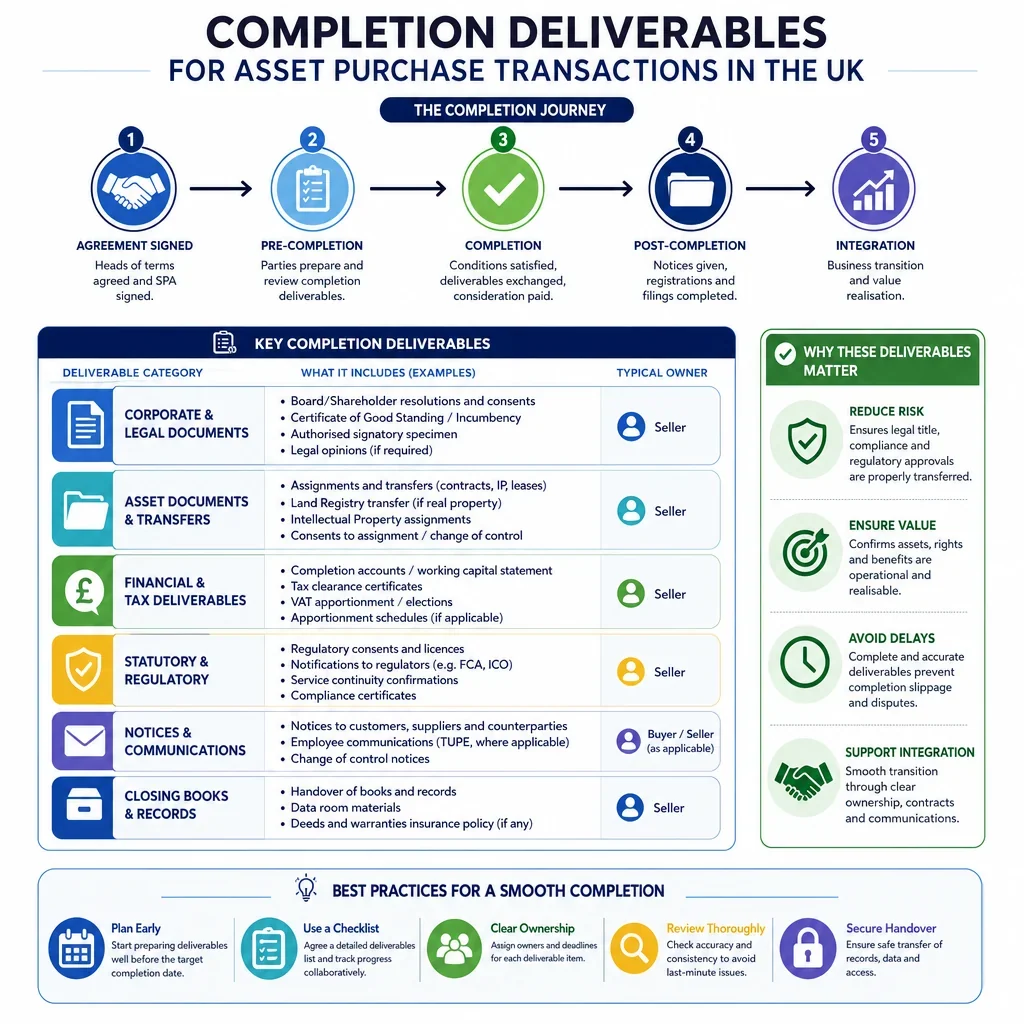
11COMPLETION
Completion shall take place on the Completion Date at the offices of the Buyer's solicitors or such other location as the parties may agree.
Completion shall not take place until all Conditions Precedent have been satisfied or waived by the Buyer.
On Completion the following shall occur:
the Seller shall deliver executed transfer documents assignments of contracts and IP rights and title documents relating to the Assets;
the Buyer shall pay the Purchase Price in accordance with Clause 10;
the Seller shall deliver physical possession of all tangible Assets;
the Seller shall provide evidence of release of any charges or Encumbrances over the Assets.
If Completion does not take place on the Completion Date due to the default of a party the defaulting party shall pay interest on the Purchase Price at the rate of 4% per annum above the base rate of the Bank of England from the Completion Date until actual Completion.
12CONDITIONS PRECEDENT
Completion is conditional upon:
no material adverse change having occurred in the Business or the Assets since the date of this Agreement;
execution of any necessary deeds of assignment for contracts and intellectual property;
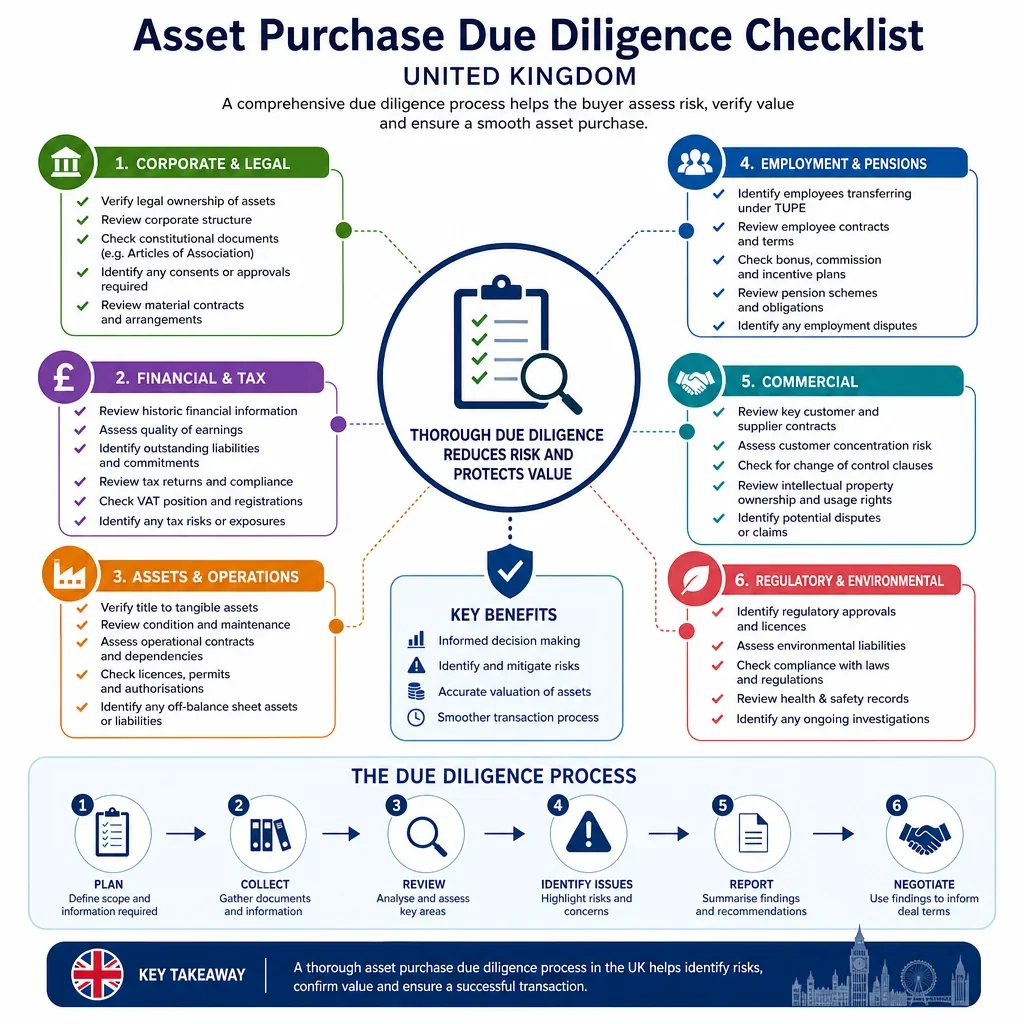
the Buyer being satisfied with the results of due diligence on the transferring employees under the Transfer of Undertakings (Protection of Employment) Regulations 2006 (as amended);
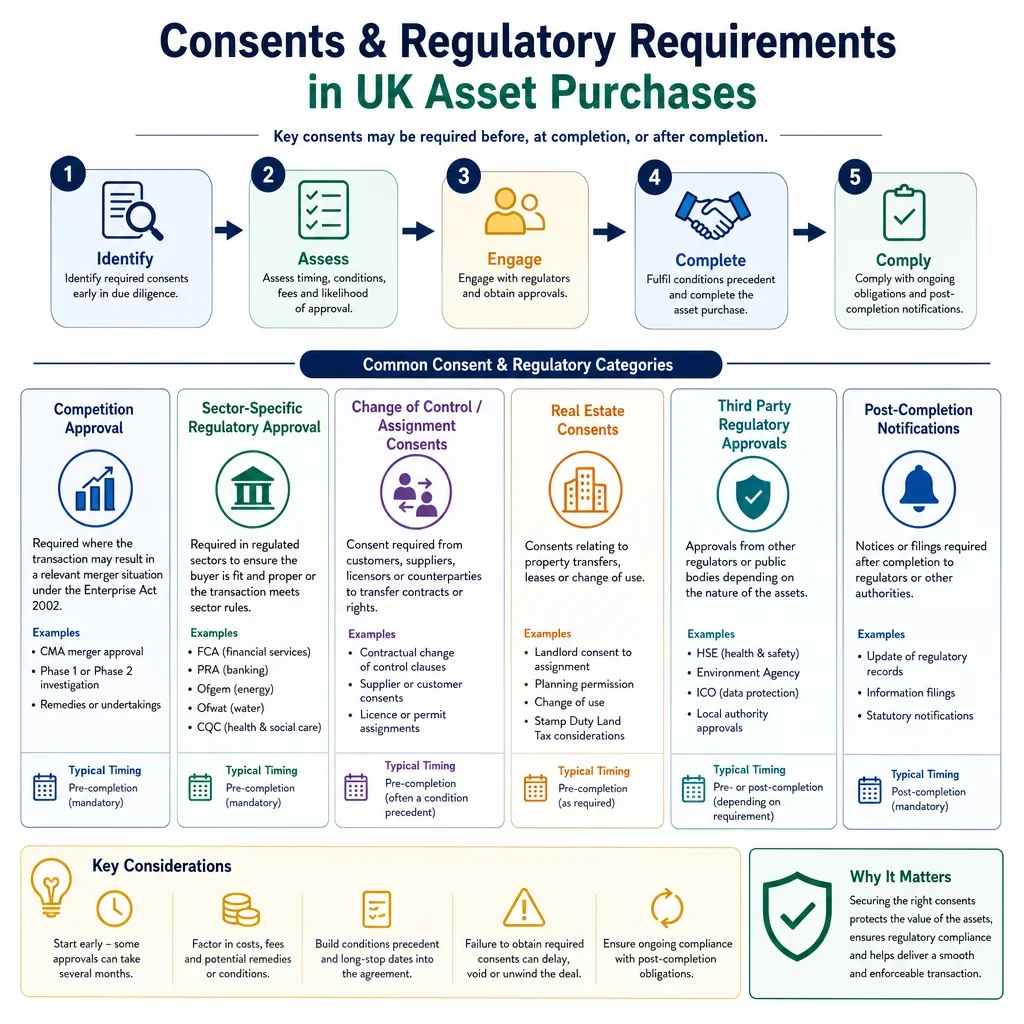
if the thresholds are met obtaining clearance from the Competition and Markets Authority (CMA) under the Enterprise Act 2002.
The Long Stop Date shall be 31 December 2024.
The Buyer may waive any of the Conditions Precedent at its discretion by notice in writing to the Seller.
If the Conditions Precedent are not fulfilled or waived by the Long Stop Date either party may terminate this Agreement by notice in writing to the other party without liability.
13SELLER'S WARRANTIES
The Seller warrants to the Buyer in the terms set out in Schedule 4.
The Warranties are given subject to the disclosures in the Disclosure Letter.
The Seller acknowledges that the Buyer has entered into this Agreement in reliance on the Warranties.
14BUYER'S WARRANTIES
The Buyer warrants to the Seller that:
it has full capacity and authority to enter into and perform this Agreement;
it has available sufficient funds to pay the Purchase Price;
there is no litigation pending or threatened which may affect its ability to complete the purchase;
it is in compliance with all applicable laws and regulations.
15BUYER UNDERTAKINGS
The Buyer undertakes to the Seller that it shall:
comply with its obligations under the Transfer of Undertakings (Protection of Employment) Regulations 2006 (as amended) (TUPE);
offer equivalent pension provisions to transferring employees where required under TUPE and the Pensions Act 2004;
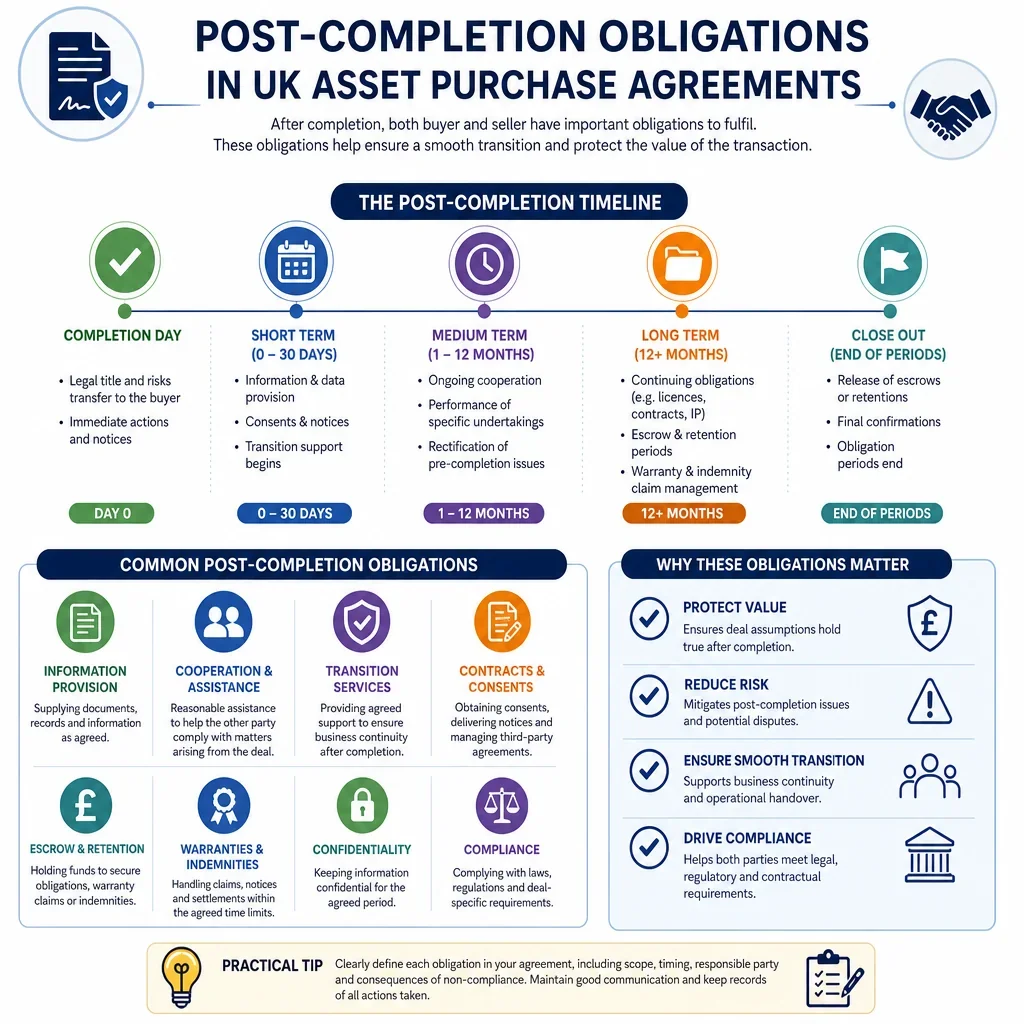
not make any material changes to the terms and conditions of employment of the transferring employees for a period of 12 months after Completion (except for permitted changes);
indemnify the Seller against any liabilities arising after Completion in respect of the transferring employees to the extent that such liabilities result from any breach by the Buyer of its obligations under TUPE.
16INSURANCE
The Seller shall maintain in force until Completion all insurance policies relating to the Business and the Assets.
The Seller warrants that there are no gaps in insurance coverage which could give rise to uninsured losses in respect of the Assets or the Business.
To the extent that any claims under such policies relate to the Assets the Seller shall assign to the Buyer the benefit of such claims.
17EMPLOYEE MATTERS
The transfer of the Business and the Assets pursuant to this Agreement shall constitute a relevant transfer for the purposes of TUPE.
The transferring employees shall be those listed in Schedule 6.
The Seller shall comply with its obligations to inform and consult with the transferring employees or their representatives under Regulation 13 of TUPE.
The Seller shall be responsible for all liabilities relating to the transferring employees arising before Completion and the Buyer shall be responsible for all such liabilities arising on or after Completion.
The Seller warrants that it has not varied the terms of employment of any transferring employee in the 12 months prior to Completion and that the information provided to the Buyer in respect of the transferring employees is accurate.
The Buyer shall indemnify the Seller against any claims arising from the Buyer's failure to comply with its obligations under TUPE.
If any occupational pension scheme is involved the parties shall comply with the requirements of the Pensions Act 2004 and related regulations.
18NON-COMPETE AND RESTRICTIVE COVENANTS
The Seller undertakes that it shall not for a period of 24 months after Completion directly or indirectly:
carry on or be engaged in any business which competes with the Business in the United Kingdom;
solicit or canvass the custom of any customer or supplier of the Business;
solicit or offer employment to any employee of the Business;
deal with any customer or supplier of the Business.
The Seller shall keep confidential and not use or disclose any know-how or confidential information relating to the Business.
The restrictions in this Clause 18 are considered reasonable by the parties but if any restriction is found to be unenforceable it shall be severed and the remaining restrictions shall continue in full force and effect.
19INDEMNITIES LIMITATIONS ON LIABILITY AND TAX
The Seller shall indemnify the Buyer against all losses suffered by the Buyer as a result of any breach of the Warranties or any of the Seller's obligations under this Agreement.
The Seller shall enter into a tax covenant in the form set out in Schedule 5 in respect of all pre-Completion tax liabilities (including corporation tax VAT and stamp duty land tax if applicable).
The limitations on liability set out in this Clause 19 shall apply to claims under the Warranties and the tax covenant (except in the case of fraud or fraudulent misrepresentation):
the Seller's total liability shall not exceed the Purchase Price;
no claim shall be brought unless the amount of the claim exceeds £[AMOUNT] and claims shall be aggregated to reach a threshold (basket) of £[AMOUNT];
claims under the Warranties (other than tax) must be notified within 2 years of Completion and tax claims within 6 years of Completion.
The conduct of claims procedure shall be as set out in Schedule 4.
20VAT AND TAX
The parties intend that the sale of the Assets shall be treated as a transfer of a going concern for VAT purposes in accordance with Article 5 of the Value Added Tax (Special Provisions) Order 1995.
The Buyer undertakes to the Seller that it shall treat the purchase as a TOGC and shall not opt to tax any property comprised in the Assets where such option would prevent TOGC treatment.
If the sale does not qualify as a TOGC the Buyer shall pay to the Seller any VAT due within 5 Business Days of receipt of a valid VAT invoice from the Seller.
The Seller warrants that it is registered for VAT and has complied with all its tax obligations in respect of the Business and the Assets.
21CONFIDENTIALITY
Each party shall keep confidential all information relating to the other party and the terms of this Agreement for a period of five years after the date of this Agreement and shall not disclose such information except:
as required by law or by any regulatory authority (including the London Stock Exchange or the CMA);
to its professional advisers who are bound by equivalent duties of confidentiality;
to its employees agents or contractors who need to know such information.
The confidentiality obligations shall not apply to information which is already in the public domain otherwise than through a breach of this Clause 21.
22ANNOUNCEMENTS
No announcement or press release concerning the transaction shall be made by either party without the prior written consent of the other (such consent not to be unreasonably withheld or delayed) except as required by law the Listing Rules the rules of any stock exchange or the CMA.
The parties shall consult on the content of any mandatory announcement.
23FURTHER ASSURANCES
Each party shall at its own cost execute all such documents and do all such acts and things as may be necessary to give effect to this Agreement.
24ASSIGNMENT
Neither party may assign transfer or charge its rights under this Agreement without the prior written consent of the other party (such consent not to be unreasonably withheld or delayed).
This Agreement shall bind the successors and permitted assigns of the parties.
25ENTIRE AGREEMENT
This Agreement (including the Schedules the Disclosure Letter and any documents referred to in it) constitutes the entire agreement between the parties relating to the subject matter hereof and supersedes all prior agreements understandings or arrangements whether oral or in writing.
Each party acknowledges that it has not entered into this Agreement in reliance on any representation warranty or undertaking not expressly set out in this Agreement. Neither party shall have any remedy in respect of any misrepresentation (whether innocent or negligent) except in the case of fraud.
26VARIATION
No variation of this Agreement shall be effective unless it is in writing and signed by or on behalf of each of the parties.
27WAIVER
No waiver of any right under this Agreement shall be effective unless it is in writing and refers specifically to the provision being waived. No waiver shall constitute a waiver of any subsequent breach.
28SEVERANCE
If any provision of this Agreement is held to be invalid or unenforceable the remaining provisions shall continue in full force and effect. The parties shall negotiate in good faith to replace any invalid provision with a valid one achieving so far as possible the original intention.
29NOTICES
Any notice given under this Agreement shall be in writing and shall be delivered personally sent by first class recorded delivery post or sent by email.
Notices to the Buyer shall be sent to its registered office or to such other address or email as notified to the Seller.
Notices to the Seller shall be sent to its registered office or to such other address or email as notified to the Buyer.
A notice sent by first class recorded delivery post shall be deemed delivered two Business Days after posting. A notice sent by email shall be deemed delivered at the time of transmission (provided no delivery failure message is received).
30NO PARTNERSHIP
Nothing in this Agreement shall create a partnership or joint venture between the parties or constitute either party as the agent of the other.
31COSTS
Each party shall bear its own costs and expenses incurred in connection with the negotiation preparation and execution of this Agreement.
32DATA PROTECTION
Each party shall comply with its obligations under the UK GDPR and the Data Protection Act 2018 in respect of any personal data transferred as part of the Assets (including customer data).
The Buyer shall be the data controller of such personal data from Completion.
33GOVERNING LAW
This Agreement and any dispute or claim arising out of or in connection with it or its subject matter or formation (including non-contractual disputes or claims) shall be governed by and construed in accordance with the laws of England and Wales.
34JURISDICTION
The parties irrevocably agree that the courts of England and Wales shall have exclusive jurisdiction to settle any dispute or claim that arises out of or in connection with this Agreement or its subject matter or formation (including non-contractual disputes or claims).
35COUNTERPARTS
This Agreement may be executed in any number of counterparts each of which when executed shall constitute a duplicate original but all the counterparts shall together constitute one agreement.
Transmission of an executed counterpart of this Agreement by email (including PDF) or by electronic signature shall take effect as delivery of an executed original counterpart of this Agreement.
36THIRD PARTY RIGHTS
A person who is not a party to this Agreement shall have no right under the Contracts (Rights of Third Parties) Act 1999 to enforce any term of this Agreement. This does not affect any right or remedy of any person which exists or is available otherwise than pursuant to that Act.
37SCHEDULES
Schedule 1 (Assets) sets out a detailed list of the Assets to be transferred.
Schedule 2 (Assumed Liabilities) lists the liabilities to be assumed by the Buyer.
Schedule 3 (Contracts) lists the contracts to be assigned to the Buyer.
Schedule 4 (Warranties and Disclosures) contains the Seller's warranties relevant to a custom furniture manufacturing business (including title to assets condition of plant and machinery stock IP relating to furniture designs compliance with health and safety and environmental laws no litigation accurate accounts TUPE compliance authority capacity and accuracy of information) together with the related disclosures in the Disclosure Letter.
Schedule 5 contains the form of Tax Covenant.
Schedule 6 lists the transferring employees.
38EXECUTION AND SIGNATURE
This Agreement is executed and delivered as a deed on the date at the beginning of this Agreement.
Executed and delivered as a deed by the Seller acting by a director in the presence of a witness:
Signature of director: ___________________________
Name of director: ___________________________
Signature of witness: ___________________________
Name of witness: ___________________________
Address of witness: ___________________________
Executed and delivered as a deed by the Buyer acting by a director in the presence of a witness:
Signature of director: ___________________________
Name of director: ___________________________
Signature of witness: ___________________________
Name of witness: ___________________________
Address of witness: ___________________________
This example shows approximately 70% of a typical document and is provided for illustrative purposes only. The remaining content has been omitted.
Every document generated by Docaro is tailored to your specific circumstances, jurisdiction and the information you provide. The completed document includes all applicable clauses and provisions required for your situation.
To generate the full, personalised document, answer a short series of questions and your document will be created instantly.
Useful Resources When Considering a Asset Purchase Agreement in the United Kingdom
United Kingdom Reference Legislation
Asset Purchase Agreement FAQs
Document Generation FAQs
Related Articles