AI Generated Invoice for use in the United Kingdom
PDF & Word - 2026 Updated
Docaro Pricing
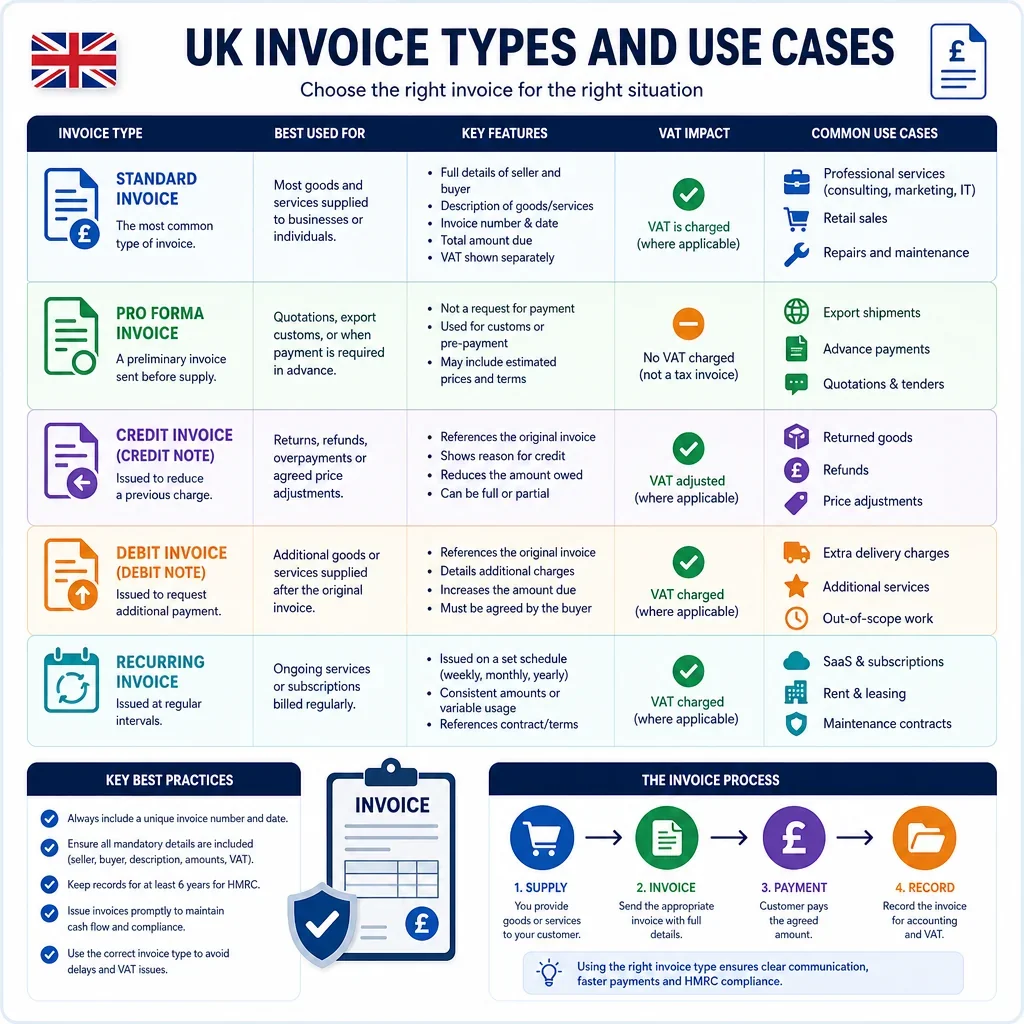
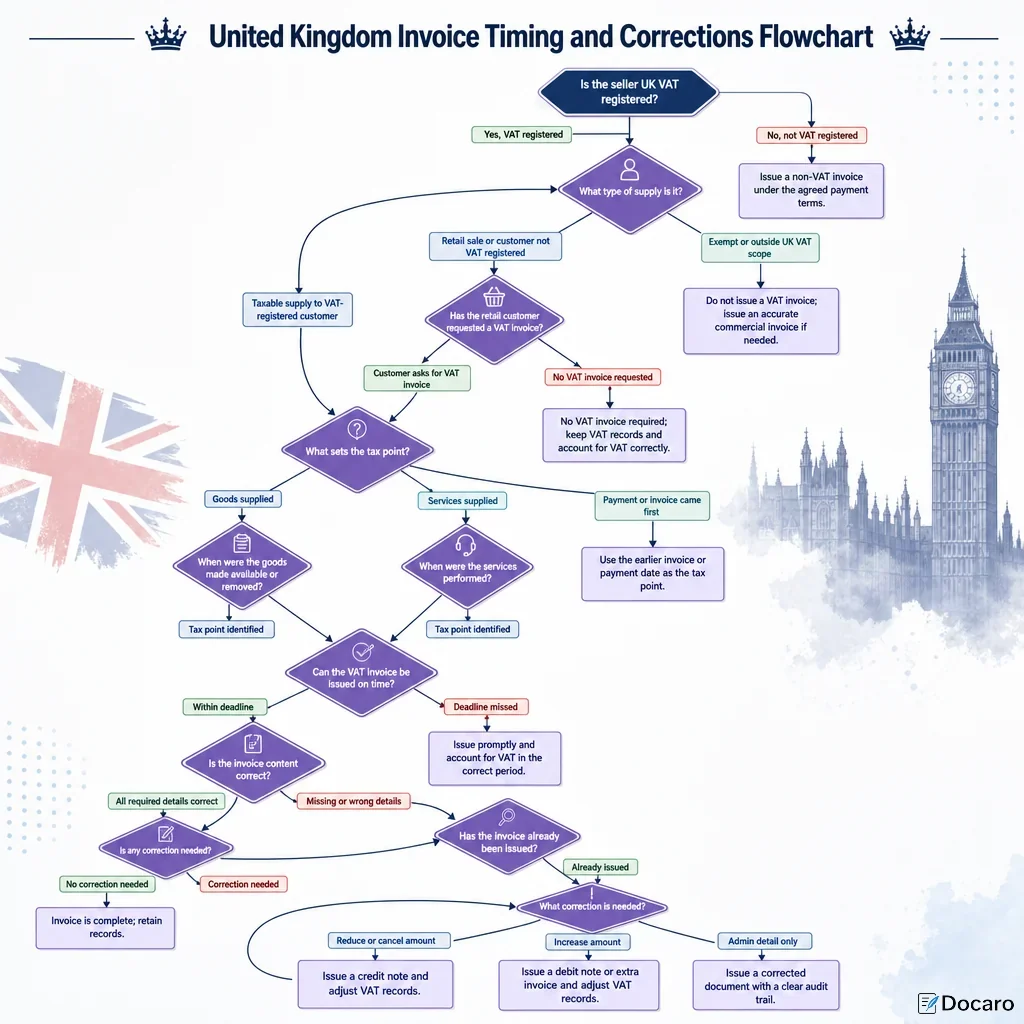
When Do You Need an Invoice in the United Kingdom?
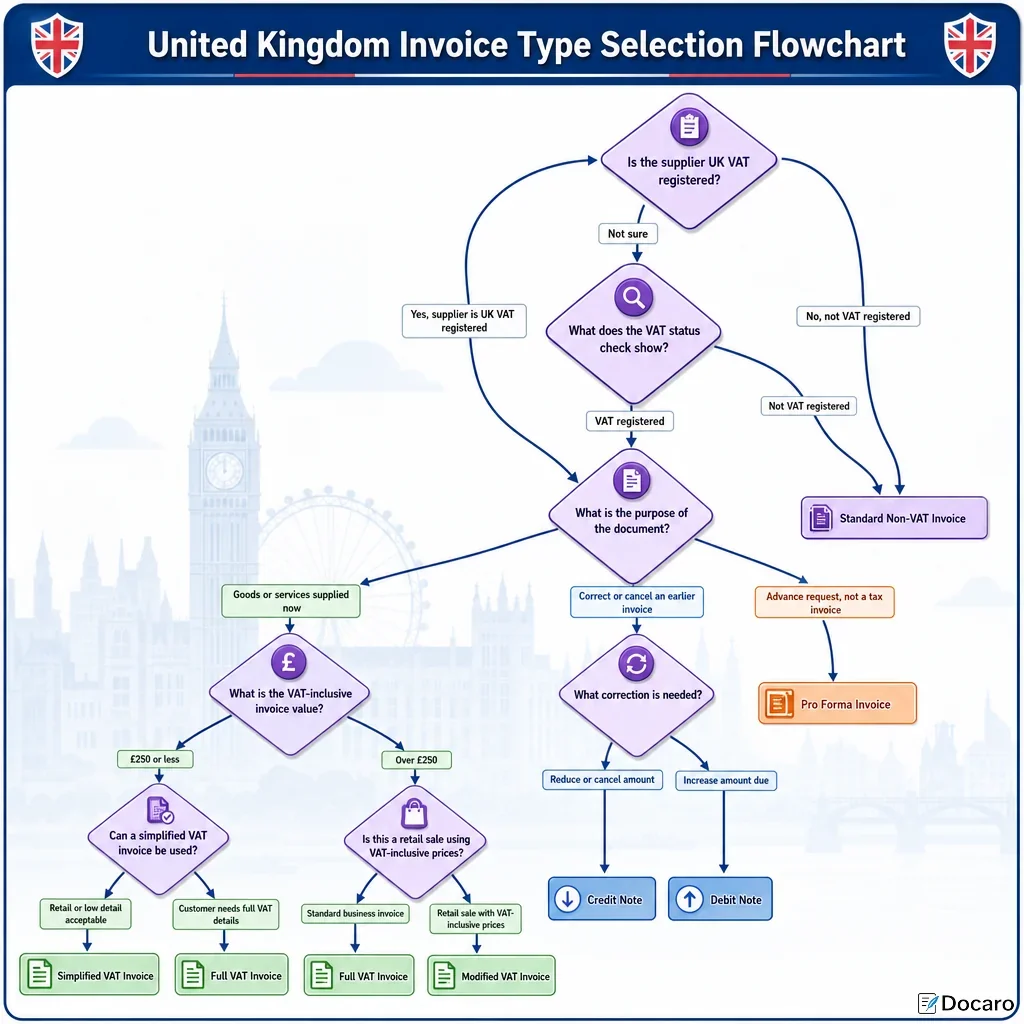
British Legal Rules for an Invoice
Using an incorrect invoice format may result in non-compliance with UK VAT regulations and invalid tax deductions.
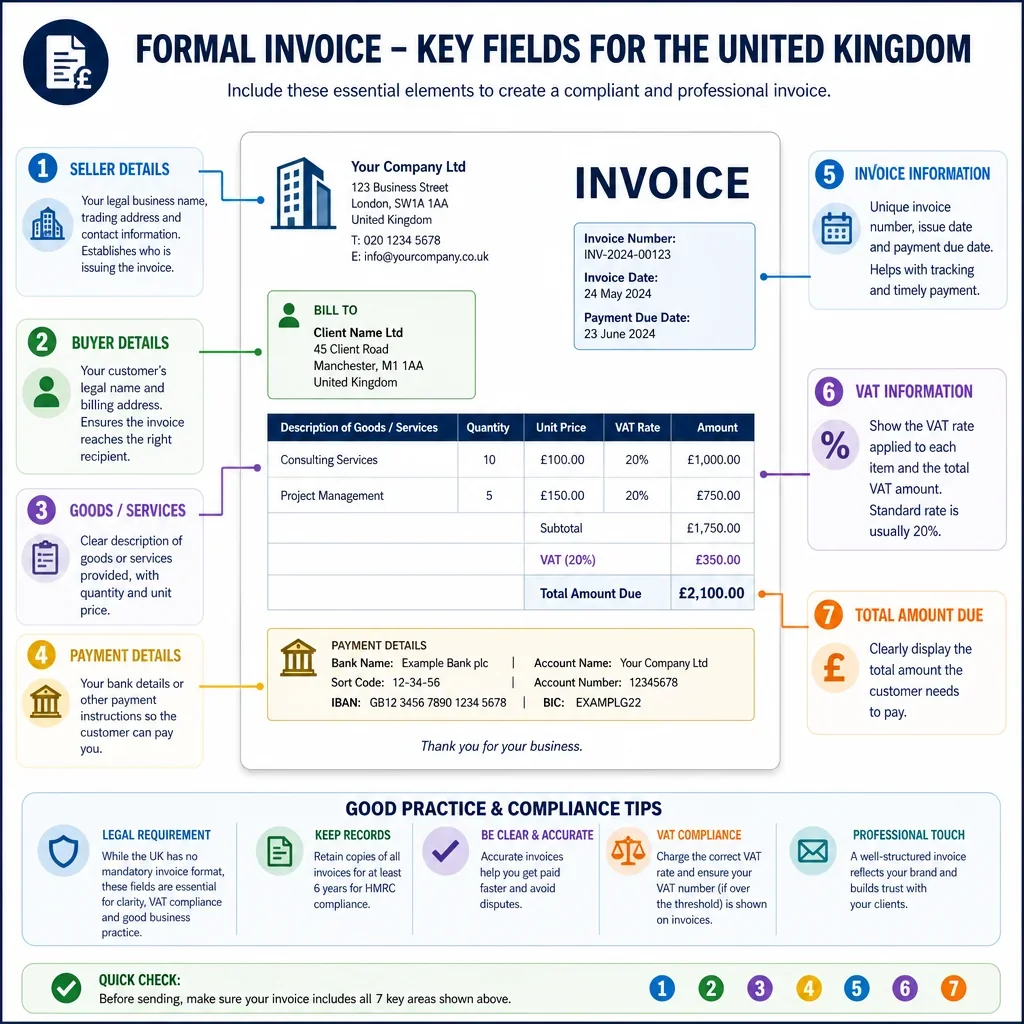
What a Proper Invoice Should Include
- Invoice NumberAssign a unique number to each invoice for easy tracking and record-keeping.
- Invoice DateInclude the date the invoice is issued to establish when payment is due.
- Supplier DetailsList your business name, address, and contact information so the recipient knows who to pay.
- Customer DetailsProvide the buyer's name, address, and contact details to clearly identify them.
- Description of Goods or ServicesDetail what was supplied, including quantities and rates, to specify the transaction.
- Total Amount PayableState the full amount due, including any taxes, for the recipient to understand the payment required.
- VAT InformationShow the VAT rate, amount charged, and your VAT registration number if applicable.
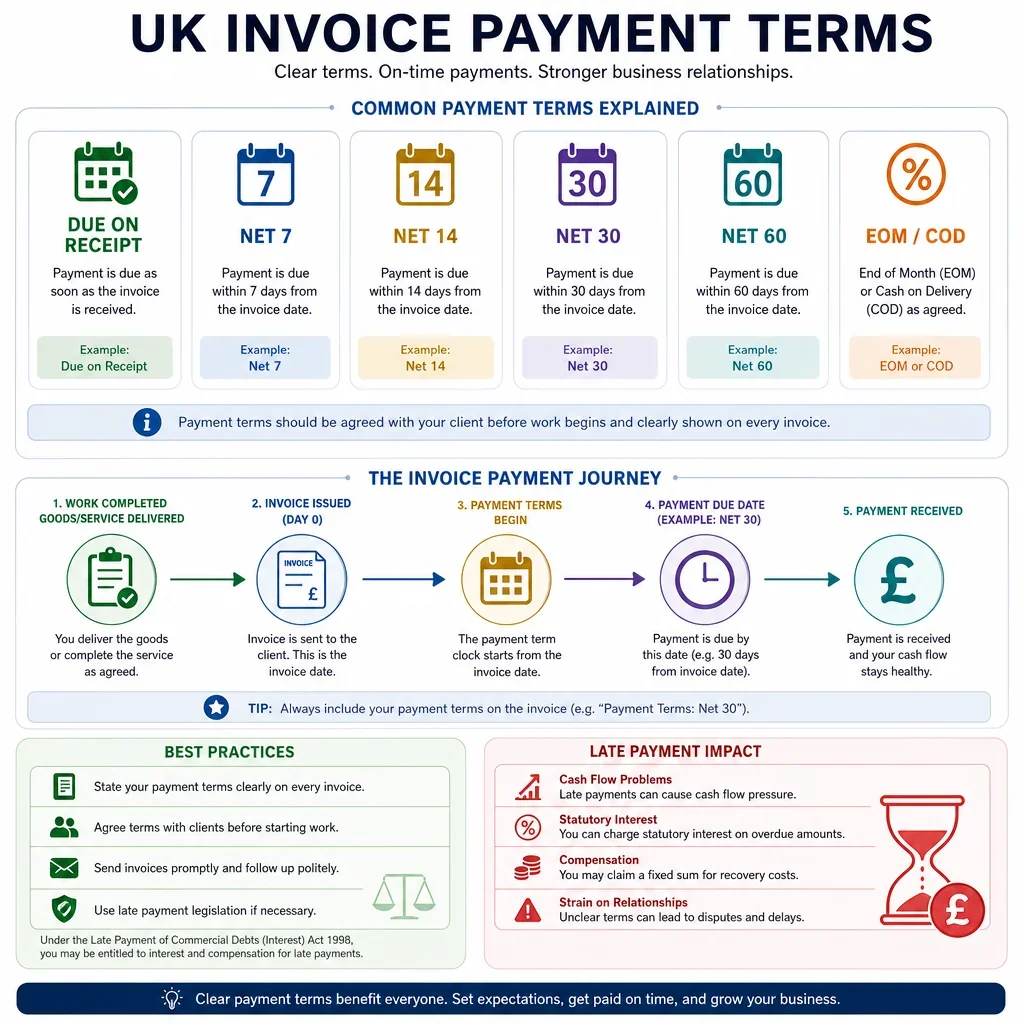
- Payment TermsSpecify when and how payment should be made, such as within 30 days by bank transfer.
Generate Your Document in 4 Easy Steps
Why Use Docaro?
 United Kingdom
Free Example Invoice Template
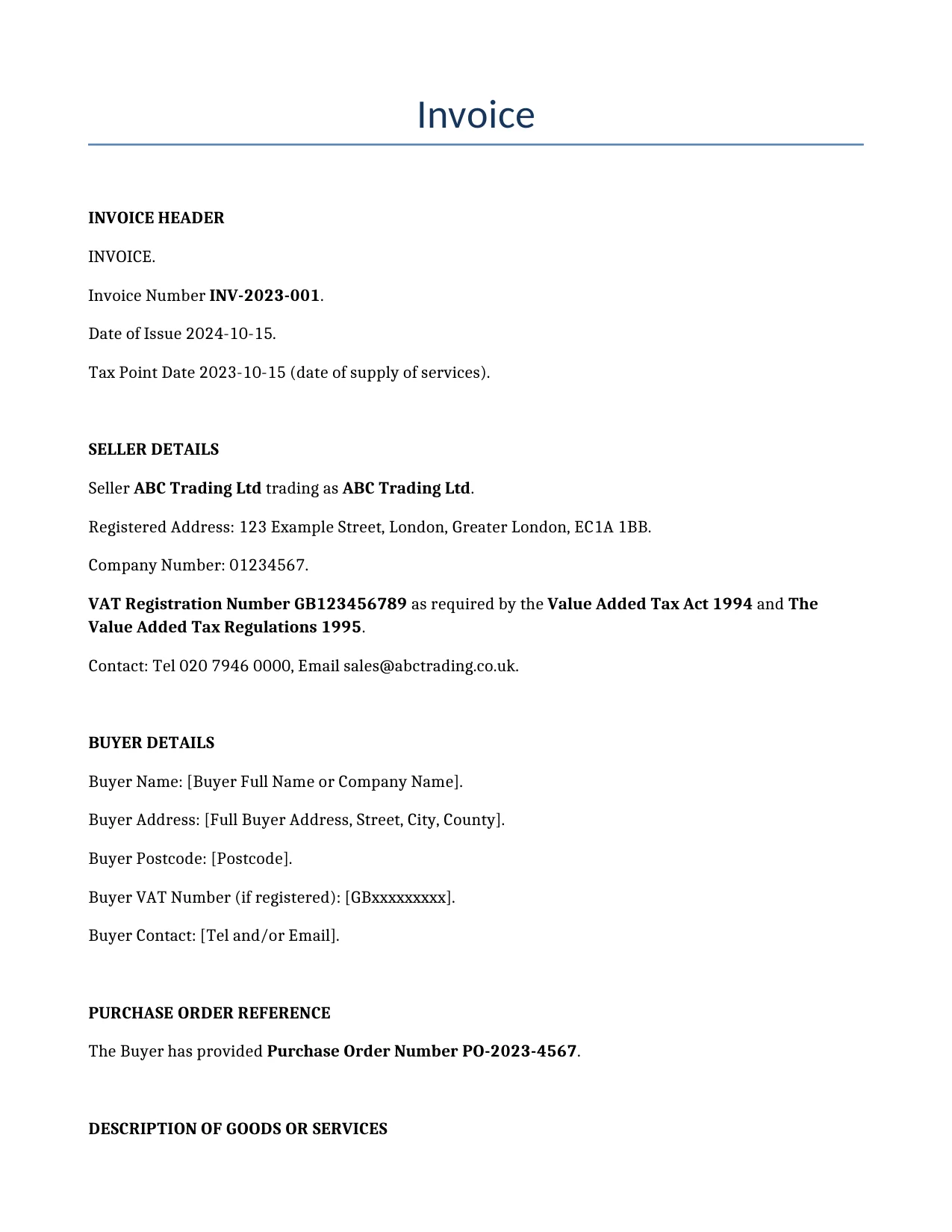
Below is a free template example of a Invoice for use in the United Kingdom generated by our AI model.
The clauses in your actual Invoice will vary from this example as they will be entirely bespoke to your requirements as set out in the questionnaire you complete.
INVOICE
INVOICE HEADER
INVOICE.
Invoice Number INV-2023-001.
Date of Issue 2024-10-15.
Tax Point Date 2023-10-15 (date of supply of services).
SELLER DETAILS
Seller ABC Trading Ltd trading as ABC Trading Ltd.
Registered Address: 123 Example Street, London, Greater London, EC1A 1BB.
Company Number: 01234567.
VAT Registration Number GB123456789 as required by the Value Added Tax Act 1994 and The Value Added Tax Regulations 1995.
Contact: Tel 020 7946 0000, Email sales@abctrading.co.uk.
BUYER DETAILS
Buyer Name: [Buyer Full Name or Company Name].
Buyer Address: [Full Buyer Address, Street, City, County].
Buyer Postcode: [Postcode].
Buyer VAT Number (if registered): [GBxxxxxxxxx].
Buyer Contact: [Tel and/or Email].
PURCHASE ORDER REFERENCE
The Buyer has provided Purchase Order Number PO-2023-4567.
DESCRIPTION OF GOODS OR SERVICES
The Seller has provided the following services to the Buyer.
The services consist of legal consultation services including review of contract documents and advice on compliance with UK regulations billed at an hourly rate.
The quantity of services provided is 10 hours.
The unit price for the services is 150.5 GBP per hour.
The services were provided on 2023-10-15.
The period for which the services are invoiced commences on 2023-10-01 and ends on 2023-10-15.
Net amount for services: 1505.00 GBP.
SUBTOTAL
The net amount before VAT for the services is 1505.00 GBP.
The subtotal amount before adding any taxes or charges is 1505.00 GBP.
SHIPPING OR DELIVERY CHARGES
The Seller has provided shipping or delivery charges to the Buyer.
The shipping or delivery method is Express Courier.
The description of the shipping or delivery service is next-day delivery via express courier service within the UK.
The total cost amount for the shipping or delivery charges is 15.5 GBP.
OTHER CHARGES
The Seller has included other charges in the invoice.
The types of other charges are Handling Fee and Insurance Charge.
The description of the other charges is that the handling fee covers packaging and shipping materials used to prepare the goods for delivery and the insurance charge provides coverage against loss or damage during transit valued at the full invoice amount.
The total amount for the other charges is 150.5 GBP.
VAT CALCULATION
VAT is applicable to this invoice at the standard rate in accordance with the Value Added Tax Act 1994 and The Value Added Tax Regulations 1995.
The invoice amounts are not VAT inclusive.
The VAT rate applied is the standard rate of 20 percent.
The description for the selected VAT rate is 20 percent standard VAT rate applied to taxable supplies.
The VAT amount based on the net services amount (1505.00 GBP) at 20 percent is 301.00 GBP.
VAT is applicable to the shipping or delivery charges at 20 percent (15.5 GBP * 0.2 = 3.10 GBP).
VAT is not applicable to the other charges.
The total amount of VAT to be added is 304.10 GBP.
TOTAL AMOUNT DUE
Net goods/services: 1505.00 GBP.
Shipping: 15.50 GBP.
Other charges: 150.50 GBP.
VAT: 304.10 GBP.
The total amount including VAT for the invoice is 1975.10 GBP.
PAYMENT TERMS
Payment is due by 2024-10-15 which is 30 days after the invoice date in accordance with the Late Payment of Commercial Debts (Interest) Act 1998 and The Late Payment of Commercial Debts Regulations 2002.
The payment terms that apply to the invoice are net 30 days.
The accepted payment methods are bank transfer and cheque.
All payments shall be made in GBP.
BANK DETAILS
The full name of the bank account holder for the Seller is ABC Trading Ltd.
The sort code for the Seller bank account is 12-34-56.
The account number for the Seller bank account is 12345678.
The name of the bank holding the Seller account is Barclays Bank PLC.
LATE PAYMENT
In the event that the Buyer fails to make payment by the due date the Seller shall be entitled to charge interest on the overdue amount in accordance with the Late Payment of Commercial Debts (Interest) Act 1998 and The Late Payment of Commercial Debts Regulations 2002.
TITLE AND RISK
Title to any goods supplied under this invoice shall pass to the Buyer only upon full payment of the total amount due in accordance with the Sale of Goods Act 1979.
Risk in any goods supplied under this invoice shall pass to the Buyer upon delivery.
GOVERNING LAW
This invoice and any dispute arising out of or in connection with it shall be governed by and construed in accordance with the laws of England and Wales.
SIGNATURE
Signed for and on behalf of the Seller ABC Trading Ltd.
Signature ___________________________
Name ___________________________
Position ___________________________
Date ___________________________
This example shows approximately 70% of a typical document and is provided for illustrative purposes only. The remaining content has been omitted.
Every document generated by Docaro is tailored to your specific circumstances, jurisdiction and the information you provide. The completed document includes all applicable clauses and provisions required for your situation.
To generate the full, personalised document, answer a short series of questions and your document will be created instantly.
Useful Resources When Considering a Invoice in the United Kingdom
United Kingdom Reference Legislation
Invoice FAQs
Document Generation FAQs
Related Articles