
AI Generated British Certificate of Incorporation
PDF & Word - 2026 Updated
Effortlessly create a British Certificate of Incorporation using our advanced AI technology.
Free instant document creation.
Tailored to United Kingdom law.
No sign up or monthly subscription.
Memorandum and Articles of Association
1. Interpretation
Definitions and interpretation of terms used throughout the Articles.
2. Liability of Members
Provisions regarding the limited liability of members.
3. Directors' General Authority
General powers and authority granted to the directors.
4. Members' Decision-Making Powers
Powers reserved for members in decision-making.
5. Directors May Delegate Powers
Ability of directors to delegate their powers.
6. Committees
Establishment and operation of board committees.
7. Directors to Take Decisions Collectively
Requirements for directors to make decisions as a board.
8. Unanimous Decisions
Provisions for unanimous decisions by directors.
9. Validity of Directors' Decisions
Validity of board decisions despite irregularities.
10. Appointment of Directors
Procedures for appointing directors.
11. Directors' Term of Office
Duration of directors' terms.
12. Termination of Director's Appointment
Grounds for termination of a director's appointment.
13. Alternate Directors
Appointment and role of alternate directors.
14. Remuneration
Remuneration and expenses for directors.
15. Expenses
Reimbursement of directors' expenses.
16. Records of Decisions to be Kept
Maintenance of records of directors' decisions.
17. Registration of Members
Procedures for registering members.
18. Annual General Meeting
Requirements for holding annual general meetings.
19. Notice of General Meeting
Notice requirements for general meetings.
20. Proceedings at General Meetings
Conduct of proceedings at general meetings.
21. Voting: General
General rules for voting at meetings.
22. Poll Votes
Procedures for voting by poll.
23. Content of Proxy Notices
Requirements for proxy notices.
24. Delivery of Proxy Notices
Delivery of proxy notices to the company.
25. Amendments to Resolutions
Handling amendments to resolutions at meetings.
26. Written Resolutions
Provisions for written resolutions by members.
27. Procedures for Written Resolutions
Procedures for circulating and passing written resolutions.
28. Means of Communication to be Used
Methods for communicating with members.
29. Company Seals
Use and custody of the company seal.
30. No Right to Inspect Accounts
Restrictions on members' rights to inspect accounts.
31. Indemnity
Indemnification of directors and others.
32. Insurance
Provisions for directors' and officers' insurance.
Docaro Pricing
Basic
Free
Document Generation
No Sign Up
No Subscription
Download Watermarked PDF
Premium
$4.99 USD
Document Generation
No Sign Up
No Subscription
Download Clean PDF
Download Microsoft Word
Download HTML
Download Text
Email Document
Generate your document for free. Only pay if you like the result and need an un-watermarked version.
When do you need a Memorandum and Articles of Association in the United Kingdom?
Starting a limited company
You need these documents when forming a private or public limited company to establish its basic structure and rules.
Setting company rules
The Articles outline how the company will operate, including director duties and shareholder rights, ensuring smooth decision-making.
Legal registration requirement
These documents are essential to register your company with Companies House, making it officially recognized under UK law.
Protecting your business
A well-drafted version helps avoid disputes by clearly defining roles and responsibilities from the start.
Adapting to changes
They are crucial when updating company details, like adding shareholders or altering operations, to keep everything compliant.
Importance of quality drafting
Poorly written documents can lead to legal issues or inefficiencies, so professional drafting ensures clarity and protection for your business.
British Legal Rules for a Memorandum and Articles of Association
Legal Basis
The rules are set by the Companies Act 2006, which governs how companies are formed and run in the UK.
Memorandum of Association
This is a simple document signed by the initial shareholders stating the company's name, registered office, and liability type.
Articles of Association
These rules outline how the company will be managed, including directors' powers, shareholders' rights, and decision-making processes.
Registration Requirement
Both documents must be submitted to Companies House during company formation to legally establish the business.
Public Access
Once registered, these documents become public records that anyone can view on the Companies House website.
Amendments Allowed
Changes to the articles require a special resolution passed by shareholders and must be filed with Companies House.
Model Articles Option
New companies can adopt standard 'model articles' provided by the government instead of creating custom ones.
Important
Selecting the incorrect structure for articles of incorporation may result in non-compliance with Companies Act requirements and potential invalidation of the company formation.
What a Proper Memorandum and Articles of Association Should Include
- Company NameStates the full legal name under which the company will operate.
- Registered OfficeSpecifies the official UK address where company records are kept and official documents can be served.
- Objects of the CompanyDescribes the main purposes and activities the company is allowed to pursue.
- Liability of MembersConfirms that members' responsibility is limited to the amount unpaid on their shares.
- Share CapitalDetails the total number of shares the company can issue and their value.
- Directors' PowersOutlines the authority and duties of the company's directors in managing operations.
- Shareholder MeetingsExplains how and when shareholders must meet to make key decisions.
- Voting RightsDefines how shareholders can vote on company matters, usually based on share ownership.
- DividendsSets out the rules for distributing profits to shareholders.
- Winding UpDescribes the process for closing the company and distributing remaining assets.
Generate Your Document in 4 Easy Steps
1
Answer a Few Questions
Our AI guides you through the info required.
2
Generate Your Document
Docaro builds a bespoke document tailored specifically on your requirements.
3
Review & Edit
Review your document and submit any further requested changes.
4
Download & Sign
Download your ready to sign document as a PDF, Microsoft Word, Txt or HTML.
Why Use Docaro?
Fast Generation
Quickly generate a comprehensive Memorandum and Articles of Association, eliminating the hassle and time associated with traditional document drafting.
Guided Process
Our user-friendly platform guides you step by step through each section of the document, providing context and guidance to ensure you provide all the necessary information for a complete and accurate Memorandum and Articles of Association.
Safer Than Legal Templates
We never use legal templates. All documents are generated from first principles clause by clause, ensuring that your document is bespoke and tailored specifically to the information you provide. This results in a much safer and more accurate document than any legal template could provide.
Professionally Formatted
Your Memorandum and Articles of Association will be formatted to professional standards, including headings, clause numbers and structured layout. No further editing is required. Download your document in PDF, Microsoft Word, TXT or HTML.
Tailored to British Law
Our AI model considers the latest legal standards and regulations of the United Kingdom during the drafting process.
Cost-Effective
Generate and download a watermarked version of your document for free. Pay only if you want to remove the watermark and gain full access to your document. No monthly subscriptions or hidden fees. Pay once and use your document forever.
No Sign Up or Monthly Subscription Required
No payment or sign up is required to start generating your Memorandum and Articles of Association.
Need to Generate a Memorandum and Articles of Association in a Different Country?
Choose country: United Kingdom
United KingdomUseful Resources When Considering a Memorandum and Articles of Association in the United Kingdom
Information Commissioner's Office
Incorporation and names
A brief guide to international transfers | ICO
Getting your house in order: A legal guide to structuring ...
Show All Resources
United Kingdom Reference Legislation
The following legislation is relevant to the generation of a Memorandum and Articles of Association in the United Kingdom:
•
The primary legislation governing the formation, management, and dissolution of companies in the United Kingdom, including provisions for the preparation, content, and filing of articles of association (the UK equivalent of articles of incorporation).
•
Sets out the default model articles of association for private and public companies limited by shares or guarantee, which can be adopted or modified when incorporating a company.
•
Provides commencement dates and transitional provisions for the Companies Act 2006, including rules on existing articles of association during the transition period.
Memorandum and Articles of Association FAQs
The Memorandum of Association is a key legal document that outlines the company's objectives, name, registered office, and liability of members. It forms part of the articles of incorporation for UK companies and must comply with the Companies Act 2006.
Show All FAQs
Document Generation FAQs
Docaro is an AI-powered legal and corporate document generator that helps you create fully formatted, legal contracts and agreements in minutes. Just answer a few guided questions and download your document instantly.
Show All FAQs
You Might Also Be Interested In
A Consultancy Agreement Is A Legal Contract Outlining The Terms Under Which A Consultant Provides Services To A Client, Including Scope, Payment, And Duration.
A Shareholders' Agreement Is A Contract Between Shareholders Of A Company Outlining Their Rights, Obligations, And Governance Procedures.
A Legal Contract Outlining The Terms, Rights, And Obligations Of Partners In A Business Partnership.
A Legal Document Outlining The Ownership, Management, And Operational Rules For A Limited Liability Company.
Articles Of Association Are The Internal Rules Governing The Management And Operations Of A UK Company.
A Legal Contract Outlining The Terms For Buying And Selling Shares In A Company.
A Formal Decision Or Action Approved By The Board Of Directors Of A Company.
A Legal Document Outlining The Rights, Obligations, And Expectations Of Company Founders Regarding Equity, Roles, And Governance.
A Legal Contract Outlining The Terms For Buying And Selling Specific Assets, Such As Equipment Or Intellectual Property, Without Transferring The Entire Business Entity.
A Legal Contract Outlining The Terms For The Sale And Transfer Of A Business, Including Assets, Liabilities, And Purchase Price.
A Legal Document That Alters The Terms Of A Will Or Trust After The Testator's Death, Often For Tax Or Inheritance Purposes.
A Legal Contract Outlining The Terms For The Sale And Transfer Of Property Or Assets Between Buyer And Seller.
A Formal Receipt Is A Legal Document That Acknowledges Payment Received For Goods Or Services, Often Including Details Like Amount, Date, And Parties Involved.
A Formal Invoice Is A Legal Document Issued By A Seller To A Buyer Detailing The Goods Or Services Provided, The Amount Due, And Payment Terms.
A Contract Outlining The Terms Under Which One Party Provides Services To Another, Including Scope, Payment, And Responsibilities.
A Legal Document Used To Transfer Ownership Of Shares In A UK Company From One Party To Another.
A Safeguarding Policy Is A Formal Document Outlining An Organization's Procedures To Protect Vulnerable Individuals From Abuse And Neglect.
A Non-binding Document Outlining The Preliminary Understanding And Intentions Of Parties In A Proposed Business Transaction Or Agreement.
Related Articles
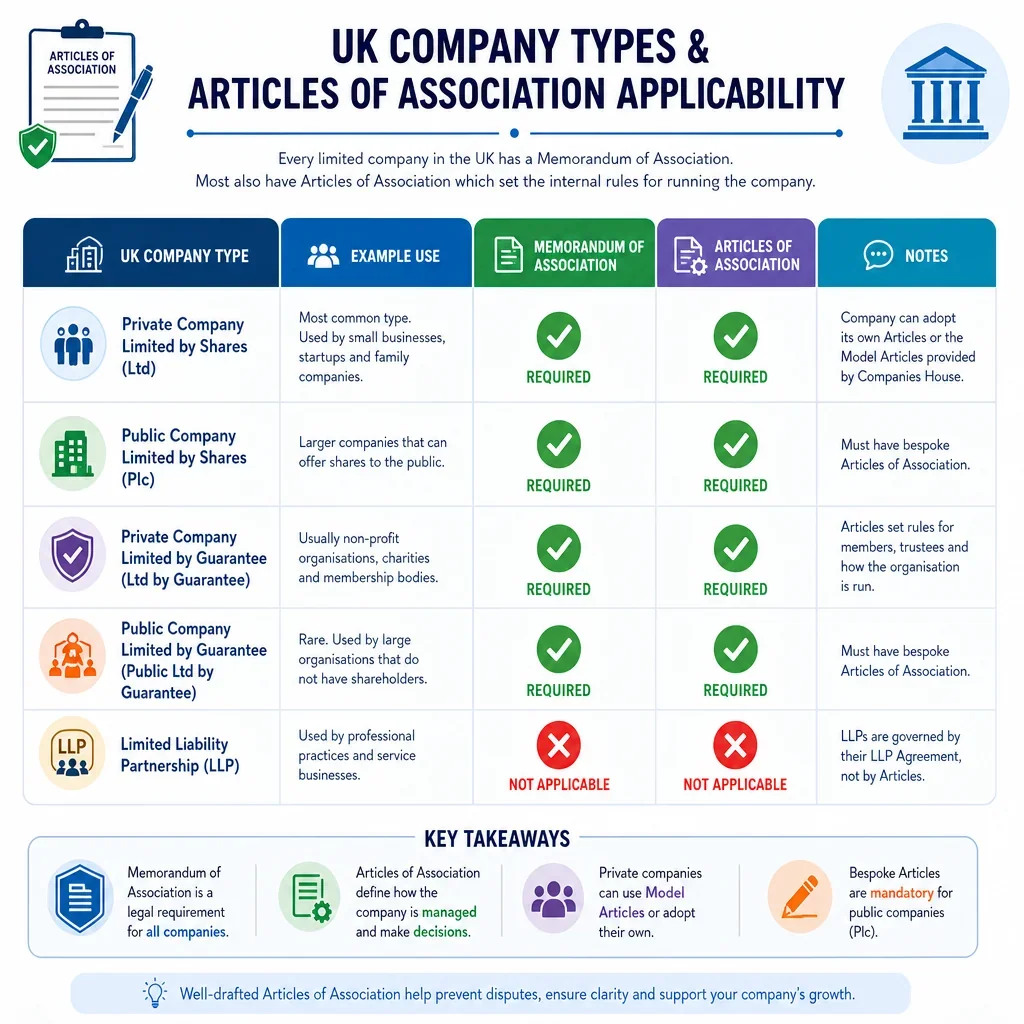
UK guide to company types and when articles of association apply, helping readers understand formation requirements.
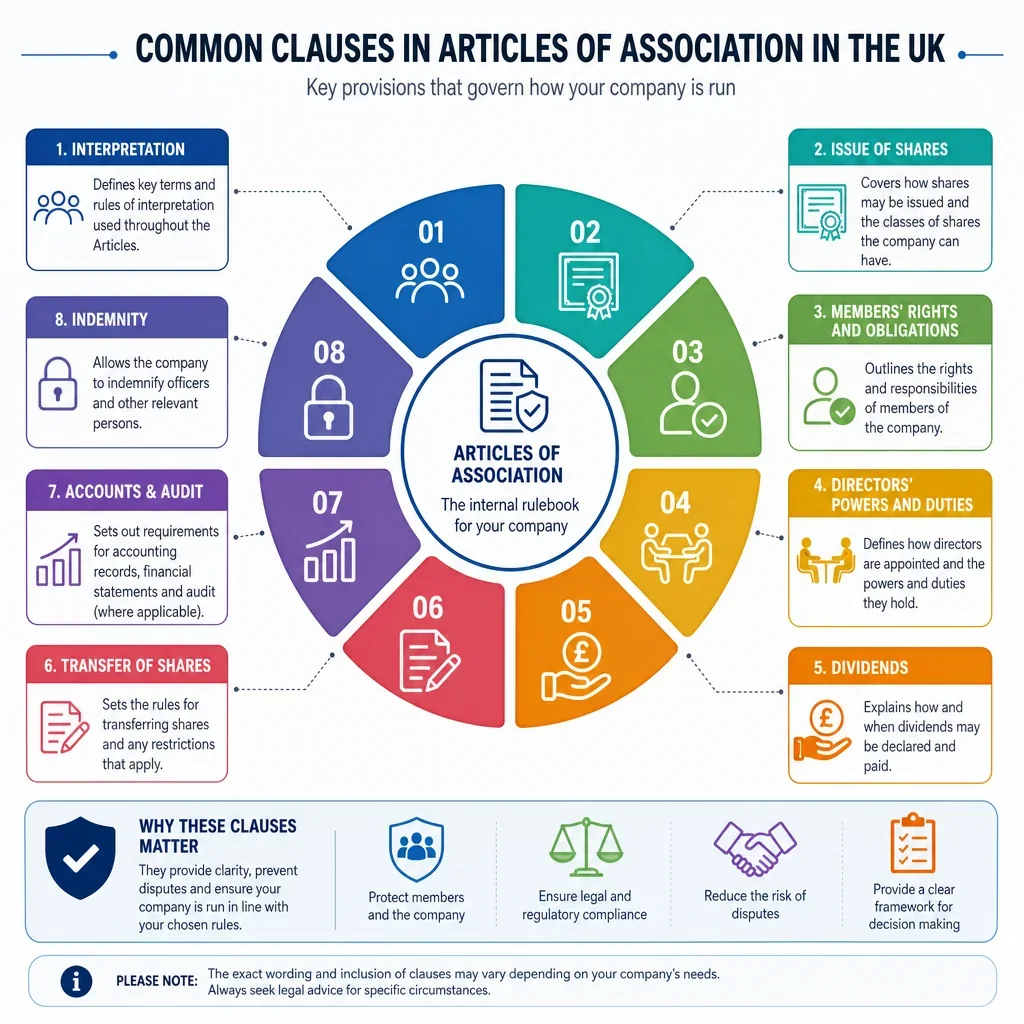
Explore common UK articles of association clauses, including governance, shares, director powers, and decision-making rules.
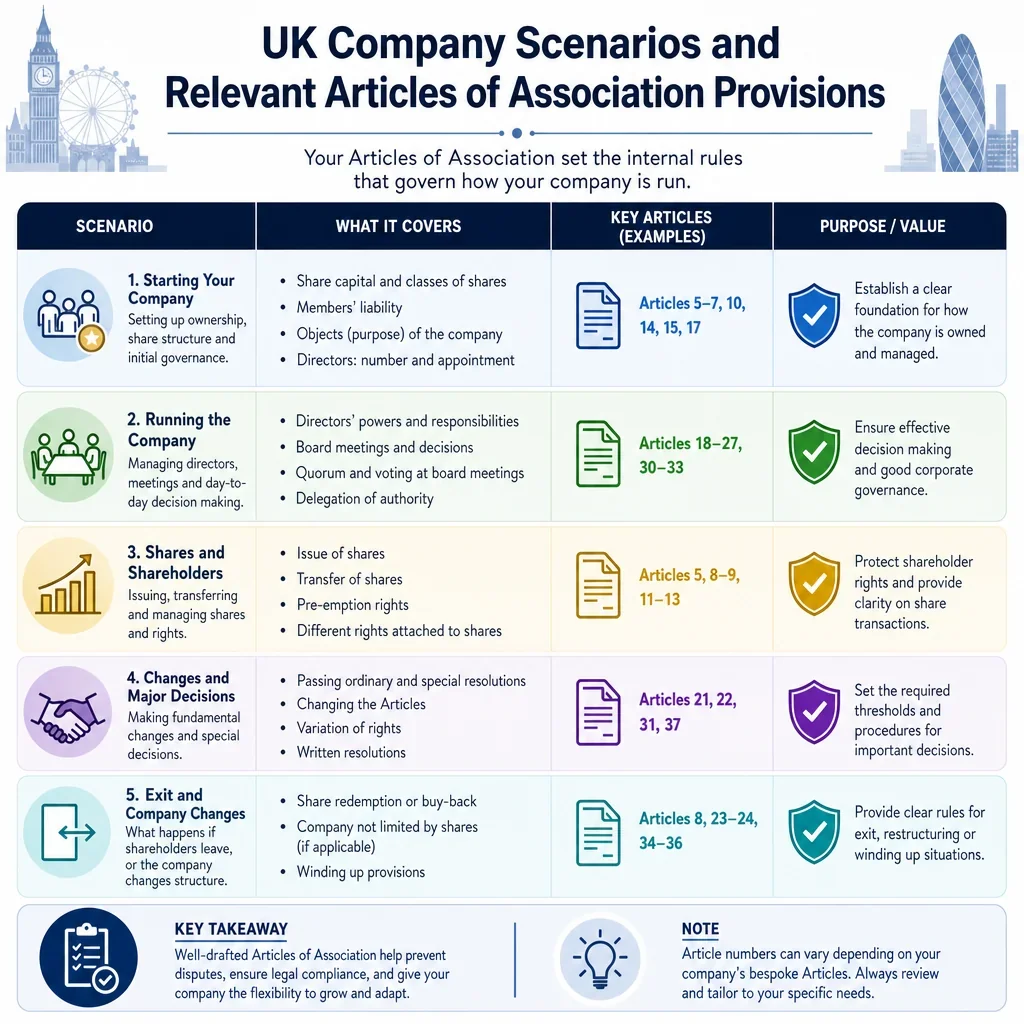
UK guide to company scenarios and relevant articles of association provisions for governance, shares, directors, and compliance.
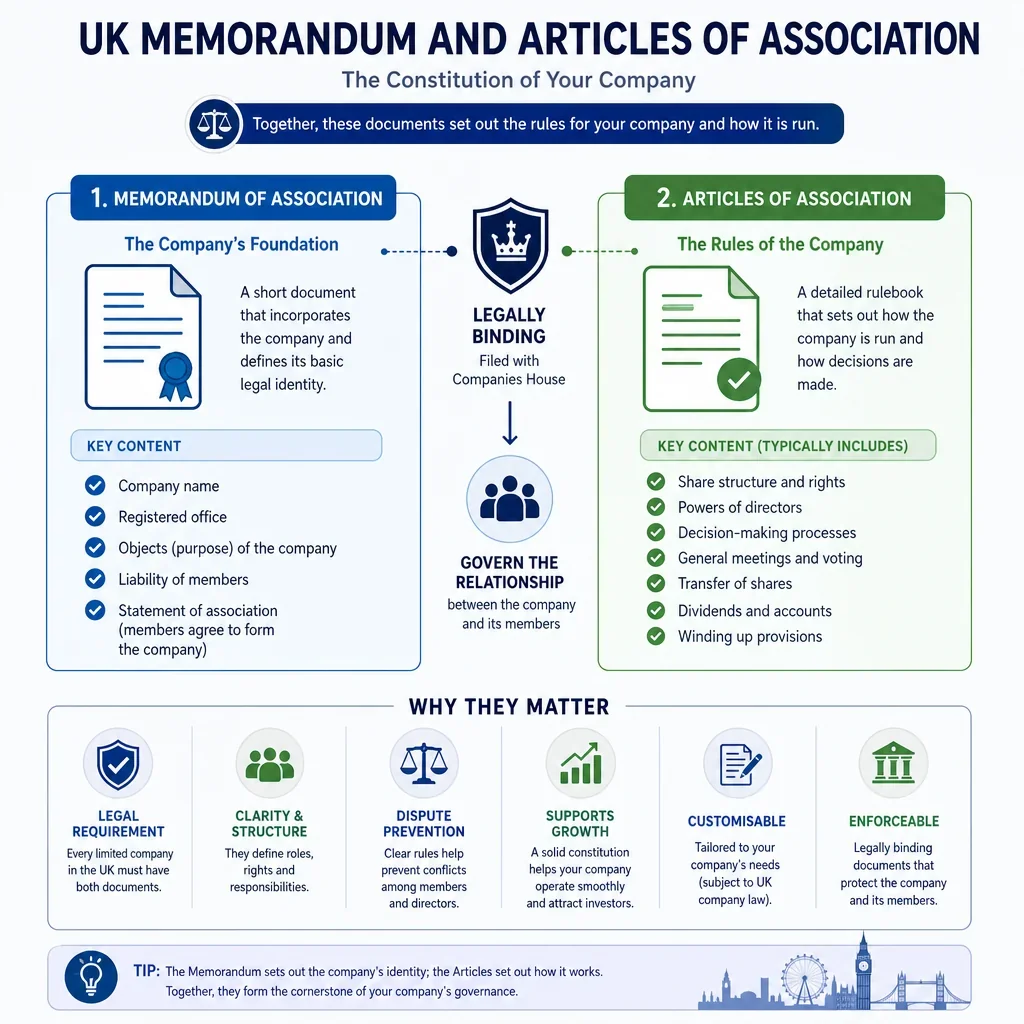
United Kingdom glossary for Memorandum and Articles terms, helping you understand company formation documents and key legal concepts.
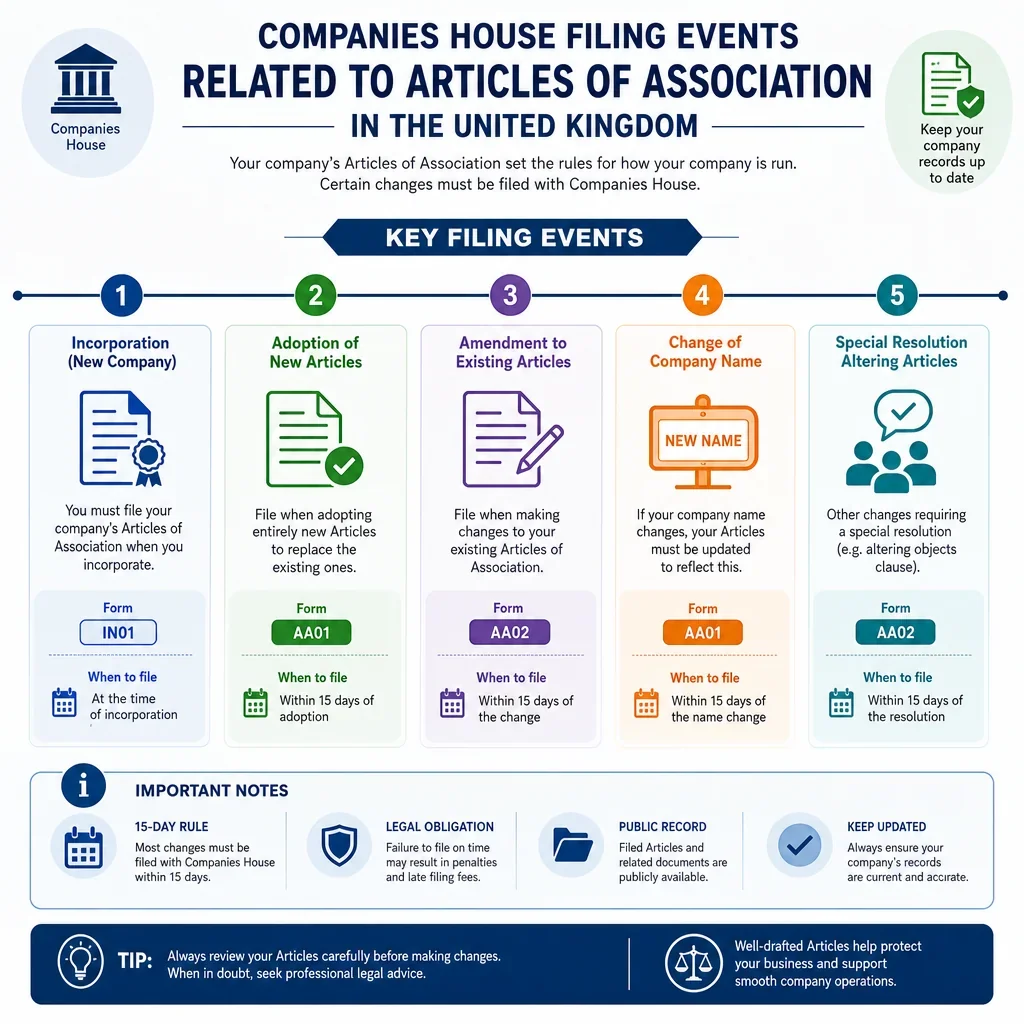
Understand UK Companies House filing events related to Articles of Association and why they matter for company records.
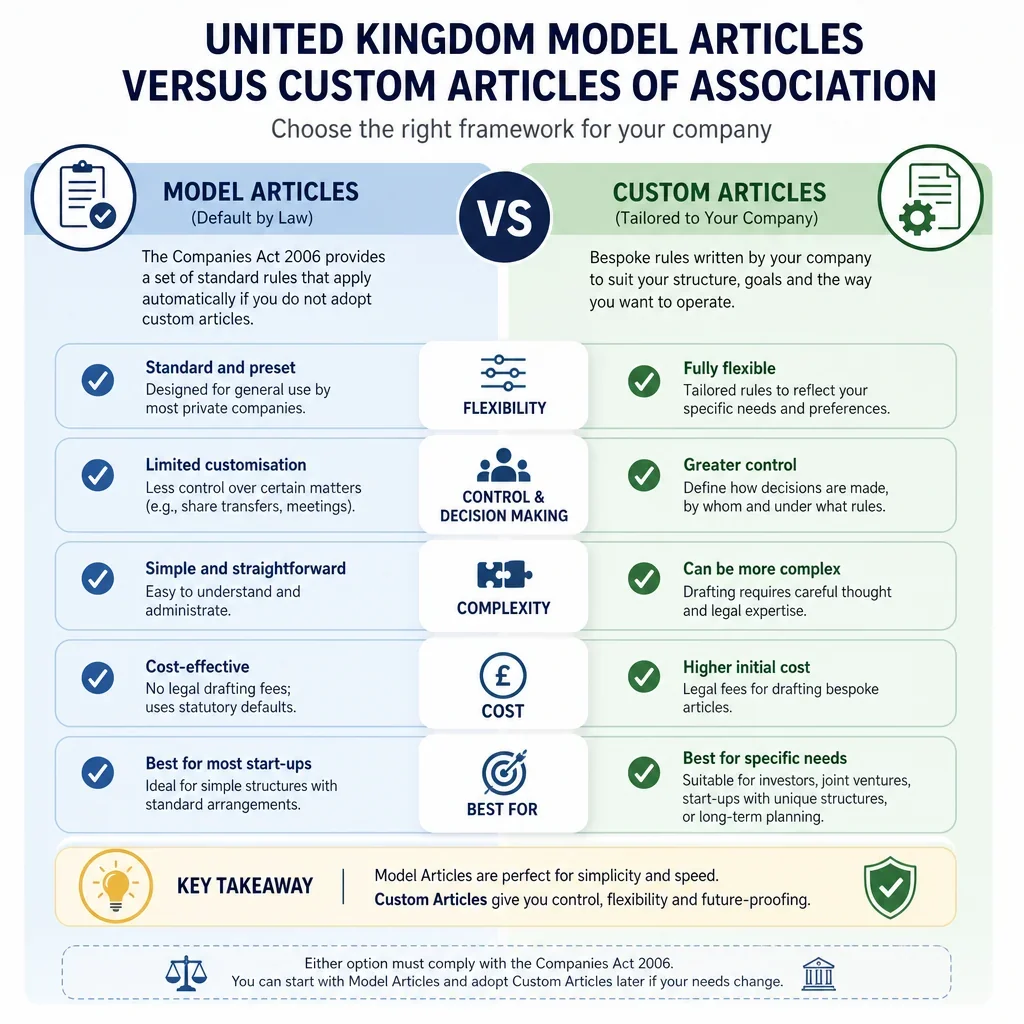
United Kingdom guide to model vs custom articles of association, covering key differences and when each option may suit a company.
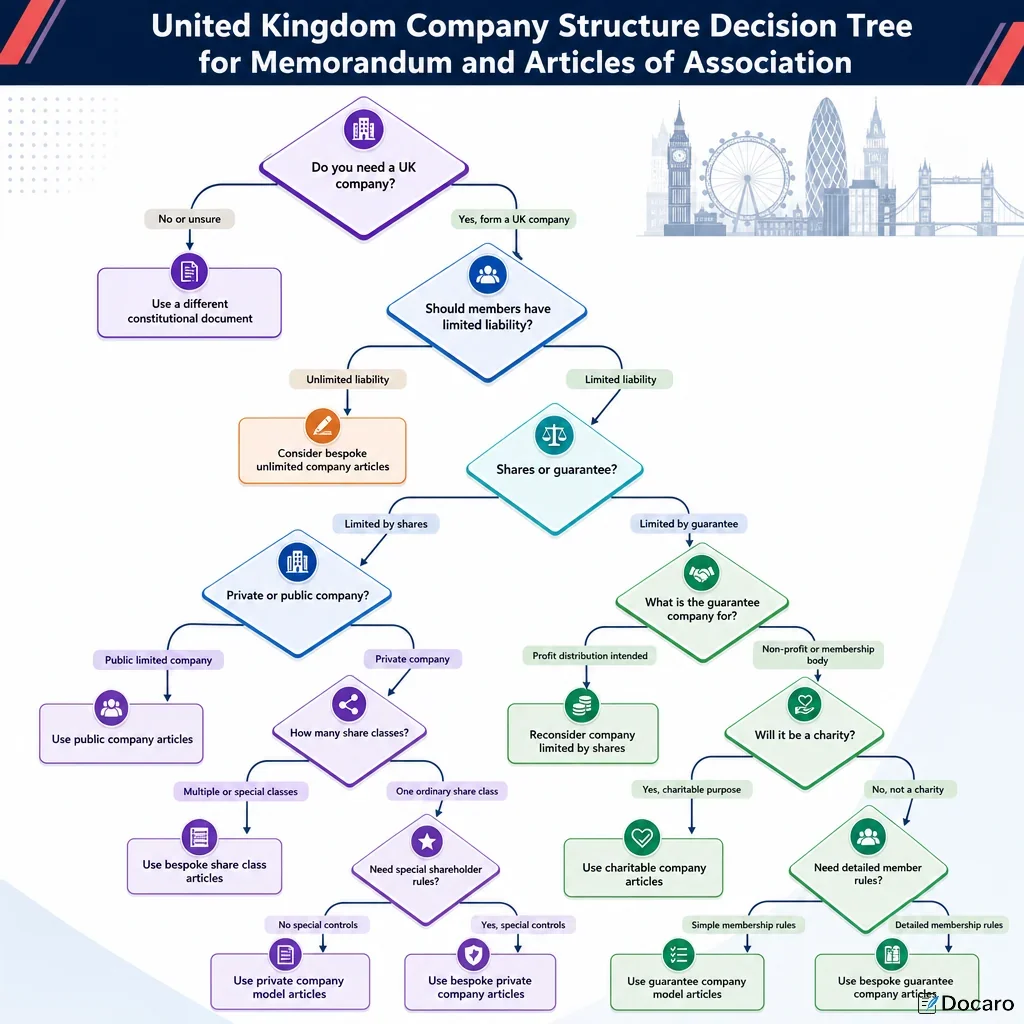
Use this United Kingdom decision tree to choose the right company structure for memorandum and articles of association.
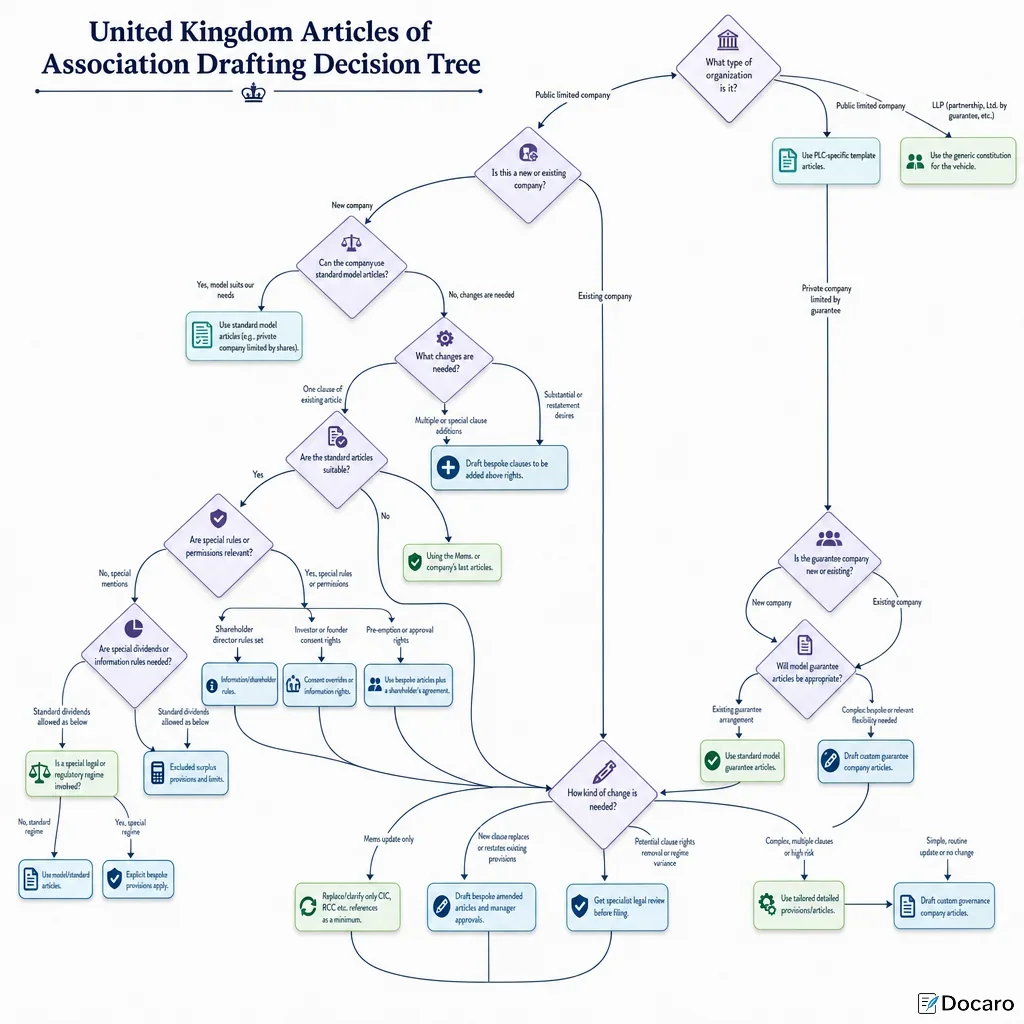
United Kingdom guide to an Articles of Association drafting decision tree for clear company governance choices.
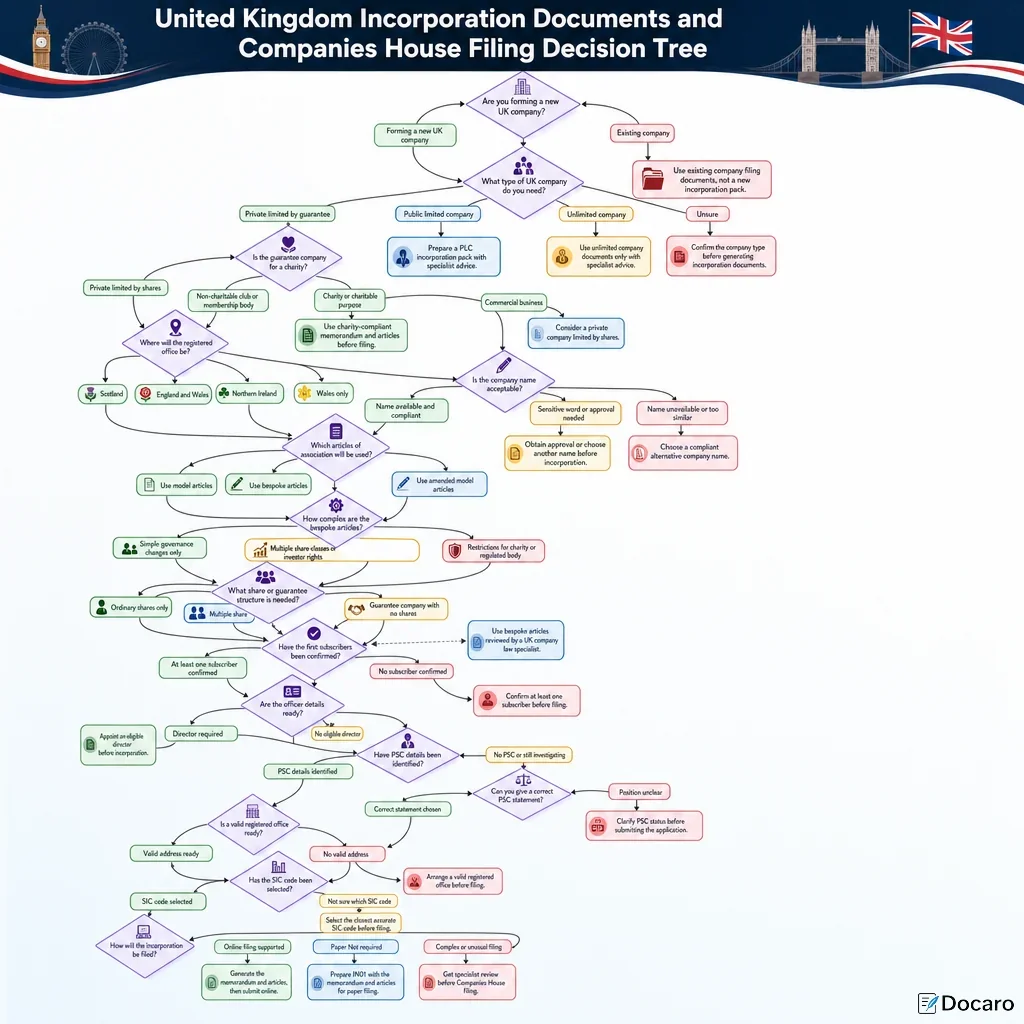
United Kingdom guide to incorporation documents and Companies House filing decisions, with a clear flowchart for business owners.
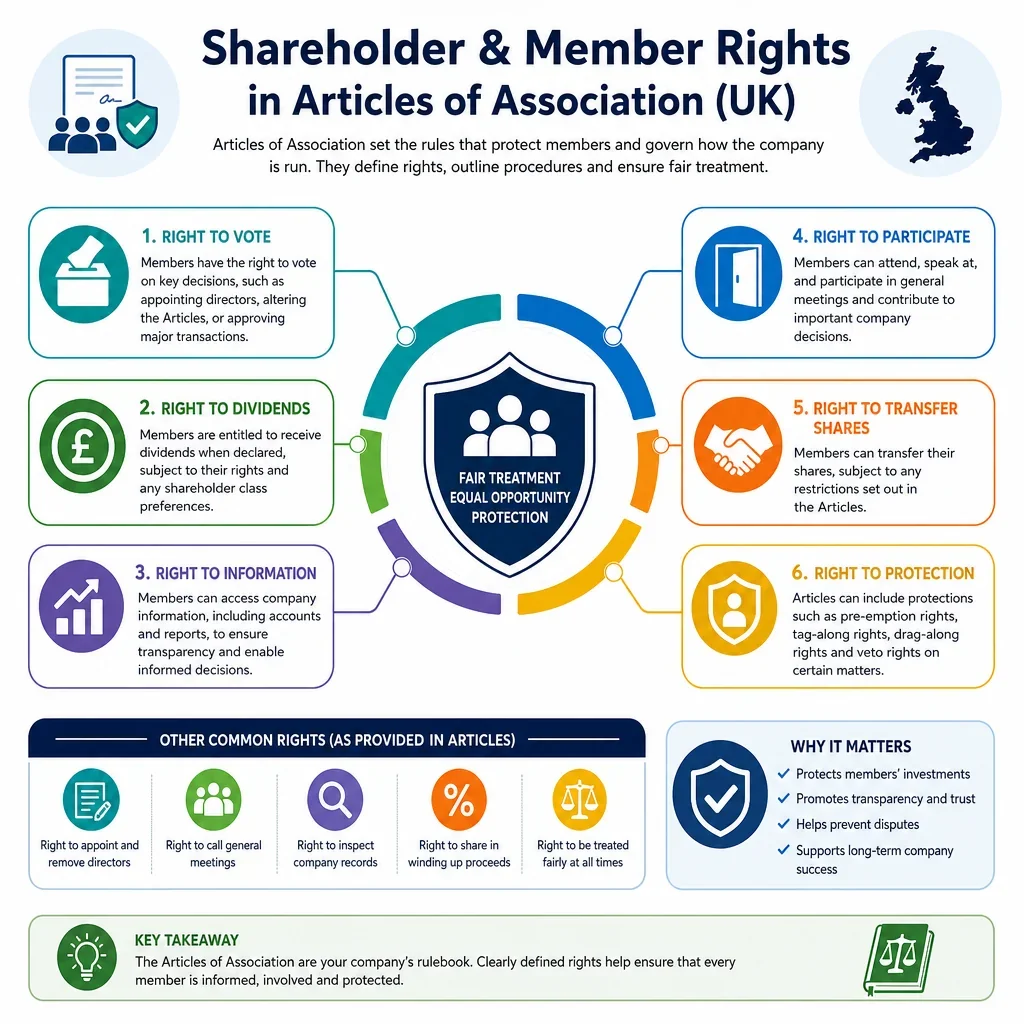
Explore shareholder and member rights in UK articles of association, including voting, transfers, protections, and governance duties.
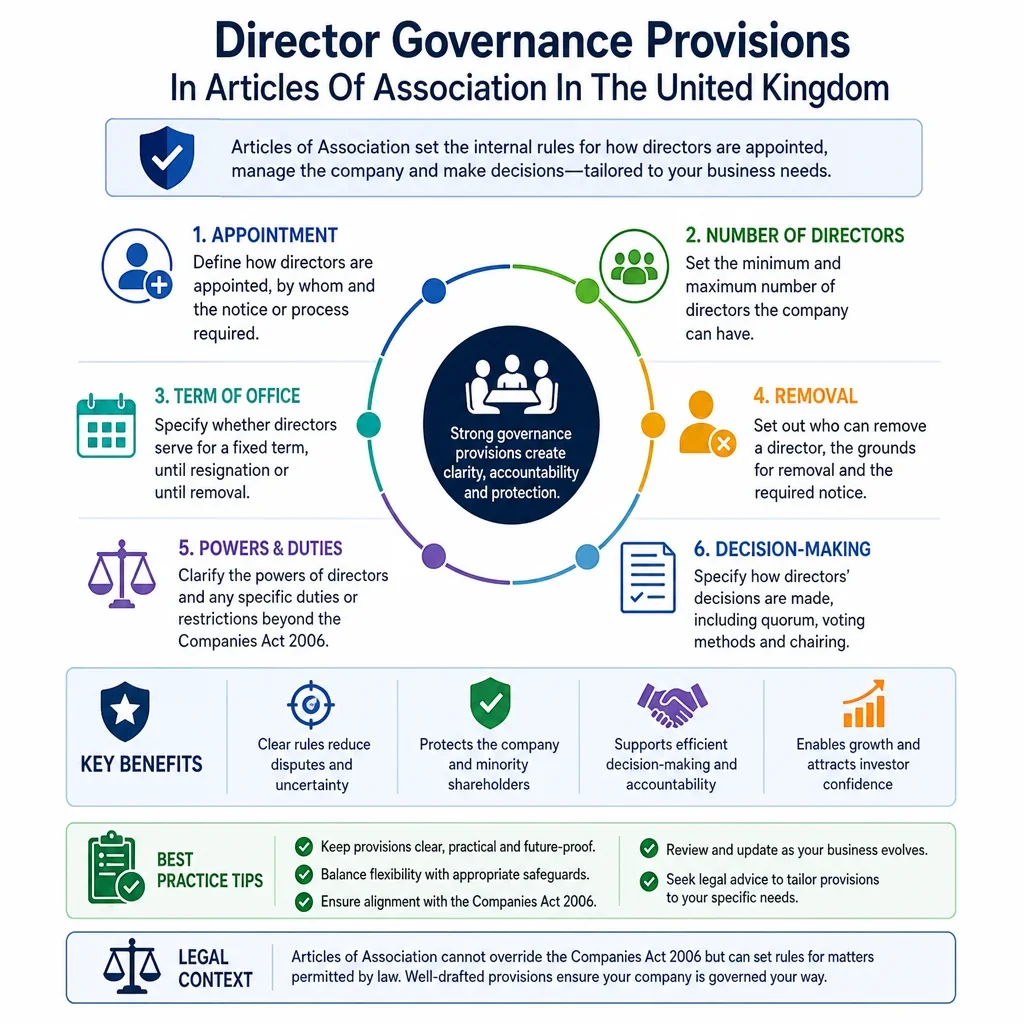
Explore UK director governance provisions in articles of association, including powers, duties, appointments, and decision-making rules.
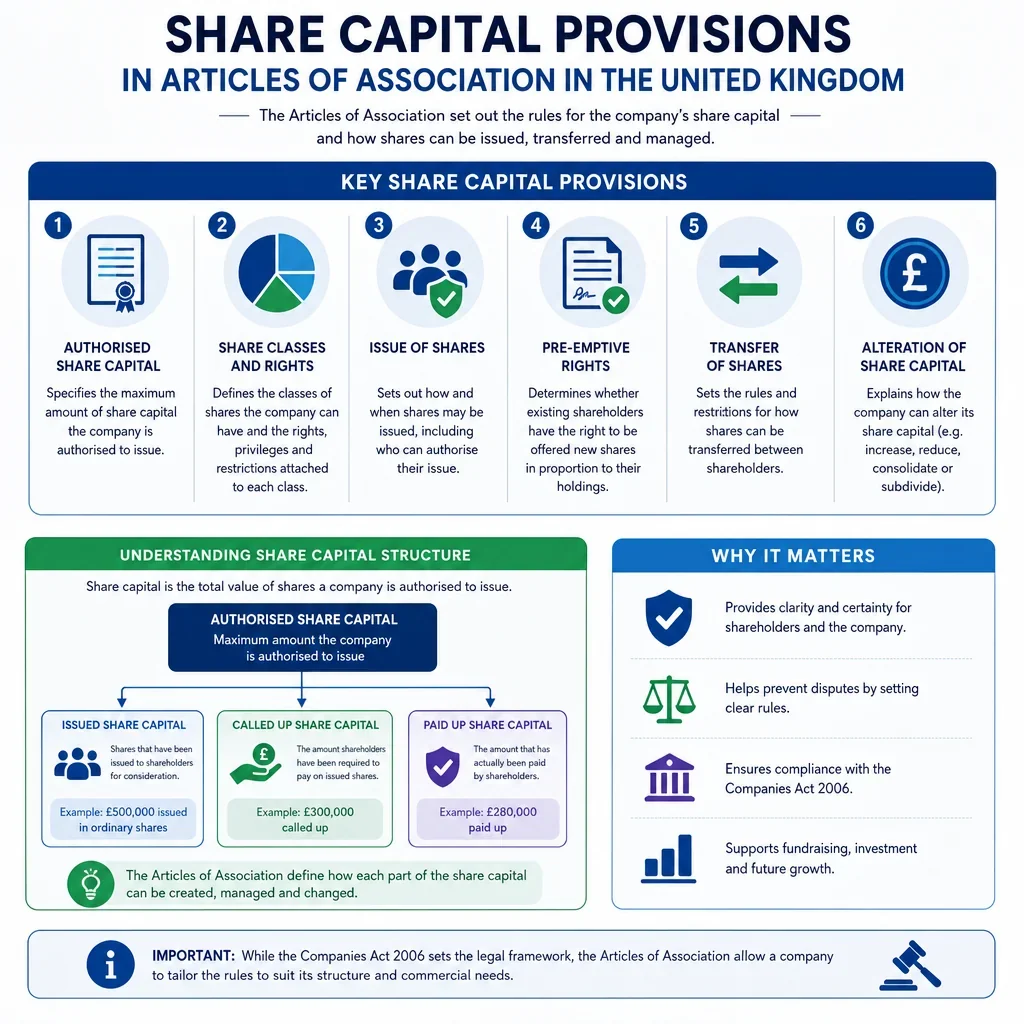
Explore UK share capital provisions in articles of association, including share rights, classes, and company formation relevance.
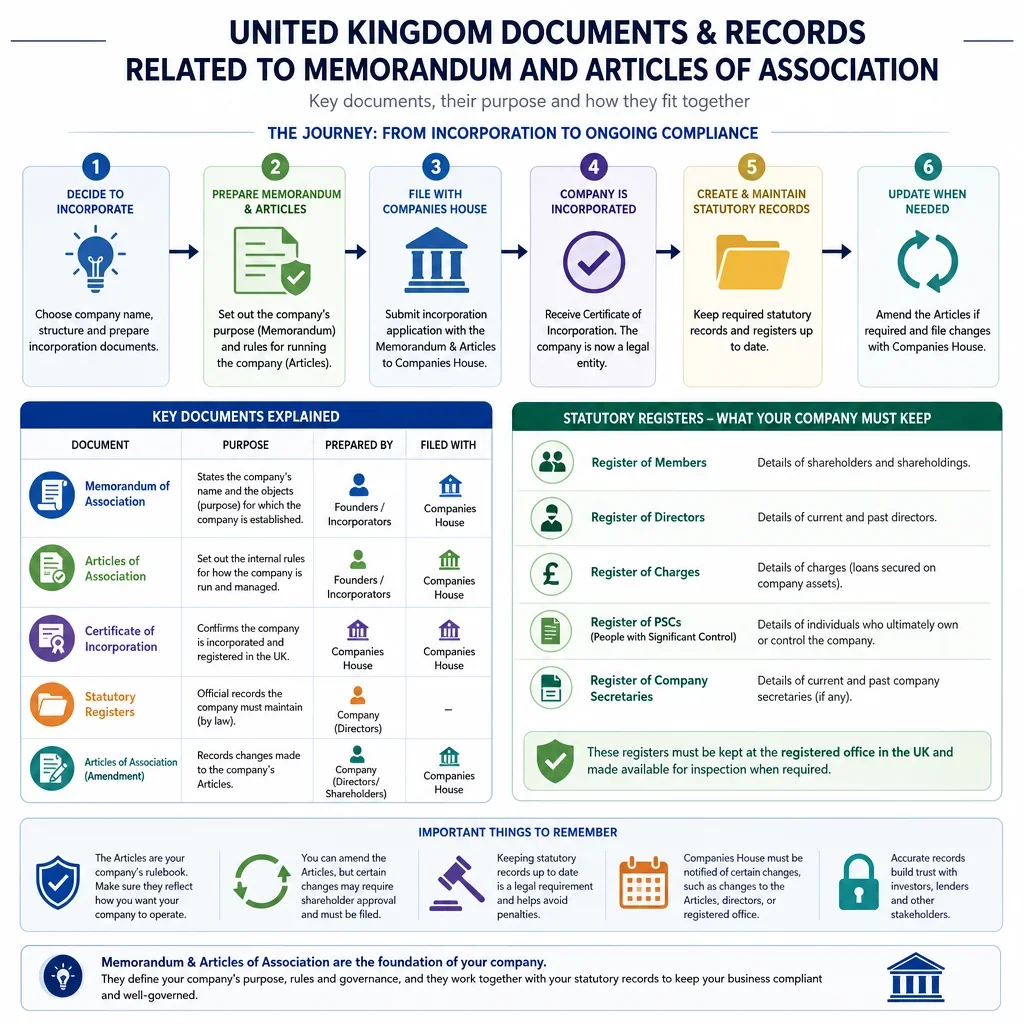
United Kingdom guide to documents and records related to memorandum and articles of association for company compliance.
COID:184CID:34