AI Generated British Child Maintenance Agreement
PDF & Word - 2026 Updated
Docaro Pricing
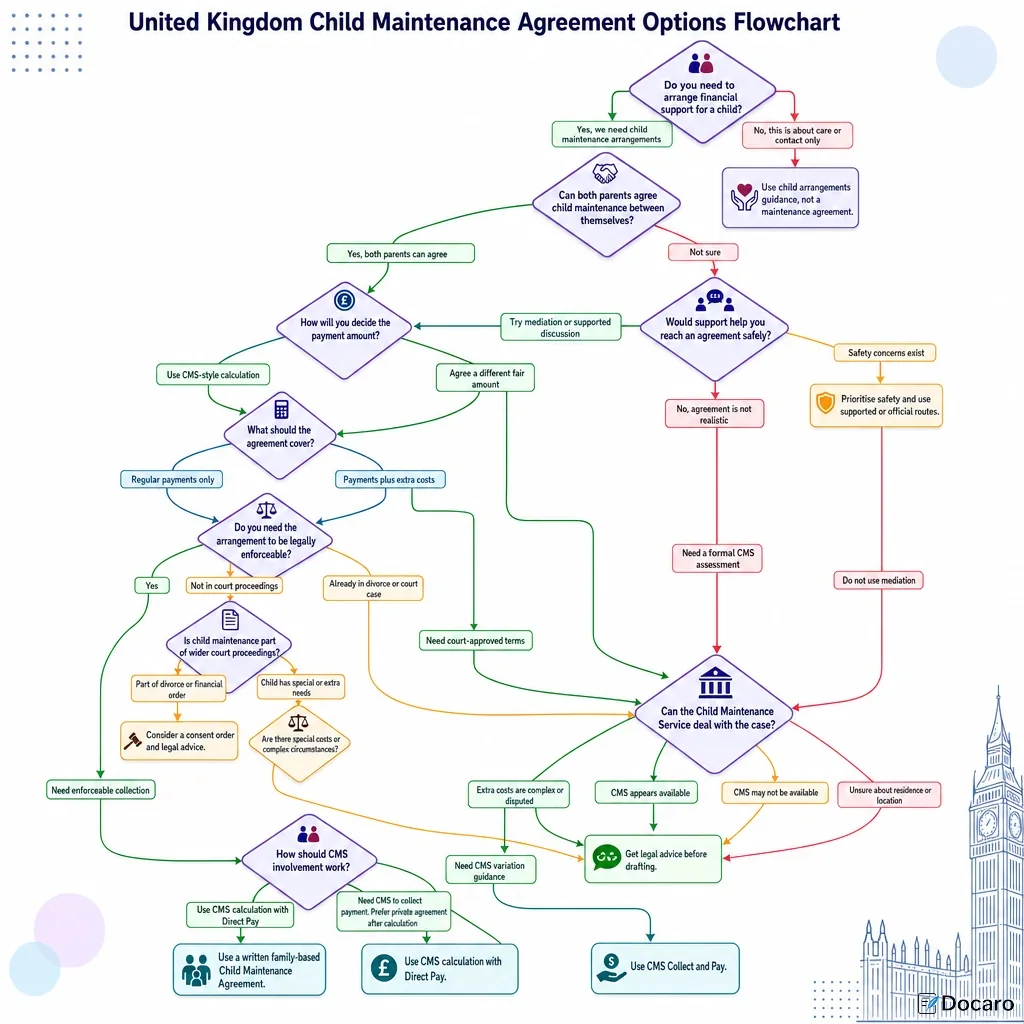
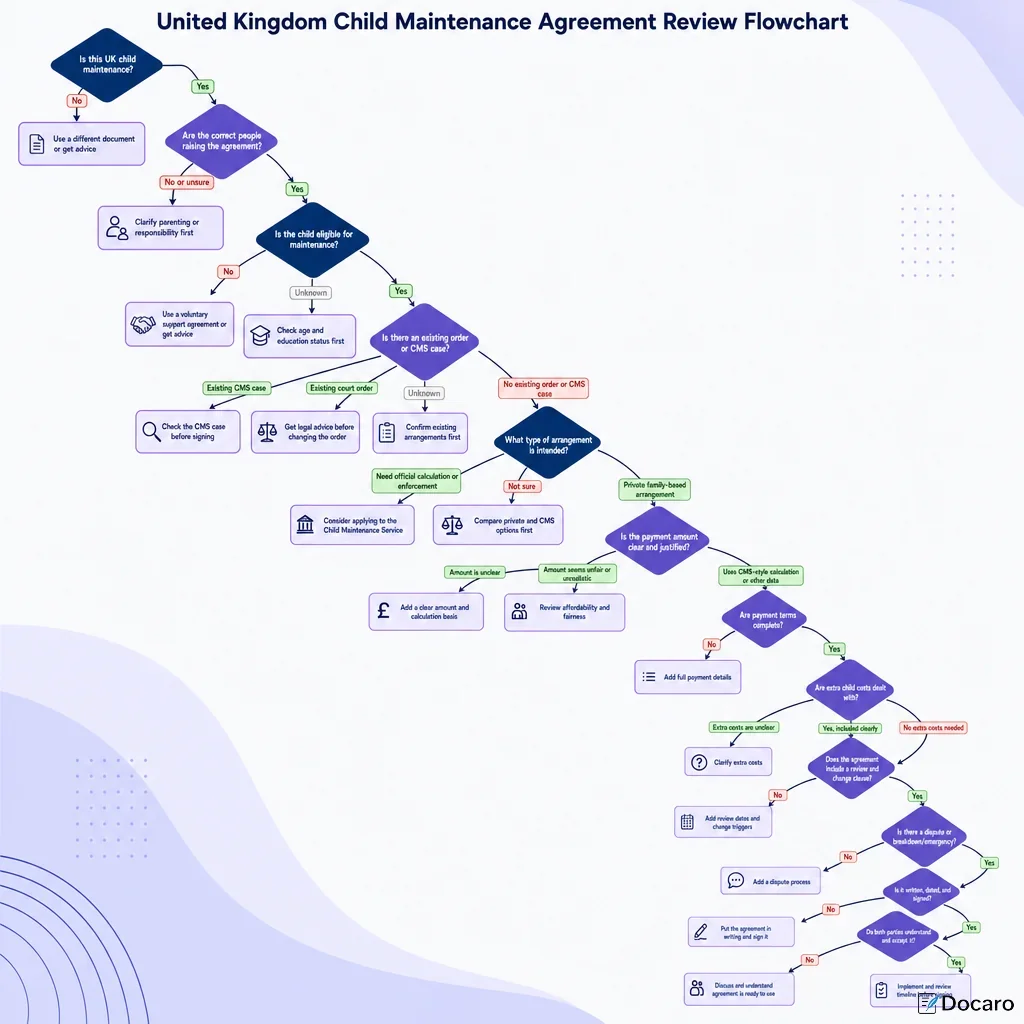
When do you need a Child Maintenance Agreement in the United Kingdom?
British Legal Rules for a Child Maintenance Agreement
Using the wrong structure for a child support agreement may fail to comply with UK family law requirements and undermine its enforceability.
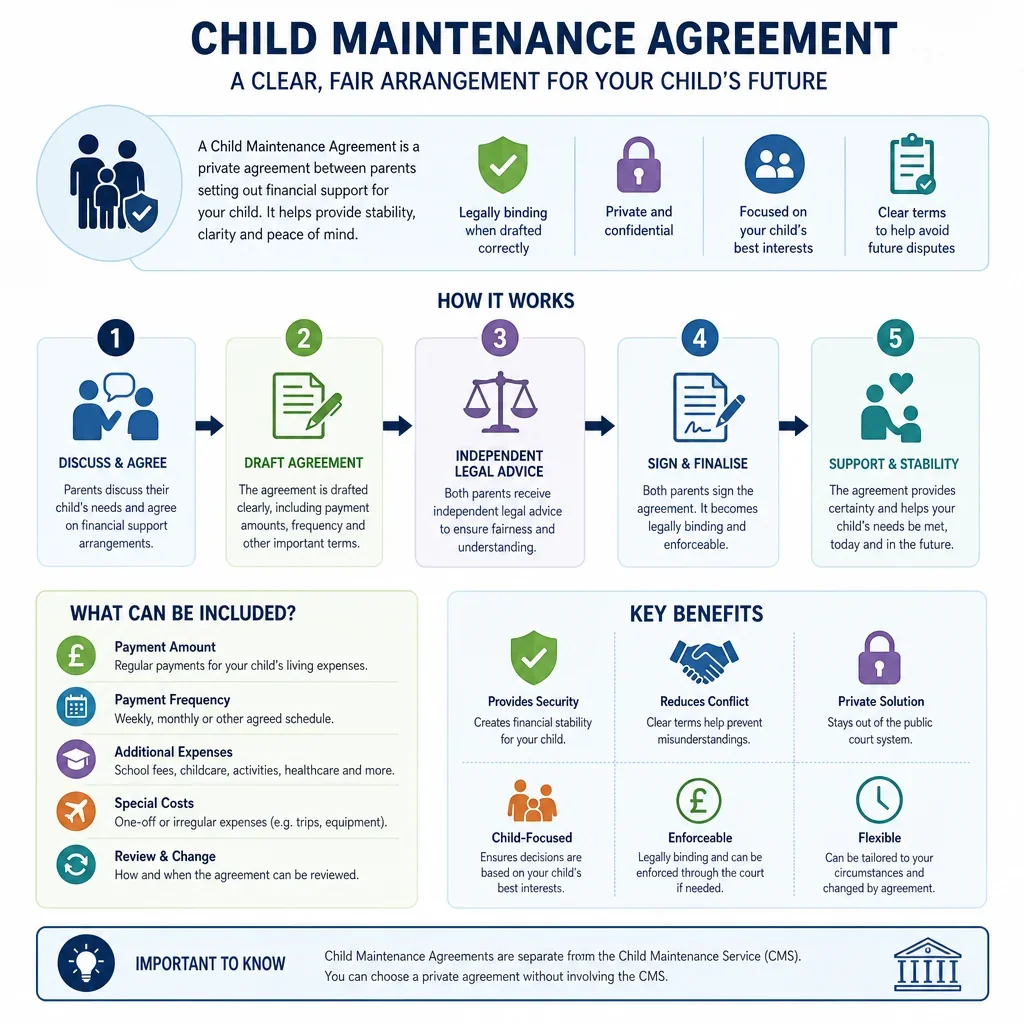
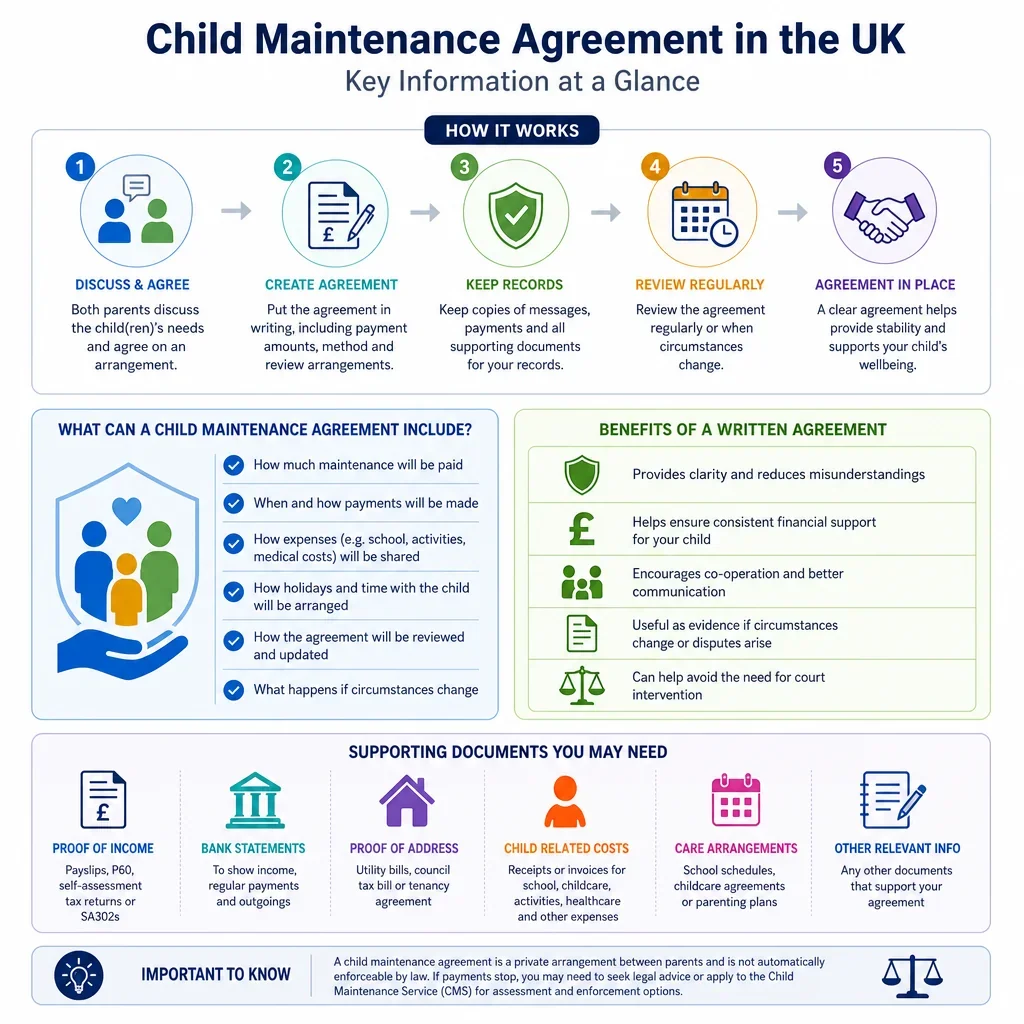
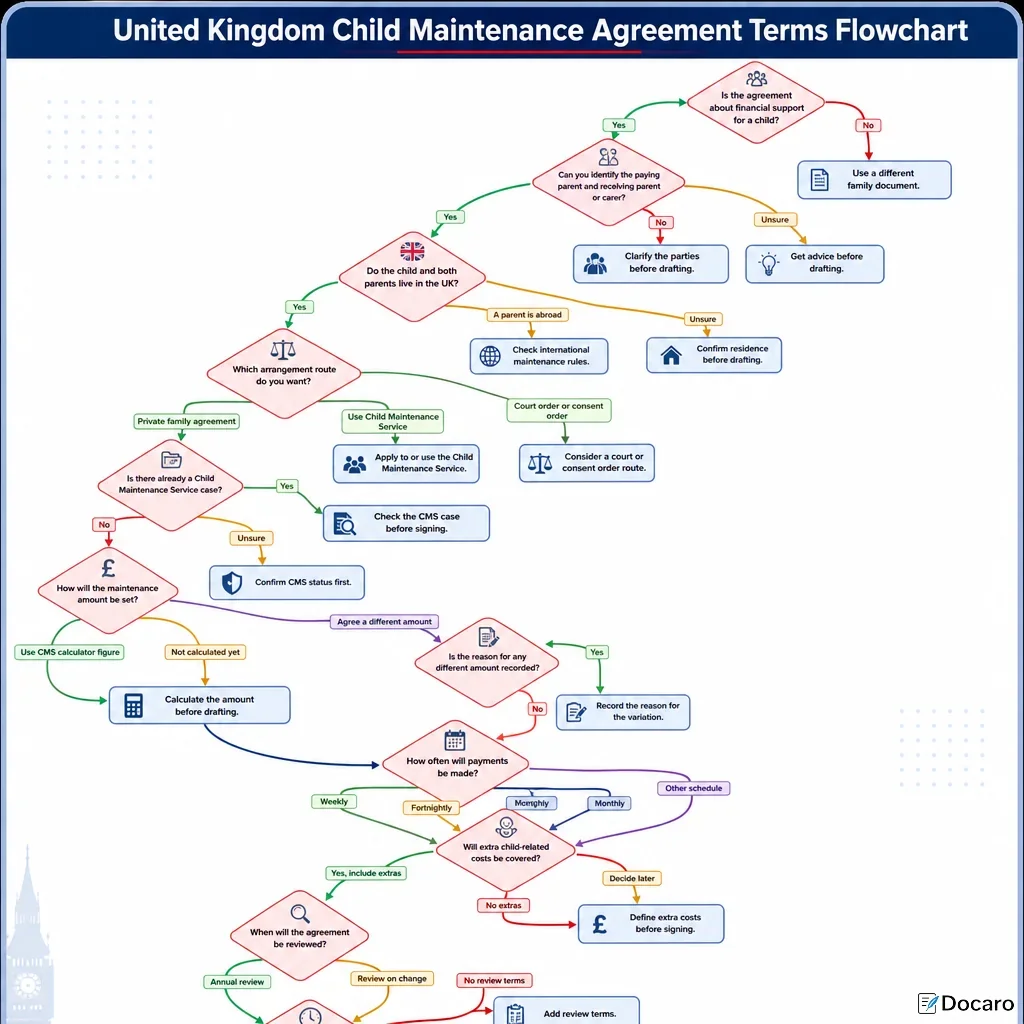
What a Proper Child Maintenance Agreement Should Include
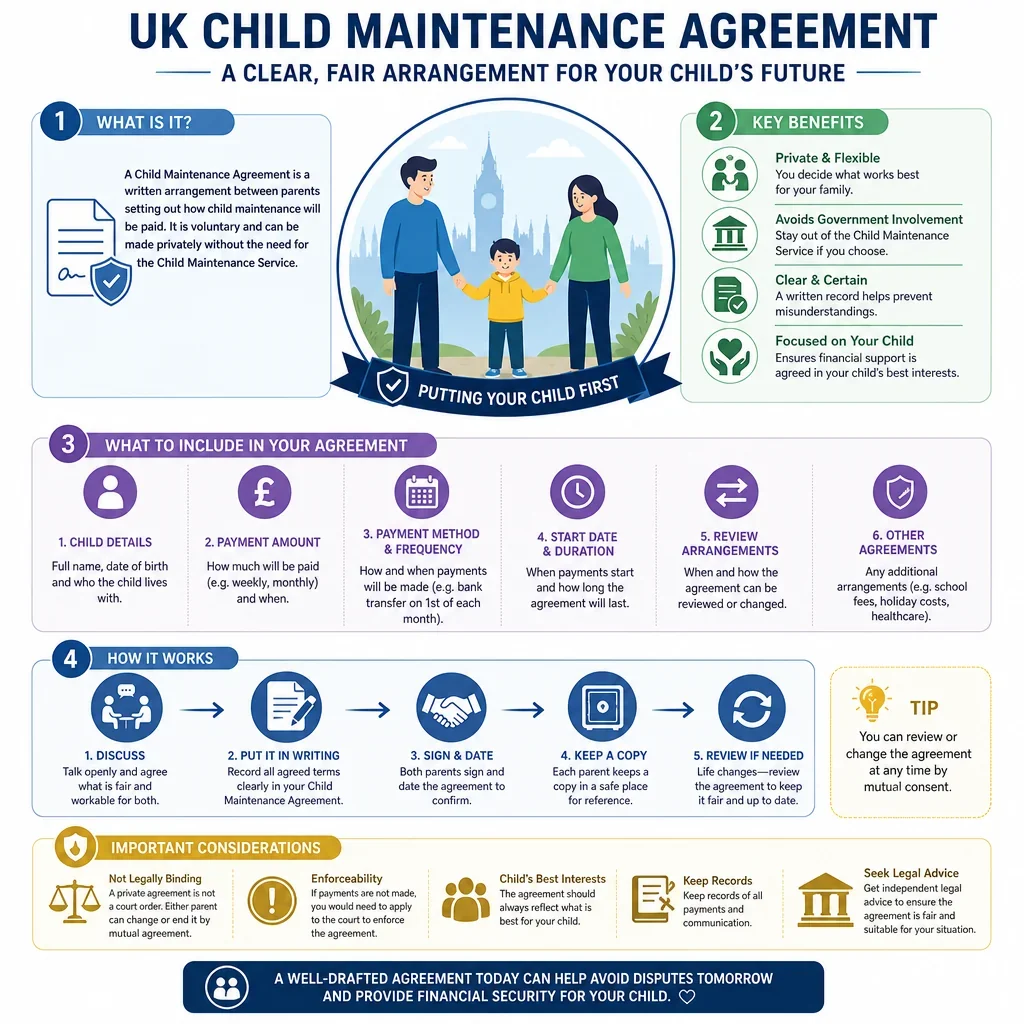
- Names and Details of ParentsInclude the full names, addresses, and contact information of both parents to clearly identify who is involved.
- Child's InformationList the child's full name, date of birth, and any relevant details to specify who the agreement covers.
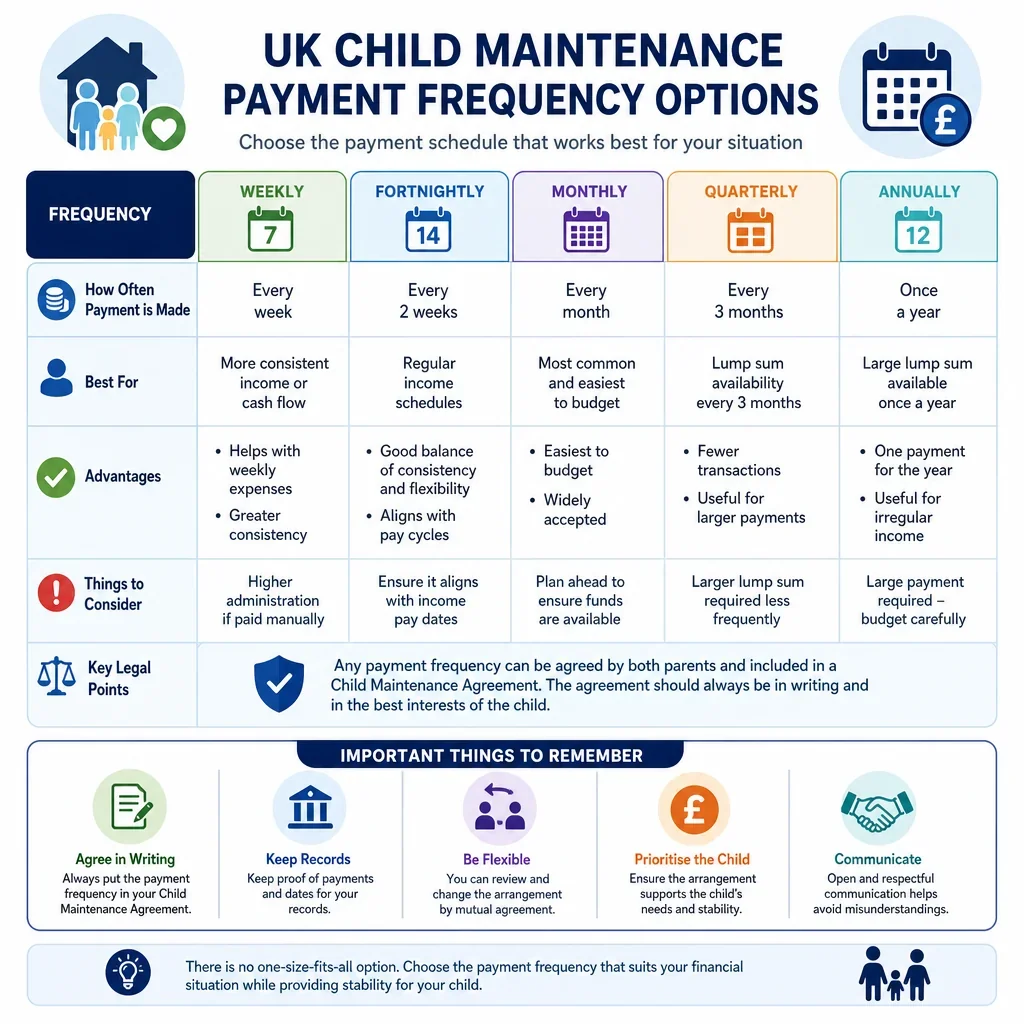
- Payment Amount and ScheduleState the exact amount of child maintenance to be paid and how often, such as weekly or monthly.
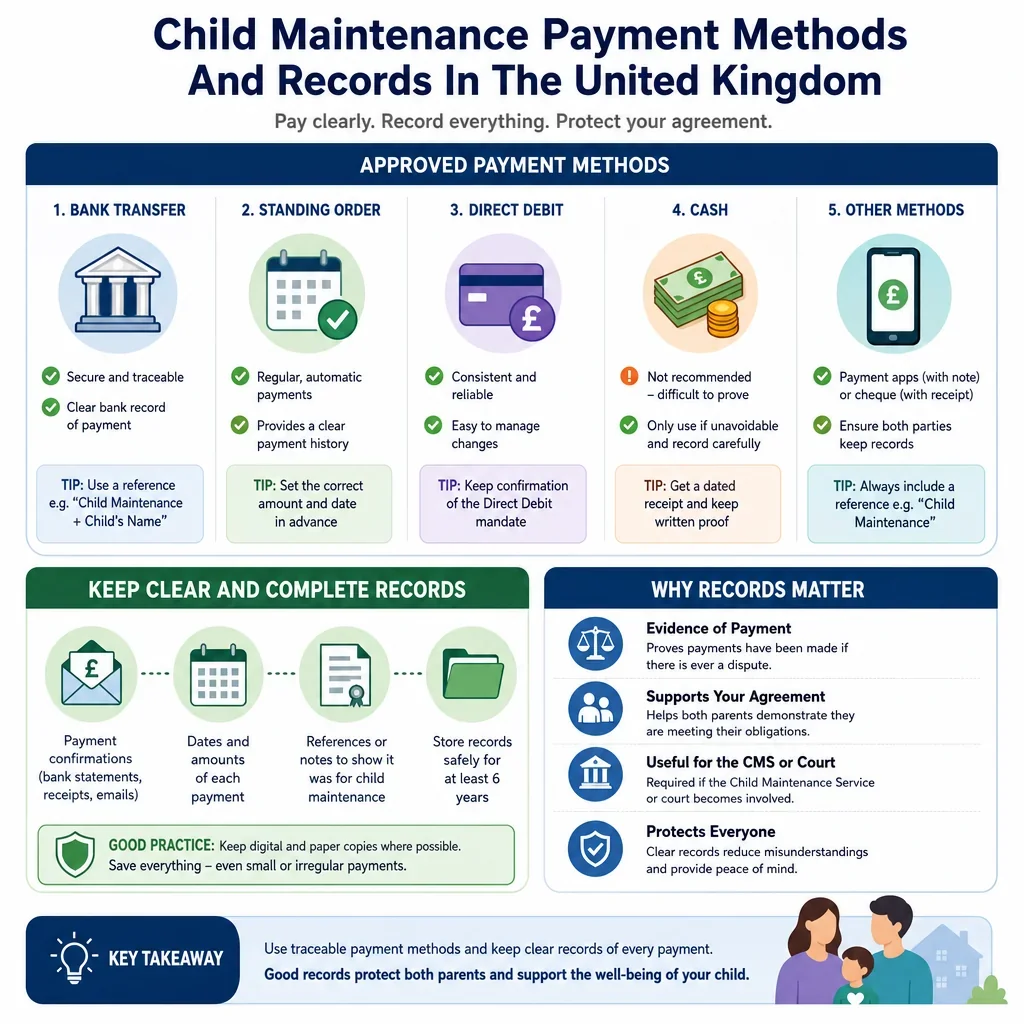
- Payment MethodDescribe how payments will be made, for example by bank transfer or direct debit.
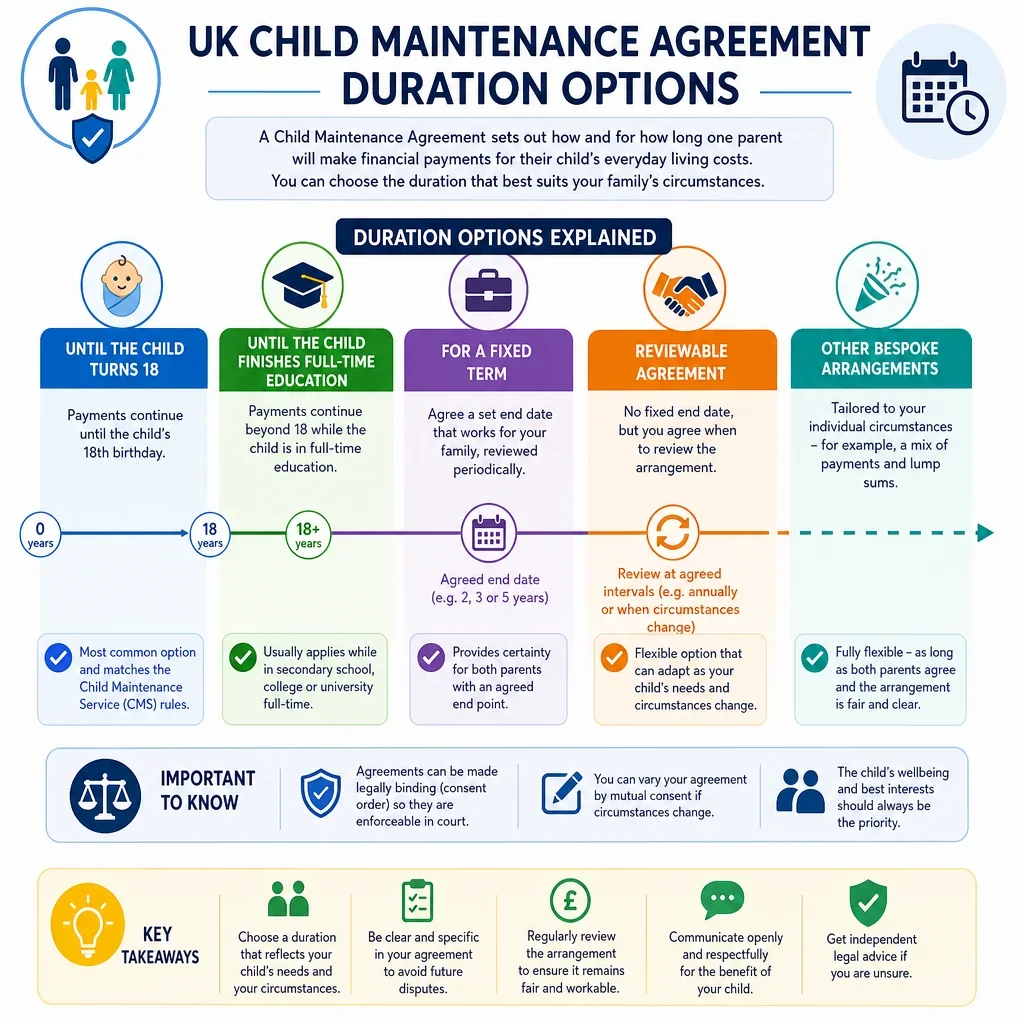
- Duration of PaymentsSpecify when payments start and end, like until the child turns 18 or finishes education.
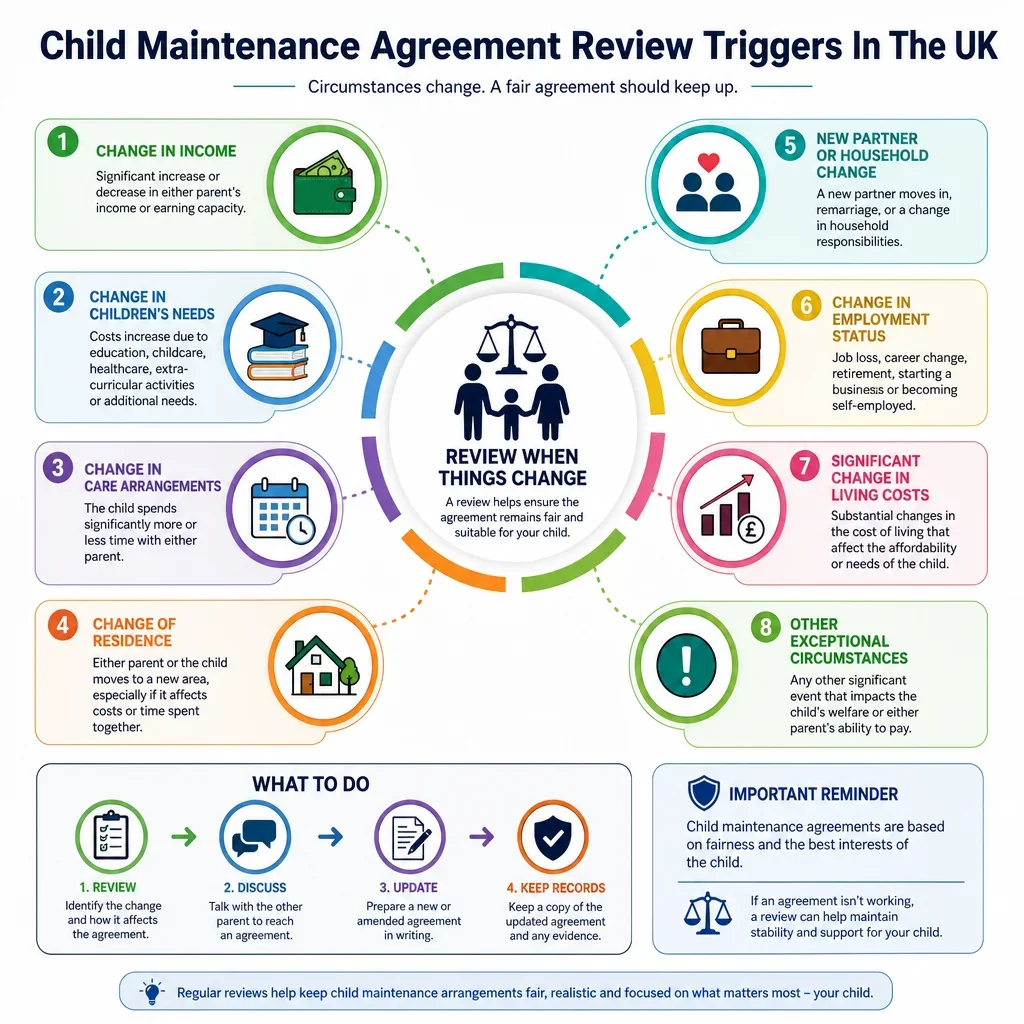
- How to Handle ChangesOutline steps for reviewing or adjusting payments if circumstances like income change.
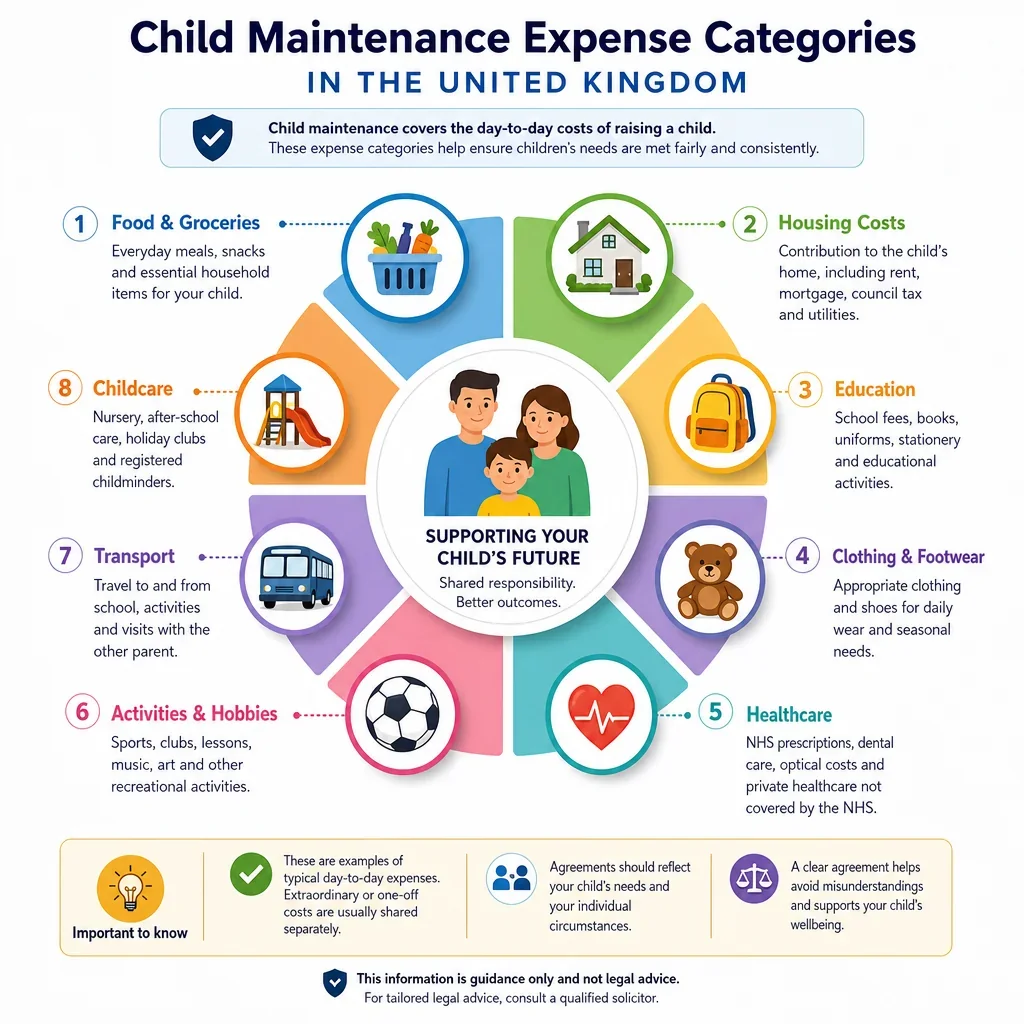
- Additional CostsCover any extra expenses, such as medical or education costs, and who pays for them.
- Agreement SignaturesInclude spaces for both parents to sign and date, confirming they agree to the terms.
Generate Your Document in 4 Easy Steps
Why Use Docaro?
 United Kingdom
Free Example Child Maintenance Agreement Template
Below is a free template example of a Child Maintenance Agreement for use in the United Kingdom generated by our AI model.
The clauses in your actual Child Maintenance Agreement will vary from this example as they will be entirely bespoke to your requirements as set out in the questionnaire you complete.
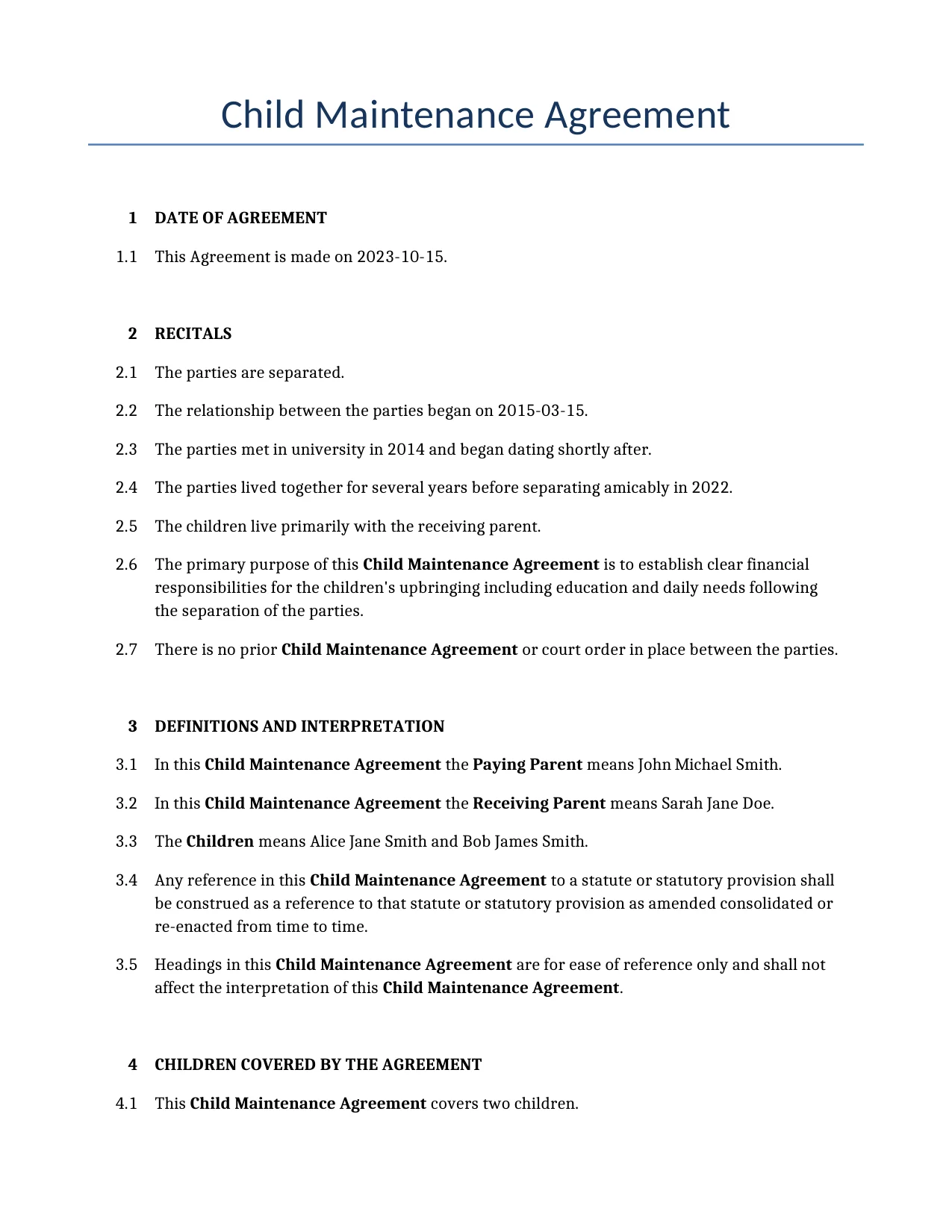
Child Maintenance Agreement
1DATE OF AGREEMENT
This Agreement is made on 2023-10-15.
2RECITALS
The parties are separated.
The relationship between the parties began on 2015-03-15.
The parties met in university in 2014 and began dating shortly after.
The parties lived together for several years before separating amicably in 2022.
The children live primarily with the receiving parent.
The primary purpose of this Child Maintenance Agreement is to establish clear financial responsibilities for the children's upbringing including education and daily needs following the separation of the parties.
There is no prior Child Maintenance Agreement or court order in place between the parties.
3DEFINITIONS AND INTERPRETATION
In this Child Maintenance Agreement the Paying Parent means John Michael Smith.
In this Child Maintenance Agreement the Receiving Parent means Sarah Jane Doe.
The Children means Alice Jane Smith and Bob James Smith.
Any reference in this Child Maintenance Agreement to a statute or statutory provision shall be construed as a reference to that statute or statutory provision as amended consolidated or re-enacted from time to time.
Headings in this Child Maintenance Agreement are for ease of reference only and shall not affect the interpretation of this Child Maintenance Agreement.
4CHILDREN COVERED BY THE AGREEMENT
This Child Maintenance Agreement covers two children.
The full names of the children covered by this Child Maintenance Agreement are Alice Jane Smith and Bob James Smith.
The date of birth for Alice Jane Smith is 15/03/2015.
Alice Jane Smith is female.
The date of birth for Bob James Smith is 20/07/2017.
Bob James Smith is male.
5BASIC MAINTENANCE PAYMENTS
The Paying Parent shall pay the Receiving Parent the sum of 400.0 per month as basic child maintenance for the Children.
6PAYMENT SCHEDULE AND METHOD
The basic maintenance payments shall commence on 2024-01-01.
The Paying Parent shall make the basic maintenance payments monthly.
The Paying Parent shall make the basic maintenance payments by standing order.
The Paying Parent shall issue the standing order from an account held at Barclays Bank with sort code 20-12-34 and account number 12345678 in the name of John A Smith.
The standing order shall direct the payments to an account held at HSBC with sort code 40-12-30 and account number 87654321 in the name of Jane B Doe.
7ADDITIONAL EXPENSES
The parties shall share responsibility for the Children's education expenses such as school fees or tutoring costs.
The parties shall share equally the Children's medical expenses such as dental or therapy costs beyond NHS coverage.
The parties shall provide joint funding proportional to income for the Children's extracurricular expenses such as sports clubs or music lessons.
The provisions for additional expenses shall take effect from 2024-01-01.
8INCOME AND FINANCIAL INFORMATION
The Receiving Parent has a gross annual salary from employment of 35000.0.
The Receiving Parent has a net monthly income after tax and deductions of 2200.5.
The Receiving Parent is employed.
The Receiving Parent receives child benefit which contributes to her income.
The Receiving Parent has a monthly rent or mortgage payment for her primary residence of 1200.0.
The Receiving Parent financially supports one other dependant excluding the Children in this Child Maintenance Agreement.
There has been no significant change in the Receiving Parent's financial circumstances in the last 12 months.
9VARIATION OF PAYMENTS
The basic maintenance payments shall be adjustable based on changes in the Paying Parent's income.
The Child Maintenance Agreement includes a variation clause.
A change in the Paying Parent's income or a change in the Children's needs shall constitute a trigger for varying the maintenance payments.
A percentage change in the Paying Parent's income of 15.5 shall constitute the threshold for triggering a variation.
The Child Maintenance Agreement shall be effective from 2023-10-01 for variation purposes.
Either party shall provide 30 days' notice when requesting a variation of payments.
The parties shall follow the procedure of mediation through a neutral third party when processing a variation request.
10DURATION OF PAYMENTS
This Child Maintenance Agreement shall become effective on 2023-10-01.
The Paying Parent shall continue the child maintenance payments until each child completes full-time education.
The Paying Parent shall extend the payments beyond each child reaching 18 years of age if that child remains in full-time education.
11TERMINATION OF AGREEMENT
This Child Maintenance Agreement shall continue until the youngest child reaches 16 years of age or if in approved education until 20 years of age in accordance with the Child Support Act 1991 and Children Act 1989.
This Child Maintenance Agreement shall terminate for each child individually upon that child reaching the relevant age leaving full-time education starting full-time employment or upon that child passing away.
This Child Maintenance Agreement shall terminate upon the death of the Paying Parent with any outstanding obligations potentially passing to the estate or a guardian as appropriate under law.
This Child Maintenance Agreement shall terminate upon the death of the Receiving Parent with payments to be redirected to a legal guardian or appointed person for the benefit of the Children as determined by agreement or court order.
The parties acknowledge that termination events must align with statutory requirements and this agreement does not override any legal obligations under UK law.
12ARREARS AND ENFORCEMENT
The Child Maintenance Agreement includes specific provisions for handling any missed child maintenance payments.
Interest shall be applied on any arrears accumulated from missed payments by the Paying Parent.
The parties agree to utilise Child Maintenance Service enforcement and court application for a liability order as enforcement mechanisms for recovering arrears under this Child Maintenance Agreement.
The parties shall establish a specific repayment plan for any existing arrears in this Child Maintenance Agreement.
13REVIEW AND ADJUSTMENT PROVISIONS
The Child Maintenance Agreement includes provisions for periodic reviews of the child maintenance payments.
The periodic reviews shall occur annually.
The first periodic review shall take place on 2025-01-01.
The Child Maintenance Agreement includes provisions for reviewing and adjusting payments upon a significant change in circumstances.
A change in the Paying Parent's gross income or a change in a child's needs or expenses shall constitute a trigger for a review.
Either party shall provide 30 days' notice when requesting a review due to changed circumstances.
Either party shall provide 30 days' notice to the other of changes in circumstances affecting maintenance.
14DISPUTE RESOLUTION
The parties shall require mediation as the first step in resolving any disputes under this Child Maintenance Agreement.
The parties shall refer disputes to the Child Maintenance Service if mediation fails or is not agreed upon.
The parties shall follow the steps of direct discussion between the parents mediation with a qualified mediator and referral to the Child Maintenance Service for resolving disputes in this Child Maintenance Agreement.
The costs of dispute resolution steps such as mediation shall be shared equally between the Paying Parent and the Receiving Parent.
15CONFIDENTIALITY
The Child Maintenance Agreement includes a confidentiality clause requiring both parties to keep financial and personal information confidential.
Financial information personal information and child specific details shall be covered under the confidentiality obligations.
The confidentiality obligations shall continue indefinitely after the Child Maintenance Agreement ends.
An injunction or damages shall apply if confidentiality is breached.
16GOVERNING LAW
This Child Maintenance Agreement is governed by British law.
This Child Maintenance Agreement is subject to the jurisdiction of the courts of England and Wales.
17ENTIRE AGREEMENT
This Child Maintenance Agreement represents the entire agreement between the parties regarding child maintenance.
There are no prior written agreements or understandings between the parties regarding child maintenance that have not been incorporated into this document.
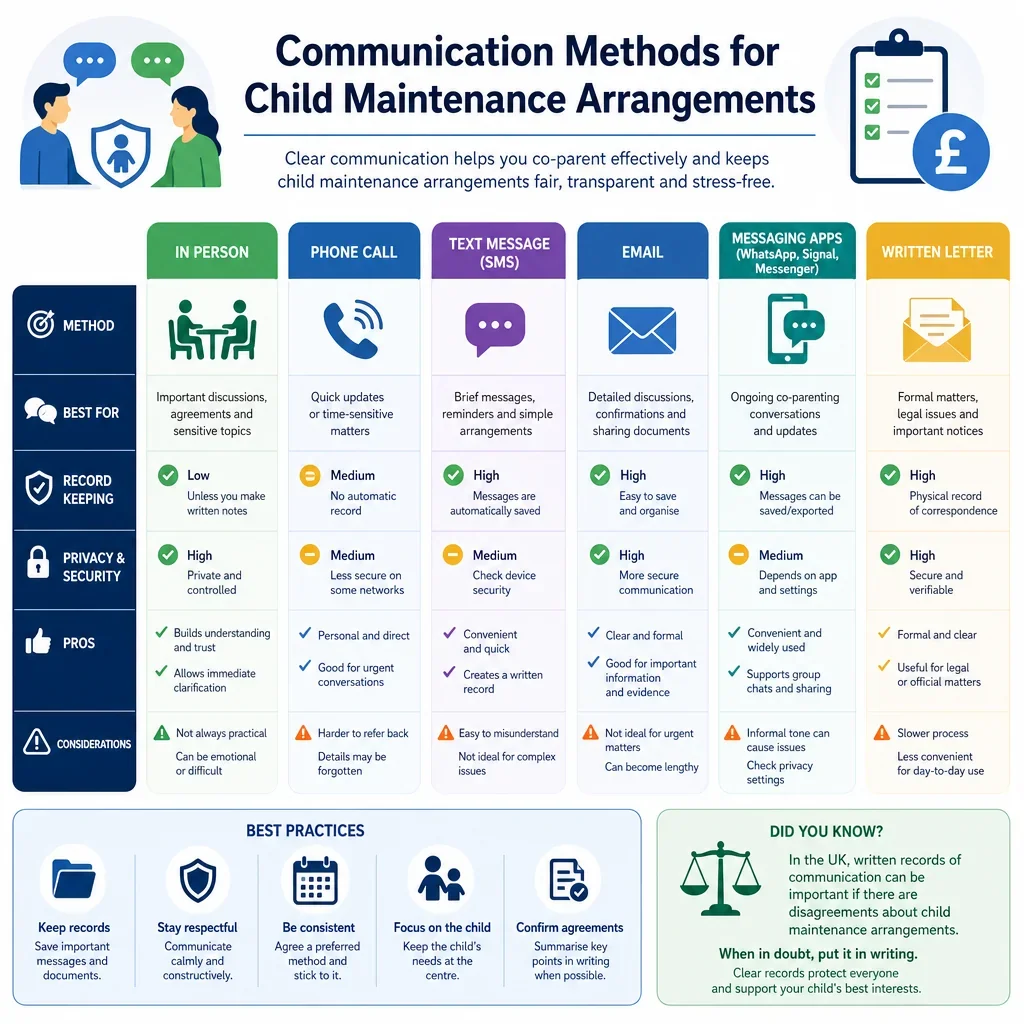
This document supersedes verbal discussions emails or messages and draft documents.
18SEVERABILITY
The Child Maintenance Agreement includes a severability clause.
The severability clause shall apply to the entire agreement.
19NOTICES
Formal notices to the Receiving Parent shall be sent to 123 High Street London SW1A 1AA.
Formal notices to the Paying Parent shall be sent to 456 Oak Avenue Manchester M1 1AA.
Notices to the Receiving Parent may be sent by email or post.
Notices to the Paying Parent may be sent by SMS or email.
Notices sent by post shall be deemed served 2 business days after posting.
The notice period for formal notices under the Child Maintenance Agreement shall be 7 days.
20AMENDMENTS
Any changes to the Child Maintenance Agreement shall be made in writing and signed by both parties.
21COSTS AND EXPENSES
The costs of preparing this Child Maintenance Agreement shall be shared equally between the parties.
The party in default shall bear the costs of enforcing this Child Maintenance Agreement if necessary.
22CHILD'S BEST INTERESTS
This Child Maintenance Agreement is made in the best interests of the Children.
This Child Maintenance Agreement is crafted with the primary goal of ensuring the Children's emotional financial and physical well-being.
By establishing clear and fair maintenance payments this Child Maintenance Agreement provides stability for the Children's daily needs including housing food and educational expenses allowing them to thrive without financial strain on either parent.
Both parents commit to ongoing involvement in the Children's lives promoting a supportive co-parenting environment that minimises conflict and fosters a sense of security.
The Child Maintenance Agreement prioritises access to quality education and healthcare ensuring the Children receive necessary resources for their development.
This Child Maintenance Agreement protects the Children from potential family disputes by setting out transparent terms enabling both parents to focus on nurturing their growth and future opportunities.
This Child Maintenance Agreement serves the Children's best interests through financial security through maintenance payments continued involvement of both parents access to education and healthcare and protection from family disputes.
Both parents understand the legal implications of this Child Maintenance Agreement on the Children's future welfare.
23ACKNOWLEDGMENT OF VOLUNTARY AGREEMENT
Both parties have received independent legal advice regarding this Child Maintenance Agreement.
This Child Maintenance Agreement is being entered into voluntarily by both parents without any duress or undue influence.
Both parties have a full understanding of the terms and implications of this Child Maintenance Agreement.
The key terms of this Child Maintenance Agreement are that the Paying Parent will provide 400.0 per month for the Children's upkeep until they complete full-time education covering education and living expenses with reviews annually.
The parties acknowledge this voluntary agreement on 2023-10-15.
24CALCULATION OF MAINTENANCE
The basic maintenance amount of \£400 per month has been calculated using the Child Maintenance Service (CMS) calculator.
The amount is based on the Paying Parent\'s gross weekly income the number of qualifying Children and any shared care arrangements such as overnight stays.
The calculation follows the statutory rates and formulas set out in the Child Support Act 1991 and associated regulations as applied by the CMS.
The parties agree that future variations shall generally follow CMS rates unless otherwise agreed in writing.
25CMS AND COURT APPLICATIONS
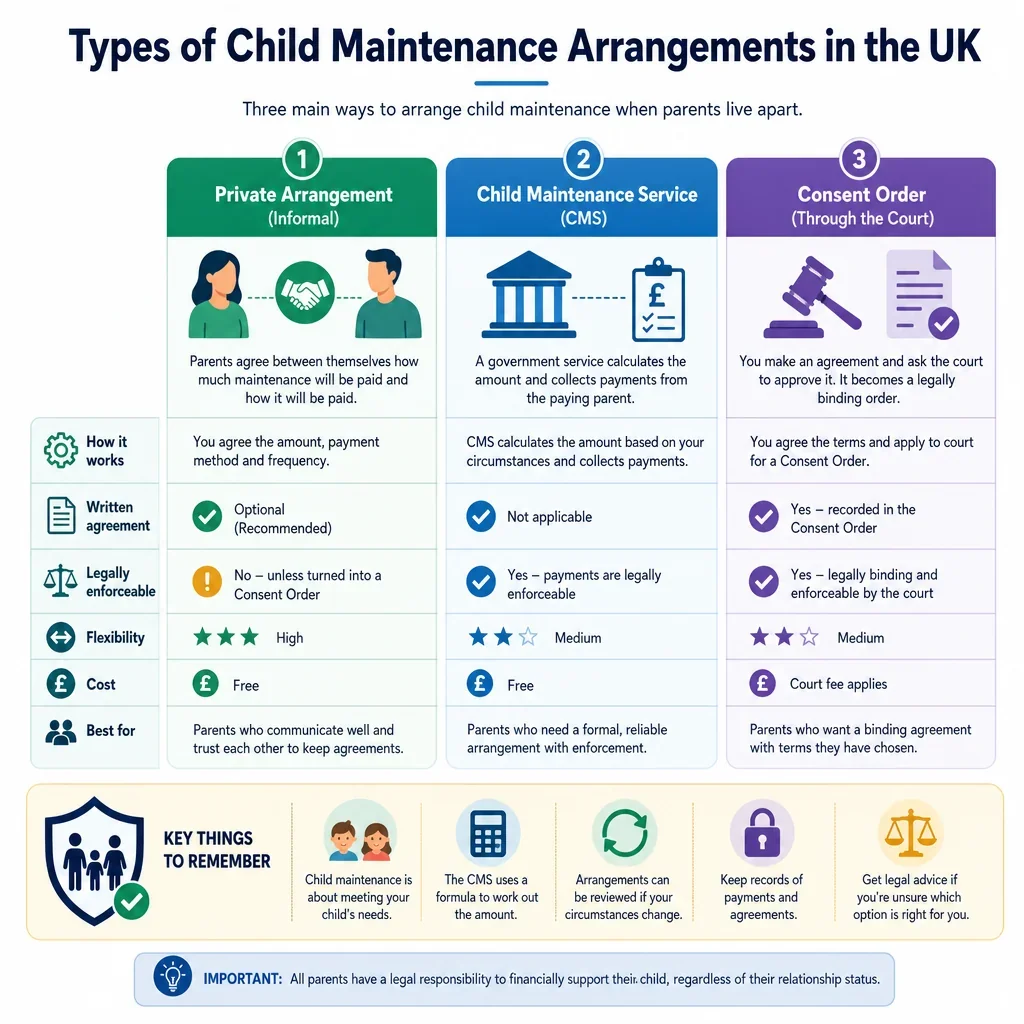
This private Child Maintenance Agreement does not prevent either party from applying to the Child Maintenance Service (CMS) for a formal maintenance calculation at any time.
This private Child Maintenance Agreement does not prevent either party from applying to the court for a maintenance order if this agreement is not followed or in other circumstances permitted by law.
The CMS may take this agreement into account but it is not binding on the CMS which will make its own assessment in accordance with the Child Support Act 1991.
If the Receiving Parent claims certain benefits such as Universal Credit the Paying Parent may be required to pay child maintenance via the CMS which could affect the amount and method of payment under this agreement.
26ENFORCEABILITY
This is a private agreement and is not a consent order or court order. It is not automatically enforceable through the courts or the CMS without further action.
To make maintenance payments enforceable via the CMS the Receiving Parent may need to apply for a CMS calculation. The CMS cannot directly enforce this private agreement without such an assessment.
Either party may apply to court for an order if the other party does not comply with the terms of this agreement.
The parties acknowledge that independent legal advice is recommended before entering into this agreement and both parties confirm they have received such advice or have had the opportunity to do so.
27EXECUTION
Signed by the Paying Parent John Michael Smith in the presence of the witness whose name and address are set out below. Date: _______________ Witness Name: _______________ Witness Address: _______________ Witness Signature: _______________
Signed by the Receiving Parent Sarah Jane Doe in the presence of the witness whose name and address are set out below. Date: _______________ Witness Name: _______________ Witness Address: _______________ Witness Signature: _______________
This Child Maintenance Agreement is made in writing and has been signed by both parties to confirm their agreement to its terms.
This agreement may be executed in any number of counterparts each of which when executed and delivered shall constitute a duplicate original but all counterparts together shall constitute one agreement.
No waiver of any rights under this agreement shall be effective unless in writing and signed by the waiving party. A waiver shall not constitute a continuing waiver or waiver of any subsequent breach.
Child maintenance payments are not subject to income tax for the Receiving Parent nor are they tax-deductible for the Paying Parent under current UK tax rules.
This example shows approximately 70% of a typical document and is provided for illustrative purposes only. The remaining content has been omitted.
Every document generated by Docaro is tailored to your specific circumstances, jurisdiction and the information you provide. The completed document includes all applicable clauses and provisions required for your situation.
To generate the full, personalised document, answer a short series of questions and your document will be created instantly.
Useful Resources When Considering a Child Maintenance Agreement in the United Kingdom
United Kingdom Reference Legislation
Child Maintenance Agreement FAQs
Document Generation FAQs
Related Articles