AI Generated British Notice Seeking Possession PDF & Word - 2026 Updated
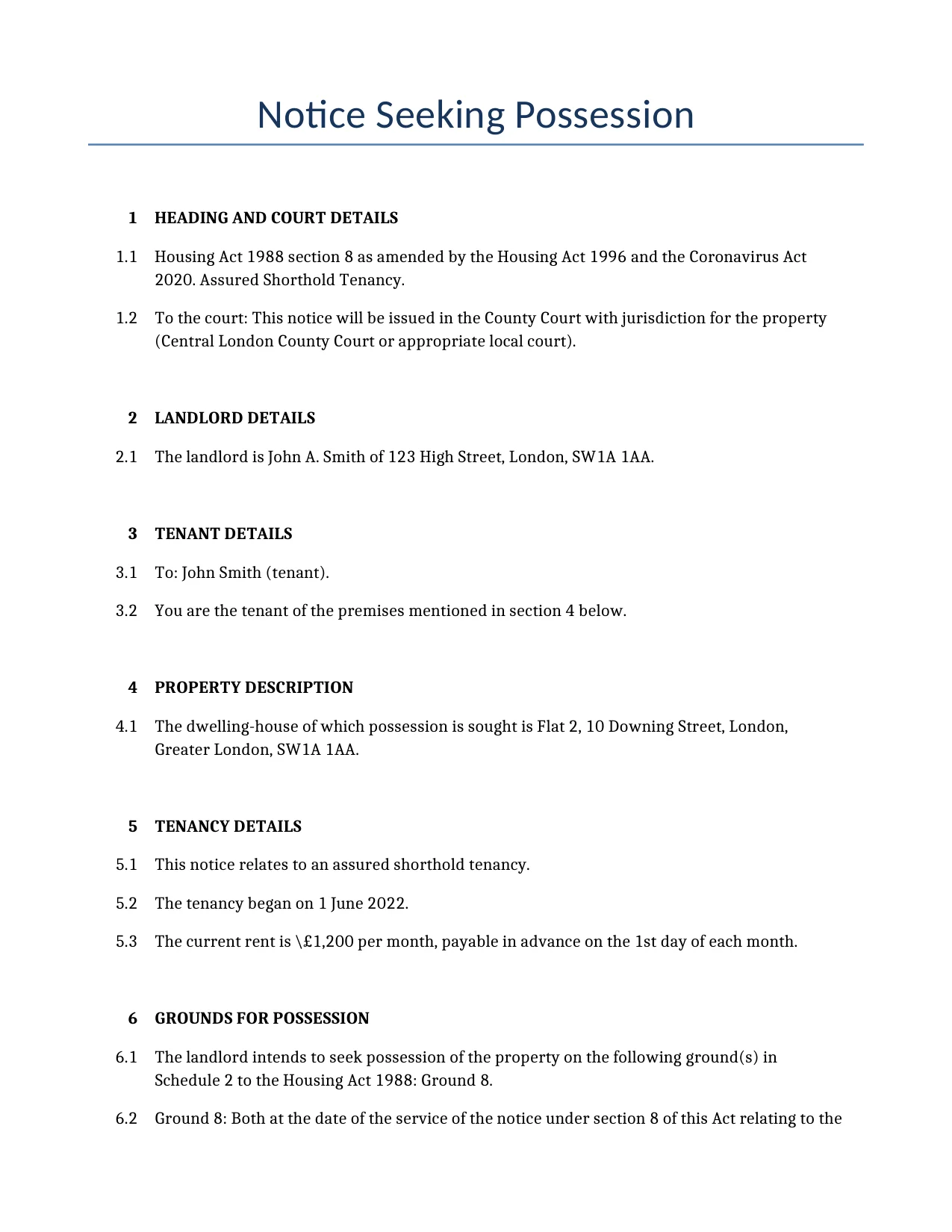
Generate a professional AI-powered Notice Seeking Possession for UK tenant evictions quickly and accurately, ensuring compliance with British housing laws and eviction procedures.
Free instant document creation.
Legally compliant agreements.
No signup required.
Generate your document for free.
Download PDF, Word and email for $4.99 USD.
When do you need a Notice Seeking Possession in the United Kingdom?
Ending a tenancy agreement
You need this notice when you want to formally end a rental agreement and ask the tenant to leave the property.
Tenant not paying rent
It is required if the tenant has fallen behind on rent payments and you need to start the process of regaining possession of your property.
Tenant breaking house rules
Use this notice when the tenant has violated terms of the agreement, such as causing damage or disturbing neighbors, and won't fix the issue.
Property sale or major repairs
It helps when you plan to sell the property or carry out significant renovations that make it impossible for the tenant to stay.
No-fault eviction
This notice allows you to end a fixed-term tenancy after it expires without needing a specific reason, as long as you follow the rules.
Legal protection for landlords
A well-drafted notice is crucial to ensure the eviction process is lawful, protecting you from disputes or court challenges.
Avoiding delays and costs
Using a clear and correct notice speeds up the process and reduces the risk of expensive legal errors.
British Legal Rules for a Notice Seeking Possession
What It Is
A notice seeking possession is a formal written warning from a landlord to a tenant, telling them to leave the rented property by a specific date due to issues like unpaid rent or the end of the tenancy.
When to Use It
Landlords can use this notice for reasons such as rent arrears, damage to the property, or when the fixed-term tenancy agreement ends and won't be renewed.
Notice Periods
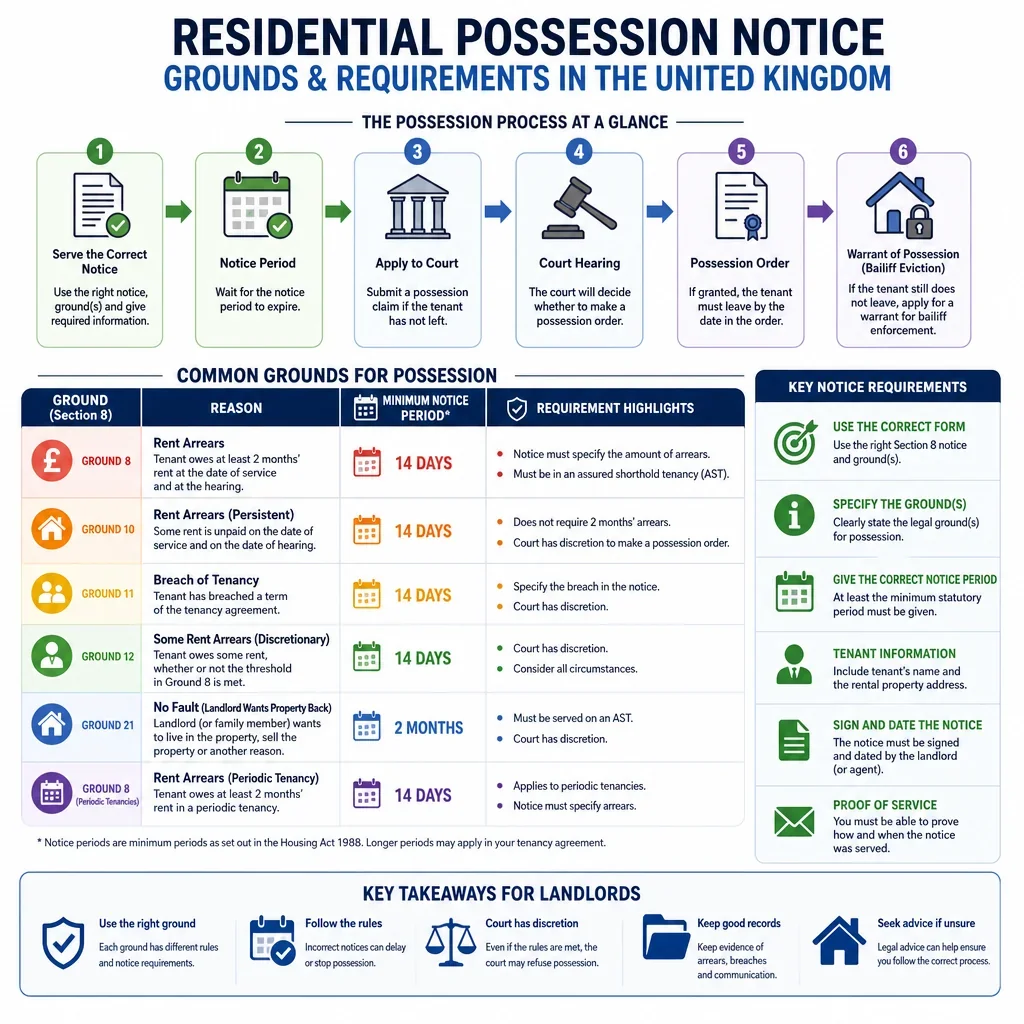
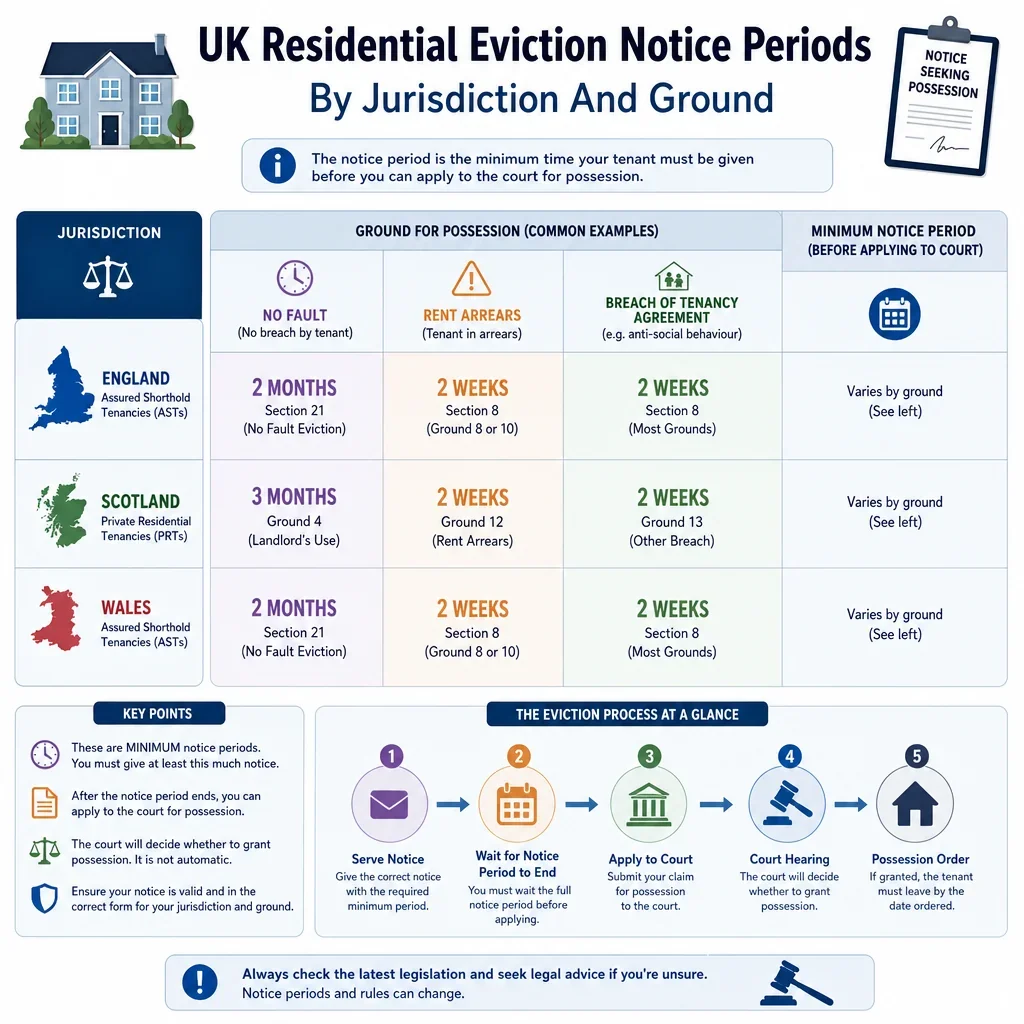
The required notice period depends on the reason for eviction and the type of tenancy, typically ranging from 2 weeks to 2 months.
How to Serve It
The notice must be delivered in writing, either by hand, post, or email if agreed, and include clear details about the reason for possession and the date to vacate.
Tenant's Response
Tenants have the right to challenge the notice if they believe it's unfair, and they must be given a fair chance to respond before any court action.
Next Steps if Ignored
If the tenant does not leave after the notice period, the landlord must apply to court for a possession order, as self-help evictions like changing locks are illegal.
Legal Protections
UK laws protect tenants from unfair evictions, ensuring landlords follow strict procedures to avoid penalties or invalid notices.
Important
Using the incorrect eviction notice format or grounds can invalidate the process and expose the landlord to legal challenges.
What a Proper Notice Seeking Possession Should Include
Landlord's Details
Include the full name and contact information of the landlord or their agent.
Tenant's Details
List the full names and addresses of all tenants being evicted.
Property Address
Clearly state the full address of the rental property involved.
Notice Type
Specify the exact type of notice, such as Section 8 or Section 21, and its legal basis.
Reasons for Eviction
If required, explain the specific grounds for seeking possession, like rent arrears or property damage.
Possession Date
State the date by which the tenants must leave the property.
Notice Duration
Indicate the minimum notice period, which varies based on the tenancy type and reason.
Service Instructions
Describe how and when the notice is being delivered to the tenants.
Legal Warnings
Warn tenants that court action may follow if they do not comply by the specified date.
Date and Signature
Include the date the notice is issued and the signature of the landlord or agent.
Why Free Templates Can Be Risky for Notice Seeking Possession
Free eviction notice templates often fail to comply with the specific requirements of UK housing laws, such as the Housing Act 1988, using outdated or generic wording that may not specify the correct notice period, grounds for possession, or required details like the property address and tenant information. This can lead to the notice being invalid, delaying the eviction process, or even resulting in legal challenges from tenants that waste time and resources.
Our AI-generated bespoke eviction notices are tailored precisely to your situation, incorporating the latest UK legal standards to ensure the document is accurate, compliant, and effective. By inputting your specific details, you receive a customized notice that minimizes risks and streamlines the possession process with professional-quality wording.
Generate Your Bespoke Notice Seeking Possession in 4 Easy Steps
1
Answer a Few Questions
Our AI guides you through the info required.
2
Generate Your Document
Docaro builds a bespoke document tailored specifically on your requirements.
3
Review & Edit
Review your document and submit any further requested changes.
4
Download & Sign
Download your ready to sign document as a PDF, Word, Txt or HTML.
Why Use Our AI Notice Seeking Possession Generator?
Fast Generation
Quickly generate a comprehensive Notice Seeking Possession, eliminating the hassle and time associated with traditional document drafting.
Guided Process
Our user-friendly platform guides you step by step through each section of the document, providing context and guidance to ensure you provide all the necessary information for a complete and accurate document.
Safer Than Legal Templates
We never use legal templates. All documents are generated from first principles clause by clause, ensuring that your document is bespoke and tailored specifically to the information you provide. This results in a much safer and more accurate document than any legal template could provide.
Professionally Formatted
Your Notice Seeking Possession will be formatted to professional standards, including headings, clause numbers and structured layout. No further editing is required. Download your document in PDF or Word.
Compliance with British Law
Rest assured that all generated documents meet the latest legal standards and regulations of the United Kingdom, enhancing trust and reliability.
Cost-Effective
Save money by generating legally sound tenancy agreements without the need for expensive legal services or consultations.
Get Started for Free - No Sign Up Required
No payment or sign up is required to start generating your Notice Seeking Possession. Simply answer a few questions and a preview of your final document will be generated.
Looking to Generate a Notice Seeking Possession in a Different Country?
Choose country:
United Kingdom
Useful Resources When Considering a Notice Seeking Possession
Primary legislation governing assured and assured shorthold tenancies in England and Wales, including procedures for serving eviction notices such as Section 21 (no-fault) and Section 8 notices for possession.
Prohibits unlawful eviction and harassment of tenants, requiring landlords to follow proper legal procedures for serving notices and obtaining possession orders.
Imposes obligations on landlords regarding repairs and maintenance, which can impact grounds for eviction if breached, applicable to most tenancies in England and Wales.
Applies to regulated tenancies (pre-1989), outlining specific eviction procedures and protected tenancies, though largely superseded for newer tenancies.
Governs private residential tenancies in Scotland, including requirements for eviction notices like the 'Notice to Leave' and grounds for repossession.
Prescribes the form and content of Section 21 and Section 8 eviction notices for assured shorthold tenancies in England.
Generate Your Bespoke Notice Seeking Possession Now
What is a Notice Seeking Possession in the United Kingdom?
A Notice Seeking Possession is a formal legal document used in UK housing law to initiate the eviction process for tenants in rented properties. It serves as the landlord's first step to regain possession of the property when a tenancy agreement has been breached or has ended, ensuring compliance with the Housing Act 1988 for assured shorthold tenancies (ASTs).
The primary purpose of a Notice Seeking Possession is to notify the tenant of the landlord's intention to end the tenancy and seek court-ordered eviction if necessary. This notice provides the tenant with a specific timeframe to vacate, promoting fair housing practices and protecting both parties' rights under UK tenancy laws.
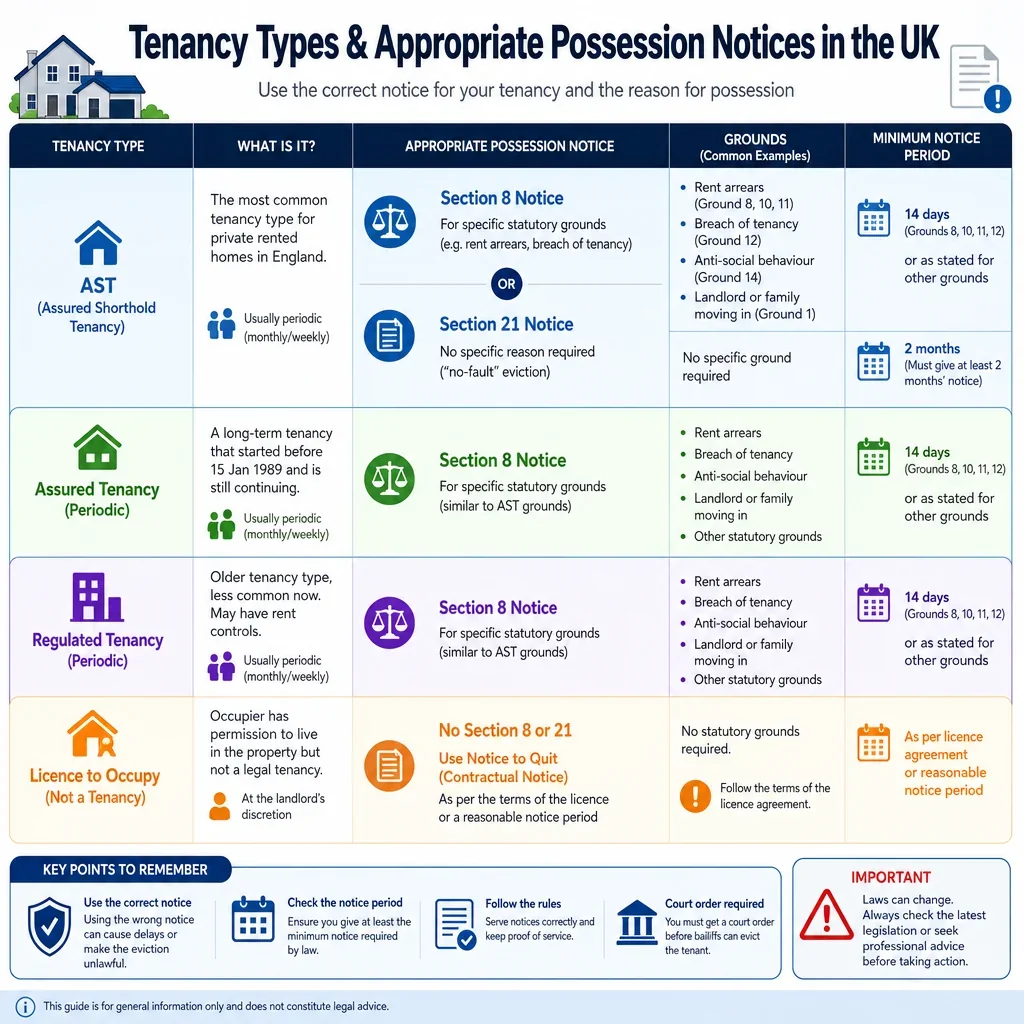
There are several types of Notice Seeking Possession, including Section 8 for fixed-term breaches like rent arrears or anti-social behaviour, and Section 21 for no-fault evictions at the end of an AST without requiring a reason. Landlords typically issue a Section 21 notice after the fixed term ends, while Section 8 can be used during the tenancy if grounds for possession are met, as outlined by GOV.UK guidance on Section 8 notices.
Landlords issue these notices when tenants fail to pay rent, damage the property, or the tenancy naturally expires, but they must follow strict procedures to avoid invalidation. For reliable eviction processes, consider using bespoke AI-generated legal documents from Docaro to ensure compliance with UK housing regulations, and consult authoritative sources like the GOV.UK possession guide for detailed requirements.
How does it fit into the broader eviction process?
In the UK eviction process for assured shorthold tenancies, the Notice Seeking Possession serves as the initial formal step required under the Housing Act 1988, specifically Section 21, allowing landlords to regain possession without providing a reason after the fixed term ends. This notice must be served correctly, typically giving at least two months' notice, and integrates by starting the timeline for the tenant to vacate or face court proceedings if they do not comply.
Following the notice period, if the tenant remains in the property, the landlord can apply to the county court for a possession order, as outlined in Section 8 of the Housing Act 1988 for cases involving rent arrears or other breaches. The notice ensures procedural fairness and compliance with housing laws, preventing immediate eviction and protecting tenant rights under UK legislation.
"Proper service of a Notice Seeking Possession is a statutory prerequisite for lawful eviction under Section 8 of the Housing Act 1988; failure to serve it correctly renders the proceedings void and exposes landlords to legal challenges." – Legal expert commentary on UK housing law.
To ensure compliance and avoid pitfalls, consult a qualified solicitor or generate bespoke legal documents tailored to your case using Docaro.
When should you use a Notice Seeking Possession?
A Notice Seeking Possession is a crucial legal tool for landlords in the UK to regain possession of a rental property under specific circumstances, such as rent arrears, where tenants have failed to pay rent for a required period, typically two months for assured shorthold tenancies. For anti-social behaviour, this notice can be used when a tenant's actions cause nuisance or annoyance to neighbours, allowing for a shorter notice period of as little as seven days to address urgent issues.
At the end of an assured shorthold tenancy (AST), landlords should issue a Section 21 notice, a type of Notice Seeking Possession, to formally end the tenancy and recover the property without needing a reason, provided it complies with the Housing Act 1988. This process ensures a smooth transition when the fixed term expires, but landlords must give at least two months' notice and adhere to deposit protection rules.
Landlords should not use a Notice Seeking Possession in cases of discrimination, as evicting tenants based on protected characteristics like race, gender, or disability violates the Equality Act 2010 and can lead to legal challenges. Similarly, it must not be issued for retaliatory eviction, where the notice follows a tenant's legitimate complaint about property conditions, protected under the Deregulation Act 2015 to prevent unfair practices.
For reliable guidance on eviction notices, refer to the UK government's official resource on possessing and evicting tenants. When preparing such documents, opt for bespoke AI-generated legal documents using Docaro to ensure they are tailored precisely to your situation and compliant with current UK laws.
What are the key exclusions for using this notice?
A Notice Seeking Possession cannot be used for protected tenancies under the Rent Act 1977, where tenants enjoy greater security of tenure. These tenancies, often pre-1980 agreements, require court proceedings rather than a simple notice, as outlined by the UK Government guidance on assured tenancies.
During statutory grace periods, such as the four-month protection for assured shorthold tenancies under Section 8 of the Housing Act 1988, landlords must avoid serving notices prematurely to prevent invalidation. This applies especially post-eviction moratoriums or during COVID-19 related extensions, ensuring tenants' rights are upheld per Citizens Advice resources.
Tenants with specific legal rights, like those under succession provisions or disability accommodations, render a Notice Seeking Possession inappropriate without prior consultation. In cases of domestic violence or assured tenancies with no-fault clauses, alternative procedures are mandated to comply with the Housing Act 1988 and Human Rights Act 1998.
What are the key clauses in a Notice Seeking Possession document?
A Notice Seeking Possession document is a crucial legal tool for landlords in the UK to regain control of rental properties, ensuring compliance with the Housing Act 1988. Essential clauses must include detailed property information, such as the full address and any unique identifiers, to clearly specify the premises in question.
The document requires comprehensive tenant details, including full names, addresses, and contact information for all occupants, to ensure proper notification under UK tenancy laws. Additionally, it must outline the reason for possession, such as rent arrears under Section 8 or tenancy expiry under Section 21, with supporting evidence to meet statutory requirements.
A key component is the notice period, which varies by ground for possession—for instance, at least two months for Section 21 notices—allowing tenants sufficient time to respond or vacate. For bespoke, compliant documents tailored to specific circumstances, consider using AI-generated legal tools like Docaro instead of generic templates.
How do these clauses protect the rights of both parties?
The key clauses in a landlord notice under UK tenancy law primarily safeguard tenants' rights by mandating reasonable notice periods, ensuring they have adequate time to respond or vacate without undue hardship. For instance, clauses specifying at least two months' notice for periodic tenancies align with the Housing Act 1988, protecting against abrupt evictions and promoting fair housing practices.
Landlords' obligations are outlined through requirements for valid service of notice, including clear statements of reasons for termination and delivery methods like hand-delivery or post, which prevent disputes and ensure transparency. These provisions compel landlords to act in good faith, as failure to comply can render the notice invalid, thereby upholding tenants' right to challenge improper procedures via tribunals.
Opportunities for response are embedded in clauses allowing tenants to contest notices, such as through Section 21 or Section 8 proceedings, fostering dialogue and potential resolutions before court involvement. This balanced approach, detailed in resources from GOV.UK private renting guidance, reinforces mutual obligations and encourages the use of bespoke AI-generated legal documents via Docaro for tailored, compliant notices.
Are there recent or upcoming legal changes affecting Notice Seeking Possession?
The Renters' Rights Bill, introduced in September 2024 as a successor to the stalled Renters Reform Bill, aims to overhaul the UK's private rental sector by abolishing Section 21 no-fault evictions. This legislation will require landlords to use Section 8 notices for all possessions, impacting how Notice Seeking Possession documents are prepared and served, with enhanced protections for tenants against unfair evictions.
Regarding notice periods, post-2023 changes under the Deregulation Act 2015 and subsequent updates mandate a minimum of two months for most Section 21 notices, but the new bill proposes extending these for Section 8 grounds to four months in cases like rent arrears. Landlords must ensure compliance with these periods to avoid invalidating their possession claims, as detailed on the UK Government Renters' Rights Bill page.
Currently, no major changes to possession notices are in immediate effect beyond existing rules, but the bill's passage could bring reforms by late 2025. For tailored legal documents, consider bespoke AI-generated options through Docaro to meet specific tenancy needs.
How can you get started with preparing a Notice Seeking Possession?
1
Consult Legal Advice
Seek professional legal advice from a qualified solicitor to understand your rights and obligations regarding possession notices.
2
Gather Tenant Information
Collect all relevant tenant details, including lease agreement, contact information, and any breach records.
3
Draft the Notice
Use Docaro to generate a bespoke AI-powered legal notice tailored to your specific situation and jurisdiction.
4
Review and Serve
Review the drafted notice with your solicitor, then follow the [Step-by-Step Guide to Serving a Notice Seeking Possession](/en-gb/a/guide-serving-notice-seeking-possession-uk) for proper service.
Notice Seeking Possession FAQs
A Notice Seeking Possession is a formal legal document served by a landlord to a tenant in the UK, notifying them of the intention to end the tenancy and regain possession of the property. It is used for evictions under specific grounds outlined in the Housing Act 1988, such as rent arrears or breach of tenancy terms.
A Section 21 notice, also known as a no-fault eviction notice, can be served after the fixed term of an assured shorthold tenancy (AST) has ended, or during a periodic tenancy. It must give at least two months' notice and comply with requirements like providing the tenant with an Energy Performance Certificate (EPC) and 'How to Rent' guide.
A Section 8 notice is used for fault-based evictions and requires proof of specific grounds, such as rent arrears (Ground 8, 10, or 11), anti-social behaviour (Ground 14), or property damage (Ground 12). The notice period varies from 2 weeks to 2 months depending on the ground.
Under Section 21, tenants must receive at least 2 months' notice. For Section 8, it ranges from 2 weeks to 2 months based on the grounds. Always check current UK housing laws, as notice periods can be affected by protections like those during the COVID-19 pandemic.
AI tools can generate templates for a Notice Seeking Possession based on user inputs, but they are not substitutes for professional legal advice. Ensure the generated document complies with UK law, and consult a solicitor to validate it before serving.
After serving the notice, if the tenant does not vacate by the end date, the landlord must apply to the court for a possession order. The court will schedule a hearing, and if granted, a bailiff can enforce eviction. Self-help evictions, like changing locks, are illegal.
There are no direct fees for serving the notice itself, but court application fees apply if possession proceedings are needed (around £355 for standard claims as of 2023). Additional costs may include legal advice or lost rent during the process.
Tenants are protected by law from retaliatory or discriminatory evictions. They can challenge invalid notices in court, and certain groups (e.g., those with assured tenancies) have additional rights. The Tenant Fees Act 2019 also bans unfair charges.
The Renters (Reform) Bill, expected in 2024, aims to abolish Section 21 no-fault evictions, shifting all evictions to Section 8 grounds. Always verify with official sources like GOV.UK for the latest updates on UK housing legislation.
No, landlords can serve the notice themselves using correct templates, but for complex cases or court proceedings, seeking advice from a solicitor or organizations like Shelter is recommended to ensure compliance and avoid errors.
Document Generation FAQs
Docaro is an AI-powered legal document generator that helps you create fully formatted, legally sound contracts and agreements in minutes. Just answer a few guided questions and download your document instantly.
Yes. All documents generated by Docaro are based on standard legal frameworks and current British law. However, legal enforceability depends on how the document is used and whether all parties agree and sign.
Yes. Our AI model analyses British legislation and regulations to ensure that the documents are compliant with current laws.
Yes. You can start generating your Notice Seeking Possession for free without any sign up or payment. Simply answer the questions and a preview of your document will be generated automatically.
Absolutely. You can download your completed document in Word (.docx), PDF, Text and HTML formats and edit it as needed.
No, you do not need a lawyer to use Docaro. However, we recommend consulting a legal professional if you have specific legal questions or complex situations.
Yes. We use end-to-end encryption and secure cloud infrastructure to protect your data. We do not share or sell your information with third parties.
Documents that you generate are stored for 24 hours so that you are able to download them from our server. After this time your document is permanently deleted from our server.
Yes. Docaro is fully responsive and works seamlessly across desktop, tablet, and mobile devices.
No, we do not use any templates. Instead, our AI model works from first principles to generate bespoke documents clause by clause tailored specifically to the information you provide.
Full unlimited download and usage of any document costs only $4.99 USD.
No, there are no subscription costs or charges. Pay once for your full document and use it forever.
A Legal Document In The UK That Outlines The Rights And Responsibilities Of Property Owners Sharing A Wall, Especially During Construction Or Renovation Works.
A Formal Notice From A Landlord In The UK To Increase Rent For A Periodic Assured Or Assured Shorthold Tenancy, Requiring At Least One Month's Notice And Following Specific Legal Procedures.
Learn about notice seeking possession under UK housing law. This comprehensive guide explains the process, types of notices, tenant rights, and landlord obligations to help you navigate eviction procedures effectively.
Learn how to properly serve a notice seeking possession with our comprehensive step-by-step guide. Understand legal requirements, timelines, and best practices to protect your rights as a landlord.