Why Free Templates Can Be Risky for Landlord Reference Letters
Free templates for landlord reference letters often use generic wording that fails to address key UK-specific requirements, such as accurate details on tenancy type, rent payments, and compliance with Housing Act standards. This can lead to incomplete or misleading references that expose landlords to disputes, inaccurate tenant histories being shared, or potential legal challenges from future landlords or tenants relying on the document.
Our AI generates bespoke landlord reference letters tailored to your specific situation, incorporating precise details like tenancy duration, behaviour, and financial reliability while ensuring full compliance with UK regulations for clear, professional, and reliable references every time.
What is a Landlord Reference Letter in the UK?
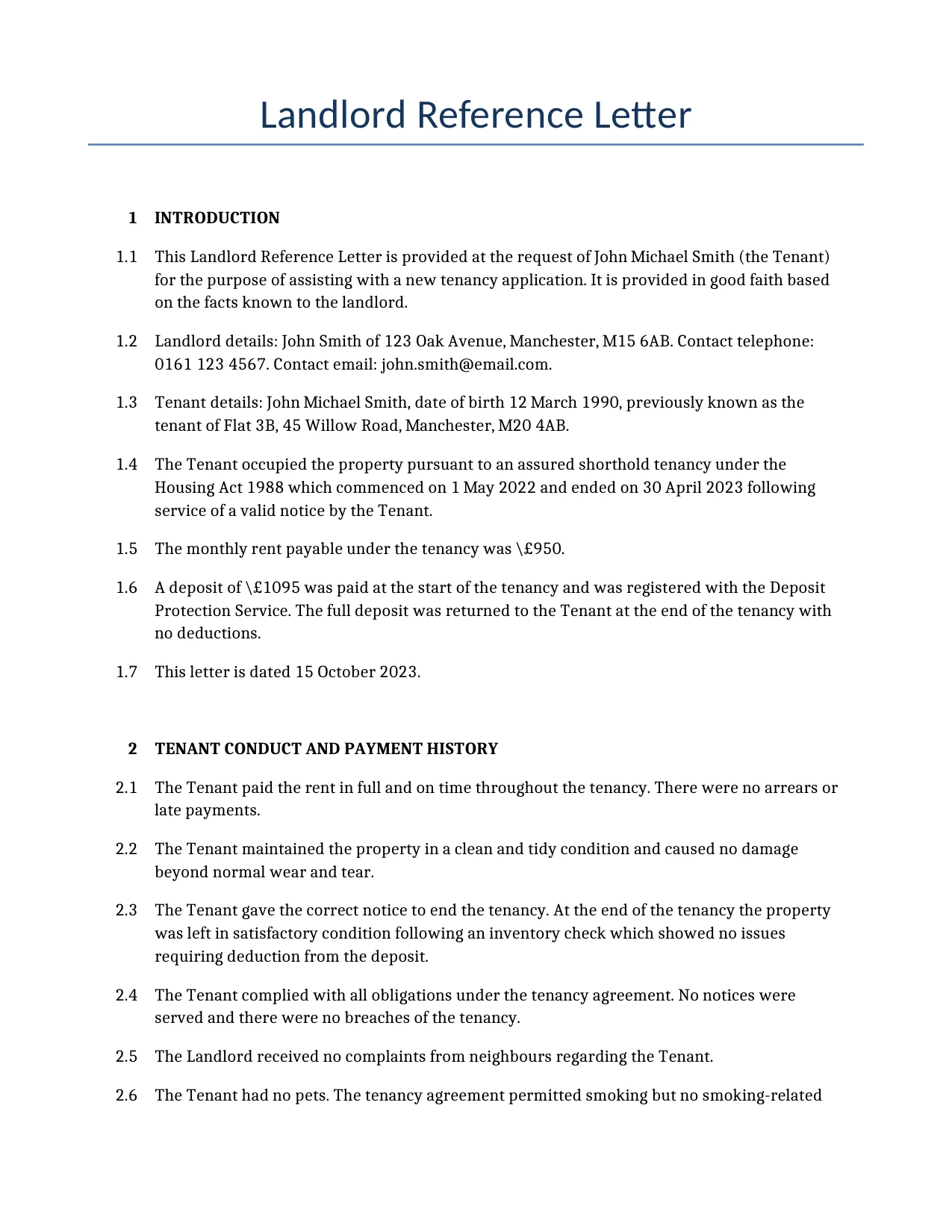
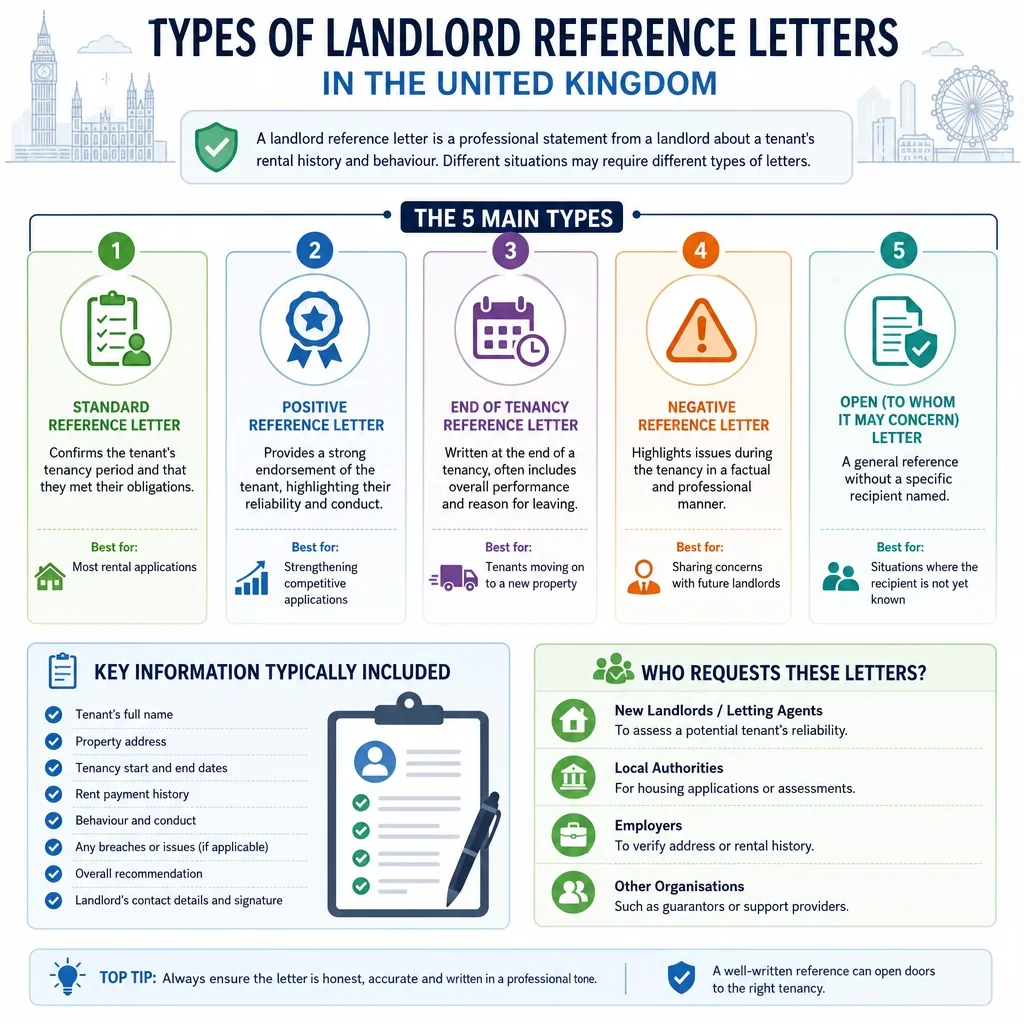
A landlord reference letter is a document provided by a previous landlord to verify a tenant's rental history in the UK rental agreements. It plays a crucial role for tenants seeking new properties by confirming details like rent payment reliability and property upkeep.
The primary purpose of a landlord reference letter is to help prospective landlords assess a tenant's suitability, reducing risks in the competitive UK rental market. Tenants use it to demonstrate their credibility, often alongside credit checks and employment references, to secure a new tenancy agreement.
Under UK law, there is no statutory requirement for landlords to provide a reference, but it operates within the framework of the Housing Act 1988 and common tenancy practices. For authoritative guidance, refer to the UK Government private renting page or resources from Shelter England.
To create a tailored landlord reference letter, consider using bespoke AI-generated legal documents via Docaro for compliance with UK rental standards.
When should you use a Landlord Reference Letter in the UK?
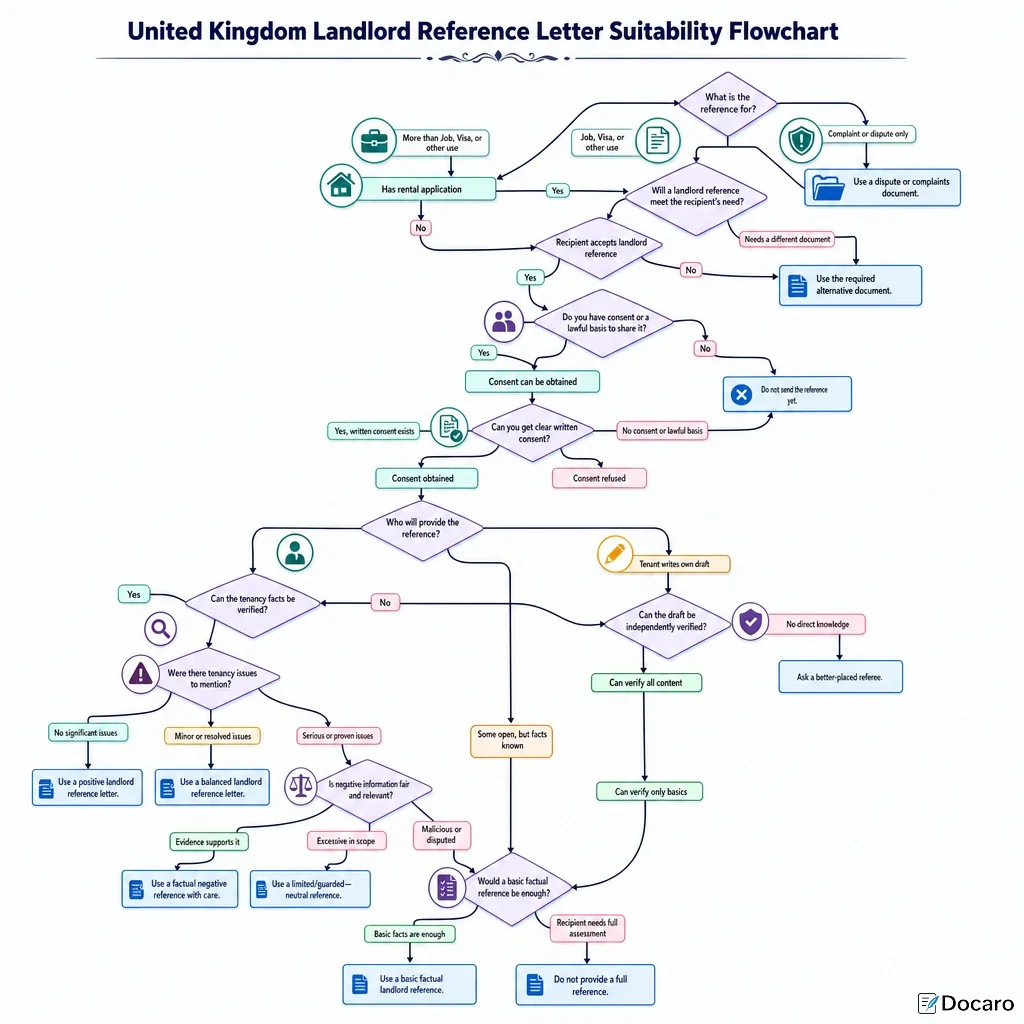
A landlord reference letter is essential when a tenant applies for a new rental property in the UK, as it provides verification of the applicant's rental history and reliability. This document helps prospective landlords assess whether the tenant has a track record of paying rent on time and maintaining the property responsibly.
In the tenancy application process, the reference letter plays a crucial role by influencing the landlord's decision to approve or reject an application. It typically includes details on the duration of the previous tenancy, rent payment history, and any issues like damage or disturbances, making it a key component alongside credit checks and income proof.
Other scenarios where a landlord reference letter proves vital include applying for housing association properties or when tenants need to demonstrate stability for visa extensions under UK immigration rules. For authoritative guidance, refer to the UK Government private renting advice.
- Ensure the letter is recent and signed by the previous landlord to maximize its credibility.
- For creating a tailored landlord reference letter, consider bespoke AI-generated legal documents using Docaro to fit specific UK tenancy needs.
When should you avoid using one?
In situations involving disputed tenancies, a landlord reference letter should not be provided, as it could bias ongoing negotiations or disputes. For instance, if a tenant contests rent payments or property damage claims, issuing a reference might be seen as taking sides, potentially complicating resolution.
When there are ongoing legal issues, such as eviction proceedings or court cases related to the tenancy, landlords must refrain from giving references to avoid interfering with legal processes. According to guidance from UK Housing and Planning, such actions could lead to accusations of misconduct or perjury if the reference influences external decisions.
A landlord reference letter is inappropriate if the landlord has insufficient information about the tenant's conduct, like in short-term rentals or when the landlord was not directly involved in daily management. In these cases, providing a letter without factual basis could mislead future landlords and expose the issuer to liability for inaccurate statements.
"Honesty in landlord references is crucial to sidestep legal risks like defamation claims or tenancy disputes. For tailored legal documents to support accurate referencing, use bespoke AI-generated options via Docaro." - Dr. Elena Hargrove, UK Housing Policy Expert
What are the key clauses in a Landlord Reference Letter?
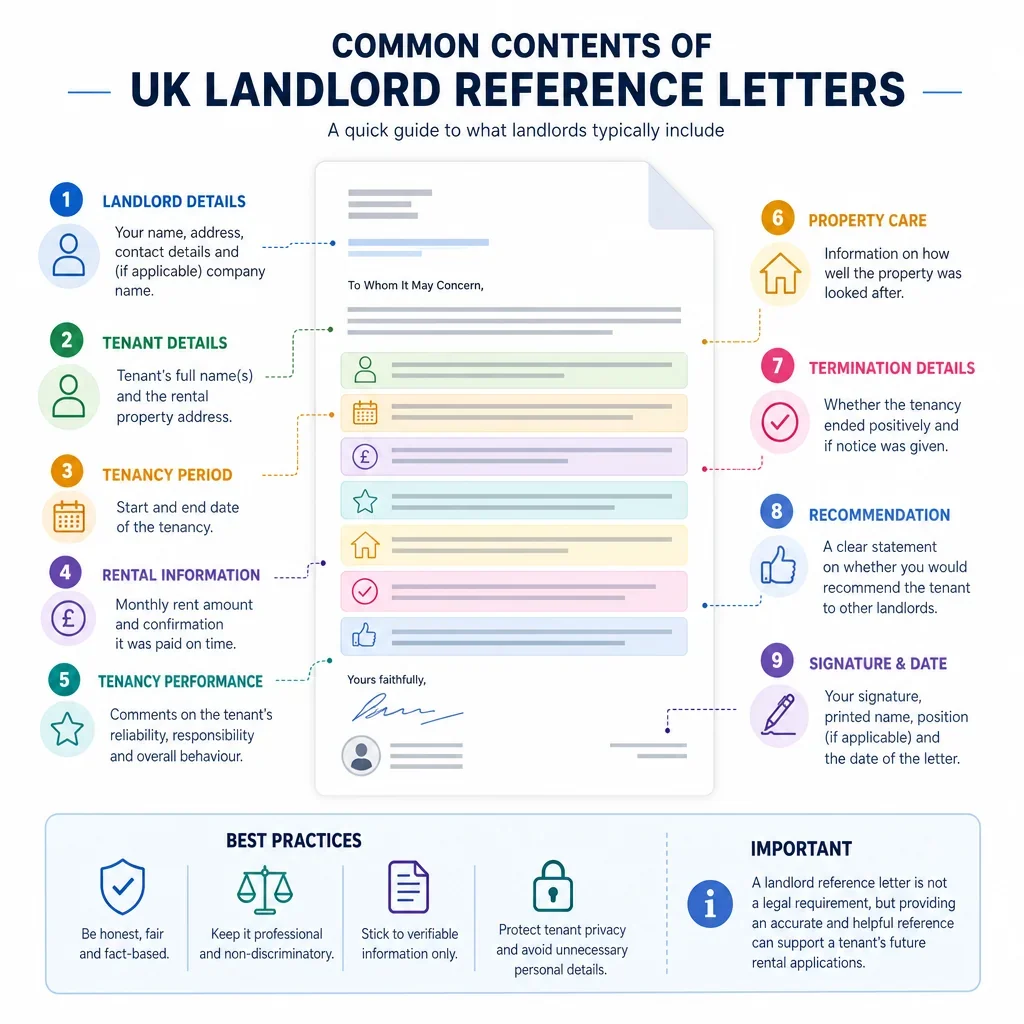
A landlord reference letter is a crucial document for tenants seeking new rentals in the UK, providing insights into their reliability. Essential clauses should start with the tenancy duration, clearly stating the start and end dates to establish the length of the rental agreement.
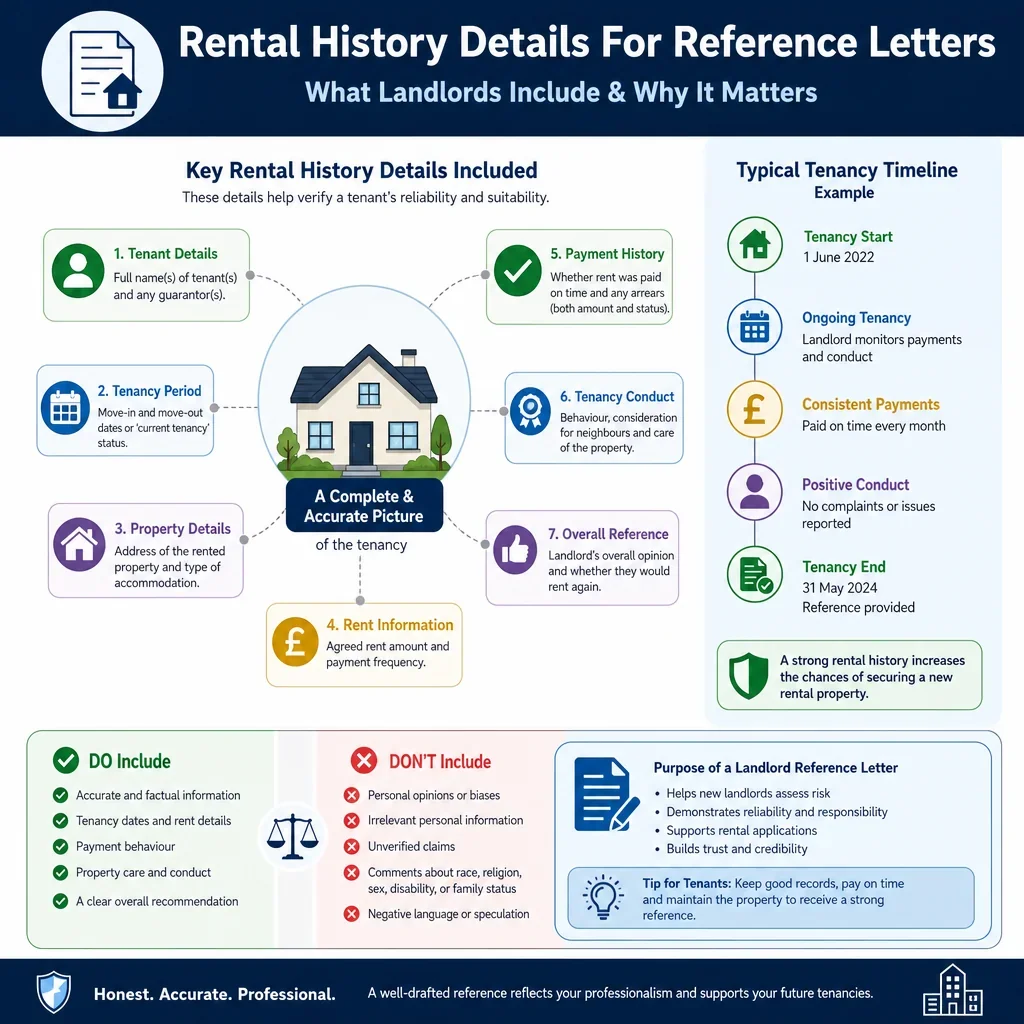
Next, include details on rental payment history, confirming if payments were made on time and in full, as this reassures prospective landlords about financial responsibility. For property maintenance, describe the tenant's upkeep of the property, noting any issues like damages or cleanliness upon vacating.
Finally, outline the reasons for ending the tenancy, such as mutual agreement or notice period, while avoiding negative details unless necessary. For comprehensive guidance, refer to How to Write a Landlord Reference Letter in the UK and use the Sample Landlord Reference Letter Template for UK Landlords; for legal compliance, generate bespoke documents via Docaro.
Additional resources include the UK government's guidance on private renting from GOV.UK, ensuring your reference aligns with tenancy laws.

What rights and obligations do parties have regarding these letters?
In the UK, landlords have the right to request reference letters from prospective tenants' previous landlords or employers to assess reliability, but they must handle this personal data in compliance with the General Data Protection Regulation (GDPR). Tenants are obliged to provide accurate information in their applications, while prospective landlords should verify references without unnecessary data retention, as outlined by the Information Commissioner's Office (ICO).
Under UK tenancy law, providing inaccurate reference letters can lead to liabilities for the issuing landlord, such as claims for misrepresentation if a new tenancy fails due to false information, potentially resulting in financial compensation. Tenants affected by poor references may challenge inaccuracies through data subject access requests under GDPR, ensuring data accuracy and fairness in the rental process.
To mitigate risks, all parties should use bespoke AI-generated legal documents via platforms like Docaro for custom reference templates that incorporate GDPR-compliant clauses. This approach helps avoid generic pitfalls and ensures tailored protection for UK landlord-tenant rights.
What key exclusions should be noted?
When drafting landlord reference letters in the UK, it's crucial to exclude sensitive personal information such as details about a tenant's health, religion, or political beliefs to comply with data protection laws. The UK Information Commissioner's Office guidelines emphasize that only relevant rental history should be shared to avoid privacy breaches.
Avoid speculative statements about a tenant's future behavior, as references must stick to factual observations from the tenancy period. Including guesses or unsubstantiated opinions can lead to legal risks, so focus on verifiable details like payment timeliness and property maintenance.
Other key limitations include not disclosing financial details beyond rent payment reliability or commenting on unrelated personal disputes. For accurate and compliant landlord references, consider using bespoke AI-generated legal documents via Docaro to ensure they meet UK standards without generic templates.

Are there recent or upcoming legal changes affecting Landlord Reference Letters?
The Renters (Reform) Bill, currently progressing through the UK Parliament, promises significant changes to the private rental sector by abolishing fixed-term assured shorthold tenancies and introducing periodic tenancies with easier eviction grounds for landlords. This reform could impact landlord reference letters by standardising expectations around tenant suitability, potentially requiring references to address new criteria like rent arrears or antisocial behaviour more explicitly to support streamlined court processes.
Regarding GDPR implications, the Data Protection Act 2018 continues to govern the handling of personal data in reference letters, mandating that landlords process tenant information fairly, transparently, and only for legitimate purposes such as verifying rental history. Landlords must obtain explicit consent or rely on contractual necessity before sharing sensitive details like financial records, with non-compliance risking fines from the Information Commissioner's Office.
In the absence of immediate upheavals, the current legal landscape for UK landlord reference letters remains stable under the Housing Act 1988 and GDPR, emphasising accuracy, consent, and data minimisation to avoid disputes or legal challenges. For compliant documents, consider using bespoke AI-generated legal options via Docaro to tailor references to specific tenancy needs without relying on generic templates.
How can you get started with creating a Landlord Reference Letter?
1
Gather Tenant Information
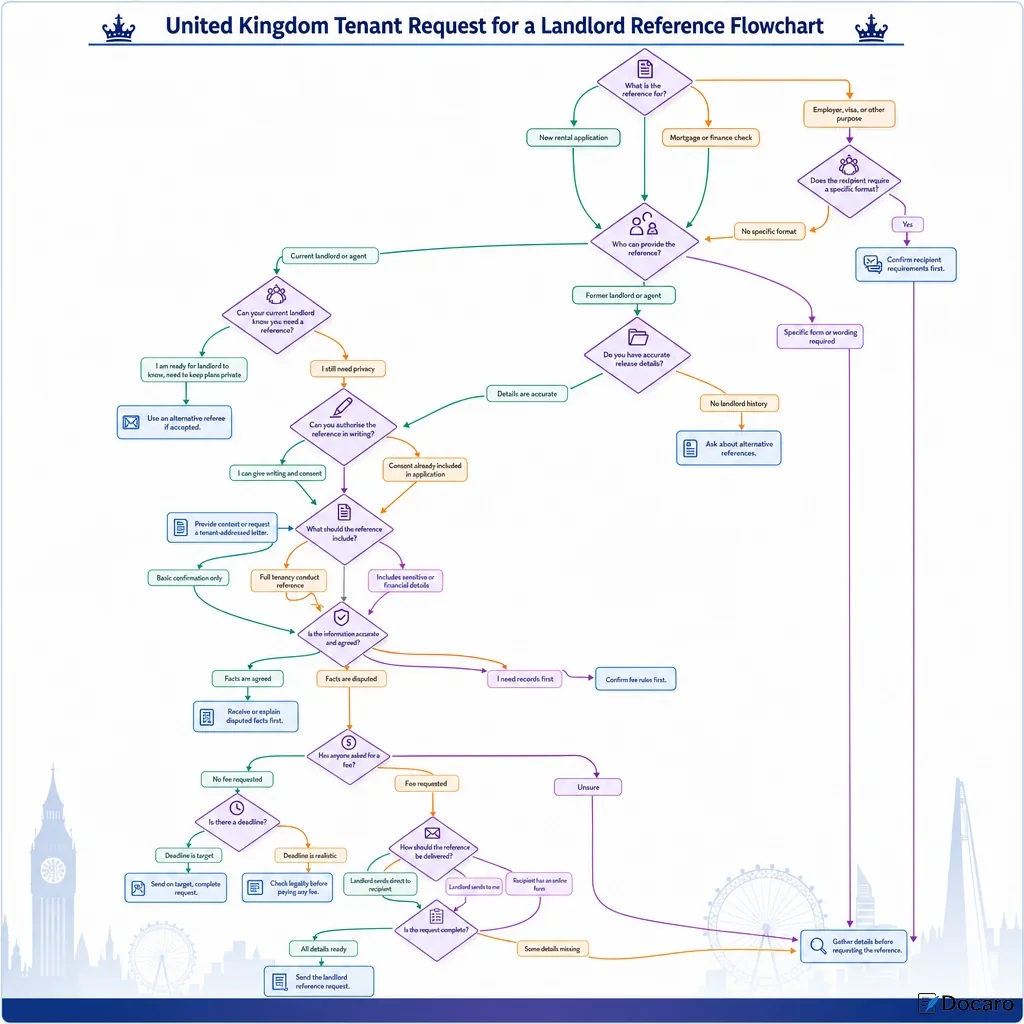
Collect details like tenancy duration, rent payments, and property condition from records. Ensure accuracy for a reliable reference.
2
Obtain Necessary Consents
Request written consent from the tenant to share their information. This complies with data protection laws.
3
Draft the Reference Letter
Use Docaro to generate a bespoke AI-powered reference letter. Include key facts and your honest assessment. Learn more in [The Importance of Landlord Reference Letters for UK Tenants](/en-gb/a/importance-landlord-reference-letters-uk-tenants).
4
Review and Provide the Letter
Proofread for errors, sign it, and deliver to the tenant or prospective landlord securely.
You Might Also Be Interested In
A Legal Contract Outlining The Terms For Renting A Residential Property Between Landlord And Tenant.
A Legal Contract Outlining The Terms For Renting A Room In A Shared Property, Including Rent, Duration, And Responsibilities.
A Legal Document Outlining The Terms Of A Lodger's Stay In The Homeowner's Residence, Including Rent, House Rules, And Rights.
A Legal Document That Extends Or Renews An Existing Residential Tenancy Agreement Between Landlord And Tenant.
A Formal Legal Notice Served By A Landlord To A Tenant, Requiring The Tenant To Vacate The Rental Property Due To Reasons Such As Rent Arrears, Tenancy Breaches, Or Property Recovery.
A Formal Notice From A Landlord In The UK To Increase Rent For A Periodic Assured Or Assured Shorthold Tenancy, Requiring At Least One Month's Notice And Following Specific Legal Procedures.
A Receipt Confirming The Payment And Protection Of A Tenant's Security Deposit In A Rental Agreement.
A Document Recording The Condition Of A Rental Property At The Start And End Of A Tenancy To Assess Damages And Deposits.
A Legal Notice Served By A Landlord To Terminate An Assured Shorthold Tenancy In England And Wales Without Cause.
A Legal Contract Outlining The Terms For Sharing A House Or Flat Among Co-tenants, Including Rent, Responsibilities, And House Rules.
A Document Recording The Condition And Contents Of A Rental Property At The Start And End Of A Tenancy To Assess Damages And Deposits.
A Form Submitted By Prospective Tenants To Apply For Renting A Residential Property, Including Personal And Financial Details For Landlord Review.
A Legal Document In The UK That Outlines The Rights And Responsibilities Of Property Owners Sharing A Wall, Especially During Construction Or Renovation Works.
A Corporate Document Outlining Internal Policies, Conduct Expectations, And Operational Guidelines For Employees Within An Organization.