AI Generated Incident Response Plan for use in the United Kingdom
PDF & Word - 2026 Updated
Docaro Pricing
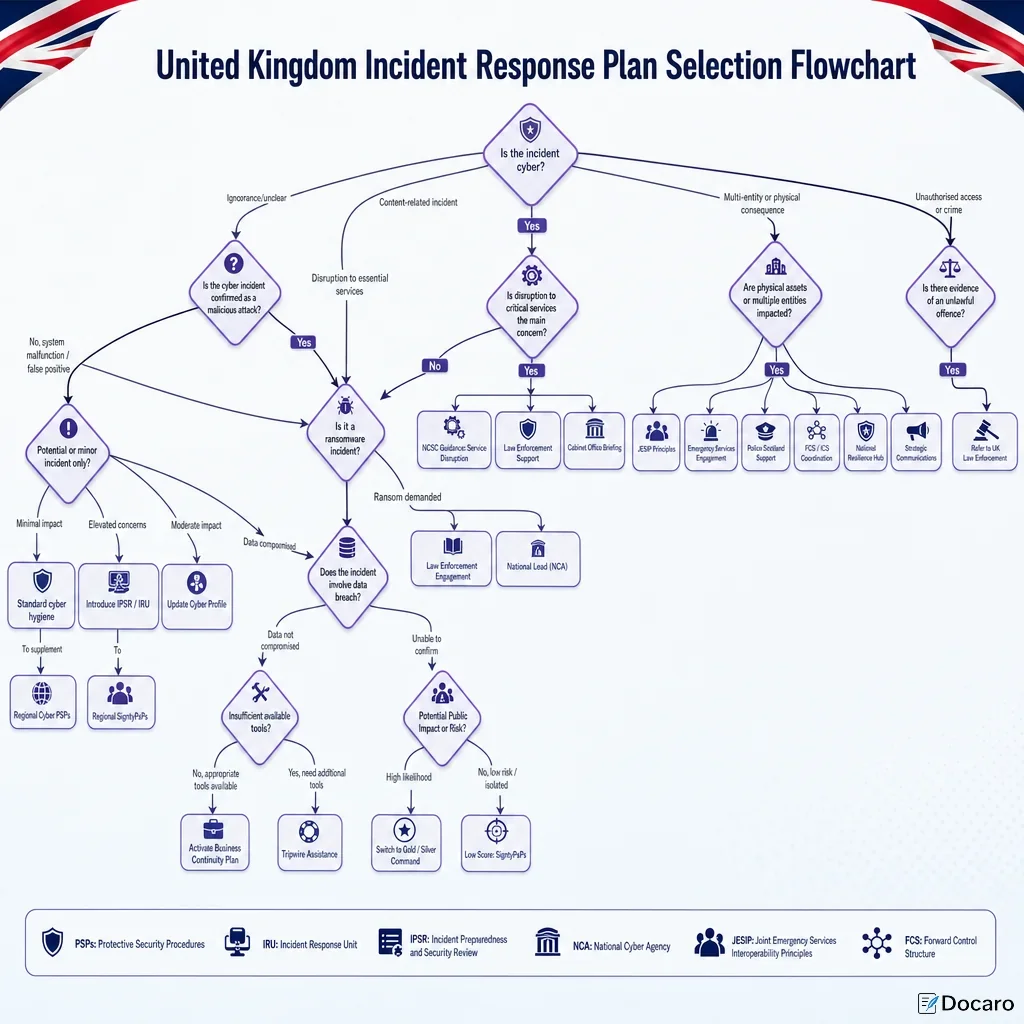
When do you need an Incident Response Plan in the United Kingdom?
British Legal Rules for an Incident Response Plan
Failing to tailor the incident response plan to the specific regulatory requirements of your industry and organization may result in non-compliance with UK data protection laws.
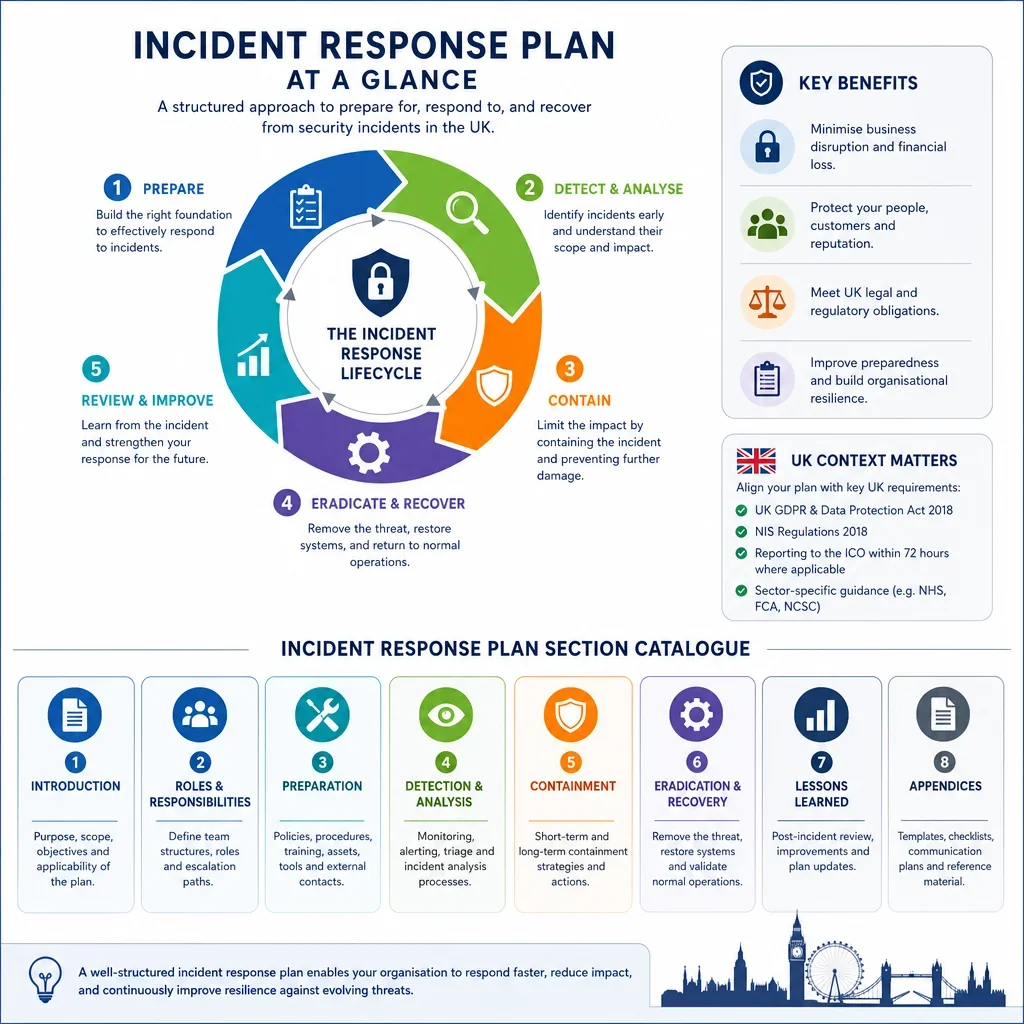
What a Proper Incident Response Plan Should Include
- Roles and ResponsibilitiesClearly define who does what during an incident to ensure quick and coordinated action.
- Detection and ReportingOutline how to spot and report incidents promptly to start the response process.
- Containment StepsDescribe immediate actions to limit the spread or impact of the incident.
- Investigation ProcessDetail how to examine the incident to understand what happened and why.
- Recovery and RestorationExplain steps to bring operations back to normal safely and securely.
- Communication PlanSpecify who to inform internally and externally, including authorities if needed.
- Review and ImprovementSet out how to learn from the incident to make future plans stronger.
Generate Your Document in 4 Easy Steps
Why Use Docaro?
 United Kingdom
Free Example Incident Response Plan Template
Below is a free template example of a Incident Response Plan for use in the United Kingdom generated by our AI model.
The clauses in your actual Incident Response Plan will vary from this example as they will be entirely bespoke to your requirements as set out in the questionnaire you complete.
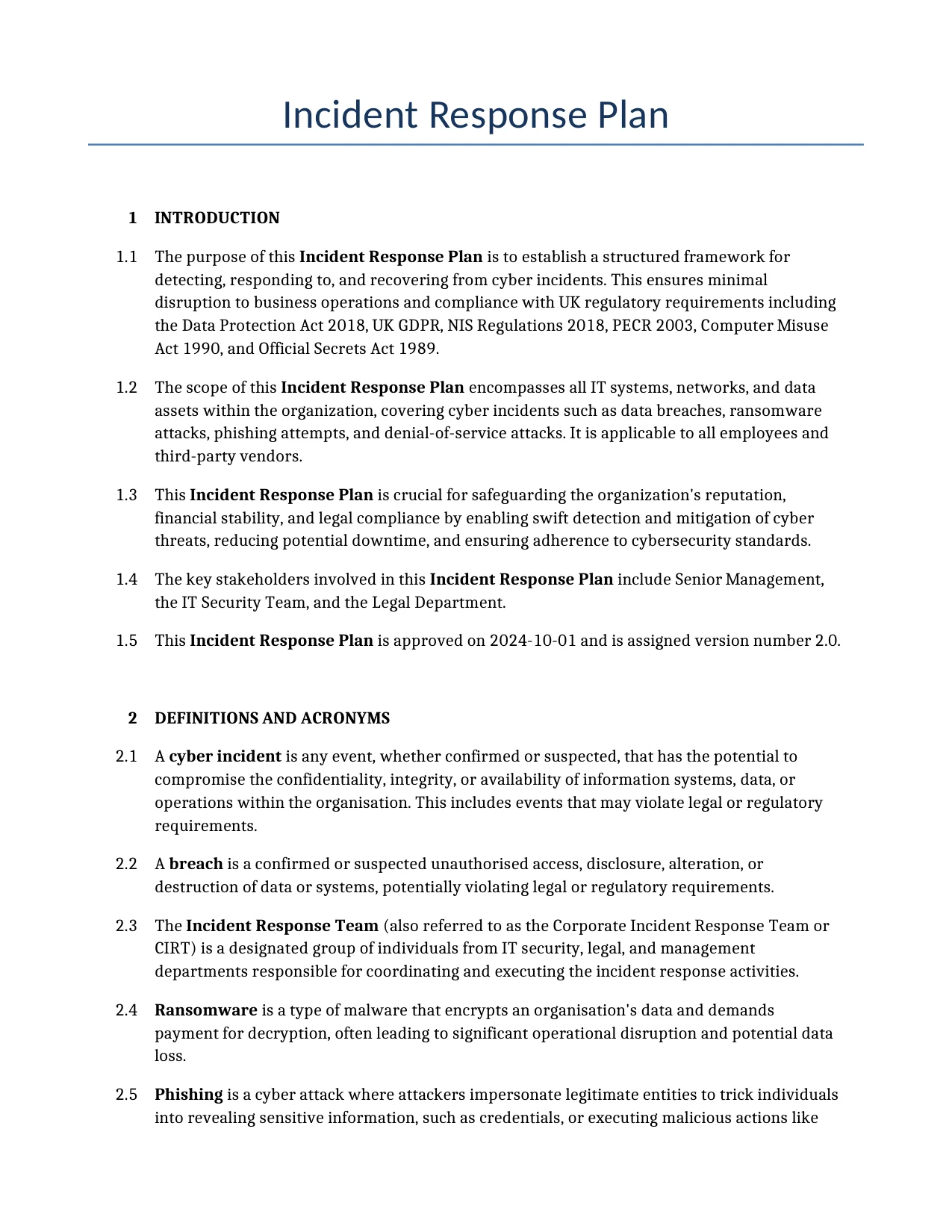
Incident Response Plan
1INTRODUCTION
The purpose of this Incident Response Plan is to establish a structured framework for detecting, responding to, and recovering from cyber incidents. This ensures minimal disruption to business operations and compliance with UK regulatory requirements including the Data Protection Act 2018, UK GDPR, NIS Regulations 2018, PECR 2003, Computer Misuse Act 1990, and Official Secrets Act 1989.
The scope of this Incident Response Plan encompasses all IT systems, networks, and data assets within the organization, covering cyber incidents such as data breaches, ransomware attacks, phishing attempts, and denial-of-service attacks. It is applicable to all employees and third-party vendors.
This Incident Response Plan is crucial for safeguarding the organization's reputation, financial stability, and legal compliance by enabling swift detection and mitigation of cyber threats, reducing potential downtime, and ensuring adherence to cybersecurity standards.
The key stakeholders involved in this Incident Response Plan include Senior Management, the IT Security Team, and the Legal Department.
This Incident Response Plan is approved on 2024-10-01 and is assigned version number 2.0.
2DEFINITIONS AND ACRONYMS
A cyber incident is any event, whether confirmed or suspected, that has the potential to compromise the confidentiality, integrity, or availability of information systems, data, or operations within the organisation. This includes events that may violate legal or regulatory requirements.
A breach is a confirmed or suspected unauthorised access, disclosure, alteration, or destruction of data or systems, potentially violating legal or regulatory requirements.
The Incident Response Team (also referred to as the Corporate Incident Response Team or CIRT) is a designated group of individuals from IT security, legal, and management departments responsible for coordinating and executing the incident response activities.
Ransomware is a type of malware that encrypts an organisation's data and demands payment for decryption, often leading to significant operational disruption and potential data loss.
Phishing is a cyber attack where attackers impersonate legitimate entities to trick individuals into revealing sensitive information, such as credentials, or executing malicious actions like downloading malware.
Denial-of-service (DoS) is an attack that aims to make a system or network unavailable to its intended users by overwhelming it with traffic or exploiting vulnerabilities, with distributed denial-of-service (DDoS) involving multiple sources.
The following key acronyms are defined for the purposes of this Incident Response Plan: GDPR (General Data Protection Regulation - retained in UK law post-Brexit as UK GDPR), ICO (Information Commissioner's Office - the UK's independent regulator for data protection and privacy), IRP (Incident Response Plan - this document outlining procedures for handling incidents), SIEM (Security Information and Event Management - tools that aggregate and analyse security logs for threat detection), EDR (Endpoint Detection and Response - security solutions that monitor and respond to threats on endpoints like computers and servers), CIRT (Corporate Incident Response Team - the designated team responsible for managing incidents), NIS (Network and Information Systems Regulations 2018 - UK regulations for managing risks to network and information systems, especially for essential services), PECR (Privacy and Electronic Communications Regulations 2003 - regulations governing electronic communications, including marketing and cookies), NCSC (National Cyber Security Centre - provides guidance and support on cyber security for UK organisations), BCP (Business Continuity Plan - the organisation's plan to ensure critical functions continue during and after incidents), CISO (Chief Information Security Officer - senior role leading information security efforts).
The NIS Regulations are defined as the Network and Information Systems Regulations 2018 which impose requirements on operators of essential services and providers of digital services to manage risks to their network and information systems.
3INCIDENT RESPONSE TEAM
The name given to the Incident Response Team is the Corporate Incident Response Team (CIRT).
Dr. Emily Carter, the Chief Information Security Officer (CISO), is appointed as the lead for the Corporate Incident Response Team (CIRT).
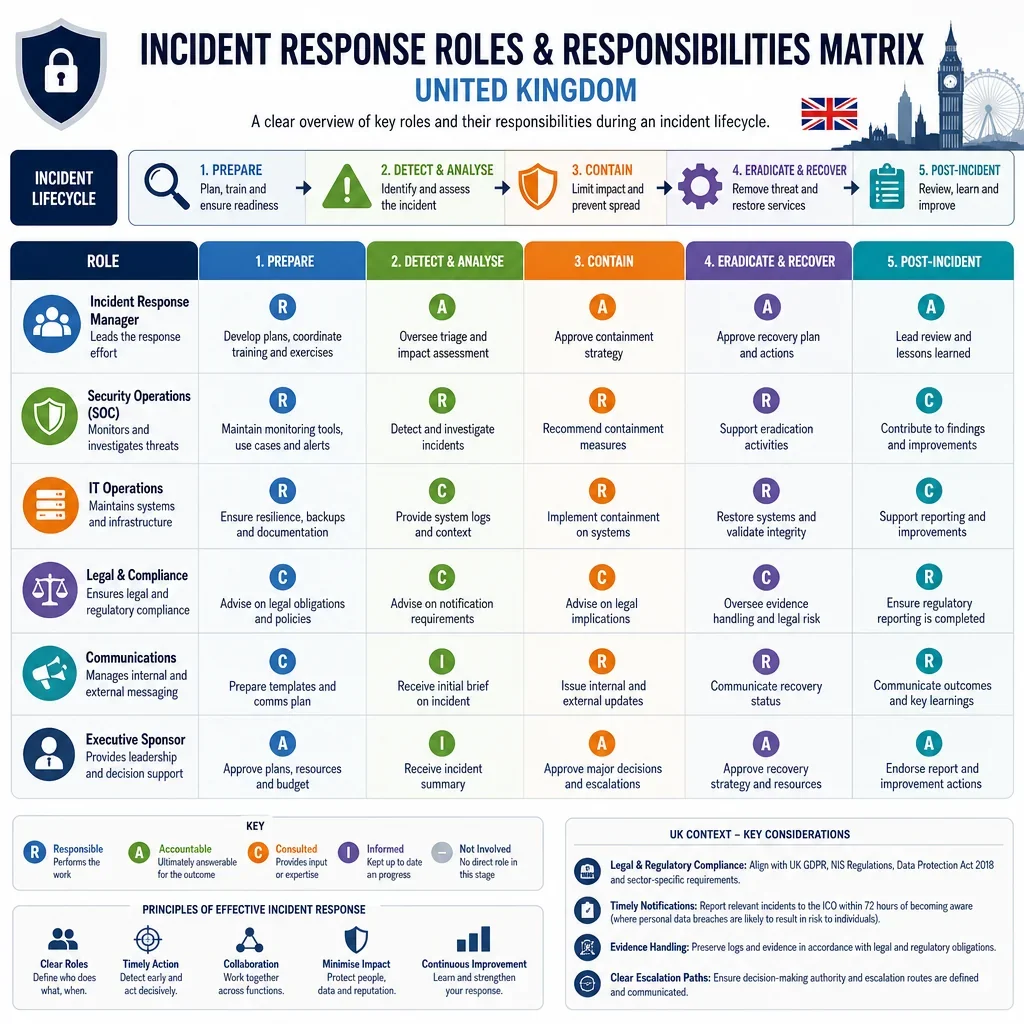
The duties assigned to the CIRT lead (Dr. Emily Carter) are to oversee incident detection, coordinate team activities, report to senior management, and ensure compliance with UK regulations such as the Data Protection Act 2018, UK GDPR, NIS Regulations 2018, PECR 2003, Computer Misuse Act 1990, and Official Secrets Act 1989. A deputy lead is appointed (e.g., the IT Security Manager) to assume these duties in the lead's absence.
The CIRT consists of 8 members with a hierarchical structure: the CISO (lead) at the top, followed by technical leads, communications lead, legal advisor, and operational support roles. The hierarchy operates such that the lead makes final decisions, delegates tasks through technical and functional leads, and escalates to senior management only when required for approvals or major impacts. All members have designated deputies to ensure continuity.
IT Security Analysts are appointed for the technical response team role. Responsibilities include investigating incidents, containing threats, performing forensic analysis, and recommending recovery measures. Each has a designated deputy from the IT team.
The Corporate Communications Manager is assigned to the communication team role. Duties include drafting internal and external communications, managing media relations, and ensuring timely notifications to stakeholders. A deputy from the communications team is designated.
The Legal Advisor role is responsible for ensuring regulatory compliance, advising on legal implications, and coordinating with authorities. A deputy legal counsel is appointed.
Senior management plays the role of approving response actions and resource allocation in incident response. The CEO or delegate serves in this capacity with a designated alternate.
External parties such as forensic experts, law enforcement liaisons, or regulators may be involved as needed. A formal charter or terms of reference is established for the CIRT.
Contact details for the CIRT lead (Dr. Emily Carter): email emily.carter@company.co.uk, phone +44 20 7946 0958. All team members maintain updated contact information with at least one deputy per role.
4INCIDENT IDENTIFICATION AND CLASSIFICATION
The methods for detecting incidents in this Incident Response Plan include regular security audits, employee training on anomaly reporting, and integration of threat intelligence feeds.
The automated tools specified for incident detection are Security Information and Event Management (SIEM) and Endpoint Detection and Response (EDR).
The manual procedures established for detecting incidents are daily log reviews by IT staff, user access audits, and quarterly vulnerability assessments conducted by the security team.
Specific, measurable criteria for identifying confirmed incidents include: detection of unauthorised access (e.g., anomalous login from foreign IP), confirmed data exfiltration (e.g., via SIEM alerts showing large outbound transfers), malware execution (e.g., EDR detecting ransomware encryption processes), or system disruption exceeding 30 minutes with impact on essential services under NIS Regulations. Confirmation requires verification by at least two independent sources or analyst review.
The process for identifying incidents is structured so that it begins with initial triage by the IT helpdesk, followed by escalation to the incident response team for verification using predefined checklists and final confirmation by a senior analyst.
The types of incidents classified in this plan are Cybersecurity Breach, Data Breach, and Operational Disruption.
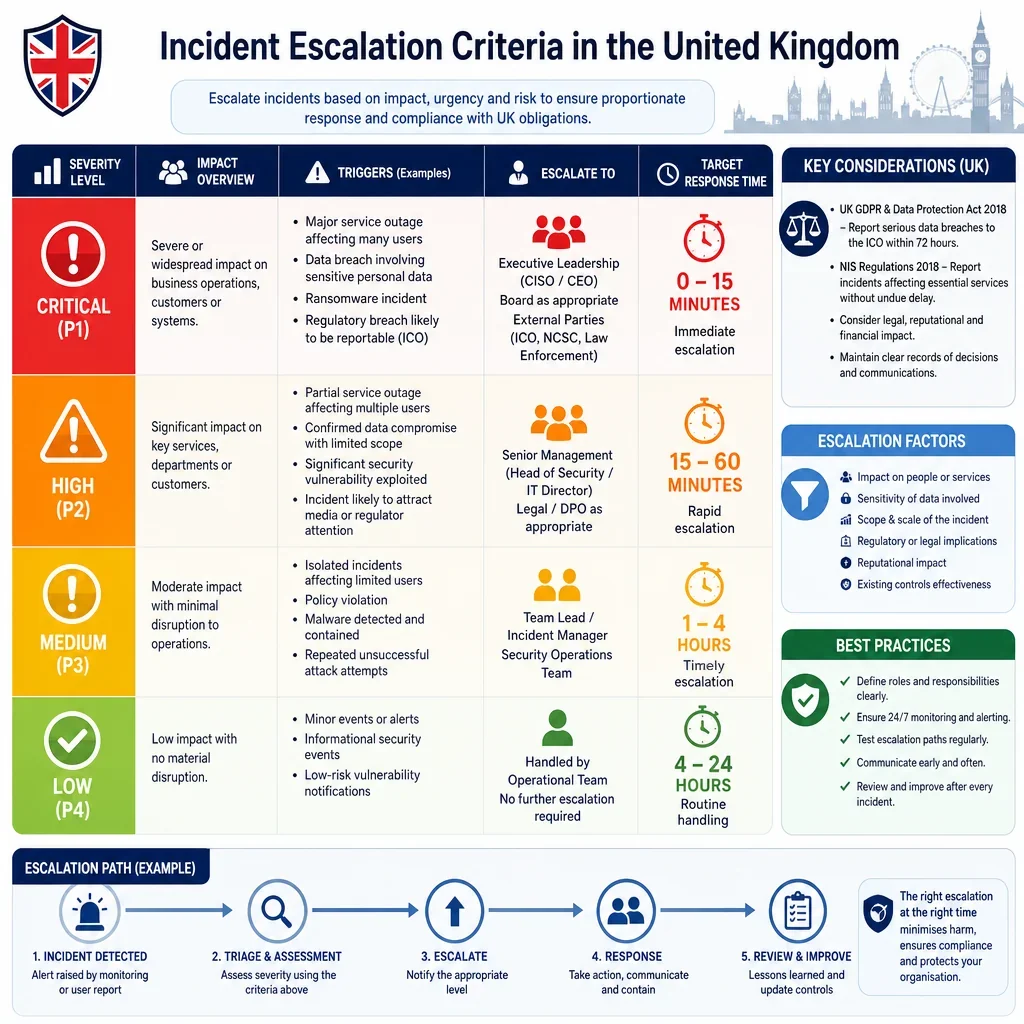
The severity levels used for classifying incidents are four levels: Minor, Moderate, Major, and Critical.
Incident Classification Matrix: Cybersecurity Breach - Minor (e.g., isolated phishing attempt with no compromise); Moderate (e.g., successful phishing leading to credential theft but no further access); Major (e.g., widespread malware infection affecting multiple systems); Critical (e.g., advanced persistent threat with data exfiltration impacting essential services under NIS). Data Breach - Minor (e.g., minor unauthorised access to non-personal data); Moderate (e.g., breach of personal data affecting under 100 individuals with low risk); Major (e.g., breach of sensitive personal data affecting 100-1000 individuals); Critical (e.g., large-scale breach of special category data with high risk to data subjects, requiring ICO notification under UK GDPR Art 33/34). Operational Disruption - Minor (e.g., brief system outage under 1 hour); Moderate (e.g., denial-of-service affecting non-critical services); Major (e.g., ransomware locking non-essential systems for days); Critical (e.g., prolonged outage of essential services under NIS Regulations threatening public safety or regulatory compliance). Classification considers factors such as potential data loss, business impact, number of affected users, and regulatory implications.
The maximum response time for initial incident assessment is 4 hours.
5NOTIFICATION PROCEDURES
The designated contact person for internal incident reporting within the organization is the CIRT Lead (Dr. Emily Carter).
The email address for the internal incident reporting contact is emily.carter@company.co.uk.
The phone number for the internal incident reporting contact is +44 20 7946 0958.
Escalation to senior management is required for all Major and Critical incidents.
Internal notifications shall be made within 24 hours after incident detection for Moderate or higher incidents.
Internal notification is required for incidents including Data Breach, Cyber Attack, and System Outage.
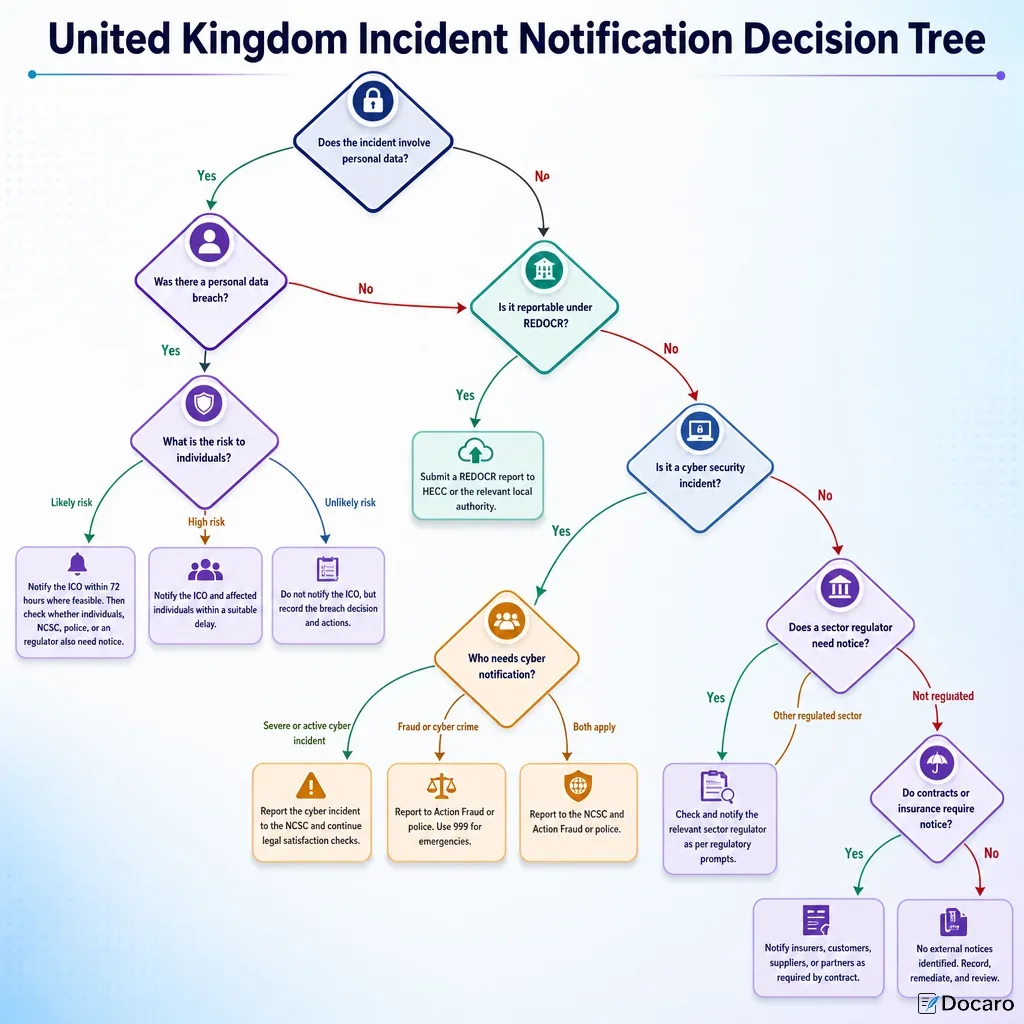
For personal data breaches, notification to the ICO must occur without undue delay and, where feasible, not later than 72 hours after becoming aware, per UK GDPR Article 33. If the breach is likely to result in a high risk to individuals, data subjects must be notified without undue delay per Article 34, with clear information on the breach and protective measures. Notifications to other regulators (e.g., FCA for financial services) are required if the incident falls under their remit. Law enforcement notification under the Computer Misuse Act 1990 is required for suspected criminal activity such as hacking or malware deployment, via contact with local police or NCSC.
The external regulatory authority to be notified for relevant incidents is the Information Commissioner's Office (ICO). The contact email is casework@ico.org.uk. Procedures for notifying affected customers or individuals are included.
The notification procedures shall be reviewed every 12 months. The escalation procedures for incidents are described so that for incidents classified as high severity, escalation occurs immediately to the CEO and board members via secure channels; medium severity incidents escalate to department heads within 4 hours; and low severity incidents are handled by the IT team with weekly reporting.
6CONTAINMENT STRATEGIES
Dr. Emily Carter is designated as the lead for the containment team. The email address for the containment team lead is emily.carter@company.co.uk. The phone number for the containment team lead is +44 20 7946 0958.
The initial procedures outlined for containing an incident are to immediately notify the IT security team, disconnect affected devices from the network, and document all observed symptoms of the incident. The short-term containment strategies included in the plan are to isolate affected systems and change access credentials. The long-term containment measures specified for ongoing incidents are to implement enhanced monitoring and conduct vulnerability patching. A policy for preserving evidence during containment is included. The maximum response time for initiating containment is 4 hours. The communication protocols that the team shall follow during containment are secure internal messaging and automated alert systems.
Procedures for deciding on and executing partial vs. full containment: Partial containment (e.g., isolating specific compromised accounts or segments) is chosen when business impact of full shutdown would be disproportionate and the threat can be contained without widespread disruption; full containment (e.g., taking entire systems offline) is executed for Critical incidents like active ransomware or data exfiltration. Criteria for involving external forensic experts include incidents involving encrypted data, potential criminal activity under the Computer Misuse Act 1990, or complexity beyond internal capabilities. Specific measures to prevent evidence tampering align with UK evidentiary standards (e.g., ACPO guidelines) and the Computer Misuse Act by using write-blockers, maintaining chain of custody logs, avoiding actions that alter original data, and documenting all steps with timestamps to ensure admissibility in court.
7ERADICATION PROCEDURES
A flexible step-by-step framework for eradication applicable to all incident types: 1. Conduct root cause analysis tailored to the specific incident (e.g., using forensic logs to identify initial access vector such as phishing, vulnerability, or insider threat). 2. Identify and remove all malicious artifacts, including malware, backdoors, or compromised accounts. 3. Patch or remediate the root cause vulnerability. 4. Rebuild or restore affected systems from clean backups if necessary. 5. Validate removal through multiple scans and monitoring.
The systems or components affected by the incident and requiring eradication procedures are endpoints and servers. Steps for preserving forensic evidence before eradication are included. The tools or methods that the company shall use for eliminating threats during eradication are antivirus software, patch management systems, and manual isolation. Full system wipes are included as an eradication option for severely affected systems. The validation steps that the company shall perform after eradication to confirm threat elimination are to conduct a second full system scan with multiple antivirus tools to ensure no remnants remain, monitor network traffic for suspicious activity over the next 48 hours, verify system integrity by checking file hashes against known good baselines, test critical functions to confirm normal operations, and update and review logs for any anomalies.
8RECOVERY AND RESTORATION
The prioritized list of systems and operations that the organization shall restore first after an incident is core email and communication systems, customer-facing web applications, internal database servers, and non-critical administrative tools. Backups for critical systems shall be performed daily to support recovery. The secure offsite or cloud locations where backups shall be stored for recovery purposes are AWS S3 in the EU (London) region and a secure offsite data center in Manchester, UK. A regular schedule for testing backup restoration processes is established.
The Incident Response Manager is designated as the lead for the recovery and restoration team post-incident. The maximum number of hours that the organization can tolerate for system downtime during recovery is 4. A mandatory post-incident review process is included to evaluate and improve the recovery efforts. The method to be used for verifying data integrity during the restoration process is hash verification. The specific criteria defined for determining successful restoration to normal operations are that all critical systems are operational at 100 percent capacity, no data loss is detected, and user confirmation of full functionality is received within the tolerated downtime period.
Communication plan for notifying users during recovery: Provide regular updates via email or internal portal on restoration progress, expected timelines, and any temporary workarounds. Criteria for declaring recovery complete incorporates business impact analysis (e.g., all critical functions restored with no ongoing risk and BIA confirming acceptable residual impact). Integration with the organization's Business Continuity Plan (BCP) ensures compliance with NIS Regulations requirements for operators of essential services by prioritizing restoration of essential network and information systems and coordinating with BCP activation for continuity of operations.
9POST-INCIDENT REVIEW AND LESSONS LEARNED
Dr. Emily Carter is designated as the lead for the post-incident review team. The other members to be included in the post-incident review team are the IT Security Manager, the Head of Operations, two representatives from the affected department, and an external consultant if needed. The post-incident review shall be initiated within 5 business days after the incident is contained. The maximum duration for completing the post-incident review is 30 days.
The post-incident review shall include a requirement for root cause analysis using standardized methods (e.g., 5 Whys or Fishbone diagram). Lessons learned shall feed into plan updates within 60 days. Metrics for measuring the effectiveness of implemented improvements include mean time to detection (MTTD), mean time to recovery (MTTR), reduction in incident recurrence rate, and post-training assessment scores, with follow-up reviews scheduled at 3 and 6 months post-implementation.
The methodology to be used for conducting the post-incident review is root cause analysis. The template for documenting lessons learned from the review shall include sections for incident summary, key findings, lessons learned, action items with owners and deadlines, and a sign-off by the review team. A briefing to senior management is required as part of the post-incident review process. All lessons learned from the review shall be implemented within defined timeframes. Follow-up reviews on the implemented lessons learned shall be conducted quarterly. A post-incident review is required for every Major or Critical response. The post-incident review shall be conducted internally with external involvement where appropriate for objectivity.
10COMMUNICATION PLAN
Sarah Jenkins is designated as the lead for internal communications during an incident. The email address assigned to the internal communication lead is sarah.jenkins@company.co.uk. The phone number for the internal communication lead is +44 20 1234 5678. An escalation protocol is established for internal communications if the lead is unavailable: escalate to deputy (e.g., Communications Deputy) immediately.
David Patel is appointed as the primary contact for media relations during an incident. The email address for the media relations contact is david.patel@company.co.uk. The phone number for the media relations contact is +44 20 8765 4321. The approval levels for issuing media statements during an incident are CEO approval and legal team review.
Templates for different stakeholder groups: Internal - factual update with actions and contacts; Customers - clear explanation of impact and remedies per UK GDPR transparency; Regulators - detailed notification per legal requirements; Media - approved press release. Holding statements for use before full facts are known: 'We are aware of a potential incident and are investigating thoroughly. We will provide updates as soon as possible and are cooperating with authorities.' All external communications comply with UK GDPR transparency obligations by being accurate, timely, and not misleading. Clear scripts or approval workflows prevent unauthorized disclosures: all external comms require CISO, Legal, and CEO sign-off via secure workflow tool.
The key stakeholders to be included in regular updates during an incident are the board of directors, senior management team, major clients, and regulatory bodies. A fixed frequency is set for stakeholder updates (every 4 hours for Critical, daily for others). The communication channels to be used for stakeholder updates are email and telephone conference. The communication plan shall be reviewed annually on 2024-10-01. The specific guidelines for internal messaging to ensure clarity and compliance are that all internal messages must be factual, avoid speculation, and include a disclaimer for sensitive information, use clear language, limit jargon, and ensure compliance with GDPR and company confidentiality policies.
11LEGAL AND REGULATORY COMPLIANCE
This Incident Response Plan is governed by and shall be construed in accordance with British law, including the Data Protection Act 2018, UK GDPR (retained post-Brexit), NIS Regulations 2018, PECR 2003, Computer Misuse Act 1990, and Official Secrets Act 1989. References to NCSC guidelines are incorporated for best practices in incident handling and reporting.
The organisation processes personal data of individuals within the United Kingdom. If handling sensitive data under the Official Secrets Act 1989, additional protections and reporting apply. For international data transfers (if applicable), compliance with UK GDPR Chapter V (e.g., adequacy decisions or standard contractual clauses) is ensured.
The organisation is a provider of digital services such as online marketplaces, search engines, or cloud computing services under the NIS Regulations. The organisation has appointed a Data Protection Officer as required under the UK GDPR. The organisation last conducted training on data protection and incident response for relevant staff on 2024-06-01. 60 staff members have received training on data protection and incident response in the last 12 months.
The notification channels that the organisation uses for reporting incidents to the ICO or other authorities are the ICO online portal and secure email. The organisation's internal procedure for initial incident detection and escalation to the compliance team is that upon detection of a potential incident such as unusual system activity or a reported breach, the affected employee immediately notifies their line manager via the internal incident reporting hotline, the line manager assesses the initial details and escalates to the compliance team within 1 hour if it involves personal data or regulatory requirements, the compliance team then logs the incident in the central system and initiates the response protocol. The organisation's last internal or external audit of legal and regulatory compliance was conducted on 2024-09-15. A commitment to cooperate with ICO investigations includes providing requested information within 7 days or as specified.
12TRAINING AND AWARENESS
Annual training is required for all staff on incident response procedures. Regular awareness campaigns shall be implemented to educate staff on cybersecurity threats relevant to incident response. The methods to be used for delivering the training programs in this Incident Response Plan are online modules, webinars, and in-person sessions. Each training session shall last 2 hours. The staff groups targeted for the training and awareness programs are all employees and IT and security teams. Regular incident simulation exercises are included as part of the awareness initiatives.
Role-specific training for the Incident Response Team includes forensic handling (for technical members), legal implications and compliance (for all, with advanced for leads), and communication protocols. Metrics for measuring training effectiveness beyond participation rates include pre/post-training knowledge tests (target 80% improvement), simulation performance scores, and reduction in human-error incidents. A requirement for tabletop exercises or simulated incidents is set at least annually with documented outcomes, including lessons learned and plan adjustments.
The incident simulation exercises shall be conducted annually at minimum. The Chief Information Security Officer (CISO) is designated as the responsible person for overseeing the training programs. The target for staff participation in the training programs is 95 percent. Incident response training for the team shall be conducted 4 times per year.
13RESOURCES AND TOOLS
Access to external resources includes retained forensic firms (e.g., contracted with KPMG Cyber), cyber insurance contacts (policy with AXA, contact: claims@axa.co.uk), and NCSC support via their incident reporting portal or helpline. Inventory of specific tools with versions where possible: SIEM (Splunk Enterprise 9.1), EDR (CrowdStrike Falcon 7.0), Antivirus (Microsoft Defender 4.18), Forensic Toolkit (EnCase 8.10), Backup (Veeam 12). Procedures for maintaining and updating these resources include quarterly reviews, annual budget allocation, and testing for compatibility.
The resources listed in the Resources and Tools section of this Incident Response Plan are human resources including IT security team, legal advisors, and external consultants; financial resources for incident mitigation; and documentation such as policy manuals and contact lists. The tools included are SIEM software for threat detection, antivirus and endpoint protection tools, and data backup and encryption utilities. The equipment specified is dedicated incident response laptops, secure servers for data storage, mobile hotspots for communication, and forensic hardware kits. The type of budget allocation included is an annual budget and a per-incident budget. Reliance on external vendors is included for resources or tools. 8 team members shall be allocated as a resource (core CIRT). The tool categories included are monitoring tools, forensic analysis tools, and communication tools.
14DOCUMENTATION AND REPORTING
All documentation must be timestamped, version-controlled (using tools like Git or SharePoint with audit logs), and stored with appropriate access controls per UK GDPR. A formal incident report must include timeline, actions taken, evidence collected, root cause, and recommendations. Distribution lists include CIRT, senior management, and Legal (with confidentiality markings such as 'CONFIDENTIAL - UK GDPR PROTECTED').
A procedure is specified for documenting incidents in this Incident Response Plan so that all incidents must be documented using a standardized template that includes date, time, description of the incident, affected systems, initial impact assessment, and actions taken. The documentation should be completed by the incident responder within 24 hours and stored in a secure central repository. Ongoing logs of all incidents shall be maintained. The retention period set for incident records in this plan is that incident records shall be retained for a minimum of 7 years from the date of the incident in compliance with UK data protection regulations. The parties within the organization that shall receive internal incident reports are the Incident Response Team, senior management, the Legal Department, and the IT Security Team. Requirements for reporting incidents to UK regulatory bodies are included.
15APPENDICES
All templates are fully populated with examples. Glossary (if not covered in Section 2): Cyber Incident - see definition above; Ransomware - see definition above, etc. Up-to-date contact list with multiple backups per role: CIRT Lead - Dr. Emily Carter (emily.carter@company.co.uk, +44 20 7946 0958), Deputy - Alex Rivera (alex.rivera@company.co.uk, +44 20 7946 0959); Communications Lead - Sarah Jenkins (sarah.jenkins@company.co.uk, +44 20 1234 5678), Deputy - Jordan Lee, etc. The escalation matrix is included as a visual table below: Severity | Escalate To | Timeframe \ Minor | IT Manager | 24 hrs \ Moderate | CISO & Dept Head | 4 hrs \ Major | Senior Mgmt | 1 hr \ Critical | CEO & Board | Immediate. Relevant regulatory forms or links: ICO breach reporting portal (https://ico.org.uk/for-organisations/report-a-breach/), NCSC incident reporting (https://www.ncsc.gov.uk/incident).
The full name of the primary emergency contact for the incident response plan is Dr. Emily Carter. The phone number for the primary emergency contact is +44 20 7946 0958. The email address for the primary emergency contact is emily.carter@company.co.uk. External contacts such as regulatory authorities or service providers shall be included in the contact list: ICO (casework@ico.org.uk), NCSC (01905 123456). The content or structure for the incident report template in the appendices is that the template should include sections for incident description, date and time, affected systems, initial impact assessment, actions taken, root cause, recommendations, and sign-off. Example populated: Incident ID: IR-2024-001, Description: Phishing-led ransomware, etc. A flowchart for the incident response process shall be included in the appendices (Detection -> Identification -> Containment -> Eradication -> Recovery -> Review). The type of reference documents to be included in the appendices are the Data Protection Policy, Cybersecurity Protocols, Business Continuity Plan, NCSC Guidelines, and UK GDPR Summary. The desired content or placeholders for the stakeholder notification template are: Subject: Incident Notification - [Incident ID] Dear [Stakeholder Name], This is to inform you of an incident [brief description]. Please refer to [reference number] for details. Contact [contact person] for further information. Example: Subject: Incident Notification - IR-2024-001 Dear Customer, This is to inform you of a data breach affecting your records. ... An escalation matrix shall be included in the appendices for decision-making hierarchy (as table above).
16SIGNATURE SECTION
This Incident Response Plan is executed on behalf of the organisation by the undersigned duly authorised representative on the date set forth below.
Signed: _______________________________ Date: _______________
Name: Dr. Emily Carter
Title: Chief Information Security Officer
17PLAN MAINTENANCE AND TESTING
Annual review and update procedures for the entire Incident Response Plan include a full review by the CIRT lead (Dr. Emily Carter) and Legal, incorporating lessons learned, regulatory changes, and test outcomes. The plan is updated by 31 October each year.
Schedule for testing the plan includes tabletop exercises quarterly and full simulations (including cross-team and external partners) at least annually. Criteria for triggering an unscheduled review include after any Major or Critical incident, significant regulatory changes (e.g., updates to UK GDPR or NIS), or organizational changes affecting IT infrastructure.
Version control processes require all updates to be tracked with version numbers (e.g., 2.1), change logs, and approvals. Distribution methods to ensure all stakeholders have the latest version include secure email with read receipts, posting to the company intranet with notifications, and confirmation of receipt from key personnel. All versions are stored securely per UK GDPR standards.
This example shows approximately 70% of a typical document and is provided for illustrative purposes only. The remaining content has been omitted.
Every document generated by Docaro is tailored to your specific circumstances, jurisdiction and the information you provide. The completed document includes all applicable clauses and provisions required for your situation.
To generate the full, personalised document, answer a short series of questions and your document will be created instantly.
Useful Resources When Considering a Incident Response Plan in the United Kingdom
United Kingdom Reference Legislation
Incident Response Plan FAQs
Document Generation FAQs
Related Articles