AI Generated Reference Letter for use in the United Kingdom
PDF & Word - 2026 Updated
Docaro Pricing
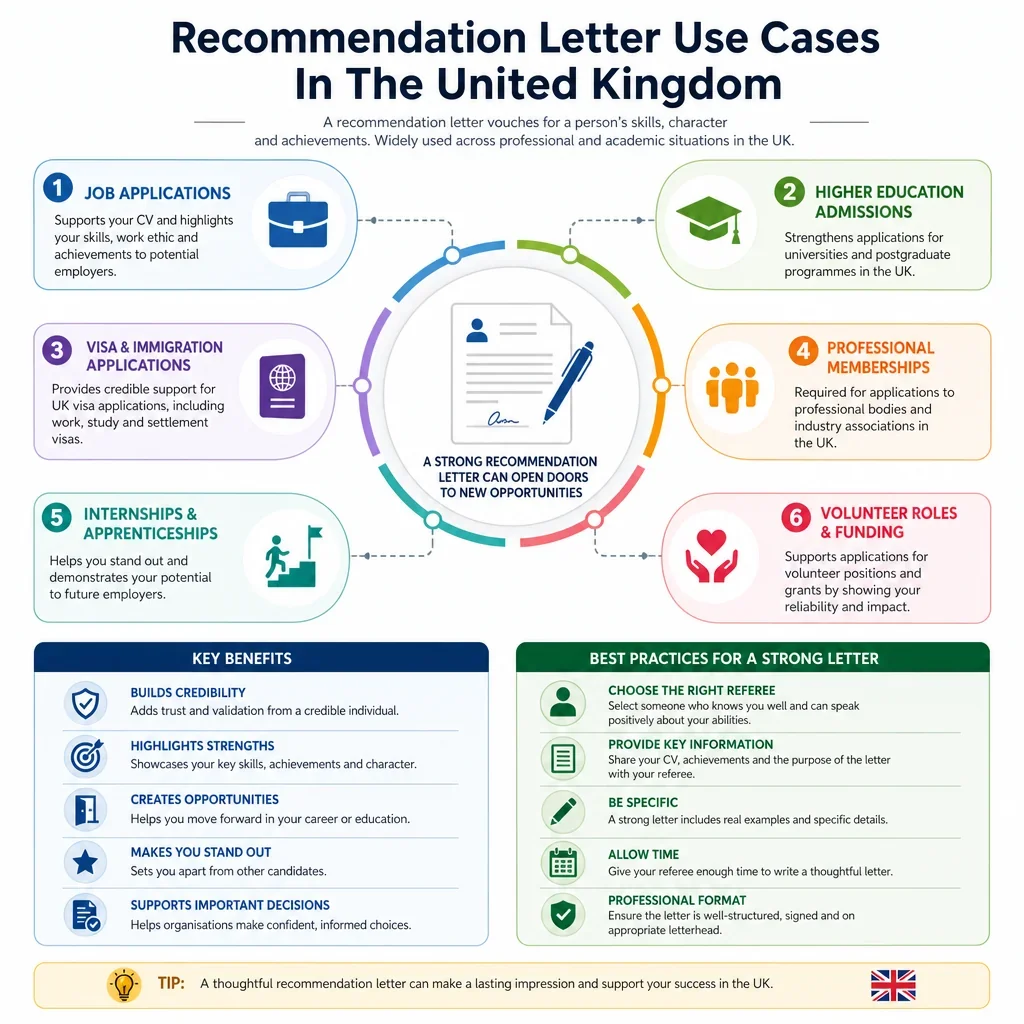
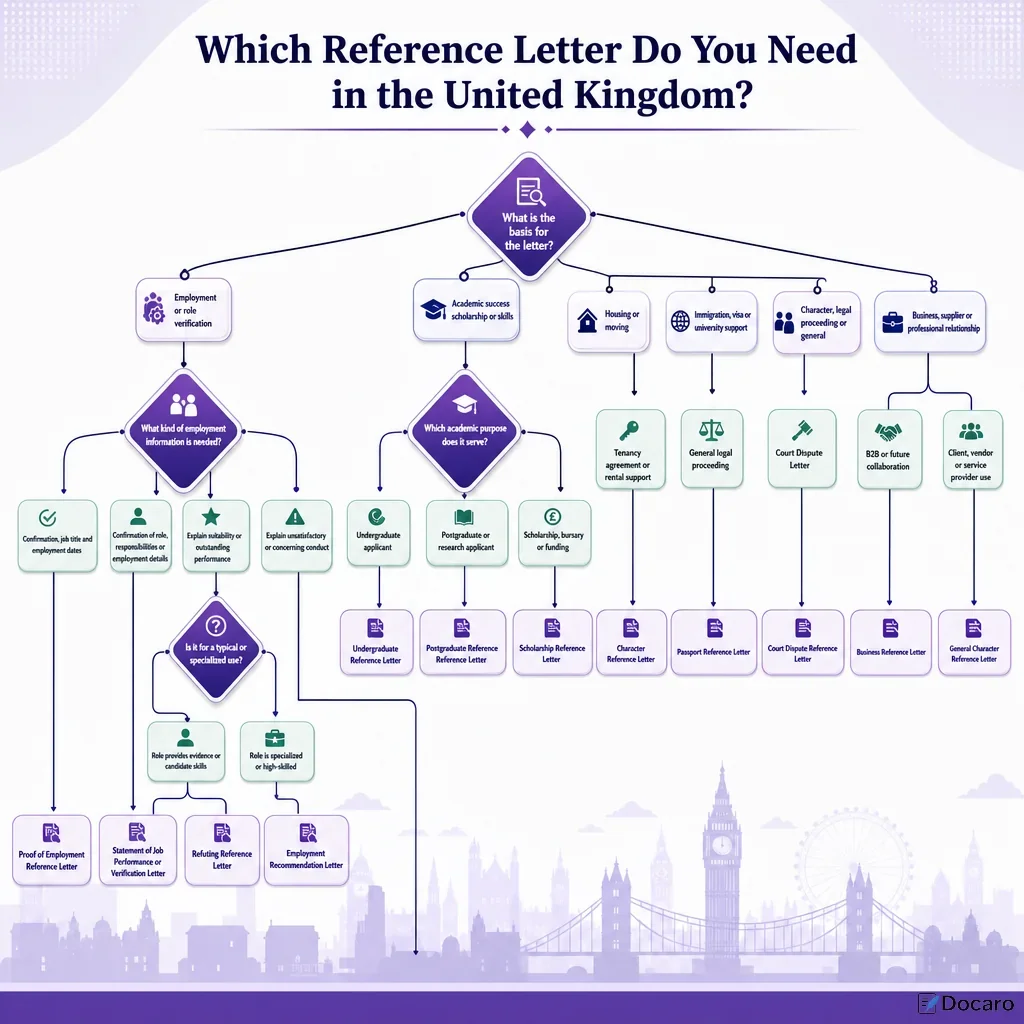
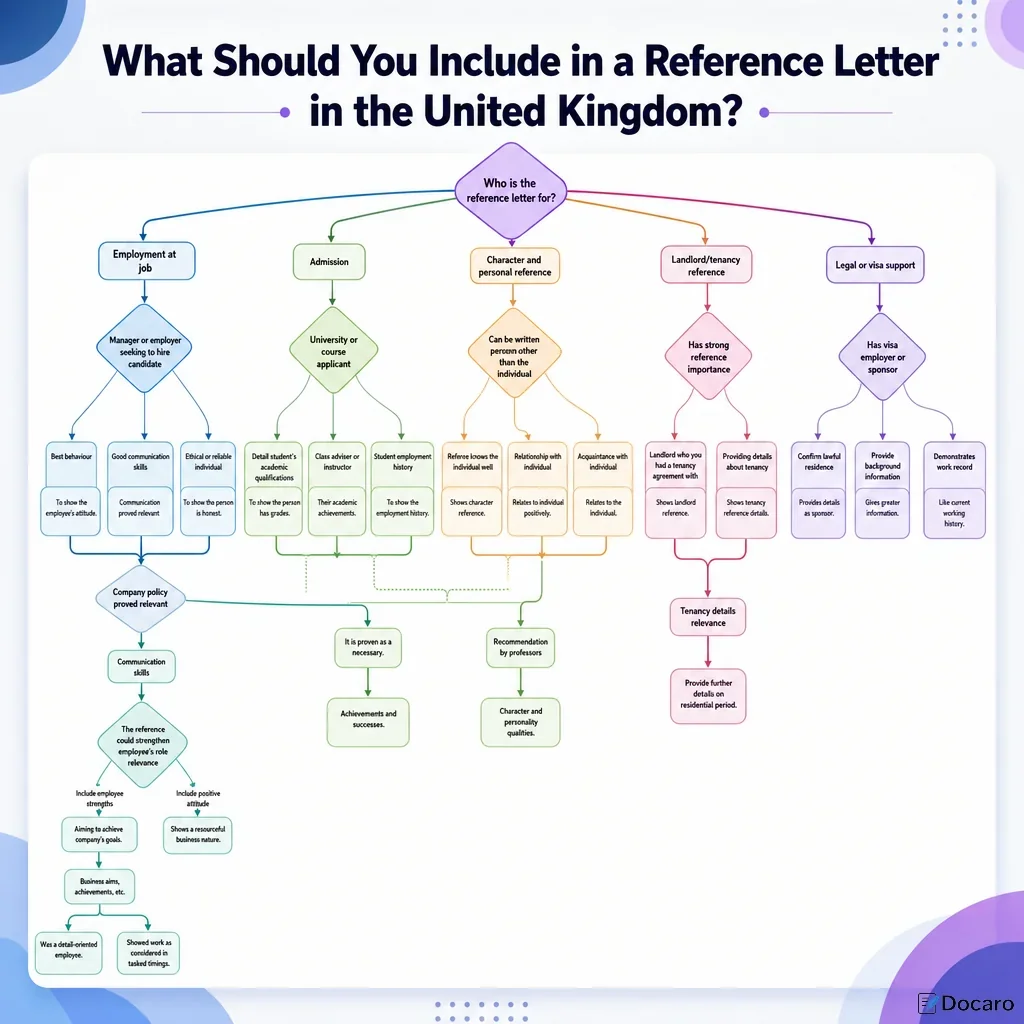
When do you need a Reference Letter in the United Kingdom?
British Legal Rules for a Reference Letter
Using the wrong structure for a letter of recommendation can undermine its credibility and legal enforceability in UK employment contexts.
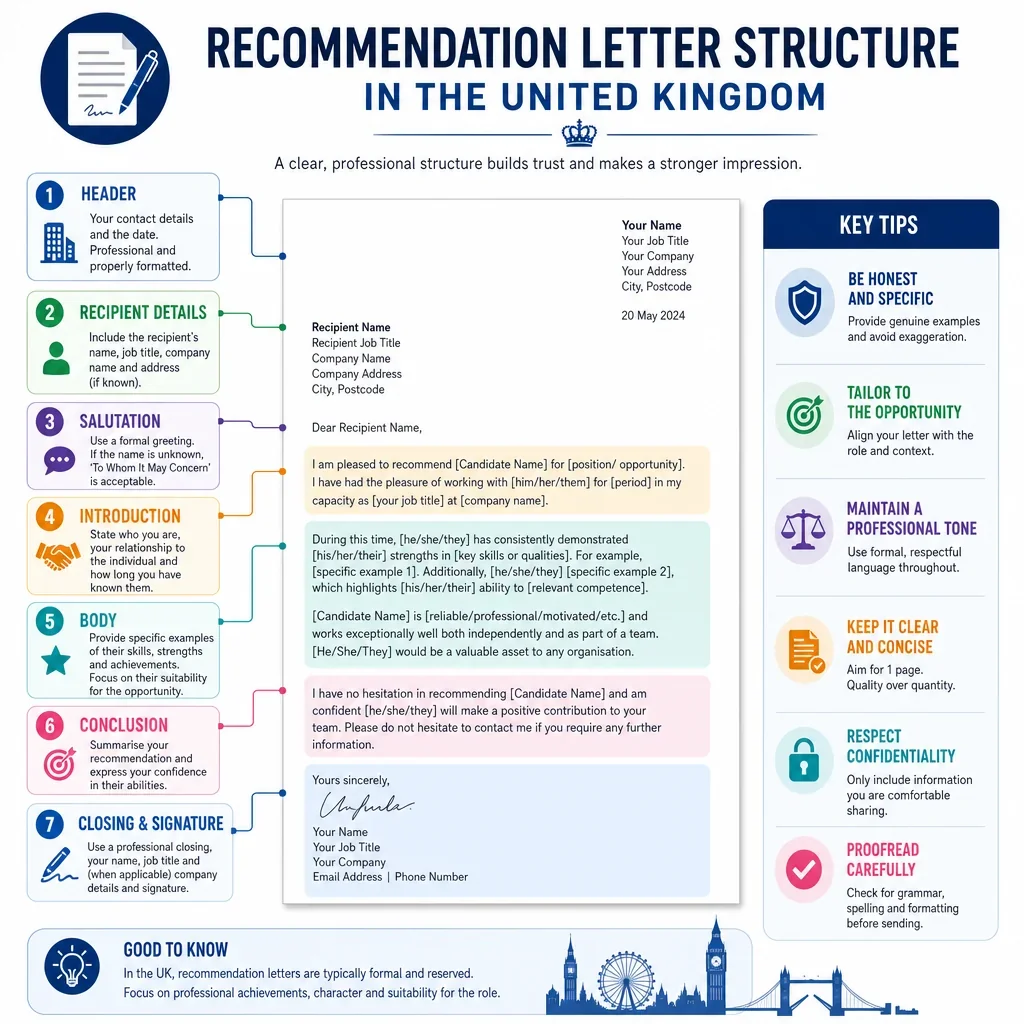
What a Proper Reference Letter Should Include
- IntroductionStart with your relationship to the person and how long you have known them in a professional capacity.
- Job DetailsBriefly describe the person's role, responsibilities, and duration of employment with you.
- Skills and StrengthsHighlight key abilities, achievements, and positive qualities that make them suitable for the new opportunity.
- Work PerformanceProvide examples of their reliability, teamwork, and contributions to the team or company.
- Personal QualitiesMention any relevant personal attributes like punctuality or initiative that support their professional success.
- RecommendationClearly state your endorsement and confidence in their ability to excel in the new role.
- Contact InformationInclude your full name, position, contact details, and offer to provide further information if needed.
Generate Your Document in 4 Easy Steps
Why Use Docaro?
 United Kingdom
Free Example Reference Letter Template
Below is a free template example of a Reference Letter for use in the United Kingdom generated by our AI model.
The clauses in your actual Reference Letter will vary from this example as they will be entirely bespoke to your requirements as set out in the questionnaire you complete.
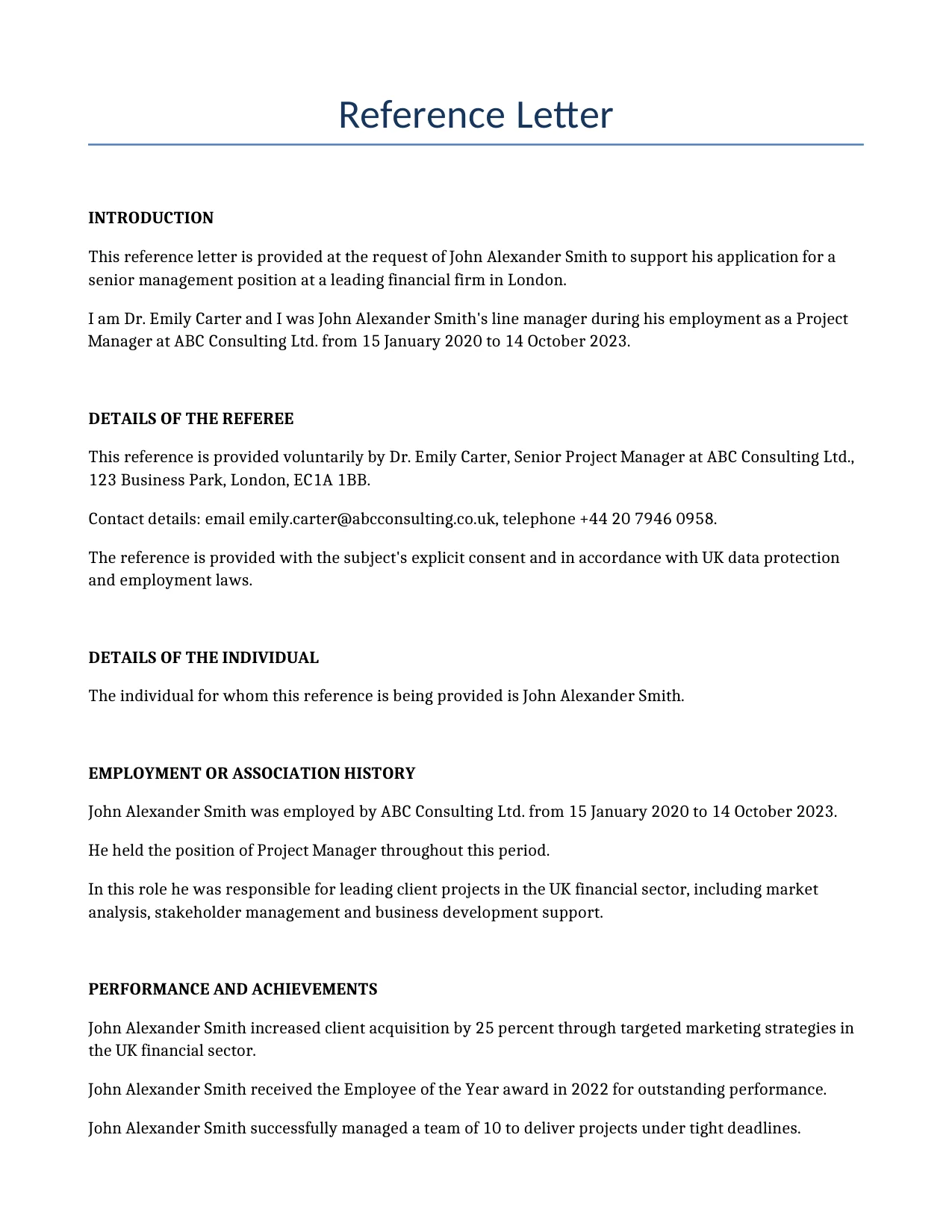
Reference Letter
INTRODUCTION
This reference letter is provided at the request of John Alexander Smith to support his application for a senior management position at a leading financial firm in London.
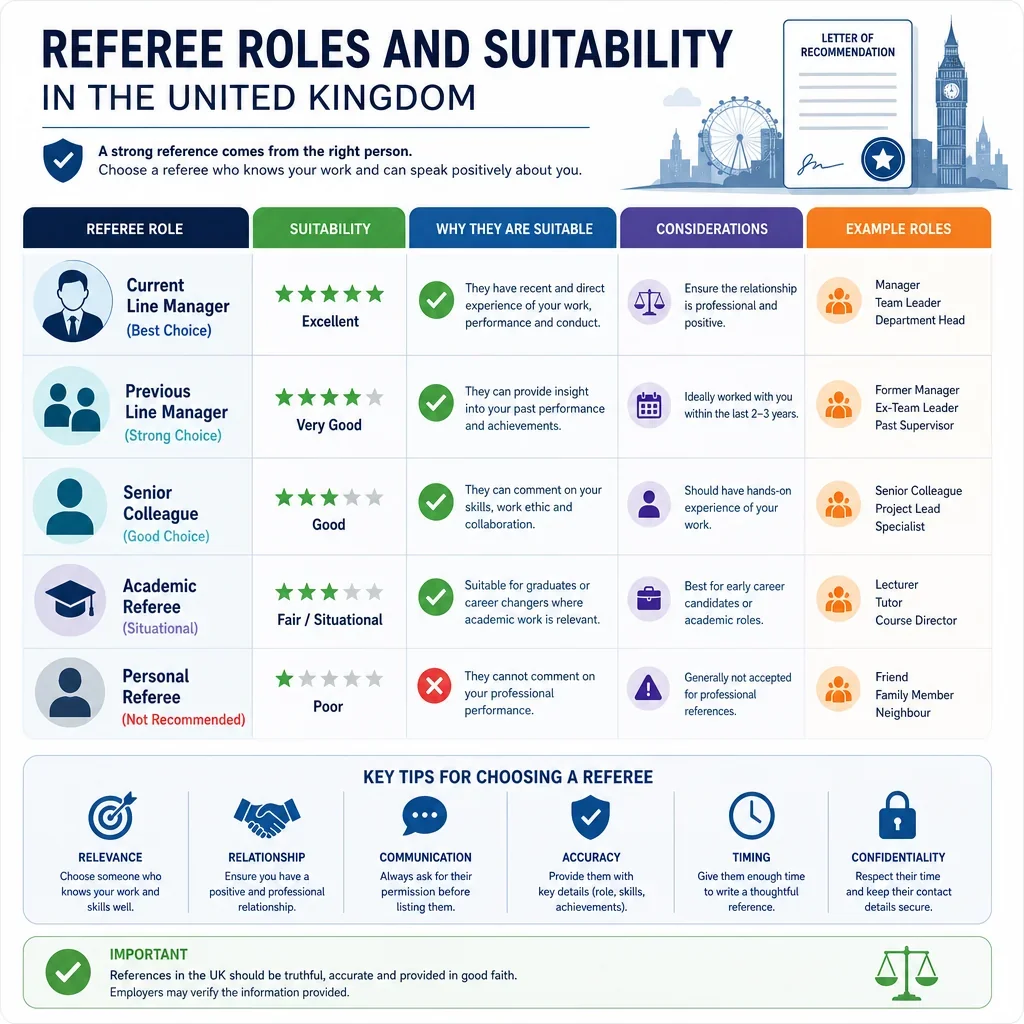
I am Dr. Emily Carter and I was John Alexander Smith's line manager during his employment as a Project Manager at ABC Consulting Ltd. from 15 January 2020 to 14 October 2023.
DETAILS OF THE REFEREE
This reference is provided voluntarily by Dr. Emily Carter, Senior Project Manager at ABC Consulting Ltd., 123 Business Park, London, EC1A 1BB.
Contact details: email emily.carter@abcconsulting.co.uk, telephone +44 20 7946 0958.
The reference is provided with the subject's explicit consent and in accordance with UK data protection and employment laws.
DETAILS OF THE INDIVIDUAL
The individual for whom this reference is being provided is John Alexander Smith.
EMPLOYMENT OR ASSOCIATION HISTORY
John Alexander Smith was employed by ABC Consulting Ltd. from 15 January 2020 to 14 October 2023.
He held the position of Project Manager throughout this period.
In this role he was responsible for leading client projects in the UK financial sector, including market analysis, stakeholder management and business development support.
PERFORMANCE AND ACHIEVEMENTS
John Alexander Smith increased client acquisition by 25 percent through targeted marketing strategies in the UK financial sector.
John Alexander Smith received the Employee of the Year award in 2022 for outstanding performance.
John Alexander Smith successfully managed a team of 10 to deliver projects under tight deadlines.
John Alexander Smith led the implementation of a new CRM system resulting in a 30 percent improvement in customer response times.
John Alexander Smith contributed to business development initiatives that improved operational efficiency.
John Alexander Smith spearheaded digital transformation projects that integrated new tools into workflows.
John Alexander Smith mentored junior staff leading to a 20 percent increase in team productivity.
John Alexander Smith developed training programs that enhanced employee skills in compliance with UK regulations.
John Alexander Smith collaborated on cross-departmental initiatives that improved overall organisational efficiency and fostered a positive work culture.
SKILLS AND COMPETENCIES
John Alexander Smith demonstrated strong proficiency in marketing strategy, project management and business development within the UK financial sector.
He excelled in communication, fostering effective teamwork in multidisciplinary projects and showed exceptional adaptability and problem-solving under pressure.
John Alexander Smith has held leadership roles and has 8 years of professional experience in marketing and project management.
PERSONAL QUALITIES AND WORK ETHIC
John Alexander Smith has demonstrated the key character traits of Integrity, Adaptability and Leadership.
John Alexander Smith has consistently met project deadlines even under tight schedules and has always been available to cover for colleagues during absences without hesitation.
John Alexander Smith has frequently initiated projects demonstrating a high level of initiative.
John Alexander Smith has a positive and proactive attitude towards work always approaching tasks with enthusiasm and a commitment to delivering high-quality results.
REASON FOR LEAVING
John Alexander Smith left the organisation on mutually agreeable terms to pursue new opportunities that aligned with his career development goals.
CONFIRMATION OF ACCURACY
I confirm that all information provided in this reference is true and accurate to the best of my knowledge. I have no reservations about John Alexander Smith's suitability for the senior management role he is applying for.
RECOMMENDATION
I recommend John Alexander Smith for the senior management position in a London financial firm.
His project management experience at ABC Consulting Ltd. has equipped him with skills in leading teams, delivering marketing strategies and driving business development that are directly relevant to the demands of a senior role in the financial sector.
He has shown the ability to manage complex projects, improve team performance and contribute to organisational efficiency in a regulated UK environment.
CLOSING REMARKS
In summary I have no doubt that John Alexander Smith will perform well in a senior management role, bringing the same dedication and skill that he demonstrated during his time with ABC Consulting Ltd.
This reference is provided in good faith, without liability, and in accordance with UK laws including the Equality Act 2010 and Data Protection Act 2018.
Please feel free to contact me at emily.carter@abcconsulting.co.uk or by telephone at +44 20 7946 0958 for any further information.
I wish John Alexander Smith every success in his future career.
DECLARATION
I declare that this reference has been given truthfully and does not discriminate under the Equality Act 2010. Spent convictions are not disclosed in accordance with the Rehabilitation of Offenders Act 1974. The subject has consented to the disclosure of their personal data under the Data Protection Act 2018 and UK GDPR.
GOVERNING LAW
This reference letter is provided in compliance with relevant UK legislation including the Defamation Act 2013, Equality Act 2010, Data Protection Act 2018, UK GDPR, and Rehabilitation of Offenders Act 1974.
DATE
This reference letter is issued on 15 October 2023.
SIGNATURES
Signed by Dr. Emily Carter as the referee.
Signature: _______________________________
Name: Dr. Emily Carter
Position: Senior Project Manager, ABC Consulting Ltd.
Date: _______________________________
This example shows approximately 70% of a typical document and is provided for illustrative purposes only. The remaining content has been omitted.
Every document generated by Docaro is tailored to your specific circumstances, jurisdiction and the information you provide. The completed document includes all applicable clauses and provisions required for your situation.
To generate the full, personalised document, answer a short series of questions and your document will be created instantly.
Useful Resources When Considering a Reference Letter in the United Kingdom
United Kingdom Reference Legislation
Reference Letter FAQs
Document Generation FAQs
Related Articles