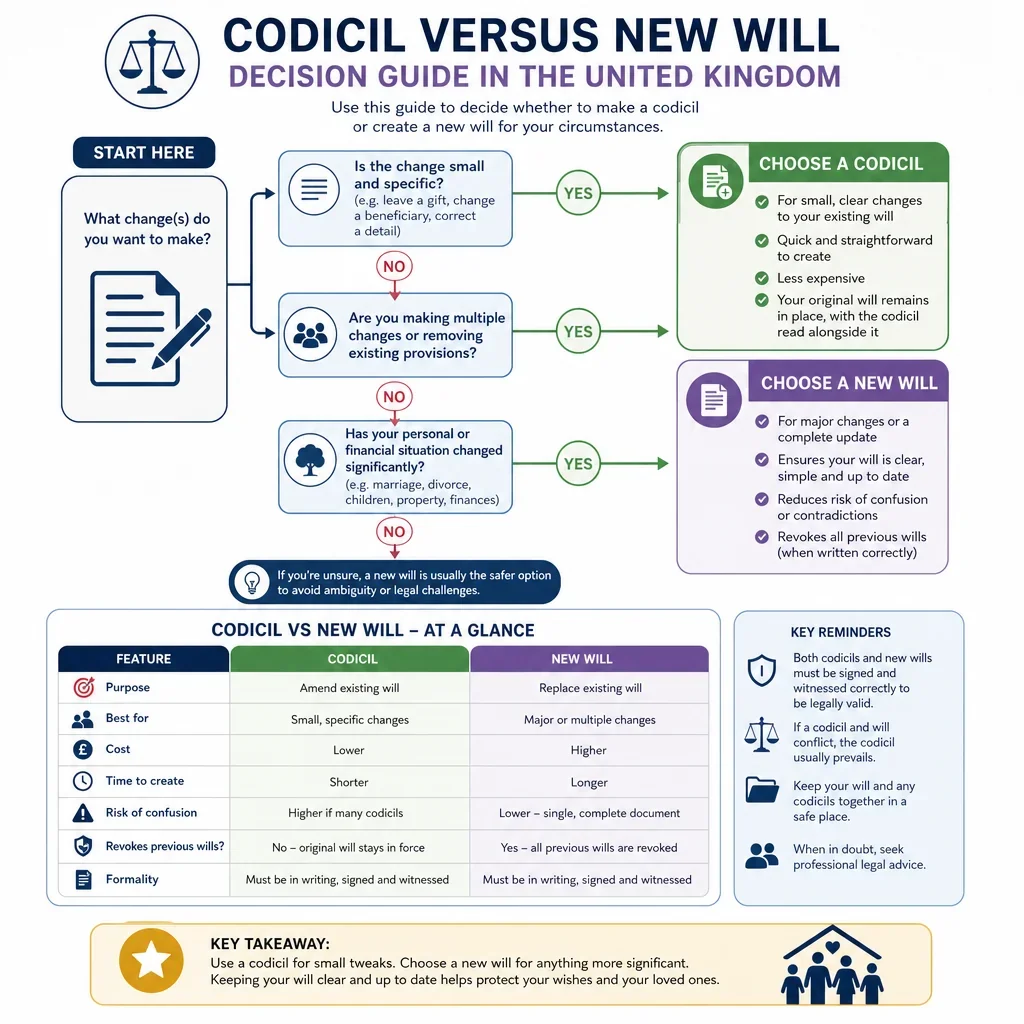
Codicil Versus New Will Decision Guide In The United Kingdom
Scenario | Reasoning | Drafting Complexity | Ambiguity Risk | Decision Factors |
|---|---|---|---|---|
Codicil may be appropriate | ||||
Executor has died or can no longer act. | A single executor substitution is usually a focused amendment. | Simple | Low | Check whether substitute executors already exist and whether any gifts to the executor are affected. |
Either may be possible | ||||
All executors need to be replaced. | A codicil can replace executors, but a new will may be clearer if several appointments and powers change. | Moderate | Medium | Review executor order, trustee powers, professional charging clauses and replacements. |
Codicil may be appropriate | ||||
Add a small cash gift to one person or charity. | A simple pecuniary legacy can often be inserted without rewriting the will. | Simple | Low | Check the gift amount, recipient details, charity number and effect on residue. |
New will may be preferable | ||||
Add several cash or specific gifts. | Multiple additions increase the chance of conflict with existing gifts and residue. | Moderate | Medium | Review the full gift list, abatement order and whether any gift duplicates an existing clause. |
Change who receives the residue of the estate. | Residue is central to the will and errors can affect most of the estate. | Moderate | High | Check all percentage shares, survivorship provisions and default beneficiaries. |
Codicil may be appropriate | ||||
Update a beneficiary's address or changed surname. | Identification updates are usually narrow if the person is clearly the same beneficiary. | Simple | Low | Use full names and avoid changing the gift unless intended. |
Either may be possible | ||||
A named beneficiary has died before the testator. | A codicil may redirect one gift, but a new will is clearer if residue or many gifts are affected. | Moderate | Medium | Check lapse rules, substitution clauses, children of the beneficiary and residue. |
Legal advice recommended | ||||
Testator is getting married or entering a civil partnership. | Marriage or civil partnership can revoke a will unless made in contemplation of it. | Complex | High | Confirm timing, spouse or civil partner provision, revocation effects and intestacy exposure. |
New will may be preferable | ||||
Testator is divorced or civil partnership is dissolved. | Divorce affects gifts and executor appointments for the former spouse as if they had died. | Complex | High | Review former spouse gifts, executor role, guardianship, trusts, residue and financial claims. |
Testator has separated but is not divorced. | Separation alone does not automatically revoke spouse gifts or appointments. | Complex | High | Consider spouse rights, financial proceedings, dependants and interim estate planning. |
A child is born or adopted after the will was signed. | Children often require residue, guardianship and trust provisions, not just one amendment. | Complex | High | Review guardians, age of inheritance, trustees, substitutes and provision for all children. |
Either may be possible | ||||
Appoint or replace guardians for minor children. | A codicil can appoint guardians, but a new will may align guardianship with trusts and executors. | Moderate | Medium | Check parental responsibility, guardian consent, money management and substitute guardians. |
Codicil may be appropriate | ||||
Update burial, cremation or funeral wishes. | Funeral wishes are usually separate from dispositive estate provisions. | Simple | Low | Tell executors where the codicil is kept because funerals often occur before probate. |
Add or update organ donation wishes. | This is usually a personal wish rather than a complex estate distribution change. | Simple | Low | Register NHS wishes and inform family the will may be read too late. |
Remove one specific gift from the will. | A single revoked legacy can be clear if the clause is precisely identified. | Simple | Medium | State whether the asset falls into residue or is replaced by another gift. |
Either may be possible | ||||
Asset gifted in the will has been sold or no longer exists. | The gift may fail by ademption replacement wording may be needed. | Moderate | Medium | Decide whether to give a substitute asset, cash equivalent or let the gift fail. |
Testator has bought a new home. | A codicil may update property details, but ownership structure and mortgage may require wider review. | Moderate | Medium | Check title ownership, joint tenancy, mortgage, life interests and residue. |
Legal advice recommended | ||||
Change planning for jointly owned property. | Joint tenancy may pass by survivorship outside the will tenancy in common may pass by will. | Complex | High | Check land title, severance, declaration of trust and intended beneficiary. |
Either may be possible | ||||
Change or add charity beneficiaries. | Simple charity gifts suit a codicil, but larger or tax-planned gifts may need a new will. | Moderate | Medium | Use registered charity name, number, address and merger substitution wording. |
Legal advice recommended | ||||
Leave at least 10% of net estate to charity for inheritance tax planning. | The reduced inheritance tax rate depends on technical calculations and estate components. | Complex | High | Model the 10% test, exemptions, nil-rate bands and residue drafting. |
Update will for inheritance tax planning or nil-rate bands. | Tax planning can interact with spouse exemption, residence nil-rate band and trusts. | Complex | High | Review estate value, home ownership, descendants, lifetime gifts and trust wording. |
Add a discretionary trust for beneficiaries. | Trusts require detailed terms, trustee powers and tax awareness. | Complex | High | Define beneficiaries, trustees, powers, letter of wishes and tax consequences. |
Create or amend a life interest in property or income. | Life interests affect occupation, income rights, capital beneficiaries and tax treatment. | Complex | High | Set occupation rights, outgoings, sale powers, remaindermen and termination events. |
Change gifts involving a company, partnership or business assets. | Business succession may affect control, valuation, tax relief and shareholder agreements. | Complex | High | Check articles, partnership agreement, cross-options, relief eligibility and executor powers. |
Add or change gifts of overseas property or assets. | Foreign succession laws and local wills may conflict with a UK codicil. | Complex | High | Check local law, domicile, tax, forced heirship and whether separate wills exist. |
Codicil may be appropriate | ||||
Add instructions for digital assets or online accounts. | Simple access or gift instructions can often be added without restructuring the will. | Moderate | Medium | Avoid passwords in the will identify assets and appoint suitable executors if needed. |
Add arrangements and funding for pets. | Pet care clauses are often limited if a caregiver and cash gift are clear. | Simple | Low | Name the caregiver, backup caregiver, gift amount and whether the gift is conditional. |
Legal advice recommended | ||||
Exclude or reduce provision for a spouse, child or dependant. | Eligible people may claim reasonable financial provision under the 1975 Act. | Complex | High | Consider dependency, reasons, evidence, letter of wishes and litigation risk. |
New will may be preferable | ||||
Restore a previously excluded beneficiary. | Earlier exclusion wording and any letter of wishes may need full replacement. | Moderate | Medium | Review all exclusion clauses, residue shares and any separate explanatory documents. |
Codicil may be appropriate | ||||
Correct a typo, incorrect clause reference or obvious clerical error. | A targeted correction can remove uncertainty without replacing the whole will. | Simple | Medium | Identify the exact error and avoid changing substance unintentionally. |
New will may be preferable | ||||
There are already one or more codicils. | Multiple documents increase administrative burden and inconsistency risk. | Moderate | High | Consolidate prior changes and revoke earlier wills and codicils clearly. |
Need to revoke the old will and start again. | A new will can expressly revoke earlier wills and codicils. | Moderate | Medium | Ensure no foreign will or limited-scope will is accidentally revoked. |
Legal advice recommended | ||||
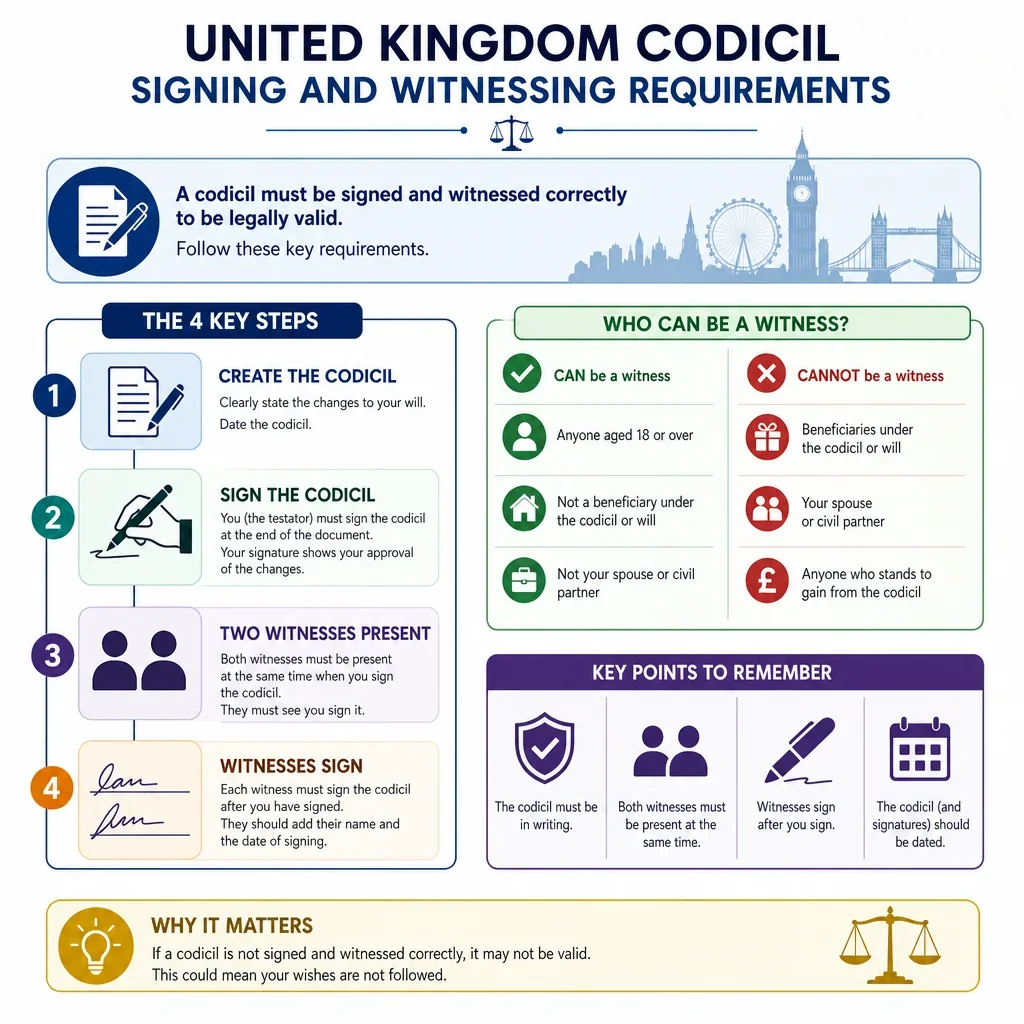
User is unsure how to sign or witness the codicil. | A codicil must comply with will execution formalities to be valid. | Simple | High | Use two independent adult witnesses present at the same time and avoid beneficiary witnesses. |
A beneficiary or their spouse may witness the codicil. | A gift to an attesting witness or their spouse may be void. | Simple | High | Choose independent witnesses with no benefit under the will or codicil. |
Testator has dementia, serious illness or fluctuating capacity. | Capacity concerns can lead to probate disputes and require careful evidence. | Complex | High | Consider medical evidence, solicitor attendance notes and timing of execution. |
Someone may be pressuring the testator to change the will. | Independent advice and evidence can reduce later challenge risk. | Complex | High | Ensure private instructions, independent witnesses and clear reasons for changes. |
New will may be preferable | ||||
Estate value has increased significantly. | Old gift amounts, tax assumptions and residue shares may no longer fit. | Moderate | Medium | Review asset values, tax thresholds, proportional fairness and executor powers. |
Estate value has fallen or debts have increased. | Specific gifts may consume the estate and leave residue beneficiaries with little or nothing. | Moderate | High | Review debts, gift priority, abatement, secured property and residue adequacy. |
Either may be possible | ||||
Change percentage shares between beneficiaries. | A codicil can amend shares, but arithmetic and substitution clauses must remain consistent. | Moderate | Medium | Ensure shares total 100% and update default provisions for deceased beneficiaries. |
Legal advice recommended | ||||
Provide for a new partner and children from different relationships. | Blended families often involve competing needs, dependency claims and trust planning. | Complex | High | Balance partner occupation, children inheritance, trustees, 1975 Act risk and tax. |
Codicil may be appropriate | ||||
Only the non-binding letter of wishes needs updating. | A separate letter may be updated without changing the will if dispositive terms stay the same. | Simple | Low | Check the letter does not contradict binding will clauses or trustee duties. |
Either may be possible | ||||
Change trustees appointed under the will. | Simple trustee replacement may suit a codicil, but trust powers may need wider review. | Moderate | Medium | Check whether executors and trustees are the same people and whether powers remain adequate. |
Legal advice recommended | ||||
Testator has moved between UK jurisdictions. | Succession law and formalities can differ across England and Wales, Scotland and Northern Ireland. | Complex | High | Check domicile, habitual residence, property location and local execution rules. |
New will may be preferable | ||||
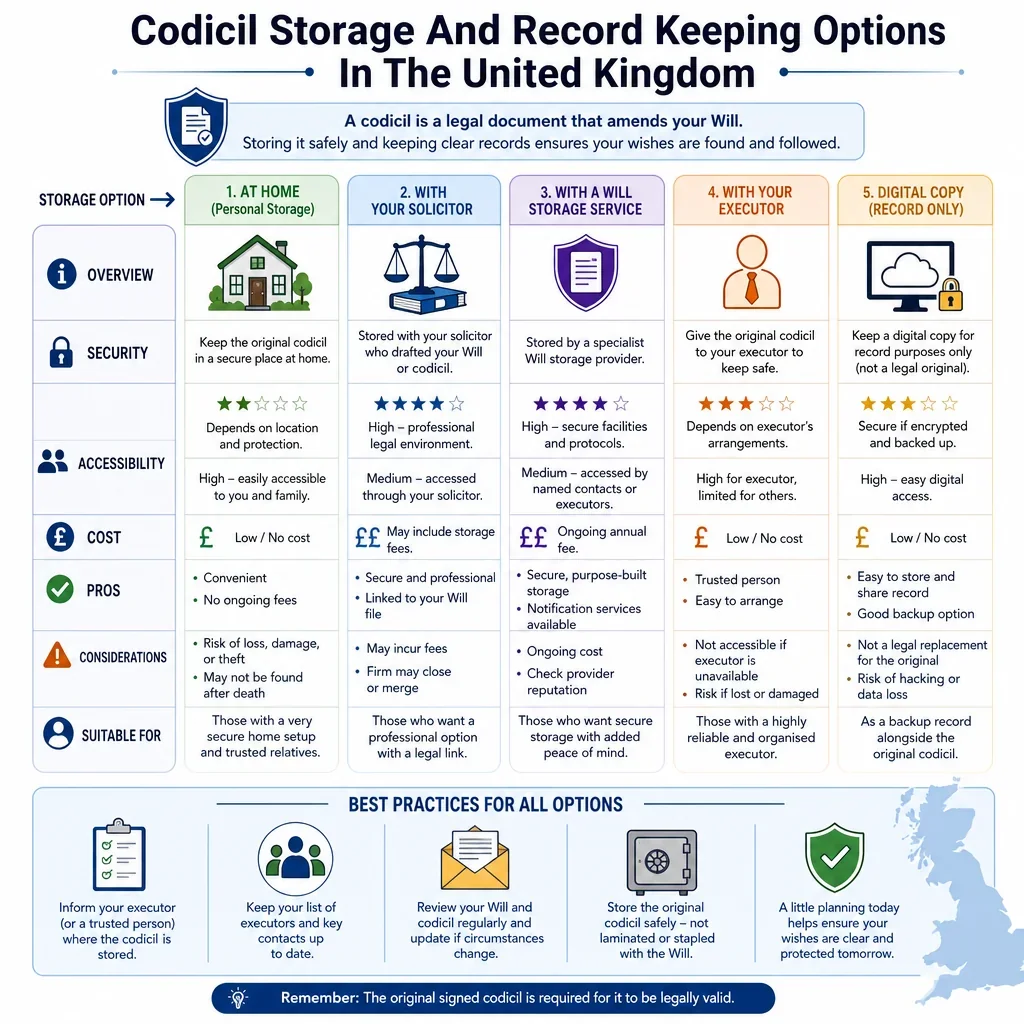
Original will is missing or stored with an old solicitor. | A codicil depends on the original will being available and identifiable. | Moderate | High | Locate the original, confirm date, avoid duplicates and tell executors where documents are kept. |
Old will uses outdated wording or unclear definitions. | Modern drafting can reduce interpretation disputes better than patching old clauses. | Moderate | Medium | Review definitions, administrative powers, trusts, substitution clauses and revocation wording. |
Codicil may be appropriate | ||||
Minor change is needed soon after signing a recent will. | A recent will is less likely to need a full legal and factual refresh. | Simple | Low | Confirm no other circumstances have changed since the will was made. |
New will may be preferable | ||||
Will is many years old and several life events have occurred. | A full rewrite captures accumulated changes more safely than several amendments. | Complex | High | Review family, assets, tax, executors, guardians, trusts and all beneficiary details. |
When Is A Codicil Better Than A New Will In The UK?
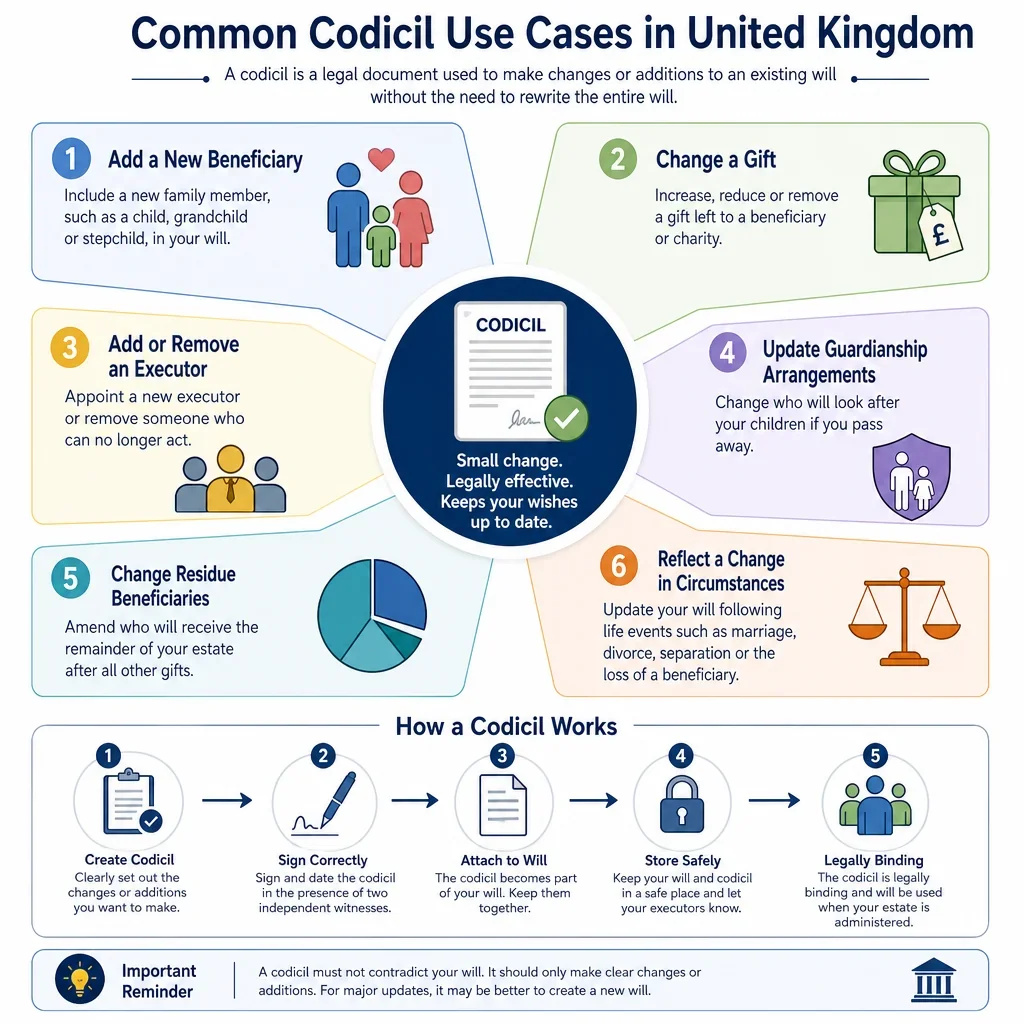
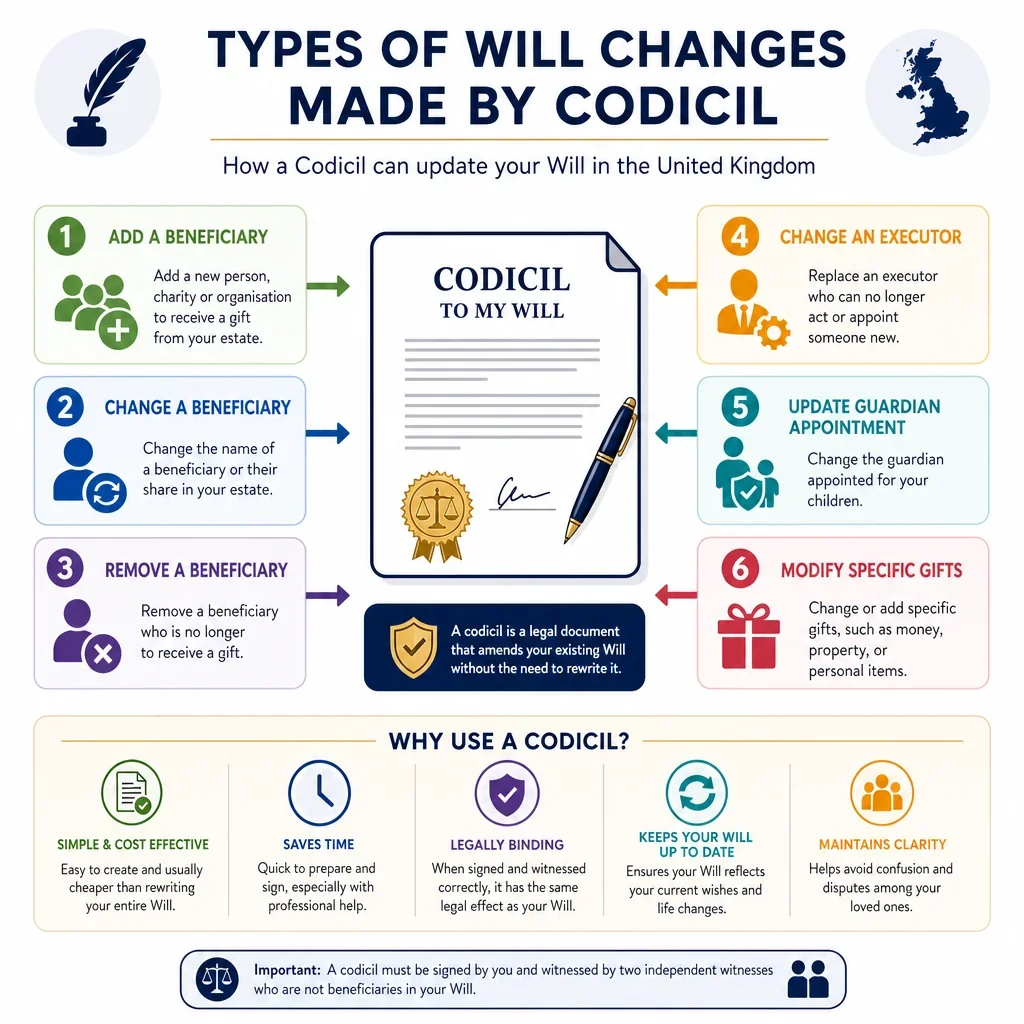
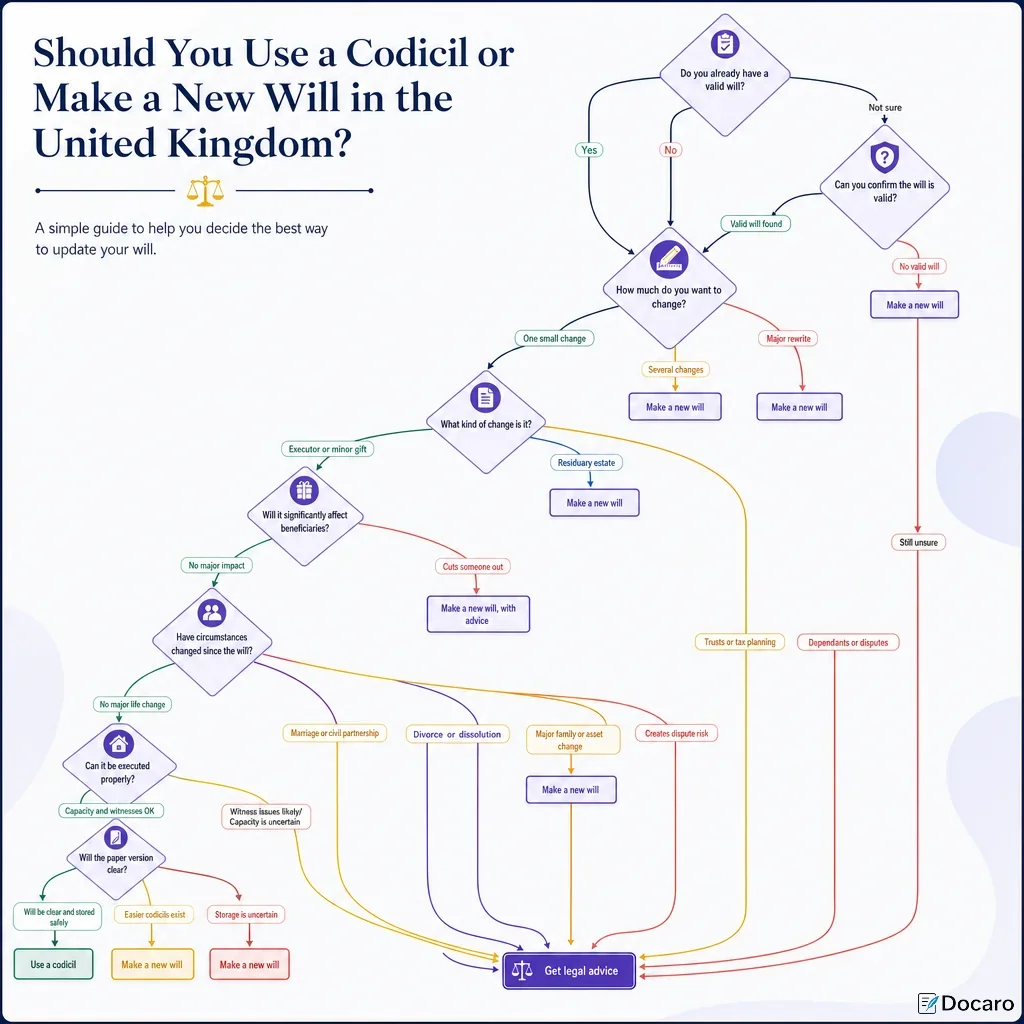
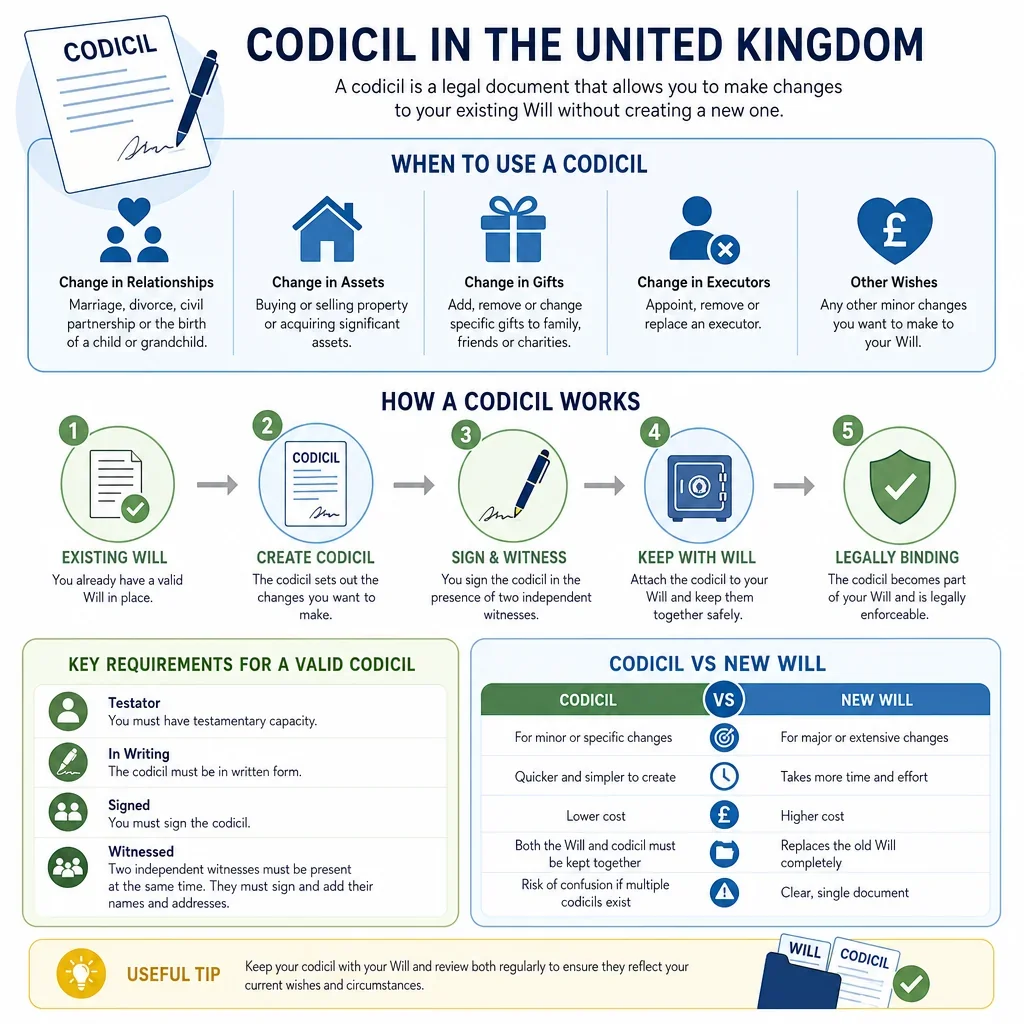
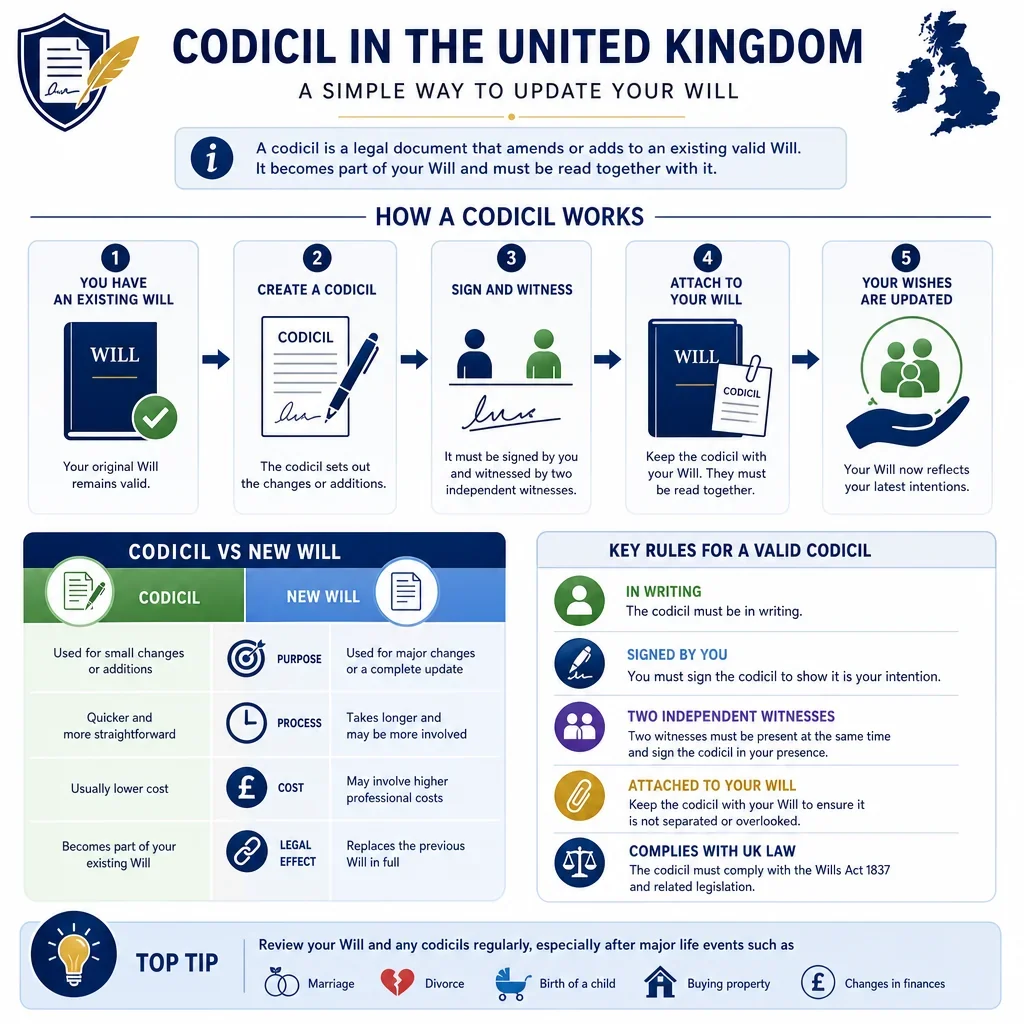
A codicil is usually most useful for a small, clear and isolated change, such as updating an executor, adding a modest cash gift, correcting an address, or changing funeral wishes. The more the change affects the structure of the estate, beneficiaries, trusts, tax planning or several clauses, the more likely a new will will be clearer and safer.
When Should You Avoid Using A Codicil?
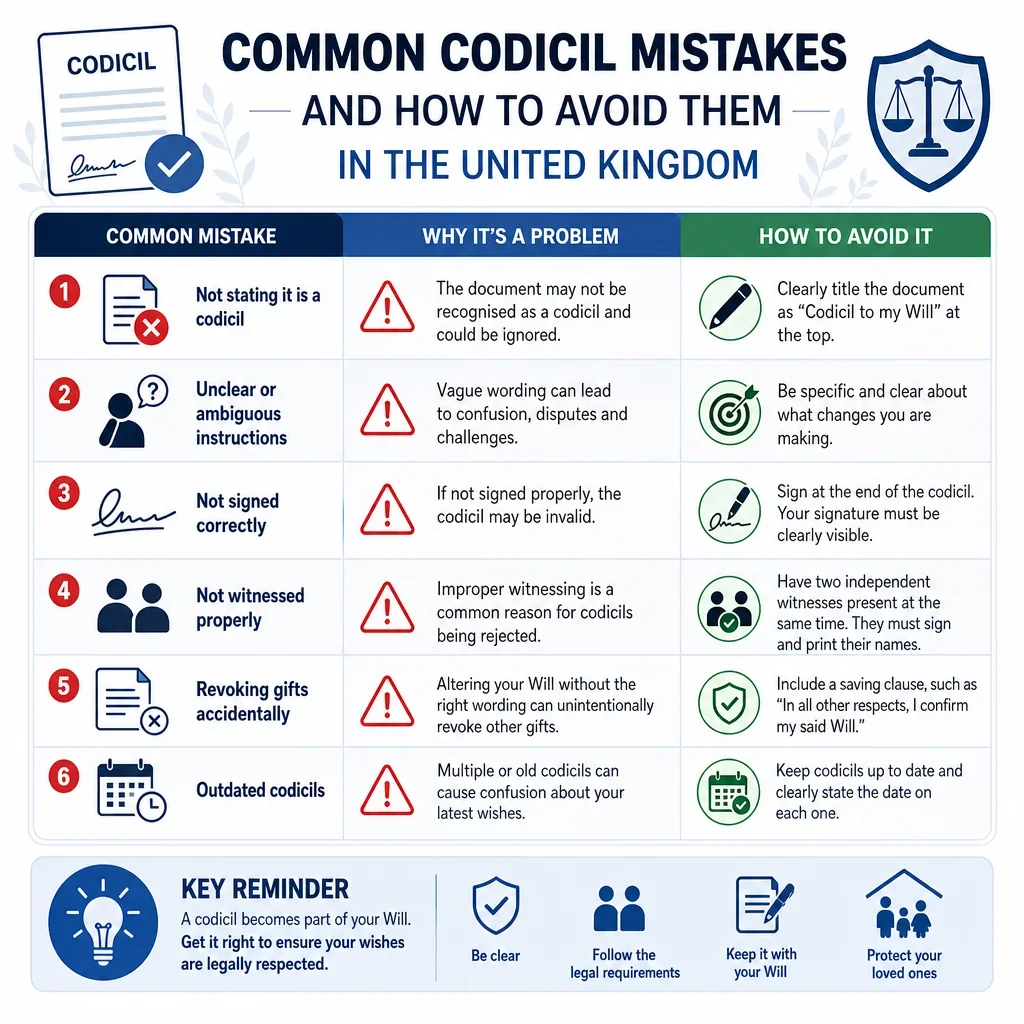
- Multiple previous codicils can make the will harder to interpret and administer; consolidating everything into a new will often reduces risk.
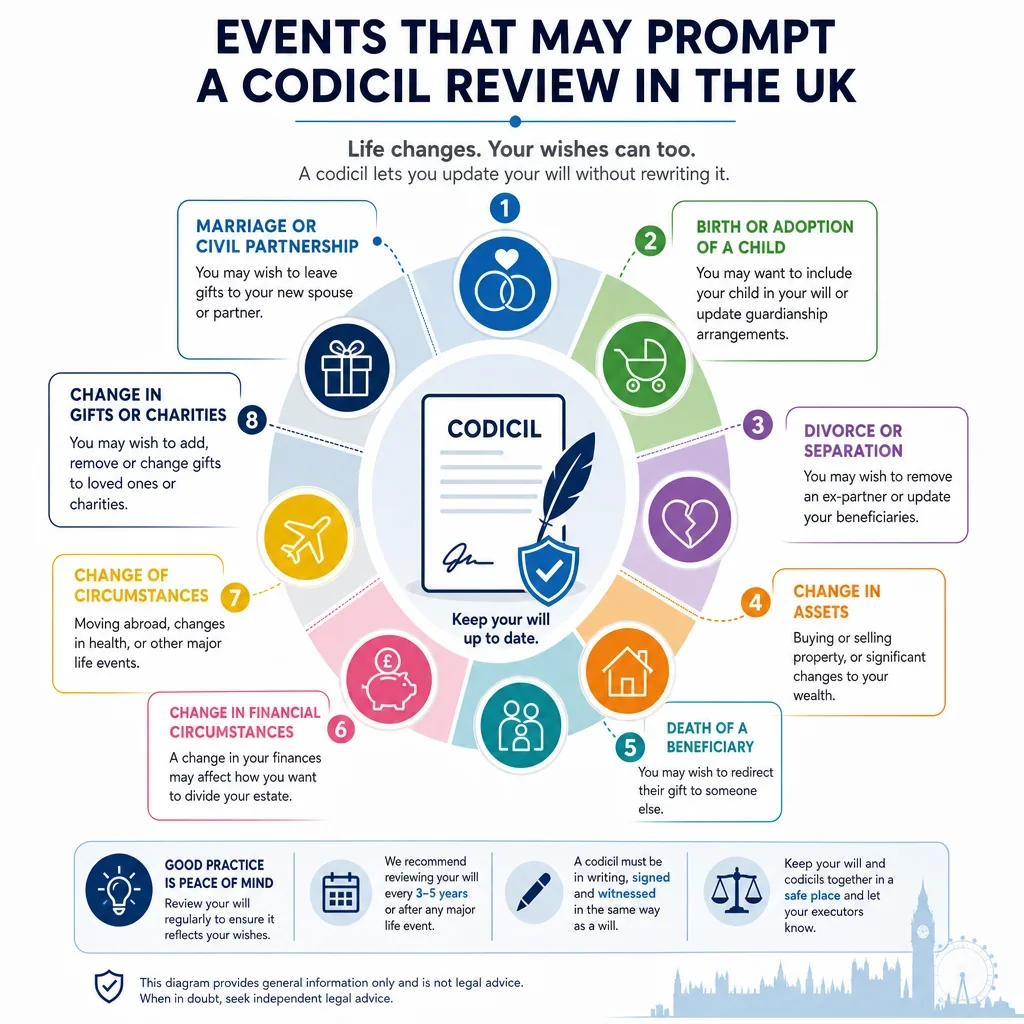
- Major family changes, such as marriage, divorce, separation, blended-family arrangements or disinheriting a close relative, can have significant legal and inheritance consequences.
- Tax-sensitive estates, business assets, foreign property and trusts usually need legal advice rather than a simple codicil.
What UK Signing Rules Matter Most?
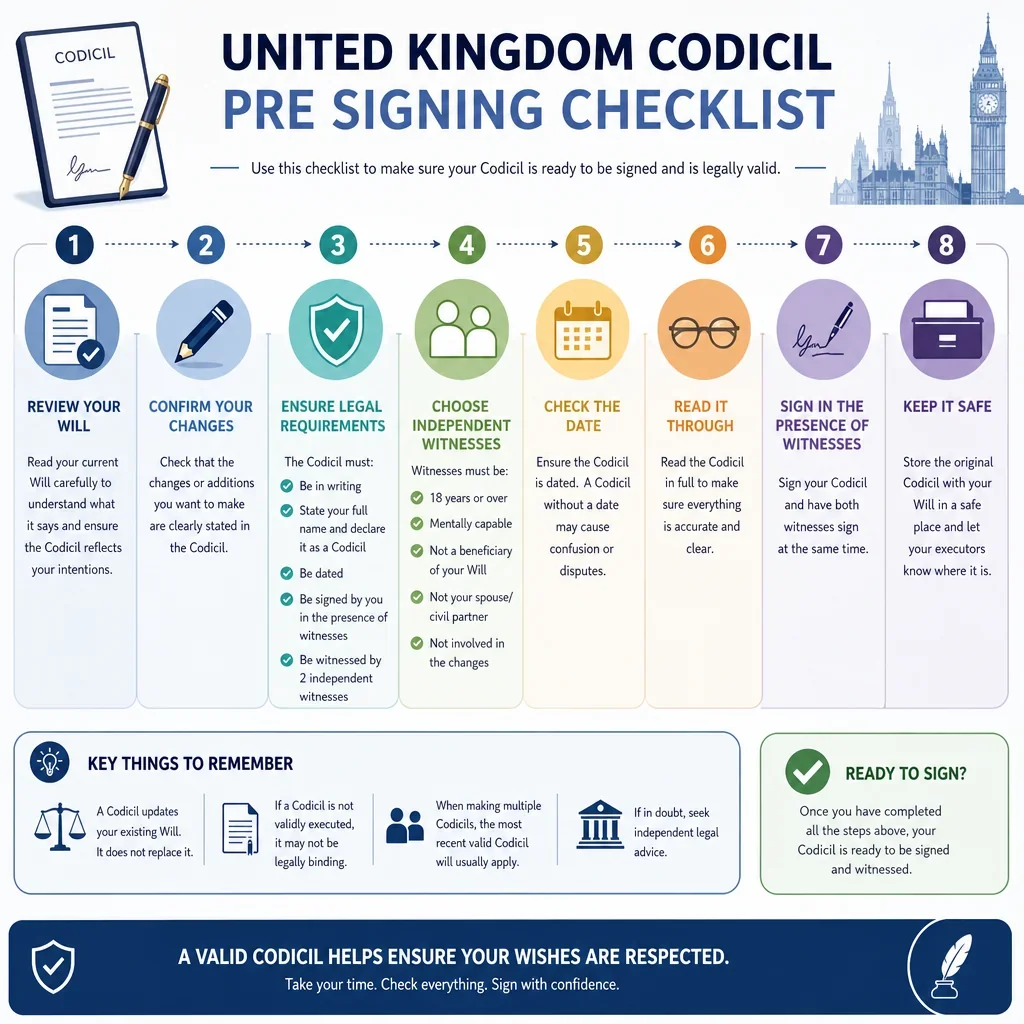
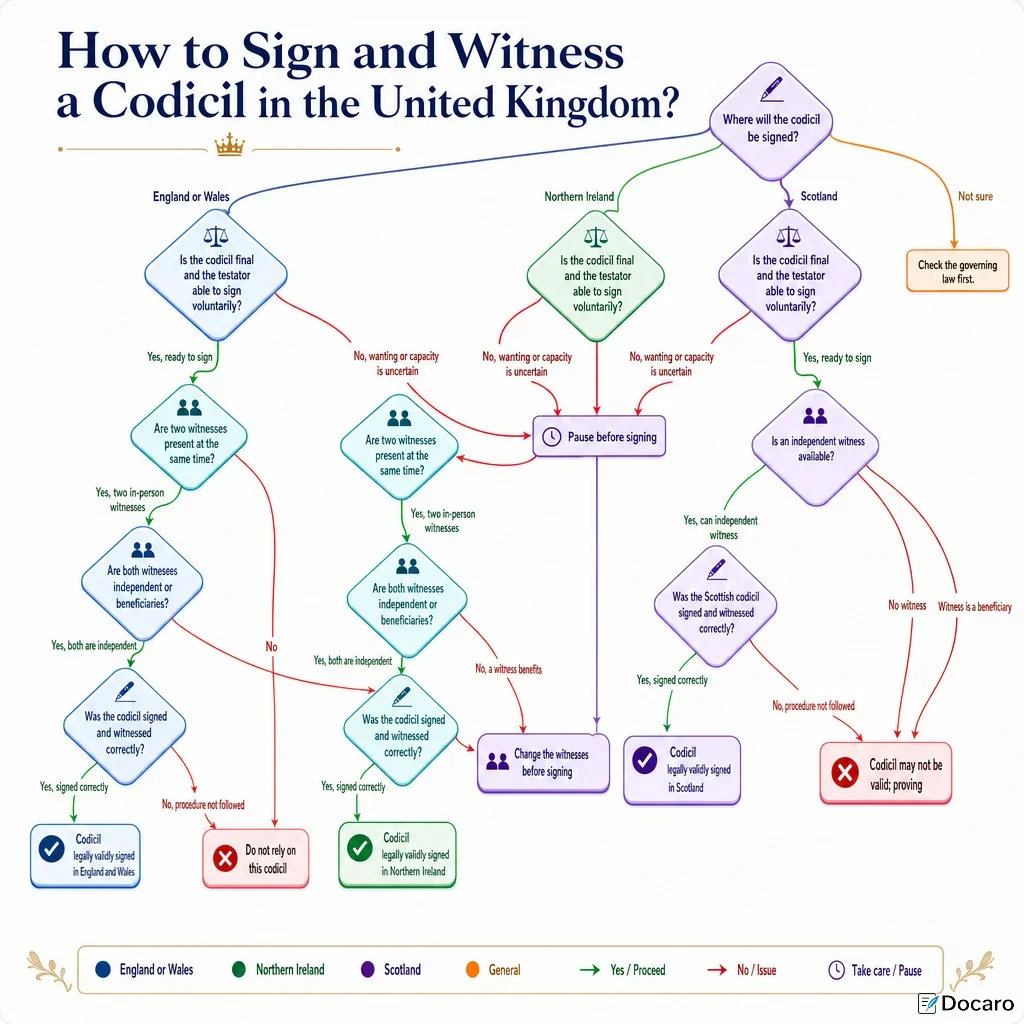
A codicil must be executed with the same formal care as a will. In England and Wales, the key statutory rules are in section 9 of the Wills Act 1837. The testator must sign, or acknowledge the signature, in the presence of two witnesses present at the same time, and the witnesses must sign or acknowledge their signatures.
Why Can A New Will Be Safer?
A new will can revoke and replace the old will, avoiding inconsistencies between documents. It is often preferable where wording needs to be modernised, residuary gifts are changing, executors and guardians are being restructured, or there is any risk that different documents could point in different directions.
FAQs
You Might Also Be Interested In