AI Generated Notice of Forfeiture for use in the United Kingdom
PDF & Word - 2026 Updated
Docaro Pricing
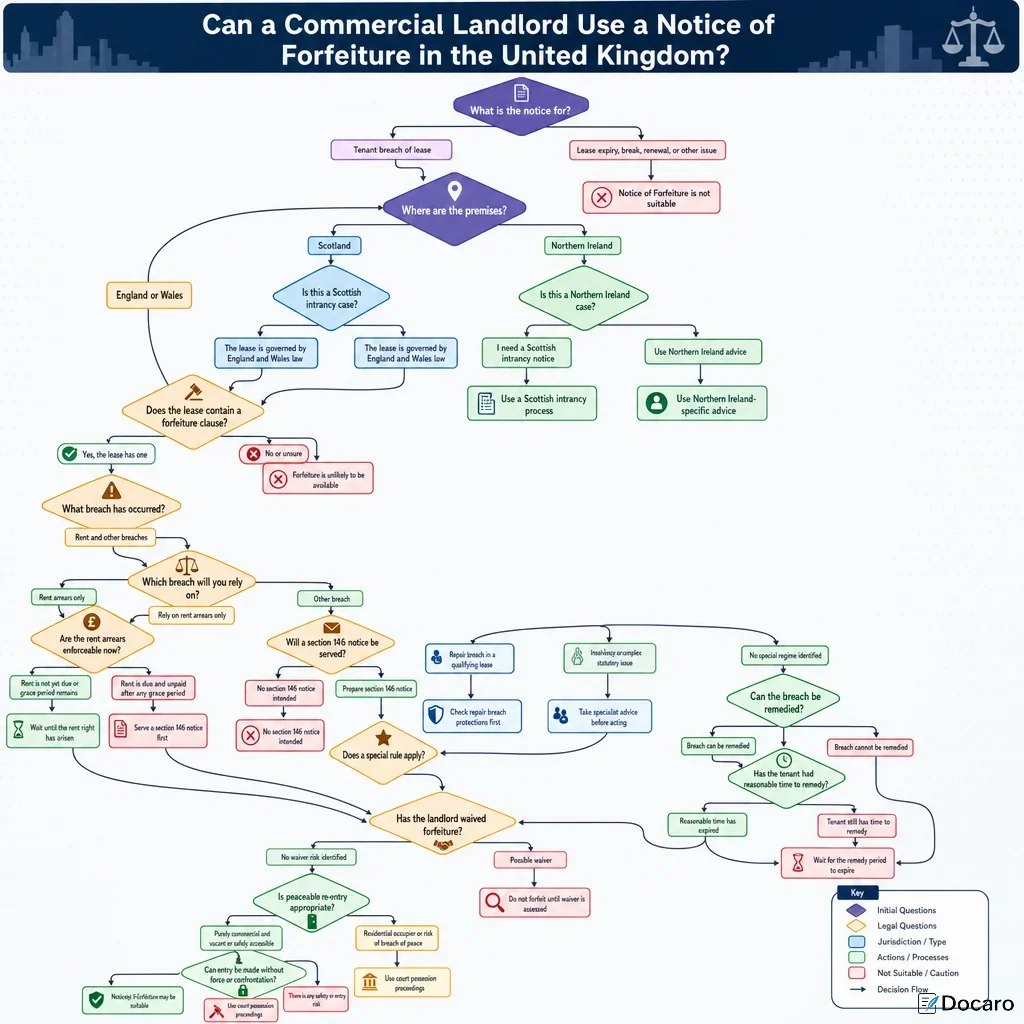
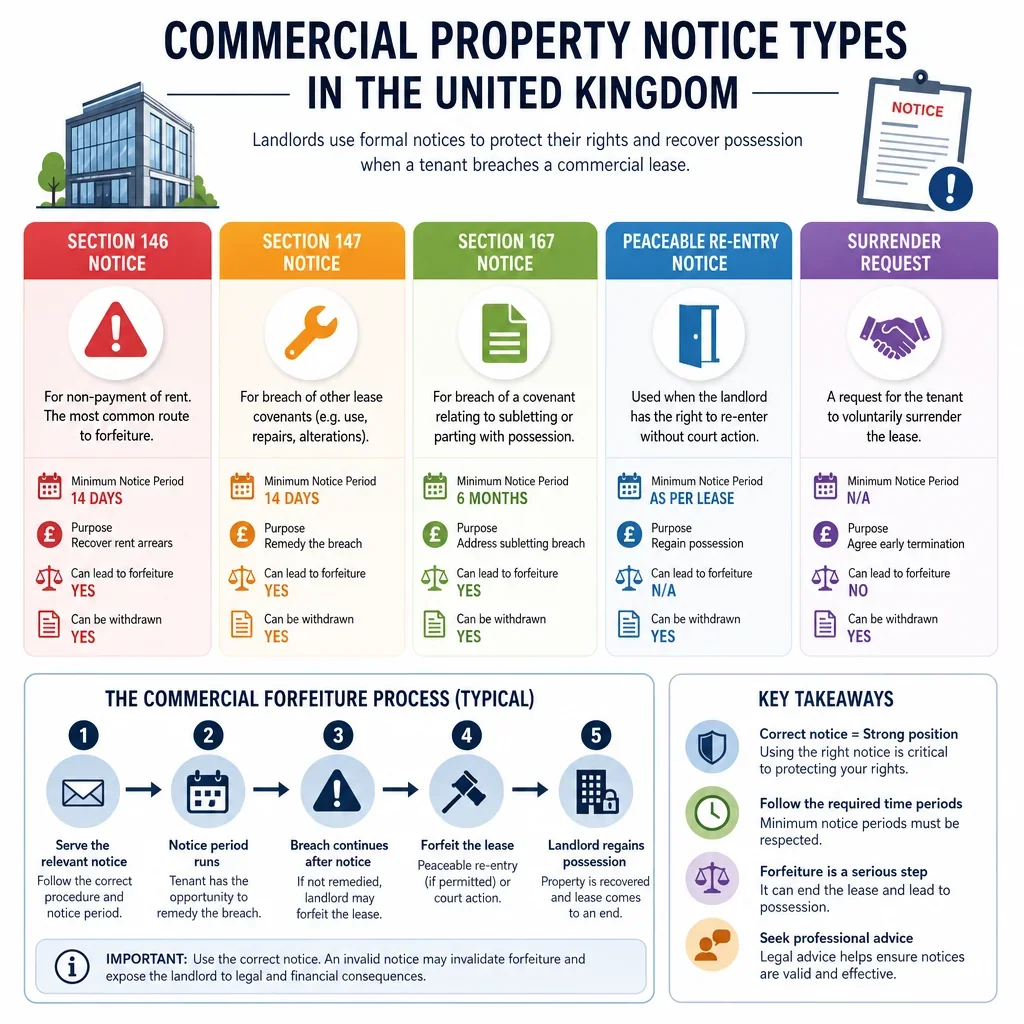
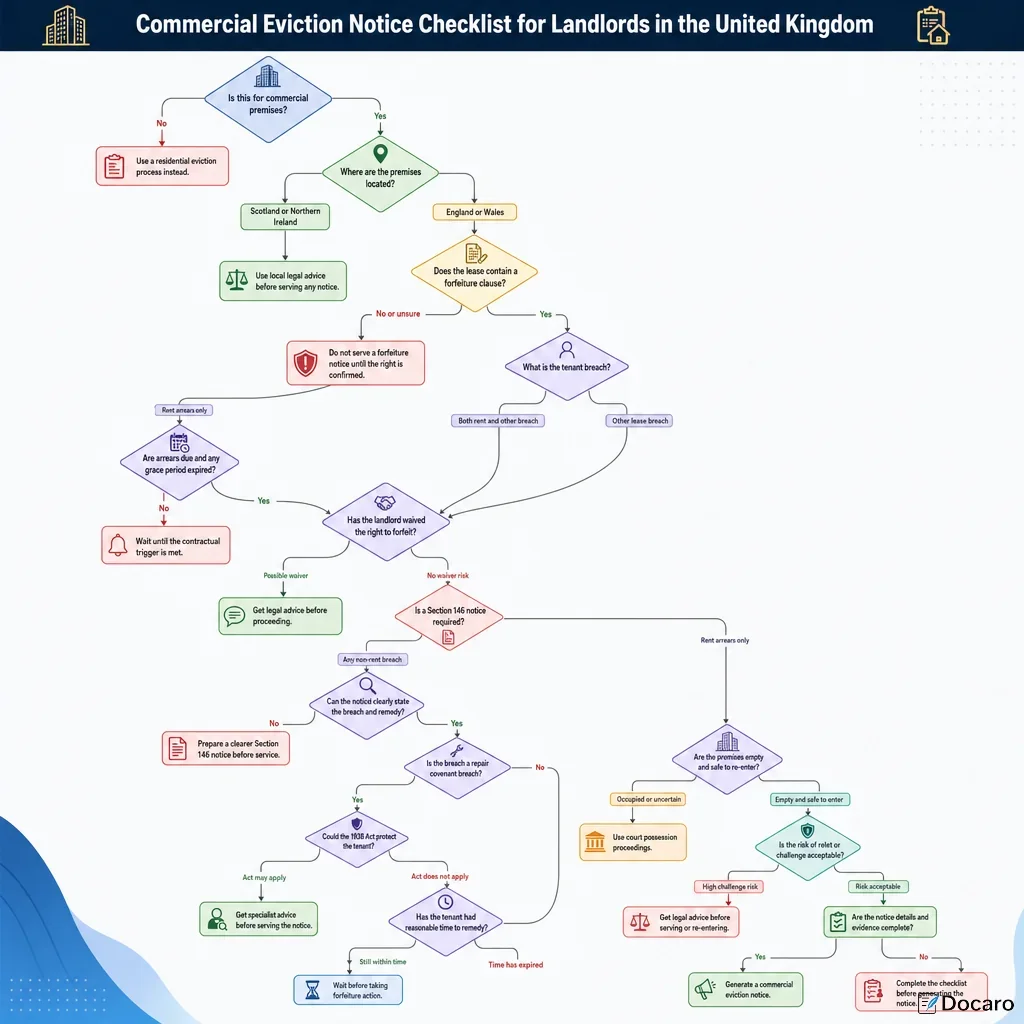
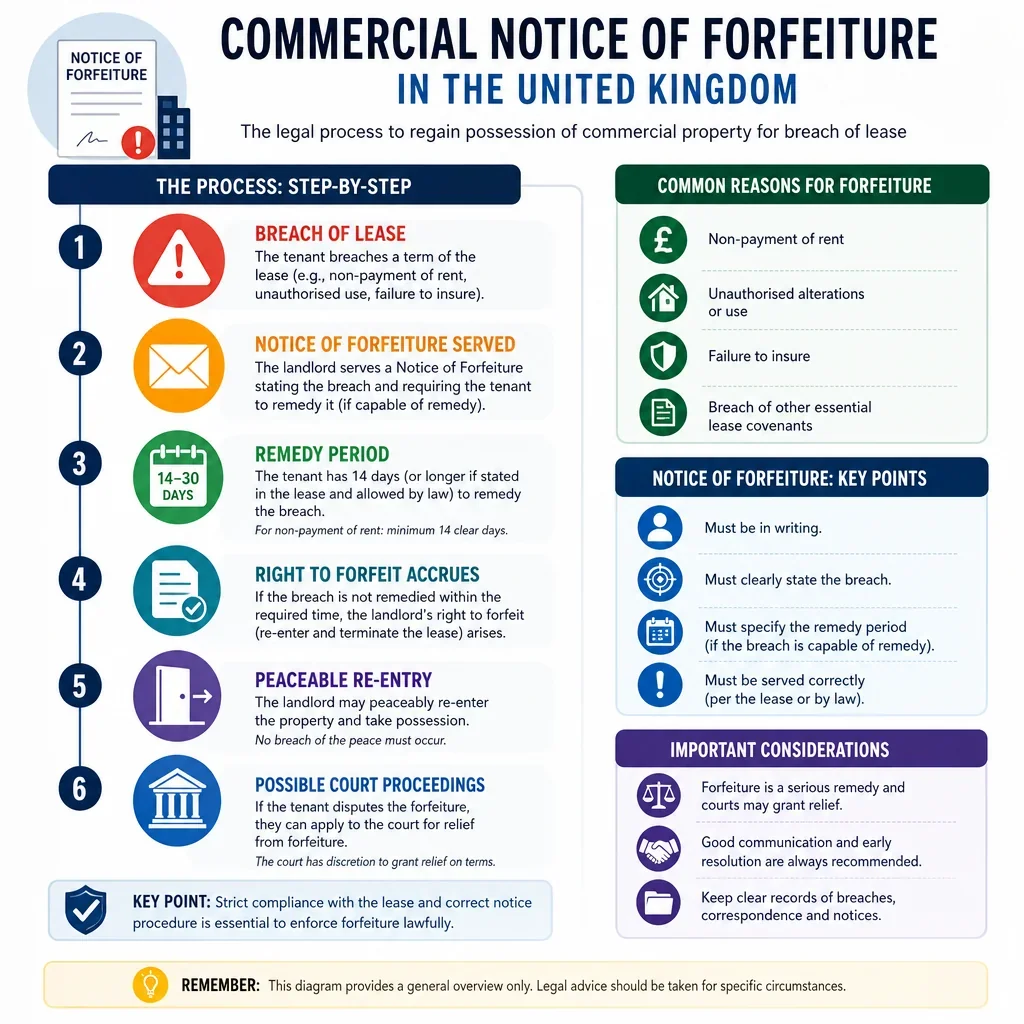
When do you need a Notice of Forfeiture in the United Kingdom?
British Legal Rules for a Notice of Forfeiture
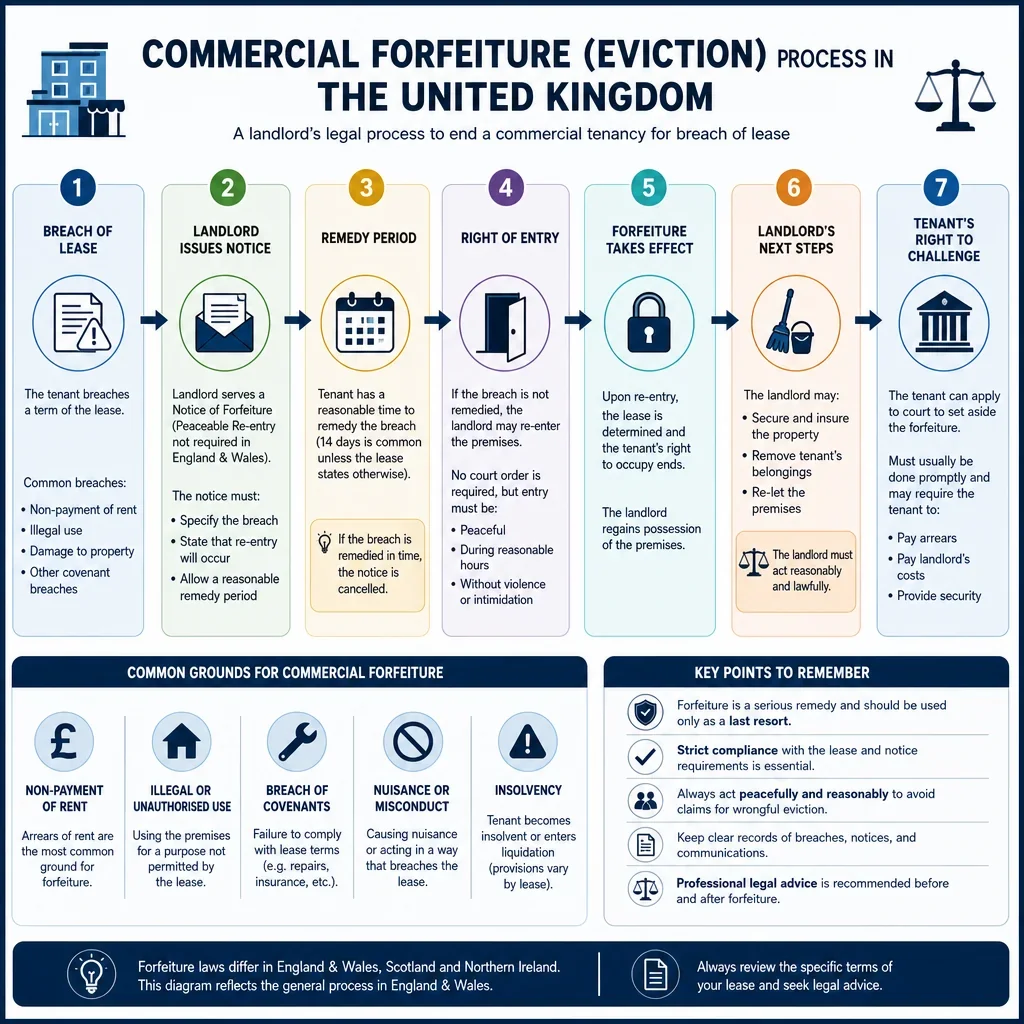
Using the incorrect type or structure of eviction notice can invalidate the proceedings and fail to comply with UK housing laws.
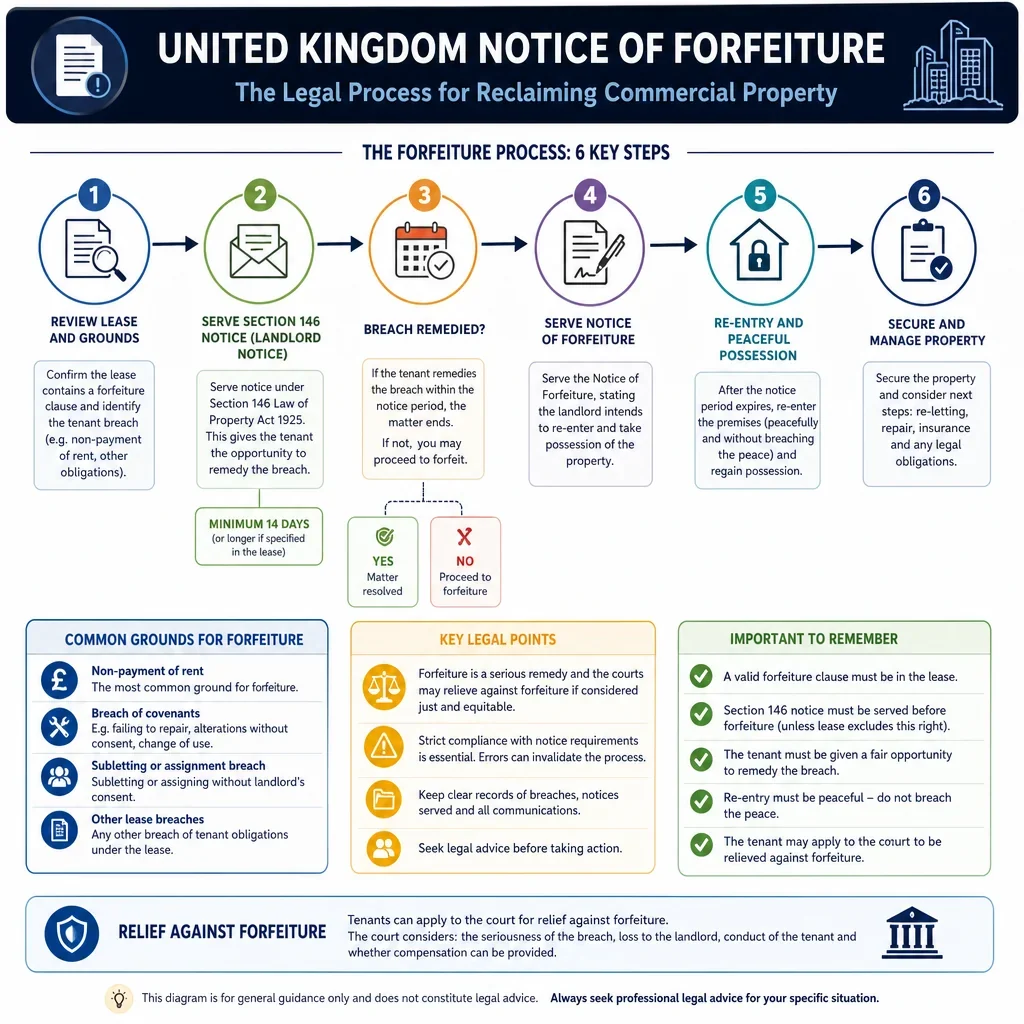
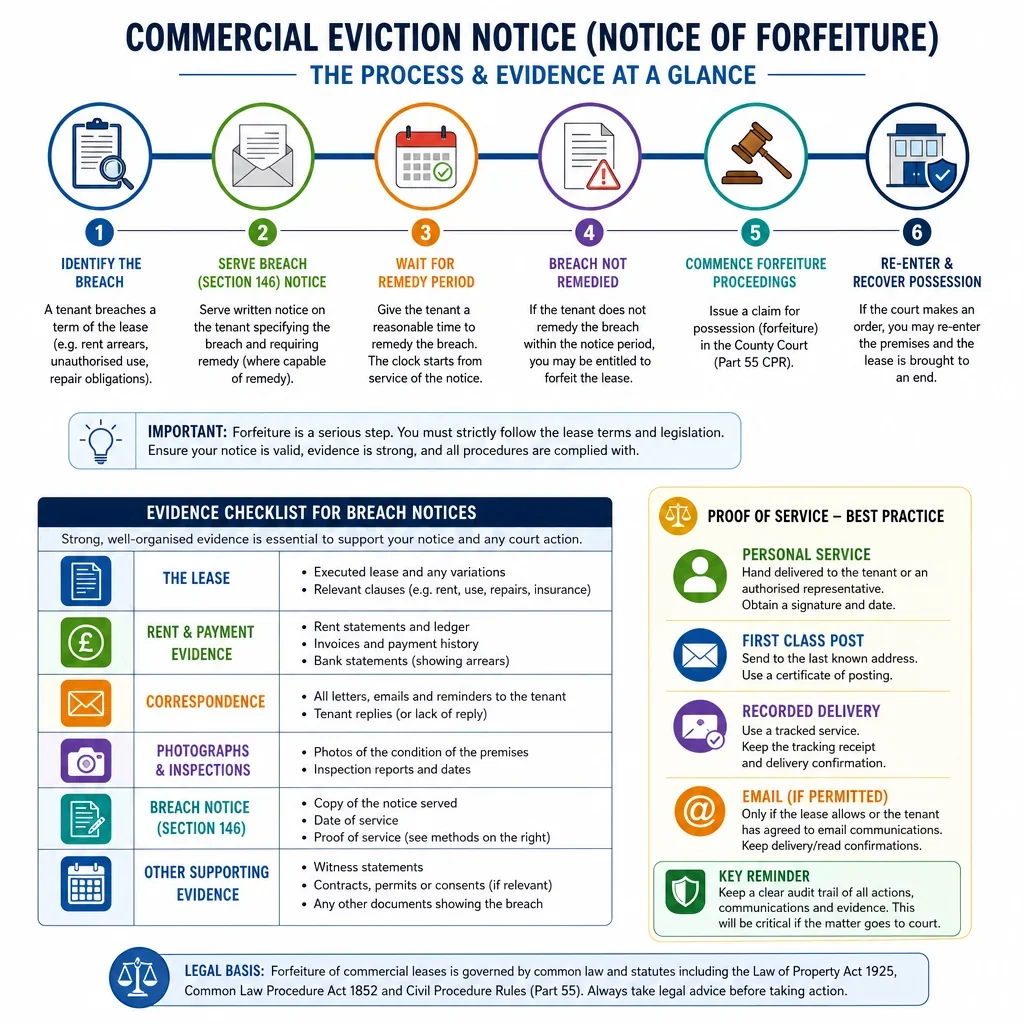
What a Proper Notice of Forfeiture Should Include
- Full Names and AddressesClearly state the full names and addresses of both the landlord and the tenant to identify the parties involved.
- Property DetailsProvide a precise description of the rented property, including its address and any relevant identifiers.
- Specific Breach DescriptionDetail the exact lease violation, such as unpaid rent or unauthorized changes, with dates and facts.
- Demand for RemedySpecify what the tenant must do to fix the issue, like paying the owed amount, and give a reasonable deadline.
- Intention to ForfeitClearly express the landlord's intent to end the lease and repossess the property if the breach isn't fixed.
- Date and SignatureInclude the date the notice is issued and the landlord's signature for validity and proof of service.
Generate Your Document in 4 Easy Steps
Why Use Docaro?
 United Kingdom
Free Example Notice of Forfeiture Template
Below is a free template example of a Notice of Forfeiture for use in the United Kingdom generated by our AI model.
The clauses in your actual Notice of Forfeiture will vary from this example as they will be entirely bespoke to your requirements as set out in the questionnaire you complete.
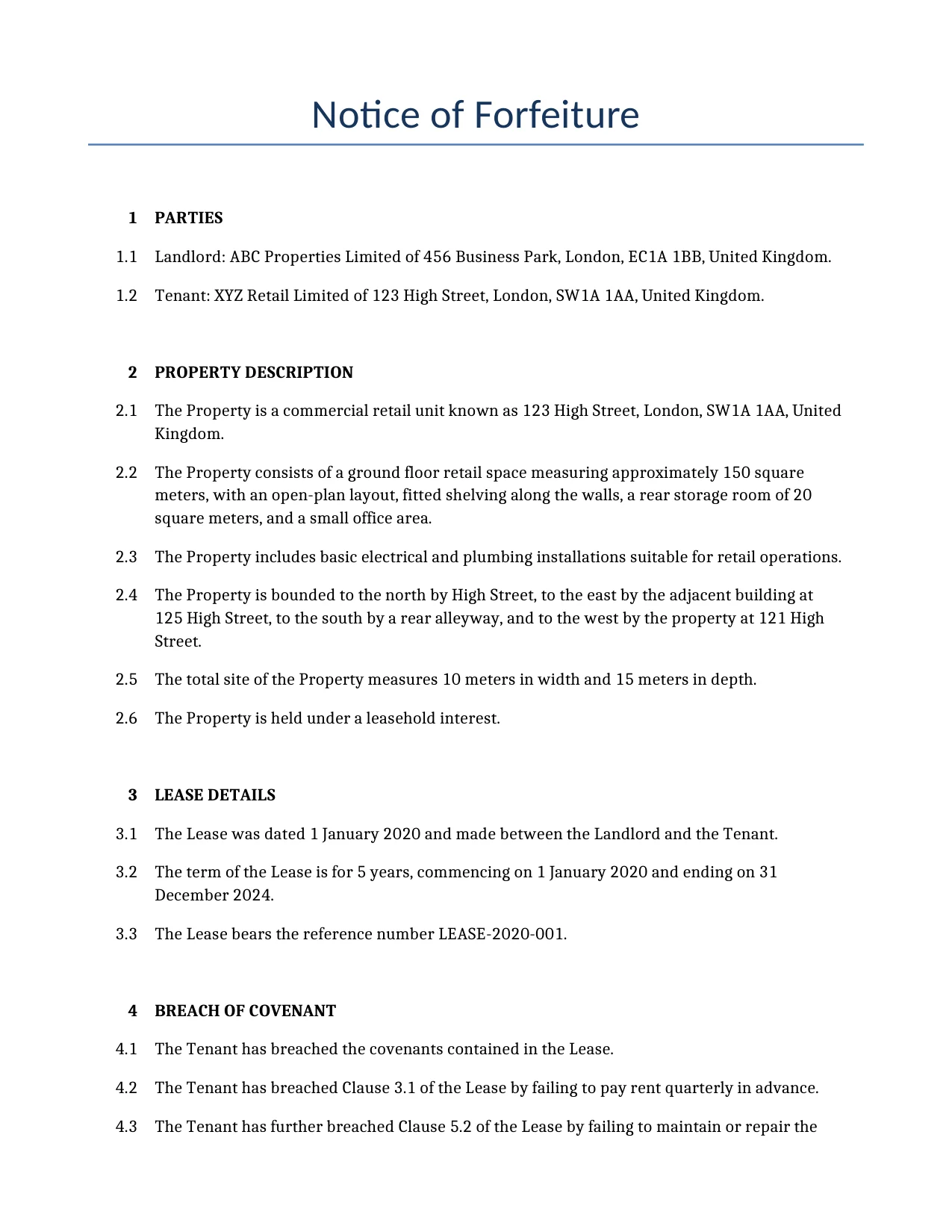
Notice of Forfeiture
1PARTIES
Landlord: ABC Properties Limited of 456 Business Park, London, EC1A 1BB, United Kingdom.
Tenant: XYZ Retail Limited of 123 High Street, London, SW1A 1AA, United Kingdom.
2PROPERTY DESCRIPTION
The Property is a commercial retail unit known as 123 High Street, London, SW1A 1AA, United Kingdom.
The Property consists of a ground floor retail space measuring approximately 150 square meters, with an open-plan layout, fitted shelving along the walls, a rear storage room of 20 square meters, and a small office area.
The Property includes basic electrical and plumbing installations suitable for retail operations.
The Property is bounded to the north by High Street, to the east by the adjacent building at 125 High Street, to the south by a rear alleyway, and to the west by the property at 121 High Street.
The total site of the Property measures 10 meters in width and 15 meters in depth.
The Property is held under a leasehold interest.
3LEASE DETAILS
The Lease was dated 1 January 2020 and made between the Landlord and the Tenant.
The term of the Lease is for 5 years, commencing on 1 January 2020 and ending on 31 December 2024.
The Lease bears the reference number LEASE-2020-001.
4BREACH OF COVENANT
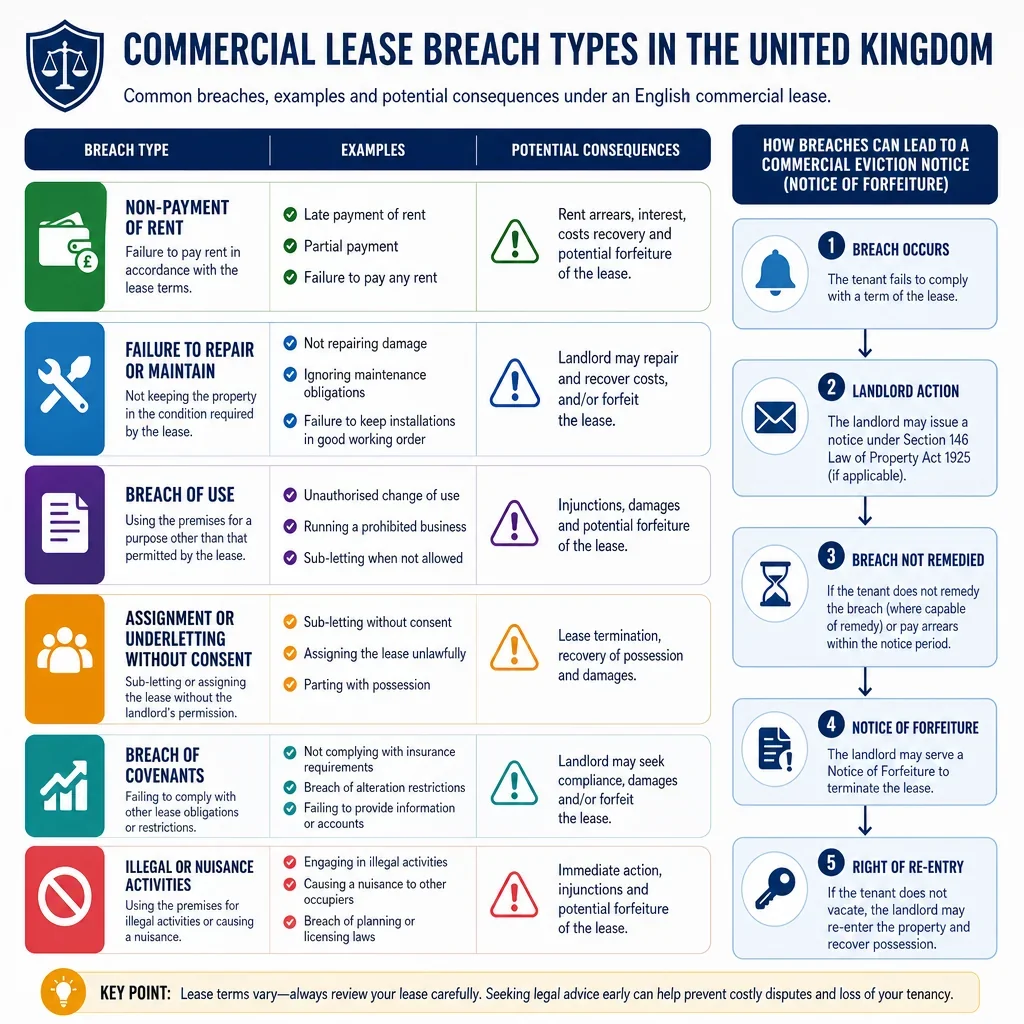
The Tenant has breached the covenants contained in the Lease.
The Tenant has breached Clause 3.1 of the Lease by failing to pay rent quarterly in advance.
The Tenant has further breached Clause 5.2 of the Lease by failing to maintain or repair the Property.
The Tenant failed to pay the rent due on 1 January 2024 amounting to \£5,000 and has not paid it despite reminders. The Tenant has also failed to pay the rent for the quarter ending 31 March 2024. The total rent arrears due is \£10,000.
The Tenant neglected to repair a leaking roof as required leading to water damage in the Property which was reported on 15 February 2024 and remains unaddressed. The Tenant has also failed to maintain the Property by ignoring required repairs to the exterior walls resulting in structural deterioration.
The breaches are ongoing and have not been remedied by the Tenant.
The first breach of covenant occurred on 10 January 2024 and the breaches have continued over a period.
Schedule of Dilapidations: 1. Repair leaking roof and associated water damage (estimated cost \£2,500). 2. Repair exterior walls to prevent structural deterioration (estimated cost \£3,000).
5FORMAL DEMAND AND S146 NOTICE
The Landlord served a formal demand for the rent arrears on the Tenant prior to proceeding with forfeiture.
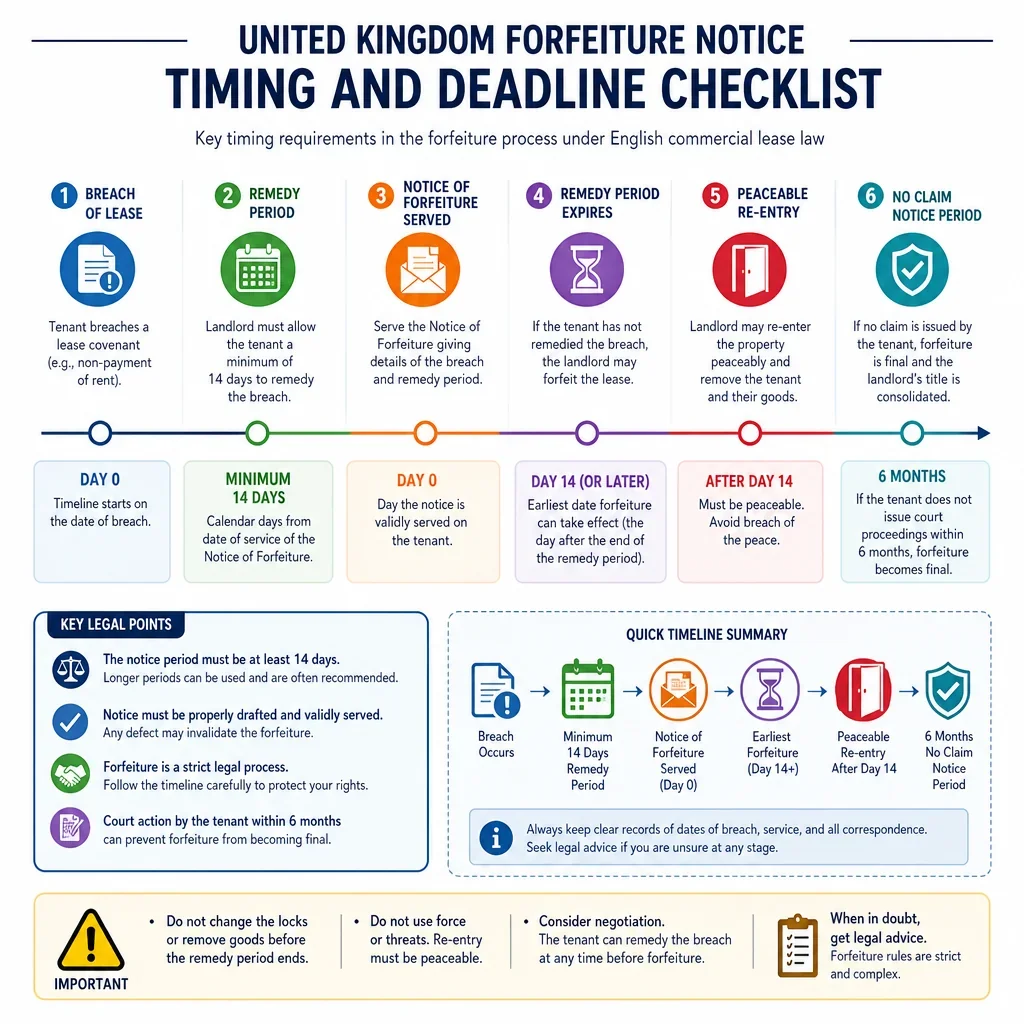
A notice under section 146 of the Law of Property Act 1925 specifying the breaches of the repairing covenants and requiring remedy within a reasonable time was served on the Tenant on 1 February 2024. The Tenant failed to remedy the breaches within the time specified.
This Notice of Forfeiture was served on the Tenant on 15 October 2024 by Recorded Delivery with tracking number RR123456789GB.
A copy of the postal receipt and the s146 notice are attached as evidence.
6FORFEITURE
The Landlord hereby forfeits the Lease by reason of the breaches of covenant by the Tenant.
The Landlord elects to determine the Lease and re-enters the Property. The Lease is terminated immediately upon service of this notice and re-entry by the Landlord.
The right of possession of the Property reverts to the Landlord with immediate effect.
7RELIEF FROM FORFEITURE
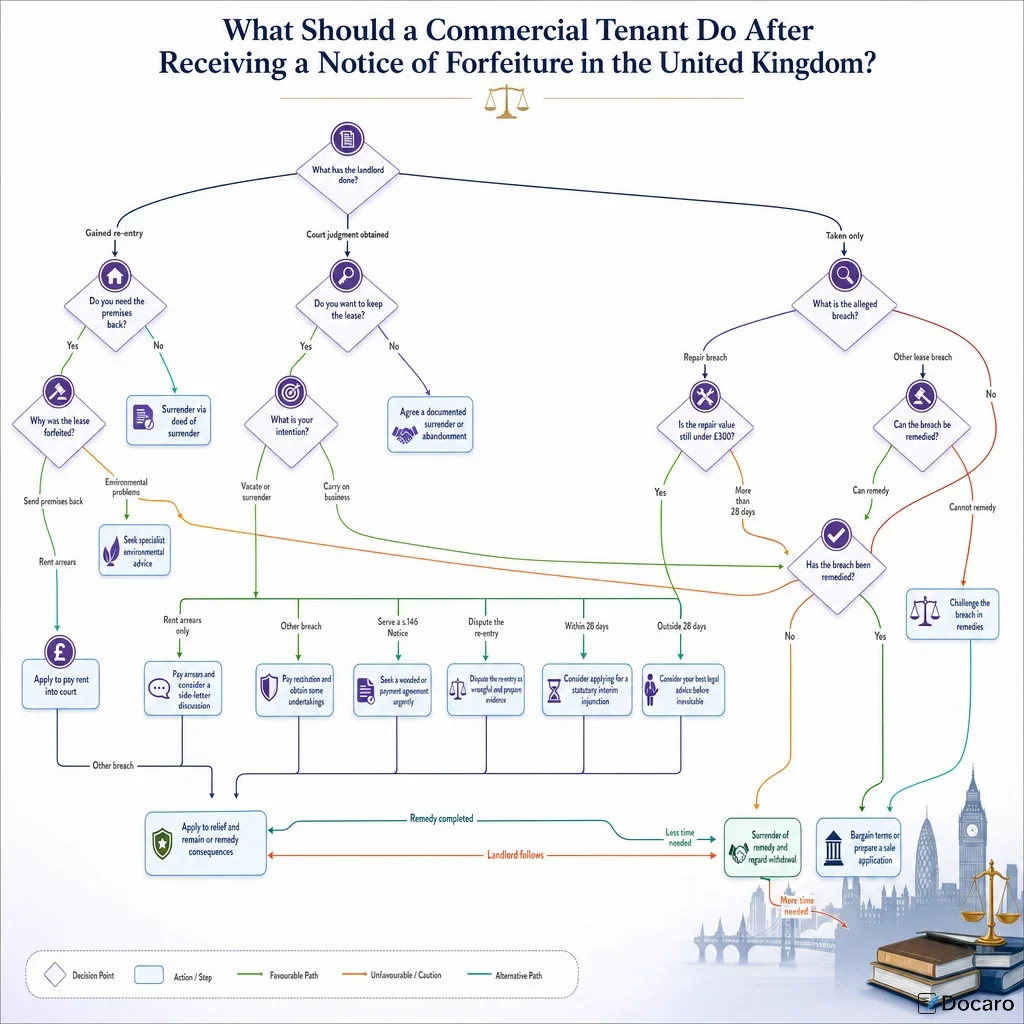
The Tenant may apply to the Court for relief from forfeiture pursuant to section 146(2) of the Law of Property Act 1925 or under the inherent jurisdiction of the Court if the Tenant is so advised.
8CONSEQUENCES OF FORFEITURE
Upon forfeiture the Tenant must immediately vacate the Property and deliver up possession to the Landlord.
The Landlord claims the total amount of rent arrears in the sum of \£10,000.
The last rent payment before the arrears accrued was made on 15 October 2023.
The Landlord reserves the right to claim damages for any loss suffered as a result of the breaches of covenant including the costs set out in the Schedule of Dilapidations.
9COMPLIANCE WITH LEGISLATION
This Notice of Forfeiture is issued in compliance with section 146 of the Law of Property Act 1925, the Landlord and Tenant Act 1954, and common law principles relating to forfeiture of commercial leases.
10ENTIRE AGREEMENT
This Notice of Forfeiture constitutes the entire agreement between the Landlord and the Tenant relating to the forfeiture of the Lease and supersedes all prior negotiations representations or agreements whether written or oral.
11SEVERABILITY
If any provision of this Notice of Forfeiture is held to be invalid or unenforceable by any judicial or other competent authority then all other provisions of this Notice of Forfeiture will remain in full force and effect and will not in any way be impaired.
12GOVERNING LAW
This Notice of Forfeiture shall be governed by and construed in accordance with the law of England and Wales.
The jurisdiction applicable to this Notice of Forfeiture is that of England and Wales.
13NOTICES
Any notice required to be served under this Notice of Forfeiture shall be in writing and may be served by Recorded Delivery.
Notices shall be addressed to the Landlord at 456 Business Park, London, EC1A 1BB or its solicitors John Smith Solicitors LLP at 789 Legal Street, London, WC1A 1AA, United Kingdom.
The preferred method for further communications regarding this notice is by email to landlord@example.com.
14VARIATION
No variation of this Notice of Forfeiture shall be effective unless it is in writing and signed by or on behalf of each of the parties.
15DATE OF NOTICE
This Notice of Forfeiture is issued on 15 October 2024.
16EXECUTION
SIGNED by the Landlord.
...............................................................
Date: ...............................................................
This example shows approximately 70% of a typical document and is provided for illustrative purposes only. The remaining content has been omitted.
Every document generated by Docaro is tailored to your specific circumstances, jurisdiction and the information you provide. The completed document includes all applicable clauses and provisions required for your situation.
To generate the full, personalised document, answer a short series of questions and your document will be created instantly.
Useful Resources When Considering a Notice of Forfeiture in the United Kingdom
United Kingdom Reference Legislation
Notice of Forfeiture FAQs
Document Generation FAQs
Related Articles