AI Generated British Inventory of Assets
PDF & Word - 2026 Updated
Docaro Pricing
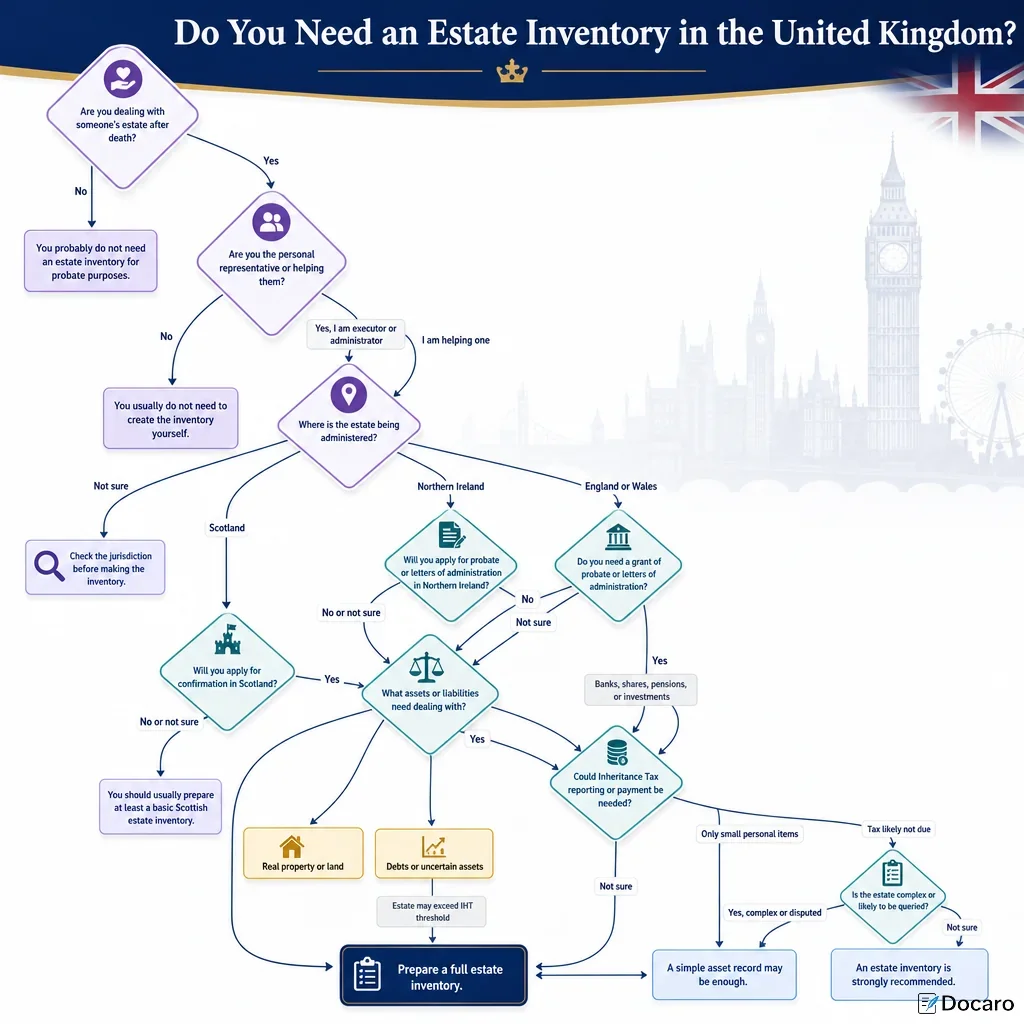
When do you need an Inventory of Assets in the United Kingdom?
British Legal Rules for an Inventory of Assets
Using the incorrect structure for an estate inventory may fail to adequately protect assets from disputes or invalid probate claims.
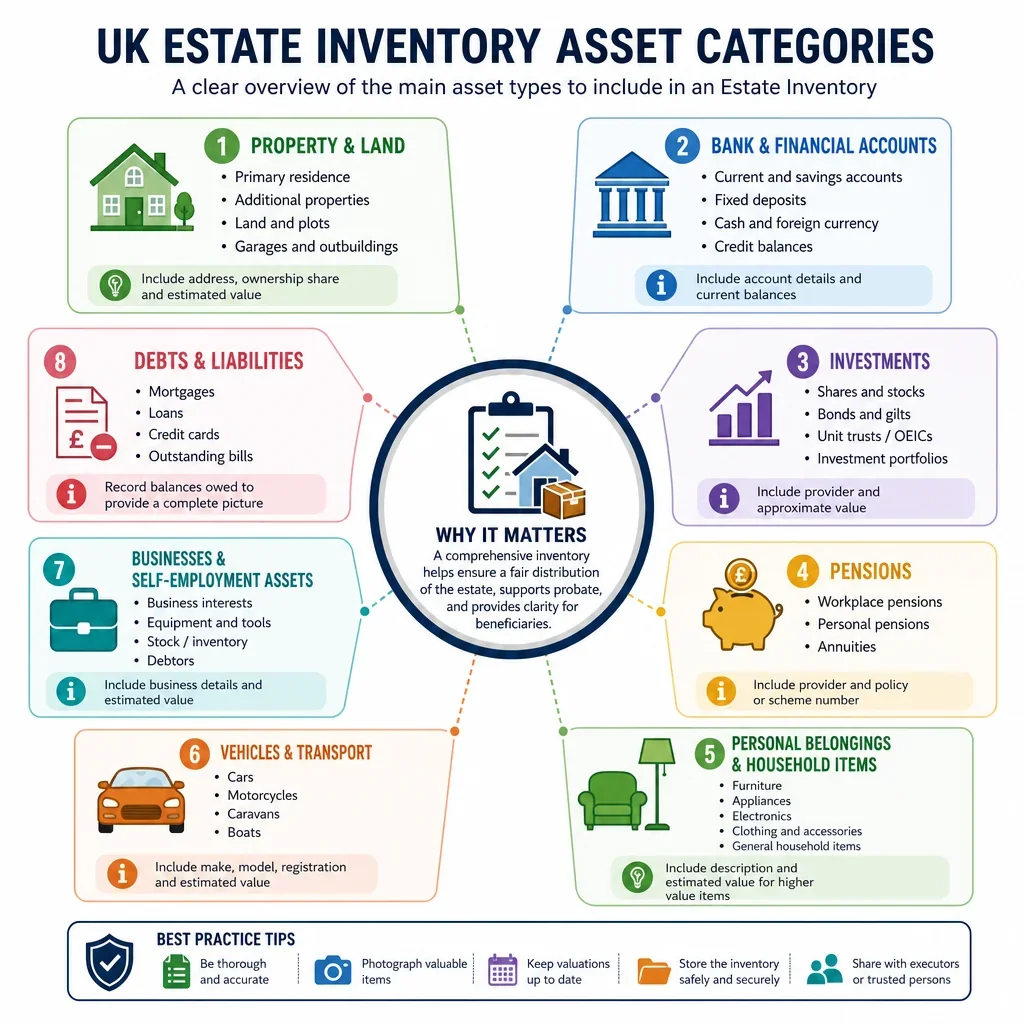
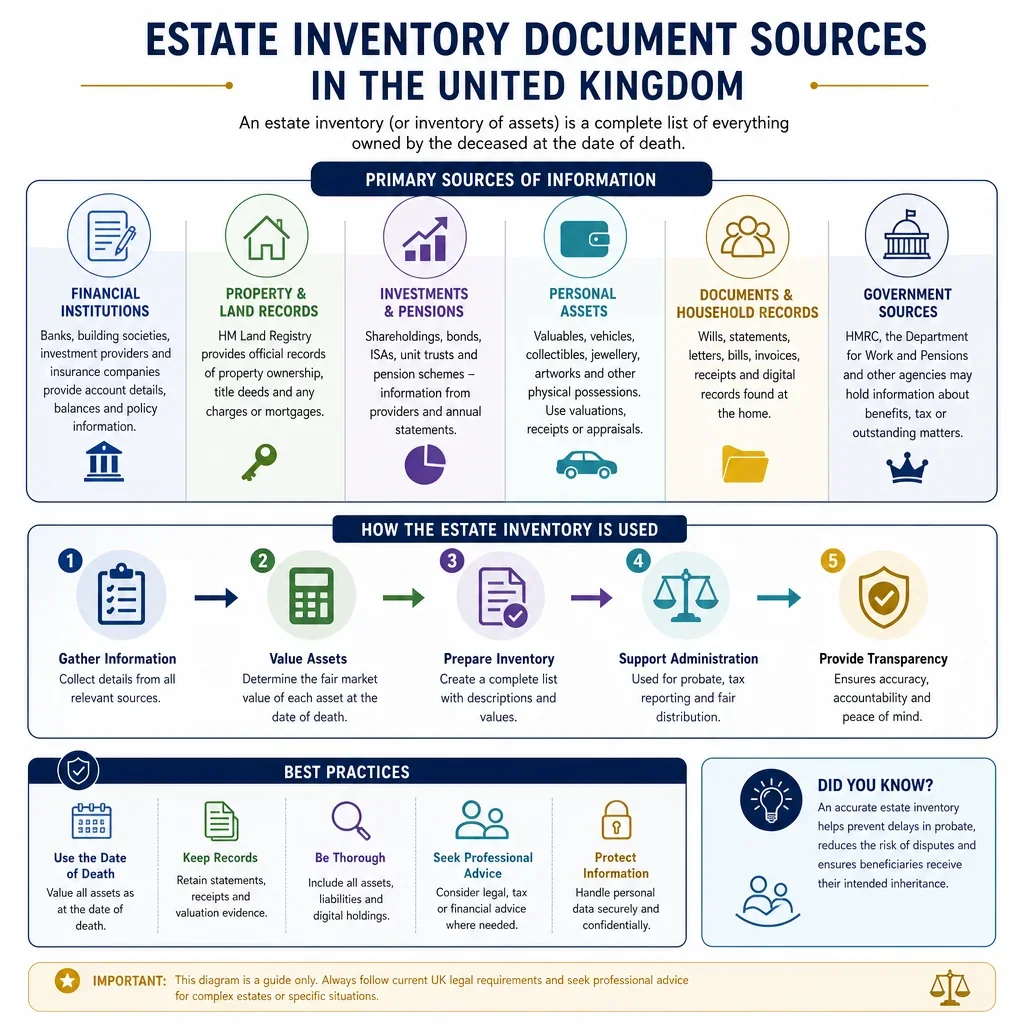
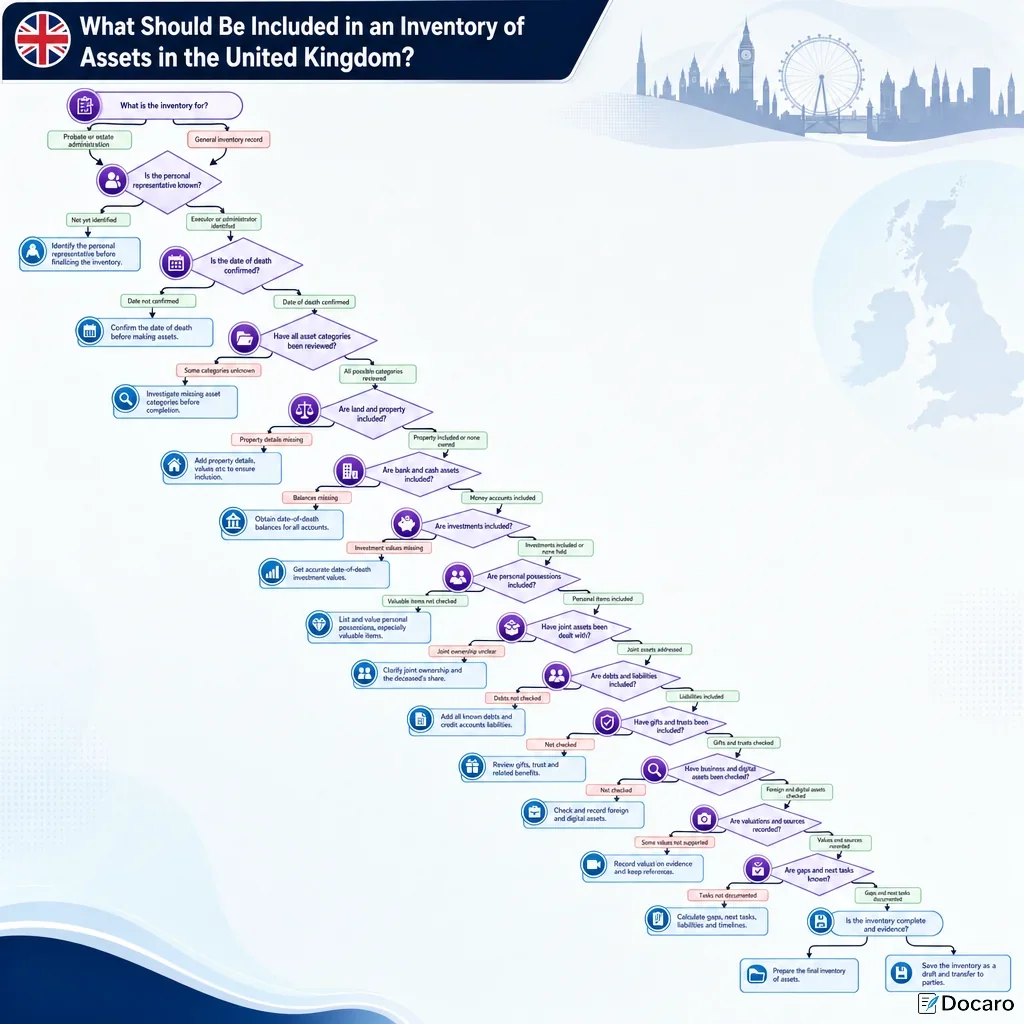
What a Proper Inventory of Assets Should Include
- List of All AssetsInclude every item of value, such as property, vehicles, bank accounts, and personal belongings, with their estimated worth.
- Descriptions and LocationsProvide clear details on what each asset is, its condition, and where it is kept to avoid confusion.
- Valuation DetailsState the current market value of each asset, ideally supported by appraisals or recent estimates.
- Ownership ProofNote any documents like titles, deeds, or receipts that confirm who owns each asset.
- Date of InventoryRecord the date the inventory is prepared to show it reflects the assets at that specific time.
- Signatures and WitnessesHave the person creating the inventory sign it, along with witnesses, to make it official and reliable.
Generate Your Document in 4 Easy Steps
Why Use Docaro?
 United Kingdom
Free Example Inventory of Assets Template
Below is a free template example of a Inventory of Assets for use in the United Kingdom generated by our AI model.
The clauses in your actual Inventory of Assets will vary from this example as they will be entirely bespoke to your requirements as set out in the questionnaire you complete.
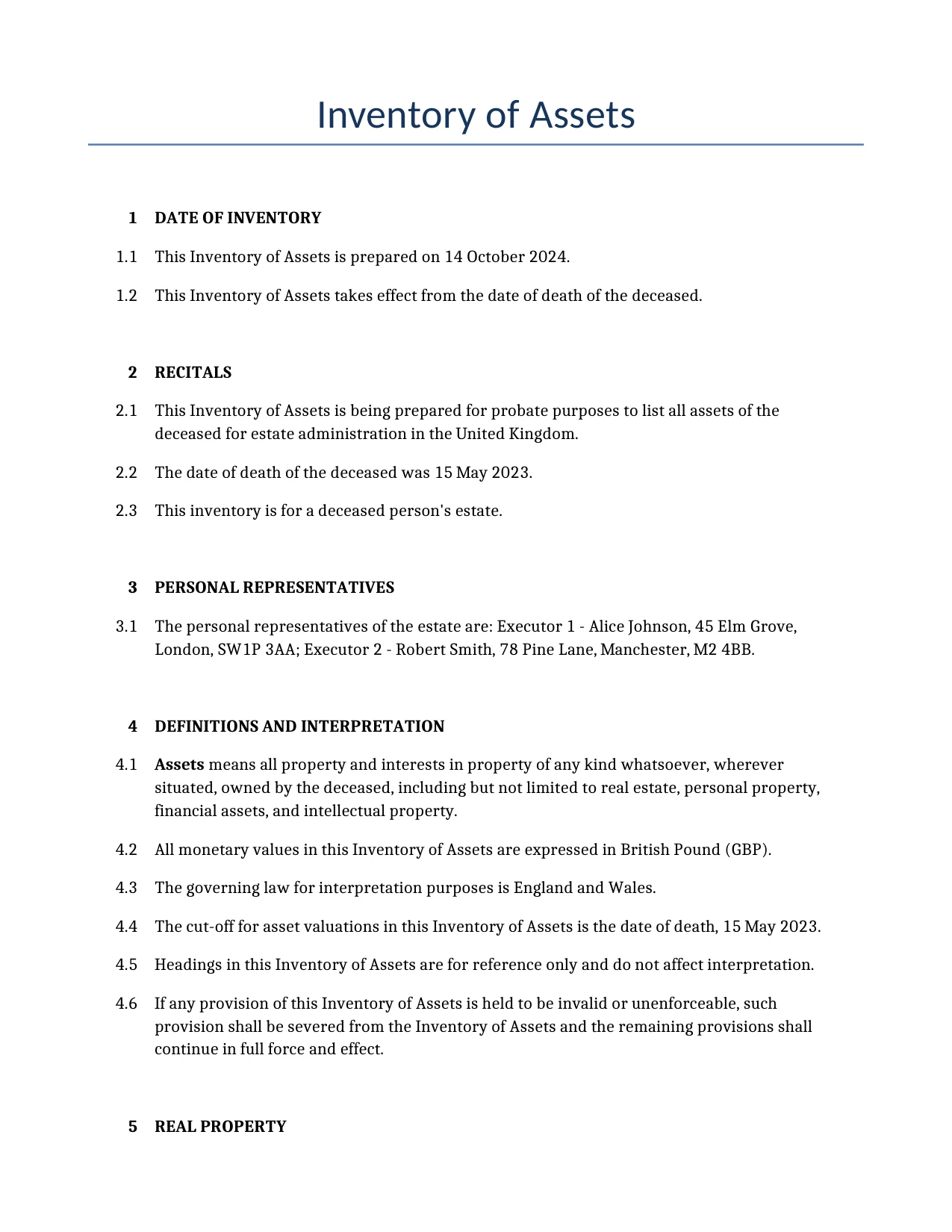
Inventory of Assets
1DATE OF INVENTORY
This Inventory of Assets is prepared on 14 October 2024.
This Inventory of Assets takes effect from the date of death of the deceased.
2RECITALS
This Inventory of Assets is being prepared for probate purposes to list all assets of the deceased for estate administration in the United Kingdom.
The date of death of the deceased was 15 May 2023.
This inventory is for a deceased person's estate.
3PERSONAL REPRESENTATIVES
The personal representatives of the estate are: Executor 1 - Alice Johnson, 45 Elm Grove, London, SW1P 3AA; Executor 2 - Robert Smith, 78 Pine Lane, Manchester, M2 4BB.
4DEFINITIONS AND INTERPRETATION
Assets means all property and interests in property of any kind whatsoever, wherever situated, owned by the deceased, including but not limited to real estate, personal property, financial assets, and intellectual property.
All monetary values in this Inventory of Assets are expressed in British Pound (GBP).
The governing law for interpretation purposes is England and Wales.
The cut-off for asset valuations in this Inventory of Assets is the date of death, 15 May 2023.
Headings in this Inventory of Assets are for reference only and do not affect interpretation.
If any provision of this Inventory of Assets is held to be invalid or unenforceable, such provision shall be severed from the Inventory of Assets and the remaining provisions shall continue in full force and effect.
5REAL PROPERTY
The estate owns real property in the United Kingdom with Land Registry title number LON123456.
The type of ownership interest in the property is Freehold, acquired by the deceased on 15 June 2015. The property was held solely by the deceased with no joint tenancy or beneficial interests held by others.
The full address of the property is 123 High Street, London, SW1A 1AA.
The property is a three-bedroom semi-detached house with a garden, approximately 150 square meters.
The market value of the property as at the date of death (15 May 2023) is 450000 GBP.
There is a mortgage secured against the property with lender Barclays Mortgages, account number MORT-987654, outstanding balance as at date of death 15 May 2023 of 180000 GBP. There are no other encumbrances.
The property is not currently rented out to tenants.
6PERSONAL PROPERTY
The deceased owned the following furniture items with individual valuations as at 15 May 2023: living room sofa (leather, brown) valued at 800 GBP, dining table with 6 chairs (oak wood) valued at 1200 GBP, bedroom king-size bed with wardrobe valued at 500 GBP. Total furniture: 2500 GBP. These do not require separate professional valuation.
The deceased owned a vehicle: Ford Focus, 2018 model, 1.5 TDCi diesel, registration number AB12 CDE, VIN WF0PXXGCFD1234567, MOT valid to April 2023, valued at 12000 GBP as at 15 May 2023 (per CAP guide and dealer appraisal).
The deceased possessed jewellery with individual valuations as at 15 May 2023: gold wedding ring with diamond inset (18k gold, inscription 'Forever') valued at 1500 GBP, silver necklace with pearl pendant valued at 800 GBP, pair of gold earrings valued at 1200 GBP. Total jewellery: 3500 GBP. These were professionally valued by a qualified jeweller on 20 June 2023.
The deceased owned art or collectibles with individual valuations as at 15 May 2023: original oil painting by local artist (landscape, 24x36 inches, dated 2015) valued at 1000 GBP, collection of vintage stamps (50 pieces, British Empire era) valued at 500 GBP. Total art/collectibles: 1500 GBP. The painting required separate professional valuation by an art appraiser.
The deceased had additional household goods and chattels including kitchen appliances, clothing, books and garden tools with an aggregate value of 2000 GBP as at 15 May 2023 (estimated per HMRC guidelines for probate).
7BANK AND CASH ACCOUNTS
The deceased (full name: John Edward Doe) held the following sole bank accounts with balances as at date of death 15 May 2023 (including accrued interest to that date): Barclays Bank, Current Account, sort code 20-12-34, account number 12345678, balance 15250 GBP. No joint accounts.
The deceased held a savings account with Nationwide Building Society, sort code 07-12-34, account number 87654321, balance as at 15 May 2023 of 8500 GBP.
The deceased held an ISA with HSBC, sort code 40-12-34, account number 11223344, balance as at 15 May 2023 of 22000 GBP (ISA status confirmed).
The deceased held no physical cash or cash equivalents not in bank accounts.
8INVESTMENTS AND SECURITIES
The deceased held the following investments separately, with quantities, descriptions and market values as at 15 May 2023: 500 ordinary shares in Barclays PLC (broker: Hargreaves Lansdown, Companies House ref: 00048839, not held in ISA), market value 7500 GBP; 1000 units in Vanguard FTSE All-World UCITS ETF (platform: Interactive Investor, fund manager ref: IE00BK5BQT80, held in ISA wrapper), market value 18500 GBP. Total 26000 GBP.
There were no dividends or income due but unpaid at the date of death.
9BUSINESS INTERESTS
The deceased held a 25% ownership interest in Tech Innovations Ltd (Companies House number 12345678), comprising 250 ordinary shares per share certificate number SH-456. The interest was acquired on 15 March 2015. There is a shareholders agreement dated 1 April 2015 restricting transfer of shares. The shares are transferable subject to pre-emption rights under the company's articles of association.
The value of the business interest as at date of death 15 May 2023 is 50000 GBP, determined using the earnings multiple valuation method by a qualified business valuer (report dated 10 July 2023). There were no directors' loans or company debts owed to or from the estate.
10INTELLECTUAL PROPERTY
The deceased owned the following patents: Patent GB1234567 (UK jurisdiction, renewal date 15 June 2025, estimated value as at 15 May 2023: 15000 GBP, no licensing agreements).
The deceased owned the following trademarks: Trademark UK0000321456 (UK jurisdiction, renewal date 10 October 2026, estimated value as at 15 May 2023: 8000 GBP, licensed to third party under agreement dated 2020).
The deceased owned no copyrights or other IP with probate value.
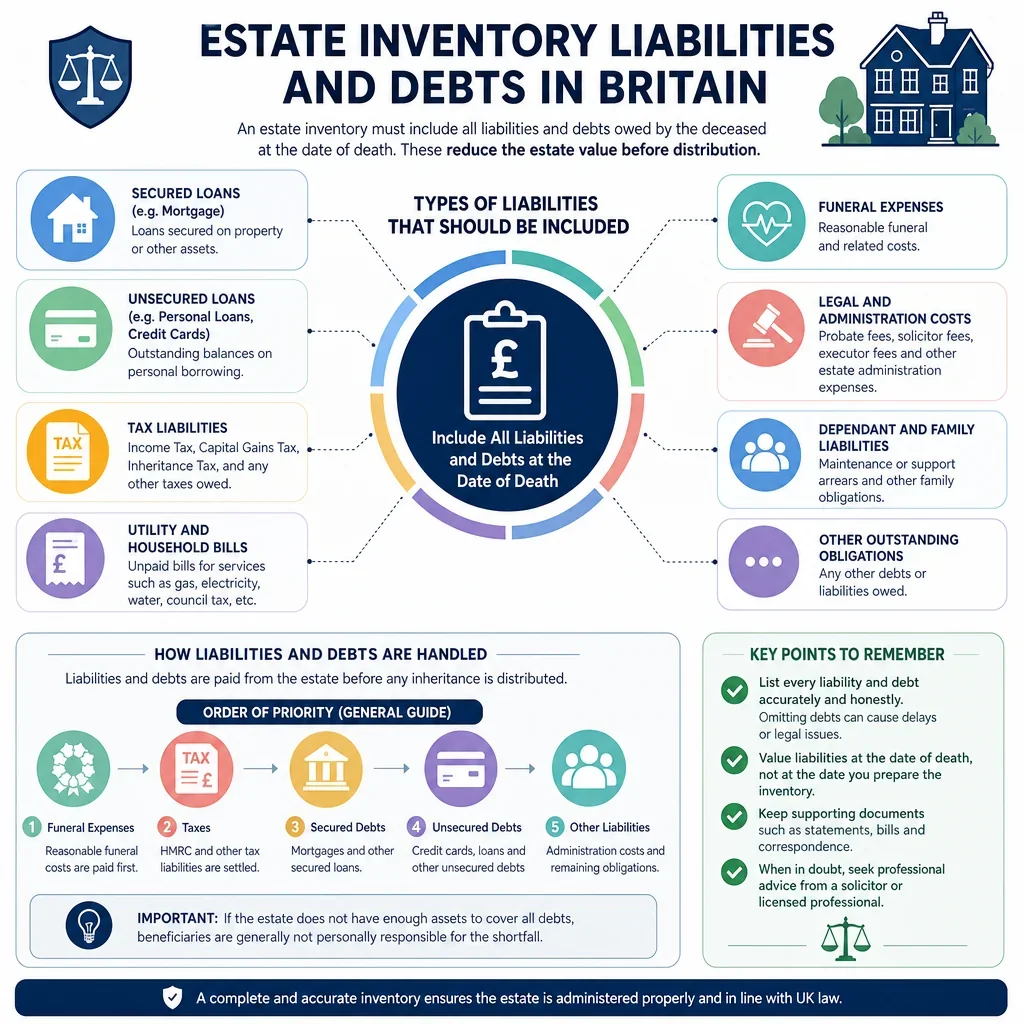
11DEBTS AND LIABILITIES
Mortgage: Barclays Bank PLC, address 1 Churchill Place, London E14 5HP, account/reference MORT-987654, balance outstanding at 15 May 2023: 180000 GBP (no interest due at death). Matches details in Real Property section. Documentation: mortgage deed ref BD-789.
Personal loan: HSBC Bank, address 8 Canada Square, London E14 5HQ, account 55667788, balance at 15 May 2023: 4500 GBP plus interest due of 45 GBP. Documentation: loan agreement ref LN-112.
Hire purchase on vehicle: Ford Finance, address Central Park, Leeds LS11 5LT, account HP-334455, balance at 15 May 2023: 6500 GBP. Documentation: HP agreement ref HP-223.
Utility bills: British Gas, outstanding at 15 May 2023: 320 GBP (account ref UTIL-6677).
Funeral expenses: 4500 GBP (invoice from Co-op Funeralcare ref F-9988).
Solicitor fees for probate: estimated 2500 GBP.
No credit card debts, overdrafts, tax liabilities or other debts.
12PENSIONS AND INSURANCE POLICIES
Pension: Aviva Pension Provider, policy number PEN-998877, value at date of death 15 May 2023: 125000 GBP. This does not form part of the estate and passes by beneficiary nomination to spouse.
Life insurance: Legal & General, policy number LI-445566, sum assured 100000 GBP, written in trust, therefore does not form part of the estate. Beneficiary: spouse (death benefit payable directly).
No annuities held by the deceased.
13VALUATION METHODOLOGY
All valuations are as at the date of death, 15 May 2023, on the basis of open market value in accordance with HMRC guidelines (Section 160 IHTA 1984).
Professional valuers used: Property valuer - Jane Brown MRICS (RICS qualified), valuation dated 5 June 2023; Jewellery valuer - David Green FGA (gemmologist), dated 20 June 2023; Art valuer - Sarah White (member of Society of Fine Art Auctioneers), dated 15 June 2023; Business valuer - Michael Black FCA (chartered accountant), report dated 10 July 2023. Bank, investment and pension values provided by respective institutions as at date of death.
14EXCLUSIONS
The asset described as a family home located at 123 High Street, London, held in a discretionary trust for the benefit of minor children is excluded from this Inventory of Assets.
The reason for excluding this asset is that it is held in trust.
The detailed justification for excluding this asset is that this asset is held in a trust established in 2015, with trustees managing it separately from the deceased's personal estate. It is not subject to the deceased's direct control or ownership, and excluding it avoids duplication in asset inventories while ensuring compliance with trust deed terms under UK law.
15INCOME DUE TO THE ESTATE
Salary accrued but unpaid at date of death: final salary payment from employer Tech Innovations Ltd of 3250 GBP for period 1-15 May 2023 (calculated pro-rata at daily rate of 216.67 GBP).
Dividend due but unpaid at death: 1250 GBP from Barclays PLC (declared 1 May 2023, payable 30 June 2023).
No rent or other income accrued but unpaid at 15 May 2023. All values in GBP.
16REPRESENTATIONS AND WARRANTIES
The personal representatives confirm that the inventory provided lists all assets owned completely and accurately to the best of their knowledge and belief.
The personal representatives confirm that the estate has good, valid, and marketable title to all assets listed in the inventory.
The personal representatives confirm that all known liens, charges, or encumbrances are disclosed in this inventory.
The personal representatives confirm there is no pending litigation or claims affecting any assets in the inventory other than as disclosed.
The total value of all assets in the inventory is 378750 GBP as at 15 May 2023 (consistent with individual asset valuations).
17COMPLIANCE WITH UK LAW
This inventory has been prepared in accordance with the laws of England and Wales, the Non-Contentious Probate Rules 1987 and the Administration of Estates Act 1925 for probate purposes.
18EXECUTION
This Inventory of Assets is signed by the personal representatives on the date first written above and is true to the best of their knowledge and belief.
SIGNED by Alice Johnson (Executor, address: 45 Elm Grove, London, SW1P 3AA) in the presence of: Witness - Emily Brown, Occupation: Solicitor, Address: 10 Fleet Street, London EC4Y 1AA.
SIGNED by Robert Smith (Executor, address: 78 Pine Lane, Manchester, M2 4BB) in the presence of: Witness - David Wilson, Occupation: Accountant, Address: 22 King Street, Manchester M2 4AA.
19SCHEDULE OF ASSETS AND LIABILITIES
Summary of assets as at 15 May 2023: Real Property (net of mortgage) 270000 GBP; Personal Property (furniture, vehicle, jewellery, art, household goods) 21500 GBP; Bank and Cash Accounts 45750 GBP; Investments and Securities 26000 GBP; Business Interests 50000 GBP; Intellectual Property 23000 GBP; Income Due 4500 GBP. Total Assets: 440750 GBP.
Liabilities as at 15 May 2023: Mortgage 180000 GBP; Personal Loan 4545 GBP; HP Agreement 6500 GBP; Utilities 320 GBP; Funeral Expenses 4500 GBP; Solicitor Fees 2500 GBP. Total Liabilities: 198365 GBP.
Net Estate Value: 242385 GBP. The personal representatives declare that this inventory is complete for probate application purposes to HMCTS and HMRC where applicable.
This example shows approximately 70% of a typical document and is provided for illustrative purposes only. The remaining content has been omitted.
Every document generated by Docaro is tailored to your specific circumstances, jurisdiction and the information you provide. The completed document includes all applicable clauses and provisions required for your situation.
To generate the full, personalised document, answer a short series of questions and your document will be created instantly.
Useful Resources When Considering a Inventory of Assets in the United Kingdom
United Kingdom Reference Legislation
Inventory of Assets FAQs
Document Generation FAQs
Related Articles