Why Free Templates Can Be Risky for Resignation Letters
Free resignation letter templates often lack the specificity needed for your unique situation, potentially leading to incomplete notices, overlooked entitlements like notice periods or garden leave, and failure to address key details such as confidentiality or non-compete clauses. This can result in disputes, delayed final payments, or even legal challenges from your employer, putting your professional reputation and financial interests at risk.
Our AI-generated bespoke resignation letters are tailored precisely to your circumstances, incorporating all relevant UK employment nuances for a professional, watertight document. This ensures clarity, completeness, and compliance, allowing you to resign confidently with minimal risk of complications and maximum protection of your rights.
What is a Resignation Letter in the UK Context?
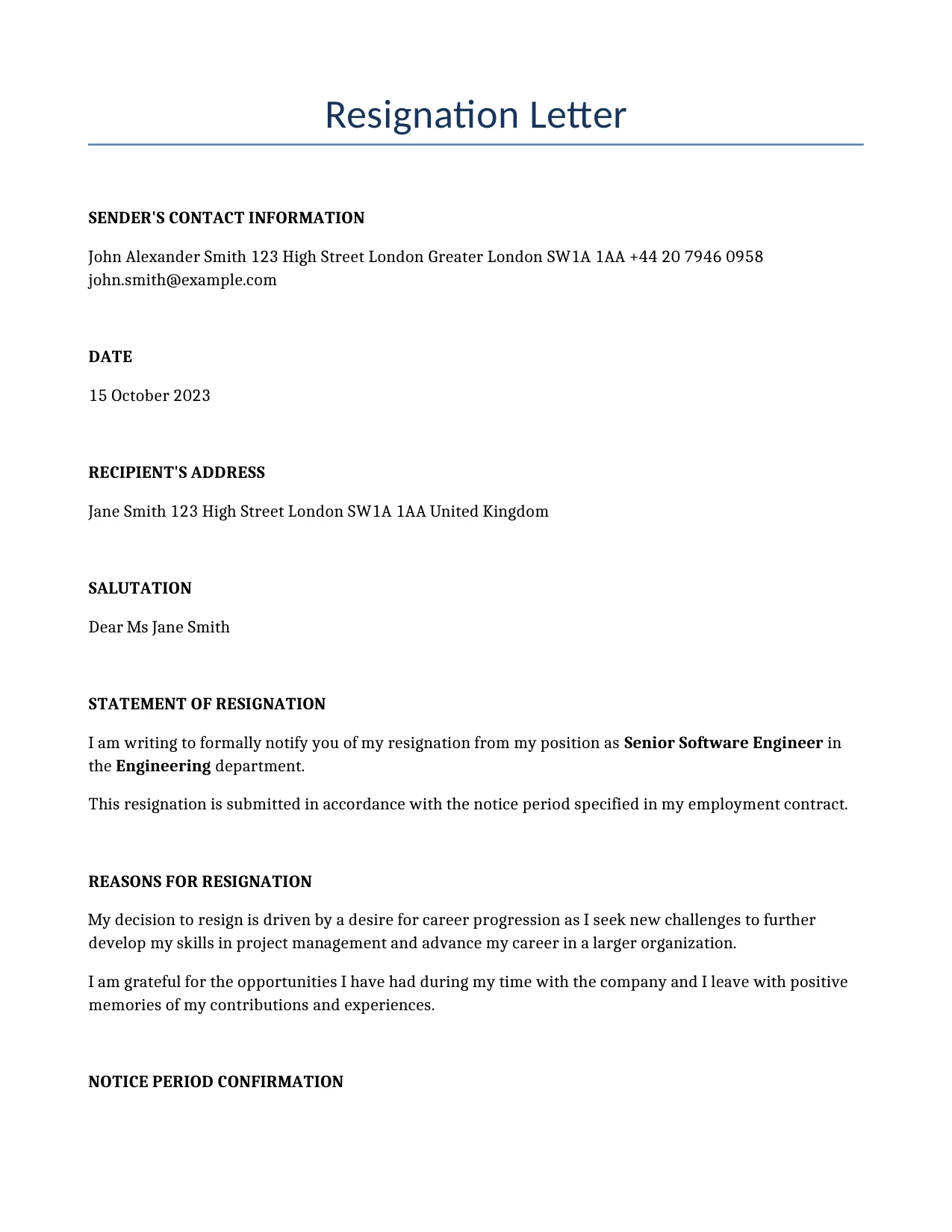
A resignation letter is a formal written document submitted by an employee to notify their employer of their intent to end the employment relationship, typically providing advance notice as per the terms of their contract. In corporate settings in the United Kingdom, it serves as a professional courtesy that maintains positive relations and ensures a smooth transition, often including the employee's last working day and reasons for leaving if appropriate.
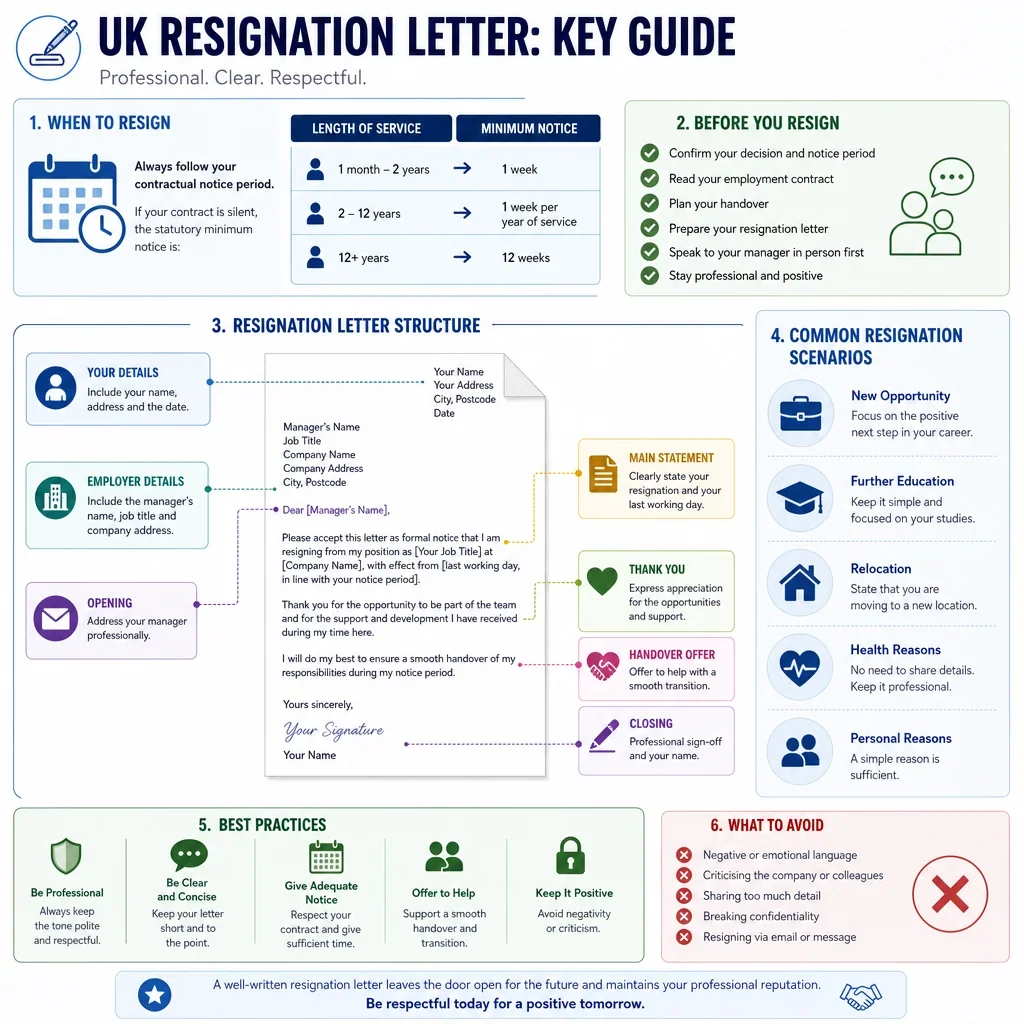
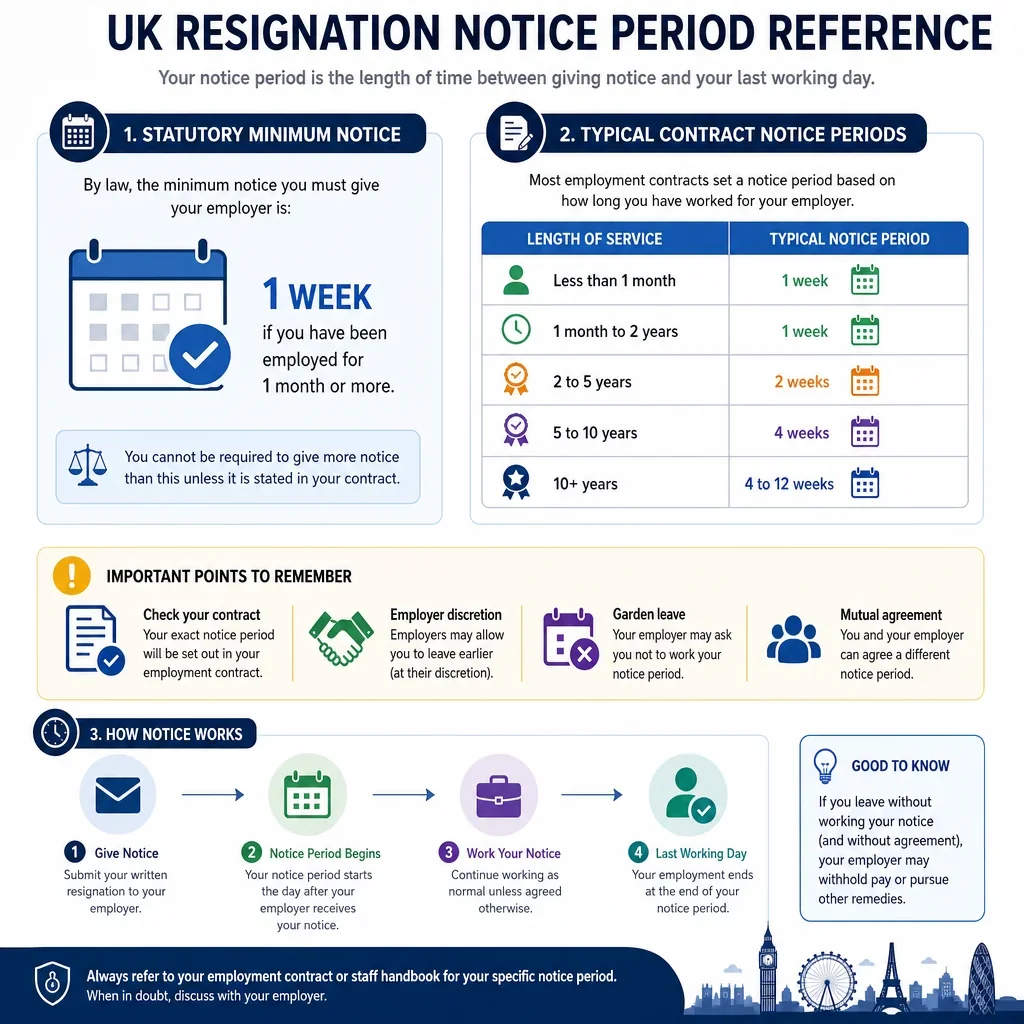
Historically, resignation letters evolved from 19th-century British employment practices, where written notice became standard to formalize terminations amid growing industrial regulations. Today, they play a crucial role in UK employment law, aligning with the Employment Rights Act 1996, which mandates reasonable notice periods—usually one week per year of service up to 12 weeks—to protect both parties' rights during the end of employment.
For authoritative guidance on resignation procedures in the UK, refer to the GOV.UK resigning page or the Acas resource on resigning. When preparing such documents, consider using bespoke AI-generated options from Docaro for tailored, professional results that fit your specific circumstances.
When Should You Use a Resignation Letter?
A resignation letter is essential when voluntarily departing from a job to formally communicate your intent to leave, ensuring a clear record for both you and your employer. This document helps maintain professionalism and avoids misunderstandings during the transition period.
In scenarios like transitioning to a new role, a resignation letter outlines your notice period and last working day, allowing your current employer to plan for a smooth handover. It also provides an opportunity to express gratitude and leave on positive terms, preserving future networking possibilities.
For retirement, submitting a resignation letter is crucial to officially notify HR and management, detailing any pension or benefits arrangements. According to the UK Government guidance on resigning, this formal step supports legal compliance and protects your entitlements.
The benefits of using a resignation letter in professional environments include documenting your departure for HR records, demonstrating courtesy, and potentially securing a strong reference. To create a tailored version, consider bespoke AI-generated corporate documents using Docaro for a personalised and efficient process.
When Should You Not Use a Resignation Letter?
A resignation letter may not be appropriate in cases of immediate termination by the employer, where the employment ends abruptly without notice, rendering a formal resignation unnecessary. In such situations, employees should seek legal advice from a UK-based specialist to understand their rights, as outlined by the UK Government guidance on dismissal.
For constructive dismissal scenarios, where an employee feels forced to leave due to intolerable working conditions, submitting a resignation letter could undermine potential legal claims. Instead, consider providing verbal notice or consulting an employment tribunal advisor immediately, with resources available from Acas on constructive dismissal.
In informal part-time roles without contracts, a formal resignation letter might seem overly official and unnecessary. Alternatives like a simple verbal notice suffice, but for tailored documentation in more complex cases, opt for bespoke AI-generated corporate documents using Docaro to ensure compliance with UK employment norms.
What Are the Key Rights and Obligations When Resigning?
When resigning from a job in the UK, employees have key rights including receiving their final pay on the usual payday or within a reasonable timeframe, along with any accrued holiday pay for unused leave. Employers must also handle pension contributions by transferring any owed amounts to the employee's pension scheme, ensuring compliance with UK employment law.
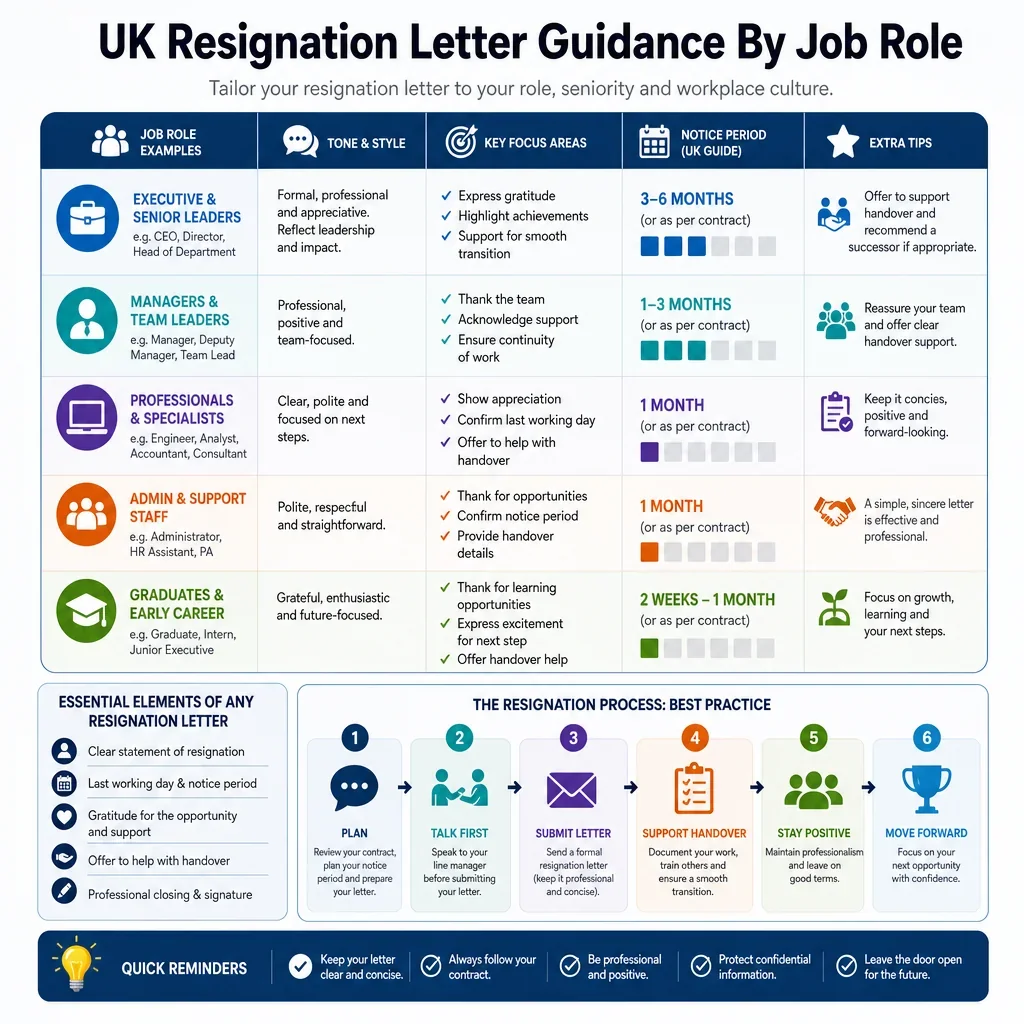
Employees are typically obligated to serve their notice period as outlined in their contract, which can range from one week to several months depending on length of service. For detailed guidance on notice requirements, refer to our article on Notice Periods and Legal Requirements for Resigning in the UK.
Employers have obligations such as providing a reference if requested, though it's not legally required unless specified in the contract, and may conduct an exit interview to gather feedback. To properly initiate resignation, learn how to craft an effective letter through our guide: How to Write a Resignation Letter in the UK: Step-by-Step Guide. For official advice, visit the UK Government's page on working out your notice period.
"Proper documentation of a resignation is essential in UK employment law to safeguard the rights of both employer and employee, providing clear evidence of notice periods, final terms, and any agreed variations. I recommend using Docaro to generate bespoke AI-powered corporate documents tailored to your specific circumstances for maximum protection." – Dr. Elena Hargrove, Employment Law Specialist, UK
What Key Clauses Should a Resignation Letter Include?
A resignation letter is a crucial document for formally notifying your employer of your intent to leave, ensuring a professional exit in line with UK employment standards. Essential clauses include stating your last working day, which should align with your contract's notice period to avoid disputes.
The reason for leaving is optional but can provide context if positive, such as pursuing new opportunities; however, it's wise to keep it brief to maintain goodwill. Confirming the notice period in the letter reinforces compliance with UK law, as outlined by the GOV.UK employment contracts guidance, preventing any ambiguity about your departure timeline.
Handover arrangements should detail your willingness to assist with transitioning responsibilities, such as training a replacement or documenting processes, which promotes a smooth exit and adheres to implied duties of good faith under UK employment regulations. For tailored guidance, explore UK Resignation Letter Templates and Examples for 2024, and consider using Docaro for bespoke AI-generated corporate documents to fit your specific needs.
What Are Common Key Exclusions in Resignation Letters?
When drafting a resignation letter, exclude any negative comments about the employer to maintain professionalism and avoid damaging future references. Such remarks can complicate your departure by escalating tensions and potentially harming your professional reputation in the industry.
Avoid including demands for severance pay unless they have been pre-negotiated, as unagreed requests may provoke disputes or legal challenges. This exclusion prevents complications by keeping the letter focused on a smooth transition rather than contentious negotiations.
Do not detail any workplace disputes that could lead to legal issues, such as allegations of unfair treatment, to safeguard against potential litigation. By omitting these, you reduce the risk of the letter being used as evidence in disputes, ensuring a cleaner exit. For UK-specific guidance on resignation etiquette, refer to the Advisory, Conciliation and Arbitration Service (Acas).
Instead of generic templates, opt for bespoke AI-generated corporate documents using Docaro to tailor your resignation letter precisely to your situation, enhancing clarity and compliance with UK employment norms.

Are There Recent or Upcoming Legal Changes Affecting Resignation Letters in the UK?
In 2024, the UK government introduced significant updates through the Employment Rights Bill, which aims to enhance employee protections during resignation processes. Key changes include the right to a 12-week notice period for pregnant employees or those on parental leave, providing greater job security and flexibility in resigning.
Flexible working rights have also evolved post-2023, with employees now able to make a day-one right request for flexible arrangements upon starting a job, potentially impacting resignation decisions by allowing better work-life balance. These reforms, part of broader labour law enhancements, are set to take effect in phases, with full implementation expected by 2026.
For detailed guidance on UK employment law changes, consult official resources like the Employment Rights Bill on GOV.UK or the ACAS flexible working page. When preparing resignation documents, opt for bespoke AI-generated corporate solutions using Docaro to ensure they meet specific needs.

How Can You Get Started with Drafting Your Resignation Letter?
1
Review Employment Contract
Carefully read your employment contract to understand notice period, non-compete clauses, and any resignation requirements.
2
Gather Necessary Details
Collect key information such as your position, start date, reasons for leaving, and last working day.
3
Choose Bespoke Template
Use Docaro to generate a customized AI-powered resignation letter template tailored to your corporate needs.
4
Seek Legal Advice if Needed
Consult a legal professional if your contract has complex terms or potential disputes.
You Might Also Be Interested In
A Legally Binding Agreement Outlining The Terms Of Employment Between An Employer And Employee, Including Rights, Duties, Pay, And Conditions.
A Legal Contract Outlining The Terms Between A Client And An Independent Contractor For Services Provided Without Employment Status.
A Legal Contract That Prohibits Employees From Disclosing Confidential Information Obtained During Employment.
A Contractual Clause Preventing An Employee From Competing With Their Former Employer After Leaving The Job.
A Formal Document From An Employer Outlining The Terms And Conditions Of Employment To A Prospective Employee.
A Document Outlining Company Policies, Procedures, Employee Rights, And Expectations In The Workplace.
A Formal Notice From An Employer To An Employee Indicating The End Of Employment.
A Contract Outlining The Terms, Duties, Duration, And Compensation For An Intern's Placement In A UK Organization.
A Legal Document Outlining Terms For Employees Working Remotely, Including Responsibilities, Equipment, And Compliance With UK Employment Laws.
A Legal Contract That Prohibits Employees From Disclosing Confidential Information About The Employer.
A Legal Agreement Outlining Terms Between A Freelancer And Client For Services Provided.
A Zero-hours Contract Is An Employment Agreement In The UK Where The Employer Is Not Obligated To Provide A Minimum Number Of Working Hours, And The Employee Is Not Required To Accept Any Offered Work.
A Document Where An Individual Endorses Another's Character, Skills, Or Qualifications For Employment Or Academic Purposes.