AI Generated British Lodger Agreement
PDF & Word - 2026 Updated
Docaro Pricing
When do you need a Tenancy Agreement in the United Kingdom?
British Legal Rules for a Tenancy Agreement
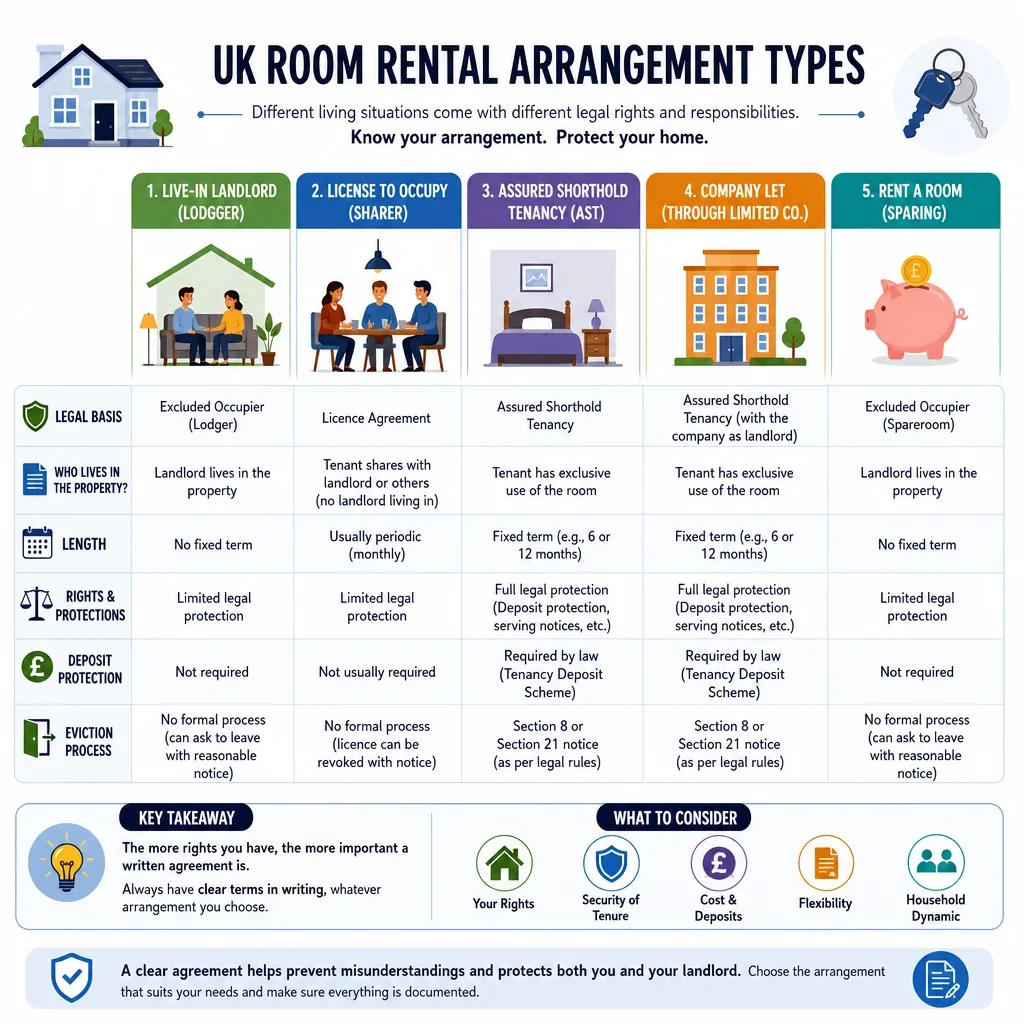
Using the wrong type of agreement for room rentals can inadvertently grant the occupier assured shorthold tenancy rights under UK housing law.
What a Proper Tenancy Agreement Should Include
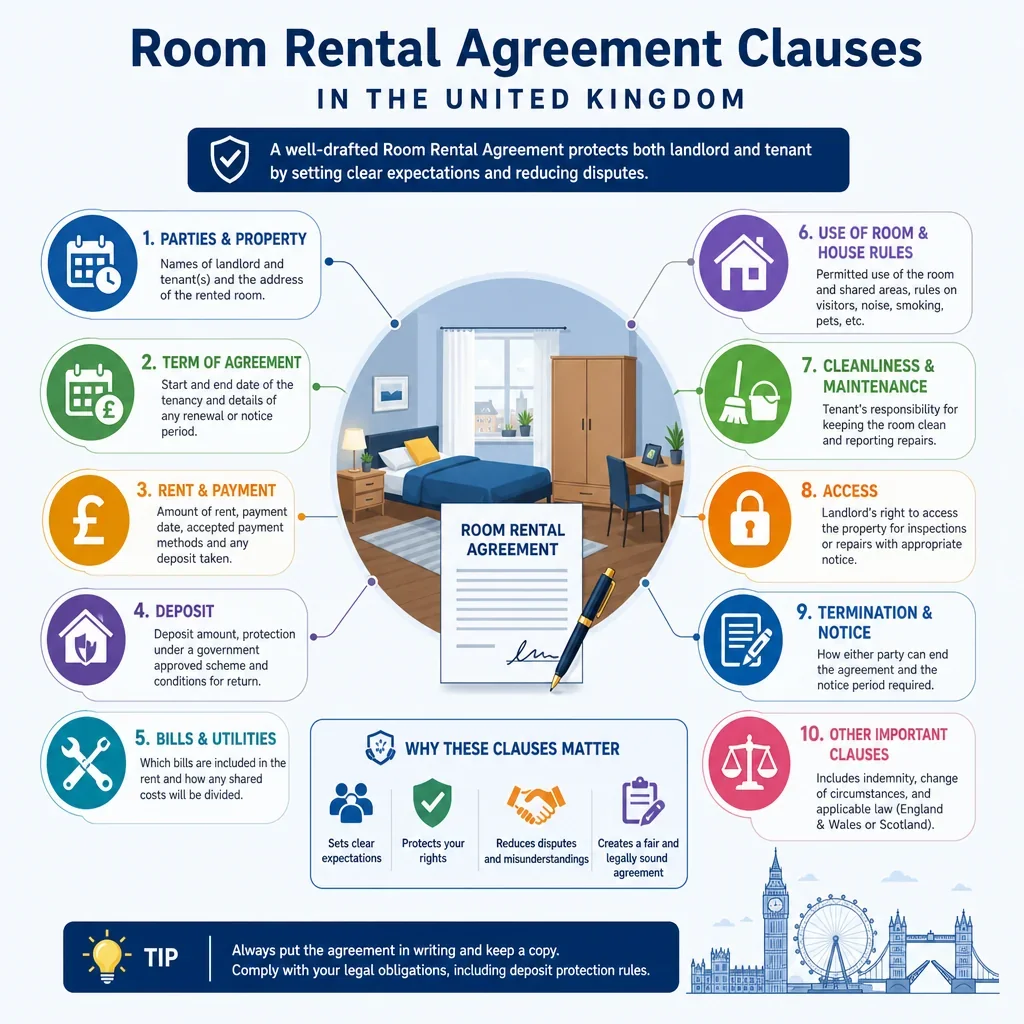
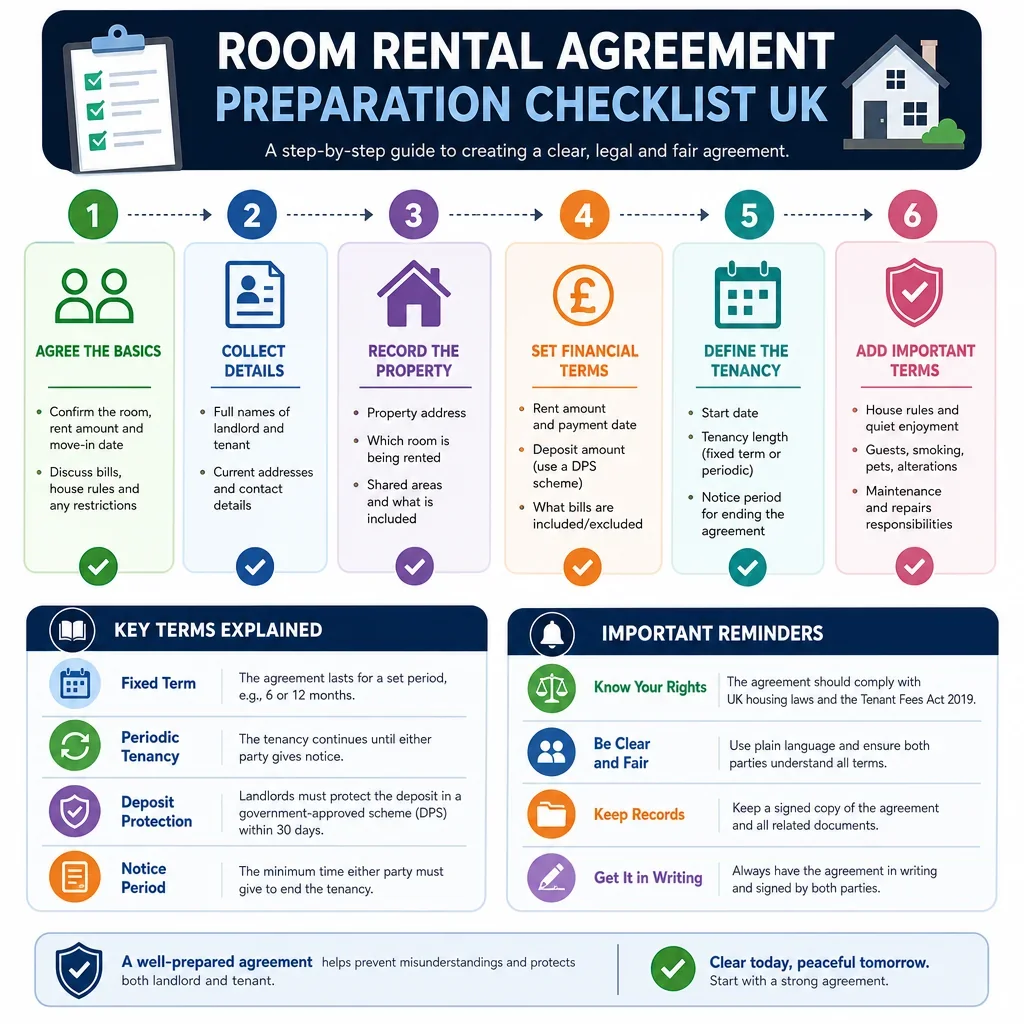
- Parties InvolvedClearly state the full names and addresses of the landlord and tenant to identify everyone in the agreement.
- Property DetailsDescribe the rental property's address, type, and any included items like furniture or appliances.
- Rental PeriodSpecify the start and end dates of the tenancy, including whether it's fixed-term or ongoing.
- Rent Amount and PaymentOutline the monthly rent price, due date, and accepted payment methods.
- Deposit InformationDetail the security deposit amount, how it's protected, and the conditions for its return.
- Responsibilities for RepairsExplain what the landlord and tenant are each responsible for maintaining and repairing in the property.
- House RulesList any specific rules about pets, smoking, guests, or property use to ensure a smooth tenancy.
- Notice for Ending TenancyDescribe how much notice either party must give to end the agreement and under what circumstances.
Generate Your Document in 4 Easy Steps
Why Use Docaro?
 United Kingdom
Free Example Tenancy Agreement Template
Below is a free template example of a Tenancy Agreement for use in the United Kingdom generated by our AI model.
The clauses in your actual Tenancy Agreement will vary from this example as they will be entirely bespoke to your requirements as set out in the questionnaire you complete.
Assured Shorthold Tenancy Agreement
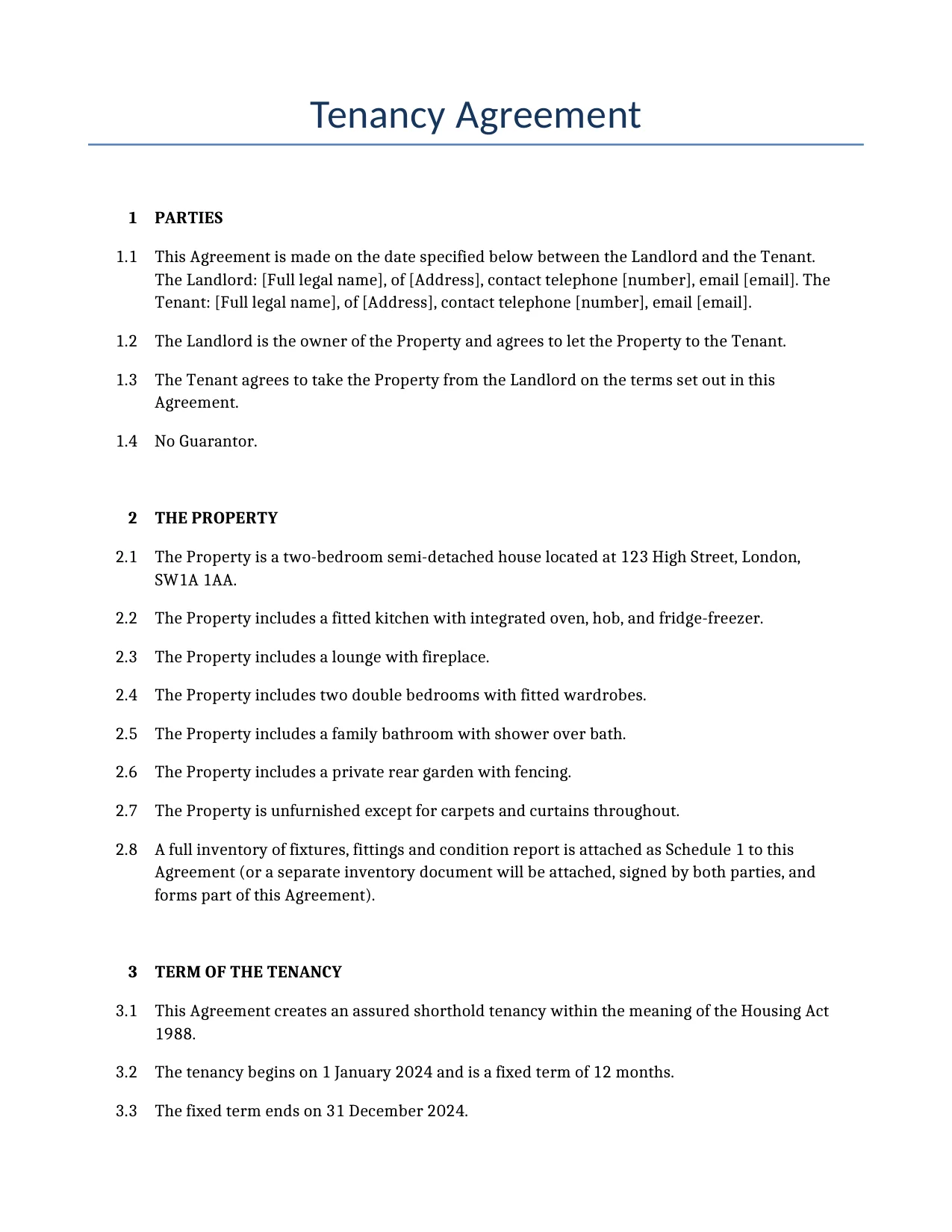
1PARTIES
This Agreement is made on the date specified below between the Landlord and the Tenant. The Landlord: [Full legal name], of [Address], contact telephone [number], email [email]. The Tenant: [Full legal name], of [Address], contact telephone [number], email [email].
The Landlord is the owner of the Property and agrees to let the Property to the Tenant.
The Tenant agrees to take the Property from the Landlord on the terms set out in this Agreement.
No Guarantor.
2THE PROPERTY
The Property is a two-bedroom semi-detached house located at 123 High Street, London, SW1A 1AA.
The Property includes a fitted kitchen with integrated oven, hob, and fridge-freezer.
The Property includes a lounge with fireplace.
The Property includes two double bedrooms with fitted wardrobes.
The Property includes a family bathroom with shower over bath.
The Property includes a private rear garden with fencing.
The Property is unfurnished except for carpets and curtains throughout.
A full inventory of fixtures, fittings and condition report is attached as Schedule 1 to this Agreement (or a separate inventory document will be attached, signed by both parties, and forms part of this Agreement).
3TERM OF THE TENANCY
This Agreement creates an assured shorthold tenancy within the meaning of the Housing Act 1988.
The tenancy begins on 1 January 2024 and is a fixed term of 12 months.
The fixed term ends on 31 December 2024.
The tenancy is an assured shorthold tenancy (AST) under the Housing Act 1988 (as amended) and meets all eligibility criteria, including that the rent is below any applicable upper limit and the tenant is an individual.
4RENT
The Tenant shall pay the Landlord rent at the rate of \£1,250.00 (one thousand two hundred and fifty pounds) per month.
The rent shall be paid monthly in advance on the 1st day of each month by bank transfer.
The Tenant's obligation to pay rent begins on 1 January 2024.
Late rent charges: Interest may be charged on rent arrears at 3% above the Bank of England base rate in line with the Tenant Fees Act 2019 (no banned fees are charged).
No prohibited payments are being charged under the Tenant Fees Act 2019.
5DEPOSIT
The Tenant has paid to the Landlord a deposit of \£1,041.67 (which does not exceed five weeks' rent based on \£1,250 monthly rent). The Landlord will protect the deposit in the Deposit Protection Service (DPS) within the statutory time limits.
The deposit is protected with reference number DPS-REF-456789 and was protected on 15 October 2023 in accordance with current DPS requirements.
The Landlord may make deductions from the deposit at the end of the tenancy for unpaid rent or other payments due under the tenancy, damage to the property beyond fair wear and tear, and cleaning costs to restore the property to its original condition.
The parties agree to use the free dispute resolution service of the deposit protection scheme before taking court action regarding any deductions from the deposit.
If there are no deductions the deposit or balance of it shall be repaid to the Tenant within 10 days after the end of the tenancy.
The prescribed information has been provided to the Tenant within 30 days as required by law.
6RENT REVIEW
The Landlord may review the rent during the term of the tenancy and may increase the rent by giving the Tenant not less than one month's written notice of the increase.
Any rent increase must comply with section 13 of the Housing Act 1988 or be by mutual agreement. Increases cannot be excessive or used to circumvent rules under the Tenant Fees Act 2019.
7TENANT'S OBLIGATIONS
The Tenant shall use the Property for private residence only.
The Tenant shall pay the rent on the due dates.
The Tenant shall keep the interior of the Property in good and tenantable repair and condition.
The Tenant shall be liable for accidental damage to fixtures, damage from pets, and negligent damage to structure beyond normal wear and tear.
The Tenant shall not cause a nuisance or annoyance to neighbours or the Landlord.
The Tenant shall comply with all relevant laws including the requirements of the Housing Act 1988, the Landlord and Tenant Act 1985, the Protection from Eviction Act 1977, the Tenant Fees Act 2019, the Deregulation Act 2015, The Assured Tenancy and Agricultural Occupancy (Forms) Regulations 2015, and The Smoke and Carbon Monoxide Alarm (England) Regulations 2015.
The Tenant shall not sublet, assign or part with possession of the Property or any part of it without the Landlord's prior written consent.
The Tenant shall allow the Landlord or agents access to the Property on at least 24 hours' written notice (except in emergency) for inspection, repair or viewings.
The Tenant shall keep the Property clean and tidy and dispose of all rubbish appropriately.
The Tenant shall not make any alterations or additions to the Property without the Landlord's prior written consent.
The Tenant is responsible for minor repairs up to \£50 (or as per statute) and shall report all repairs promptly.
The Tenant shall comply with the Homes (Fitness for Human Habitation) Act 2018.
8LANDLORD'S OBLIGATIONS
The Landlord shall maintain the structure and exterior of the Property and keep in repair the installations for the supply of water, gas, electricity, and for sanitation.
The Landlord confirms that annual gas safety checks have been carried out and the last gas safety certificate is dated 15 August 2023 which will be provided to the Tenant before the tenancy starts.
The Landlord confirms that a valid Energy Performance Certificate is available and will be provided to the Tenant.
The Landlord shall ensure that all electrical installations in the Property meet the required standards under the Electrical Safety Standards in the Private Rented Sector (England) Regulations 2020 (including an EICR every 5 years).
The Landlord shall ensure that smoke and carbon monoxide alarms are fitted, working and tested at the start of the tenancy and on each renewal.
The Landlord shall maintain the Property fit for human habitation in accordance with the Homes (Fitness for Human Habitation) Act 2018.
The Landlord shall provide the Tenant with a copy of the current 'How to Rent' guide.
9INSURANCE
The Landlord will maintain insurance for the building structure and any landlord's fixtures during the tenancy.
The Tenant is responsible for insuring their own contents against loss or damage during the tenancy.
10RIGHT TO RENT AND IMMIGRATION CHECKS
The Landlord has complied with the Immigration Act 2014 by carrying out Right to Rent checks.
Copies of the documents checked have been retained by the Landlord.
The Landlord will carry out follow-up checks if the Tenant's permission to rent expires during the term of the tenancy.
11UTILITIES AND OUTGOINGS
The Tenant shall be responsible for paying for electricity, gas, broadband and internet, council tax, and water rates from 1 January 2024 based on usage only. The Landlord remains responsible for any standing charges or if the property is empty.
The property is not in a flood risk area (or flood insurance implications have been noted and disclosed).
12ENDING THE TENANCY
At the end of the fixed term the tenancy will continue as a statutory periodic tenancy unless terminated in accordance with this Agreement.
The Tenant must give at least one month's written notice (aligning with the rent period) to end the tenancy.
The Landlord must use a valid Section 21 notice (in the prescribed form) giving at least two months' notice (or the minimum required under current rules post-2023 reforms if applicable) after the fixed term.
13BREAK CLAUSE
Either the Landlord or the Tenant may end the fixed term early by giving at least two months' written notice after the first six months of the term. The break clause is mutual, must be exercised in writing, and complies with current assured shorthold tenancy rules.
14BILLS AND CHARGES
In compliance with the Tenant Fees Act 2019, only permitted charges apply. The Tenant shall pay the Landlord any reasonable costs (including interest at 3% above Bank of England base rate) for late rent or replacing lost keys. No banned fees (such as administration charges for variations unless reasonable and permitted) are charged.
15COMPLIANCE WITH LAWS
Both the Landlord and the Tenant agree to comply with the Housing Act 1988 (as amended), the Landlord and Tenant Act 1985, the Protection from Eviction Act 1977, the Tenant Fees Act 2019, the Deregulation Act 2015, The Assured Tenancy and Agricultural Occupancy (Forms) Regulations 2015, The Smoke and Carbon Monoxide Alarm (England) Regulations 2015, the Homes (Fitness for Human Habitation) Act 2018, the Electrical Safety Standards in the Private Rented Sector (England) Regulations 2020, and all other relevant legislation (including any post-2023 rental reforms in England if enacted, such as the Renters (Reform) Bill). The Landlord shall provide the 'How to Rent' booklet. The Landlord holds a valid licence if the property is in a selective licensing area.
Both the Landlord and the Tenant agree to comply with the Equality Act 2010.
The Landlord has checked the Tenant's right to rent in the United Kingdom by examining the Tenant's UK passport and visa or biometric residence permit.
16GENERAL PROVISIONS
This Agreement constitutes the entire agreement between the parties and supersedes all prior agreements.
If any provision of this Agreement is held to be invalid or unenforceable the remaining provisions shall remain in full force and effect (severability under the laws of England and Wales).
This Agreement is governed by the laws of England and Wales and the parties submit to the exclusive jurisdiction of the courts of England and Wales.
Any notice required to be given under this Agreement shall be in writing and sent by first class post or delivered to the last known address of the other party.
No variation of this Agreement shall be effective unless it is in writing and signed by both parties.
The Tenant confirms they have been given the opportunity to take independent legal advice before signing this Agreement.
The Landlord and Tenant agree to process personal data in accordance with the UK GDPR and Data Protection Act 2018.
This Agreement includes any attached schedules or plans (including the inventory at Schedule 1).
17EXECUTION
| LANDLORD | |
| Signature: | |
| Print Name: | |
| Date: |
| TENANT | |
| Signature: | |
| Print Name: | |
| Date: |
18DECLARATIONS AND SIGNATURES
Both parties confirm they have read and understood this Agreement. The Tenant confirms receipt of: the Energy Performance Certificate (EPC), gas safety certificate, the 'How to Rent' guide, and the deposit prescribed information.
This is a template agreement. Professional legal advice should be sought to ensure compliance with the latest law (including any post-2023 rental reforms in England).
| LANDLORD | |
| Signature: | |
| Print Name: | |
| Date: |
| TENANT | |
| Signature: | |
| Print Name: | |
| Date: |
This example shows approximately 70% of a typical document and is provided for illustrative purposes only. The remaining content has been omitted.
Every document generated by Docaro is tailored to your specific circumstances, jurisdiction and the information you provide. The completed document includes all applicable clauses and provisions required for your situation.
To generate the full, personalised document, answer a short series of questions and your document will be created instantly.
Useful Resources When Considering a Tenancy Agreement in the United Kingdom
United Kingdom Reference Legislation
Tenancy Agreement FAQs
Document Generation FAQs
Related Articles