AI Generated British Corporate Resolutions
PDF & Word - 2026 Updated
Docaro Pricing
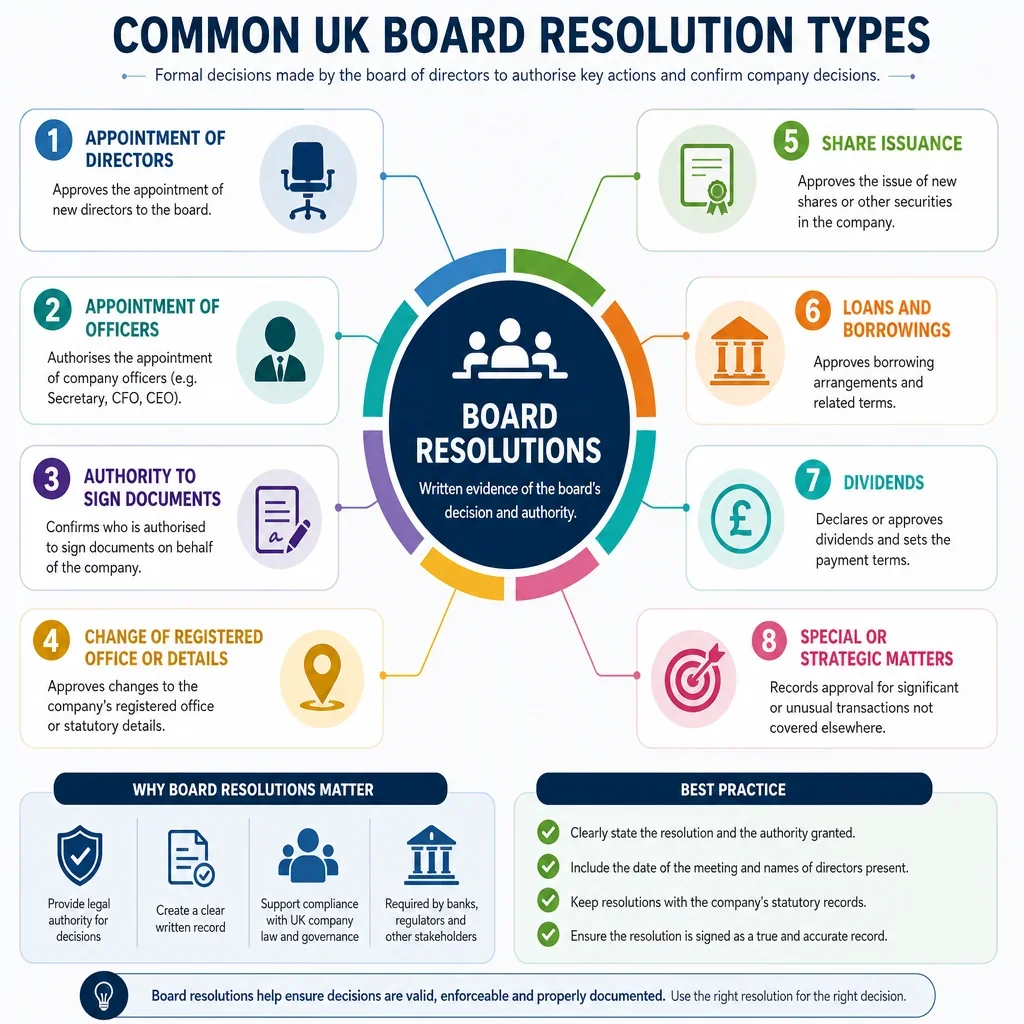
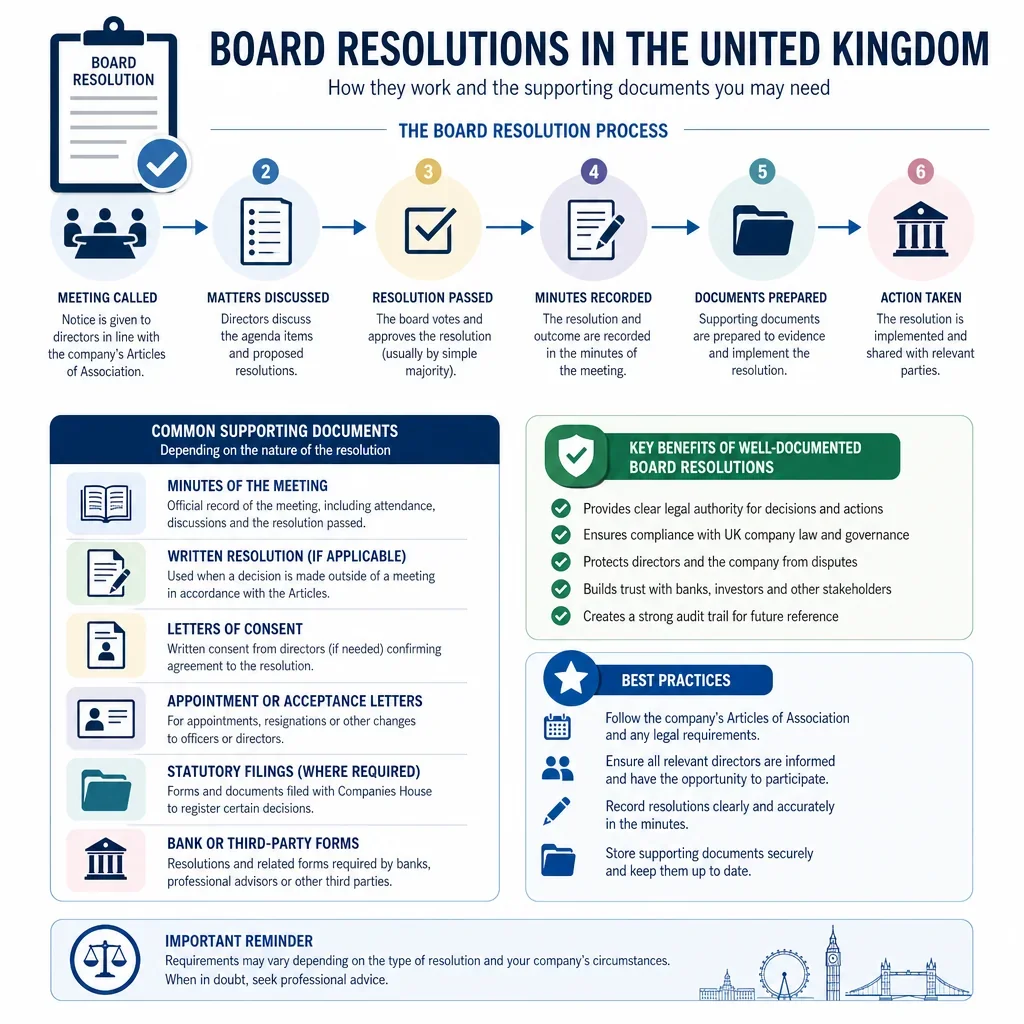
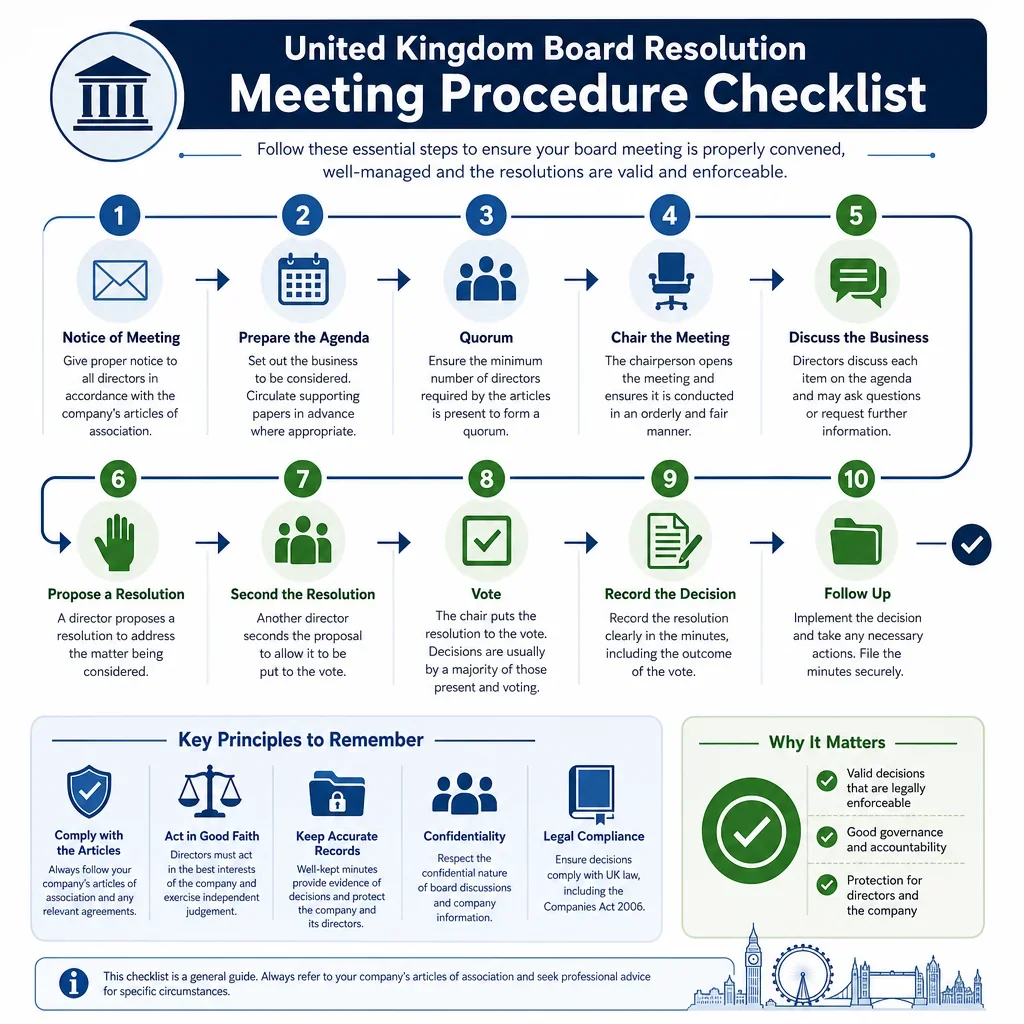
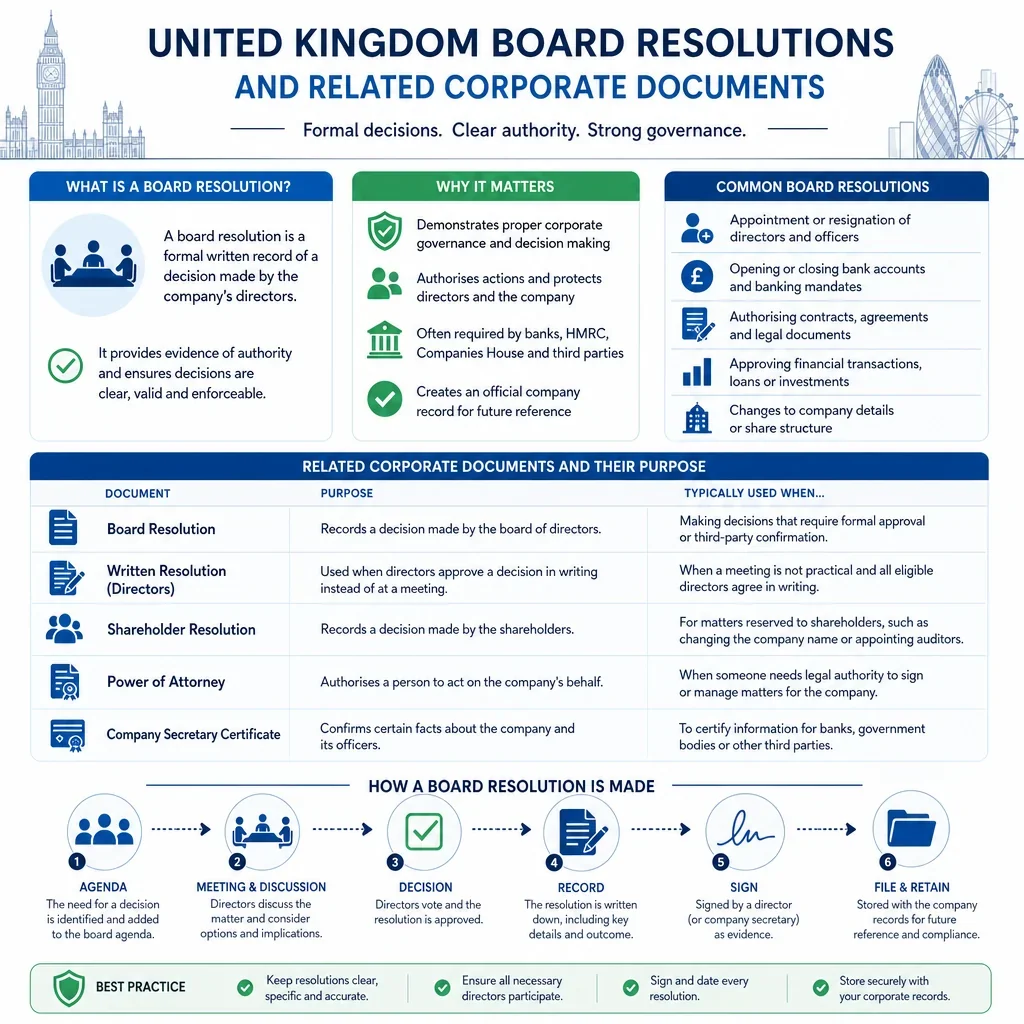
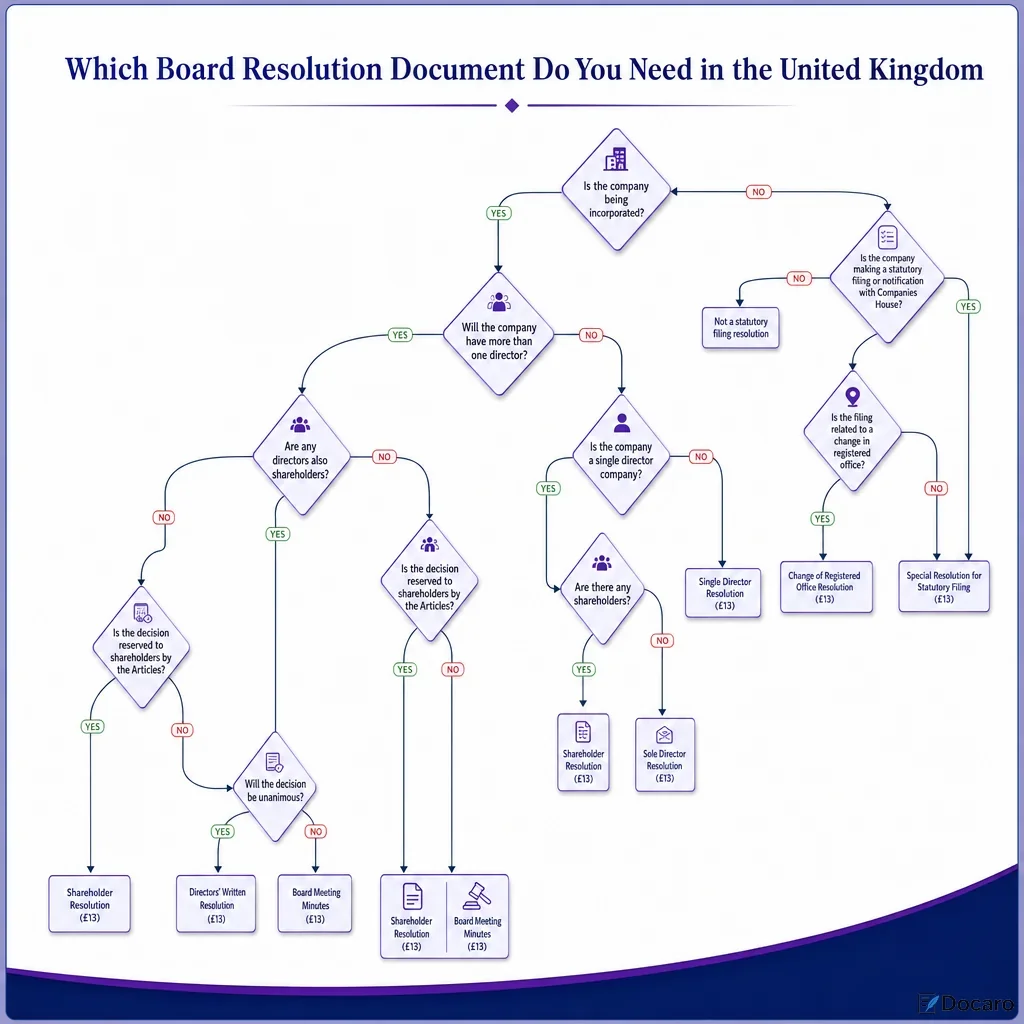
When do you need a Board Resolution in the United Kingdom?
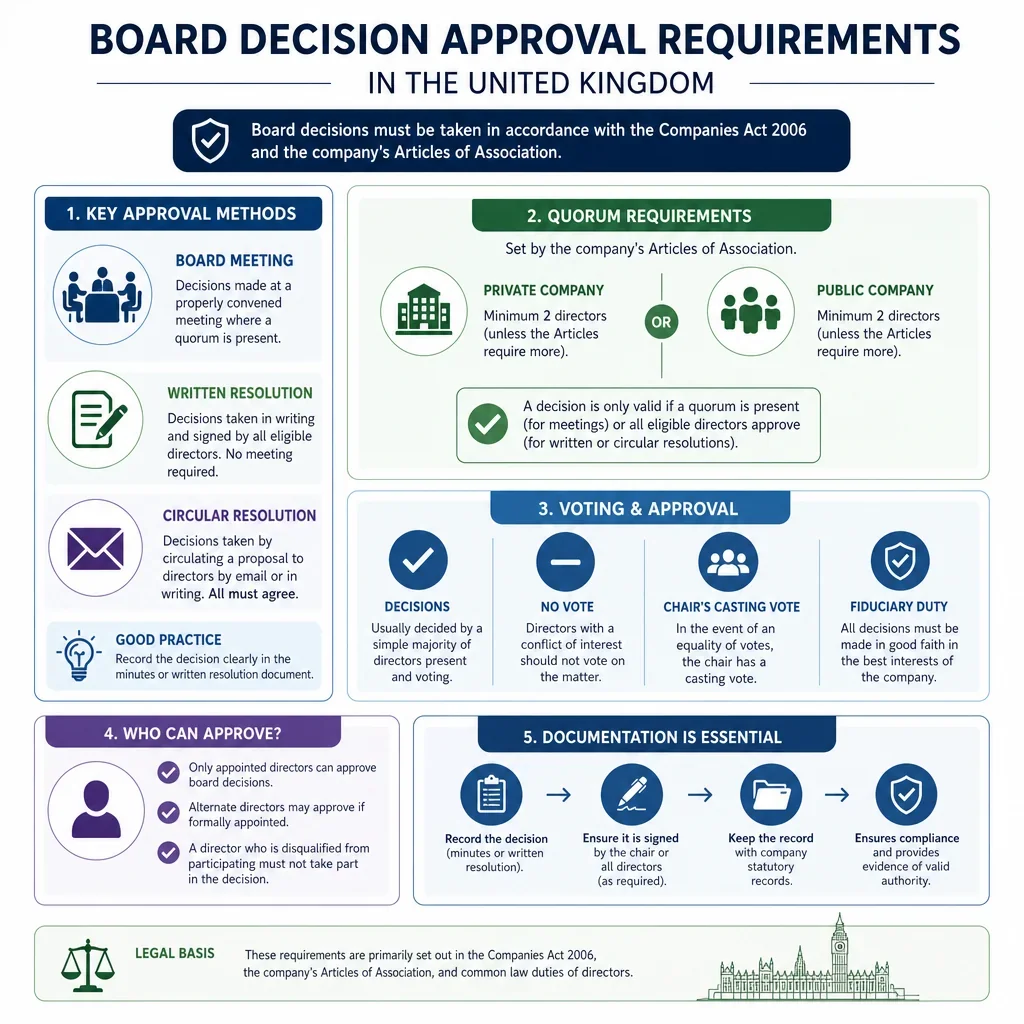
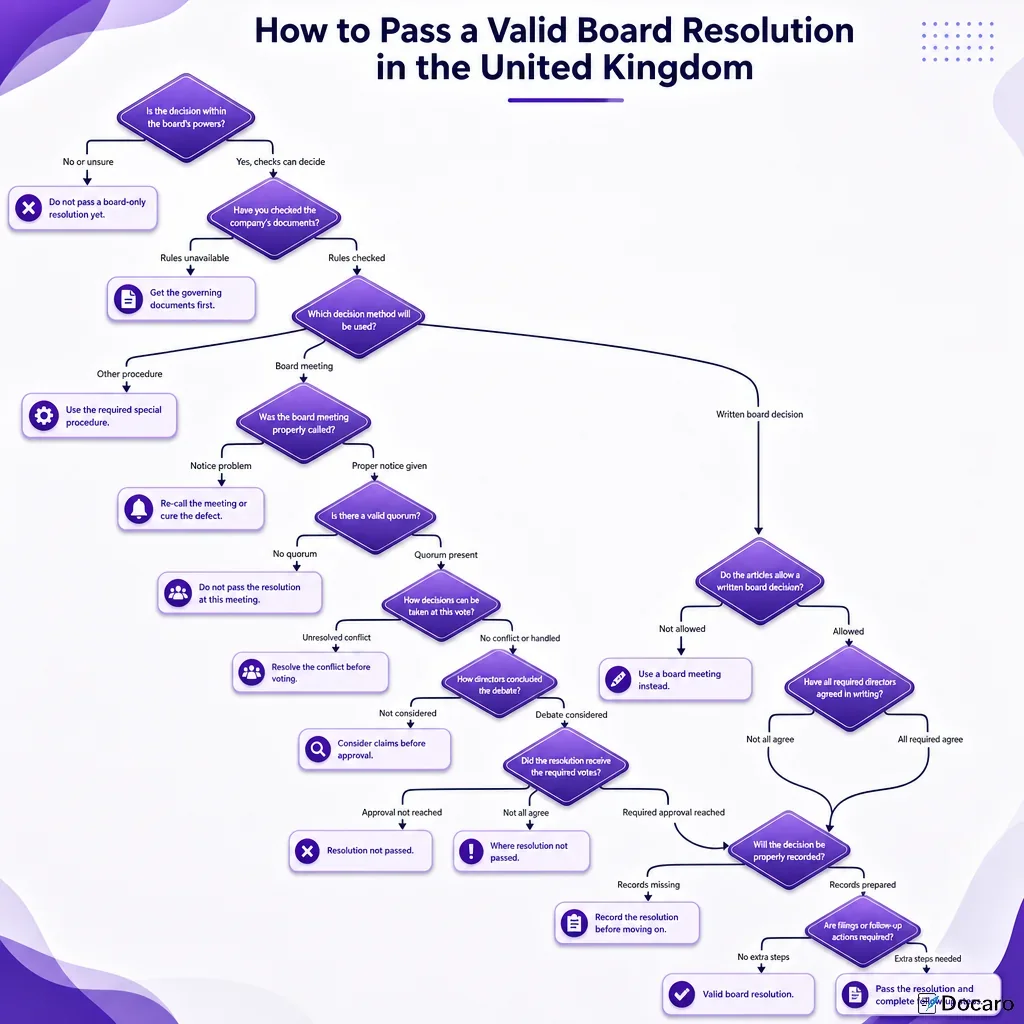
British Legal Rules for a Board Resolution
Using the incorrect structure for a board resolution may invalidate the corporate decision or expose the company to legal challenges.
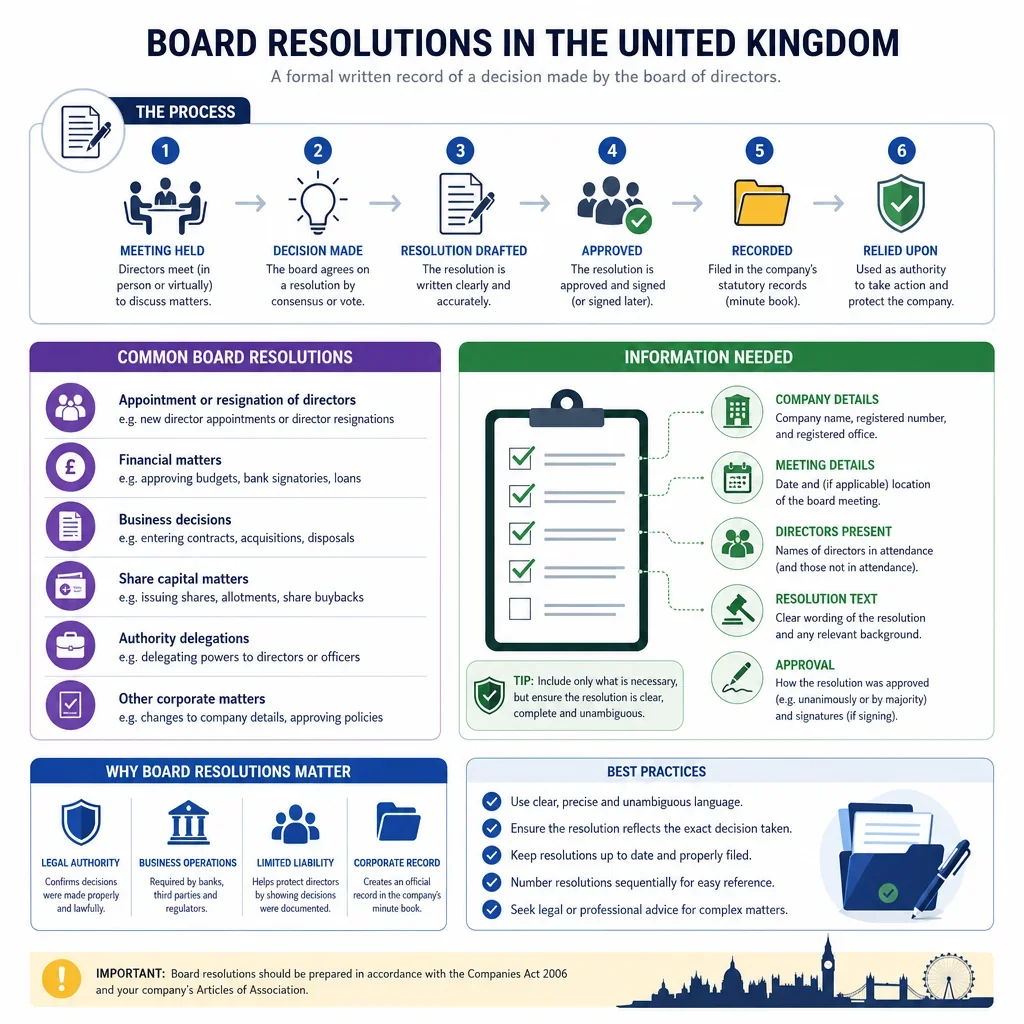
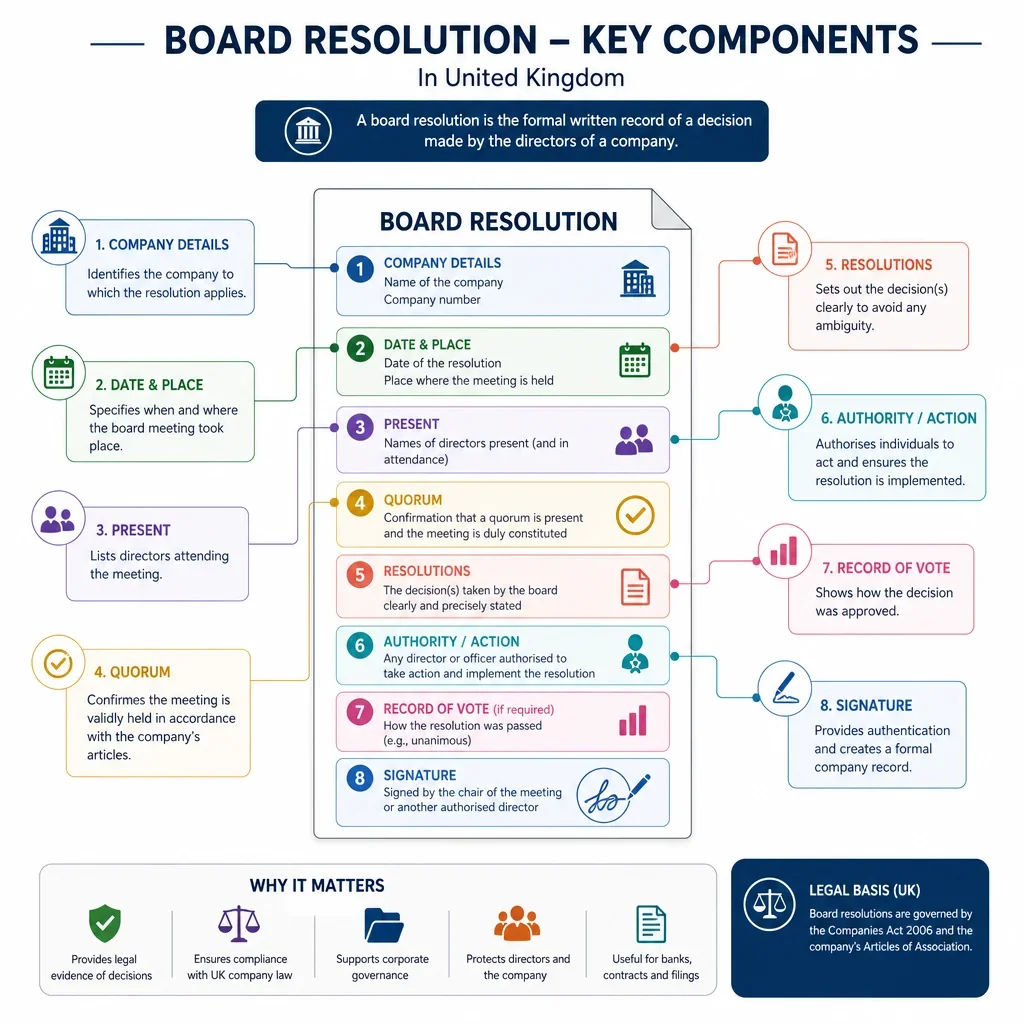
What a Proper Board Resolution Should Include
- Meeting DetailsState the date, time, and place of the board meeting where the resolution is passed.
- Attendees and QuorumList the directors present and confirm that enough were there to make decisions.
- Clear DecisionDescribe the exact decision or action the board agrees to take.
- Reasons for the DecisionBriefly explain why the board is making this decision.
- AuthorizationsSpecify who can act on the decision and any powers they are given.
- Voting ResultsNote if the resolution was passed unanimously or by majority vote.
- SignaturesInclude spaces for the directors or chair to sign and date the document.
Generate Your Document in 4 Easy Steps
Why Use Docaro?
 United Kingdom
Free Example Board Resolution Template
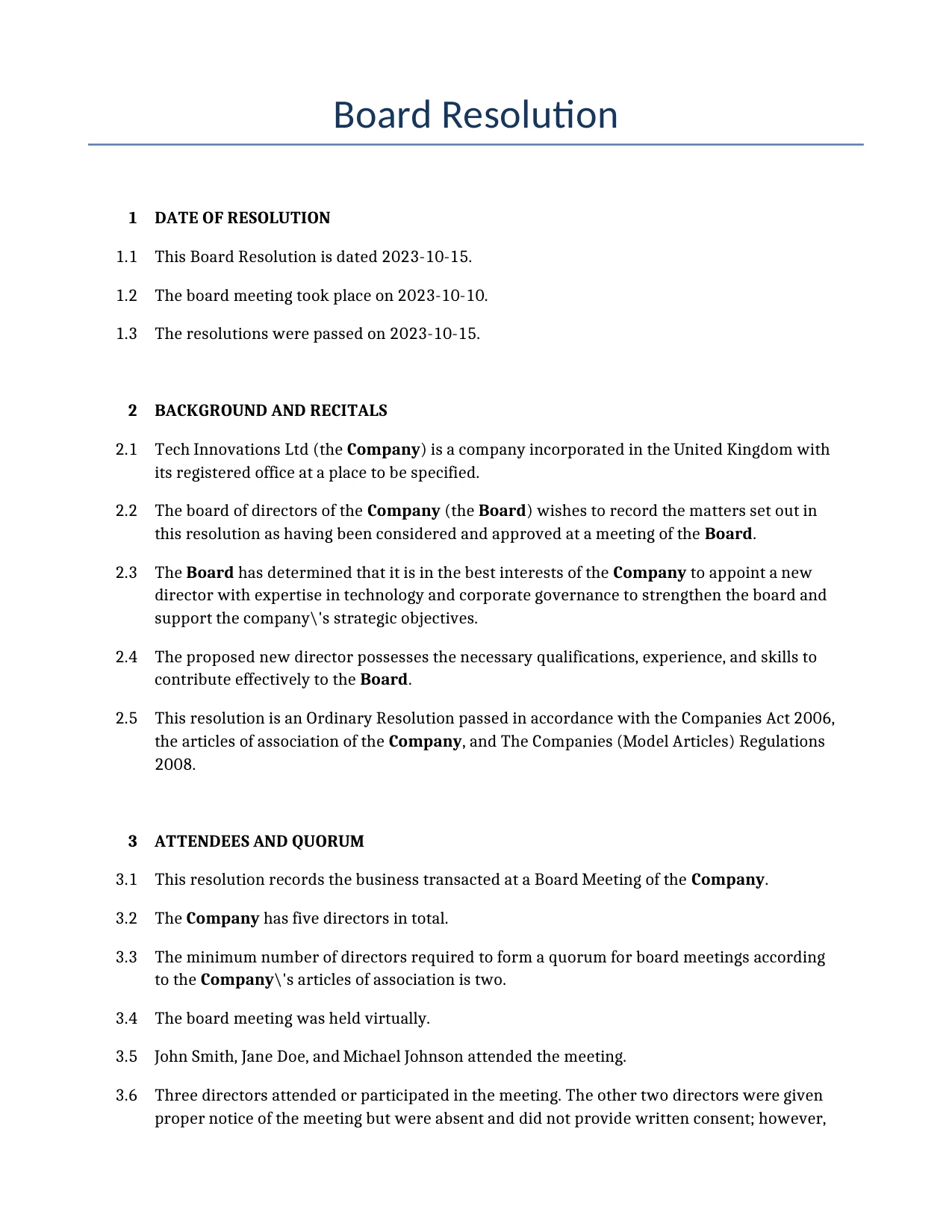
Below is a free template example of a Board Resolution for use in the United Kingdom generated by our AI model.
The clauses in your actual Board Resolution will vary from this example as they will be entirely bespoke to your requirements as set out in the questionnaire you complete.
Board Resolution to Approve the Appointment of a New Director
1DATE OF RESOLUTION
This Board Resolution is dated 2023-10-15.
The board meeting took place on 2023-10-10.
The resolutions were passed on 2023-10-15.
2BACKGROUND AND RECITALS
Tech Innovations Ltd (the Company) is a company incorporated in the United Kingdom with its registered office at a place to be specified.
The board of directors of the Company (the Board) wishes to record the matters set out in this resolution as having been considered and approved at a meeting of the Board.
The Board has determined that it is in the best interests of the Company to appoint a new director with expertise in technology and corporate governance to strengthen the board and support the company\'s strategic objectives.
The proposed new director possesses the necessary qualifications, experience, and skills to contribute effectively to the Board.
This resolution is an Ordinary Resolution passed in accordance with the Companies Act 2006, the articles of association of the Company, and The Companies (Model Articles) Regulations 2008.
3ATTENDEES AND QUORUM
This resolution records the business transacted at a Board Meeting of the Company.
The Company has five directors in total.
The minimum number of directors required to form a quorum for board meetings according to the Company\'s articles of association is two.
The board meeting was held virtually.
John Smith, Jane Doe, and Michael Johnson attended the meeting.
Three directors attended or participated in the meeting. The other two directors were given proper notice of the meeting but were absent and did not provide written consent; however, the attendance satisfies the quorum requirement under the Company\'s articles of association.
The number of attending directors meets or exceeds the quorum requirement as per the Company\'s articles of association.
4DIRECTORS\' ELIGIBILITY FOR APPOINTMENT
The Board has confirmed that the proposed new director is eligible for appointment under the Companies Act 2006.
The proposed new director has provided the necessary consents to act as a director and declarations of fitness to act.
No disqualifications apply to the proposed new director under the Company Directors Disqualification Act 1986.
The Board has carried out all required eligibility checks, including verification that the proposed new director is not disqualified from acting as a director.
5NOTICE OF MEETING
Notice of the board meeting was sent to all directors on 2023-10-01, providing 14 clear days\' notice in accordance with the statutory minimum and the Company\'s articles of association.
The notice was given in accordance with the method specified in the Company\'s articles of association.
All directors received and acknowledged the notice. No waivers of notice were required as the notice period complied with the required minimum.
Proper notice was given to all directors entitled to receive it.
6APPOINTMENT OF CHAIR
Johnathan Robert Smith was appointed as the chairperson to preside over the meeting.
Johnathan Robert Smith holds the position of Non-Executive Director.
The appointment of the chairperson takes effect immediately for the duration of the meeting.
The chairperson\'s appointment is in accordance with the Company\'s articles of association.
7APPOINTMENT OF NEW DIRECTOR
The Board approves the appointment of Emily Alexandra Thompson as a Non-Executive Director of the Company.
The appointment is effective from 2023-11-01.
There are no specific conditions attached to the appointment beyond standard compliance with company law.
The appointment complies with the requirements of the Companies Act 2006 for director appointments, including eligibility checks, confirmation of consent to act, and the requirement to make necessary filings with Companies House.
The new director\'s terms of appointment include a standard service contract, remuneration as determined by the Board (initial annual fee of \£25,000), and powers consistent with those of other non-executive directors. The Board hereby approves these terms.
8CONFLICTS OF INTEREST
The directors have considered and confirmed compliance with sections 175-177 of the Companies Act 2006 regarding directors\' duties on conflicts of interest.
No directors have any conflicts of interest to disclose in relation to this board resolution. Each director present confirmed that he or she had no interest, whether direct or indirect, in the matters under discussion that conflicted with the interests of the Company. If any conflict had existed, the interested director would have abstained from voting and the remaining directors would have proceeded to consider the matter.
9VOTING AND APPROVAL
The resolution was recorded as passed unanimously by the directors present at the meeting.
The outcome of the vote on this resolution was Passed Unanimously by those present.
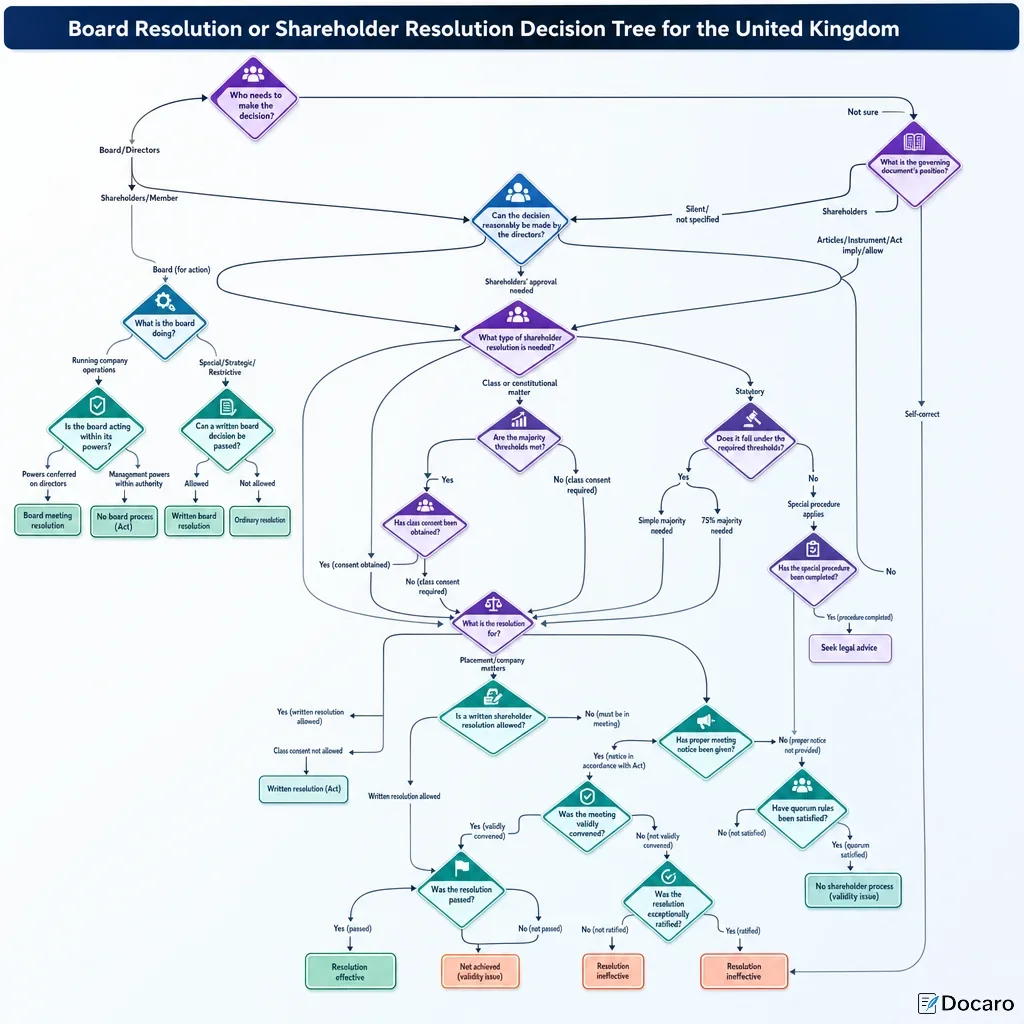
This is a resolution passed at a meeting of the Board (not a written resolution).
Three directors were present and eligible to vote at the meeting, satisfying the quorum. Five directors in total were given proper notice; the two absent directors did not vote but their absence does not invalidate the resolution under the Company\'s articles of association.
Three votes were cast in favor of the resolutions.
The resolutions were passed unanimously by the directors present and voting.
10ADJOURNMENT
The meeting was adjourned on 2023-10-15.
11FILINGS AND REGISTERS
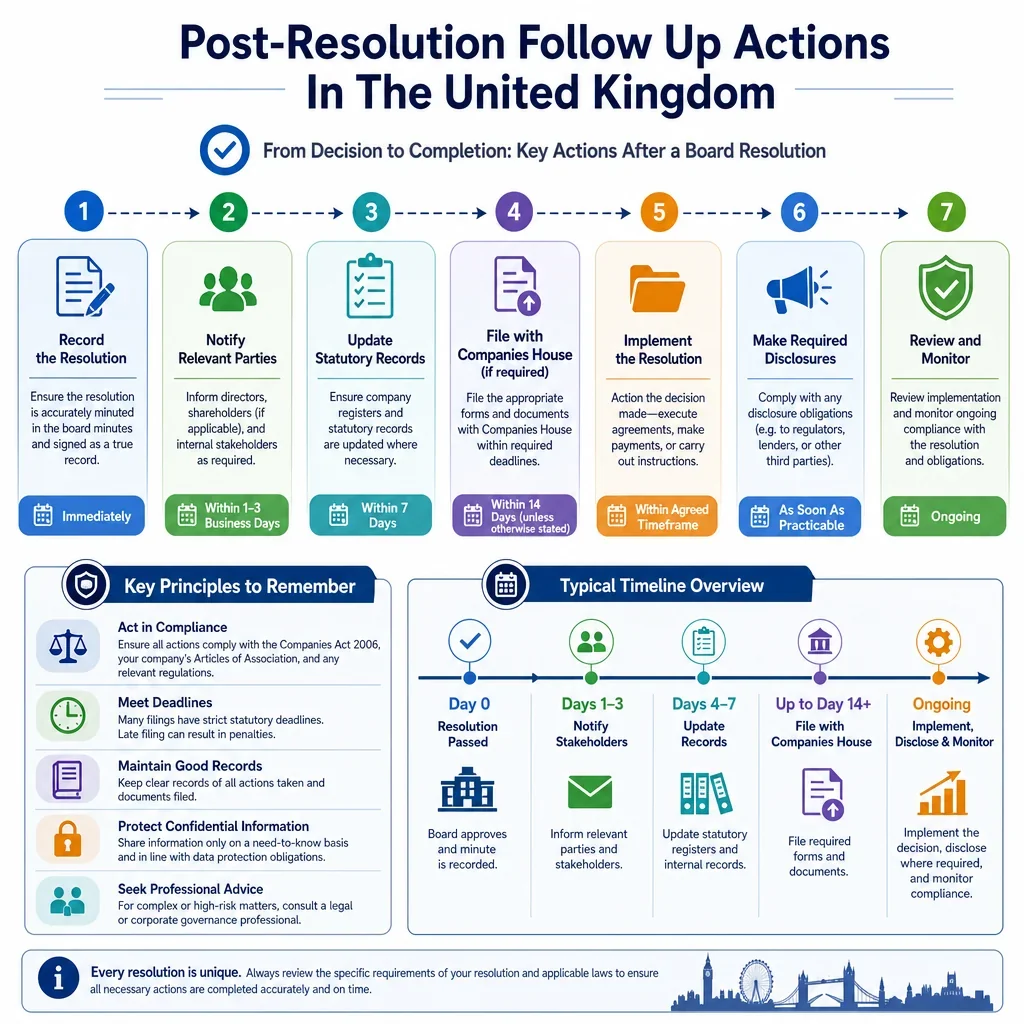
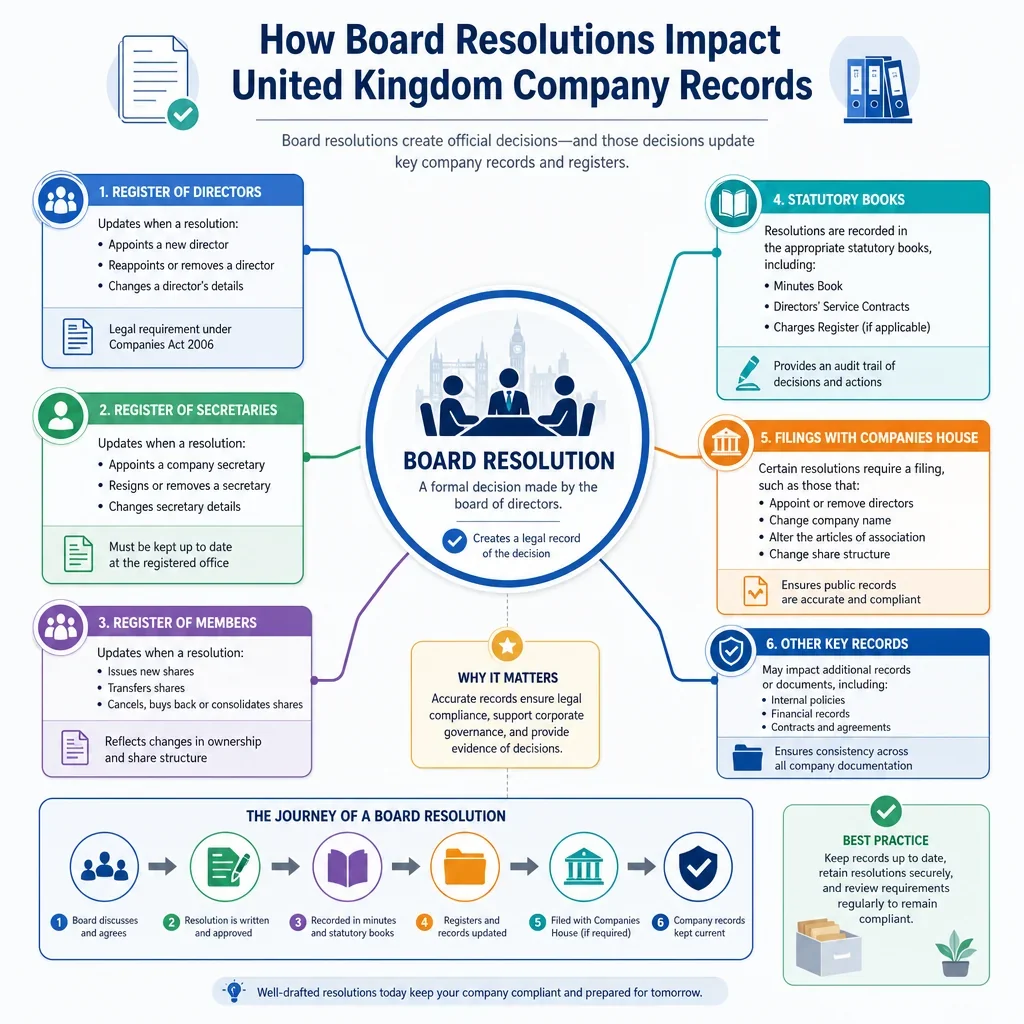
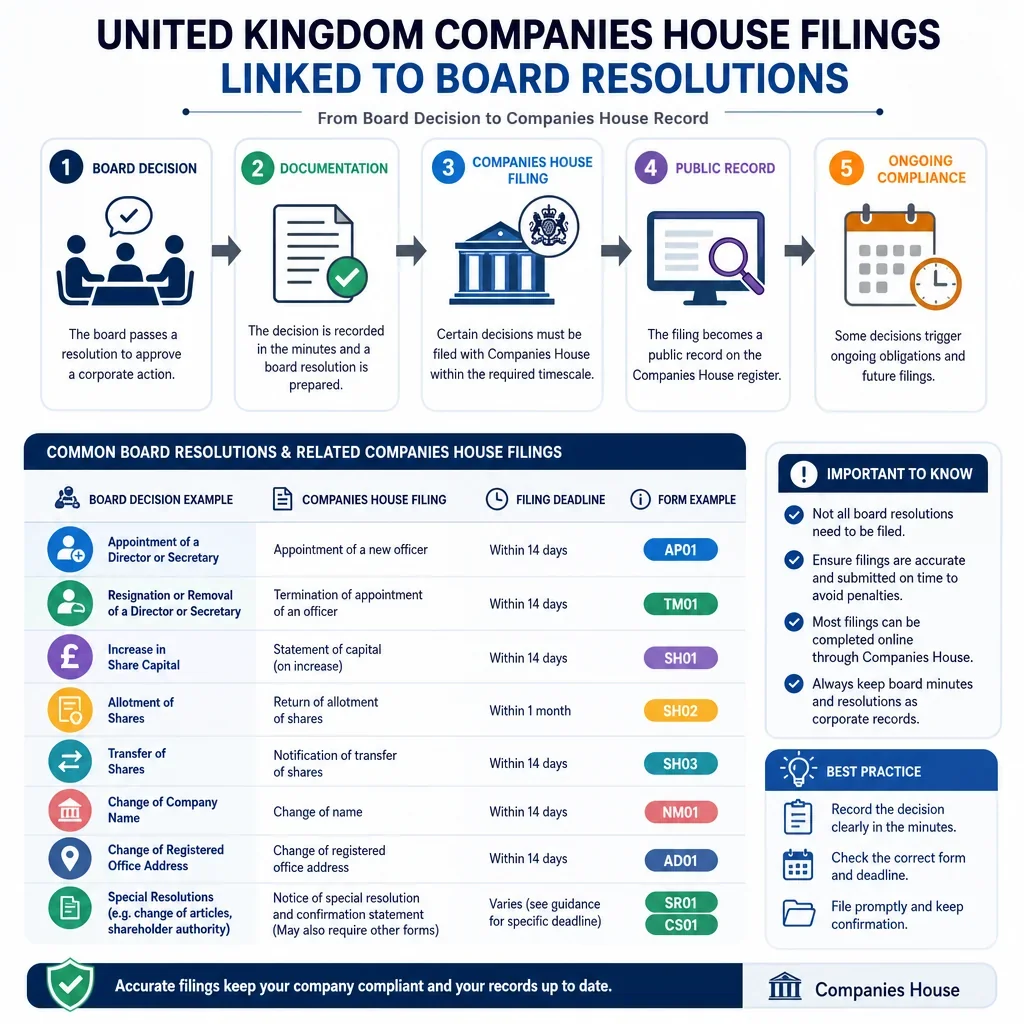
The Company Secretary is instructed to file the resolution with Companies House where applicable, including submission of Form AP01 for the new director appointment within the statutory timeframe.
The company shall update its statutory registers, including the register of directors, to reflect the new appointment.
12CERTIFICATION
John Smith, the Company Secretary, is the officer authorized to certify the resolution.
The resolution is a true and accurate record of the Board\'s decision.
13GENERAL PROVISIONS
This resolution and any non-contractual obligations arising out of or in connection with it shall be governed by and construed in accordance with the laws of England and Wales.
This resolution constitutes the entire agreement between the parties relating to the subject matter hereof and supersedes all prior agreements understandings or arrangements whether oral or in writing.
If any provision of this resolution is held to be invalid or unenforceable such invalidity or unenforceability shall not affect the validity or enforceability of the remaining provisions of this resolution.
Any notice required to be given under this resolution shall be in writing and shall be duly given if delivered personally or sent by first class post or by email to the relevant party at the address set out in the Company\'s records or such other address as that party may notify to the other parties from time to time.
No variation of this resolution shall be effective unless it is in writing and signed by or on behalf of each of the parties.
This resolution has been prepared in compliance with the Companies Act 2006, the Insolvency Act 1986, the Company Directors Disqualification Act 1986, the Financial Services and Markets Act 2000, and The Companies (Model Articles) Regulations 2008.
14SIGNATURES
Certified as a true record of the resolutions passed.
Signed by John Smith (Director) on 2023-10-15: ________________________
Signed by Jane Doe (Director) on 2023-10-15: ________________________
Signed by Michael Johnson (Director) on 2023-10-15: ________________________
Signed by John Smith as Company Secretary on 2023-10-15: ________________________
This example shows approximately 70% of a typical document and is provided for illustrative purposes only. The remaining content has been omitted.
Every document generated by Docaro is tailored to your specific circumstances, jurisdiction and the information you provide. The completed document includes all applicable clauses and provisions required for your situation.
To generate the full, personalised document, answer a short series of questions and your document will be created instantly.
Useful Resources When Considering a Board Resolution in the United Kingdom
United Kingdom Reference Legislation
Board Resolution FAQs
Document Generation FAQs
Related Articles