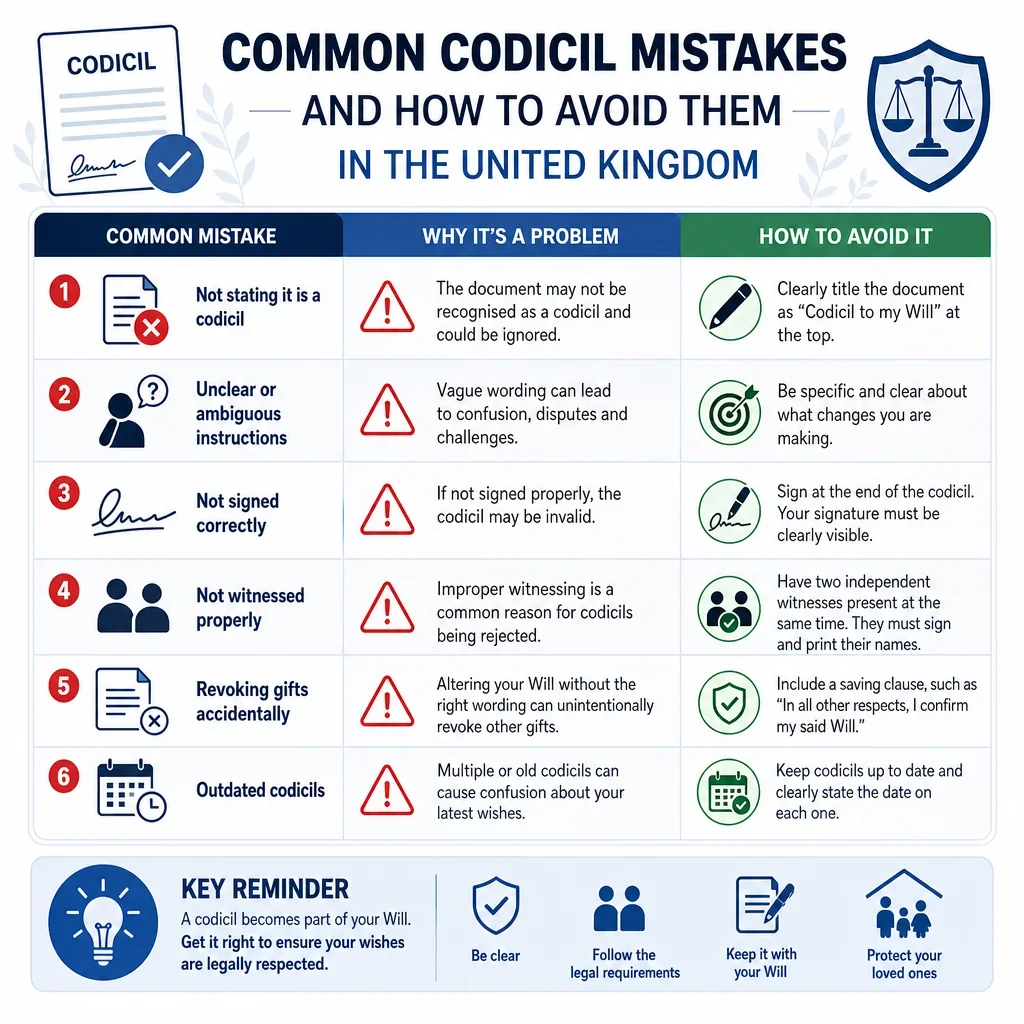
Common Codicil Mistakes And How To Avoid Them In The United Kingdom
Mistake | Why It Matters | Prevention Tip | Risk Level | Stage |
|---|---|---|---|---|
Execution mistake | ||||
Not signing the codicil with will formalities | The codicil may be invalid and the intended change may not take effect. | Use the same signing process required for a will. | High | At signing |
Witnessing mistake | ||||
Using fewer than two witnesses | A codicil normally needs two witnesses to be valid. | Arrange two independent adult witnesses before signing. | High | At signing |
Witnesses not present at the same time | The codicil may fail the statutory witnessing requirements. | Have both witnesses present throughout signing or acknowledgement. | High | At signing |
Execution mistake, Witnessing mistake | ||||
Signing before the witnesses arrive | Witnesses must see the signature made or acknowledged. | Sign only when both witnesses can see or hear acknowledgement. | High | At signing |
Witnessing mistake | ||||
A beneficiary witnesses the codicil | The gift to that witness may be void. | Use witnesses who receive nothing under the will or codicil. | High | At signing |
A beneficiary's spouse or civil partner witnesses | The beneficiary's gift may be void even if the codicil is valid. | Avoid witnesses connected to any beneficiary. | High | At signing |
Identification mistake | ||||
Not identifying the will being amended | Executors may be unsure which will the codicil changes. | State the date of the will and full testator details. | High | During drafting |
Using the wrong name or address for the testator | It can create doubt about who made the codicil. | Match names and addresses to the will where possible. | Medium | During drafting |
Drafting mistake | ||||
Leaving the codicil undated | It can be hard to decide the order of testamentary documents. | Insert the full date before signing and check it is correct. | Medium | During drafting |
Identification mistake | ||||
Quoting the wrong date for the original will | It may cast doubt on which document is being amended. | Check the original signed will before drafting. | Medium | Before drafting |
Drafting mistake | ||||
Not stating exactly what clause is changed | Executors may not know what wording still applies. | Refer to the exact clause and set out replacement wording. | High | During drafting |
Creating a contradiction with the original will | Conflicting gifts may cause delay, dispute, or court interpretation. | Read the whole will and all earlier codicils together. | High | During drafting |
Not confirming the rest of the will remains unchanged | It may invite arguments about wider revocation or uncertainty. | Add a clause confirming the will remains in force as varied. | Medium | During drafting |
Drafting mistake, Identification mistake | ||||
Describing beneficiaries vaguely | Executors may not be able to identify the intended recipient. | Use full names, relationships, and current addresses where helpful. | Medium | During drafting |
Drafting mistake | ||||
Using unclear wording for a gift | The asset, amount, or recipient may be disputed. | Describe the asset and gift in precise, plain wording. | High | During drafting |
Changing specific gifts without checking the residuary clause | The balance of the estate may pass differently than intended. | Review how the change affects residue and failed gifts. | Medium | During drafting |
Identification mistake, Drafting mistake | ||||
Appointing a new executor without clear details | Probate may be delayed if the executor is hard to identify. | Use the executor's full name, address, and relationship. | Medium | During drafting |
Drafting mistake | ||||
Removing an executor without appointing a replacement | The estate may lack a practical person to administer it. | Check the will still has suitable executors after the change. | Medium | During drafting |
Using many codicils instead of a new will | Multiple documents increase inconsistency and probate confusion. | Make a new will for major or repeated changes. | Medium | Before drafting |
Using a codicil for a major rewrite | Complex changes are easier to misread or administer incorrectly. | Use a new will for extensive changes to gifts or residue. | Medium | Before drafting |
Ignoring the effect of marriage or civil partnership | Marriage or civil partnership can revoke a will unless exceptions apply. | Review the whole will after marriage or civil partnership. | High | Before drafting |
Ignoring the effect of divorce or dissolution | Gifts and appointments involving a former spouse may be affected. | Review executor appointments and gifts after divorce or dissolution. | High | Before drafting |
Drafting mistake, Storage mistake | ||||
Writing changes directly on the original will | Alterations may be ineffective or raise suspicion about tampering. | Use a properly executed codicil or make a new will. | High | After signing |
Storage mistake | ||||
Stapling the codicil to the will | Marks or removed fastenings can raise probate questions. | Store it with the will but do not physically attach it. | Low | After signing |
Storing the codicil away from the will | Executors may miss it and administer the old will. | Keep the codicil with the will and tell executors where it is. | High | After signing |
Keeping only a photocopy or scan of the codicil | Probate usually needs the original testamentary documents. | Preserve the wet-ink original in a safe place. | High | After signing |
Losing the signed original codicil | The intended change may be difficult to prove or use in probate. | Use secure storage and record the location for executors. | High | After signing |
Not telling executors a codicil exists | Executors may apply for probate using incomplete documents. | Tell executors where the will and codicil are stored. | Medium | After signing |
Damaging or marking the signed codicil | Damage can create questions about revocation or tampering. | Store the original flat, dry, and unmarked. | Medium | After signing |
Execution mistake | ||||
Using an electronic signature without legal advice | Will formalities are strict and wet-ink signing is safest. | Sign the original paper codicil in wet ink. | High | At signing |
Witnessing mistake | ||||
Witnesses sign later or in another room | Witnesses must attest and sign as part of the formal execution. | Have both witnesses sign immediately after the testator. | High | At signing |
Witnessing mistake, Identification mistake | ||||
Witnesses do not print names or addresses | Executors may struggle to contact witnesses if proof is needed. | Ask each witness to sign, print name, and add address. | Low | At signing |
Witnessing mistake | ||||
Using a witness who is under 18 or lacks capacity | Their evidence may be unreliable if execution is challenged. | Use independent adult witnesses with mental capacity. | Medium | At signing |
Using a witness who cannot see the signing | They may be unable to confirm the signature was made or acknowledged. | Choose witnesses who can observe the signing clearly. | Medium | At signing |
Execution mistake, Witnessing mistake | ||||
Witnesses sign before the testator signs or acknowledges | The attestation may not prove the required act by the testator. | Testator signs or acknowledges first, then witnesses sign. | High | At signing |
Drafting mistake | ||||
Drafting without reviewing the current will | The codicil may duplicate, contradict, or miss existing clauses. | Work from the latest signed will and all earlier codicils. | High | Before drafting |
Forgetting to revoke an earlier inconsistent codicil | Executors may face conflicting amendments. | List earlier codicils and revoke any inconsistent wording expressly. | High | During drafting |
Giving away jointly owned property without checking ownership | Joint tenants' shares may pass by survivorship, not by will. | Check whether the property is held as joint tenants or tenants in common. | High | Before drafting |
Changing gifts of overseas assets without advice | Foreign succession rules may affect whether the codicil works. | Take local advice before changing gifts of overseas property. | Medium | Before drafting |
Changing gifts without considering inheritance tax | The change may affect tax reliefs, exemptions, or the estate tax bill. | Check tax consequences before altering high-value gifts. | Medium | Before drafting |
Identification mistake | ||||
Misnaming a charity beneficiary | Executors may struggle to identify the correct charity. | Use the charity's registered name and charity number. | Medium | During drafting |
Drafting mistake, Identification mistake | ||||
Leaving a gift directly to a pet | Animals cannot receive property directly. | Leave money to a person or charity for pet care. | Medium | During drafting |
Execution mistake | ||||
Signing when testamentary capacity is doubtful | The codicil may be challenged for lack of mental capacity. | Get medical and legal support if capacity could be questioned. | High | Before drafting |
Execution mistake, Witnessing mistake | ||||
Letting a beneficiary control the drafting or signing | It may support a later undue influence challenge. | Discuss and sign the codicil independently from beneficiaries. | High | Before drafting |
Execution mistake | ||||
Signing without understanding the codicil | It may be challenged for want of knowledge and approval. | Read the codicil carefully and ask questions before signing. | High | At signing |
Execution mistake, Drafting mistake | ||||
Using a document the testator cannot read | Knowledge and approval may be harder to prove. | Use a clear translation or interpreter record where needed. | Medium | Before drafting |
Execution mistake | ||||
No record that a visually impaired testator understood it | The codicil may be challenged as not understood or approved. | Record that it was read aloud and approved before signing. | Medium | At signing |
Signing in the wrong place or leaving pages unsigned | It may create doubt about what document was approved. | Sign where indicated and initial each page if appropriate. | Medium | At signing |
Storage mistake | ||||
Loose pages not kept together securely | Pages may be lost, reordered, or suspected of substitution. | Number pages and store the complete signed document together. | Medium | After signing |
Leaving unsigned drafts with the signed codicil | Drafts may confuse executors or fuel disputes. | Keep only the final signed codicil with the will. | Low | After signing |
Drafting mistake | ||||
Accidentally revoking the whole will | It may remove the estate plan rather than make a small change. | Use narrow wording that revokes only specified clauses. | High | During drafting |
Drafting mistake, Execution mistake | ||||
Relying on an informal letter to change the will | It may not satisfy the formalities for a testamentary change. | Make a formal codicil or new will and execute it correctly. | High | During drafting |
Storage mistake | ||||
Saving the codicil only as a digital file | Executors may need the signed original for probate. | Keep the original signed paper document safely stored. | High | After signing |
Drafting mistake | ||||
Disinheriting close family without considering claims | Eligible people may claim reasonable financial provision from the estate. | Get advice before removing provision for dependants or close family. | High | Before drafting |
Leaving gifts to minors without suitable trust wording | Executors may need to hold funds until the child can receive them. | Specify trustees, age conditions, and holding powers clearly. | Medium | During drafting |
Drafting mistake, Identification mistake | ||||
Changing guardians without checking parental responsibility | Guardian appointments depend on family circumstances and legal status. | Review parental responsibility before changing guardians. | Medium | Before drafting |
Drafting mistake | ||||
Leaving a gift of an asset no longer owned | The gift may fail and disappoint the intended beneficiary. | Check ownership of assets before adding or changing gifts. | Medium | Before drafting |
Giving the same asset to two different people | Executors may face an avoidable dispute between beneficiaries. | Cross-check all gifts in the will and codicils. | High | During drafting |
Residue percentages do not add up to 100 percent | Part of the estate may be uncertain or pass by intestacy. | Check all percentage shares and fallback gifts carefully. | High | During drafting |
Adding a gift with no fallback beneficiary | The gift may fail if the beneficiary dies first. | Include a clear substitute beneficiary or residue destination. | Medium | During drafting |
Drafting mistake, Execution mistake | ||||
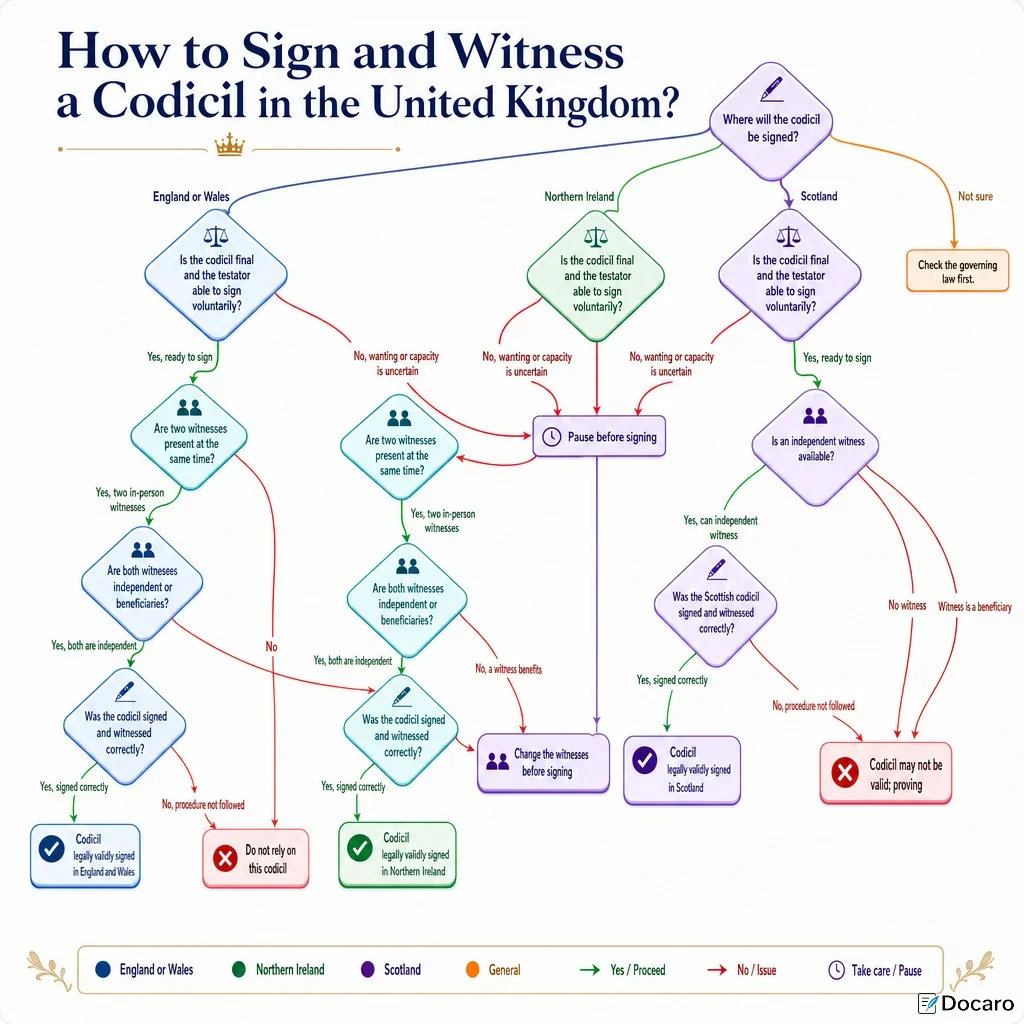
Assuming the same rules apply across all UK jurisdictions | Succession and execution rules can differ between UK jurisdictions. | Use rules and wording appropriate to the testator's UK jurisdiction. | Medium | Before drafting |
Witnessing mistake, Execution mistake | ||||
Assuming video witnessing is still available | Temporary video witnessing rules ended and may not validate new codicils. | Use in-person witnessing unless current legal advice says otherwise. | High | At signing |
Drafting mistake | ||||
Using an outdated codicil template | Old wording may not match current law or family circumstances. | Use a current UK-specific template and review it carefully. | Medium | Before drafting |
Not updating gifts after a beneficiary dies | The gift may fail or pass under fallback rules. | Review the will after any beneficiary or executor dies. | Medium | Before drafting |
Execution mistake | ||||
Another person signs for the testator without proper direction | A signature by another person must be made at the testator's direction. | Record the testator's direction if someone else signs for them. | High | At signing |
What Are The Biggest Codicil Mistakes To Avoid In The UK?
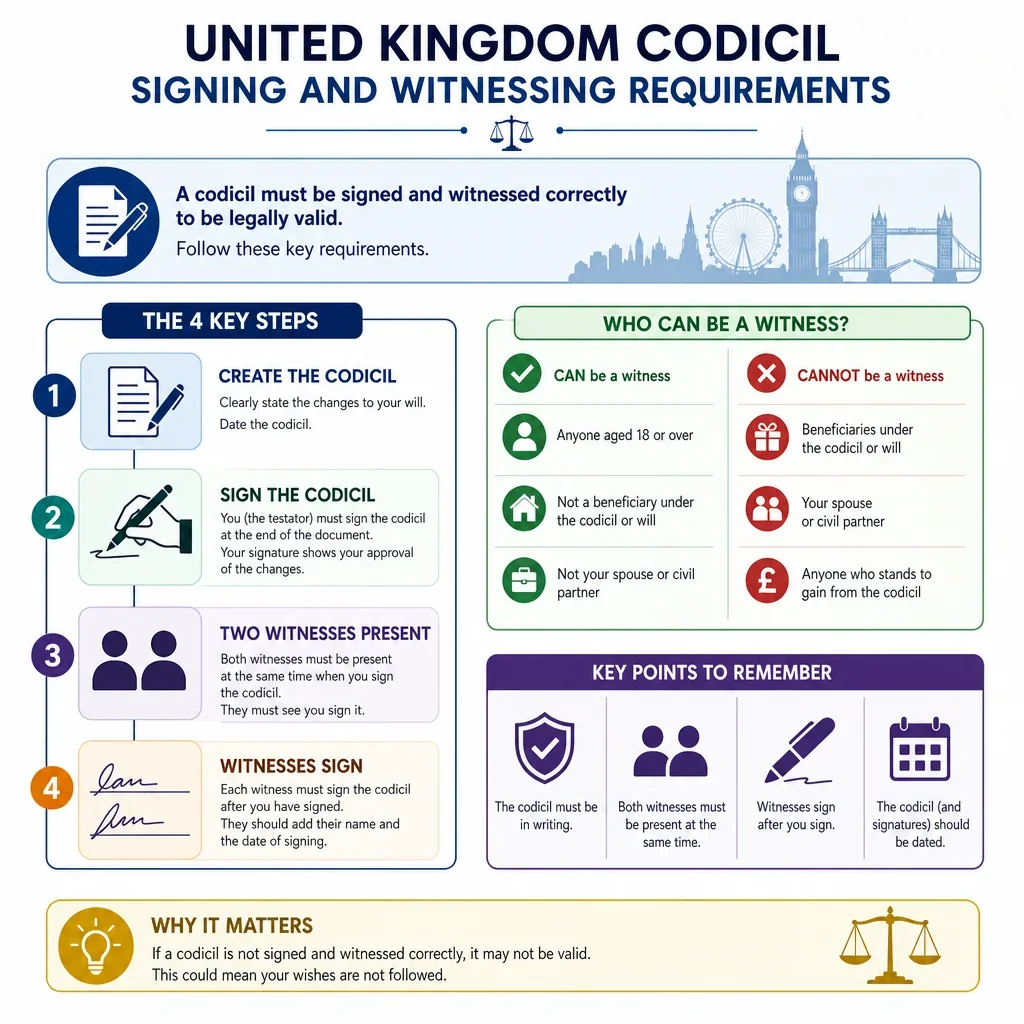
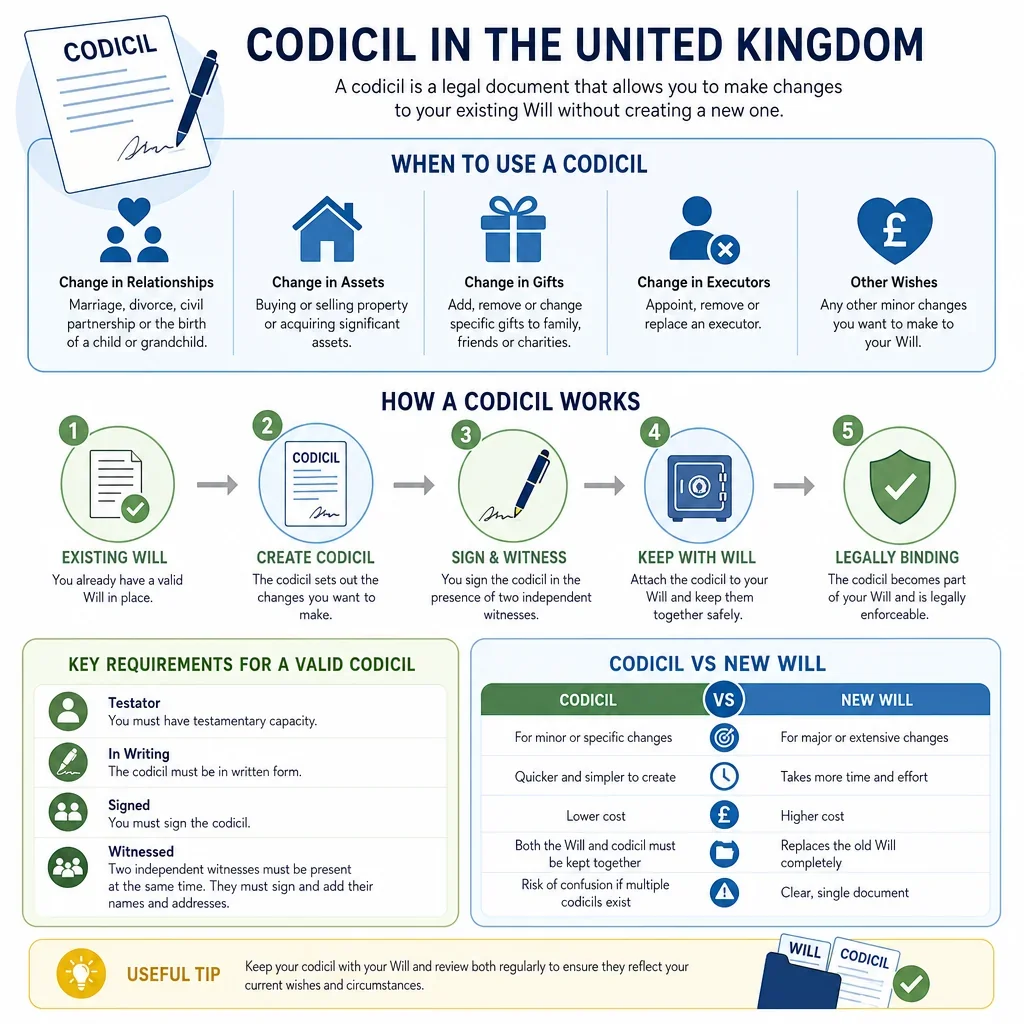
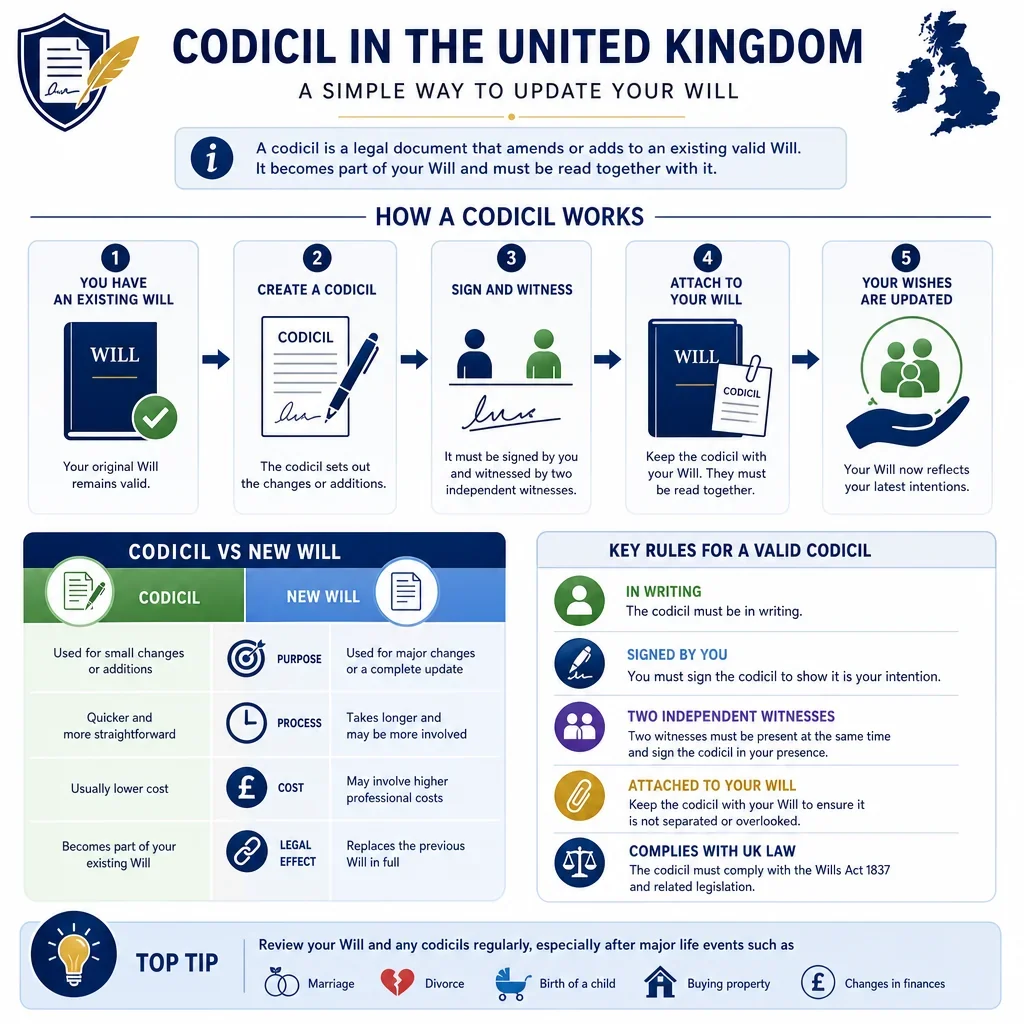
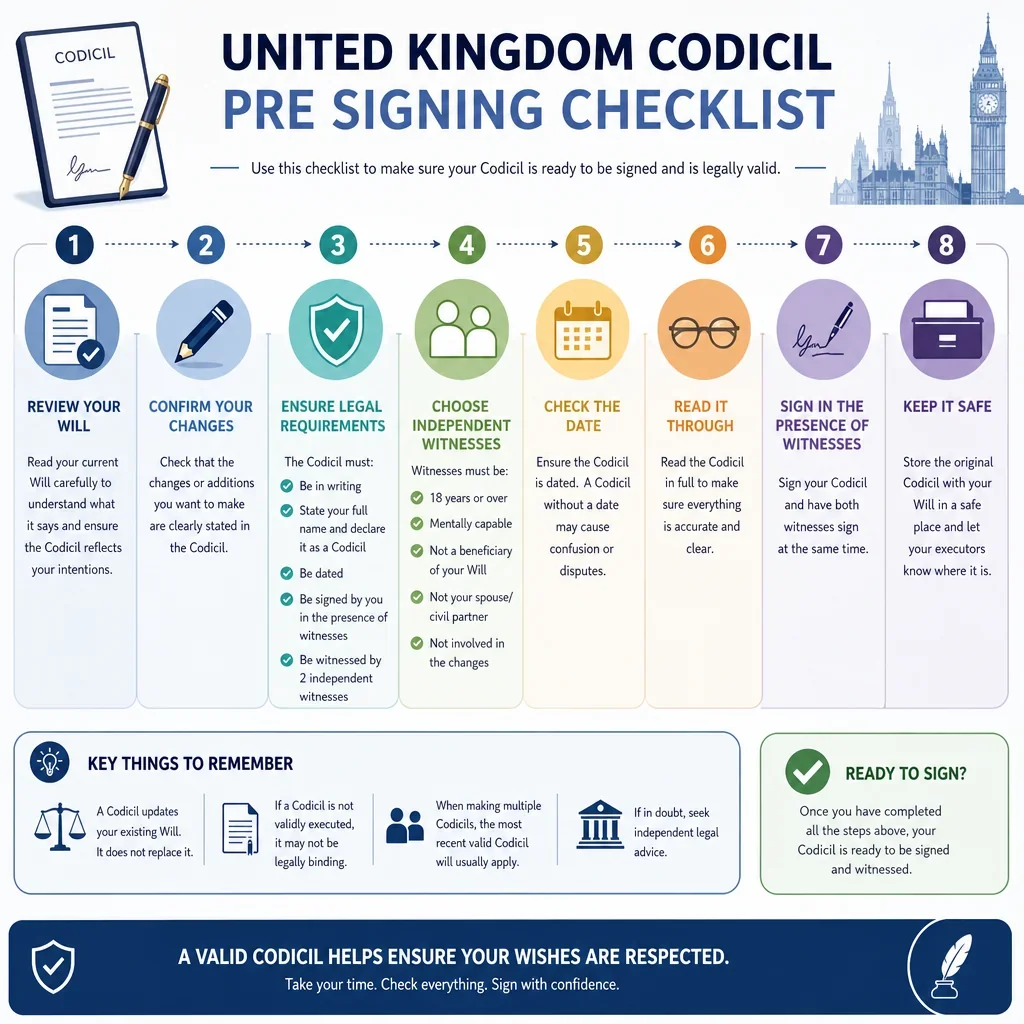
The highest-risk mistakes are usually execution and witnessing errors. In England and Wales, a codicil normally has to be signed with the same formalities as a will under section 9 of the Wills Act 1837, including the testator signing or acknowledging the signature in the presence of two witnesses present at the same time.
Can A Badly Drafted Codicil Change More Than Intended?
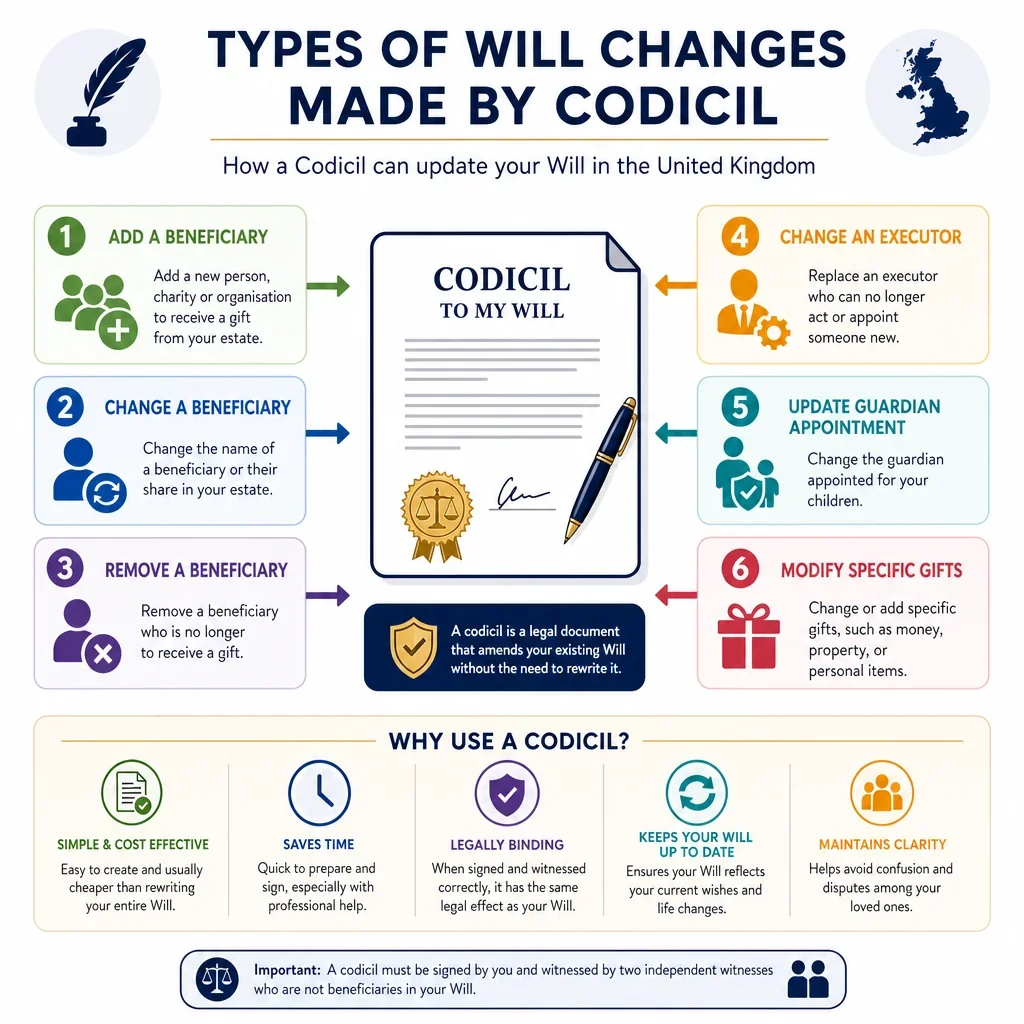
Yes. Ambiguous wording, failing to identify the will being amended, or not saying whether earlier clauses remain in force can create disputes about whether the codicil revokes, varies, or leaves parts of the will unchanged. A codicil should identify the testator, the date of the original will, the exact clause being changed, and the replacement wording.
Who Should Not Witness A Codicil?
A beneficiary, or the spouse or civil partner of a beneficiary, should not witness a codicil because gifts to that witness may fail under the Wills Act 1837. Independent adult witnesses who are not beneficiaries are usually the safer choice.
When Is A New Will Better Than A Codicil?
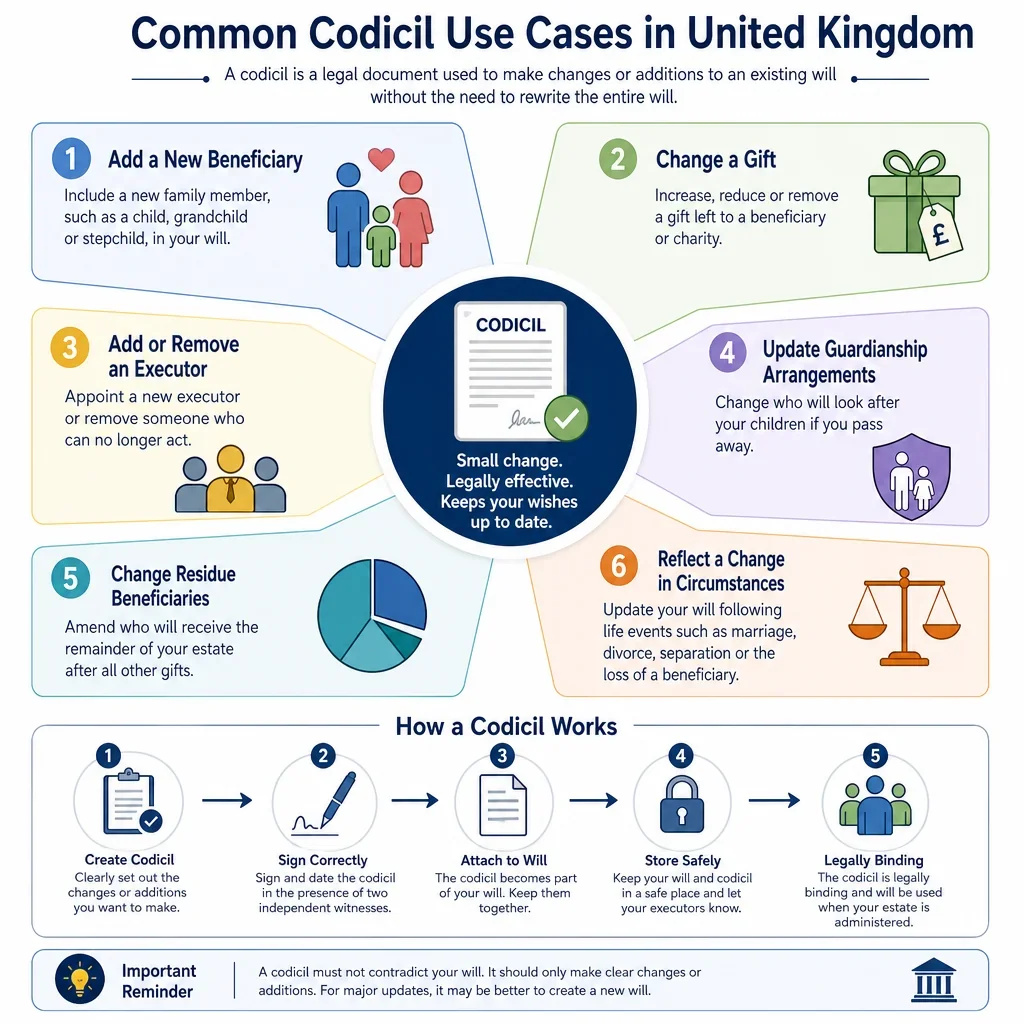
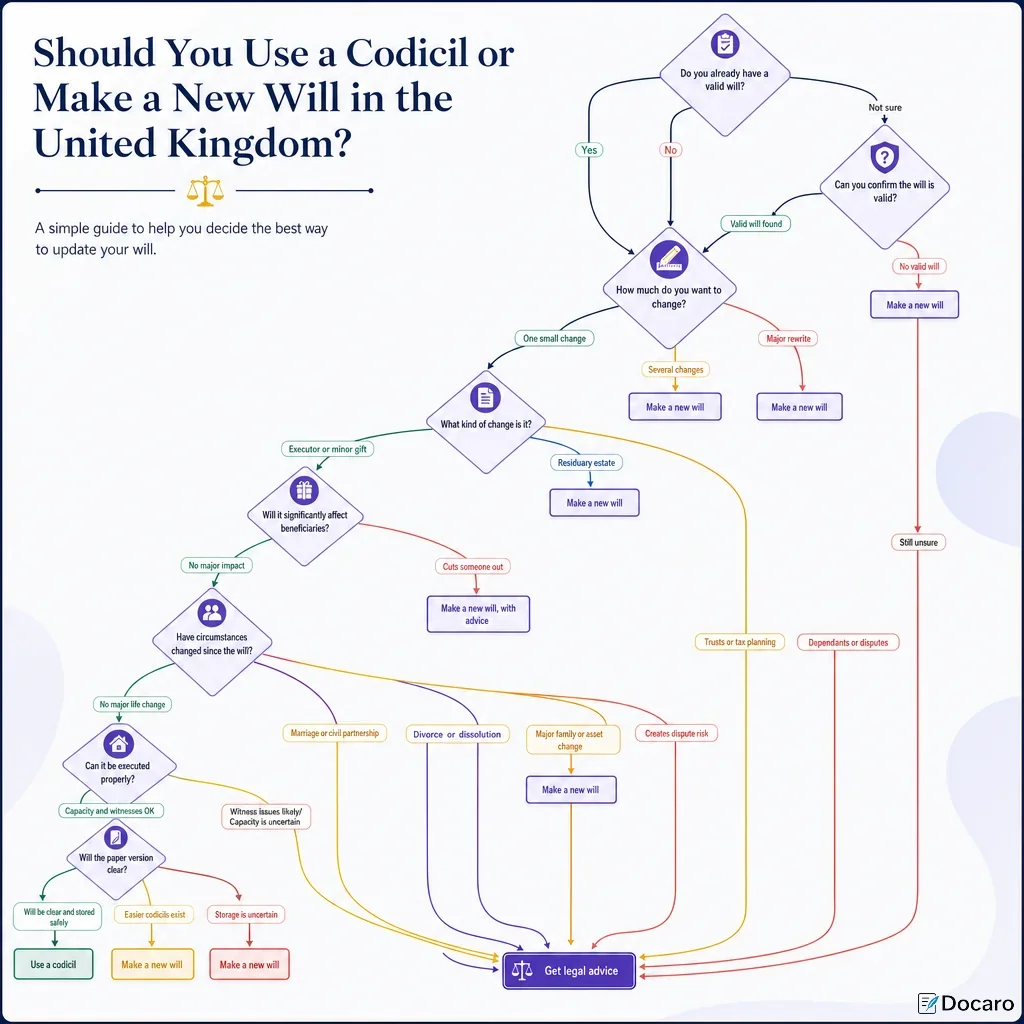
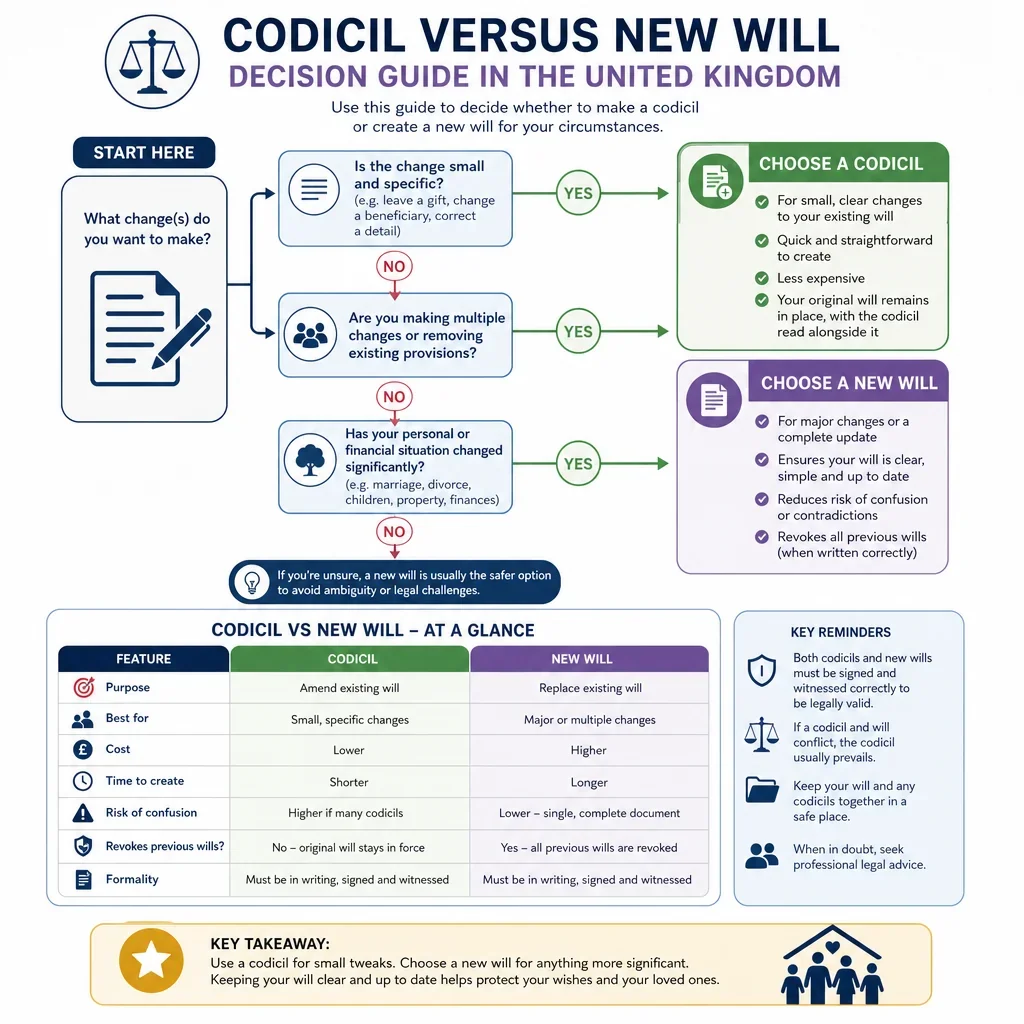
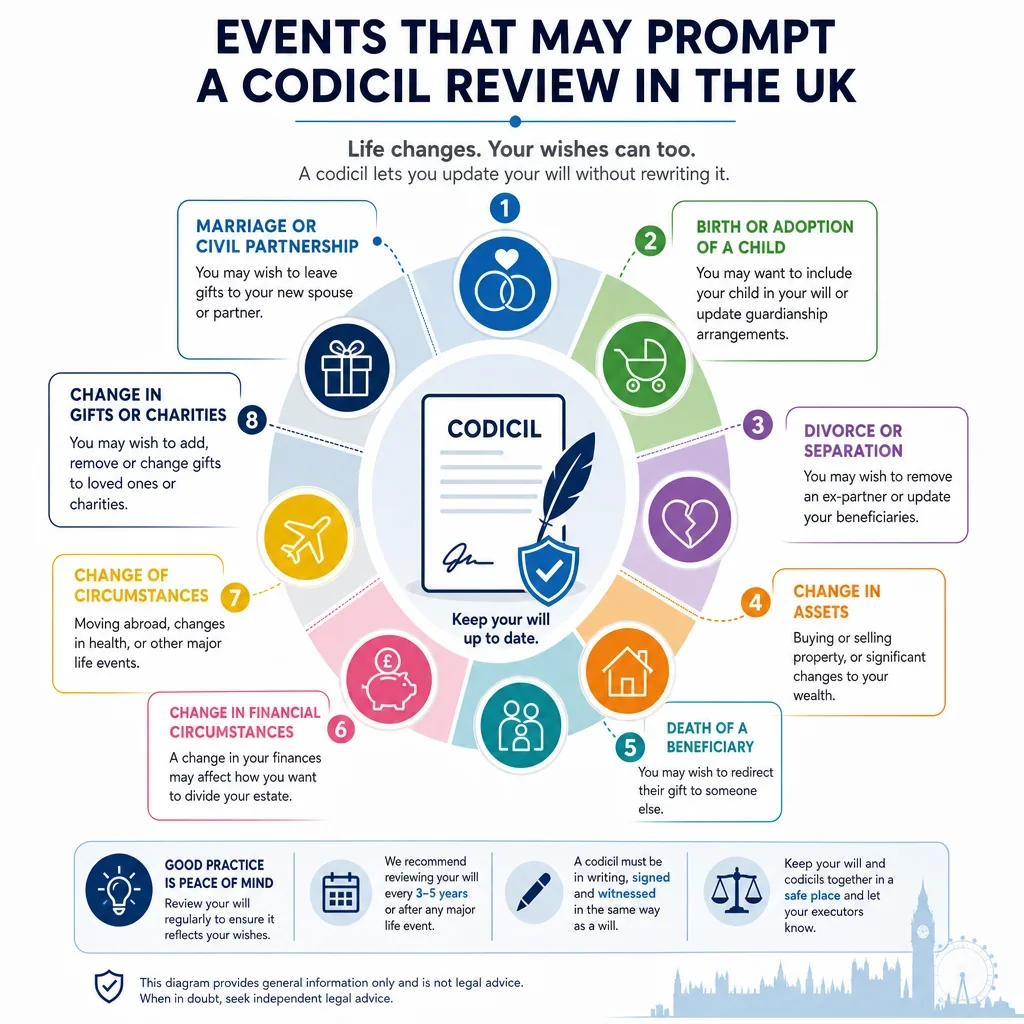
A codicil is usually best for a small, clear change. Multiple codicils, major changes, marriage or divorce complications, new property, blended family issues, or changes to residuary gifts often make a new will safer and easier to administer.
How Should A Codicil Be Stored After Signing?
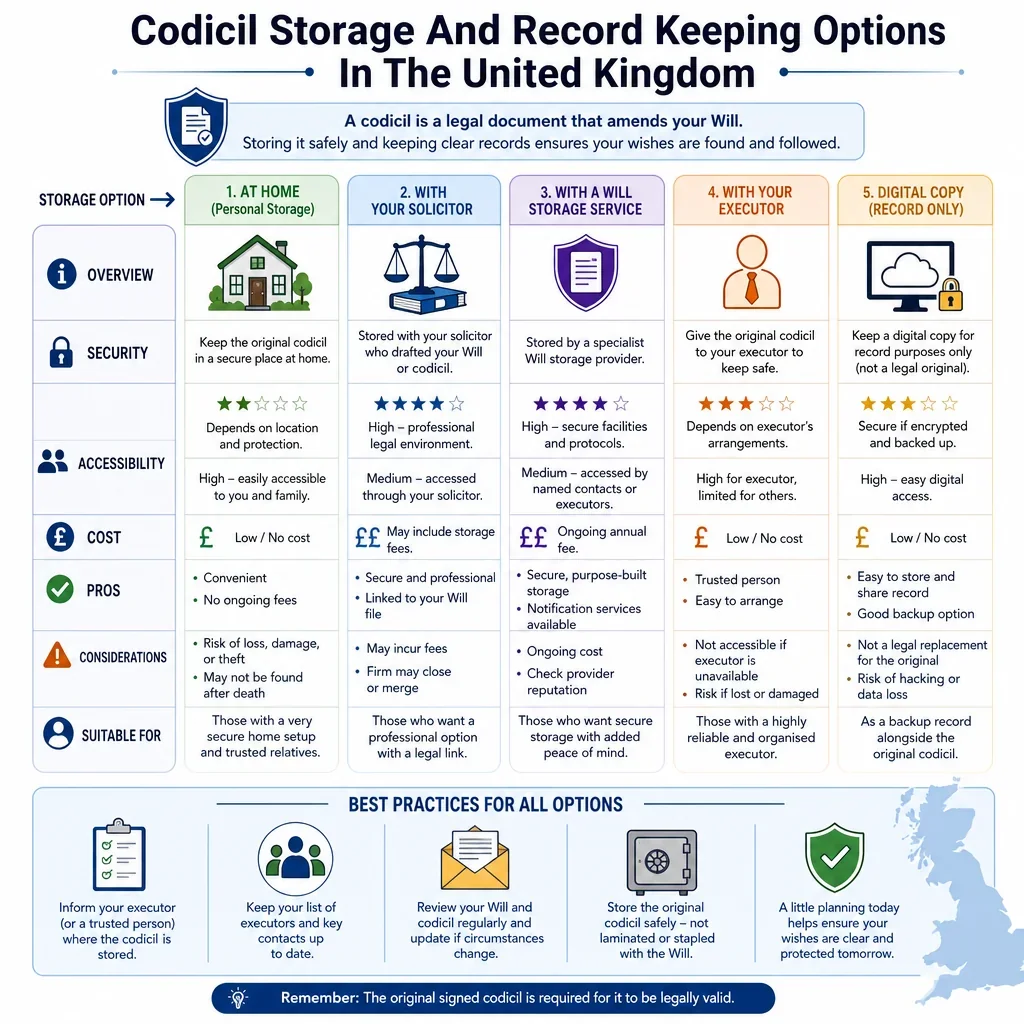
The signed codicil should be kept with, but not physically attached to, the original will. Executors should be told where both documents are stored, because a missing codicil may be overlooked during probate and a damaged or marked will can trigger avoidable questions.
FAQs
You Might Also Be Interested In