AI Generated British Heads of Terms
PDF & Word - 2026 Updated
Docaro Pricing
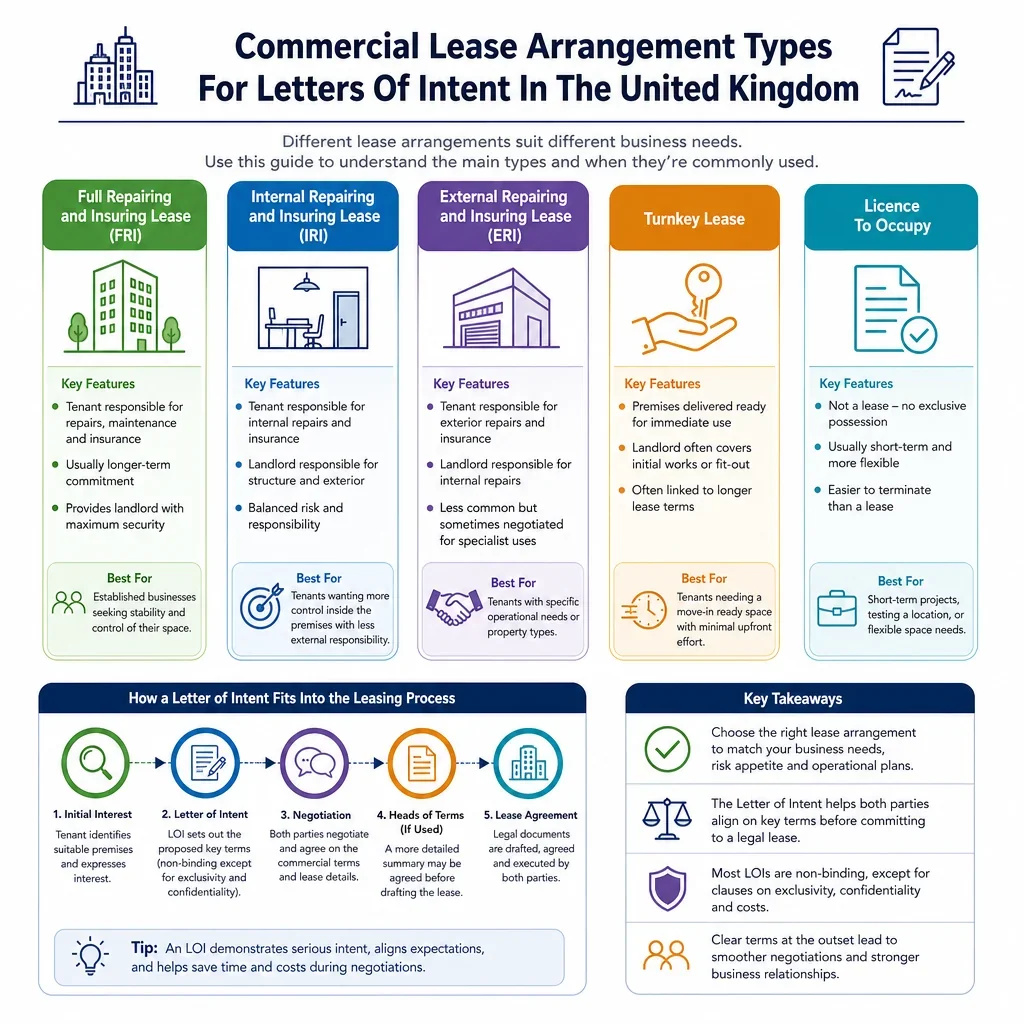
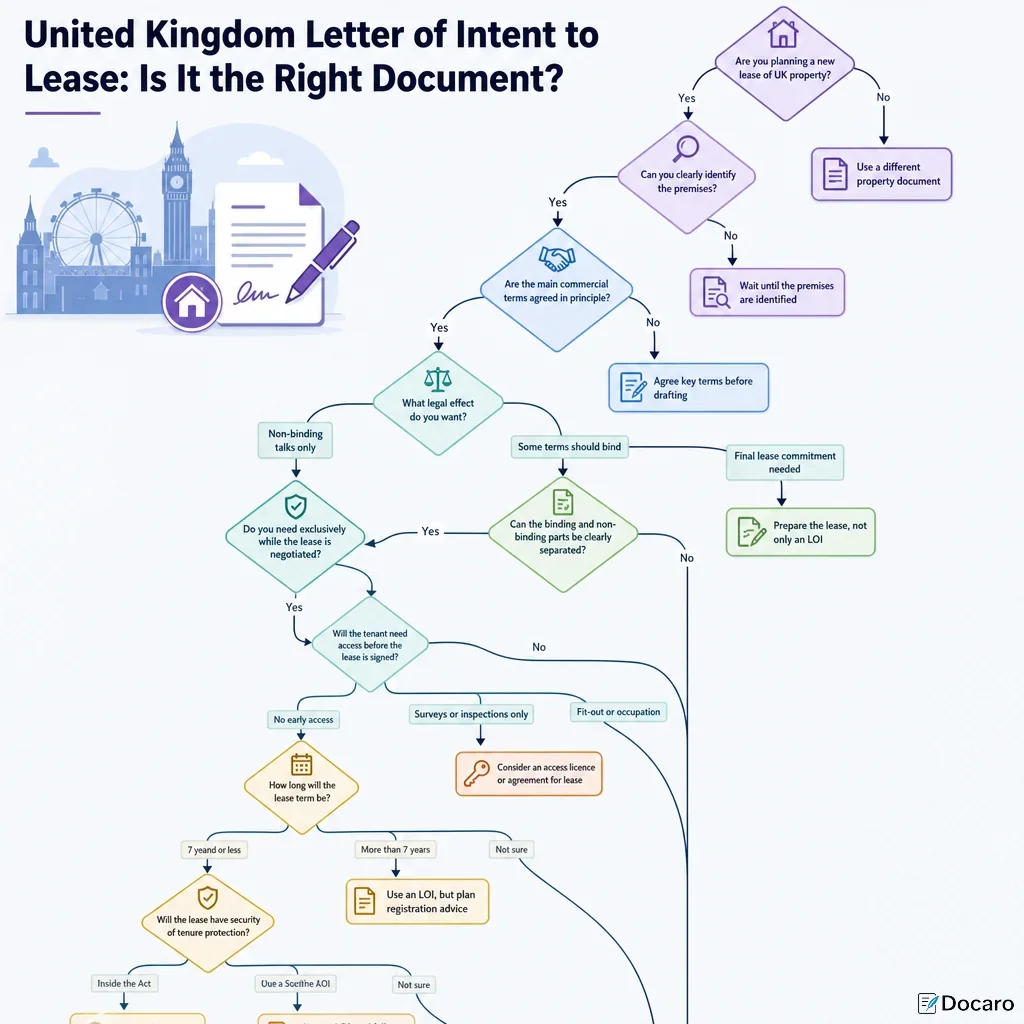
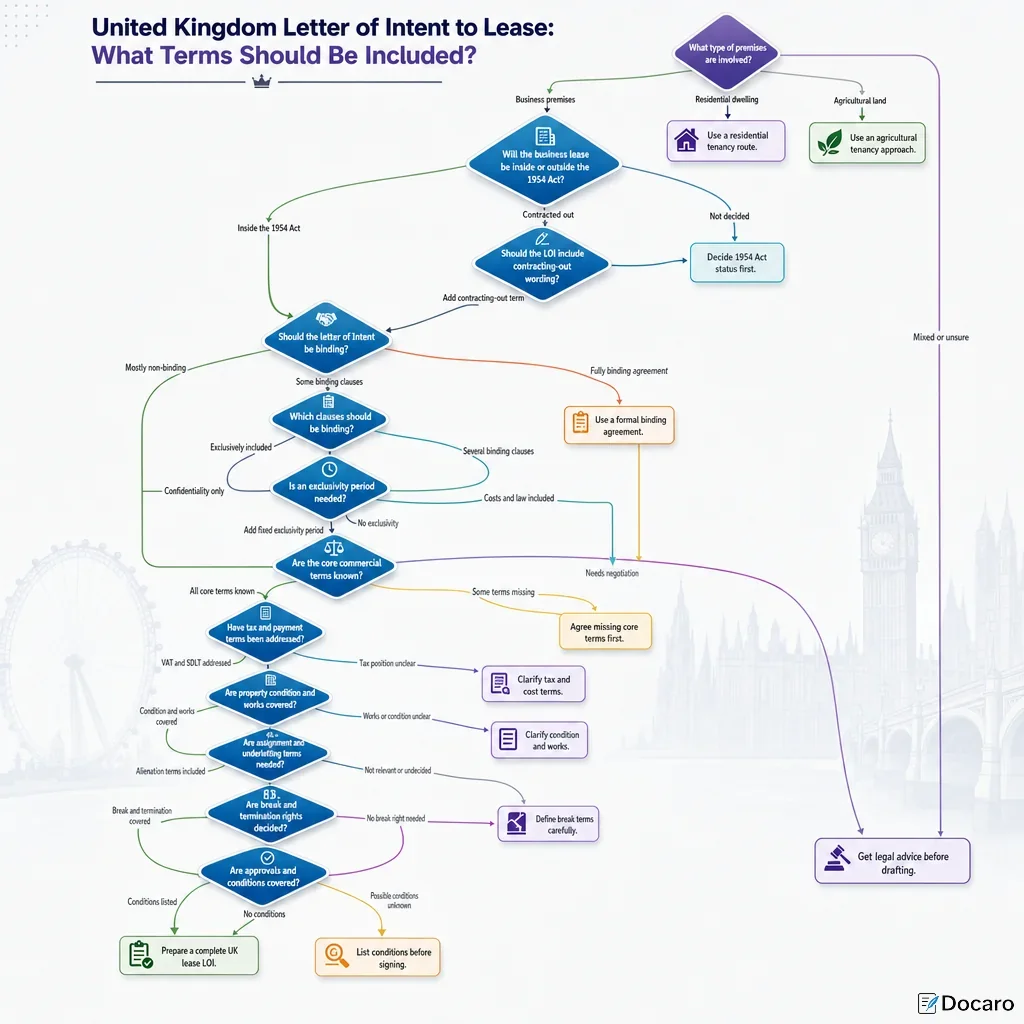
When do you need a Letter of Intent to Lease in the United Kingdom?
British Legal Rules for a Letter of Intent to Lease
Using the wrong type of lease intent document may inadvertently create a legally binding tenancy agreement with unintended rights and obligations.
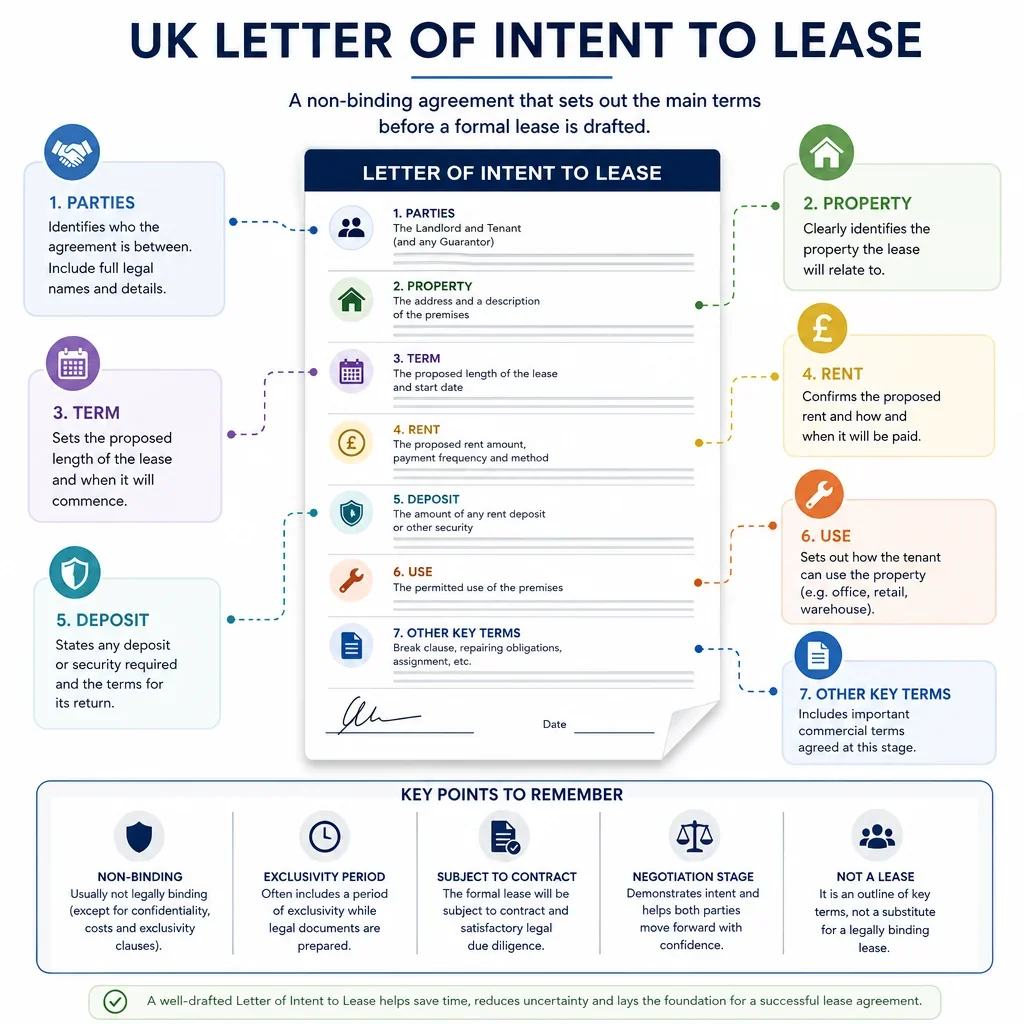
What a Proper Letter of Intent to Lease Should Include
- Parties InvolvedIdentify the landlord and tenant clearly, including their full names and contact details.
- Property DescriptionProvide a clear description of the property being leased, such as its address and key features.
- Lease DurationSpecify the start and end dates of the proposed lease term.
- Rent DetailsOutline the rental amount, payment frequency, and any increases over time.
- Deposit AmountState the security deposit required and the conditions for its return.
- Permitted UseDescribe how the property will be used, such as for business or residential purposes.
- Key ResponsibilitiesSummarize who handles maintenance, utilities, and insurance during the lease.
- Exclusivity and TimelineIndicate a period where the landlord won't negotiate with others and the next steps after agreement.
Generate Your Document in 4 Easy Steps
Why Use Docaro?
 United Kingdom
Free Example Letter of Intent to Lease Template
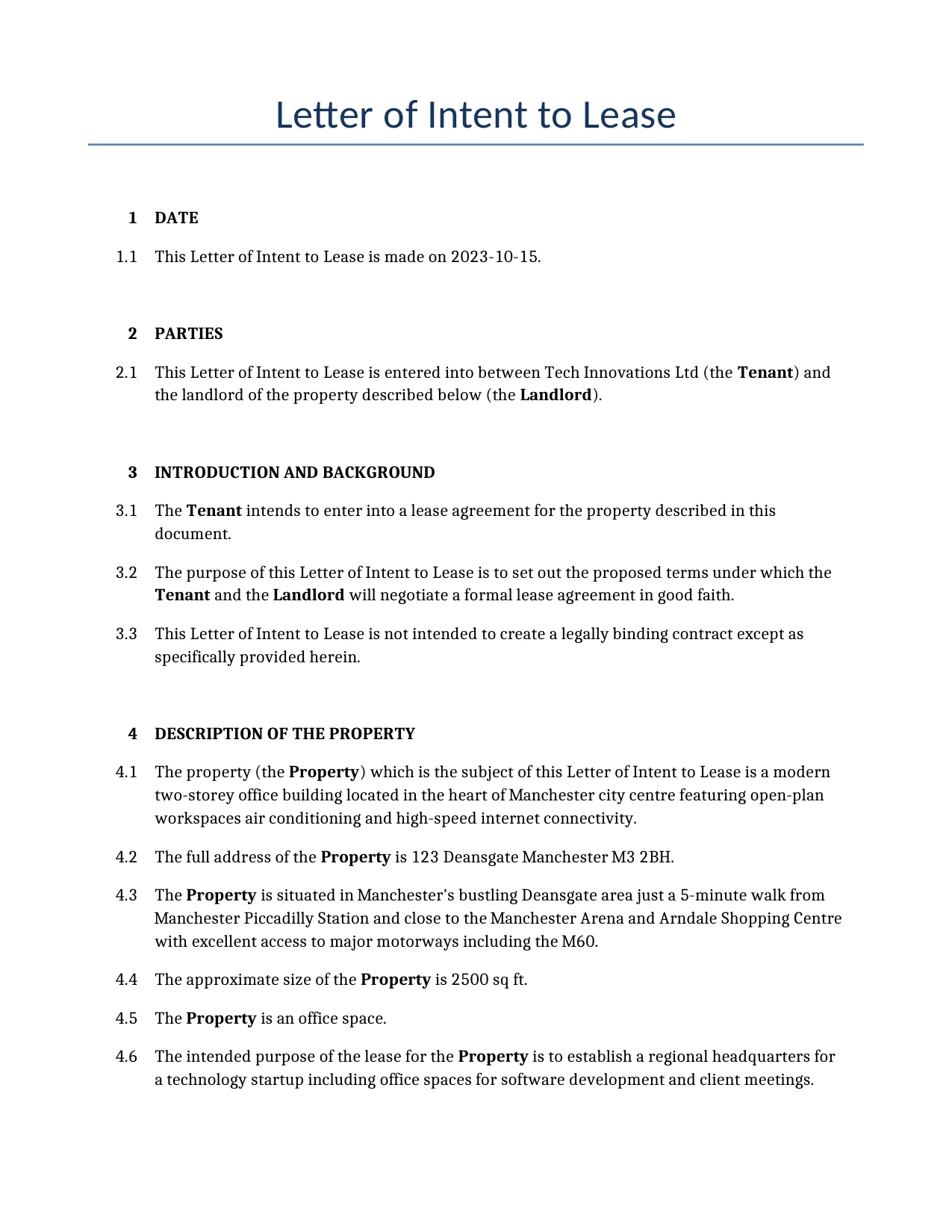
Below is a free template example of a Letter of Intent to Lease for use in the United Kingdom generated by our AI model.
The clauses in your actual Letter of Intent to Lease will vary from this example as they will be entirely bespoke to your requirements as set out in the questionnaire you complete.
Letter of Intent to Lease
1DATE
This Letter of Intent to Lease is made on 2023-10-15.
2PARTIES
This Letter of Intent to Lease is entered into between Tech Innovations Ltd (the Tenant) and the landlord of the property described below (the Landlord).
3INTRODUCTION AND BACKGROUND
The Tenant intends to enter into a lease agreement for the property described in this document.
The purpose of this Letter of Intent to Lease is to set out the proposed terms under which the Tenant and the Landlord will negotiate a formal lease agreement in good faith.
This Letter of Intent to Lease is not intended to create a legally binding contract except as specifically provided herein.
4DESCRIPTION OF THE PROPERTY
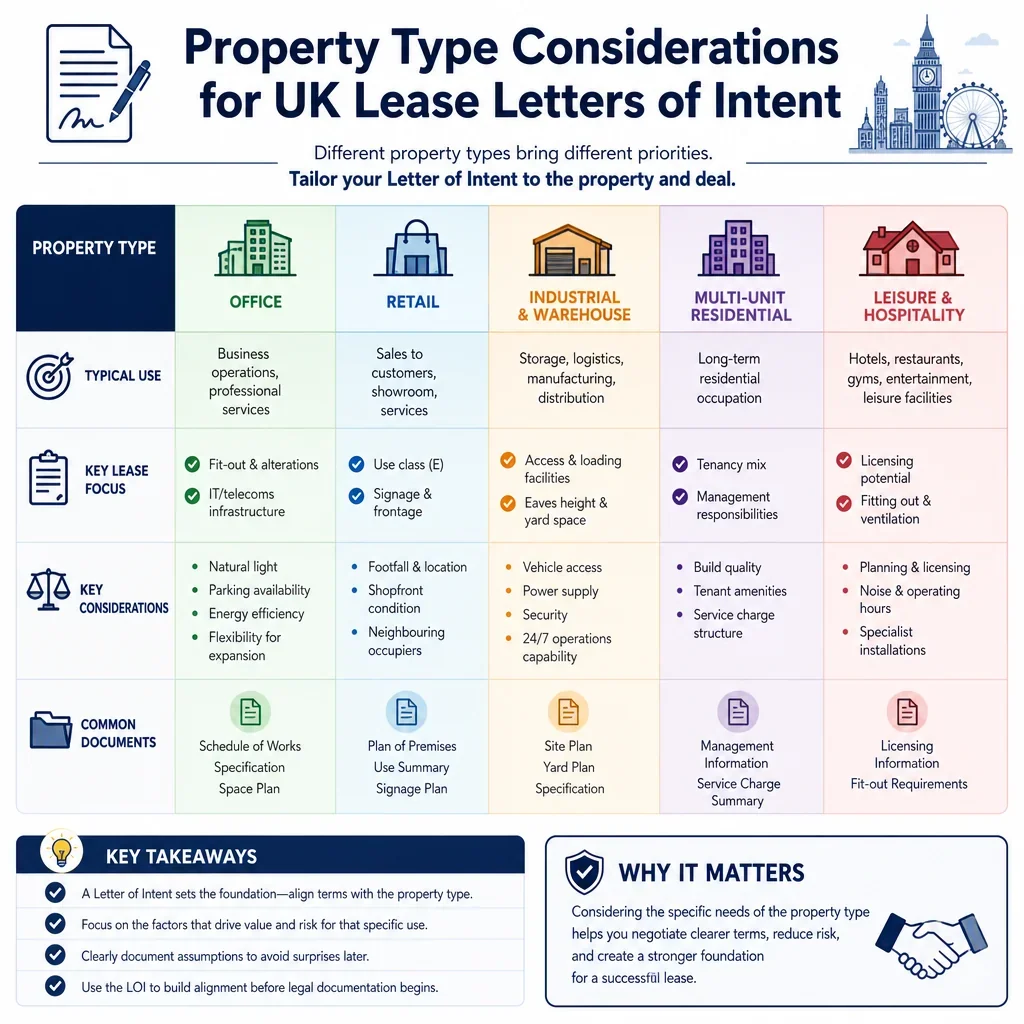
The property (the Property) which is the subject of this Letter of Intent to Lease is a modern two-storey office building located in the heart of Manchester city centre featuring open-plan workspaces air conditioning and high-speed internet connectivity.
The full address of the Property is 123 Deansgate Manchester M3 2BH.
The Property is situated in Manchester's bustling Deansgate area just a 5-minute walk from Manchester Piccadilly Station and close to the Manchester Arena and Arndale Shopping Centre with excellent access to major motorways including the M60.
The approximate size of the Property is 2500 sq ft.
The Property is an office space.
The intended purpose of the lease for the Property is to establish a regional headquarters for a technology startup including office spaces for software development and client meetings.
5PROPOSED LEASE TERMS
The proposed start date for the lease agreement is 2024-01-01.
The lease shall be for a fixed term of 5 years.
The lease shall include a renewal option for a further term of 5 years subject to the Tenant providing not less than 6 months' written notice prior to the expiry of the initial term.
The lease shall be contracted outside the security of tenure provisions of the Landlord and Tenant Act 1954.
6RENT AND PAYMENT TERMS
The base annual rent amount proposed for the lease is \£25,000.
The rent payments shall be made monthly in advance by bank transfer.
The rent shall be due on the 1st day of each month.
The lease shall include a rent escalation clause with annual increases in line with the Retail Prices Index (RPI) subject to a minimum increase of 2% per annum.
In addition to the rent the Tenant shall pay a service charge estimated at \£5,000 per annum (subject to annual reconciliation) and an insurance rent equal to the Landlord's insurance premiums for the Property.
The rent service charge and insurance rent shall be exclusive of VAT which shall be payable by the Tenant at the prevailing rate if applicable.
Interest shall be payable on any late payments at the rate of 4% per annum above the base rate of Barclays Bank plc from time to time calculated on a daily basis.
7DEPOSIT AND SECURITY
The Tenant shall provide a rent deposit in the amount of \£12,500 (equivalent to 6 months' rent) which shall be held by the Landlord as security for the Tenant's obligations under the lease.
The rent deposit shall be paid by bank transfer.
The rent deposit shall be paid by 2024-01-15.
The Landlord may use the rent deposit against any arrears of rent or other sums due under the lease or against any losses damages or costs incurred as a result of any breach by the Tenant of its obligations.
The rent deposit (or balance remaining after any deductions) will be returned to the Tenant within 28 days after the end of the lease term provided that the Property is yielded up in good condition with no outstanding breaches of the lease and all payments due have been made.
8USE OF PREMISES
The intended use of the premises is for office purposes only as a regional headquarters for a technology startup including office spaces for software development and client meetings.
The premises currently have planning permission for office use (Class E) under the Town and Country Planning (Use Classes) Order 1987 (as amended).
The specific activities planned on the premises are software development client meetings and general office administration.
The Tenant does not intend to store or use any hazardous materials on the premises.
The intended use is fully compliant with local zoning laws and planning regulations.
The Tenant does not anticipate needing any additional consents or licenses for the use.
9MAINTENANCE AND REPAIRS
The Tenant shall be responsible for the maintenance and repairs of the interior of the Property.
The Landlord shall be responsible for all structural repairs to the Property.
The Landlord shall be responsible for repairs to utility installations like plumbing electrical and heating systems.
The Tenant shall notify the Landlord in writing within a reasonable timeframe for any needed repairs.
The Landlord's insurance shall cover structural repairs and the Tenant's insurance shall cover interior repairs.
10INSURANCE REQUIREMENTS
The insurance coverage shall include buildings insurance public liability insurance and contents insurance.
The Tenant shall be responsible for paying the insurance premiums.
The insurance coverage obligations shall commence on 2024-01-01.
The Tenant shall be responsible for paying any insurance excess or deductible.
11UTILITIES AND SERVICES
The Tenant shall be responsible for paying the utilities such as water electricity and gas for the leased Property.
The Tenant shall be responsible for broadband and telecommunications services.
The Tenant shall be responsible for a proportionate share of common area maintenance charges such as cleaning and repairs in shared spaces.
The Landlord and the Tenant shall share responsibility for general maintenance services like heating and ventilation systems.
The utilities shall be separately metered for the leased Property.
12ALTERATIONS AND IMPROVEMENTS
The Tenant shall be allowed to make alterations to the Property.
The Tenant shall be allowed to make improvements to the Property.
The Tenant shall require the Landlord's prior written consent for any alterations or improvements.
The Landlord's consent shall not be unreasonably withheld.
The Tenant shall reinstate the Property to its original condition at the end of the lease if required by the Landlord.
The Tenant shall not retain ownership of any improvements made to the Property upon lease termination.
13ASSIGNMENT AND SUBLETTING
The Tenant shall be permitted to assign the lease.
The Tenant shall be permitted to sublet the premises.
The Landlord's consent for the Tenant to assign the lease shall not be unreasonably withheld.
The Landlord's consent for the Tenant to sublet the premises shall not be unreasonably withheld.
The Tenant shall be permitted to sublet the entire premises or part of the premises.
The original Tenant shall remain liable for obligations after assigning the lease.
The original Tenant shall remain primarily liable for all obligations even after subletting.
14EXCLUSIVITY AND GOOD FAITH NEGOTIATIONS
This Letter of Intent to Lease shall include an exclusivity period.
The exclusivity period shall start on 2024-01-15.
The exclusivity period shall end on 2024-03-15.
Both parties shall commit to negotiating in good faith during the exclusivity period.
During the exclusivity period the Landlord shall not negotiate with any other parties regarding the lease of the Property.
15CONFIDENTIALITY
The parties shall keep the terms of this Letter of Intent to Lease and the negotiations confidential.
The confidentiality obligation shall apply until lease completion or termination.
16GOVERNING LAW
This Letter of Intent to Lease shall be governed by and construed in accordance with the laws of England and Wales.
The parties submit to the exclusive jurisdiction of the English courts for any disputes arising from this Letter of Intent to Lease.
17TERMINATION
This Letter of Intent to Lease may be terminated under specific conditions.
The conditions for terminating this Letter of Intent to Lease are mutual agreement of both parties or breach of terms by the other party.
Termination shall require 30 days notice.
Termination notice may be delivered by written notice by post or email to the designated address.
18COSTS AND EXPENSES
The Tenant shall be responsible for the costs related to negotiations.
The Landlord shall be responsible for the costs related to due diligence.
The costs of preparing the formal lease shall be shared equally.
If the lease does not proceed the responsible party shall reimburse the other party for costs incurred from 2024-01-15.
19COMPLIANCE WITH LEGISLATION
The parties shall comply with all applicable laws and regulations relating to the Property and the proposed lease including (without limitation) the Law of Property Act 1925 the Landlord and Tenant Act 1954 the Landlord and Tenant (Covenants) Act 1995 and all planning and health and safety legislation. The formal lease shall incorporate standard statutory protections where material.
20ENTIRE AGREEMENT
This Letter of Intent to Lease constitutes the entire agreement between the parties and supersedes all prior understandings or agreements whether oral or written.
21SEVERABILITY
If any provision of this Letter of Intent to Lease is held to be invalid or unenforceable the remaining provisions shall remain in full force and effect.
22NOTICES
Any notice required to be given under this Letter of Intent to Lease shall be in writing and shall be delivered personally or sent by recorded delivery post or by email to the addresses specified by each party.
23VARIATION
No variation of this Letter of Intent to Lease shall be effective unless it is in writing and signed by or on behalf of each party.
24CONTRACTS (RIGHTS OF THIRD PARTIES) ACT 1999
A person who is not a party to this Letter of Intent to Lease shall have no right under the Contracts (Rights of Third Parties) Act 1999 to enforce any term of this Letter of Intent to Lease.
25BINDING PROVISIONS
The following provisions of this Letter of Intent to Lease are intended to be legally binding on the parties: the provisions relating to exclusivity good faith negotiations confidentiality costs and expenses governing law and this clause. The remainder of this Letter of Intent to Lease is non-binding and is expressed to be subject to contract.
26CONDITIONS PRECEDENT
The grant of the lease shall be conditional upon the following: (i) the Tenant providing satisfactory references and evidence of its ability to meet the rental obligations; (ii) the parties agreeing the form of the formal lease; and (iii) receipt of any necessary consents.
27NO BINDING COMMITMENT ON LEASE GRANT
This Letter of Intent to Lease is not intended to create any legally binding obligation on either party to enter into the proposed lease (other than the binding provisions set out above) and neither party shall have any claim against the other in respect of the matters contained in this document except in the case of breach of the binding provisions.
28EXPIRY
If a formal lease has not been entered into by 30 April 2024 this Letter of Intent to Lease shall expire and neither party shall have any further obligations to the other save in respect of the binding provisions which shall survive expiry.
29VAT
All sums payable under the proposed lease are exclusive of VAT. If the Landlord elects to charge VAT on the rent or other sums the Tenant shall pay such VAT in addition at the applicable rate.
30SIGNATURES
| TENANT | |
| Signature: | |
| Print Name: | |
| Date: |
Printed Name: ____________________________
Signature: ________________________________
Date: ____________________________________
Capacity: Authorised Signatory
Company Number (if applicable): 12345678
| LANDLORD | |
| Signature: | |
| Print Name: | |
| Date: |
Printed Name: ____________________________
Signature: ________________________________
Date: ____________________________________
Capacity: Authorised Signatory
This example shows approximately 70% of a typical document and is provided for illustrative purposes only. The remaining content has been omitted.
Every document generated by Docaro is tailored to your specific circumstances, jurisdiction and the information you provide. The completed document includes all applicable clauses and provisions required for your situation.
To generate the full, personalised document, answer a short series of questions and your document will be created instantly.
Useful Resources When Considering a Letter of Intent to Lease in the United Kingdom
United Kingdom Reference Legislation
Letter of Intent to Lease FAQs
Document Generation FAQs
Related Articles