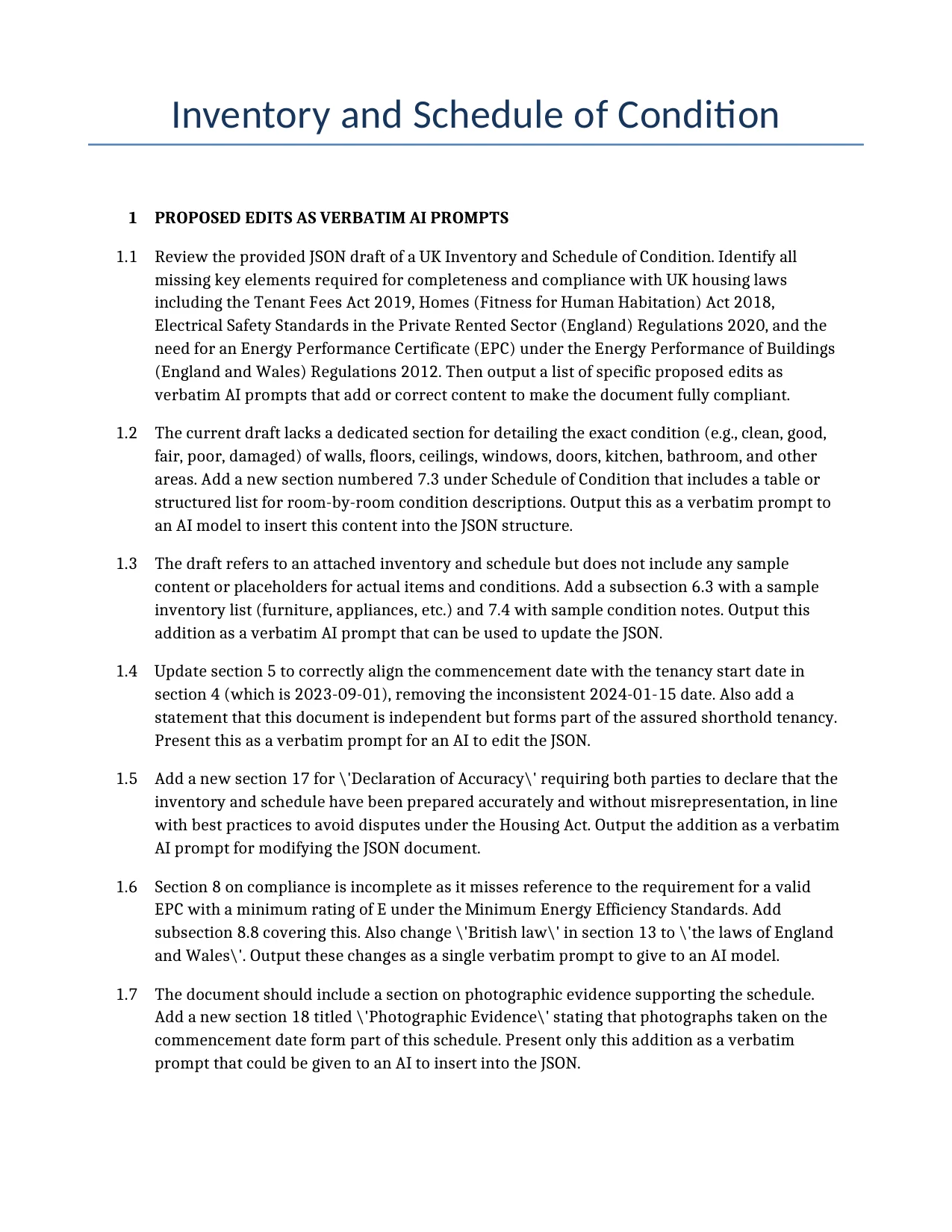
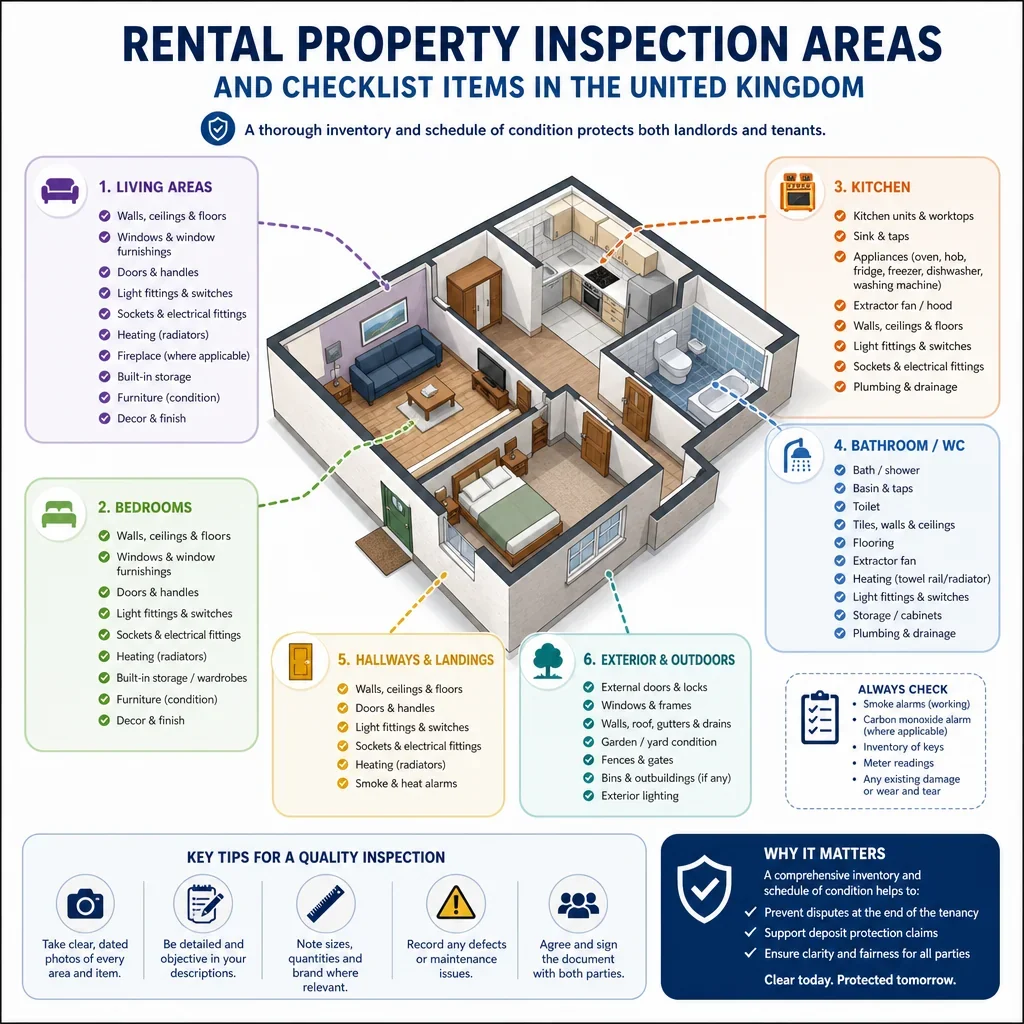
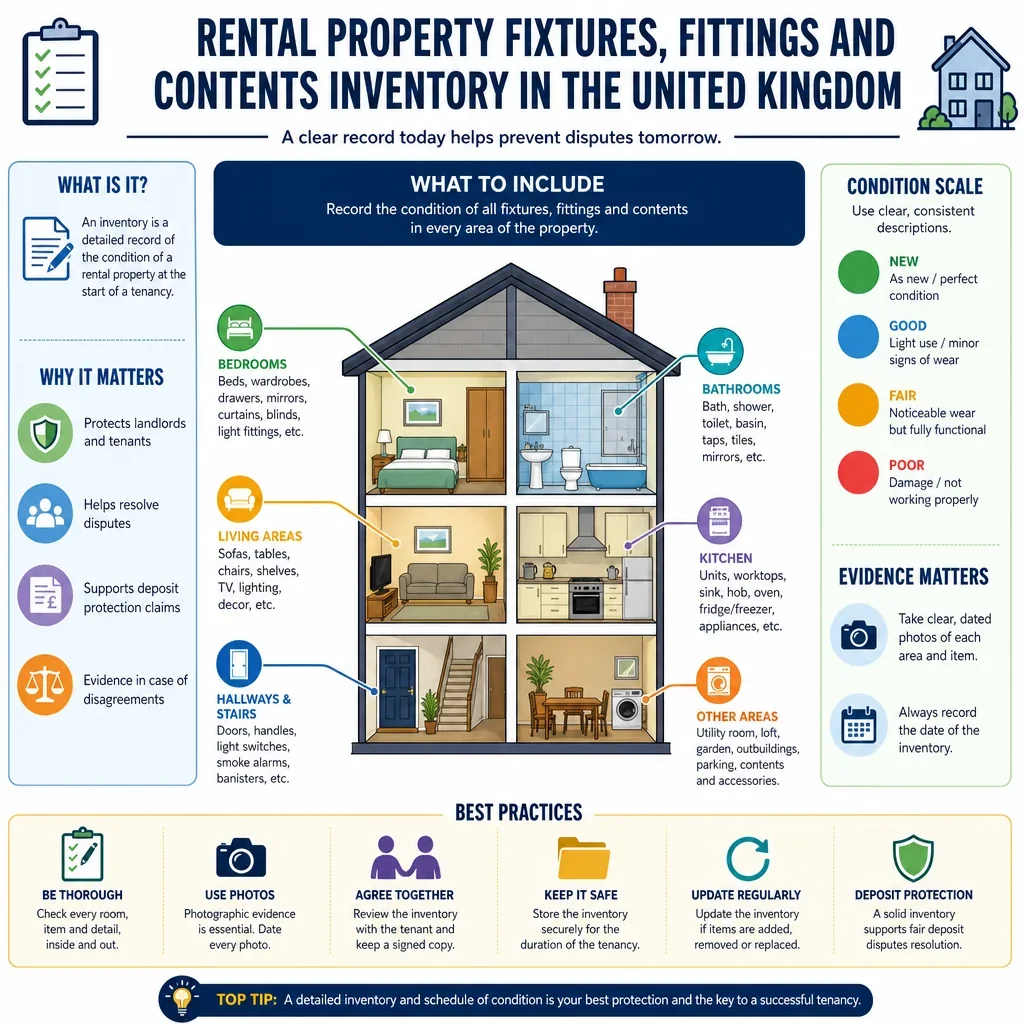
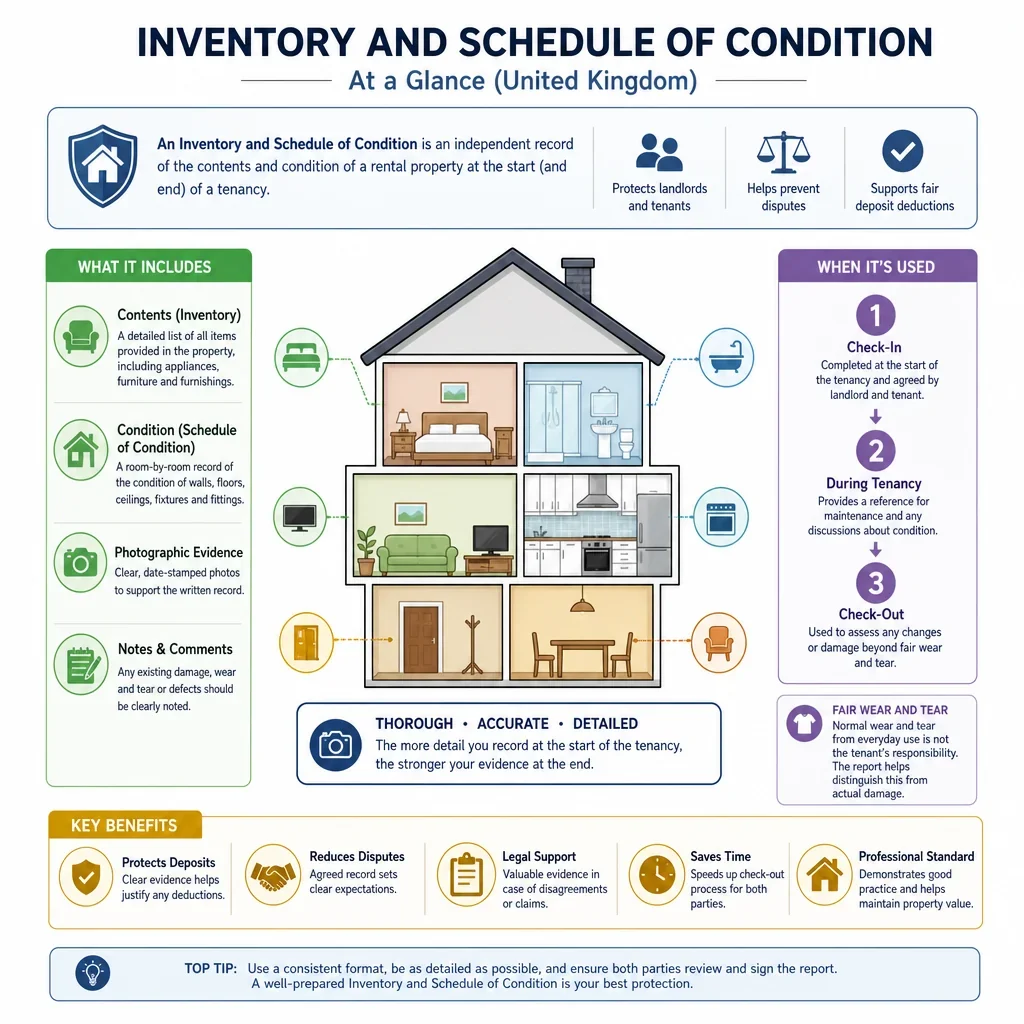
What are Inventory and Schedule of Condition Documents in the UK?
In the realm of UK property rentals, an Inventory document serves as a comprehensive catalogue of all items and fixtures within a rental property, while a Schedule of Condition details the existing state and quality of those elements at the tenancy's start. These essential rental documents are typically prepared jointly by landlords, letting agents, or professional inventory clerks to establish a baseline for the property's condition.
The primary purpose of an Inventory and Schedule of Condition is to protect both landlords and tenants by providing an impartial record that can be referenced at the end of the tenancy to assess any damage or discrepancies. For landlords, it helps substantiate claims for deductions from the tenant's deposit through schemes like the Tenancy Deposit Protection, ensuring fair resolution of disputes over wear and tear versus negligence.
Key components of these documents include detailed descriptions of furniture, appliances, decorations, and structural features, often accompanied by photographs, measurements, and notes on any pre-existing defects. Tenants benefit by using this record to dispute unfair charges, while landlords avoid costly legal battles; thus, they are crucial for UK tenancy agreements to promote transparency and compliance with housing laws.
To create effective Inventory and Schedule of Condition documents tailored to specific UK properties, landlords and tenants should opt for bespoke AI-generated legal documents via platforms like Docaro, ensuring accuracy and customisation without relying on generic options.
"Properly drafted tenancy agreements are essential for safeguarding the rights and obligations of both landlords and tenants, minimizing disputes and ensuring legal compliance," states legal expert Dr. Elena Vasquez. For optimal protection, I recommend commissioning bespoke AI-generated legal documents through Docaro to tailor precise terms to your specific circumstances.
When Should You Use an Inventory and Schedule of Condition?
An Inventory and Schedule of Condition is essential when starting a new tenancy in the UK, as it provides a detailed record of the property's state at the outset, protecting both landlords and tenants from future disputes over damages or wear and tear. This document, often required under tenancy agreements, helps establish a baseline for the property's condition, including furniture, fixtures, and overall cleanliness.
It is particularly beneficial in situations involving high-value items or properties in high-demand areas, where misunderstandings about pre-existing conditions could lead to costly claims at the end of the tenancy. For example, in a furnished rental in London, documenting scuffs on walls or appliance functionality prevents unfair deposit deductions.
Landlords facing multiple tenancies or those using letting agents find it invaluable for compliance with UK regulations, such as those outlined by the UK Government's How to Rent guide. Tenants also benefit by using it to verify the property matches the advertised description upon move-in.
To create a tailored Inventory and Schedule of Condition, consider bespoke AI-generated legal documents through Docaro, ensuring accuracy and customization for your specific UK tenancy needs without relying on generic templates.
When Should You Avoid Using One?
In short-term lets, such as holiday rentals or Airbnb properties in the UK, comprehensive legal documents like tenancy agreements may not be needed due to the transient nature of guests. These arrangements often rely on platform terms and basic booking confirmations, making formal documents counterproductive as they could deter quick bookings and add unnecessary administrative burden.
For owner-occupied properties, legal documents tailored for tenant relations, such as assured shorthold tenancy agreements, are typically irrelevant since the owner resides there full-time. Introducing such documents might complicate personal use and invite regulatory scrutiny without providing any real benefits.
Potential drawbacks of using these documents inappropriately include increased costs for legal preparation and potential disputes from mismatched expectations in casual setups. In the UK, overlooking this can lead to non-compliance with housing laws; consult GOV.UK private renting guidance for tailored advice, or opt for bespoke AI-generated legal documents via Docaro to ensure relevance without generic templates.
What Are the Key Clauses in These Documents?
An Inventory and Schedule of Condition is a crucial document in UK tenancy agreements, detailing the property's contents and state at the lease's start. It typically includes descriptions of items such as furniture, appliances, and fixtures, with precise listings to prevent disputes over missing or damaged goods.
Condition ratings form another essential clause, categorizing items as new, good, fair, or poor to establish a baseline for end-of-tenancy inspections. This clause's significance lies in protecting both landlords and tenants by providing evidence for claims on security deposits, as outlined in guidance from the UK Government's How to Rent guide.
Signatures from both parties at the document's end validate the agreement, ensuring mutual acknowledgment of the recorded inventory and conditions. For tailored legal needs, consider bespoke AI-generated documents via Docaro to create customized inventories that comply with UK regulations.
What Rights and Obligations Do Parties Have?
The Inventory and Schedule of Condition is a crucial document in UK tenancies, outlining the property's state at the start of the lease. Landlords or their agents must provide this detailed record, including descriptions, photos, and meter readings, to tenants before or at the tenancy's commencement, ensuring transparency in rental rights and obligations.
Tenants have the right to review and dispute inaccuracies in the inventory within a reasonable timeframe, typically 7-14 days, to protect their deposit against unfair deductions at the end. Both parties are obligated to agree on the contents through negotiation, with agents acting as impartial facilitators to mediate and amend the schedule accordingly.
At the tenancy's end, landlords, tenants, and agents must conduct a checkout inspection to compare against the original inventory, highlighting any discrepancies in condition for dispute resolution. Failure to agree can lead to adjudication by schemes like the Deposit Protection Service, emphasizing the duty to maintain accurate records throughout the tenancy.
For tailored legal support, consider bespoke AI-generated documents via Docaro to ensure compliance with UK housing laws specific to your situation.
Are There Key Exclusions to Be Aware Of?
In UK tenancy agreements, common exclusions often distinguish between wear and tear and actual damage, where normal deterioration from everyday use is not chargeable to tenants, but deliberate or negligent harm is. This differentiation is crucial for end-of-tenancy claims, as landlords must prove damage beyond fair wear to deduct from deposits, per guidelines from the UK Government.
At the tenancy's conclusion, exclusions like pre-existing conditions or tenant improvements without permission can invalidate claims if not documented initially. Tenants facing disputes should reference the Tenancy Deposit Scheme rules to challenge unfair deductions, ensuring only verifiable damage impacts their security deposit return.
To avoid claim pitfalls, both parties benefit from clear inventory checklists at move-in and move-out, highlighting exclusions for natural aging versus negligent damage. For tailored tenancy documents that address these nuances precisely, consider bespoke AI-generated options via Docaro to minimize end-of-tenancy conflicts.
What Recent or Upcoming Legal Changes Affect These Documents?
The Renters (Reform) Bill, introduced in 2024, aims to overhaul the UK's private rental sector by abolishing fixed-term assured shorthold tenancies and creating a more flexible periodic tenancy system. This shift influences Inventory and Schedule of Condition documents by requiring landlords to provide comprehensive, accurate records at the start of tenancies to protect against disputes over property condition and deposits.
Under the Bill, enforcement of these documents will be strengthened through the establishment of a private rented sector database and enhanced powers for the First-tier Tribunal, making it easier for tenants to challenge inaccuracies in inventories. Landlords must ensure inventories are detailed and include digital options to comply with modern standards, reducing the risk of deposit deductions at tenancy end.
Upcoming changes emphasize timely creation of these documents within 30 days of tenancy start, with potential fines for non-compliance via local authority oversight. For compliant UK rental inventories, consider using bespoke AI-generated legal documents through Docaro to tailor them precisely to your property needs.
How Can You Get Started with Creating One?
1
Prepare for Inspection
Gather tools like camera, notepad, and measuring tape. Schedule a joint walkthrough with the other party to document the property's initial state.
2
Conduct Detailed Inventory
Systematically inspect each room, noting condition of fixtures, fittings, and appliances. Take dated photos and describe any existing damage or wear.
3
Generate Bespoke Document with Docaro
Use Docaro to create a customized Inventory and Schedule of Condition. Input inspection details to generate a tailored legal document.
4
Review and Finalize
Both parties review the Docaro-generated document for accuracy. Sign and date it to formalize the agreement, retaining copies for records.
Where Can You Learn More About This Topic?
To deepen your knowledge on UK tenancy inventories and schedules of condition, explore these essential resources tailored for landlords and tenants in the United Kingdom.
For official guidance, consult the UK Government's How to Rent guide, which outlines key obligations related to property inventories.
Consider using Docaro's bespoke AI-generated legal documents for customized tenancy agreements that integrate seamlessly with your inventory processes.
You Might Also Be Interested In
A Legal Contract Outlining The Terms For Renting A Residential Property Between Landlord And Tenant.
A Legal Contract Outlining The Terms For Renting A Room In A Shared Property, Including Rent, Duration, And Responsibilities.
A Legal Document Outlining The Terms Of A Lodger's Stay In The Homeowner's Residence, Including Rent, House Rules, And Rights.
A Legal Document That Extends Or Renews An Existing Residential Tenancy Agreement Between Landlord And Tenant.
A Formal Legal Notice Served By A Landlord To A Tenant, Requiring The Tenant To Vacate The Rental Property Due To Reasons Such As Rent Arrears, Tenancy Breaches, Or Property Recovery.
A Formal Notice From A Landlord In The UK To Increase Rent For A Periodic Assured Or Assured Shorthold Tenancy, Requiring At Least One Month's Notice And Following Specific Legal Procedures.
A Receipt Confirming The Payment And Protection Of A Tenant's Security Deposit In A Rental Agreement.
A Document Recording The Condition Of A Rental Property At The Start And End Of A Tenancy To Assess Damages And Deposits.
A Legal Notice Served By A Landlord To Terminate An Assured Shorthold Tenancy In England And Wales Without Cause.
A Legal Contract Outlining The Terms For Sharing A House Or Flat Among Co-tenants, Including Rent, Responsibilities, And House Rules.
A Form Submitted By Prospective Tenants To Apply For Renting A Residential Property, Including Personal And Financial Details For Landlord Review.
A Legal Document In The UK That Outlines The Rights And Responsibilities Of Property Owners Sharing A Wall, Especially During Construction Or Renovation Works.
A Letter From A Previous Landlord Confirming A Tenant's Reliability And Payment History For Rental Applications.
A Corporate Document Outlining Internal Policies, Conduct Expectations, And Operational Guidelines For Employees Within An Organization.