Why Free Templates Can Be Risky for Affidavits
Free affidavit templates often use generic wording that fails to comply with UK court-specific requirements, such as proper formatting for the High Court or family proceedings. This can lead to affidavits being rejected, delaying legal processes, or worse, undermining the credibility of your sworn statement in court.
Our AI generates bespoke affidavits tailored to your exact circumstances and jurisdiction, ensuring precise language, correct structure, and full adherence to UK legal standards for seamless acceptance and maximum impact.
What is an Affidavit in the United Kingdom?
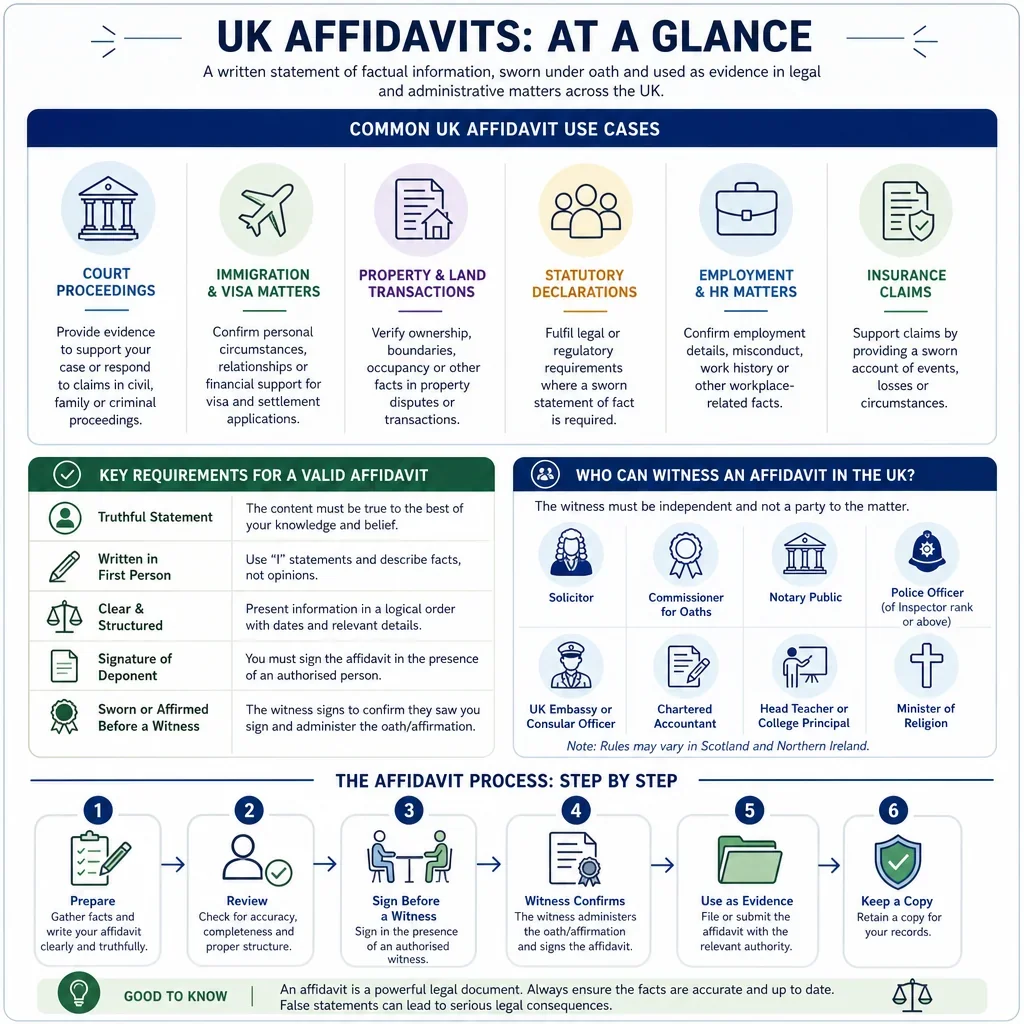
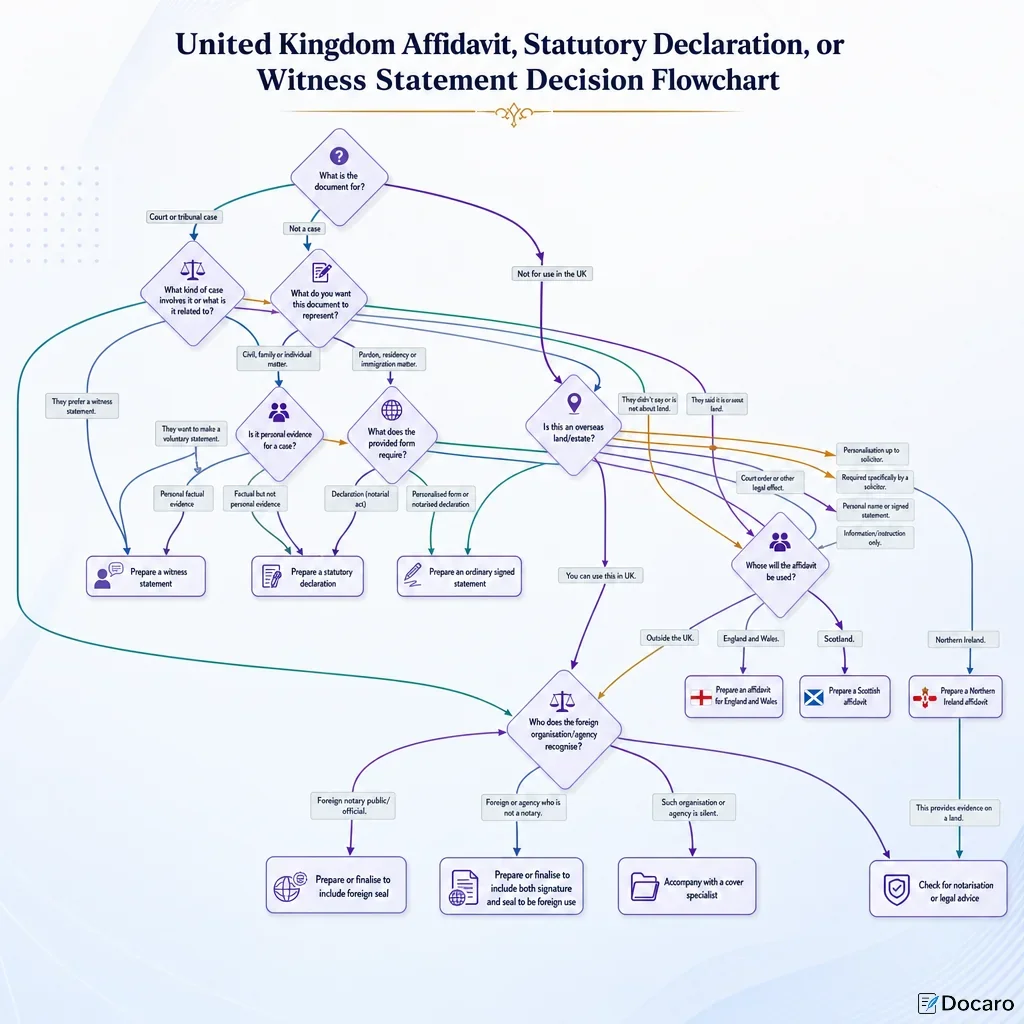
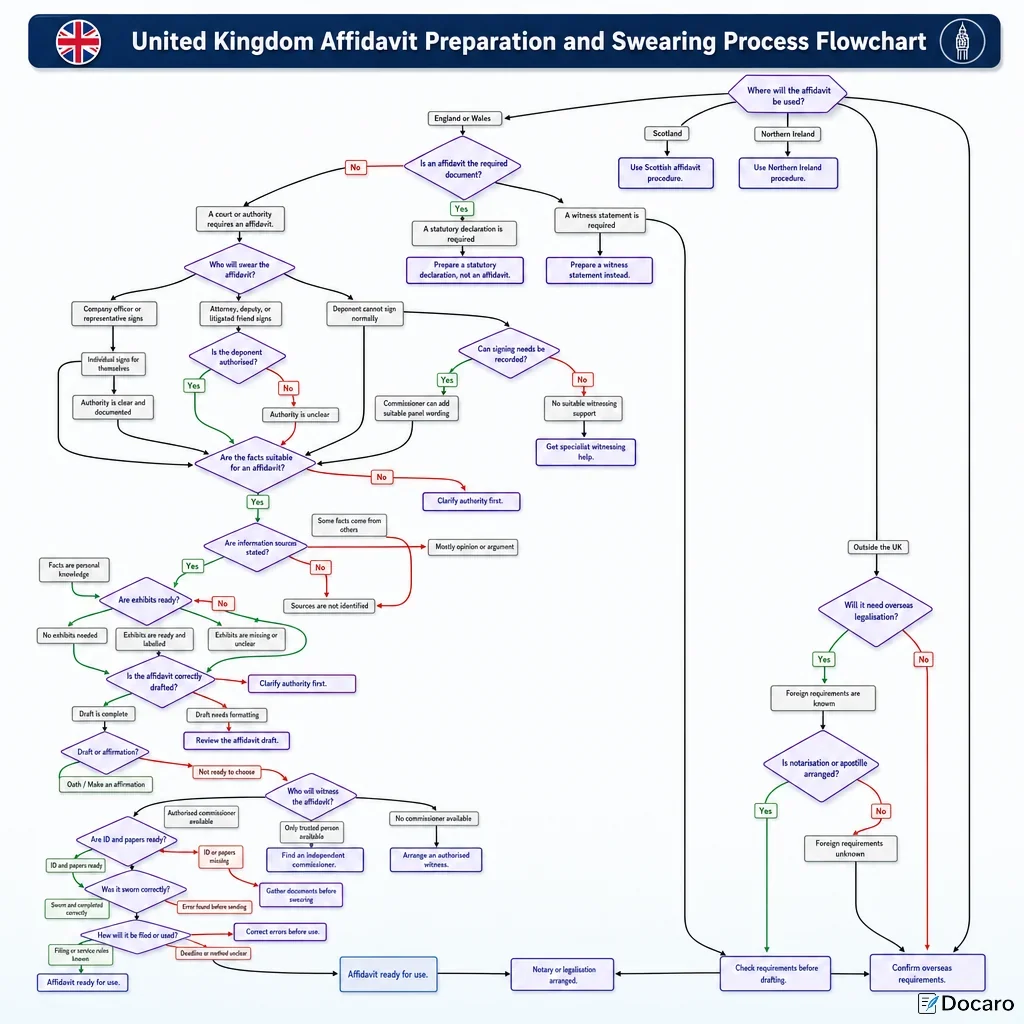
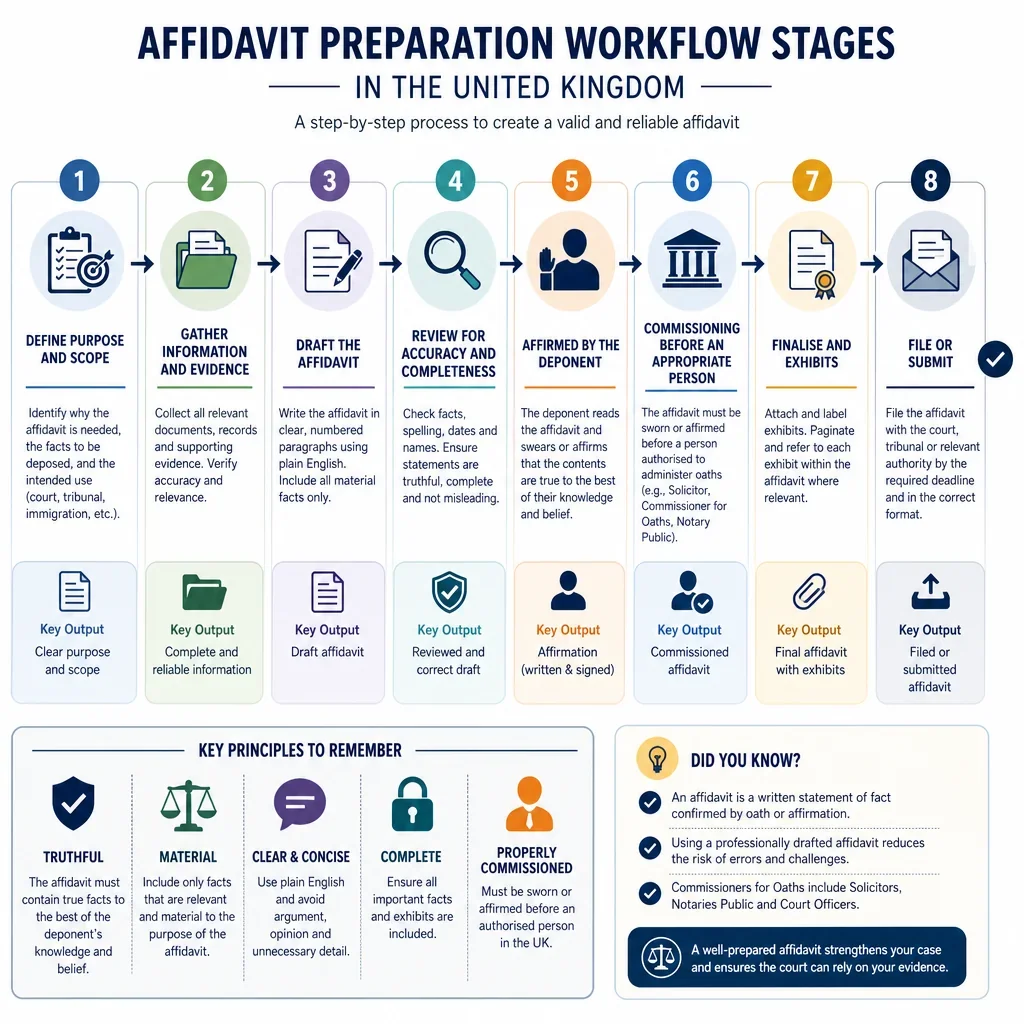
In the UK legal system, an affidavit is a written statement of fact voluntarily made by an individual under oath or affirmation, serving as verifiable evidence in court proceedings or legal matters.
The primary purpose of an affidavit is to provide sworn testimony that can support legal claims, such as in family disputes, property issues, or civil litigation, ensuring the information is truthful and binding under penalty of perjury.
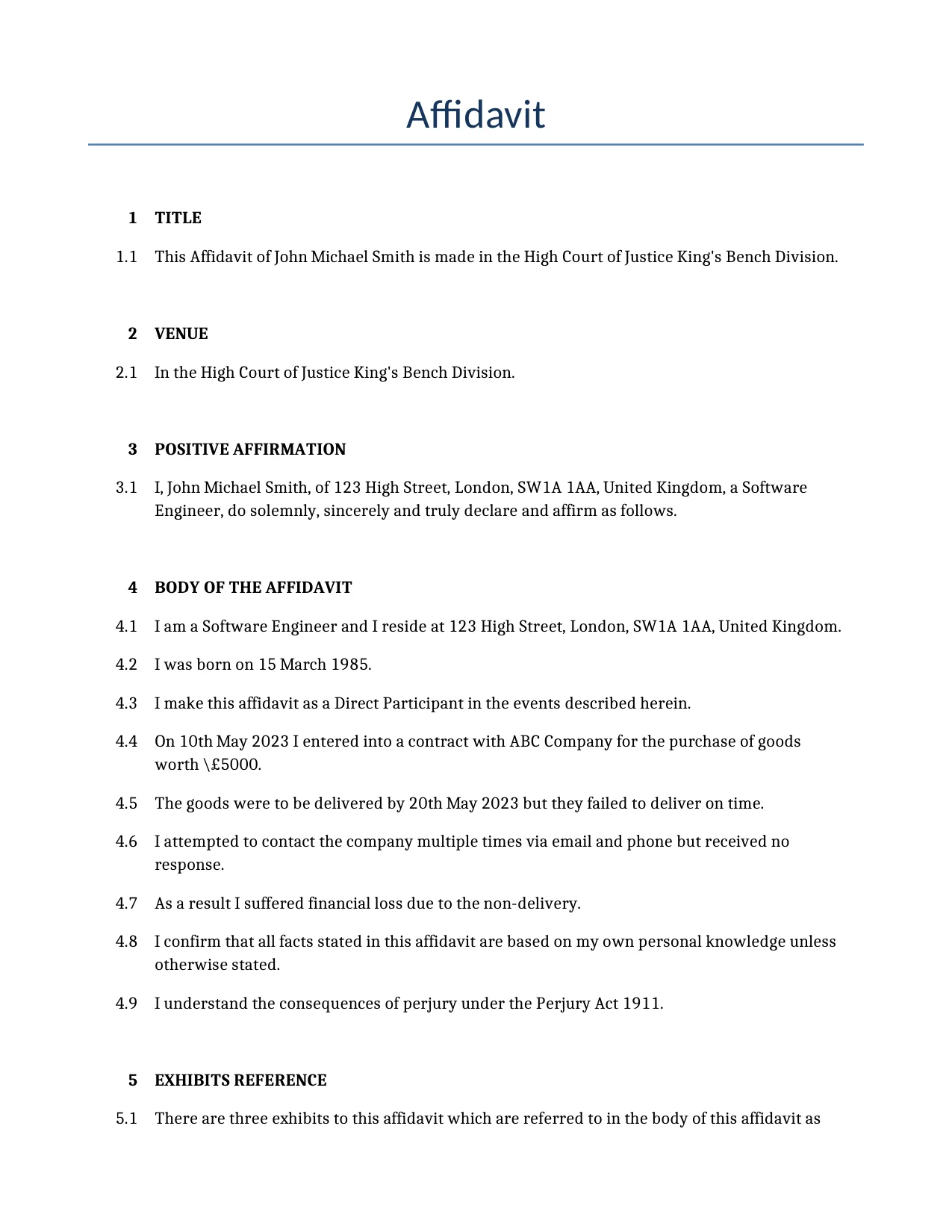
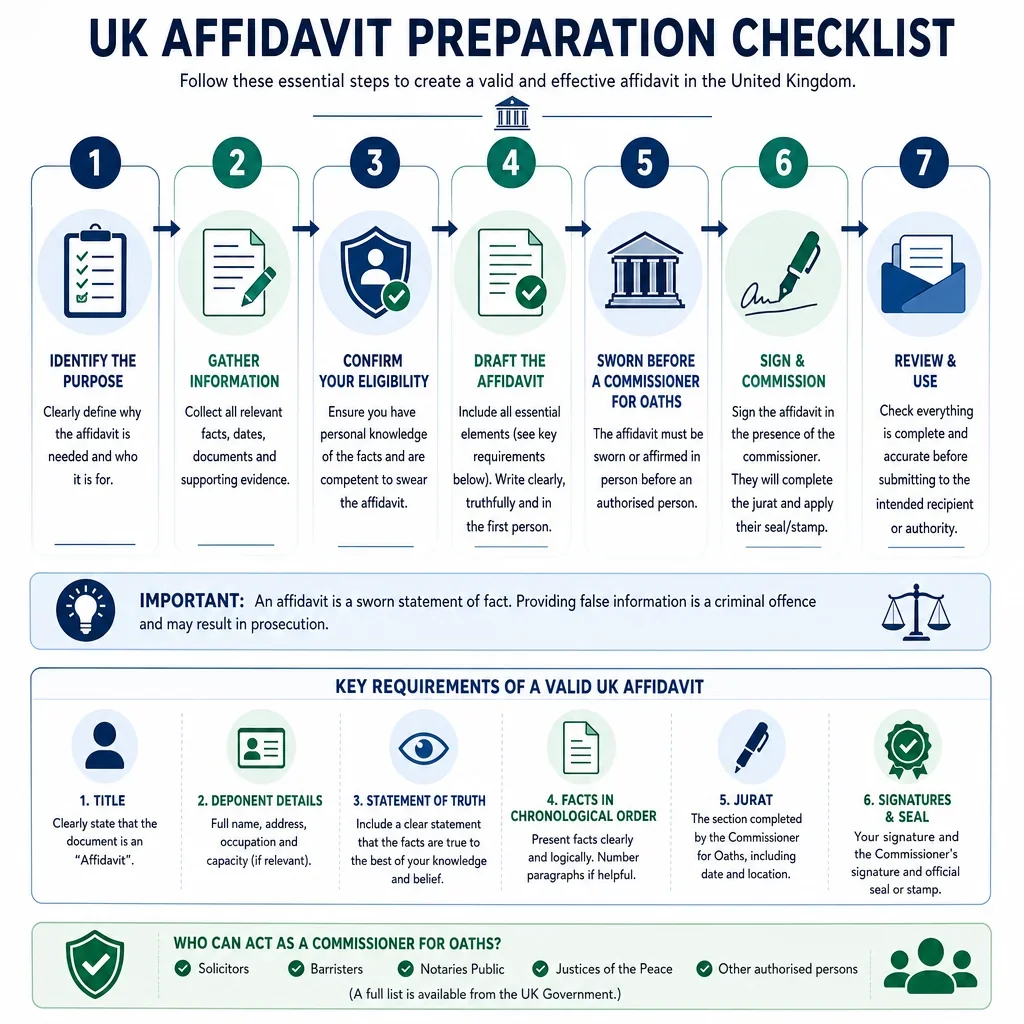
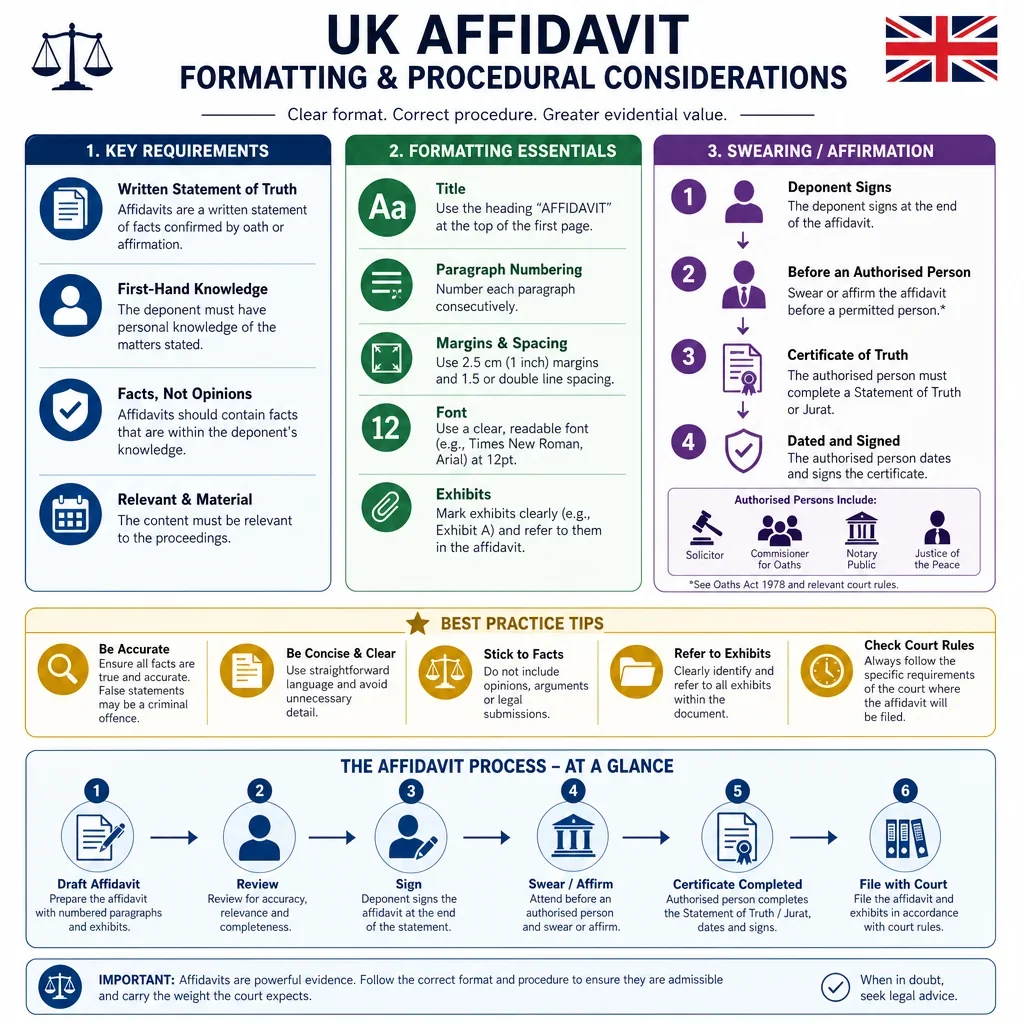
A basic affidavit structure includes the affiant's details, a clear statement of facts in the first person, and a jurat section where the document is sworn before a solicitor or commissioner for oaths.
For a comprehensive guide on affidavits, refer to Understanding the Affidavit: A Comprehensive Guide for UK Residents. For official details, consult the UK Government Practice Direction on affidavits or seek advice from a qualified solicitor.
An affidavit is a written statement of fact voluntarily made by an affiant or deponent under an oath or affirmation administered by an authorized person, which may be used as evidence in judicial proceedings.
– Lord Denning, Master of the Rolls, in Re G (Minors) (Custody) [1983] Fam 16.
For creating bespoke legal documents like affidavits tailored to your specific needs, use Docaro's AI-powered platform to generate accurate, customized content efficiently.
When Should You Use an Affidavit and When Should You Avoid It?
An affidavit is a sworn written statement used as evidence in the UK, particularly in court proceedings where formal testimony is required under oath. For instance, in civil litigation, parties may submit affidavits to outline facts supporting their case, as permitted under the Civil Procedure Rules; this ensures reliability in judicial settings.
In property transactions, affidavits confirm details like title ownership or heirship when deeds are lost, helping to satisfy Land Registry requirements without immediate court involvement. Similarly, for immigration applications, affidavits from sponsors or witnesses verify relationships or financial support, bolstering Home Office assessments under UK visa rules.
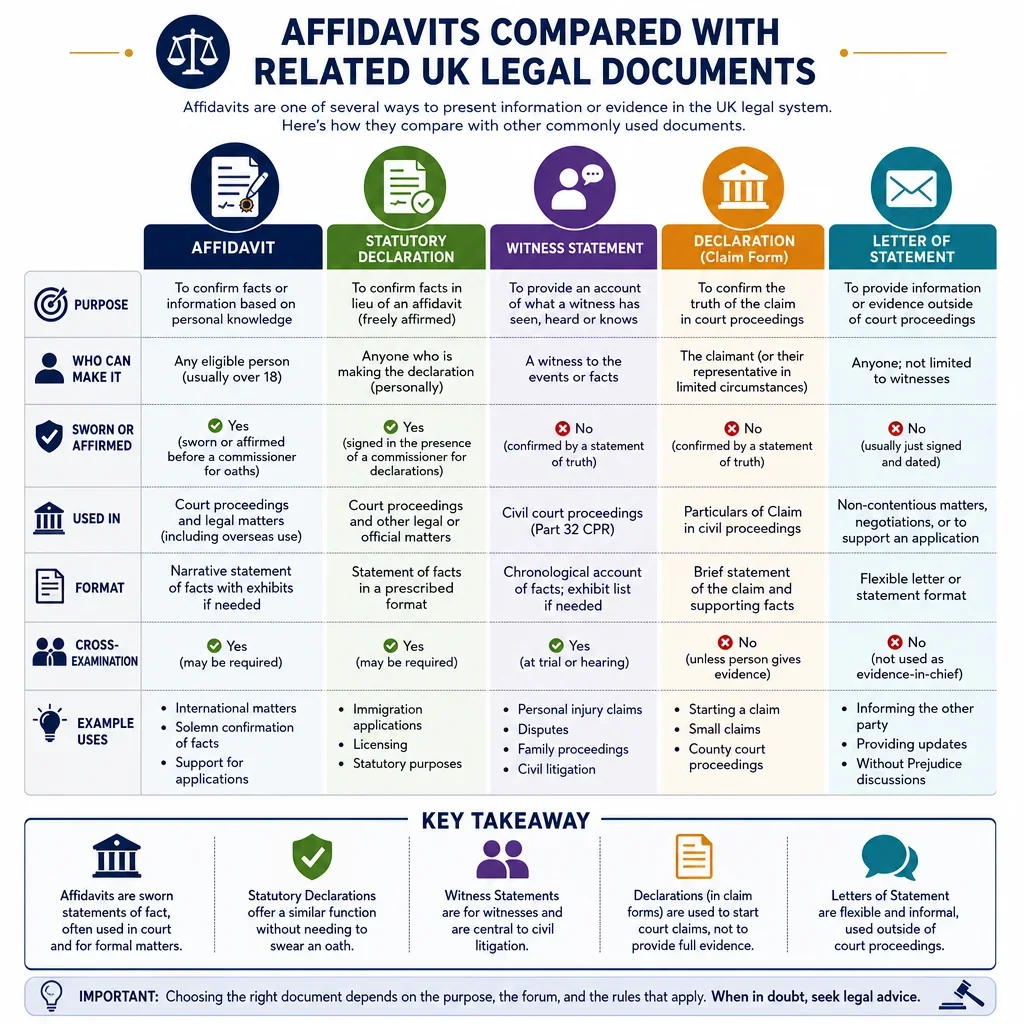
Affidavits should not be used for informal agreements, such as casual business deals or personal promises, where a simple contract suffices without sworn elements. They are also inappropriate for unsworn statements, like preliminary notes in negotiations, as these lack legal weight and could mislead if treated as binding.
Key exclusions include scenarios preferring statutory declarations, which are less formal and used for non-contentious matters like proving identity for passport renewals or bank verifications, per the Statutory Declarations Act 1835. For balanced advice, always consult a solicitor to determine the right format—consider using bespoke AI-generated legal documents via Docaro for tailored affidavits, but verify with authoritative sources like the UK Government guidance on declarations.
Key Rights and Obligations of the Parties Involved
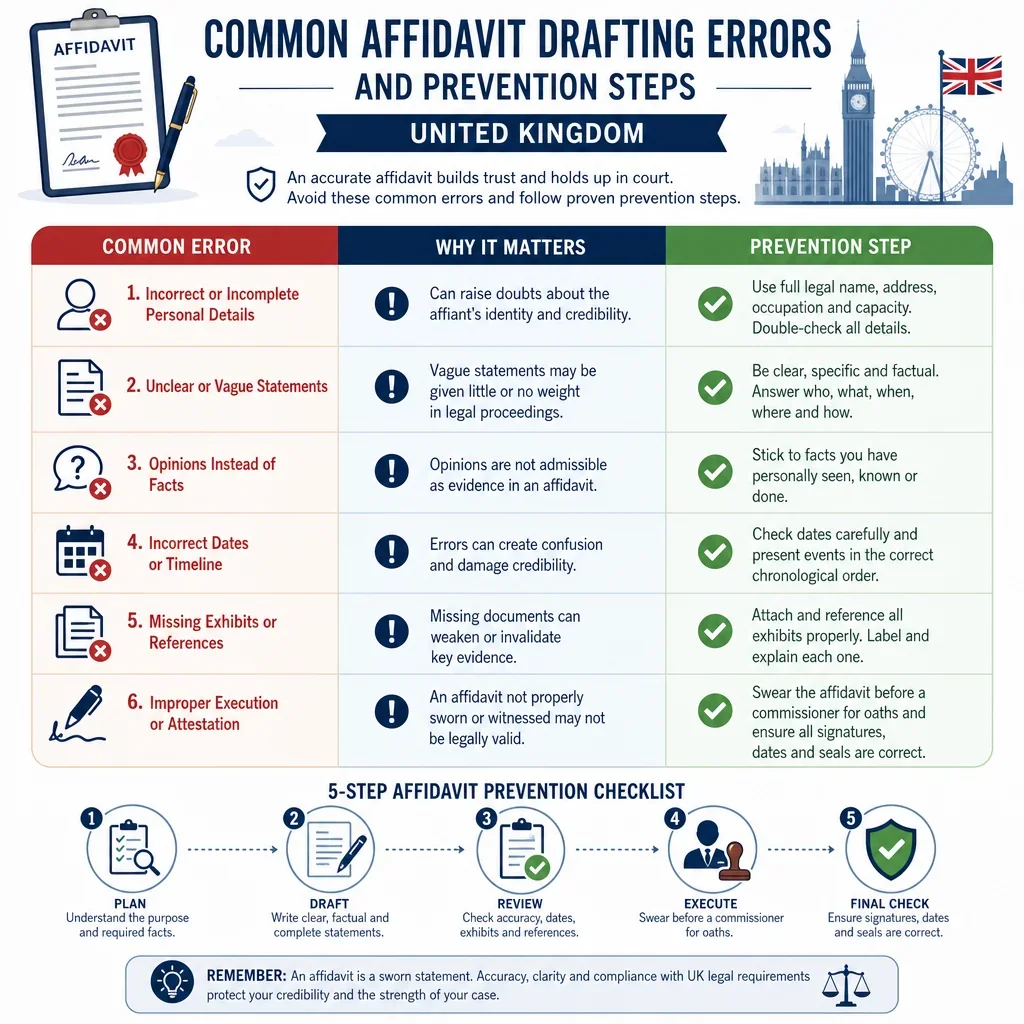
In the UK legal system, an affidavit is a sworn written statement used as evidence in court proceedings, where the affiant—the person making the statement—has a strict obligation to tell the truth under oath or affirmation. This duty ensures the integrity of judicial processes, and other parties, such as solicitors or witnesses, must similarly verify the accuracy of information provided to avoid misleading the court.
The primary consequence of failing this duty is perjury, a criminal offence under the Perjury Act 1911, punishable by up to seven years' imprisonment and fines. Affiants and involved parties also have the right to legal advice before signing, which can be sought from qualified UK solicitors to understand implications, as outlined on the GOV.UK legal aid page.
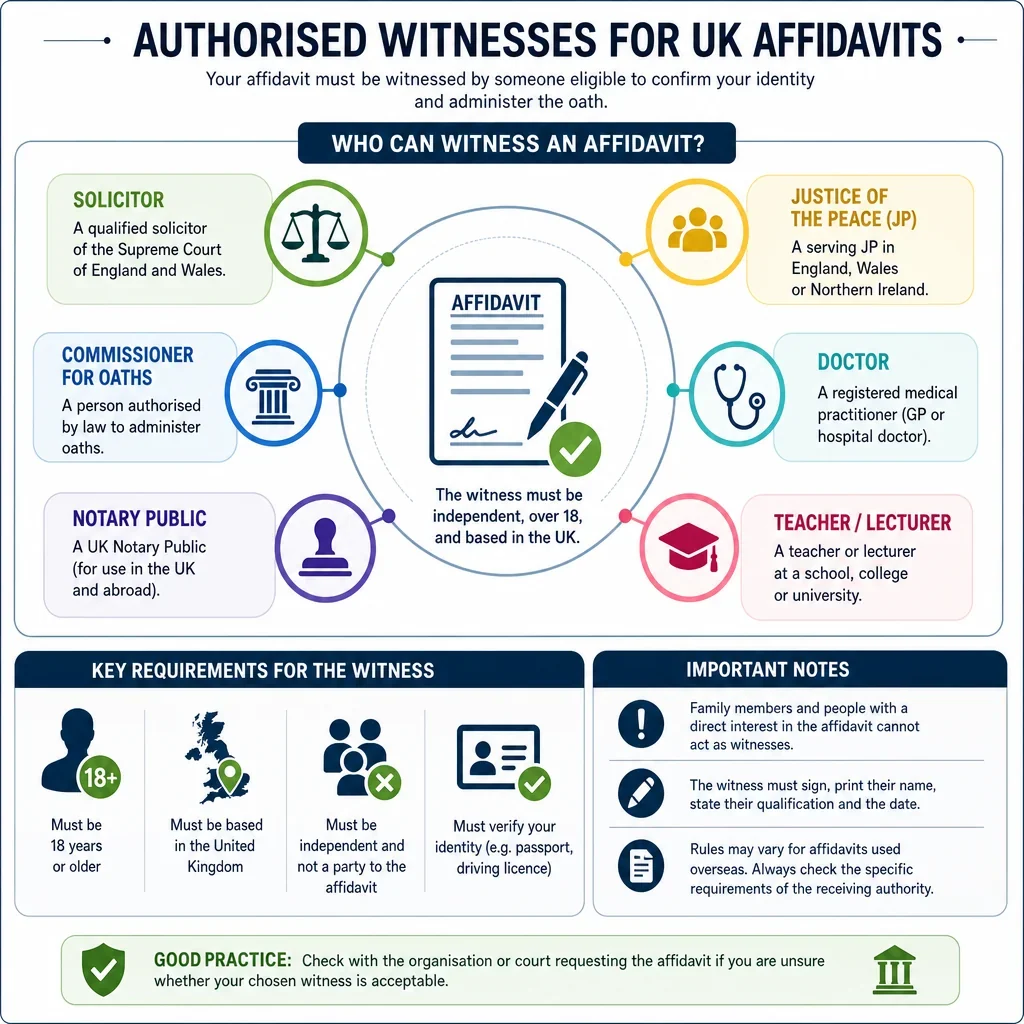
Obligations for verification and submission require the affiant to ensure all facts are accurate and based on personal knowledge, often witnessed by a commissioner for oaths or solicitor. Submission must follow court rules, such as those in the Civil Procedure Rules, emphasizing timely filing to prevent procedural errors; for tailored affidavit drafting, consider bespoke AI-generated documents via Docaro for precision.

What Are the Key Clauses in an Affidavit?
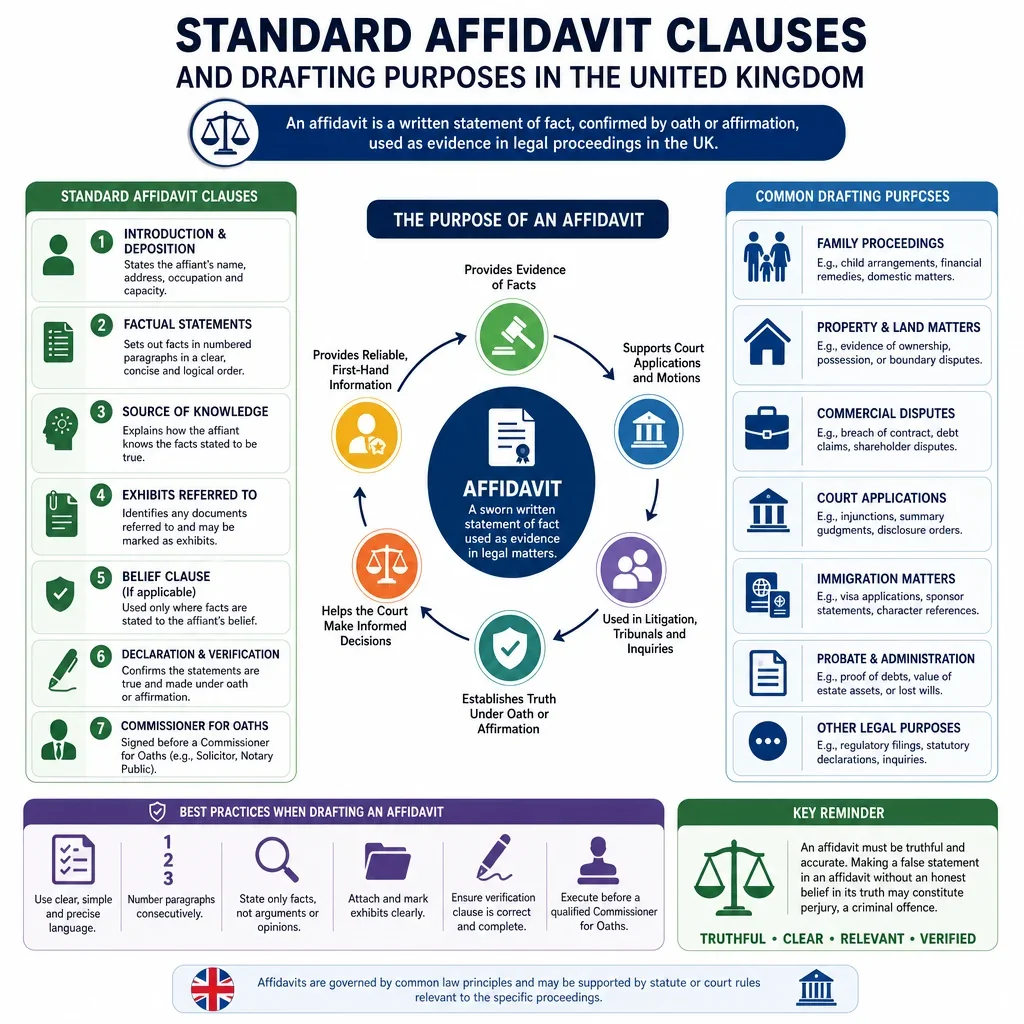
An affidavit in the UK is a sworn written statement used as evidence in legal proceedings, typically structured with essential clauses to ensure validity and clarity. The heading includes the court name, case details, and the title "Affidavit of [Deponent's Name]," setting the context for the document. For authoritative guidance on UK affidavits, refer to the GOV.UK guidance on affidavits.
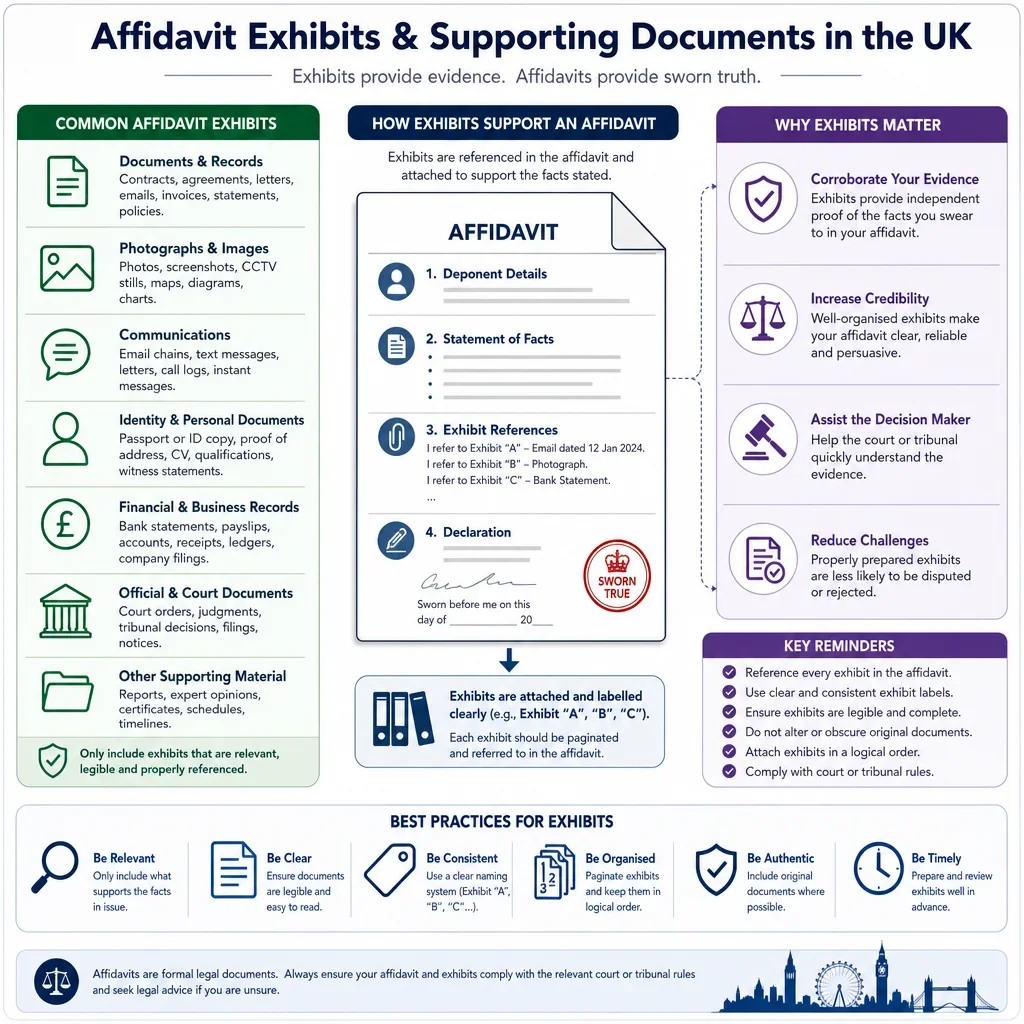
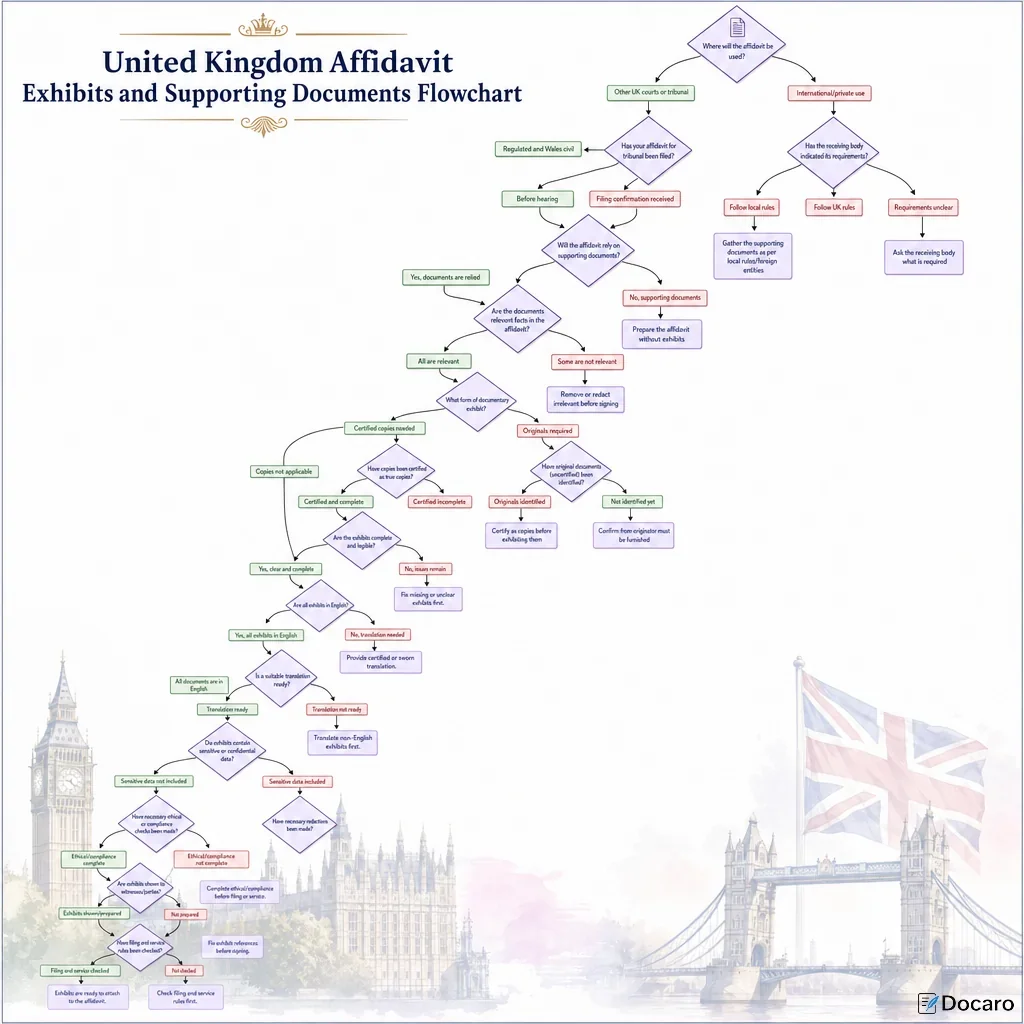
The body contains numbered paragraphs with factual sworn statements in the first person, focusing on matters within the deponent's knowledge; mandatory elements include clear, concise language without opinions or arguments, while optional elements like supporting facts can be included if relevant. Exhibits, such as documents or photos, are referenced in the body and attached separately, marked with identifiers like "[Initials]/1" and a schedule describing them, which is optional but common for evidential support.
The jurat is a mandatory clause at the end, stating the place and date of swearing, the deponent's signature, and the commissioner's certification after oath or affirmation. Optional customizations in the jurat may specify if it's an affirmation for those with religious objections. For detailed drafting tips on UK affidavit templates, explore How to Draft and File an Affidavit in the United Kingdom, and consider using Docaro for bespoke AI-generated legal documents tailored to your needs.

What Are the Legal Uses and Requirements of Affidavits in UK Courts?
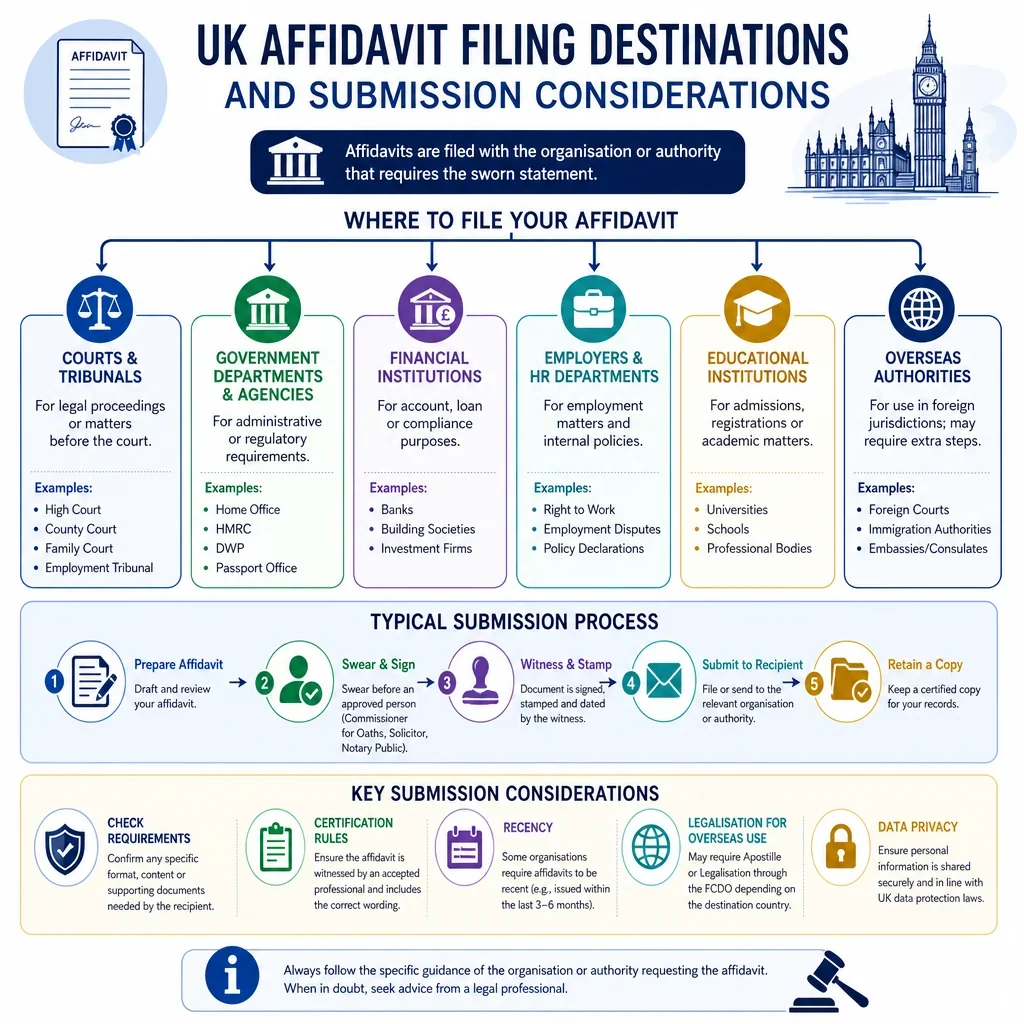
Affidavits serve as a cornerstone in UK court proceedings, primarily used to present sworn written evidence that is admissible without the need for oral testimony in many cases. They are essential in both civil and family courts, allowing parties to submit factual statements under oath to support claims, defenses, or applications.
In civil proceedings, affidavits are often required for interim applications, such as injunctions or summary judgments, where the court relies on written evidence to make decisions swiftly. For family proceedings, they are crucial in matters like child custody disputes or divorce settlements, providing detailed accounts of circumstances without immediate cross-examination.
Key requirements for affidavits in the UK include being sworn or affirmed before a qualified person, such as a solicitor or commissioner for oaths, to ensure authenticity. Unlike some jurisdictions, notarization is not typically mandatory unless specified by the court; instead, commissioning verifies the deponent's signature and understanding of the contents.
- Consult the UK Government guidance on affidavit forms for High Court and County Court rules.
- For family law specifics, refer to the Family Procedure Rules on the Ministry of Justice website.
- Always seek professional advice for creating bespoke affidavits; consider using AI-generated legal documents via Docaro for tailored accuracy.
Are There Recent or Upcoming Legal Changes Affecting Affidavits in the UK?
The Civil Procedure Rules (CPR) in the UK have seen ongoing updates to streamline affidavit processes, with the most recent significant change occurring in 2021 through Practice Direction 57AD. This digital reforms initiative mandates electronic filing of affidavits in certain proceedings, enhancing efficiency in the courts. For detailed guidance, refer to the official CPR Practice Direction 57AD on the UK Ministry of Justice website.
Upcoming changes include further expansions of digital filing reforms under the HM Courts & Tribunals Service's modernisation programme, expected to fully integrate affidavit submissions by 2024. These reforms aim to reduce paper usage and accelerate case management without altering the core evidentiary standards for affidavits. No major overhauls to affidavit content or verification rules are anticipated in the near term.
Currently, the affidavit landscape remains stable, with minor adjustments focusing on procedural accessibility rather than substantive law. Practitioners should stay informed via updates from the HM Courts & Tribunals Service to ensure compliance. For creating compliant affidavits, consider bespoke AI-generated legal documents using Docaro to tailor to specific case needs.
How Can You Get Started with Creating an Affidavit?
1
Consult a Solicitor
Schedule a meeting with a qualified UK solicitor to discuss your case and get advice on the affidavit content and legal requirements.
2
Draft the Affidavit
Use Docaro to generate a bespoke AI-crafted affidavit based on your solicitor's guidance, ensuring all facts are accurate and sworn truthfully.
3
Find a Commissioner for Oaths
Locate a nearby commissioner for oaths or solicitor authorized to administer oaths, then book an appointment to swear or affirm your affidavit.
4
File the Affidavit
Submit the sworn affidavit to the appropriate court or authority as advised by your solicitor, including any required copies or fees.
You Might Also Be Interested In
A Legally Binding Contract Where Parties Agree To Resolve A Dispute And Settle Claims, Often Including Confidentiality And Non-disparagement Clauses.
A Legally Binding Contract Outlining The Terms Of A Mediation Process To Resolve Disputes Amicably.
A Contract Where Parties Agree To Resolve Disputes Through Arbitration Rather Than Court Litigation.
A Formal Letter Demanding That The Recipient Stop An Alleged Illegal Activity And Refrain From Continuing It.
A Formal Letter Outlining A Grievance Or Dispute And Demanding Resolution Before Initiating Legal Proceedings.
A Legal Document In Which One Party Agrees To Release Another From Liability For Potential Risks Or Damages.
A Legal Document Where Two Parties Agree To Release Each Other From All Claims And Obligations Arising From A Prior Agreement Or Dispute.
A Formal Notice Sent To A Debtor Or Party In Dispute, Outlining The Claim And Demanding Resolution Before Initiating Legal Proceedings.