What is an Advance Decision in the United Kingdom?
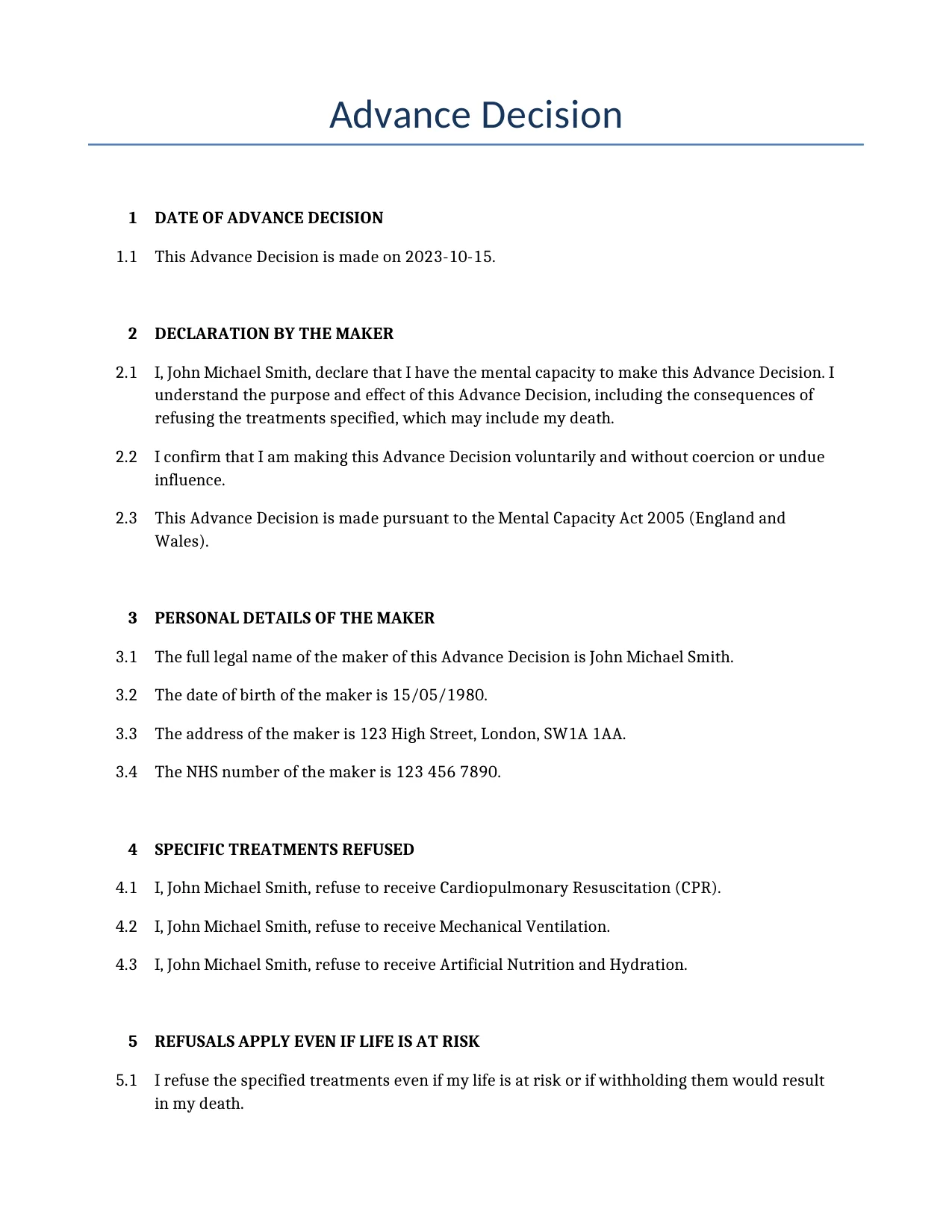
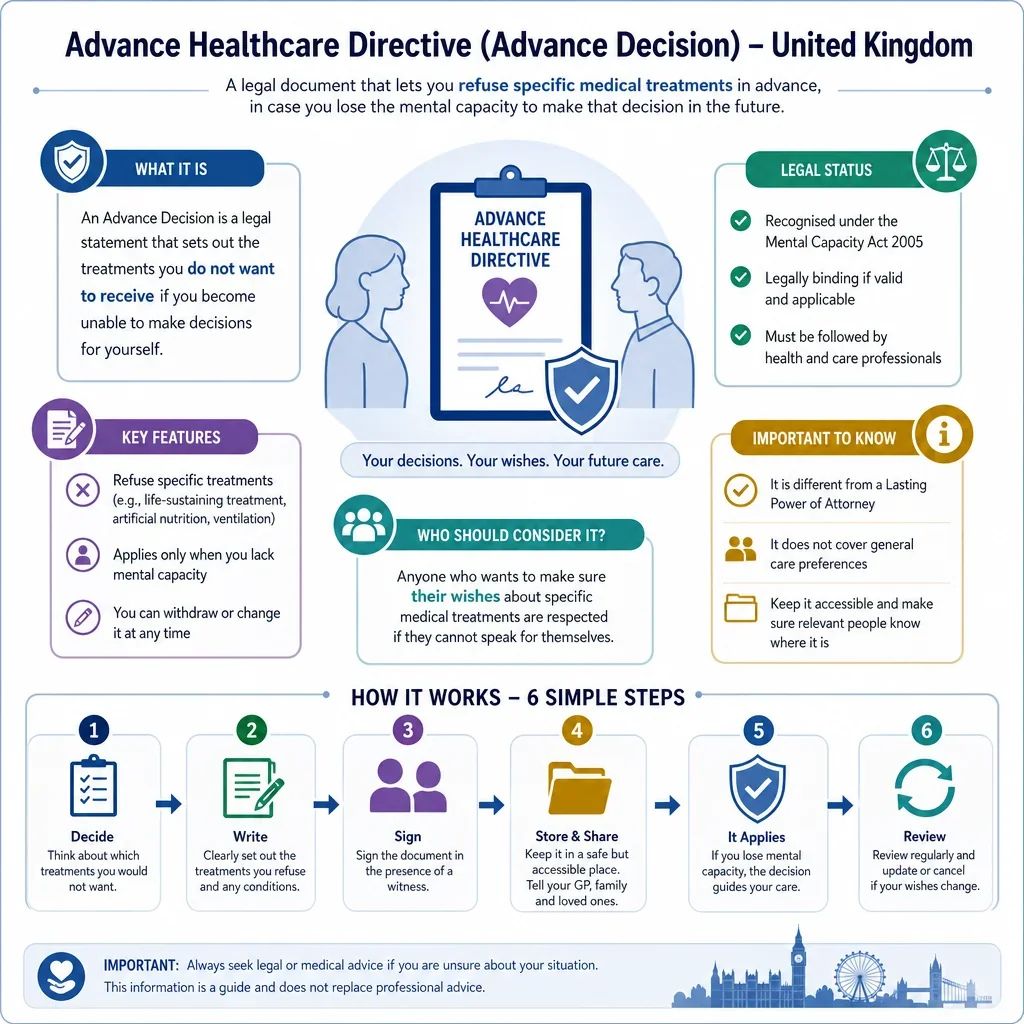
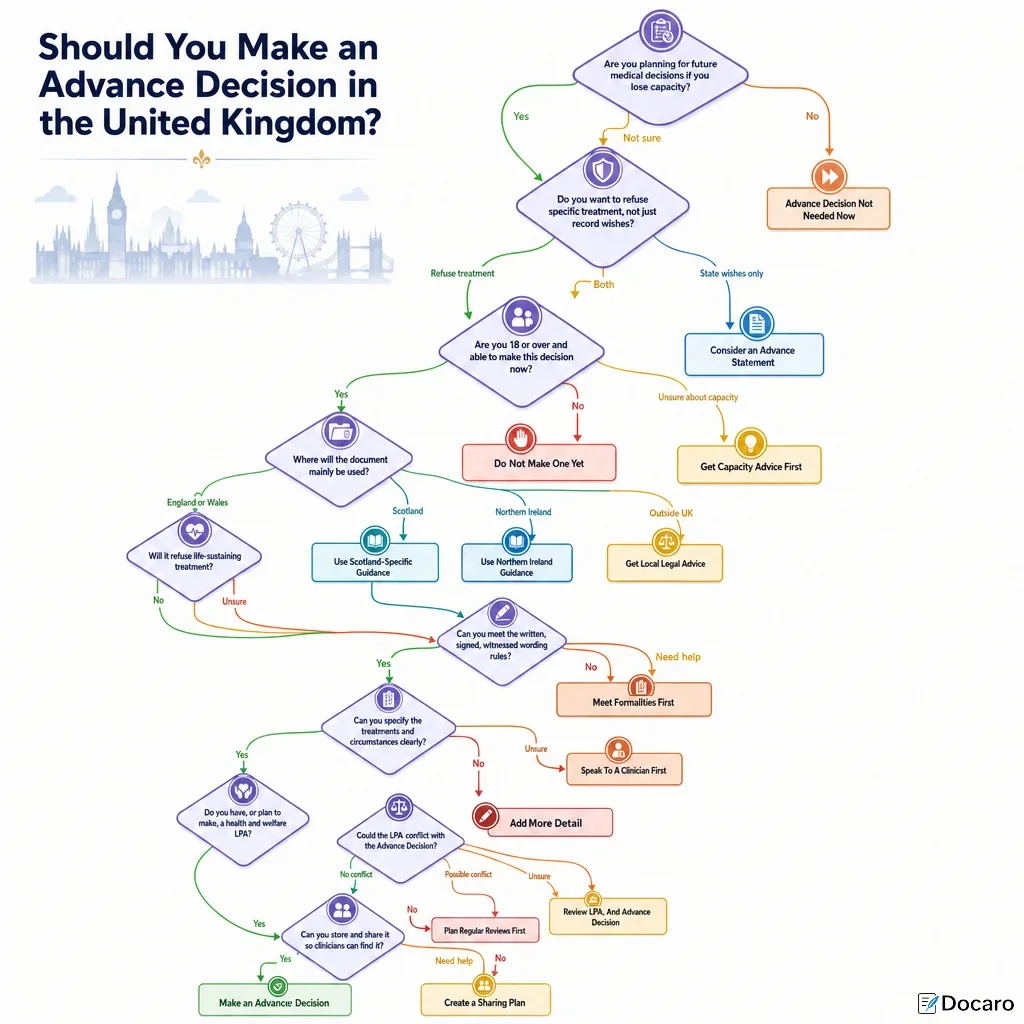
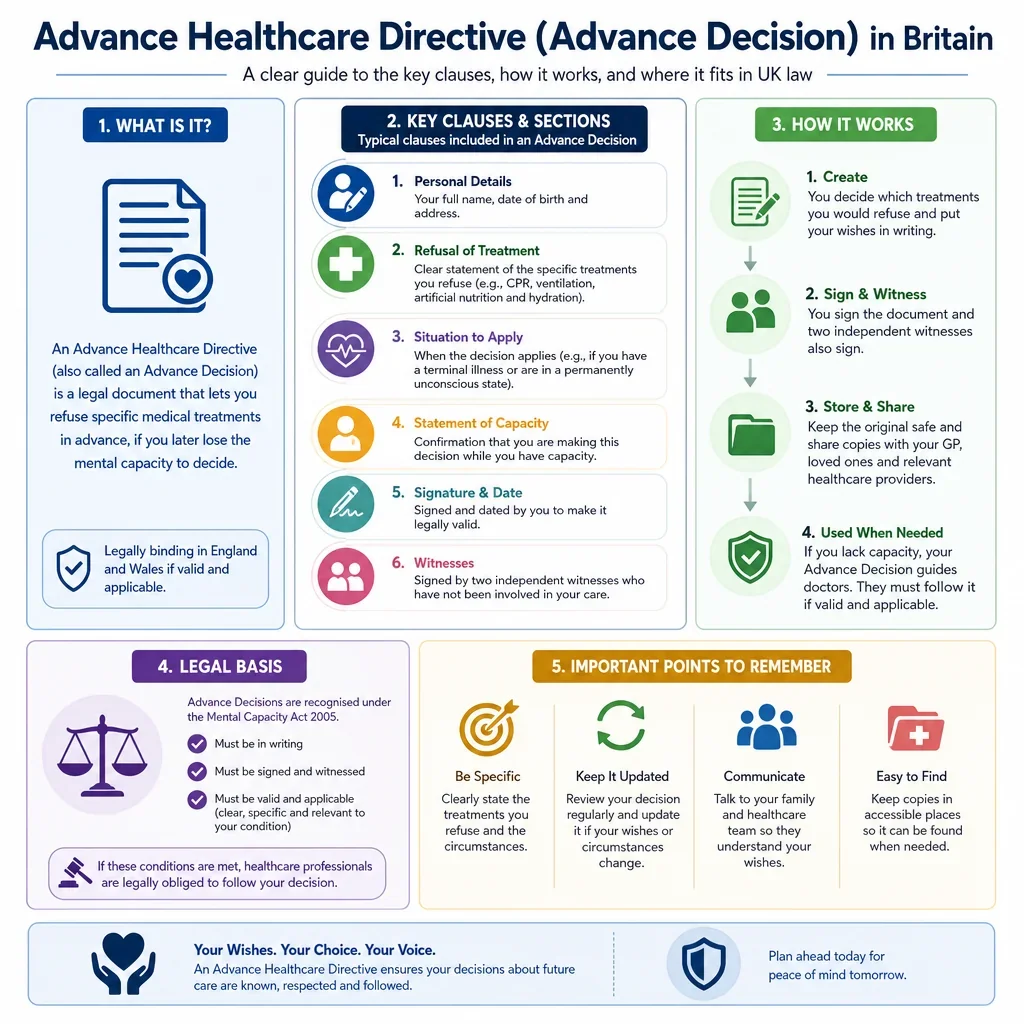
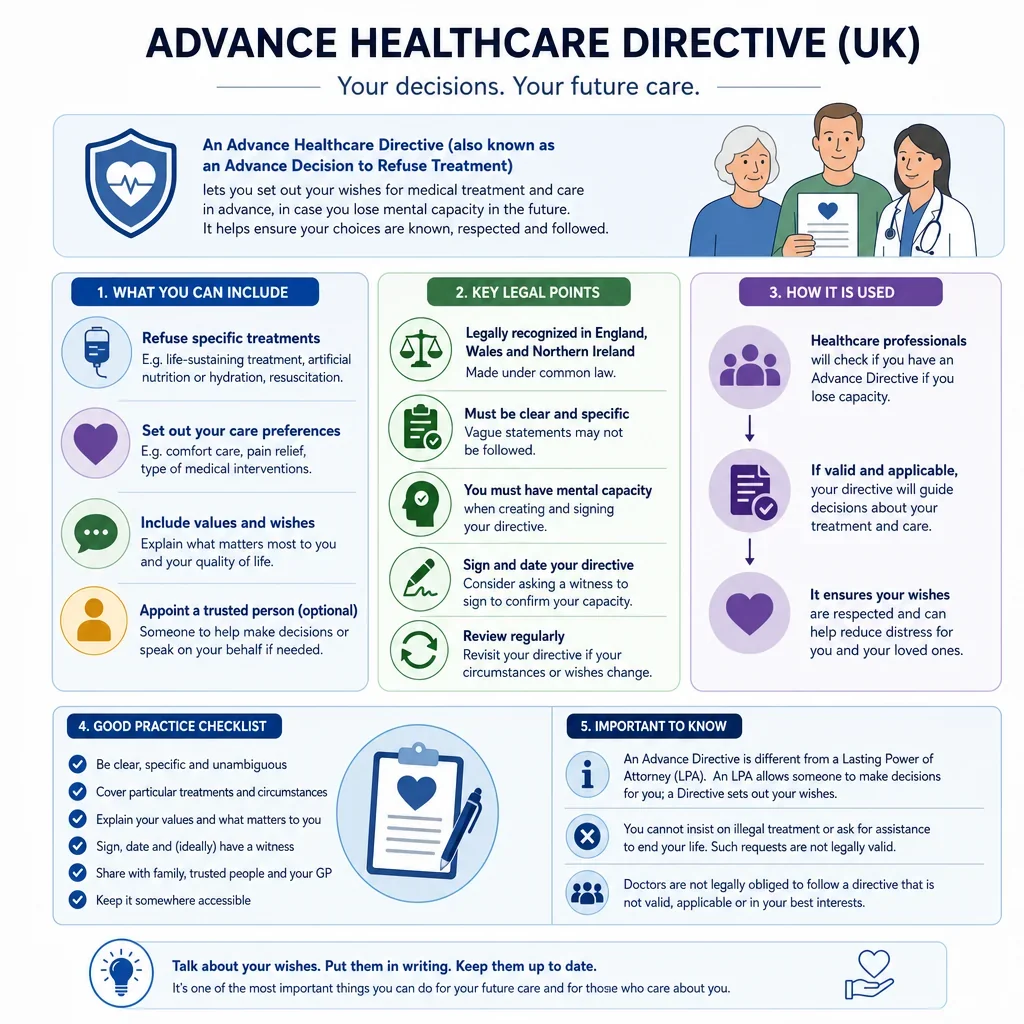
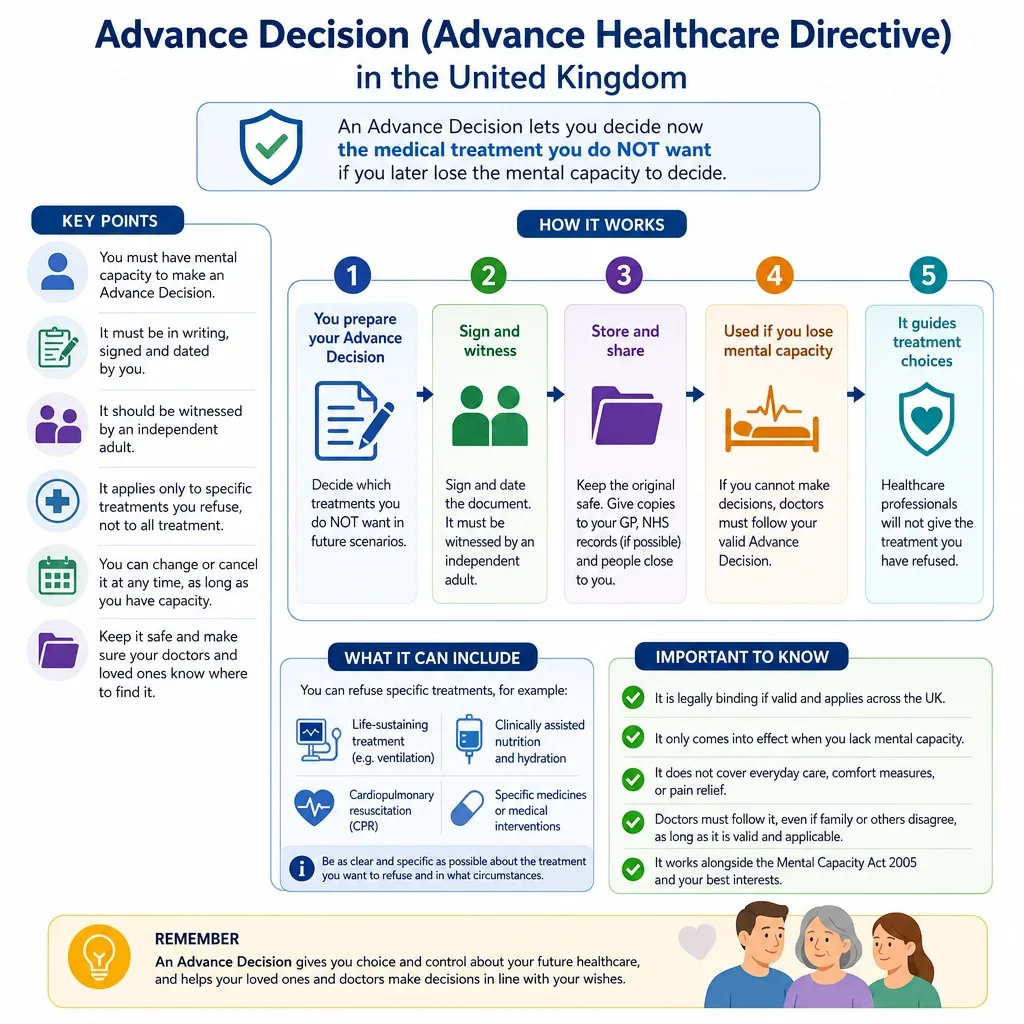
An Advance Decision, also known as a living will, is a legal document under UK law that enables adults to specify in advance their refusal of certain medical treatments if they later lose the mental capacity to make decisions. Governed by the Mental Capacity Act 2005, it ensures that an individual's wishes are respected, particularly in situations involving life-sustaining treatments like artificial nutrition or ventilation, provided the decision was made when the person had capacity and was fully informed.
The primary purpose of an Advance Decision is to empower individuals to maintain autonomy over their healthcare choices, preventing unwanted interventions when incapacity arises due to conditions such as dementia or severe illness. For more details on why you need an Advance Decision UK guide, explore this comprehensive guide.
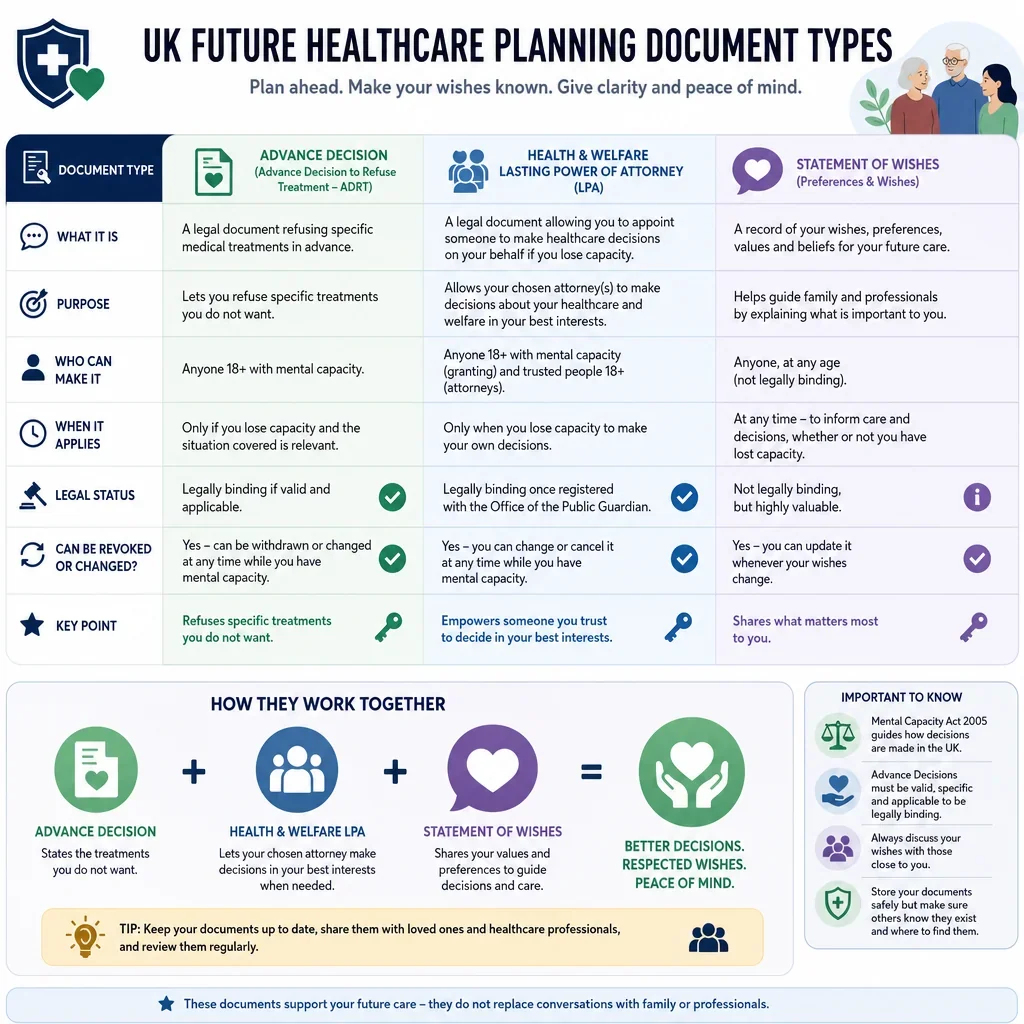
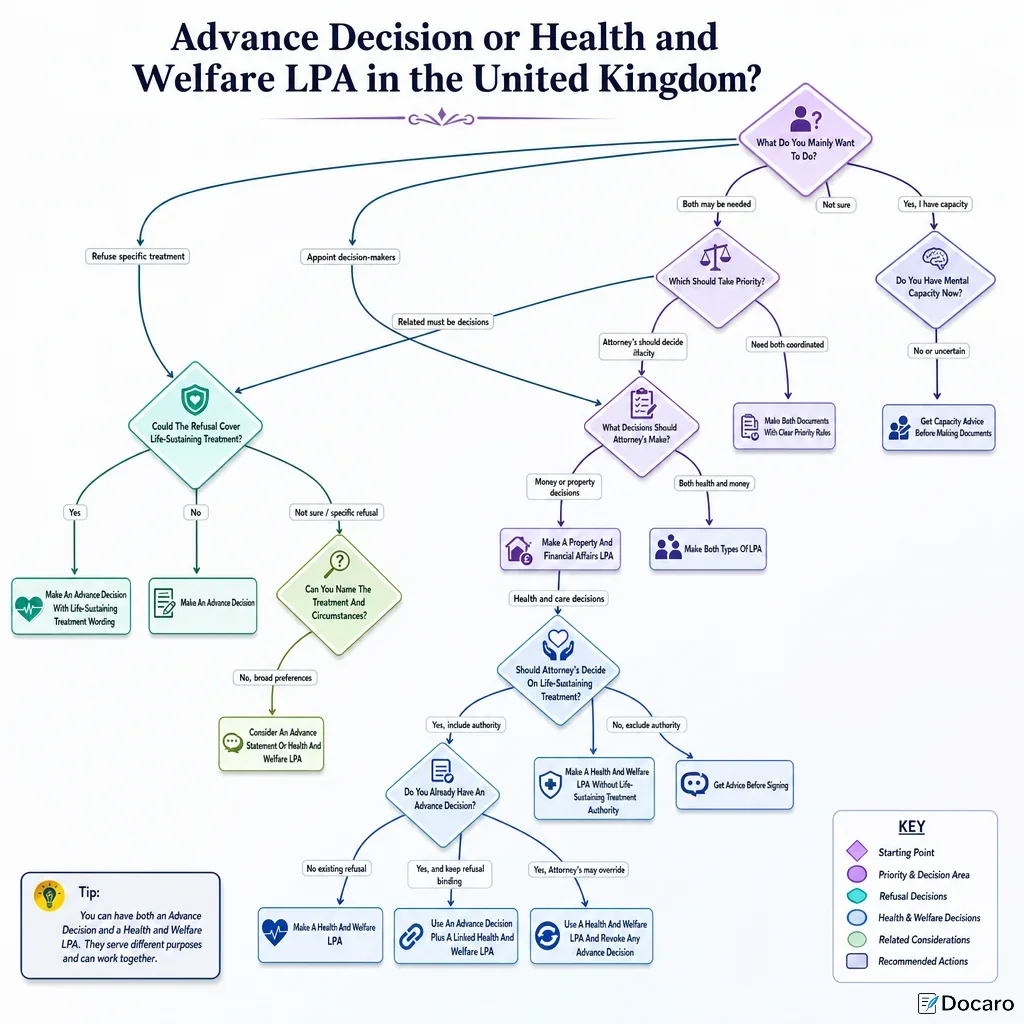
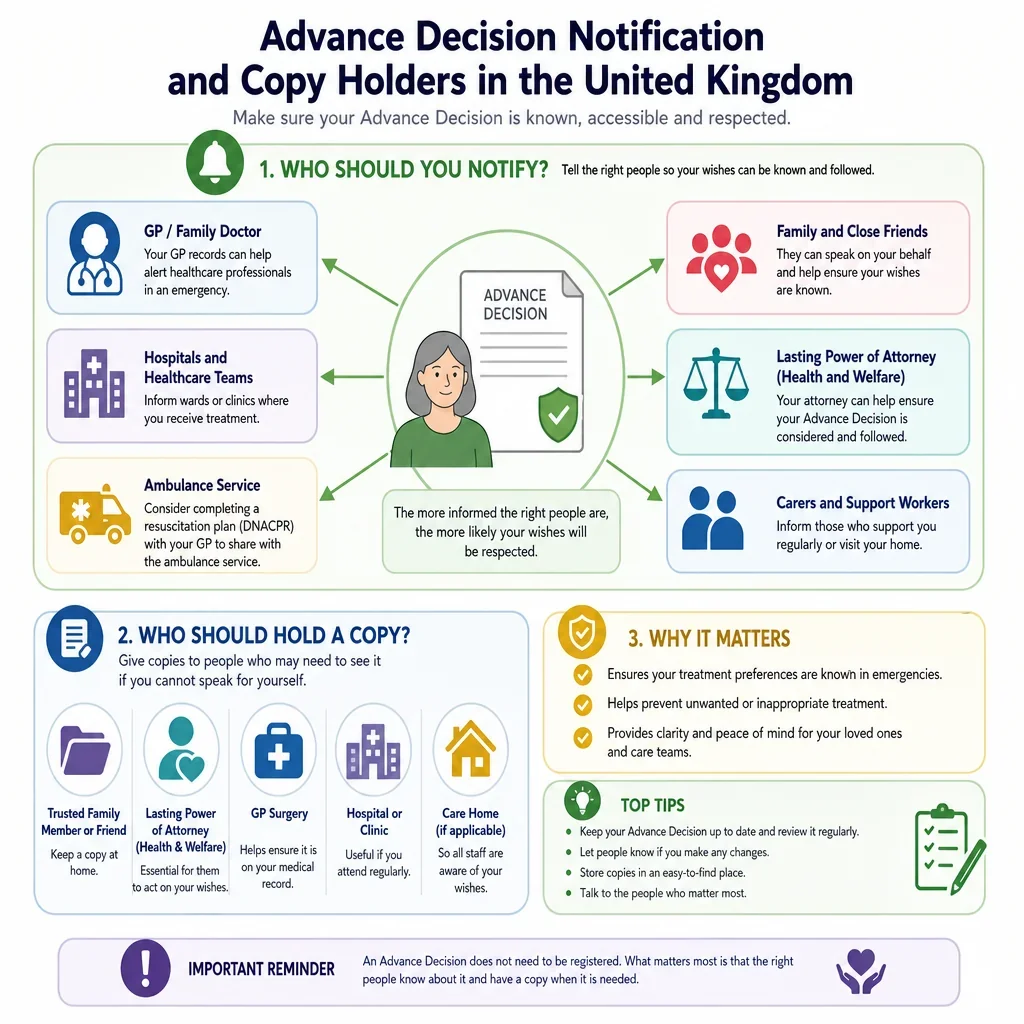
Unlike a Lasting Power of Attorney (LPA), which appoints a trusted person to make decisions on your behalf for health, welfare, or finances once capacity is lost, an Advance Decision focuses solely on refusing specific treatments and does not delegate decision-making authority. While an LPA allows flexibility through an attorney who can consent to or refuse treatments based on your best interests, an Advance Decision is binding only for refusals and must be followed by healthcare professionals if valid and applicable.
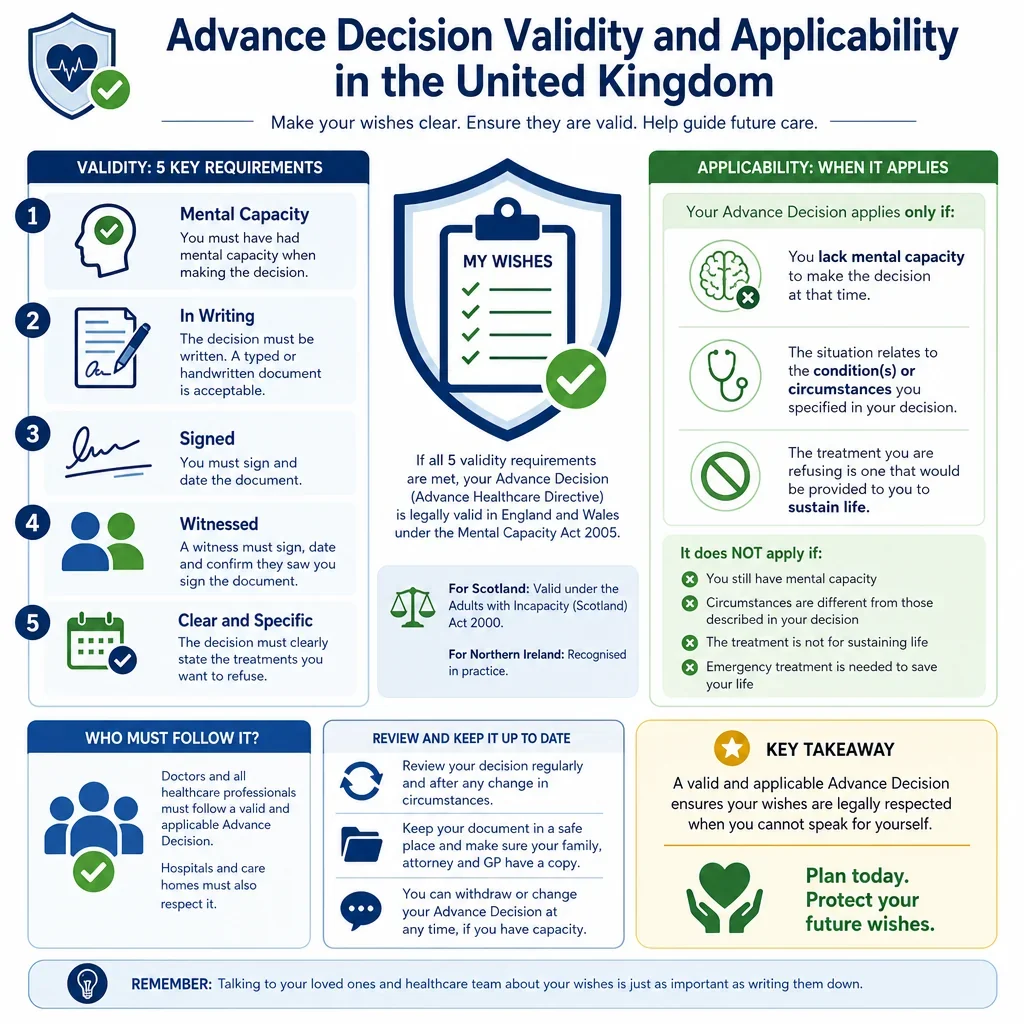
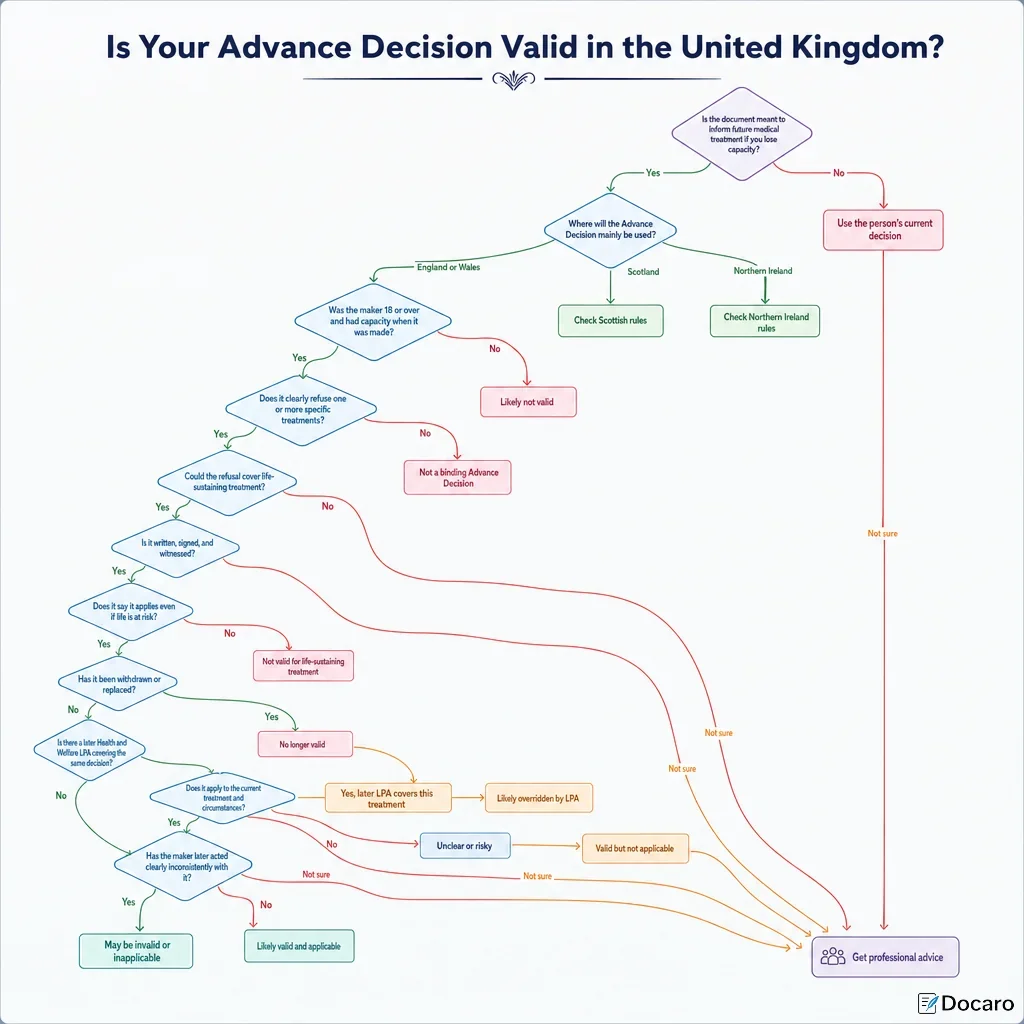
To create a valid Advance Decision, it must be signed and witnessed, and for refusals of life-sustaining treatment, it requires a specific statement of awareness. For authoritative guidance, refer to the official Mental Capacity Act guidance from the UK Government.
"Under UK law, an Advance Decision is a vital tool that lets you dictate your medical treatment preferences in advance, ensuring your wishes are respected when you're unable to decide. For a personalized document tailored to your needs, use Docaro's bespoke AI-generated service to create it accurately and efficiently."
When Should You Use an Advance Decision, and When Should You Not?
An Advance Decision, also known as a living will, is essential for individuals with progressive illnesses like dementia, where they can specify refusal of life-sustaining treatments such as ventilation or resuscitation before losing mental capacity. This legal document under UK law ensures personal wishes are respected, preventing unwanted interventions as the condition advances. For those with strong views on life-sustaining treatments, it provides clarity on rejecting procedures like artificial feeding if they deem them burdensome.
However, an Advance Decision should not be used for general health directives, which are better handled by a Lasting Power of Attorney for Health and Welfare, allowing an appointed person to make ongoing decisions. It is also unsuitable if circumstances might change unpredictably, as the document may become invalid if the individual regains capacity or alters their views, requiring regular reviews.
Key exclusions under UK law include the inability to refuse basic care like washing or dressing, or nutrition and hydration provided in non-artificial ways, as these are considered essential comforts. For authoritative guidance on Advance Decisions, refer to the Mental Capacity Act 2005 Code of Practice or consult professionals for bespoke documents generated via Docaro to tailor to specific needs.
Key Exclusions in Advance Decisions
Advance Decisions in the UK, also known as living wills, allow individuals to refuse specific medical treatments in anticipation of future incapacity. However, they have key exclusions to ensure they align with ethical and legal standards, such as not being able to demand specific treatments that doctors are not obligated to provide.
These documents cannot refuse basic nursing care, which includes essential hygiene, pain relief, and sustenance like food and water via non-artificial means, as outlined by UK law. Additionally, Advance Decisions do not apply to mental health treatments under the Mental Health Act 1983, meaning they cannot override compulsory detention or treatment in psychiatric settings.
For an Advance Decision to be valid and applicable, it must be specific and applicable to the current circumstances, clearly stating the treatments to be refused and signed by the individual when competent. Discussing these with healthcare professionals ensures clarity, and for personalized options, consider bespoke AI-generated legal documents using Docaro to tailor to individual needs.
Key exclusions summary:
- Cannot demand specific treatments.
- Cannot refuse basic nursing care.
- Do not apply to Mental Health Act treatments.
For official guidance, refer to the UK Government Mental Capacity Act page.

What Are the Key Clauses to Include in an Advance Decision Document?
A valid Advance Decision in the UK, also known as a living will, must include clear statements refusing specific treatments to ensure it is legally binding. For instance, phrasing for refusing life-sustaining treatments like artificial ventilation could state: "I do not want to be kept alive by artificial ventilation if I am in a permanent vegetative state and there is no reasonable prospect of recovery." Always consult authoritative sources such as the Mental Capacity Act Code of Practice for detailed guidance.
The document should specify conditions for applicability, outlining when the refusal takes effect, such as in cases of terminal illness or severe brain damage without hope of improvement. It must also include signatures from the person making the decision, along with witnesses who are independent and over 18, and be dated clearly to confirm it is the most recent version.
For step-by-step creation of a bespoke Advance Decision UK, refer to our internal guide at how to create Advance Decision UK steps. Consider using Docaro for generating personalized AI-assisted legal documents tailored to your needs, rather than generic options.
1
Identify Refused Treatments
List specific medical treatments you wish to refuse, such as life-sustaining ventilation or resuscitation, in clear terms.
2
Define Applicability Conditions
Specify circumstances when the advance decision applies, like terminal illness or permanent unconsciousness, to ensure relevance.
3
Add Validity and Signing Details
Include statements confirming your mental capacity, then sign and have the document witnessed by two adults.
4
Generate Bespoke Document with Docaro
Use Docaro to create a customized AI-generated advance decision incorporating your specific clauses for legal accuracy.
What Are the Key Rights and Obligations of Parties Involved?
In the UK, an individual making an Advance Decision (also known as a living will) has the legal right to refuse specific medical treatments in advance, ensuring their wishes are respected by healthcare providers even if they lose capacity to decide later. This right is enshrined in the Mental Capacity Act 2005, which mandates that doctors must honour a valid and applicable Advance Decision unless it poses an immediate risk to others.
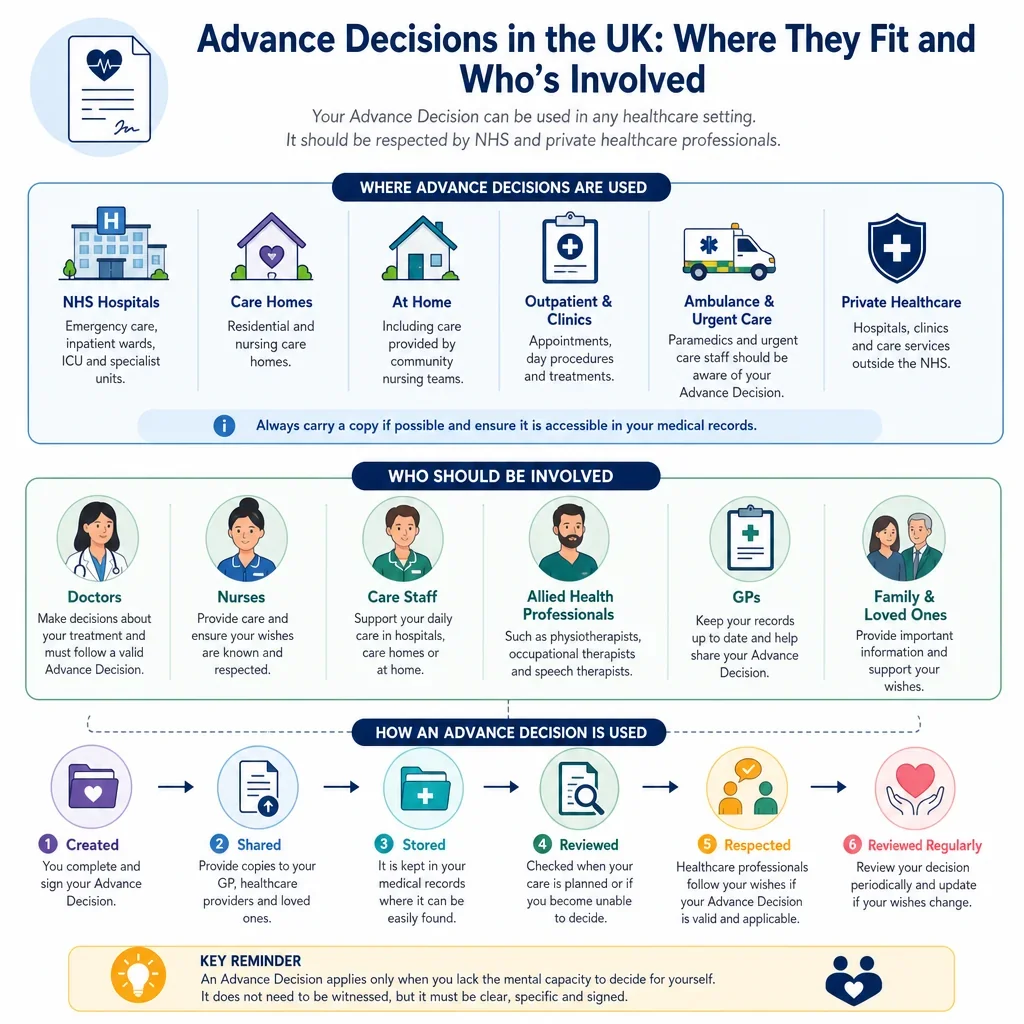
Doctors have clear obligations to verify the validity and applicability of an Advance Decision before proceeding with any treatment, including checking that it was made when the person had mental capacity, was voluntary, and specifically covers the proposed intervention. If doubts arise, healthcare professionals must assess these factors thoroughly, potentially consulting witnesses or records, to avoid overriding the patient's autonomy unlawfully.
Family members have the right to be informed about the existence and details of an Advance Decision during discussions on care, but they cannot override or veto it under UK law. This ensures families are involved supportively while upholding the individual's prior expressed wishes, as outlined in guidance from the NHS.
Are There Recent or Upcoming Legal Changes Affecting Advance Decisions?
The Mental Capacity Act 2005 provides the foundational framework for Advance Decisions in the UK, allowing individuals to refuse specific medical treatments in advance if they lose mental capacity. This stable legislation, effective since 2007, ensures that such decisions are legally binding when made validly, witnessed, and applicable to the circumstances.
Recent reviews, including the 2023 updates to the Mental Capacity Act Code of Practice, have clarified guidance on Advance Decisions without introducing major legislative changes. These refinements emphasize better recording and communication of decisions to healthcare providers, enhancing implementation but maintaining the core principles of the 2005 Act.
Post-Brexit health policy shifts have focused on data protection and NHS operations rather than altering Advance Decisions frameworks, with no significant impacts reported as of 2024. For the latest developments, consult authoritative sources like the Mental Capacity Act Code of Practice on GOV.UK or the NHS guidance on Advance Decisions.
To create personalized Advance Decisions, consider bespoke AI-generated legal documents through Docaro, ensuring they align with your specific needs under UK law. Always seek professional legal advice to verify validity and stay informed of any future updates.
What Common Mistakes Should You Avoid with Advance Decisions?
Creating an Advance Decision in the UK requires precision to ensure it legally reflects your medical wishes. Common pitfalls like vague language can invalidate the document, as courts may interpret ambiguous terms in ways that don't align with your intent, potentially leading to overridden decisions during incapacity.
Lack of witnesses is another frequent error that undermines the validity of an Advance Decision. Without proper witnessing as per UK guidelines, the document may be deemed unenforceable, forcing healthcare providers to act against your specified refusals.
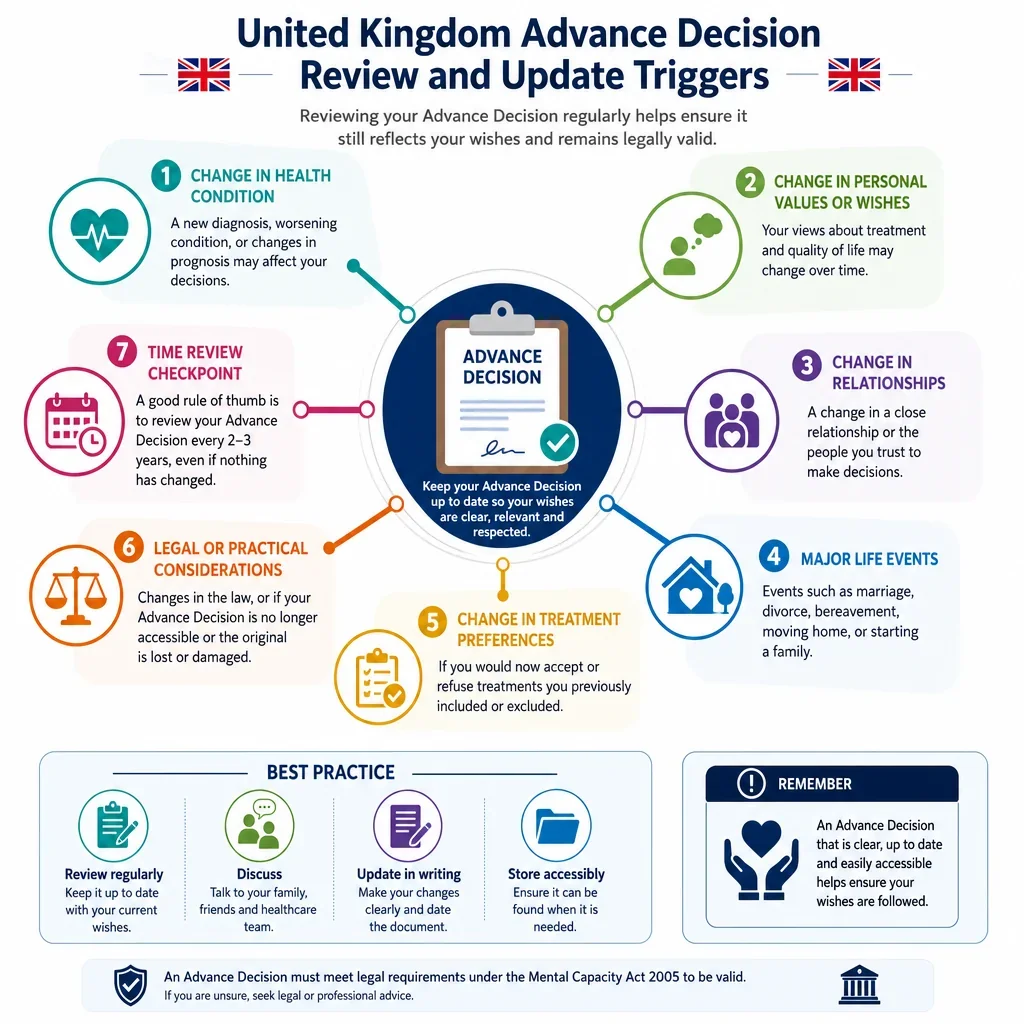
Failing to review periodically can also render an outdated Advance Decision invalid, especially if circumstances or laws change. For detailed avoidance strategies on these Advance Decision mistakes, explore our guide at common mistakes in UK Advance Decisions.
To avoid these issues, opt for bespoke AI-generated legal documents using Docaro, tailored to UK law. For official guidance, refer to the NHS page on Advance Decisions or the Mental Capacity Act overview from GOV.UK.
1
Use Clear, Specific Language
Draft your Advance Decision with precise wording to avoid ambiguity. Use Docaro to generate a bespoke AI-created document tailored to your exact needs.
2
Ensure Proper Signing and Witnessing
Sign your Advance Decision in the presence of two independent witnesses. Follow Docaro's guidance for compliant bespoke document execution.
3
Review and Update Regularly
Revisit your Advance Decision annually or after major life changes. Regenerate updates via Docaro for personalized, current legal protection.
4
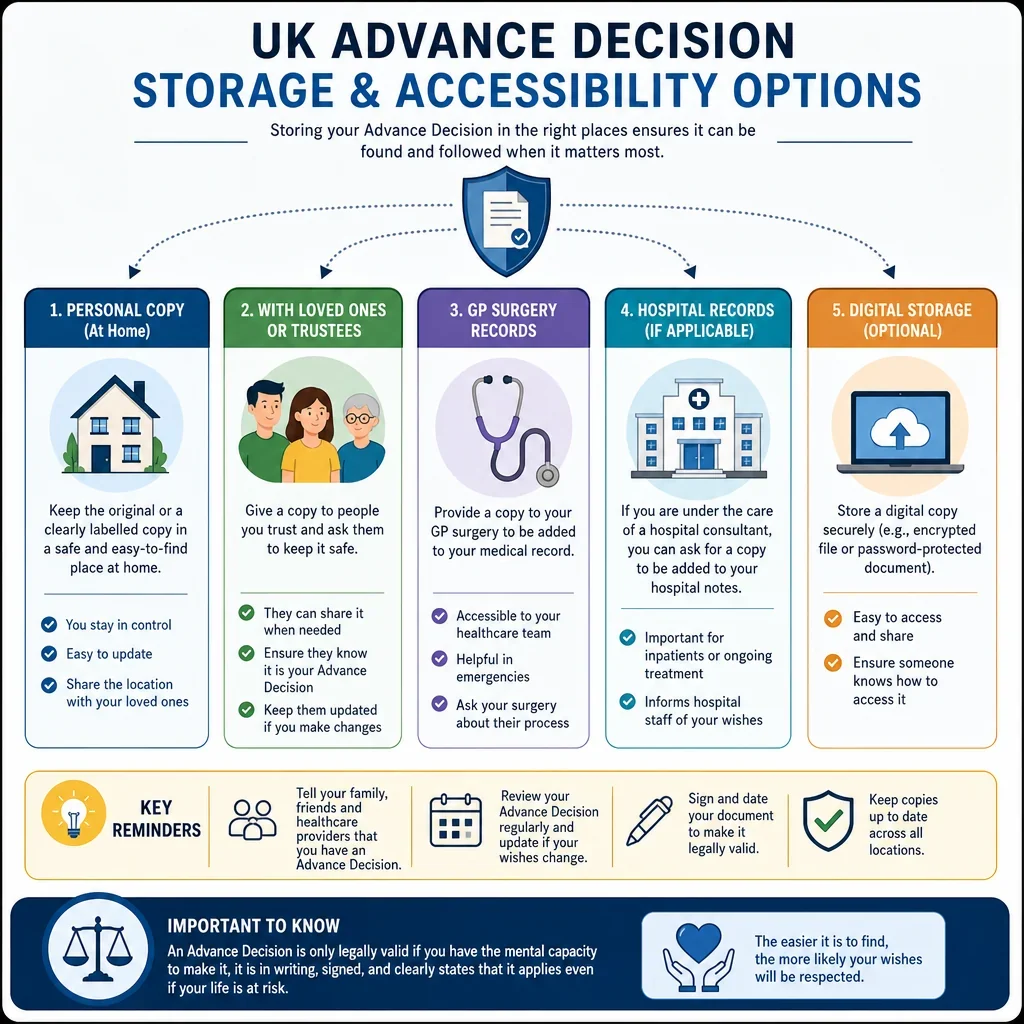
Store Securely and Inform Parties
Keep your document in a safe place and share copies with doctors and family. Use Docaro's secure storage for easy access.
You Might Also Be Interested In
A Legal Document Specifying How A Person's Assets Should Be Distributed After Their Death.
A Legal Document Specifying An Individual's Medical Treatment Preferences In Case They Become Unable To Communicate.
A Legal Document Authorizing One Person To Act On Behalf Of Another In Specified Matters.
A Revocable Living Trust Is A Legal Arrangement Where Assets Are Transferred To A Trustee To Manage For Beneficiaries, With The Creator Retaining The Ability To Modify Or Revoke It During Their Lifetime.
A Codicil Is A Legal Document That Amends, Modifies, Or Adds Provisions To An Existing Will Without Revoking The Entire Will.
A Legal Document Listing All Assets And Property Of A Deceased Person's Estate For Probate Purposes.