Information Needed To Prepare A Codicil In The United Kingdom
Information Item | Reason Needed | Requirement Level | Where To Find It | Accuracy Importance |
|---|---|---|---|---|
Existing will details | ||||
Date of the existing will | Identifies the will being amended. | Usually required | First page or signing page of the will. | High |
Personal details | ||||
Full name in the existing will | Confirms the testator’s identity. | Usually required | Opening clause of the will. | High |
Current full legal name | Shows who is making the codicil now. | Usually required | Passport, driving licence or deed poll. | High |
Previous or alternative names | Links changed names to the will. | Sometimes required | Marriage certificate, deed poll or divorce papers. | High |
Current residential address | Updates identification and domicile context. | Usually required | Utility bill, bank statement or council tax bill. | High |
Existing will details | ||||
Address stated in the existing will | Helps match the codicil to the will. | Sometimes required | Opening clause of the will. | Medium |
Signing details | ||||
Country where codicil will be signed | Signing rules differ across UK jurisdictions. | Usually required | Planned signing location. | High |
Existing will details | ||||
Jurisdiction stated in the will | Shows which law the will refers to. | Sometimes required | Governing law or interpretation clause. | High |
Location of the original will | Codicil should be stored with it. | Usually required | Solicitor, bank, probate registry or home safe. | High |
Whether the will is signed | A codicil amends a valid executed will. | Usually required | Signature page of the will. | High |
Number of earlier codicils | Avoids conflicts with existing amendments. | Usually required | Documents stored with the will. | High |
Dates of earlier codicils | Identifies amendments being confirmed or changed. | Sometimes required | Top or signing page of each codicil. | High |
Whether earlier codicils remain valid | Clarifies the current testamentary scheme. | Sometimes required | Earlier codicils and revocation wording. | High |
Clause number to change | Targets the exact provision being amended. | Usually required | Numbered clauses in the will. | High |
Existing wording to remove | Prevents uncertainty about deleted text. | Sometimes required | Relevant clause in the will. | High |
Gift details | ||||
Replacement wording required | States the new legal effect. | Usually required | User instructions or solicitor notes. | High |
Existing will details | ||||
Confirmation of unchanged will terms | Confirms all other clauses still apply. | Usually required | User instructions and existing will. | High |
Personal details | ||||
Date of birth | Useful extra identity check. | Optional | Passport, birth certificate or driving licence. | Medium |
Marital or civil partnership status | Marriage or divorce may affect wills. | Sometimes required | Marriage, civil partnership or decree absolute records. | High |
Marriage after the will date | Marriage can revoke an earlier will. | Sometimes required | Marriage or civil partnership certificate. | High |
Divorce or dissolution after the will date | May affect gifts and executor appointments. | Sometimes required | Final order or decree absolute. | High |
Signing details | ||||
Any capacity concerns | Capacity affects validity and challenge risk. | Sometimes required | Medical records or GP assessment notes. | High |
Ability to read and understand English | May require reading-over or translation evidence. | Sometimes required | User confirmation or interpreter details. | High |
Visual or physical signing difficulties | May require special attestation wording. | Sometimes required | User confirmation or medical notes. | High |
Executor details | ||||
Executor to remove | Identifies appointment being revoked. | Sometimes required | Executor clause in the will. | High |
New executor full name | Appoints the correct person. | Sometimes required | Executor’s passport or formal ID. | High |
New executor address | Helps locate and identify executor. | Sometimes required | Executor’s utility bill or bank statement. | Medium |
Executor relationship to testator | Aids identification and suitability checks. | Optional | User instructions. | Medium |
Professional executor firm details | Correctly names a firm or partner. | Sometimes required | Engagement letter or firm website. | High |
Substitute executor details | Provides backup if first executor cannot act. | Sometimes required | User instructions and substitute’s ID. | High |
Executor’s willingness to act | Reduces risk of later refusal. | Optional | Written or verbal confirmation from executor. | Medium |
Beneficiary details | ||||
Beneficiary to remove | Identifies gift or share being revoked. | Sometimes required | Relevant gift clause in the will. | High |
New beneficiary full name | Identifies who receives the gift. | Sometimes required | Beneficiary’s ID or birth certificate. | High |
Beneficiary address | Helps identify and locate beneficiary. | Sometimes required | Beneficiary’s utility bill or correspondence. | Medium |
Beneficiary date of birth | Distinguishes people with similar names. | Optional | Birth certificate or passport. | Medium |
Beneficiary relationship to testator | Clarifies identity and intended gift context. | Sometimes required | User instructions or family records. | Medium |
Charity’s official name | Avoids naming the wrong charity. | Sometimes required | Charity Commission register. | High |
Charity registration number | Uniquely identifies a charitable beneficiary. | Sometimes required | Charity Commission register. | High |
Company beneficiary registered details | Identifies a corporate beneficiary accurately. | Sometimes required | Companies House register. | High |
Whether a named beneficiary has died | May require substitute gift wording. | Sometimes required | Death certificate or family confirmation. | High |
Whether beneficiary is under 18 | May require trust or age-contingent wording. | Sometimes required | Birth certificate or family records. | High |
Signing details | ||||
Whether a beneficiary will witness | Gifts to witnesses may be void. | Usually required | Compare beneficiary list with witness names. | High |
Whether beneficiary’s spouse will witness | Their gift may be void. | Usually required | Witness relationship checks. | High |
Gift details | ||||
Type of gift changed | Determines wording for cash, item or share. | Usually required | Relevant clause and user instructions. | High |
Cash gift amount | States the exact legacy value. | Sometimes required | User instructions or financial plan. | High |
Currency of cash gift | Avoids uncertainty for non-sterling gifts. | Sometimes required | User instructions or account records. | High |
Specific item description | Identifies the item being gifted. | Sometimes required | Valuation, receipt, photograph or inventory. | High |
Property address for gifted land | Identifies land or home being gifted. | Sometimes required | HM Land Registry title register. | High |
Land Registry title number | Precisely identifies registered property. | Sometimes required | HM Land Registry title register. | High |
Whether gifted property is jointly owned | Joint ownership can affect what passes by will. | Sometimes required | Title register and ownership documents. | High |
Share of residue changed | Ensures residue shares total correctly. | Sometimes required | Residue clause and user calculations. | High |
Beneficiary details | ||||
Substitute beneficiary for a gift | States who benefits if first choice fails. | Sometimes required | User instructions. | High |
Gift details | ||||
Conditions attached to gift | Defines when the gift is payable. | Sometimes required | User instructions or existing clause. | High |
Age condition for beneficiary | Specifies when minor or young adult inherits. | Sometimes required | User instructions or trust clause. | High |
Whether gift is tax-free to beneficiary | Clarifies who bears inheritance tax burden. | Sometimes required | Existing tax clause or tax advice. | High |
Funeral wishes to add or change | Updates non-binding wishes in the will. | Optional | User instructions or funeral plan. | Medium |
Beneficiary details | ||||
Guardian appointment change | Updates care arrangements for minor children. | Sometimes required | Existing guardian clause and user instructions. | High |
New guardian name and address | Identifies proposed guardian accurately. | Sometimes required | Guardian’s ID and address evidence. | High |
Executor details | ||||
Trustee appointment change | Updates who manages trusts under the will. | Sometimes required | Trustee or executor clauses. | High |
New trustee full details | Identifies replacement or additional trustee. | Sometimes required | Trustee’s ID and address evidence. | High |
Gift details | ||||
Digital asset instruction change | Updates wishes for online accounts or assets. | Optional | Password manager inventory or account list. | Medium |
Pet care gift or instruction | Updates provision for animals after death. | Optional | User instructions and pet records. | Medium |
Mortgage or loan on gifted asset | Clarifies whether asset passes with debt. | Sometimes required | Mortgage statement or loan agreement. | High |
Whether the gifted asset is still owned | Avoids gifts of assets no longer owned. | Sometimes required | Title records, receipts or account statements. | High |
Signing details | ||||
Planned signing date | Dates the codicil and its priority. | Usually required | Signing appointment or calendar. | High |
Place of signing | Useful evidence of execution circumstances. | Optional | Signing appointment details. | Medium |
First witness full name | Required for valid attestation evidence. | Usually required | Witness’s ID. | High |
Second witness full name | Required for valid attestation evidence. | Usually required | Witness’s ID. | High |
Witness addresses | Helps locate witnesses if probate queries arise. | Usually required | Witness utility bill or correspondence. | High |
Witness occupations | Traditional extra witness identification detail. | Optional | Witness confirmation. | Low |
Witnesses are adults | Adult independent witnesses reduce challenge risk. | Usually required | Witness ID or confirmation. | High |
Both witnesses present together | Required execution formality in England and Wales. | Usually required | Signing plan and witness availability. | High |
Testator signs or acknowledges signature | Core requirement for valid execution. | Usually required | Signing ceremony checklist. | High |
Witnesses sign or acknowledge signatures | Completes statutory attestation process. | Usually required | Signing ceremony checklist. | High |
Intention that signature gives effect | Signature must be intended to validate document. | Usually required | Attestation clause and signing instructions. | High |
Witnesses are independent | Reduces risk of failed gifts or disputes. | Usually required | Witness relationship checks. | High |
Whether signing is remote or video-witnessed | Temporary video-witnessing rules have ended. | Sometimes required | Signing plan. | High |
Attestation clause wording | Records compliance with signing formalities. | Usually required | Codicil template or solicitor draft. | High |
Whether someone signs for testator | Allowed only if done by direction and presence. | Sometimes required | User instructions and signing plan. | High |
Name of person signing for testator | Evidences signature by direction. | Sometimes required | Signer’s ID and signing notes. | High |
Existing will details | ||||
Parts to revoke only | Avoids revoking more than intended. | Sometimes required | Relevant clauses and user instructions. | High |
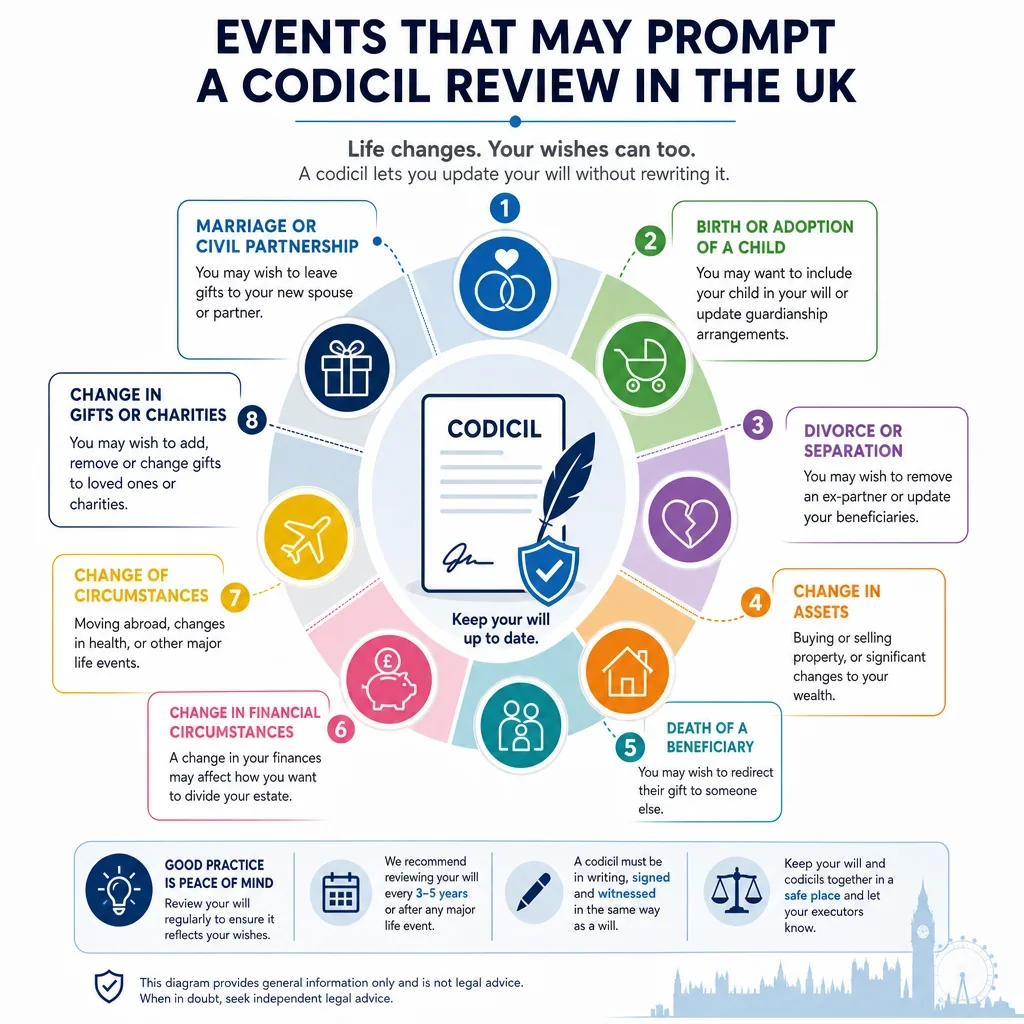
Number and complexity of changes | Complex changes may need a new will. | Usually required | List of intended amendments. | High |
Gift details | ||||
Major asset changes since the will | May make old gifts inaccurate or impossible. | Sometimes required | Asset list, bank records or property records. | High |
Executor details | ||||
Whether an executor has died | May require replacement executor appointment. | Sometimes required | Death certificate or family confirmation. | High |
Executor name change | Keeps executor identification current. | Sometimes required | Marriage certificate or deed poll. | Medium |
Beneficiary details | ||||
Beneficiary name change | Links current identity to named beneficiary. | Sometimes required | Marriage certificate or deed poll. | Medium |
Signing details | ||||
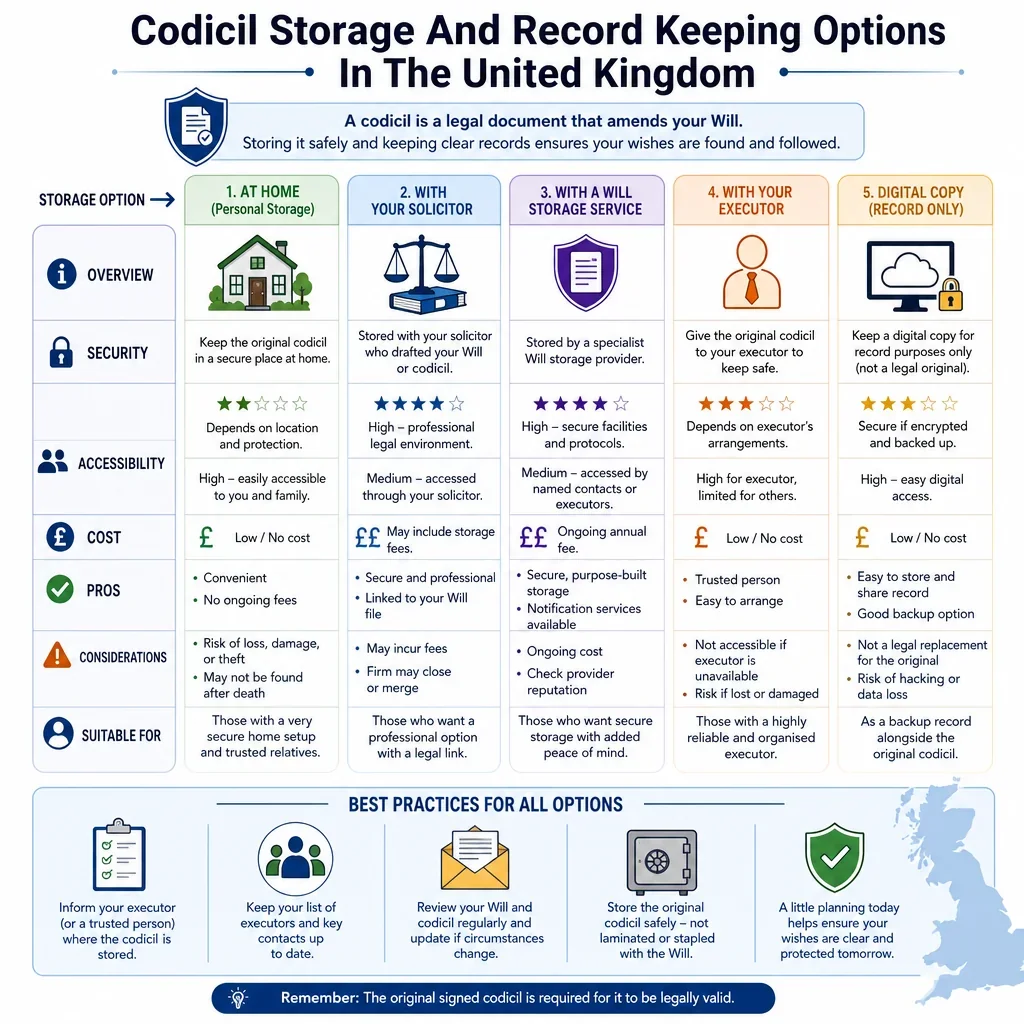
Where codicil will be stored | Ensures codicil can be found with will. | Usually required | Storage provider or home safe details. | High |
Executor details | ||||
Who will know codicil location | Helps executors find the latest documents. | Optional | Executor notification plan. | Medium |
What Information Do You Need Before Making A Codicil In The UK?
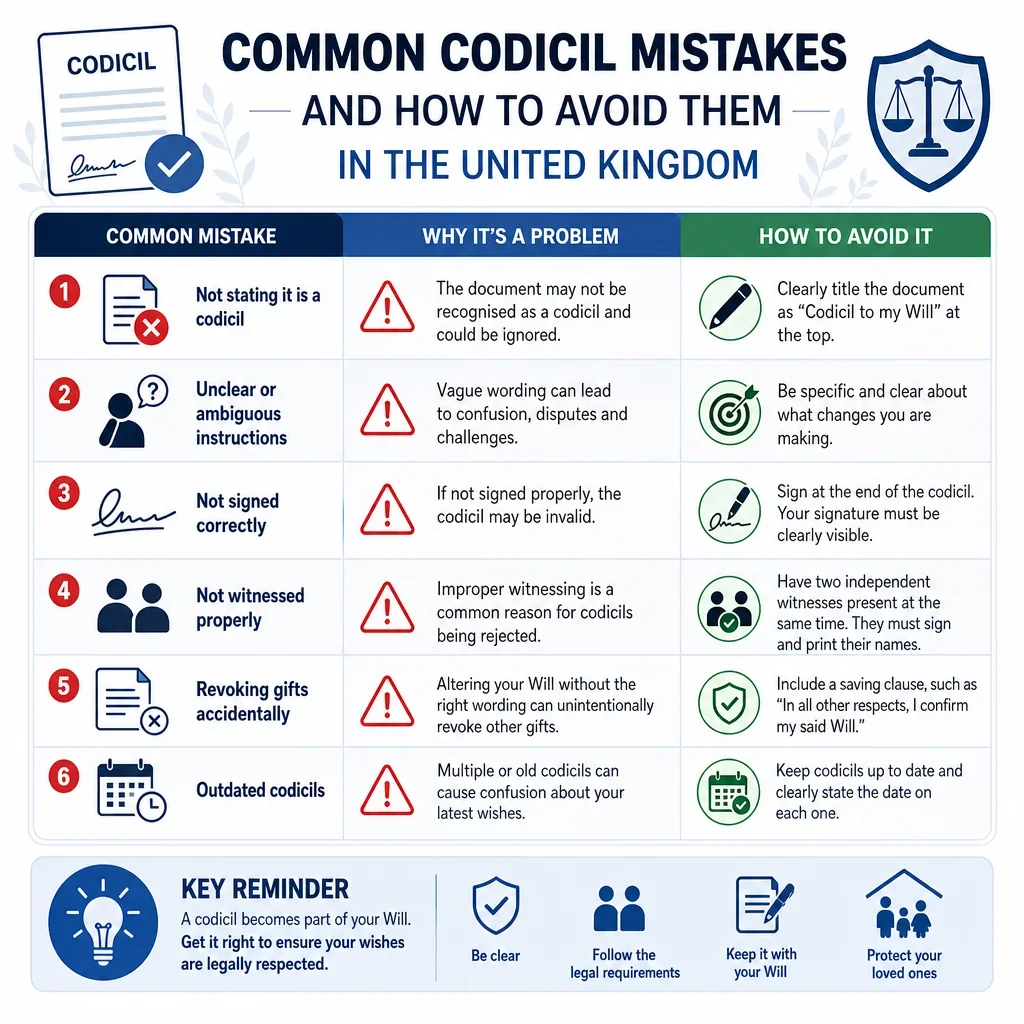
A codicil should be prepared from the signed will, not from memory. The date of the existing will, the testator’s full name and address, and the exact clause or gift being changed are high-accuracy items because a codicil must clearly identify the will it amends and avoid accidental revocation or ambiguity.
When Is A Codicil Better Than Making A New Will?
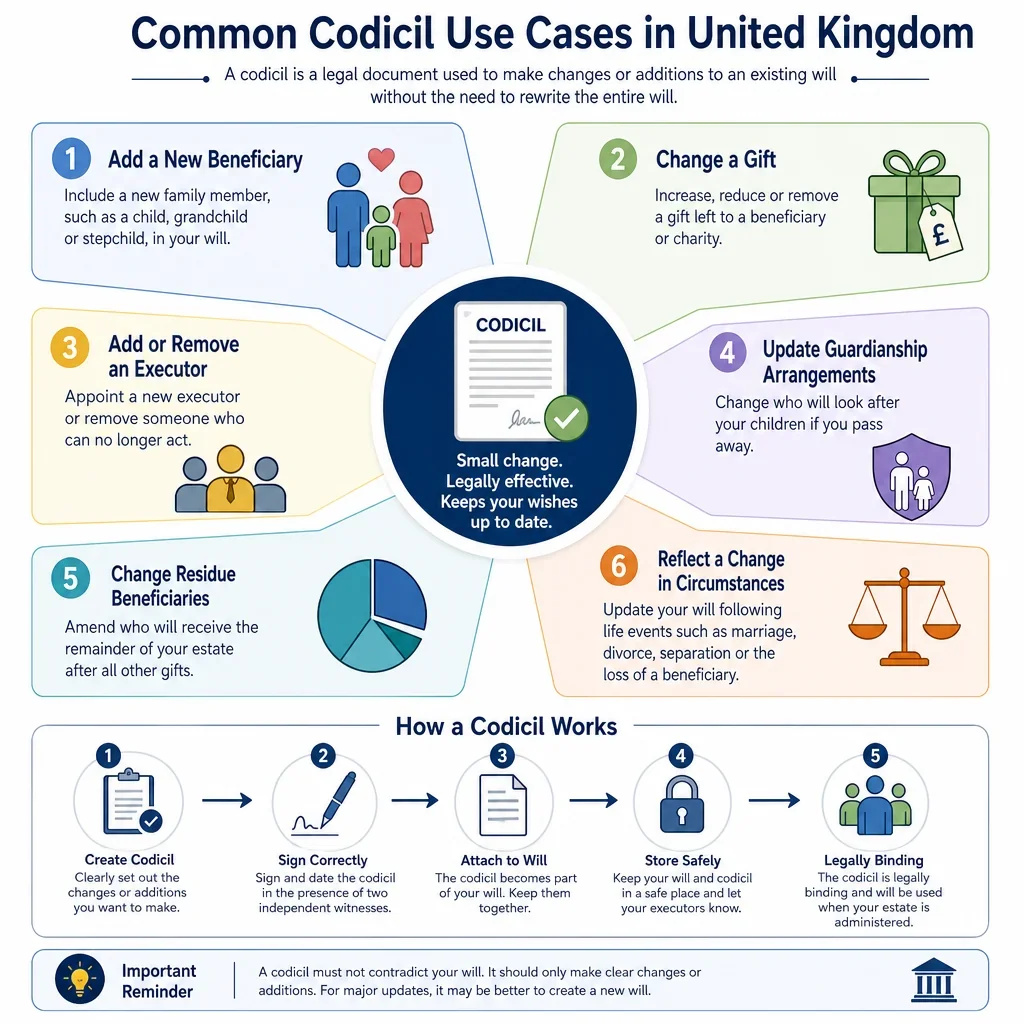
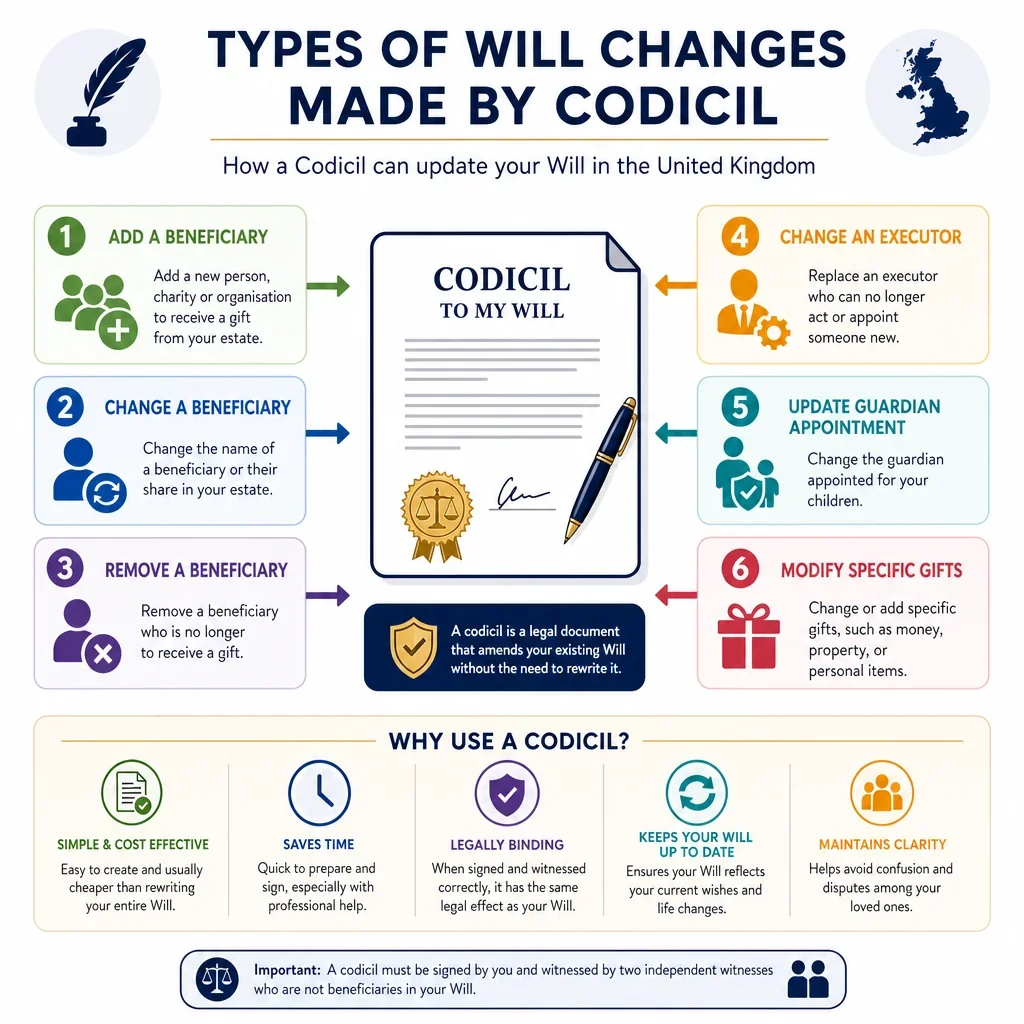
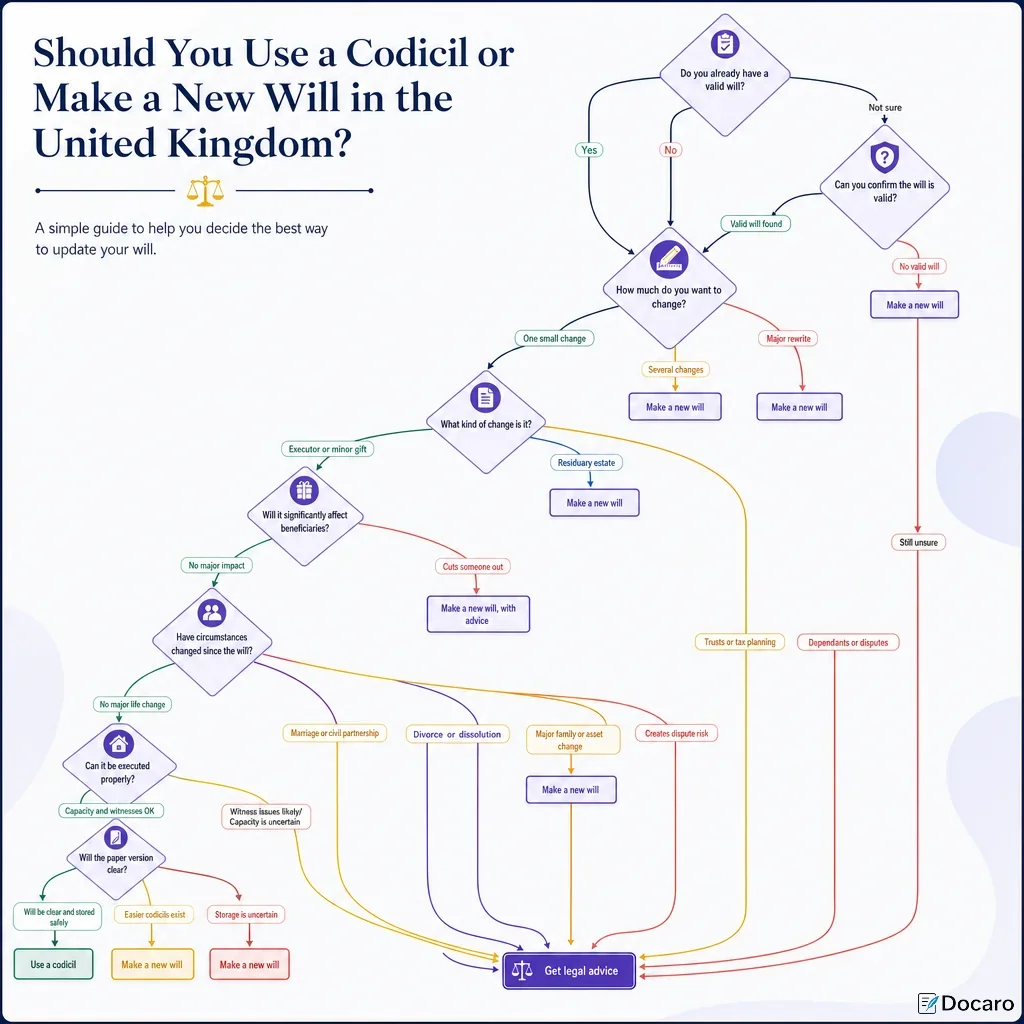
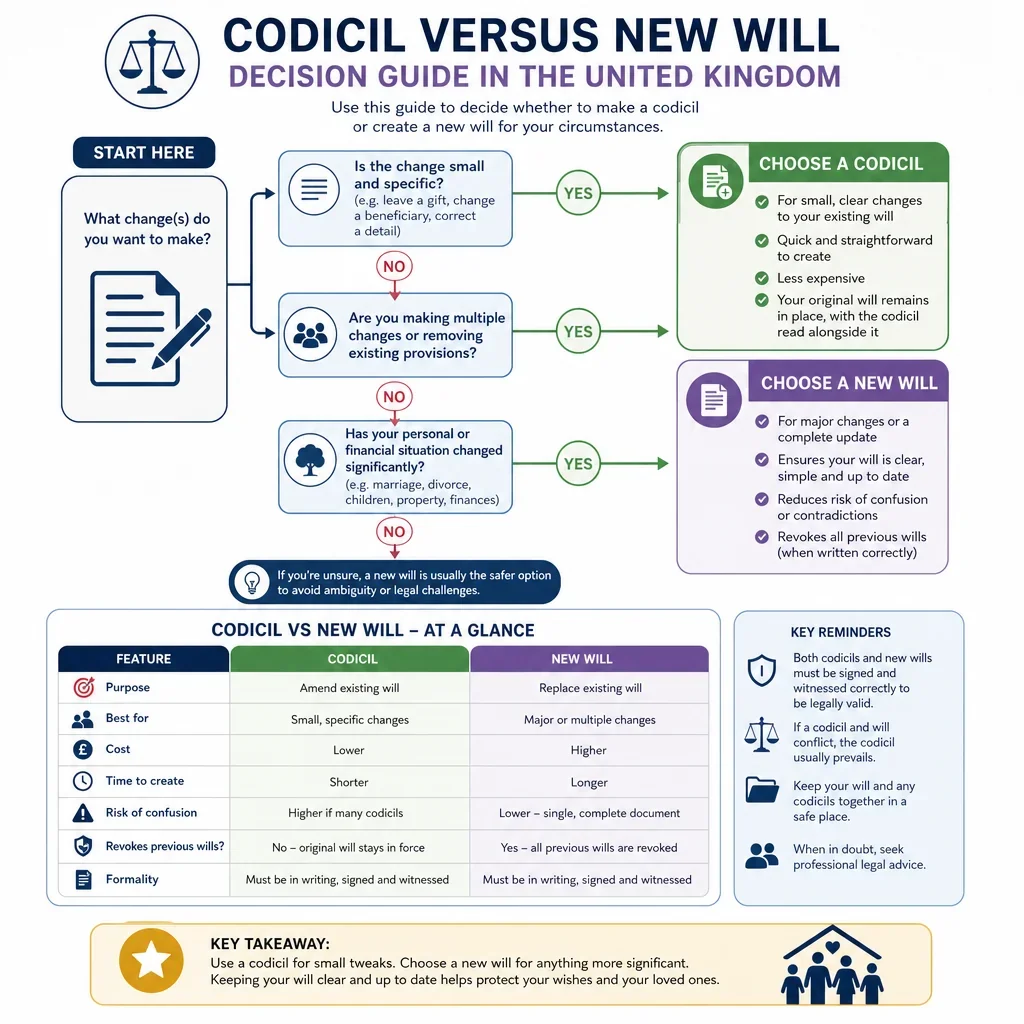
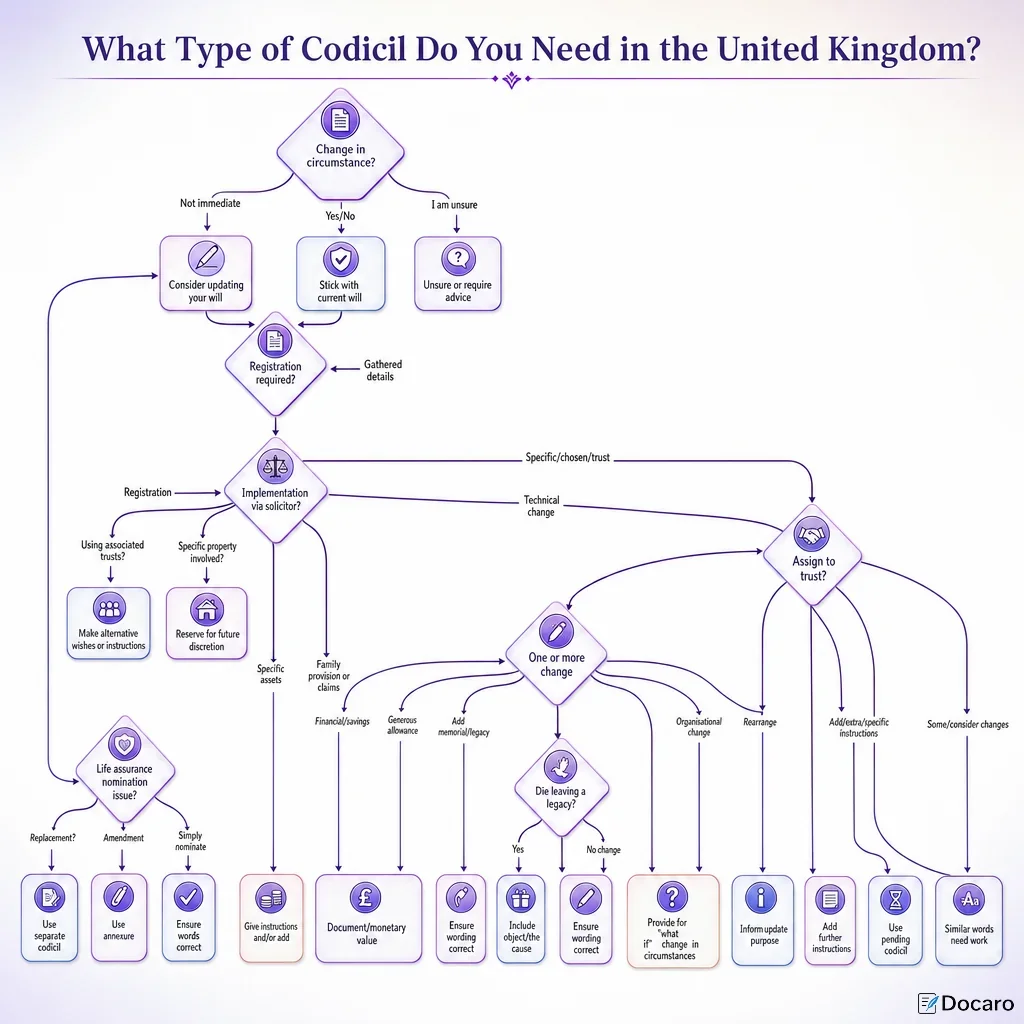
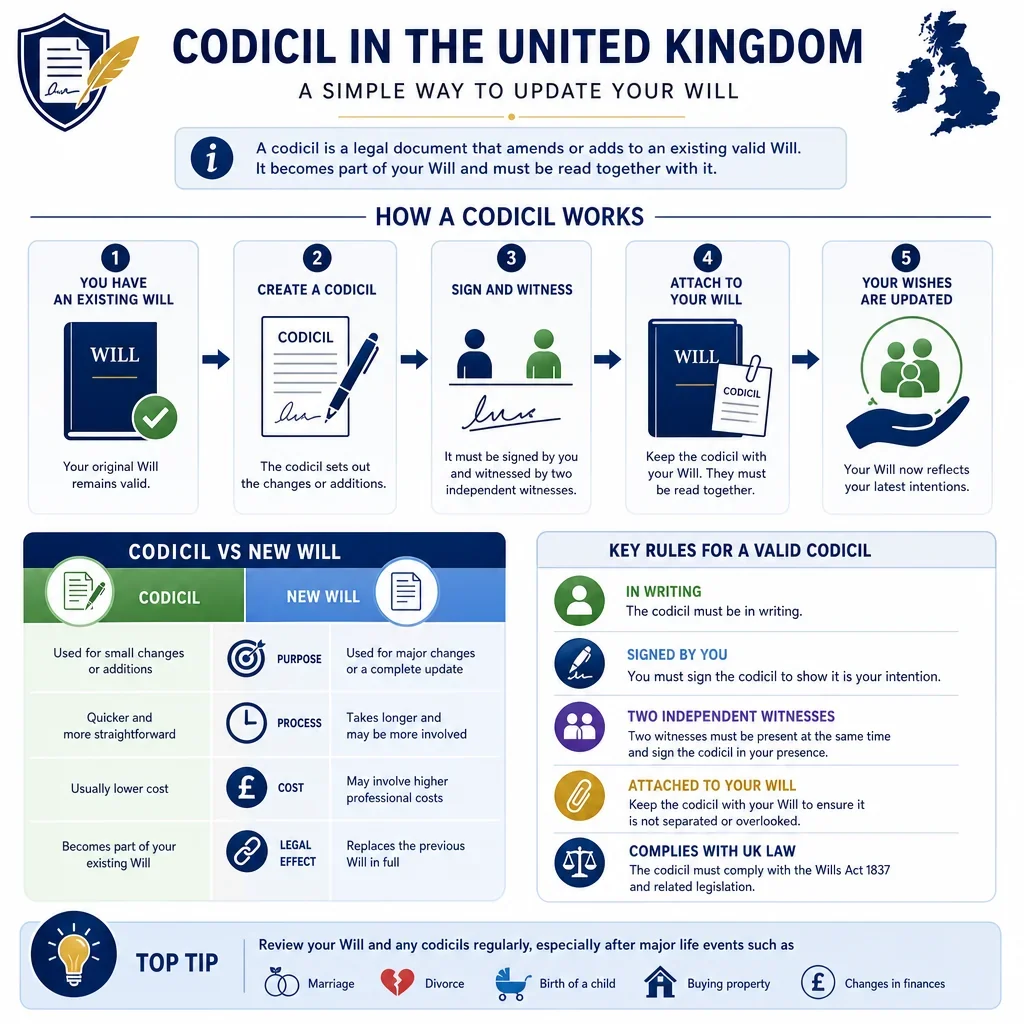
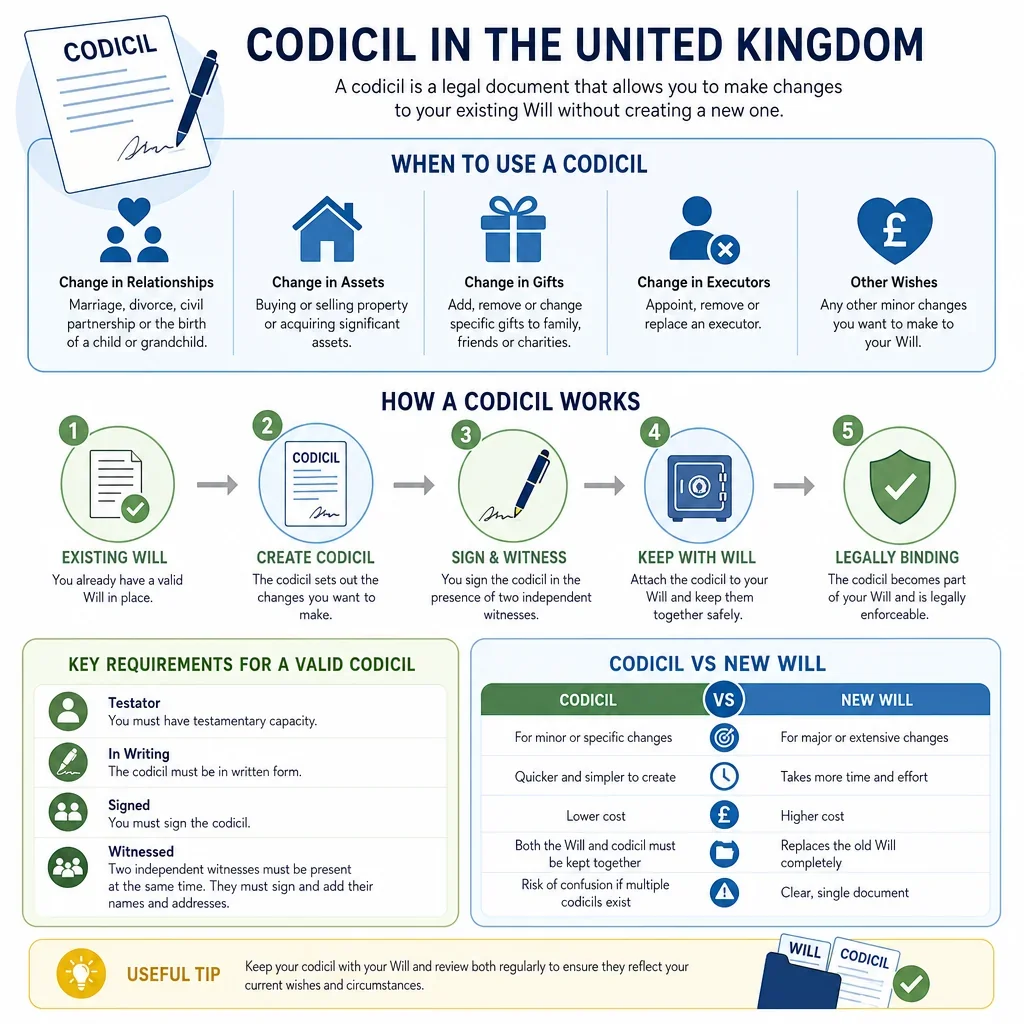
A codicil is usually most practical for a limited change, such as replacing an executor, changing a specific gift, adding a beneficiary, or updating an address. If there are many changes, inconsistent clauses, marriage or divorce issues, or a major redistribution of the estate, making a new will is often safer than adding multiple codicils.
What Signing Details Matter For A UK Codicil?
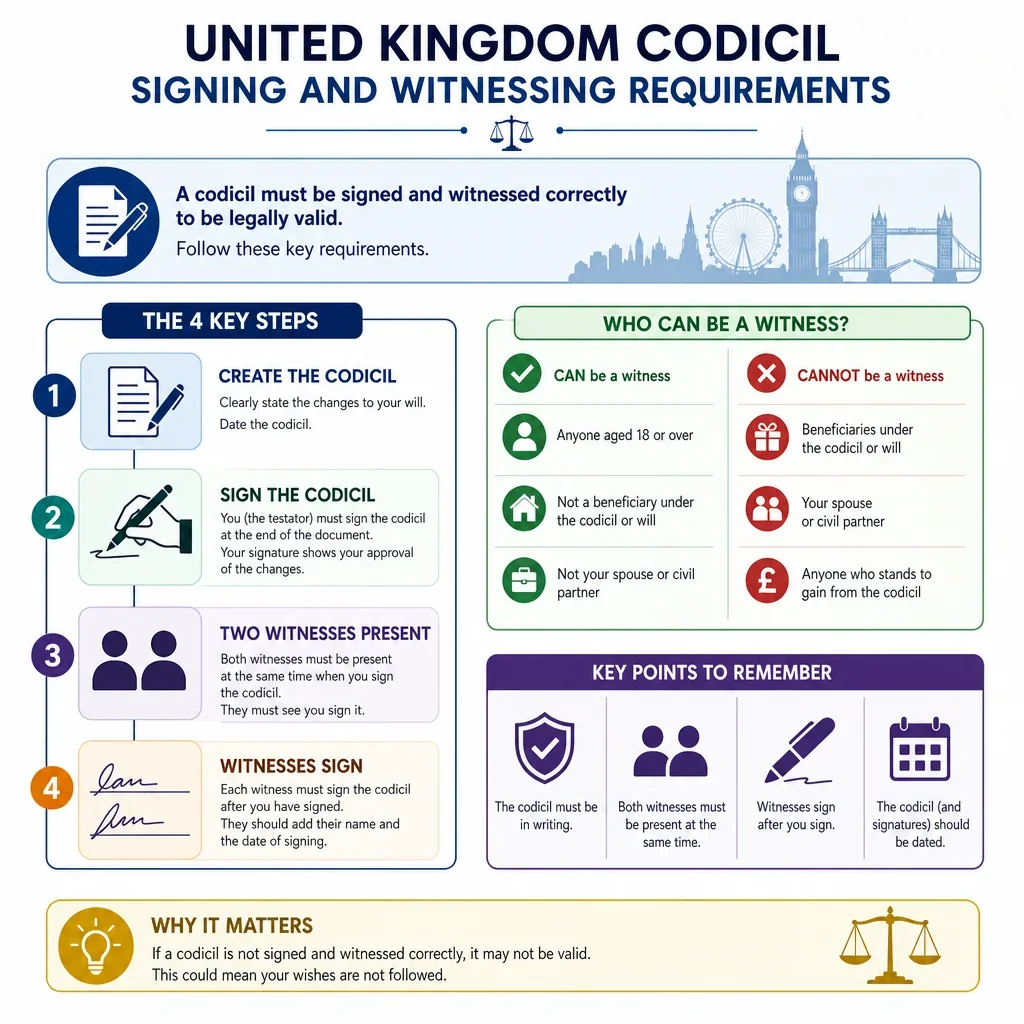
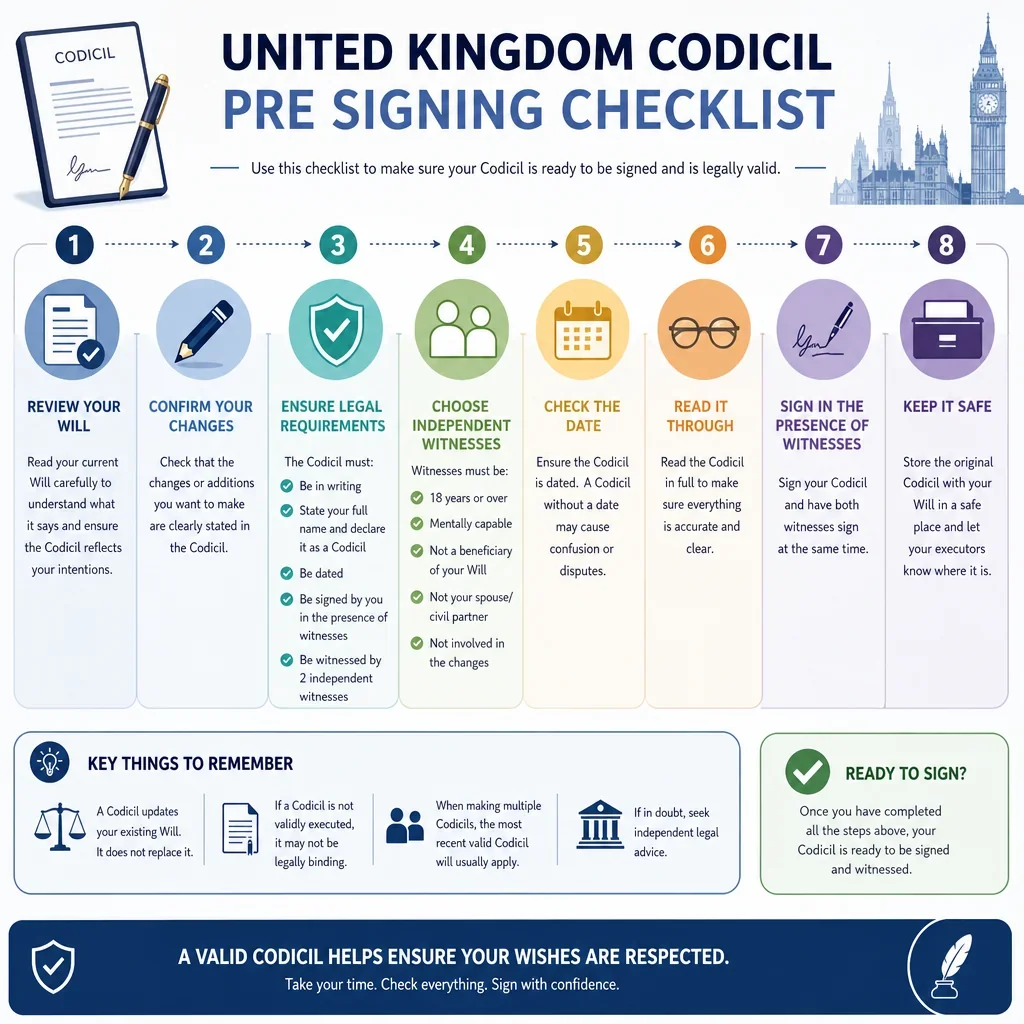
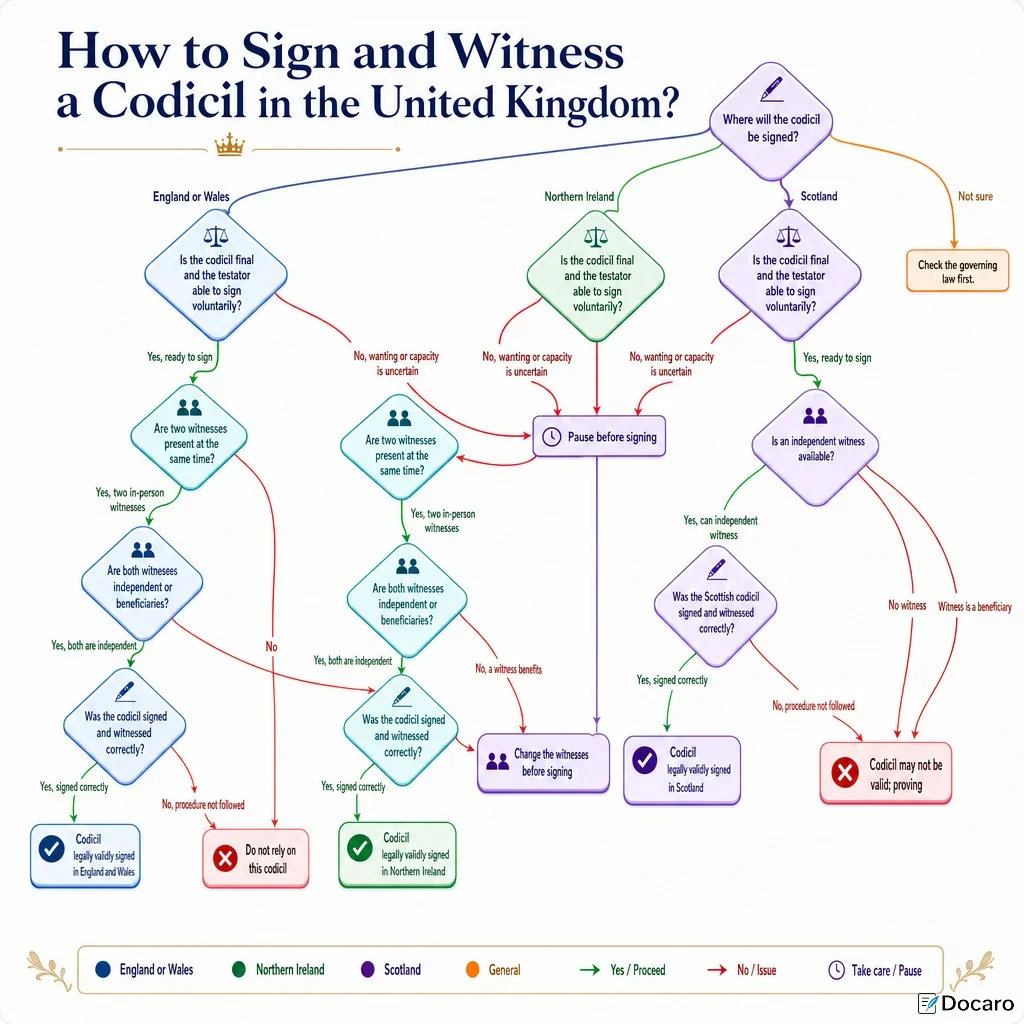
For England and Wales, a codicil normally needs the same execution formalities as a will under section 9 of the Wills Act 1837: the testator signs or acknowledges the signature in the presence of two witnesses present at the same time, and each witness signs or acknowledges their signature in the testator’s presence. Witness names, addresses, occupations and independence should be checked before signing.
Why Do Beneficiary And Witness Details Need Care?
In England and Wales, a beneficiary, or the spouse or civil partner of a beneficiary, should not witness the codicil because gifts to that person may be void under section 15 of the Wills Act 1837. Collecting beneficiary relationship details and witness eligibility information helps reduce the risk of an intended gift failing.
FAQs
You Might Also Be Interested In