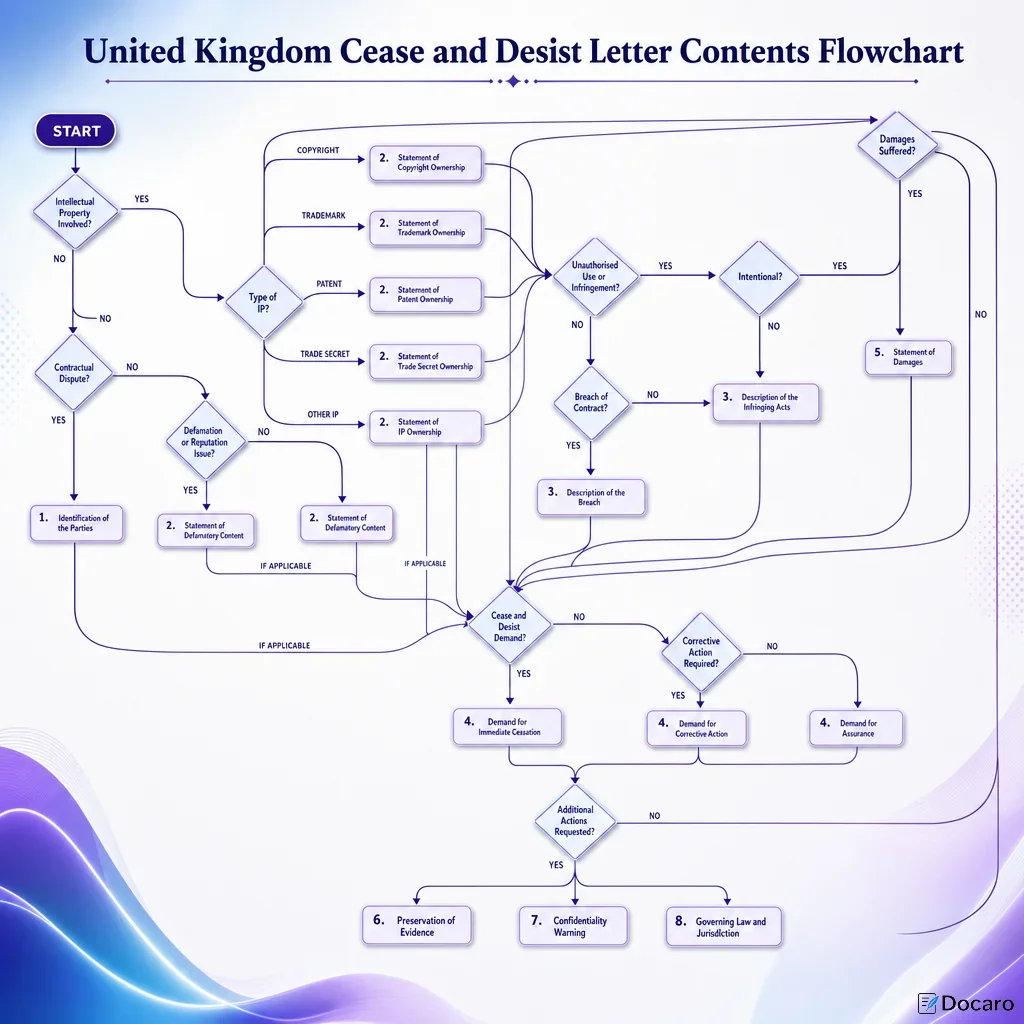
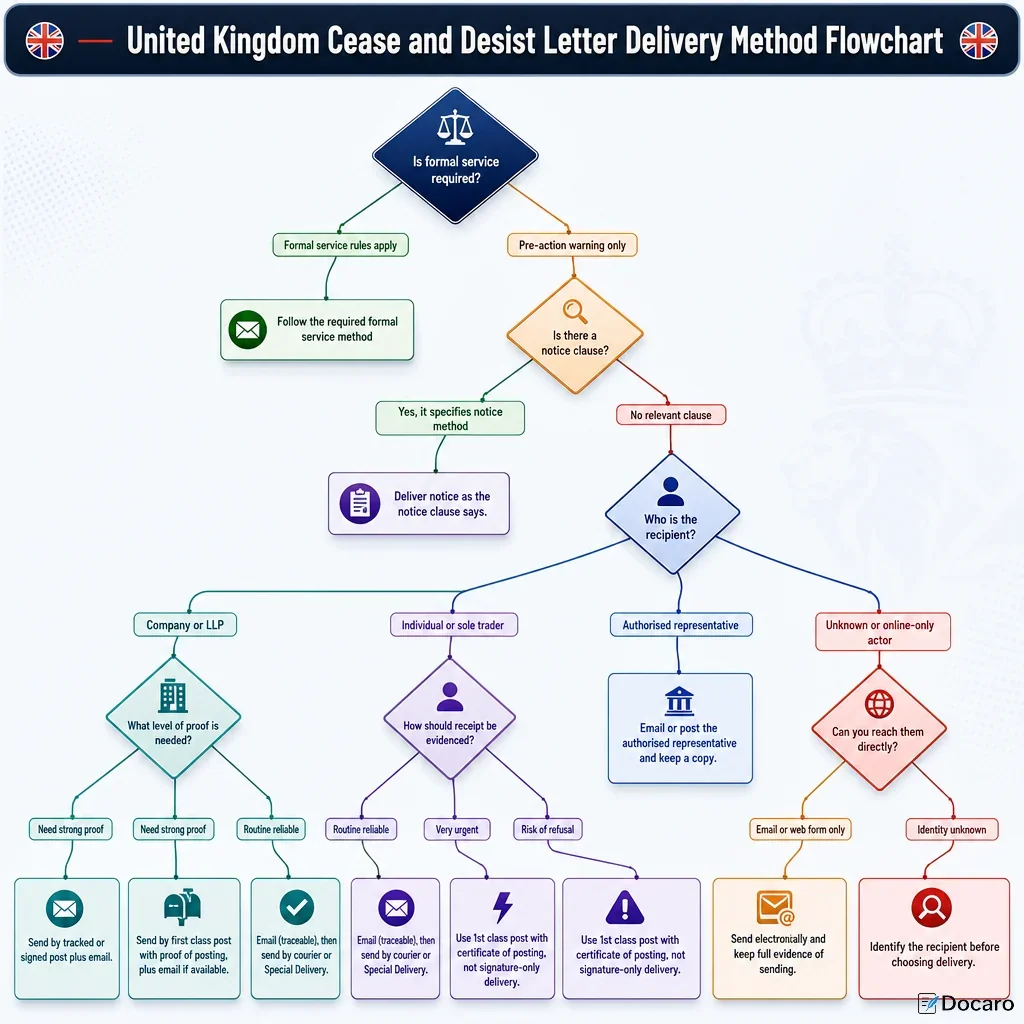
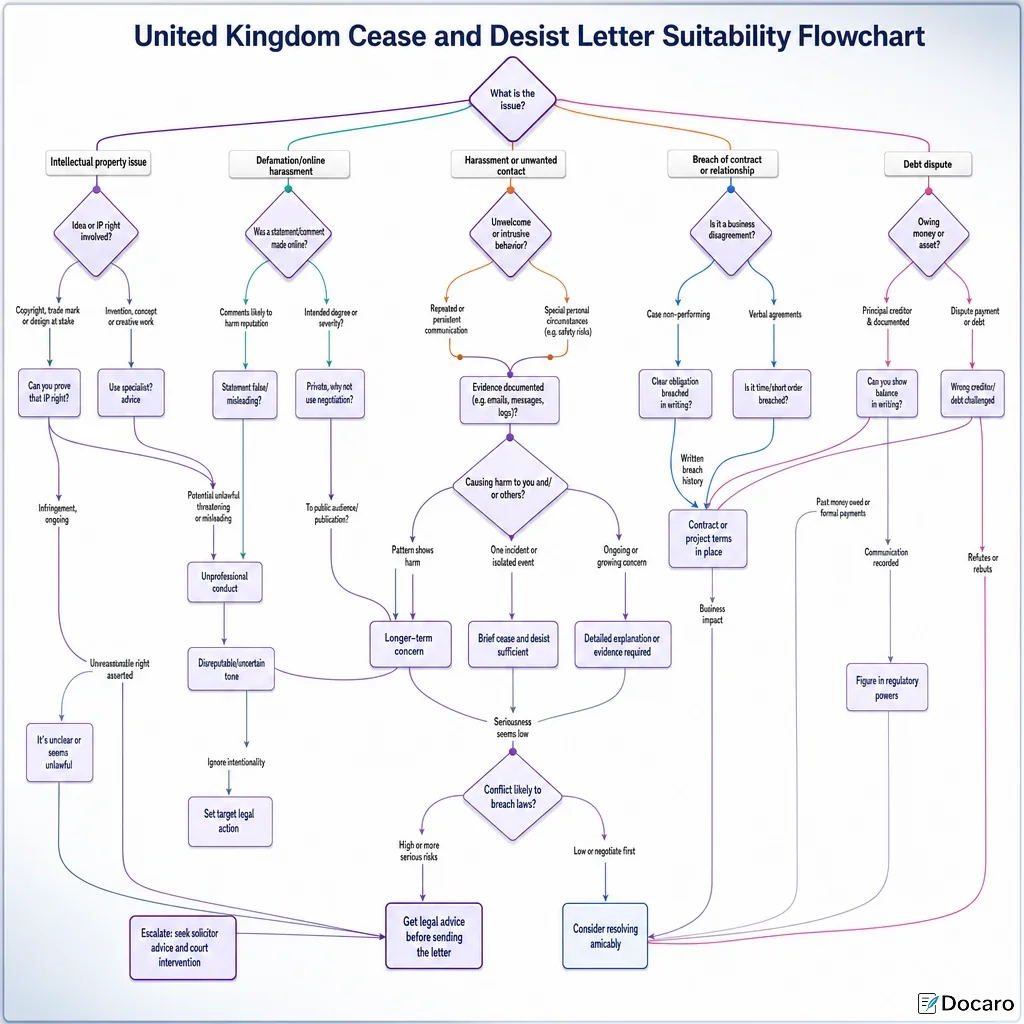
United Kingdom Cease And Desist Letter Suitability Flowchart
What is the main issue?
Why Choosing The Right UK Cease And Desist Letter Matters
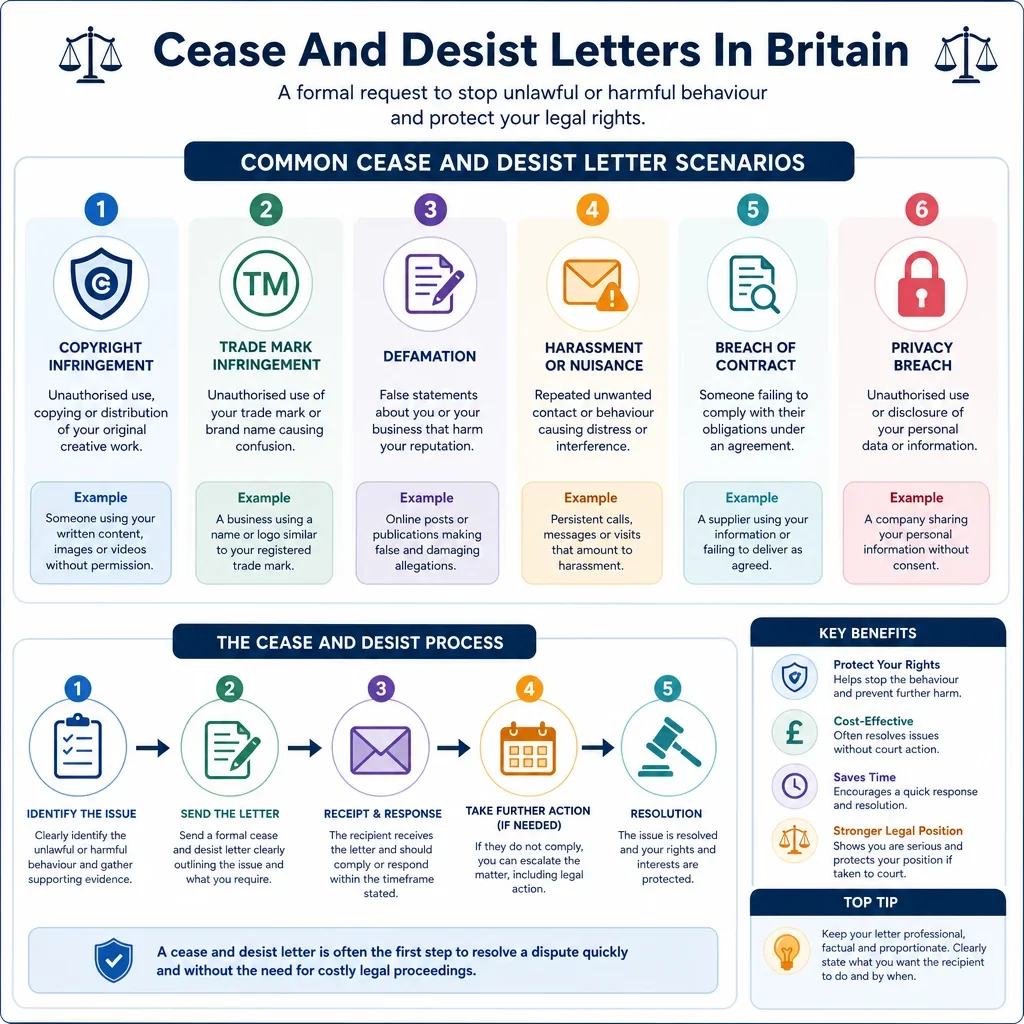
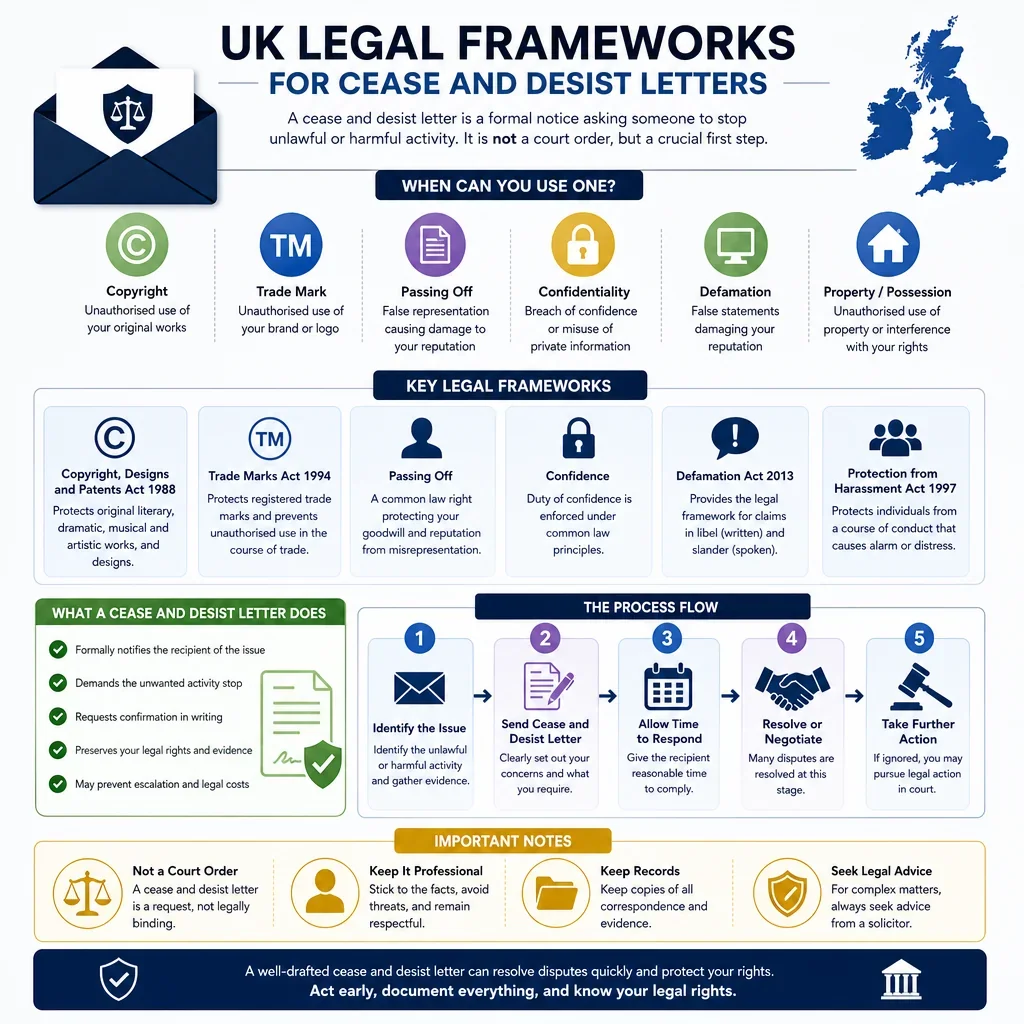
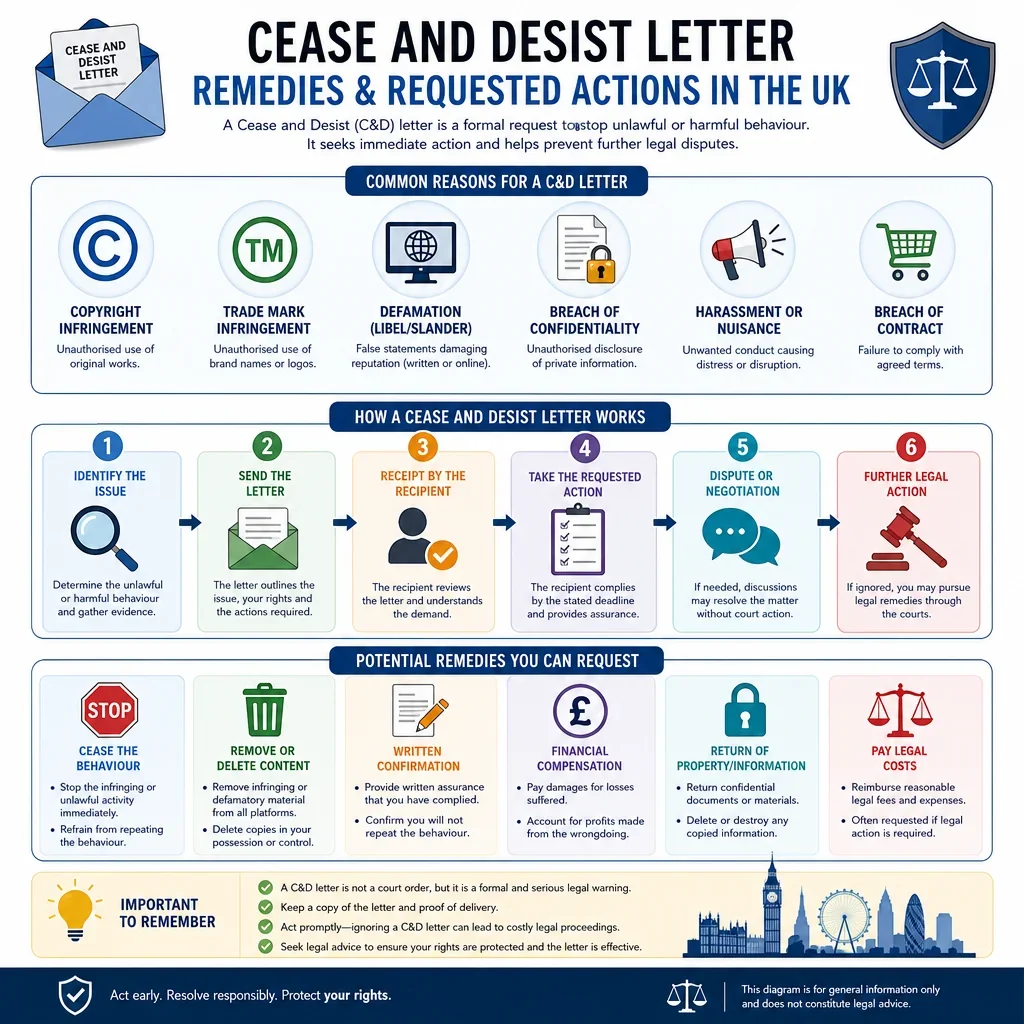
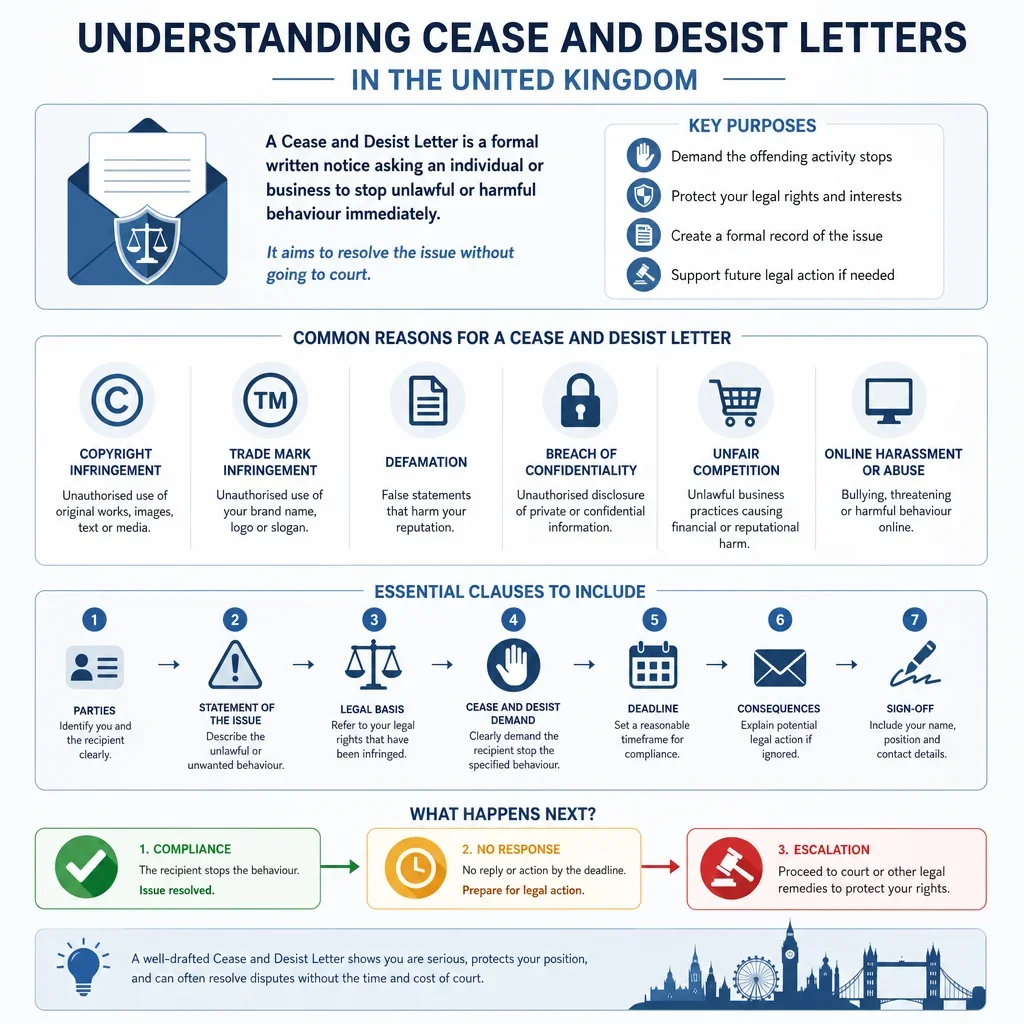
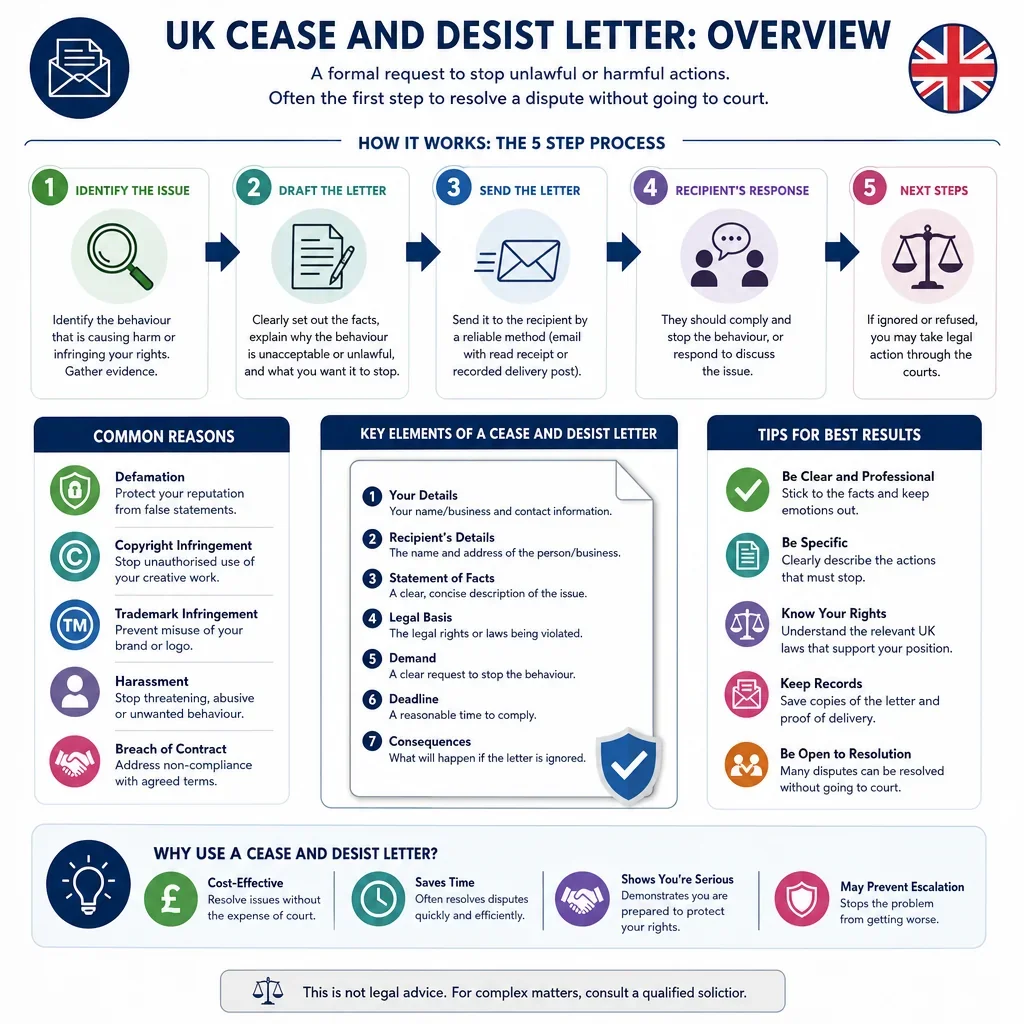
A cease and desist letter can be a useful first step in the United Kingdom when someone is misusing intellectual property, making harmful statements, breaching confidentiality, harassing you, or interfering with your business. The right letter can stop the conduct quickly, preserve evidence, and show that you have acted reasonably before any court action.
When Can The Wrong Letter Create Legal Risk?
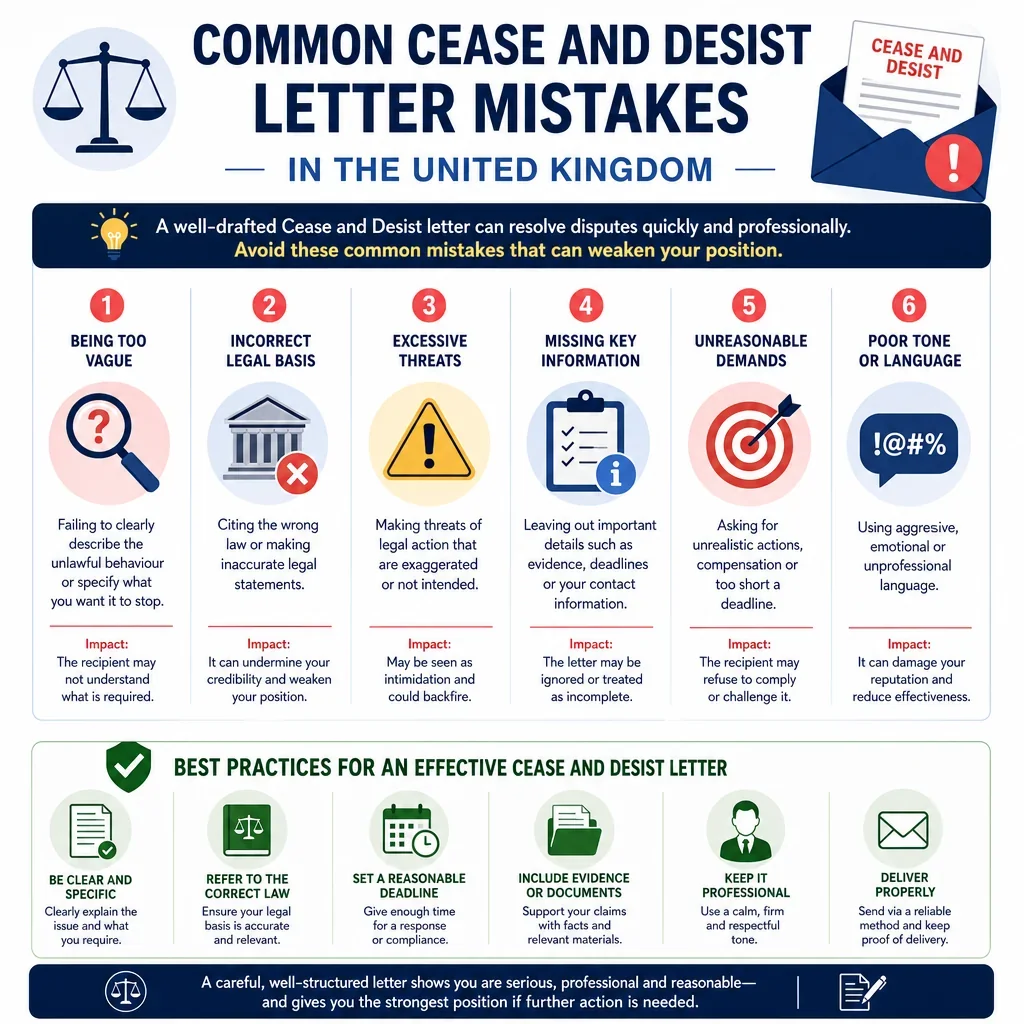
A poorly drafted letter can make a dispute worse. In the UK, exaggerated allegations, unjustified intellectual property threats, defamatory comments, or oppressive demands may expose the sender to criticism, counterclaims, or cost consequences. A letter should be accurate, proportionate, and based on evidence.
Why Is Evidence Important Before Sending A Cease And Desist Letter?
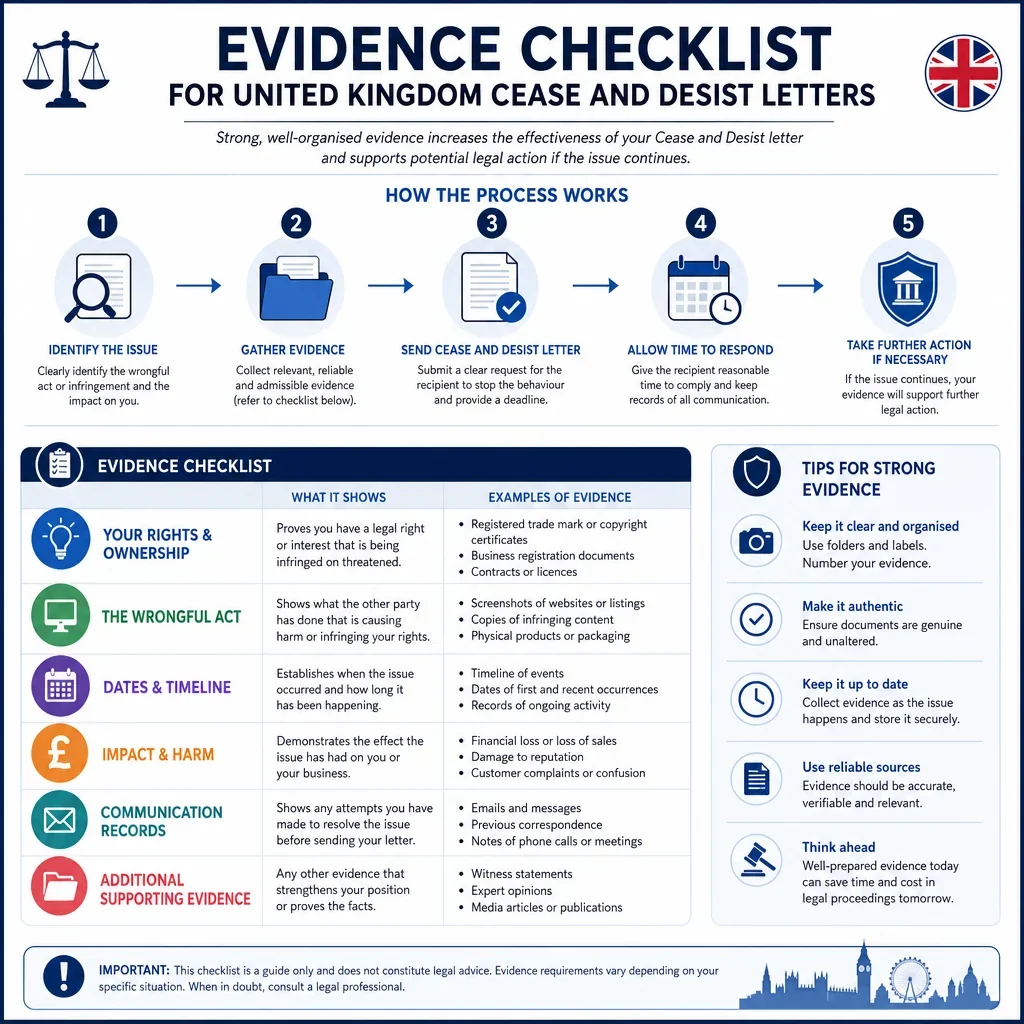
Evidence helps show that your complaint is genuine and that the recipient has a clear case to answer. Useful evidence may include screenshots, URLs, dates, contracts, trade mark registrations, copyright materials, messages, witness details, or records of repeated unwanted contact.
What If The Situation Is Urgent Or Unsafe?
If there is immediate danger, threats, stalking, violence, or a risk of serious imminent harm, a standard letter may not be enough. In those situations, urgent legal advice, police assistance, platform takedown action, or an injunction may be needed.
How Does A Cease And Desist Letter Fit With UK Court Rules?
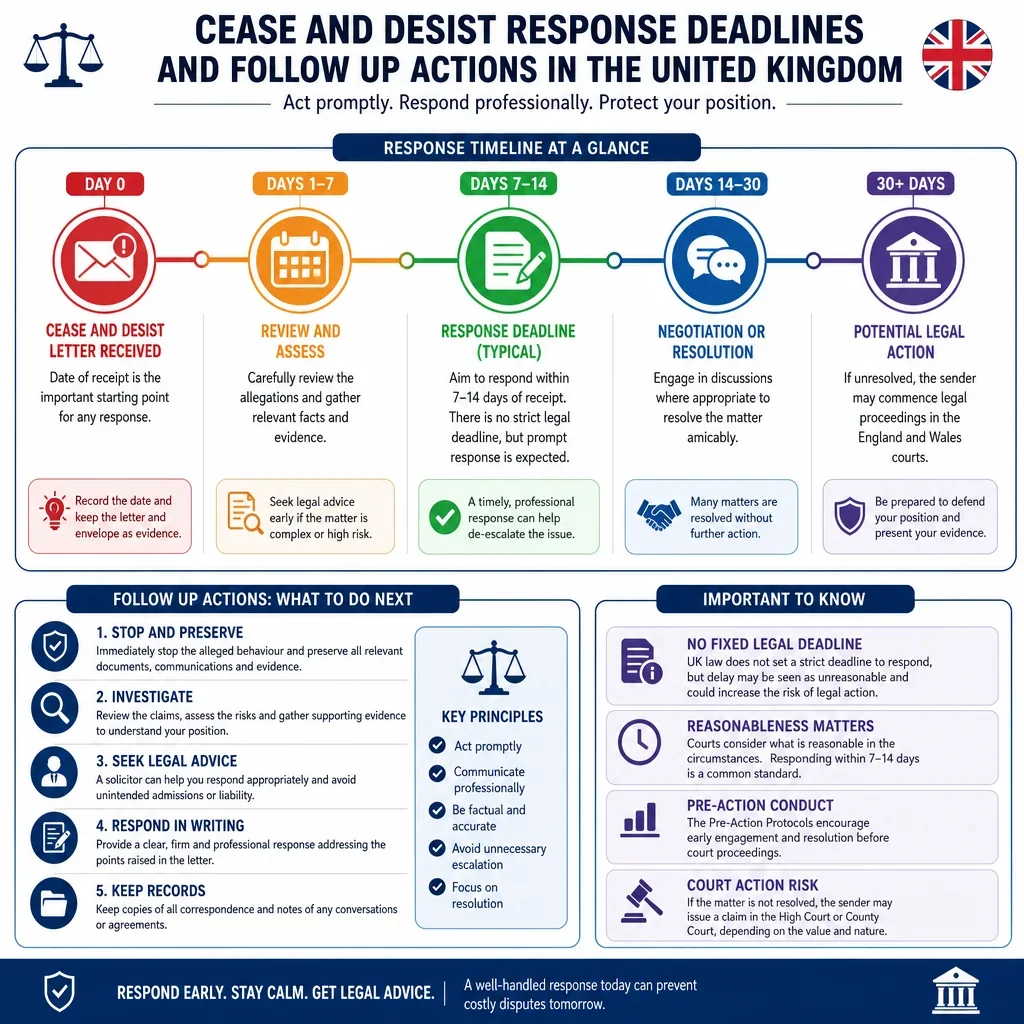
Courts in England and Wales often expect parties to act reasonably before litigation, exchange key information, and try to narrow the dispute. The Civil Procedure Rules on pre-action conduct explain why clear communication before a claim can matter.
- It clarifies the dispute: the recipient can see what conduct must stop and why.
- It supports settlement: many disputes are resolved without court proceedings.
- It protects your position: a reasonable letter can show that you tried to resolve the issue properly.
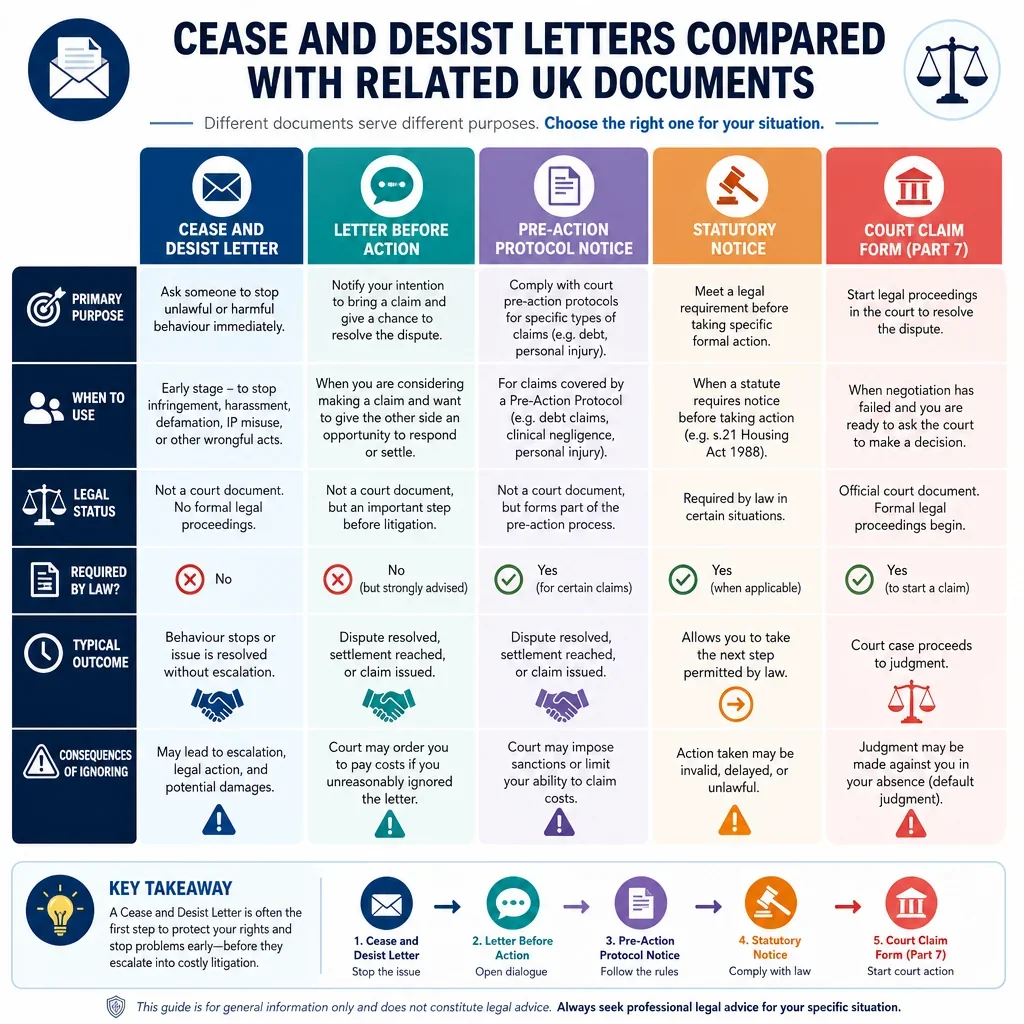
- It reduces mistakes: choosing the right process helps avoid using a cease and desist letter where a formal notice, regulator report, or letter before claim is more suitable.
FAQs
You Might Also Be Interested In