United Kingdom Cease And Desist Letter Clause Library
Clause Name | Purpose | Information To Include | Importance | Drafting Note |
|---|---|---|---|---|
Opening and identification | ||||
Sender Identification | Identifies who is making the demand. | Full legal name, address, company number if applicable, and representative details. | Usually essential | Use the correct legal entity, not only a trading name. |
Recipient Identification | Makes clear who must comply. | Recipient name, address, role, company details, website, username, or account handle. | Usually essential | Check whether directors, employees, platforms, or companies should be addressed separately. |
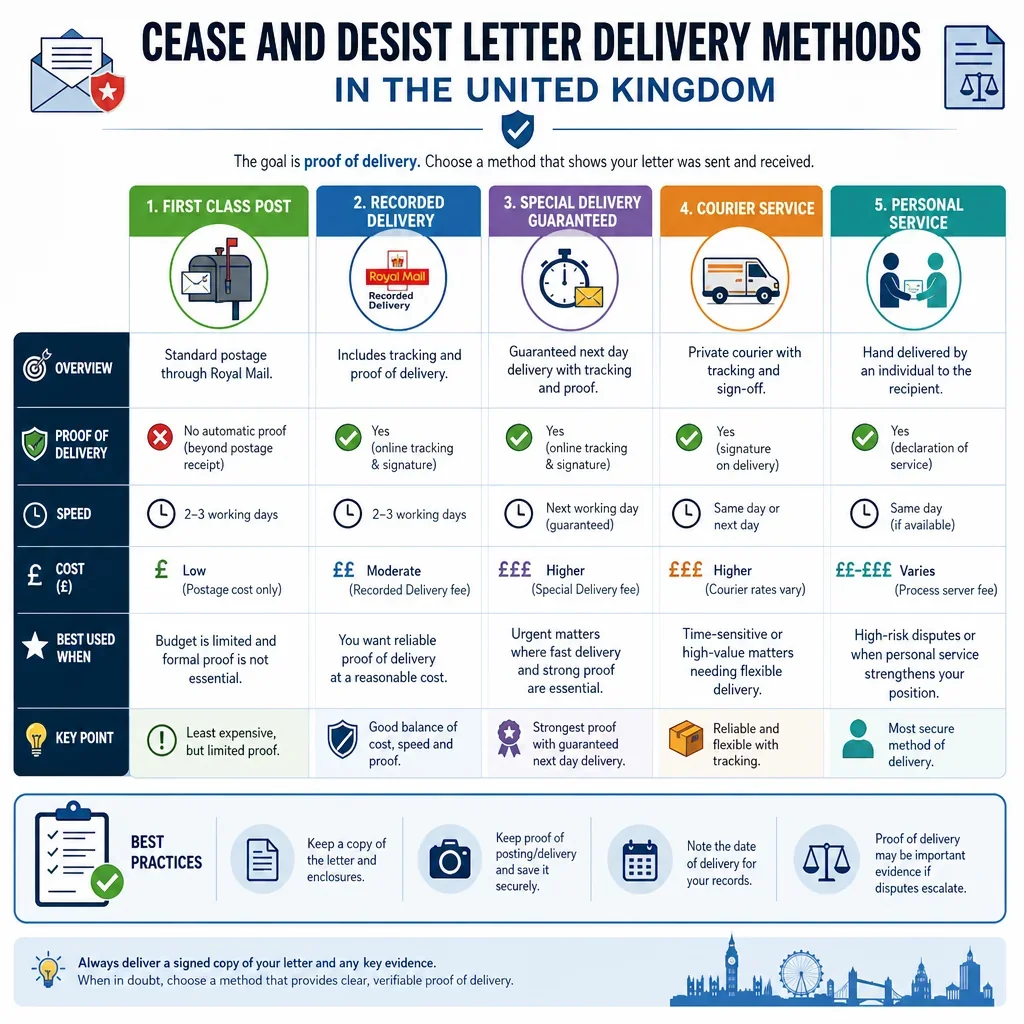
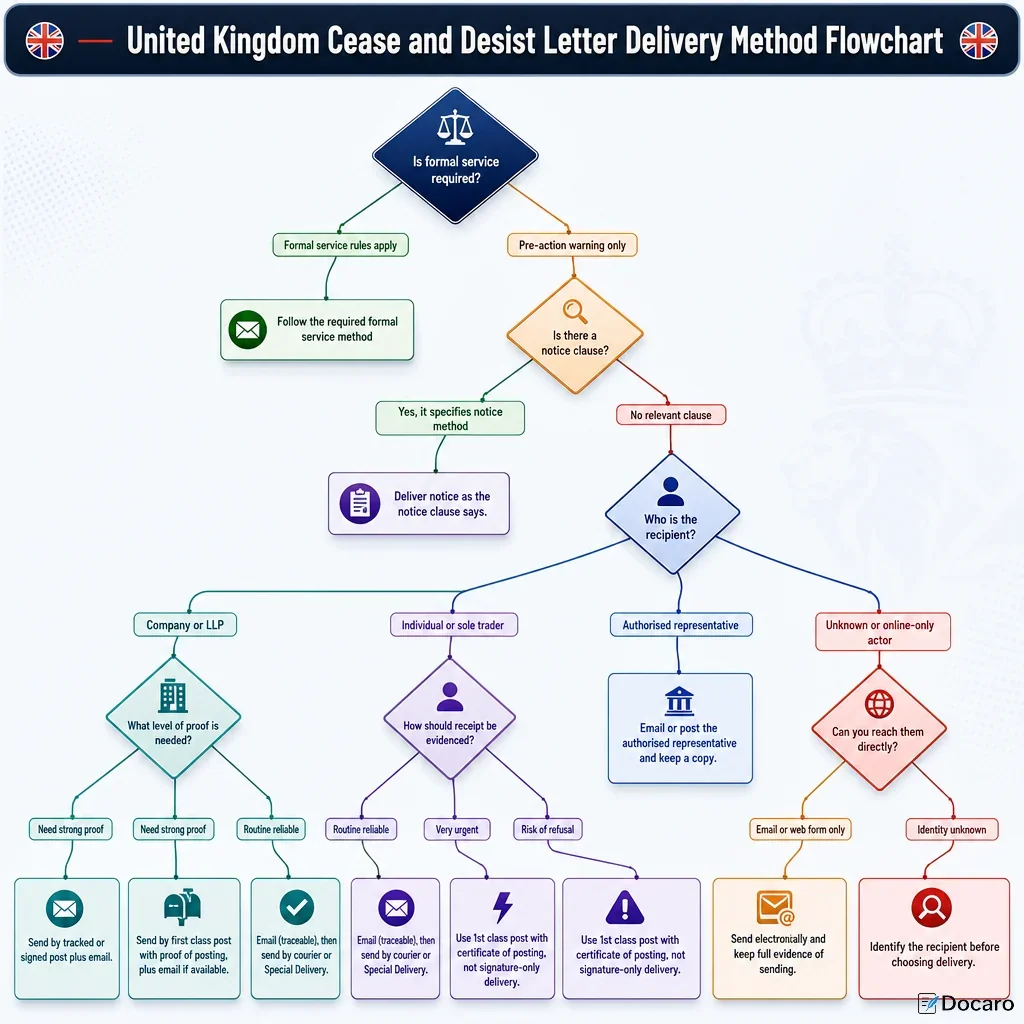
Date And Method Of Service | Records when and how the letter was sent. | Date, delivery method, email address, postal address, and any tracking reference. | Recommended | Keep proof of delivery, especially where urgent deadlines are imposed. |
Subject Matter Summary | States the dispute in one clear sentence. | The conduct complained of, affected rights, location, dates, and requested outcome. | Usually essential | Avoid emotive language make the issue immediately understandable. |
Authority To Act | Confirms the sender or adviser has authority to act. | Client name, representative capacity, and scope of authority. | Recommended | Include where a solicitor, agent, director, or rights manager sends the letter. |
Background facts | ||||
Factual Chronology | Sets out the facts supporting the complaint. | Key dates, events, communications, publications, sales, downloads, or incidents. | Usually essential | Separate known facts from assumptions and avoid unnecessary detail. |
Identification Of Protected Work Or Asset | Identifies the right, asset, content, or information being protected. | Title, description, URL, registration number, screenshots, files, or confidential information category. | Usually essential | Use precise identifiers so the recipient can locate the disputed material. |
Identification Of Unlawful Conduct | Explains exactly what the recipient is alleged to have done. | Copied text, logo use, statements, threats, data use, products, listings, or messages. | Usually essential | Quote or attach examples rather than relying on broad accusations. |
Legal basis | ||||
Copyright Infringement Basis | Relies on UK copyright protection for original works. | Work type, ownership, copying, communication, adaptation, or distribution complained of. | Usually essential | Identify the copyright work and the restricted act allegedly infringed. |
Trade Mark Infringement Basis | Relies on registered trade mark rights. | Mark, registration number, goods or services, infringing sign, and marketplace or website. | Usually essential | Check the mark is registered and compare the sign, goods, and likelihood of confusion. |
Passing Off Basis | Relies on goodwill, misrepresentation, and damage. | Goodwill evidence, confusing representation, customer confusion, and actual or likely damage. | Recommended | Do not plead passing off unless goodwill and likely deception can be explained. |
Design Right Infringement Basis | Relies on registered or unregistered design protection. | Design images, registration details, product comparison, dates, and alleged copying. | Recommended | State whether the claim concerns UK registered designs, supplementary unregistered design, or UK unregistered design right. |
Patent Infringement Basis | Relies on patent rights against unauthorised exploitation. | Patent number, claims relied on, product or process, and infringing acts. | Recommended | Take care: unjustified threats rules may apply to patent threats. |
Confidential Information Misuse Basis | Relies on breach of confidence or contractual confidentiality. | Information category, confidential circumstances, recipient knowledge, misuse, and harm. | Usually essential | Describe confidential information without disclosing more than necessary. |
Defamation Basis | Relies on publication of a defamatory statement causing serious harm. | Words complained of, publication details, meaning, falsity, serious harm, and requested correction. | Usually essential | Quote the precise words and avoid exaggerating the natural meaning. |
Harassment Basis | Relies on a course of conduct amounting to harassment. | At least two incidents, dates, behaviour, impact, and request to stop contact. | Usually essential | List incidents chronologically and distinguish unwanted contact from legitimate correspondence. |
Data Protection Basis | Relies on unlawful processing of personal data. | Personal data involved, controller or processor role, processing activity, legal basis issue, and required rectification or erasure. | Recommended | Be specific about the data and requested remedy consider ICO guidance. |
Breach Of Contract Basis | Relies on a contractual obligation to stop or remedy conduct. | Contract date, parties, clause breached, conduct, loss, and required cure. | Recommended | Quote the exact contractual term and check any notice procedure. |
Nuisance Or Trespass Basis | Relies on interference with land or property rights. | Property affected, conduct, dates, interference, damage, and requested cessation. | Recommended | Describe the interference objectively and avoid threats disproportionate to the harm. |
Demands and undertakings | ||||
Demand To Cease Conduct | Requires the recipient to stop the complained-of conduct. | Exact conduct to stop, affected platforms, territories, products, and timing. | Usually essential | Make the demand specific enough to comply with immediately. |
Demand To Remove Or Disable Material | Requires removal of infringing or harmful content. | URLs, listings, social posts, files, adverts, images, videos, and cached copies. | Recommended | Include live links and screenshots so removal can be verified. |
Written Undertakings | Secures a written promise not to repeat the conduct. | Undertakings to stop, remove, not repeat, preserve evidence, and confirm compliance. | Usually essential | Use realistic wording overly broad undertakings may be rejected. |
Delivery Up Or Destruction | Requires surrender or destruction of infringing items or copies. | Items, stock, files, moulds, packaging, marketing materials, and confirmation method. | Recommended | Specify whether destruction must be certified or witnessed. |
Account Of Profits Or Sales Information | Requests information needed to assess loss or profits. | Units sold, revenue, profit, dates, customers, suppliers, invoices, and advertising spend. | Optional | Ask only for information proportionate to the claim and dispute value. |
Apology, Correction, Or Retraction | Seeks corrective action for reputational harm. | Correct wording, publication location, duration, audience, and deadline. | Optional | Keep requested wording factual and avoid demanding an admission beyond the evidence. |
No Further Contact Demand | Requires the recipient to stop contacting or approaching the sender. | Prohibited contact methods, exceptions for legal correspondence, and affected people. | Recommended | Allow necessary formal correspondence through a nominated channel. |
Deadline and response | ||||
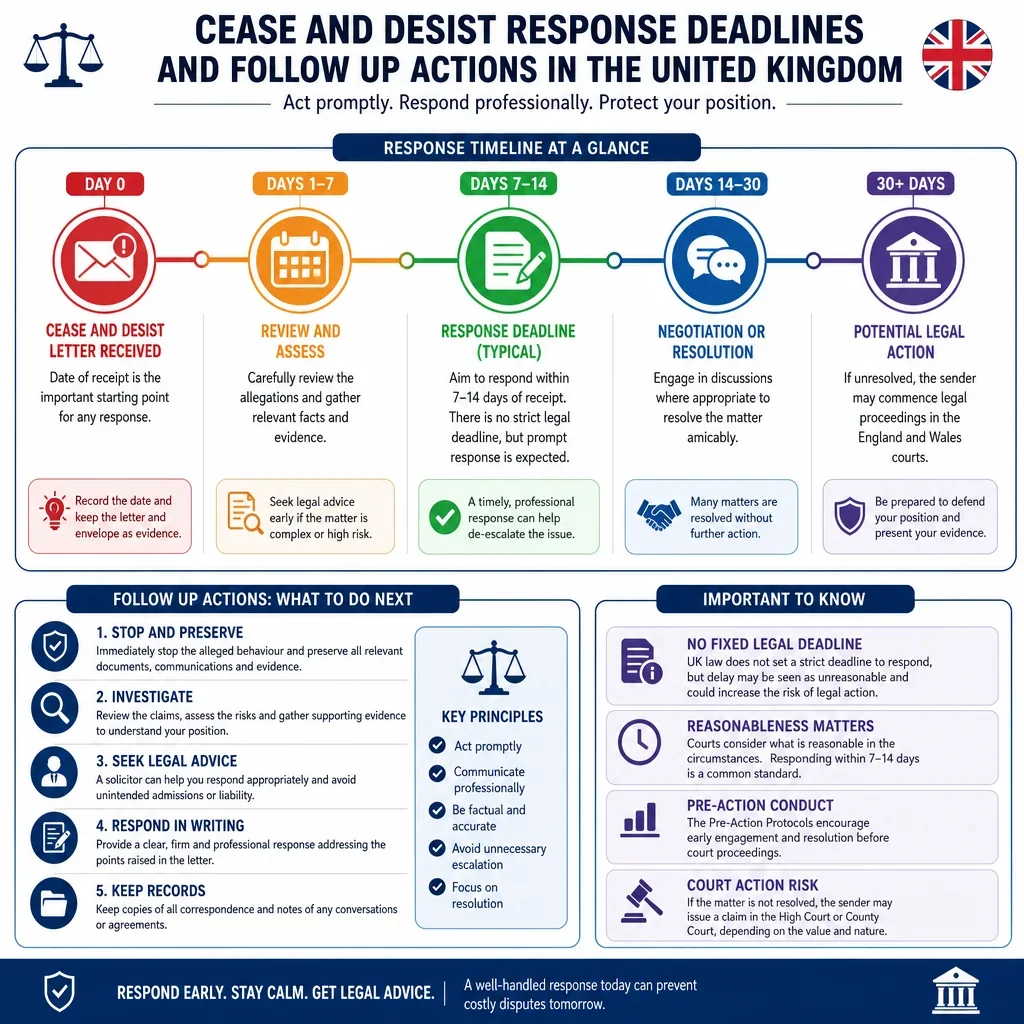
Response Deadline | Sets the time for response or compliance. | Deadline date, time, time zone, response method, and actions due. | Usually essential | Use a reasonable period unless urgent harm justifies a short deadline. |
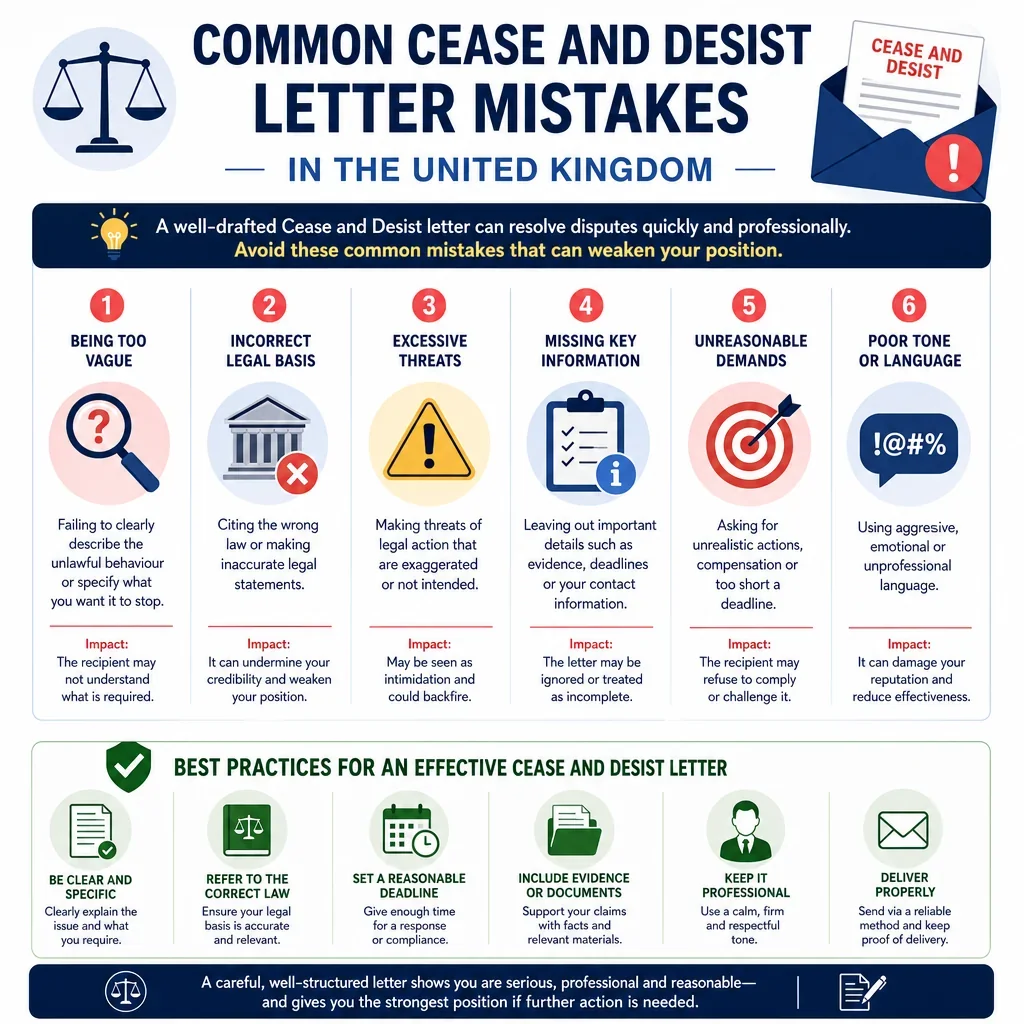
Consequences Of Non-Compliance | Explains possible next steps if the recipient does not comply. | Potential claim, injunction, damages, costs, platform report, or regulatory complaint. | Recommended | Avoid empty threats state only steps the sender is prepared to consider. |
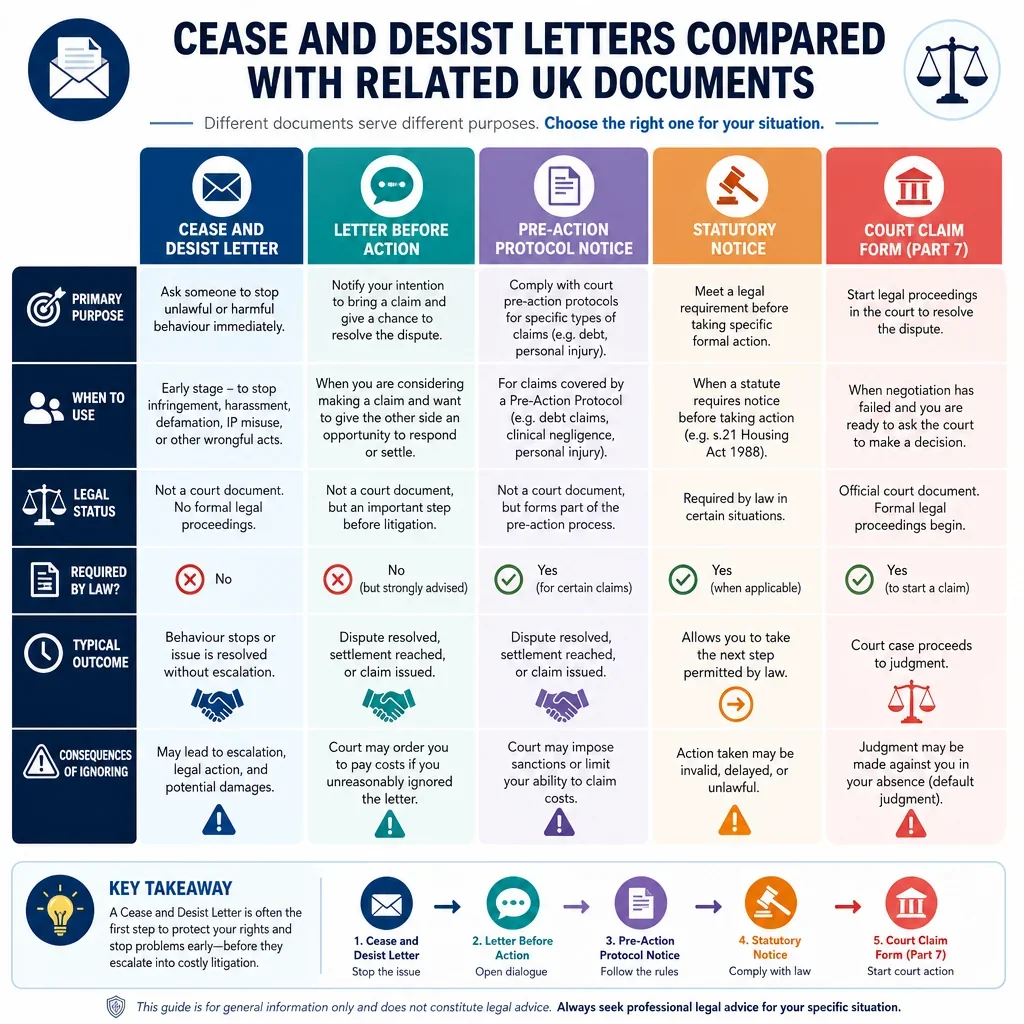
Pre-Action Conduct Reference | Shows awareness of civil procedure expectations before litigation. | Request for substantive response, documents, ADR consideration, and proportional conduct. | Recommended | Tailor to the dispute do not turn a simple notice into a full claim letter unnecessarily. |
Without Prejudice Or Open Correspondence Status | Clarifies whether the letter is intended to be settlement privileged or open. | Whether the communication is open, without prejudice, or partly open and partly privileged. | Optional | Use without prejudice only for genuine settlement communications. |
Evidence and preservation | ||||
Evidence Preservation Notice | Requires relevant evidence not to be destroyed or altered. | Documents, messages, metadata, logs, analytics, stock records, accounts, and devices. | Usually essential | Define evidence categories clearly and avoid demanding irrelevant material. |
Screenshot And URL Schedule | Records online evidence supporting the complaint. | URLs, dates captured, screenshots, page titles, account names, and archive links. | Recommended | Preserve original files and timestamps do not rely only on edited images. |
Request For Source And Supply Chain Details | Identifies how infringing goods, content, or information were obtained. | Supplier names, manufacturers, distributors, creators, agencies, dates, invoices, and contracts. | Optional | Explain why the information is needed and keep requests proportionate. |
Confidentiality Of Settlement Communications | Seeks to prevent publication of negotiations or draft undertakings. | Documents covered, permitted disclosures, advisers, insurers, and legal obligations. | Optional | Do not assume confidentiality is binding unless agreed or legally protected. |
Reservation of rights | ||||
Reservation Of Rights | Preserves the sender's ability to pursue other remedies. | Rights to seek injunctions, damages, account of profits, costs, disclosure, or further relief. | Usually essential | Keep broad but not aggressive avoid implying remedies are guaranteed. |
No Waiver | States that delay or limited demands do not waive rights. | No waiver of claims, remedies, rights, or objections unless expressly written. | Recommended | Use standard wording and avoid contradicting any settlement offer. |
Injunction Warning | Warns that urgent court relief may be sought. | Conduct to be restrained, urgency, harm, and possible application for interim relief. | Optional | Use only where urgent relief is realistically contemplated. |
Costs Reservation | Reserves the right to seek legal costs. | Costs incurred, future costs, and reliance on unreasonable non-compliance if proceedings follow. | Recommended | Avoid claiming automatic costs before any order or agreement exists. |
Unjustified Threats Caution | Reduces risk when alleging patent, trade mark, or design infringement. | Careful wording, acts complained of, primary actor focus, and avoidance of excessive threats. | Recommended | Be especially careful before threatening proceedings against retailers or customers. |
Closing | ||||
Contact For Response | Tells the recipient where to send the response. | Name, email, postal address, telephone number, reference, and preferred response method. | Usually essential | Use one clear response channel to avoid missed replies. |
Signature Block | Authenticates the letter and sender. | Signature, name, position, organisation, and representative status. | Usually essential | Ensure the signatory has authority to send the letter. |
Enclosures And Evidence List | Lists documents provided with the letter. | Screenshots, registrations, contracts, correspondence, invoices, witness notes, and schedules. | Recommended | Attach enough evidence to explain the claim without disclosing privileged material. |
Platform Or Host Notice Copy | Indicates that a copy may be sent to a platform, host, or marketplace. | Platform name, listing IDs, URLs, rights relied on, and takedown reference if known. | Optional | Use only where platform reporting is accurate and consistent with the claim. |
What Clauses Should A UK Cease And Desist Letter Usually Include?
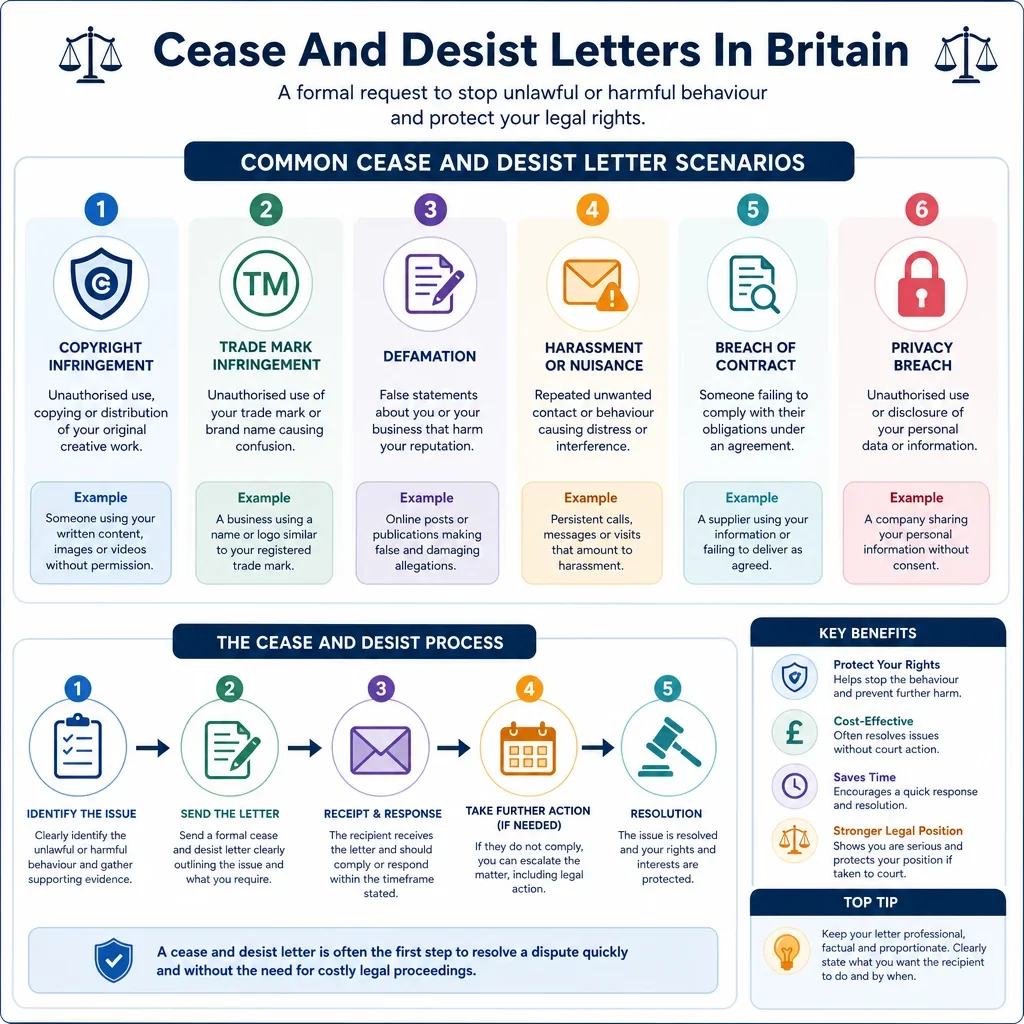
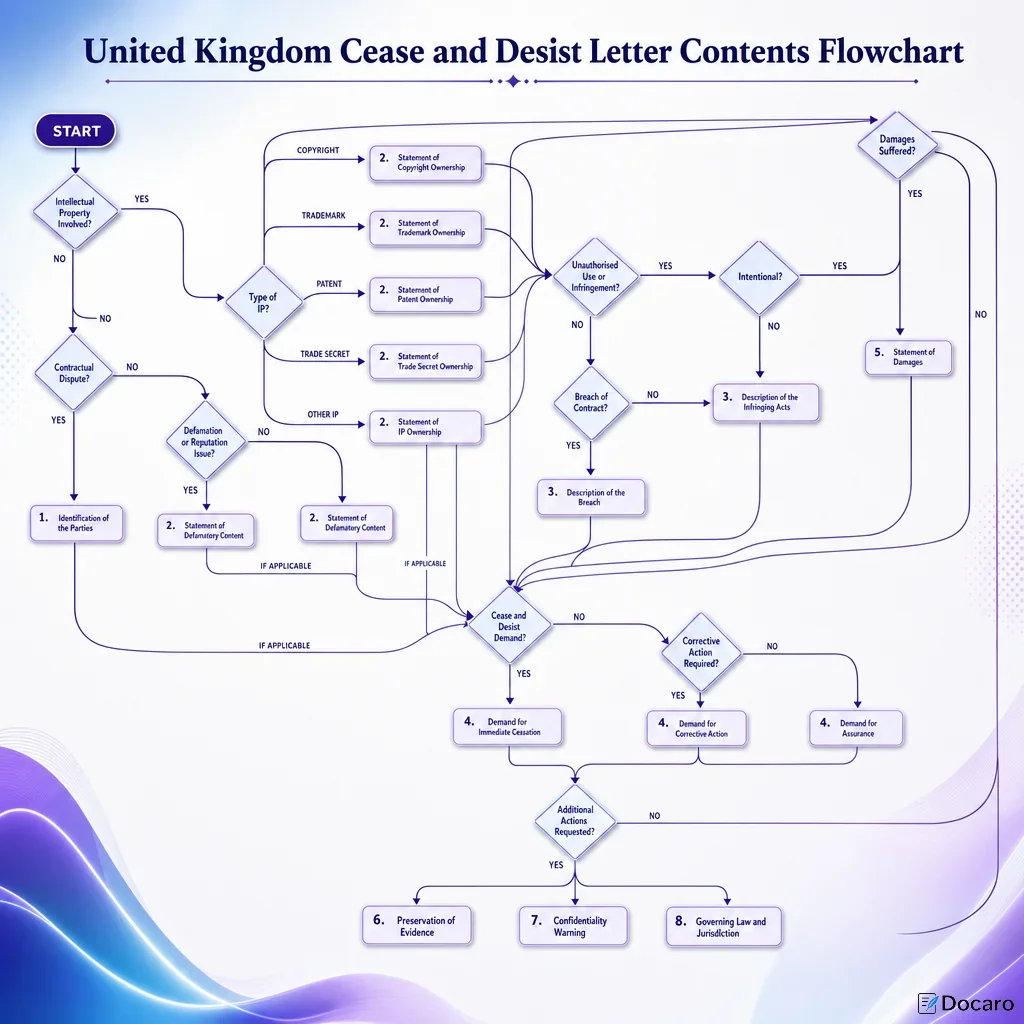
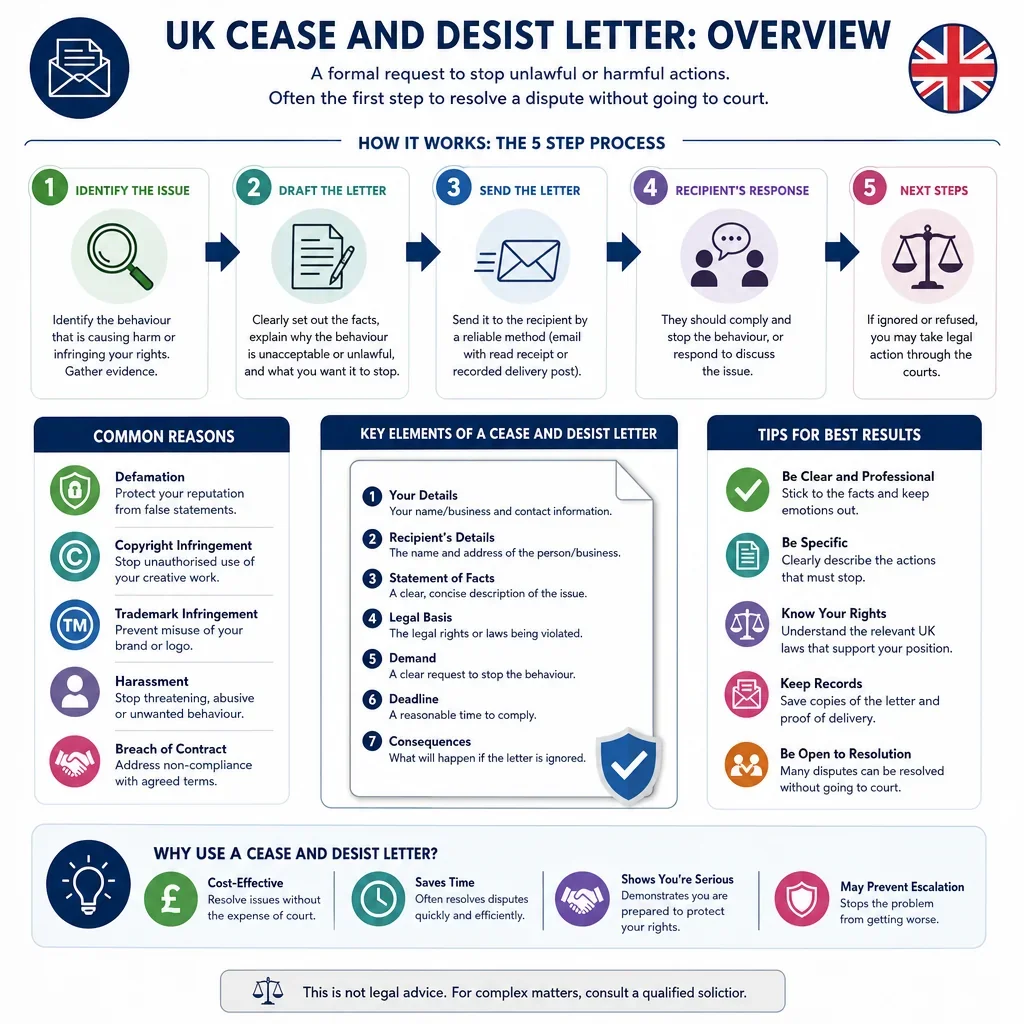
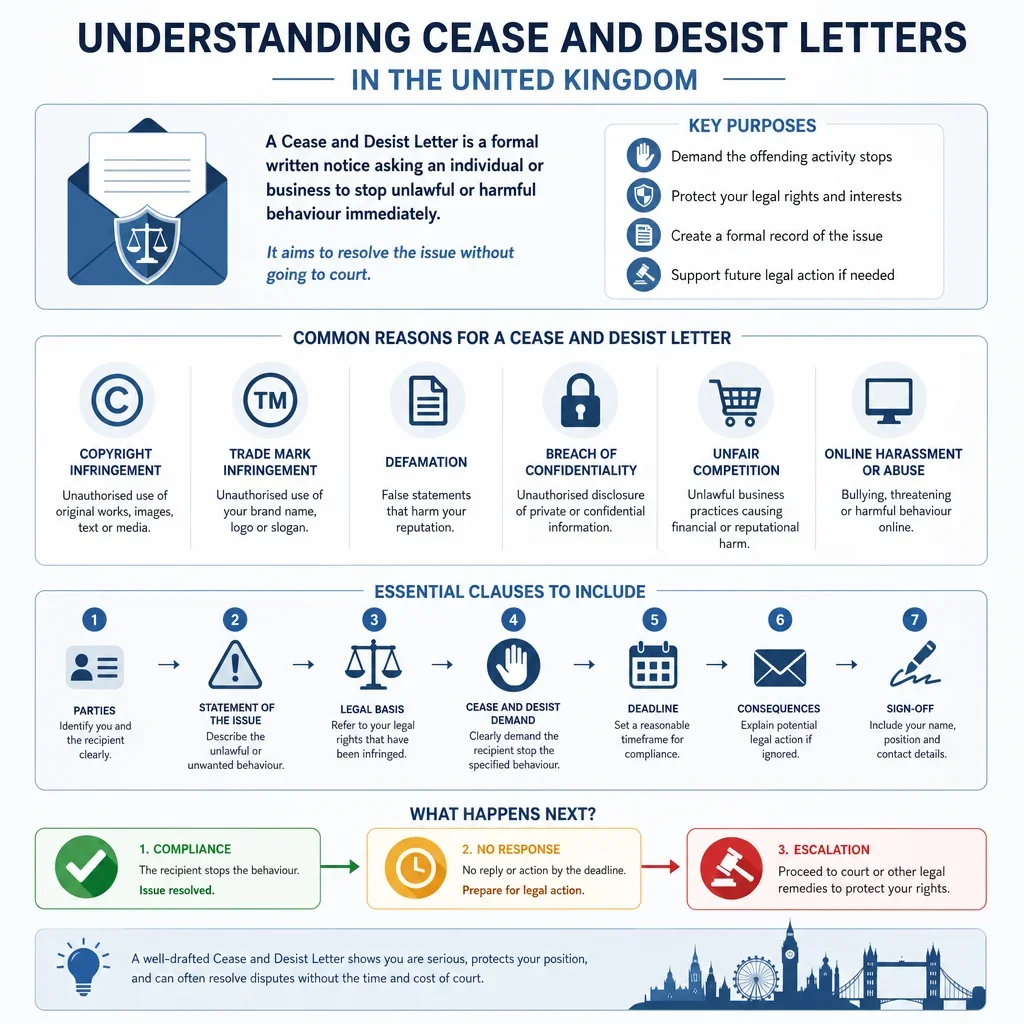
A strong UK cease and desist letter should usually identify the parties, describe the conduct complained of, state the legal basis, specify the demands, set a clear response deadline, require preservation of evidence, and reserve the sender's rights. The most essential clauses are those that make the allegation understandable and the requested action measurable.
How Should The Legal Basis Be Framed In The UK?
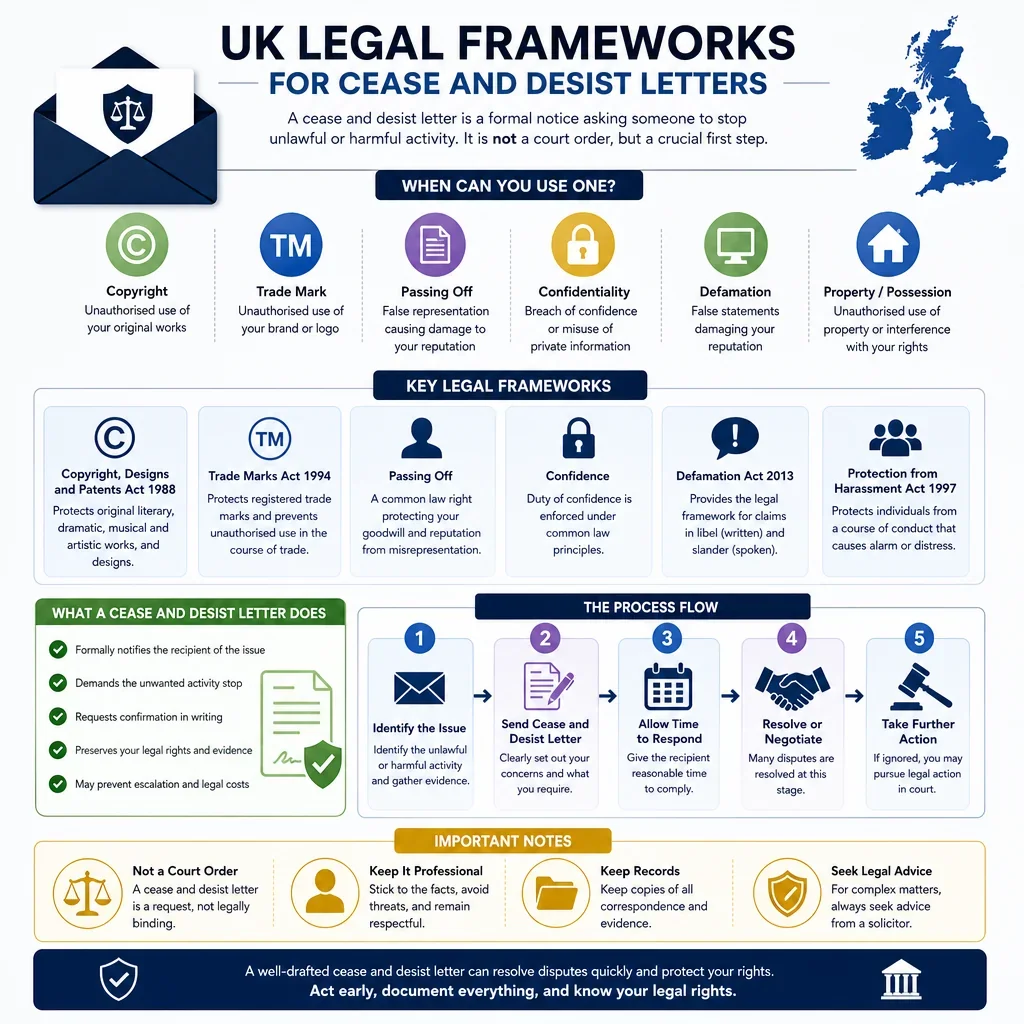
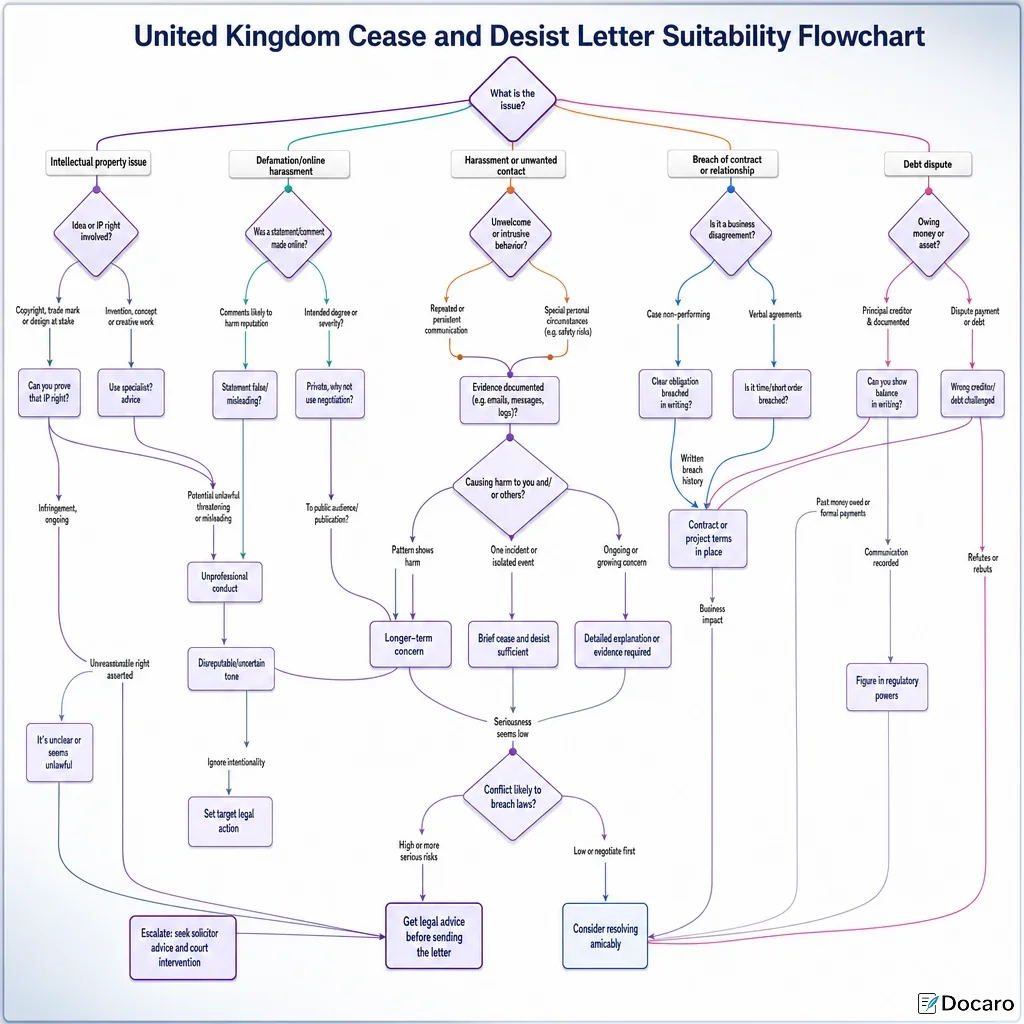
The legal basis should match the facts. For intellectual property disputes, clauses may refer to copyright, trade marks, passing off, design rights, patents, or confidential information. For online or reputational harm, clauses may cover defamation, harassment, data protection, or misuse of private information. Overstating the claim can weaken the letter and may increase the risk of an adverse response.
What Demands Are Most Useful In Practice?
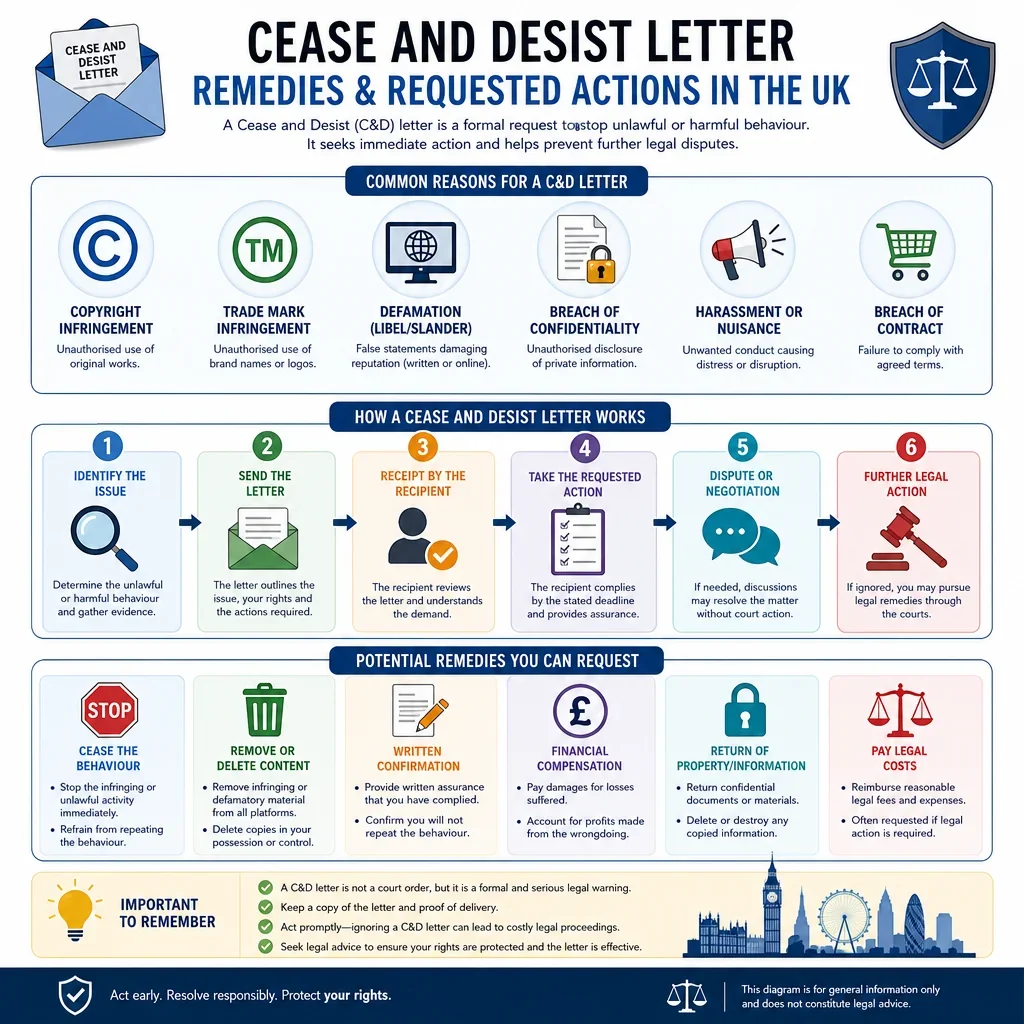
The most practical demands are specific and verifiable: stop the conduct, remove or disable material, give written undertakings, identify the source of infringing material, deliver up or destroy copies, provide an account of profits where appropriate, and confirm compliance by a stated date. Vague demands are harder to enforce and easier to ignore.
Why Do Evidence And Preservation Clauses Matter?
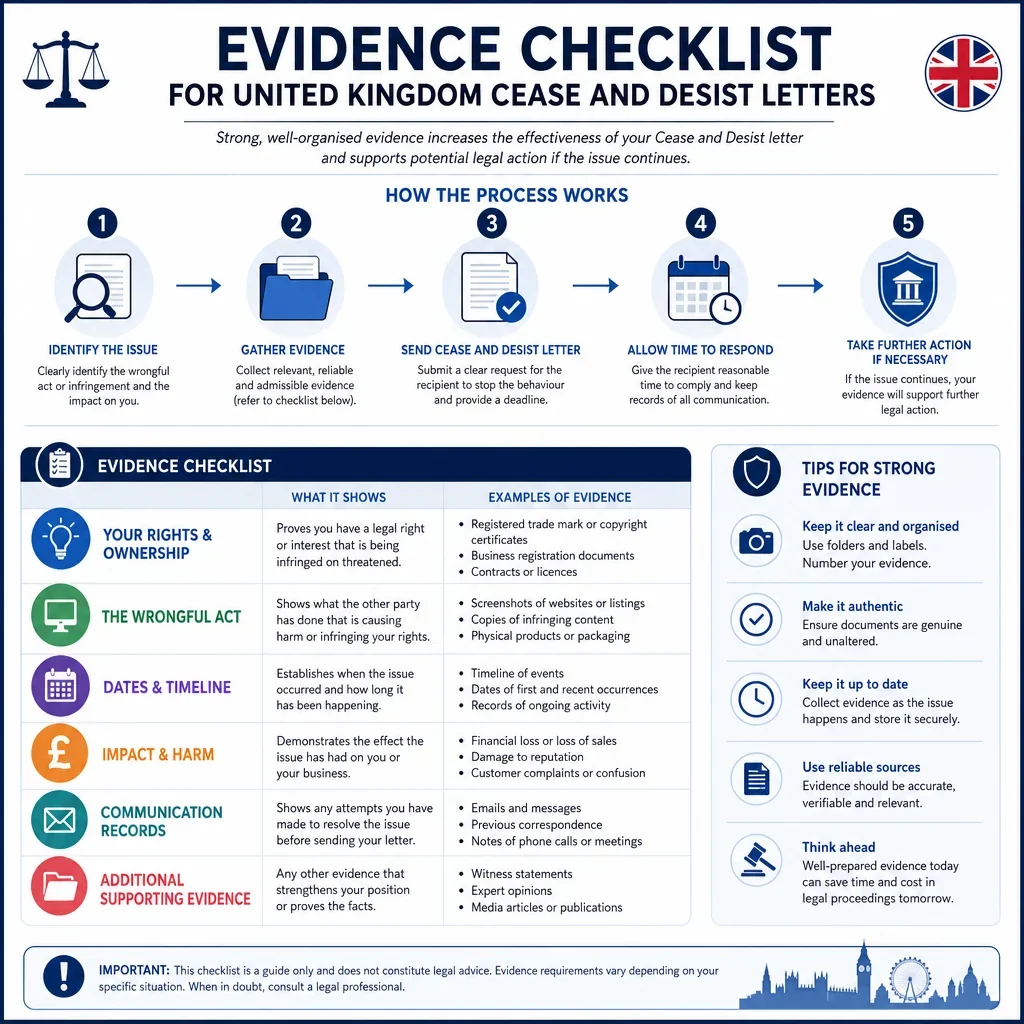
Evidence clauses are particularly important for online infringement, defamation, harassment, and data misuse because content can be deleted quickly. The letter should ask the recipient not to destroy documents, messages, analytics, sales records, metadata, or correspondence relevant to the dispute.
When Should A Cease And Desist Letter Be Marked Without Prejudice?
Use without prejudice wording only where the letter genuinely seeks to settle a dispute. If the sender wants to rely on the letter later as evidence of notice, a separate open letter or an expressly open section may be more appropriate. The label alone does not make a communication privileged.
FAQs
You Might Also Be Interested In