Cease And Desist Response Deadlines And Follow Up Actions In The United Kingdom
Dispute Type | Urgency Level | Deadline Factors | Possible Follow Up | Caution |
|---|---|---|---|---|
24 to 48 hours | ||||
Defamatory online review or post | High | Ongoing publication, search visibility, seriousness of allegation and likely audience size. | Send evidence-preservation notice and seek advice on takedown or defamation claim. | Check serious harm and truth or honest opinion risks before threatening proceedings. |
Harassing social media messages | High | Frequency, threats, vulnerability, escalation pattern and impact on safety. | Report to platform, preserve screenshots and consider police or injunction advice. | Avoid retaliatory contact and do not exaggerate criminal consequences. |
Same day | ||||
Stalking or unwanted pursuit | High | Physical proximity, threats, repeated conduct, tracking and safeguarding risk. | Contact police, safeguarding support or solicitor about protective orders. | Do not invite negotiation if personal safety may be compromised. |
Disclosure of confidential information | High | Imminent disclosure, trade value, NDA terms and number of recipients. | Seek urgent injunction advice and demand deletion and return of materials. | Identify the confidential material clearly and avoid overbroad demands. |
Misuse of trade secrets | High | Commercial sensitivity, imminent launch, employee access and risk of copying. | Preserve evidence and seek urgent interim relief advice. | Ensure the information is secret, valuable and subject to reasonable protection. |
3 to 7 days | ||||
Copyright infringement on a website | Medium | Commercial use, scale of copying, attribution loss and ongoing downloads. | Send hosting or platform notice and consider IP legal advice. | Check ownership, licence terms and permitted use exceptions before alleging infringement. |
Unauthorised use of photographs | Medium | Commercial context, licence fee evidence, moral rights and removal difficulty. | Request removal, licence payment or platform takedown. | Avoid inflated settlement demands unsupported by market licence evidence. |
7 to 14 days | ||||
Trade mark infringement | Medium | Similarity, market overlap, consumer confusion and sales volume. | Request undertakings and consider IPO, marketplace or court action. | Confirm registration, classes and genuine confusion risk before escalating. |
Passing off by a competitor | Medium | Goodwill evidence, customer confusion, launch timing and reputational damage. | Collect confusion evidence and seek undertakings or interim relief advice. | Passing off requires goodwill, misrepresentation and likely damage. |
Cybersquatting or abusive domain registration | Medium | Fraud risk, brand confusion, active website and email misuse. | Start Nominet DRS or relevant domain dispute procedure. | Do not allege bad faith without evidence of abusive registration or use. |
Same day | ||||
Business impersonation or scam profile | High | Consumer loss risk, payment requests, fake emails and live advertising. | Report to platform, bank, registrar and Action Fraud. | Preserve evidence before takedown and avoid identifying suspects without proof. |
7 to 14 days | ||||
Misuse of personal data | Medium | Sensitivity, volume, distress, unlawful disclosure and controller identity. | Complain to the ICO or seek erasure, restriction or compensation advice. | Use data protection rights accurately and allow statutory response periods where relevant. |
24 to 48 hours | ||||
Personal data breach response demand | High | Ongoing exposure, identity theft risk, special category data and mitigation needs. | Ask for containment steps and consider ICO complaint if mishandled. | Do not demand instant compensation before facts and losses are established. |
Same day | ||||
Threat to share intimate images | High | Imminent sharing, coercion, vulnerability and platform reach. | Contact police, platform and specialist support immediately. | Prioritise safety and evidence preservation over direct confrontation. |
24 to 48 hours | ||||
Breach of restrictive covenant | High | Client solicitation, seniority, covenant scope and live competitive activity. | Seek undertakings from employee and new employer, then injunction advice. | Only enforce covenants that protect legitimate interests and are reasonable. |
Former employee soliciting clients | High | Evidence of contact, client value, confidentiality and ongoing losses. | Demand undertakings and preserve emails, CRM logs and witness evidence. | Do not access private accounts or monitor unlawfully to gather evidence. |
7 to 14 days | ||||
Unpaid commercial invoice dispute | Medium | Payment due date, contract terms, amount and prior reminders. | Send letter before claim or apply late payment interest if applicable. | Use debt claim procedures and avoid threats unrelated to the debt. |
3 to 7 days | ||||
Aggressive debt collection contact | Medium | Contact frequency, vulnerability, disputed debt and FCA-regulated conduct. | Complain to creditor, ombudsman or regulator and keep a contact log. | Acknowledge genuine debts separately and do not ignore court papers. |
7 to 14 days | ||||
Neighbour noise nuisance | Medium | Time of noise, duration, health impact and previous complaints. | Keep a diary and complain to the local council environmental health team. | Do not threaten criminal action unless statutory nuisance evidence supports it. |
3 to 7 days | ||||
Trespass onto private land | Medium | Repeated entry, damage, safety risk and clarity of land ownership. | Install lawful signage, gather evidence and seek civil injunction advice. | Avoid forceful removal or harassment and verify boundaries first. |
24 to 48 hours | ||||
Building works encroaching on land | High | Active works, structural risk, boundary evidence and access obstruction. | Notify surveyor, council if relevant and seek urgent injunction advice. | Check title plans and party wall duties before demanding work stops. |
Unauthorised party wall works | High | Works underway, notice status, structural impact and access needs. | Appoint a party wall surveyor and seek advice on stopping works. | Do not rely only on informal objections where statutory notice rules apply. |
Same day | ||||
Landlord harassment or unlawful entry | High | Locks, threats, entry without notice, utilities and eviction risk. | Contact council tenancy relations officer or seek emergency housing advice. | Keep evidence and avoid withholding rent without advice. |
3 to 7 days | ||||
Tenant antisocial behaviour | Medium | Threats, noise, complaints, tenancy terms and safety concerns. | Issue tenancy warning and involve council or police if needed. | Follow tenancy and possession rules do not threaten illegal eviction. |
7 to 14 days | ||||
Breach of exclusivity clause | Medium | Contract wording, continuing sales, losses and termination rights. | Send contractual default notice or reserve rights to terminate. | Check notice clauses and cure periods before alleging repudiatory breach. |
Breach of software licence terms | Medium | Unauthorised users, copying, security risk and audit rights. | Suspend access if contract allows and request compliance certification. | Do not suspend essential services unless the contract permits it. |
24 to 48 hours | ||||
Website scraping or automated copying | High | Server load, database extraction, commercial reuse and terms breach. | Block access, preserve logs and send platform or hosting complaints. | Check database rights, contract terms and lawful access facts carefully. |
7 to 14 days | ||||
Unwanted marketing emails | Low | Volume, unsubscribe failure, business or consumer status and distress. | Use unsubscribe, keep evidence and complain to the ICO. | Allow reasonable suppression time before escalating minor one-off emails. |
3 to 7 days | ||||
Nuisance calls or texts | Medium | Frequency, vulnerability, consent withdrawal and automated calling. | Block numbers, record call logs and complain to ICO or TPS. | Distinguish marketing nuisance from genuine service or debt communications. |
Fake competitor reviews | Medium | Review volume, proof of competitor link and business impact. | Report reviews to platform and consider defamation or passing off advice. | Do not allege fake reviews without evidence connecting the reviewer. |
7 to 14 days | ||||
Misleading advertising by competitor | Medium | Campaign duration, comparative claims, substantiation and consumer harm. | Complain to ASA or seek undertakings if legal rights are affected. | Use evidence-based wording and distinguish ASA complaints from court claims. |
Confusing company or trading name | Medium | Similarity, trading activity, customer confusion and registration timing. | Consider Companies House objection, passing off or trade mark action. | A company name registration alone may not prove trading confusion. |
14 to 28 days | ||||
Patent infringement | Medium | Product launch, claim complexity, validity issues and sales scale. | Request undertakings and seek specialist patent litigation advice. | Avoid unjustified threats UK patent threats rules can apply. |
7 to 14 days | ||||
Registered design infringement | Medium | Sales volume, design similarity, launch timing and stock levels. | Send rights details and seek undertakings or marketplace takedown. | Check registration, validity and overall impression before alleging infringement. |
24 to 48 hours | ||||
Counterfeit goods marketplace listing | High | Consumer safety, brand harm, stock quantity and live listings. | Report to marketplace, Trading Standards or brand protection channels. | Document why goods are counterfeit before making fraud allegations. |
Same day | ||||
Sale of unsafe products | High | Injury risk, children, electrical safety, recalls and ongoing sales. | Report to Trading Standards or relevant product safety regulator. | State objective safety concerns and avoid defamatory public accusations. |
7 to 14 days | ||||
Trader refusing cancellation rights | Low | Delivery status, cooling-off period, contract type and refund amount. | Escalate complaint, card chargeback or consumer advice route. | Check exceptions to cancellation rights before alleging unlawful refusal. |
24 to 48 hours | ||||
Misuse of private information | High | Sensitivity, public interest, audience size and risk of republication. | Request urgent removal and seek privacy injunction advice. | Balance privacy rights against freedom of expression and public interest. |
3 to 7 days | ||||
Breach of settlement confidentiality | Medium | Disclosure scope, clause wording, reputational risk and ongoing sharing. | Demand compliance, deletion and indemnity for further disclosure. | Check permitted disclosures and whistleblowing carve-outs before alleging breach. |
Workplace bullying or unwanted contact | Medium | Threats, protected characteristics, mental health and employer involvement. | Raise grievance, contact HR or seek ACAS guidance. | Use employment procedures and avoid inflammatory allegations unsupported by evidence. |
Discriminatory harassment | High | Protected characteristic, repetition, workplace context and victimisation risk. | Raise grievance, contact ACAS and preserve messages or witness evidence. | Be precise about facts, dates and protected characteristic relied on. |
24 to 48 hours | ||||
Defamatory media article | High | Prominence, republication risk, factual error and time-sensitive harm. | Request correction, removal or complain to IPSO where applicable. | Consider limitation, serious harm and public interest defences. |
3 to 7 days | ||||
Malicious falsehood about business | Medium | False statement, malice evidence, financial loss and distribution scale. | Demand correction and gather loss evidence before legal escalation. | Do not confuse opinion, defamation and malicious falsehood without advice. |
Breach of non-disparagement clause | Medium | Clause scope, public audience, ongoing comments and measurable harm. | Request removal, correction and contractual undertakings. | Check enforceability, whistleblowing protections and truthful statement issues. |
Unauthorised use of image or likeness | Medium | Commercial endorsement, privacy, consent and reputational risk. | Demand removal and consider passing off, privacy or data protection advice. | UK law has no standalone general image right, so identify the legal basis. |
24 to 48 hours | ||||
Publication of private recording | High | Private setting, consent, sensitivity and online sharing speed. | Request takedown, preserve URL evidence and seek privacy advice. | Consider journalistic, public interest and personal household context. |
Same day | ||||
Unauthorised access to computer systems | High | Live access, data exfiltration, credentials, malware and business disruption. | Revoke access, preserve logs and report cybercrime if appropriate. | Do not counter-hack or make unsupported criminal allegations. |
24 to 48 hours | ||||
Abusive user breaching website terms | Medium | Threats, spam, fraud, user volume and moderation policy. | Suspend account, preserve logs and block further access if terms allow. | Apply terms consistently and avoid disproportionate disclosure of user data. |
3 to 7 days | ||||
Contractor causing damage or nuisance | Medium | Active damage, water ingress, safety risk and insurance notification. | Notify insurer, gather photos and send formal pre-action letter if unresolved. | Allow access for reasonable inspection where repairs are disputed. |
14 to 28 days | ||||
IP infringement allegation before proceedings | Low | Technical complexity, need for samples, expert review and settlement prospects. | Send a compliant pre-action letter with evidence and requested undertakings. | Unjustified threats rules may apply to patents, trade marks and designs. |
General civil dispute before claim | Low | Complexity, document volume, limitation pressure and settlement options. | Send letter before claim and consider ADR before issuing proceedings. | Unreasonable pre-action conduct can affect costs and case management. |
Same day | ||||
Urgent injunction threat | High | Irreparable harm, imminent act, evidence strength and notice feasibility. | Seek urgent legal advice on interim injunction and evidence bundle. | Do not threaten without ability to give undertakings and proper disclosure. |
24 to 48 hours | ||||
Consultant retaining client files | High | Personal data, confidentiality clauses, client risk and access permissions. | Disable access and demand deletion, return and written certification. | Coordinate with data protection duties and avoid deleting evidence prematurely. |
3 to 7 days | ||||
Influencer unauthorised brand use | Medium | False endorsement, paid ad status, follower reach and brand safety. | Request removal, clarification or platform complaint. | Check contract, consent and whether the post is genuinely misleading. |
24 to 48 hours | ||||
False charity fundraising claim | High | Donor loss, live campaign, impersonation and safeguarding concerns. | Report to platform, Charity Commission or police if fraud is suspected. | Verify registration and fundraising facts before alleging fraud. |
7 to 14 days | ||||
Repeated unauthorised parking | Low | Obstruction, emergency access, repeated conduct and signage clarity. | Use lawful signage, parking scheme or civil trespass advice. | Do not clamp or remove vehicles unlawfully. |
24 to 48 hours | ||||
Fly-tipping on private land | High | Hazardous waste, access obstruction, repeat dumping and evidence available. | Report to local council and preserve CCTV or witness evidence. | Do not handle hazardous waste without proper disposal arrangements. |
14 to 28 days | ||||
Overhanging trees or hedge nuisance | Low | Damage, safety risk, nesting season, protected trees and access needs. | Seek council guidance or arborist advice before cutting. | Check tree preservation orders and conservation area restrictions first. |
7 to 14 days | ||||
Dog barking or pet nuisance | Low | Noise duration, time of day, aggression risk and prior informal contact. | Keep diary and complain to council if nuisance continues. | Avoid threats to harm animals or enter another property. |
Same day | ||||
Disruptive protest at business premises | High | Obstruction, threats, trespass, customer safety and police attendance. | Contact police for immediate safety issues and seek injunction advice. | Respect lawful protest rights and focus on trespass, obstruction or harassment. |
3 to 7 days | ||||
Member leaking internal documents | Medium | Governance rules, public impact, data content and ongoing leaks. | Suspend access if rules allow and require return or deletion. | Check whistleblowing, public interest and membership procedure protections. |
7 to 14 days | ||||
False complaints to employer or regulator | Medium | Seriousness, evidence of falsity, investigation status and reputational harm. | Request retraction and provide evidence to the investigating body. | Do not deter protected whistleblowing or genuine safeguarding reports. |
Same day | ||||
Harmful posts about a child | High | Child safety, bullying, intimate content, school context and viral spread. | Contact school, platform, police or safeguarding lead as appropriate. | Avoid circulating screenshots containing child-sensitive content unnecessarily. |
24 to 48 hours | ||||
Supplier disclosing client information | High | Data sensitivity, contract terms, third-party recipients and breach containment. | Trigger contract breach process and require incident report. | Coordinate with data breach notification obligations and avoid inconsistent notices. |
14 to 28 days | ||||
Open source licence non-compliance | Low | Licence type, distribution, source disclosure and remediation complexity. | Request compliance plan, attribution or source code publication where required. | Check actual licence obligations before demanding product withdrawal. |
7 to 14 days | ||||
Client using unpaid commissioned work | Medium | Contract terms, copyright ownership, licence conditions and commercial use. | Demand payment or withdrawal and prepare letter before claim. | Check whether copyright was assigned or licence was unconditional. |
24 to 48 hours | ||||
Misuse of tender or bid information | High | Bid deadline, commercial sensitivity, NDA terms and procurement fairness. | Notify procuring body and seek urgent confidentiality undertakings. | Avoid allegations of procurement fraud unless evidence is clear. |
3 to 7 days | ||||
False public accusations in community dispute | Medium | Audience size, safeguarding angle, repetition and evidence of falsity. | Request removal and correction consider mediation or defamation advice. | Avoid escalating family or safeguarding matters in a way that increases risk. |
Same day | ||||
Obstruction of business access | High | Emergency access, deliveries, customer safety and live obstruction. | Contact police for breach of peace risk or seek urgent injunction advice. | Avoid self-help measures that could cause injury or criminal liability. |
3 to 7 days | ||||
Refusal to return goods or equipment | Medium | Ownership proof, asset value, business need and risk of disposal. | Send final demand and consider delivery up or small claim. | Do not threaten theft allegations where a civil ownership dispute exists. |
24 to 48 hours | ||||
Threatened sale of disputed assets | High | Imminent sale, uniqueness, ownership evidence and buyer involvement. | Notify buyer of dispute and seek urgent preservation order advice. | Do not interfere with lawful sales unless rights are clearly identified. |
7 to 14 days | ||||
Franchisee misusing brand or materials | Medium | Customer confusion, health standards, brand harm and agreement cure periods. | Issue default notice and require corrective action plan. | Follow contractual notice and termination steps exactly. |
Contractor poaching staff | Medium | Non-solicitation wording, seniority, recruitment stage and business disruption. | Demand undertakings and notify the contractor's client or employer if appropriate. | Avoid restraint of trade overreach or inducing breach without evidence. |
3 to 7 days | ||||
Unauthorised use of music | Medium | Commercial use, public performance, sync use and licence availability. | Request removal or licence payment and contact platform rights tools. | Consider collecting society rights and multiple rightsholders. |
7 to 14 days | ||||
Plagiarism of written content | Low | Extent copied, publication status, attribution and commercial gain. | Request attribution, removal or correction and preserve comparison evidence. | Copyright protects expression, not general ideas or facts. |
3 to 7 days | ||||
Unauthorised extraction from database | Medium | Substantial extraction, repeated scraping, investment evidence and reuse. | Block access, demand deletion and prepare evidence of extraction. | Database right depends on substantial investment in obtaining or verifying data. |
24 to 48 hours | ||||
Disclosure of health information | High | Special category data, distress, recipient list and ongoing availability. | Demand containment, complain to ICO and seek privacy advice. | Avoid spreading sensitive details when proving the complaint. |
Fake social media account | High | Impersonation, fraud messages, private images and follower confusion. | Report impersonation to platform and preserve profile evidence. | Use platform processes and avoid public doxxing of suspected operators. |
Same day | ||||
Repeated unwanted personal contact | High | Threats, frequency, prior requests to stop and physical attendance. | Keep a log, block contact and contact police if safety risk exists. | A clear no-contact message may be enough avoid prolonged exchanges. |
24 to 48 hours | ||||
Publication of confidential legal correspondence | High | Privilege, confidentiality marking, public circulation and litigation risk. | Request removal and reserve privilege or confidentiality rights. | Do not assume all legal correspondence is privileged or confidential. |
3 to 7 days | ||||
Continued use after licence termination | Medium | Termination validity, ongoing revenue, customer confusion and transition period. | Demand cessation, account of profits or contractual compliance. | Confirm termination was valid and notice requirements were met. |
Breach of club ban or exclusion | Medium | Safety risk, venue access, rulebook process and safeguarding concerns. | Notify venue staff and follow internal disciplinary procedure. | Ensure exclusion complies with club rules and equality obligations. |
24 to 48 hours | ||||
Misuse of customer list | High | List secrecy, solicitation evidence, data protection and competitive loss. | Demand deletion and undertakings notify affected clients if required. | Separate confidential information claim from lawful use of personal contacts. |
7 to 14 days | ||||
Competitor keyword advertising dispute | Medium | Ad text, trade mark use, confusion evidence and spend level. | Complain to platform or seek trade mark and advertising advice. | Keyword bidding alone may not always be infringement focus on confusion. |
Same day | ||||
Leaked M&A or deal documents | High | Market sensitivity, NDA terms, listed company impact and recipient spread. | Demand containment and notify advisers or regulators if necessary. | Coordinate with disclosure obligations before sending broad external accusations. |
3 to 7 days | ||||
Letting agent unlawful access demands | Medium | Notice given, emergency repairs, harassment pattern and tenancy terms. | Complain to agent redress scheme or council if harassment continues. | Allow genuine emergency access and reasonable inspection rights. |
24 to 48 hours | ||||
Smear campaign during tender | High | Tender deadline, buyer reliance, falsity evidence and financial stakes. | Notify buyer with corrective evidence and reserve legal rights. | Avoid making counter-allegations that could worsen procurement credibility. |
14 to 28 days | ||||
Breach of property restrictive covenant | Low | Works status, covenant wording, beneficiaries and planning permission. | Check title and seek property litigation advice before court action. | Planning permission does not automatically override private covenants. |
Same day | ||||
Misleading financial promotion using brand | High | Investor loss risk, regulated activity, fake authorisation and live ads. | Report to FCA, platform and Action Fraud. | Confirm facts before naming individuals as fraudsters. |
7 to 14 days | ||||
Smoke, odour or environmental nuisance | Medium | Health impact, frequency, source, business activity and council powers. | Keep diary and complain to environmental health. | Support nuisance claims with dates, duration and impact evidence. |
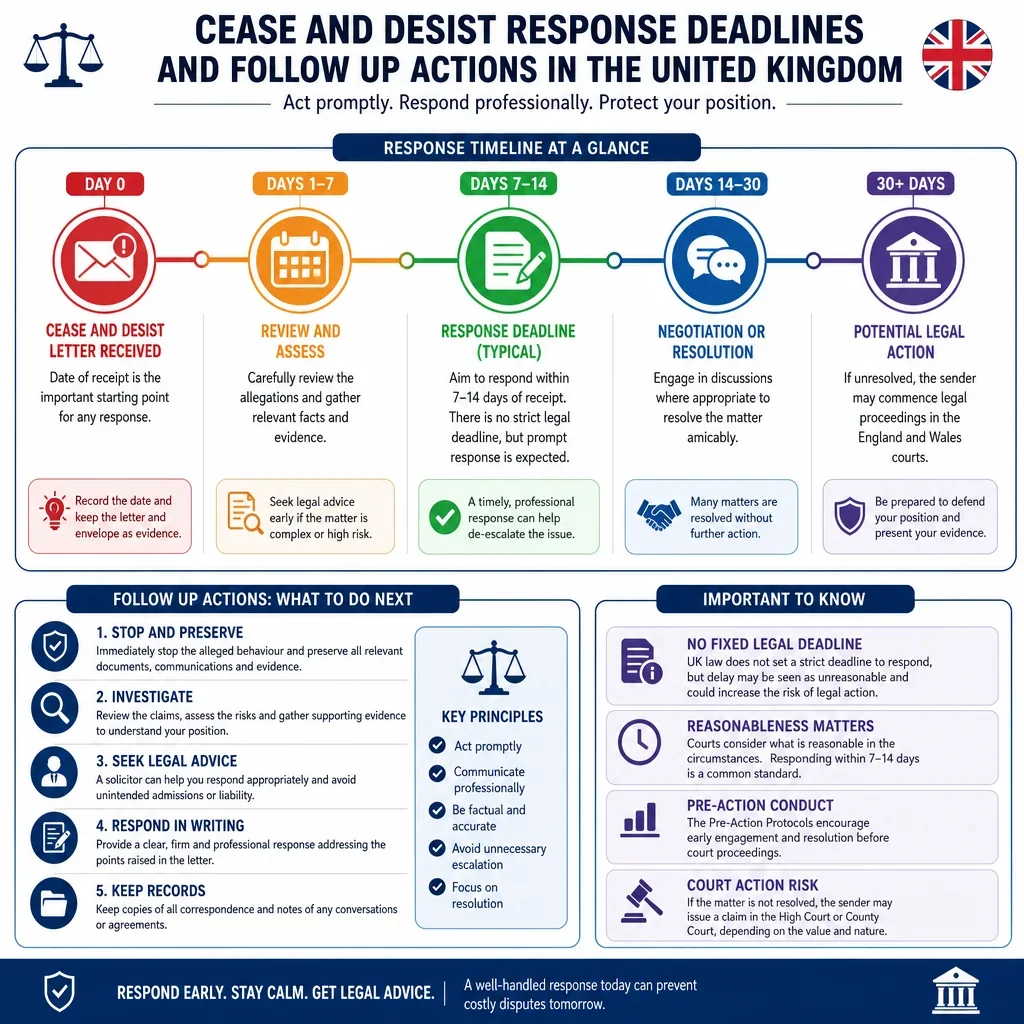
How Long Should A UK Cease And Desist Letter Give For A Response?
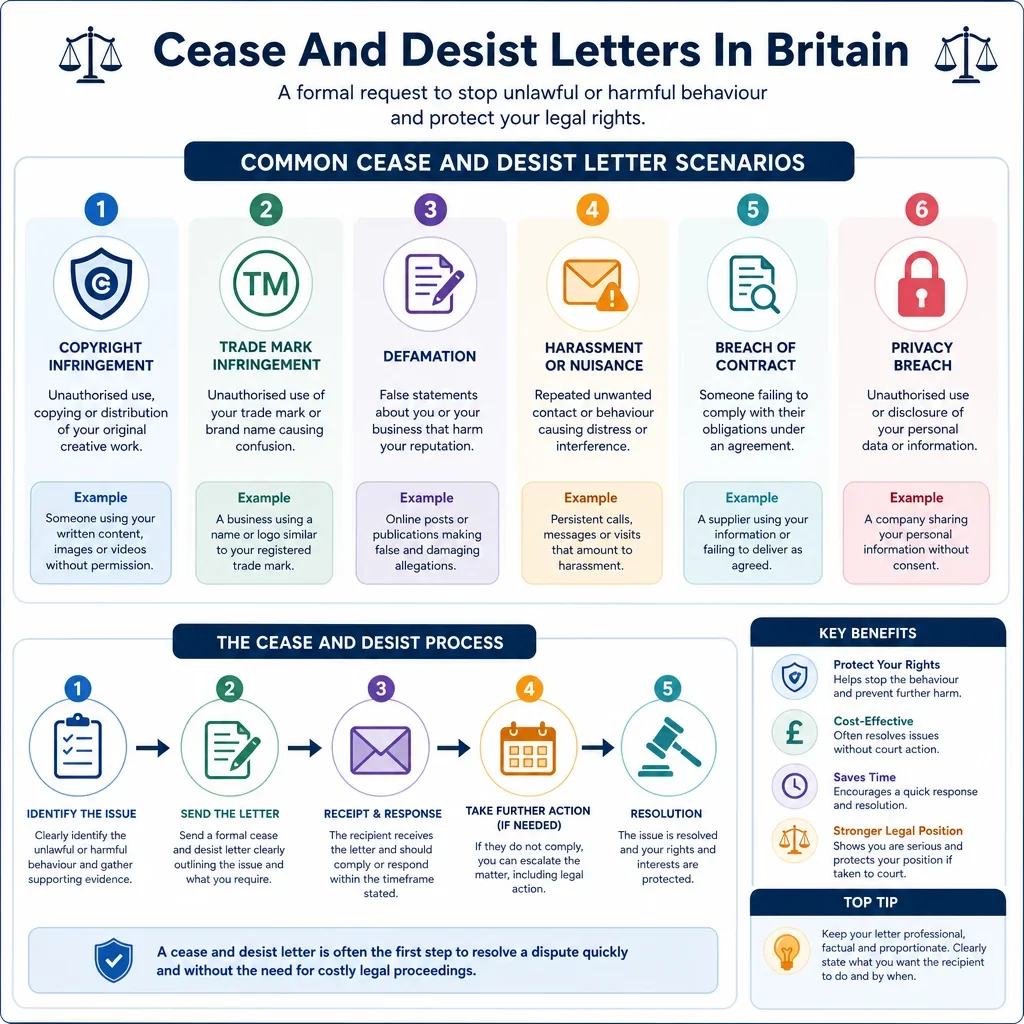
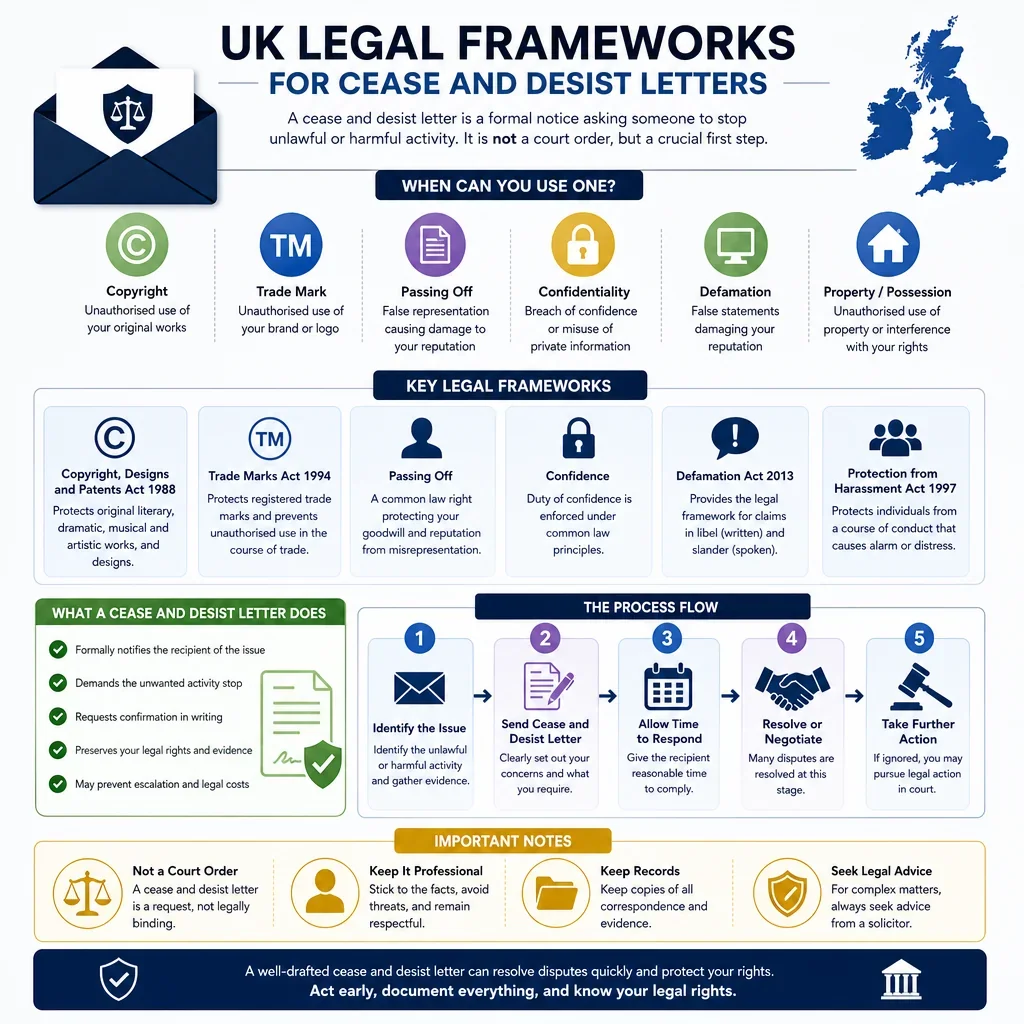
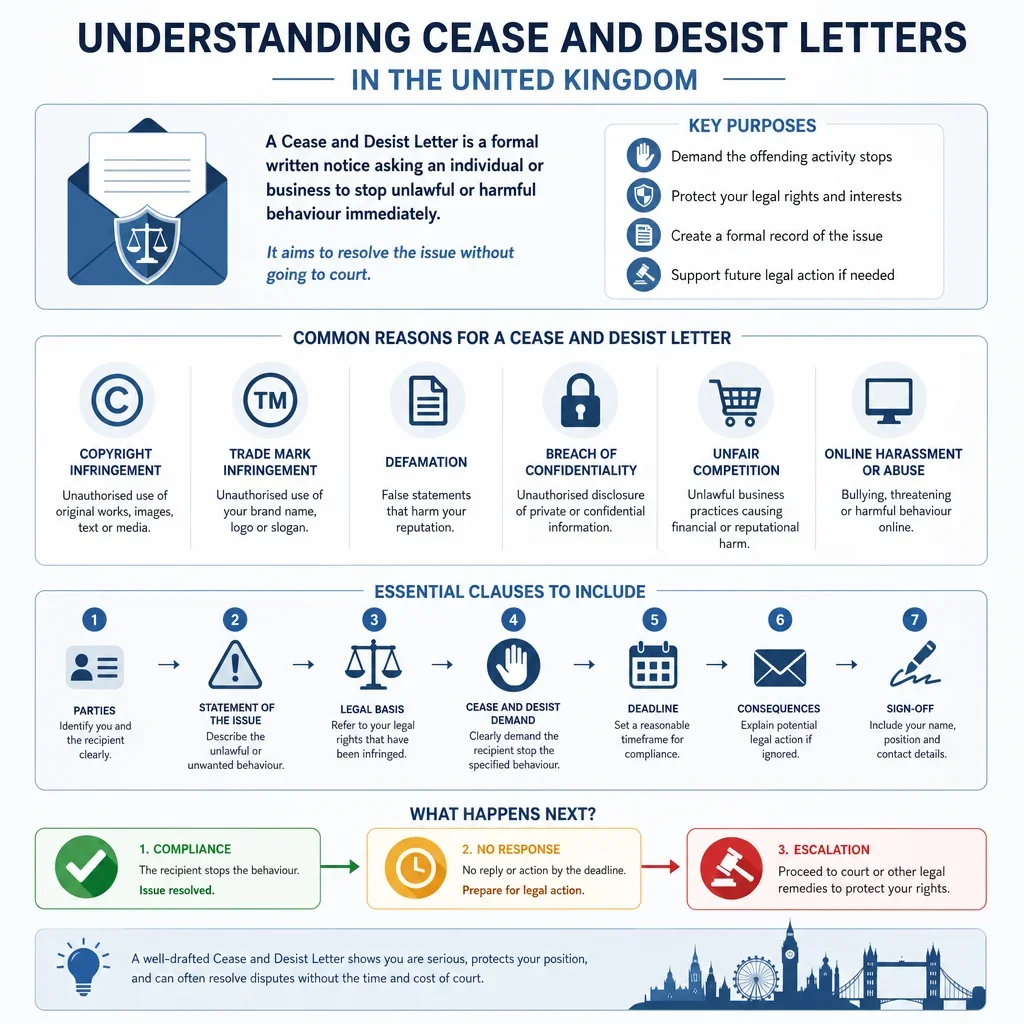
In the UK, the safest deadline usually depends on the harm being stopped. Same-day or 24 to 48 hour deadlines are most defensible where harm is ongoing and serious, such as publication of confidential information, harassment, threats, impersonation fraud, dangerous product claims or urgent online infringement. For lower-risk disputes, 7 to 14 days or 14 to 28 days is usually more proportionate.
When Is A Short Deadline More Justified?
- Ongoing publication or circulation: defamatory, private, confidential, infringing or harmful content can justify a shorter response window.
- Risk of irreversible loss: data misuse, trade secret disclosure, passing off before a launch, or disposal of disputed goods may require urgent follow up.
- Safety or safeguarding concerns: harassment, stalking, threats, dangerous products and nuisance affecting health may need immediate escalation.
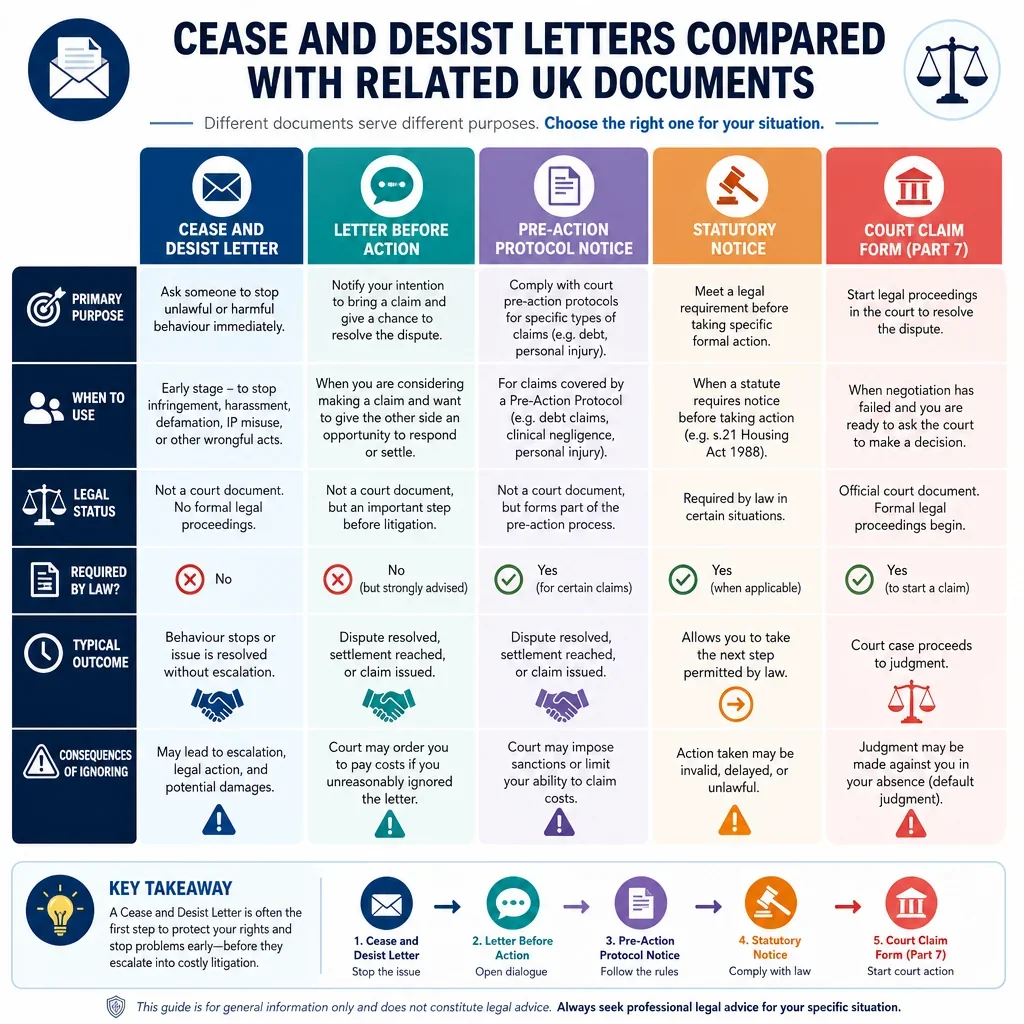
- Pre-action rules: where litigation is likely, deadlines should still be consistent with relevant UK pre-action conduct and protocols where applicable.
What Follow Up Action Is Usually Proportionate?
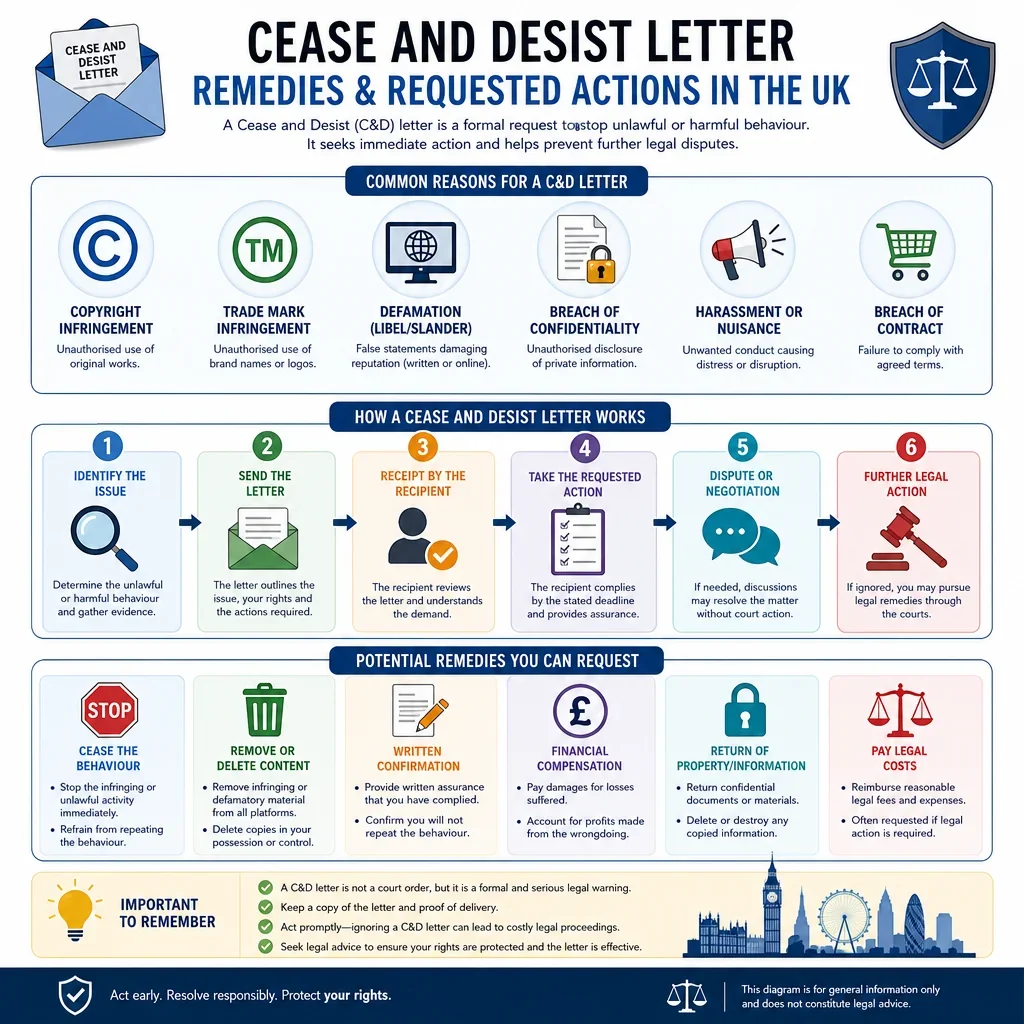
Common follow up steps include sending a final chaser, preserving evidence, using platform reporting tools, notifying a regulator or insurer, seeking mediation, or taking legal advice before making an application for an injunction. Court threats should be accurate and proportionate, especially where a pre-action protocol or statutory defence may apply.
What Should Users Be Careful About?
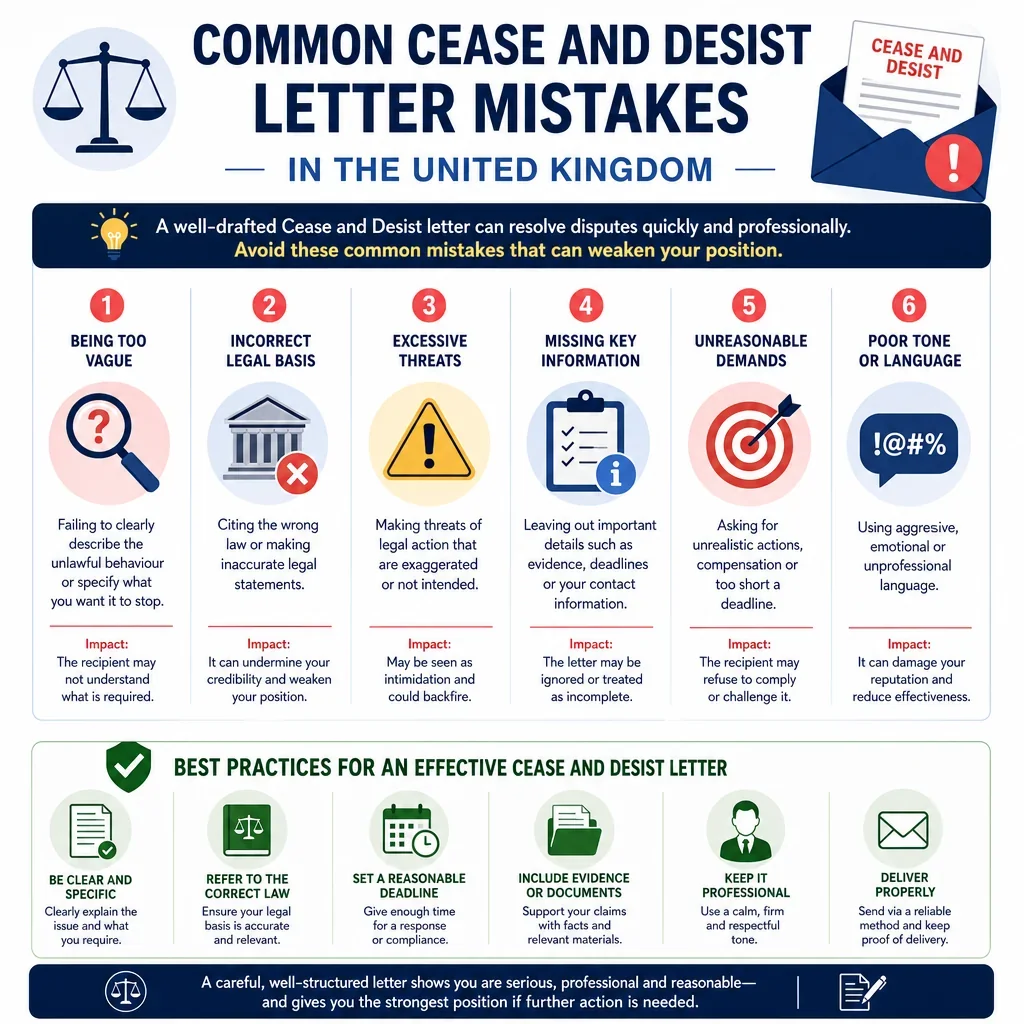
A cease and desist letter should not overstate legal rights, demand impossible compliance or use threats that are disproportionate to the dispute. In UK matters, a deadline that is too short can weaken credibility, particularly in consumer, employment, debt, neighbour and contractual disputes where a reasonable opportunity to investigate is expected.
FAQs
You Might Also Be Interested In