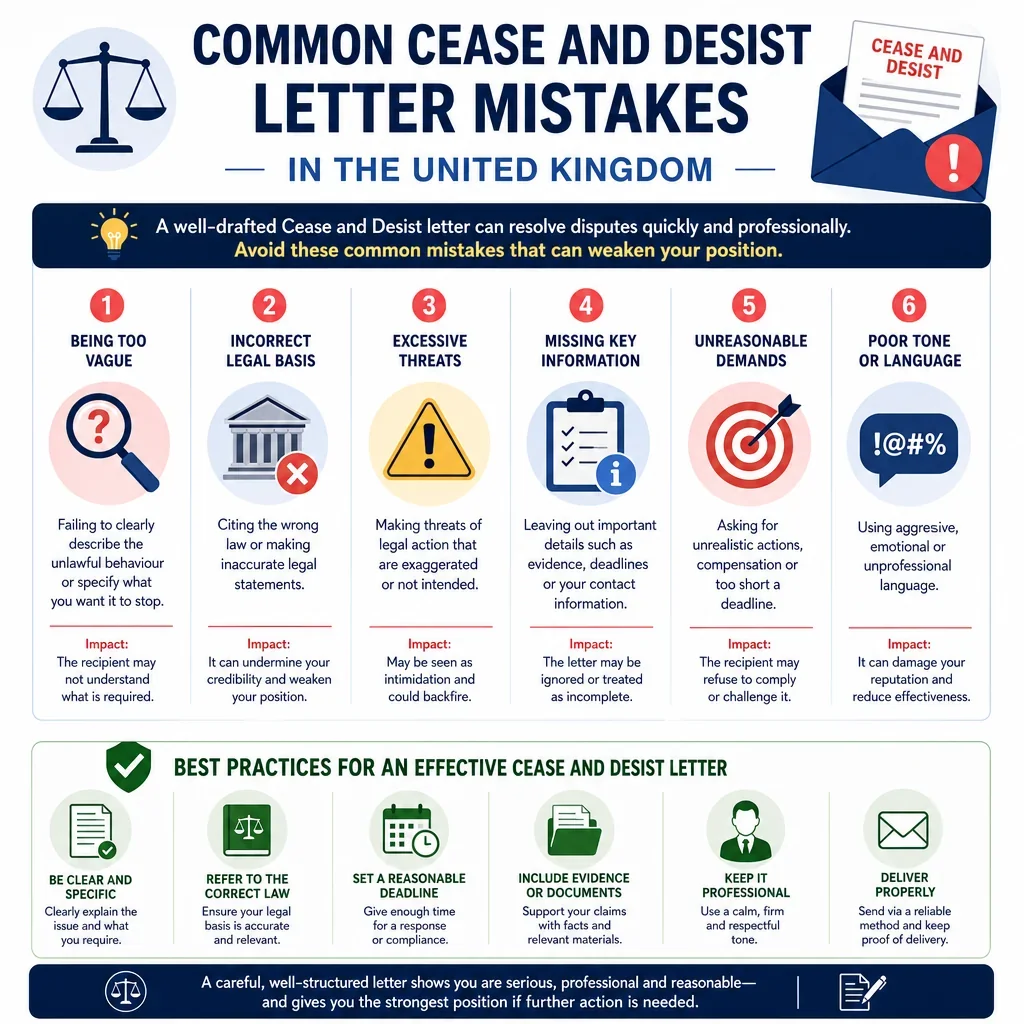
Common Cease And Desist Letter Mistakes In The United Kingdom
Mistake | Why It Matters | How To Avoid It | Risk Level | Safer Drafting Approach |
|---|---|---|---|---|
Accuracy | ||||
Addressing the letter to the wrong individual, company, or trading name. | The recipient may deny responsibility, ignore the letter, or argue that notice was ineffective. | Check Companies House, contracts, website terms, invoices, and domain records before sending. | High | Name the legal entity and, if needed, say the letter is also addressed to its officers, agents, or trading style where applicable. |
Describing the conduct too vaguely, such as saying "stop your unlawful behaviour" without particulars. | The recipient may not know what to stop and the letter may look speculative or oppressive. | Identify the specific acts, dates, locations, URLs, products, publications, messages, or clauses involved. | High | Use a short factual chronology and list each act complained of in numbered paragraphs. |
Using incorrect dates, time periods, or version history. | Incorrect timing can weaken credibility and affect limitation, urgency, and causation arguments. | Cross-check emails, screenshots, metadata, contracts, invoices, and filing records. | Medium | If exact timing is uncertain, use cautious wording such as "on or around" and explain the basis. |
Tone | ||||
Stating disputed allegations as proven facts. | It can provoke escalation, increase defamation risk, and make settlement harder. | Separate known facts from allegations, assumptions, and inferences. | High | Use wording such as "we understand", "the evidence indicates", or "we allege" where facts are disputed. |
Accusing the recipient of dishonesty, fraud, theft, or criminality without a sound basis. | Serious allegations may create defamation exposure if published beyond those with a proper interest. | Use neutral factual language and send only to people who reasonably need to receive it. | High | Describe the conduct and evidence rather than labelling the person a criminal or fraudster. |
Threatening to report the recipient to the police unless they pay or comply. | It may appear coercive and can undermine the sender's credibility or settlement position. | Keep civil demands separate from any genuine decision to report suspected crime. | High | Say the sender reserves all rights, including regulatory or criminal reporting where appropriate, without linking it to payment. |
Sending repeated, aggressive, or excessive letters and messages. | A course of conduct may risk harassment allegations if it causes alarm or distress. | Use one clear letter, reasonable follow-up, and a controlled communication plan. | High | State a response deadline and say further steps may be considered if no satisfactory response is received. |
Legal basis | ||||
Using a cease and desist letter as a threat without giving enough information for a response. | If litigation follows, poor pre-action conduct may affect costs, case management, or credibility. | Provide enough facts, key documents, requested remedy, and time for a reasoned reply. | High | Structure the letter around the claim, facts, legal basis, evidence, remedy, and proposed next steps. |
Citing the wrong legal basis for the complaint. | A wrong claim can invite a robust denial and may expose the sender to counterclaims or costs risk. | Match the conduct to the correct cause of action, right, contract term, or statutory duty. | High | State the primary legal basis and reserve the right to rely on further grounds if later identified. |
Claiming copyright infringement without confirming ownership or an exclusive licence. | Only the proper rights holder or authorised party can usually enforce copyright rights. | Check creation records, assignments, employment status, licence terms, and moral rights issues. | High | Identify the work, the owner, the basis of ownership, and the infringing copy or communication. |
Accuracy | ||||
Relying on a trade mark without checking registration status, classes, territory, or owner. | A weak or incorrect trade mark claim may fail or trigger unjustified threats issues. | Check the UK IPO register, registration number, owner, goods and services, and renewal status. | High | Quote the registration details and explain how the recipient's use conflicts with the protected mark. |
Legal basis | ||||
Making broad trade mark infringement threats against customers, retailers, or intermediaries. | UK trade mark law restricts unjustified threats and can give the threatened person a remedy. | Target primary acts and use permitted communications where the statutory conditions are met. | High | Focus on specific acts by the alleged infringer and avoid unsupported threats to sue downstream parties. |
Threatening patent proceedings without considering the UK unjustified threats regime. | Certain patent threats can allow the recipient to seek a declaration, injunction, or damages. | Check whether the communication is a permitted communication and whether it concerns primary acts. | High | Seek information about manufacture or importation before making litigation threats to sellers or users. |
Threatening registered design infringement proceedings too broadly. | Unjustified design threats can expose the sender to statutory remedies. | Check the registered design, owner, product comparison, and permitted communication rules. | High | Identify the registered design and specific product, and avoid threatening parties only selling or using it unless legally justified. |
Evidence | ||||
Alleging passing off without evidence of goodwill, misrepresentation, and likely damage. | Passing off is evidence-heavy and weak allegations may be dismissed quickly. | Gather sales history, marketing use, customer confusion, screenshots, and examples of damage. | Medium | Explain the goodwill relied on and how the recipient's conduct is likely to mislead customers. |
Legal basis | ||||
Claiming breach of confidence without identifying the confidential information. | The recipient cannot assess the complaint if the protected information and duty are unclear. | Identify the information, why it is confidential, how it was obtained, and the duty relied on. | High | Describe confidential material at a level that protects secrecy while giving enough particulars to respond. |
Ignoring the statutory definition of a trade secret when alleging misuse. | Trade secret protection depends on secrecy, commercial value, and reasonable protection steps. | State why the information is secret, valuable, and protected by reasonable measures. | High | Refer to confidentiality controls, access limits, NDAs, policies, and the alleged unauthorised use. |
Alleging breach of contract without quoting or summarising the relevant clause. | The recipient may dispute the obligation or say the demand is not grounded in the contract. | Check the signed version, parties, variation history, termination status, and relevant clause wording. | Medium | Refer to the contract date, parties, clause number, obligation, breach, and requested cure. |
Demanding compliance with an employment restrictive covenant without checking enforceability. | Overbroad restraints may be unenforceable and can damage the sender's negotiating position. | Review scope, duration, geography, legitimate business interest, role, and current facts. | High | Limit demands to conduct covered by a narrowly drafted covenant and explain the legitimate interest protected. |
Using a cease and desist letter to enforce unfair consumer terms. | Unfair consumer terms may not bind the consumer and may attract regulatory scrutiny. | Check transparency, fairness, cancellation rights, and whether the term creates significant imbalance. | High | Base demands on fair, transparent terms and explain the specific contractual obligation relied on. |
Demanding deletion or disclosure of personal data without considering UK GDPR rights and exemptions. | Data protection rights are qualified and mishandling them can cause regulatory and evidential problems. | Check the lawful basis, controller identity, retention duties, exemptions, and ICO guidance. | High | Make a targeted request explaining the data, right relied on, and any urgency, without demanding unlawful deletion of evidence. |
Threatening defamation proceedings without considering the serious harm requirement. | A defamation claim requires serious harm, and companies must show serious financial loss. | Assess publication, meaning, identification, harm, available defences, and limitation before sending. | High | Identify the statement, publication route, defamatory meaning, and harm caused or likely to be caused. |
Deadlines | ||||
Delaying a defamation cease and desist letter for too long. | Defamation and malicious falsehood claims generally have a one-year limitation period in England and Wales. | Record the first publication date and take prompt advice if proceedings may be needed. | High | Send promptly and request removal, correction, apology, and preservation of publication data where justified. |
Legal basis | ||||
Treating every negative review or opinion as defamation. | Honest opinion may be a defence, so overbroad threats can be counterproductive. | Distinguish verifiable factual allegations from opinions, ratings, and value judgments. | Medium | Challenge only specific false factual statements and explain why they are false and harmful. |
Evidence | ||||
Failing to preserve evidence before alerting the recipient. | Online posts, listings, files, and messages may be deleted once the recipient receives the letter. | Capture dated screenshots, URLs, metadata, correspondence, purchase samples, and witness notes first. | High | Preserve evidence before sending and ask the recipient not to delete relevant material. |
Relying on screenshots that do not show date, URL, platform, or context. | Poor screenshots may be challenged as incomplete, altered, or impossible to verify. | Capture full-page screenshots with dates, URLs, account names, and surrounding context. | Medium | Attach or describe a properly indexed evidence schedule rather than relying on bare assertions. |
Failing to prove the chain of title for assigned rights. | The recipient may challenge whether the sender has standing to enforce the right. | Check written assignments, licence terms, corporate transfers, and effective dates. | High | State the sender's entitlement to enforce and offer proof of authority where appropriate. |
Accuracy | ||||
A representative sends the letter without clear authority from the rights holder or claimant. | The recipient may refuse to engage or ask for proof of authority before acting. | Confirm written authority, scope of instructions, and who may negotiate or accept undertakings. | Medium | State that the sender acts for the named claimant and identify the authority to correspond. |
Deadlines | ||||
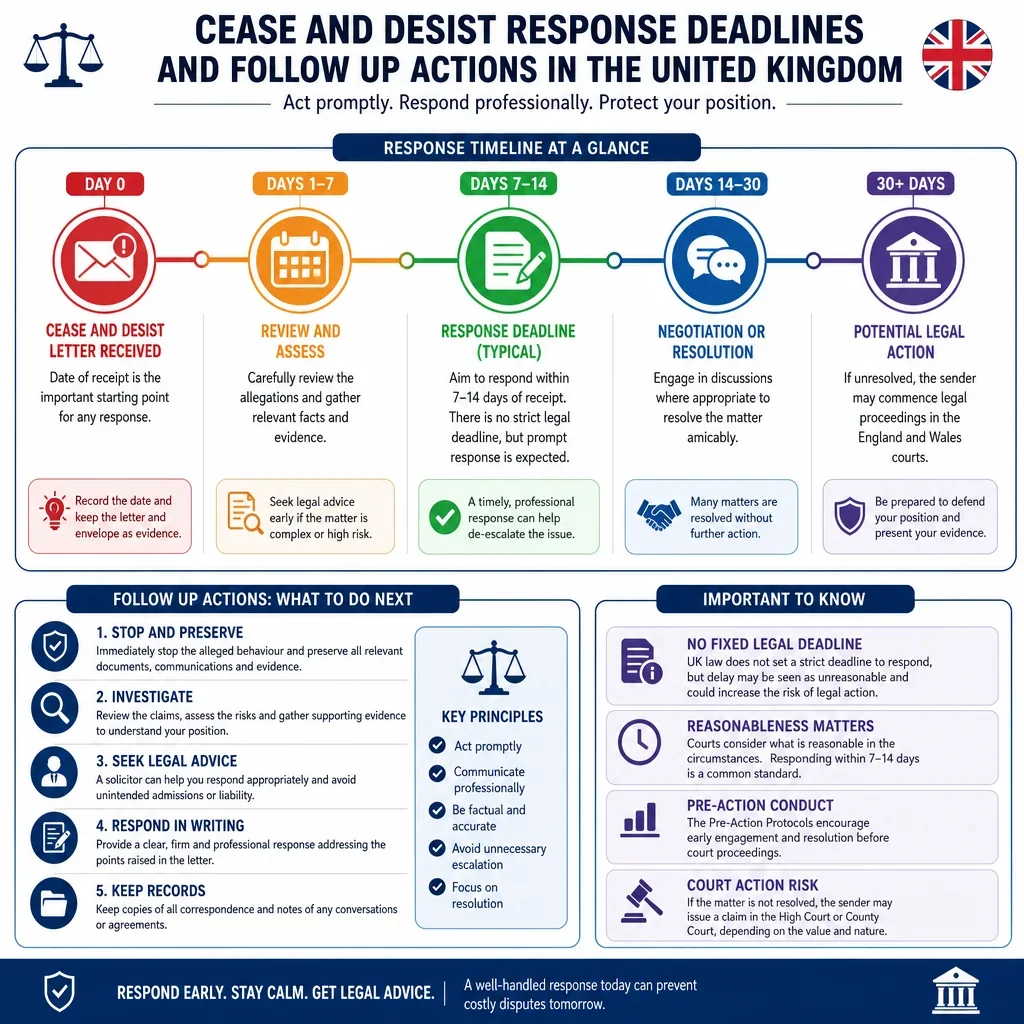
Setting an unrealistically short deadline without genuine urgency. | It may look unreasonable and conflict with the spirit of pre-action exchange. | Match the deadline to urgency, complexity, recipient location, and documents requested. | Medium | Use a short deadline only for urgent harm and explain why urgent action is needed. |
Not giving any clear response deadline. | The recipient may delay, and the sender may struggle to justify escalation. | State a calendar date, time, and method for response. | Low | Ask for written confirmation by a specified date, allowing reasonable time to investigate. |
Setting a deadline that expires on a weekend or bank holiday by accident. | It can create avoidable disputes about reasonableness and response time. | Use business days and check UK bank holidays for the relevant jurisdiction. | Low | Say "by 4 pm on [date]" and choose a normal business day unless urgent. |
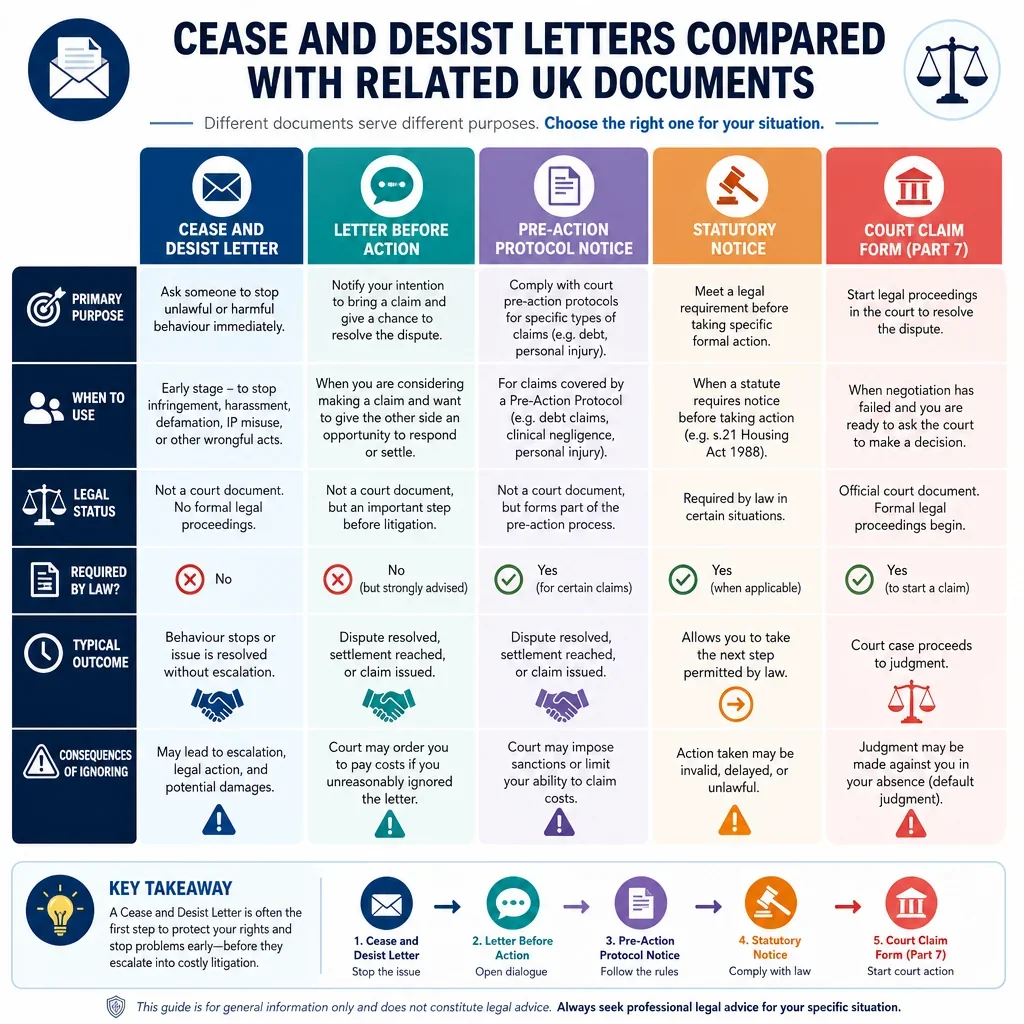
Assuming the letter stops a limitation period from running. | A cease and desist letter does not usually protect a claim from becoming time-barred. | Calculate limitation separately and issue proceedings or agree a standstill if needed. | High | Mention urgent time limits only after checking them and reserve the right to issue without further notice. |
Remedies | ||||
Demanding remedies that are disproportionate to the alleged conduct. | Excessive demands may reduce settlement prospects and look unreasonable if costs are later considered. | Link each requested remedy to the harm, right, contract term, or legal claim. | Medium | Request cessation, removal, undertakings, preservation, and reasonable compensation where justified. |
Demanding an admission of liability as the only acceptable response. | Recipients often refuse admissions even where they are willing to stop or settle. | Allow practical undertakings or without prejudice settlement discussions as alternatives. | Medium | Ask for cessation and undertakings without requiring an express admission unless essential. |
Claiming a large compensation figure without explaining how it is calculated. | Unsupported sums can look inflated and may distract from urgent stopping action. | Base figures on losses, licence fees, profits, invoices, or a reserved claim pending disclosure. | Medium | Reserve the right to claim damages and request information needed to quantify loss. |
Demanding legal costs as if recovery is automatic before proceedings. | Pre-action costs recovery depends on context, agreement, rules, and later court discretion. | Check any contractual indemnity, applicable procedure, and proportionality of costs. | Low | Say the sender reserves the right to seek costs where recoverable, rather than demanding them as automatic. |
Failing to request preservation of relevant documents, data, stock, or records. | Evidence may be lost, making later enforcement or settlement harder. | Identify categories of evidence to preserve without encouraging unlawful data retention. | Medium | Ask the recipient to preserve relevant communications, files, sales records, products, and website data. |
Demanding removal of lawful content along with allegedly unlawful content. | Overbroad demands may be resisted and can raise free expression, competition, or platform policy issues. | Identify each item to remove and explain the legal basis for each request. | Medium | Request removal or amendment only of specified statements, files, listings, images, or pages. |
Threatening an injunction without considering urgency, evidence, and the court test. | Injunction applications require careful evidence, proportionality, and often undertakings to the court. | Assess urgency, serious issue, adequacy of damages, balance of convenience, and disclosure duties. | High | State that urgent injunctive relief may be considered if the conduct continues and the evidence supports it. |
Delivery and records | ||||
Marking the whole cease and desist letter "without prejudice" when it is meant to be relied on as notice. | It may create arguments about whether the letter can be shown to the court as an open demand. | Separate open correspondence from settlement offers where confidentiality is intended. | Medium | Send an open cease and desist letter and put settlement concessions in a separate without prejudice letter. |
Marking a letter confidential without a proper basis or clear purpose. | A confidentiality label may not prevent disclosure and can confuse the recipient's ability to get advice. | Use confidentiality wording only where justified and allow disclosure to advisers and insurers. | Low | State any confidentiality request narrowly and permit disclosure for legal advice and compliance. |
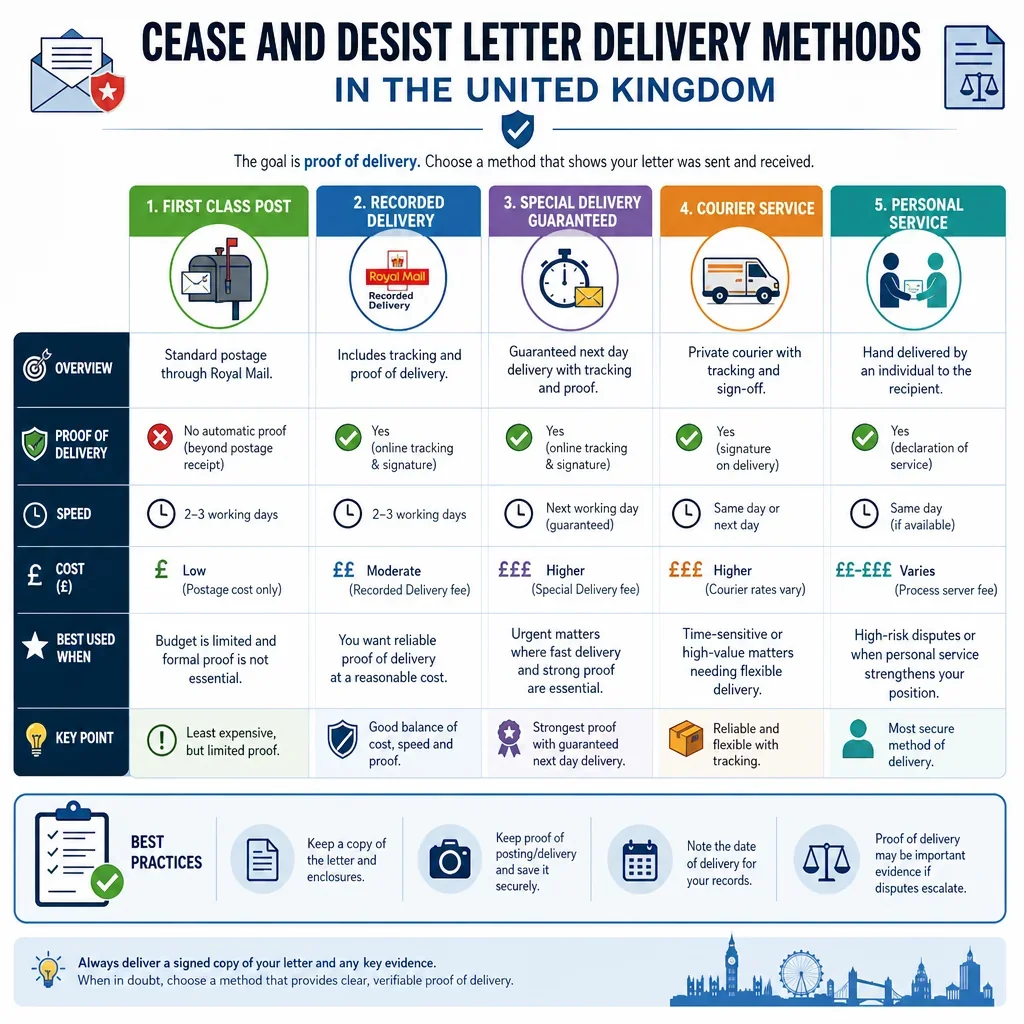
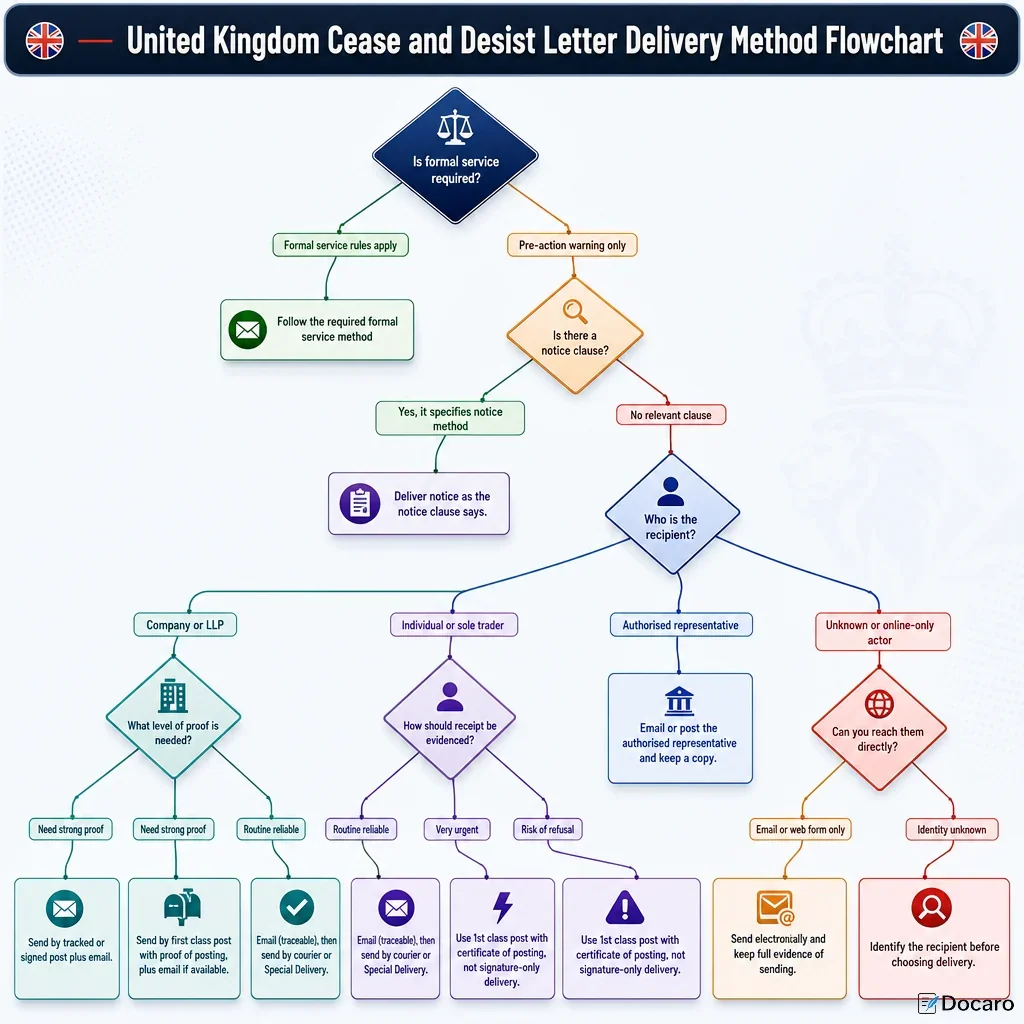
Not keeping proof that the letter and attachments were sent and received. | The sender may struggle to prove notice, deadline expiry, or the recipient's knowledge. | Save emails, delivery receipts, postal proofs, courier tracking, and copies of attachments. | Medium | Send by appropriate methods and retain a complete indexed copy of everything delivered. |
Sending only to an informal email or social media account when formal notice may be needed. | If proceedings follow, delivery and service issues can become disputed. | Check contractual notice clauses, registered office, last known address, and CPR service rules where relevant. | Medium | Send by the agreed notice method and also by practical channels likely to reach the recipient. |
Evidence | ||||
Referring to evidence or documents that are not attached or adequately described. | The recipient may say they cannot investigate or respond properly. | Attach key evidence or describe it clearly if disclosure would be sensitive. | Medium | Use an evidence schedule with exhibit numbers, dates, and short descriptions. |
Including privileged, commercially sensitive, or personal data that is unnecessary. | Unnecessary disclosure may waive privilege, breach confidentiality, or create data protection issues. | Redact irrelevant personal data and seek advice before disclosing legal advice or sensitive documents. | High | Disclose only what is needed to explain the claim and reserve sensitive evidence for controlled exchange. |
Delivery and records | ||||
Copying the letter to employers, customers, family members, or social media audiences unnecessarily. | Unnecessary publication can increase defamation, privacy, harassment, and data protection risk. | Send only to the recipient, their known representative, or parties with a proper need to know. | High | Keep distribution narrow and record why each recipient needed to receive the letter. |
Sending informal messages that contradict the formal letter. | Mixed messages can undermine urgency, settlement position, and factual consistency. | Use one approved communication channel and keep a record of all contact. | Medium | Refer all follow-up through the named contact and avoid side messages. |
Remedies | ||||
Asking for "undertakings" without specifying their terms. | Vague undertakings are hard to agree, monitor, or enforce. | Draft clear, measurable promises covering cessation, deletion, delivery up, and non-repetition where justified. | Medium | List proposed undertakings in numbered clauses and invite reasonable amendments. |
Demanding immediate deletion or destruction of all materials that may later be evidence. | Destruction may prejudice later proceedings and conflict with preservation duties or audit needs. | Distinguish stopping use from preserving copies for legal, compliance, or evidential purposes. | High | Request cessation of use and secure preservation pending agreement or court order. |
Delivery and records | ||||
Sending a legal threat to a platform without following its takedown process. | Platforms may reject incomplete notices or require specific information before actioning complaints. | Use the platform's reporting route and include rights, URLs, ownership details, and declaration wording if required. | Low | Send a compliant platform notice and a separate tailored letter to the alleged wrongdoer if appropriate. |
Legal basis | ||||
Threatening domain transfer without checking the domain dispute route and registrant facts. | UK domain disputes may involve specific policies and evidence of abusive registration. | Check WHOIS data, trade mark rights, use of the domain, and Nominet dispute options for .uk domains. | Medium | Request suspension, transfer, or response by reference to the specific domain and rights relied on. |
Ignoring whether the recipient, conduct, or platform is outside the UK. | Jurisdiction affects enforceability, applicable law, service, costs, and practical leverage. | Check location, governing law, jurisdiction clauses, target audience, and enforcement route. | Medium | Refer to the UK connection and reserve rights in other jurisdictions where applicable. |
Assuming England and Wales procedure applies unchanged across the whole UK. | Scotland and Northern Ireland have different court procedures and terminology. | Identify the relevant UK jurisdiction before citing procedure, court steps, or remedies. | Medium | Use jurisdiction-neutral wording unless the correct court and procedure have been confirmed. |
Tone | ||||
Using misleading or aggressive pressure against a consumer or small trader. | Aggressive or misleading commercial practices can create regulatory and reputational risk. | Avoid false urgency, misleading legal consequences, and pressure tactics not supported by law. | High | State the legal concern, requested action, and realistic consequences in plain language. |
Legal basis | ||||
Using a cease and desist letter to demand payment without following debt pre-action rules where relevant. | Debt claims against individuals have a specific pre-action protocol in England and Wales. | Use the debt protocol route where the main claim is payment from an individual. | Medium | Separate a stop-demand from any formal letter of claim for debt and include required debt information. |
Evidence | ||||
Failing to explain the harm caused or likely to be caused. | Without harm, urgency and requested remedies may appear disproportionate. | Identify commercial loss, reputational harm, customer confusion, privacy impact, safety risk, or contractual damage. | Medium | Link the conduct to specific practical consequences and evidence where available. |
Legal basis | ||||
Ignoring obvious defences or exceptions before sending the letter. | A recipient may quickly rebut the claim using fair dealing, honest opinion, consent, licence, or public interest. | Stress-test the claim against likely defences and exceptions before making threats. | High | Use measured language and explain why the sender does not accept any apparent defence. |
Ignoring possible copyright fair dealing exceptions. | Certain uses for criticism, review, quotation, news reporting, parody, research, or private study may be permitted. | Assess the purpose, amount used, acknowledgement, market impact, and fairness before alleging infringement. | Medium | Explain why the use is not accepted as fair dealing, if that is the sender's position. |
Accuracy | ||||
Overlooking prior consent, licence, waiver, or course of dealing. | A previous permission may make the demand inaccurate or significantly weaken it. | Review emails, contracts, platform permissions, invoices, and historic approvals. | High | If permission is disputed, explain why it has expired, been exceeded, or been withdrawn. |
Not clearly identifying who is making the demand. | The recipient may not know whose rights are asserted or who can accept compliance. | Include the sender's legal name, address, role, and contact details. | Medium | Open with the claimant's identity and the capacity in which the letter is sent. |
Tone | ||||
Using insults, sarcasm, or emotional language. | It can distract from the legal issue and make the sender look unreasonable. | Keep the tone formal, factual, and proportionate. | Medium | Use neutral descriptions of conduct and avoid personal criticism. |
Saying court action "will" happen when no decision has been made. | False certainty can be misleading and may later be used to challenge credibility. | Use conditional language that reflects the actual decision-making position. | Medium | Say the sender may consider proceedings if the matter is not resolved. |
Refusing any opportunity for the recipient to explain, correct, or propose undertakings. | It may undermine settlement and look unreasonable if the dispute later reaches court. | Invite a substantive response and allow practical proposals for resolution. | Low | Ask for confirmation, evidence, or proposals by the deadline while reserving rights. |
Remedies | ||||
Failing to reserve rights after making limited demands. | The recipient may argue the sender limited or waived further remedies. | Include a concise reservation of rights, especially where losses are not yet quantified. | Low | State that all rights and remedies are reserved, including claims not yet known or quantified. |
Delivery and records | ||||
Accidentally making a binding settlement offer in an open letter. | Unclear wording may create disputes over acceptance, settlement terms, or admissions. | Separate demands, settlement offers, and negotiation concessions clearly. | Medium | Use open wording for notice and label genuine settlement communications appropriately. |
Remedies | ||||
Demanding that the recipient "never do it again" without defining prohibited conduct. | Unclear future restrictions are hard to comply with and may be too broad to enforce. | Define the conduct, products, works, accounts, statements, customers, or information covered. | Medium | Request specific non-repetition undertakings tied to the acts identified in the letter. |
Legal basis | ||||
Ignoring moral rights when complaining about use or alteration of creative work. | Authors and directors may have rights of attribution and integrity separate from copyright ownership. | Check authorship, assertion, waivers, attribution, and derogatory treatment issues. | Medium | Identify any moral right separately from economic copyright and state the remedy sought. |
Treating all former employee knowledge as confidential information. | General skill, knowledge, and experience are not the same as protected confidential information. | Identify specific documents, data, client lists, pricing, strategy, or trade secrets allegedly misused. | Medium | Focus on identifiable confidential material and any contractual or equitable duty protecting it. |
Using IP or contract threats to suppress legitimate competition rather than unlawful conduct. | Heavy-handed threats may raise competition, abuse of dominance, or unfair restraint concerns in some markets. | Target only conduct that infringes rights or breaches obligations, not lawful market competition. | Medium | Tie demands to specific legal rights and avoid blanket market-exclusion language. |
Accuracy | ||||
Sending demands to a dissolved or insolvent company without checking status. | Recovery, enforcement, and correct contact route may be affected by insolvency or dissolution. | Check Companies House, insolvency notices, administrators, liquidators, and registered office details. | Medium | Address the correct office-holder or entity and adapt demands to the insolvency context. |
Evidence | ||||
Assuming an anonymous username is the real-world wrongdoer without verification. | Misidentification can lead to wrongful accusations and defamation or privacy risk. | Verify identity through available records, correspondence, platform data, or lawful disclosure routes. | High | If identity is uncertain, address the account holder or platform and avoid naming unsupported individuals. |
Tone | ||||
Using dense legal jargon that obscures the demand. | The recipient may misunderstand what must be stopped, by when, and why. | Use short paragraphs, defined terms, headings, and numbered requests. | Low | State the problem, evidence, legal basis, requested action, and deadline in clear sections. |
What Are The Biggest Cease And Desist Letter Mistakes In The UK?
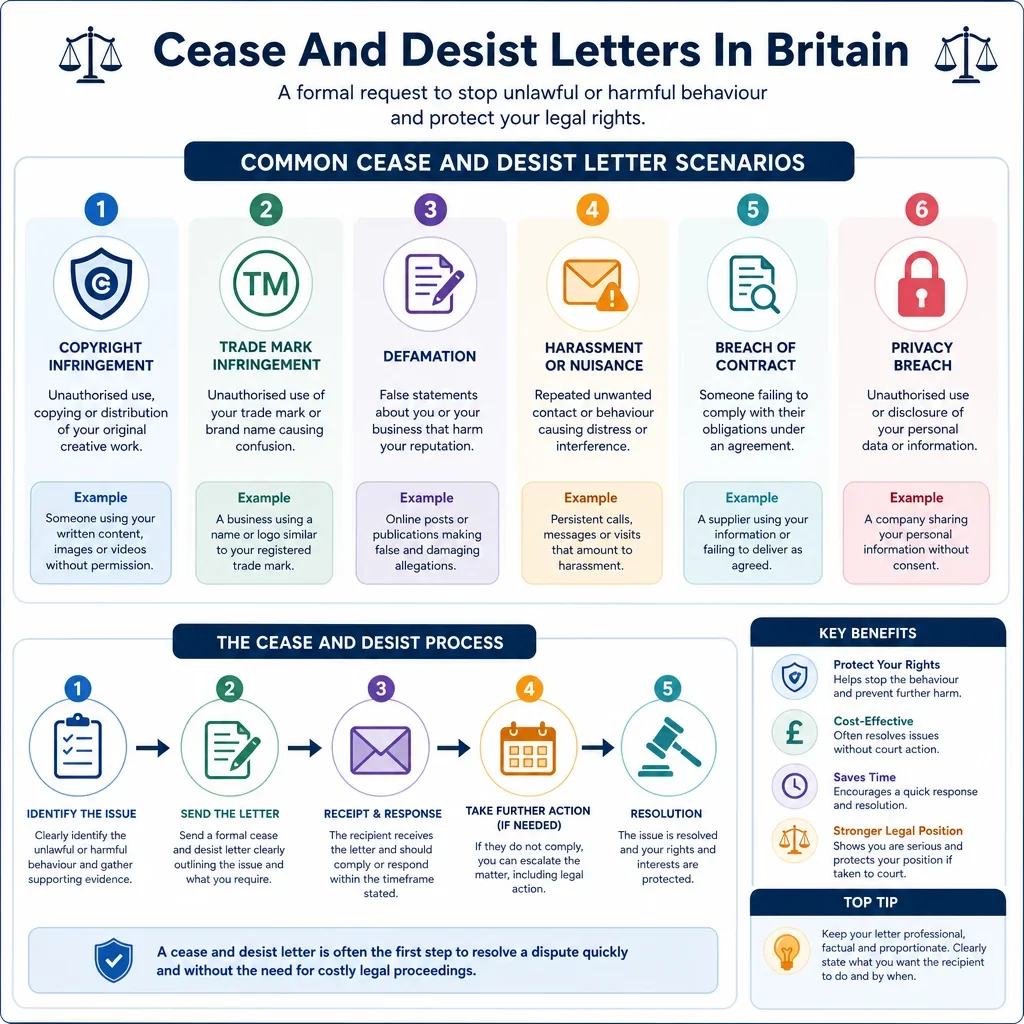
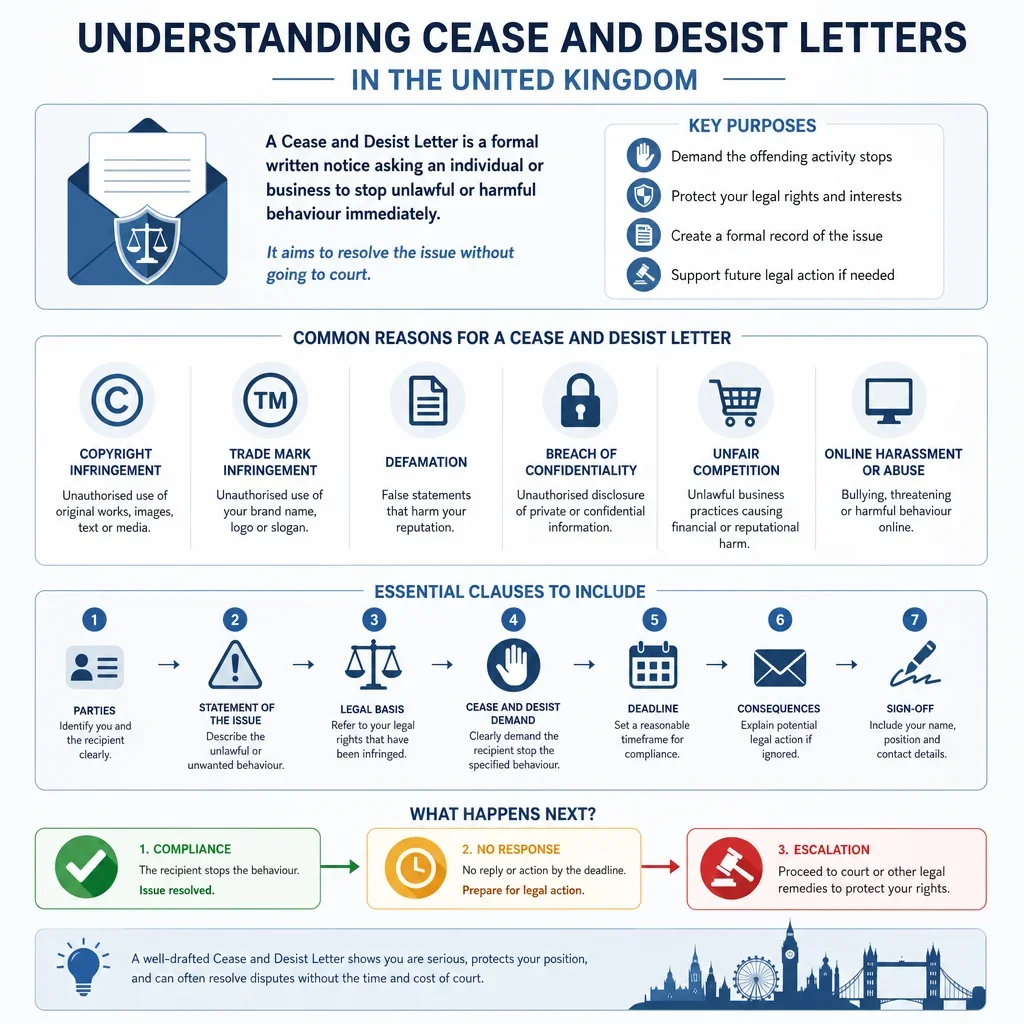
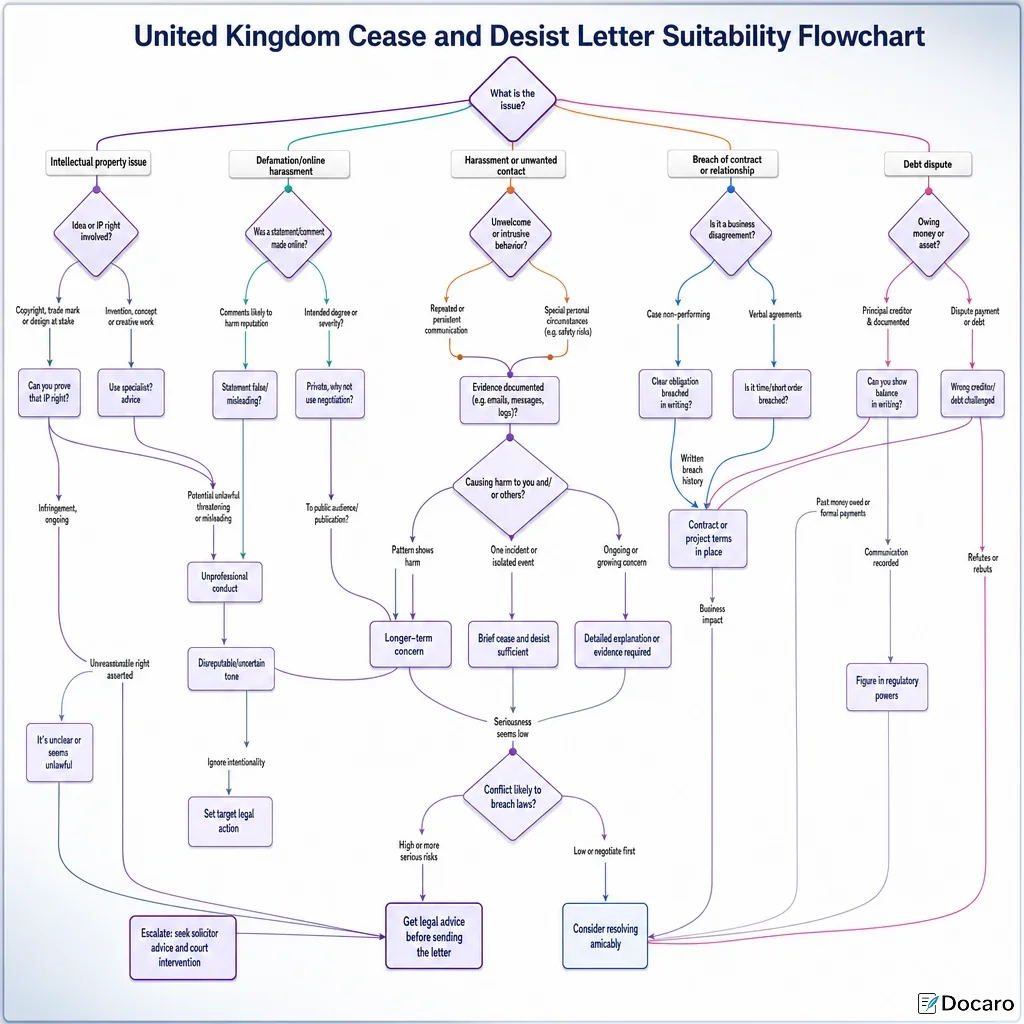
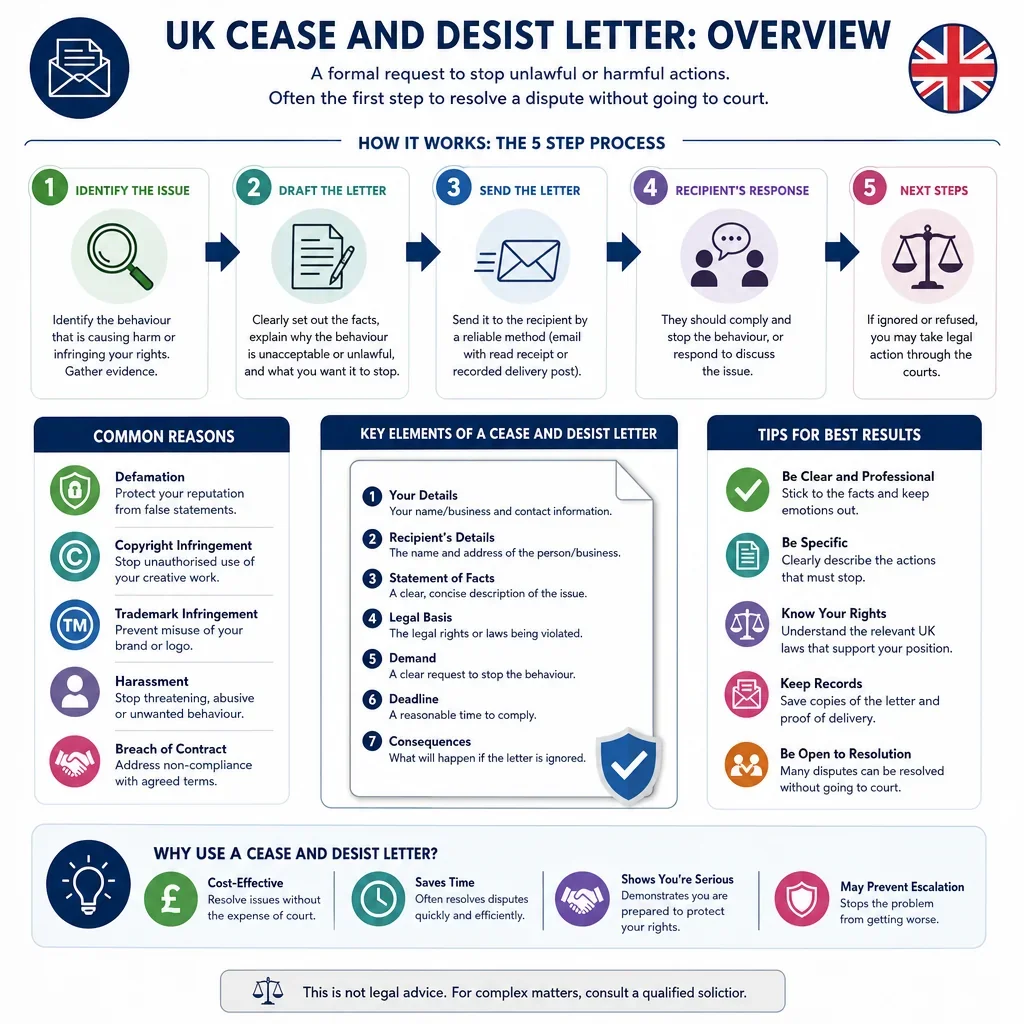
The highest-risk mistakes are usually not formatting issues; they are overstating the legal position, making threats without evidence, using the wrong legal basis, or demanding remedies the sender may not be entitled to. In the UK, an aggressive letter can backfire if it creates defamation risk, amounts to harassment, or makes an unjustified threat in intellectual property matters.
Why Should The Letter Be Evidence-Led?
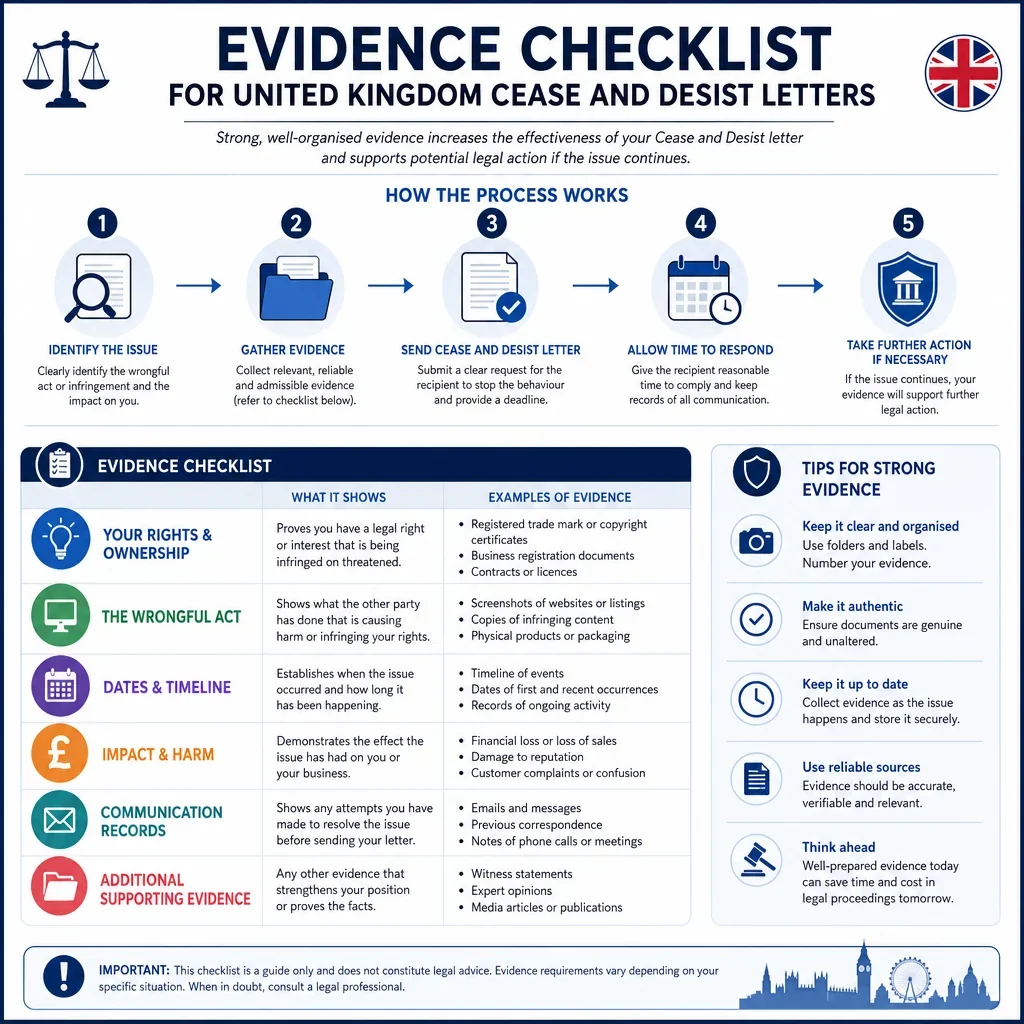
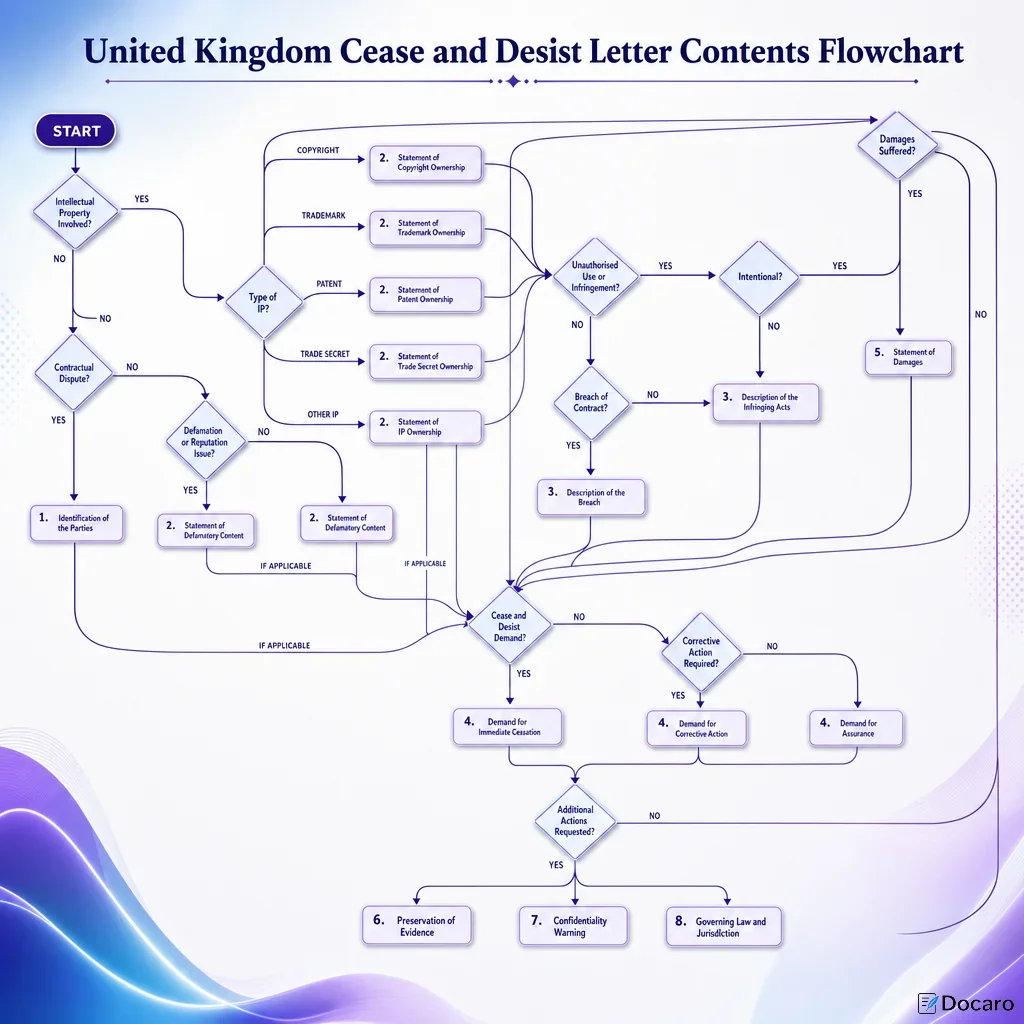
A cease and desist letter should clearly identify the conduct complained of, the dates, the relevant rights or obligations, and the evidence supporting the allegation. Unsupported allegations such as fraud, infringement, harassment, breach of confidence, or defamation are more likely to be ignored, disputed, or used against the sender.
How Should A UK Cease And Desist Letter Handle Legal Threats?
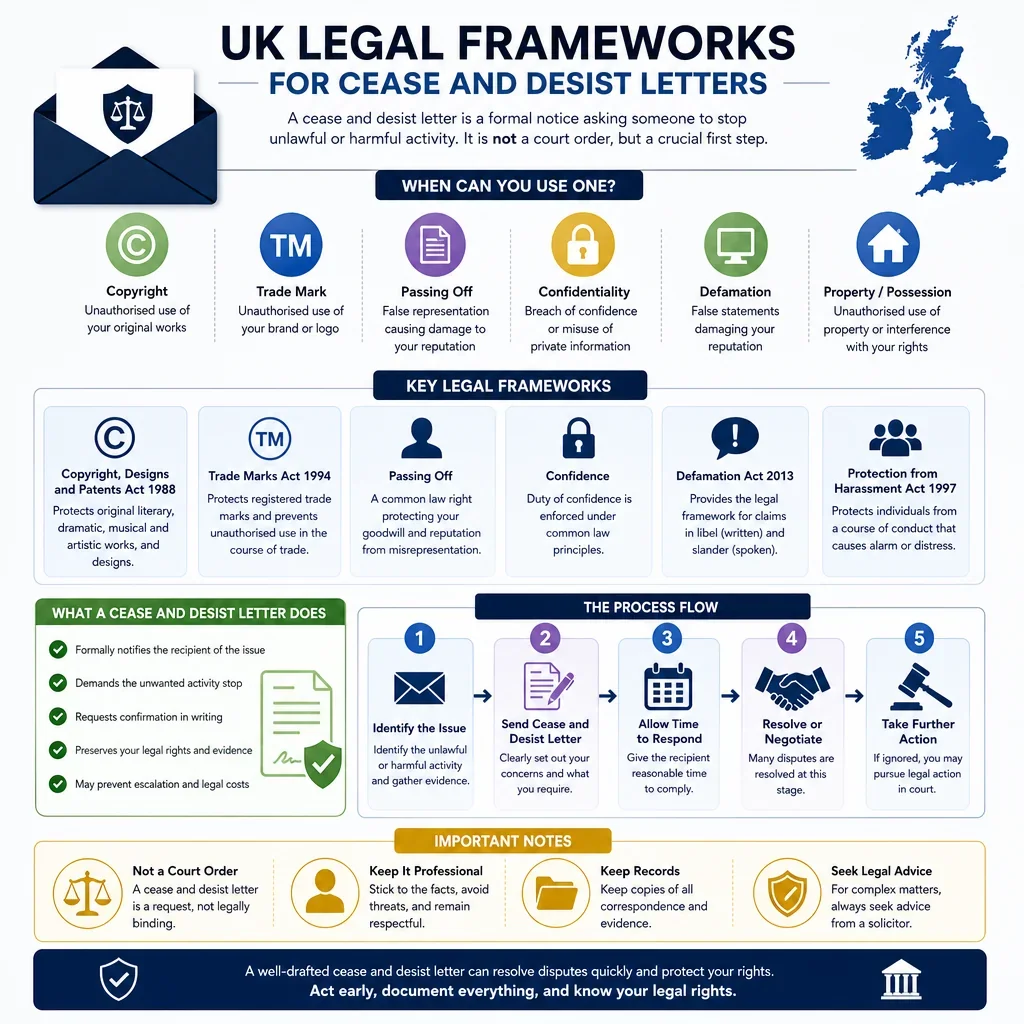
Threats should be proportionate and legally accurate. For IP disputes, UK law contains rules on unjustified threats, so letters should normally focus on specific acts and remedies rather than broad threats against customers, retailers, or intermediaries. For harassment, privacy, employment, consumer, and contractual disputes, the letter should avoid language that could itself be oppressive or misleading.
What Practical Steps Reduce Risk?
- Check the recipient and facts: confirm the correct legal entity, address, dates, URLs, posts, products, or conduct.
- State the legal basis precisely: identify the right relied on, such as copyright ownership, trade mark registration, contract clause, confidentiality duty, harassment conduct, or data protection right.
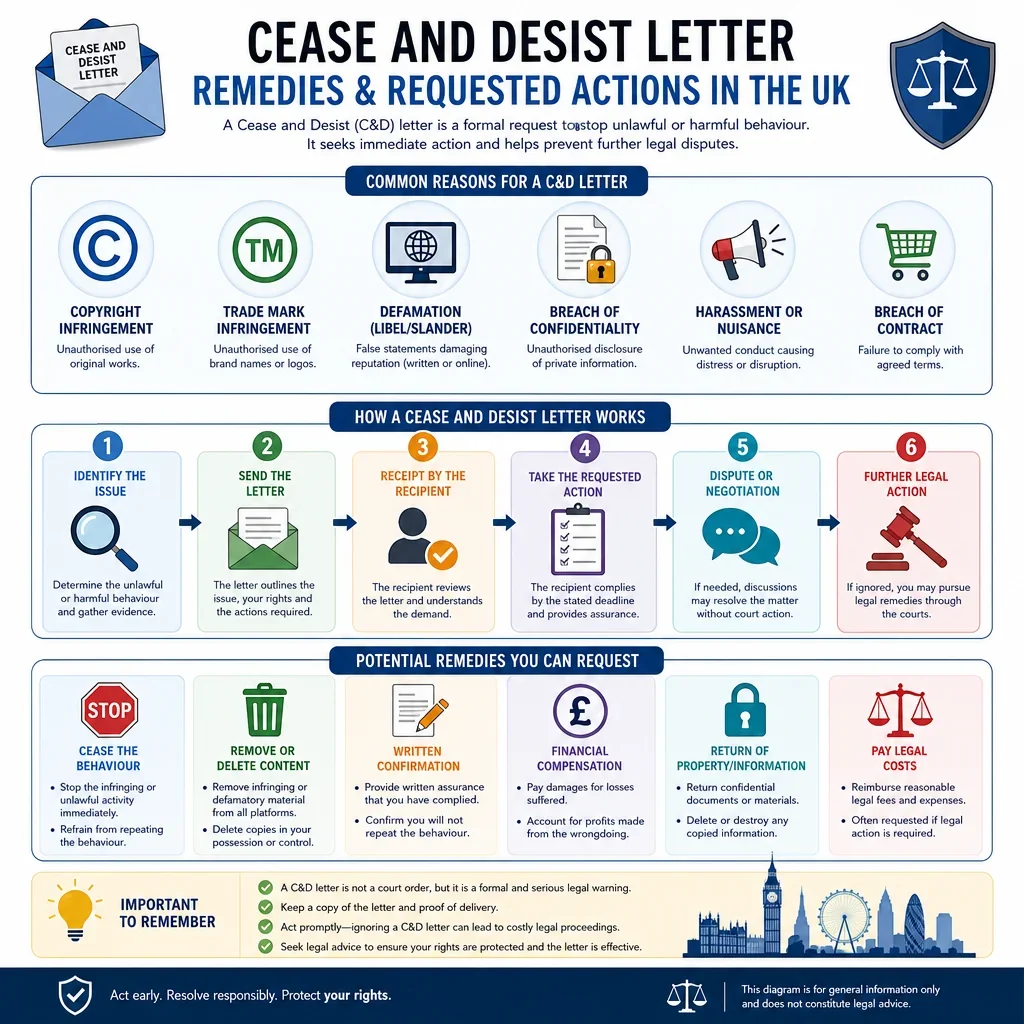
- Ask for realistic remedies: removal, undertakings, preservation of evidence, confirmation of compliance, or settlement discussions may be safer than demanding excessive compensation or admissions.
- Use proportionate deadlines: urgent matters can justify short deadlines, but ordinary disputes usually need reasonable time for the recipient to investigate and respond.
- Keep proof: retain the final letter, attachments, evidence bundle, delivery records, and any response.
FAQs
You Might Also Be Interested In