Common Cease And Desist Letter Scenarios In Britain
Scenario | When It Applies | Conduct To Stop | Typical Requested Outcome | Typical Urgency |
|---|---|---|---|---|
Intellectual property | ||||
Unauthorised use of copyrighted text, images, video, music or software | Where protected work is copied, uploaded, adapted or reused without permission. | Copying, hosting, sharing, selling or adapting the protected work. | Remove the material, stop future use and give written undertakings. | High |
Use of photographs on a website or social media without permission | Where photographs are used commercially or publicly without a licence. | Displaying, downloading, reposting or editing images without consent. | Remove images, pay licence fees or confirm no further use. | Medium |
Unauthorised use of a registered trade mark | Where a protected brand name, logo or sign is used without consent. | Using the mark on products, adverts, domains, listings or packaging. | Stop use, remove listings and give undertakings not to repeat. | High |
Sale of counterfeit or fake branded goods | Where goods imitate a protected brand and risk confusing customers. | Selling, advertising, importing or distributing counterfeit goods. | Stop sales, remove listings, disclose stock and deliver up goods. | High |
Intellectual property, Consumer and trading conduct | ||||
Passing off by using a similar business name or branding | Where another business misleads customers into thinking it is connected with yours. | Using confusing names, logos, get-up, packaging or marketing claims. | Rebrand, stop misleading use and confirm corrective steps. | High |
Domain name registered to imitate a brand or business | Where a domain is registered or used to exploit another name or mark. | Using, redirecting, selling or advertising through the disputed domain. | Stop use and transfer or cancel the domain name. | High |
Social media account using another business name or brand | Where an account impersonates or trades on another brand identity. | Using brand names, logos, profile images or misleading account descriptions. | Rename, delete or transfer the account and stop impersonation. | High |
Intellectual property | ||||
Copying a product design or visual appearance | Where a product design is copied without permission. | Making, selling, importing or advertising copied designs. | Stop sales, remove adverts and disclose remaining stock. | Medium |
Use or sale of a patented invention without permission | Where a patented product or process is made, used or sold without consent. | Making, using, selling, importing or offering the patented invention. | Stop infringement, disclose activity and give undertakings. | High |
Intellectual property, Data protection and privacy | ||||
Extraction or reuse of a protected database | Where substantial database contents are copied or reused without permission. | Scraping, extracting, republishing or commercially reusing database contents. | Stop extraction, delete copies and confirm no further reuse. | High |
Contract and business conduct, Data protection and privacy | ||||
Misuse or disclosure of confidential information | Where confidential business, client or technical information is shared or used improperly. | Disclosing, copying, exploiting or retaining confidential information. | Stop misuse, return or delete materials and give undertakings. | High |
Breach of a non-disclosure agreement | Where information covered by an NDA is disclosed or used outside agreed terms. | Sharing, using, copying or failing to secure protected information. | Comply with the NDA, delete copies and confirm remedial action. | High |
Contract and business conduct | ||||
Former employee breaching restrictive covenants | Where a former employee ignores valid post-termination restrictions. | Competing, soliciting clients, poaching staff or misusing business contacts. | Stop restricted activity and give written undertakings. | High |
Poaching clients, customers or staff in breach of contract | Where a contract restricts solicitation or inducement after termination. | Approaching clients, diverting business or recruiting protected staff. | Stop solicitation, return records and confirm compliance. | High |
Breach of an exclusivity or non-compete business agreement | Where a party acts contrary to agreed exclusivity or non-compete terms. | Selling to restricted customers, competing or supplying excluded markets. | Stop breach, comply with contract and give undertakings. | Medium |
Consumer and trading conduct, Harassment and unwanted contact | ||||
Unfair debt collection pressure or repeated payment demands | Where debt demands are excessive, misleading or directed to the wrong person. | Repeated calls, misleading letters, threats or contact at unreasonable times. | Stop improper contact, correct records and communicate appropriately. | Medium |
Defamation and reputation, Consumer and trading conduct | ||||
False and damaging online review | Where a published review makes false statements causing serious reputational harm. | Publishing or repeating false allegations in reviews or comments. | Remove review, publish correction and undertake not to repeat. | High |
Defamation and reputation | ||||
Defamatory social media posts or comments | Where a post contains false factual allegations causing serious harm. | Posting, sharing, commenting on or repeating defamatory allegations. | Delete posts, correct the record and stop republication. | High |
Defamation and reputation, Consumer and trading conduct | ||||
Competitor spreading false statements about a business | Where a competitor makes false claims that damage trading reputation. | Making false statements to customers, suppliers, staff or online audiences. | Stop statements, retract claims and provide written undertakings. | High |
Malicious falsehood affecting goods, services or business reputation | Where false statements are made maliciously and cause financial loss. | Circulating false claims about products, services, solvency or integrity. | Cease publication, retract statements and preserve evidence. | High |
Harassment and unwanted contact | ||||
Repeated unwanted contact amounting to harassment | Where repeated unwanted conduct causes alarm or distress. | Repeated calls, messages, emails, visits or contact through others. | Stop all contact except agreed lawful channels. | High |
Unwanted contact from a former colleague or workplace contact | Where workplace-related contact continues after being told to stop. | Messaging, calling, visiting, contacting colleagues or spreading rumours. | Stop contact and use formal workplace or legal channels only. | Medium |
Harassment and unwanted contact, Property and trespass | ||||
Neighbour harassment or intimidating conduct | Where repeated neighbour conduct causes alarm, distress or intimidation. | Threatening behaviour, repeated complaints, shouting, filming or unwanted visits. | Stop the conduct and avoid direct contact where possible. | High |
Harassment and unwanted contact, Data protection and privacy | ||||
Stalking or persistent monitoring | Where a person repeatedly monitors, follows or tracks another person. | Following, monitoring, tracking, repeated messages or watching locations. | Stop all monitoring and contact preserve evidence for authorities. | High |
Data protection and privacy, Consumer and trading conduct | ||||
Unwanted marketing emails or messages after opt-out | Where marketing continues after consent is withdrawn or opt-out is ignored. | Sending marketing emails, texts or automated messages without valid permission. | Stop marketing, suppress contact details and confirm compliance. | Medium |
Unwanted sales calls or automated calls | Where calls continue despite objection, opt-out or TPS registration. | Live marketing calls, automated calls or repeated sales voicemails. | Stop calls, remove number and confirm suppression. | Medium |
Data protection and privacy, Defamation and reputation | ||||
Publication of private personal information | Where private information is posted or shared without lawful basis. | Posting addresses, contact details, private images or personal records. | Remove information, stop sharing and confirm deletion. | High |
Data protection and privacy | ||||
Refusal to delete personal data after a valid erasure request | Where an organisation fails to erase data when the right applies. | Continuing to process, publish or share personal data unlawfully. | Erase data, confirm deletion and notify recipients where required. | Medium |
Processing inaccurate personal data | Where an organisation holds or shares incorrect personal data. | Using, sharing or relying on inaccurate records. | Rectify data, restrict use and confirm recipients were updated. | Medium |
Data protection and privacy, Intellectual property | ||||
Scraping website content or personal data without permission | Where site content, listings or personal data are harvested at scale. | Automated scraping, copying profiles, harvesting emails or republishing data. | Stop scraping, delete extracted data and identify recipients. | High |
Property and trespass | ||||
Unauthorised entry onto private land | Where someone enters or remains on land without permission or right. | Entering land, using private access routes or refusing to leave. | Leave, stop entry and avoid future trespass. | Medium |
Repeated unauthorised parking on private land | Where a vehicle is repeatedly parked without permission or contrary to terms. | Parking in private bays, blocking access or ignoring parking restrictions. | Stop parking, remove vehicle and comply with site rules. | Medium |
Encroachment over a property boundary | Where structures, fences or items extend onto another property. | Building, storing items or maintaining structures beyond the boundary. | Remove encroachment, reinstate land and stop further works. | Medium |
Building works trespassing onto neighbouring land | Where works enter, damage or interfere with neighbouring property. | Accessing land, storing materials, scaffolding or carrying out unauthorised works. | Stop works, remove items and agree lawful access arrangements. | High |
Private nuisance interfering with use of property | Where ongoing activity unreasonably interferes with enjoyment of land. | Excessive noise, smoke, smells, water run-off or obstruction. | Stop or reduce nuisance and prevent recurrence. | Medium |
Property and trespass, Consumer and trading conduct | ||||
Fly-tipping or dumping waste on private land | Where waste is deposited on land without permission. | Dumping, storing, arranging or encouraging waste disposal on the land. | Stop dumping, remove waste and pay clean-up costs where appropriate. | High |
Consumer and trading conduct | ||||
Misleading advertising or false marketing claims | Where adverts mislead consumers or cannot be substantiated. | Publishing false claims, unclear pricing or misleading comparisons. | Withdraw adverts, correct claims and stop misleading promotions. | Medium |
Consumer and trading conduct, Defamation and reputation | ||||
Unfair comparative advertising naming a competitor | Where competitor comparisons are misleading, unfair or unsubstantiated. | Using inaccurate comparisons, denigrating claims or misleading price statements. | Remove or amend adverts and confirm substantiation. | Medium |
Fake reviews or manipulated ratings | Where reviews are fabricated, incentivised without disclosure or maliciously posted. | Posting fake reviews, review bombing or hiding genuine negative reviews. | Remove fake reviews, stop manipulation and preserve account evidence. | High |
Consumer and trading conduct, Intellectual property, Defamation and reputation | ||||
Impersonating a business online | Where a person or site pretends to be a business or authorised representative. | Using names, logos, emails, profiles or websites to impersonate the business. | Stop impersonation, remove pages and transfer or disable accounts. | High |
Consumer and trading conduct, Intellectual property, Data protection and privacy | ||||
Phishing or scam messages using a brand identity | Where scam communications misuse a brand to mislead recipients. | Sending spoof emails, fake texts, fraudulent links or branded scam pages. | Cease use, take down content and preserve technical evidence. | High |
Contract and business conduct, Data protection and privacy | ||||
Breach of website terms of use | Where a user breaches agreed platform, account or website terms. | Scraping, account sharing, abusive use, automation or prohibited resale. | Stop breach, disable misuse and comply with platform terms. | Medium |
Data protection and privacy, Consumer and trading conduct | ||||
Unauthorised use of a person's image or likeness in marketing | Where a person's photo or identity is used in promotions without a lawful basis. | Using photos, names, testimonials or likenesses in adverts without permission. | Remove marketing, stop use and confirm deletion of assets. | Medium |
Data protection and privacy, Property and trespass | ||||
CCTV or surveillance intruding on privacy | Where cameras capture areas beyond what is necessary or reasonable. | Recording neighbours, private spaces, entrances or shared areas unnecessarily. | Reposition cameras, restrict recording and delete unnecessary footage. | Medium |
Data protection and privacy, Defamation and reputation | ||||
Posting recordings of conversations or meetings without consent | Where recorded material is published or shared unlawfully or unfairly. | Uploading, sharing, editing or quoting recordings in a misleading way. | Remove recordings, stop sharing and confirm deletion. | High |
Contract and business conduct, Data protection and privacy | ||||
Breach of settlement agreement confidentiality terms | Where settlement terms or dispute details are disclosed contrary to agreement. | Disclosing terms, documents, admissions or negotiations to third parties. | Stop disclosure, retrieve materials and confirm confidentiality compliance. | High |
Intellectual property, Contract and business conduct | ||||
Use of licensed content beyond agreed licence terms | Where licensed material is used outside scope, territory, duration or purpose. | Using content after expiry, sublicensing, editing or distributing beyond scope. | Stop excess use, remove content or regularise the licence. | Medium |
Software licence misuse or unauthorised copying | Where software is copied, shared or used outside licence limits. | Installing unlicensed copies, sharing keys or exceeding user limits. | Stop misuse, uninstall copies and provide licence audit information. | Medium |
Intellectual property, Consumer and trading conduct | ||||
Online marketplace listing infringing IP or misleading buyers | Where a product listing copies IP, misuses brands or misleads consumers. | Listing, selling, advertising or fulfilling infringing products online. | Remove listings, stop sales and disclose supplier or stock details. | High |
Consumer and trading conduct, Intellectual property | ||||
False claim to be an authorised agent, partner or reseller | Where a business falsely suggests official approval or commercial connection. | Using badges, logos, claims or website wording implying authorisation. | Remove claims, correct marketing and stop implying affiliation. | High |
Contract and business conduct, Intellectual property | ||||
Threatened disclosure of trade secrets | Where commercially valuable secret information may be disclosed or exploited. | Sharing formulas, strategies, source code, pricing or technical know-how. | Stop disclosure, secure materials and give urgent undertakings. | High |
Intellectual property, Consumer and trading conduct | ||||
Misuse of a charity, club or organisation name | Where a name or logo is used to imply endorsement or affiliation. | Using the name in fundraising, events, websites or marketing without authority. | Stop use, remove materials and clarify no affiliation. | Medium |
Contract and business conduct, Consumer and trading conduct | ||||
Unauthorised resale or misuse of event tickets | Where tickets are resold or advertised contrary to terms or consumer rules. | Reselling tickets, using misleading listings or breaching ticket terms. | Remove listings, stop resale and confirm ticket cancellation if applicable. | Medium |
Intellectual property, Contract and business conduct | ||||
Copying course materials, templates or training resources | Where educational or business materials are reused without permission. | Sharing slides, templates, worksheets, videos or paid resources. | Remove materials, stop distribution and delete unauthorised copies. | Medium |
Intellectual property, Consumer and trading conduct | ||||
Copying website pages, blog posts or product descriptions | Where website content is copied onto another site or listing. | Copying page text, layouts, product descriptions or articles. | Remove copied content and confirm no further copying. | Medium |
Company name registered to imitate another business | Where a company name is registered to exploit another business reputation. | Trading, invoicing, advertising or soliciting under the disputed company name. | Change company name, stop trading use and confirm corrective steps. | High |
Defamation and reputation, Harassment and unwanted contact | ||||
Coordinated online campaign damaging reputation | Where repeated posts or messages target a person or business unfairly. | Coordinating posts, tagging, mass messaging or repeating damaging claims. | Stop campaign, remove posts and preserve account evidence. | High |
Data protection and privacy, Contract and business conduct | ||||
Misuse of customer lists or contact databases | Where customer data is copied, taken or used without authority. | Emailing customers, exporting lists or using CRM data for another business. | Stop use, return or delete lists and confirm recipients. | High |
Contract and business conduct, Intellectual property | ||||
Franchisee using brand assets after termination | Where a former franchisee keeps using trade marks, signage or systems. | Using brand names, manuals, uniforms, signage or business systems. | Cease brand use, return materials and de-identify premises online and offline. | High |
Contract and business conduct, Consumer and trading conduct | ||||
Distributor selling products after termination of authority | Where a distributor continues selling as authorised after agreement ends. | Taking orders, advertising authority or selling restricted stock. | Stop sales, remove authority claims and account for remaining stock. | Medium |
Intellectual property, Contract and business conduct | ||||
Open source software licence non-compliance | Where code is used without complying with licence conditions. | Distributing code without notices, source disclosure or required attribution. | Comply with licence, provide notices or stop distribution. | Medium |
Data protection and privacy, Consumer and trading conduct | ||||
Recruitment agency using personal data without a lawful basis | Where CVs, profiles or candidate data are used without proper authority. | Sending CVs, contacting referees or marketing roles without valid basis. | Stop processing, delete data and confirm lawful basis if disputed. | Medium |
Harassment and unwanted contact, Property and trespass | ||||
Landlord or agent harassment of a residential occupier | Where a landlord or agent pressures a tenant to leave or interferes with occupation. | Unannounced visits, changing locks, cutting services or persistent pressure. | Stop harassment, respect quiet enjoyment and use lawful procedures. | High |
Property and trespass, Harassment and unwanted contact | ||||
Threats of illegal eviction or lockout | Where an occupier is threatened with removal without proper legal process. | Changing locks, removing belongings, cutting utilities or threatening lockout. | Stop threats and confirm any eviction will follow lawful process. | High |
Data protection and privacy | ||||
Listing personal details in an online directory without consent | Where personal details are published without a clear lawful basis. | Publishing names, addresses, phone numbers, profiles or contact details. | Remove listing, erase data and prevent republication. | Medium |
Contract and business conduct, Data protection and privacy | ||||
Misuse of confidential tender or bid information | Where bid pricing, methods or submissions are shared or exploited improperly. | Using tender documents, pricing, designs or bidder information without authority. | Stop use, return documents and confirm no disclosure to competitors. | High |
Contract and business conduct, Defamation and reputation | ||||
Breach of a non-disparagement clause | Where an agreement prohibits negative public statements about a party. | Posting criticism, making disparaging comments or encouraging others to do so. | Remove statements, stop disparagement and comply with agreement. | Medium |
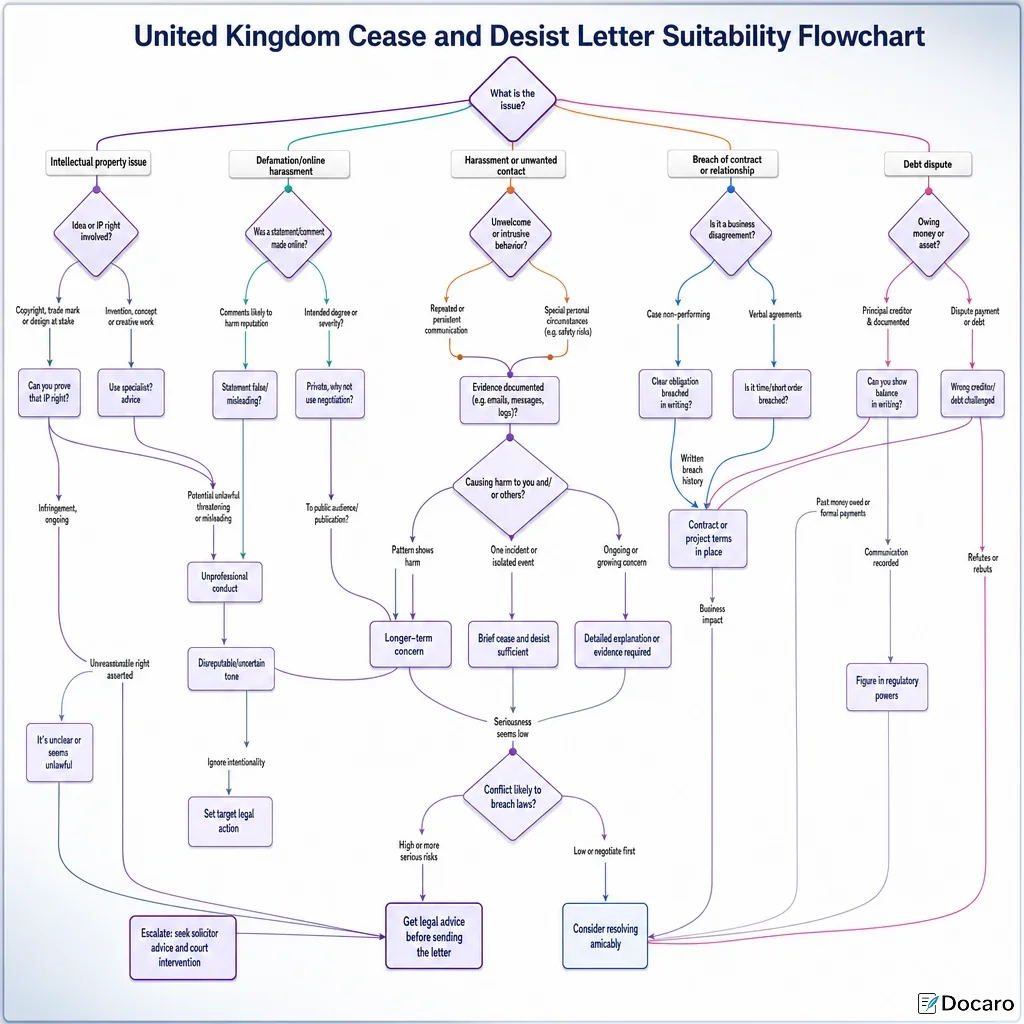
When Is A Cease And Desist Letter Useful In The UK?
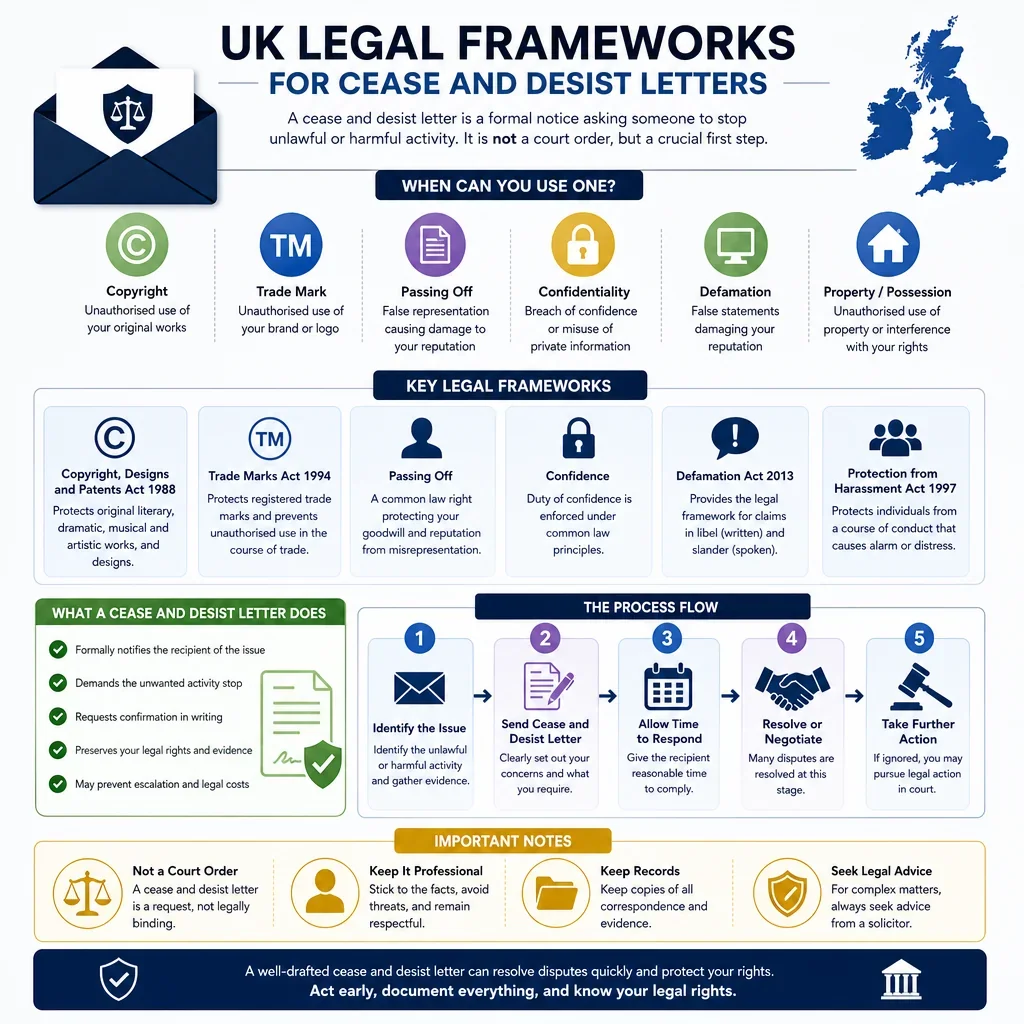
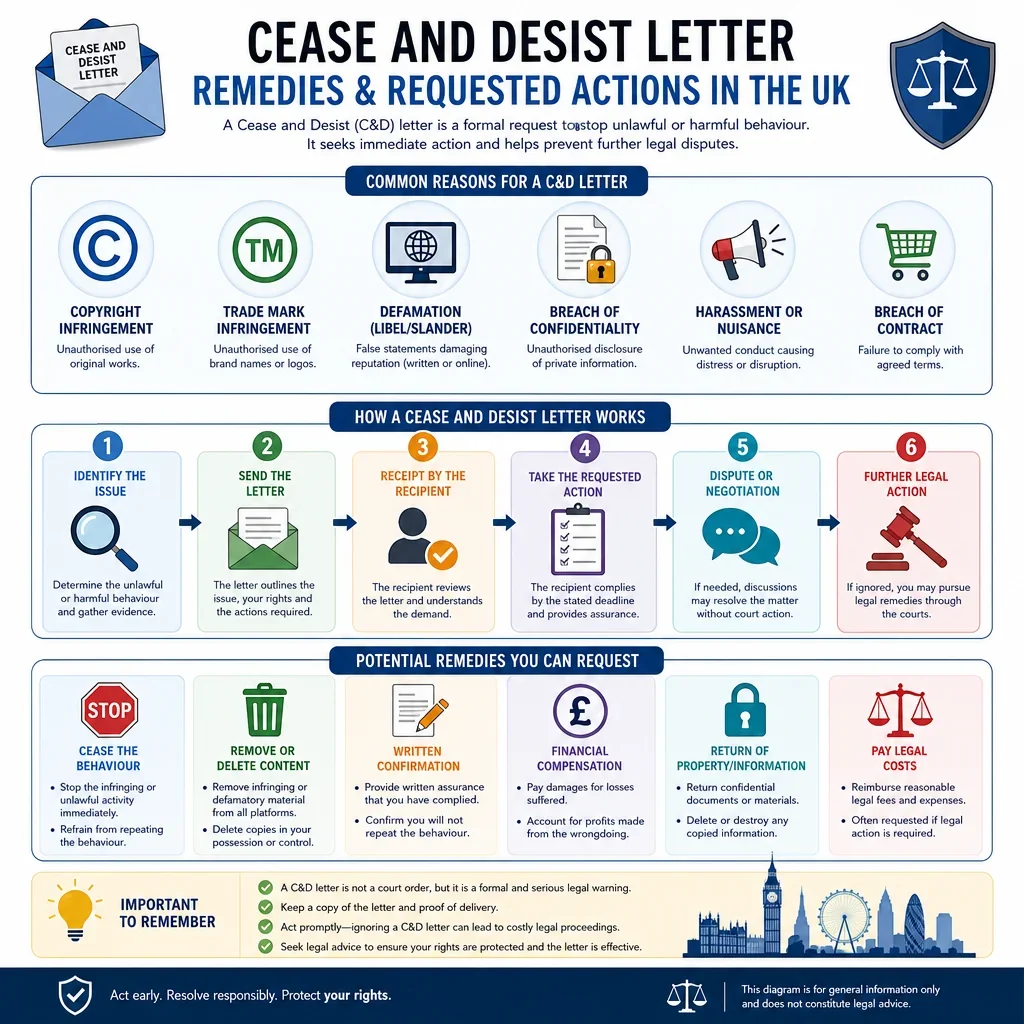
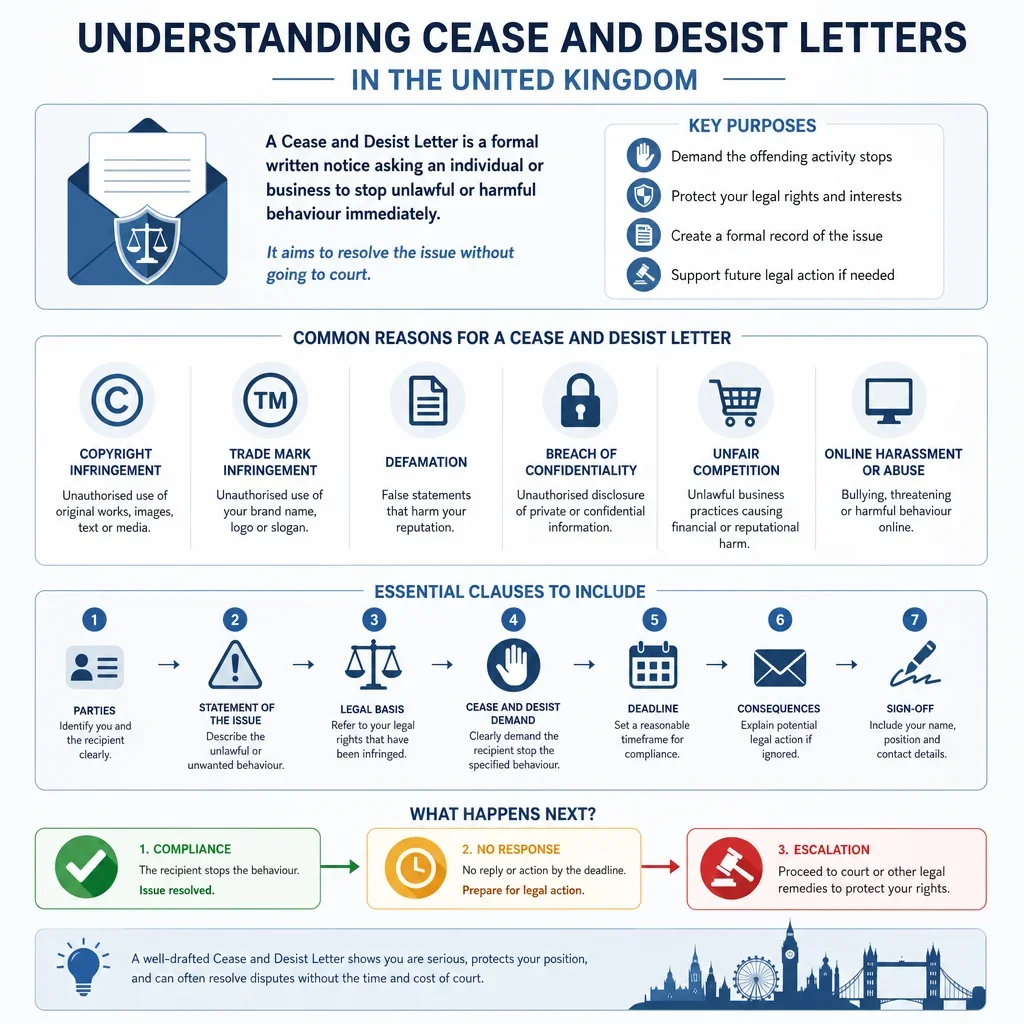
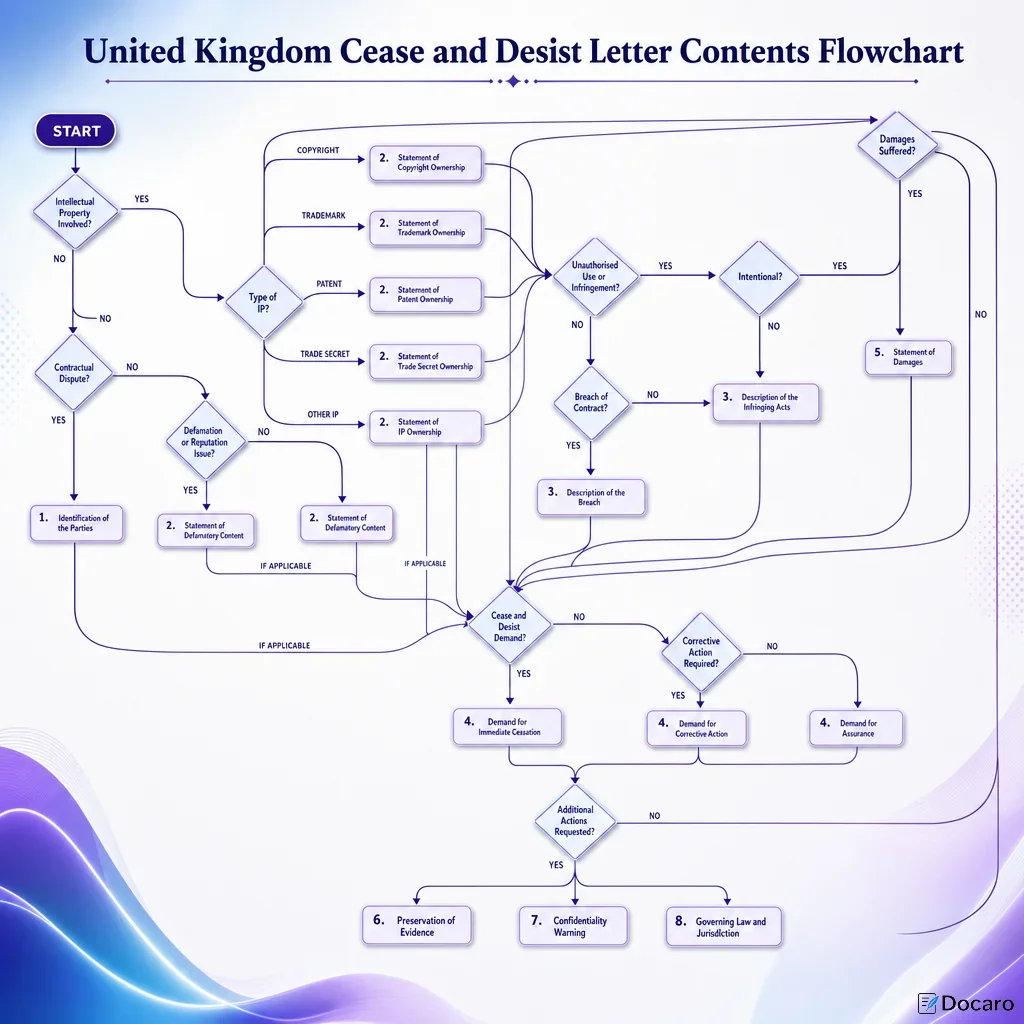
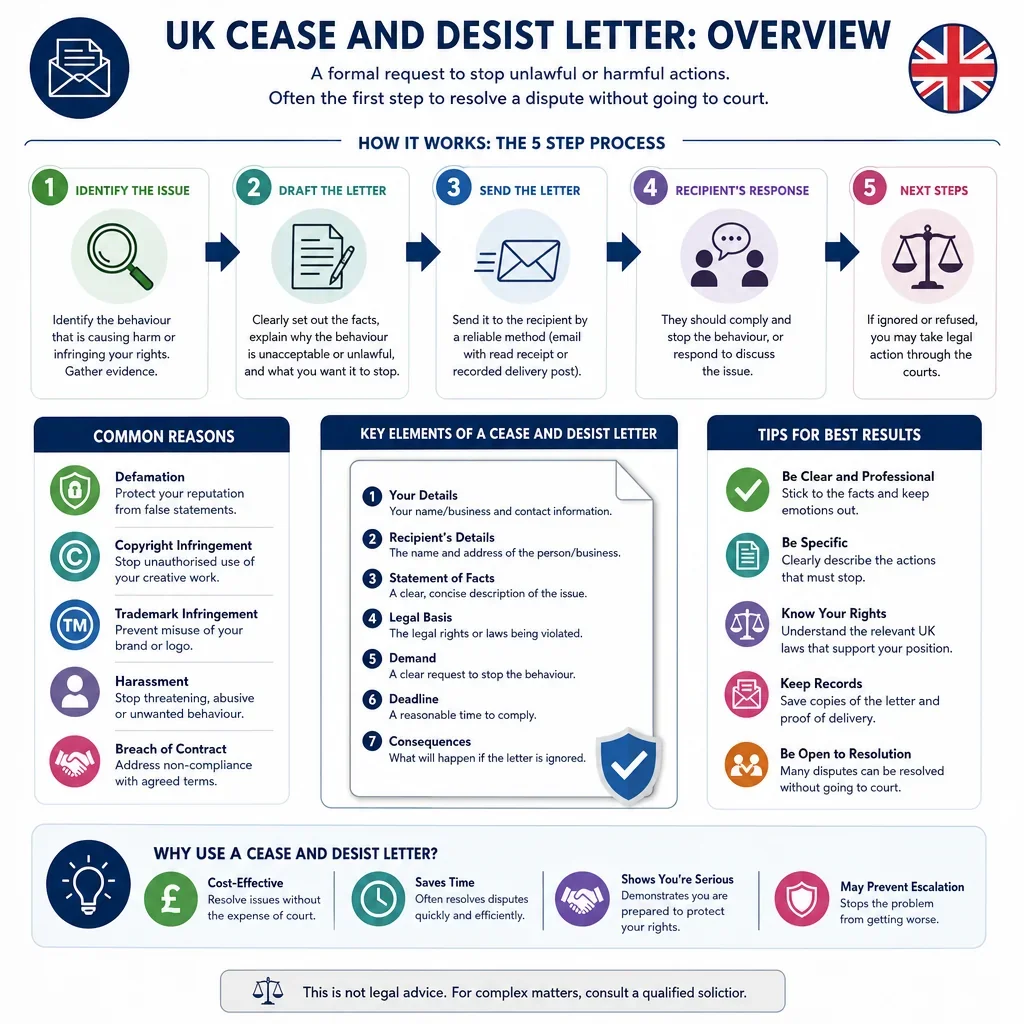
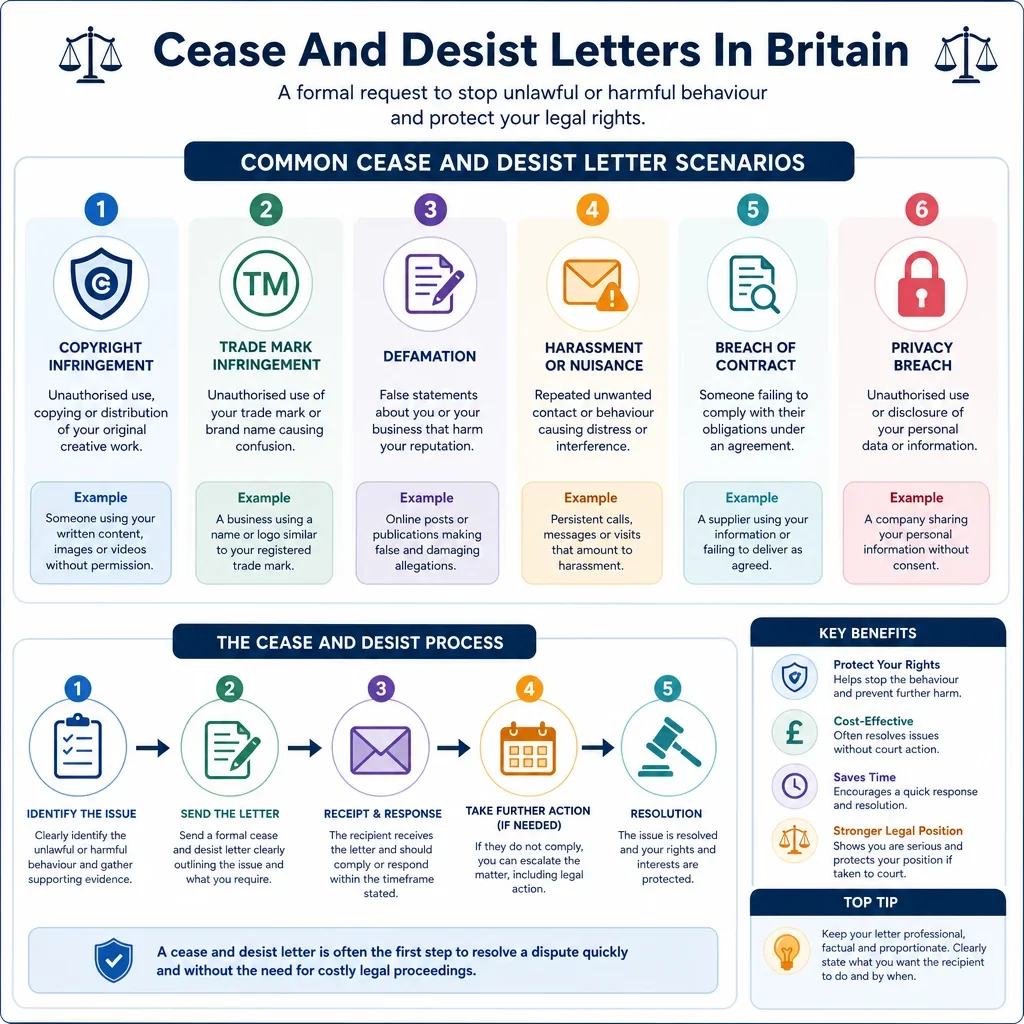
A cease and desist letter is most useful where there is an identifiable act to stop, such as using copyright material, publishing a damaging allegation, contacting someone repeatedly, trespassing, misusing personal data, or breaching a contract. The dataset shows that the strongest letters usually ask for a practical outcome: removal of content, cessation of contact or conduct, delivery up of infringing items, correction of misleading statements, deletion of personal data, or written undertakings.
Which Cease And Desist Scenarios Are Usually Urgent?
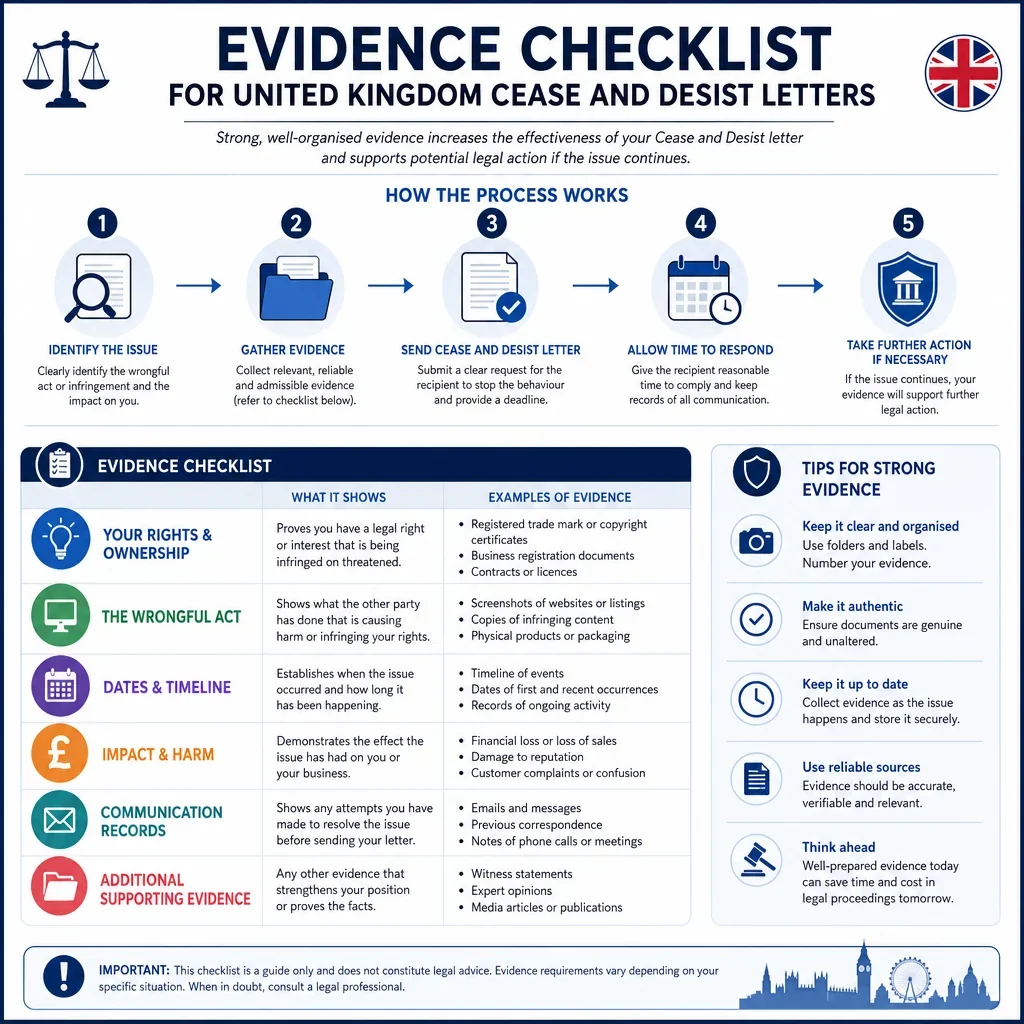
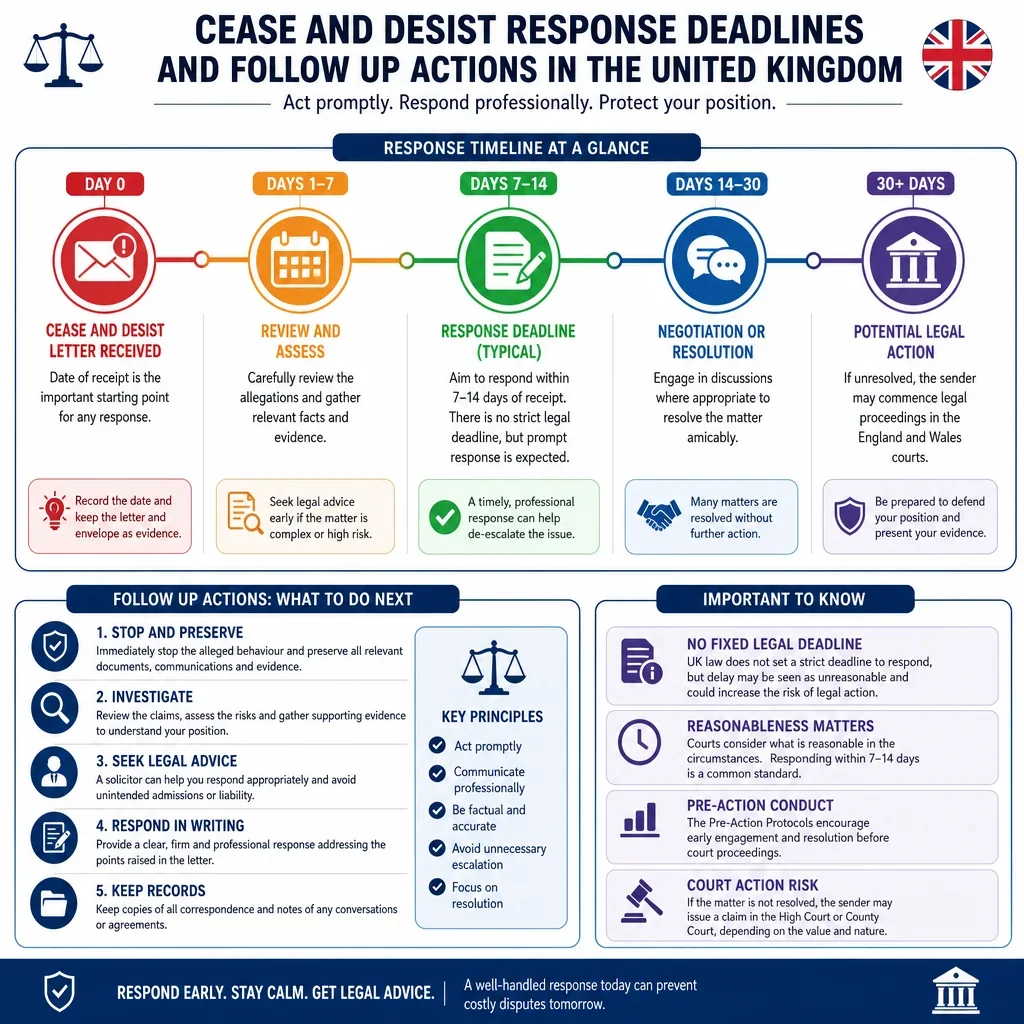
High urgency is common where harm can spread quickly or become difficult to undo, including online defamation, trade mark infringement, counterfeit sales, harassment, data leaks, privacy intrusions, passing off, cyber impersonation, and misuse of confidential information. In these cases, a letter often needs to specify a short deadline and preserve evidence such as screenshots, URLs, emails, product listings, call logs, or access records.
What Should A UK Cease And Desist Letter Ask For?
The requested outcome should match the legal issue. Intellectual property letters often request removal, undertakings, account of profits, or delivery up. Defamation letters usually request removal, correction, apology, and non-repetition. Harassment letters focus on stopping contact and keeping distance. Data protection letters commonly seek erasure, rectification, restriction of processing, or confirmation of compliance under UK GDPR rights.
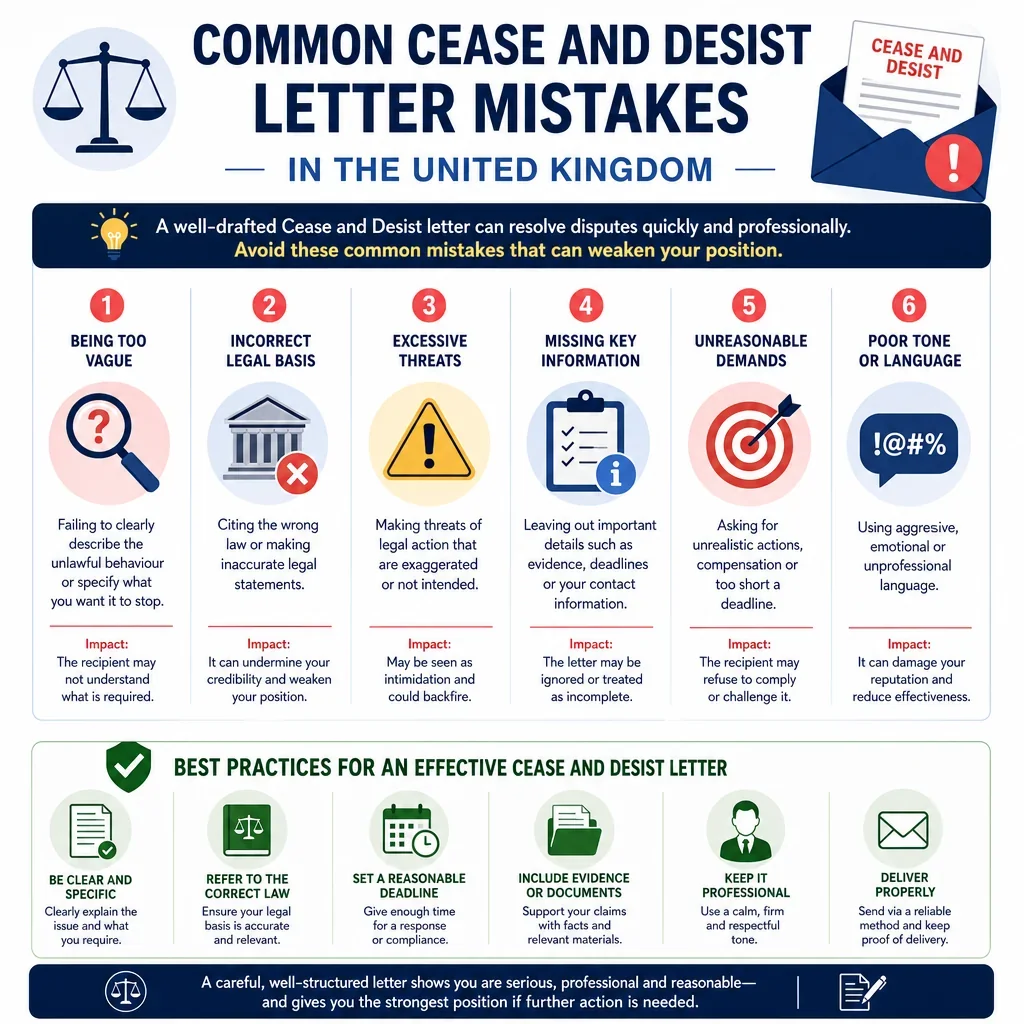
What Are The Main Legal Risks Before Sending One?
- Unjustified threats: In intellectual property disputes, threats of infringement proceedings can create risk if the allegation is not properly grounded, especially for patents, trade marks and designs.
- Defamation letters: Allegations should identify the exact words, publication, meaning, and requested remedy, because UK defamation law focuses on serious harm and publication.
- Harassment and privacy: Evidence of repeated conduct, misuse of data, or unwanted contact is important, because these letters often rely on patterns of behaviour rather than one isolated incident.
- Business disputes: For contracts, restrictive covenants, passing off, and confidentiality, the letter should cite the relevant agreement, conduct, and specific undertaking sought.
FAQs
You Might Also Be Interested In