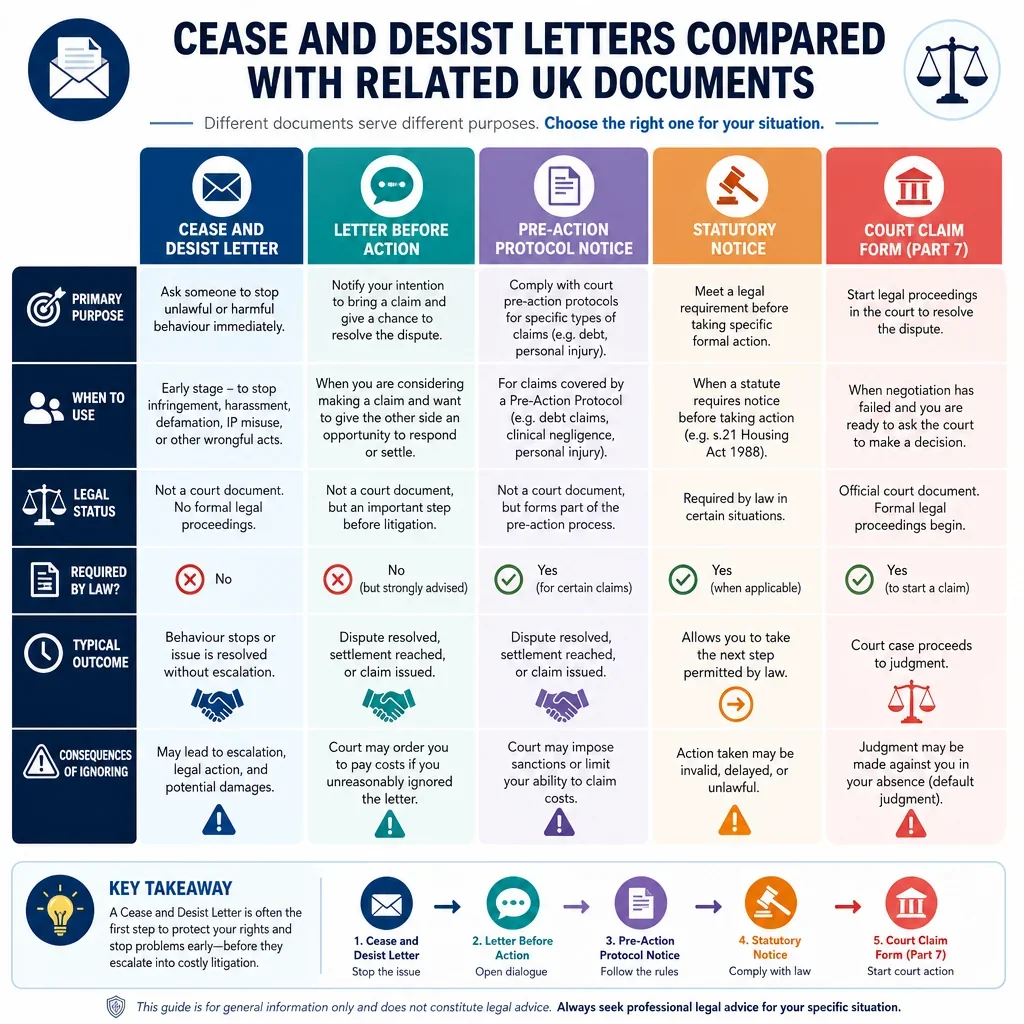
Cease And Desist Letters Compared With Related UK Documents
Document Type | Main Purpose | Difference From Cease And Desist Letter | When To Use Instead | Formality |
|---|---|---|---|---|
Informal correspondence | ||||
Informal warning letter | Warn someone to stop problematic conduct before escalation. | Softer tone and fewer legal demands. | When preserving a relationship is important. | Low |
Complaint letter | Raise dissatisfaction and request a practical resolution. | Focuses on service failure, not stopping unlawful conduct. | For consumer, service, or neighbour complaints. | Low |
Formal demand | ||||
Final warning letter | Give one last chance before formal action. | Emphasises escalation deadline more than legal analysis. | After earlier warnings have been ignored. | Medium |
Pre-action correspondence | ||||
Letter before claim | Set out a civil claim before proceedings. | Designed for Civil Procedure Rules pre-action compliance. | When court proceedings are a realistic next step. | High |
Pre-action protocol letter | Comply with a specific pre-action protocol. | Follows prescribed dispute-specific pre-action steps. | For protocol-governed claims such as debt or construction. | High |
Debt letter of claim | Seek payment from an individual debtor before proceedings. | Targets debt recovery, not stopping behaviour. | When a business claims money from an individual. | High |
Formal demand | ||||
Debt demand letter | Request payment of an overdue sum. | Seeks money rather than cessation of conduct. | For unpaid invoices or overdue contractual sums. | Medium |
Statutory demand | Demand payment before insolvency action. | Insolvency-related payment demand with serious consequences. | For undisputed debts meeting insolvency thresholds. | High |
Pre-action correspondence | ||||
Injunction warning letter | Warn that urgent injunctive relief may be sought. | Specifically prepares for interim injunction proceedings. | When urgent court restraint may be needed. | High |
Settlement document | ||||
Undertaking | Provide a binding promise to do or stop something. | Creates a commitment rather than merely demanding one. | When the other party agrees to binding restrictions. | High |
Court document | ||||
Interim injunction application | Ask the court for urgent temporary relief. | Seeks a court order instead of voluntary compliance. | When immediate harm requires judicial intervention. | High |
Claim form | Start a civil claim in court. | Commences litigation rather than threatening it. | When negotiation has failed and proceedings are necessary. | High |
Particulars of claim | Set out the detailed legal case in proceedings. | A formal pleading, not pre-action correspondence. | After deciding to issue a civil claim. | High |
Witness statement | Present factual evidence for a court application or trial. | Evidence document, not a demand to stop conduct. | When facts must be evidenced in court. | High |
Settlement document, Court document | ||||
Consent order | Record agreed court-ordered settlement terms. | Requires court order rather than unilateral demand. | When proceedings are settled on enforceable terms. | High |
Tomlin order | Stay proceedings on confidential settlement terms. | Settles issued proceedings instead of demanding cessation. | When litigation is settled with private schedule terms. | High |
Settlement document | ||||
Settlement agreement | Resolve a dispute on agreed contractual terms. | Mutual agreement rather than one-sided demand. | When both sides are ready to compromise. | Medium |
Without prejudice offer | Make a confidential settlement proposal. | Aims to settle, not simply require conduct to stop. | When negotiating resolution without admissions. | Medium |
Part 36 offer | Make a formal settlement offer with costs consequences. | Uses CPR settlement mechanism rather than demand wording. | When seeking costs protection in civil litigation. | High |
Deed of release | Release claims or obligations formally. | Extinguishes rights rather than asserting them. | When final release of claims is required. | High |
Confidentiality agreement | Restrict disclosure or use of confidential information. | Creates agreed duties before or after disclosure. | Before sharing sensitive business information. | Medium |
Contractual notice | ||||
NDA breach notice | Notify breach of confidentiality obligations. | Relies on specific NDA notice provisions. | When an NDA sets a contractual notice process. | Medium |
Breach of contract notice | Notify breach and require contractual remedy. | Based on contract terms and notice clauses. | When the dispute arises under a contract. | Medium |
Notice to remedy breach | Require correction of a contractual default. | Gives cure rights under a contract. | Where termination depends on a cure period. | Medium |
Termination notice | End a contract or relationship. | Ends rights or obligations rather than warning conduct. | When the legal goal is to end the contract. | Medium |
Notice of default | Identify default and trigger contractual consequences. | Activates default clauses rather than general legal pressure. | When default consequences depend on formal notice. | Medium |
Formal demand | ||||
IP infringement letter | Demand cessation of alleged IP infringement. | IP-specific and may raise unjustified threats issues. | For trade mark, patent, design, or copyright infringement. | High |
Copyright takedown notice | Request removal of infringing online copyright material. | Targets platform or host removal of specific content. | When infringing material is hosted online. | Medium |
Court document | ||||
Trade mark opposition notice | Object to registration of a trade mark. | Administrative IP procedure, not private demand correspondence. | When challenging a UK trade mark application. | High |
Formal demand | ||||
Domain name complaint | Challenge abusive or disputed domain registration. | Uses domain dispute process rather than private warning only. | For .uk cybersquatting or domain disputes. | High |
Pre-action correspondence | ||||
Defamation complaint letter | Seek removal, correction, apology, or damages for defamation. | Must address defamation-specific protocol issues. | For libel or slander claims likely to escalate. | High |
Formal demand | ||||
Harassment warning letter | Warn against a course of harassing conduct. | Focused on harassment and potential statutory remedies. | Where repeated unwanted conduct causes alarm or distress. | Medium |
Informal correspondence | ||||
Anti-social behaviour complaint | Report behaviour affecting community safety or nuisance. | Report to authority rather than direct legal demand. | When council, landlord, or police action is needed. | Low |
Formal demand | ||||
Data protection complaint | Challenge misuse of personal data or rights failures. | Can escalate to the ICO regulatory complaint process. | When personal data rights are breached. | Medium |
Subject access request | Request copies of personal data held by an organisation. | Seeks information access, not cessation of conduct. | When evidence about data use is needed. | Medium |
Request for erasure | Ask an organisation to delete personal data. | Exercises a data right rather than threatening wider claims. | When unwanted processing concerns personal data deletion. | Medium |
Direct marketing objection | Stop unwanted marketing calls, texts, or emails. | Specific to marketing and privacy regulation. | When communications are unsolicited marketing. | Medium |
Informal correspondence | ||||
Noise nuisance complaint | Report persistent noise to the local council. | Seeks council investigation, not direct private demand. | When environmental health enforcement is appropriate. | Low |
Neighbour boundary dispute letter | Raise disagreement about property boundaries. | Fact-finding and discussion before alleging wrongdoing. | When boundary evidence is unclear. | Low |
Formal demand | ||||
Trespass notice | Warn someone not to enter land without permission. | Property-specific demand focused on entry to land. | For unauthorised access to private property. | Medium |
Contractual notice | ||||
Party wall notice | Notify adjoining owners of certain building works. | Statutory works notice, not a misconduct demand. | Before works affecting party walls or boundaries. | High |
Formal demand | ||||
Rent arrears letter | Request overdue rent from a tenant. | Payment demand within landlord and tenant relationship. | When a tenant owes unpaid rent. | Medium |
Contractual notice | ||||
Section 8 notice | Start possession process using statutory grounds. | Statutory eviction notice, not general conduct warning. | When seeking possession for rent arrears or breach. | High |
Section 21 notice | Give no-fault notice for assured shorthold possession. | Statutory possession notice with strict conditions. | When ending an AST through no-fault route. | High |
Formal demand | ||||
Consumer refund demand | Seek refund, repair, replacement, or price reduction. | Enforces consumer remedies rather than stopping conduct. | For faulty goods or poor services. | Medium |
Informal correspondence | ||||
Chargeback request | Ask card provider to reverse a disputed payment. | Payment recovery route through bank or card scheme. | When a card payment dispute needs reversal. | Low |
Formal demand | ||||
Section 75 claim letter | Claim against credit provider for supplier breach. | Statutory credit claim for refund or damages. | When eligible credit card purchase goes wrong. | Medium |
Employment grievance letter | Raise a workplace complaint formally. | Uses internal workplace grievance process. | For bullying, discrimination, or contract issues at work. | Medium |
Pre-action correspondence | ||||
ACAS early conciliation notification | Start required conciliation before tribunal claim. | Mandatory tribunal step, not direct demand letter. | Before most employment tribunal claims. | High |
Formal demand | ||||
Disciplinary warning letter | Warn employee about conduct or performance issues. | Part of workplace procedure, not external legal demand. | When employer follows disciplinary process. | Medium |
Solicitor letter | Communicate legal position through a regulated adviser. | Author identity increases formality and professional duties. | For complex, high-value, or sensitive disputes. | High |
Police report | Report suspected criminal conduct to police. | Involves law enforcement rather than private civil pressure. | For threats, stalking, fraud, or criminal damage. | Medium |
Pre-action correspondence | ||||
Mediation invitation letter | Invite the other party to resolve dispute through mediation. | Collaborative resolution rather than unilateral demand. | When settlement is preferable to escalation. | Medium |
Small claim warning letter | Warn of a money claim in the County Court. | Focused on monetary claim and court filing. | For lower-value monetary disputes. | Medium |
Formal demand | ||||
Notice of intended prosecution response | Respond to alleged motoring offence notice. | Responds to state enforcement, not private misconduct. | When dealing with speeding or motoring allegations. | High |
Apology and correction request | Seek correction or apology for inaccurate publication. | Seeks remedial publication rather than just stopping conduct. | For press accuracy or reputation complaints. | Medium |
Retraction request | Ask publisher to withdraw a statement. | Targets correction of existing statement, not future conduct only. | When a false statement remains published. | Medium |
Informal correspondence | ||||
Social media platform report | Ask a platform to review or remove harmful content. | Uses platform moderation rather than legal correspondence. | When urgent removal by platform is practical. | Low |
Formal demand | ||||
Online safety complaint | Complain about regulated online safety failures. | Regulatory route against platforms, not direct private demand. | When platform duties or harmful content processes matter. | Medium |
Competition law complaint | Report anti-competitive conduct to the CMA. | Regulatory complaint rather than private stop-demand. | For cartels, abuse of dominance, or unfair markets. | High |
Trading Standards report | Report unfair trading or unsafe goods. | Public enforcement route rather than private civil demand. | When business conduct may need enforcement action. | Medium |
Reservation of rights letter | Preserve legal rights while investigating or negotiating. | Protects position without necessarily demanding cessation. | When facts are uncertain but rights must be preserved. | Medium |
Legal hold notice | Preserve documents and evidence for litigation. | Focuses on evidence preservation, not stopping conduct. | When documents may be deleted or destroyed. | High |
Contractual notice | ||||
Access restriction notice | Restrict system, premises, or account access. | Imposes operational access controls under existing rights. | When immediate access control is legally available. | Medium |
Formal demand | ||||
Takedown and preservation notice | Seek content removal and preservation of evidence. | Combines removal request with evidence preservation demand. | For online wrongdoing where evidence may disappear. | Medium |
Withdrawal of consent notice | Revoke permission previously given. | Changes consent status rather than alleging breach alone. | When previous consent allowed the conduct. | Medium |
When Should You Use A Cease And Desist Letter In The UK?
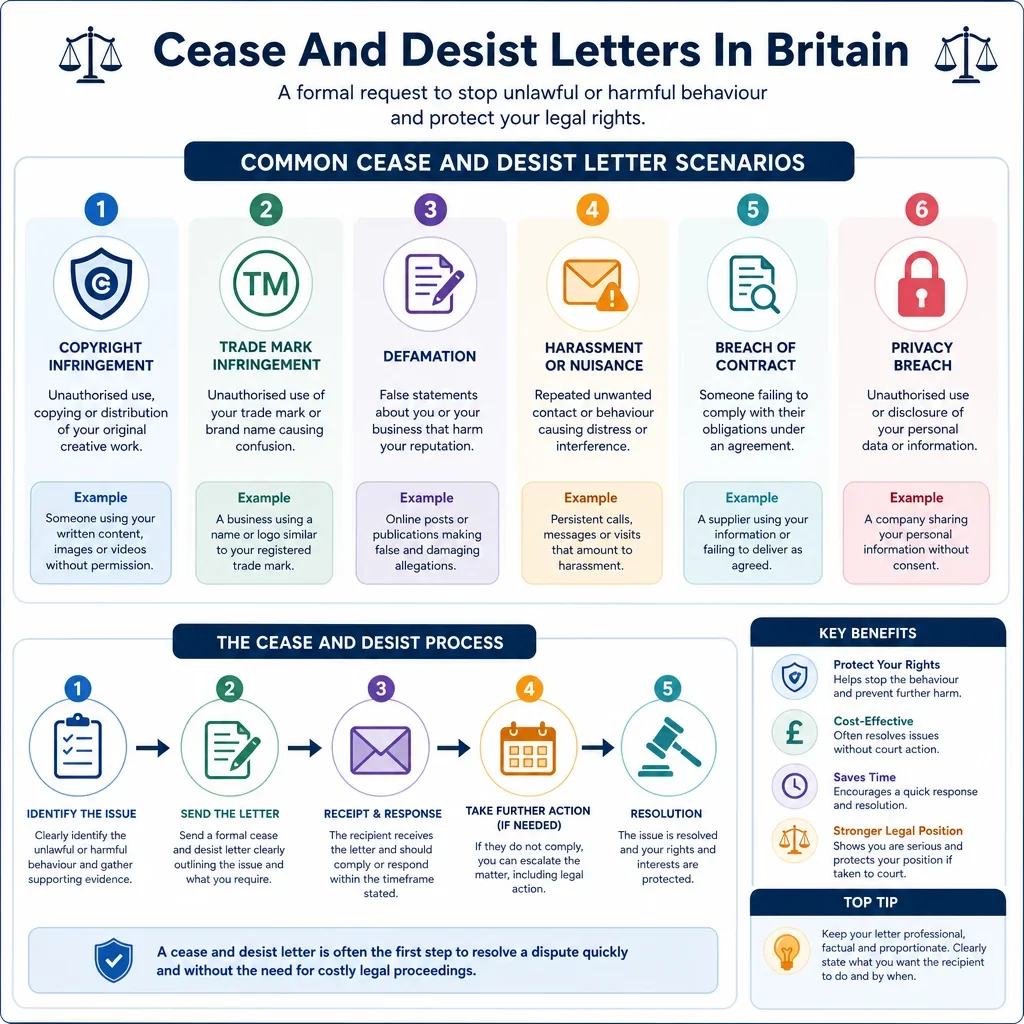
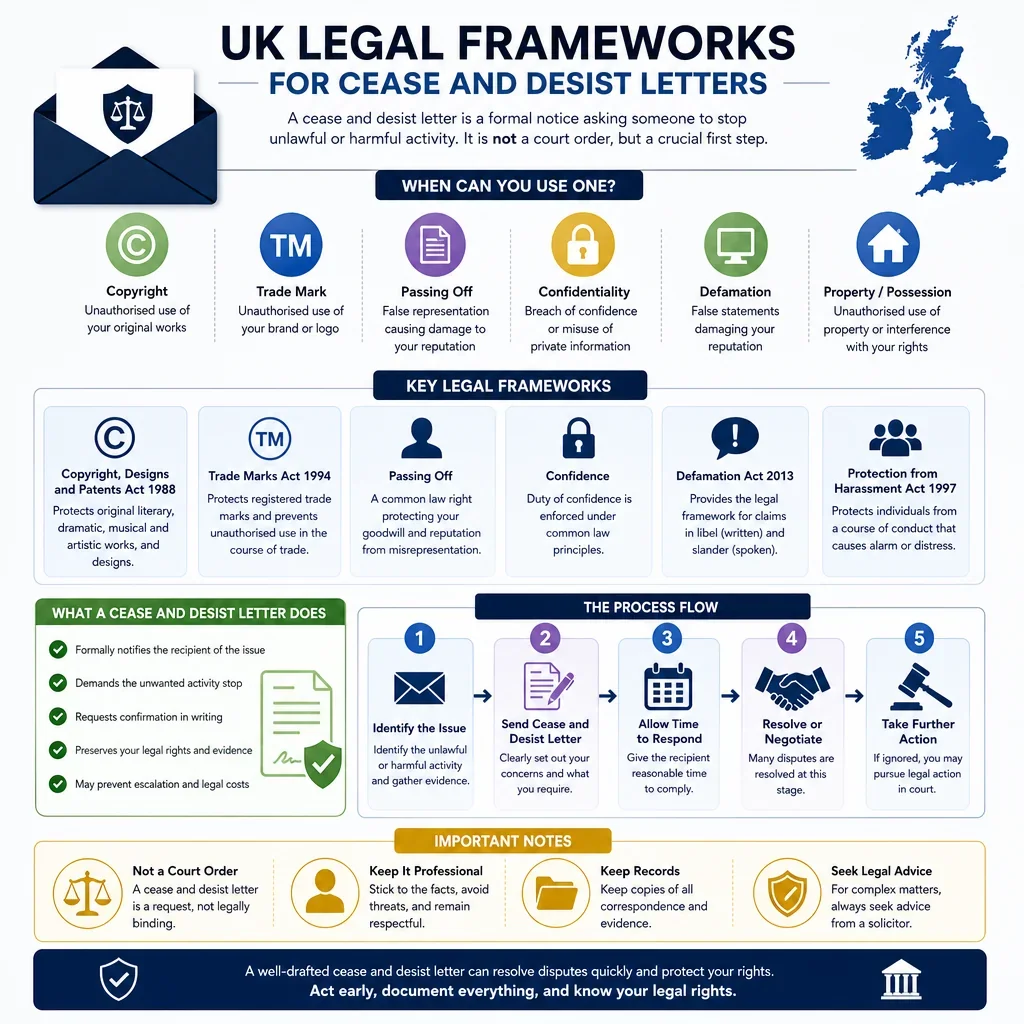
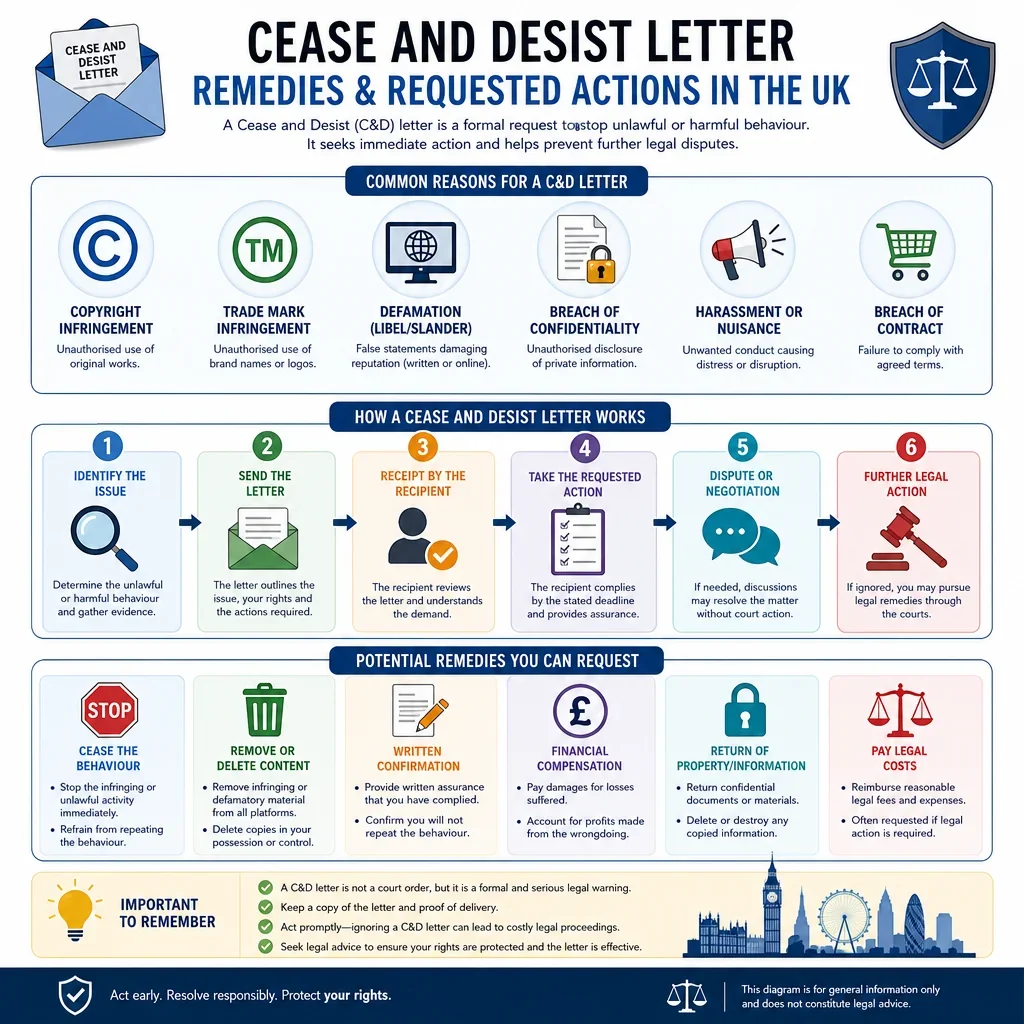
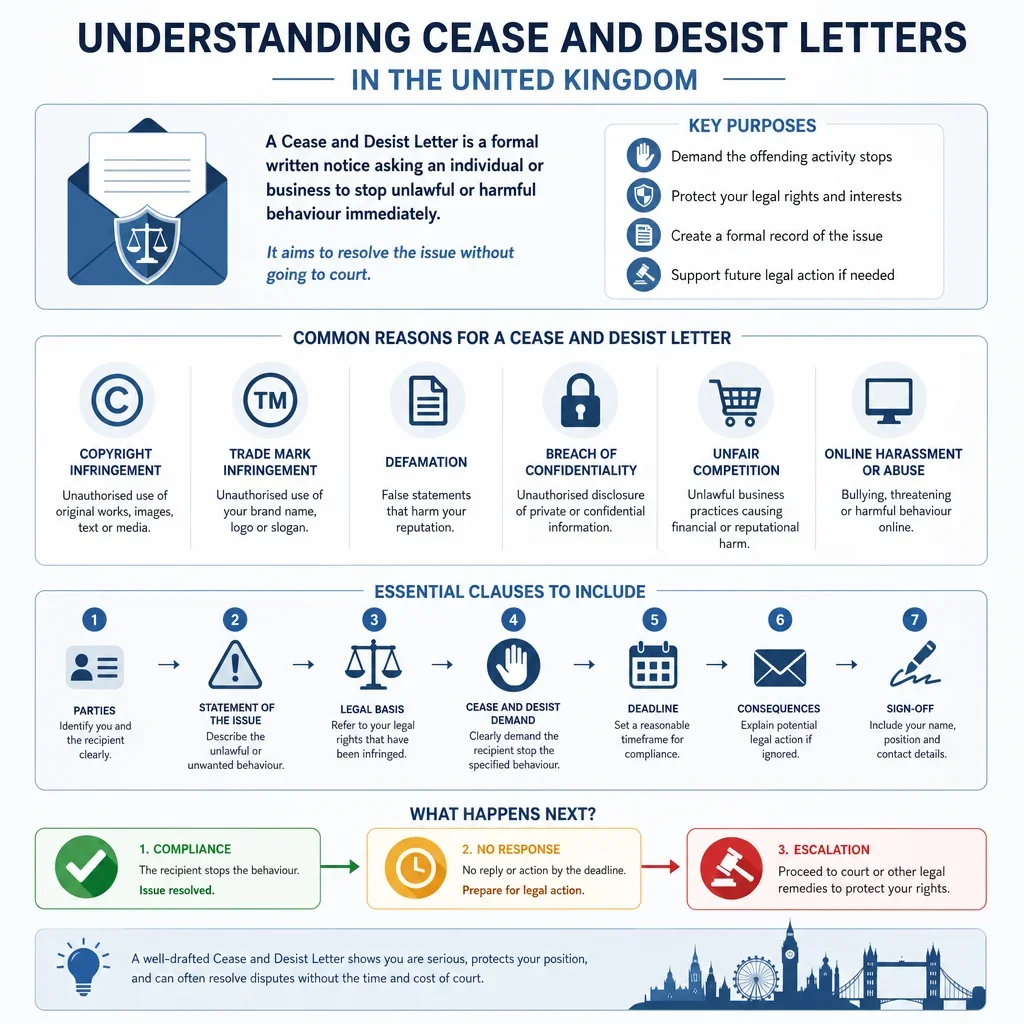
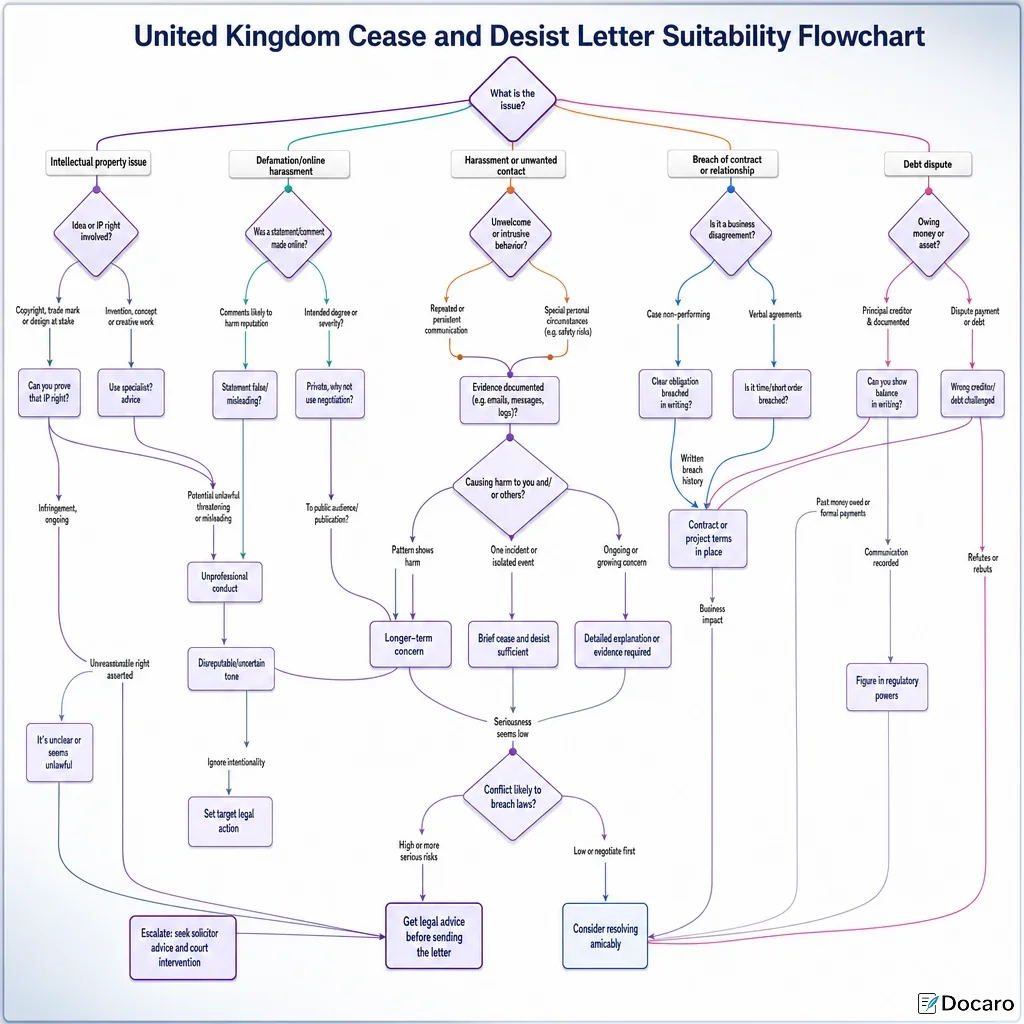
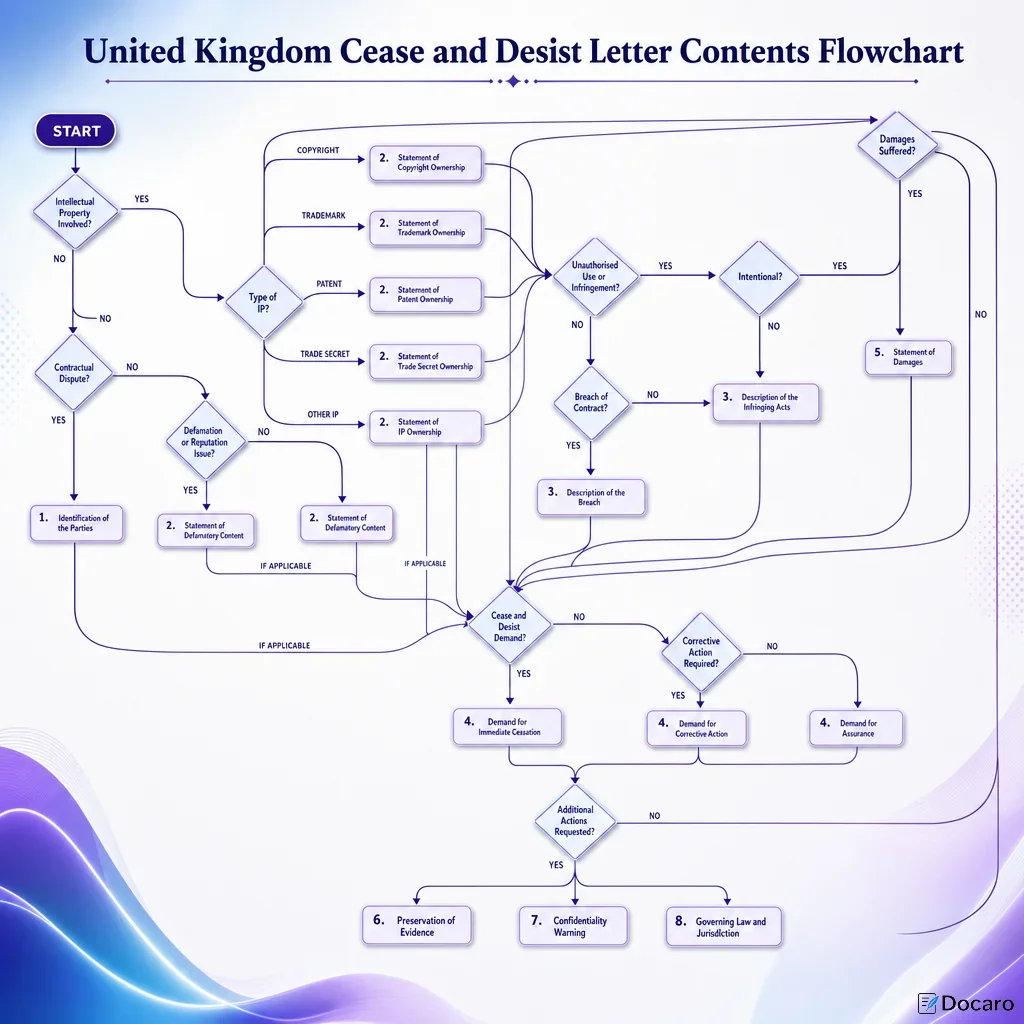
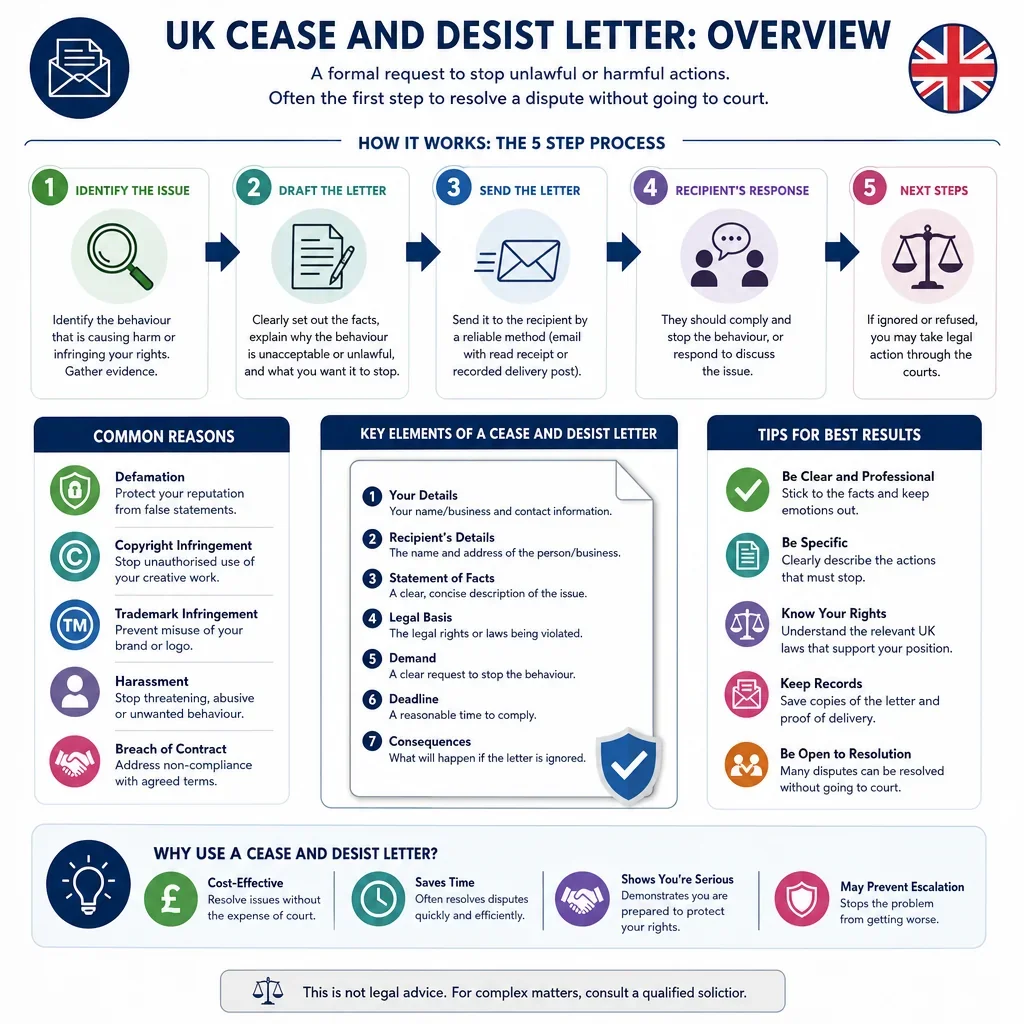
A cease and desist letter is usually most suitable where the key objective is to stop ongoing conduct quickly, such as harassment, IP infringement, defamation, nuisance, misuse of confidential information, or unfair competitive behaviour. It is less procedural than a formal pre-action letter and does not by itself start court proceedings.
When Is A More Formal Pre-Action Letter Better?
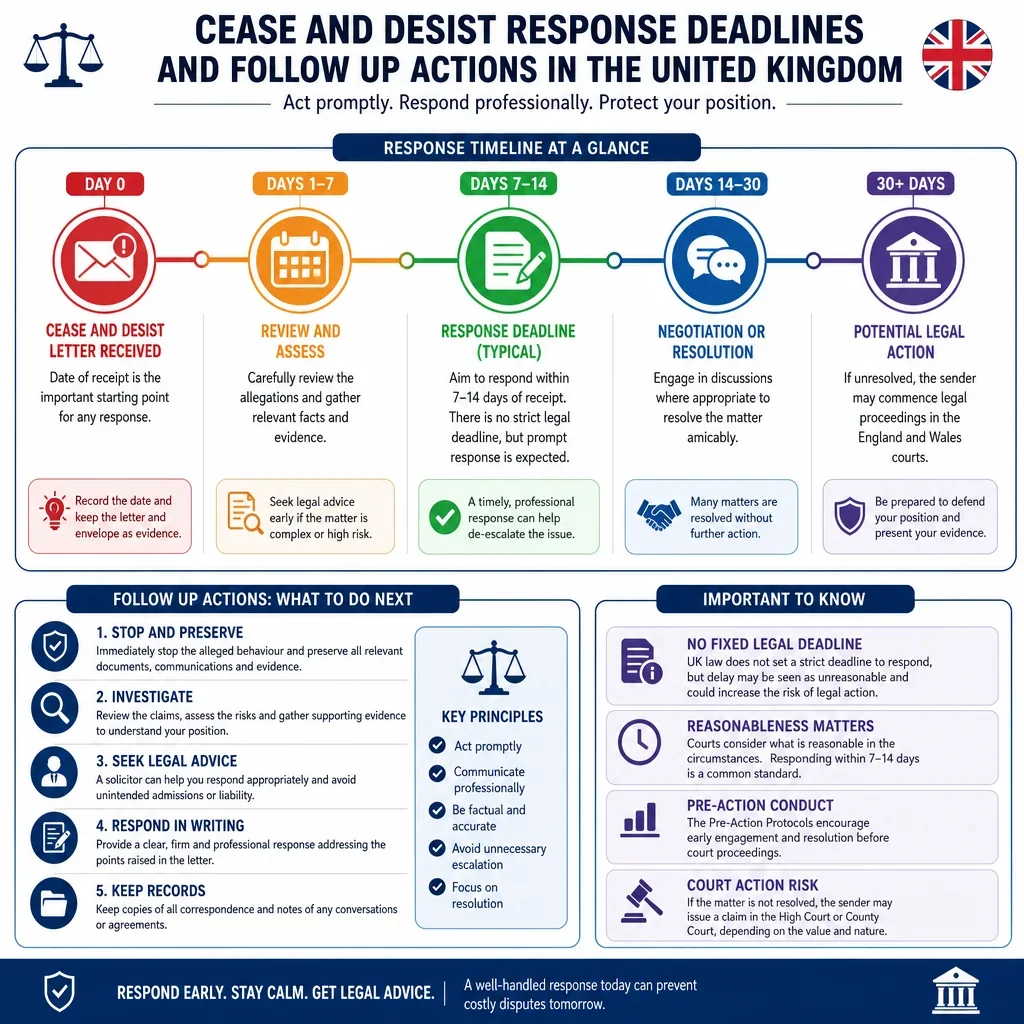
If you are likely to bring a civil claim, a compliant letter before claim or pre-action protocol letter is often more appropriate. It should identify the legal basis of the claim, key facts, remedy sought, documents relied on, and a deadline for response. UK courts may consider pre-action conduct when making costs and case management decisions.
Which Documents Carry The Most Legal Risk?
- Court documents, such as claim forms, particulars of claim, injunction applications, undertakings, consent orders, and witness statements, are high formality documents and should match the applicable court rules.
- Settlement documents, such as settlement agreements, Tomlin orders, consent orders, and deeds of release, may permanently affect rights and should be drafted carefully.
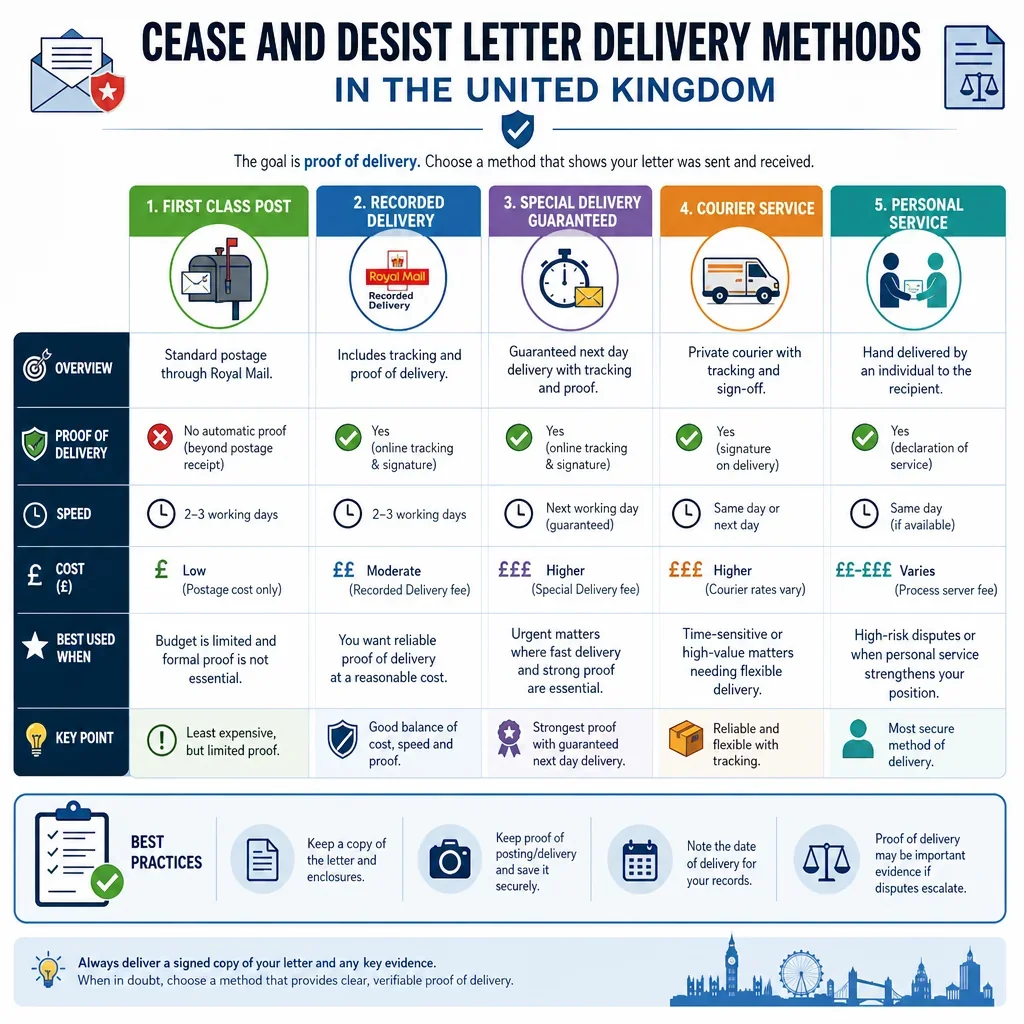
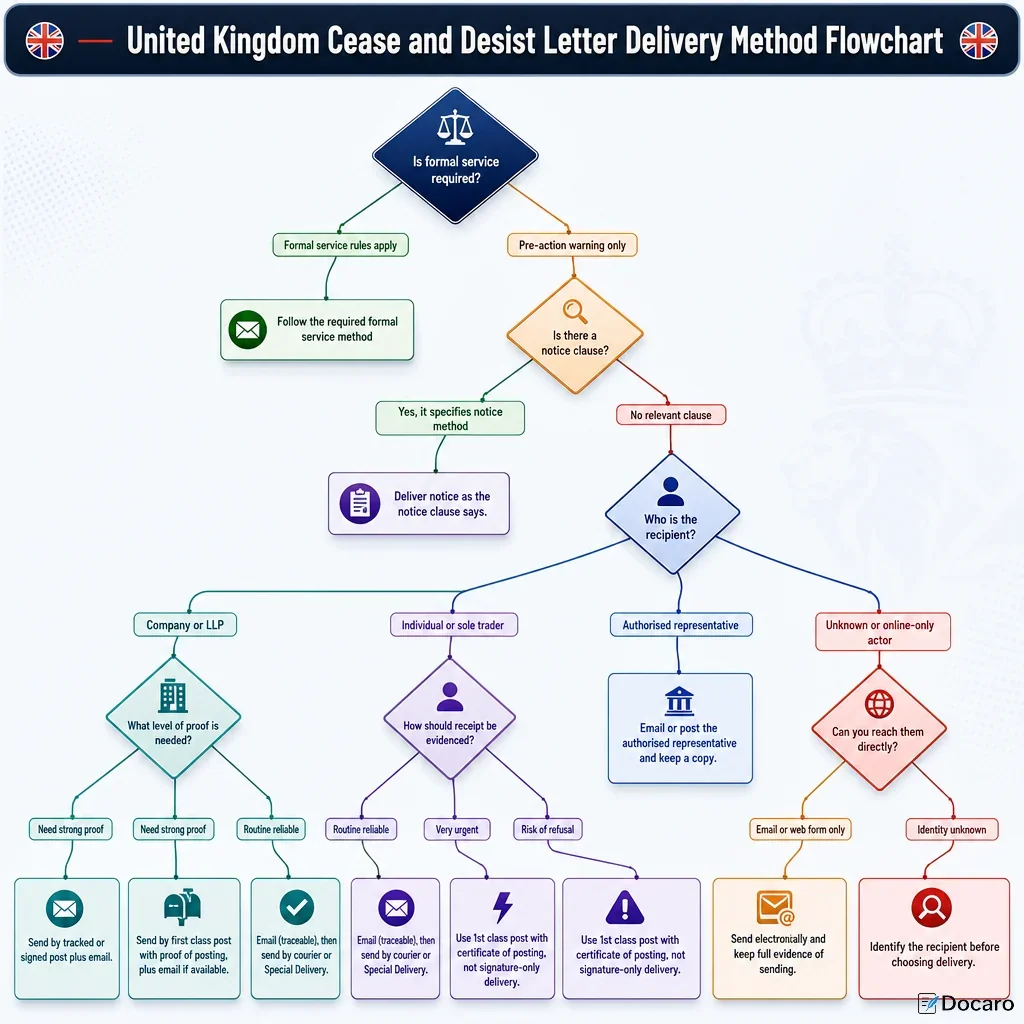
- Contractual notices, such as termination, breach, default, or rent arrears notices, should follow the contract or statutory requirements precisely because service defects can undermine the notice.
What Is The Practical Difference Between A Warning And A Demand?
A cease and desist letter normally focuses on stopping behaviour. A letter of demand or debt recovery letter focuses on payment. A takedown notice focuses on removal of online content. A statutory demand is much more serious because it is linked to insolvency procedures rather than ordinary negotiation.
How Should UK Users Choose Between Related Documents?
Choose the document by matching the remedy to the problem: stopping conduct, preserving rights, demanding money, complying with pre-action rules, settling a dispute, or starting court action. For urgent harm, an injunction warning letter or injunction application may be more suitable than a standard cease and desist letter.
FAQs
You Might Also Be Interested In