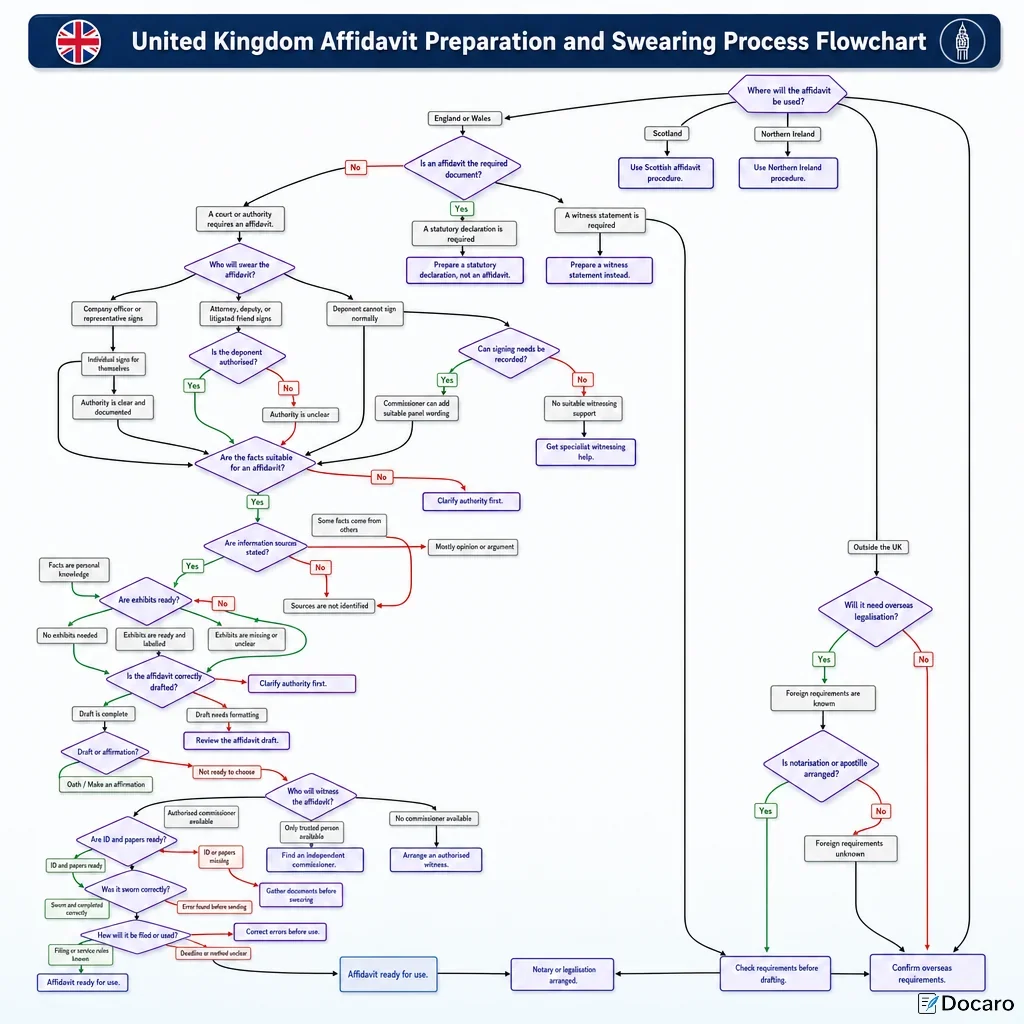
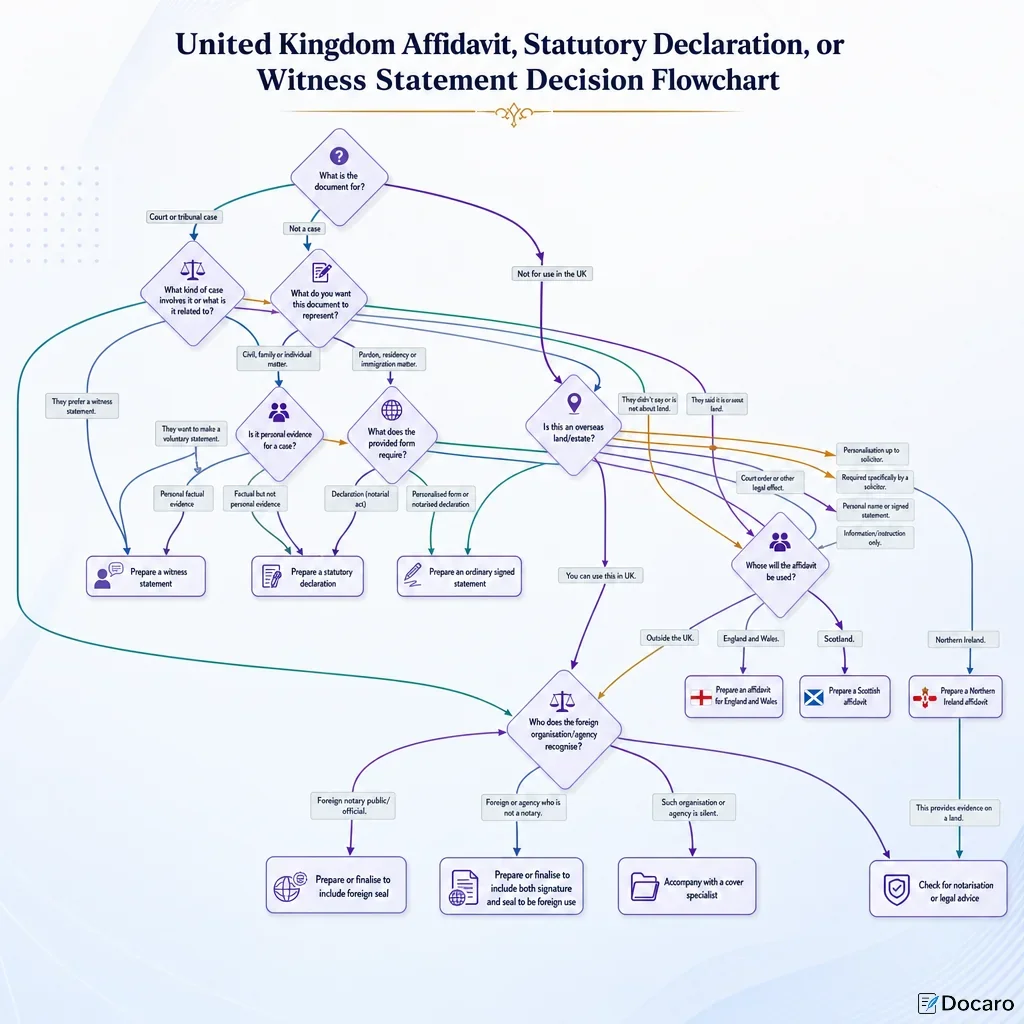
United Kingdom Affidavit, Statutory Declaration, Or Witness Statement Decision Flowchart
What is the document for?
Why Does Choosing The Right UK Legal Statement Matter?
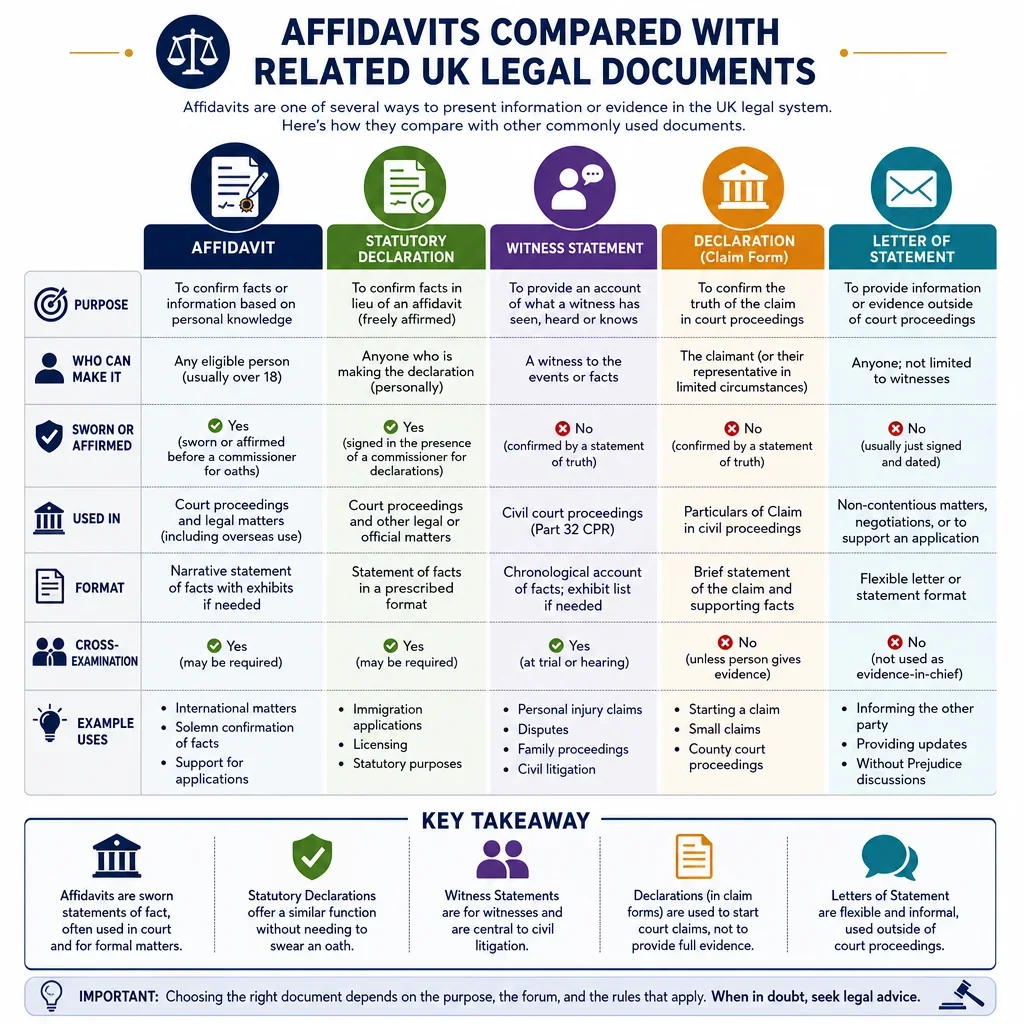
In the United Kingdom, an affidavit, statutory declaration, and witness statement serve different legal purposes. Choosing the wrong document can mean the statement is rejected by a court, tribunal, public body, bank, employer, overseas authority, or other recipient.
When Is A Witness Statement Usually The Right Choice?
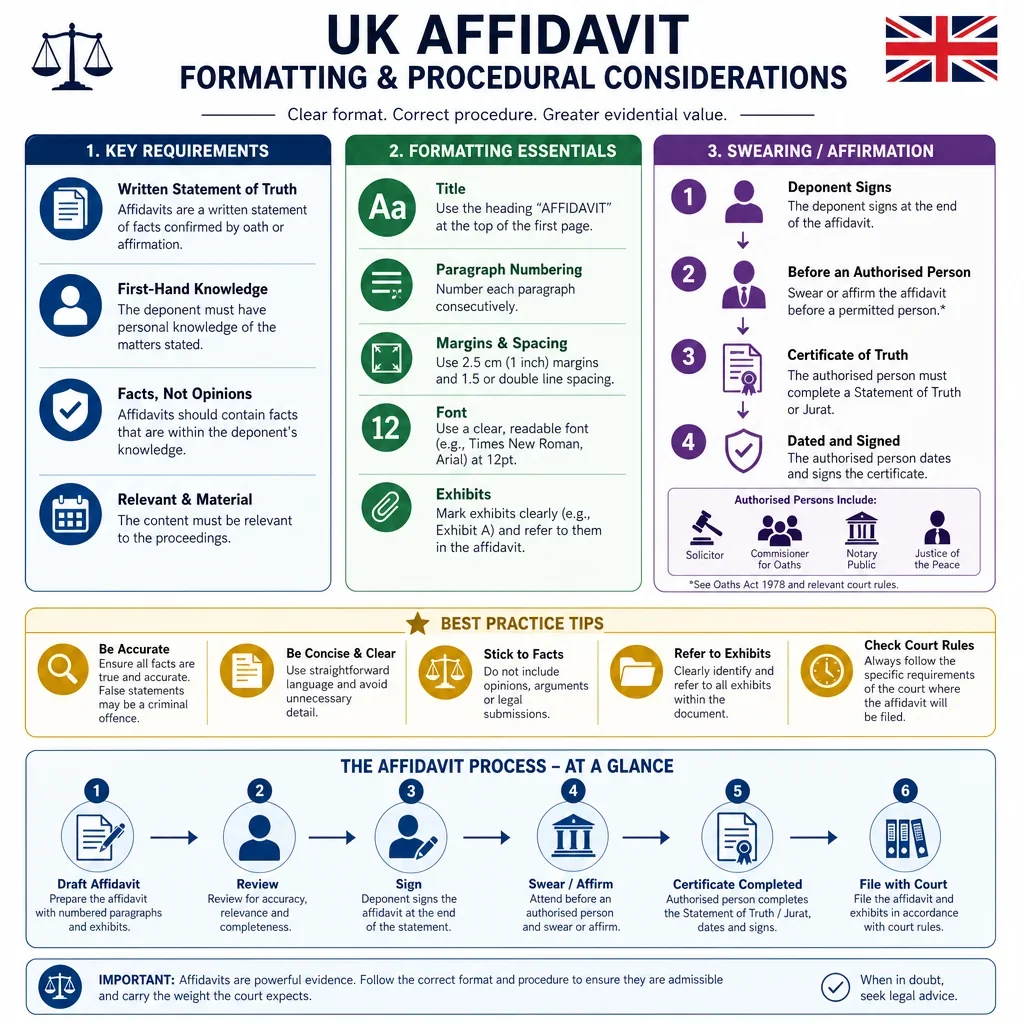
A witness statement is commonly used for factual evidence in UK court and tribunal proceedings. It is normally signed with a statement of truth rather than sworn on oath. In England and Wales, civil witness statements often need to follow Civil Procedure Rules Part 32 and the related practice direction.
When Is A Statutory Declaration More Suitable?
A statutory declaration is often used outside ordinary court evidence to formally declare facts, such as identity, name, status, or loss of documents. It must be made before an authorised person and should follow the requirements explained by GOV.UK statutory declaration guidance.
When Do You Need An Affidavit In The UK?
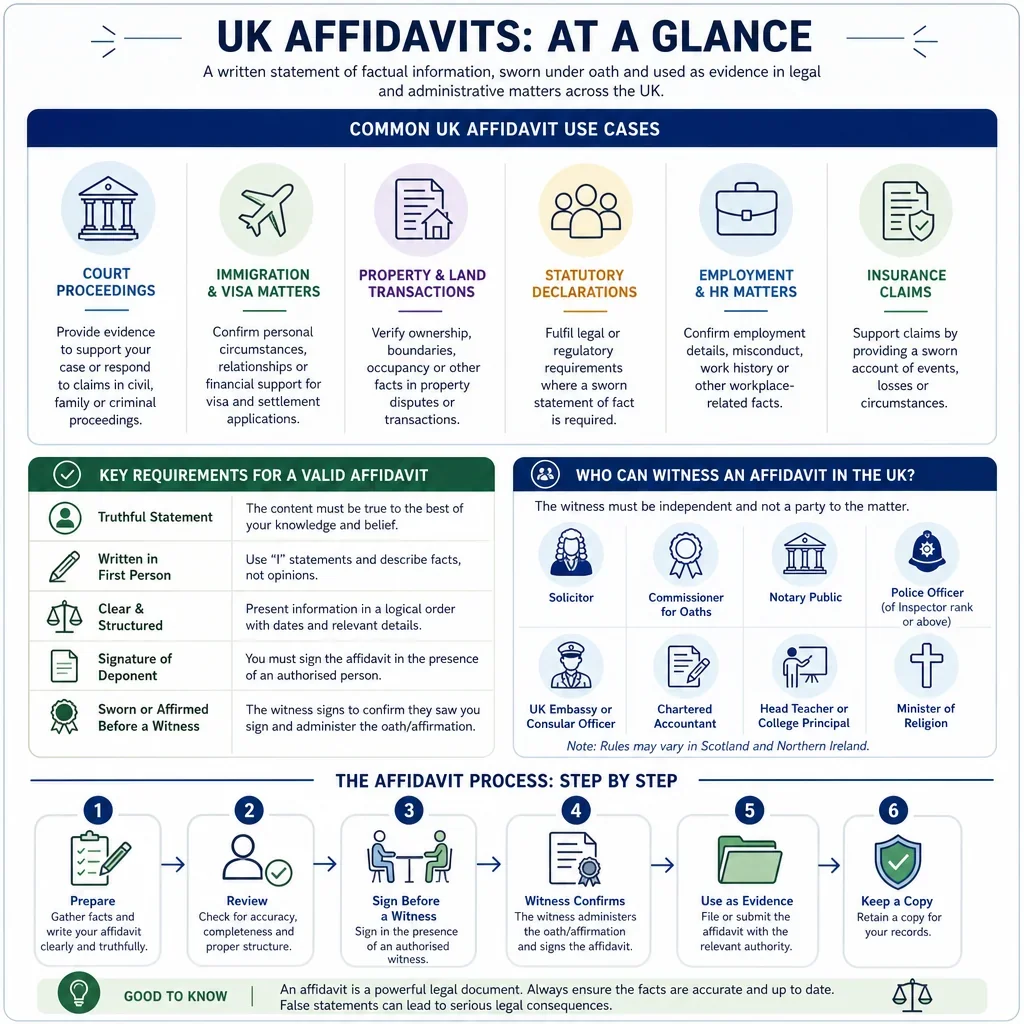
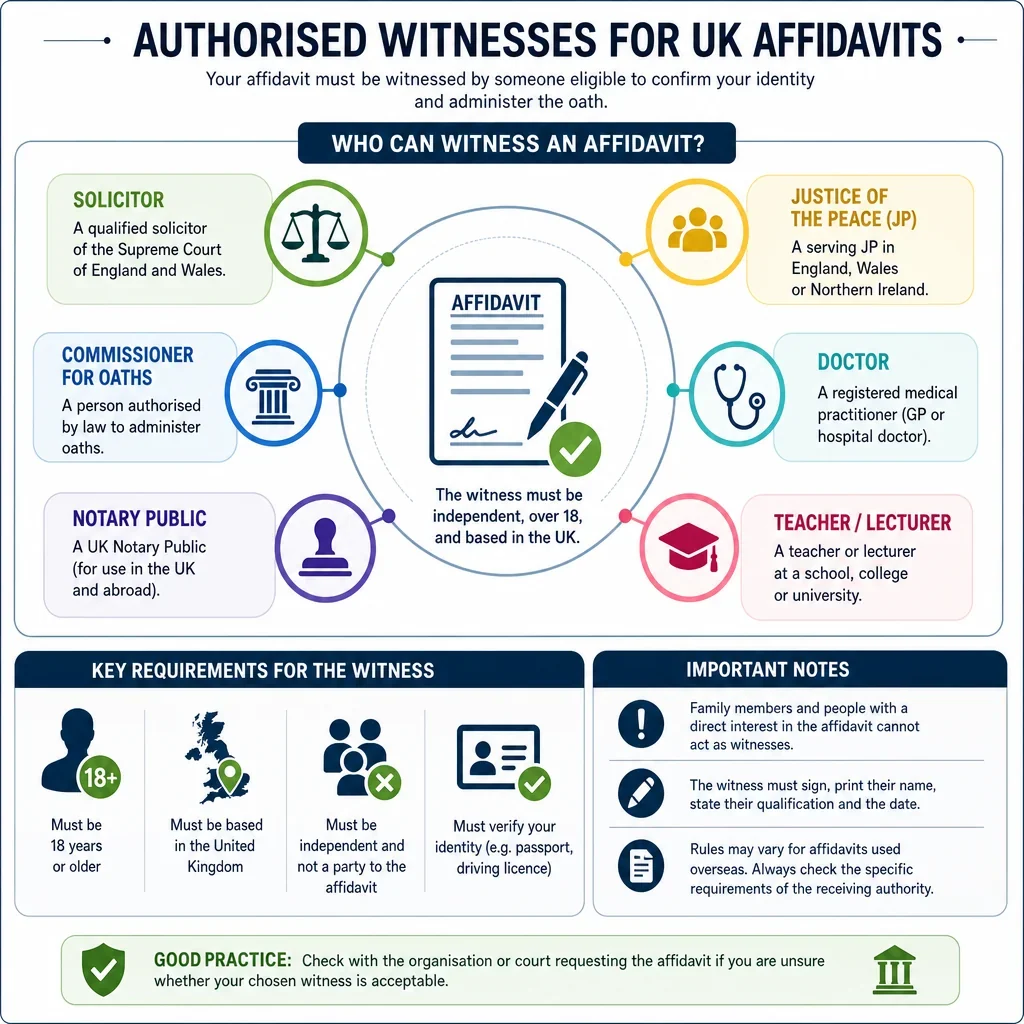
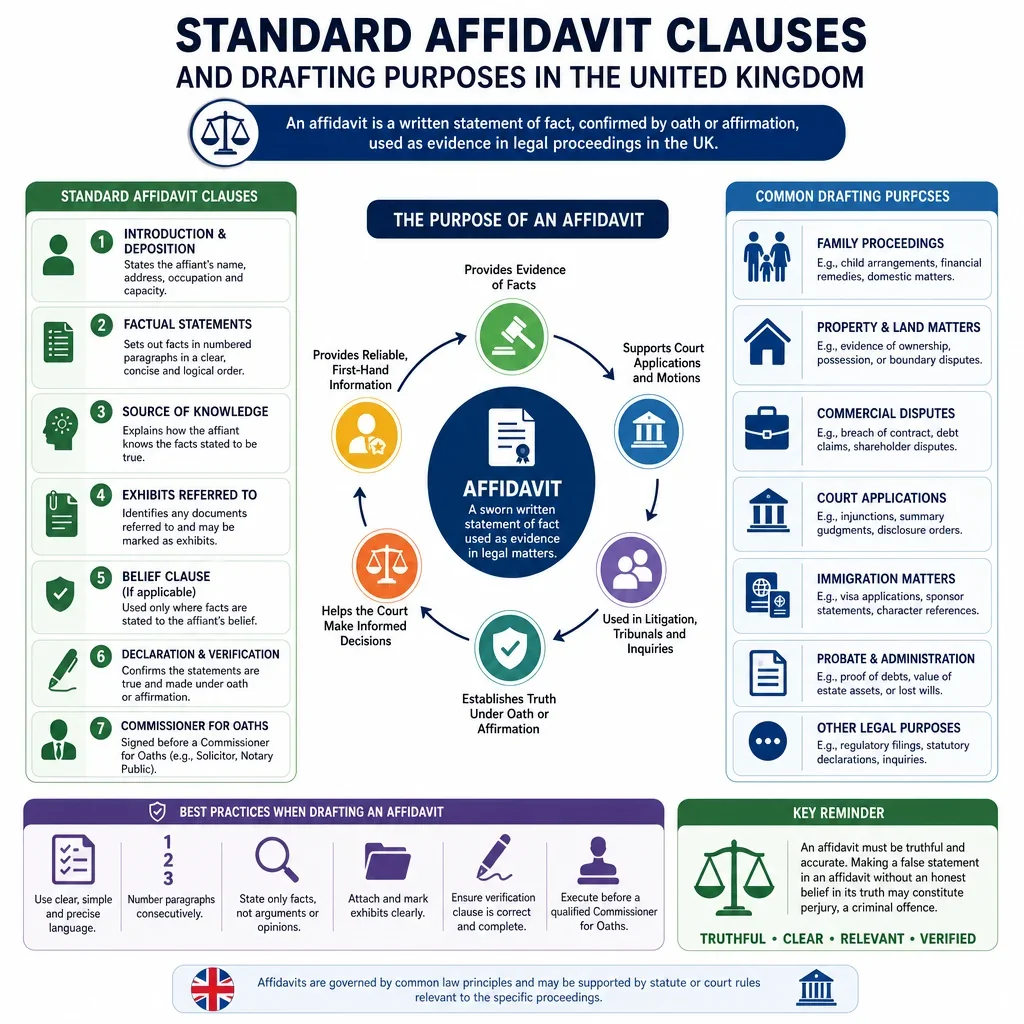
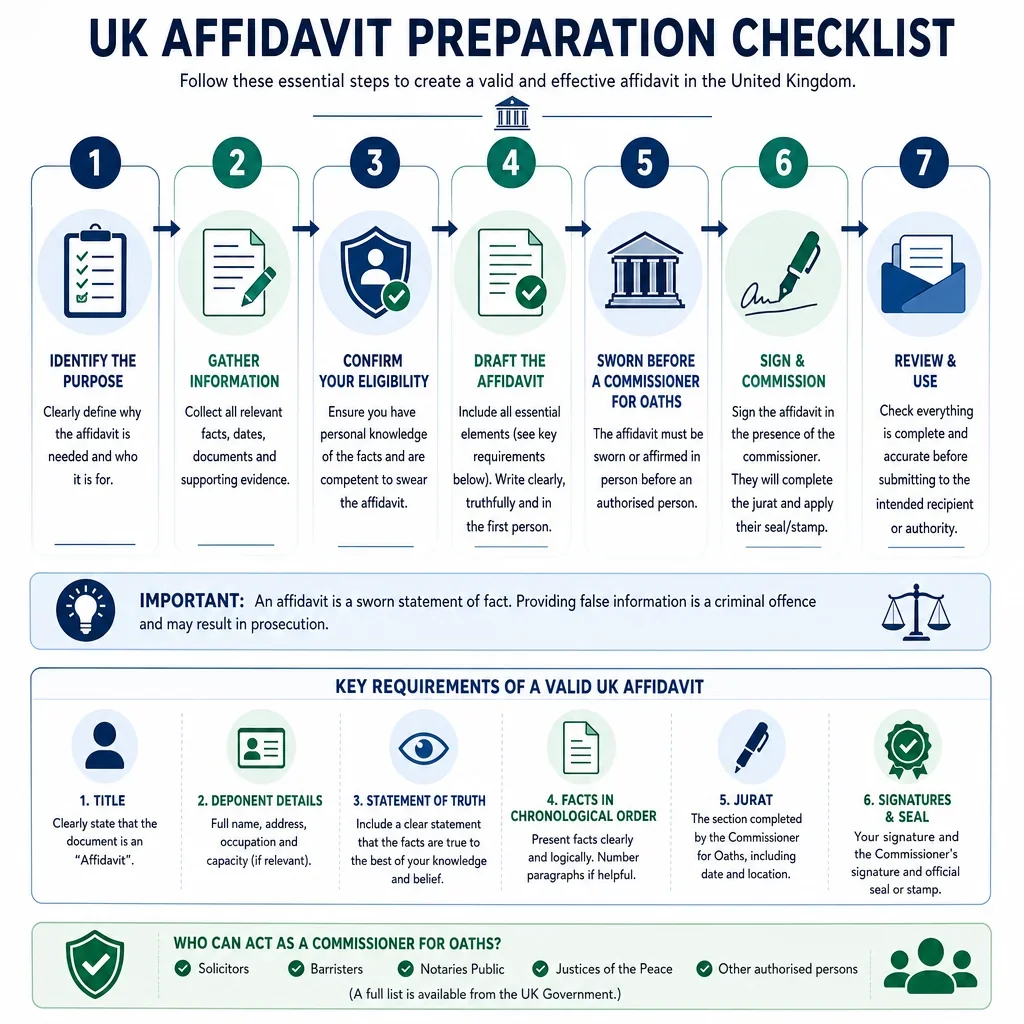
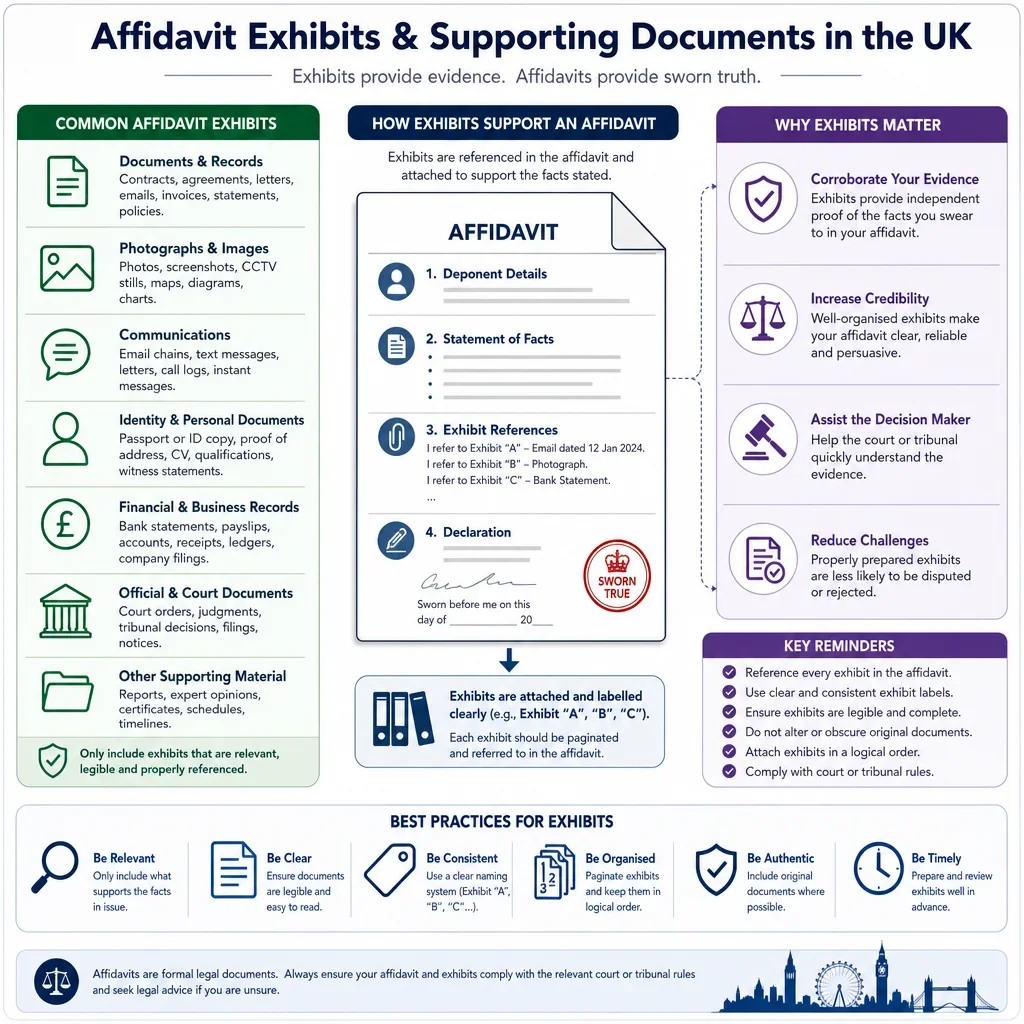
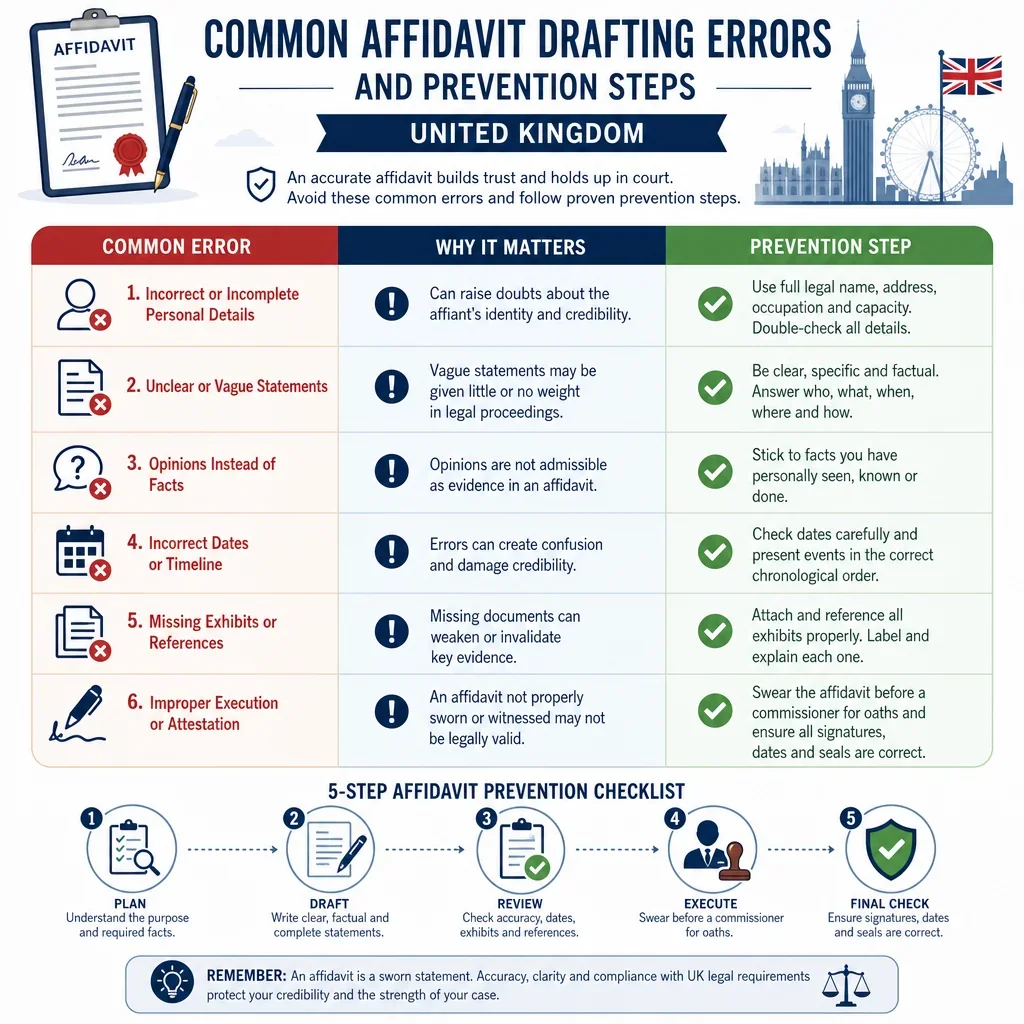
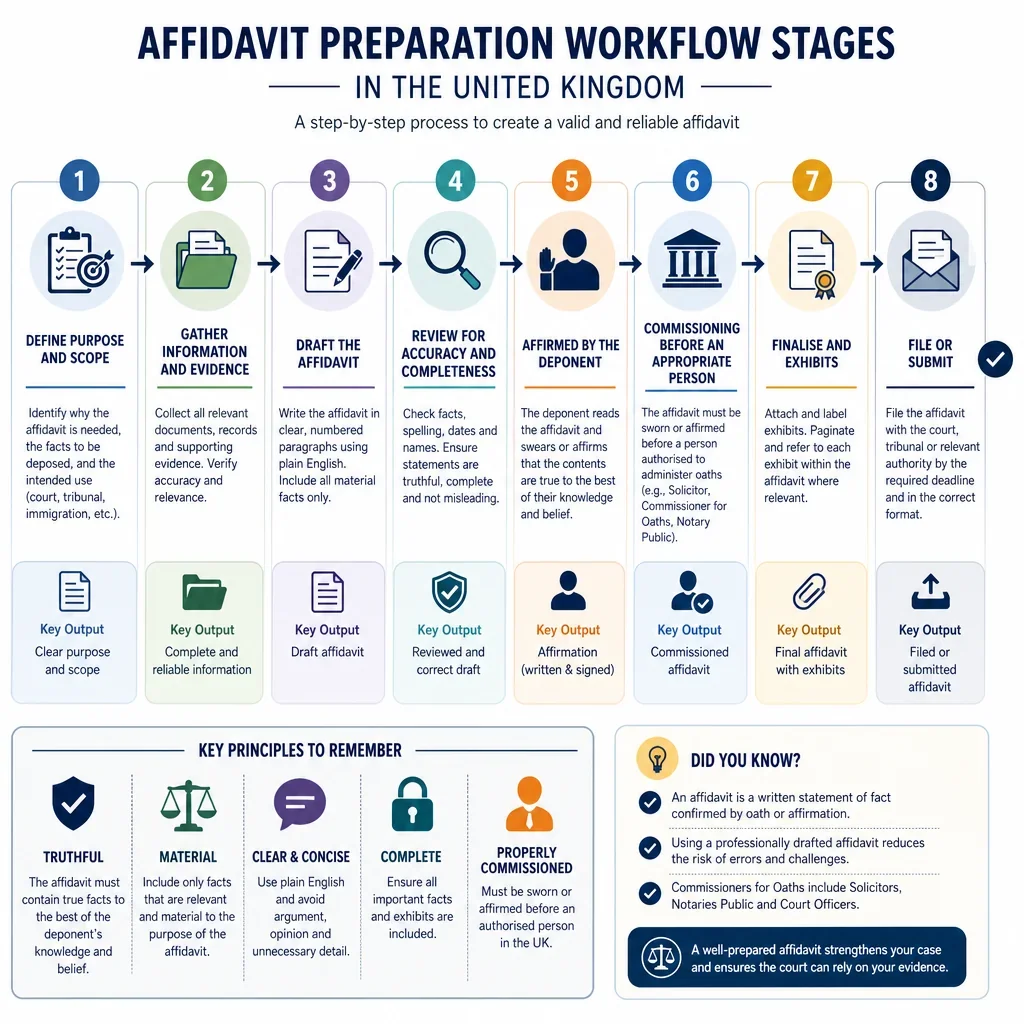
An affidavit is used where sworn or affirmed evidence is required by a court rule, order, official form, or receiving organisation. It is more formal than an ordinary statement and must usually be sworn or affirmed before an authorised person, such as a solicitor, commissioner for oaths, or notary.
What Problems Can The Wrong Document Cause?
- Rejection: the recipient may refuse to accept the document.
- Delay: you may need to redraft, re-sign, and re-witness it.
- Extra cost: formal witnessing, notarisation, or legalisation may need to be repeated.
- Court risk: evidence in the wrong format may not comply with court or tribunal rules.
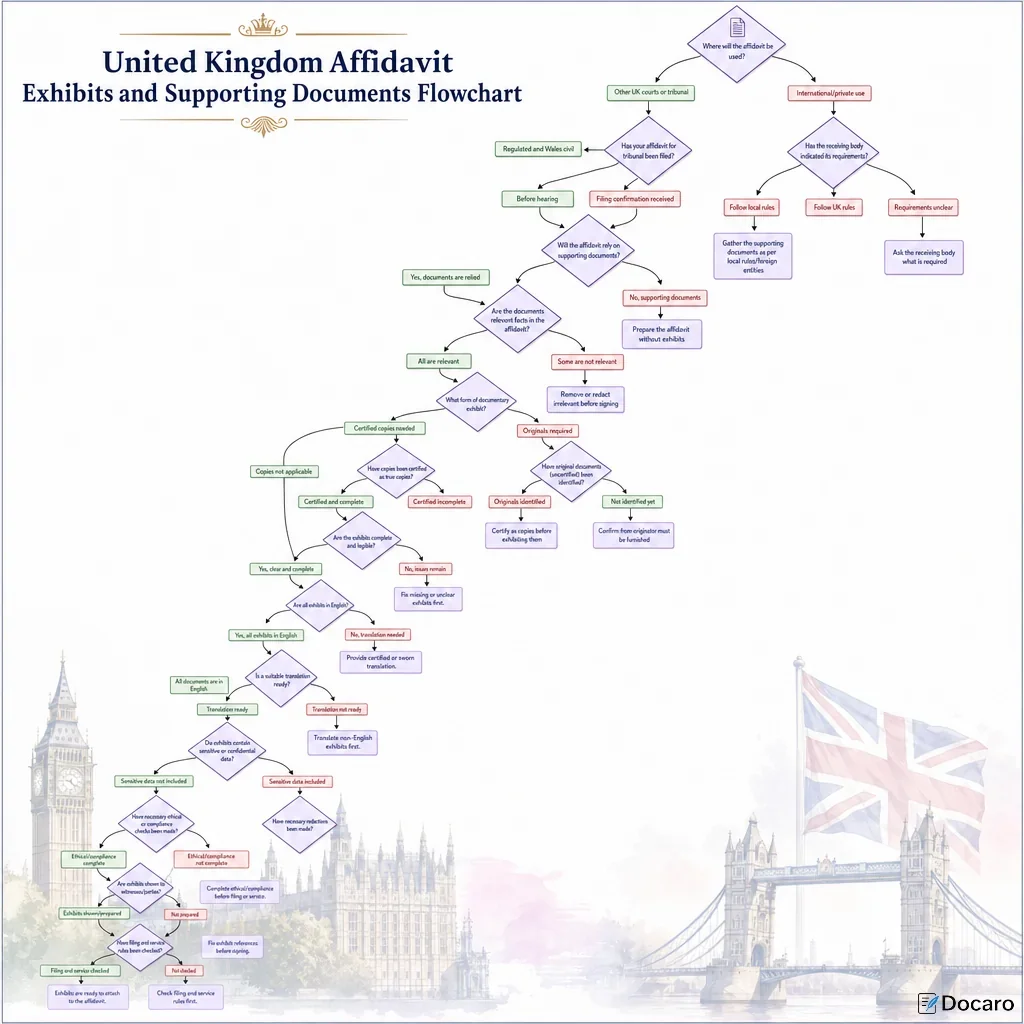
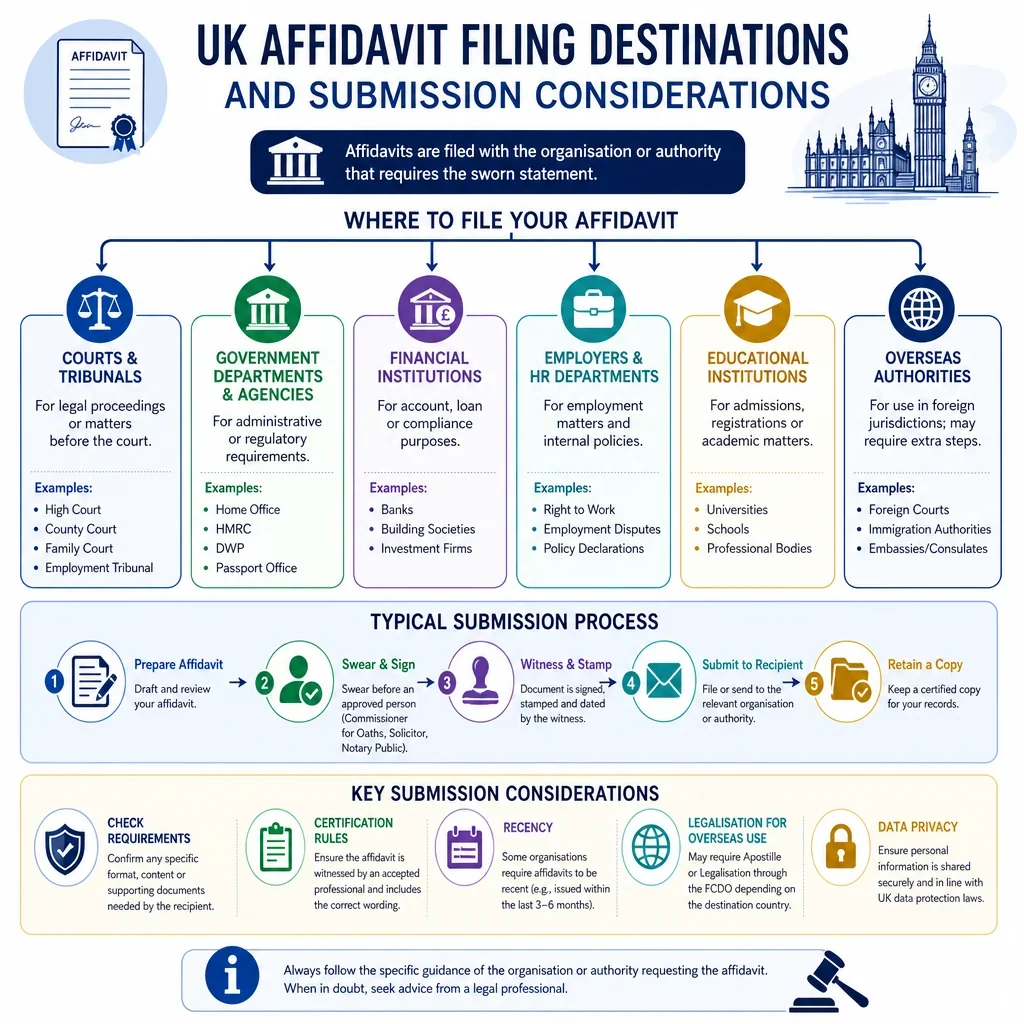
- Foreign use issues: documents for overseas use may also need notarisation, translation, legalisation, or an apostille through GOV.UK legalisation services.
How Should You Decide Which Document To Use?
The safest approach is to check the court rule, tribunal direction, official form, or written instruction from the organisation asking for the document. If the requirement is unclear, specialist, urgent, or cross-border, it is sensible to ask a qualified UK solicitor or notary before signing.
FAQs
You Might Also Be Interested In