UK Affidavit Formatting And Procedural Considerations
Requirement area | Practical requirement | Affected information | Check stage | Verification notes |
|---|---|---|---|---|
England and Wales | ||||
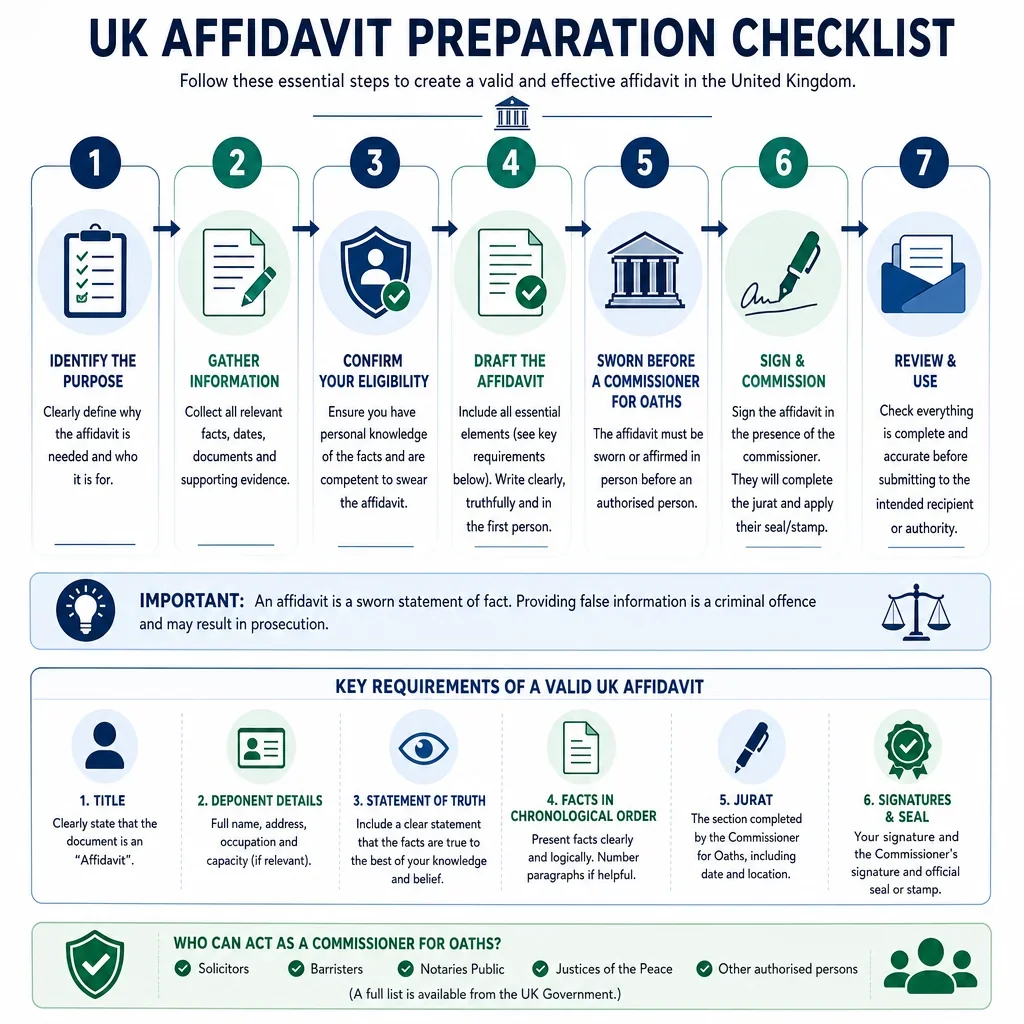
Heading and title | Use the correct court or tribunal title, claim number, parties, and affidavit title. | Court name, claim number, party names, document title. | Before drafting | Check the court form, order, practice direction, or tribunal guidance before drafting. |
Deponent details | Identify the deponent clearly, usually by full name, address, occupation or role, and connection to the matter. | Full name, address, occupation, role, relationship to case. | Before signing | Confirm whether sensitive addresses should be withheld or separately protected by court direction. |
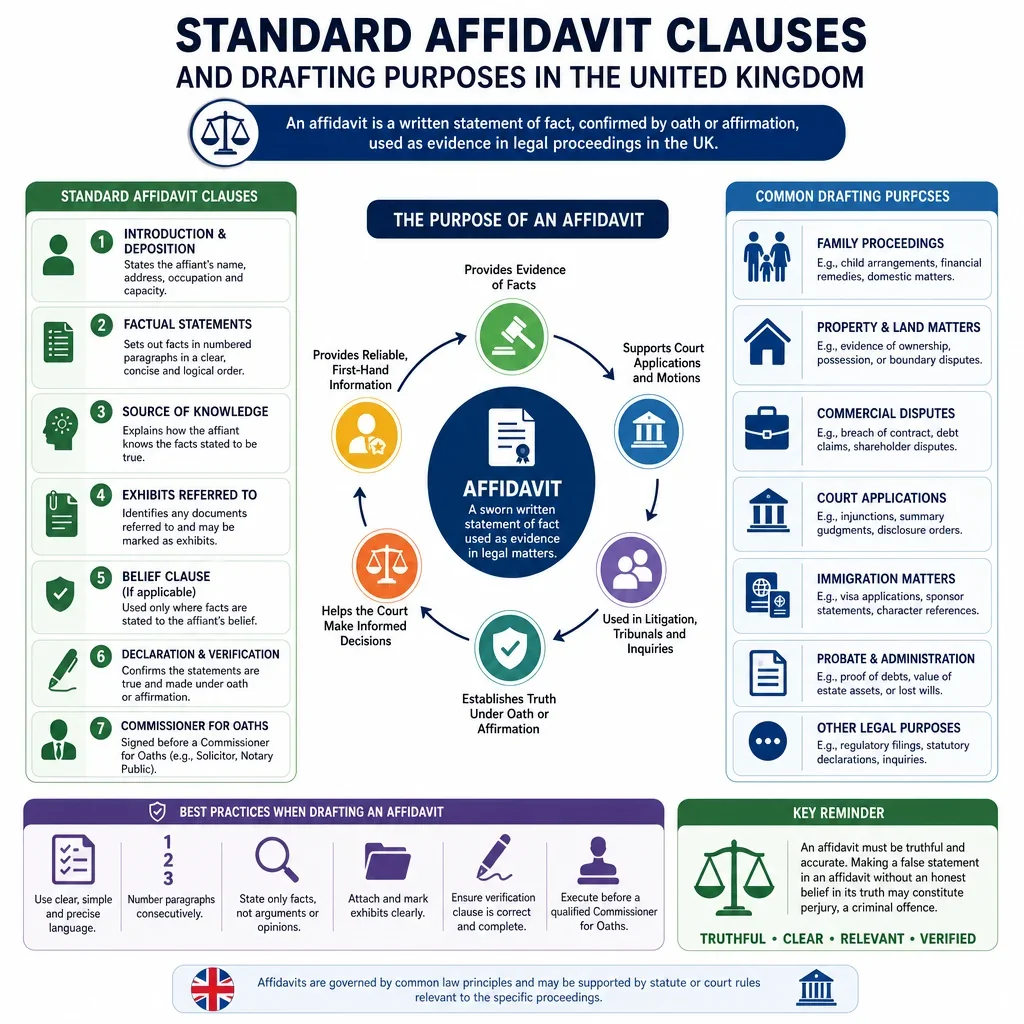
Numbered paragraphs | Set out evidence in short, consecutively numbered paragraphs for easy reference. | Paragraph numbers, facts, dates, cross-references. | Throughout the process | Check any court order requiring specific evidence to be addressed in a particular sequence. |
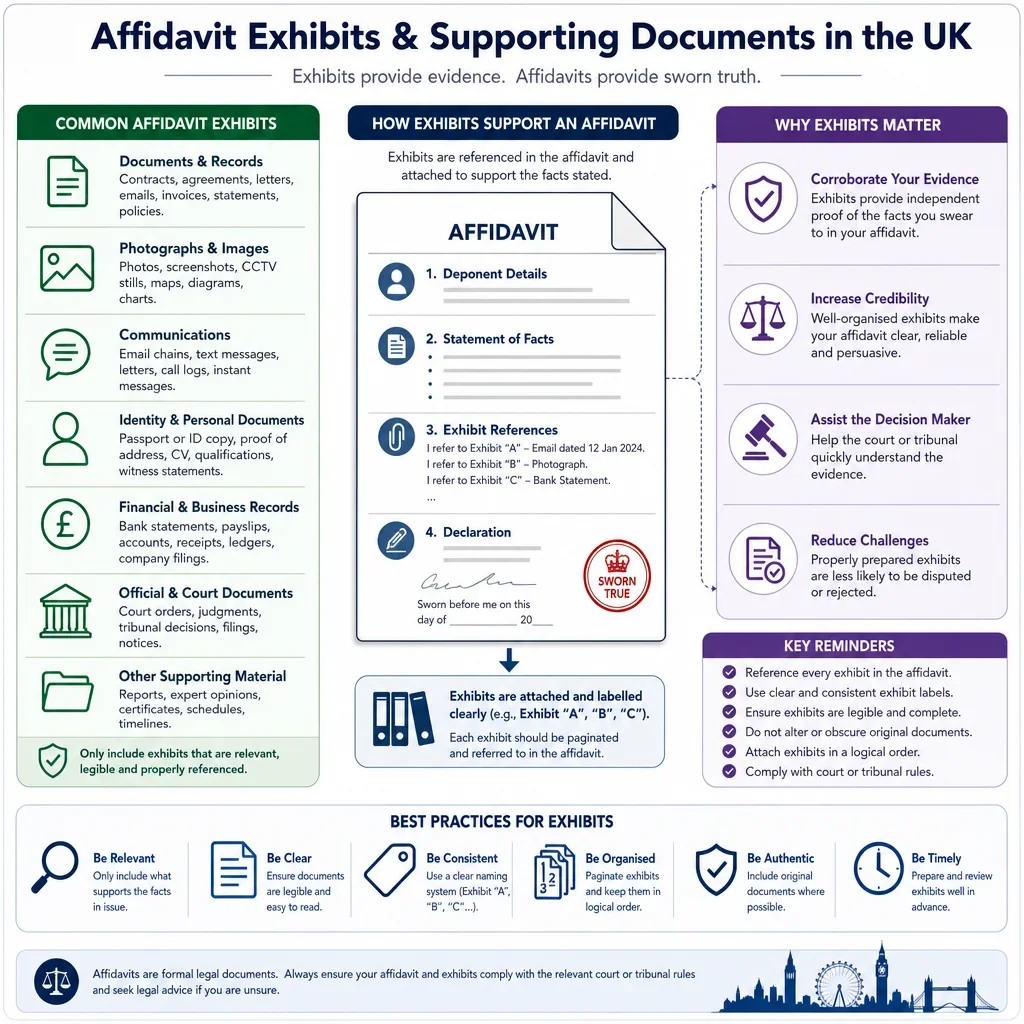
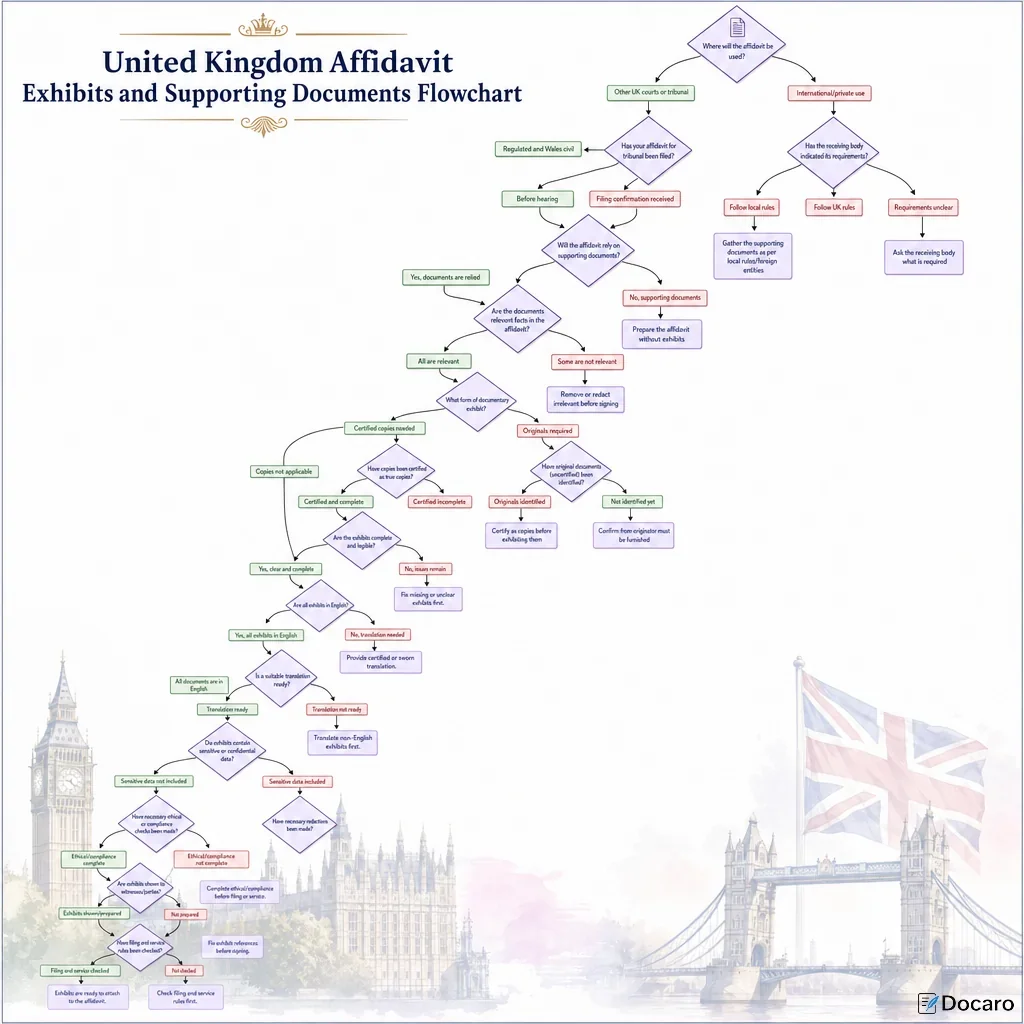
Exhibits | Label each exhibit clearly and make affidavit references match the exhibit labels exactly. | Exhibit letters, initials, document dates, exhibit references. | Before signing | Confirm whether the court requires exhibit sheets, pagination, or electronic bundle numbering. |
Exhibits | Use exhibit wording that identifies the exhibit as the document referred to in the affidavit. | Exhibit covers, deponent name, exhibit identifier, commissioner details. | Before signing | Check whether the authorised person must sign or mark each exhibit or exhibit cover sheet. |
Oath or affirmation wording | The deponent may swear an oath or make a solemn affirmation using appropriate wording. | Oath wording, affirmation wording, religious text choice. | Before signing | Confirm the wording accepted by the authorised person and receiving court. |
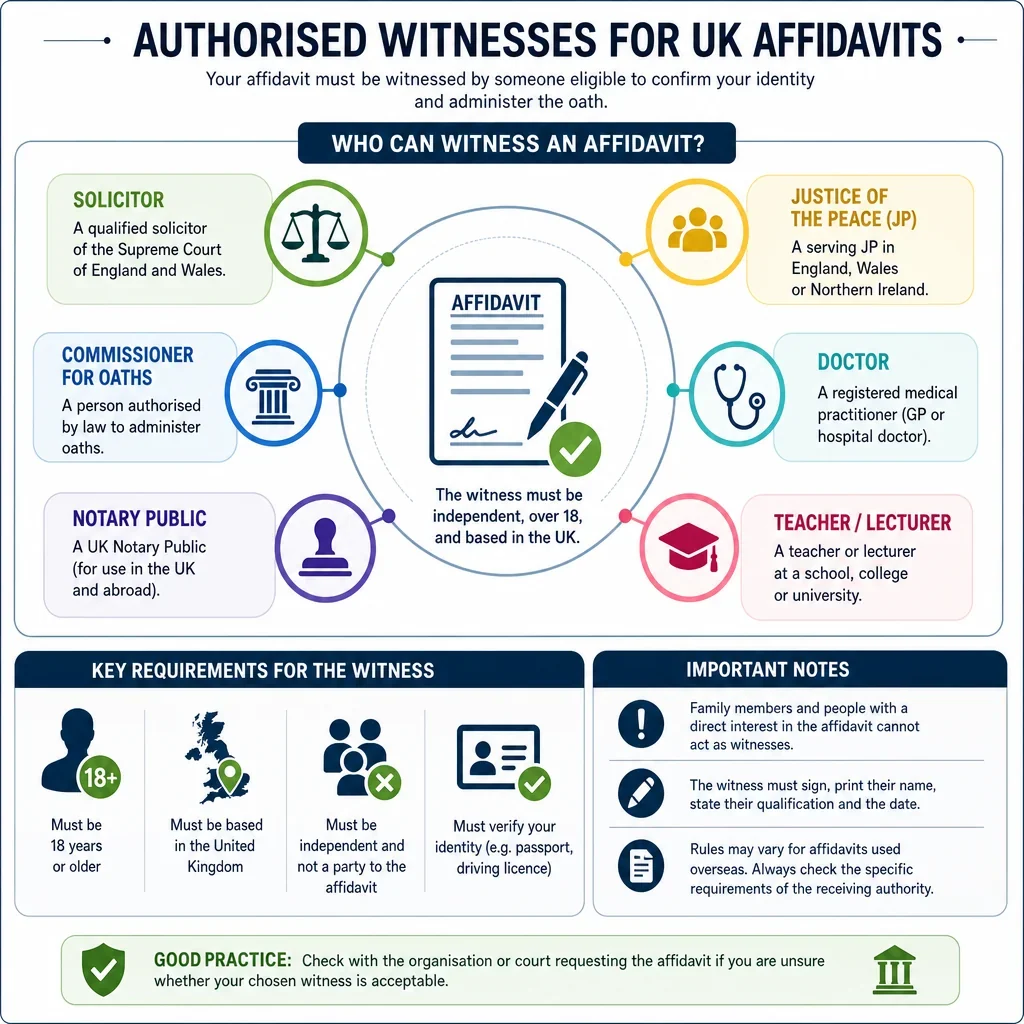
Signature and jurat | Swear or affirm before a person authorised to administer oaths, such as a solicitor with relevant authority. | Deponent signature, authorised person name, capacity, signature. | Before signing | Check the authorised person's capacity and any court-specific restrictions on who may take the affidavit. |
Signature and jurat | Include a jurat stating when, where, and before whom the affidavit was sworn or affirmed. | Date, place, deponent signature, commissioner signature, capacity. | Before filing or submission | Check whether the receiving body accepts remote or electronic swearing in the relevant procedure. |
Signature and jurat | If an interpreter is used, record interpretation arrangements and ensure the deponent understood the affidavit. | Interpreter name, language, jurat wording, deponent confirmation. | Before signing | Check court requirements where the deponent cannot read English or needs interpretation. |
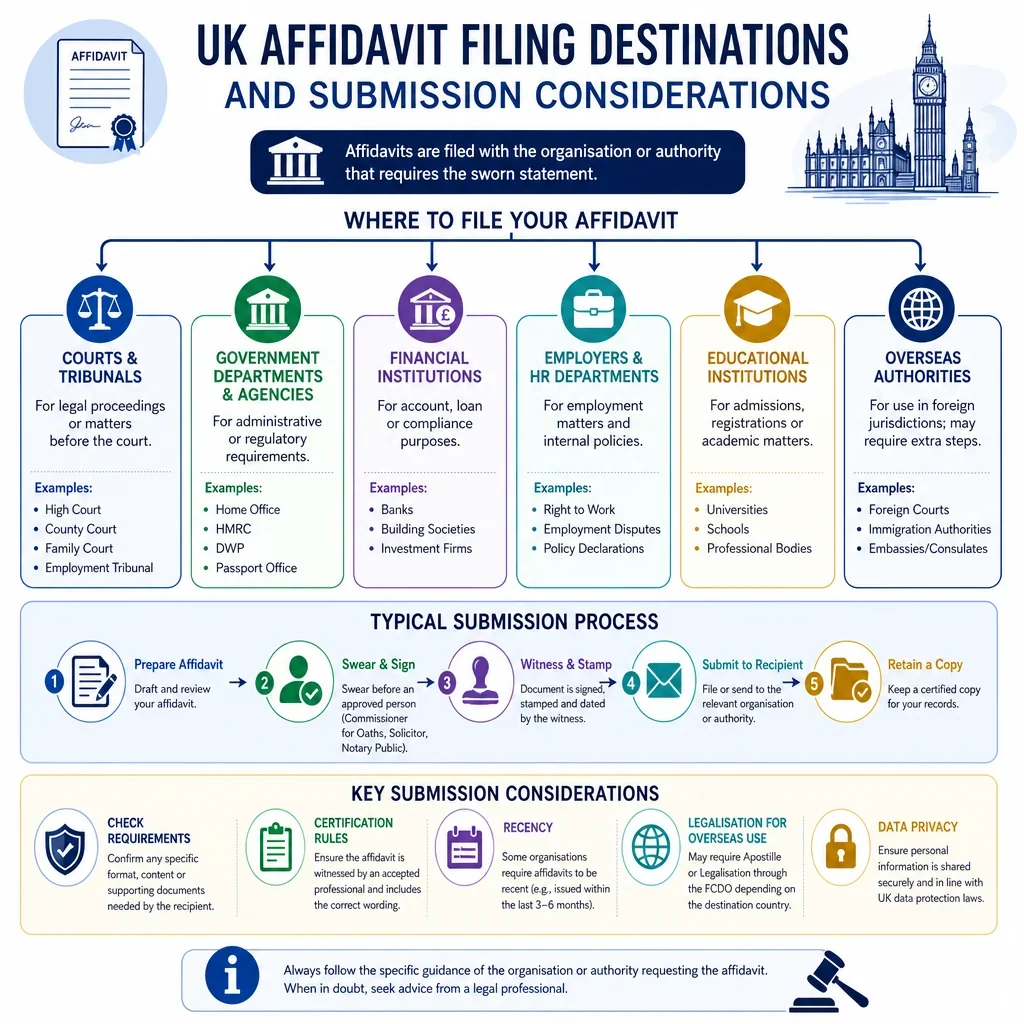
Filing or submission | File the sworn or affirmed affidavit in the format and channel required by the court or tribunal. | PDF file, original affidavit, exhibits, case number, filing deadline. | Before filing or submission | Check CE-File, tribunal portal, email, post, or in-person filing rules for the specific venue. |
Filing or submission | Observe any deadline in a rule, order, notice, or procedural timetable. | Filing date, service date, hearing date, compliance deadline. | Throughout the process | Check the current CPR, court order, and local listing directions before relying on a deadline. |
Filing or submission | Serve the affidavit and exhibits on other parties if the rules, order, or application process requires it. | Service addresses, parties, exhibits, certificate of service. | Before filing or submission | Confirm the permitted method and timing of service for the specific proceedings. |
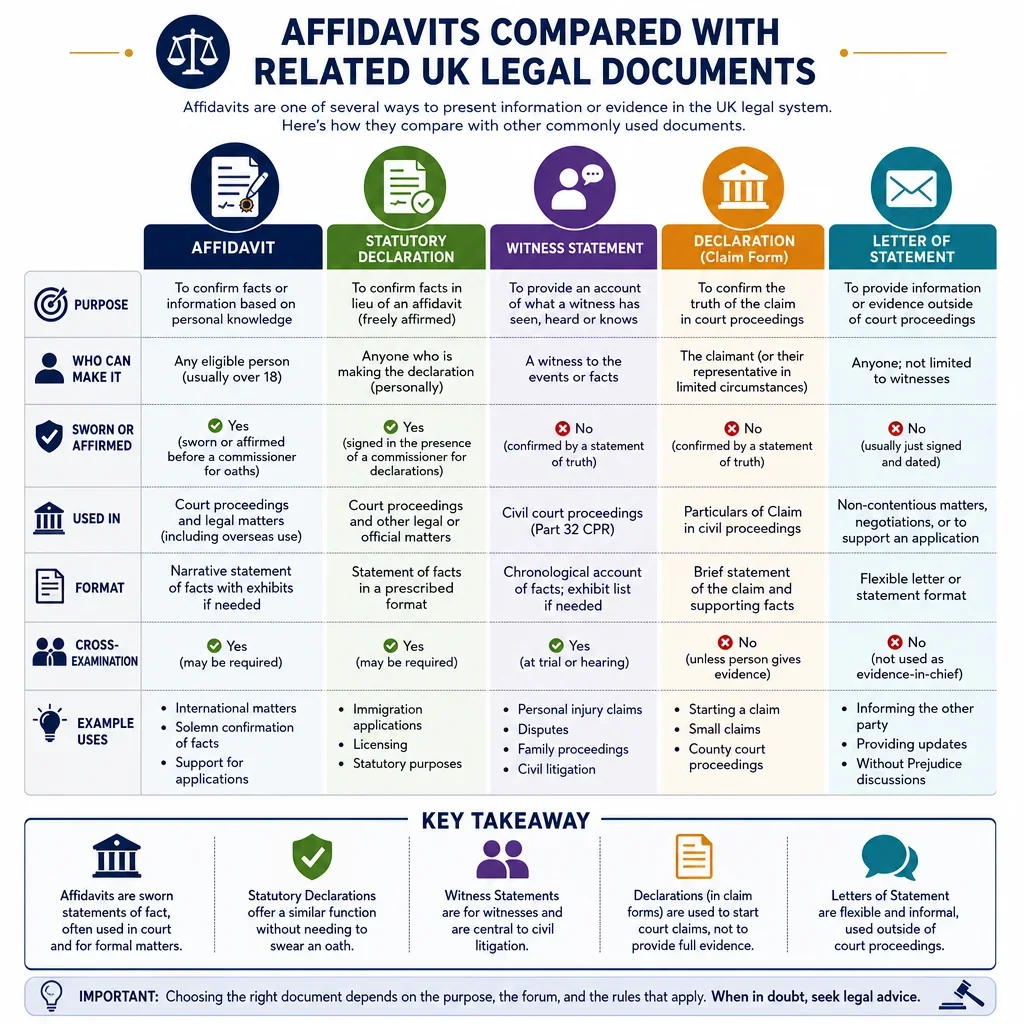
Oath or affirmation wording | Do not use statutory declaration wording unless the receiving body asks for a statutory declaration rather than an affidavit. | Declaration wording, affidavit title, jurat or attestation wording. | Before drafting | Check whether the recipient asked for an affidavit, statutory declaration, witness statement, or certificate. |
Scotland | ||||
Heading and title | Use the correct Scottish court, cause reference, parties, and document title required by the forum. | Court name, cause number, party names, process reference. | Before drafting | Check Court of Session, sheriff court, tribunal, or recipient rules before drafting. |
Deponent details | Identify the maker of the affidavit with enough detail to connect them to the proceedings or transaction. | Full name, address, designation, capacity, relationship to matter. | Before signing | Check whether the receiving Scottish body requires occupation, designation, or address details. |
Numbered paragraphs | Use clear numbered paragraphs so each factual assertion can be referred to precisely. | Paragraph numbers, factual assertions, dates, document references. | Throughout the process | Check whether the relevant Scottish procedure prescribes a particular form or layout. |
Exhibits | Identify productions or exhibits consistently and ensure references match any inventory or bundle. | Production numbers, exhibit labels, bundle references, document dates. | Before signing | Check whether the forum uses the term productions, exhibits, inventories, or bundles. |
Exhibits | Paginate and organise supporting documents in the manner required for lodging or electronic submission. | Page numbers, bundle index, production references, PDF bookmarks. | Before filing or submission | Check current Scottish Courts and Tribunals Service practice notes and local guidance. |
Oath or affirmation wording | Use oath or affirmation wording accepted by the Scottish court, tribunal, notary, or commissioner. | Oath wording, affirmation wording, deponent confirmation. | Before signing | Confirm wording with the person administering the oath and the intended recipient. |
Signature and jurat | Have the affidavit sworn or affirmed before an appropriate authorised person, commonly a notary public or solicitor where accepted. | Deponent signature, notary or solicitor name, capacity, seal if needed. | Before signing | Check whether the receiving body requires notarisation, a seal, or a particular attestation form. |
Signature and jurat | Include signing, swearing or affirmation details, including date, place, deponent, and authorised person. | Date, place, signature, authorised person designation, seal. | Before filing or submission | Check if the relevant Scottish procedure requires a particular jurat or testing clause style. |
Filing or submission | Lodge the affidavit, productions, and any required copies through the correct Scottish court channel. | Lodging method, court reference, signed affidavit, productions, copies. | Before filing or submission | Check current SCTS lodging, email, portal, and paper copy requirements for the court. |
Filing or submission | Check the procedural timetable for when the affidavit and productions must be lodged or intimated. | Lodging date, intimation date, hearing date, timetable requirements. | Throughout the process | Check the interlocutor, court rules, and any local practice note before calculating dates. |
Filing or submission | Intimate or serve the affidavit on other parties where the relevant Scottish procedure requires it. | Party details, service method, intimation date, supporting documents. | Before filing or submission | Check the applicable Scottish rule, interlocutor, and accepted method of intimation. |
Filing or submission | Check if the affidavit is for a specialised Scottish procedure with its own forms or evidential rules. | Procedure type, form reference, required averments, supporting productions. | Before drafting | Verify requirements for family, commissary, insolvency, protective, or other specialist proceedings. |
Northern Ireland | ||||
Heading and title | Use the correct Northern Ireland court title, case reference, parties, and affidavit heading. | Court name, record number, parties, affidavit title. | Before drafting | Check the relevant Northern Ireland court rules, form, order, or court office guidance. |
Deponent details | State the deponent's full identifying details and their connection with the proceedings or facts. | Full name, address, occupation, capacity, relationship to matter. | Before signing | Check whether address confidentiality, initials, or protective measures are needed. |
Numbered paragraphs | Use concise numbered paragraphs and keep one main point or event in each paragraph. | Paragraph numbering, facts, dates, document references. | Throughout the process | Check if a Northern Ireland court rule or order prescribes affidavit form or content. |
Exhibits | Label exhibits consistently and match every exhibit reference in the affidavit. | Exhibit labels, document descriptions, dates, paragraph references. | Before signing | Check court office requirements for exhibit certificates, covers, copies, and bundle order. |
Exhibits | Prepare complete exhibit copies in the required order for filing, service, and court use. | Copies, pagination, exhibit order, document completeness. | Before filing or submission | Confirm whether the court needs originals, certified copies, paper copies, or electronic bundles. |
Oath or affirmation wording | Use oath or affirmation wording accepted for Northern Ireland proceedings and the administering officer. | Oath wording, affirmation wording, religious text choice, deponent confirmation. | Before signing | Confirm current wording and who may administer the oath under Northern Ireland practice. |
Signature and jurat | Swear or affirm before a person authorised to administer oaths for Northern Ireland purposes. | Deponent signature, commissioner name, qualification, signature, address. | Before signing | Check court office guidance if the affidavit is sworn outside Northern Ireland. |
Signature and jurat | Complete the jurat with the date, place, deponent signature, and authorised person's details. | Date, place, signature, commissioner details, qualification. | Before filing or submission | Check whether the relevant court office requires a particular jurat form or wording. |
Filing or submission | Submit the sworn or affirmed affidavit through the correct Northern Ireland court office or electronic route. | Court office, case reference, signed affidavit, exhibits, filing method. | Before filing or submission | Check current NICTS filing, email, appointment, fee, and copy requirements before submission. |
Filing or submission | Meet any affidavit filing or service deadline set by rule, order, notice, or court timetable. | Deadline, hearing date, service date, court office date stamp. | Throughout the process | Check the current rules, court order, and local court office practice before calculating dates. |
Filing or submission | Serve affidavit evidence on other parties where the rule, order, or application requires service. | Party names, service addresses, method of service, proof of service. | Before filing or submission | Confirm accepted service methods and whether exhibit copies must be served with the affidavit. |
Oath or affirmation wording | Confirm whether the recipient needs an affidavit, statutory declaration, witness statement, or certificate. | Document title, declaration wording, jurat, attestation wording. | Before drafting | Check the receiving body's wording requirements before using statutory declaration language. |
England and Wales | ||||
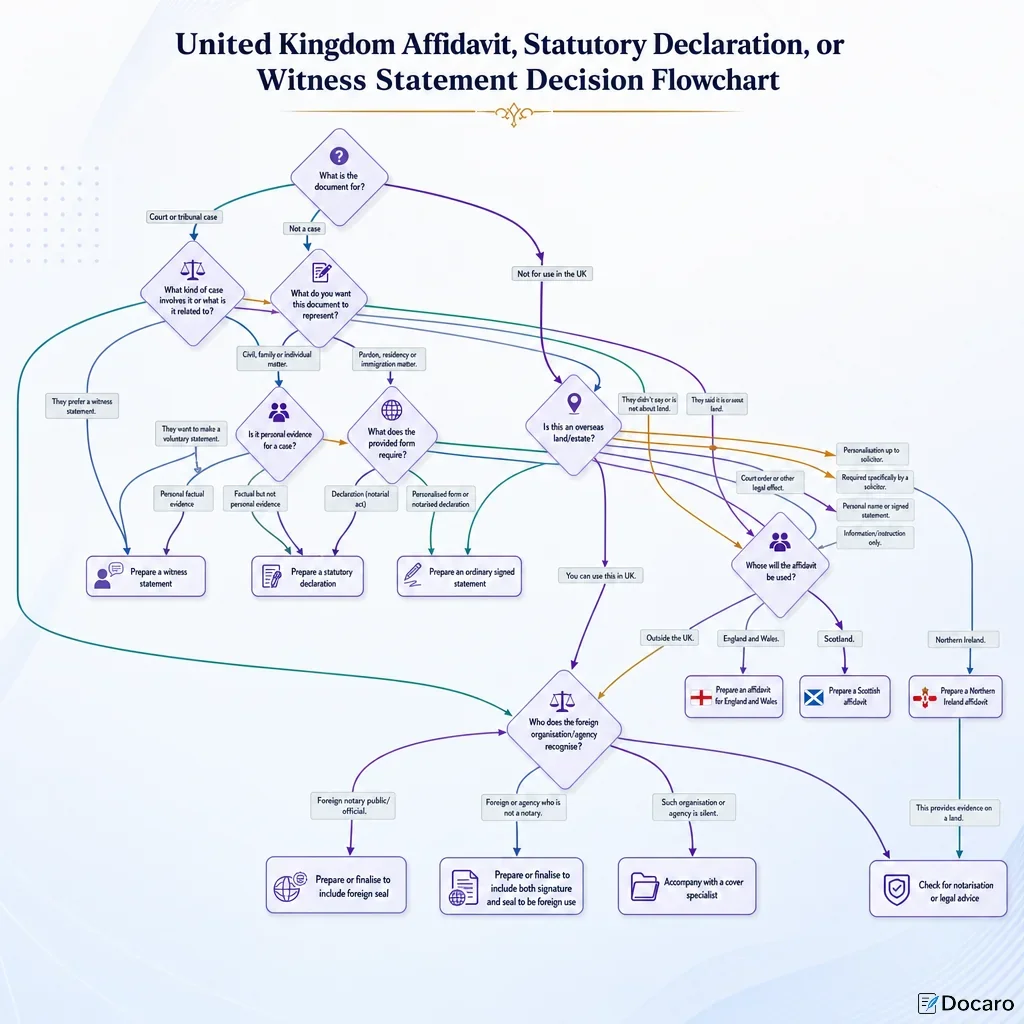
Before drafting | Check whether the evidence must be by affidavit or whether a witness statement is sufficient. | Document type, statement of truth, oath or affirmation, jurat. | Before drafting | Use an affidavit only where required by rule, order, enactment, or receiving body. |
Scotland | ||||
Before drafting | Confirm that Scottish procedure requires affidavit evidence rather than another statement, minute, form, or certificate. | Document type, oath wording, productions, lodging route. | Before drafting | Check the relevant rules, interlocutor, or SCTS guidance for the exact evidence format. |
Northern Ireland | ||||
Before drafting | Confirm whether Northern Ireland procedure requires an affidavit rather than a witness statement or certificate. | Document type, oath wording, exhibits, filing route. | Before drafting | Check the rule, order, notice, or court office guidance before choosing the document type. |
What Affidavit Formatting Checks Matter Most In The UK?
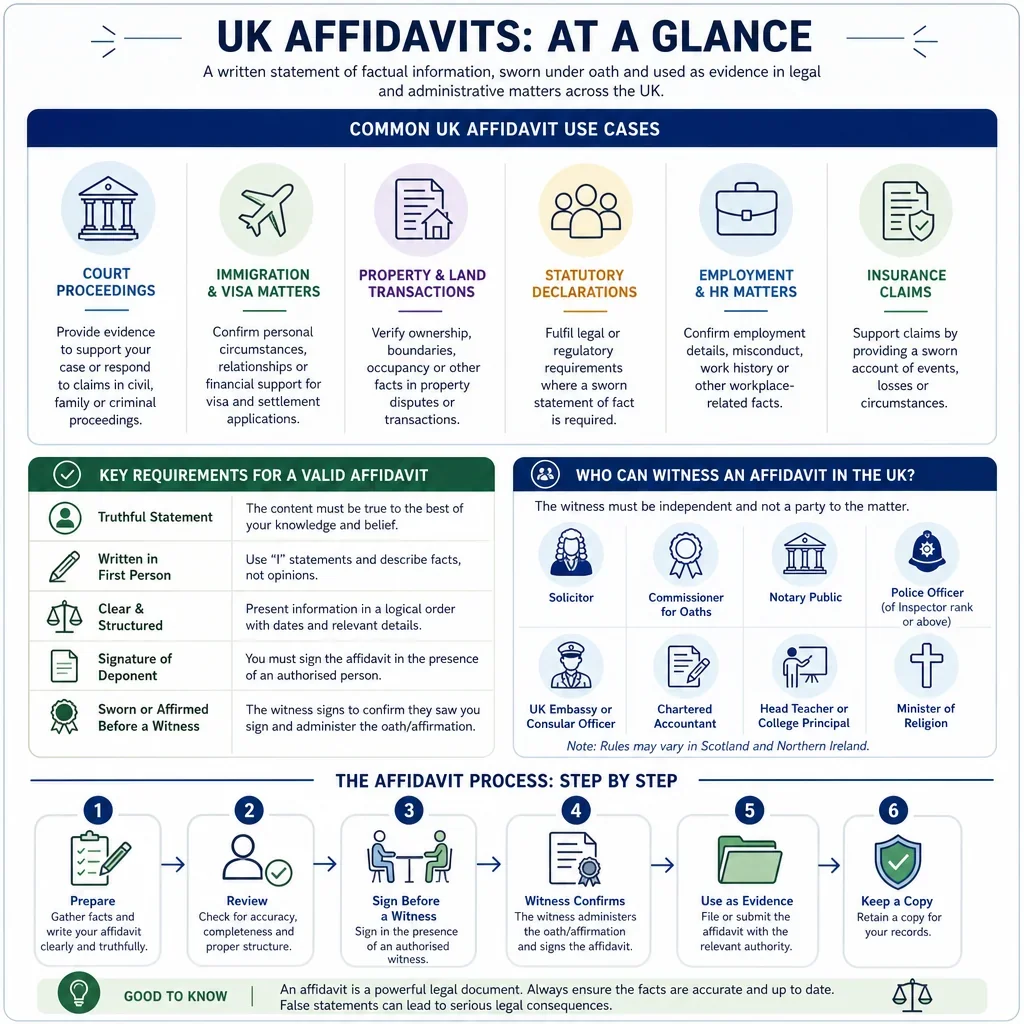
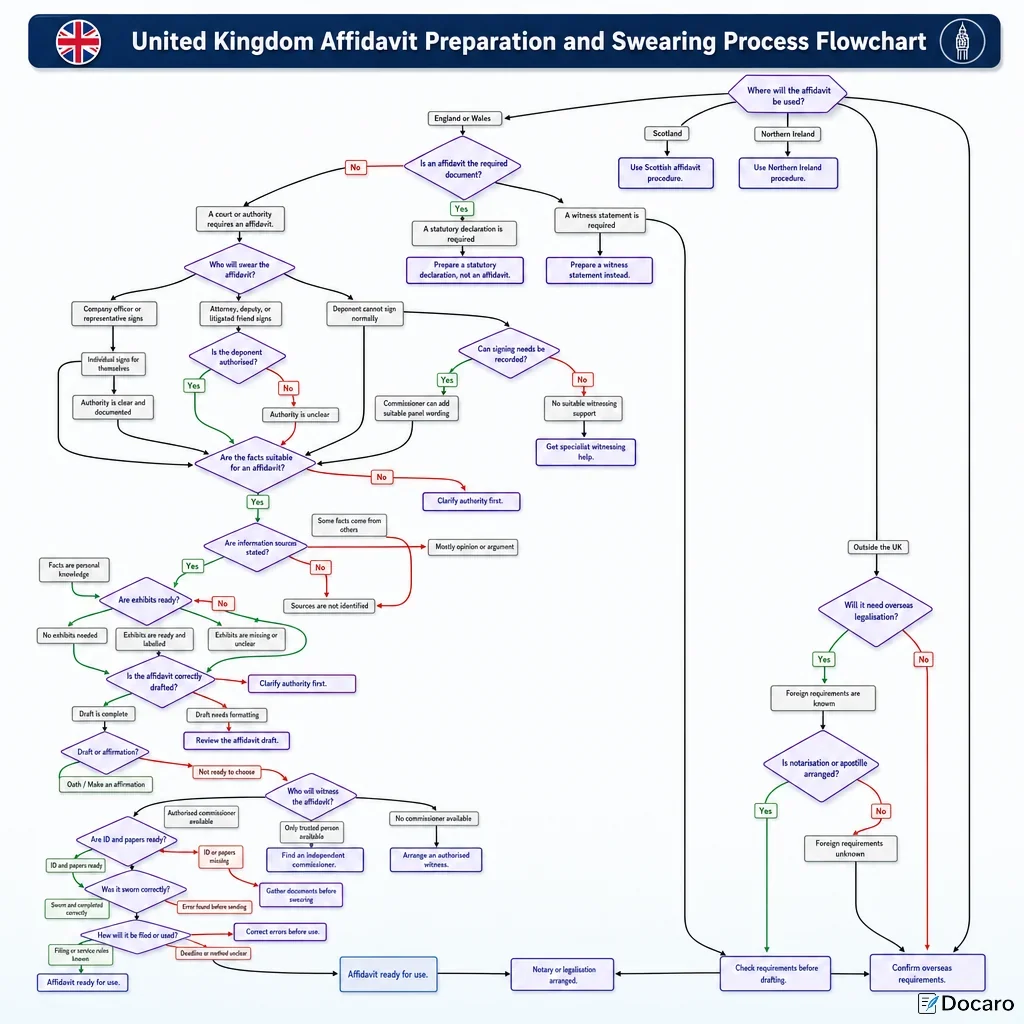
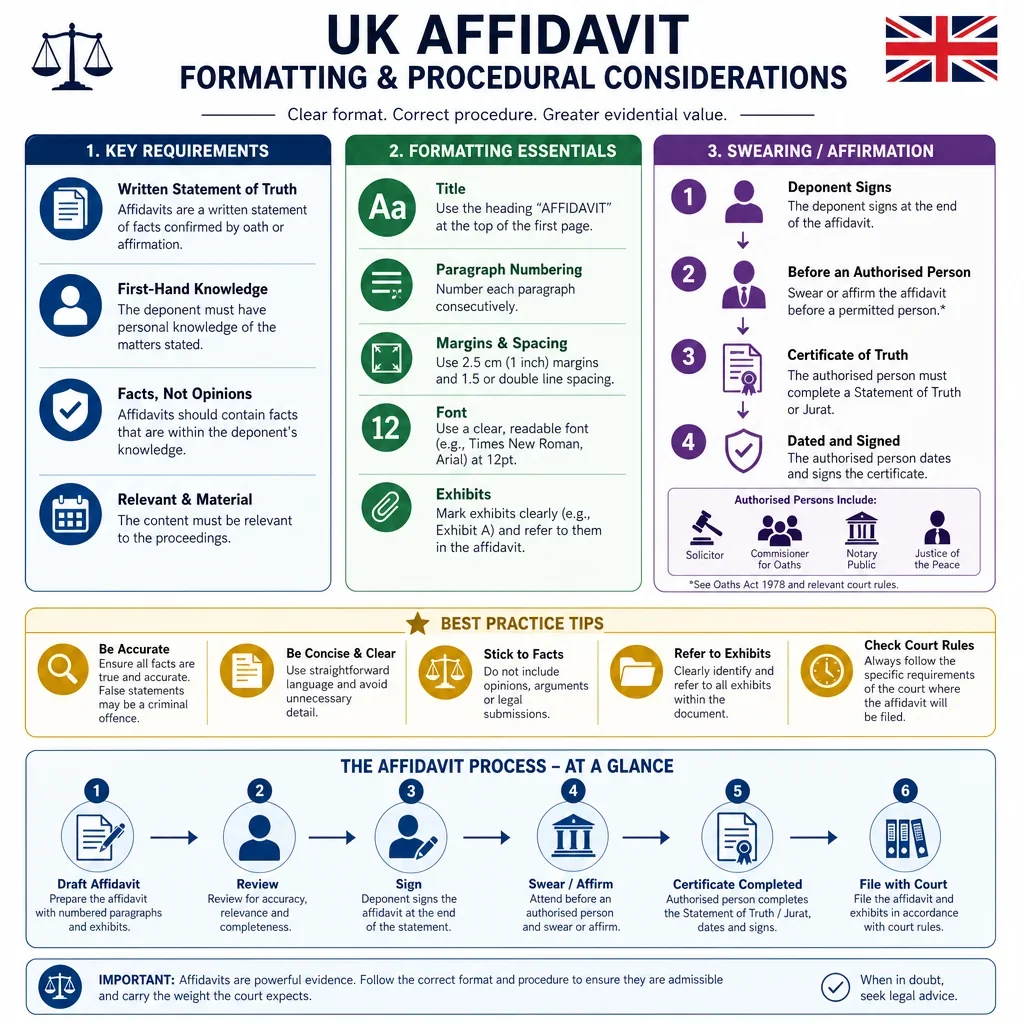
Affidavit practice differs across England and Wales, Scotland, and Northern Ireland. The safest approach is to draft with the receiving court, tribunal, or organisation in mind from the start, because heading, exhibit, jurat, and filing expectations can vary by forum.
- England and Wales: affidavits commonly follow the Civil Procedure Rules and Practice Direction 32 style: correct court heading, consecutively numbered paragraphs, exhibit references, and a completed jurat showing when, where, and before whom the affidavit was sworn or affirmed.
- Scotland: terminology and procedure may differ, and affidavits are often used in specific court contexts such as Court of Session or sheriff court procedures. Check the relevant court rules and any form or lodging requirements before signing.
- Northern Ireland: court heading, swearing, exhibit, and filing requirements should be checked against the relevant court rules and the Northern Ireland Courts and Tribunals Service guidance, especially where an affidavit is for High Court or county court proceedings.
When Should An Affidavit Be Checked Before Signing?
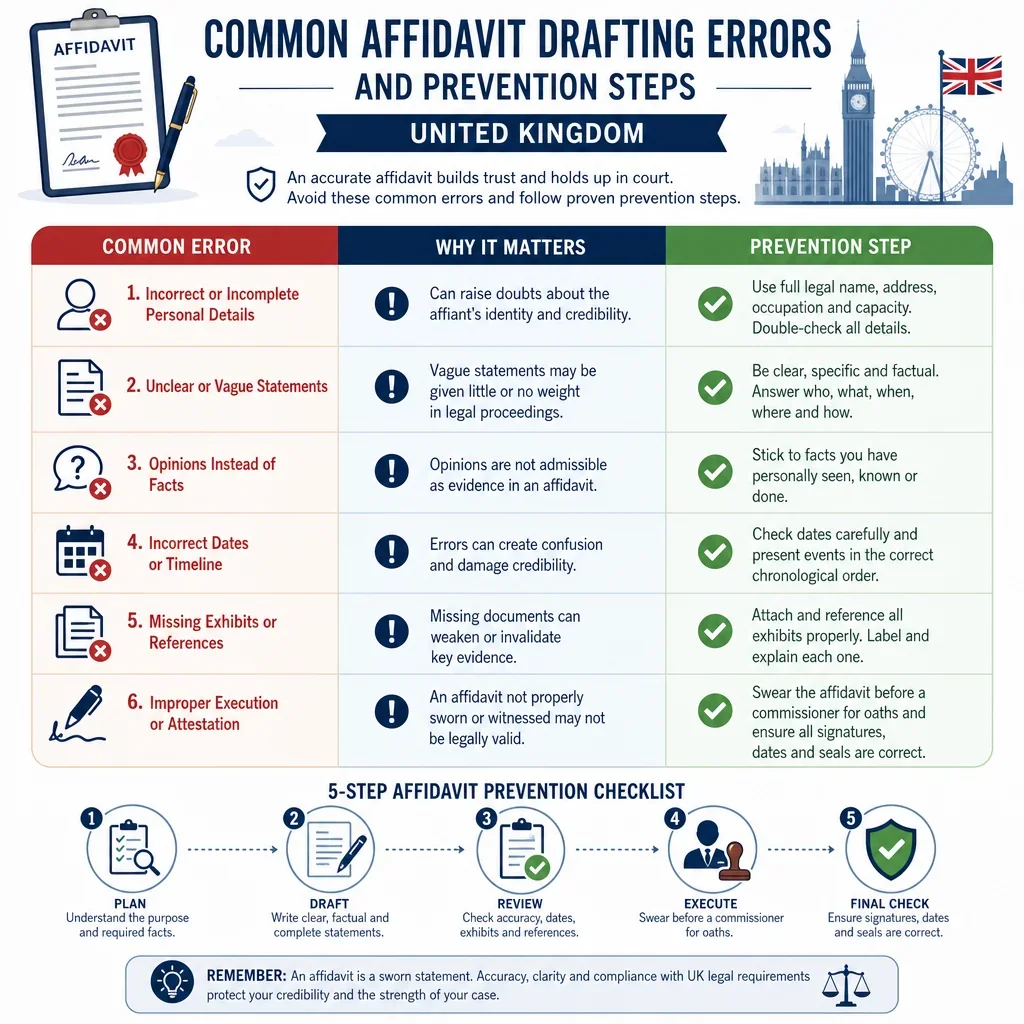
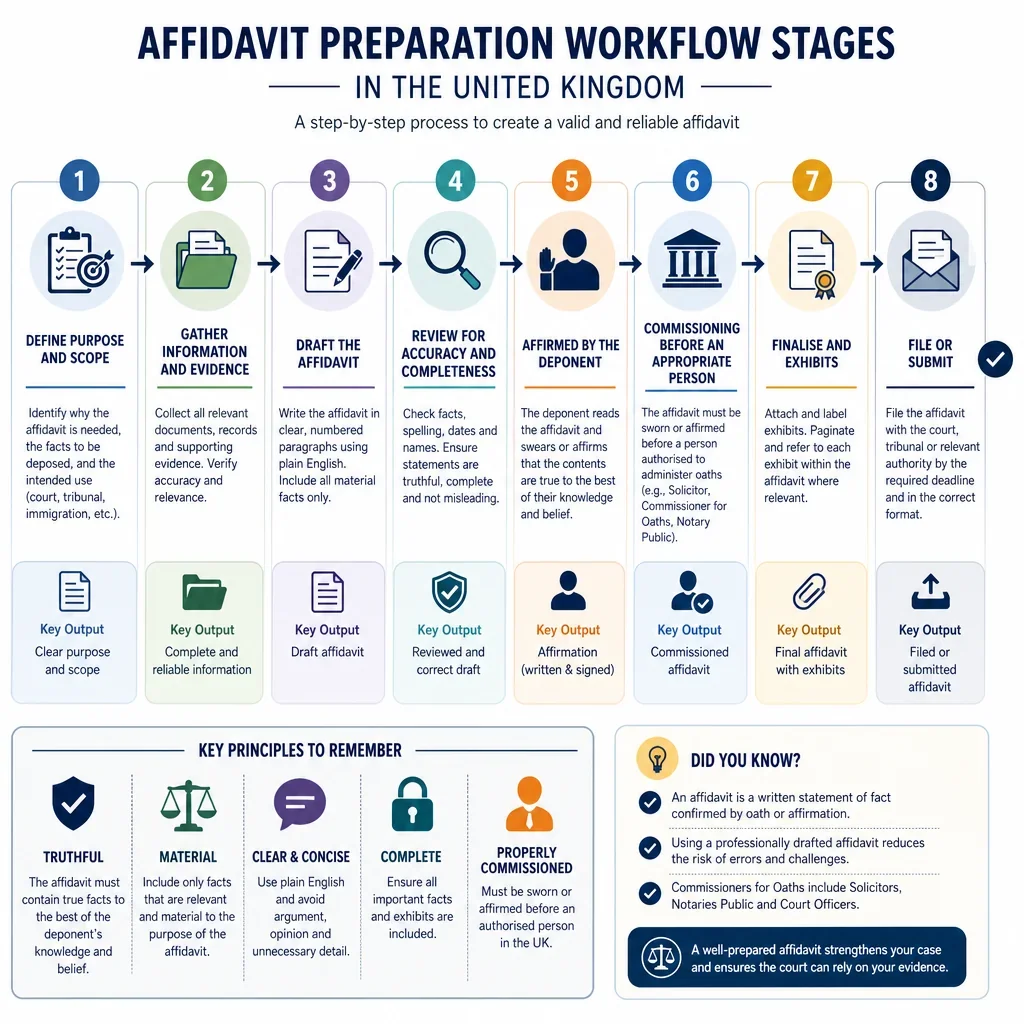
Before signing, users should verify the deponent's full name, address or identifying details, numbered paragraphs, exhibit labels, oath or affirmation wording, and the jurat. These are the details most likely to invalidate, delay, or require correction of an affidavit if they are missing or inconsistent.
Why Are Exhibits And The Jurat So Important?
Exhibits must be clearly identified and match the references in the affidavit. The jurat records the formal act of swearing or affirming, including the date, place, signature, and authorised person. If those details are incomplete, the receiving body may reject the affidavit or ask for a fresh sworn or affirmed version.
FAQs
You Might Also Be Interested In