Authorised Witnesses For UK Affidavits
Execution location | When commonly used | Common checks | Practical limitations | Statement method |
|---|---|---|---|---|
Solicitor | ||||
England and Wales | Routine affidavits for court, probate, property or administrative use where a solicitor can administer the oath. | Photo ID, address, capacity, unsigned document, exhibits and correct jurat wording. | Must be authorised and independent may not act if conflicted or involved in the matter. | Either oath or affirmation |
Commissioner for oaths | ||||
England and Wales | Common choice for affidavits, statutory declarations and exhibits required in litigation or official filings. | Identity, willingness to swear or affirm, deponent signature and exhibit marking. | Authority depends on appointment or statutory status receiving body may require specific wording. | Either oath or affirmation |
Notary public | ||||
England and Wales | Used where extra formality is needed, especially documents linked to overseas assets or foreign authorities. | Identity, authority, capacity, signature, supporting documents and sometimes source documents. | Usually more expensive than a solicitor legalisation or apostille may still be required. | Either oath or affirmation |
Court officer | ||||
England and Wales | Used for affidavits sworn at a court office in proceedings where the court provides the service. | Case details, identity, unsigned affidavit, jurat, exhibits and filing requirements. | Availability varies by court appointments, fees and case-specific rules may apply. | Either oath or affirmation |
Other authorised person | ||||
England and Wales | Occasionally used where legislation or the receiving body accepts a justice or magistrate. | Identity, personal attendance, understanding of declaration and correct wording. | Not universally accepted for affidavits confirm the receiving body accepts this witness type. | Either oath or affirmation |
Commissioner for oaths | ||||
England and Wales | Used for probate evidence where an affidavit is requested by the Probate Registry. | Identity, estate details, exhibits, will or copy documents and deponent signature. | Probate Registry wording and evidence requirements should be followed closely. | Either oath or affirmation |
Solicitor | ||||
England and Wales | Used for property evidence, lost deeds, identity issues or conveyancing-related sworn evidence. | Identity, property title, authority to act, exhibits and consistency with application forms. | HM Land Registry may require prescribed evidence or a statement of truth instead. | Either oath or affirmation |
England and Wales | Used where the Civil Procedure Rules require affidavit evidence rather than a witness statement. | Identity, CPR-compliant format, jurat, exhibits and statement content. | Many civil matters use witness statements with statements of truth instead of affidavits. | Either oath or affirmation |
Commissioner for oaths | ||||
England and Wales | Used where family proceedings rules or a court order require evidence on affidavit. | Identity, case number, exhibits, confidentiality markings and proper jurat. | Family courts often require specific forms, confidentiality safeguards or statements of truth. | Either oath or affirmation |
Solicitor | ||||
England and Wales | Used for sworn evidence in insolvency applications where rules or the court require an affidavit. | Identity, company or debtor details, authority, exhibits and filing deadlines. | Insolvency rules may permit witness statements check the applicable rule and practice direction. | Either oath or affirmation |
England and Wales | Used where sworn evidence supports identity, relationship, residence or document history. | Identity, immigration references, translation accuracy, exhibits and deponent understanding. | UKVI may require specified forms or translations an affidavit may not replace required evidence. | Either oath or affirmation |
Commissioner for oaths | ||||
England and Wales | Used where the affidavit must be read or interpreted before being sworn or affirmed. | Identity, interpreter details, comprehension, translation and special jurat wording. | Court practice may require jurat wording confirming reading, interpretation and understanding. | Either oath or affirmation |
Solicitor | ||||
England and Wales | Used where a director, officer or authorised employee swears evidence for a company. | Identity, role, company authority, board approval if needed, exhibits and signature. | The deponent swears personally to facts the company should authorise evidence where appropriate. | Either oath or affirmation |
Notary public | ||||
Scotland | Commonly used for sworn or notarised documents in Scotland and documents for use outside Scotland. | Identity, capacity, signature, document purpose and any exhibits or annexations. | Scottish procedure may use affidavits less often check court or receiving-body rules. | Either oath or affirmation |
Solicitor | ||||
Scotland | Used where a Scottish solicitor-notary administers or authenticates a sworn document. | Identity, practising status, capacity, personal attendance and signature. | A Scottish solicitor is not automatically appropriate for every English court affidavit requirement. | Either oath or affirmation |
Court officer | ||||
Scotland | Used where a Scottish court process permits evidence to be sworn or affirmed at court. | Case reference, identity, document format, exhibits and court fee or lodging requirements. | Availability and authority depend on the specific court and procedure. | Either oath or affirmation |
Notary public | ||||
Scotland | Used where a deponent in Scotland must swear evidence for an English or Welsh matter. | Identity, English case details, jurat wording, exhibits and notarial seal if required. | English receiving bodies may expect English CPR-compatible affidavit wording. | Either oath or affirmation |
Solicitor | ||||
Northern Ireland | Commonly used for affidavits in Northern Ireland court, property, probate or administrative matters. | Identity, capacity, unsigned affidavit, exhibits, jurat and client authority if relevant. | Should be authorised and independent local court rules may prescribe wording. | Either oath or affirmation |
Commissioner for oaths | ||||
Northern Ireland | Used to administer oaths and take affidavits for Northern Ireland legal proceedings and filings. | Identity, personal attendance, oath or affirmation choice, signature and exhibit marking. | Appointment and powers are governed by Northern Ireland law check local court practice. | Either oath or affirmation |
Notary public | ||||
Northern Ireland | Used for affidavits needing notarial authentication or intended for cross-border or overseas use. | Identity, capacity, signature, supporting papers and notarial certificate requirements. | May be required for foreign use apostille or legalisation may still be needed. | Either oath or affirmation |
Court officer | ||||
Northern Ireland | Used where a Northern Ireland court office administers affidavits for its proceedings. | Identity, case number, unsigned affidavit, exhibits, fee and lodging requirements. | Court-counter service depends on local availability and the relevant court rules. | Either oath or affirmation |
Commissioner for oaths | ||||
Northern Ireland | Used where probate papers require sworn evidence for the Probate Office. | Identity, estate details, will exhibits, oath wording and applicant capacity. | Probate Office requirements and forms should be checked before execution. | Either oath or affirmation |
Notary public | ||||
Overseas for UK use | Common choice where a deponent abroad signs an affidavit for a UK court or authority. | Passport, address, capacity, original document, exhibits and notarial certificate. | UK recipient may require apostille, consular confirmation or translation of the notarial act. | Either oath or affirmation |
Other authorised person | ||||
Overseas for UK use | Used where a British embassy, high commission or consulate offers oath or affirmation services. | Passport, appointment booking, document purpose, residence status and fee payment. | Services vary by country consular staff may refuse if a local notary can act. | Either oath or affirmation |
Overseas for UK use | Used where local law recognises officials who can administer oaths for legal documents. | Identity, local authority status, seal or stamp, exhibits and destination requirements. | Acceptance in the UK is fact-sensitive confirm with the receiving court or body first. | Either oath or affirmation |
Overseas for UK use | Used where a foreign lawyer is legally empowered locally to administer oaths or notarise documents. | Identity, lawyer authority, practising status, document purpose and seal or stamp. | A foreign lawyer is not enough unless local law gives oath or notarial authority. | Either oath or affirmation |
Notary public | ||||
Overseas for UK use | Used where the UK recipient needs assurance of the overseas signature or public office. | Notary commission, seal, signature, apostille eligibility and document chain. | Legalisation confirms a signature or seal, not the truth of the affidavit contents. | Either oath or affirmation |
Overseas for UK use | Used where a witness abroad must provide affidavit evidence for English civil proceedings. | Identity, case number, jurat wording, exhibits, interpreter and notarial certificate. | CPR formality should be preserved remote or local notarisation may need court approval. | Either oath or affirmation |
Overseas for UK use | Used where affidavit text, exhibits or notarial certificate are not in English. | Identity, language ability, certified translation, interpreter details and annexed exhibits. | UK recipient may require a certified translation and translator details. | Either oath or affirmation |
Other authorised person | ||||
England and Wales | Used where evidence is taken under a court order or before an appointed examiner. | Court order, identity, scope of examination, oath or affirmation and transcript exhibits. | Authority comes from the court order ordinary affidavit witnessing rules may not be enough. | Either oath or affirmation |
Commissioner for oaths | ||||
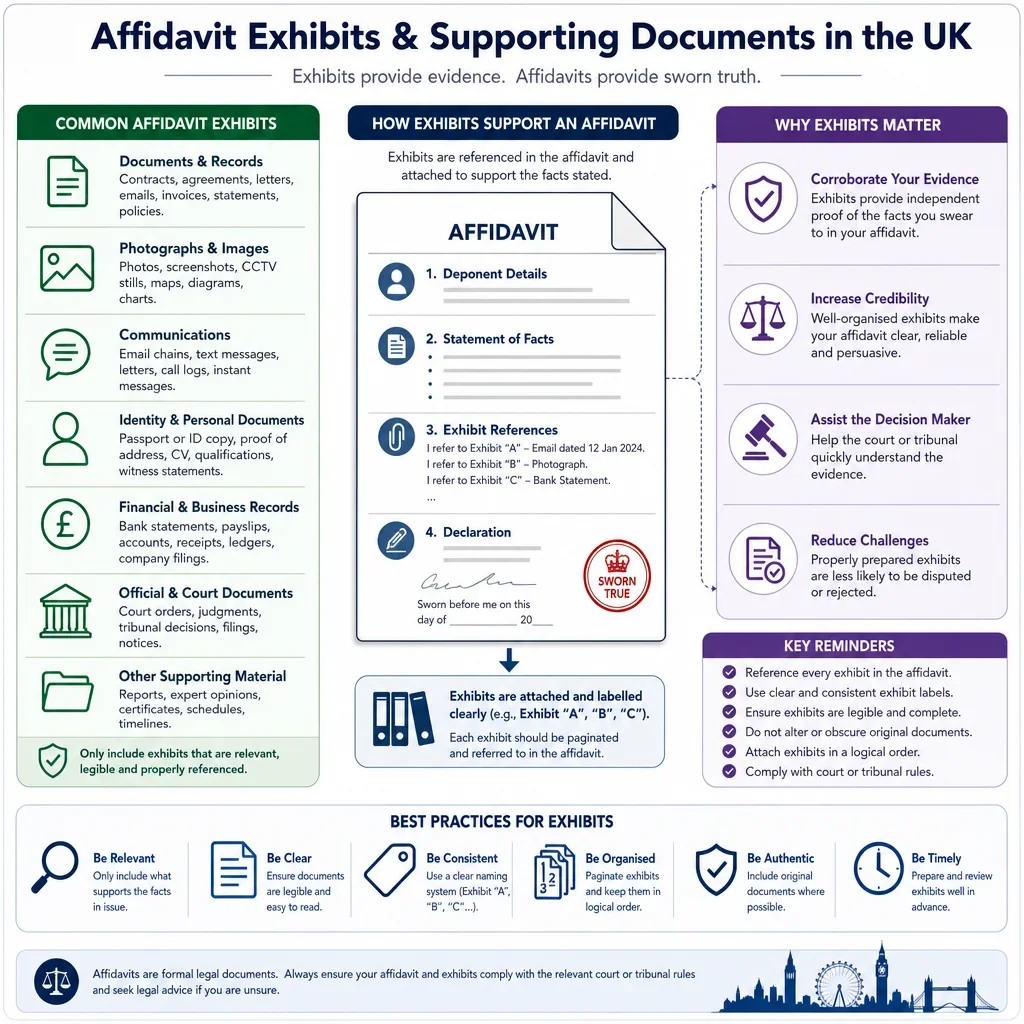
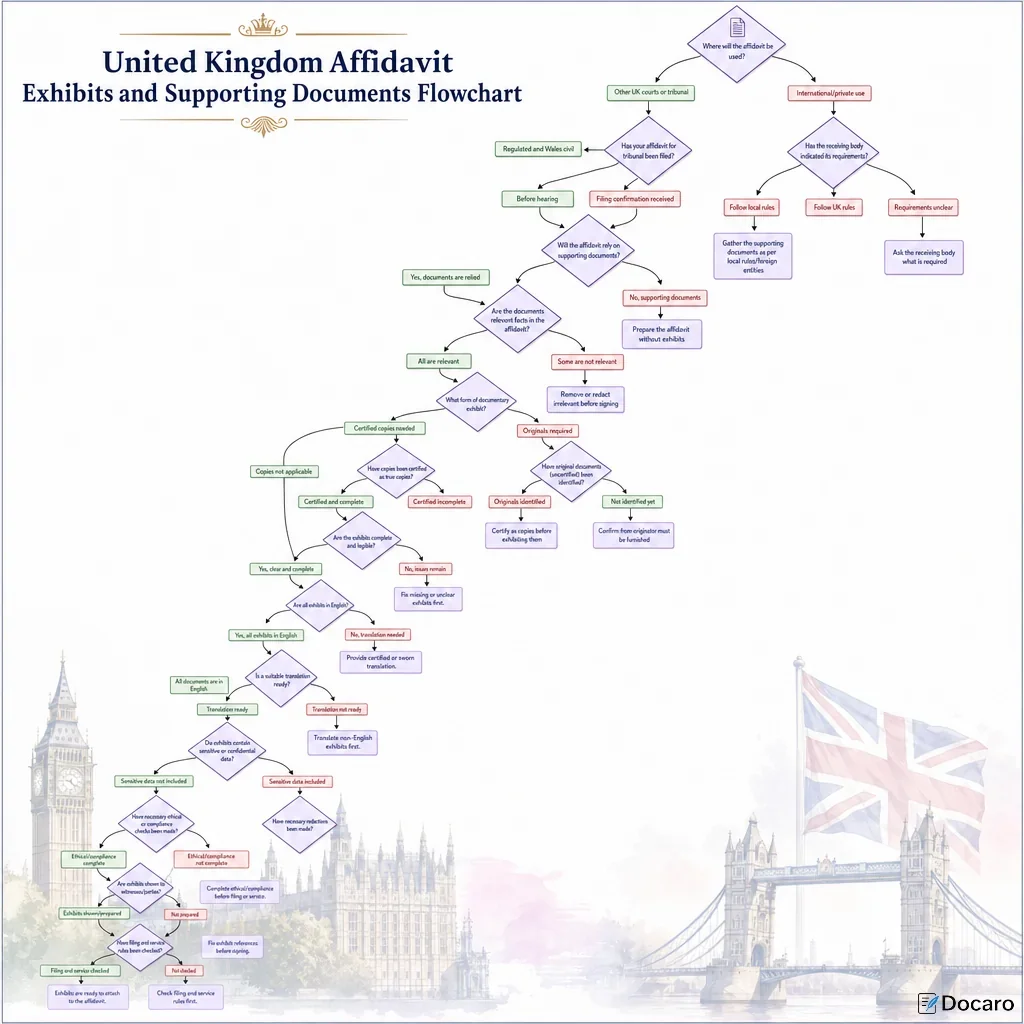
England and Wales | Used where documents, photographs or records must be sworn as exhibits to the affidavit. | Exhibit labels, pagination, certificate wording, deponent initials and consistency. | Incorrect exhibit marking can cause rejection or require re-swearing. | Either oath or affirmation |
Solicitor | ||||
England and Wales | Used where a deponent needs a quick local appointment to swear a completed affidavit. | ID, address, unsigned document, fee, exhibits and no conflict. | Solicitor may refuse if the affidavit is incomplete, unclear or creates a conflict. | Either oath or affirmation |
Commissioner for oaths | ||||
England and Wales | Used where the deponent cannot sign normally or needs the affidavit read over. | Identity, capacity, consent, reading-over, mark signature and special jurat. | Special jurat wording may be required to show understanding and method of signature. | Either oath or affirmation |
England and Wales | Used where an interpreter confirms translation or where the deponent needs interpretation. | Interpreter identity, language competence, independence, translated text and jurat wording. | Interpreter independence and accurate translation are critical for acceptance. | Either oath or affirmation |
Solicitor | ||||
England and Wales | Used to explain name differences, identity history or document discrepancies. | Photo ID, former names, supporting documents, dates and consistency across exhibits. | Some bodies require a deed poll, statutory declaration or specific evidence instead. | Either oath or affirmation |
England and Wales | Used to evidence relationship facts, marital status, separation history or document loss. | Identity, dates, certificates, exhibits, personal knowledge and consistency. | Foreign authorities or UK bodies may require certificates, apostilles or prescribed forms. | Either oath or affirmation |
Notary public | ||||
England and Wales | Used where an affidavit made in England must be accepted by a foreign authority. | Passport, authority, destination rules, notarial wording, seal and exhibits. | Foreign recipient may require notarisation and FCDO apostille rather than solicitor witnessing. | Either oath or affirmation |
Commissioner for oaths | ||||
England and Wales | Statutory basis for administering oaths and taking affidavits in England and Wales. | Authority to act, personal attendance, identity and oath or affirmation wording. | Does not remove the need to comply with court-specific affidavit rules. | Either oath or affirmation |
Solicitor | ||||
England and Wales | Practising solicitors commonly administer affidavits using commissioner-for-oaths powers. | Practising status, identity, no conflict, signature and exhibits. | A solicitor should not administer an affidavit where professional rules or conflict prevent it. | Either oath or affirmation |
Other authorised person | ||||
England and Wales | Used where the deponent objects to swearing an oath or has no religious belief. | Choice to affirm, identity, understanding and correct solemn affirmation wording. | The authorised witness must administer the affirmation in a legally recognised form. | Affirmation |
Commissioner for oaths | ||||
England and Wales | Used where the deponent chooses a religious oath rather than a solemn affirmation. | Identity, preferred oath form, holy book if needed and understanding of truth obligation. | An affirmation should be offered where the deponent does not wish to swear religiously. | Oath |
Northern Ireland | Legislative framework for commissioners and affidavit practice in Northern Ireland. | Authority, identity, oath or affirmation, jurat and exhibits. | Northern Ireland court rules and office practice should be checked for formality. | Either oath or affirmation |
Solicitor | ||||
England and Wales | Used where a tribunal direction specifically asks for affidavit evidence. | Identity, tribunal reference, direction wording, exhibits and deadline. | Many tribunals prefer witness statements or statements of truth follow the direction exactly. | Either oath or affirmation |
England and Wales | Used to explain attorney authority, identity, loss of documents or capacity-related facts. | Identity, authority, capacity, certified copies, exhibits and dates. | Office of the Public Guardian may require prescribed forms or certified copies instead. | Either oath or affirmation |
Other authorised person | ||||
England and Wales | Used where a detained person must swear or affirm evidence for proceedings. | Identity, prison access, legal visit arrangements, capacity and secure handling of exhibits. | Usually needs a visiting solicitor, commissioner, notary or court-authorised arrangement. | Either oath or affirmation |
Solicitor | ||||
England and Wales | Considered where the deponent cannot attend in person but an affidavit is still required. | Identity, live attendance, document control, signature method and court permission if needed. | Traditional affidavit practice expects personal administration confirm remote execution is accepted. | Either oath or affirmation |
Court officer | ||||
England and Wales | Used where HMCTS staff can administer an oath for a court-related affidavit. | Identity, case or claim number, unsigned affidavit, exhibits and court fee. | Not every court counter offers this check the relevant court office before attending. | Either oath or affirmation |
Solicitor | ||||
England and Wales | Used where specialist High Court rules or directions require sworn evidence. | Identity, authority, vessel or claim details, exhibits and specialist form requirements. | Specialist court guides may require precise wording or supporting documentation. | Either oath or affirmation |
Who Can Witness An Affidavit In The UK?
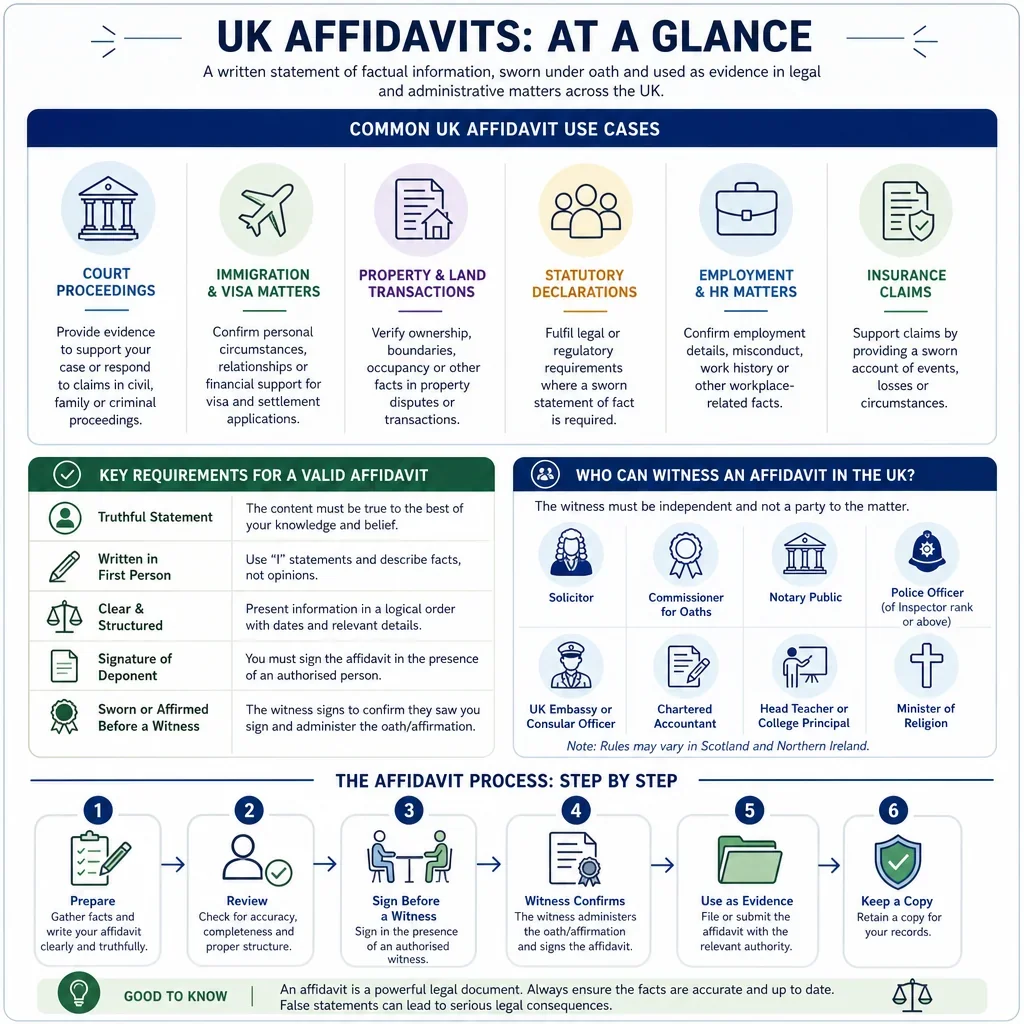
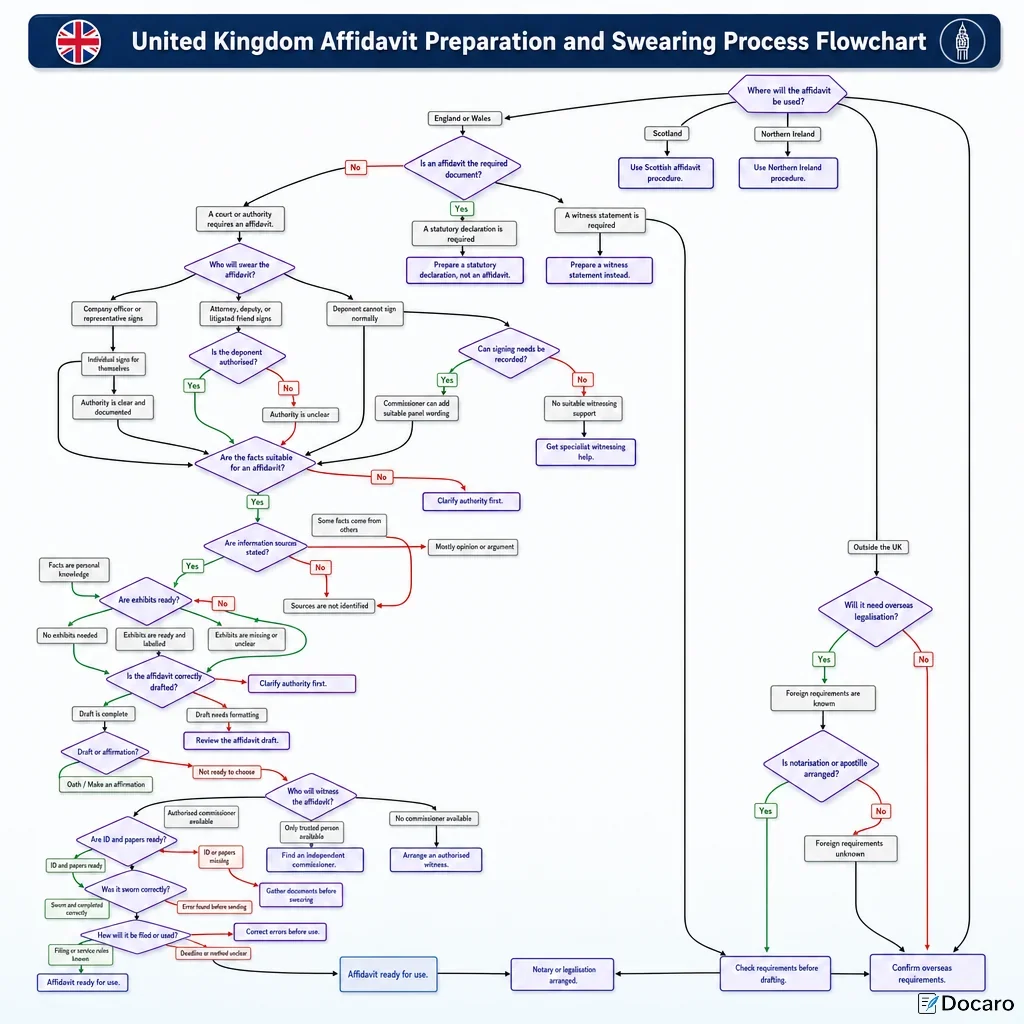
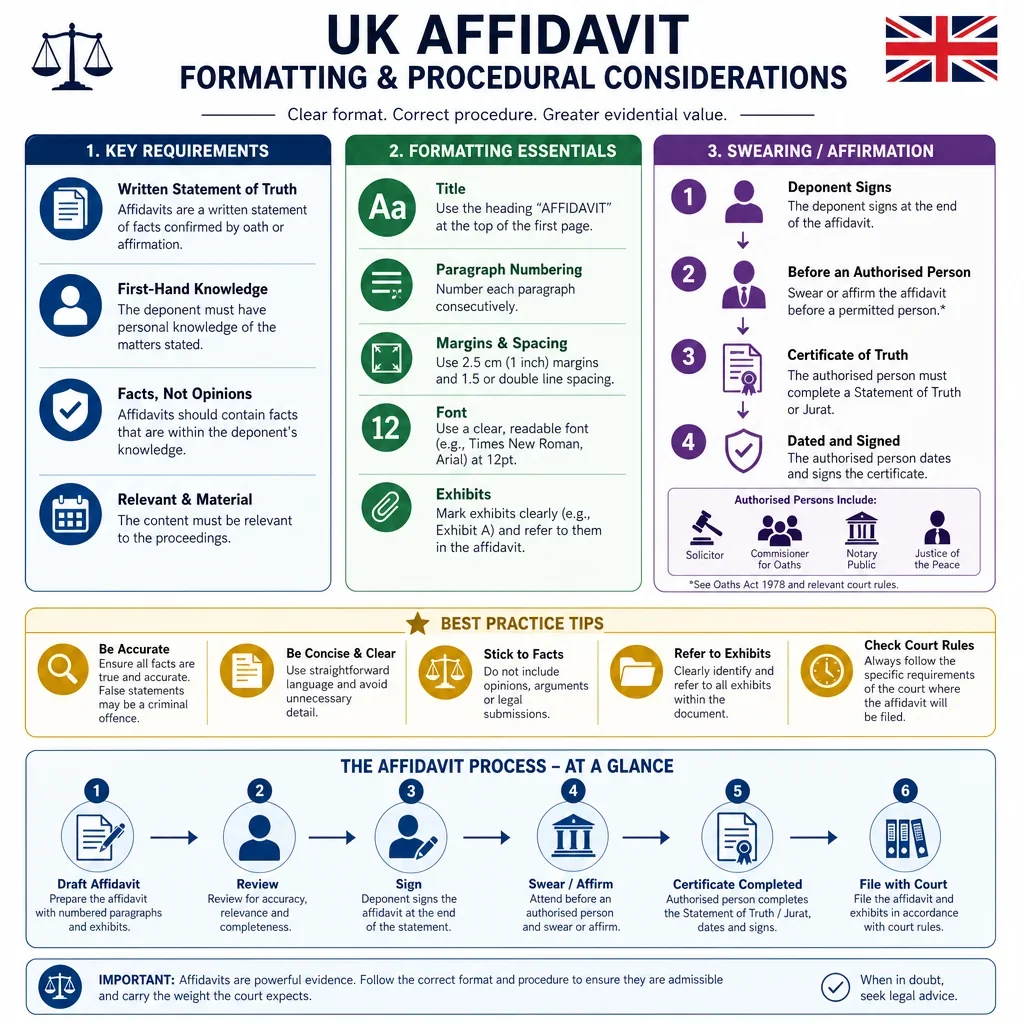
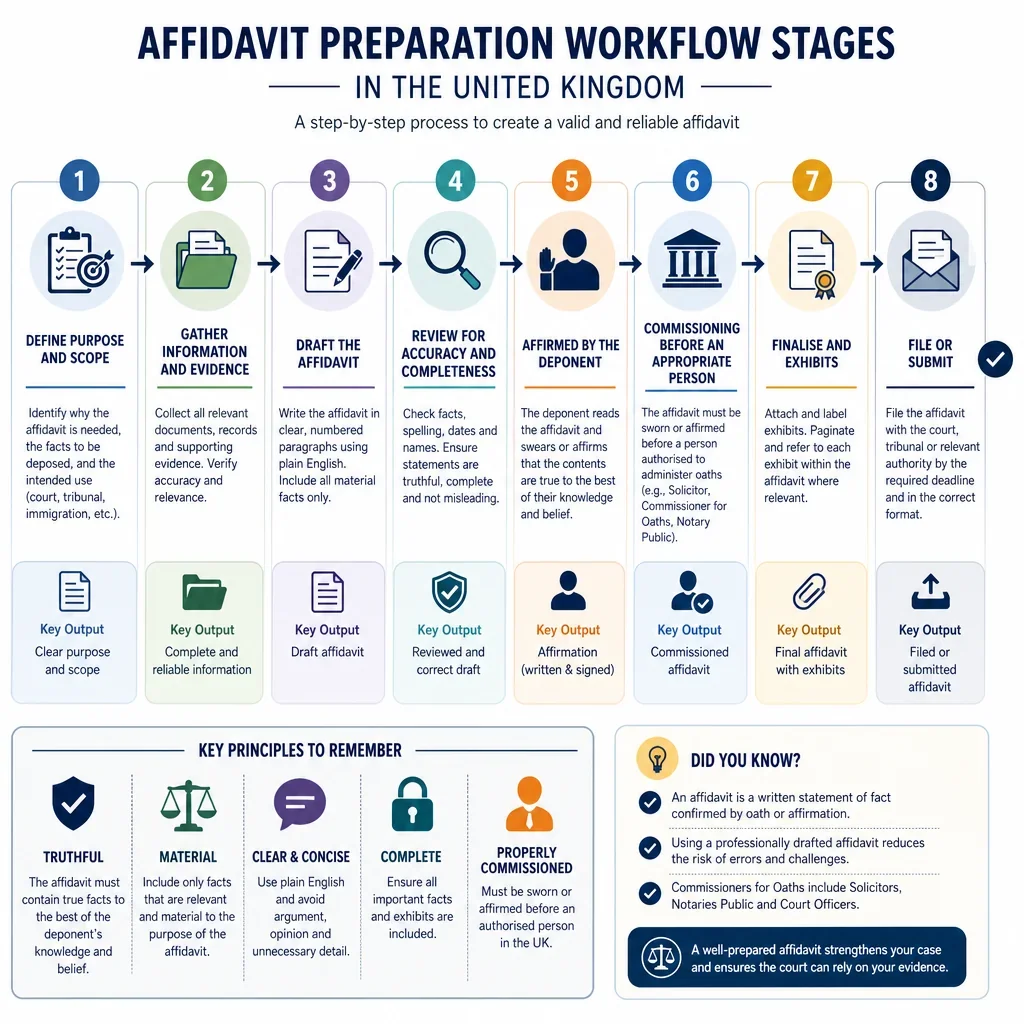
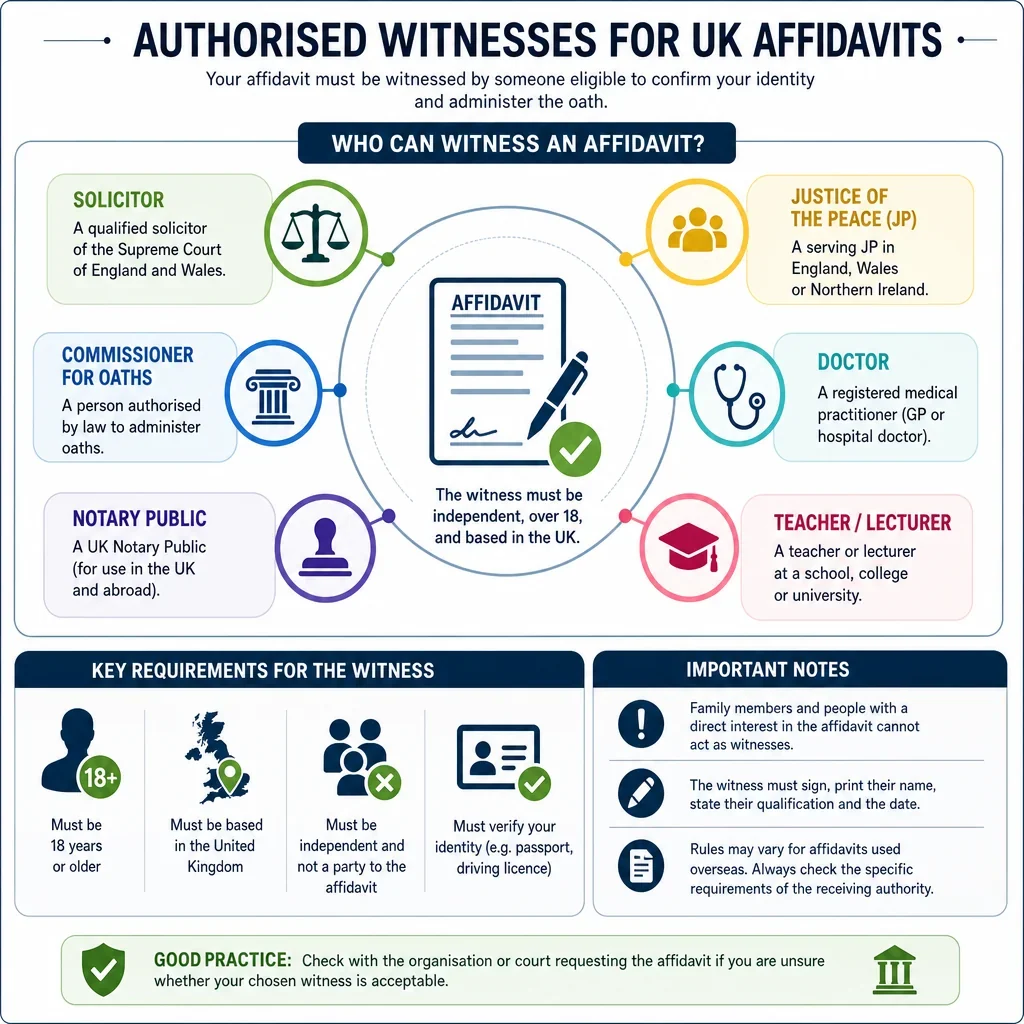
For most affidavits in England and Wales, the usual authorised witnesses are a commissioner for oaths, a practising solicitor exercising commissioner powers, a notary public, or an authorised court officer. In Scotland, affidavit practice is different and often uses a notary public, solicitor-notary, or the court process applicable to the case. In Northern Ireland, affidavits are commonly sworn before a commissioner for oaths, solicitor, notary public, or court officer.
What Should I Check Before Signing A UK Affidavit?
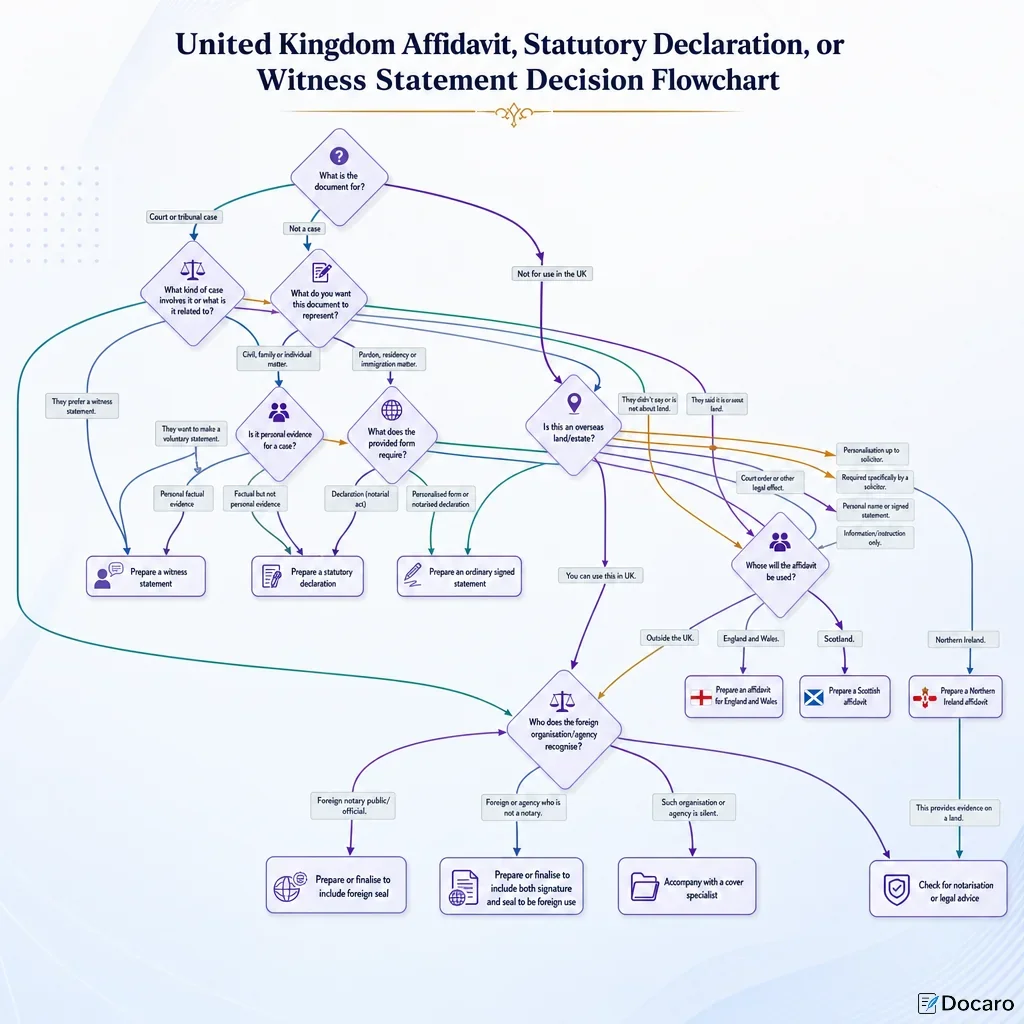
- Check the forum first: court rules, tribunal rules, probate rules, or Land Registry requirements may specify who must administer the oath or affirmation.
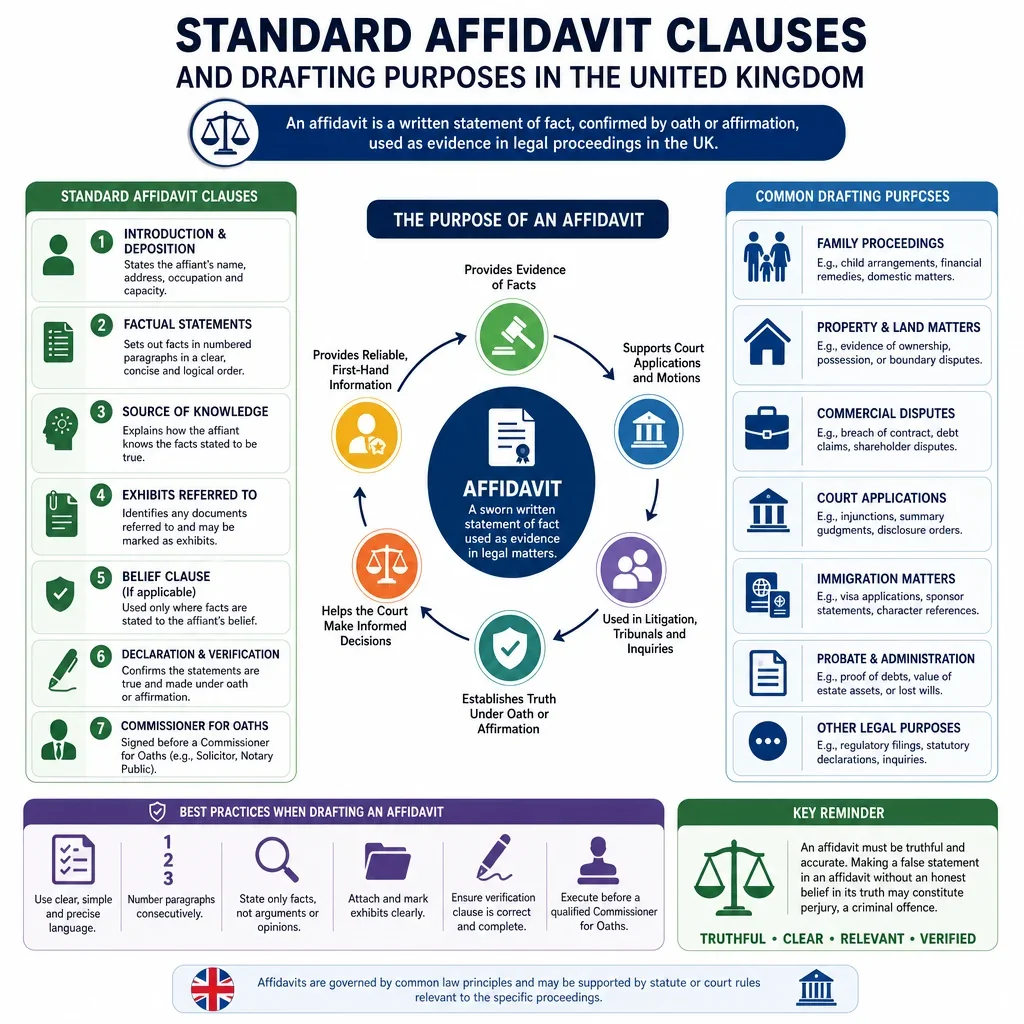
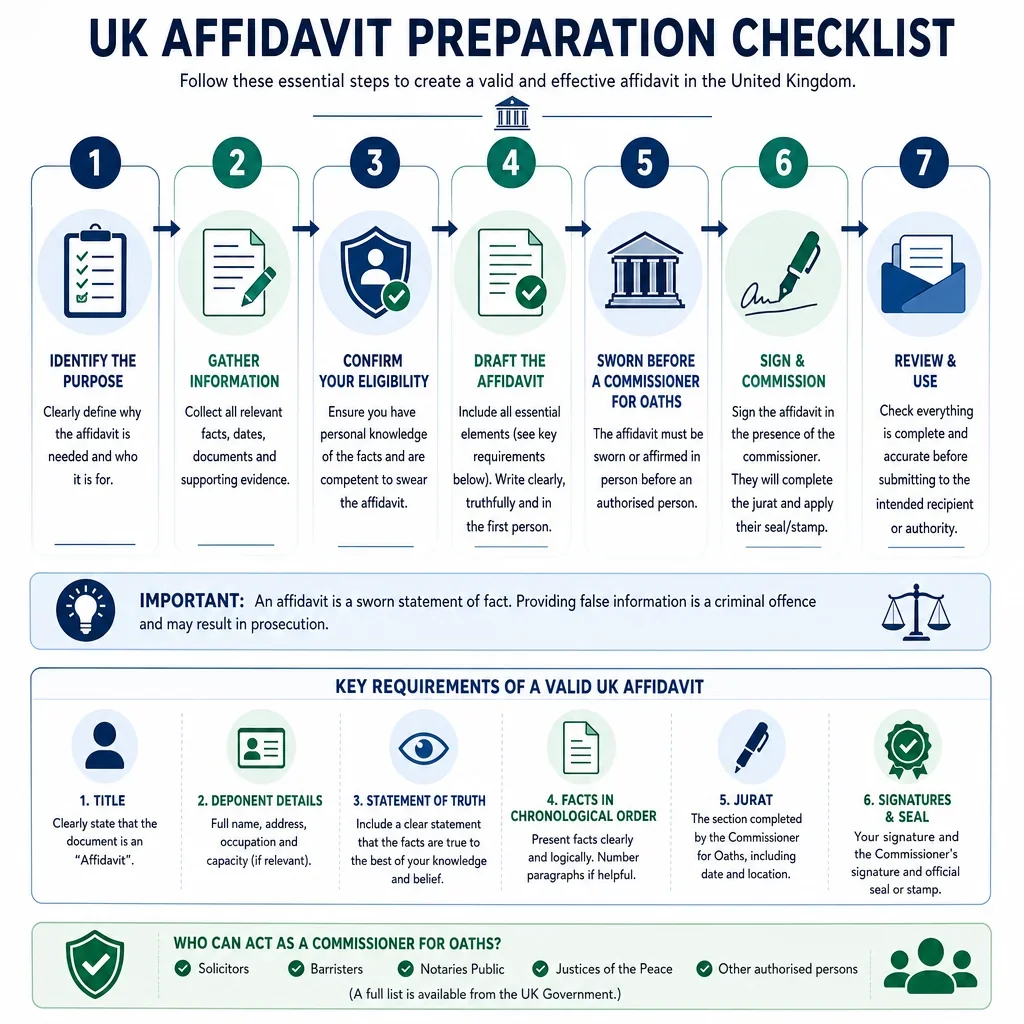
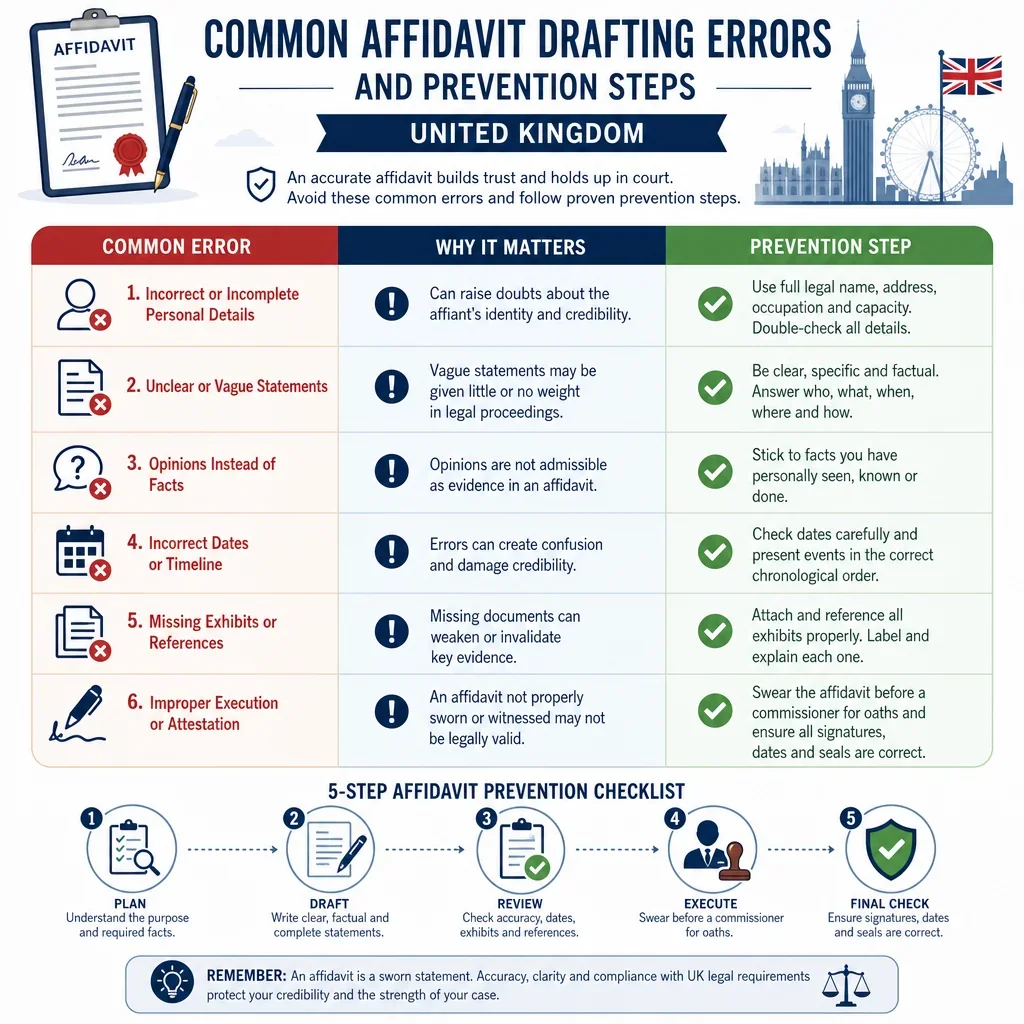
- Bring ID and the unsigned affidavit: the witness commonly checks identity, capacity, signature, exhibits and jurat wording before the affidavit is sworn or affirmed.
- Keep the witness independent: the authorised person should not normally be a party to the matter or have a conflict of interest.
- Use affirmation if preferred: an affirmation is usually available where the deponent objects to an oath or does not wish to swear religiously.
Can An Affidavit Be Sworn Overseas For UK Use?
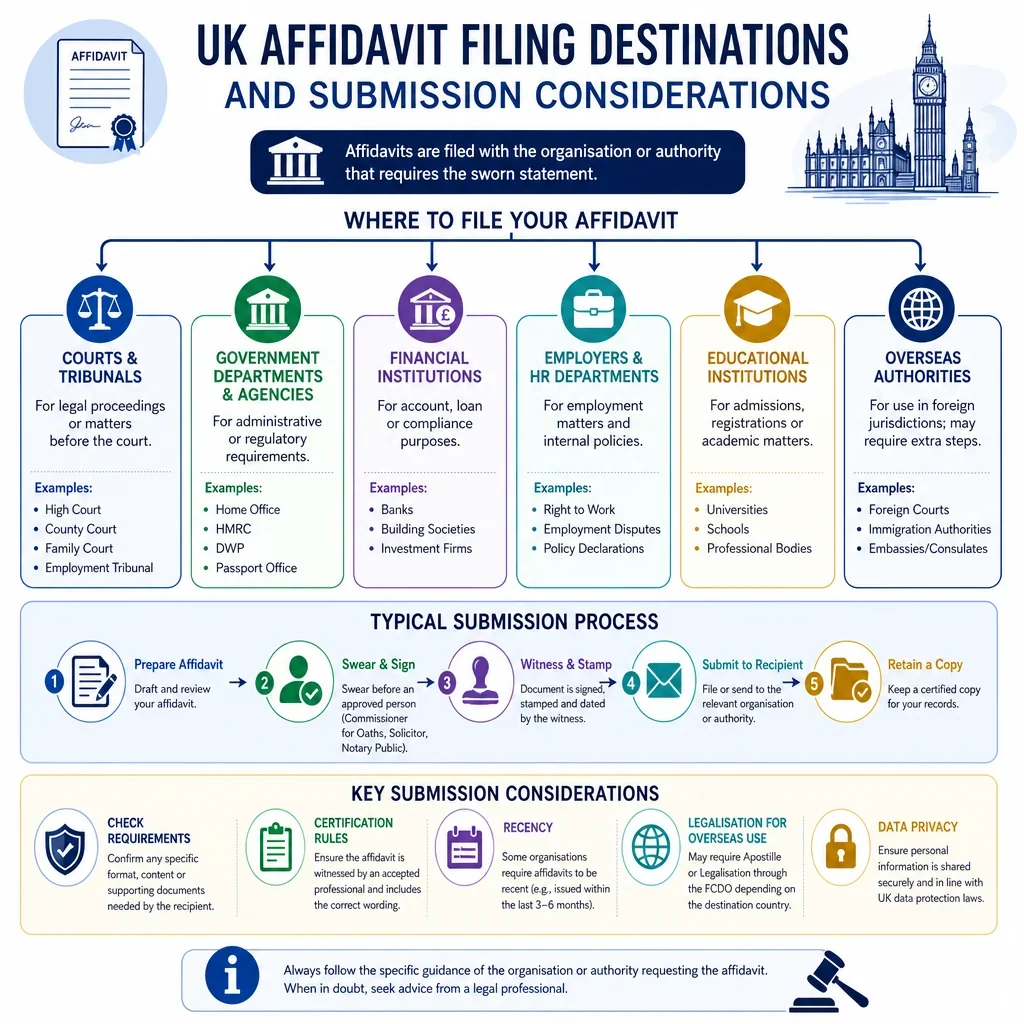
Yes, but the safest witness often depends on where the affidavit will be used. Overseas affidavits for UK purposes are commonly completed before a notary public, a British consular official where services are available, or another person authorised by local law. Some receiving bodies may require notarisation, legalisation or an apostille, so users should confirm the destination requirements before execution.
FAQs
You Might Also Be Interested In