Common UK Affidavit Use Cases And Requirements
Jurisdiction | Typical use case | Usual deponent | Key facts to include | Common exhibits | Complexity level |
|---|---|---|---|---|---|
Confirming identity | |||||
United Kingdom general | Used where a person must formally confirm their legal name, date of birth, and identity for an institution, overseas authority, or transaction. | The person whose identity is being confirmed. | Full name, previous names, date and place of birth, address, identification details, and reason confirmation is needed. | Passport, driving licence, birth certificate, deed poll, utility bill, bank statement. | Low |
Confirming residence | |||||
United Kingdom general | Used to prove where someone lives for banking, overseas administration, school, immigration, or local authority purposes. | Resident, landlord, homeowner, or household member. | Current address, dates of occupation, whether owner or tenant, household members, and basis of knowledge. | Tenancy agreement, council tax bill, utility bills, mortgage statement, bank statements. | Low |
Confirming change of name | |||||
United Kingdom general | Used to explain use of a new name, previous names, or inconsistencies in records where a deed poll or certificate is unavailable or insufficient. | Person who changed name. | Former name, current name, date of change, method of change, consistent use, and absence of fraud. | Deed poll, marriage certificate, divorce documents, passport, official correspondence in both names. | Low |
Confirming marital or civil partnership status | |||||
United Kingdom general | Used for overseas marriage, visa, inheritance, pension, or administrative purposes requiring sworn confirmation of relationship status. | Person whose status is being confirmed. | Current status, previous marriages or civil partnerships, divorce or dissolution dates, widowhood, and intended use. | Marriage certificate, civil partnership certificate, decree absolute, final order, death certificate, certificate of no impediment. | Medium |
Confirming relationship or family connection | |||||
United Kingdom general | Used for immigration, probate, pensions, overseas administration, or child-related applications where a family link must be proved. | Applicant, relative, partner, or family friend. | Names, dates of birth, nature of relationship, history of contact, shared responsibilities, and basis of knowledge. | Birth certificates, marriage certificates, photographs, messages, travel records, joint bills, school or medical records. | Medium |
Confirming cohabitation | |||||
United Kingdom general | Used to evidence that partners live together for immigration, housing, benefits, pension, or overseas legal purposes. | Partner, joint tenant, landlord, or household member. | Shared address, start date, living arrangements, financial links, joint responsibilities, and periods apart. | Joint tenancy, council tax bill, utility bills, bank statements, correspondence, photographs. | Medium |
Confirming birth facts | |||||
United Kingdom general | Used where birth registration records are missing, incomplete, inconsistent, or need explanation for overseas or administrative use. | Parent, older relative, midwife, or person with direct knowledge. | Child name, birth date, place of birth, parents, registration history, and reason records are unavailable or inconsistent. | Birth certificate, baptism record, hospital record, family register, passport, school records. | Medium |
Confirming death facts | |||||
United Kingdom general | Used where death details, identity, or circumstances need sworn confirmation for probate, insurance, pensions, or overseas matters. | Relative, executor, administrator, or person present at death. | Deceased identity, date and place of death, relationship, circumstances known, and official registration status. | Death certificate, coroner correspondence, hospital record, funeral documents, insurance letters. | Medium |
Confirming loss of a document | |||||
United Kingdom general | Used to replace or explain a missing certificate, policy, share certificate, title document, passport, or original agreement. | Document owner or custodian. | Document description, last known possession, search efforts, circumstances of loss, and undertaking if found. | Copy document, correspondence with issuer, police report, replacement application, proof of ownership. | Low |
Confirming one and the same person | |||||
United Kingdom general | Used where different spellings, initials, transliterations, or name order appear across official records. | Person affected or close relative with direct knowledge. | All name variants, documents showing each variant, explanation for discrepancy, and confirmation they identify the same person. | Passport, birth certificate, marriage certificate, immigration records, educational certificates, bank records. | Low |
Proving service of a statutory demand | |||||
England and Wales | Used in insolvency proceedings to evidence when, where, and how a statutory demand was served on a debtor. | Process server, creditor, solicitor, or authorised agent. | Demand details, debtor identity, service method, date, time, place, attempts, and documents served. | Statutory demand, attendance notes, photographs, postal receipts, tracking records, correspondence. | Medium |
Supporting a bankruptcy petition | |||||
England and Wales | Used to support creditor bankruptcy proceedings, including debt evidence and service evidence where required by insolvency procedure. | Creditor, solicitor, process server, or authorised representative. | Debt amount, basis of debt, statutory demand or judgment, service, non-payment, and debtor details. | Judgment, invoices, statutory demand, service affidavit, correspondence, account statements. | High |
Supporting a winding-up petition | |||||
England and Wales | Used by a creditor to support a petition to wind up a company that has failed to pay a debt. | Creditor, company officer, solicitor, or authorised agent. | Company details, debt, demand or judgment, payment default, petition service, and advertisement steps. | Companies House record, invoices, statutory demand, judgment, petition, service documents, Gazette notice. | High |
Supporting probate application facts | |||||
England and Wales | Used to clarify facts about a will, executor, estate, name discrepancy, death, or entitlement in a probate application. | Executor, administrator, beneficiary, witness, or solicitor. | Deceased details, will details, executor authority, estate issue, explanation of discrepancy, and documents relied on. | Will, codicil, death certificate, marriage certificate, renunciation, power reserved notice, estate correspondence. | Medium |
Proving due execution of a will | |||||
England and Wales | Used where the probate registry needs evidence that a will was properly signed and witnessed. | Attesting witness, solicitor, or person present at execution. | Date signed, testator identity, witnesses present, signatures, capacity observations, and execution circumstances. | Original will copy, attendance notes, witness details, correspondence, identity documents. | High |
Explaining condition of a will | |||||
England and Wales | Used where a will has marks, damage, staples removed, tears, obliterations, or other suspicious physical features. | Executor, solicitor, will custodian, or person finding the will. | How will was stored, who held it, when condition noticed, explanation for marks or damage, and chain of custody. | Will copy, photographs, storage records, solicitor file notes, correspondence with probate registry. | High |
Explaining a lost or missing will | |||||
England and Wales | Used where an original will cannot be found and a copy or earlier testamentary document is relied on. | Executor, solicitor, family member, or will custodian. | Last known location, searches made, copy authenticity, revocation issues, and deceased intentions if known. | Will copy, search correspondence, solicitor storage records, National Will Register search, witness statements. | High |
Confirming intestacy entitlement | |||||
England and Wales | Used where there is no will and family relationship or priority to administer the estate must be proved. | Proposed administrator or relative. | Family tree, spouse or civil partner status, children, deceased relatives, entitlement basis, and searches for a will. | Birth, marriage, death, adoption, and divorce certificates family tree will search results. | High |
Proving service of court documents | |||||
England and Wales | Used where a court needs sworn evidence of how claim forms, orders, applications, or notices were served. | Process server, solicitor, claimant, or authorised agent. | Document served, recipient, address, method, date, time, identification, attempts, and proof of posting or delivery. | Documents served, certificate of service, postal receipt, tracking data, photographs, attendance notes. | Medium |
Supporting alternative or substituted service | |||||
England and Wales | Used to ask the court to permit service by email, social media, alternative address, or another method when normal service is impracticable. | Solicitor, claimant, tracing agent, or process server. | Attempts at normal service, evidence recipient uses proposed channel, urgency, fairness, and proposed method. | Returned mail, email logs, tracing reports, screenshots, correspondence, attendance notes. | High |
Supporting a without notice injunction | |||||
England and Wales | Used where urgent interim relief is sought without notifying the other party, such as to prevent harm or asset dissipation. | Applicant, director, solicitor, investigator, or witness. | Urgency, cause of action, evidence of risk, attempts to notify, full and frank disclosure, and order sought. | Contracts, emails, photographs, bank records, investigator reports, draft order, correspondence. | High |
Supporting a freezing order application | |||||
England and Wales | Used to support urgent court relief preventing a respondent from disposing of assets before judgment or enforcement. | Applicant, company officer, solicitor, forensic accountant, or investigator. | Claim merits, asset details, dissipation risk, urgency, disclosure of weaknesses, undertakings, and proposed limits. | Bank records, company searches, property records, correspondence, transaction history, draft order. | High |
Supporting a search order application | |||||
England and Wales | Used for exceptional applications allowing preservation of evidence at premises where destruction or concealment is feared. | Applicant, solicitor, investigator, IT expert, or company officer. | Strong case, likely evidence location, real risk of destruction, urgency, proportionality, safeguards, and disclosure duties. | Emails, logs, contracts, photographs, investigator reports, IT evidence, draft order. | High |
Supporting default judgment or enforcement facts | |||||
England and Wales | Used where sworn evidence is needed on service, non-response, debt, or entitlement before judgment or enforcement steps. | Claimant, solicitor, credit controller, or process server. | Claim details, service, time expired, no acknowledgment or defence, amount due, interest, and costs. | Claim form, particulars, service proof, statement of account, invoices, correspondence. | Medium |
Supporting a charging order application | |||||
England and Wales | Used to support enforcement of a judgment debt by securing it against land, securities, or other assets. | Judgment creditor, solicitor, or enforcement officer. | Judgment details, amount outstanding, debtor asset details, ownership information, other creditors, and service steps. | Judgment, Land Registry title, account statement, correspondence, Companies House or share records. | Medium |
Supporting attachment of earnings evidence | |||||
England and Wales | Used to evidence a judgment debt and debtor employment details for deductions from wages. | Judgment creditor, solicitor, or credit control officer. | Judgment, outstanding balance, known employer, debtor details, payment history, and enforcement history. | Judgment, payment schedule, correspondence, employer information, tracing report. | Medium |
Supporting a non-molestation order application | |||||
England and Wales | Used in urgent family proceedings to provide sworn evidence of harassment, threats, violence, or coercive behaviour. | Applicant, support worker, police officer, or witness. | Relationship, incidents with dates, risk to applicant or children, police involvement, urgency, and protection sought. | Police reports, medical records, messages, photographs, witness statements, refuge or support letters. | High |
Supporting an occupation order application | |||||
England and Wales | Used to seek an order regulating who may live in or enter the family home after abuse or relationship breakdown. | Applicant, housing officer, support worker, or witness. | Home rights, ownership or tenancy, relationship, incidents, housing needs, children, hardship, and safety risks. | Tenancy or title documents, police reports, medical records, photographs, school evidence, support letters. | High |
Proving service in divorce or dissolution proceedings | |||||
England and Wales | Used where the court needs evidence that a respondent received divorce, dissolution, or related family documents. | Process server, applicant, solicitor, or third-party server. | Documents served, respondent identity, address, method, date, time, conversation, and proof of delivery. | Application, notice, acknowledgement, postal tracking, process server notes, photographs. | Medium |
Supporting urgent child arrangements evidence | |||||
England and Wales | Used to support urgent applications about where a child lives, contact, prohibited steps, or specific issues. | Parent, guardian, carer, social worker, or witness. | Child details, parental responsibility, current arrangements, welfare concerns, incidents, proposed order, and urgency. | Birth certificate, school records, messages, medical records, police reports, safeguarding correspondence. | High |
Confirming parental responsibility facts | |||||
England and Wales | Used to explain parentage, registration, agreements, orders, or caregiving authority for schools, travel, courts, or overseas authorities. | Parent, guardian, carer, or solicitor. | Child details, parents, birth registration, agreements or orders, living arrangements, and decision-making role. | Birth certificate, parental responsibility agreement, court order, school letters, medical correspondence. | Medium |
Confirming child travel consent | |||||
United Kingdom general | Used where a parent or guardian needs sworn consent or authority for a child to travel abroad. | Parent with parental responsibility or legal guardian. | Child identity, travelling adult, destination, dates, consent, parental responsibility, and contact details. | Child passport, birth certificate, consent letter, court order, travel itinerary, parent ID. | Medium |
Supporting spouse or partner visa evidence | |||||
United Kingdom general | Used to provide sworn relationship, cohabitation, financial, or accommodation facts for a UK family visa application. | Applicant, sponsor, relative, landlord, or friend. | Relationship history, marriage or partnership, cohabitation, communication, visits, finances, accommodation, and future plans. | Marriage certificate, tenancy agreement, bank statements, payslips, photographs, messages, travel records. | High |
Supporting dependent child immigration evidence | |||||
United Kingdom general | Used to evidence parentage, care arrangements, sole responsibility, dependency, or consent for a child visa application. | Parent, sponsor, guardian, teacher, doctor, or relative. | Child identity, parentage, caregiving history, financial support, schooling, contact, consent, and welfare arrangements. | Birth certificate, custody order, school records, remittance receipts, medical records, consent letters. | High |
Confirming good character or conduct | |||||
United Kingdom general | Used to support immigration, naturalisation, adoption, or professional applications where personal conduct is relevant. | Employer, professional referee, community leader, teacher, or long-term acquaintance. | Relationship to applicant, length known, conduct observed, employment or community role, and any limitations of knowledge. | Reference letters, employment records, DBS certificate, qualification records, community evidence. | Medium |
Explaining immigration document discrepancies | |||||
United Kingdom general | Used to explain inconsistent names, dates, spellings, translations, addresses, or relationship details in immigration records. | Applicant, sponsor, translator, relative, or record custodian. | Discrepancy identified, correct facts, reason for error, documents affected, and steps taken to correct records. | Passports, BRP or eVisa evidence, certificates, translations, application forms, Home Office correspondence. | High |
Supporting asylum or protection evidence | |||||
United Kingdom general | Used to provide sworn factual evidence from a witness, family member, community member, or expert about risk or past events. | Applicant, witness, family member, NGO worker, or expert. | Events witnessed, dates, locations, actors, harm feared, relationship to applicant, source of knowledge, and documentary limits. | Identity documents, messages, photographs, medical reports, country evidence, police or court documents. | High |
Affidavit for overseas use | |||||
United Kingdom general | Used when a foreign court, embassy, land registry, bank, university, or public authority requires sworn evidence from the UK. | Applicant, company officer, parent, attorney, or authorised representative. | Facts required by foreign authority, deponent identity, capacity, exhibits, destination country, and legalisation requirement. | Passport, certificates, power of attorney, corporate documents, translations, foreign authority instructions. | Medium |
Supporting legalisation or apostille | |||||
United Kingdom general | Used where a notarised affidavit must be legalised by the UK Legalisation Office for recognition abroad. | Document holder or authorised representative. | Document identity, intended country, authority requesting it, deponent identity, exhibits, and notarial details. | Notarised affidavit, passport, foreign request, translations, certificates. | Medium |
Confirming company officer authority | |||||
United Kingdom general | Used to prove that a director, secretary, partner, or authorised signatory may act for an organisation. | Director, company secretary, partner, trustee, or authorised officer. | Company details, position held, authority source, decision or resolution, transaction, and confirmation records are current. | Companies House record, board minutes, resolution, articles, power of attorney, ID. | Medium |
Confirming company trading status | |||||
United Kingdom general | Used to explain whether a company is dormant, trading, solvent, active, or has ceased trading for banks, courts, or overseas authorities. | Director, accountant, company secretary, or insolvency practitioner. | Company number, trading history, current status, accounts, assets, liabilities, and basis of knowledge. | Companies House filings, accounts, bank statements, HMRC correspondence, board minutes. | Medium |
Confirming loss of share certificate | |||||
United Kingdom general | Used to request replacement share certificates or update company records where an original certificate is missing. | Shareholder, executor, trustee, or authorised corporate representative. | Company, shareholder, certificate number if known, shares held, loss circumstances, searches, and indemnity undertaking. | Register entry, dividend vouchers, broker statements, correspondence with registrar, ID. | Low |
Confirming land ownership or title facts | |||||
England and Wales | Used in conveyancing, boundary, adverse possession, unregistered land, or overseas property administration where sworn land facts are needed. | Owner, occupier, solicitor, surveyor, executor, or neighbour. | Property address, title number, occupation history, ownership basis, boundaries, rights, disputes, and documents held. | Title register, title plan, conveyance, photographs, plans, correspondence, statutory declarations. | High |
Supporting adverse possession evidence | |||||
England and Wales | Used to evidence long possession of land when applying to register title based on adverse possession. | Possessor, predecessor, neighbour, surveyor, or land agent. | Land identified, possession period, exclusive control, intention to possess, fencing, use, interruptions, and owner contact. | Plans, photographs, utility bills, maintenance receipts, witness evidence, correspondence, Land Registry forms. | High |
Supporting boundary dispute evidence | |||||
England and Wales | Used to set out historical occupation, boundary features, maintenance, agreements, and disputed encroachments. | Owner, neighbour, surveyor, previous owner, or occupier. | Property details, boundary feature, history, maintenance, changes, conversations, surveys, and dispute timeline. | Title plans, conveyances, photographs, surveyor reports, aerial images, correspondence, receipts. | High |
Confirming occupancy for mortgage or lender | |||||
United Kingdom general | Used where a lender needs sworn confirmation of who occupies property and whether any occupier claims rights. | Borrower, owner, adult occupier, or solicitor. | Property address, occupiers, relationship, ownership or tenancy, contribution to purchase, consent, and vacating arrangements. | Mortgage offer, title register, tenancy agreement, occupier consent, ID, utility bills. | Medium |
Supporting tenancy deposit facts | |||||
England and Wales | Used in court or adjudication to evidence deposit payment, protection, deductions, damage, rent arrears, or communications. | Tenant, landlord, agent, inventory clerk, or guarantor. | Tenancy dates, deposit amount, protection scheme, prescribed information, condition, deductions, and dispute timeline. | Tenancy agreement, deposit certificate, prescribed information, inventory, photos, rent statement, messages. | Medium |
Supporting landlord possession evidence | |||||
England and Wales | Used to evidence rent arrears, notice service, tenancy terms, anti-social behaviour, or other possession grounds. | Landlord, agent, housing officer, neighbour, or process server. | Tenancy, notice, service method, arrears or breach, incidents, correspondence, and possession order sought. | Tenancy agreement, Section 8 or 21 notice, rent schedule, deposit evidence, gas safety certificate, EPC, correspondence. | High |
Confirming a debt or payment history | |||||
United Kingdom general | Used in debt recovery, settlement, probate, insolvency, or overseas proceedings to prove sums owed or paid. | Creditor, debtor, bookkeeper, executor, or finance officer. | Parties, loan or invoice basis, amount advanced, repayments, balance due, interest, and supporting records. | Loan agreement, invoices, statements, receipts, messages, account ledger, demand letters. | Medium |
Confirming employment facts | |||||
United Kingdom general | Used to prove job title, income, service dates, work duties, termination, or workplace events for visas, litigation, or lenders. | Employee, employer, HR officer, manager, payroll officer, or colleague. | Employer, role, start and end dates, pay, hours, duties, status, events, and records checked. | Contract, payslips, P60, payroll records, HR letters, rota, emails, dismissal letter. | Medium |
Confirming income or financial means | |||||
United Kingdom general | Used for visa sponsorship, court fee remission, maintenance, lending, benefits, or overseas administrative requirements. | Applicant, sponsor, employer, accountant, or financial controller. | Income sources, employment, savings, liabilities, dependants, support provided, and calculation period. | Payslips, bank statements, tax returns, accounts, benefits letters, pension statements. | Medium |
Supporting court fee remission facts | |||||
England and Wales | Used to clarify income, savings, benefits, dependants, or exceptional circumstances for help with court fees. | Applicant or financial supporter. | Income, capital, benefits, household, dependants, recent changes, and documents unavailable. | Benefit letters, payslips, bank statements, rent statement, tax records, court fee form. | Low |
Supporting bail surety evidence | |||||
England and Wales | Used to evidence a proposed surety's identity, finances, relationship to defendant, and ability to ensure court attendance. | Proposed surety, family member, employer, or solicitor. | Relationship, address, income or savings, assets, criminal history if relevant, supervision plan, and surety amount. | ID, proof of address, bank statements, payslips, property documents, character references. | High |
Supporting fresh evidence in criminal appeal | |||||
England and Wales | Used to place new witness evidence, expert material, or procedural facts before an appeal court. | Witness, appellant, solicitor, expert, or investigator. | Evidence content, why not used earlier, relevance, reliability, source, timing, and effect on conviction or sentence. | Trial papers, witness account, expert report, transcripts, disclosure correspondence, exhibits. | High |
Supporting Scottish court factual evidence | |||||
Scotland | Used where Scottish court procedure requires or permits sworn written evidence, such as family, civil, insolvency, or commissary matters. | Party, witness, solicitor, officer of court, or authorised representative. | Court reference, deponent capacity, facts within knowledge, chronology, documents referred to, and order or remedy sought. | Court forms, productions, correspondence, certificates, service evidence, photographs. | Medium |
Supporting Scottish confirmation estate facts | |||||
Scotland | Used to clarify executry facts when applying for confirmation in Scotland, especially identity, relationship, estate, or will issues. | Executor, solicitor, beneficiary, or relative. | Deceased details, domicile, executor title, will or intestacy basis, estate items, family facts, and discrepancies. | Will, death certificate, inventory, certificates, correspondence, family tree. | High |
Confirming identity or name in Scotland | |||||
Scotland | Used to explain identity, name changes, or record discrepancies for Scottish registries, courts, banks, or overseas authorities. | Person affected, parent, solicitor, or relative. | Current and former names, birth details, Scottish records, reason for discrepancy, and consistent use. | Birth extract, marriage certificate, change of name record, passport, correspondence. | Low |
Proving service in Northern Ireland proceedings | |||||
Northern Ireland | Used to prove service of civil, family, insolvency, or enforcement documents in Northern Ireland courts. | Process server, solicitor, party, or authorised agent. | Court matter, documents served, recipient, place, method, date, time, and identification. | Documents served, postal receipts, attendance notes, photographs, email logs, court notices. | Medium |
Supporting Northern Ireland probate facts | |||||
Northern Ireland | Used to clarify will, executor, entitlement, death, identity, or estate facts for a Northern Ireland probate application. | Executor, administrator, beneficiary, witness, or solicitor. | Deceased details, will or intestacy basis, executor authority, relationship facts, estate issue, and discrepancy explanation. | Will, death certificate, certificates, estate papers, family tree, correspondence with Probate Office. | Medium |
Supporting domestic abuse protection evidence | |||||
Northern Ireland | Used to evidence threats, harassment, violence, coercive control, or housing risks in Northern Ireland family protection proceedings. | Applicant, support worker, police officer, medical professional, or witness. | Relationship, incidents, dates, children affected, police or medical involvement, risk, urgency, and protection requested. | Police reports, medical records, messages, photos, witness evidence, refuge or support letters. | High |
Confirming power of attorney execution or capacity facts | |||||
United Kingdom general | Used to explain signing, witnessing, capacity, attorney authority, or document authenticity for institutions or overseas use. | Donor, attorney, certificate provider, witness, solicitor, or doctor. | Document type, signing date, parties, witnessing, capacity observations, registration status, and attorney authority. | LPA or power of attorney, OPG registration, medical letter, ID, execution notes, correspondence. | High |
Supporting Court of Protection evidence | |||||
England and Wales | Used to support applications about capacity, deputyship, property and affairs, health, welfare, or best interests decisions. | Applicant, deputy, attorney, family member, social worker, doctor, or solicitor. | Person concerned, capacity issue, decision needed, best interests factors, risks, finances, family views, and safeguards. | Capacity assessment, care plan, financial records, medical reports, LPA, deputyship order, correspondence. | High |
Supporting adoption application facts | |||||
England and Wales | Used to evidence parental consent, identity, placement history, relationship, welfare, or overseas adoption facts. | Adopter, parent, guardian, social worker, agency officer, or witness. | Child identity, adopters, placement history, parental consent, welfare factors, agency involvement, and court orders. | Birth certificate, placement order, consent forms, agency reports, court orders, identity documents. | High |
Supporting surrogacy parental order evidence | |||||
United Kingdom general | Used to evidence eligibility, consent, conception arrangements, domicile, timing, payments, and child welfare in parental order proceedings. | Intended parent, surrogate, partner, clinic representative, or solicitor. | Child birth, applicants, surrogate consent, genetic link, home arrangements, domicile, payments, timing, and welfare. | Birth certificate, clinic records, surrogacy agreement, consent forms, payment schedule, passports, medical letters. | High |
Supporting gender recognition or identity evidence | |||||
United Kingdom general | Used to confirm identity history, name use, living in acquired gender, relationship status, or document discrepancies. | Applicant, spouse or civil partner, doctor, solicitor, or long-term witness. | Identity, name history, dates living in acquired gender, documents changed, relationship status, and evidence gaps. | Deed poll, passport, driving licence, medical reports, bills, payslips, marriage or civil partnership certificate. | High |
Confirming student status | |||||
United Kingdom general | Used for overseas authorities, visas, scholarships, banks, landlords, or family support where enrolment or attendance must be sworn. | Student, university officer, parent, or sponsor. | Institution, course, enrolment dates, attendance, funding, address, and purpose of affidavit. | Student letter, CAS, timetable, fee receipt, transcript, passport, tenancy agreement. | Low |
Confirming educational qualification or lost certificate | |||||
United Kingdom general | Used when a certificate, transcript, or academic record is lost or requires sworn confirmation for employment, visas, or overseas use. | Graduate, student, registrar, teacher, or exam officer. | Institution, qualification, dates, award result, certificate issue, loss or discrepancy, and verification steps. | Transcript, replacement certificate, university letter, exam results, ID, correspondence with institution. | Low |
Confirming address history | |||||
United Kingdom general | Used for immigration, employment screening, finance, overseas administration, or security checks needing verified residence history. | Applicant, landlord, family member, employer, or letting agent. | Addresses, dates lived there, tenure type, household members, landlord details, gaps, and basis of knowledge. | Tenancy agreements, council tax bills, utility bills, bank statements, electoral register evidence, letters. | Low |
Providing witness evidence of events | |||||
England and Wales | Used where sworn evidence is required instead of or alongside a witness statement in civil or specialist proceedings. | Witness with direct knowledge. | Who, what, when, where, how known, documents seen, conversations, observations, and limits of recollection. | Emails, contracts, messages, photographs, notes, records, maps, reports. | Medium |
Providing expert evidence by affidavit | |||||
England and Wales | Used where expert opinion must be sworn for court, arbitration, overseas proceedings, or urgent interim applications. | Qualified expert. | Qualifications, instructions, materials reviewed, assumptions, methodology, opinion, limitations, and expert declaration. | CV, report, source documents, photographs, test results, calculations, literature, instructions. | High |
Supporting arbitration evidence | |||||
England and Wales | Used to submit sworn factual or procedural evidence in arbitration or arbitration-related court applications. | Party representative, witness, expert, solicitor, or company officer. | Arbitration agreement, dispute background, procedural step, evidence relied on, relief sought, and exhibits. | Contract, arbitration clause, notices, pleadings, orders, correspondence, witness documents. | High |
Confirming medical or capacity facts | |||||
United Kingdom general | Used to evidence health, disability, mental capacity, diagnosis, treatment, or ability to manage affairs for legal or administrative use. | Doctor, consultant, psychologist, carer, family member, or applicant. | Patient identity, diagnosis, capacity issue, assessment date, treatment, prognosis, functional impact, and records reviewed. | Medical report, capacity assessment, care records, appointment letters, prescriptions, hospital notes. | High |
Supporting insurance claim facts | |||||
United Kingdom general | Used to swear facts about loss, theft, damage, accident, ownership, value, or claim history for an insurer. | Policyholder, witness, loss adjuster, company officer, or repairer. | Policy details, incident, date, location, cause, items affected, ownership, value, mitigation, and prior claims. | Policy, police report, photographs, receipts, repair quotes, medical reports, correspondence. | Medium |
Confirming vehicle ownership or use | |||||
United Kingdom general | Used to explain ownership, keeper status, use, sale, loss of documents, or overseas registration of a vehicle. | Owner, registered keeper, buyer, seller, fleet manager, or insurer. | Vehicle registration, VIN, purchase or sale, keeper details, use, documents lost, and current location. | V5C, purchase invoice, insurance certificate, MOT, finance settlement, photographs, correspondence. | Low |
Supporting passport application facts | |||||
United Kingdom general | Used to explain identity, name, parentage, loss, non-receipt, or document discrepancies in a passport application. | Applicant, parent, countersignatory, relative, or solicitor. | Applicant identity, passport history, name changes, parent details, loss or discrepancy, and documents submitted. | Birth certificate, old passport, deed poll, marriage certificate, police report, correspondence with HM Passport Office. | Medium |
Confirming source of funds or wealth | |||||
United Kingdom general | Used where a bank, solicitor, exchange, or overseas authority requires sworn explanation of money origin. | Account holder, buyer, donor, company officer, accountant, or executor. | Funds amount, origin, transaction chain, dates, accounts, purpose, beneficial owner, and supporting records. | Bank statements, sale contracts, payslips, tax returns, inheritance documents, gift letter, company accounts. | High |
Confirming a financial gift | |||||
United Kingdom general | Used for mortgage, visa, tax, probate, banking, or overseas purposes where money or property was gifted. | Donor, recipient, parent, relative, or solicitor. | Donor and recipient, relationship, amount or asset, date, purpose, no repayment obligation, and source of funds. | Bank statements, transfer receipt, gift letter, ID, property documents, tax or inheritance records. | Medium |
Confirming translation accuracy | |||||
United Kingdom general | Used where a translated certificate, contract, court document, or immigration document must be sworn as accurate. | Translator or translation agency representative. | Translator qualifications, languages, document translated, translation date, accuracy statement, and any limitations. | Original document, translation, translator credentials, agency certification, ID. | Medium |
Authenticating digital evidence | |||||
United Kingdom general | Used to verify screenshots, emails, messages, metadata, online posts, or electronic records for court or administrative proceedings. | Account holder, IT specialist, investigator, solicitor, or witness. | Platform, account, access, capture method, date and time, metadata, chain of custody, and authenticity checks. | Screenshots, email headers, metadata logs, device photos, export files, forensic report. | High |
Evidencing online harassment or threats | |||||
United Kingdom general | Used to support police reports, civil injunctions, family orders, employment disputes, or platform complaints about online abuse. | Victim, witness, IT investigator, employer, or safeguarding officer. | Posts or messages, dates, accounts, identity evidence, impact, prior contact, reports made, and risk. | Screenshots, URLs, message exports, police reference, platform reports, witness accounts, device records. | High |
When Is An Affidavit Still Commonly Needed In The UK?
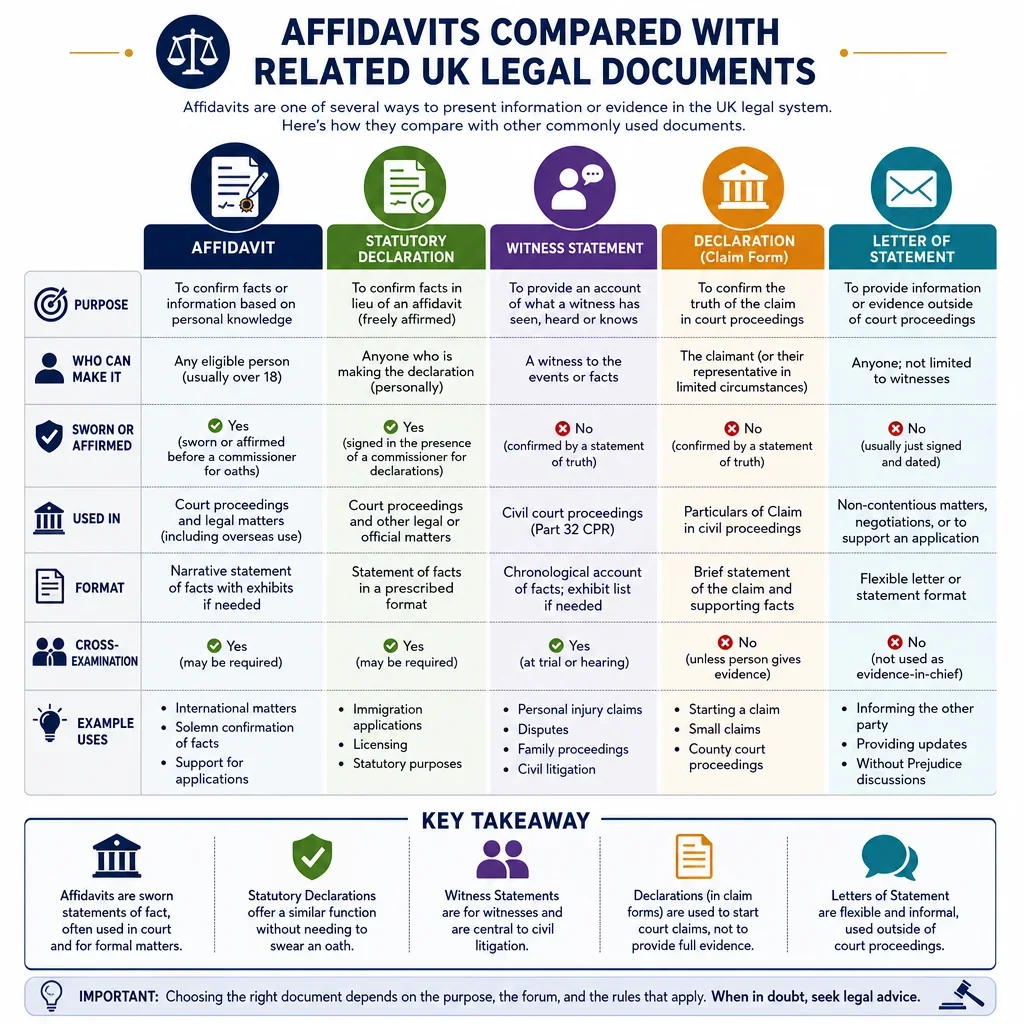
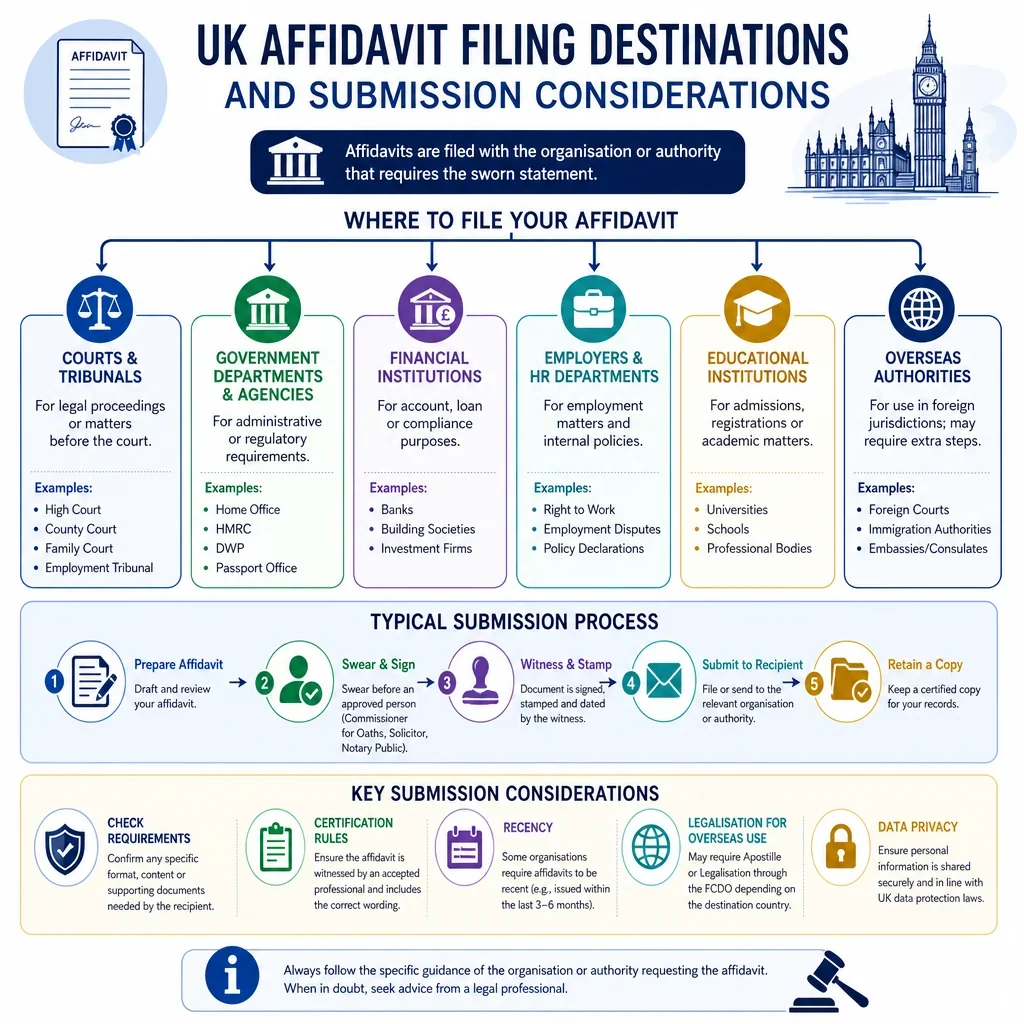
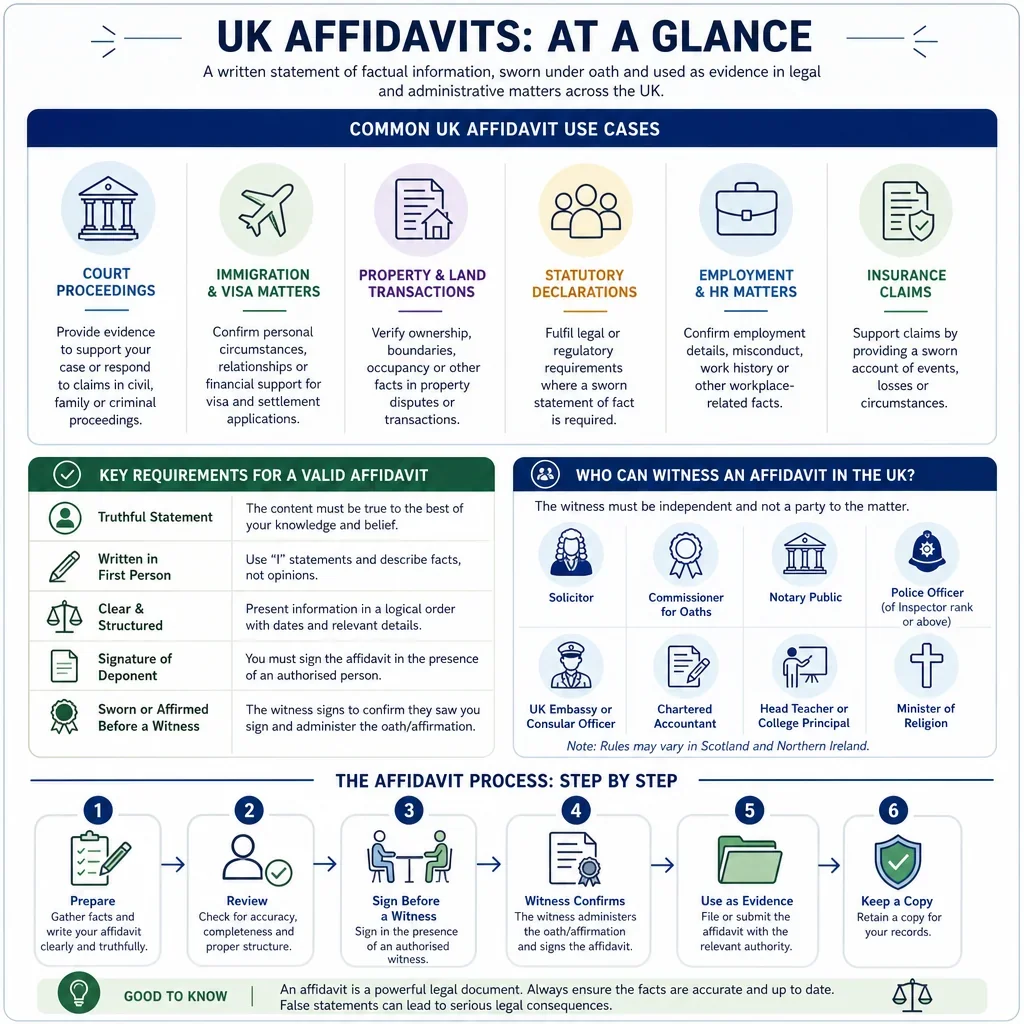
Affidavits are most commonly used where a court, overseas authority, probate process, land transaction, immigration matter, or financial institution needs sworn evidence rather than an informal letter. In England and Wales, many civil court witness statements now use a statement of truth, but affidavits remain important for specific procedures such as probate, insolvency, certain injunctions, service issues, and international or notarised evidence.
What Should A UK Affidavit Usually Contain?
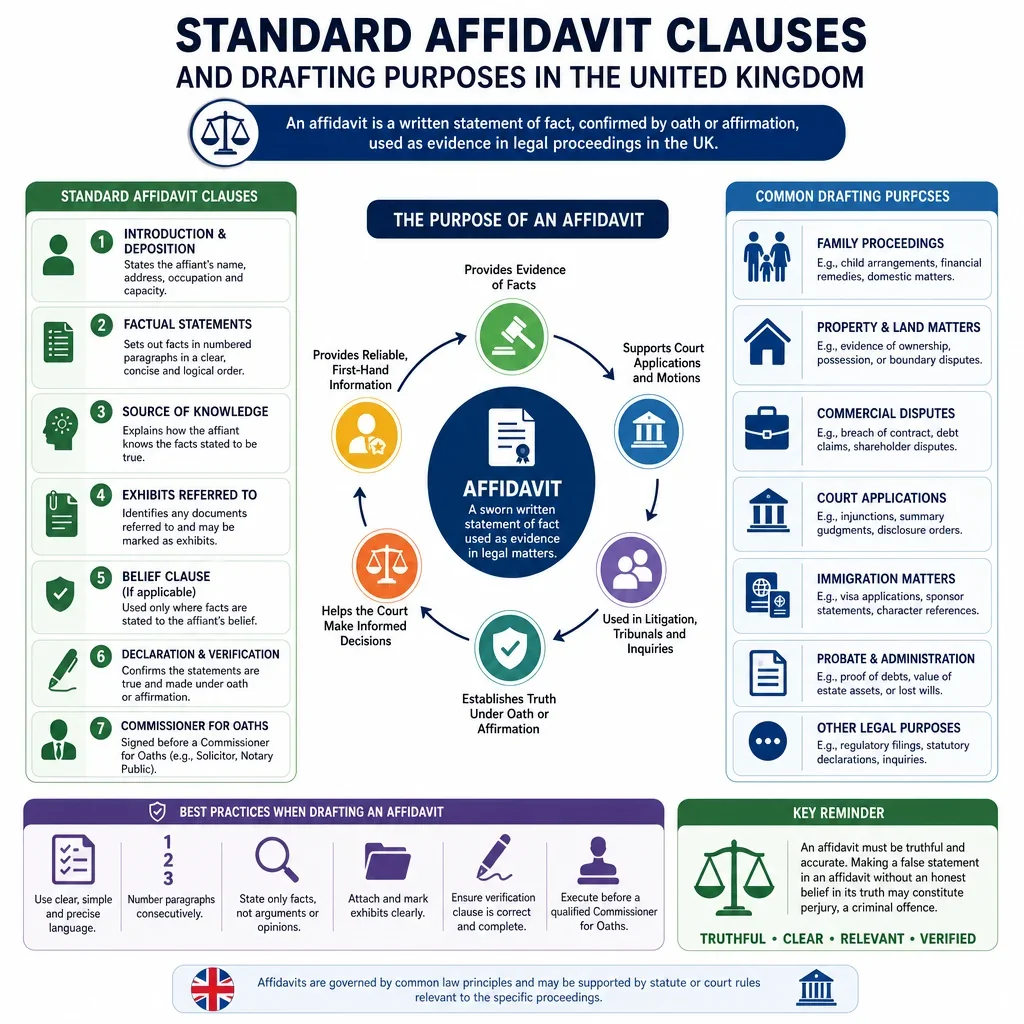
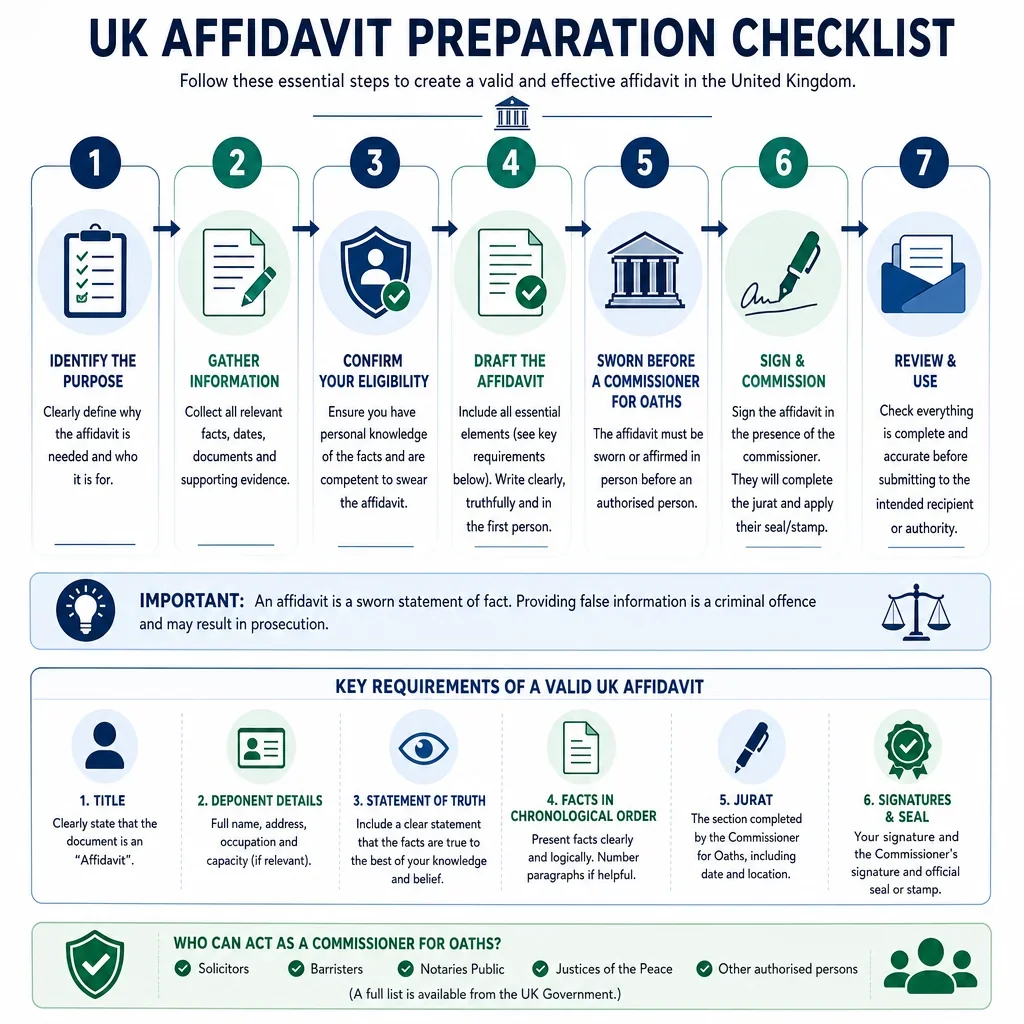
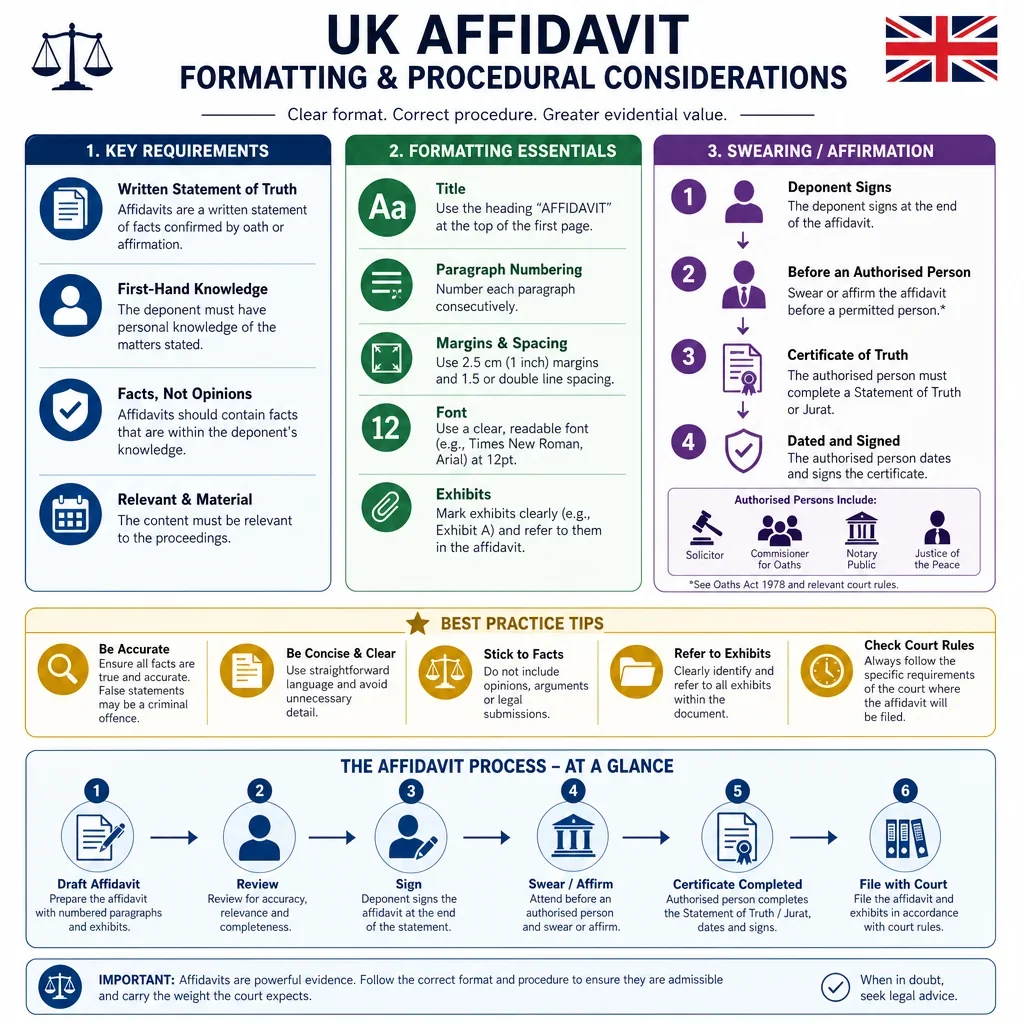
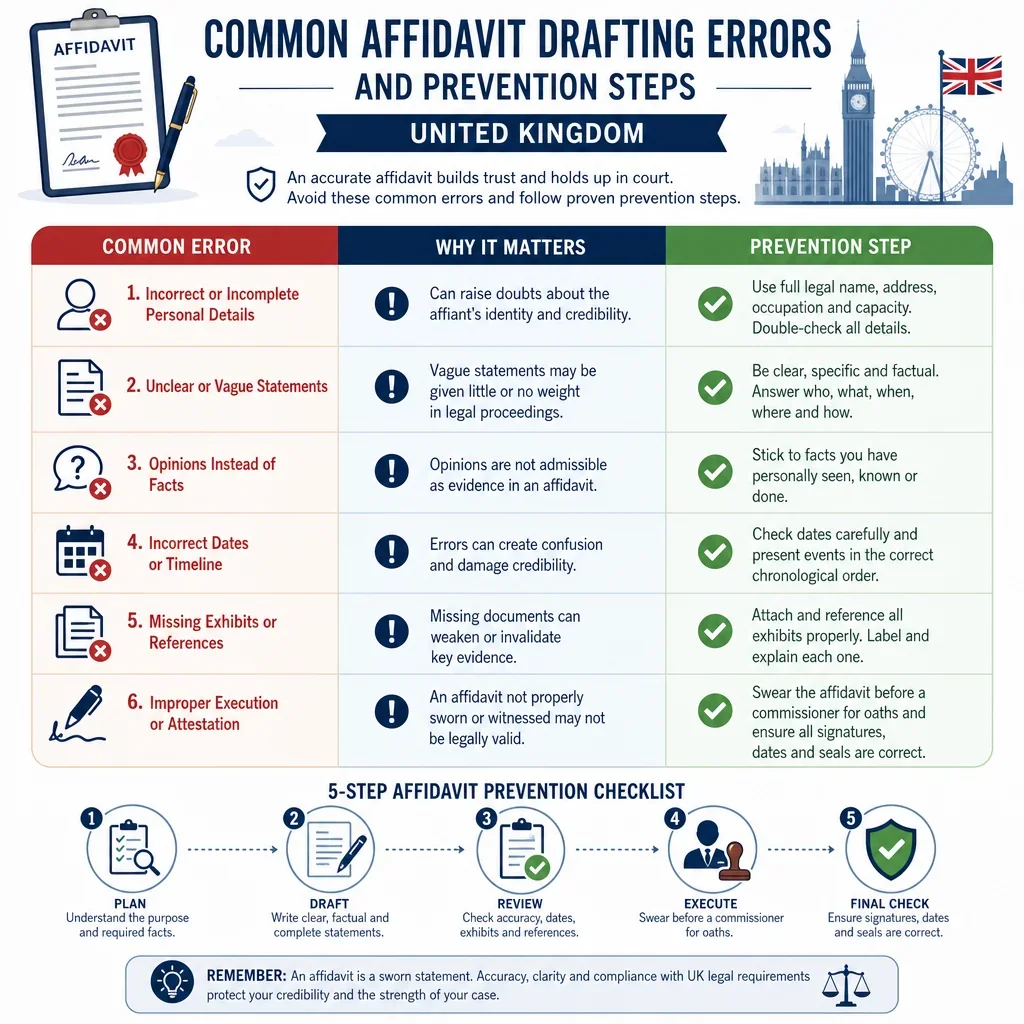
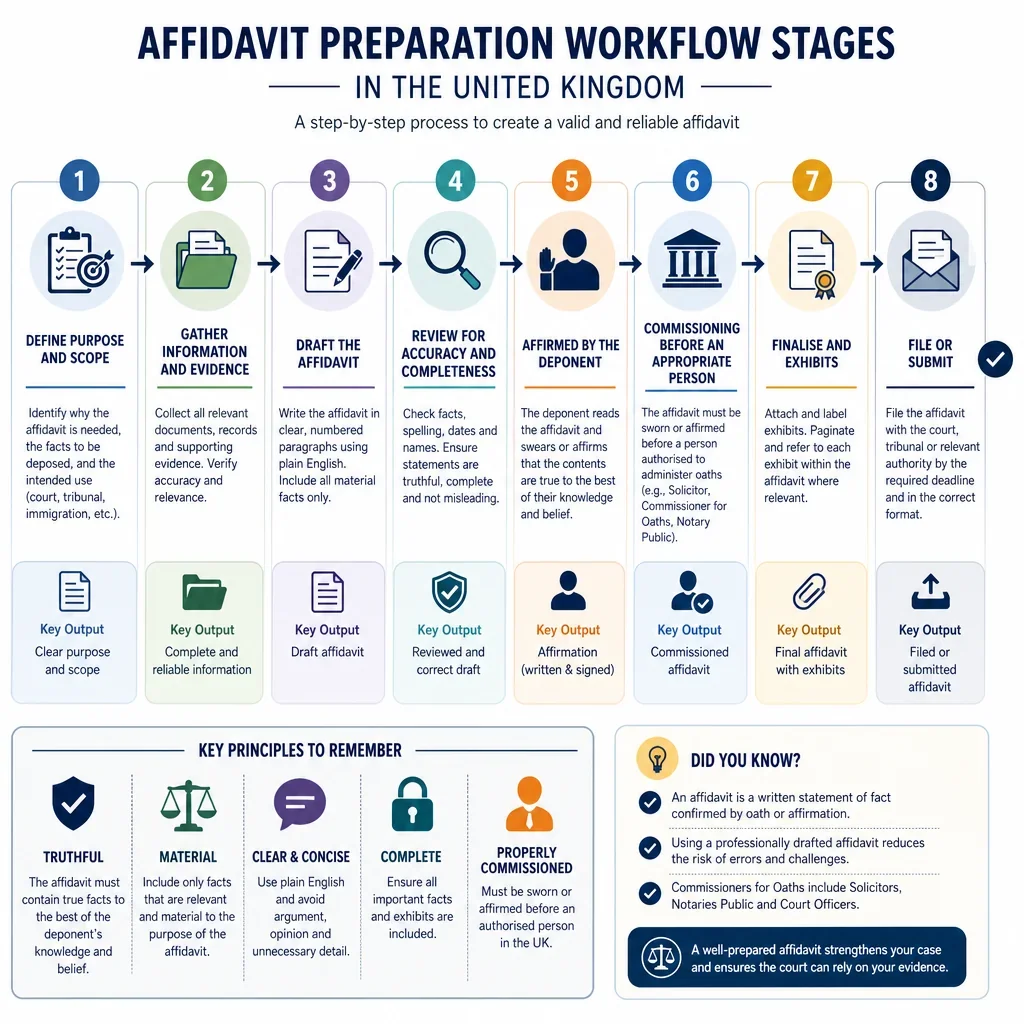
- Precise facts: the deponent should state only facts within their own knowledge, in a clear chronological order, especially for service, identity, residence, relationship, loss, or court compliance affidavits.
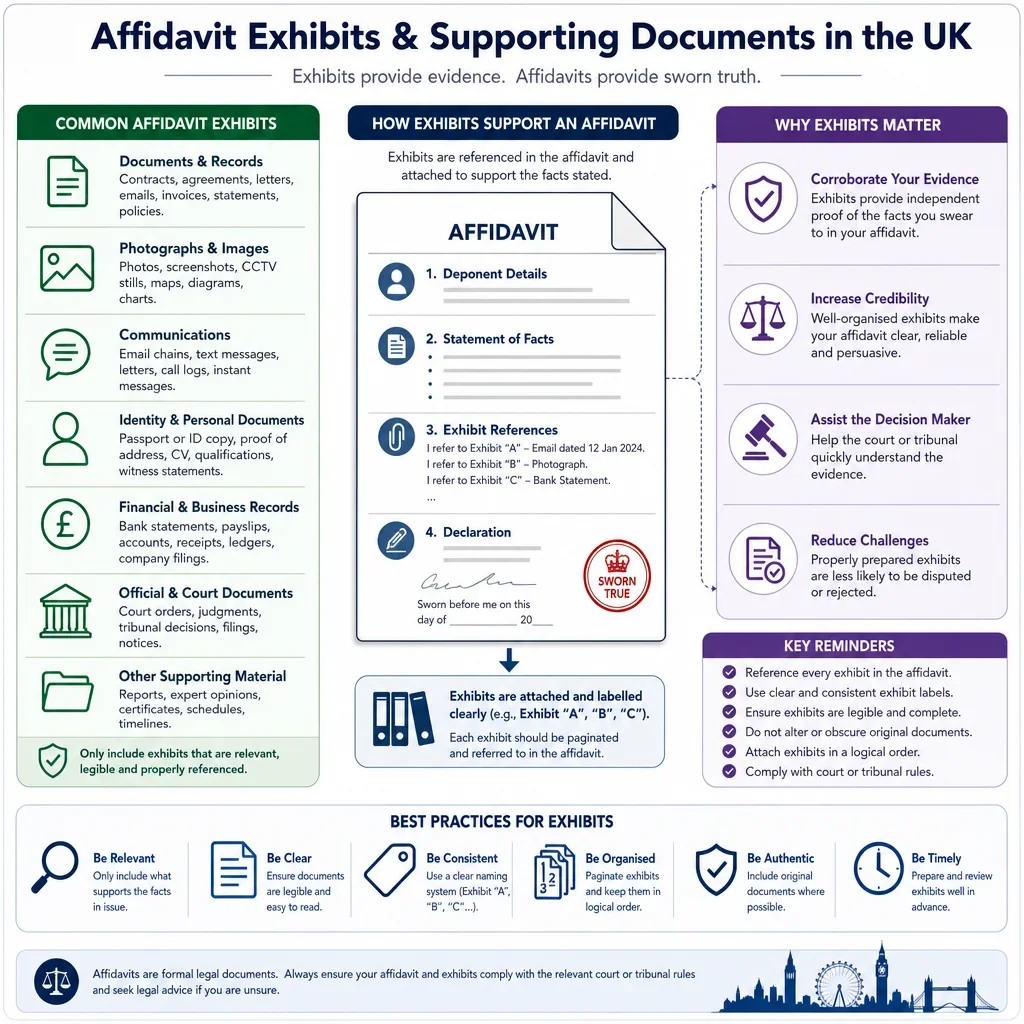
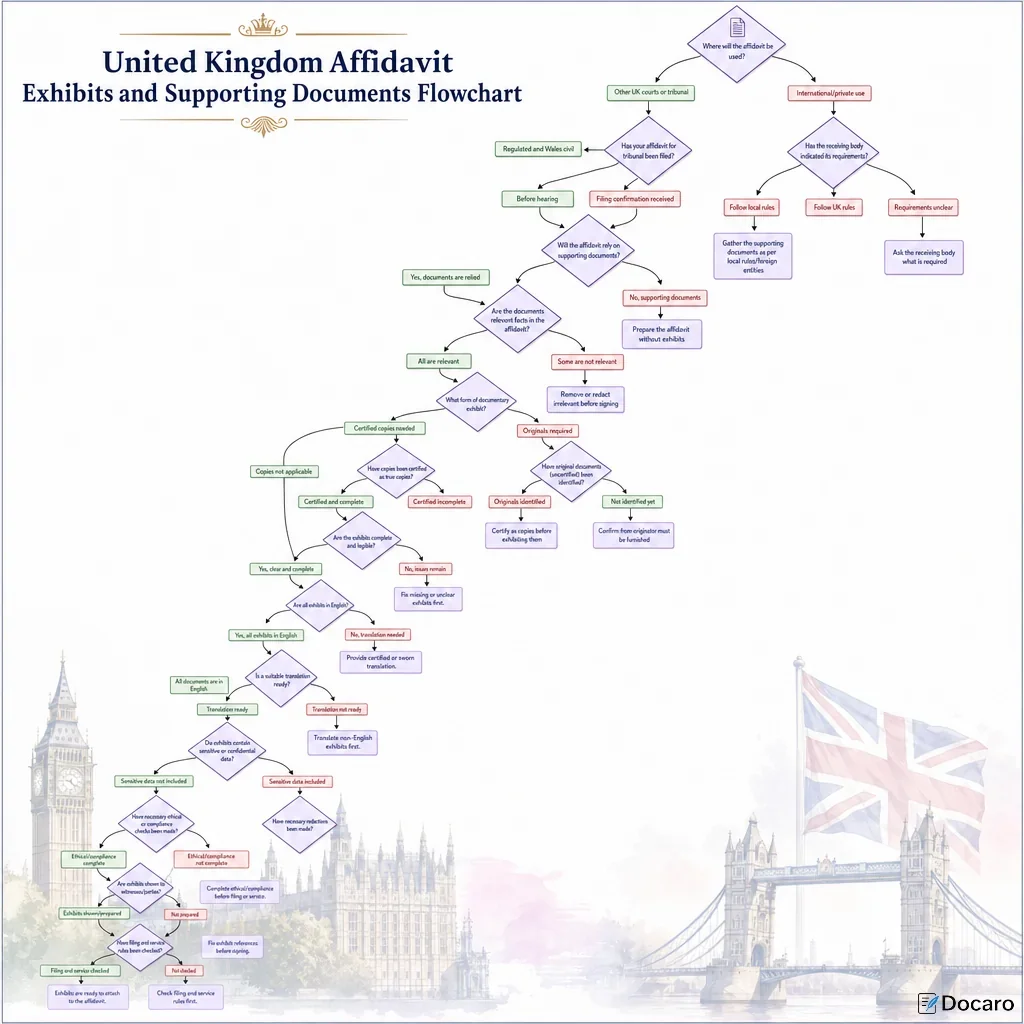
- Correct exhibits: passports, utility bills, certificates, court orders, correspondence, service receipts, company documents, or photographs are commonly exhibited where they support the sworn facts.
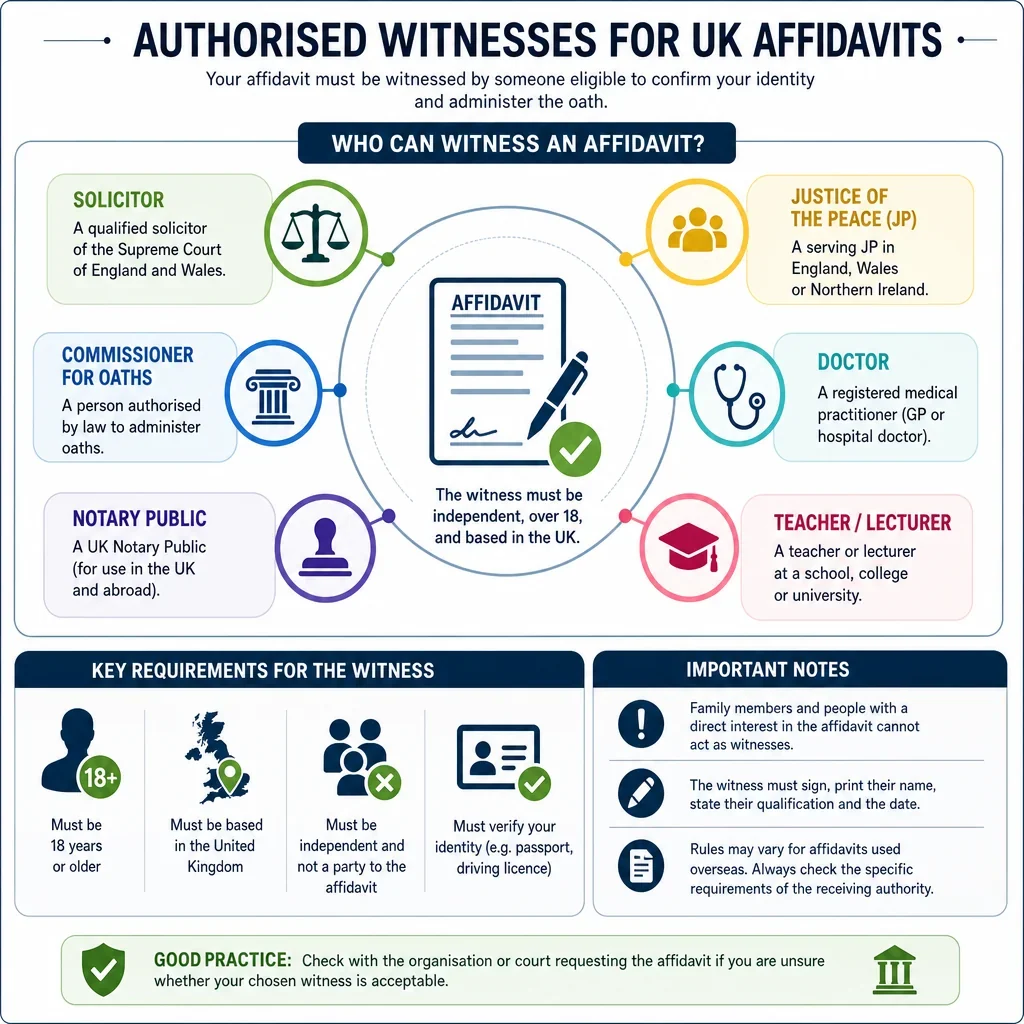
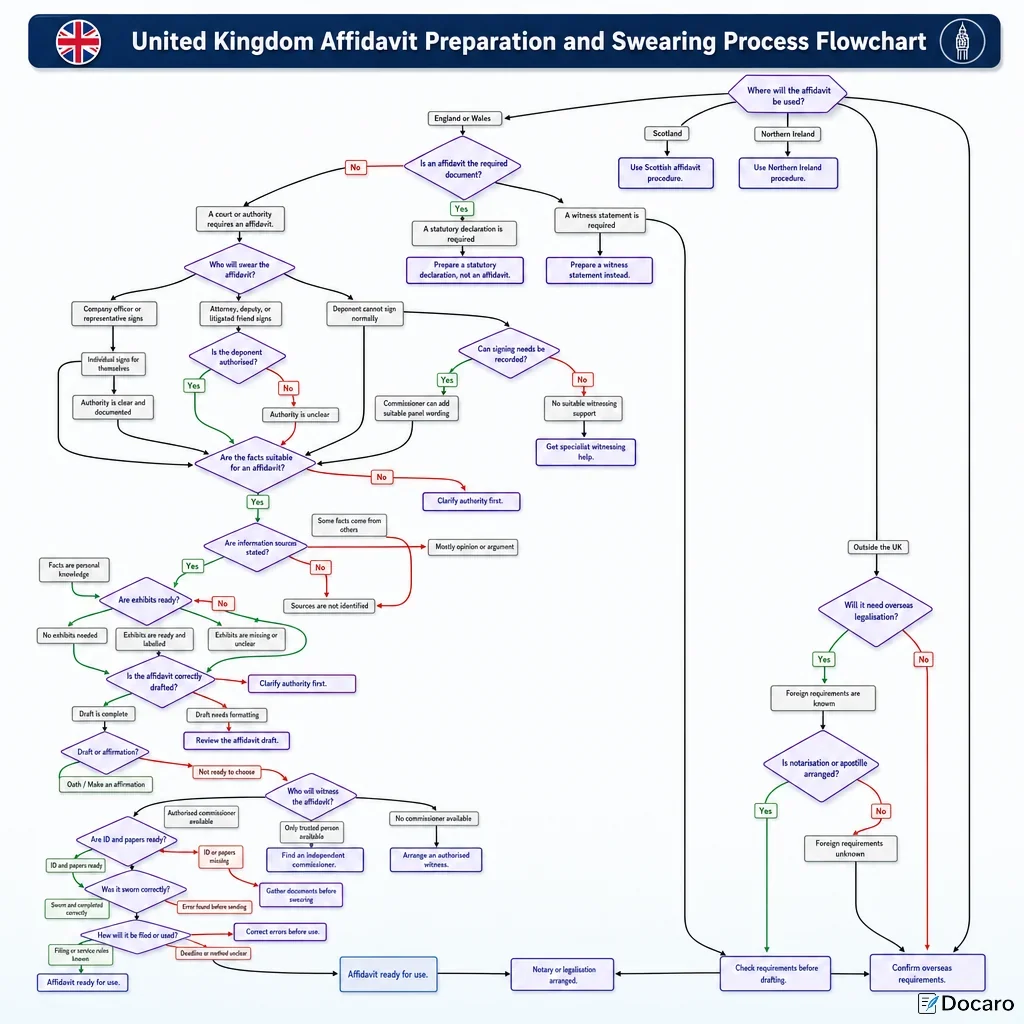
- Proper swearing or affirmation: the affidavit normally has to be sworn or affirmed before an authorised person, such as a solicitor, commissioner for oaths, notary public, or relevant court officer, depending on the context.
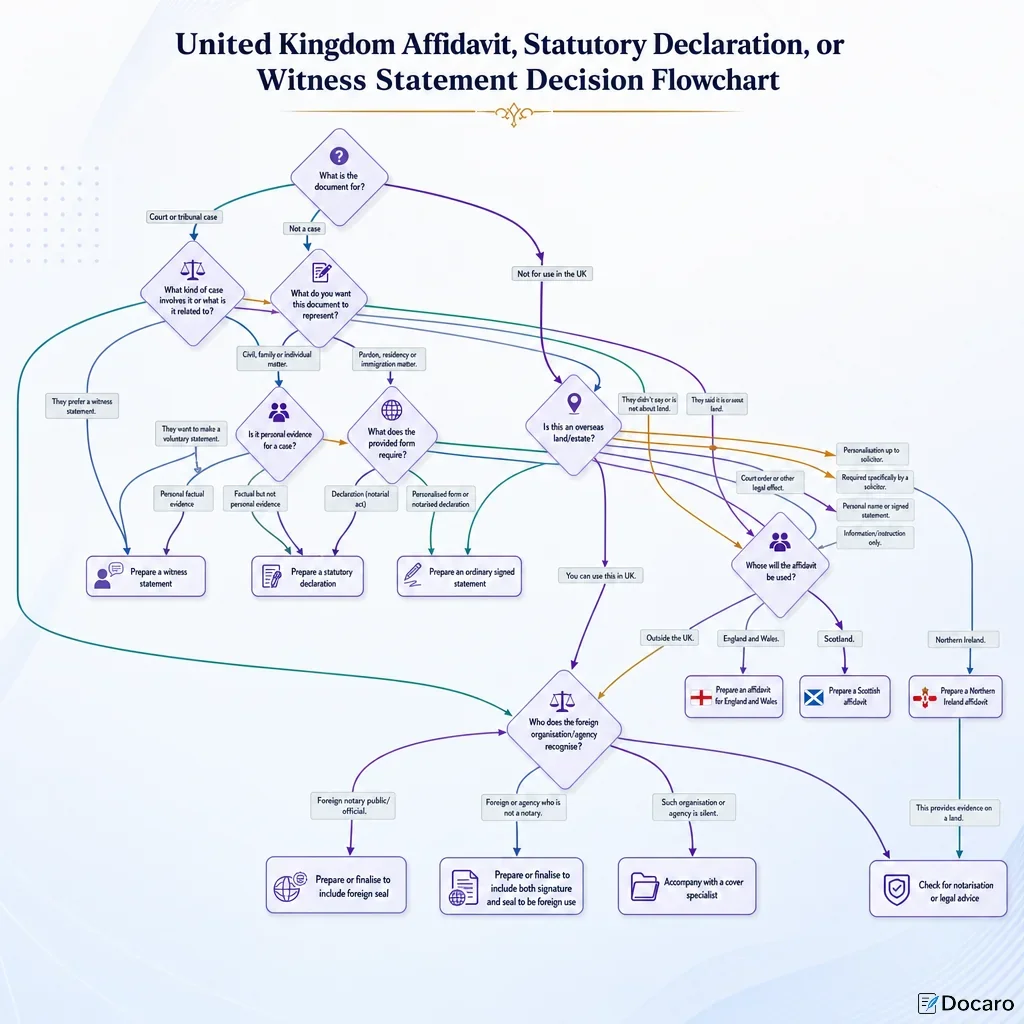
- Jurisdiction-sensitive wording: Scotland, Northern Ireland, and England and Wales have different procedural rules and terminology; for overseas use, notarisation, apostille, or consular requirements may also affect the format.
Which Affidavit Types Usually Need Extra Care?
High-complexity affidavits include those for freezing or search orders, bankruptcy or winding-up petitions, probate disputes, cross-border evidence, surrogacy, immigration deception allegations, and title or possession disputes. These often require careful exhibit management, full and frank disclosure, and strict compliance with court or agency rules.
FAQs
You Might Also Be Interested In