Standard Affidavit Clauses And Drafting Purposes In The United Kingdom
Clause category | Purpose | Information captured | Usage frequency | Common drafting issues |
|---|---|---|---|---|
Court Or Matter Heading | ||||
Introductory clause | Identifies the proceeding, court, parties, and case reference. | Court name, claim number, party names, and document title. | Usually required | Wrong claim number, outdated party names, or missing court name. |
Document Title | ||||
Introductory clause | Makes clear the document is an affidavit and whose affidavit it is. | First affidavit of Jane Smith dated 12 March 2026. | Usually required | Mislabelled as witness statement or inconsistent affidavit numbering. |
Affidavit Number | ||||
Introductory clause | Distinguishes multiple affidavits made by the same deponent. | First, second, or third affidavit of the deponent. | Often included | Repeating affidavit numbers or omitting sequence in later affidavits. |
Introductory Swearing Formula | ||||
Introductory clause | Introduces the solemn declaration of facts by the deponent. | I, Jane Smith, make oath and say as follows. | Usually required | Using informal wording or mixing oath and affirmation language. |
Affirmation Formula | ||||
Introductory clause | Allows a solemn affirmation instead of a religious oath. | I solemnly, sincerely and truly affirm and declare. | Optional depending on context | Combining oath and affirmation wording in one clause. |
Full Name Identification | ||||
Identity clause | Identifies the deponent without ambiguity. | Full legal name and any commonly used name. | Usually required | Initials only, nicknames, spelling inconsistency, or missing middle names. |
Address Identification | ||||
Identity clause | Links the deponent to a service or residence address. | Residential, business, or correspondence address. | Usually required | Incomplete postcode, outdated address, or unsafe disclosure of private address. |
Occupation Or Role | ||||
Identity clause | Helps explain who the deponent is and why they give evidence. | Solicitor, company director, landlord, executor, employee, or parent. | Often included | Role described too generally or inconsistent with the evidence. |
Age Or Majority Statement | ||||
Identity clause | Confirms the deponent is an adult where relevant. | I am over 18 years of age. | Optional depending on context | Including unnecessary date of birth or omitting age where capacity may matter. |
Party Relationship Clause | ||||
Capacity clause | Explains the deponent's connection to the parties or matter. | Claimant, defendant, director, spouse, neighbour, or adviser. | Usually required | Unclear relationship or failure to disclose personal interest. |
Authority To Make Affidavit | ||||
Capacity clause | Shows authority where evidence is given for an organisation or another person. | Authorised director, company secretary, attorney, or litigation friend. | Optional depending on context | No source of authority or mismatch with corporate records. |
Personal Knowledge Clause | ||||
Capacity clause | Separates direct knowledge from information obtained from others. | Facts within my own knowledge are true. | Usually required | Overstating personal knowledge of second-hand events. |
Information And Belief Clause | ||||
Capacity clause | Identifies facts based on sources other than personal knowledge. | Sources of information and belief for stated facts. | Often included | Failing to identify the source or mixing belief with fact. |
Purpose Of Affidavit Clause | ||||
Introductory clause | States why the affidavit is being made. | Made in support of an application, registration, or procedural step. | Often included | Purpose too broad or inconsistent with the application notice. |
Chronology Clause | ||||
Facts clause | Presents events in a clear time order. | Key dates, events, communications, and actions. | Often included | Vague dates, skipped events, or non-chronological drafting. |
Background Facts Clause | ||||
Facts clause | Provides context needed to understand the evidence. | Relationship history, transaction background, or procedural context. | Often included | Too much narrative, argument, or irrelevant history. |
Key Event Paragraphs | ||||
Facts clause | Records the central factual evidence relied on. | What happened, when, where, who was present, and what was said. | Usually required | Conclusions without facts, vague timing, or missing participants. |
Numbered Paragraphs | ||||
Facts clause | Makes facts easy to reference and verify. | One topic or event per numbered paragraph where practical. | Usually required | Long unnumbered blocks or multiple unrelated facts in one paragraph. |
Date-Specific Fact Clause | ||||
Facts clause | Anchors evidence to a precise or approximate date. | Exact date, approximate date, or date range. | Often included | Using recently or around then without context. |
Conversation Evidence Clause | ||||
Facts clause | Records relevant spoken communications clearly. | Speaker, listener, date, place, and substance of words used. | Optional depending on context | Quoting uncertain words as exact or omitting who said what. |
Document Receipt Clause | ||||
Facts clause | Explains when and how a document was received or obtained. | Date received, sender, delivery method, and document description. | Optional depending on context | No source, unclear attachment, or inconsistent document dates. |
Service Of Documents Clause | ||||
Facts clause | Records how, when, and where documents were served. | Document served, recipient, address, method, date, and time. | Optional depending on context | Missing time, wrong address, or unclear service method. |
Searches Made Clause | ||||
Facts clause | Documents enquiries or searches carried out by the deponent. | Search location, date, database, person contacted, and result. | Optional depending on context | No dates, incomplete search scope, or unsupported conclusions. |
Non-Availability Clause | ||||
Facts clause | Explains why evidence, a person, or a document is unavailable. | Steps taken to obtain evidence and reason it is unavailable. | Optional depending on context | Bare assertion without explaining reasonable enquiries. |
Means Or Financial Facts Clause | ||||
Facts clause | Sets out financial facts where affordability or assets matter. | Income, assets, liabilities, bank statements, and expenses. | Optional depending on context | Unsupported figures, outdated statements, or unexplained estimates. |
Company Status Clause | ||||
Facts clause | Identifies relevant company details and status. | Company name, number, registered office, director status, and filing status. | Optional depending on context | Wrong company number or using trading name only. |
Power Of Attorney Capacity Clause | ||||
Capacity clause | Explains evidence given by an attorney on another person's behalf. | Type of power, donor name, attorney name, date, and authority relied on. | Optional depending on context | Not identifying the power or exceeding stated authority. |
Executor Or Administrator Capacity Clause | ||||
Capacity clause | Explains evidence given for a deceased person's estate. | Deceased's name, date of death, grant status, and deponent's role. | Optional depending on context | Confusing executor, administrator, and beneficiary roles. |
Litigation Friend Capacity Clause | ||||
Capacity clause | Explains evidence given for a child or protected party. | Party represented, relationship, appointment basis, and relevant facts. | Optional depending on context | Not identifying the represented person or basis of authority. |
Solicitor Or Caseworker Capacity Clause | ||||
Capacity clause | Explains procedural evidence given by a legal representative. | Firm, role, conduct of the matter, and source of knowledge. | Optional depending on context | Giving client factual evidence without identifying the source. |
Translation Or Interpreter Clause | ||||
Capacity clause | Records that the affidavit was translated or read to the deponent. | Language, interpreter name, confirmation of understanding, and method used. | Optional depending on context | No interpreter details or no confirmation of understanding. |
Disability Or Reading Assistance Clause | ||||
Capacity clause | Records assistance where the deponent cannot read unaided. | Assistance given, person assisting, and confirmation of understanding. | Optional depending on context | No explanation of how understanding was confirmed. |
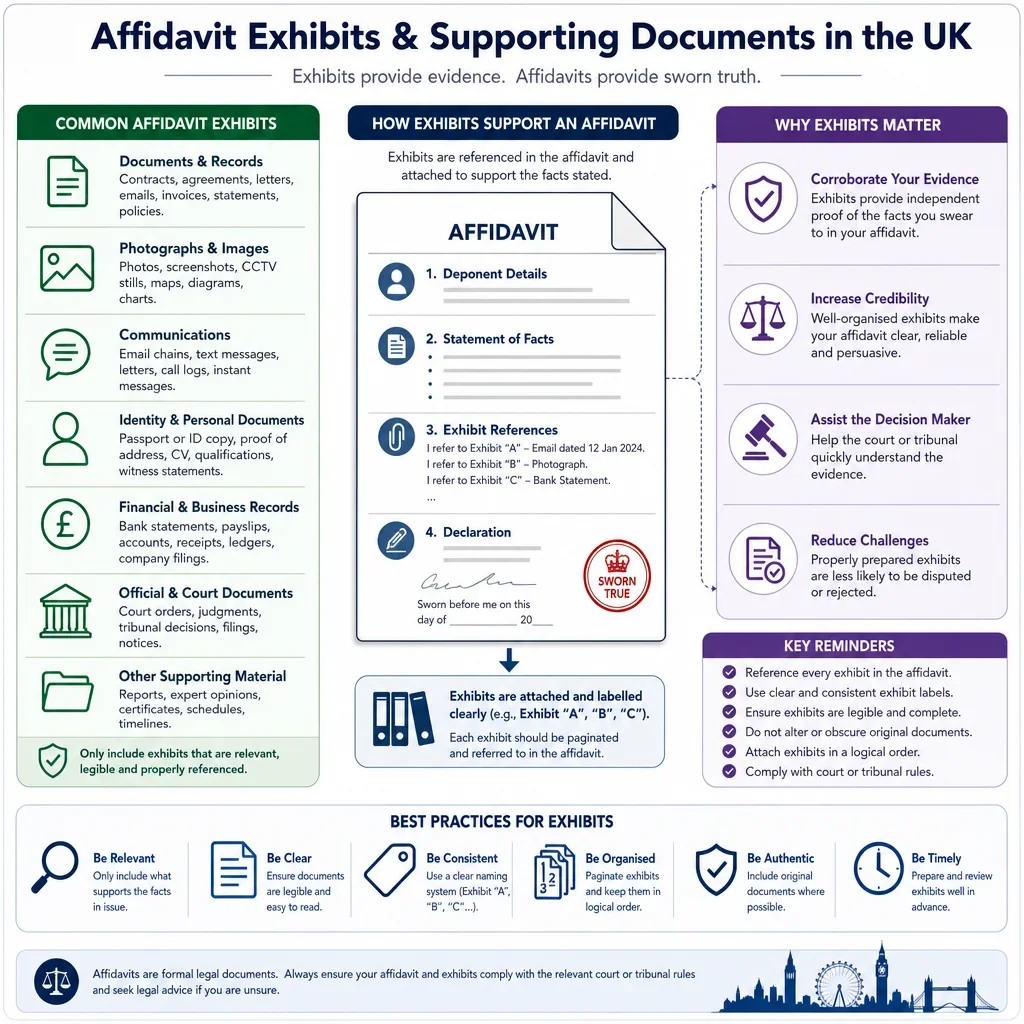
Exhibit Introduction Clause | ||||
Exhibit clause | Connects a document or item to the relevant evidence. | I refer to the document marked JS1. | Often included | Referring to an exhibit not attached or marked differently. |
Exhibit Label Or Marking Clause | ||||
Exhibit clause | Gives each exhibit a unique identifier. | Initials and number such as JS1, JS2, or JS3. | Often included | Duplicate labels, missing labels, or changing labels mid-document. |
Exhibit Cover Sheet | ||||
Exhibit clause | Identifies the exhibit bundle linked to the affidavit. | Proceeding, deponent, exhibit mark, date, and commissioner details. | Often included | Cover sheet does not match affidavit or exhibit mark. |
Multiple Exhibits Clause | ||||
Exhibit clause | Organises several documents relied on in one affidavit. | Sequential exhibit references and short descriptions. | Optional depending on context | Unclear order, missing documents, or inconsistent descriptions. |
Paginated Exhibit Bundle Clause | ||||
Exhibit clause | Allows precise cross-reference to pages in exhibits. | Bundle page numbers and exhibit section references. | Optional depending on context | Unpaginated exhibits or references to wrong page numbers. |
Original Document Clause | ||||
Exhibit clause | Explains whether an exhibit is an original or copy. | Original, copy, scan, photograph, or certified copy status. | Optional depending on context | Not saying whether the exhibit is a copy or altered image. |
Electronic Evidence Exhibit Clause | ||||
Exhibit clause | Describes digital evidence so it can be identified reliably. | Email, screenshot, metadata, file name, URL, date, and device source. | Optional depending on context | Screenshots without date, URL, source, or context. |
Photograph Exhibit Clause | ||||
Exhibit clause | Identifies photographs and explains what they show. | Date taken, photographer, location, subject, and exhibit mark. | Optional depending on context | No date, unclear location, or edited image not explained. |
Map Or Plan Exhibit Clause | ||||
Exhibit clause | Links spatial evidence to the facts described. | Plan title, scale if known, location, markings, and source. | Optional depending on context | No scale, unexplained markings, or unclear property boundaries. |
Business Records Exhibit Clause | ||||
Exhibit clause | Explains records from a business or organisation. | Record type, system source, date range, custodian, and extraction method. | Optional depending on context | No explanation of how records were produced or by whom. |
Certificate Of Exhibit Clause | ||||
Exhibit clause | Certifies that an exhibit is the exhibit referred to in the affidavit. | Exhibit mark, deponent name, affidavit date, and authorised signature. | Often included | Certificate missing, unsigned, or referring to wrong affidavit date. |
Confidential Or Redacted Exhibit Clause | ||||
Exhibit clause | Explains redactions or confidentiality limits in exhibits. | Nature of redaction, reason, and whether unredacted copy exists. | Optional depending on context | Unexplained redactions or redacting material needed to understand evidence. |
Closing Confirmation Of Truth | ||||
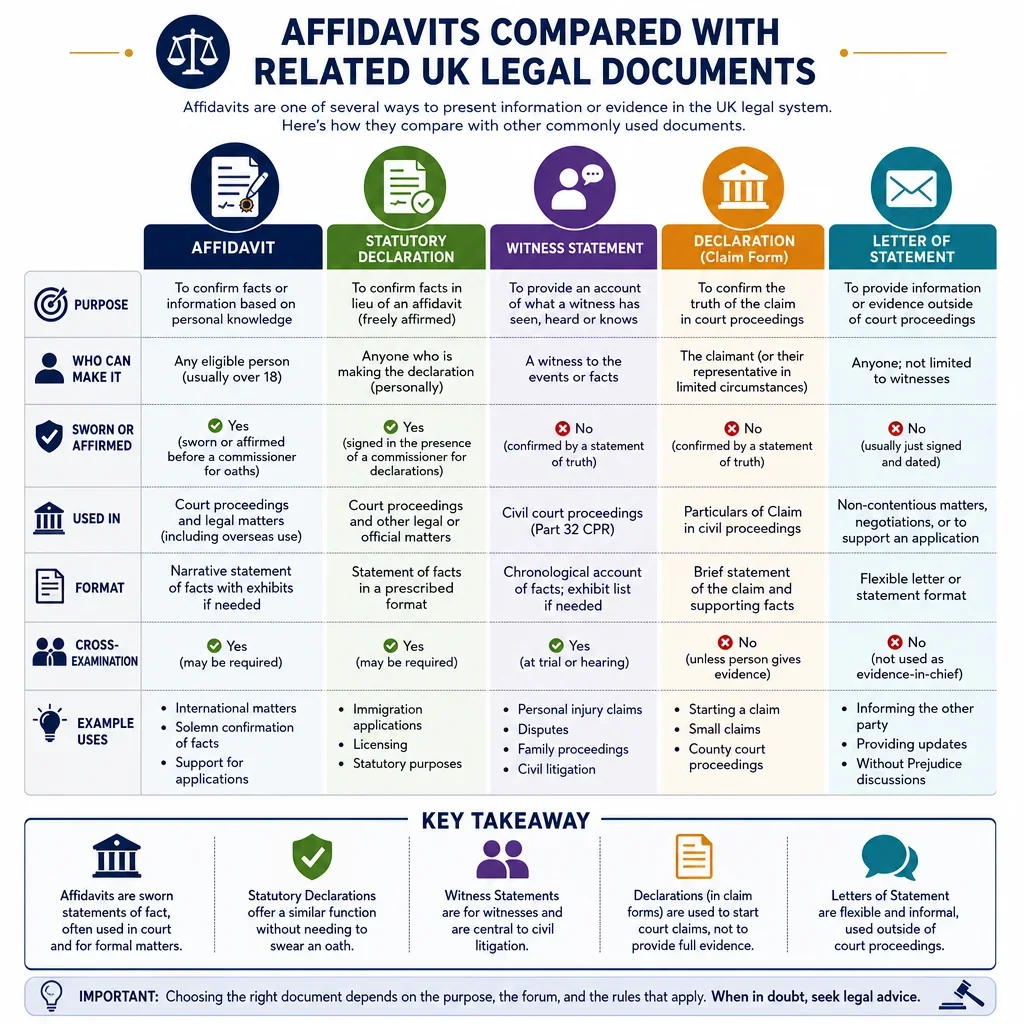
Statement of truth or oath wording | Confirms the affidavit evidence is true to the deponent's knowledge or belief. | Belief in truth of the affidavit contents. | Usually required | Using witness statement wording where affidavit oath wording is needed. |
Statement Of Truth Clause | ||||
Statement of truth or oath wording | Used where procedural rules require a statement of truth. | I believe that the facts stated in this document are true. | Optional depending on context | Treating it as a substitute for swearing an affidavit. |
Oath Clause | ||||
Statement of truth or oath wording | Records that the affidavit is sworn on oath. | Sworn statement using oath wording before an authorised person. | Usually required | Omitting the act of swearing or using incomplete oath wording. |
Solemn Affirmation Clause | ||||
Statement of truth or oath wording | Records that the affidavit is affirmed instead of sworn. | Affirmed statement before an authorised person. | Optional depending on context | Leaving religious oath wording in an affirmed affidavit. |
Signature Block For Deponent | ||||
Jurat or completion clause | Provides space for the deponent to sign the affidavit. | Deponent signature and printed name. | Usually required | Unsigned affidavit or name not matching identity clause. |
Jurat Clause | ||||
Jurat or completion clause | Records completion details for the sworn or affirmed affidavit. | Sworn or affirmed at place, date, and before whom. | Usually required | Missing date, place, commissioner name, or capacity. |
Place Of Swearing Or Affirming | ||||
Jurat or completion clause | Shows where the affidavit was completed. | Town, city, country, or office address. | Usually required | Blank place line or location inconsistent with commissioner details. |
Date Of Swearing Or Affirming | ||||
Jurat or completion clause | Confirms when the affidavit was formally completed. | Day, month, and year of swearing or affirmation. | Usually required | Different date from document title or impossible date sequence. |
Commissioner For Oaths Details | ||||
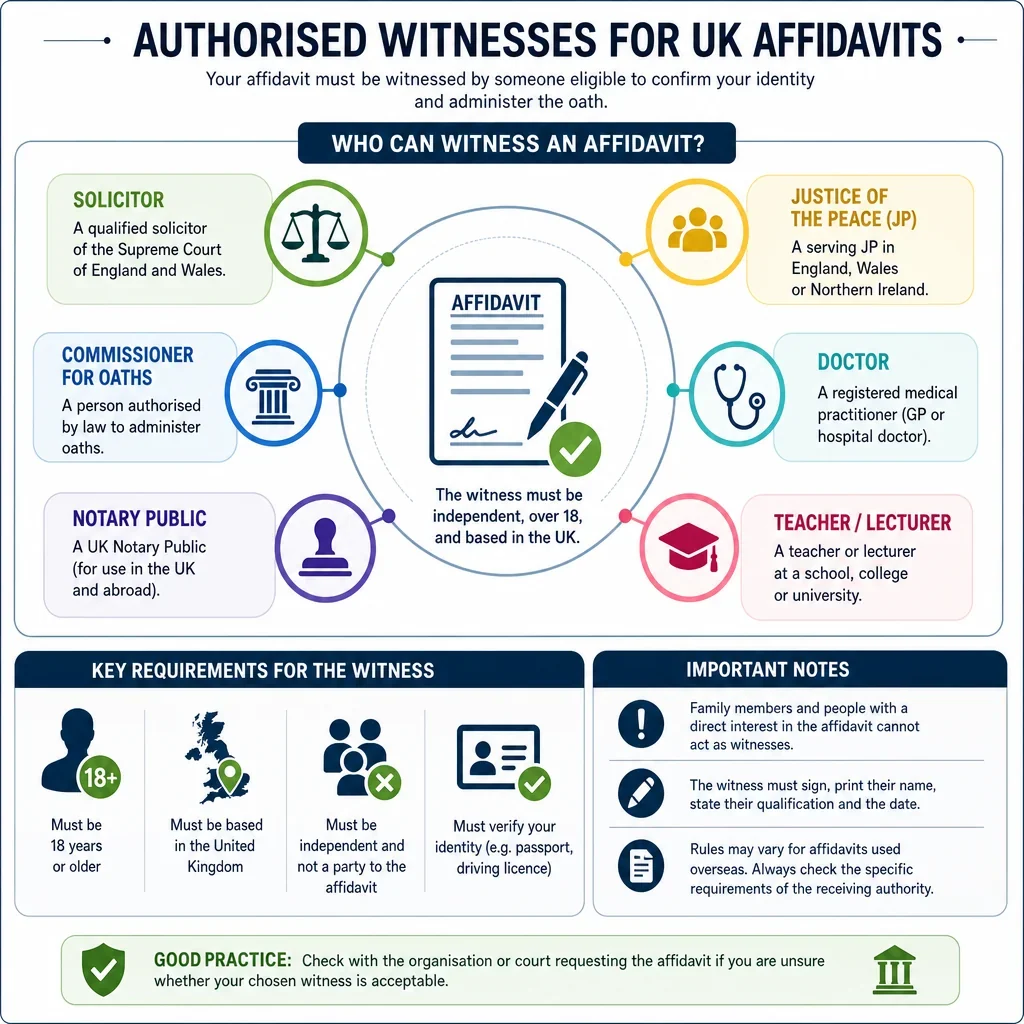
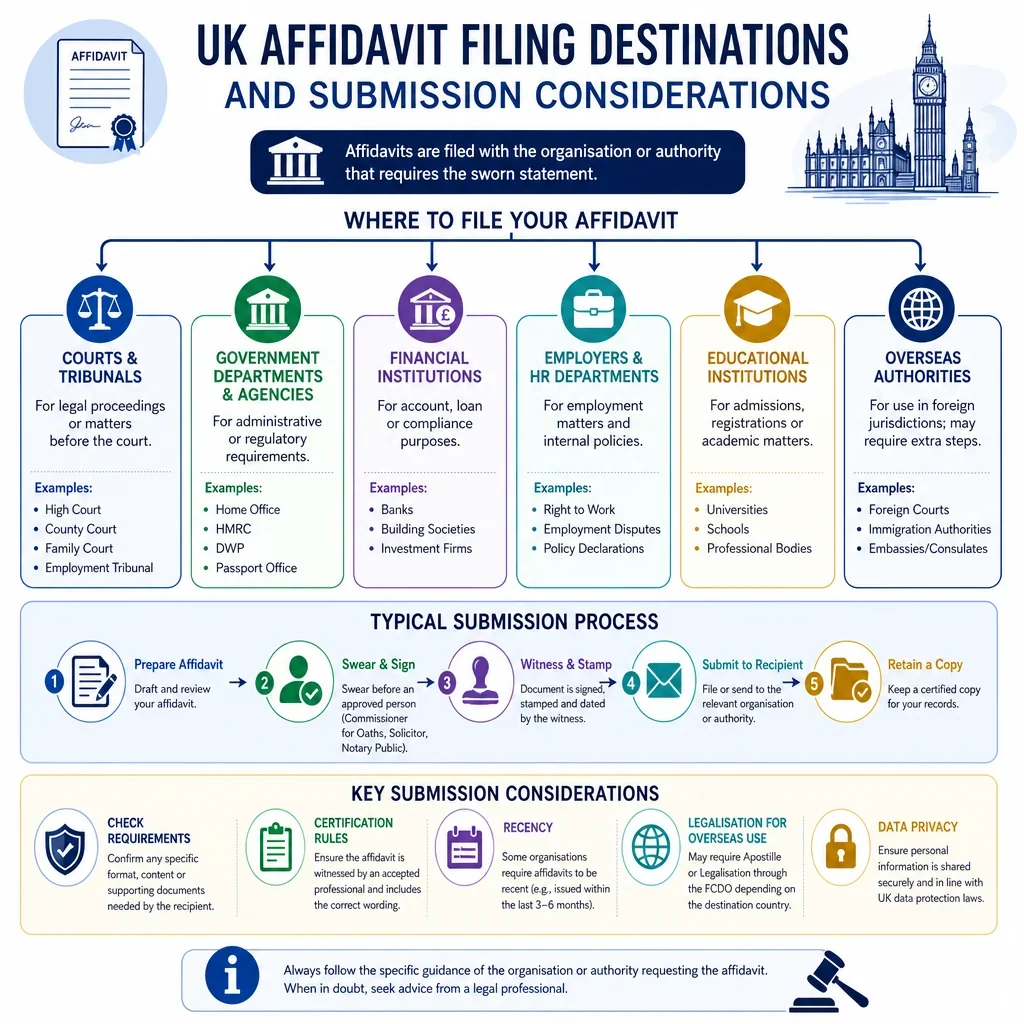
Jurat or completion clause | Identifies the authorised person before whom the affidavit is sworn. | Name, signature, qualification, firm, and address of authorised person. | Usually required | No qualification stated or unauthorised person administering oath. |
Solicitor Commissioner Clause | ||||
Jurat or completion clause | Records completion before a solicitor with oath-administering powers. | Solicitor name, signature, firm, address, and role. | Often included | Solicitor acting inappropriately for a client or missing details. |
Notary Public Completion Clause | ||||
Jurat or completion clause | Records notarised completion where needed for overseas or formal use. | Notary name, seal, signature, place, and date. | Optional depending on context | No notarial seal or unclear need for notarisation. |
Remote Or Video Swearing Note | ||||
Jurat or completion clause | Records any non-standard method of completion if permitted. | Method used, persons present, location, date, and compliance basis. | Optional depending on context | Assuming remote swearing is accepted without checking requirements. |
Alterations Or Interlineations Clause | ||||
Jurat or completion clause | Confirms handwritten changes were made before swearing or affirming. | Description or initials of corrections made before completion. | Optional depending on context | Uninitialled amendments or changes made after completion. |
Deponent Unable To Sign Clause | ||||
Jurat or completion clause | Records completion where the deponent marks instead of signs. | Reason, mark used, witness details, and confirmation of understanding. | Optional depending on context | No explanation of mark or no confirmation affidavit was read over. |
Read Over And Explained Jurat | ||||
Jurat or completion clause | Records that contents were read or explained before completion. | Person reading, language used, and deponent's confirmation of understanding. | Optional depending on context | Used without identifying who read or explained the affidavit. |
Exhibit Verification In Jurat | ||||
Jurat or completion clause | Confirms exhibits were before the deponent when sworn or affirmed. | Exhibit marks identified during swearing or affirmation. | Optional depending on context | Exhibits added later or not checked during completion. |
Foreign Use Legalisation Note | ||||
Jurat or completion clause | Flags possible apostille or legalisation needs for overseas use. | Destination country, notarisation status, and legalisation requirement. | Optional depending on context | Assuming a UK sworn affidavit will be accepted abroad without legalisation. |
What Clauses Does A UK Affidavit Usually Need?
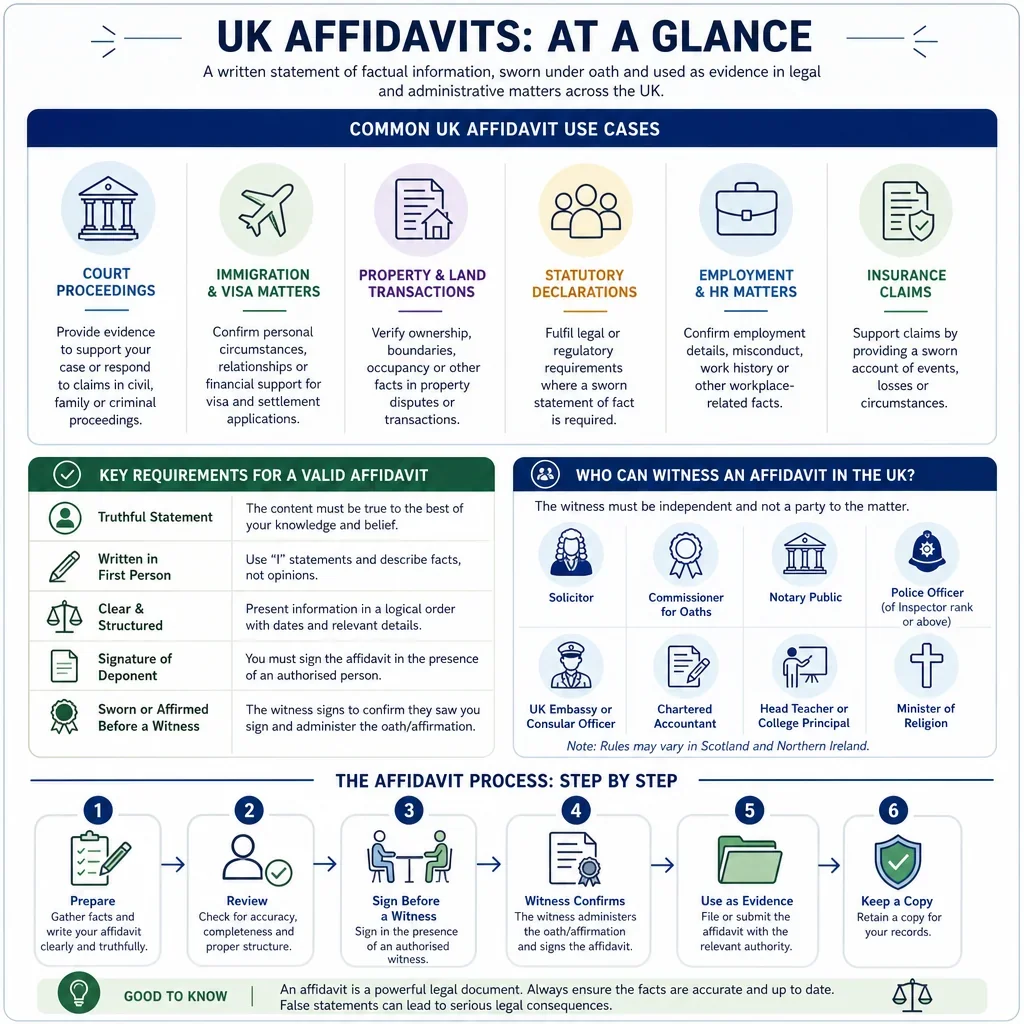
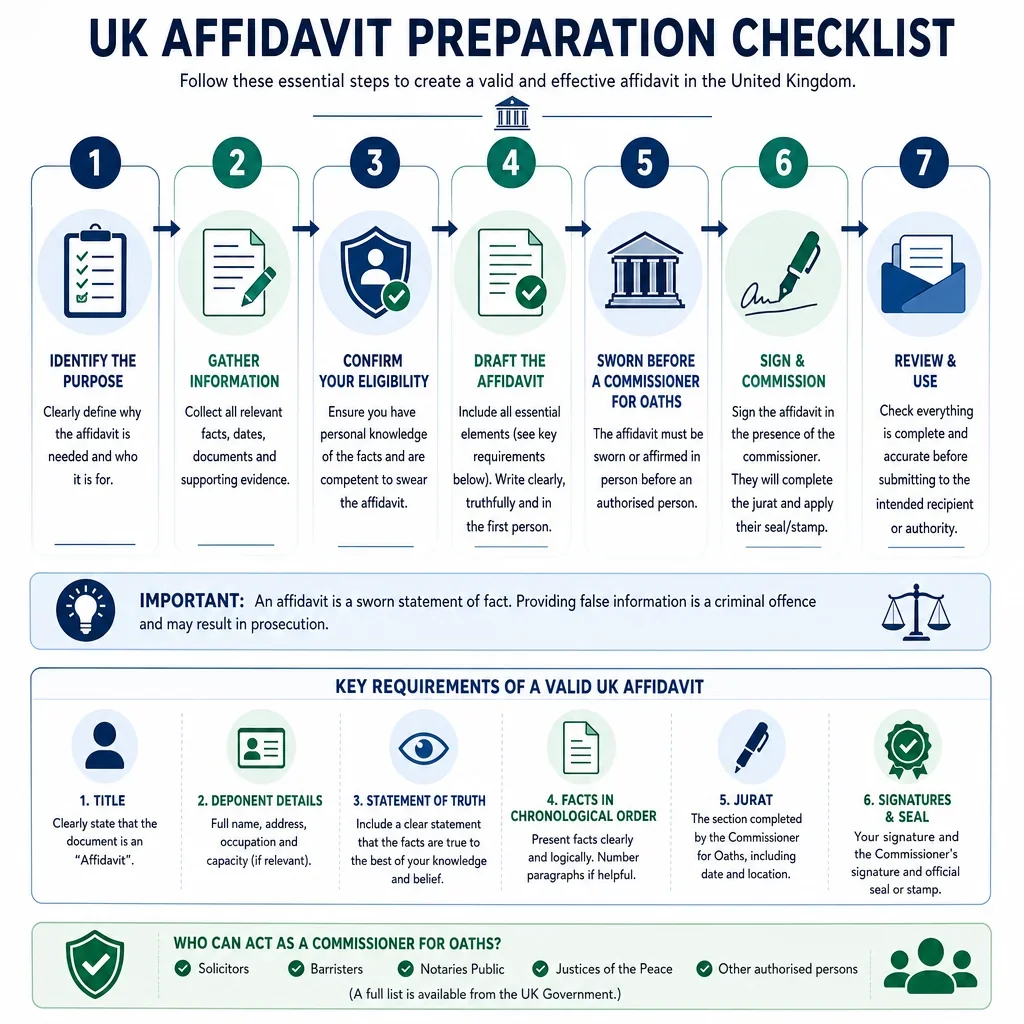
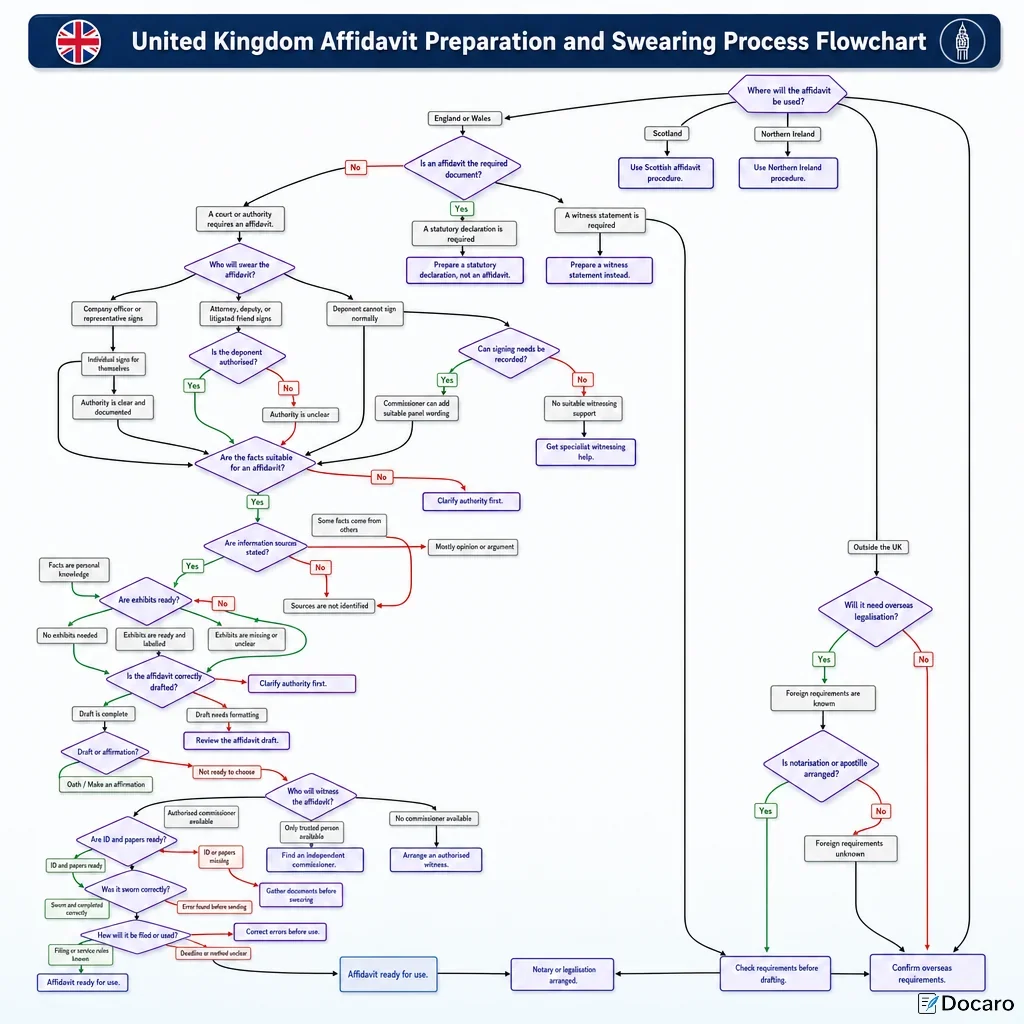
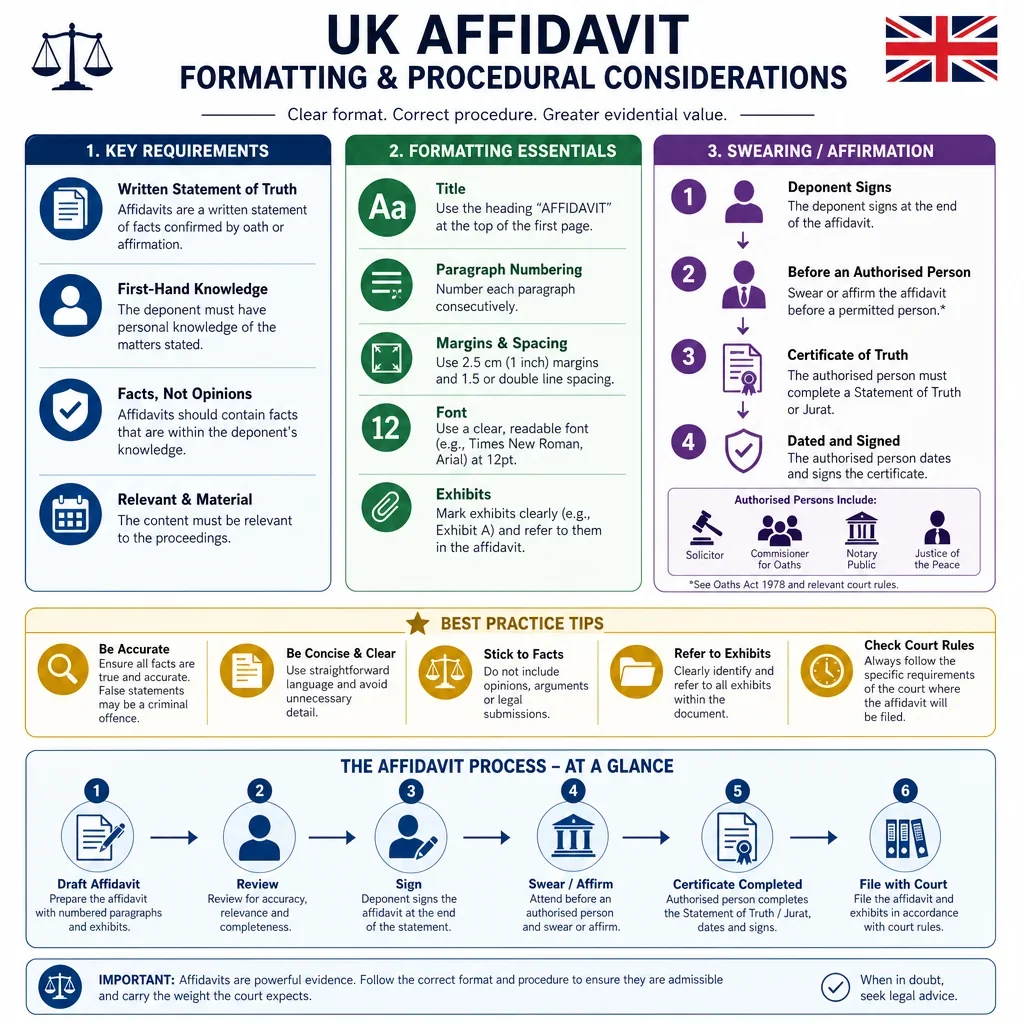
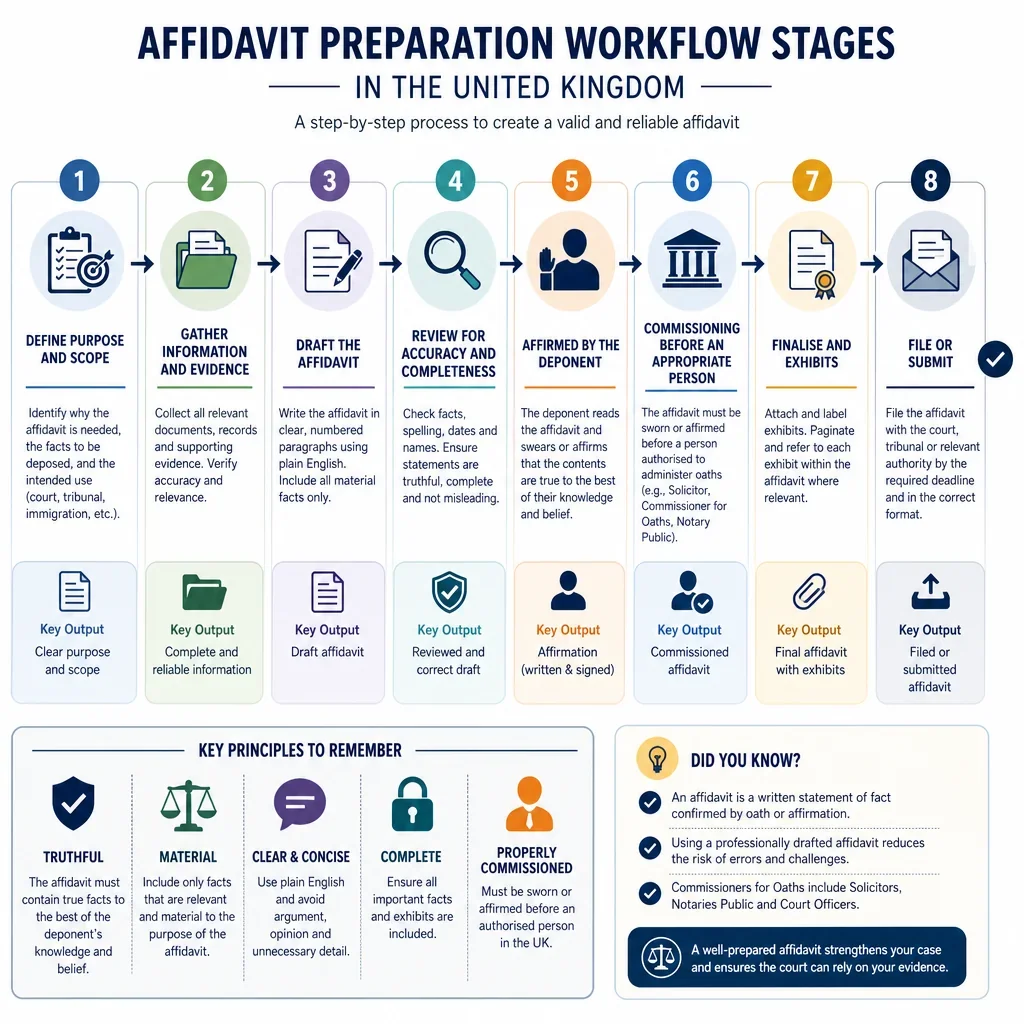
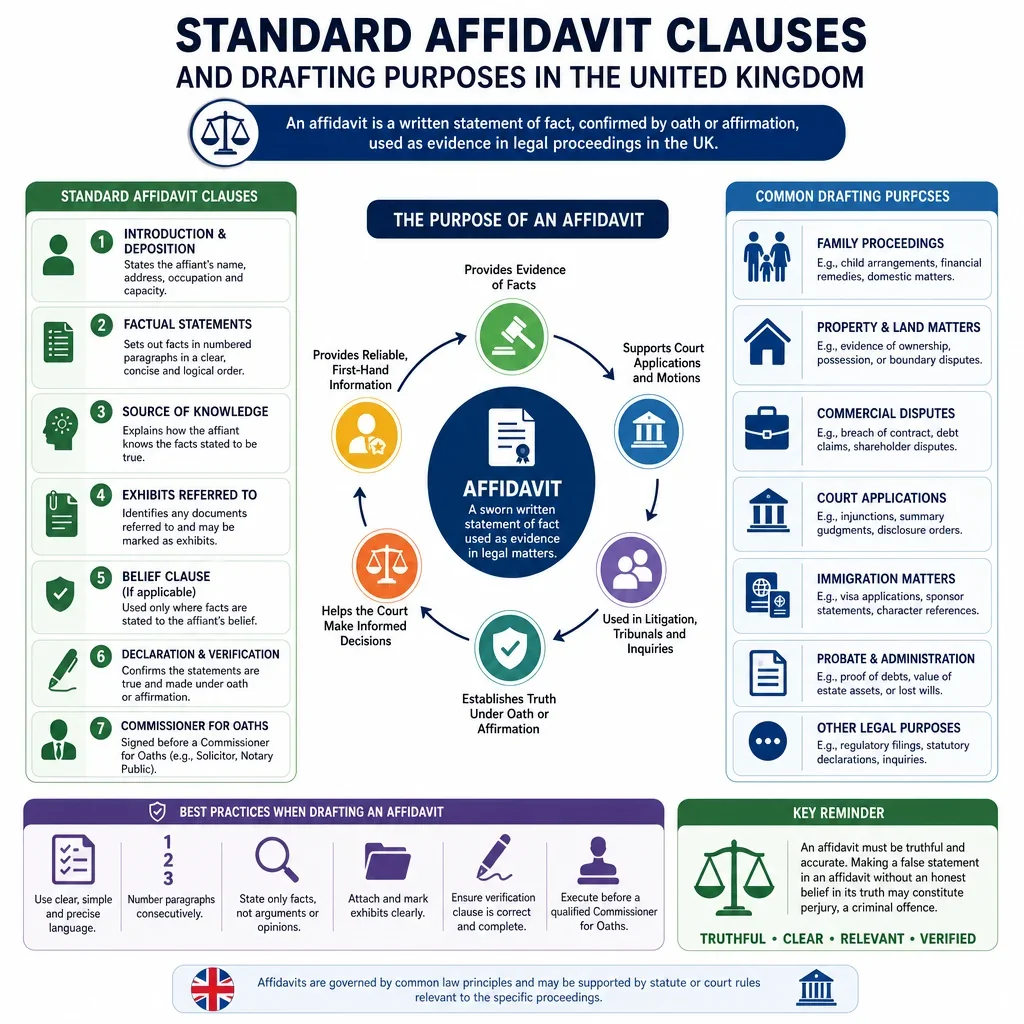
A standard UK affidavit normally needs a clear heading, the deponent's full identity, a statement showing the basis of the deponent's knowledge, numbered factual paragraphs, exhibit identification where documents are relied on, and a jurat or completion clause showing when and before whom it was sworn or affirmed.
Why Are Exhibits And Numbered Facts Important In Affidavit Drafting?
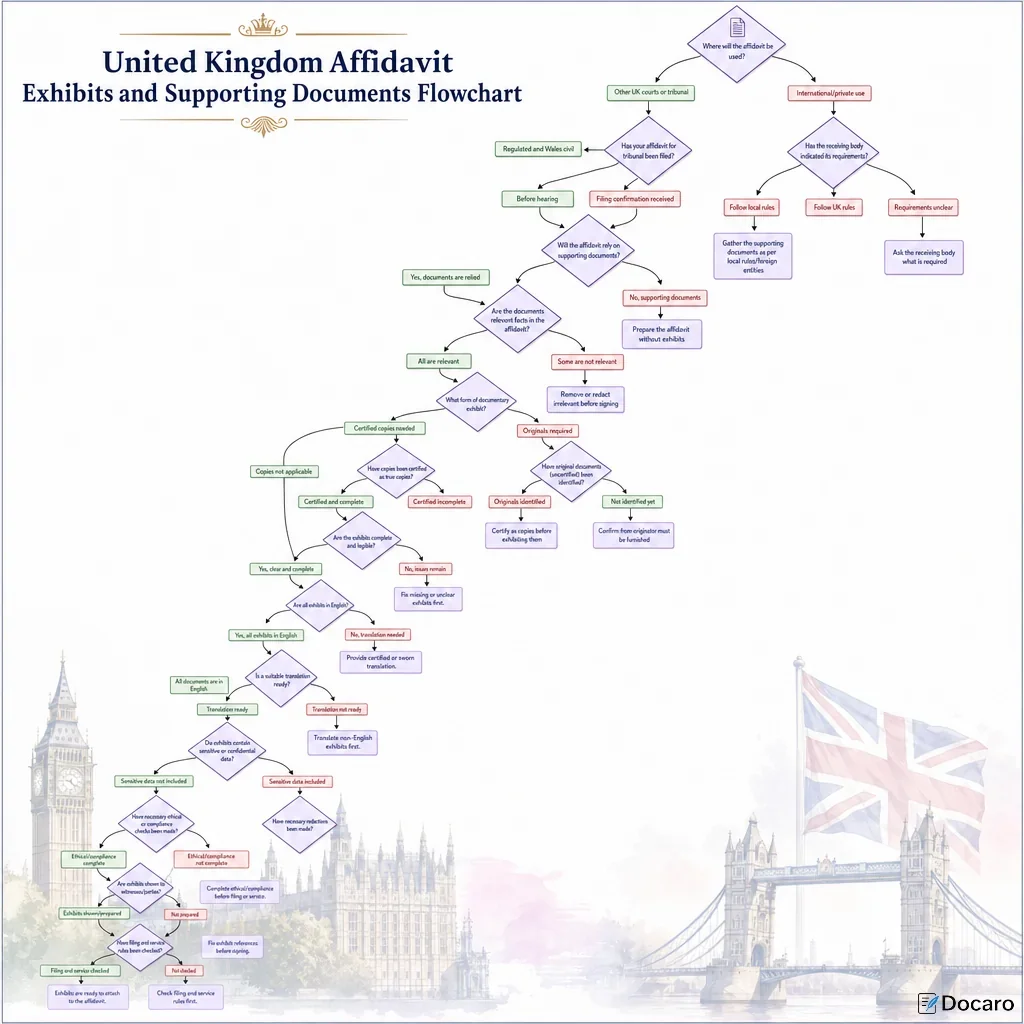
Affidavits are formal evidence documents, so vague references such as the attached document can cause practical problems. Each document should usually be marked, introduced in the text, and described consistently so the reader can connect the exhibit to the relevant factual paragraph.
Should An Affidavit Use A Statement Of Truth Or A Sworn Oath?
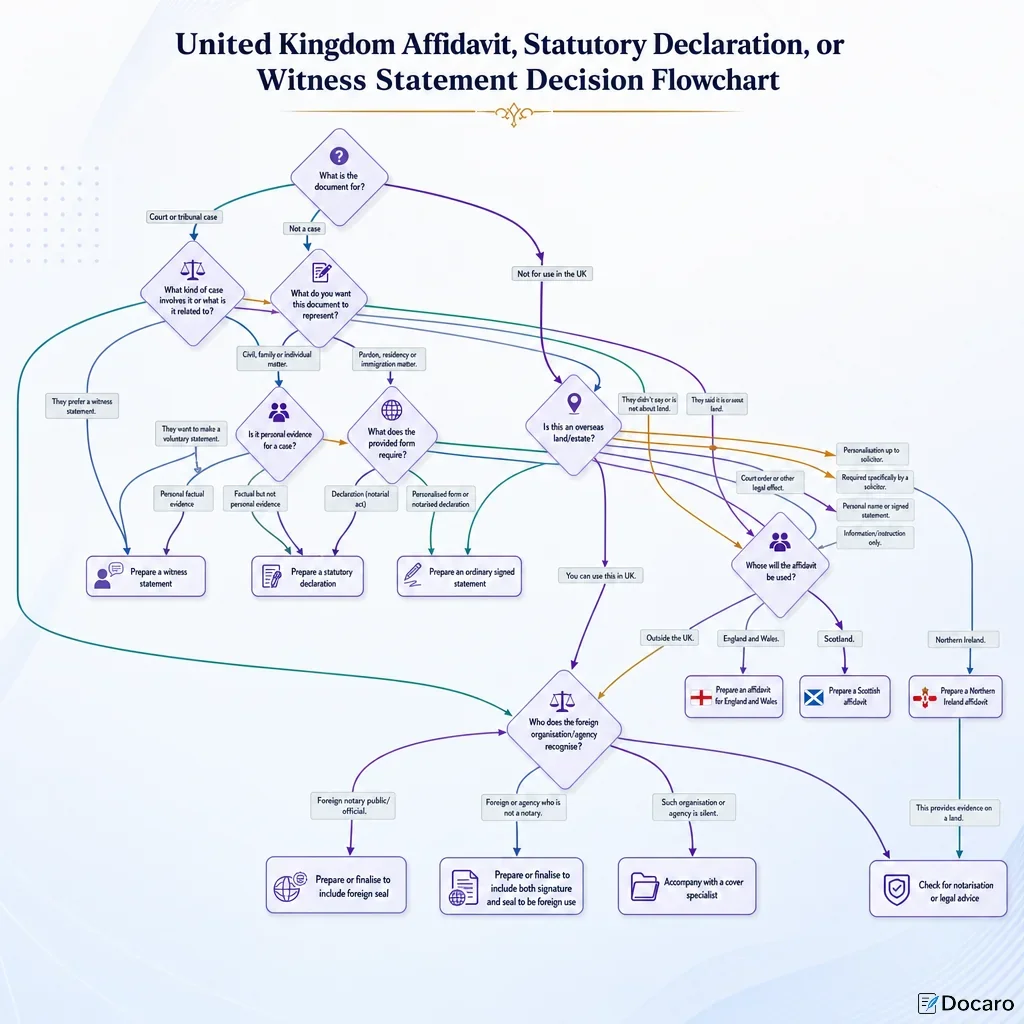
In UK practice, an affidavit is typically sworn or affirmed before an authorised person and completed with a jurat. A statement of truth is common in witness statements, but it should not be used as a substitute for proper affidavit wording where an affidavit is required.
What Common Errors Make An Affidavit Less Useful?
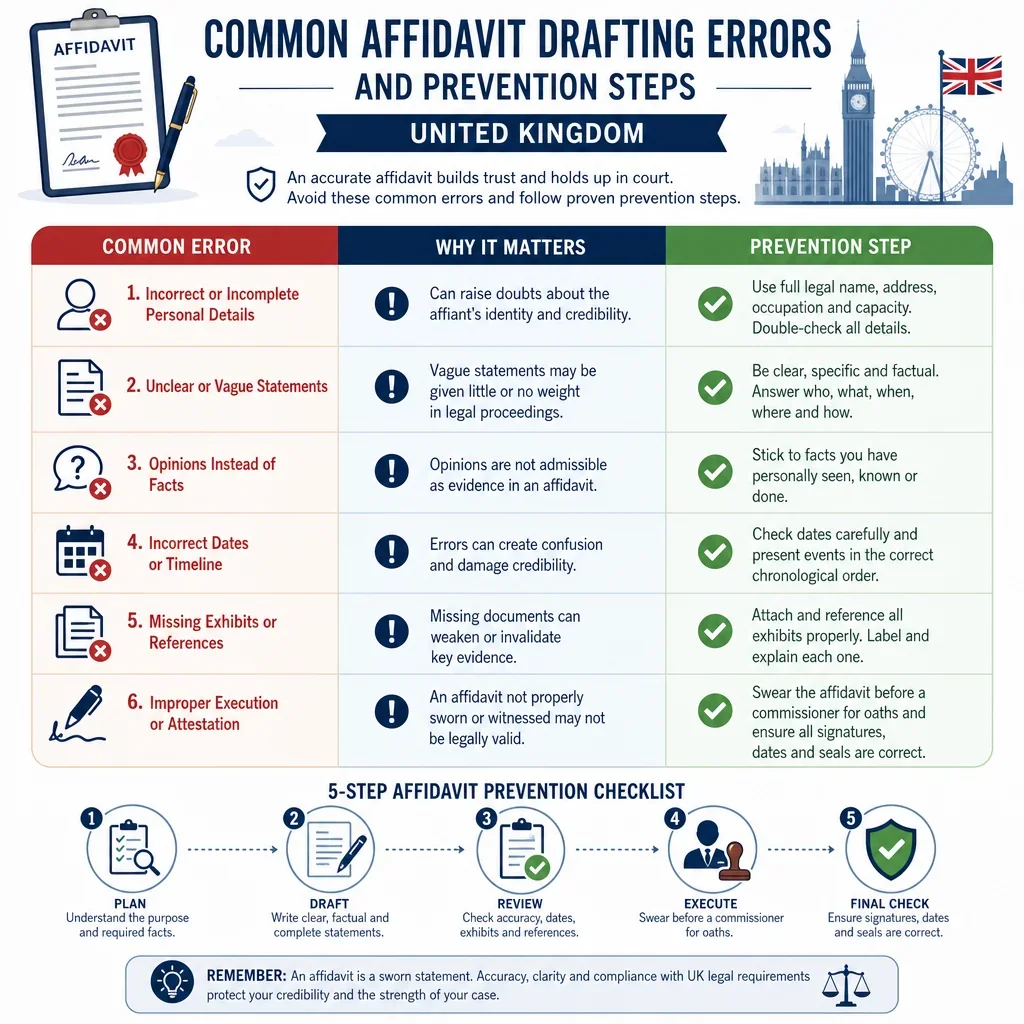
- Inconsistent names: using different versions of the deponent's name, party names, or exhibit labels.
- Unclear capacity: failing to say whether the deponent speaks personally, as a director, executor, litigation friend, attorney, or other role.
- Mixed evidence: failing to separate personal knowledge from information and belief.
- Poor completion wording: omitting the place, date, or authorised person before whom the affidavit was sworn or affirmed.
FAQs
You Might Also Be Interested In