United Kingdom Affidavit Preparation Checklist Items
Preparation item | Reason needed | Relevant stage | Applicability | Practical notes |
|---|---|---|---|---|
Personal details | ||||
Deponent’s full legal name | Identifies the person making the sworn or affirmed evidence. | Before drafting | Required in most cases | Use the name shown on official ID and court documents. |
Any previous, maiden, or alternative names | Links the deponent to older records or disputed identities. | Before drafting | Only if applicable | Check marriage certificates, deed polls, or prior court papers. |
Current residential address | May be required to identify the deponent and for contact. | Before drafting | Required in most cases | Use a secure service address if privacy or safety is an issue. |
Occupation or role | Explains capacity, expertise, or connection to the matter. | Before drafting | Often useful | State the role relevant to the facts, not unnecessary detail. |
Date of birth or confirmation of adulthood | Confirms capacity where age may matter. | Before drafting | Only if applicable | Avoid including birth date unless it is relevant or required. |
Telephone number and email address | Allows solicitor, court staff, or commissioner to resolve issues quickly. | Before signing | Often useful | Keep contact details off public documents unless required. |
Capacity in which the deponent swears the affidavit | Shows whether evidence is given personally or for an organisation, estate, or office. | Before drafting | Required in most cases | Use wording such as director, executor, litigation friend, or trustee. |
Authority to speak for a company or organisation | Supports the deponent’s ability to give evidence on organisational matters. | Before drafting | Only if applicable | Check board minutes, job title, delegated authority, or internal approval. |
Witnessing arrangements | ||||
Photo identification for the deponent | The person taking the oath may need to verify identity. | Before signing | Required in most cases | Bring a passport, photocard driving licence, or other accepted ID. |
Proof of address | May be requested by the witness or professional administering the oath. | Before signing | Often useful | Use a recent utility bill, bank statement, or council tax document. |
Case or matter details | ||||
Correct court, tribunal, or authority name | Ensures the heading matches the forum receiving the affidavit. | Before drafting | Required in most cases | Confirm the official court name, hearing centre, and division. |
Claim, case, application, or petition number | Allows the affidavit to be matched to the correct proceedings. | Before drafting | Required in most cases | Copy exactly from the court order, sealed form, or notice. |
Full names of all parties | Ensures the affidavit title and references match the legal matter. | Before drafting | Required in most cases | Use the party names as stated on the latest court document. |
Deponent’s relationship to the parties | Explains why the deponent has relevant knowledge. | Before drafting | Required in most cases | State whether claimant, respondent, director, spouse, neighbour, or witness. |
Purpose of the affidavit | Guides relevance and prevents unnecessary evidence. | Before drafting | Required in most cases | Identify the application, order, transaction, or administrative process it supports. |
Filing or submission details | ||||
Applicable court rule, form, or practice direction | Determines format, content, exhibit, and filing requirements. | Before drafting | Often useful | Check the relevant CPR, FPR, tribunal rule, or local direction. |
Case or matter details | ||||
Any order requiring the affidavit | Identifies what the court has directed the deponent to prove. | Before drafting | Only if applicable | Extract deadlines, required topics, page limits, and service directions. |
Filing or submission details | ||||
Deadline for signing, filing, and service | Prevents late evidence or missed procedural steps. | Before drafting | Required in most cases | Diary time for drafting, exhibit preparation, oath appointment, and delivery. |
Case or matter details | ||||
Hearing date and purpose | Helps focus the affidavit on the issues before the court. | Before drafting | Only if applicable | Use the latest notice of hearing or court order. |
Facts and chronology | ||||
Chronological timeline of key events | Creates a coherent factual narrative and highlights missing dates. | Before drafting | Required in most cases | List events in date order with source documents beside each event. |
Exact dates and approximate dates marked clearly | Avoids presenting uncertain recollection as definite fact. | During drafting | Required in most cases | Use phrases such as "on or about" where appropriate. |
Facts within the deponent’s personal knowledge | Separates direct evidence from information received from others. | During drafting | Required in most cases | Mark each fact as seen, heard, done, received, or inferred. |
Source of any information not personally known | Shows the basis for hearsay or second-hand statements. | During drafting | Often useful | Name the source or identify the document relied on. |
Known disputed facts | Allows careful wording and avoids overstating contested matters. | Before drafting | Often useful | Compare pleadings, witness statements, correspondence, and prior orders. |
Any admissions or concessions already made | Prevents inconsistency with earlier statements or procedural positions. | Before drafting | Only if applicable | Check pleadings, emails, settlement letters, and hearing notes. |
Brief background to the dispute or matter | Gives context without overwhelming the affidavit. | During drafting | Often useful | Keep background short and link it to the affidavit’s purpose. |
Case or matter details | ||||
Order, relief, or outcome being supported | Connects facts to the request being made. | Before drafting | Often useful | Check the draft order, application notice, or instructions. |
Supporting documents | ||||
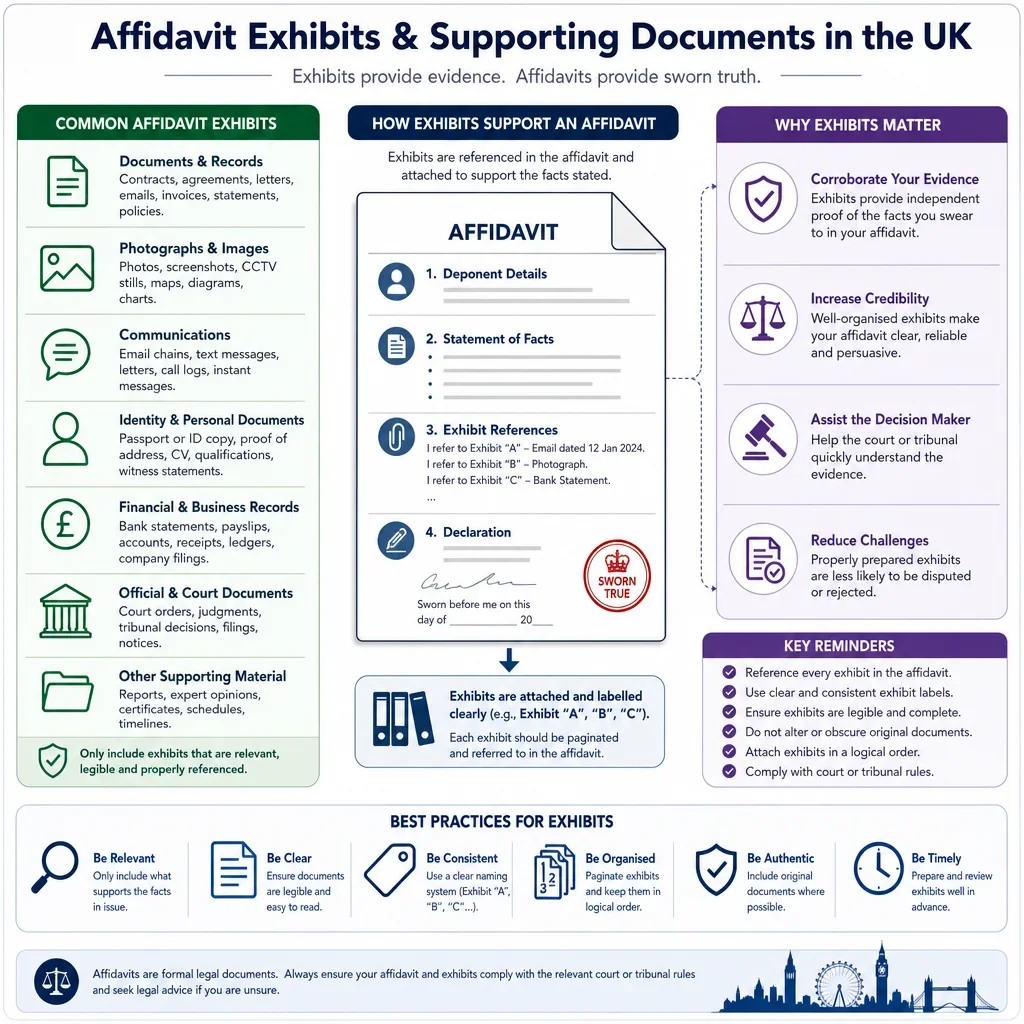
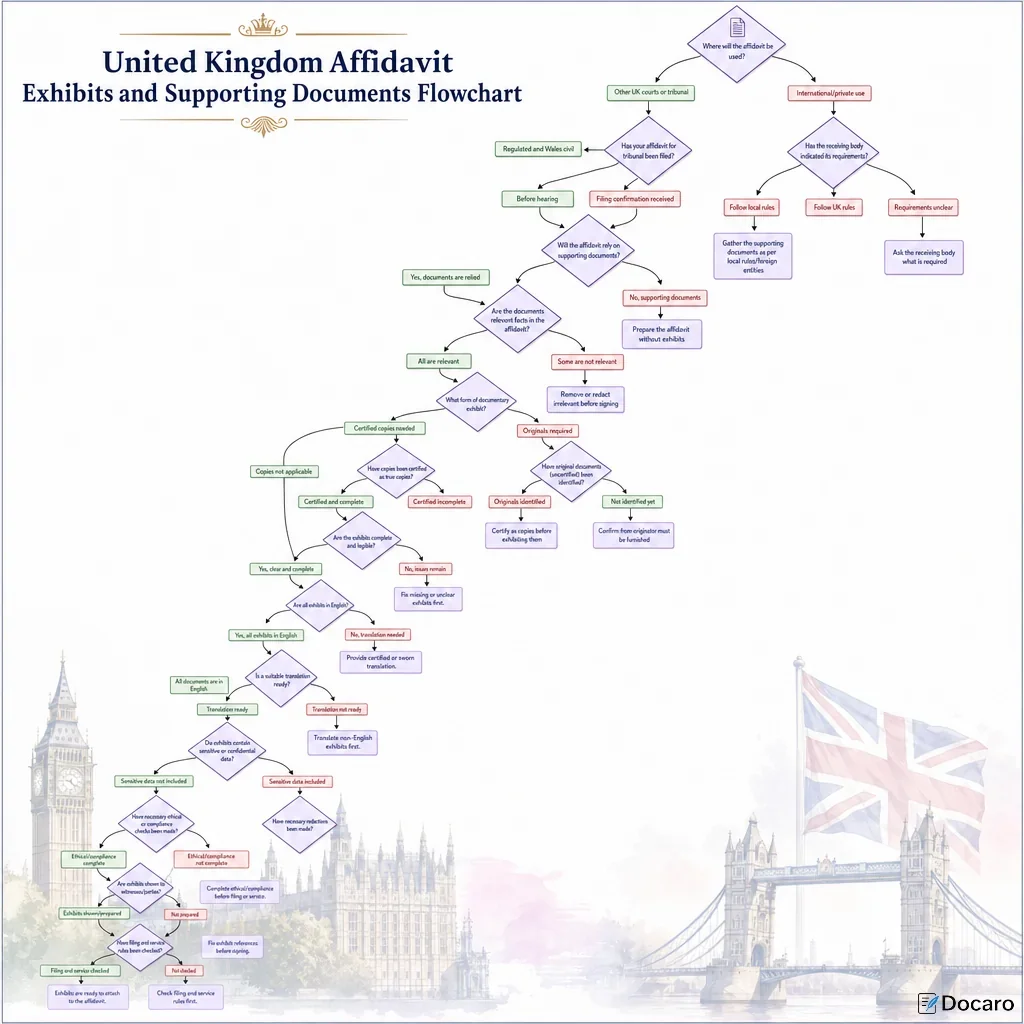
List of documents to be exhibited | Ensures every relied-on document is identified and available. | Before drafting | Required in most cases | Create a table with exhibit reference, date, description, and source. |
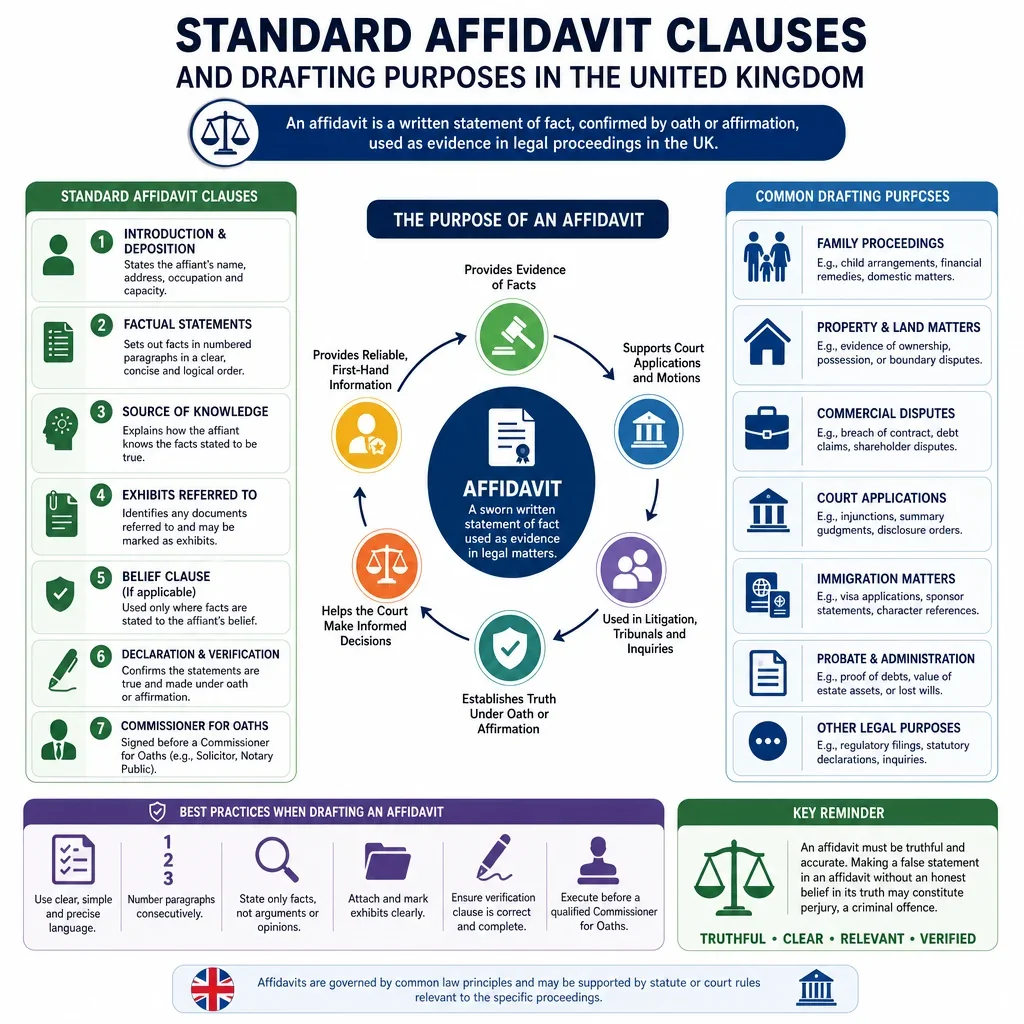
Exhibit reference system | Allows the reader to match evidence to affidavit paragraphs. | During drafting | Required in most cases | Use initials and numbers, such as AB1, AB2, AB3. |
Exhibit cover sheets or certificates | Identifies exhibits referred to in the affidavit. | Before signing | Required in most cases | Check required wording under the relevant court rules. |
Originals or clear copies of key documents | Supports reliability and avoids illegible or incomplete exhibits. | Before signing | Required in most cases | Check every page is readable, complete, and in the right order. |
Relevant contracts, agreements, or terms | Proves agreed obligations, rights, or commercial context. | Before drafting | Only if applicable | Include signed versions, variations, schedules, and incorporated terms. |
Relevant letters and emails | Shows notices, requests, admissions, offers, or the parties’ conduct. | Before drafting | Often useful | Export complete email chains with dates, senders, recipients, and attachments. |
Text messages, WhatsApp messages, or chat records | May prove communications, agreements, threats, or timelines. | Before drafting | Only if applicable | Preserve metadata where possible and avoid selective screenshots. |
Photographs, videos, or screenshots | May visually evidence condition, location, conduct, or online material. | Before drafting | Only if applicable | Record when, where, by whom, and how each image was obtained. |
Bank statements, invoices, and receipts | Supports payments, losses, ownership, or financial position. | Before drafting | Only if applicable | Highlight relevant entries but keep the full statement available. |
Land Registry title documents | Proves property ownership, charges, restrictions, or title details. | Before drafting | Only if applicable | Download the current official register and title plan if relevant. |
Companies House records | Confirms company status, officers, registered office, and filings. | Before drafting | Only if applicable | Download the company profile or relevant filing history document. |
Birth, marriage, death, or adoption certificates | Proves family relationship, status, identity, or life events. | Before drafting | Only if applicable | Order official copies if originals are missing or damaged. |
Will, codicil, grant, or probate reference | Supports estate, executor, beneficiary, or inheritance evidence. | Before drafting | Only if applicable | Use official probate search records where available. |
Medical records or expert letters | May prove injury, capacity, vulnerability, or health-related facts. | Before drafting | Only if applicable | Check confidentiality, consent, and whether expert evidence rules apply. |
Police reports or crime reference numbers | Supports evidence of incidents, complaints, or investigations. | Before drafting | Only if applicable | Record the force, date reported, officer details, and reference number. |
Previous witness statements, affidavits, or declarations | Helps avoid contradictions and explains any changed evidence. | Before drafting | Often useful | Compare dates, wording, exhibits, and factual assertions. |
Statements of case, application notices, or petitions | Shows the issues the affidavit must address. | Before drafting | Often useful | Use the latest sealed version and any amendments. |
Notices served or received | May prove compliance with a statutory, contractual, or procedural requirement. | Before drafting | Only if applicable | Keep copies, envelopes, delivery receipts, and service emails. |
Facts and chronology | ||||
Proof of service details | Supports affidavits proving service of documents. | Before drafting | Only if applicable | Record method, address, date, time, person served, and documents served. |
Supporting documents | ||||
Travel records or location evidence | May prove presence, absence, immigration history, or movement. | Before drafting | Only if applicable | Gather tickets, boarding passes, passport stamps, bookings, and location logs. |
Translations of non-English documents | Allows the court or recipient to understand foreign-language exhibits. | Before signing | Only if applicable | Use certified translations if required by the court or authority. |
Redacted copies of sensitive documents | Protects irrelevant personal data, bank details, and confidential information. | Before filing or submission | Often useful | Redact securely and keep an unredacted reference copy. |
Data protection check for personal data in exhibits | Helps manage disclosure of personal data under the Data Protection Act 2018. | Before filing or submission | Often useful | Remove irrelevant personal data and consider confidentiality restrictions. |
Confidentiality check for children’s information | Family proceedings may restrict disclosure of children’s details. | Before filing or submission | Only if applicable | Check family court rules before sharing documents outside proceedings. |
Witnessing arrangements | ||||
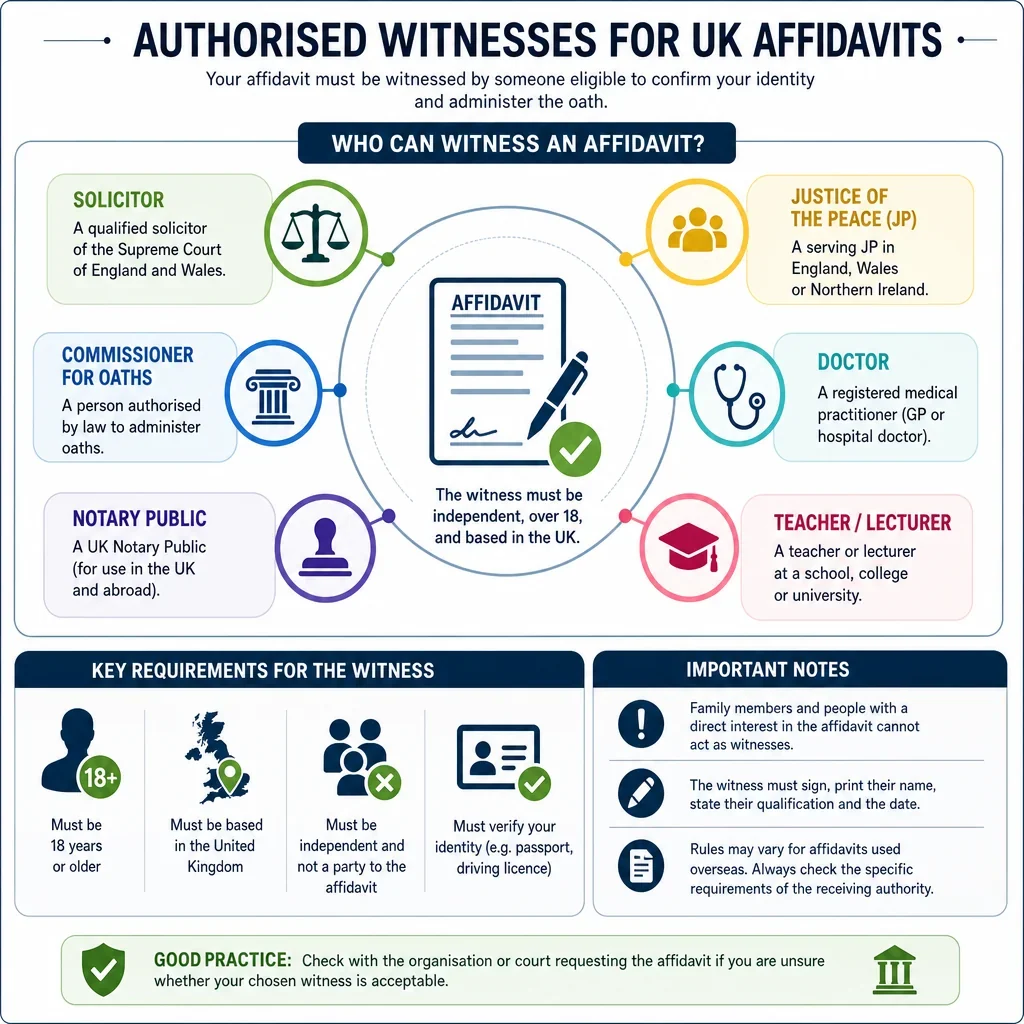
Authorised person to administer the oath or affirmation | Affidavits must be sworn or affirmed before a legally authorised person. | Before signing | Required in most cases | Book a solicitor, commissioner for oaths, notary, or court officer if accepted. |
Choice between oath and affirmation | Allows the deponent to make a religious oath or secular affirmation. | Before signing | Required in most cases | Tell the commissioner in advance which form will be used. |
Jurat wording and place of swearing | Records when, where, and before whom the affidavit was sworn. | Before signing | Required in most cases | Leave completion of jurat details until the signing appointment. |
Commissioner’s name, address, and qualification | Confirms the person administering the affidavit is identifiable. | Before signing | Required in most cases | Ask the witness to stamp, sign, and state their capacity clearly. |
Signing appointment time and location | Ensures the deponent, affidavit, exhibits, and witness are together. | Before signing | Required in most cases | Bring the final unsigned affidavit, exhibits, ID, and payment if needed. |
Interpreter or translation support for signing | Ensures the deponent understands the affidavit before swearing it. | Before signing | Only if applicable | Use an independent interpreter and record their details if required. |
Reading, disability, or accessibility needs | Allows proper arrangements for understanding and execution. | Before signing | Only if applicable | Tell the commissioner if the affidavit must be read aloud or adapted. |
Consistent signature format | Avoids uncertainty over whether the correct person signed. | Before signing | Often useful | Sign using the same name used in the affidavit unless advised otherwise. |
Whether remote witnessing is accepted | Some recipients may require in-person swearing or specific procedures. | Before signing | Only if applicable | Confirm acceptance with the court, authority, solicitor, or notary first. |
Filing or submission details | ||||
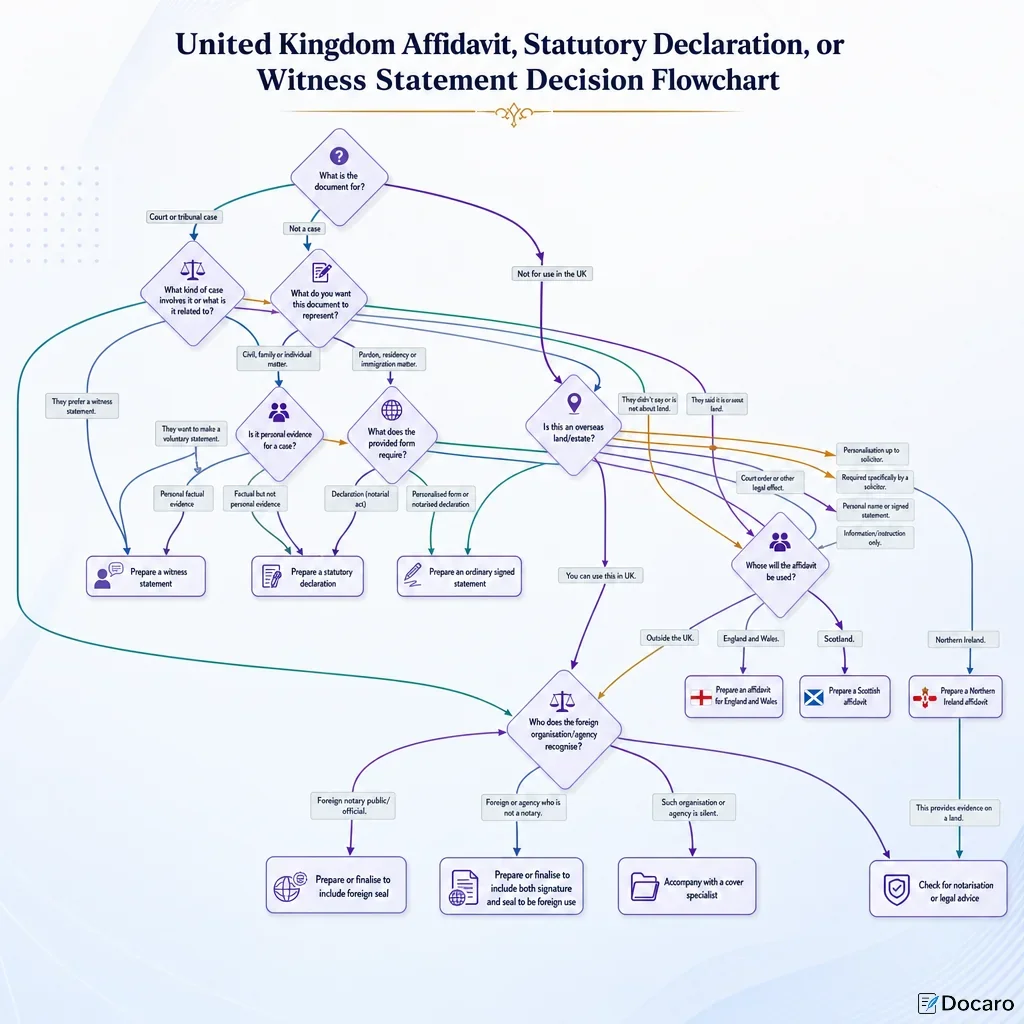
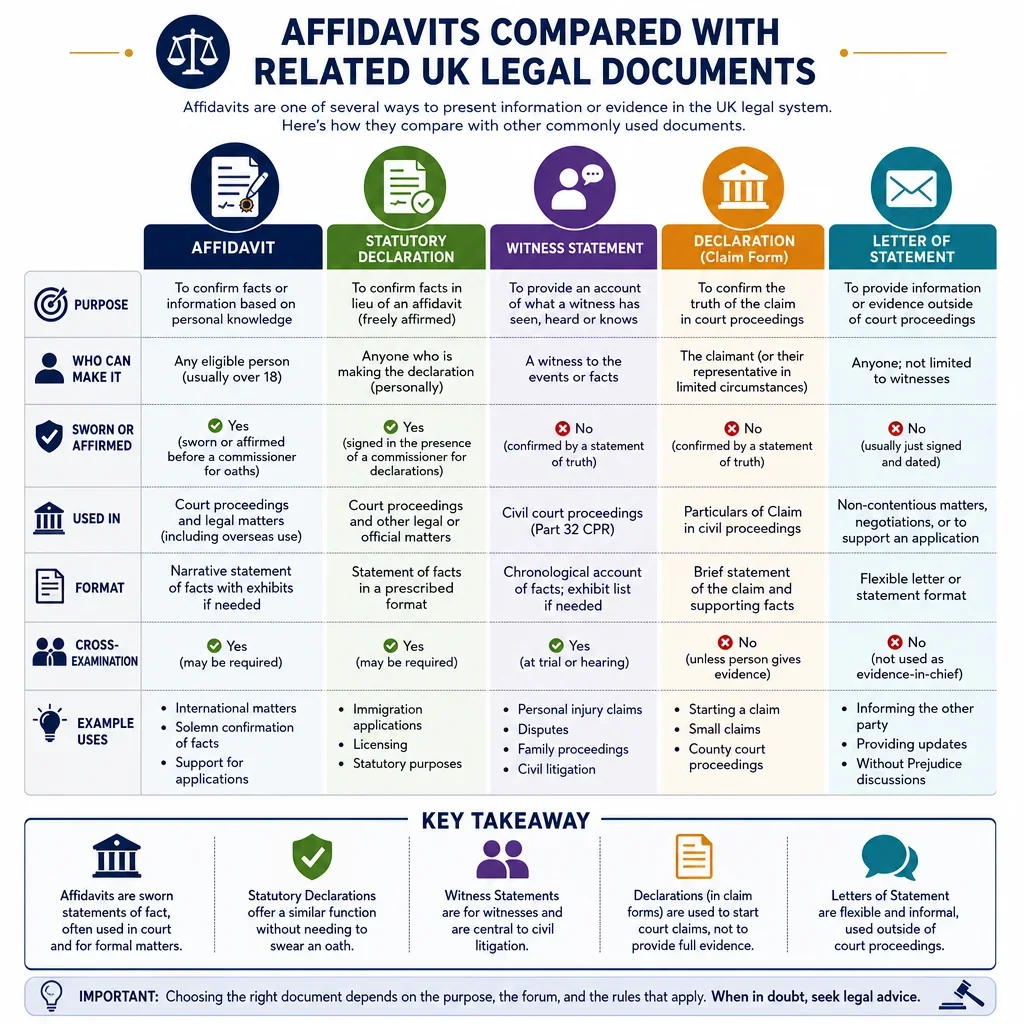
Statement of truth requirement check | Some evidence documents require statement of truth wording in addition to signing. | Before signing | Often useful | Check whether an affidavit, witness statement, or statutory declaration is required. |
Facts and chronology | ||||
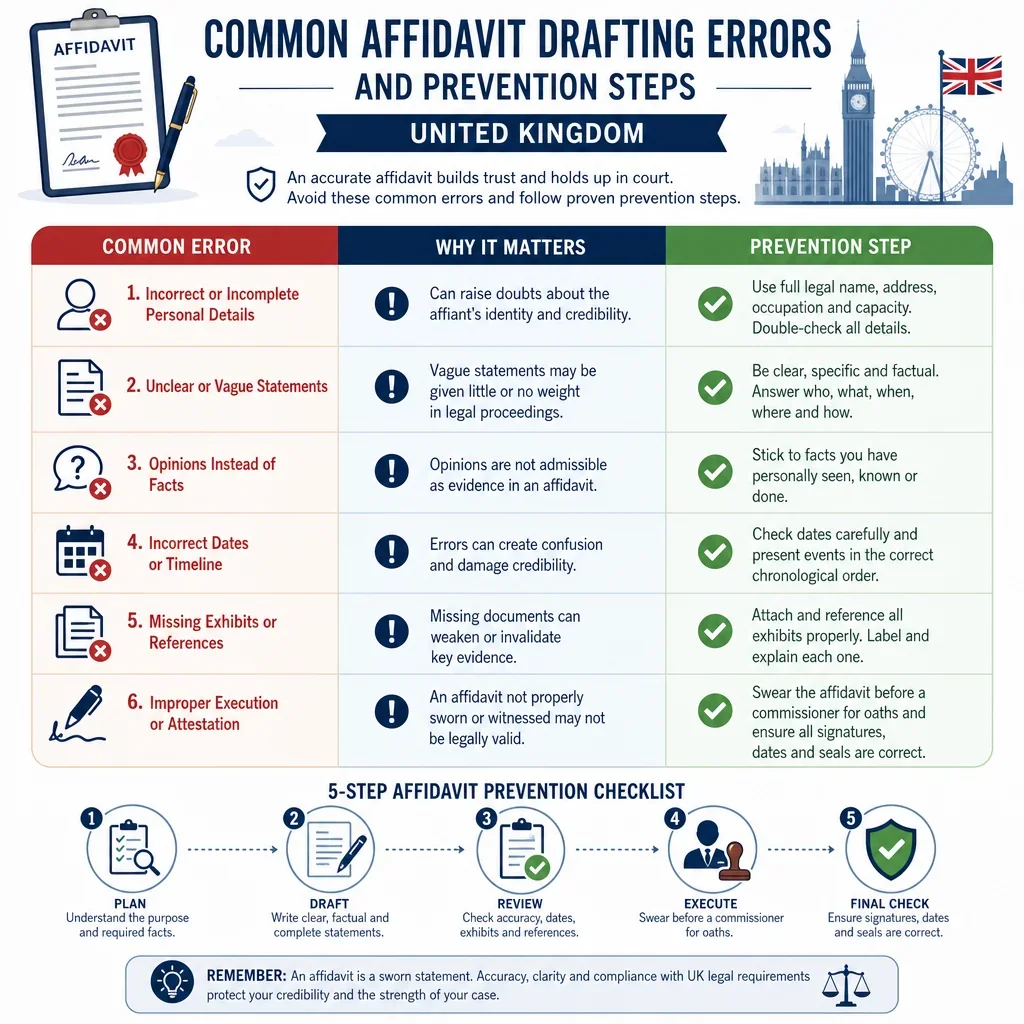
Confirmation that evidence is true and complete | False sworn statements may have serious legal consequences. | Before signing | Required in most cases | Re-read every paragraph and correct uncertainty before swearing. |
Witnessing arrangements | ||||
Awareness of contempt risk for false evidence | Misleading the court can amount to contempt in court proceedings. | Before signing | Required in most cases | Do not sign until inaccurate, exaggerated, or unsupported statements are corrected. |
Supporting documents | ||||
Legal privilege review | Prevents accidental disclosure of privileged legal advice or litigation communications. | Before filing or submission | Often useful | Ask a solicitor before exhibiting legal advice or settlement communications. |
Without prejudice communication check | Settlement communications may be inadmissible or sensitive. | Before filing or submission | Only if applicable | Do not exhibit settlement offers without checking admissibility. |
Filing or submission details | ||||
Existing confidentiality, anonymity, or reporting restrictions | Prevents breach of court restrictions or protected identities. | Before filing or submission | Only if applicable | Review orders, directions, and statutory restrictions before circulation. |
Required affidavit format and layout | Court rules may specify headings, paragraphing, margins, and exhibit handling. | During drafting | Required in most cases | Number paragraphs and pages keep exhibits clearly separated. |
Page numbering and paragraph numbering | Makes references easier for the court, parties, and exhibit bundle. | During drafting | Required in most cases | Use continuous paragraph numbers and stable page numbering before signing. |
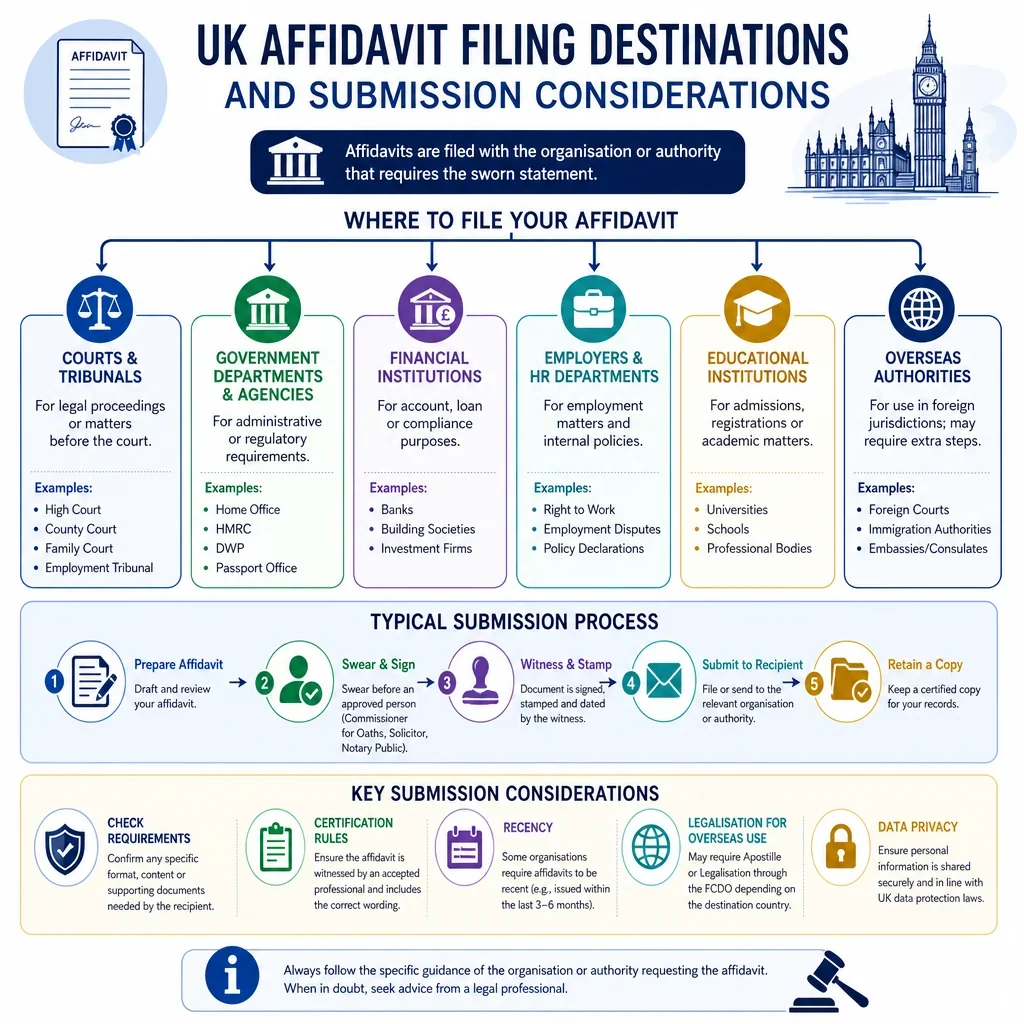
Accepted filing method | Determines whether filing is by portal, email, post, or counter service. | Before filing or submission | Required in most cases | Check the relevant court office, portal guidance, or order directions. |
Electronic filing account or portal access | Some courts use electronic filing systems such as CE-File. | Before filing or submission | Only if applicable | Set up access before the deadline and check file size limits. |
Who must receive a served copy | Ensures all parties entitled to evidence receive it properly. | Before filing or submission | Often useful | Check service addresses, permitted methods, and service deadline. |
Number of signed copies required | Avoids delay where originals or certified copies are needed. | Before signing | Often useful | Ask whether the court, recipient, and each party need separate copies. |
Court fee or oath fee position | Prevents rejection or delay where payment is required. | Before filing or submission | Only if applicable | Check court fees and any commissioner or notary charges in advance. |
Help with Fees eligibility or reference | May reduce or remove court fees for eligible applicants. | Before filing or submission | Only if applicable | Apply early and include the reference when filing if required. |
Electronic file names for affidavit and exhibits | Helps courts and parties identify documents in electronic bundles. | Before filing or submission | Often useful | Use date, party name, document type, and exhibit range in names. |
Hearing or application bundle requirements | Ensures the affidavit and exhibits appear in the correct bundle section. | Before filing or submission | Only if applicable | Check index, pagination, bookmarks, and court bundle directions. |
Whether a sealed or certified copy is needed | Some recipients require an official or certified copy, not a plain copy. | Before filing or submission | Only if applicable | Ask the court or receiving authority before submission. |
Foreign use, notarisation, or apostille requirements | Affidavits used abroad may need notarisation or legalisation. | Before signing | Only if applicable | Confirm requirements with the foreign authority before swearing. |
Case or matter details | ||||
Check whether a statutory declaration is required instead | Some procedures require a statutory declaration rather than an affidavit. | Before drafting | Often useful | Check the recipient’s wording and form before preparing the document. |
Insolvency proceeding details | Insolvency affidavits may require specific company, debt, and petition details. | Before drafting | Only if applicable | Gather petition, statutory demand, debt evidence, and service details. |
Immigration status, application, or appeal reference | Immigration affidavits often rely on identity, relationship, residence, or support evidence. | Before drafting | Only if applicable | Use Home Office reference numbers and copies of key decision letters. |
Family court case details and child identifiers | Family affidavits may need precise party, child, and order details. | Before drafting | Only if applicable | Check confidentiality and use initials where directed. |
Facts and chronology | ||||
Reason an original document is unavailable | Supports affidavits explaining loss, destruction, or inability to produce originals. | Before drafting | Only if applicable | Record last known possession, searches made, and replacement steps taken. |
Corrections needed before signing | Prevents signing an affidavit containing errors or outdated information. | Before signing | Required in most cases | Review names, dates, exhibit references, totals, and paragraph cross-references. |
Witnessing arrangements | ||||
Final unsigned version control | Avoids signing an obsolete draft or mismatched exhibit set. | Before signing | Required in most cases | Mark the final draft clearly and remove older versions from the signing pack. |
Filing or submission details | ||||
Scanned signed affidavit and exhibits | Provides a usable electronic copy for filing and service. | Before filing or submission | Often useful | Scan in order, ensure signatures and stamps are legible, and save as PDF. |
Safe storage of the sworn original | Originals may be needed if authenticity or filing is questioned. | Before filing or submission | Often useful | Keep the original flat, complete, and separate from drafts. |
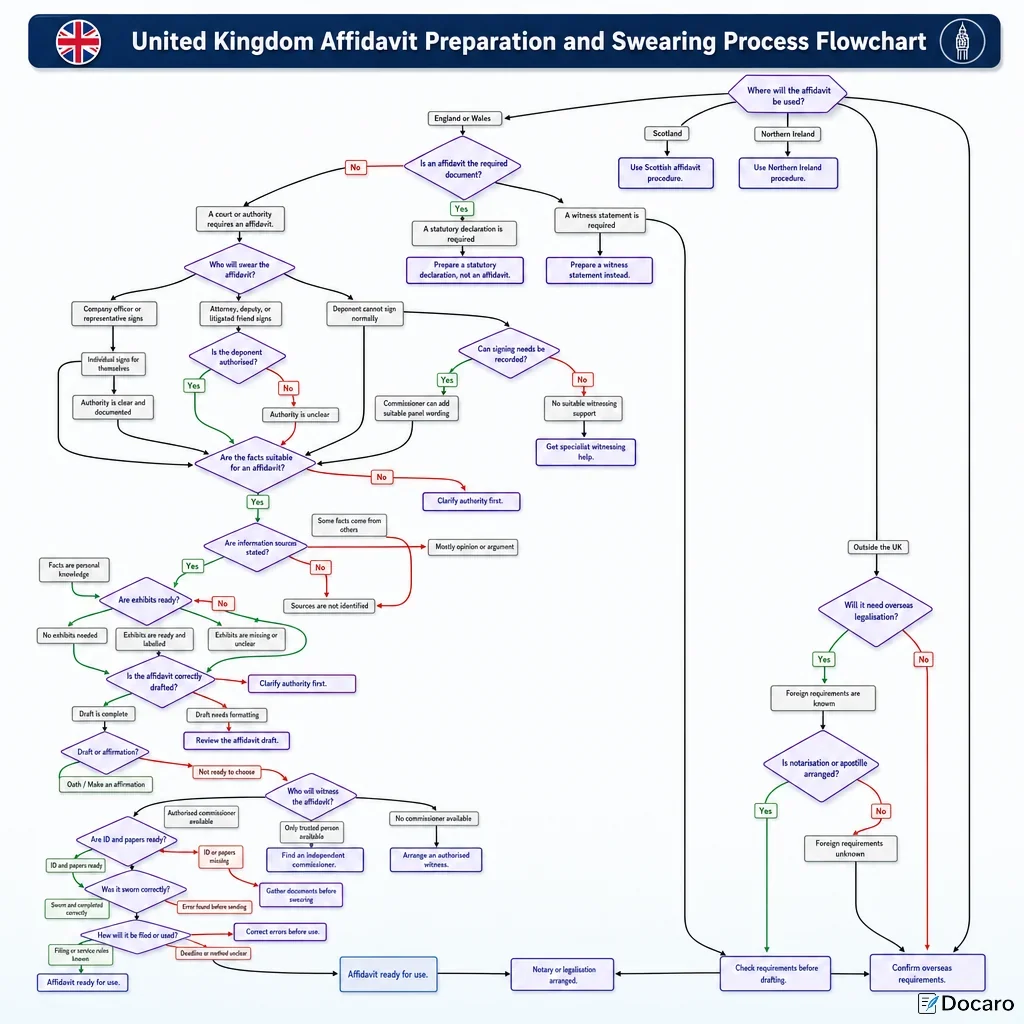
What Should You Gather Before Preparing A UK Affidavit?
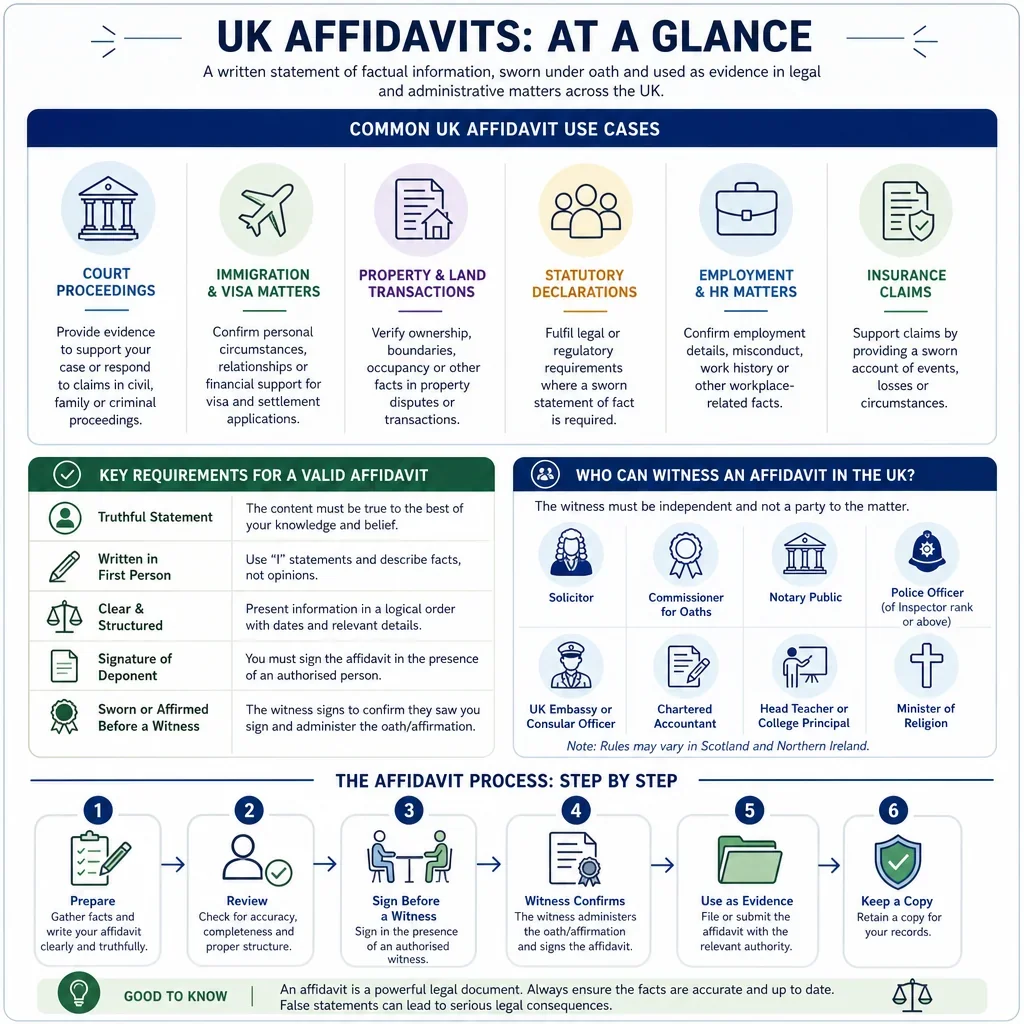
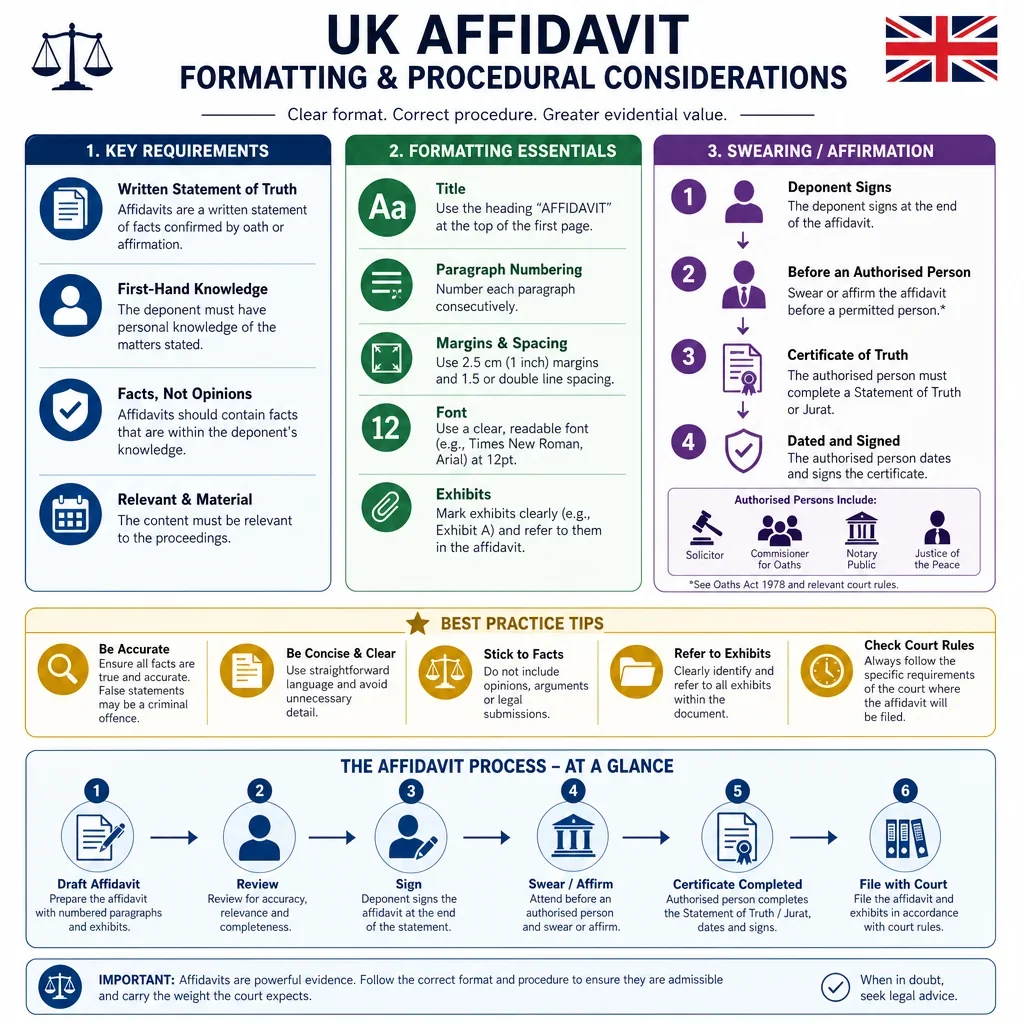
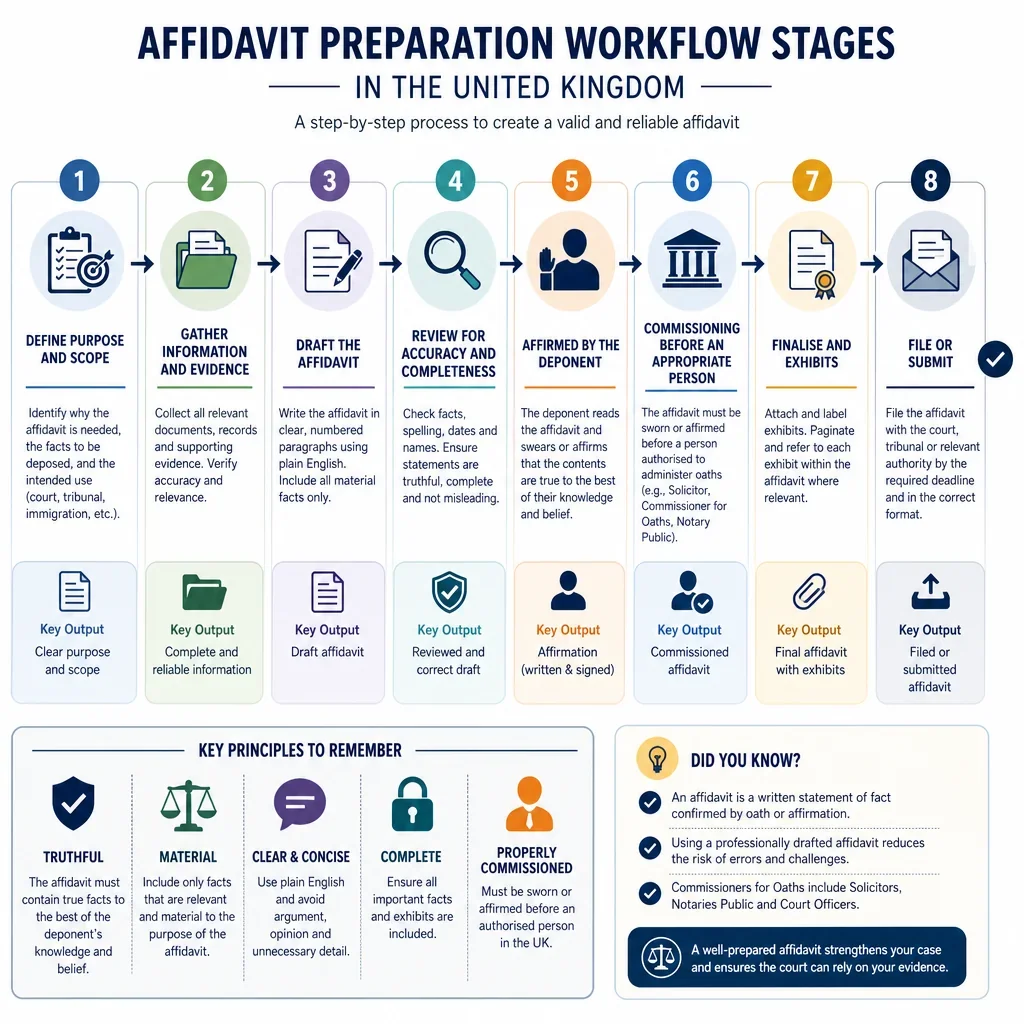
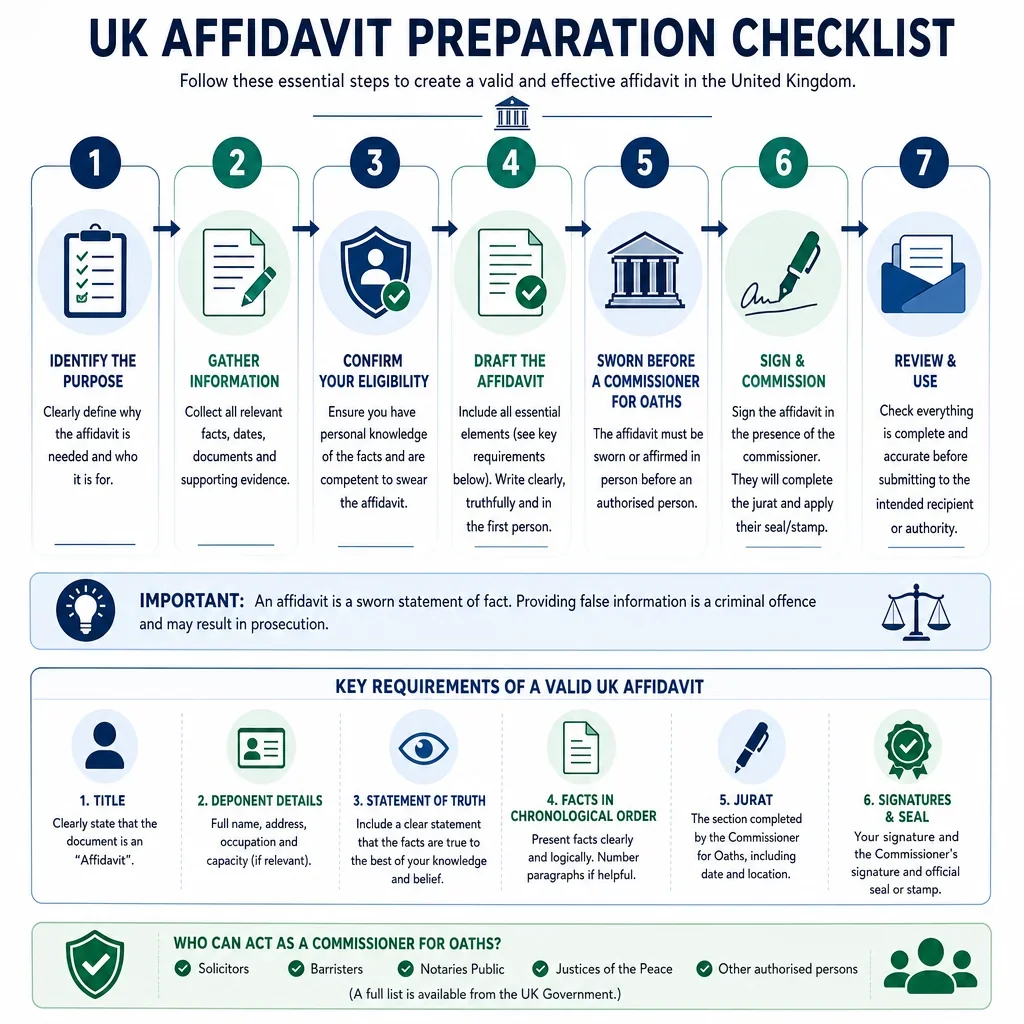
Before drafting, collect the deponent’s full identity details, the court or matter reference, a clear first-person chronology, and every document that will be exhibited. This helps the affidavit read coherently and reduces the risk that facts, dates, exhibit labels, or party names are inconsistent.
Who Can Witness An Affidavit In The UK?
An affidavit is normally sworn or affirmed before an authorised person, such as a solicitor, commissioner for oaths, notary public, or court officer where permitted. The witnessing arrangements should be checked before signing because an affidavit usually must not be signed casually or retrospectively witnessed.
How Should Exhibits Be Prepared For An Affidavit?
Supporting documents should be organised before signing, given clear exhibit references, and matched to the relevant paragraphs. If documents contain personal data, bank details, children’s information, medical records, or confidential material, consider whether redaction, permission, or a separate filing approach is needed.
What Should Be Checked Before Filing Or Submission?
Before filing, confirm the correct court, claim or application number, deadline, required format, page numbering, exhibit bundle, statement of truth or jurat wording, fee position, and service requirements. Court rules and local practice directions may differ between civil, family, probate, insolvency, immigration, and tribunal matters.
FAQs
You Might Also Be Interested In