

United Kingdom School Holiday Arrangement Planner
Created:
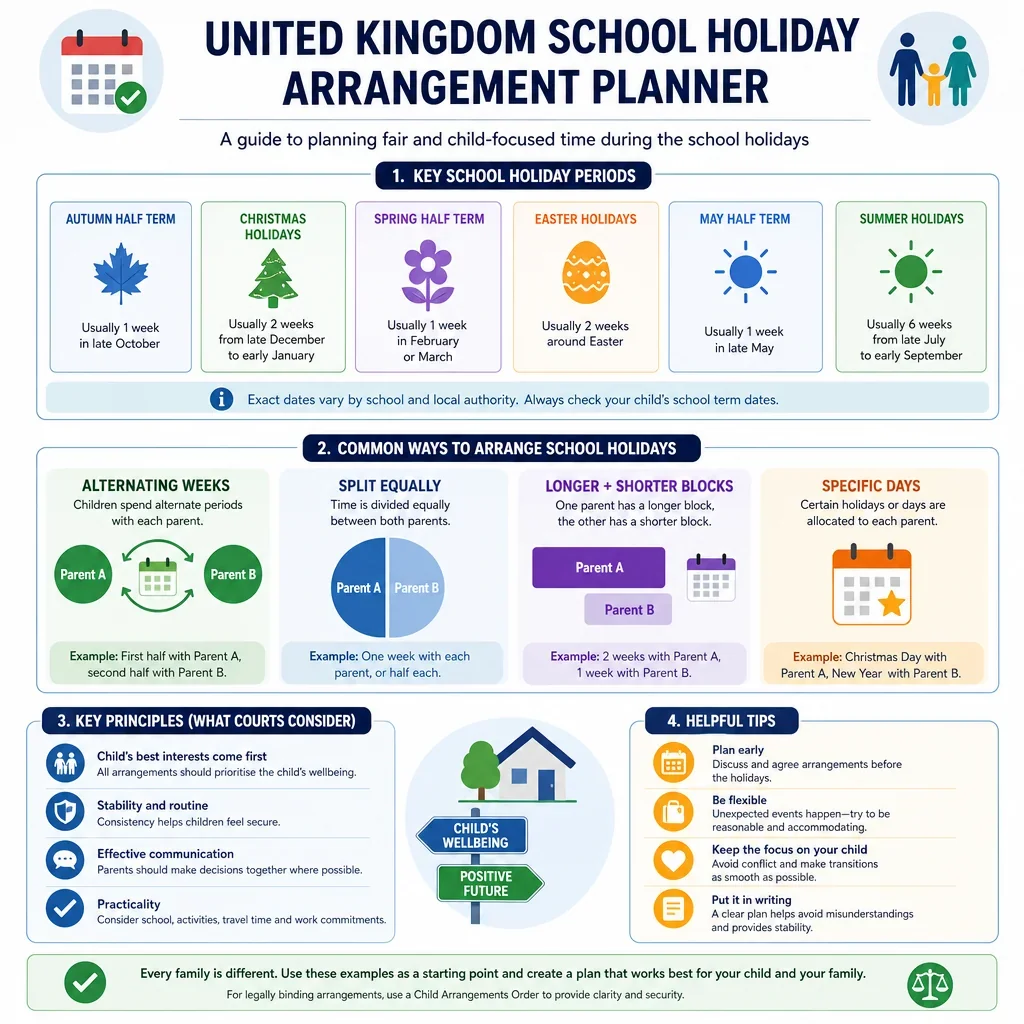
Use this planner to organise school holiday childcare, handovers, travel dates, and shared parenting time across the UK. It helps families create clear, practical arrangements and supports planning alongside an AI Generated British Child Arrangements Order.
Planning Issue | Common Allocation Method | Planning Lead Time | Drafting Considerations | Detail Level Needed |
|---|---|---|---|---|
Autumn term | ||||
Settling back into school routines after summer. | Fixed dates | Confirm by end of summer holiday. | Keep weekday pattern stable define school pick-ups, clubs and homework nights. | Medium |
New timetable, clubs and school communications. | By agreement each year | Review once school issues the timetable. | Allocate responsibility for uniform, equipment, school apps and parent evenings. | Medium |
Child starts reception, secondary school or a new school. | Fixed dates | Agree transition plan before the first school day. | Specify first-day attendance, photographs, drop-off, collection and settling-in sessions. | High |
Parents' evening and school meetings. | By agreement each year | Confirm when school publishes dates. | State whether parents attend together, separately, or share teacher feedback promptly. | Medium |
Regular sports, music or weekend activities restart. | Parent-specific period | Confirm when activity term dates are known. | Name activities, transport duties, costs and whether attendance continues in each home. | Medium |
Spring term | ||||
Re-establishing routine after Christmas arrangements. | Fixed dates | Confirm before Christmas holiday ends. | Clarify first school-day handover and return to usual term-time pattern. | Low |
Revision pressure for GCSEs, A levels or school assessments. | Fixed dates | Review when exam timetable is issued. | Allow quiet study time, limit late travel and share exam timetable. | High |
Weather disruption, illness and school closures. | By agreement each year | Agree contingency rules before winter weather. | Set fallback childcare, remote learning and missed handover communication rules. | Medium |
Residential school trips or activity weeks. | By agreement each year | Confirm once school requests consent and payment. | Allocate consent, costs, packing, medication and collection after return. | Medium |
Term-time pattern interrupted by February half-term. | Alternating years | Confirm half-term dates 6 to 8 weeks ahead. | State whether normal weekends merge with holiday time or restart after school resumes. | Medium |
Summer term | ||||
Public exams, study leave and revision sessions. | Fixed dates | Confirm when final exam dates are available. | Prioritise exam attendance, revision stability and transport to exam centres. | High |
End-of-term handover into the summer holiday. | Fixed dates | Confirm by May half-term if possible. | Define whether holiday starts after school, at 5pm, or next morning. | High |
Leavers' events, sports days and school performances. | By agreement each year | Confirm when school calendar is published. | State attendance expectations and whether both parents may attend school events. | Medium |
Preparing for change of school in September. | By agreement each year | Start planning once school place is confirmed. | Agree transition days, uniform purchase, equipment costs and information sharing. | |
Bank holidays overlap with usual weekend contact. | Alternating years | Confirm at least 4 weeks ahead. | Specify whether bank holiday Monday extends the weekend arrangement. | Medium |
Half-term holiday | ||||
Short holiday with limited days to divide. | Equal split | Confirm 4 to 8 weeks before break starts. | Define midweek handover time and whether adjacent weekends are included. | Medium |
One-week break too short for practical splitting. | Alternating years | Set annual rotation before academic year begins. | Identify which parent has October, February and May half-terms in odd and even years. | Medium |
Childcare needed while parents work. | Parent-specific period | Book childcare as soon as holiday clubs open. | Allocate holiday club choice, booking, payment and collection duties. | High |
Short UK trips affect handover times. | Fixed dates | Confirm travel at least 4 weeks ahead. | State return deadline, travel contact details and missed weekend adjustment. | Medium |
Siblings have different school holiday dates. | By agreement each year | Check all school calendars before term starts. | Say whether siblings stay together or follow individual school calendars. | High |
Christmas holiday | ||||
Christmas Eve, Christmas Day and Boxing Day are highly sensitive. | Alternating years | Agree by early autumn if possible. | Specify exact times for Christmas Eve, Christmas Day and Boxing Day handovers. | High |
Balancing festive time across a two-week break. | Equal split | Confirm school holiday dates 2 to 3 months ahead. | Define first half, second half and how bank holidays are treated. | High |
Religious services or family traditions conflict with contact pattern. | Parent-specific period | Discuss before festive bookings are made. | Protect key religious events and state any annual rotation. | High |
Long-distance family visits affect travel and rest time. | Fixed dates | Confirm travel plans 2 to 3 months ahead. | Set travel responsibility, return time, overnight stops and phone contact. | High |
New Year's Eve and New Year's Day may need separate allocation. | Alternating years | Agree alongside Christmas dates. | State whether New Year follows the second-half parent or alternates separately. | Medium |
Overseas festive travel requires consent and documents. | By agreement each year | Confirm 3 to 6 months ahead where flights are needed. | Include destination, dates, flight details, accommodation, insurance and passport handover. | High |
Children may want to attend different family events. | By agreement each year | Discuss before extended family plans are fixed. | State whether siblings remain together and how children's views are considered. | High |
Easter holiday | ||||
Two-week spring break needs fair division. | Equal split | Confirm dates 6 to 10 weeks ahead. | Define first and second week, handover day and return-to-school arrangements. | Medium |
Good Friday to Easter Monday may carry special importance. | Alternating years | Agree before making family plans. | Say whether Easter weekend overrides the ordinary holiday split. | High |
Revision for summer exams may reduce travel flexibility. | Fixed dates | Review once revision timetable is known. | Build in study blocks, tutoring, rest days and limited long-distance travel. | High |
Religious observance or services may be important. | Parent-specific period | Confirm before church or family events are arranged. | Allocate Maundy Thursday, Good Friday, Easter Sunday and Easter Monday if relevant. | Medium |
Foreign travel during school break requires timely consent. | By agreement each year | Confirm 3 months ahead where possible. | State consent deadline, passport release, itinerary and emergency contact details. | High |
Holiday clubs may be needed around work commitments. | Parent-specific period | Book clubs 1 to 2 months ahead. | Set responsibility for booking, paying, packed lunches and collections. | Medium |
Summer holiday | ||||
Long break needs structured allocation of several weeks. | Equal split | Confirm by Easter or early summer term. | List exact weeks, start times, handovers and return-to-school responsibility. | High |
Parents both want peak holiday weeks. | Alternating years | Set choice deadline 3 to 6 months ahead. | Alternate first choice of holiday weeks and include fallback if deadlines are missed. | High |
Each parent wants a continuous holiday block. | Fixed dates | Confirm blocks by spring half-term if booking travel. | Cap continuous time if appropriate and state contact during longer stays. | High |
International travel, passports and consent. | By agreement each year | Plan 3 to 6 months ahead, earlier for long-haul trips. | Include written consent, passport exchange, destination, flights, insurance and return deadline. | High |
Long childcare gaps when parents are working. | Parent-specific period | Book clubs and camps as soon as places open. | Agree provider, costs, transport, medical forms and who may collect. | High |
Extended family holidays or grandparents' care. | Parent-specific period | Confirm before family travel is booked. | State whether third-party care is permitted and provide contact details. | Medium |
Sports camps, tutoring or recurring activities interrupt holiday blocks. | By agreement each year | Confirm when providers publish schedules. | Say whether activities continue during each parent's holiday time and who pays. | Medium |
Preparing for first school day in September. | Fixed dates | Confirm at least 2 weeks before term starts. | Allocate final night, uniform, school bag, bedtime routine and first-day transport. | High |
Children's summer holiday dates do not fully overlap. | By agreement each year | Check all school calendars by spring term. | Define whether arrangements follow the eldest child, each child, or shared overlapping weeks. | High |
Older child has work, friends or activity preferences. | By agreement each year | Discuss before confirming long blocks. | Build flexibility for age-appropriate plans while keeping clear default dates. | Medium |
Court order may define who the child lives with or spends time with. | Fixed dates | Check any order before agreeing holiday variations. | Ensure wording is consistent with any Child Arrangements Order under section 8. | High |
Taking a child abroad may require consent from others with parental responsibility. | By agreement each year | Obtain consent before booking non-refundable travel. | Record who consents, how consent is given, and when passport is provided. | High |
Dispute about holiday travel, school choice or passport release. | By agreement each year | Raise disputes early to allow negotiation or mediation. | Include dispute-resolution steps and deadlines before bookings are made. | High |
How Should UK Parents Plan School Holiday Child Arrangements?
School holiday arrangements usually need more detail than term-time arrangements because they affect travel, childcare, handovers, passports, activities and family events. The highest-detail periods are normally the Christmas holiday, Summer holiday and any period involving overseas travel.
What Should Be Agreed Before Each School Holiday?
- Confirm dates early: Half-term and short breaks may only need 4 to 8 weeks' notice, but summer holidays and overseas travel often need 3 to 6 months' planning.
- Use clear handover rules: State whether time starts after school, at a fixed time, or from collection, and who is responsible for transport.
- Plan around school calendars: UK school holiday dates vary by local authority and school, so agreements should identify the relevant school calendar and say what happens if dates differ.
- Deal with travel documents: Where a parent plans foreign travel, include rules for passports, destination details, emergency contacts and written consent. Government guidance on taking a child abroad explains that permission is usually required from everyone with parental responsibility unless a court order allows it: GOV.UK permission to take a child abroad.
- Protect special days: Christmas Day, New Year's Eve, Easter weekend, birthdays and religious festivals should be expressly allocated or rotated if they matter to the family.
When Is A Child Arrangements Agreement Likely To Need More Detail?
A higher level of detail is useful where arrangements involve long holidays, international travel, work rota constraints, children at different schools, exam revision, special educational needs, or recurring disputes about exact dates. A Child Arrangements Order can regulate with whom a child lives, spends time or otherwise has contact under section 8 of the Children Act 1989: Children Act 1989, section 8.
Want to Generate Your own Child Arrangements Order?
Docaro AI can help you write your own Child Arrangements Order for use in the United Kingdom in minutes.
FAQs
A United Kingdom school holiday arrangement planner helps separated parents organise where children will stay during half-terms, Easter, summer holidays, Christmas, and other school breaks.
Show All FAQs
You Might Also Be Interested In
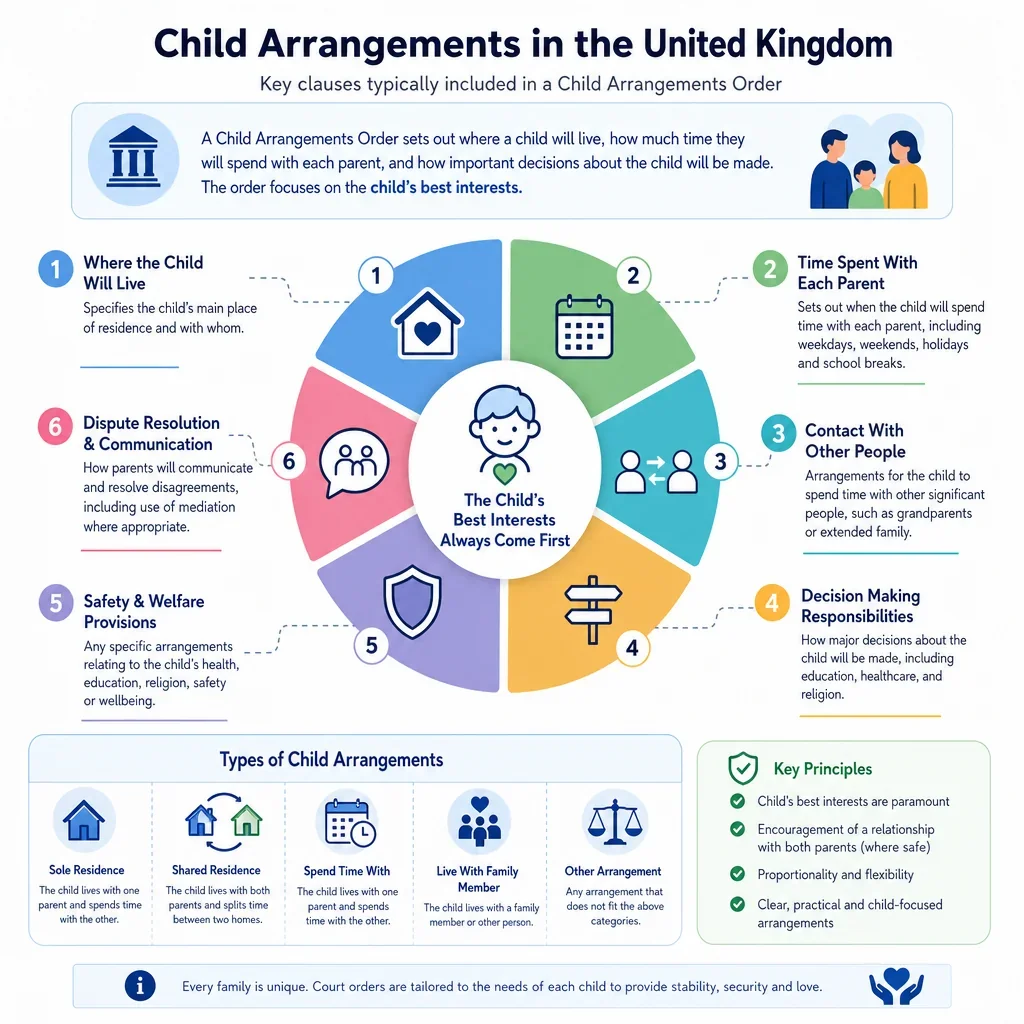
United Kingdom child arrangements clause library with useful wording examples for parenting schedules, contact, holidays and care terms.
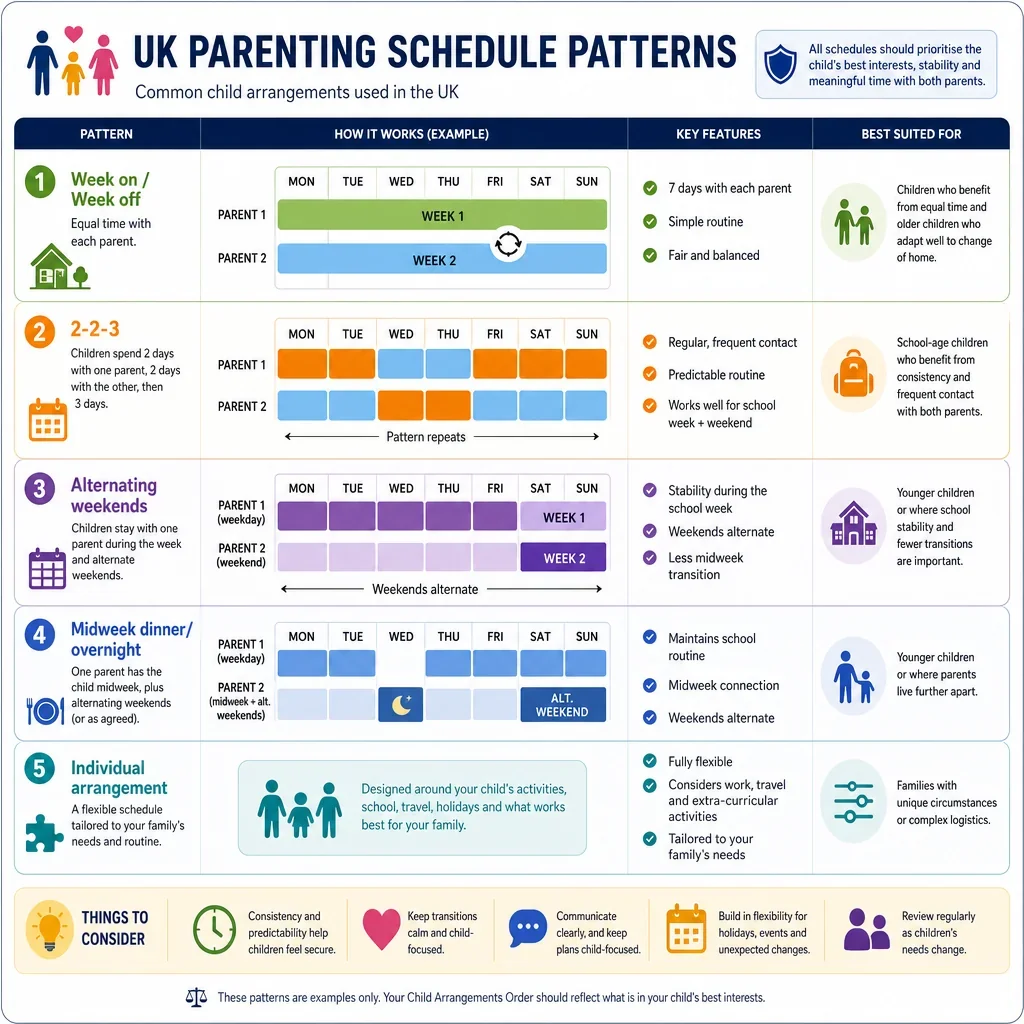
Explore UK parenting schedule patterns to compare child arrangements, plan routines, and support fair co-parenting decisions.
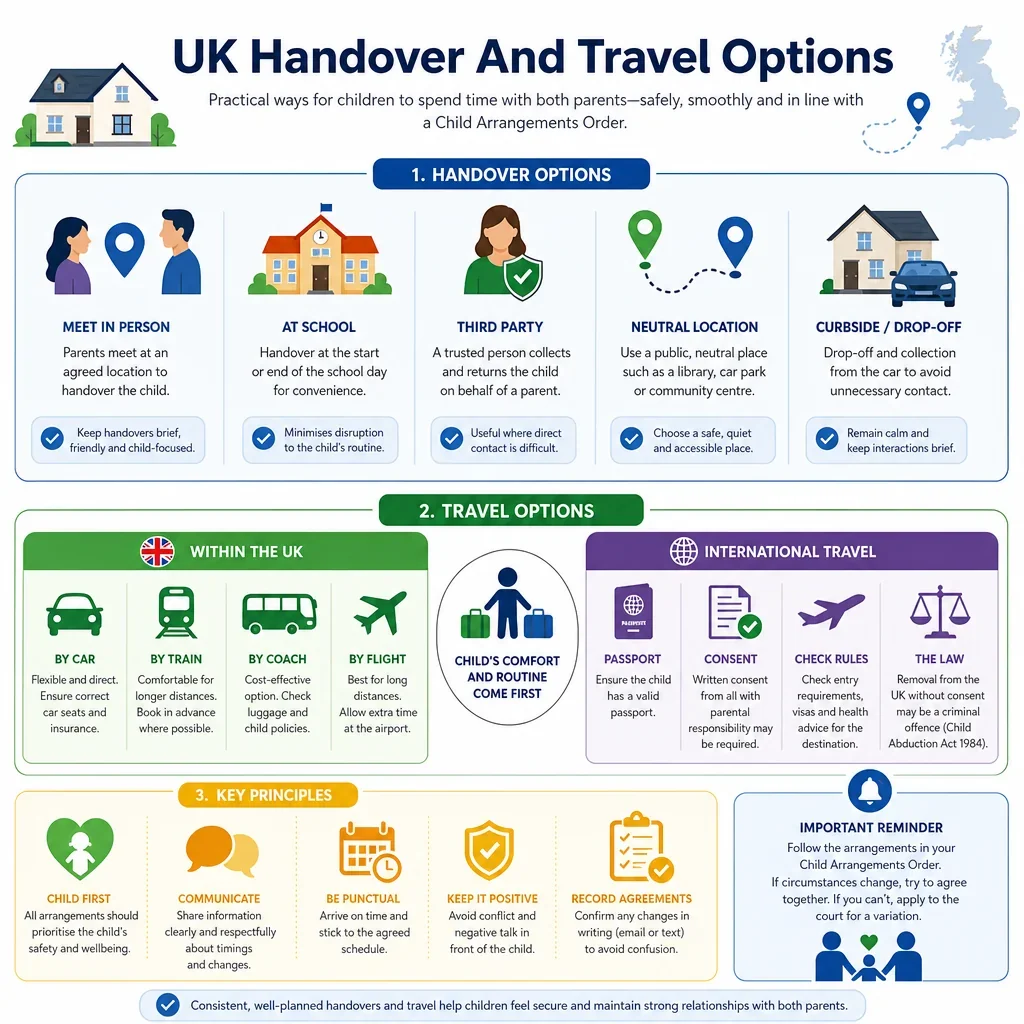
Explore UK handover and travel options for child arrangements, including practical choices for safe, clear parenting transitions.
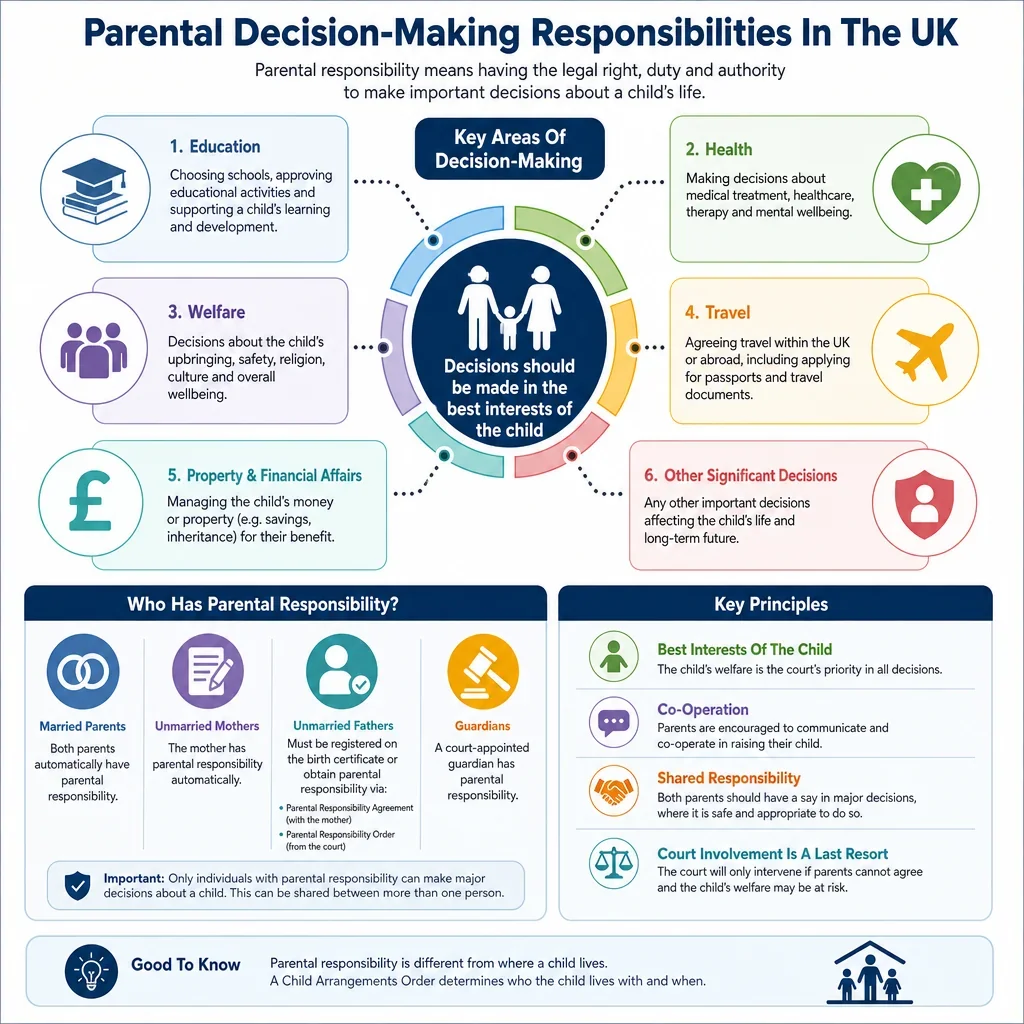
UK guide to parental decision-making responsibilities, helping parents understand child arrangements and key legal considerations.
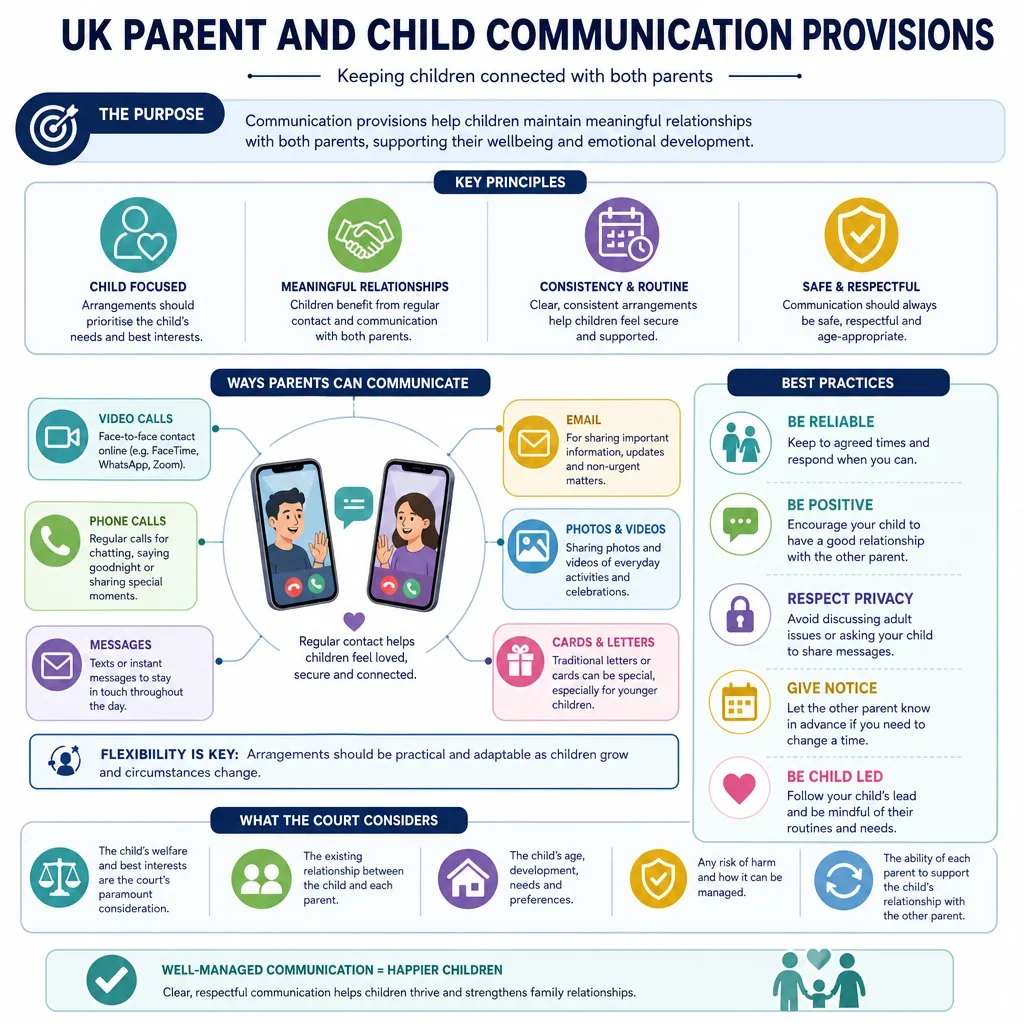
UK guide to parent and child communication provisions for clear, practical child arrangement terms.
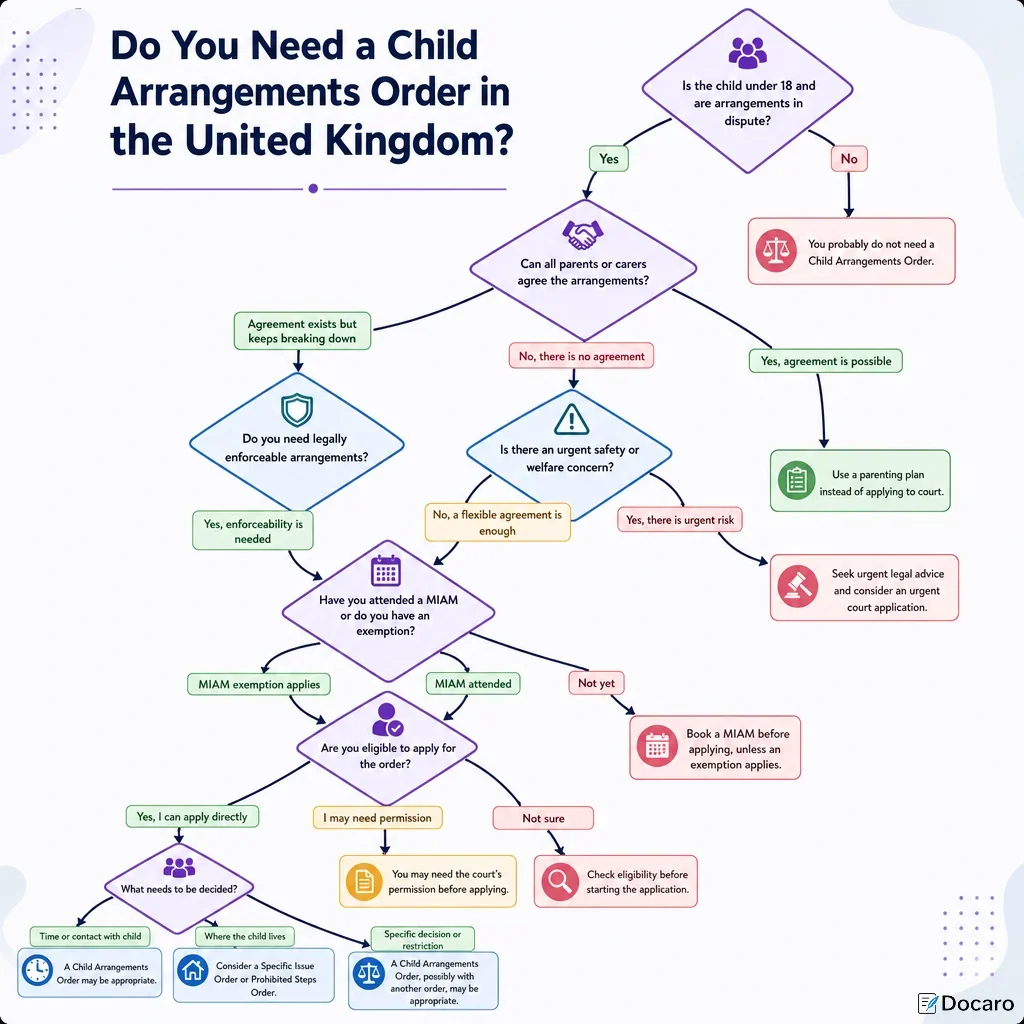
Find out if you need a Child Arrangements Order in the United Kingdom with this clear flowchart for separated parents.
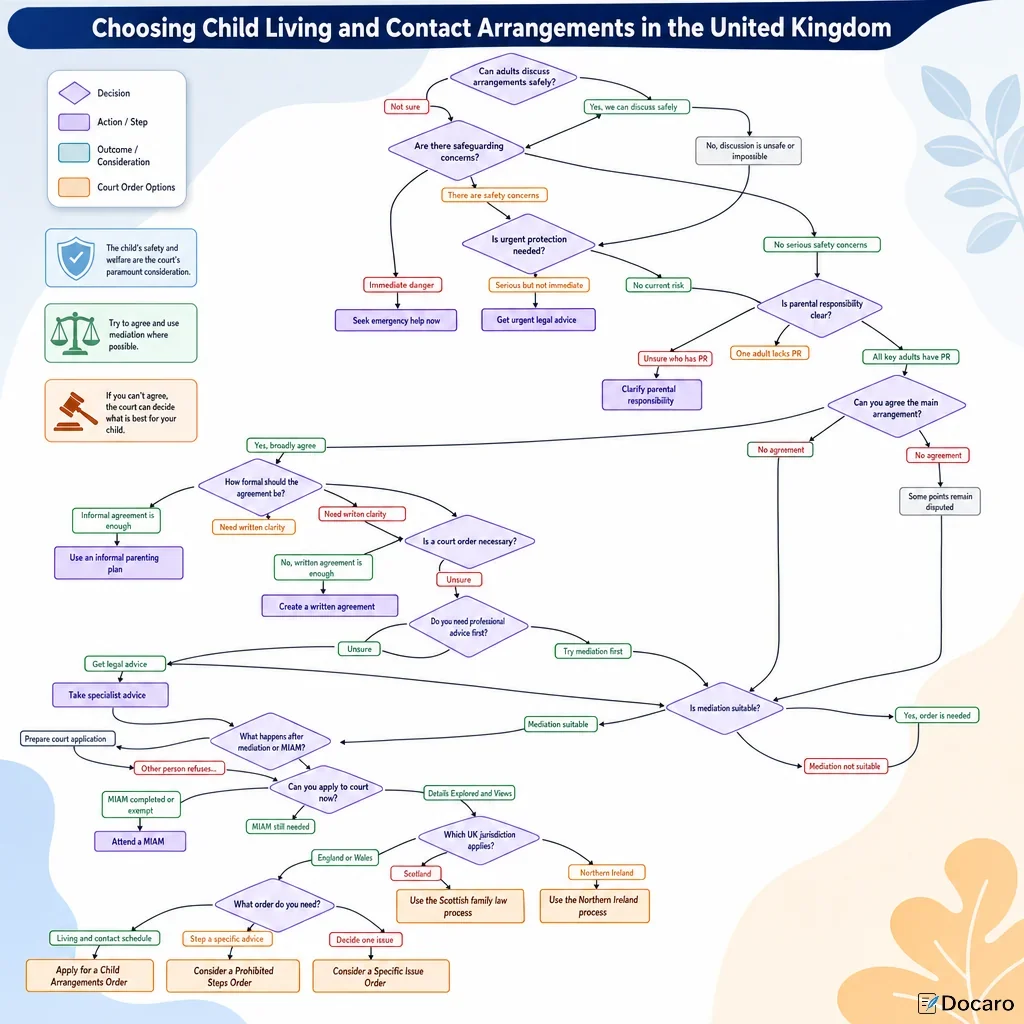
Understand child living and contact arrangements in the United Kingdom with practical guidance for parents making decisions.
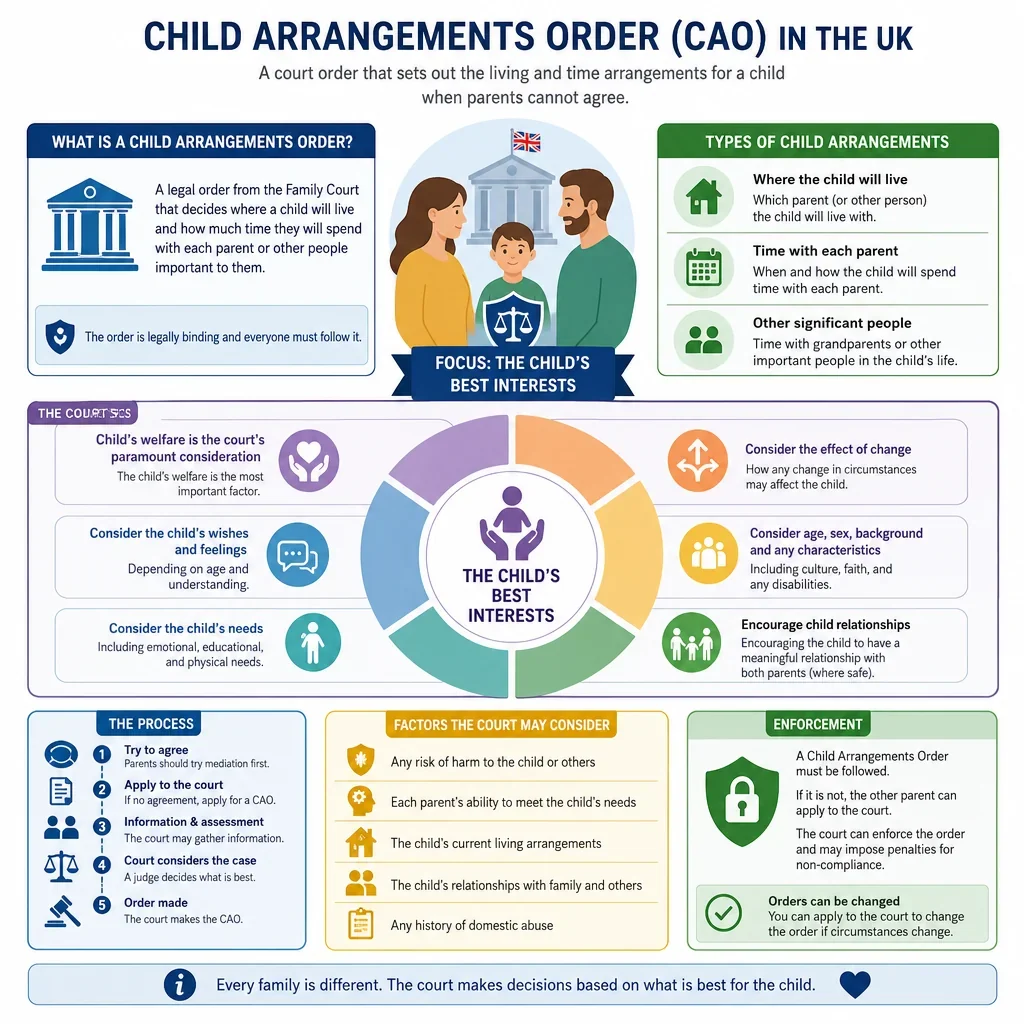
United Kingdom child arrangements glossary explaining key family law terms for parents and carers.
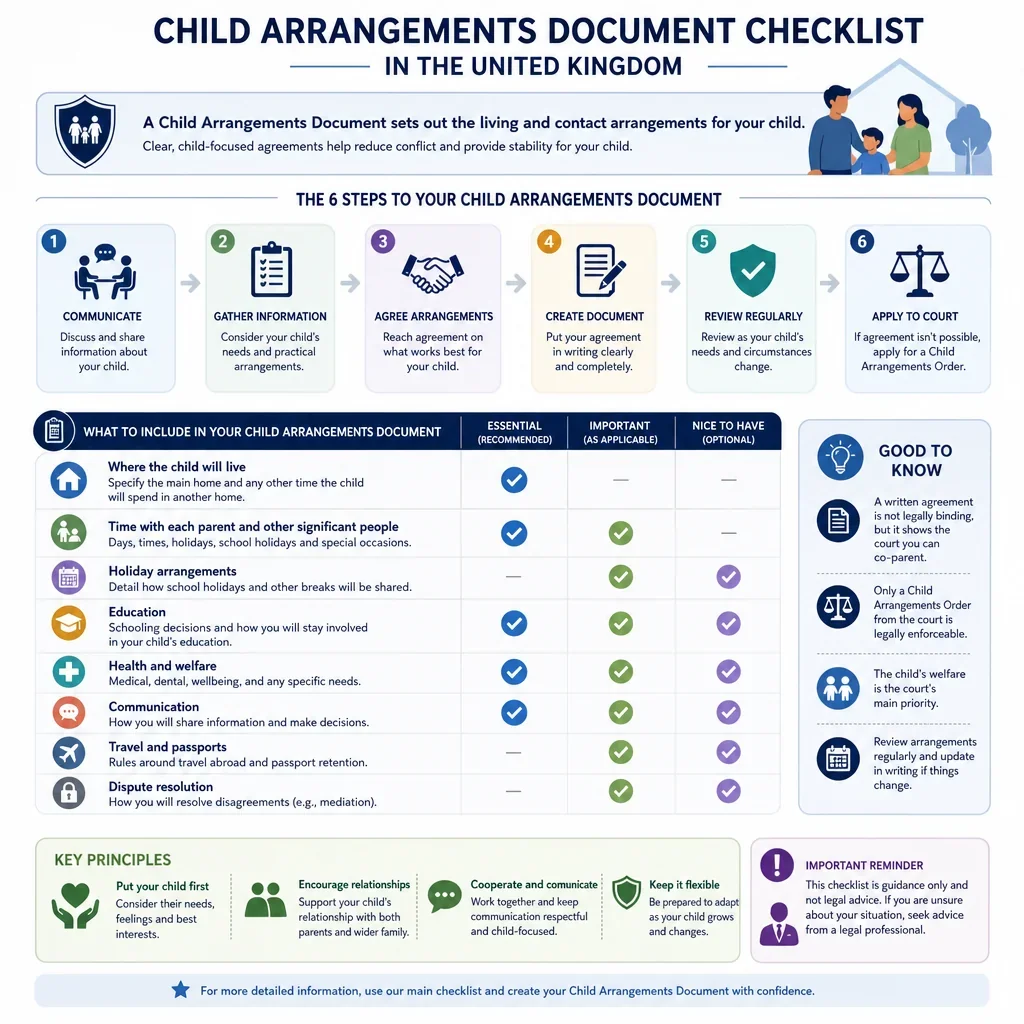
United Kingdom child arrangements checklist covering key documents, details, and records to prepare before making an order.
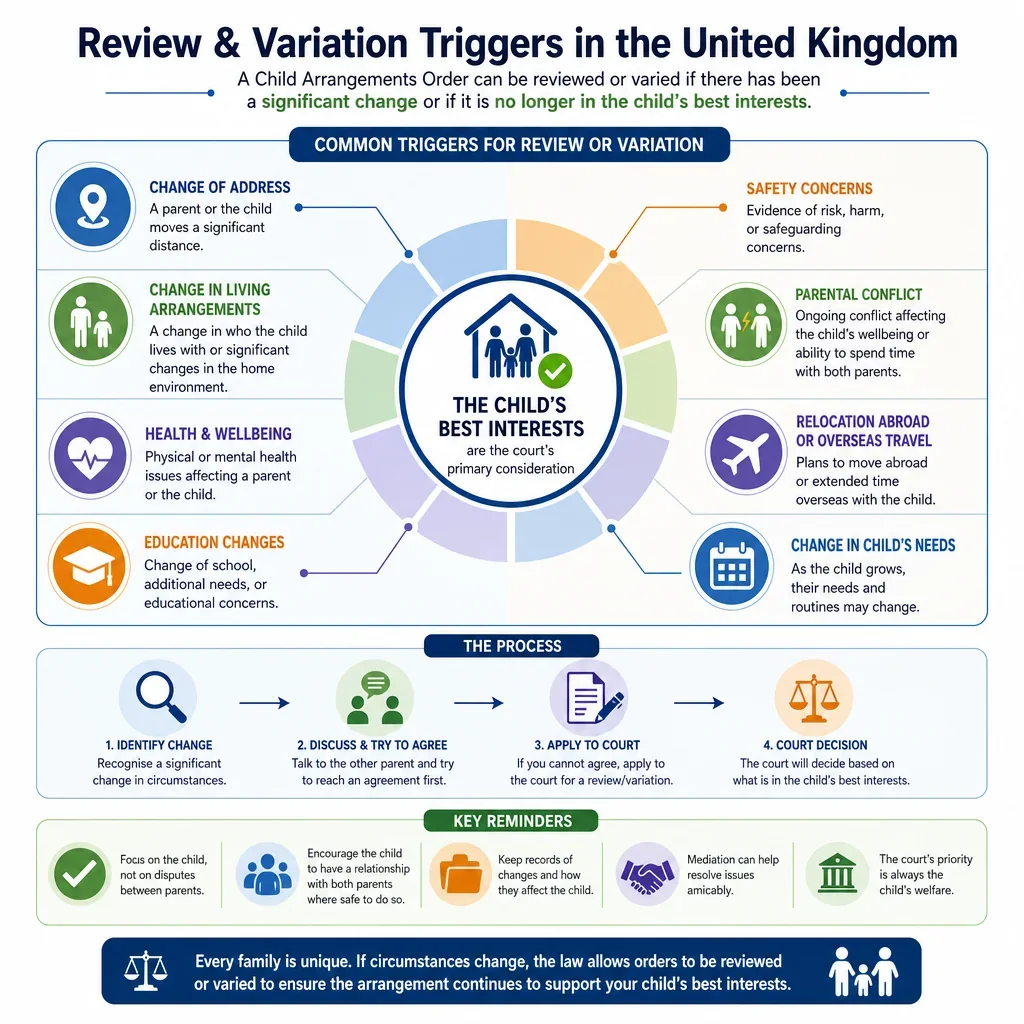
Review UK child arrangement variation triggers and understand when updates may be needed for changing family circumstances.
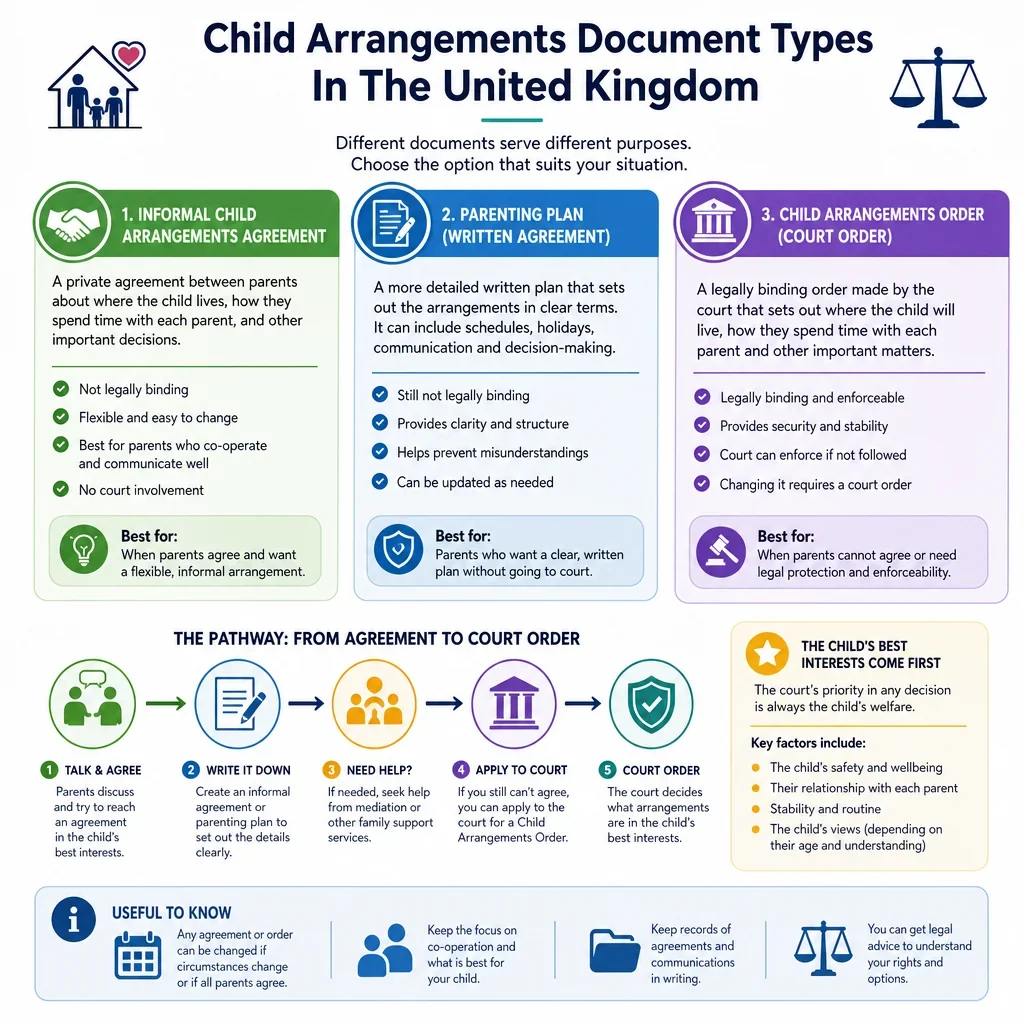
Explore UK child arrangements document types, their uses, and how they help parents plan clear child custody agreements.
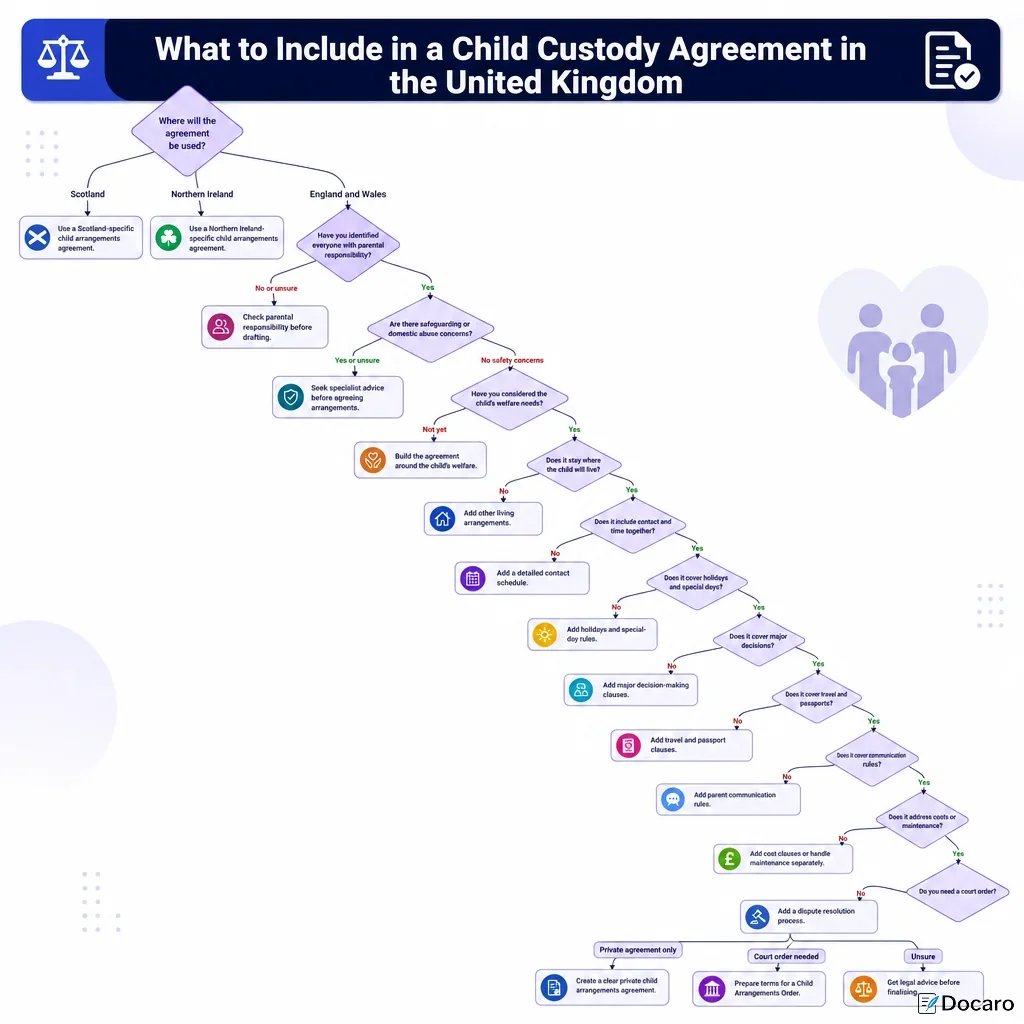
Learn what to include in a United Kingdom child custody agreement, from living arrangements to holidays, decisions and communication.