United Kingdom Child Arrangements Clause Library
Clause Name | Purpose | Drafting Complexity | Relevant Age Group | Practical Notes |
|---|---|---|---|---|
Living arrangements | ||||
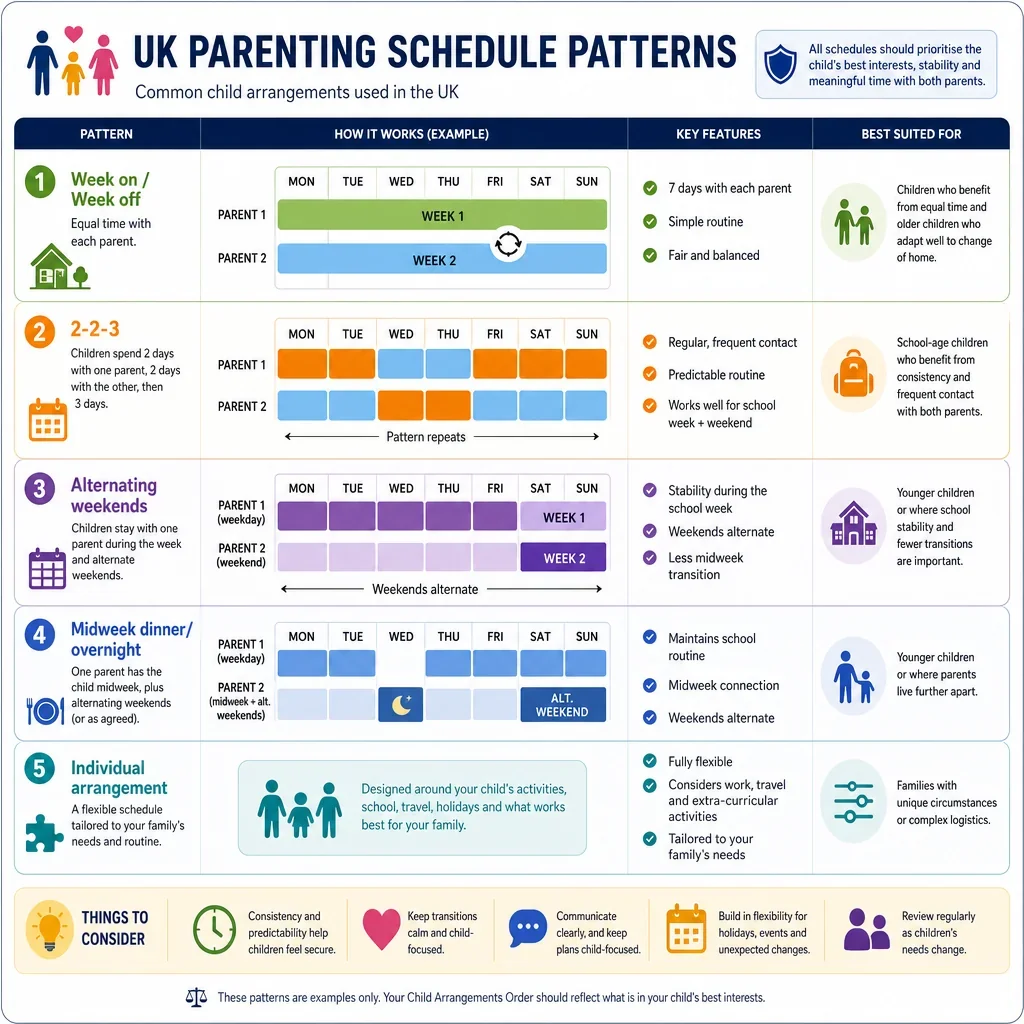
Term-Time Living Arrangements | Sets where the child lives during the ordinary school week. | Medium | Primary school age Secondary school age | Use exact weekdays, overnight rules and collection times to avoid disputes. |
Primary Home Designation | Identifies the child's main home for administration and stability. | Medium | Any age group | Useful for school, GP, benefits and correspondence, but avoid language that undermines shared care. |
Shared Care Pattern | Records a recurring division of care between both parents. | Medium | Any age group | Check school travel, clubs, homework and the child's need for routine. |
Infant Routine Arrangements | Sets age-appropriate care around feeding, naps and short separations. | High | Infants and toddlers | Include gradual increases if safe and consistent with the child's attachment and routine. |
Phased Overnight Contact | Introduces overnight stays gradually over a defined period. | High | Infants and toddlers Primary school age | Specify triggers, review dates and what happens if a stage is missed. |
Sibling Arrangements | Keeps siblings together or explains different schedules where needed. | Medium | Any age group | Consider half-siblings, step-siblings, school locations and each child's individual needs. |
Bedroom And Sleeping Arrangements | Confirms suitable sleeping arrangements in each home. | Low | Any age group | Avoid intrusive detail unless space, safeguarding or privacy is a real concern. |
Belongings Between Homes | Sets how clothes, school items and comfort objects move between homes. | Low | Any age group | State who washes, replaces and returns essential items. |
Right Of First Refusal For Childcare | Gives the other parent the option to care for the child before third-party childcare. | Medium | Any age group | Define the minimum absence, response time and exceptions for regular childcare. |
Domestic Relocation Notice | Requires notice before a parent moves home with potential impact on arrangements. | High | Any age group | Include notice period, school impact and how travel costs will be discussed. |
No Removal From The Jurisdiction | Confirms limits on taking the child out of the UK where an order applies. | High | Any age group | Section 13 Children Act 1989 restricts changing surname or removing a child from the UK when a child arrangements order regulates living arrangements, subject to exceptions. |
Contact schedule | ||||
Weekday Contact Schedule | Sets regular weekday time with the non-resident or other parent. | Low | Any age group | Include start and end times, meals, homework and transport. |
Weekend Contact Schedule | Sets recurring weekend contact or residence blocks. | Low | Any age group | Define whether weekends begin after school, Friday evening or Saturday morning. |
Alternating Weekends | Creates a simple every-other-weekend arrangement. | Low | Any age group | State how odd weekends, bank holidays and missed weekends are handled. |
Midweek Overnight Stay | Adds a regular overnight stay during the school week. | Medium | Primary school age Secondary school age | Check school commute, uniform, homework and morning punctuality. |
After-School Contact | Provides shorter contact after school without an overnight stay. | Low | Primary school age Secondary school age | Specify pickup point, dinner, activities and return time. |
Supervised Contact | Allows contact to take place with an agreed supervisor present. | High | Any age group | Name the supervisor, venue, duration and conditions for moving to unsupervised contact. |
Contact Centre Arrangements | Sets contact at a child contact centre where neutral support is needed. | High | Any age group | Confirm referral, fees, waiting lists, reports and whether contact is supported or supervised. |
Indirect Contact | Provides contact by letters, cards, gifts, calls or messages where direct contact is limited. | Medium | Any age group | Set frequency, permitted methods and whether messages are screened. |
Missed Contact And Make-Up Time | Explains whether and how missed time will be rearranged. | Medium | Any age group | Distinguish illness, emergencies, parental choice and unavoidable events. |
Punctuality And Waiting Time | Sets expectations for arriving on time and what happens after delay. | Low | Any age group | Include a grace period and required update by text or parenting app. |
Special Days Override | States when birthdays, holidays or religious events override the usual schedule. | Medium | Any age group | Create a clear order of priority to prevent clashes. |
School holidays | ||||
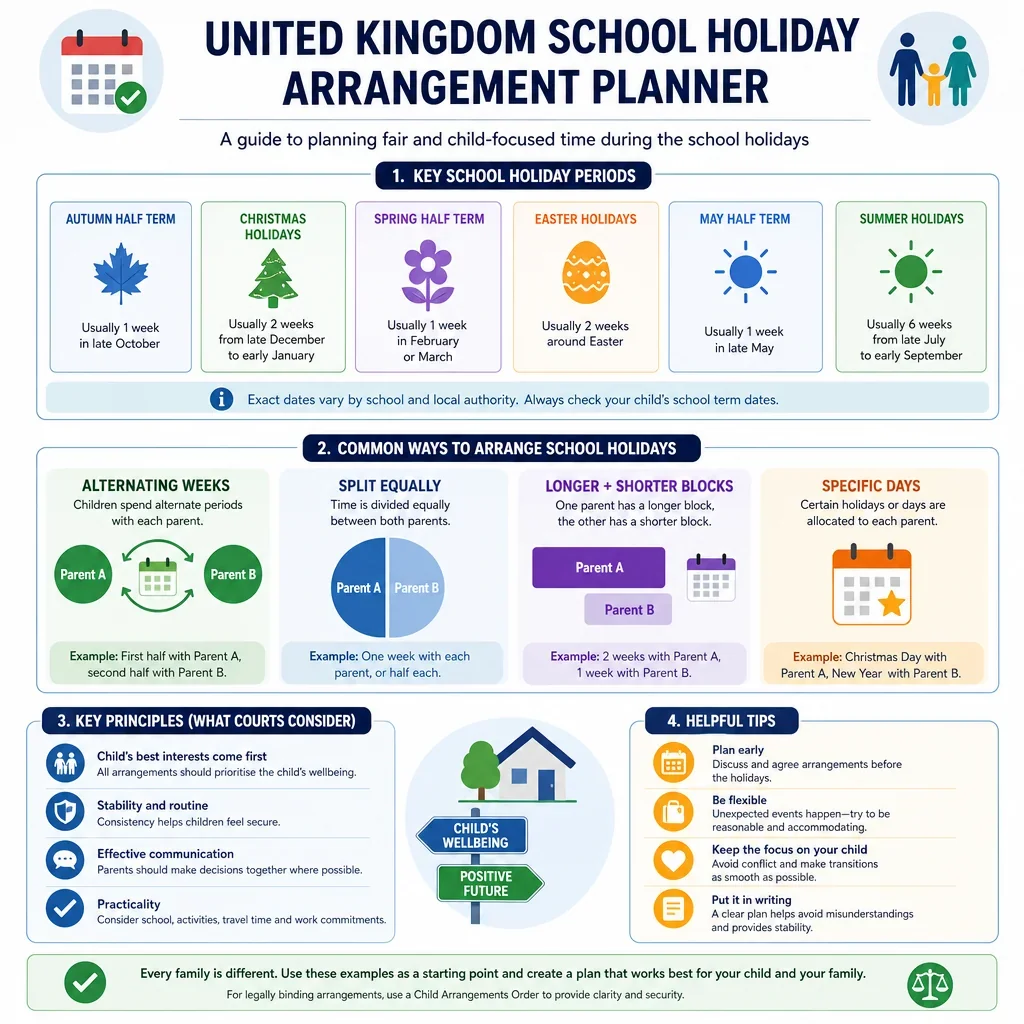
Christmas Holiday Arrangements | Allocates Christmas school holiday time between parents. | Medium | Primary school age Secondary school age | Specify Christmas Eve, Christmas Day, Boxing Day and alternating years. |
Easter Holiday Arrangements | Divides Easter school holidays or religious observance time. | Low | Primary school age Secondary school age | State whether Good Friday and Easter Monday follow holiday or bank holiday rules. |
Summer Holiday Blocks | Divides the long summer holiday into agreed care blocks. | Medium | Primary school age Secondary school age | Include booking deadlines, maximum consecutive nights and travel notice. |
Half-Term Holiday Split | Allocates October, February and May half-term periods. | Low | Primary school age Secondary school age | Use school calendar dates rather than generic week numbers. |
Inset And Training Days | Sets care arrangements when school is closed for staff training. | Low | Primary school age Secondary school age | Decide whether the parent with the adjoining night or work availability takes priority. |
Bank Holiday Arrangements | Allocates bank holiday Mondays and long weekends. | Low | Any age group | Clarify whether bank holidays extend weekend contact or follow the normal pattern. |
Parent Birthday Contact | Allows the child to spend time with a parent on that parent's birthday. | Low | Any age group | Limit duration on school nights and define if it overrides holidays. |
Child Birthday Arrangements | Sets how the child's birthday is shared or alternated. | Medium | Any age group | Consider parties, school day contact, siblings and alternating years. |
Mother's Day And Father's Day | Allocates annual parenting days regardless of the normal pattern. | Low | Any age group | State start and end times and how same-sex or non-traditional families will handle the clause. |
Religious And Cultural Festivals | Allocates important religious or cultural days such as Eid, Diwali, Hanukkah or Lunar New Year. | Medium | Any age group | Use dates published by the relevant community or agree confirmation deadlines each year. |
Holiday Booking Deadline | Requires parents to request and confirm holiday dates by a set deadline. | Medium | Any age group | Include tie-break rules if both parents request the same period. |
Holiday Childcare Costs | Allocates responsibility for holiday clubs or childcare during school holidays. | Medium | Primary school age | Separate agreed childcare costs from child maintenance issues. |
Travel and handovers | ||||
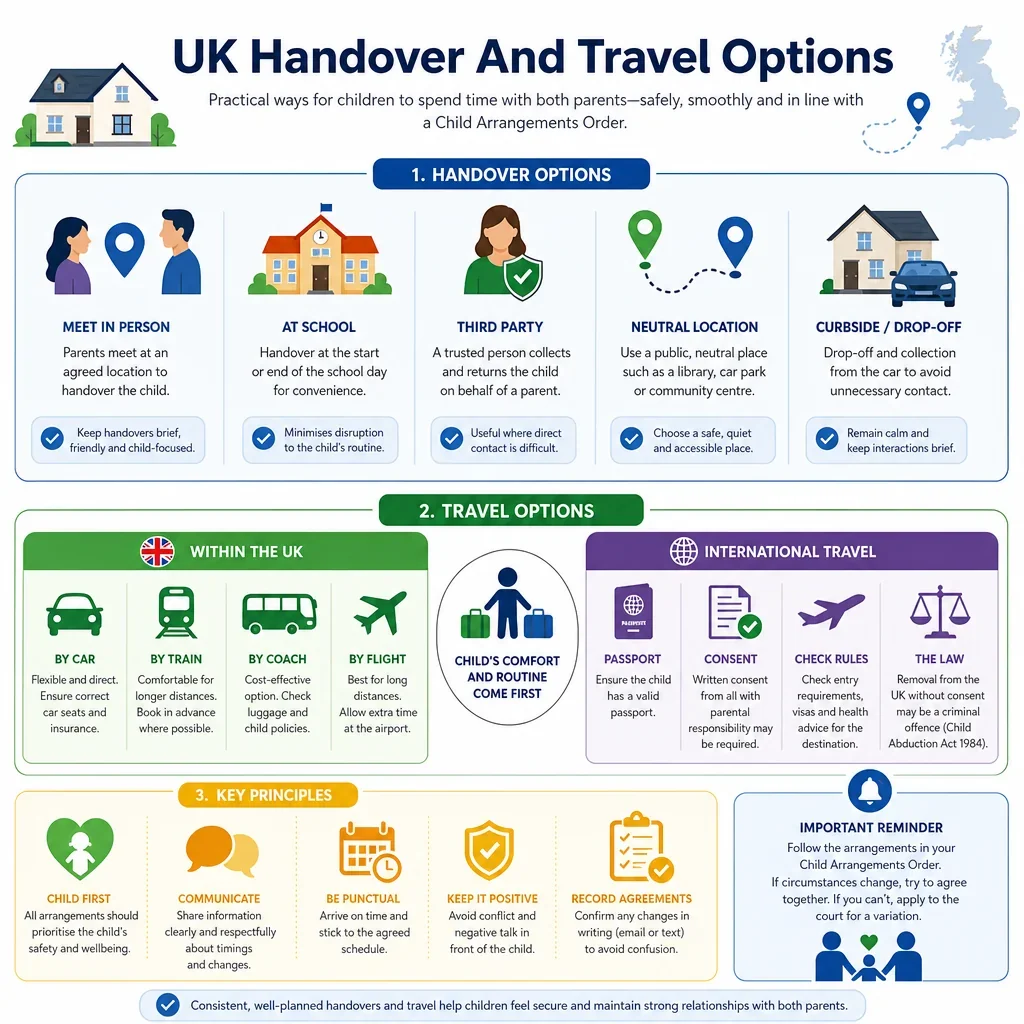
Ordinary Handover Location | Identifies where routine handovers will take place. | Low | Any age group | Use school, nursery or a neutral public place if direct handover is tense. |
School Gate Handover | Uses school drop-off or collection as the handover point. | Low | Primary school age Secondary school age | Confirm school has accurate collection permissions and emergency contacts. |
Third-Party Handover | Allows a named adult to collect or return the child. | Medium | Any age group | Name authorised adults and include ID, notice and safeguarding limits. |
No-Contact Handover | Prevents parents needing direct face-to-face interaction at handover. | High | Any age group | Important where conflict, injunctions or safeguarding concerns exist. |
Transport Responsibility | States who collects, returns and pays routine travel costs. | Medium | Any age group | Consider distance, driving ability, public transport and fuel costs. |
Car Seats And Travel Safety | Requires safe and lawful transport for the child. | Low | Infants and toddlers Primary school age | Children must normally use an appropriate child car seat until 12 years old or 135 cm tall, whichever comes first. |
Passport Holding And Access | Sets who holds the child's passport and how it is shared for travel. | High | Any age group | Include notice, return date, copy documents and consent requirements. |
International Travel Consent | Sets consent and information requirements before taking the child abroad. | High | Any age group | Taking a child abroad without permission from everyone with parental responsibility may be child abduction unless a court order permits it. |
Holiday Travel Itinerary | Requires travel details before domestic or overseas trips. | Medium | Any age group | Include destination, accommodation, flights, emergency contact and insurance details. |
Late Return From Travel | Sets what happens if travel disruption delays return. | Medium | Any age group | Require prompt updates and a plan for school or childcare the next day. |
Communication | ||||
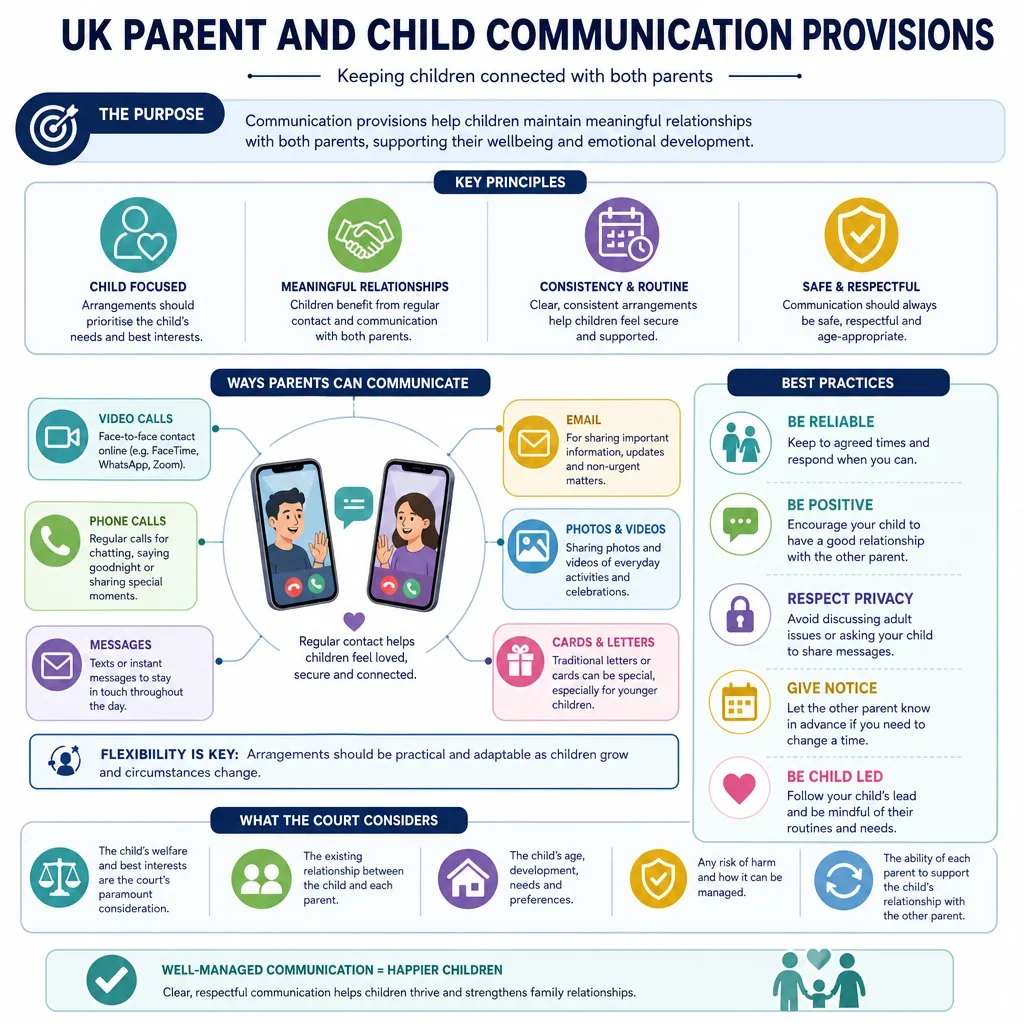
Parent Communication Method | Sets the approved method for routine communication between parents. | Low | Any age group | Use email or a parenting app if texts escalate conflict. |
Emergency Communication | Requires immediate contact about urgent health, safety or welfare issues. | Low | Any age group | List phone numbers and when calls are permitted despite routine written-only communication. |
Child Phone And Video Contact | Allows the child to speak with the other parent while away from them. | Medium | Any age group | Keep calls age-appropriate and avoid monitoring unless safeguarding requires it. |
Child Mobile Phone Use | Sets rules for the child's phone use across both homes. | Medium | Primary school age Secondary school age | Cover bedtime, school rules, parental controls and contact privacy. |
Information Sharing Between Parents | Requires parents to share important information about the child. | Medium | Any age group | Include school reports, medical letters, activities, incidents and contact details. |
Respectful Parent Communication | Sets boundaries for civil, child-focused communication. | Low | Any age group | Ban insults, threats, excessive messages and using the child as messenger. |
Photos And Social Media | Sets rules for posting the child's images or personal details online. | Medium | Any age group | Consider privacy, school safeguarding rules and the child's views if old enough. |
No Denigration Of The Other Parent | Discourages negative comments about the other parent in front of the child. | Low | Any age group | Keep wording child-focused and avoid making ordinary disagreement unenforceable. |
Privacy Of Child Communications | Protects reasonable privacy when the child communicates with each parent. | Medium | Primary school age Secondary school age | Allow supervision only where age, safety or welfare requires it. |
Education | ||||
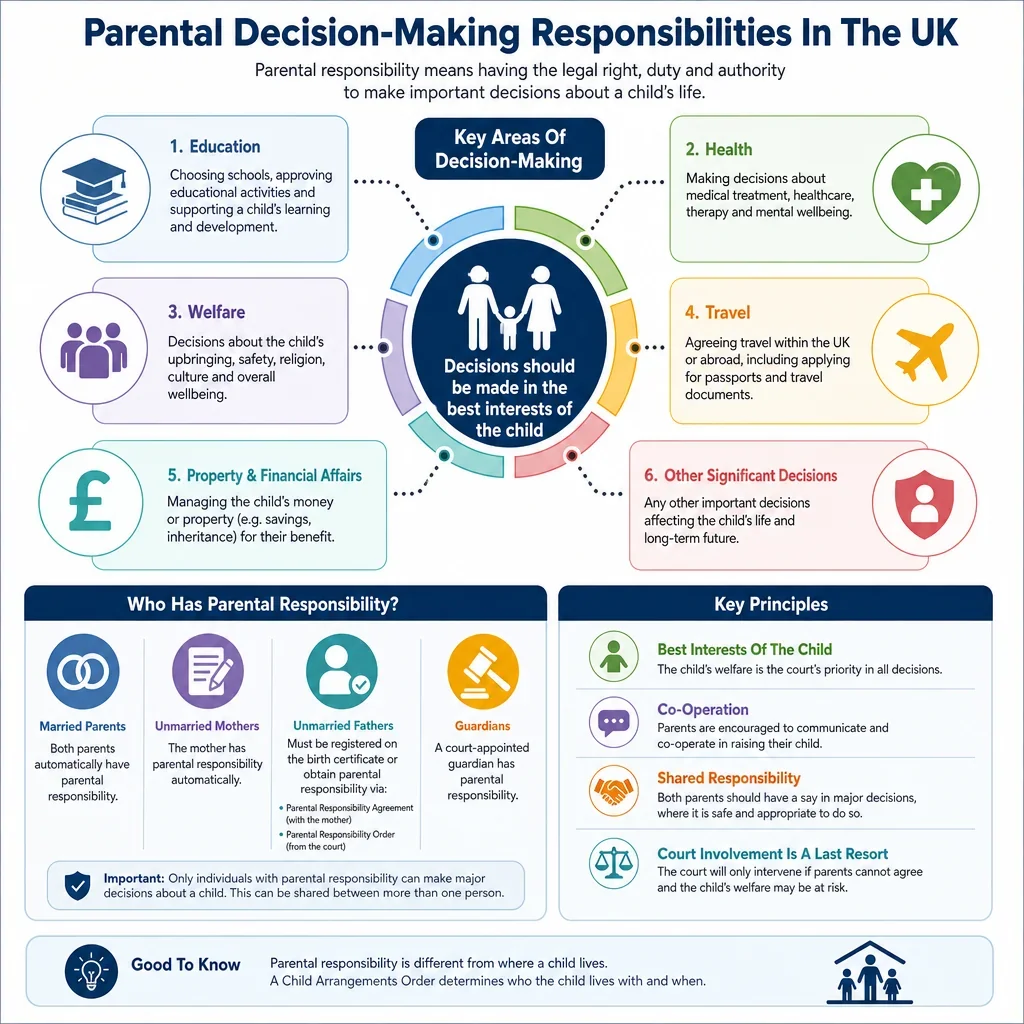
School Choice And Applications | Sets how parents will decide school applications and changes. | High | Primary school age Secondary school age | Parents with parental responsibility should be consulted on major education decisions. |
Nursery And Early Years Arrangements | Covers nursery selection, attendance days and early years communication. | Medium | Infants and toddlers | Align nursery days with work patterns, funding and handovers. |
School Communications Access | Ensures both parents receive school reports, emails and notices. | Low | Primary school age Secondary school age | Both parents should register contact details with the school where appropriate. |
Parents' Evenings And School Events | Sets attendance and information sharing for school events. | Low | Primary school age Secondary school age | Use separate appointments if joint attendance would cause conflict. |
Homework And Study Support | Allocates responsibility for homework during each parent's care time. | Low | Primary school age Secondary school age | Ensure books, devices and deadlines travel between homes. |
Extracurricular Activities | Covers clubs, sport, music, tutoring and weekend activities. | Medium | Primary school age Secondary school age | Agree cost, transport and whether activities can interfere with contact time. |
School Trips And Consent Forms | Sets responsibility for consent, payment and documents for school trips. | Medium | Primary school age Secondary school age | Residential or overseas trips may need wider consent and passport coordination. |
Special Educational Needs Support | Coordinates support for a child with SEN or an EHC plan. | High | Primary school age Secondary school age | Include meetings, reports, therapy, school liaison and implementation across both homes. |
Exam Period Arrangements | Adjusts routines during SATs, GCSEs, A-levels or other exams. | Medium | Primary school age Secondary school age | Prioritise sleep, revision space, transport and reduced conflict. |
School Attendance And Absence | Requires parents to support school attendance and report absences properly. | Medium | Primary school age Secondary school age | Parents must secure suitable full-time education for children of compulsory school age. |
Healthcare | ||||
GP And Dentist Registration | Identifies the child's healthcare providers and access to appointments. | Low | Any age group | Keep both parents listed for appropriate contact and emergency information. |
Routine Medical Decisions | Allows day-to-day healthcare decisions during each parent's care time. | Medium | Any age group | Major decisions should be discussed with all persons with parental responsibility unless urgent. |
Emergency Medical Treatment | Authorises urgent action and immediate notification in medical emergencies. | Medium | Any age group | Do not delay emergency treatment while seeking parental agreement. |
Medication Handover | Ensures medicine, dosage instructions and devices move with the child. | Low | Any age group | Use written dosage records for inhalers, EpiPens, antibiotics or repeat medication. |
Allergies And Health Alerts | Records allergies, triggers, emergency plans and prohibited foods or substances. | Medium | Any age group | Ensure schools, carers and relatives have the same written plan. |
Vaccinations And Immunisations | Sets how parents discuss and record vaccination decisions. | High | Infants and toddlers Primary school age Secondary school age | Use NHS schedules and seek medical advice if parents disagree. |
Mental Health And Counselling Support | Coordinates counselling, CAMHS referrals or wellbeing support. | High | Primary school age Secondary school age | Consider consent, confidentiality, safeguarding and information sharing. |
Disability And Care Plan | Coordinates care needs, equipment, therapy and routines for a disabled child. | High | Any age group | Include equipment transfer, respite, professional appointments and accessibility of both homes. |
Dental And Optical Care | Allocates responsibility for routine dental and eye appointments. | Low | Any age group | Share appointment dates, prescriptions, glasses and retainers between homes. |
Private Healthcare Costs | Allocates agreed private medical, dental or therapy costs. | Medium | Any age group | Require prior written agreement except genuine emergencies. |
Review and variation | ||||
Annual Review Meeting | Creates a yearly review of whether arrangements still work. | Low | Any age group | Set a month, agenda and method for recording agreed changes. |
School Transition Review | Reviews arrangements when the child starts nursery, primary or secondary school. | Medium | Infants and toddlers Primary school age Secondary school age | Review travel, bedtime, homework, clubs and term-time handovers. |
Age-Based Step-Up Arrangements | Changes contact or overnight arrangements as the child gets older. | High | Infants and toddlers Primary school age | Use clear dates or milestones and include safeguards if the transition is not working. |
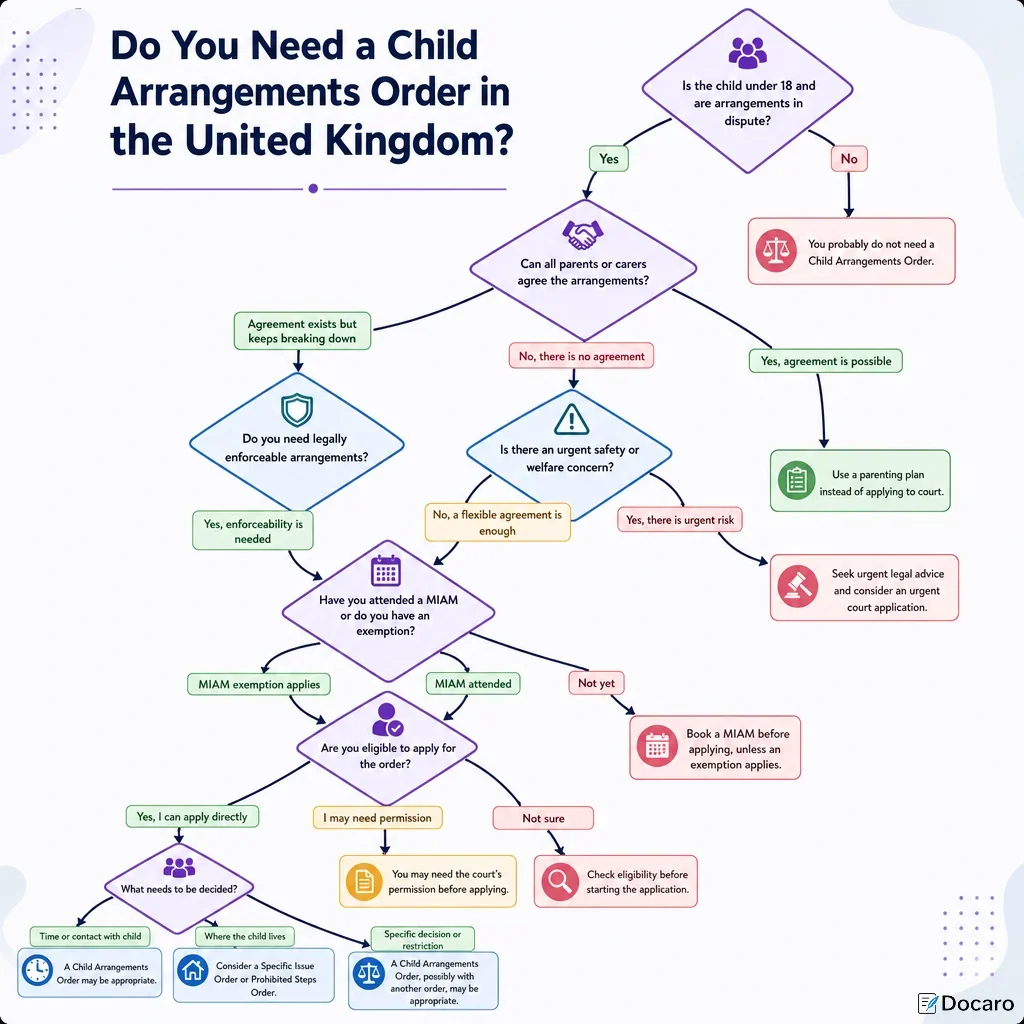
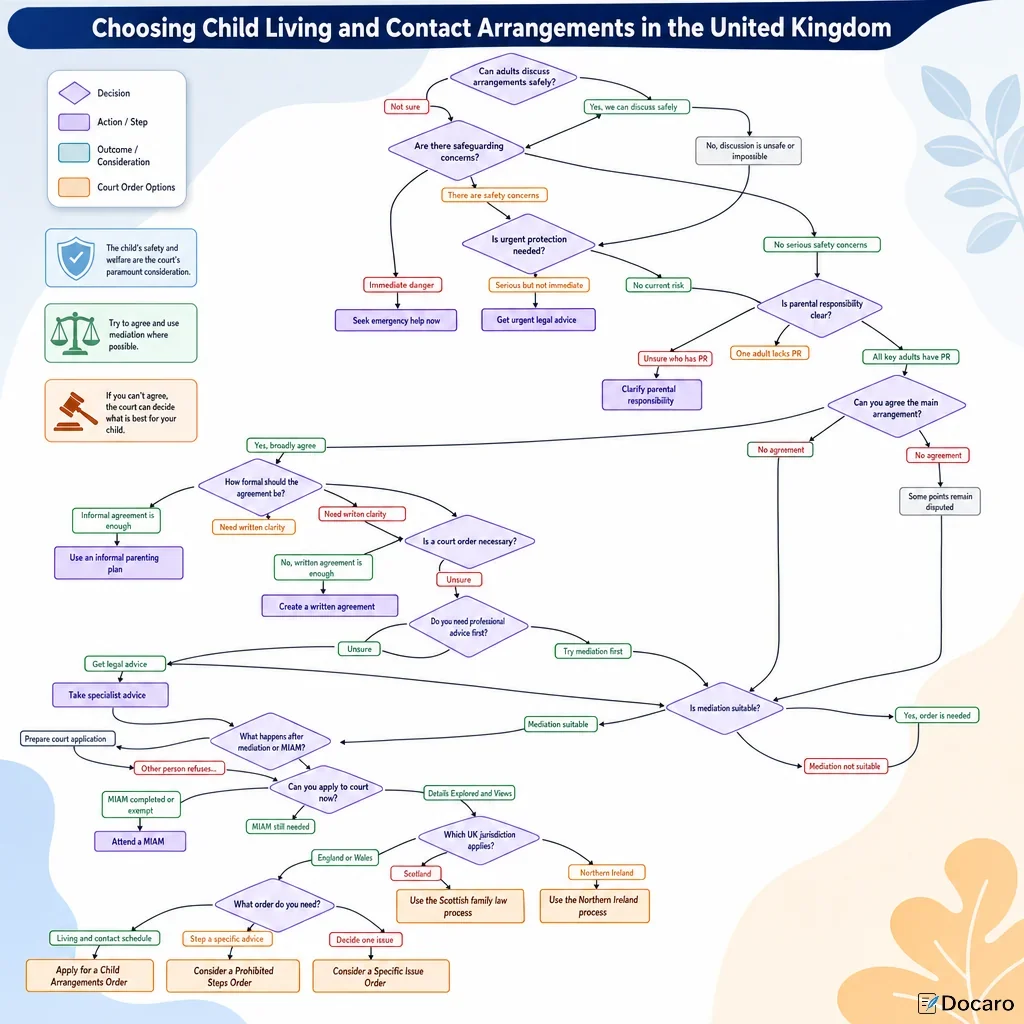
Mediation Before Court Application | Encourages mediation before applying to court to vary arrangements. | Medium | Any age group | A MIAM is usually required before many private law children applications, unless an exemption applies. |
Written Variation Requirement | Requires changes to be recorded in writing before being relied on. | Medium | Any age group | If there is a court order, informal agreement may not formally vary the order. |
Temporary Swaps And One-Off Changes | Allows parents to agree occasional timetable changes without altering the main pattern. | Low | Any age group | Record date, replacement time and that the usual schedule resumes afterward. |
Work Pattern Change Review | Reviews arrangements if a parent's shifts, travel or working hours materially change. | Medium | Any age group | Require prompt notice and interim arrangements for childcare and school runs. |
Child's Wishes Review | Provides a process for considering the child's views as they mature. | High | Primary school age Secondary school age | The welfare checklist includes the child's wishes and feelings, considered in light of age and understanding. |
Safeguarding Trigger Review | Requires urgent review if safety, domestic abuse or welfare concerns arise. | High | Any age group | Do not rely on private drafting where immediate child protection or domestic abuse risk requires professional advice or emergency help. |
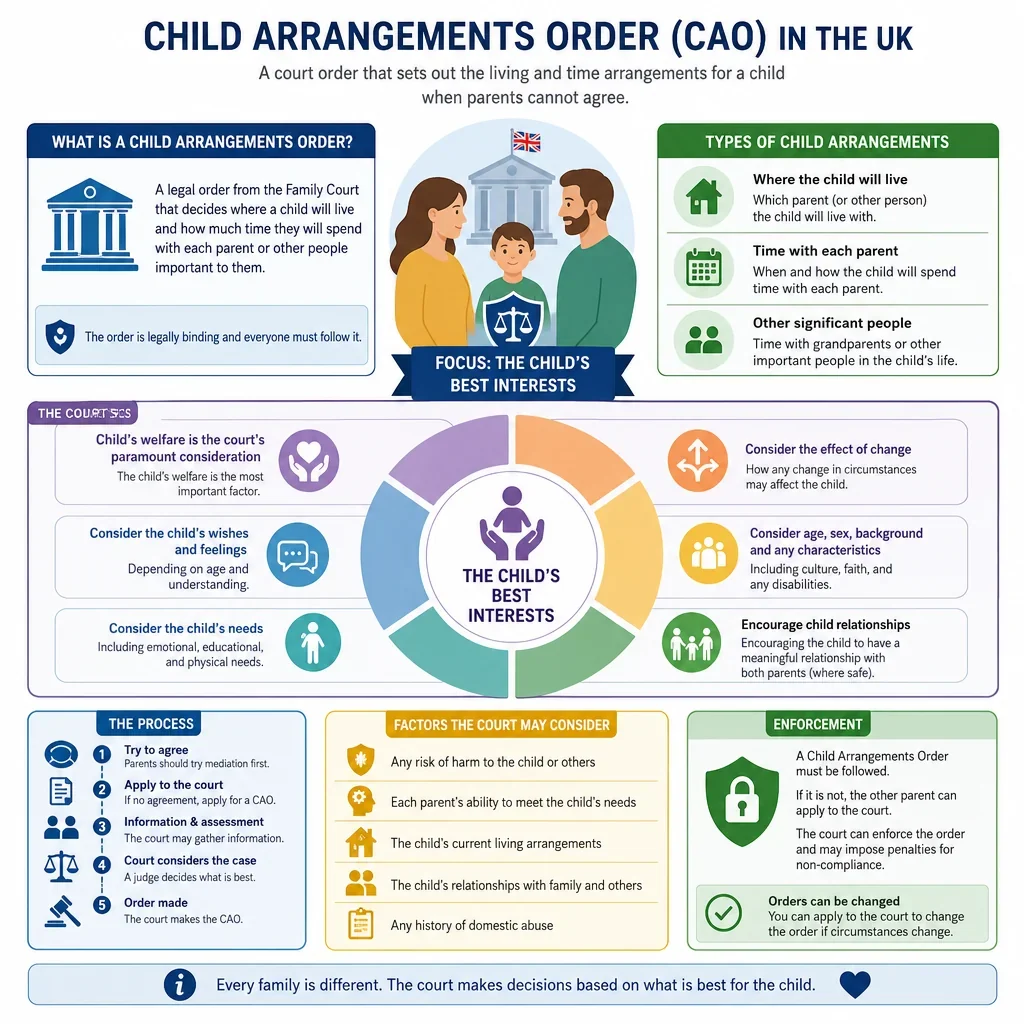
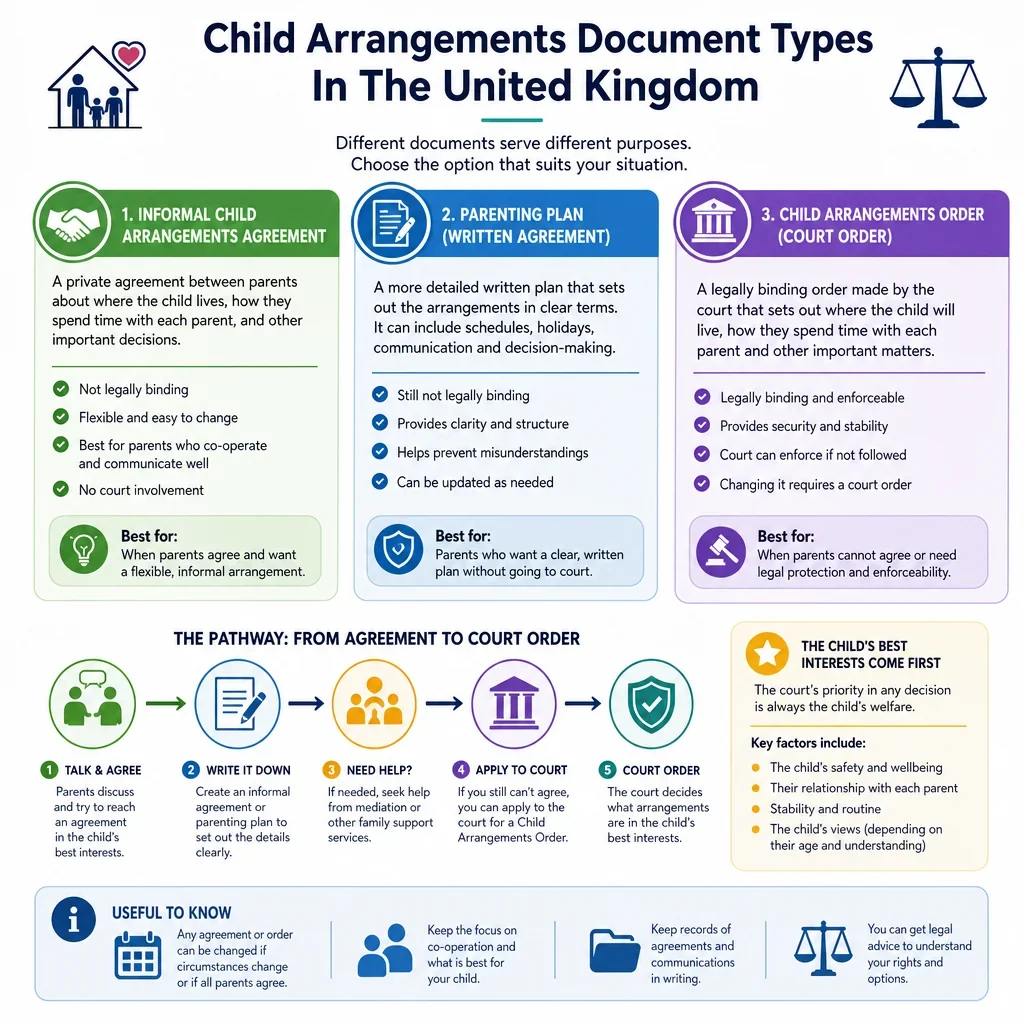
Existing Court Order Compliance | Confirms the agreement must not conflict with an existing Child Arrangements Order. | High | Any age group | A section 8 Child Arrangements Order regulates with whom a child lives, spends time or otherwise has contact. |
What Clauses Should A UK Child Arrangements Agreement Usually Cover?
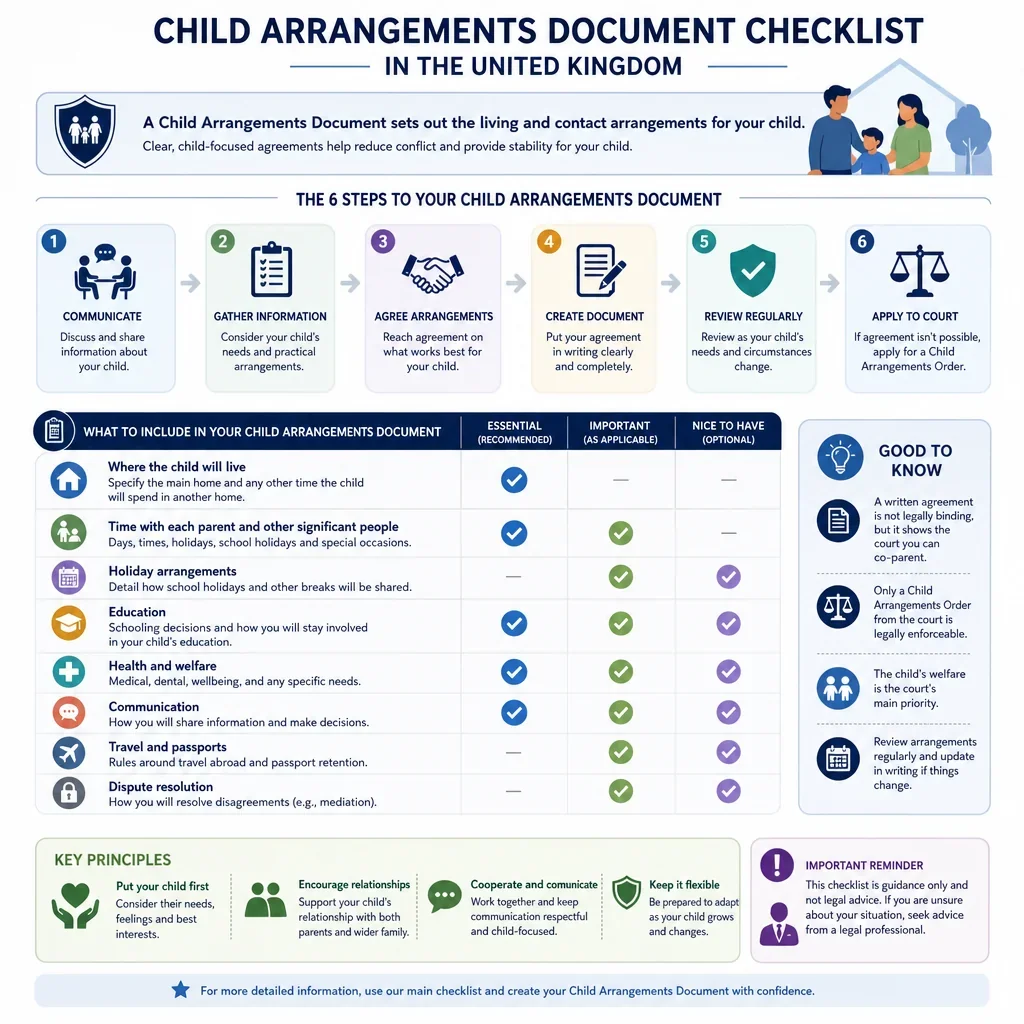
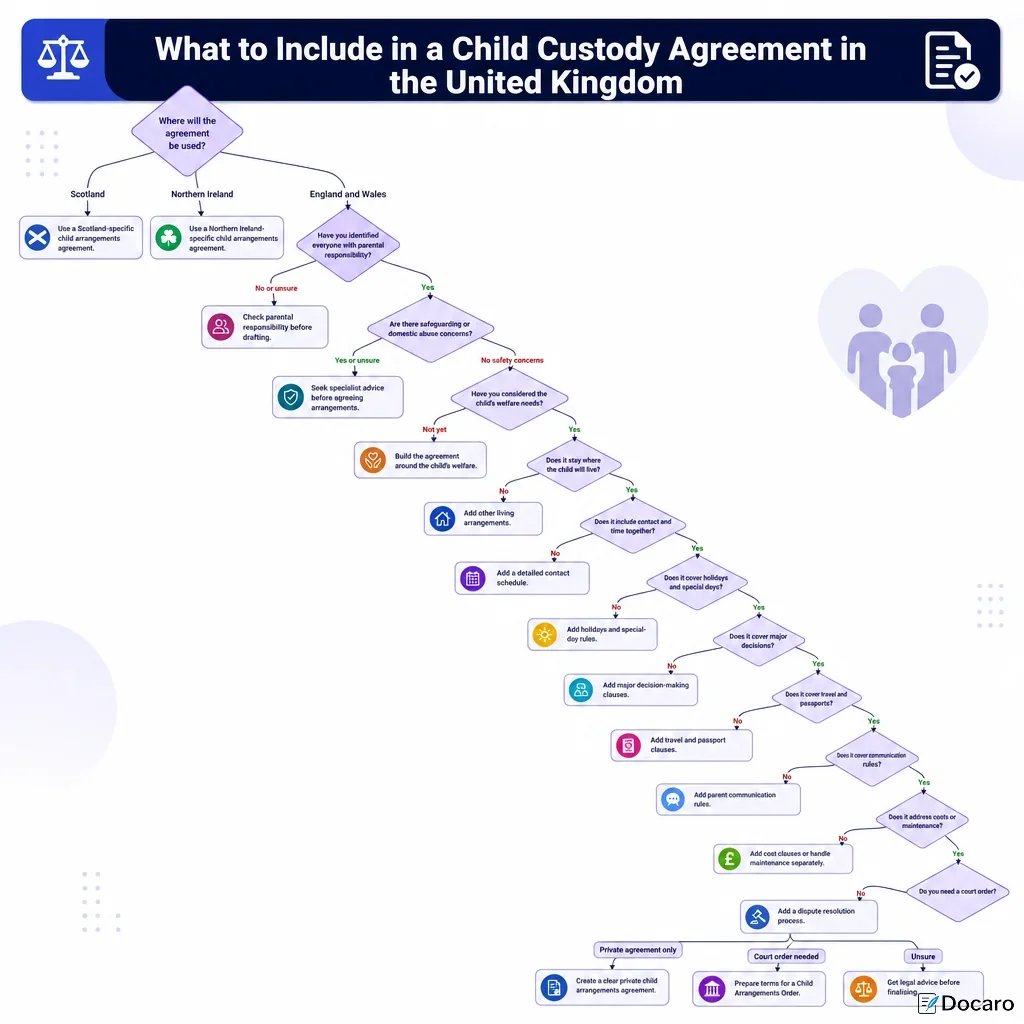
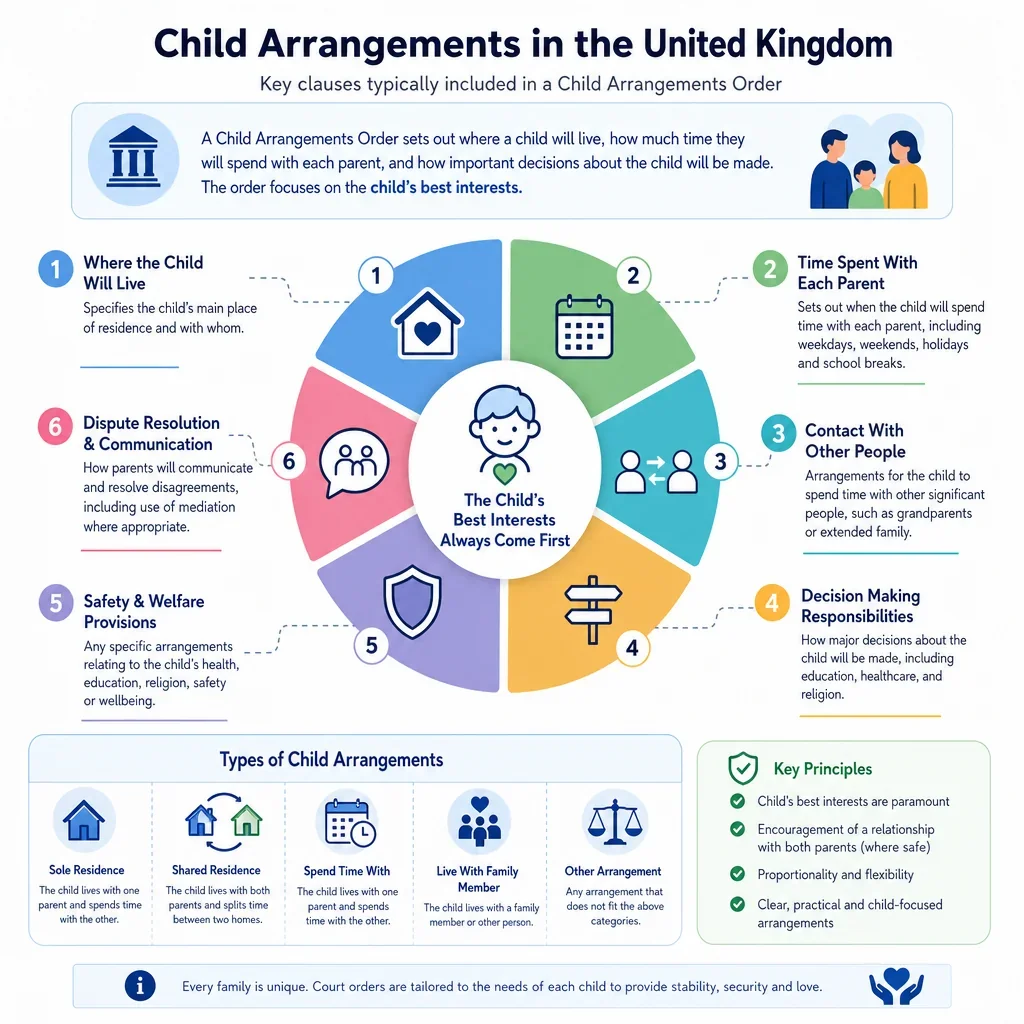
A strong child arrangements document normally needs more than a basic weekly timetable. The clause library shows that parents often need separate provisions for term-time living arrangements, school holidays, handover logistics, communication, education, healthcare and review arrangements. This helps reduce ambiguity about day-to-day care and supports the welfare-focused approach used by family courts in England and Wales under the Children Act 1989.
Which Clauses Need The Most Careful Drafting?
Clauses involving relocation, international travel, medical consent, special educational needs, safeguarding and variation of court orders are usually higher complexity. These clauses can affect parental responsibility, passports, schooling, healthcare decisions or compliance with an existing Child Arrangements Order, so vague wording can create practical and legal risk.
How Should Parents Handle Holidays And Handovers?
The dataset highlights that holiday clauses should identify dates, times, priority rules and booking deadlines, while handover clauses should specify location, punctuality, items to bring and fallback arrangements. This is particularly important where parents have different work patterns, live far apart, or need neutral handovers because direct contact is difficult.
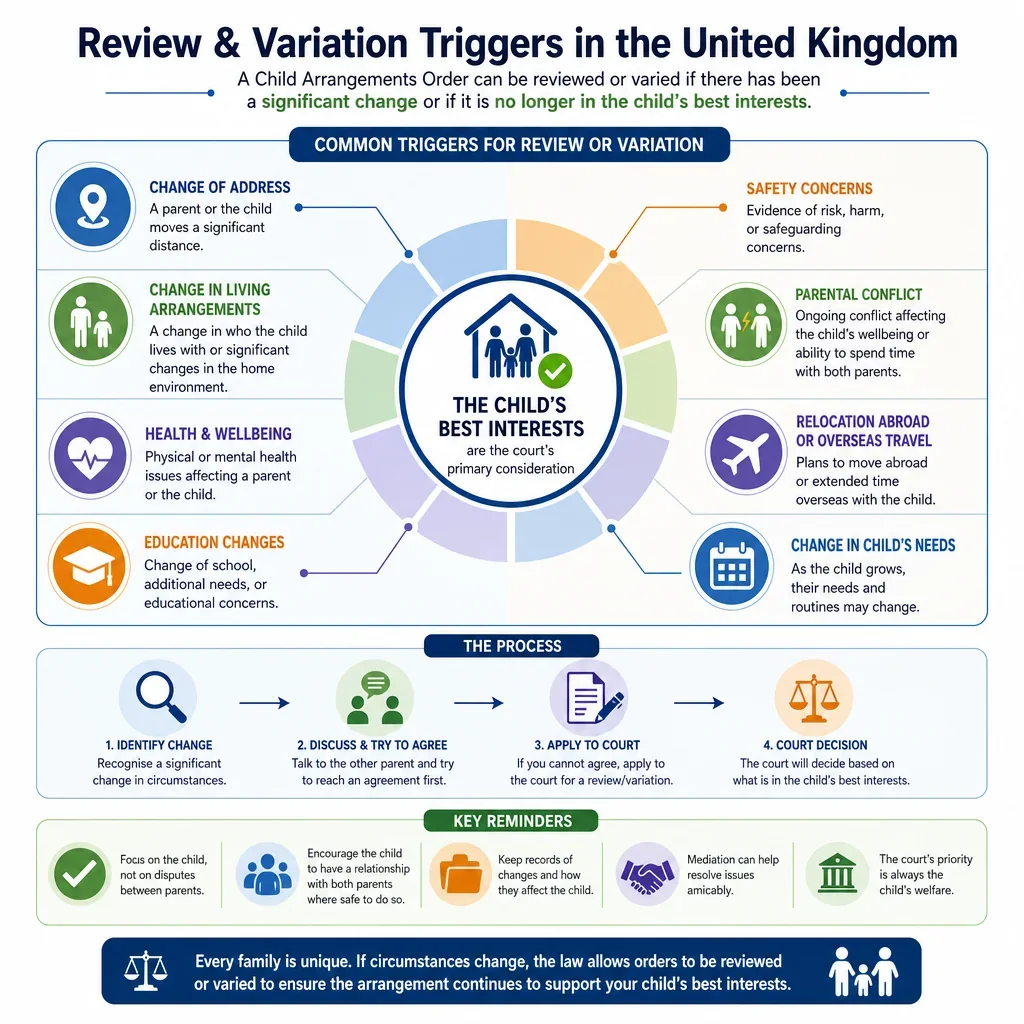
When Should Child Arrangements Be Reviewed?
Review clauses are especially useful at predictable transition points, such as starting nursery, primary school, secondary school, GCSE years or when a parent changes work patterns. A review clause cannot override a court order, but it can create a structured process for discussion, mediation or application to vary arrangements if needed.
FAQs
You Might Also Be Interested In