

Do You Need a Child Arrangements Order in the United Kingdom?
Created:
This flowchart helps separated parents understand when a Child Arrangements Order may be needed and what factors to consider. For more guidance, visit AI Generated British Child Arrangements Order.
Child Arrangements Order Decision Tool
Is the child under 18 and are arrangements in dispute?
A Child Arrangements Order can decide where a child lives, when they spend time with each parent, and other contact arrangements. It is usually considered when parents or carers cannot agree safe, workable arrangements without court involvement.
Further Reading: GOV.UK: Looking after children if you divorce or separate, GOV.UK: Apply for a child arrangements order
Disclaimer:
I understand and accept that the flowchart, questionnaire, decision tree, and any results, guidance, classifications, or recommendations provided by Docaro are generated automatically for general informational purposes only and do not constitute legal advice, legal representation, or any other professional advice. No solicitor-client, attorney-client, or other professional advisory relationship is created through use of this service. I acknowledge that the tool operates using simplified rules and assumptions and may not take into account all facts, circumstances, exceptions, legal requirements, or jurisdiction-specific considerations relevant to my situation. The results may be incomplete, inaccurate, outdated, or unsuitable for my particular circumstances. I agree that any outcome or recommendation provided by the tool is indicative only and should not be relied upon as a substitute for independent legal advice. I am solely responsible for verifying the accuracy and suitability of any information provided and for obtaining advice from a qualified legal professional where appropriate. To the fullest extent permitted by applicable law, Docaro disclaims all warranties and liability arising from the use of, or reliance upon, any information, outcome, recommendation, or guidance provided by this service.
Do You Need A Child Arrangements Order In The UK?
Choosing whether to apply for a Child Arrangements Order matters because the court process affects children, parents and carers. In England and Wales, the court\'s main concern is the child\'s welfare, and an order should usually be used only when agreement, mediation or a parenting plan cannot safely resolve the issue.
Why Is The Right Child Arrangement Route Important?
- It protects the child\'s welfare: the right route helps focus on safe, stable and practical arrangements.
- It avoids unnecessary court action: if parents can agree, a parenting plan may be quicker, cheaper and less stressful.
- It supports enforceable arrangements: where agreements repeatedly fail, a court order can set clear legal duties.
- It helps meet court requirements: most applicants in England and Wales must consider mediation through a MIAM unless an exemption applies.
- It identifies urgent risks: domestic abuse, child protection concerns or abduction risks may require immediate advice and urgent court action.
When Should You Get Legal Advice?
You should consider legal advice if there are safeguarding concerns, domestic abuse, international travel or relocation issues, uncertainty about parental responsibility, or if you may need permission to apply. Official guidance is available from GOV.UK, but personalised advice can help you choose the correct application and avoid delay.
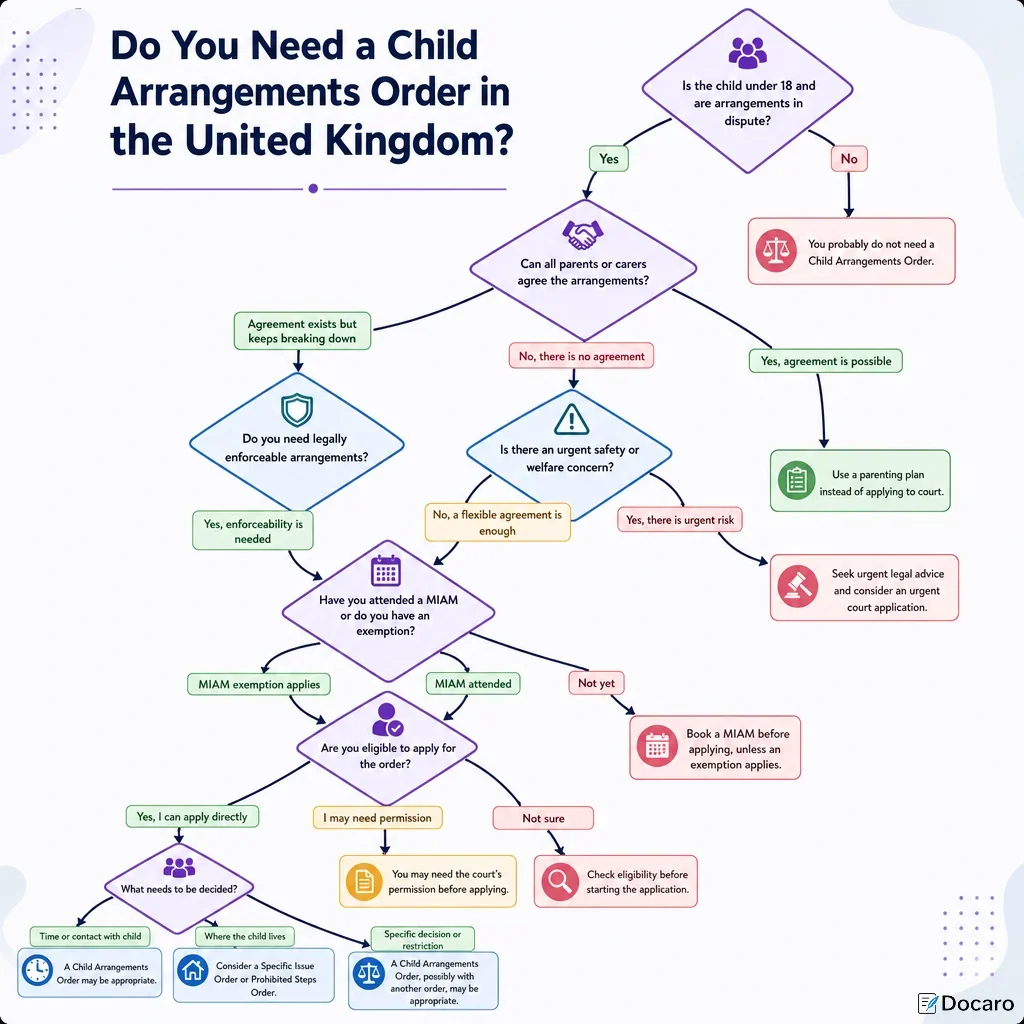
This flowchart provides a simplified overview of legal concepts and should not be relied upon as legal advice. Always consider the specific facts of your situation and seek professional advice where appropriate.
Want to Generate Your own Child Arrangements Order?
Docaro AI can help you write your own Child Arrangements Order for use in the United Kingdom in minutes.
FAQs
You may need a Child Arrangements Order if parents or carers cannot agree where a child lives, when they spend time with each parent, or other contact arrangements. If agreement is possible, a written parenting plan or child custody agreement may be enough, but court orders are useful where clarity, enforceability, or safeguarding is needed.
Show All FAQs
You Might Also Be Interested In
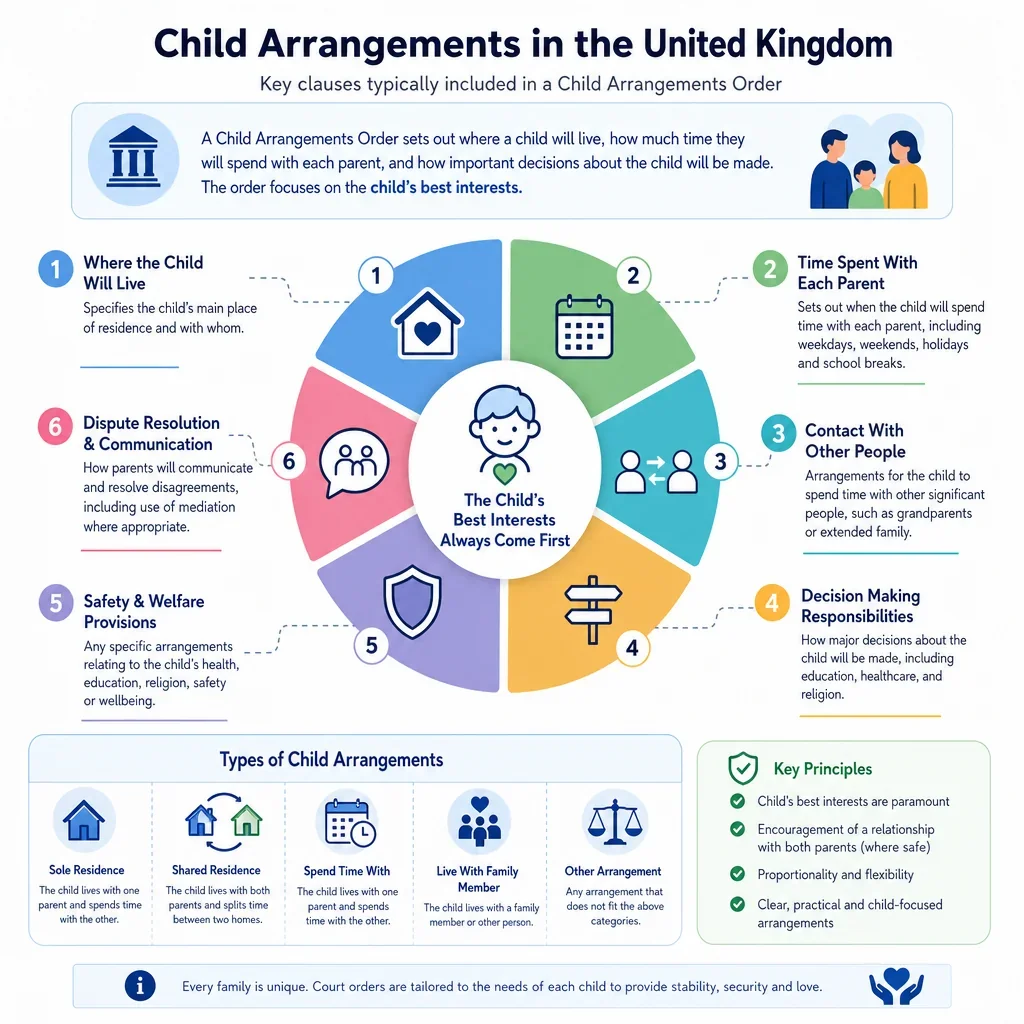
United Kingdom child arrangements clause library with useful wording examples for parenting schedules, contact, holidays and care terms.
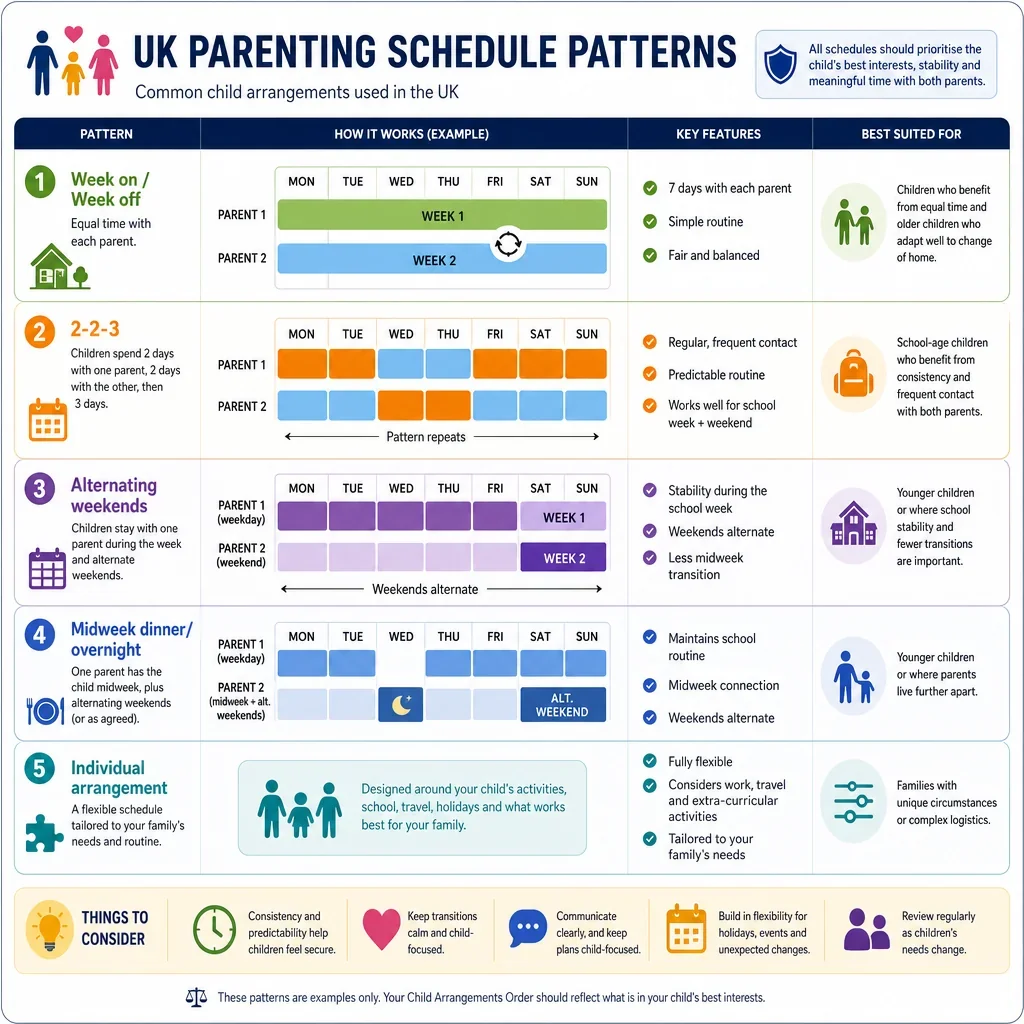
Explore UK parenting schedule patterns to compare child arrangements, plan routines, and support fair co-parenting decisions.
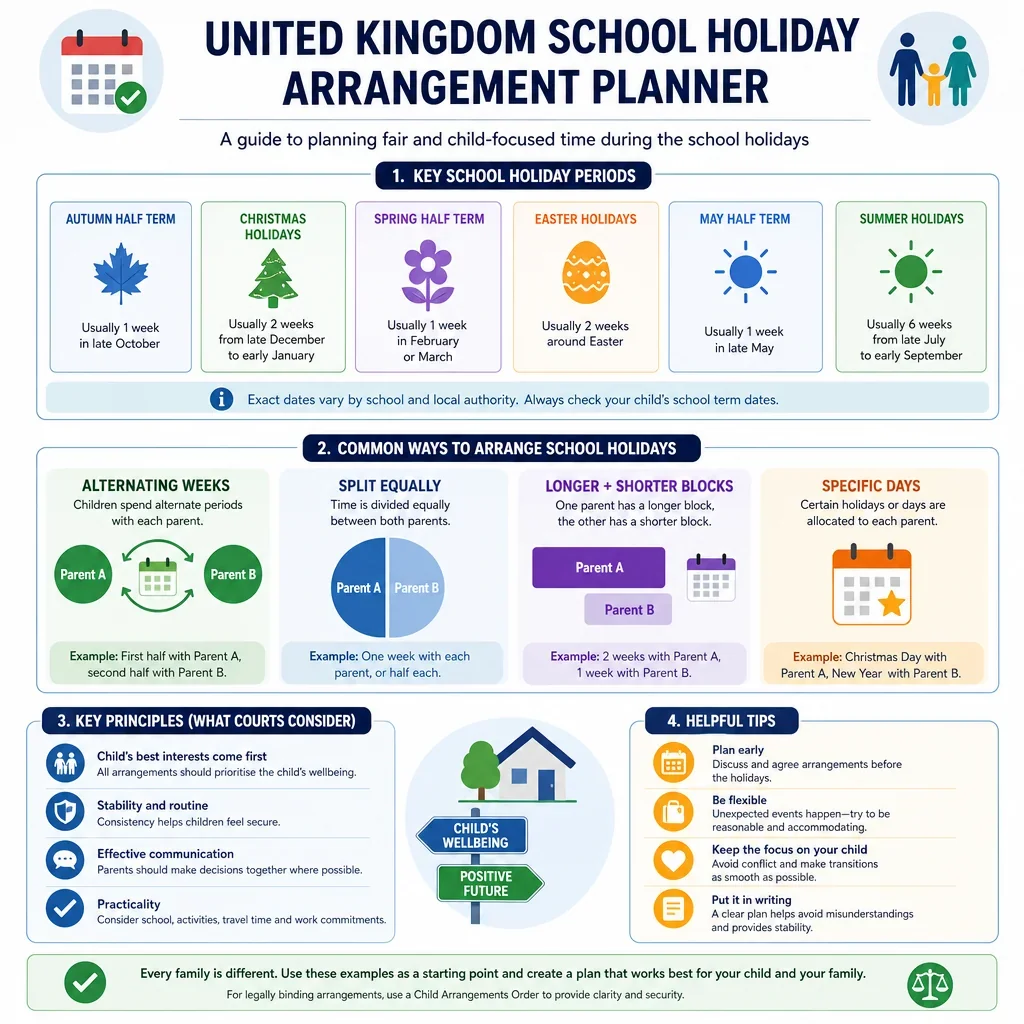
Plan UK school holiday childcare, handovers, and parenting time with a clear, practical arrangement planner for separated families.
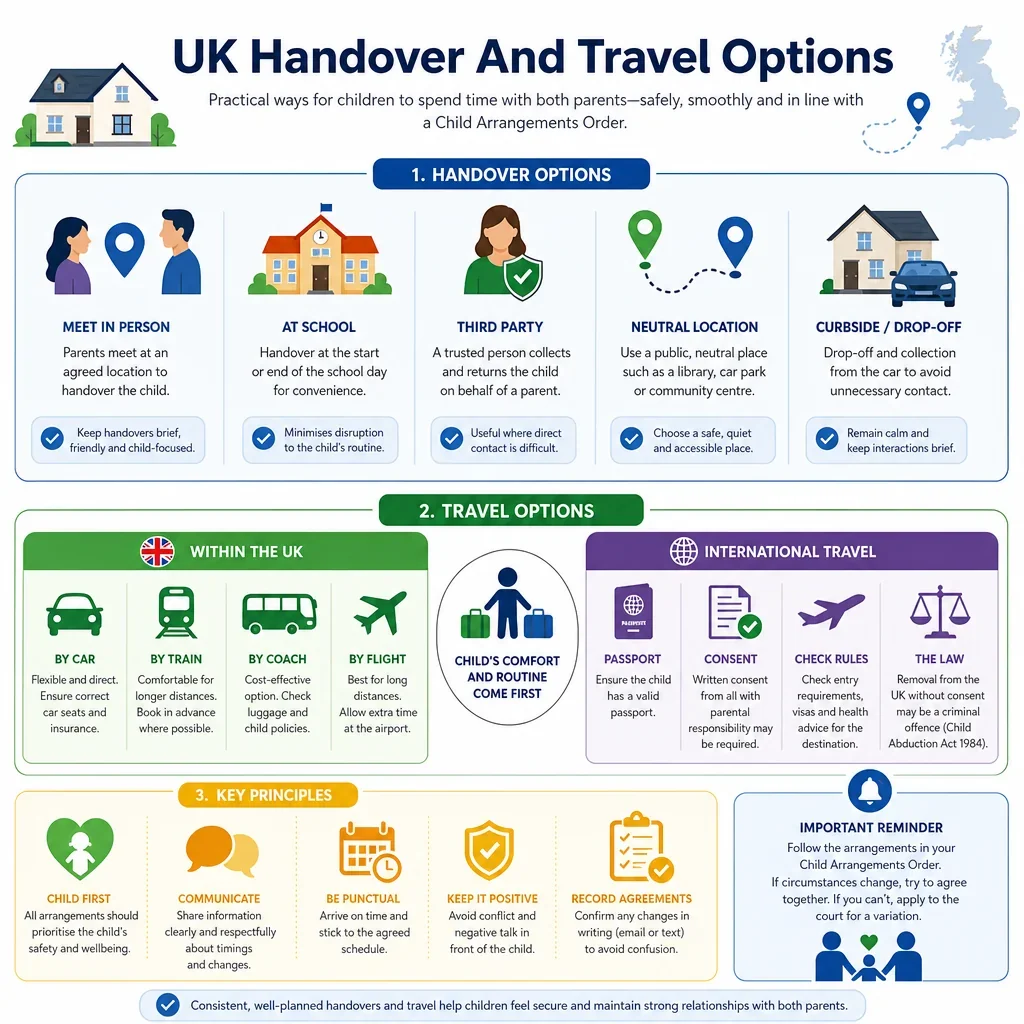
Explore UK handover and travel options for child arrangements, including practical choices for safe, clear parenting transitions.
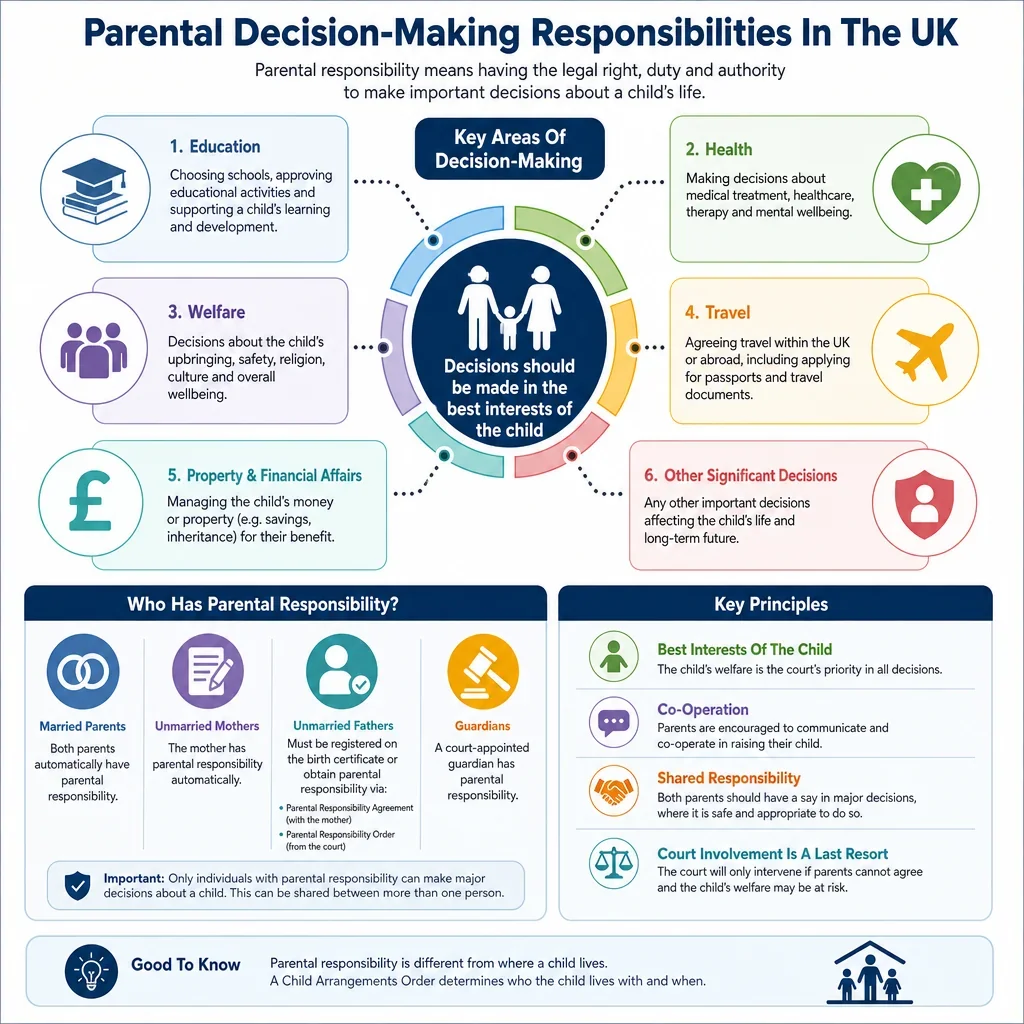
UK guide to parental decision-making responsibilities, helping parents understand child arrangements and key legal considerations.
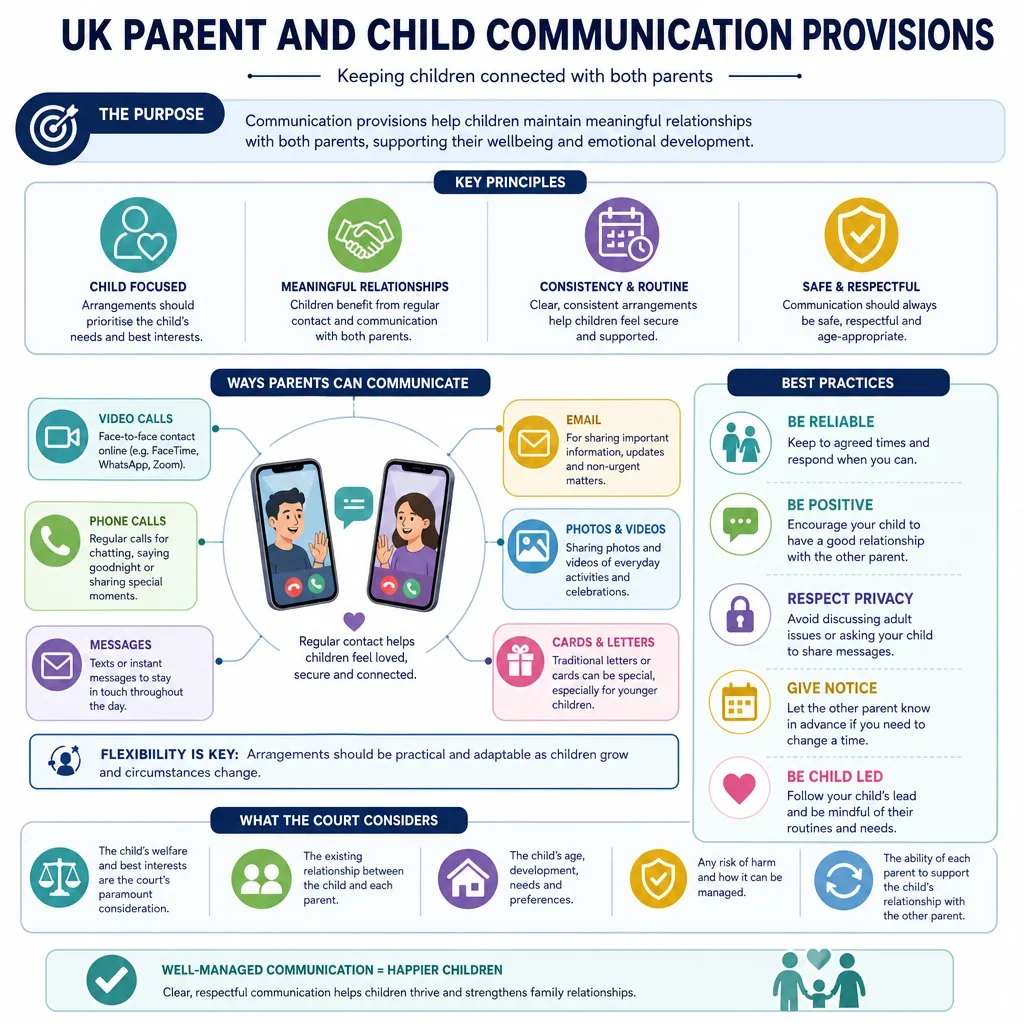
UK guide to parent and child communication provisions for clear, practical child arrangement terms.
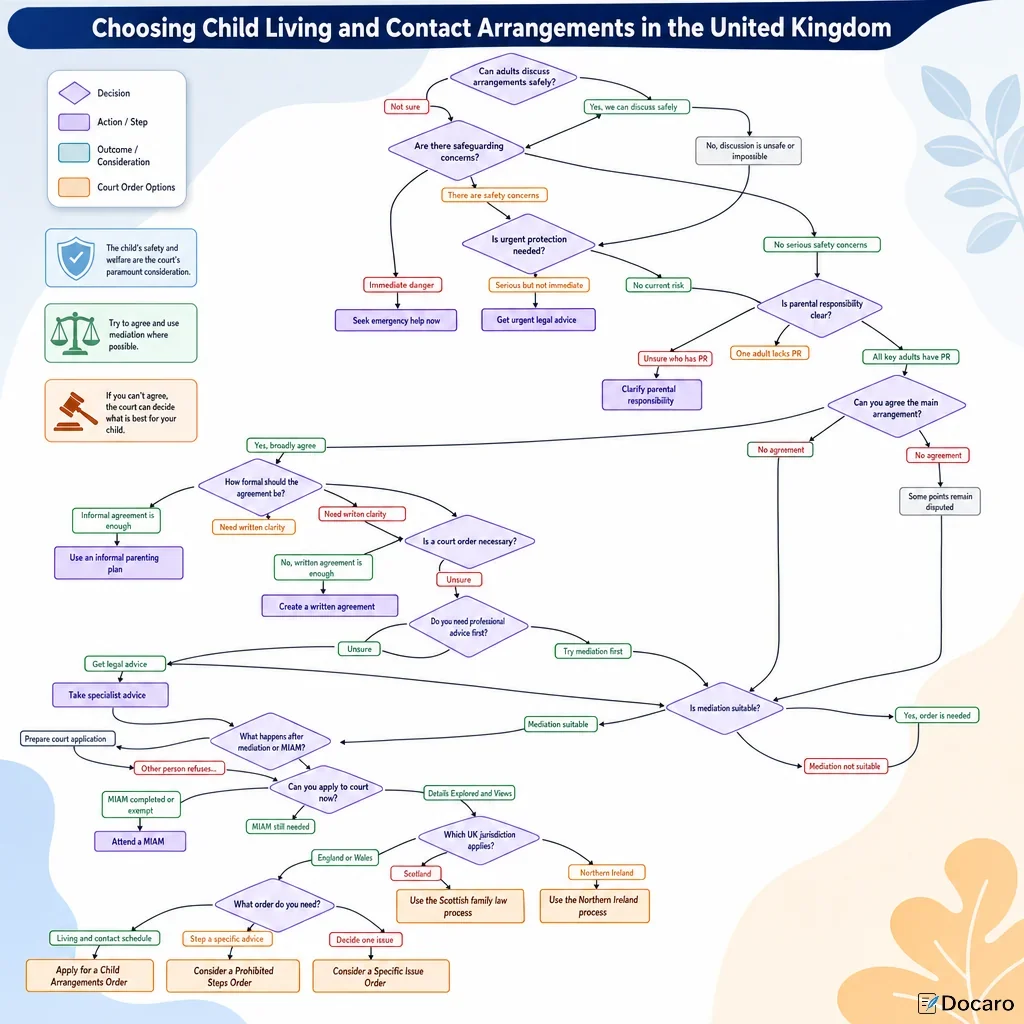
Understand child living and contact arrangements in the United Kingdom with practical guidance for parents making decisions.
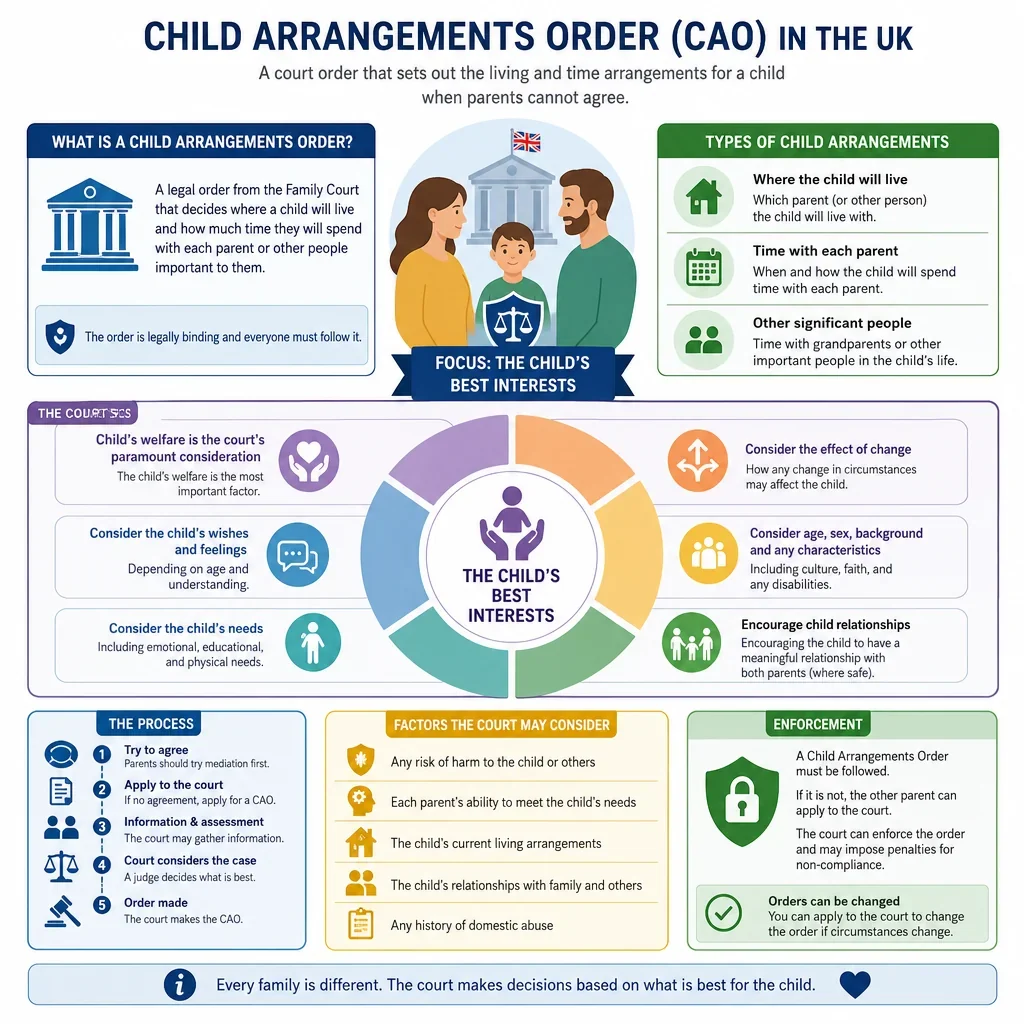
United Kingdom child arrangements glossary explaining key family law terms for parents and carers.
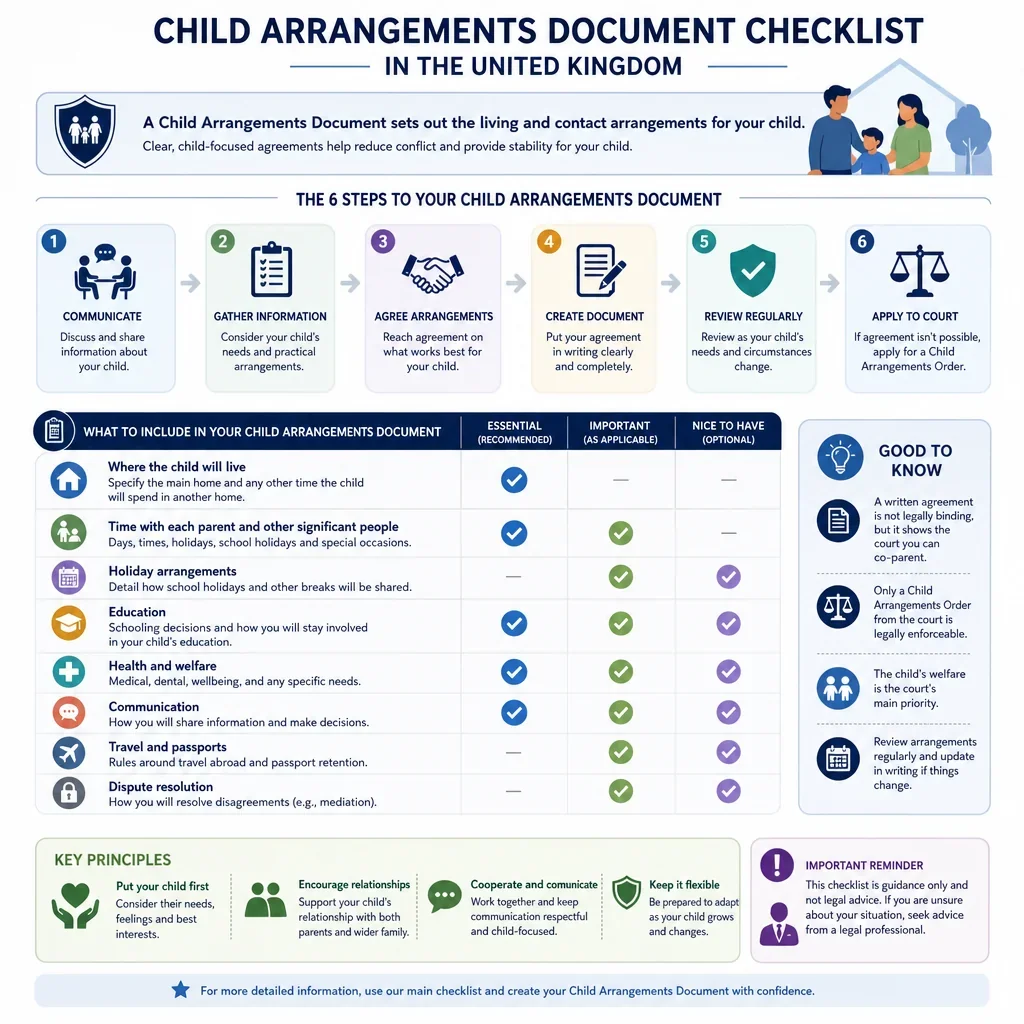
United Kingdom child arrangements checklist covering key documents, details, and records to prepare before making an order.
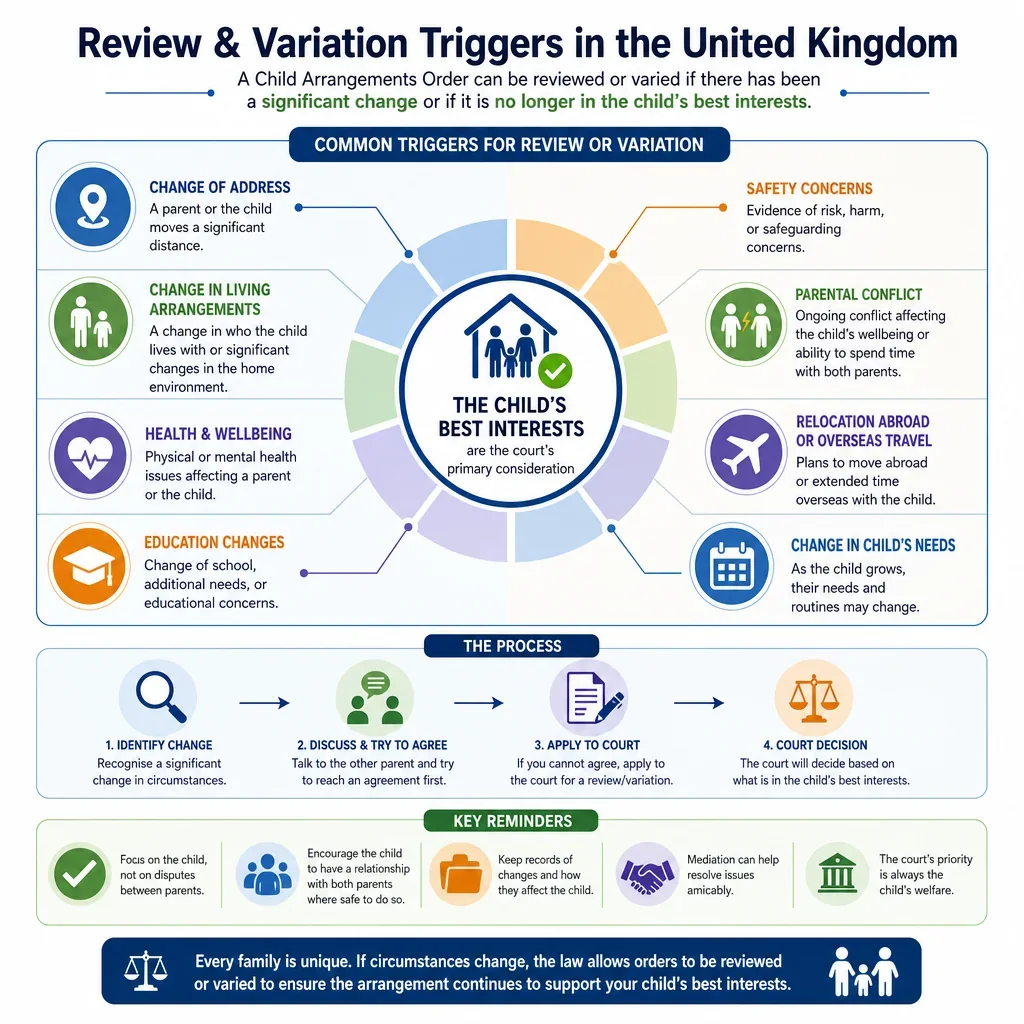
Review UK child arrangement variation triggers and understand when updates may be needed for changing family circumstances.
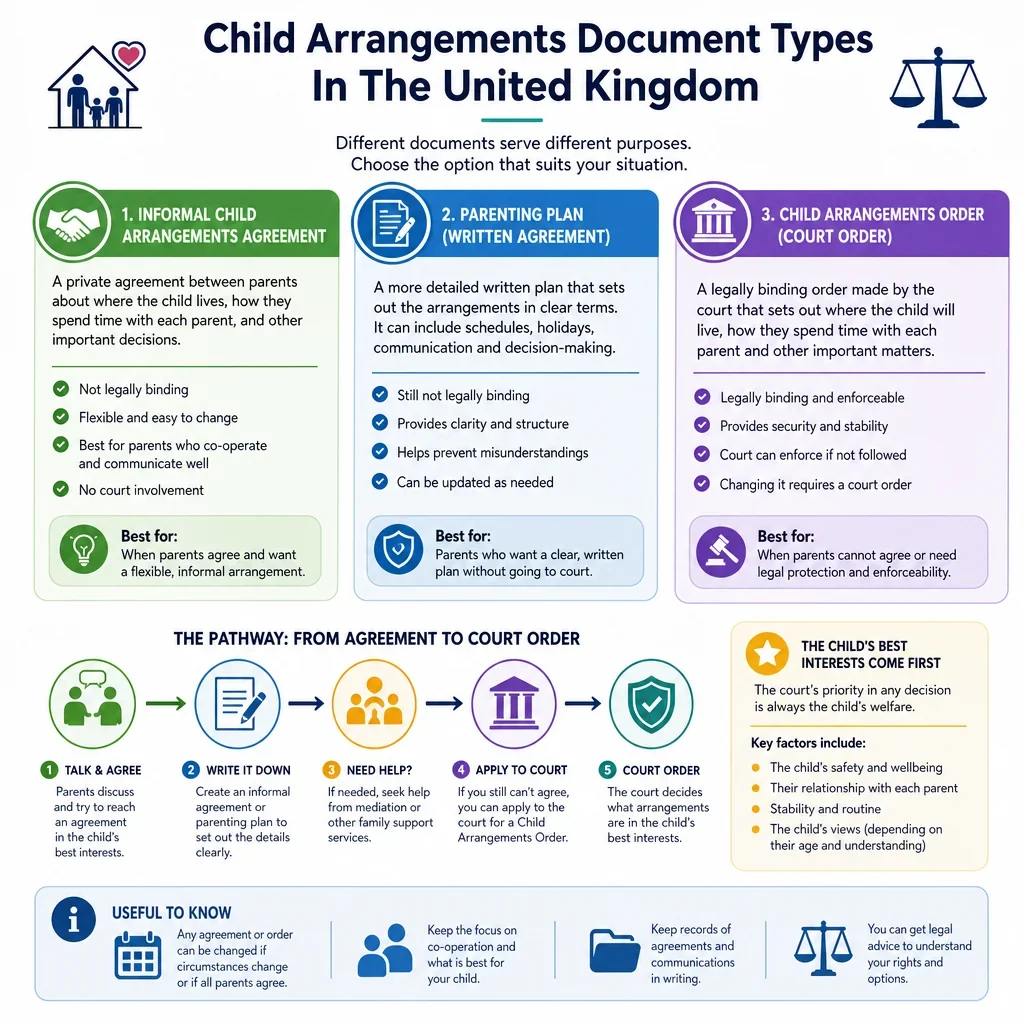
Explore UK child arrangements document types, their uses, and how they help parents plan clear child custody agreements.
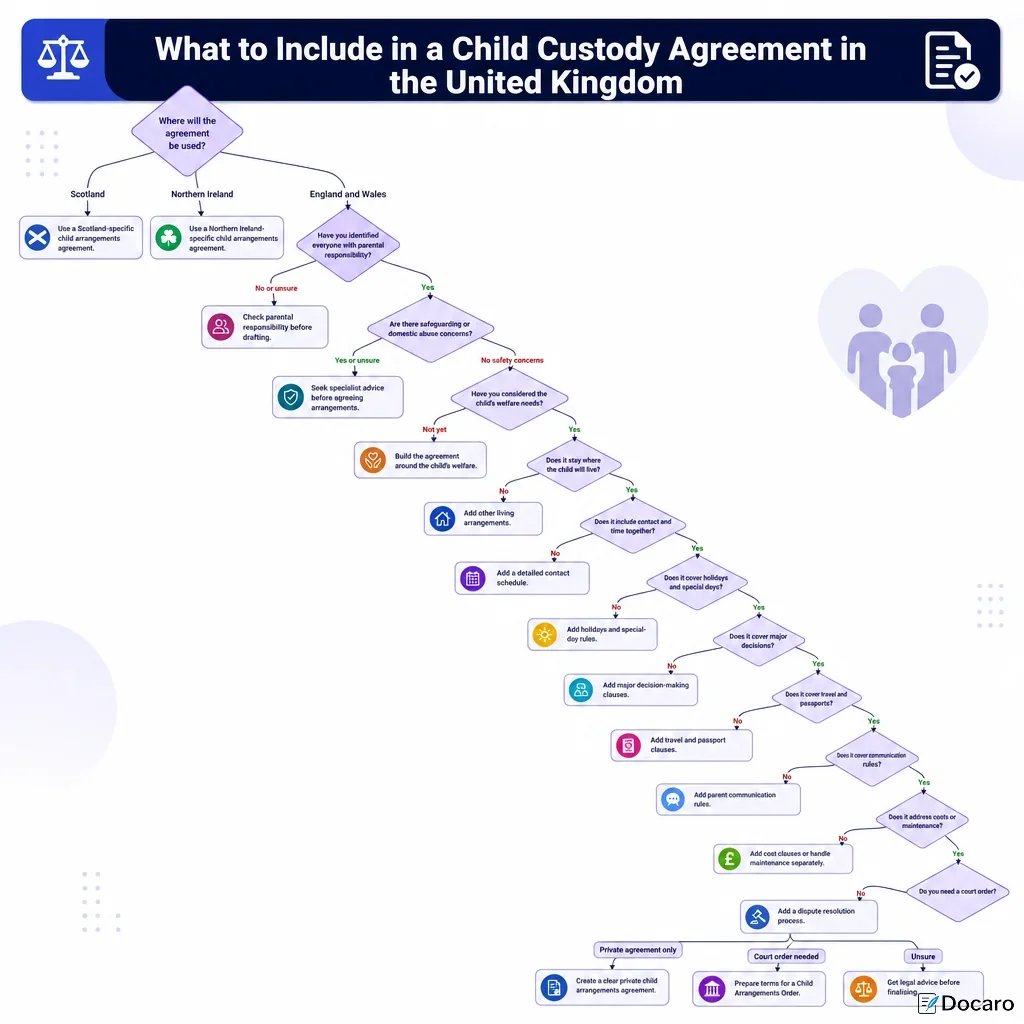
Learn what to include in a United Kingdom child custody agreement, from living arrangements to holidays, decisions and communication.