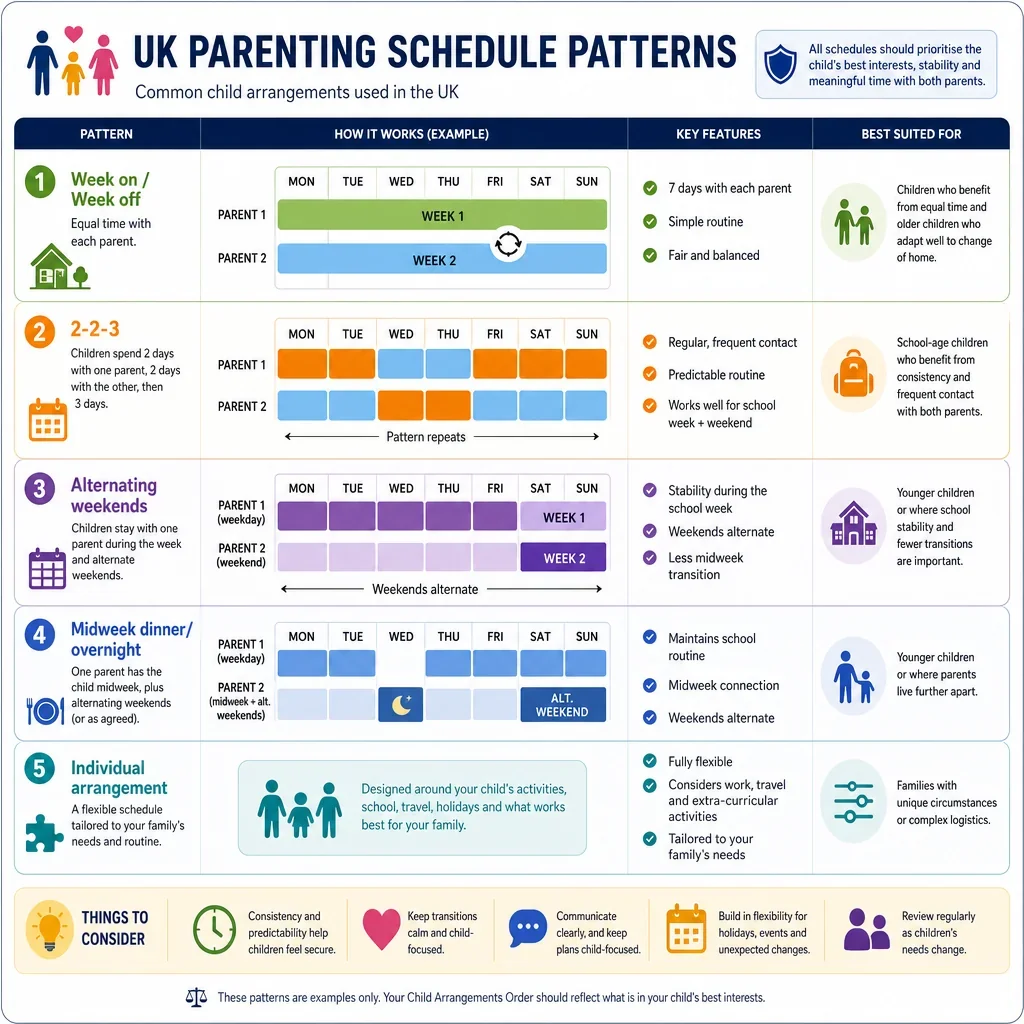
UK Parenting Schedule Patterns
Schedule Pattern | Description | Typical Fortnightly Overnights | Coordination Required | Suitable Age Group |
|---|---|---|---|---|
Weekend contact | ||||
Alternate weekends | Child stays with the second parent every other weekend, usually Friday to Sunday. | 2 | Low | Any age group |
Alternate long weekends | Child stays every other weekend from Friday after school to Monday school drop-off. | 3 | Medium | Primary school age, Secondary school age |
Primary residence with contact, Midweek contact | ||||
Alternate weekends plus one midweek overnight | Every other weekend plus one overnight during the opposite or each school week. | 4 | Medium | Primary school age, Secondary school age |
Alternate weekends plus weekly tea visit | Every other weekend plus a weekly after-school or evening visit without overnight stay. | 2 | Medium | Any age group |
Alternate weekends plus two midweek overnights | Every other weekend with two additional school-night stays across the fortnight. | 4 | High | Primary school age, Secondary school age |
Weekend contact | ||||
Alternate Saturday day contact | Child spends alternate Saturdays with the second parent and returns the same day. | 0 | Low | Infants and toddlers, Primary school age |
Weekly Saturday day contact | Child spends each Saturday with the second parent without an overnight stay. | 0 | Medium | Infants and toddlers, Primary school age |
Midweek contact, Weekend contact | ||||
Frequent short visits | Several short daytime visits each week, often used before overnight stays begin. | 0 | High | Infants and toddlers |
Primary residence with contact | ||||
Stepped progression schedule | Contact increases in stages, for example from day visits to overnight stays. | 1 | High | Infants and toddlers, Primary school age |
Shared care | ||||
Week on, week off | Child alternates a full week with each parent, often with school-day handovers. | 7 | Medium | Primary school age, Secondary school age |
Shared care, Midweek contact | ||||
Week on, week off with midweek visit | Weekly rotation with a midweek evening visit to reduce long gaps. | 7 | High | Primary school age |
Shared care | ||||
2-2-3 rotation | Parent A has two nights, Parent B two nights, then Parent A three nights reversed next week. | 7 | High | Infants and toddlers, Primary school age |
2-2-5-5 rotation | Each parent has the same two weekdays, with weekends alternating in five-night blocks. | 7 | High | Primary school age, Secondary school age |
3-4-4-3 rotation | One parent has three nights then four nights, with the pattern reversing the next week. | 7 | High | Primary school age, Secondary school age |
Primary residence with contact, Midweek contact, Weekend contact | ||||
Every Wednesday and alternate weekends | Child stays every Wednesday night and every other weekend with the second parent. | 4 | Medium | Primary school age, Secondary school age |
Midweek contact, Primary residence with contact | ||||
Two fixed midweek overnights | Child stays with the second parent on two set school nights each week. | 4 | High | Primary school age, Secondary school age |
One fixed midweek overnight | Child stays with the second parent on the same school night each week. | 2 | Medium | Primary school age, Secondary school age |
Midweek contact | ||||
Weekly after-school contact | Child is collected after school for tea or activities and returns the same evening. | 0 | Medium | Any age group |
Midweek contact, Primary residence with contact | ||||
Fortnightly midweek overnight | Child stays one school night every two weeks with the second parent. | 1 | Low | Primary school age, Secondary school age |
Weekend contact | ||||
Every weekend | Child stays with the second parent every weekend and lives with the main carer on weekdays. | 4 | Medium | Primary school age, Secondary school age |
Every long weekend | Child stays every weekend from Friday after school until Monday school drop-off. | 6 | High | Primary school age, Secondary school age |
First, third and fifth weekends | Child stays on specified weekends each month, with any fifth weekend included. | 2 | Low | Any age group |
Second and fourth weekends | Child stays on the second and fourth weekends of each calendar month. | 2 | Low | Any age group |
One weekend per month | Child stays with the second parent for one agreed weekend each month. | 1 | Low | Any age group |
Monthly long weekend | Child stays one long weekend each month, often Friday to Monday. | 1.5 | Medium | Primary school age, Secondary school age |
Holiday-only contact, Weekend contact | ||||
School holidays plus monthly weekend | Child stays during agreed school holiday blocks plus one weekend each month. | 1 | Medium | Primary school age, Secondary school age |
Holiday-only contact | ||||
School holidays only | Child stays with the second parent only during agreed school holiday periods. | 0 | Low | Primary school age, Secondary school age |
Alternating half-term holidays | Parents alternate February, May and October half-term holidays each year. | 0 | Low | Primary school age, Secondary school age |
Holiday-only contact, Shared care | ||||
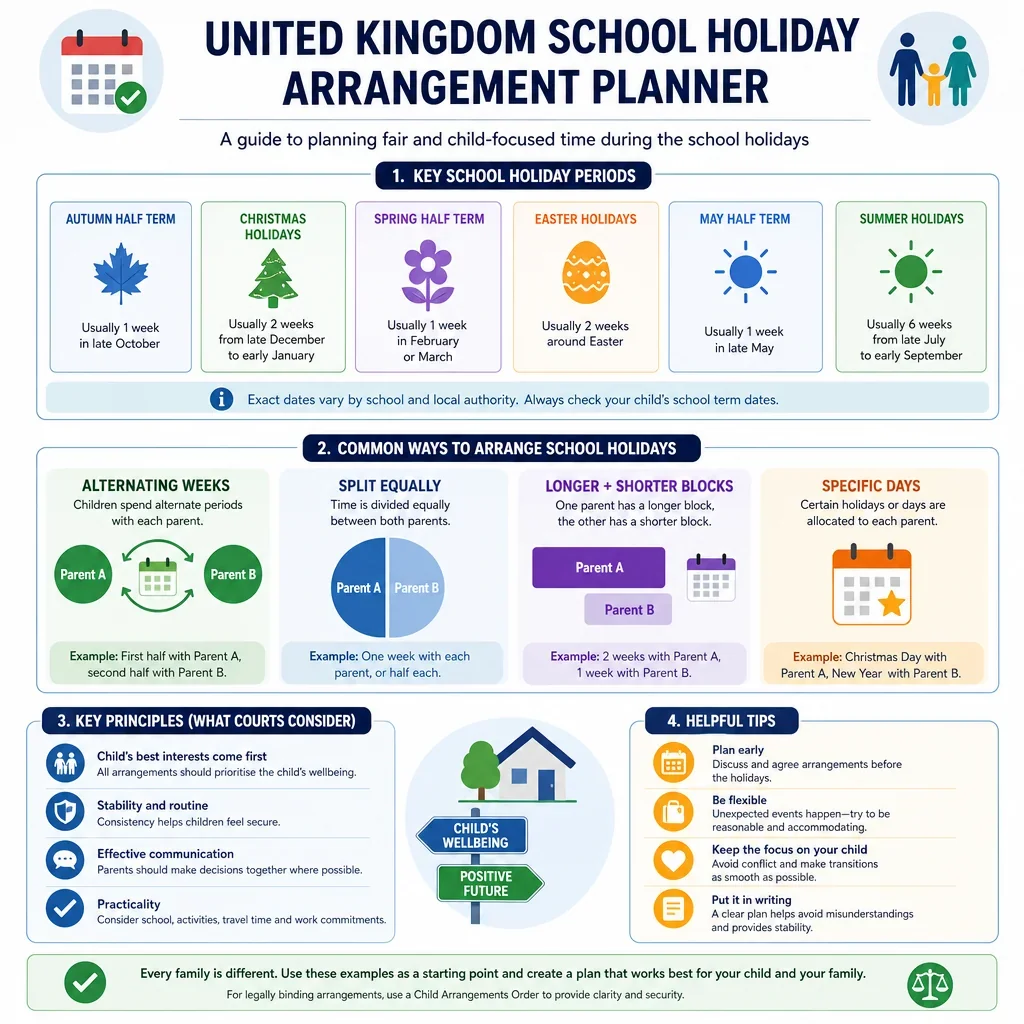
Split summer holidays | Summer school holiday is divided into agreed blocks, often two or three weeks each. | 0 | Medium | Primary school age, Secondary school age |
Holiday-only contact | ||||
Alternating Christmas | Christmas Eve, Christmas Day or the main Christmas block alternates each year. | 0 | Medium | Any age group |
Split Christmas Day | Child spends part of Christmas Day with each parent, if travel is practical. | 0 | High | Any age group |
Alternating Easter holidays | Easter school holiday is alternated yearly or divided into two equal blocks. | 0 | Low | Primary school age, Secondary school age |
Alternating birthdays and special days | Child birthdays, parent birthdays, Mother's Day and Father's Day are allocated or alternated. | 0 | Medium | Any age group |
Primary residence with contact, Holiday-only contact | ||||
Term-time primary residence with shared holidays | Child lives mainly with one parent in term time and holidays are shared or alternated. | 2 | Medium | Primary school age, Secondary school age |
Primary residence with contact, Weekend contact | ||||
School week with one parent, weekends alternating | Child stays with one parent on school nights and alternates weekends with each parent. | 2 | Low | Primary school age, Secondary school age |
Shared care, Primary residence with contact | ||||
Weekdays with second parent, weekends with main carer | Child stays school nights with one parent and most weekends with the other parent. | 8 | Medium | Primary school age, Secondary school age |
Rota-based schedule | Parenting time follows work rotas agreed in advance rather than fixed weekdays. | 4 | High | Primary school age, Secondary school age |
Rota schedule with minimum guaranteed nights | Variable schedule guarantees a minimum number of nights in each fortnight or month. | 5 | High | Secondary school age |
Weekend contact, Midweek contact | ||||
Supervised day contact | Child sees a parent for short sessions supervised by an agreed person or contact centre. | 0 | High | Any age group |
Supported contact centre sessions | Child has contact at a centre where staff support handover but do not closely supervise. | 0 | Medium | Any age group |
Midweek contact | ||||
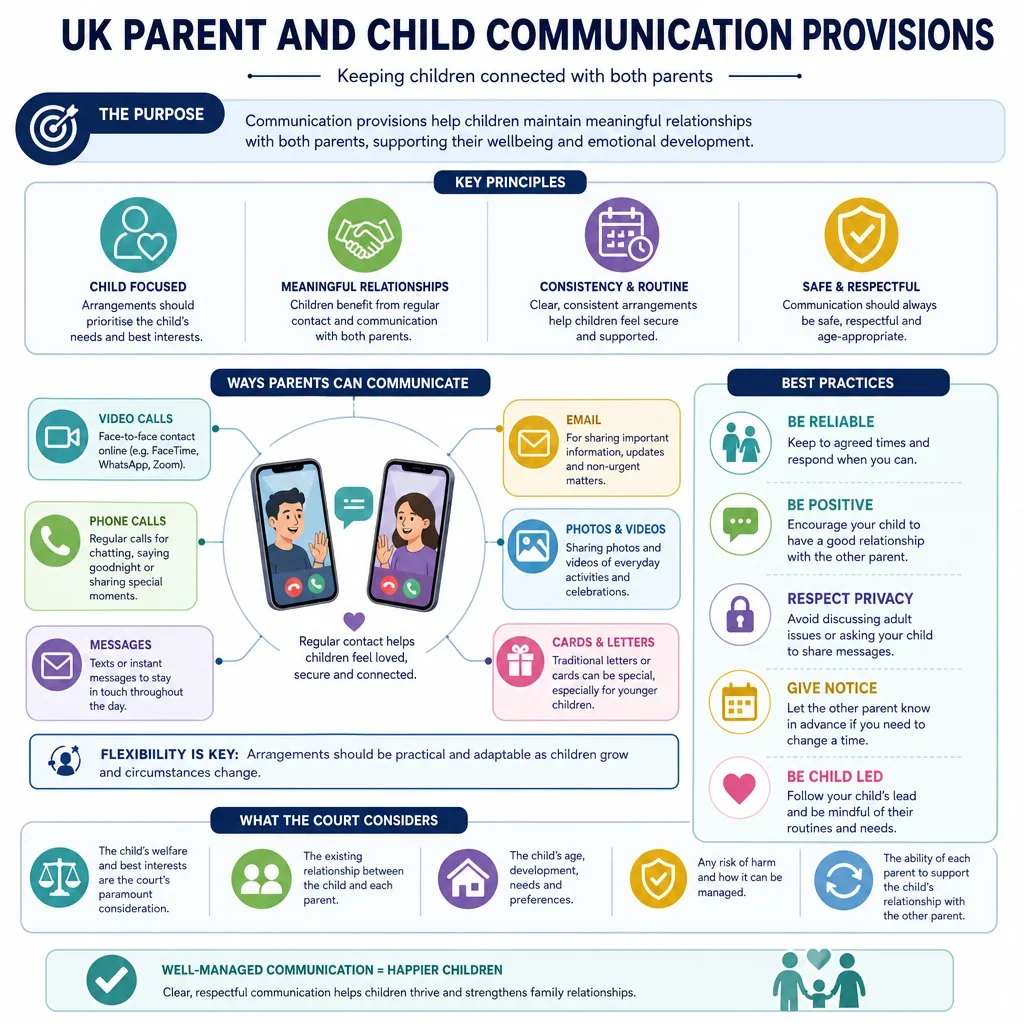
Indirect contact only | Contact takes place by calls, video calls, letters or messages rather than in person. | 0 | Low | Any age group |
Holiday-only contact, Midweek contact | ||||
Scheduled video calls plus holidays | Regular video calls during term time, with in-person stays in school holidays. | 0 | Medium | Primary school age, Secondary school age |
Shared care | ||||
Bird nesting | Child remains in one home while parents rotate in and out on agreed days. | 7 | High | Any age group |
Shared care, Primary residence with contact | ||||
Linked sibling schedule | Siblings follow the same base schedule but with tailored exceptions for age or activities. | 4 | High | Any age group |
Teenager flexible schedule | Base schedule allows variation around exams, friendships, work and activities by agreement. | 4 | High | Secondary school age |
Primary residence with contact, Midweek contact | ||||
Exam-period reduced travel | During GCSEs or A-levels, overnights are reduced or moved to limit travel. | 2 | Medium | Secondary school age |
Shared care, Primary residence with contact | ||||
Activities-first schedule | Parenting time is set around regular sport, tuition, clubs or religious activities. | 4 | High | Primary school age, Secondary school age |
Primary residence with contact, Midweek contact, Weekend contact | ||||
One overnight plus frequent short visits | Child has one overnight per fortnight or week plus shorter daytime visits. | 1 | High | Infants and toddlers |
Primary residence with contact | ||||
Two separated overnights per fortnight | Child has two single overnight stays each fortnight, spaced to avoid long gaps. | 2 | Medium | Infants and toddlers, Primary school age |
Weekend contact, Primary residence with contact | ||||
Three-night fortnightly block | Child stays for a three-night block every fortnight, usually over a long weekend. | 3 | Medium | Primary school age, Secondary school age |
Shared care, Primary residence with contact | ||||
Five nights per fortnight | Child spends five nights per fortnight with the second parent, often weekends plus weekdays. | 5 | Medium | Primary school age, Secondary school age |
Shared care | ||||
Six nights per fortnight | Child spends six nights per fortnight with one parent and eight with the other. | 6 | Medium | Primary school age, Secondary school age |
Eight nights per fortnight | Child spends eight nights per fortnight with one parent and six with the other. | 8 | Medium | Primary school age, Secondary school age |
Holiday-only contact, Weekend contact | ||||
Alternating bank holiday weekends | Bank holiday weekends are alternated or attached to the parent's usual weekend. | 0 | Low | Any age group |
Holiday-only contact, Shared care, Primary residence with contact | ||||
Holiday override schedule | School holidays and special days override the ordinary term-time schedule. | 0 | Medium | Any age group |
Holiday-only contact, Weekend contact | ||||
Long-distance blocks | Fewer but longer blocks are used where parents live far apart. | 1 | Medium | Primary school age, Secondary school age |
Holiday-only contact | ||||
International holiday contact | Child spends longer school holiday blocks abroad with the non-UK or distant parent. | 0 | High | Primary school age, Secondary school age |
Shared care, Primary residence with contact | ||||
School handover schedule | Handovers occur through school or nursery to reduce direct parental contact. | 4 | Low | Infants and toddlers, Primary school age |
Primary residence with contact, Weekend contact | ||||
Neutral handover point schedule | Parenting time follows a normal pattern but handovers occur at an agreed neutral place. | 2 | Medium | Any age group |
Weekend contact | ||||
Floating weekend schedule | Weekend contact occurs twice per month, with dates confirmed in advance. | 2 | High | Secondary school age |
Alternate weekends with make-up weekend | Missed alternate weekend contact is replaced by a defined make-up weekend where possible. | 2 | Medium | Any age group |
Primary residence with contact, Holiday-only contact | ||||
Term-time weekends with summer expansion | Usual term-time weekend contact increases to longer blocks in the summer holidays. | 2 | Medium | Primary school age, Secondary school age |
Primary residence with contact, Midweek contact | ||||
Nursery-age gradual overnights | Short visits progress to one or two overnights as the child becomes settled. | 1 | High | Infants and toddlers |
Primary residence with contact, Midweek contact, Weekend contact | ||||
Primary-school fixed routine | Fixed weekday and weekend pattern built around school, homework and clubs. | 4 | Medium | Primary school age |
Holiday-only contact, Weekend contact | ||||
Relocation distance schedule | After a move, contact shifts to longer weekends and larger holiday blocks. | 1 | High | Primary school age, Secondary school age |
Primary residence with contact, Midweek contact, Weekend contact | ||||
Older teenager self-managed contact | Older teenager follows a base plan but arranges extra time directly with parents. | 2 | Medium | Secondary school age |
Shared care | ||||
Fixed Monday-Tuesday and Wednesday-Thursday split | Each parent has fixed weekday nights and weekends alternate between them. | 7 | High | Primary school age, Secondary school age |
4-3 weekly split | Child spends four nights with one parent and three with the other each week. | 6 | Medium | Primary school age, Secondary school age |
Primary residence with contact, Weekend contact | ||||
5-2 weekly split | Child spends five nights with one parent and two nights with the other each week. | 4 | Medium | Primary school age, Secondary school age |
Midweek contact | ||||
Weekday-only contact | Child sees the second parent on weekdays only, leaving weekends with the main carer. | 2 | Medium | Secondary school age |
Weekend contact, Midweek contact | ||||
Alternate Sunday overnight | Child stays alternate Sunday nights and is taken to school on Monday morning. | 1 | Low | Primary school age, Secondary school age |
Weekend contact | ||||
Weekly Saturday overnight | Child stays every Saturday night and returns on Sunday. | 2 | Low | Any age group |
Alternate Friday overnight | Child stays on alternate Friday nights and returns on Saturday. | 1 | Low | Infants and toddlers, Primary school age |
Shared care, Primary residence with contact, Weekend contact, Midweek contact, Holiday-only contact | ||||
Welfare-based bespoke schedule | Schedule is tailored to the child's welfare, needs, age, wishes and circumstances. | 0 | Medium | Any age group |
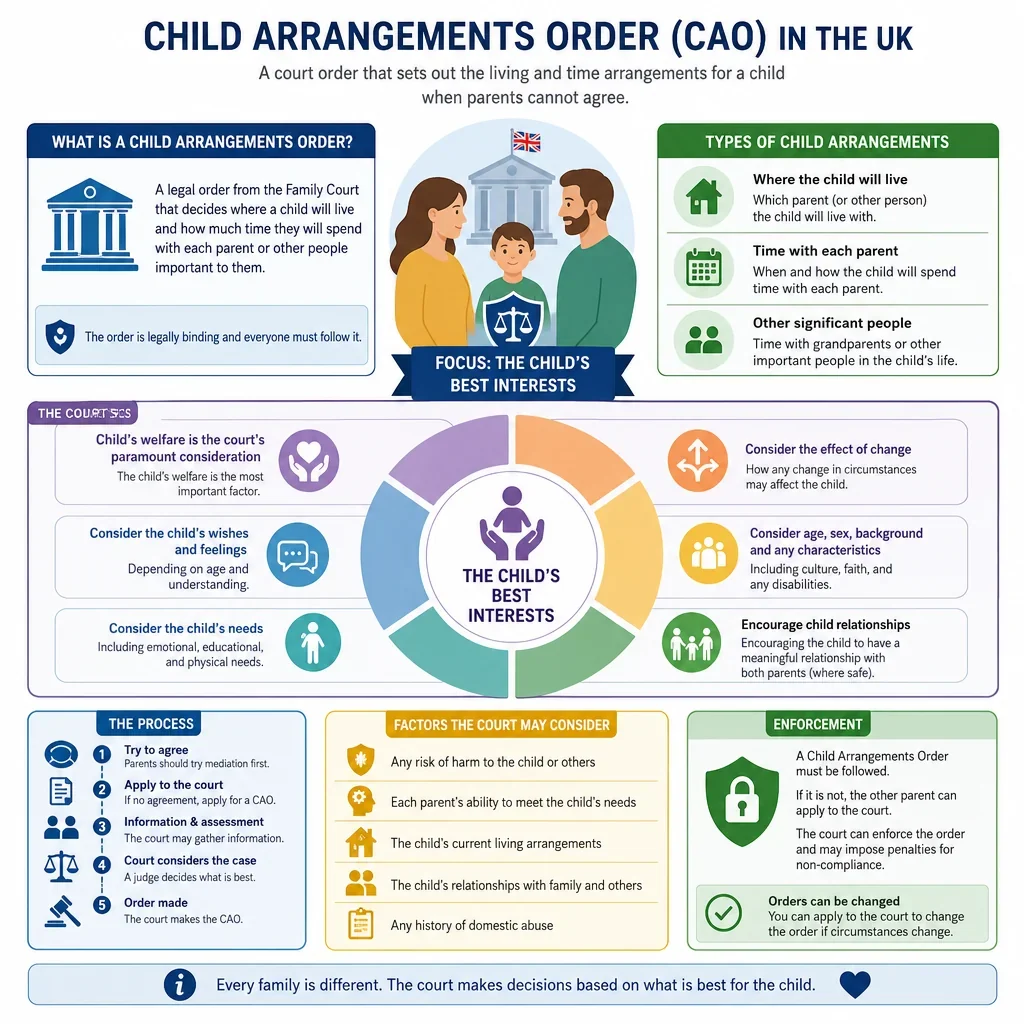
Child arrangements order schedule | Court order setting where a child lives and when the child spends time with each parent. | 0 | Medium | Any age group |
Which Parenting Schedule Is Most Practical For A UK Child Arrangements Agreement?
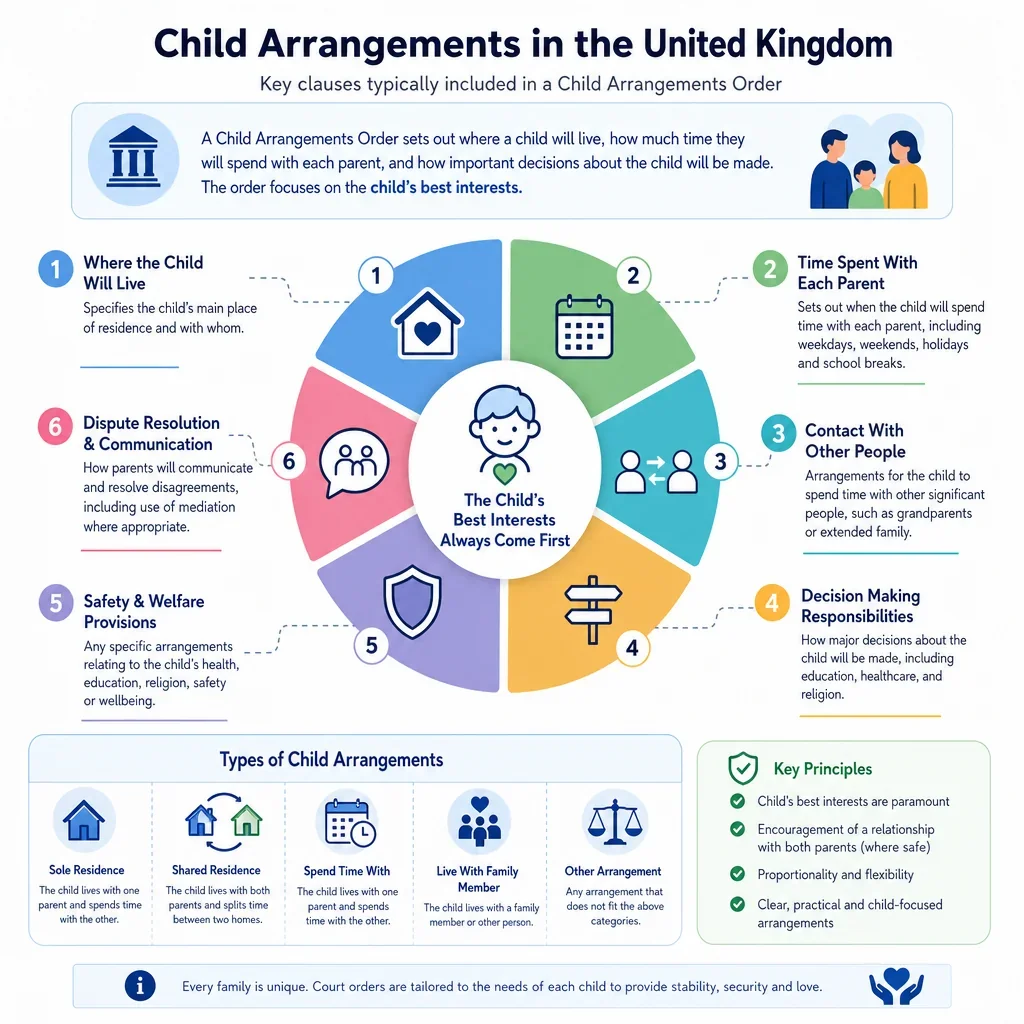
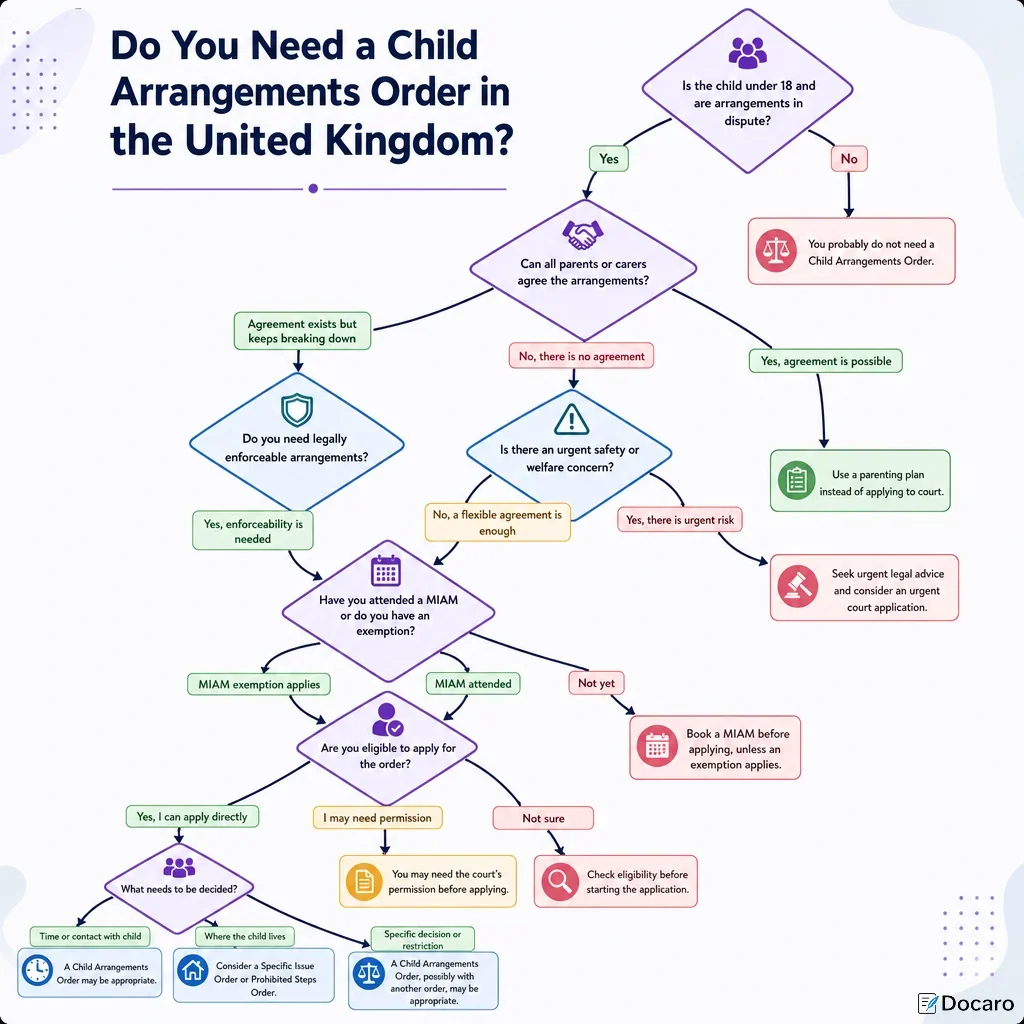
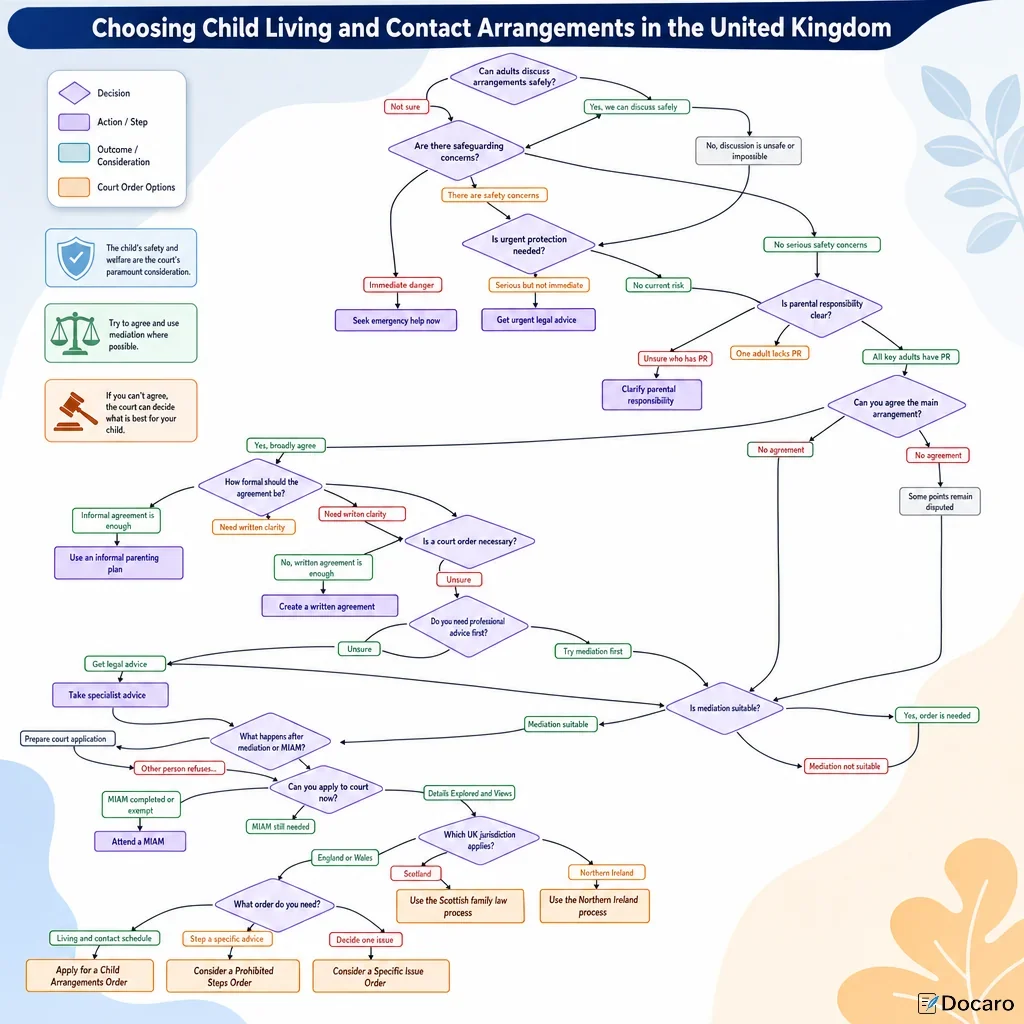
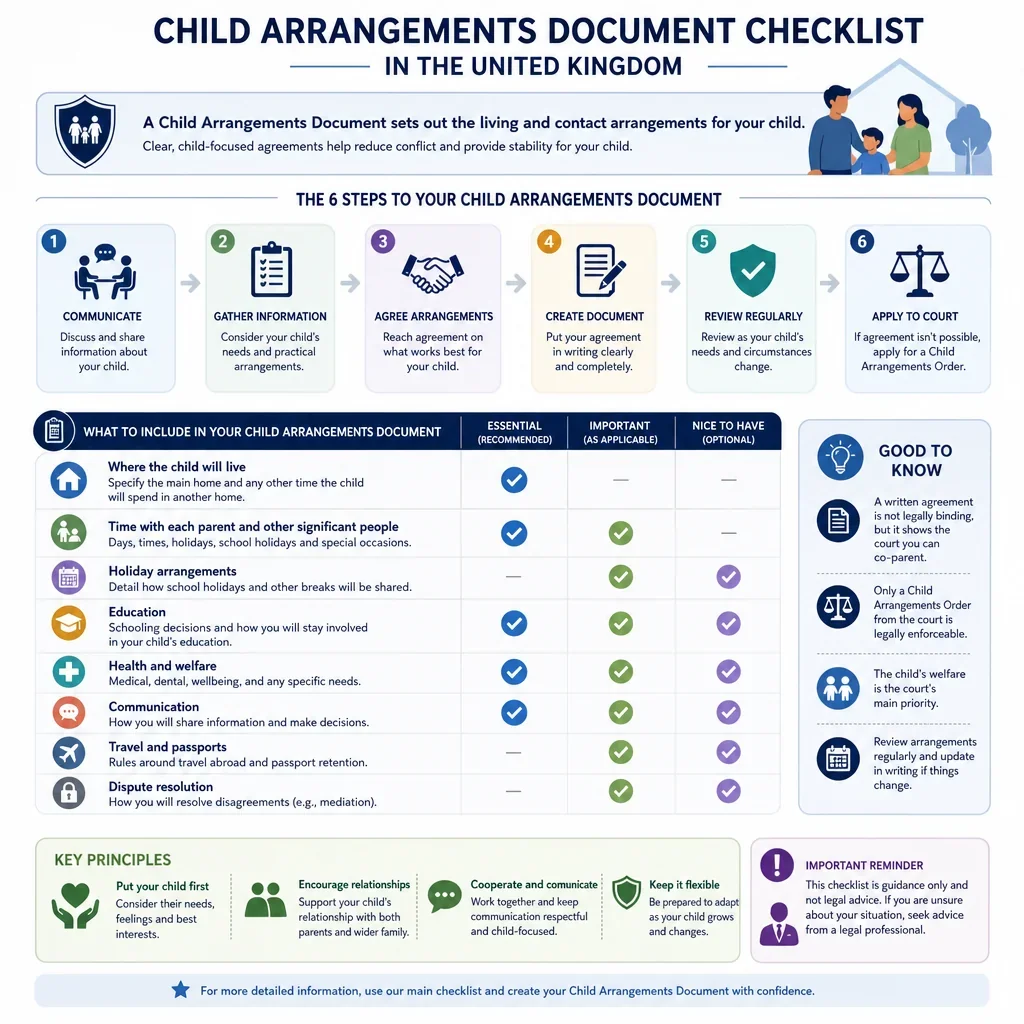
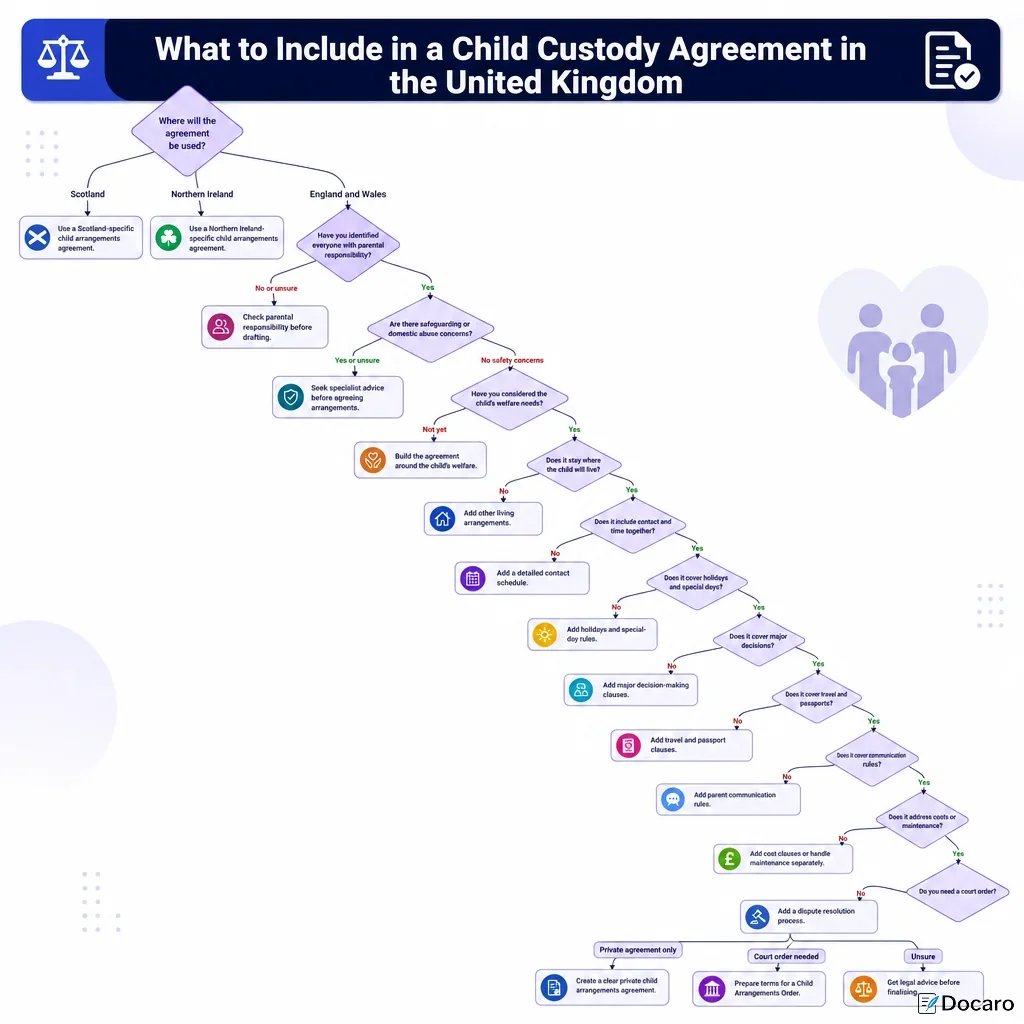
There is no single standard UK parenting schedule. The patterns in this dataset range from low-coordination weekend contact to high-coordination shared care, and the right wording for a child arrangements agreement should match school routines, travel time, the child\'s age and each parent\'s ability to communicate.
How Many Overnight Stays Does Each Pattern Usually Create?
- 0 to 2 overnights per fortnight usually indicates day contact, holiday-only contact or limited weekend contact. This may suit very young children, long-distance parents or early-stage arrangements.
- 3 to 5 overnights per fortnight is common where one parent is the main carer and the other has alternate weekends plus some midweek time.
- 6 to 8 overnights per fortnight is broadly shared care, but it usually needs reliable handovers, compatible work patterns and consistent school logistics.
Why Does Coordination Matter In A Child Arrangements Order?
Schedules such as week-on week-off, 2-2-3, 3-4-4-3 and nested arrangements require frequent communication about uniforms, homework, clubs, medicines and handovers. Lower-coordination patterns, such as alternate weekends or fixed holiday blocks, are often easier to draft clearly and operate where parental communication is limited.
How Should Age Affect A Parenting Schedule?
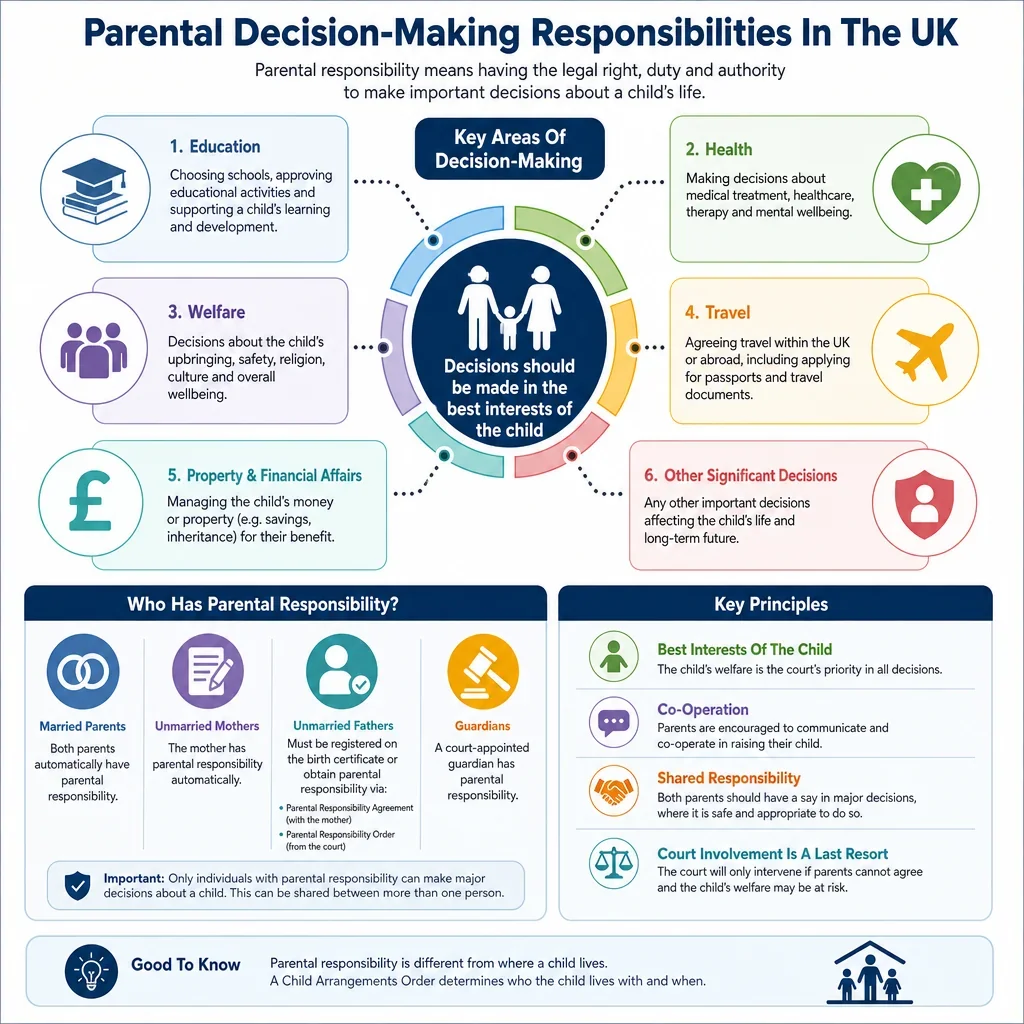
Infants and toddlers often benefit from shorter, more frequent contact rather than long gaps. Primary school children can often manage regular weekday and weekend routines. Secondary school children may need schedules that accommodate exams, part-time work, friendships and activities. In England and Wales, decisions about child arrangements are governed by the child\'s welfare as the court\'s paramount consideration under the Children Act 1989, section 1.
FAQs
You Might Also Be Interested In