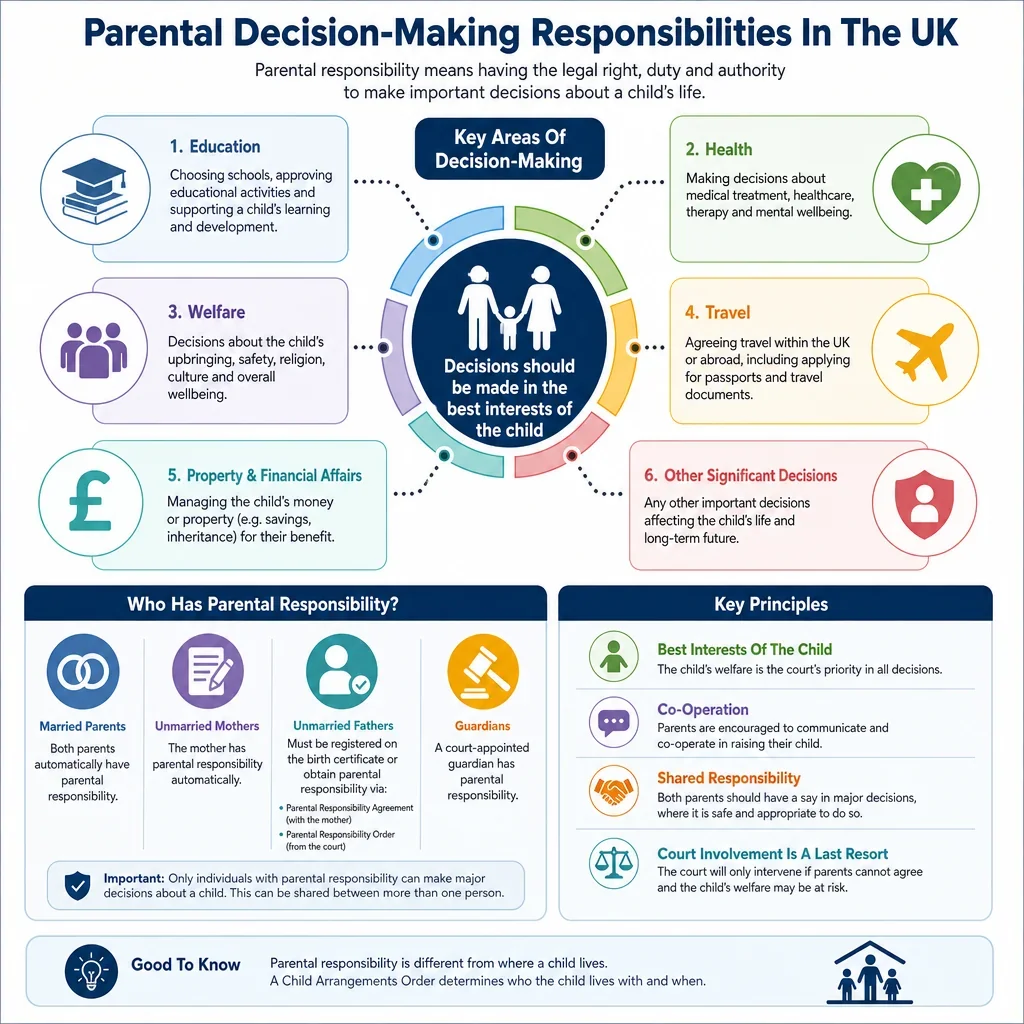
Parental Decision-Making Responsibilities In The UK
Decision Area | Responsibility Model | Consultation Requirement | Documentation Importance | Drafting Notes |
|---|---|---|---|---|
Education | ||||
School selection | Joint decision | Discuss school options, admissions, distance, costs and child welfare before applying. | High | Require written agreement before changing or applying for a school place. |
Changing school | Written agreement required | Share reasons, proposed school details, admission deadlines and transport implications. | High | State that no parent may withdraw or transfer the child without written consent or court order. |
Nursery or childcare setting | Joint decision | Agree provider, hours, costs, collection permissions and funding arrangements. | High | Identify who contracts with the provider and how costs are shared. |
Special educational needs support | Joint decision | Share assessments, school reports, professional advice and proposed support plans. | High | Require both parents to cooperate with SEN meetings, assessments and plan reviews. |
Education, Healthcare | ||||
Education, Health and Care Plan decisions | Joint decision | Agree requests, evidence, named placement preferences and attendance at reviews. | High | Include a duty to exchange all local authority and school correspondence promptly. |
Education, Digital communication | ||||
School correspondence and parent portals | Consultation required | Both parents should be registered for reports, alerts, apps and meeting invitations. | Medium | Require each parent to forward important school messages within 24 hours. |
Education | ||||
Parents evenings and school meetings | Consultation required | Coordinate attendance and share notes from meetings either parent attends alone. | Medium | Allow either parent to attend unless the school or court directs otherwise. |
Private tutoring | Consultation required | Agree subject, tutor, timetable, cost sharing and effect on contact time. | Medium | State whether one parent may arrange tutoring at their own cost during their time. |
Education, Day-to-day care | ||||
Homework routines | Parent with care at the time decision | Share major deadlines, homework concerns and school feedback. | Low | Keep routines consistent but allow each home reasonable flexibility. |
Education, Travel | ||||
School trips and residentials | Consultation required | Discuss dates, cost, travel, risk forms and impact on scheduled contact. | Medium | Require written consent for overseas or overnight trips. |
Healthcare | ||||
GP registration | Joint decision | Agree practice location, access, records and who manages appointments. | High | Name the usual GP and require notice before changing registration. |
Routine medical appointments | Resident parent decision | Notify the other parent of non-urgent appointments and outcomes. | Medium | Allow either parent to book routine care during their time and share results. |
Emergency medical treatment | Parent with care at the time decision | Seek urgent care immediately and notify the other parent as soon as practicable. | High | State emergency decisions need no prior consent but require prompt information sharing. |
Vaccinations and immunisations | Joint decision | Discuss NHS schedule, medical advice, consent forms and any objections. | High | Specify whether NHS-recommended vaccinations may proceed unless written objection is raised. |
Dental treatment | Consultation required | Share check-up results, treatment plans, orthodontic advice and costs. | Medium | Require written agreement for private orthodontic or cosmetic dental costs. |
Mental health support or therapy | Joint decision | Discuss referrals, therapist choice, confidentiality, costs and safeguarding concerns. | High | Avoid requiring disclosure of confidential therapy content unless clinically appropriate. |
Prescription medication | Parent with care at the time decision | Share dosage, instructions, side effects and supply at handovers. | High | Include a medicine log for regular medication moving between homes. |
Non-emergency surgery or invasive treatment | Written agreement required | Review medical advice, risks, alternatives, timing and aftercare responsibilities. | High | Require written consent from both parents except in emergencies or court-authorised treatment. |
Eye tests and glasses | Resident parent decision | Share prescriptions, test results, costs and spare glasses arrangements. | Medium | State who keeps spare glasses and how replacements are funded. |
Religion and culture | ||||
Religious upbringing | Joint decision | Discuss worship, teaching, ceremonies, dietary rules and the child's wishes. | High | Record agreed faith practices and avoid unilateral major changes. |
Religious ceremonies | Written agreement required | Agree ceremony type, timing, guests, preparation and any legal or medical implications. | High | Require written consent for baptism, initiation, confirmation or comparable rites. |
Religion and culture, Day-to-day care | ||||
Cultural festivals and family traditions | Consultation required | Coordinate significant dates, attendance, travel and contact swaps. | Medium | List priority holidays or cultural events and how time will rotate. |
Religious or cultural diet | Parent with care at the time decision | Agree essential restrictions and share allergy or school meal requirements. | Medium | Distinguish mandatory dietary rules from each parent's ordinary household choices. |
Travel | ||||
Foreign holidays | Written agreement required | Agree destination, dates, flights, accommodation, insurance and emergency contact details. | High | Require signed travel consent and itinerary before departure. |
Taking child abroad under lives-with order | Consultation required | Give notice of trip details and ensure travel complies with any order restrictions. | High | Refer to any court order and specify maximum trip length and notice period. |
Passport application and renewal | Joint decision | Agree application, supporting documents, countersignature and passport holder. | High | State who holds the passport and deadlines for providing it before travel. |
UK holidays and overnight stays | Parent with care at the time decision | Notify location, dates, travel arrangements and emergency contact for longer stays. | Medium | Set notice periods for holidays affecting normal contact. |
Travel, Education | ||||
Relocation within the UK | Written agreement required | Discuss address, school, travel time, contact impact and proposed revised schedule. | High | Require advance written notice and consent before any move affecting contact or schooling. |
International relocation | Written agreement required | Agree country, immigration status, school, healthcare, contact and travel funding. | High | State relocation requires written consent of all with parental responsibility or court permission. |
Extracurricular activities | ||||
Regular clubs and activities | Consultation required | Agree timetable, fees, equipment, transport and effect on contact. | Medium | Allow existing activities to continue unless both parents agree otherwise. |
Extracurricular activities, Healthcare | ||||
Competitive sport commitments | Joint decision | Discuss training load, injury risk, travel, fees and weekend contact impact. | High | Set maximum commitments and who may consent to fixtures during the other parent's time. |
Extracurricular activities | ||||
Music, drama or performing arts | Consultation required | Agree lessons, exams, rehearsals, performances, costs and photo permissions. | Medium | Include arrangements for instruments, costumes and attendance at performances. |
Extracurricular activities, Healthcare | ||||
High-risk activities | Written agreement required | Discuss safety, supervision, insurance, medical suitability and provider credentials. | High | Require written consent for activities such as shooting sports, motorsport or adventure trips. |
Day-to-day care | ||||
Bedtime and daily routine | Parent with care at the time decision | Share routines that affect school attendance, health or behaviour. | Low | Encourage consistency without making minor routines enforceable disputes. |
Day-to-day care, Healthcare | ||||
Meals and nutrition | Parent with care at the time decision | Share allergies, medical dietary needs and significant nutrition concerns. | Medium | Document allergies and essential dietary restrictions separately from preferences. |
Day-to-day care | ||||
Clothing and personal items | Parent with care at the time decision | Coordinate school uniform, seasonal clothing and items moving between homes. | Low | State that belongings should return with the child where reasonably needed. |
Day-to-day care, Religion and culture | ||||
Haircuts and appearance | Consultation required | Discuss major changes, cultural significance, school rules and the child's views. | Medium | Permit routine trims but require consultation for significant or permanent changes. |
Day-to-day care | ||||
Babysitters and temporary carers | Parent with care at the time decision | Notify if care is regular, overnight, paid, or by someone unknown to the other parent. | Medium | Define when use of relatives, partners or babysitters needs prior notice. |
Handover arrangements | Joint decision | Agree times, locations, school handovers, lateness protocol and safety concerns. | High | Use precise times and locations to reduce ambiguity and conflict. |
Day-to-day care, Religion and culture | ||||
Contact with extended family | Parent with care at the time decision | Discuss regular overnight stays, safeguarding concerns and important family events. | Medium | Clarify whether grandparents or relatives may assist with collection and care. |
Day-to-day care | ||||
Introducing new partners | Consultation required | Give advance notice before significant introductions or overnight stays with a partner present. | Medium | Avoid veto clauses unless safeguarding concerns justify specific restrictions. |
Digital communication | ||||
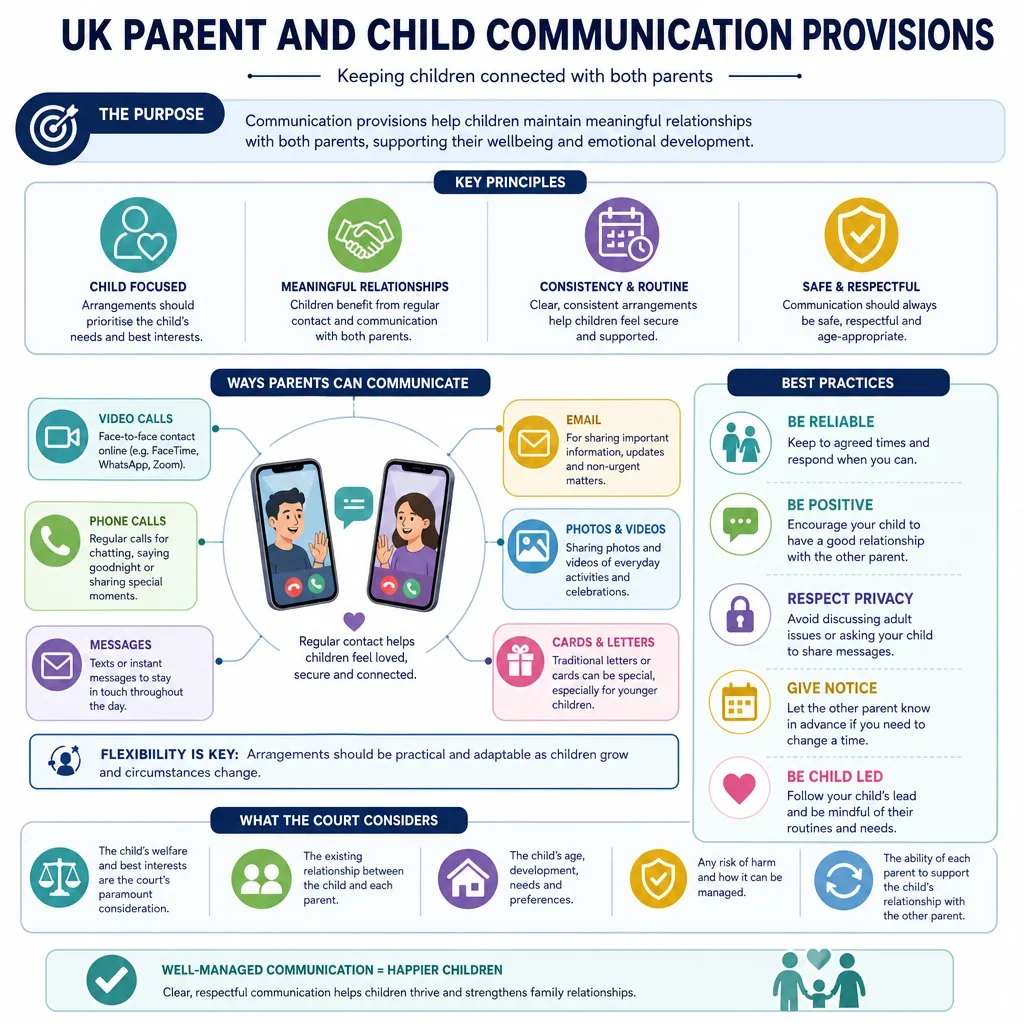
Phone and video contact | Joint decision | Agree frequency, timing, platform, privacy and missed-call arrangements. | High | State calls should be reasonable, child-focused and not monitored unnecessarily. |
Child's mobile phone | Joint decision | Agree purchase, costs, parental controls, access rules and use during contact. | High | Clarify that the phone must not be used to disrupt time with either parent. |
Social media accounts | Joint decision | Agree age, platforms, privacy settings, monitoring and posting rules. | High | Require both parents to follow platform age rules and online safety settings. |
Sharing child images online | Consultation required | Discuss privacy, identifying details, school uniform, location tags and child wishes. | High | Prohibit posts revealing address, school, routine or sensitive information. |
Location tracking and monitoring apps | Written agreement required | Agree purpose, device, access, notifications, data retention and child awareness. | High | Do not allow tracking to monitor the other parent rather than safeguard the child. |
Digital communication, Day-to-day care | ||||
Online gaming and in-app purchases | Parent with care at the time decision | Agree age ratings, spending limits, chat settings and screen-time boundaries. | Medium | Specify who authorises purchases and how parental controls are maintained. |
Education, Digital communication | ||||
School laptops and learning apps | Consultation required | Share login arrangements, acceptable use rules, passwords and device handover needs. | Medium | State devices and chargers must travel with the child when needed for school. |
Education, Healthcare, Religion and culture, Travel, Extracurricular activities, Day-to-day care, Digital communication | ||||
Exercise of parental responsibility | Joint decision | Major welfare decisions should involve everyone with parental responsibility. | High | Define major decisions and preserve day-to-day authority during each parent's care time. |
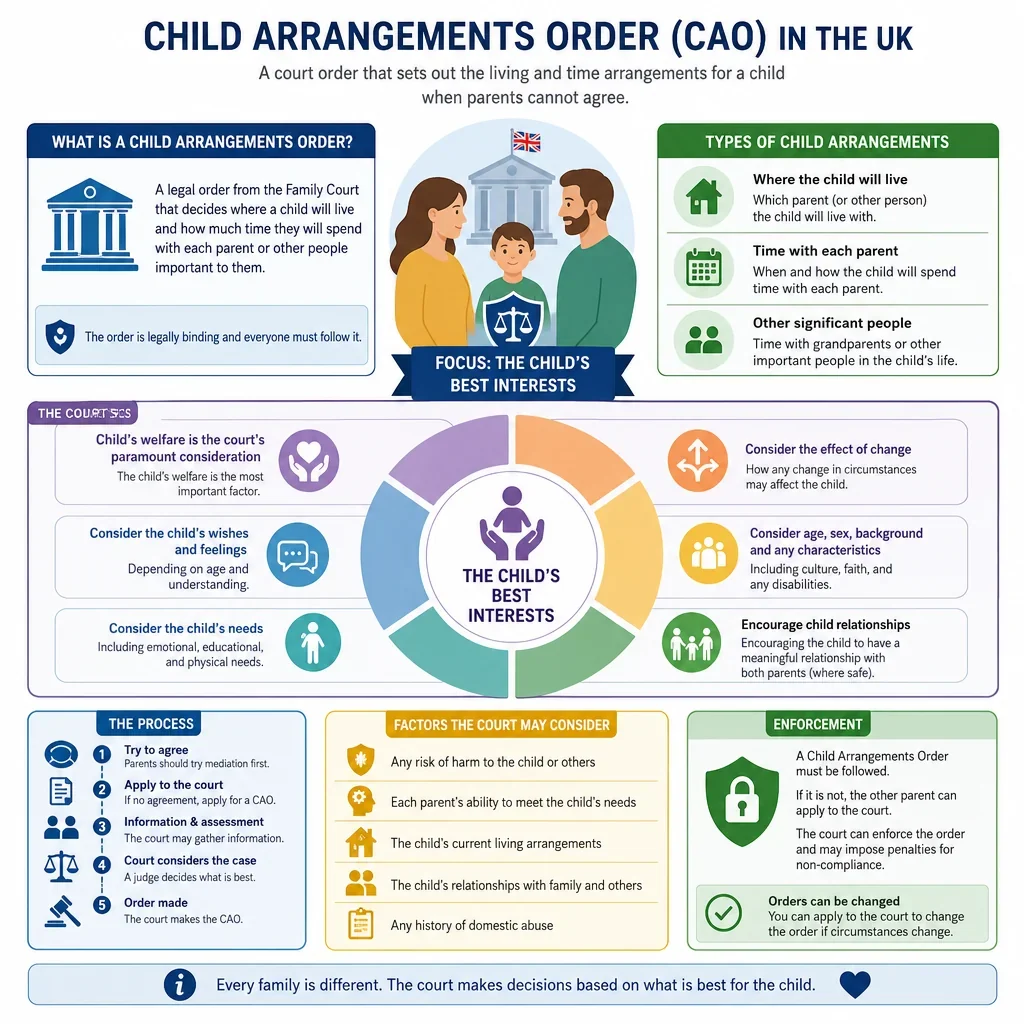
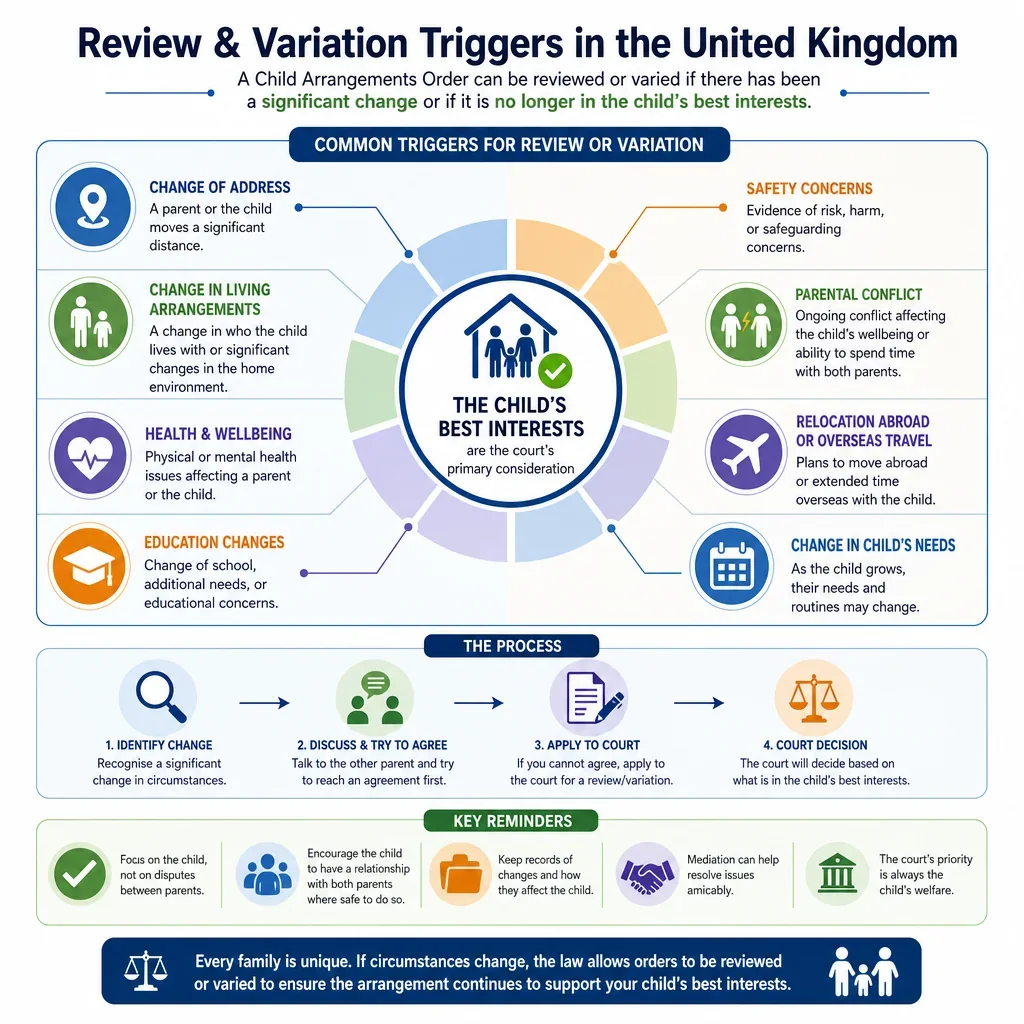
Child welfare as paramount consideration | Consultation required | Assess likely effect on the child before making disputed arrangements. | High | State that decisions must prioritise the child's welfare, stability and safety. |
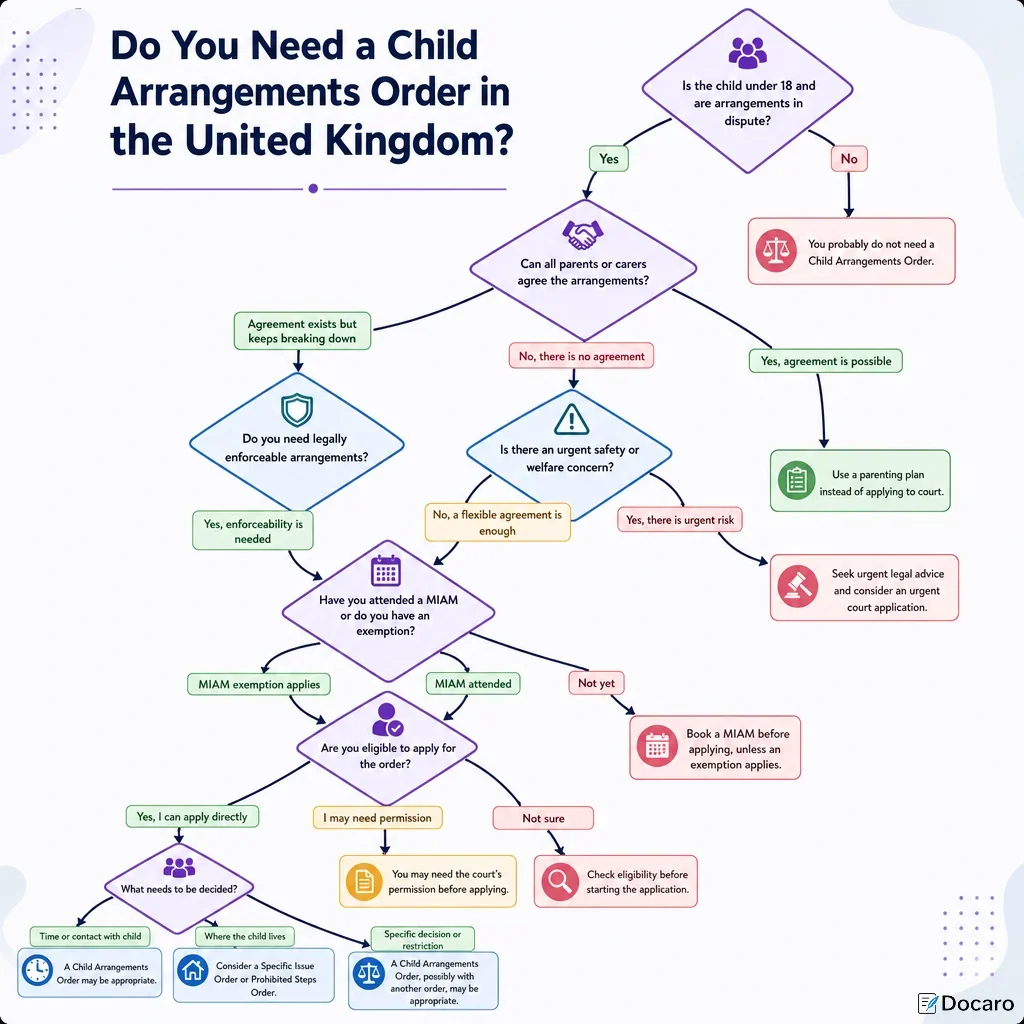
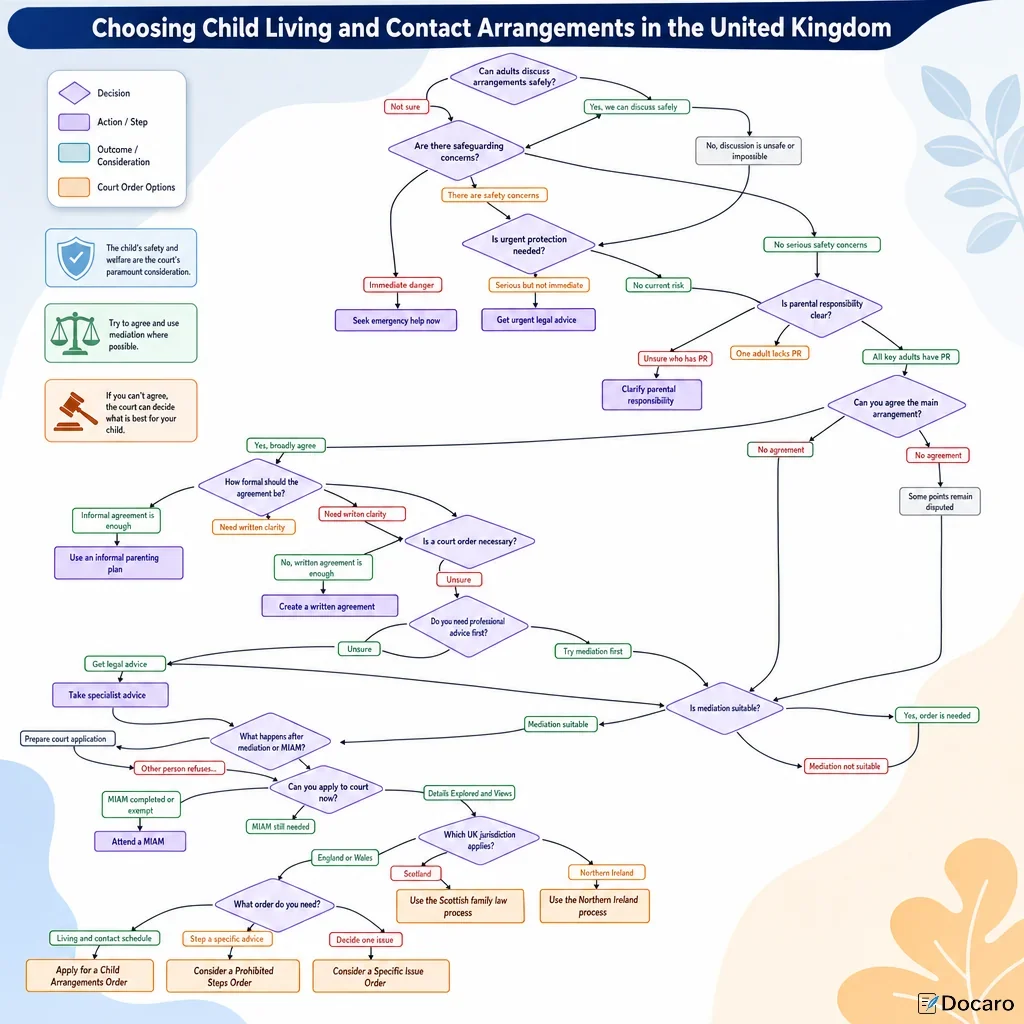
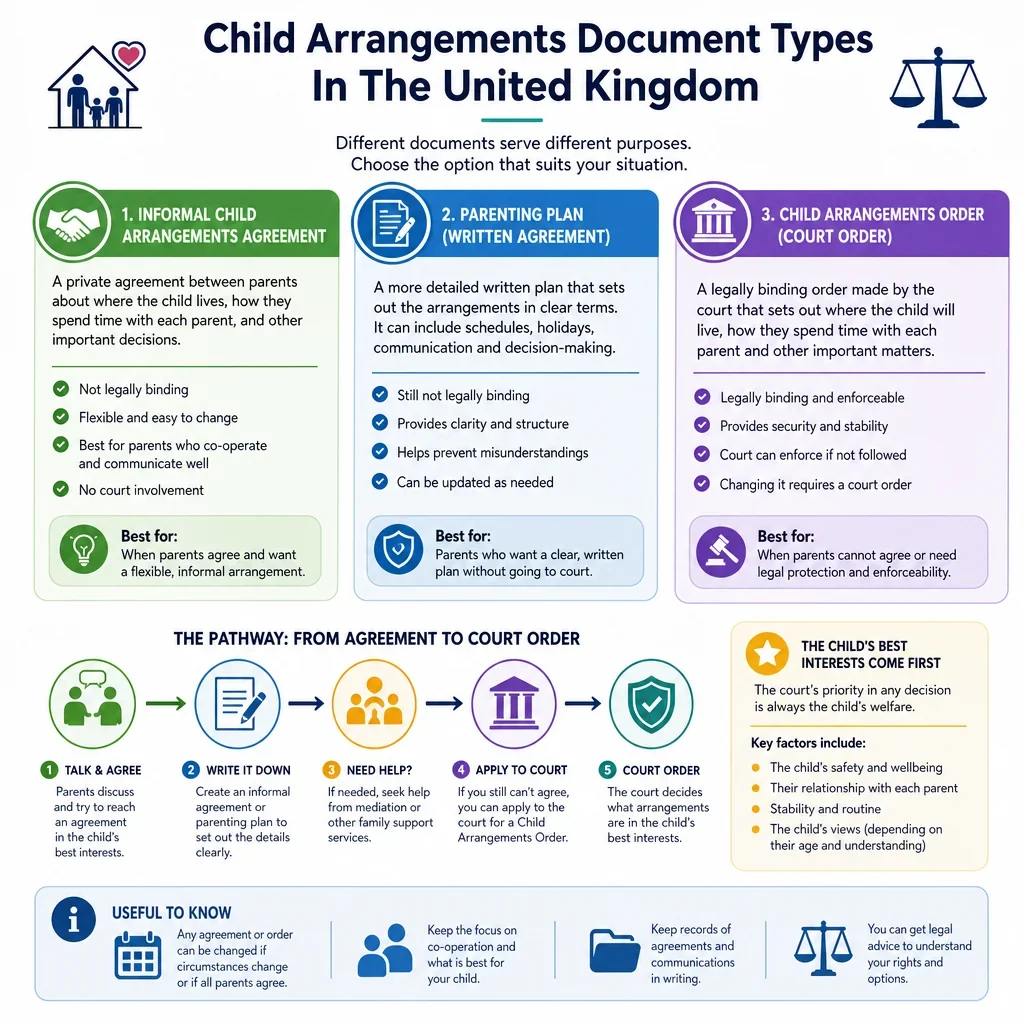
Unresolved specific issue disputes | Written agreement required | Try written consultation or mediation before applying to court where appropriate. | High | Provide a dispute process for school, medical, travel or religion disagreements. |
Education, Healthcare, Religion and culture, Travel | ||||
Preventing unilateral major decisions | Written agreement required | Obtain consent before steps such as school change, relocation or foreign travel. | High | List decisions that neither parent may take alone without agreement or order. |
How Should Parents Divide Decision-Making In A UK Child Arrangements Agreement?
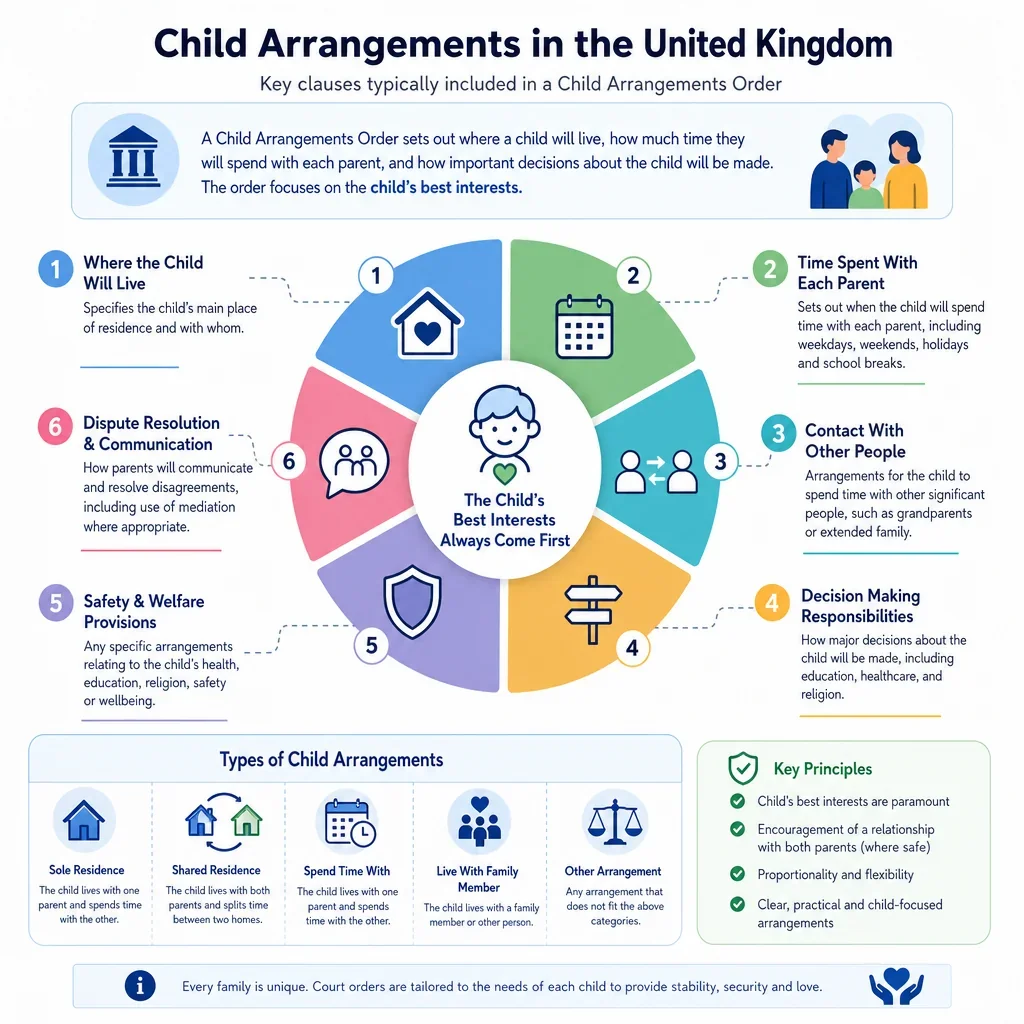
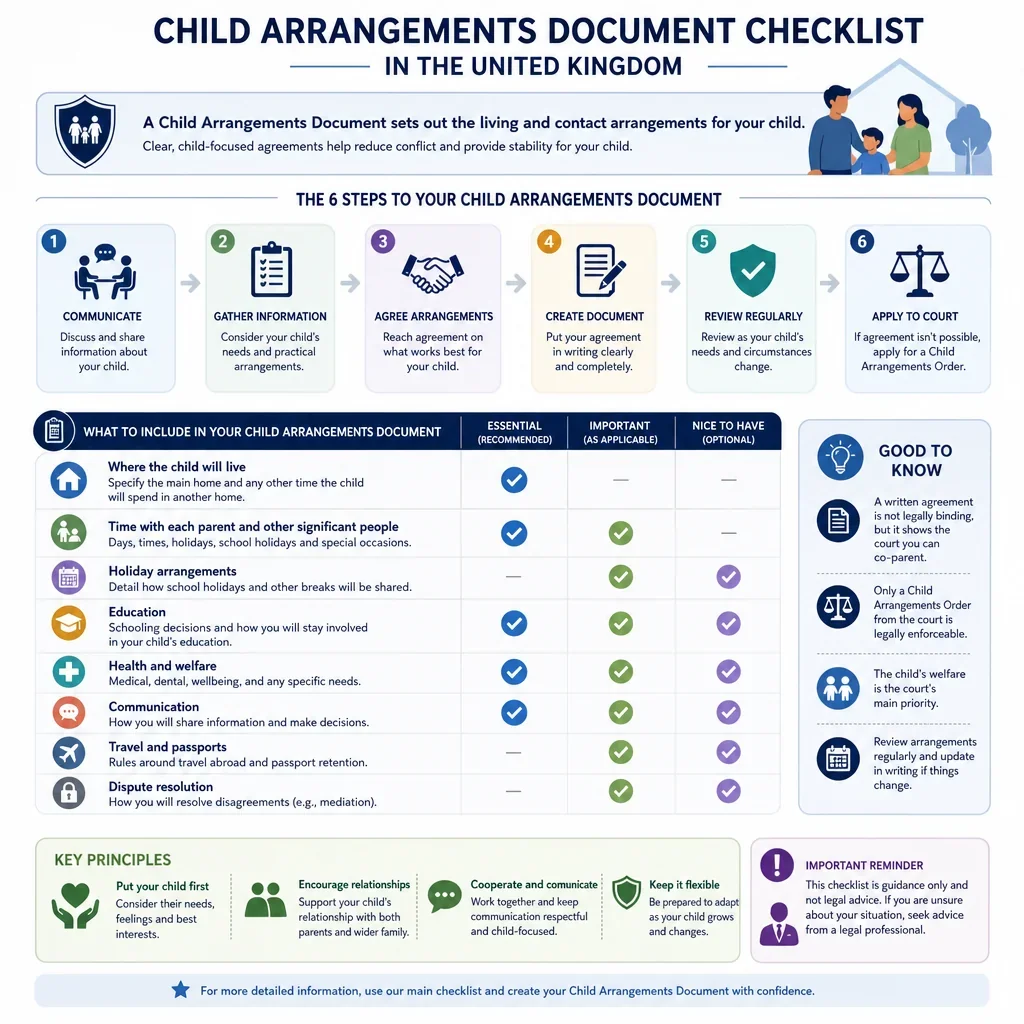
Important long-term decisions, such as school choice, non-emergency medical treatment, relocation, foreign travel and religious upbringing, are usually best drafted as joint decisions or decisions requiring written agreement. This reflects the practical effect of parental responsibility: each person with parental responsibility may be involved in major decisions about the child.
Which Decisions Need The Clearest Written Terms?
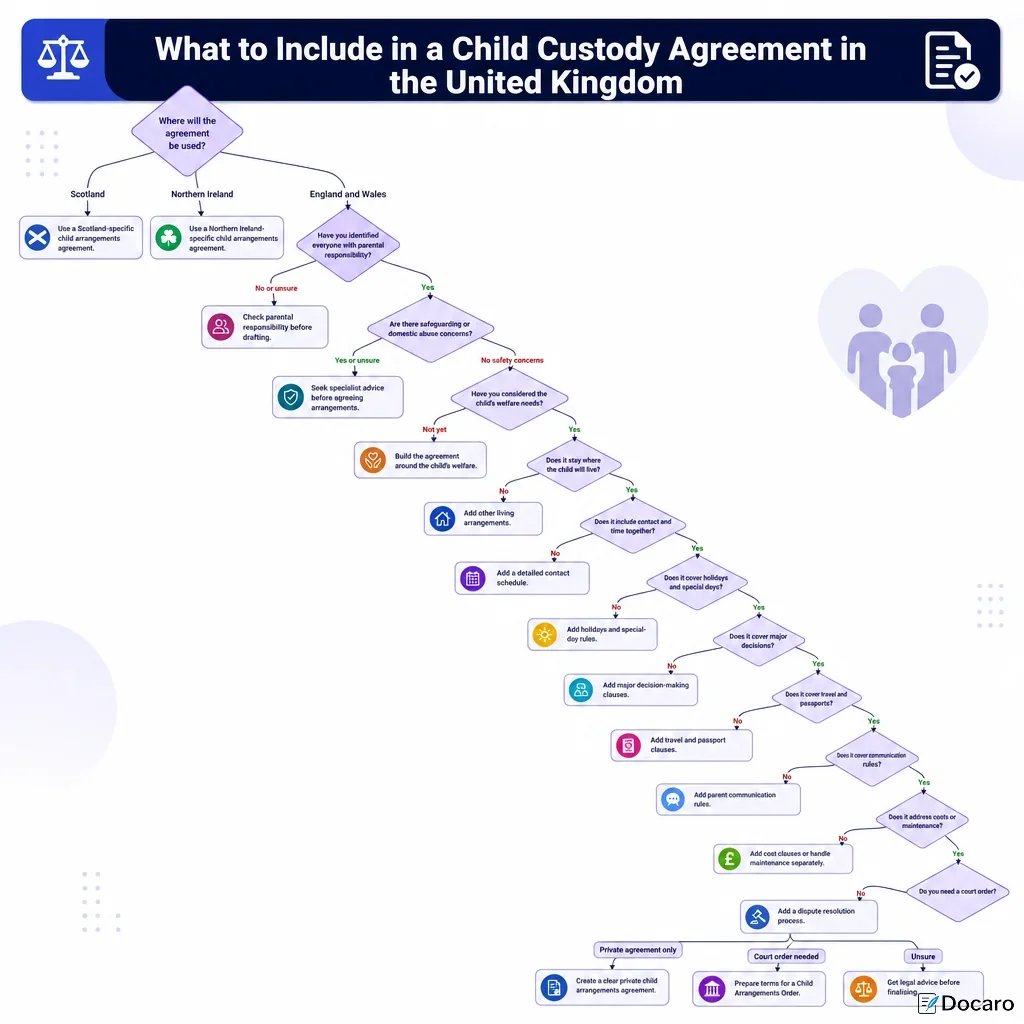
The highest-risk areas are those that can affect schooling, health, safety, identity documents, international travel, relocation and online privacy. These should say who must be consulted, what information must be shared, and whether consent must be in writing, for example by email or parenting app.
Can Routine Day-To-Day Decisions Be Left To The Parent Caring For The Child?
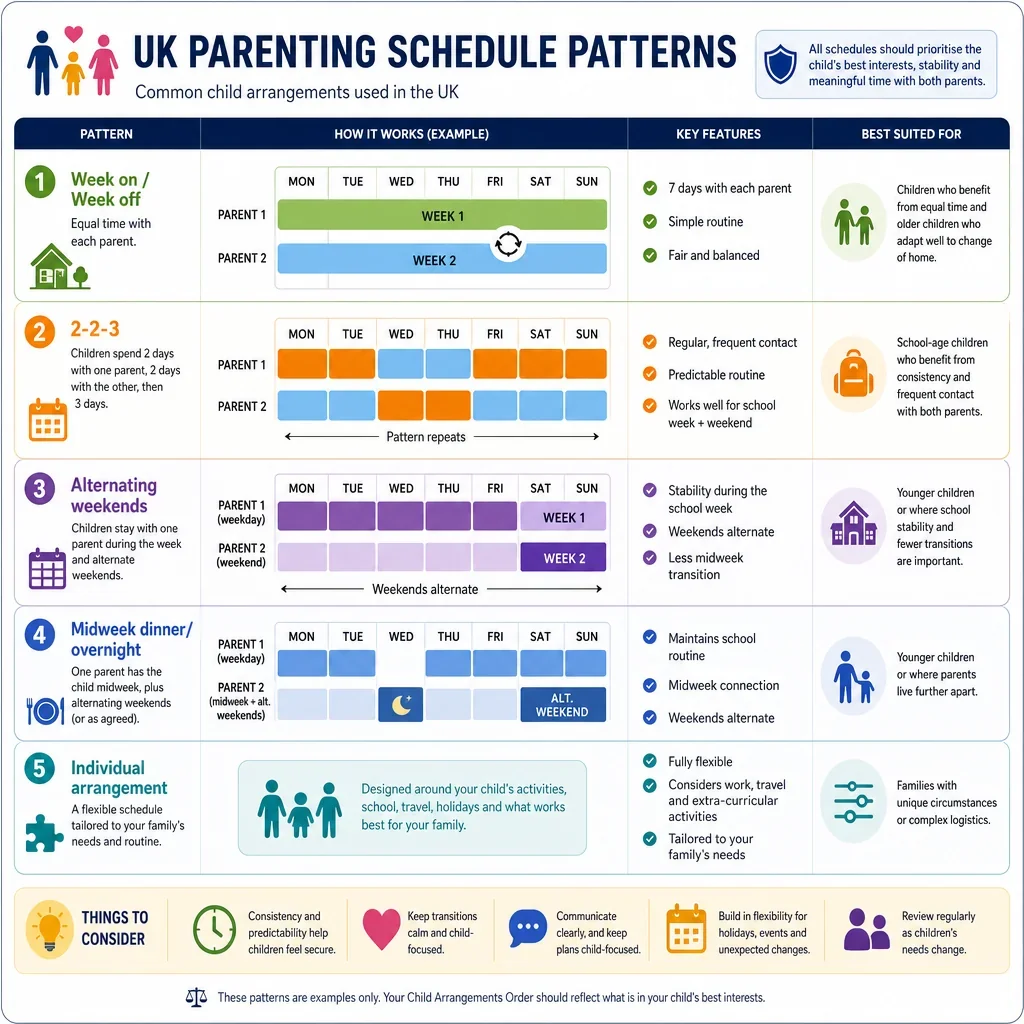
Routine matters such as meals, bedtimes, ordinary homework, clothing and local leisure activities are commonly left to the parent with care at the time. This avoids unnecessary conflict while preserving joint involvement in major decisions.
Why Is Travel Drafting Especially Important?
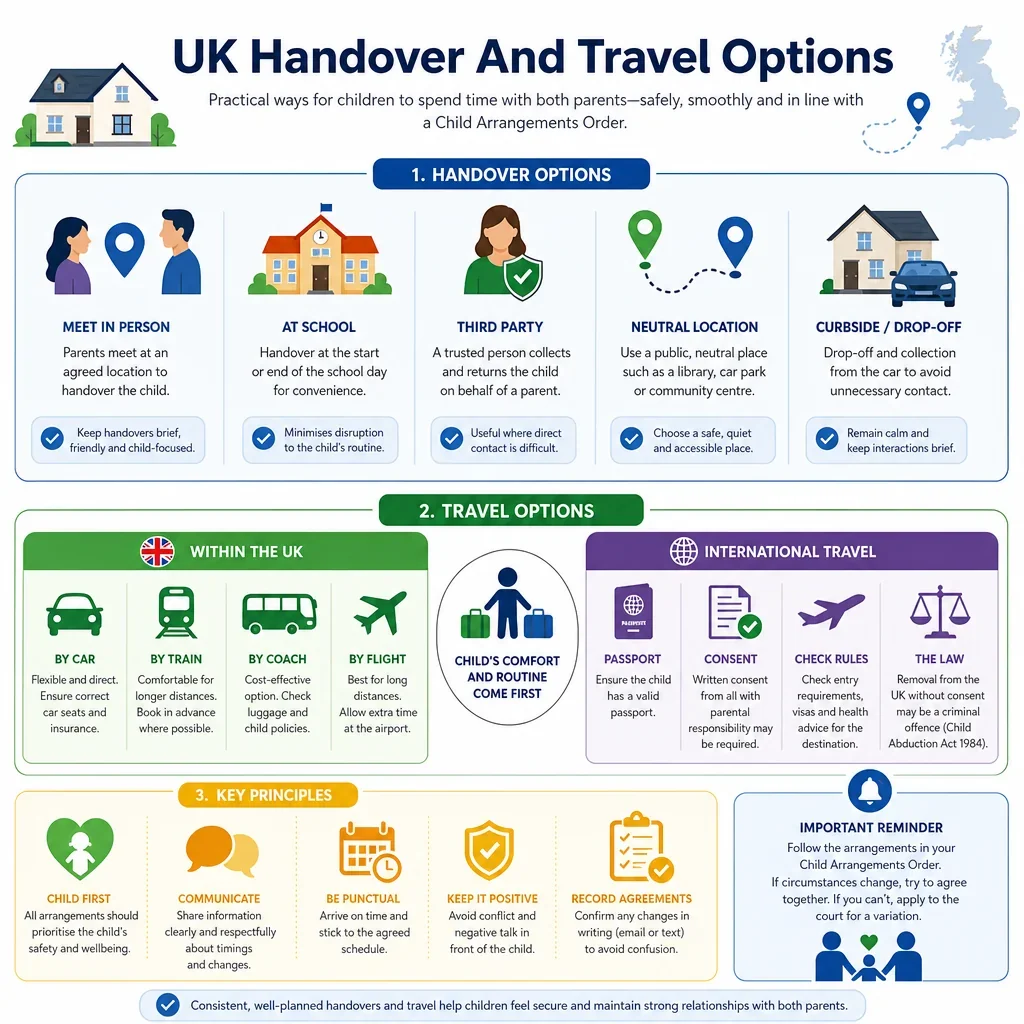
UK child arrangements commonly need clear travel clauses because taking a child abroad can require consent from others with parental responsibility unless a court order permits it. Agreements should cover destination, dates, emergency contacts, passport handling, insurance and written consent.
What Should Be Included For Digital Communication?
Modern child arrangements should address video calls, phones, social media, location tracking, online safety and sharing images. These clauses help prevent disputes about privacy, monitoring and contact interference, particularly where children move between two homes.
FAQs
You Might Also Be Interested In