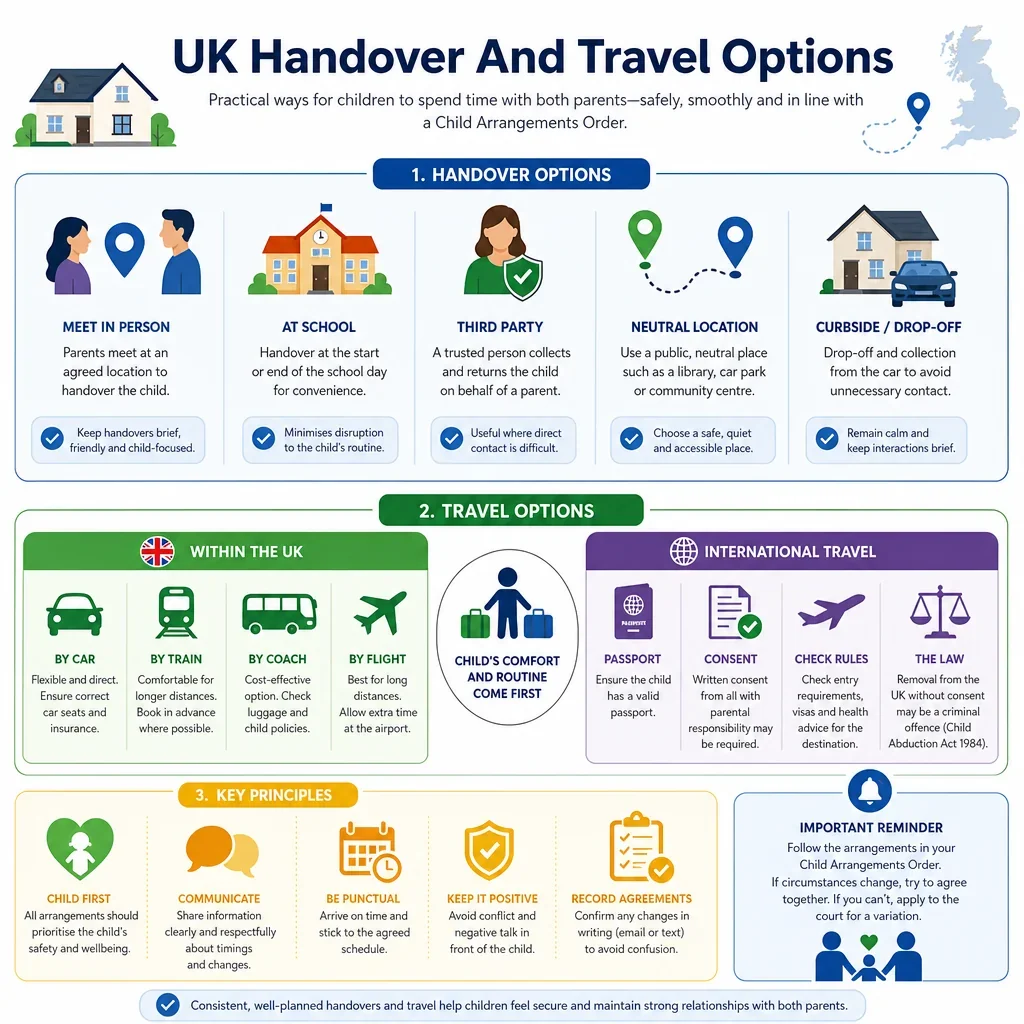
UK Handover And Travel Options
Handover Option | How It Works | Travel Responsibility | Advantages | Points To Clarify |
|---|---|---|---|---|
Home handover | ||||
Parent A Collects From Parent B's Home | Parent A arrives at Parent B's home at the agreed time and the child leaves with Parent A. | Parent A collects | Simple, familiar for the child, and avoids extra travel by the resident parent. | Exact arrival time, parking, whether Parent A comes to the door, and late arrival rules. |
Parent B Collects From Parent A's Home | Parent B collects the child from Parent A's home at the start of their time. | Parent B collects | Clear responsibility and easy for younger children who need familiar surroundings. | Doorstep conduct, no entering the home unless agreed, and what happens if the child is not ready. |
Receiving Parent Collects From The Other Home | Whichever parent is about to start caring for the child collects from the other parent's home. | Receiving parent collects | Balanced over time and reduces disputes about who should bring the child back. | Apply consistently to holidays, midweek contact and missed sessions. |
Delivering Parent Takes Child To The Other Home | The parent whose time is ending drives or escorts the child to the other parent's home. | Delivering parent transports | Can reassure younger children and gives the leaving parent control over departure timing. | Return punctuality, costs, and whether the parent may wait if the other parent is absent. |
Doorstep Handover With No Entry | The child is handed over at the front door, with neither parent entering the other's home. | Receiving parent collects | Preserves privacy and limits conversations that could escalate. | Whether communication is limited to child essentials and whether bags are ready at the door. |
Kerbside Car Handover | The collecting parent waits safely outside and the child is brought to or from the car. | Receiving parent collects | Quick, avoids entering property, and can reduce adult interaction. | Safe parking, child seat requirements, supervision to the car, and bad weather arrangements. |
One Parent Drops Off, Other Parent Returns | One parent transports the child at the start of contact and the other transports at the end. | Shared responsibility | Splits travel effort and can feel fair where parents live similar distances apart. | Which parent covers which leg, fuel or ticket costs, and delay notifications. |
School handover | ||||
Collection From School Gate | The receiving parent collects the child directly from school at the normal finish time. | Receiving parent collects | Avoids parent-to-parent contact and fits the child's normal school routine. | Authorised collectors, school finish times, clubs, inset days and illness. |
Collection From School Reception | The collecting parent signs the child out or collects through the school's reception process. | Receiving parent collects | Provides a clear record and suits schools with safeguarding collection procedures. | Who may collect, required passwords, early collection rules and school notification. |
Drop-Off At School After Overnight Stay | The parent who had overnight care takes the child to school the next morning. | Delivering parent transports | Avoids an early home-to-home handover and supports a normal weekday routine. | Uniform, homework, breakfast, punctuality and who handles school messages that morning. |
School Bag And Belongings Transfer | The child's belongings are sent to school so the other parent can collect the child and bag together. | Receiving parent collects | Reduces separate visits between homes and helps the child have needed items. | Medication, PE kit, devices, school rules on bags, and responsibility for forgotten items. |
Collection From After-School Club | The receiving parent collects the child from the registered after-school club at the booked time. | Receiving parent collects | Gives working parents flexibility and provides a supervised transition point. | Booking responsibility, fees, late collection charges, authorised collectors and cancellation rules. |
Drop-Off At Breakfast Club | The parent whose overnight care is ending drops the child at breakfast club before school. | Delivering parent transports | Allows early work starts and avoids direct parent handover before school. | Club booking, breakfast cost, opening time, and plan if the club is closed. |
Nursery handover | ||||
Collection From Nursery | The receiving parent collects the child from nursery at the agreed session end time. | Receiving parent collects | Neutral, supervised setting and familiar routine for pre-school children. | Collection password, authorised adults, nappies, comfort items and nursery closure dates. |
Drop-Off At Nursery After Contact | The parent with care that morning takes the child to nursery, where the other parent may collect later. | Delivering parent transports | Avoids a direct handover and supports the child's established childcare routine. | Start time, payment of fees, spare clothes, medication and updates to nursery staff. |
Handover Via Registered Childminder | One parent drops the child with the childminder and the other parent collects later. | Shared responsibility | Familiar childcare setting and can avoid parent-to-parent contact. | Childminder consent, fees, opening hours, emergency contacts and collection authority. |
Third-party assisted handover | ||||
Supported Handover At A Child Contact Centre | Parents arrive separately and centre staff support the child moving between them. | Shared responsibility | Reduces direct contact and provides a structured child-focused setting. | Referral, fees, arrival gaps, supervision level, reports and what happens if either parent is late. |
Handover Through A Grandparent | A grandparent receives the child from one parent and passes the child to the other parent. | Shared responsibility | Can reduce conflict and may feel familiar and reassuring to the child. | Grandparent consent, neutrality, timings, transport, and whether they may pass messages. |
Handover Through A Trusted Adult | A named trusted adult helps transfer the child where parents should not meet directly. | Shared responsibility | Flexible and useful where a contact centre is unnecessary or unavailable. | Name the adult, obtain consent, set backup adults, and limit adult conversations. |
Adult Sibling Or Relative Escorts The Child | An adult sibling or relative accompanies the child between parents or to a meeting point. | Shared responsibility | Can be reassuring and avoids exposing the child to parental tension. | Escort availability, travel costs, emergency contact and whether the child is ever unaccompanied. |
Public place handover | ||||
Supermarket Car Park Handover | Parents meet at a specified supermarket car park and the child moves between vehicles or adults. | Shared responsibility | Neutral, easy to find, usually well-lit and convenient for driving parents. | Exact parking area, safe walking route, maximum wait time and bad weather plan. |
Public Library Handover | Parents meet inside or outside a named library and keep the handover brief. | Shared responsibility | Calm, child-friendly, public and usually accessible by public transport. | Opening hours, exact entrance, closures, and whether conversations take place inside. |
Community Centre Handover | The child is handed over at a named community centre entrance or reception area. | Shared responsibility | Neutral local venue and suitable where both parents live nearby. | Opening times, exact meeting point, parking and alternative venue if closed. |
Railway Station Handover | Parents meet at a named station entrance, platform barrier or ticket hall for the child to transfer. | Shared responsibility | Useful for longer distances and parents without cars. | Tickets, delay rules, platform access, unaccompanied travel and who waits until departure. |
Bus Or Coach Station Handover | The child is handed over at a named bus stop, coach bay or station entrance. | Shared responsibility | Low-cost option where public transport links both homes. | Route, ticket payment, delay notices, safe waiting place and adult supervision. |
Motorway Service Station Midpoint | Both parents drive to an agreed service station roughly between their homes. | Shared responsibility | Shares long-distance travel and offers toilets, food and lighting. | Exact entrance, travel costs, traffic delays, maximum wait time and child seat transfer. |
Near Police Station Handover | Parents meet in a public area near, but not normally inside, a police station. | Shared responsibility | May feel safer where there is a history of intimidation or serious conflict. | Do not assume police supervision specify exact public location and emergency-only involvement. |
Cafe Handover | Parents meet briefly at a named cafe or outside its entrance for the child to transfer. | Shared responsibility | Public, informal and comfortable for older children. | Opening hours, purchases, seating expectations and alternative location if busy or closed. |
Park Entrance Handover | Parents meet at a named park gate or landmark and the child transfers there. | Shared responsibility | Child-friendly and useful before or after outdoor contact. | Weather, darkness, exact gate, toilets, parking and fallback indoor location. |
Leisure Centre Reception Handover | The child is handed over at the reception of a named leisure centre. | Shared responsibility | Public indoor venue with parking and useful around swimming or sports activities. | Opening hours, membership access, activity kit, waiting area and late collection rules. |
Handover At Child's Appointment Venue | A parent takes the child to an appointment and the other parent takes over afterwards. | Shared responsibility | Efficient when contact follows a GP, dental, therapy or hospital appointment. | Who attends, consent, appointment updates, prescriptions and privacy of medical information. |
Handover At Sports Or Activity Club | One parent drops the child at an activity and the other collects when it ends. | Shared responsibility | Avoids direct handover and keeps the child's activity routine uninterrupted. | Fees, kit, attendance, cancellation, safeguarding sign-out and who speaks to coaches. |
Airport Terminal Handover | Parents meet at a named airport terminal before or after travel with the child. | Shared responsibility | Practical where holiday contact begins or ends with a flight. | Passports, written travel consent, flight delays, terminal, baggage and return time. |
Ferry Port Handover | The child is handed over at a named ferry terminal before or after ferry travel. | Shared responsibility | Useful for separated parents living across islands, Northern Ireland, or coastal routes. | Tickets, sailing delays, vehicle boarding, passport needs and weather cancellations. |
Third-party assisted handover | ||||
Pre-Booked Taxi Transfer With Parent At Each End | A pre-booked taxi takes the child between parents, with an adult receiving the child at each end. | Shared responsibility | Useful where parents lack cars or public transport is impractical. | Child age, supervision, licensed operator, child seat, fare payment and emergency contact. |
Escorted Train Travel By Agreed Adult | An agreed adult travels with the child by train between the parents' areas. | Shared responsibility | Reduces driving time and supports safe longer-distance contact. | Escort identity, tickets, delays, platform handover, meals and return arrangements. |
Public place handover | ||||
Teenager Travels Independently By Public Transport | An older child travels alone between agreed stations or stops, with parents confirming departure and arrival. | Shared responsibility | Promotes independence and can suit older children with reliable routes. | Age suitability, tickets, phone battery, route changes, delays and who meets the child. |
Home handover | ||||
Walking Handover Between Nearby Homes | A parent or agreed adult walks the child between homes at the agreed time. | Shared responsibility | Low cost, predictable and suitable where homes are close together. | Route, weather, darkness, supervision, school bags and whether the child may walk alone. |
Public place handover | ||||
Cycle Escort Handover | The child cycles with a parent or agreed adult to the handover point or other home. | Shared responsibility | Useful for local travel and older children with safe cycling routes. | Helmet, lights, weather, route, storage of bike and whether solo cycling is allowed. |
Home handover | ||||
Holiday Accommodation Handover | The child is collected from or delivered to a named holiday address during school holidays. | Shared responsibility | Flexible for UK holidays and extended summer arrangements. | Full address, dates, travel time, emergency contacts, luggage and changeover time. |
Public place handover | ||||
Halfway Landmark Meeting Point | Parents meet at a clearly identified landmark roughly halfway between their homes. | Shared responsibility | Shares travel and avoids either parent attending the other's home. | Precise landmark, parking, toilets, poor weather, traffic delays and maximum waiting time. |
Third-party assisted handover | ||||
Staggered Arrival At Neutral Venue | One parent arrives first, the child waits with an agreed adult, and the other parent arrives later. | Shared responsibility | Reduces face-to-face contact while keeping the handover in a neutral setting. | Arrival gap, supervising adult, venue permission, waiting place and late arrival process. |
Handover Around Supervised Contact Session | The child is brought to a supervised contact venue and collected under that venue's process. | Shared responsibility | Provides structure where contact itself needs supervision or supported arrangements. | Centre rules, reports, fees, attendance, cancellation and whether contact can move to unsupervised. |
Public place handover | ||||
Handover At Parent's Workplace Reception | The child is collected from a parent's workplace reception or public entrance at an agreed time. | Receiving parent collects | Can help shift workers or parents travelling directly from work. | Employer permission, reception access, privacy, parking and backup if work hours change. |
Faith Or Community Venue Handover | Parents use a named place of worship or community venue as the agreed transfer point. | Shared responsibility | Familiar, community-based and useful around regular services or classes. | Venue consent, opening times, safeguarding rules, parking and avoiding involvement of community members. |
Specialist Care Venue Handover | Parents transfer care at a therapy, hospital, clinic or specialist support venue. | Shared responsibility | Supports children with medical or additional needs and links handover to care routines. | Medication, equipment, appointment information, consent, accessibility and infection control requirements. |
Backup Handover At Alternative Named Venue | If the usual place is unavailable, parents use a pre-agreed alternative venue. | Shared responsibility | Prevents disputes caused by closures, traffic, weather or school disruption. | Trigger events, notice method, exact backup location and whether times change. |
Home handover | ||||
Silent Handover With Written Updates Only | Parents keep verbal contact minimal and share essential child updates by text or parenting app. | Receiving parent collects | Reduces arguments at handover while preserving essential information sharing. | Permitted communication channel, urgent exceptions, tone, and what information must be shared. |
Public place handover | ||||
Accessible Venue Handover | Parents use a step-free, accessible venue suitable for the child or parent's mobility needs. | Shared responsibility | Reduces stress and practical barriers for disabled children or parents. | Step-free access, parking, toilets, sensory needs, equipment transfer and extra time. |
Long-Distance Split Journey Handover | For long journeys, parents split travel at an agreed midpoint or rest stop. | Shared responsibility | Reduces fatigue and makes contact more practical across long distances. | Driving time, rest breaks, costs, overnight stays, traffic delays and child comfort items. |
Home handover | ||||
Holiday Travel Documents Exchange | The child, passport, luggage and travel documents are handed over before holiday contact. | Receiving parent collects | Ensures the travelling parent has essential documents before departure. | Passport return date, consent letter, itinerary, insurance, medication and emergency contacts. |
Third-party assisted handover | ||||
Safeguarding-Sensitive Handover Arrangement | Handover is arranged to prioritise the child's welfare and avoid unsafe or distressing contact. | Shared responsibility | Focuses the arrangement on the child's safety, stability and emotional wellbeing. | Risk factors, third-party role, no-contact terms, safe venue and emergency escalation. |
What Handover Arrangement Works Best For A UK Child Arrangements Agreement?
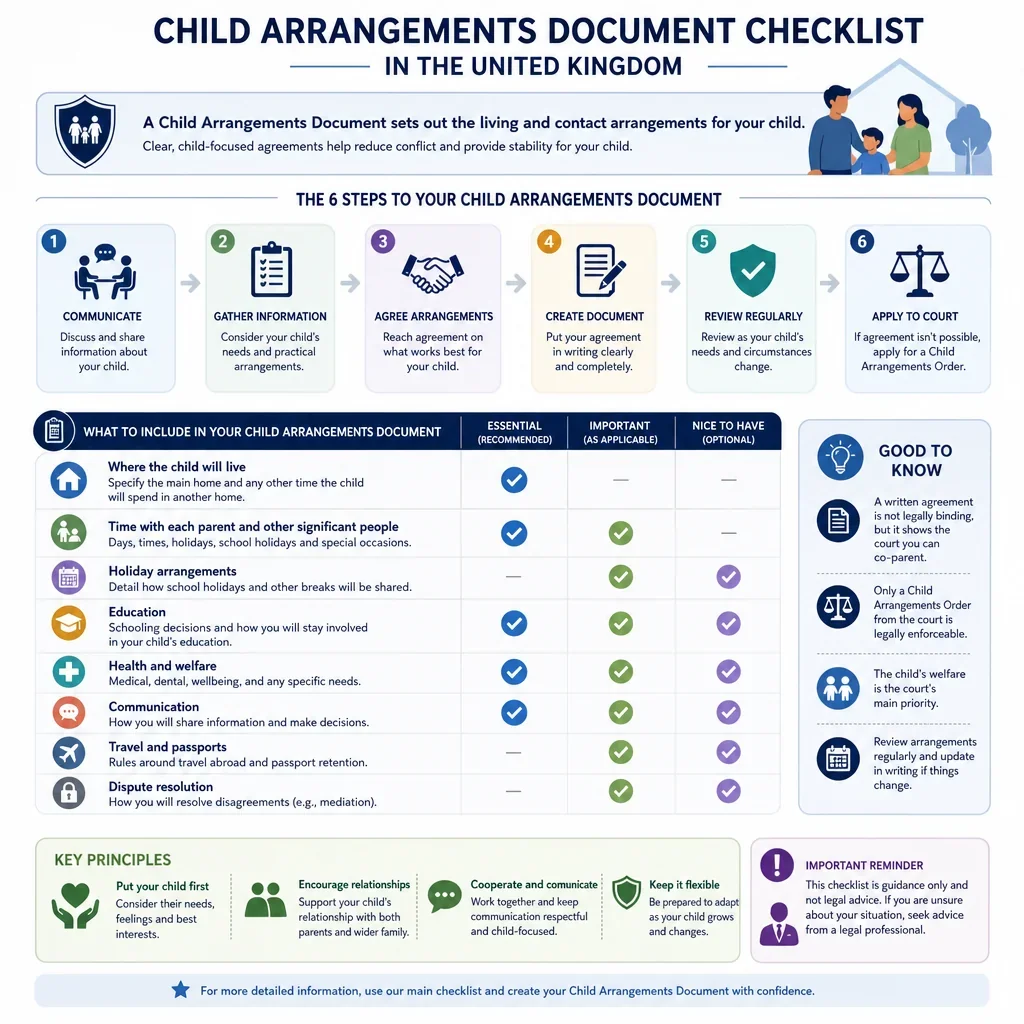
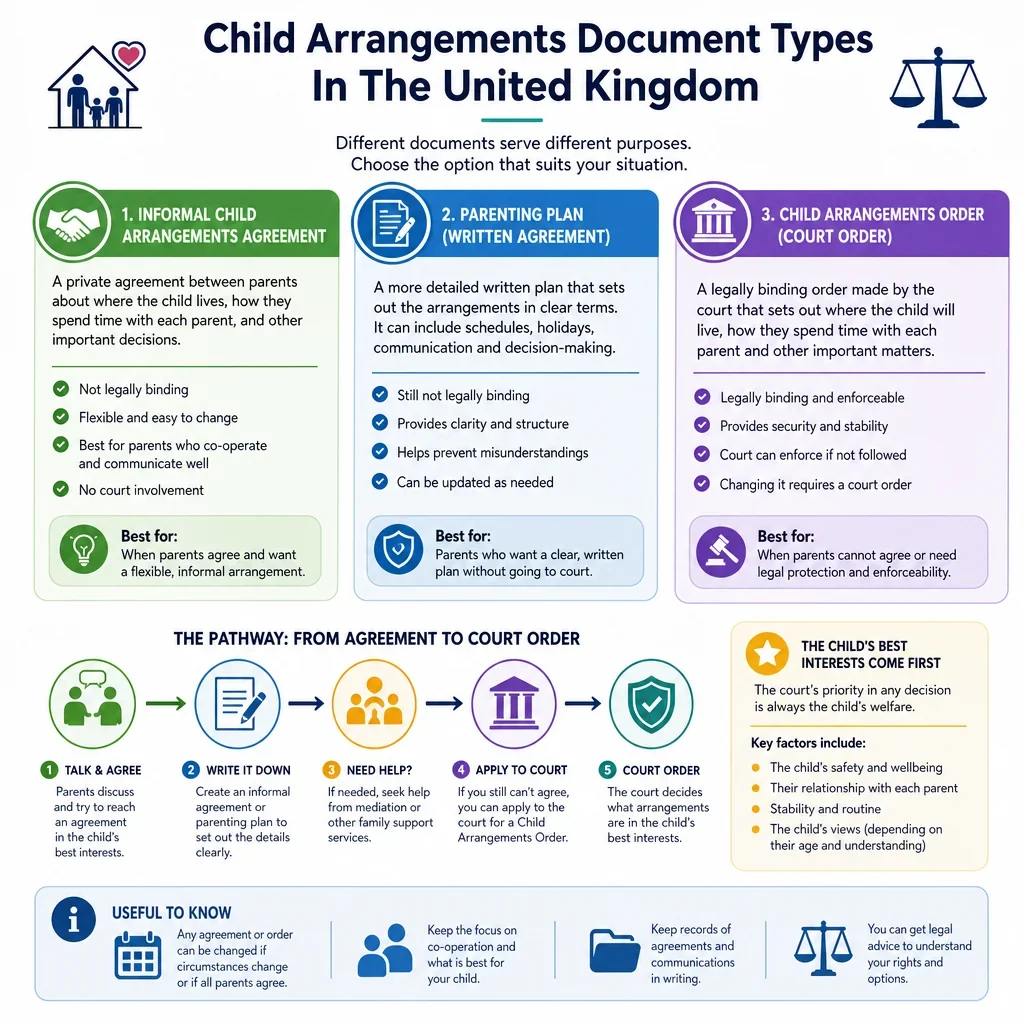
The most workable option is usually the one that gives the child a predictable routine, reduces parental conflict at the point of transfer, and makes travel responsibility clear. School, nursery and neutral public-place handovers can reduce direct parent-to-parent contact, while home handovers may suit cooperative parents or very young children.
How Should Travel Responsibility Be Written Into The Agreement?
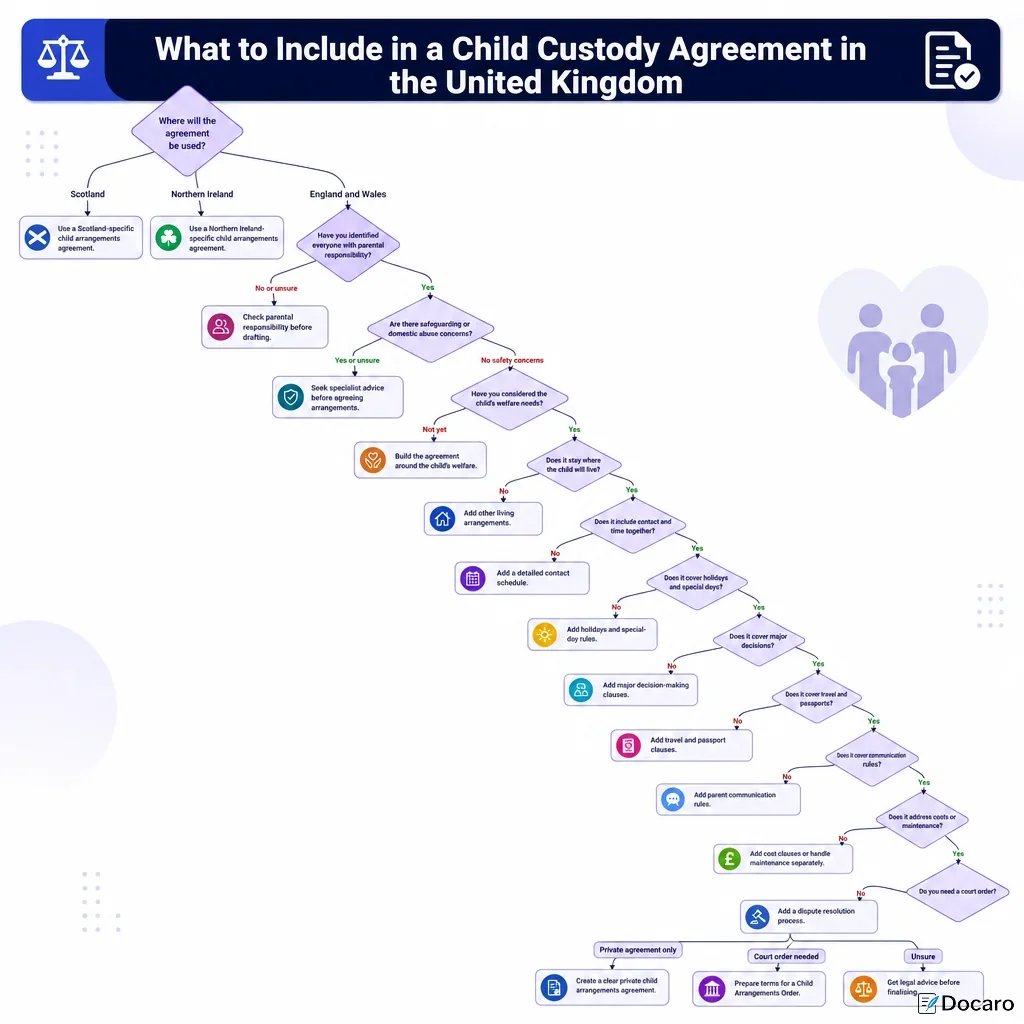
- State who collects or delivers for each session, rather than saying travel is shared without detail.
- Use receiving-parent-collects where both homes are practical to access; it avoids one parent repeatedly waiting for the other to return the child.
- Use shared responsibility for long distances, but specify meeting points, times, fuel or train costs, and what happens if public transport is delayed.
When Are School Or Nursery Handovers Useful?
School and nursery handovers are often useful where parents want to avoid face-to-face contact. They work best when the agreement covers term-time only, names the collecting adult, deals with inset days and illness, and confirms both parents can communicate collection arrangements with the setting where appropriate.
When Should Third-Party Assisted Handover Be Considered?
Third-party assisted handover may be appropriate where direct handover is stressful, there are safeguarding concerns, or communication is poor. The agreement should name the trusted adult or contact centre, confirm their consent, set exact times, and explain how missed or late handovers will be handled.
What Details Prevent Handover Disputes?
- Exact location: door, reception, car park, platform, entrance or meeting point.
- Timing: collection time, return time, grace period and notification method for delays.
- Child items: school uniform, medication, passports, devices, bags and comfort items.
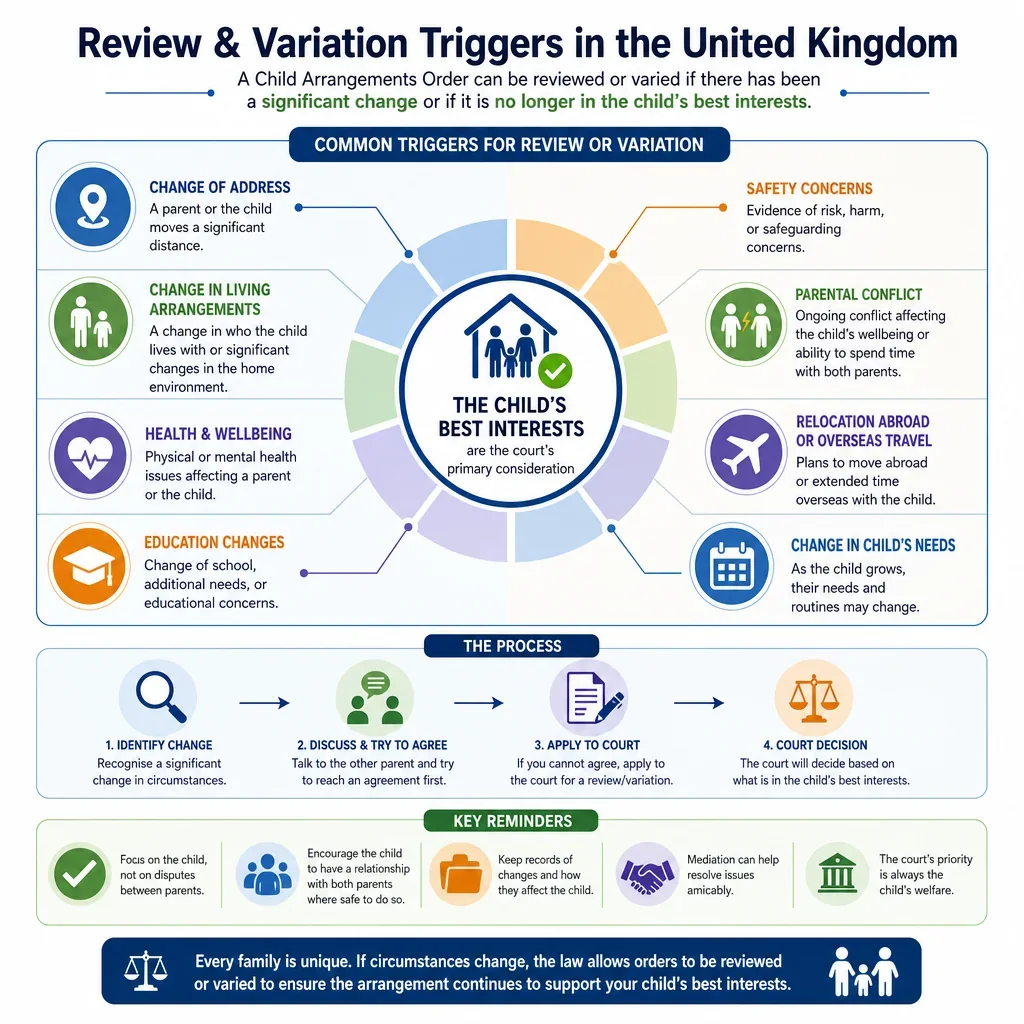
- Back-up plan: illness, school closure, transport strike, bad weather and the child refusing to travel.
FAQs
You Might Also Be Interested In