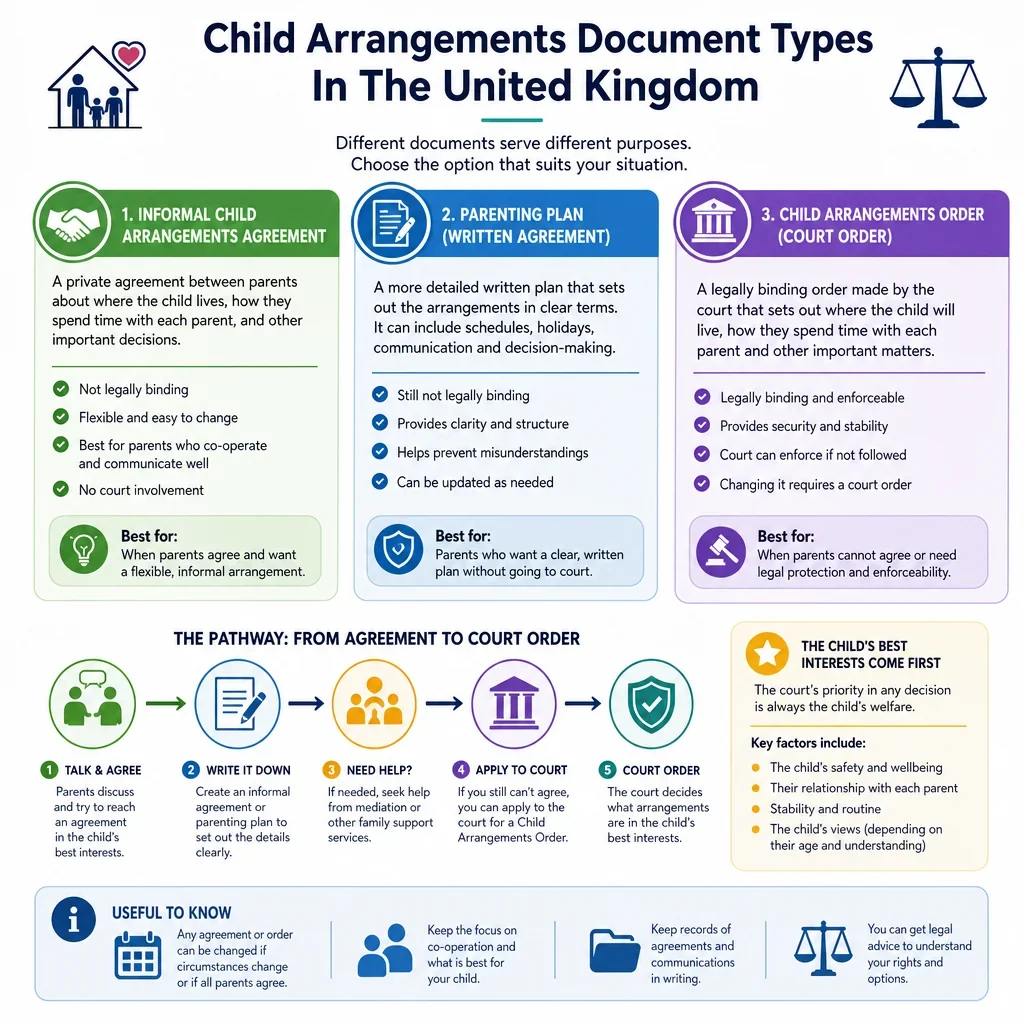
Child Arrangements Document Types In The United Kingdom
Document Type | Main Purpose | Legal Status | Typical Use Case | Practical Considerations |
|---|---|---|---|---|
Private agreement | ||||
Informal Written Child Arrangements Agreement | Records agreed living and contact arrangements without court involvement. | Not automatically court-enforceable | Separated parents agree arrangements and want a clear written reference. | Keep wording specific consider a consent order if enforceability is needed. |
Parenting plan | ||||
Parenting Plan | Sets out practical co-parenting arrangements and shared expectations. | Guidance document | Parents want a comprehensive non-court plan for raising children apart. | Useful for reducing misunderstandings not a substitute for a court order. |
Consent order | ||||
Child Arrangements Consent Order | Turns agreed child arrangements into a court-approved order. | Court-approved | Parents agree terms but want the security of court approval. | Court must consider the child's welfare and whether an order is necessary. |
Child Arrangements Order | ||||
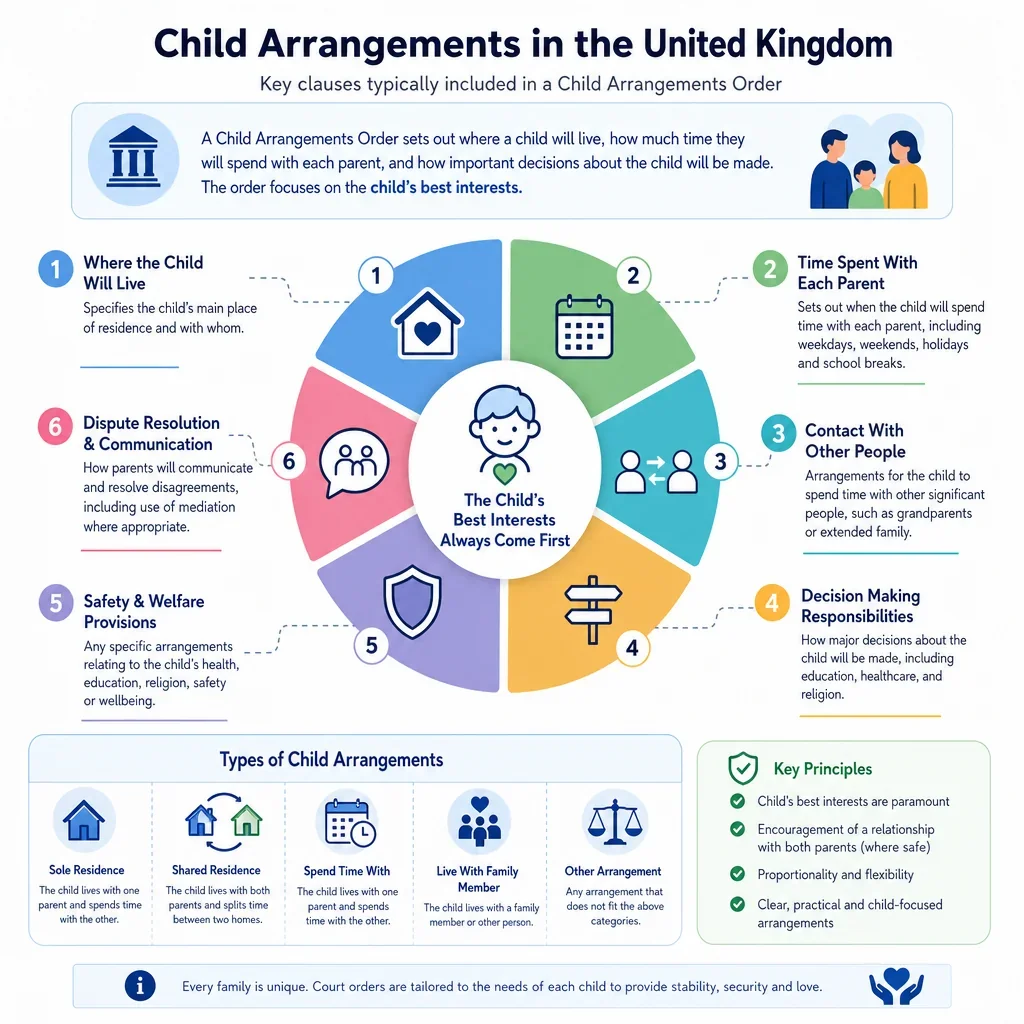
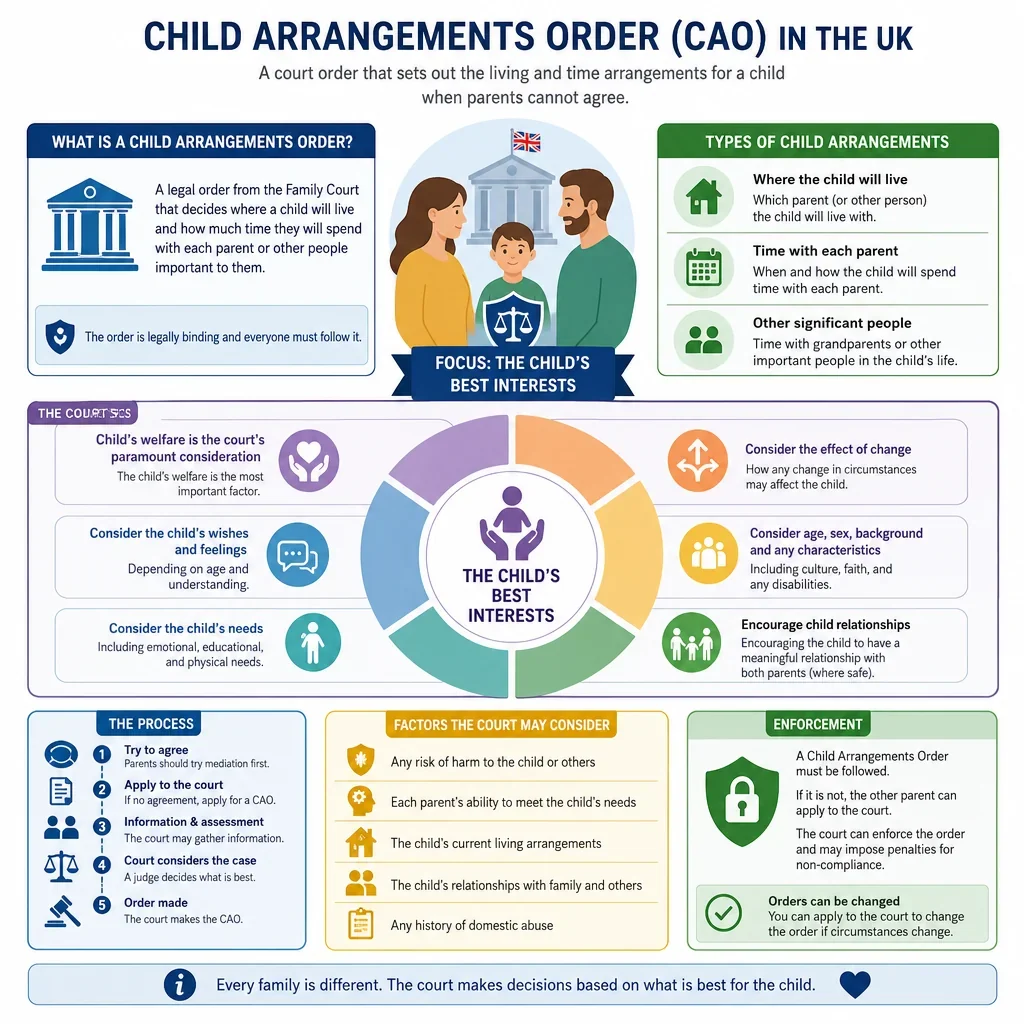
Child Arrangements Order | Decides who a child lives with, spends time with or contacts. | Court-ordered | Parents cannot agree core living or contact arrangements. | Court focuses on the child's welfare, not parental fairness. |
Lives With Child Arrangements Order | States with whom the child is to live. | Court-ordered | There is a dispute about the child's main home. | May affect practical issues such as handovers, school routine and travel. |
Spends Time With Child Arrangements Order | Sets when the child spends time with a parent or carer. | Court-ordered | Parents disagree about frequency, duration or pattern of contact. | Specify days, times, handovers and arrangements for missed contact. |
Private agreement, Parenting plan, Child Arrangements Order | ||||
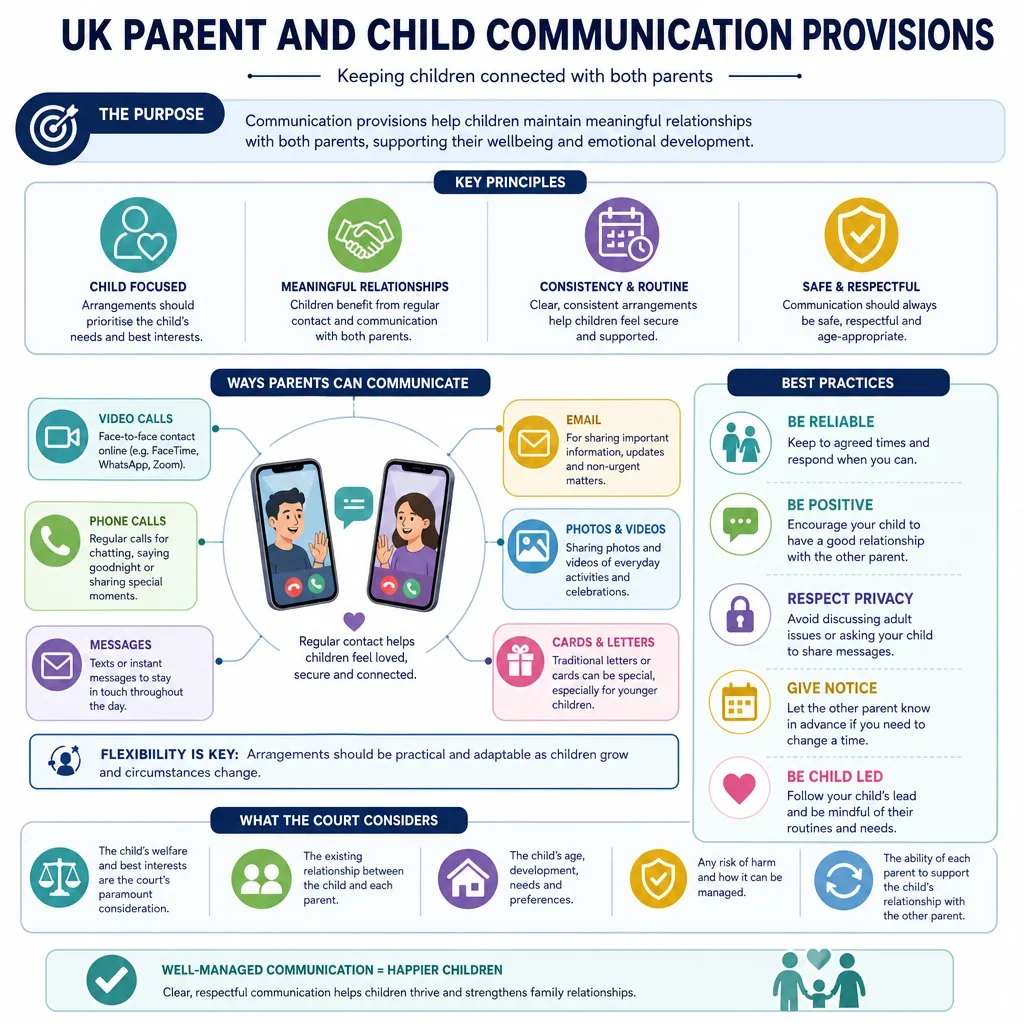
Indirect Contact Arrangement | Provides contact by phone, video, messages, letters or cards. | Not automatically court-enforceable, Court-ordered | Face-to-face time is impractical, unsafe or being reintroduced gradually. | Set frequency, platform, supervision and rules for inappropriate messages. |
Supervised Contact Arrangement | Allows contact while another adult or centre supervises safety. | Not automatically court-enforceable, Court-ordered | There are safeguarding, reintroduction or trust concerns. | Identify supervisor, venue, costs, reports and review points. |
Supported Contact Arrangement | Enables contact in a safe venue without close supervision. | Not automatically court-enforceable, Court-ordered | Contact needs neutral handover or gradual rebuilding, but lower risk. | Check centre availability, referral route, waiting times and session rules. |
Private agreement, Parenting plan, Consent order, Child Arrangements Order | ||||
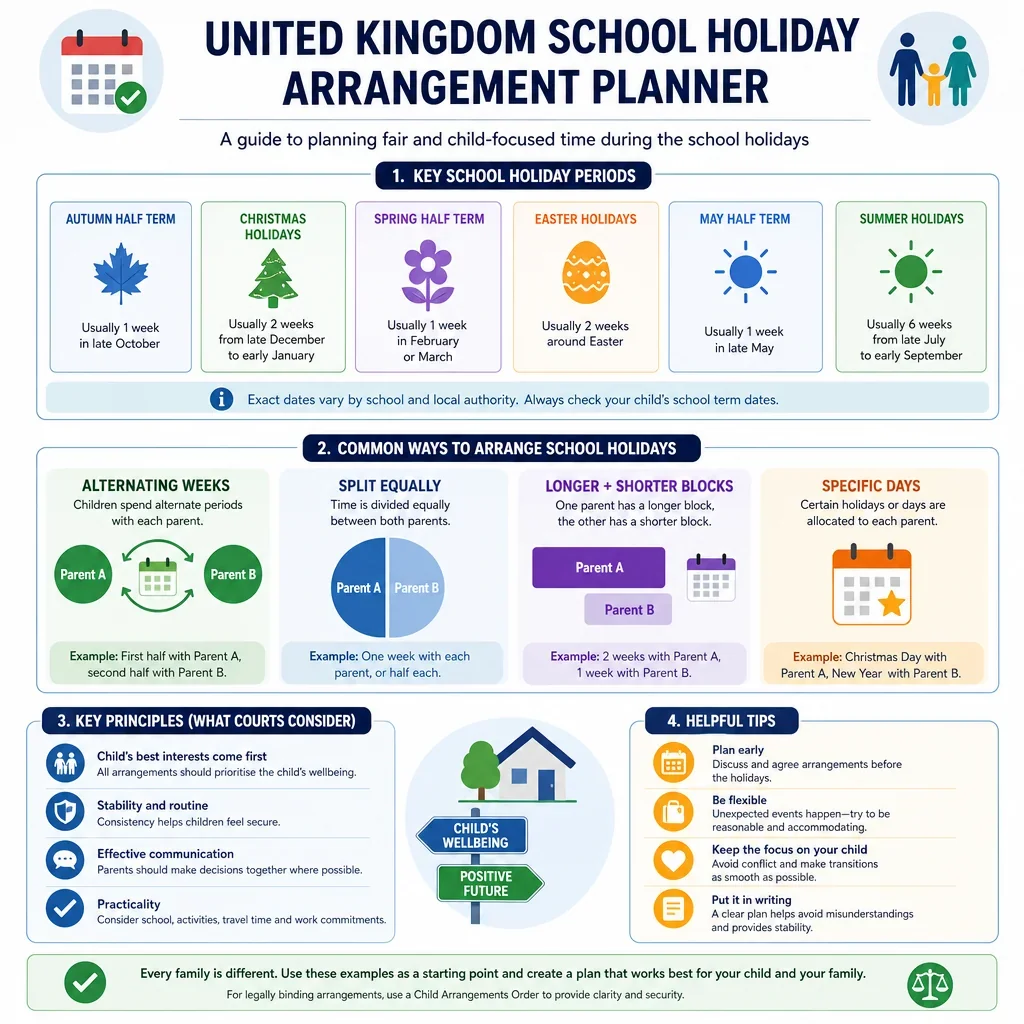
School Holiday Contact Schedule | Allocates school holidays and half-terms between parents or carers. | Not automatically court-enforceable, Court-approved, Court-ordered | Term-time arrangements do not cover longer holiday periods. | Define dates, booking deadlines, travel, childcare and handover times. |
Christmas And Special Days Arrangement | Sets arrangements for Christmas, birthdays and family celebrations. | Not automatically court-enforceable, Court-approved, Court-ordered | Parents need predictable arrangements for emotionally important days. | Use alternating years or fixed split times to avoid annual disputes. |
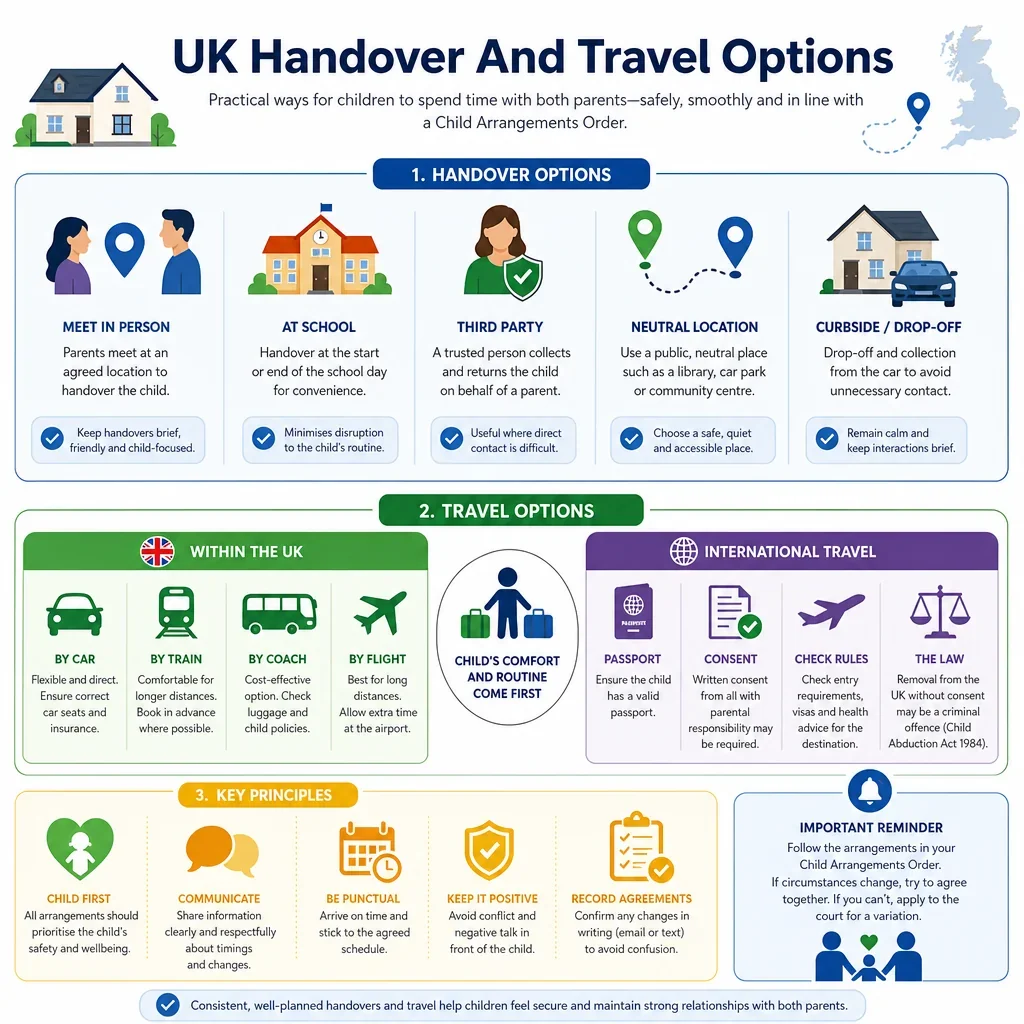
Handover Arrangement | Sets where, when and how the child moves between carers. | Not automatically court-enforceable, Court-approved, Court-ordered | Parents need clear logistics or conflict-free transfers. | Specify location, responsible adult, lateness rules and backup plans. |
Private agreement, Parenting plan, Child Arrangements Order | ||||
Supported Handover Arrangement | Uses a neutral person or venue to reduce handover conflict. | Not automatically court-enforceable, Court-ordered | Direct parental contact at handover is unsafe or high-conflict. | Agree timings, venue rules, costs and what happens if one parent is late. |
Private agreement, Parenting plan, Consent order, Child Arrangements Order | ||||
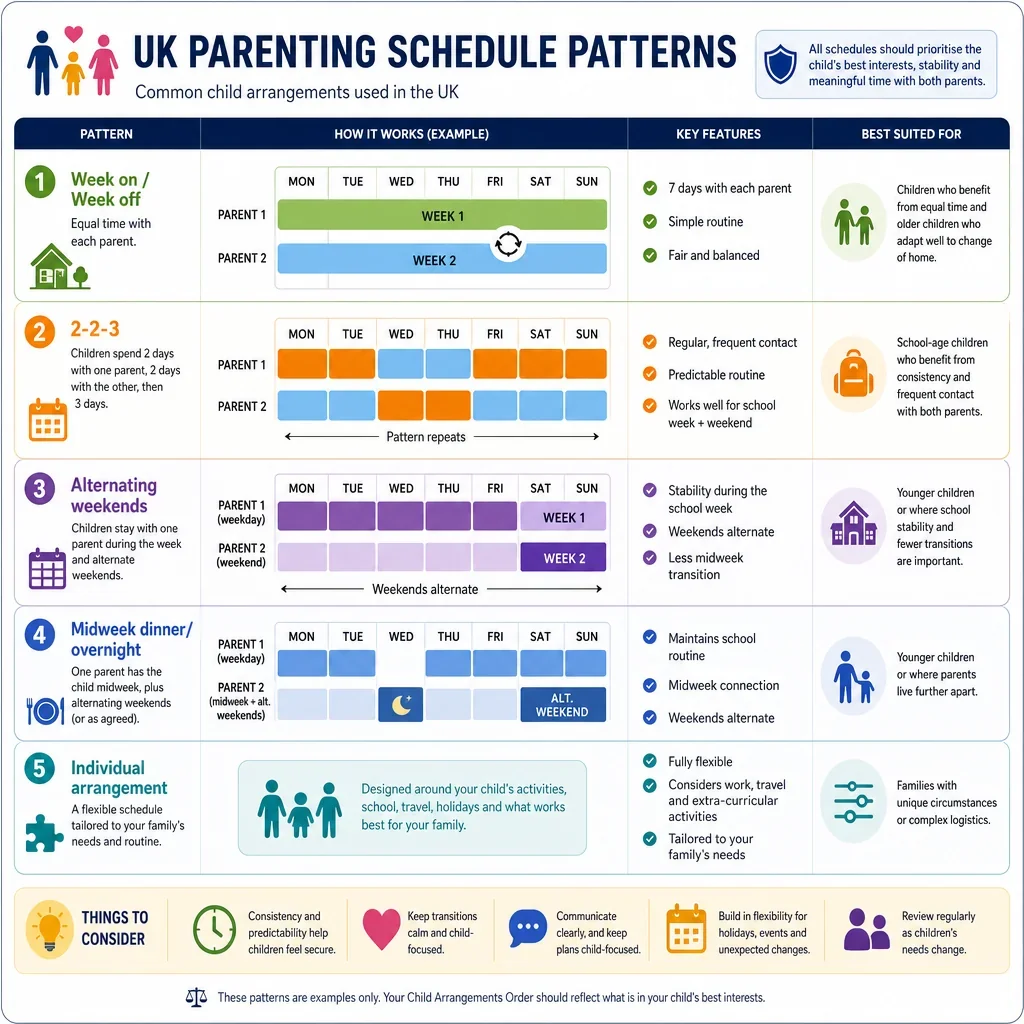
Shared Care Arrangement | Records substantial care time with each parent. | Not automatically court-enforceable, Court-approved, Court-ordered | Both parents provide regular homes and day-to-day care. | Needs workable school travel, routines, communication and consistency. |
Equal Time Care Schedule | Divides the child's time broadly equally between parents. | Not automatically court-enforceable, Court-approved, Court-ordered | Parents live close enough and can sustain a balanced routine. | Consider child's age, school commute, belongings and weekly stability. |
Alternate Weekend Contact Schedule | Sets regular weekend time, usually every other weekend. | Not automatically court-enforceable, Court-approved, Court-ordered | One parent has weekday care and the other has regular weekend time. | Specify start and end times and whether Fridays or Mondays are included. |
Midweek Contact Arrangement | Adds weekday contact or overnight stays during school weeks. | Not automatically court-enforceable, Court-approved, Court-ordered | A child needs frequent contact beyond alternate weekends. | Coordinate homework, school equipment, clubs, meals and bedtimes. |
Phased Contact Plan | Builds contact gradually through planned stages. | Not automatically court-enforceable, Court-approved, Court-ordered | Contact is restarting after absence, conflict or safeguarding concerns. | Include review dates, progression criteria and fallback arrangements. |
Private agreement, Consent order, Child Arrangements Order | ||||
Relocation Child Arrangements Agreement | Manages arrangements where one parent moves home with the child. | Not automatically court-enforceable, Court-approved, Court-ordered | A move affects schooling, travel distance or contact frequency. | Address travel costs, holiday time, schooling and communication methods. |
Private agreement, Parenting plan, Consent order, Child Arrangements Order | ||||
Child Travel Permission Agreement | Records consent for taking a child abroad temporarily. | Not automatically court-enforceable, Court-approved, Court-ordered | A parent wants holiday travel outside the UK with the child. | Include destination, dates, accommodation, emergency contacts and passport handling. |
Passport And Travel Document Arrangement | Sets who holds, applies for and provides the child's passport. | Not automatically court-enforceable, Court-approved, Court-ordered | Parents dispute travel documents or need reliable access before trips. | Set notice periods, storage, renewal cooperation and return deadlines. |
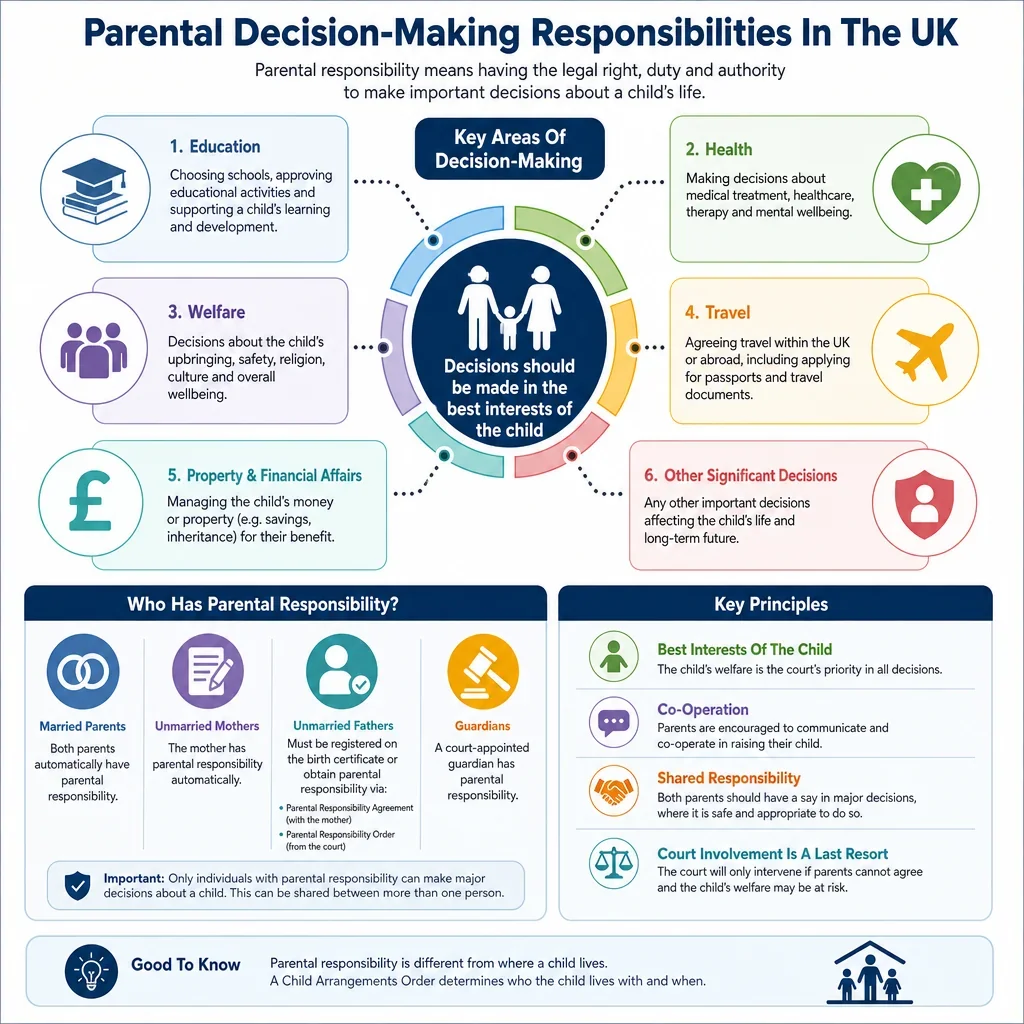
Education Decision-Making Arrangement | Sets how parents handle school choices and education issues. | Not automatically court-enforceable, Court-approved, Court-ordered | Parents share parental responsibility but disagree about schooling. | Include school communications, parents' evenings and decision deadlines. |
Health And Medical Decision-Making Arrangement | Sets how parents handle healthcare decisions and medical information. | Not automatically court-enforceable, Court-approved, Court-ordered | Parents need clear rules for appointments, consent and emergencies. | Cover GP access, medication, emergency notice and information sharing. |
Private agreement, Parenting plan | ||||
Co-Parent Communication Protocol | Sets rules for messages, updates and child-related communication. | Not automatically court-enforceable, Guidance document | Parents need boundaries to reduce conflict and missed information. | Agree channel, response times, emergencies and respectful language rules. |
Private agreement, Parenting plan, Consent order, Child Arrangements Order | ||||
Child Communication Schedule | Sets calls, video chats or messages when the child is away. | Not automatically court-enforceable, Court-approved, Court-ordered | A child spends blocks of time with one parent or travels away. | Set times, device access, privacy and limits on excessive contact. |
Private agreement, Parenting plan | ||||
Emergency Childcare And Contingency Plan | Sets backup care arrangements for illness, delay or emergencies. | Not automatically court-enforceable, Guidance document | Parents need predictable backup care and emergency contact steps. | Name trusted adults, school contacts, medical contacts and notice rules. |
Private agreement, Parenting plan, Consent order, Child Arrangements Order | ||||
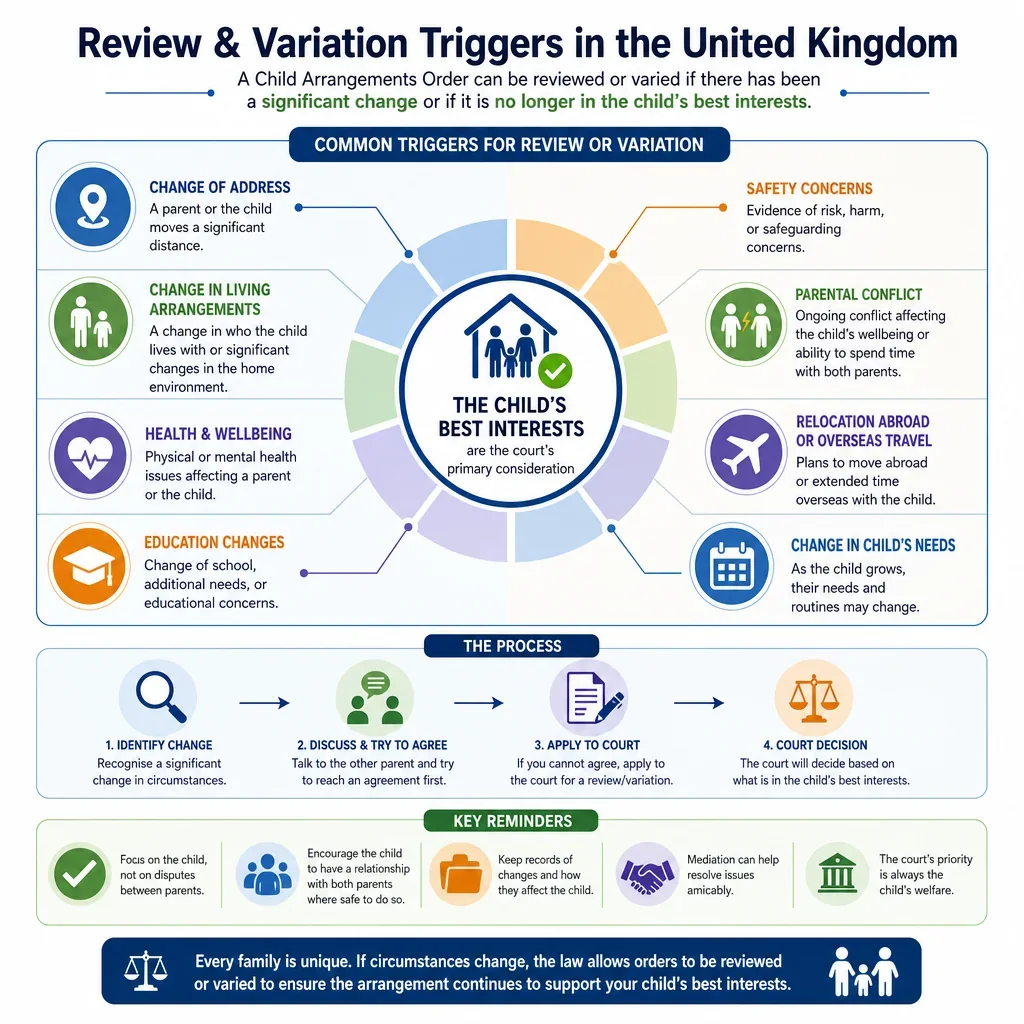
Review And Variation Clause | Sets when and how arrangements will be reviewed or changed. | Not automatically court-enforceable, Court-approved, Court-ordered, Guidance document | Children's needs, school stages or parents' work patterns may change. | Do not vary a court order informally if enforceability may matter. |
Private agreement | ||||
Mediation Memorandum Of Understanding | Records proposals reached in family mediation. | Not automatically court-enforceable | Parents reach mediated proposals before formalising arrangements. | Usually needs conversion into an agreement or order to be relied on. |
Guidance document | ||||
MIAM Certificate For Child Arrangements Application | Shows mediation information was considered before a court application. | Guidance document | A parent applies to court and no exemption applies. | Required before many private law applications unless an exemption applies. |
Child Arrangements Order | ||||
C100 Child Arrangements Application | Applies to court for a child arrangements order or related order. | Guidance document | A parent or eligible applicant asks the family court to decide arrangements. | Needs accurate parties, children, orders sought and safeguarding information. |
C1A Allegations Of Harm Form | Gives the court details of alleged harm or domestic abuse. | Guidance document | Safeguarding concerns are relevant to child arrangements proceedings. | Be specific about incidents, risks, evidence and protective measures sought. |
C79 Enforcement Application | Asks the court to enforce an existing child arrangements order. | Guidance document | A court-ordered arrangement is not being followed. | Keep evidence of missed contact, communications and attempted solutions. |
Enforcement Order For Unpaid Work | Requires unpaid work after breach of a child arrangements order. | Court-ordered | A person has failed to comply with a child arrangements order. | Court considers reasonable excuse and whether enforcement is appropriate. |
Family Assistance Order | Provides short-term welfare support to help arrangements work. | Court-ordered | Families need professional support alongside child arrangements. | Requires consent of named adults and relevant local authority or officer. |
Prohibited Steps Order Linked To Child Arrangements | Prevents a specific parental responsibility step without court consent. | Court-ordered | One parent seeks to stop removal, school change or risky action. | Use where stopping a specific act is clearer than contact wording. |
Specific Issue Order Linked To Child Arrangements | Decides a specific disputed question about the child's upbringing. | Court-ordered | Parents disagree about school, medical treatment, name, religion or travel. | Frame the exact issue and explain why the proposed outcome benefits the child. |
Private agreement | ||||
Parental Responsibility Agreement | Gives an eligible father or second female parent parental responsibility by agreement. | Court-approved | A parent lacks automatic parental responsibility but both parents agree. | Use prescribed form and registration process it is not a contact schedule. |
Child Arrangements Order | ||||
Parental Responsibility Order | Grants parental responsibility by court order. | Court-ordered | A parent or eligible person seeks parental responsibility without agreement. | Parental responsibility affects decisions but does not itself set contact times. |
Kinship Carer Child Arrangements Order | Sets that a child lives with a relative or connected carer. | Court-ordered | Grandparents or relatives provide the child's main care. | Check who may apply and whether leave of the court is needed. |
Private agreement, Parenting plan, Child Arrangements Order | ||||
Grandparent Contact Arrangement | Sets time or communication between a child and grandparent. | Not automatically court-enforceable, Court-ordered | Family separation affects an important grandparent relationship. | Grandparents may need permission to apply unless agreement is reached. |
Step-Parent Contact Or Care Arrangement | Records care or contact involving a step-parent. | Not automatically court-enforceable, Court-ordered | A step-parent has played a significant caring role after separation. | Clarify parental responsibility, authority for school or medical issues and boundaries. |
Child Arrangements Order | ||||
No Contact Arrangement | Records that direct contact should not take place. | Court-ordered | Contact would expose the child or resident parent to unacceptable risk. | Safeguarding evidence is critical indirect contact may still be considered. |
Parenting plan, Child Arrangements Order | ||||
Safe Child Arrangements Plan In Domestic Abuse Cases | Structures arrangements to manage domestic abuse and harm risks. | Guidance document, Court-ordered | There are allegations or findings of domestic abuse relevant to contact. | Avoid unsafe informal contact consider supervised contact or protective orders. |
Child Arrangements Order | ||||
Contact Activity Direction Or Condition | Requires participation in activities to help contact work. | Court-ordered | The court thinks education or support may improve arrangements. | Check availability, suitability, costs and compliance requirements. |
Interim Child Arrangements Order | Sets temporary arrangements while proceedings continue. | Court-ordered | The court needs a holding arrangement before final determination. | May shape routines but is not the final decision. |
Final Child Arrangements Order | Sets the court's final arrangements after agreement or hearing. | Court-ordered | The court concludes the arrangements needed for the child. | Ensure the wording is precise enough to follow and enforce. |
Private agreement, Consent order | ||||
Agreed Variation To Child Arrangements | Records agreed changes to an existing arrangement or order. | Not automatically court-enforceable, Court-approved | Parents agree updated arrangements after circumstances change. | If changing a court order, seek a fresh order where certainty matters. |
Private agreement | ||||
Child Maintenance Agreement Related To Care Pattern | Records financial support arrangements linked to childcare pattern. | Not automatically court-enforceable | Parents want care-time records to align with maintenance discussions. | Maintenance is separate from child arrangements and may involve CMS rules. |
Private agreement, Parenting plan, Consent order, Child Arrangements Order | ||||
Welsh Schooling And Language Arrangement | Records decisions about Welsh-medium education and school logistics. | Not automatically court-enforceable, Court-approved, Court-ordered | Separated parents in Wales need agreed schooling and language arrangements. | Coordinate admissions deadlines, transport, homework language and school communications. |
Private agreement, Parenting plan | ||||
Scottish Residence And Contact Agreement | Records residence and contact arrangements under Scottish terminology. | Not automatically court-enforceable, Guidance document | Parents in Scotland need a written agreement using Scottish concepts. | Do not assume England and Wales Child Arrangements Order wording applies in Scotland. |
Northern Ireland Residence And Contact Agreement | Records residence and contact arrangements using Northern Ireland terminology. | Not automatically court-enforceable, Guidance document | Parents in Northern Ireland need a non-court written arrangement. | Check local court terminology before using England and Wales templates. |
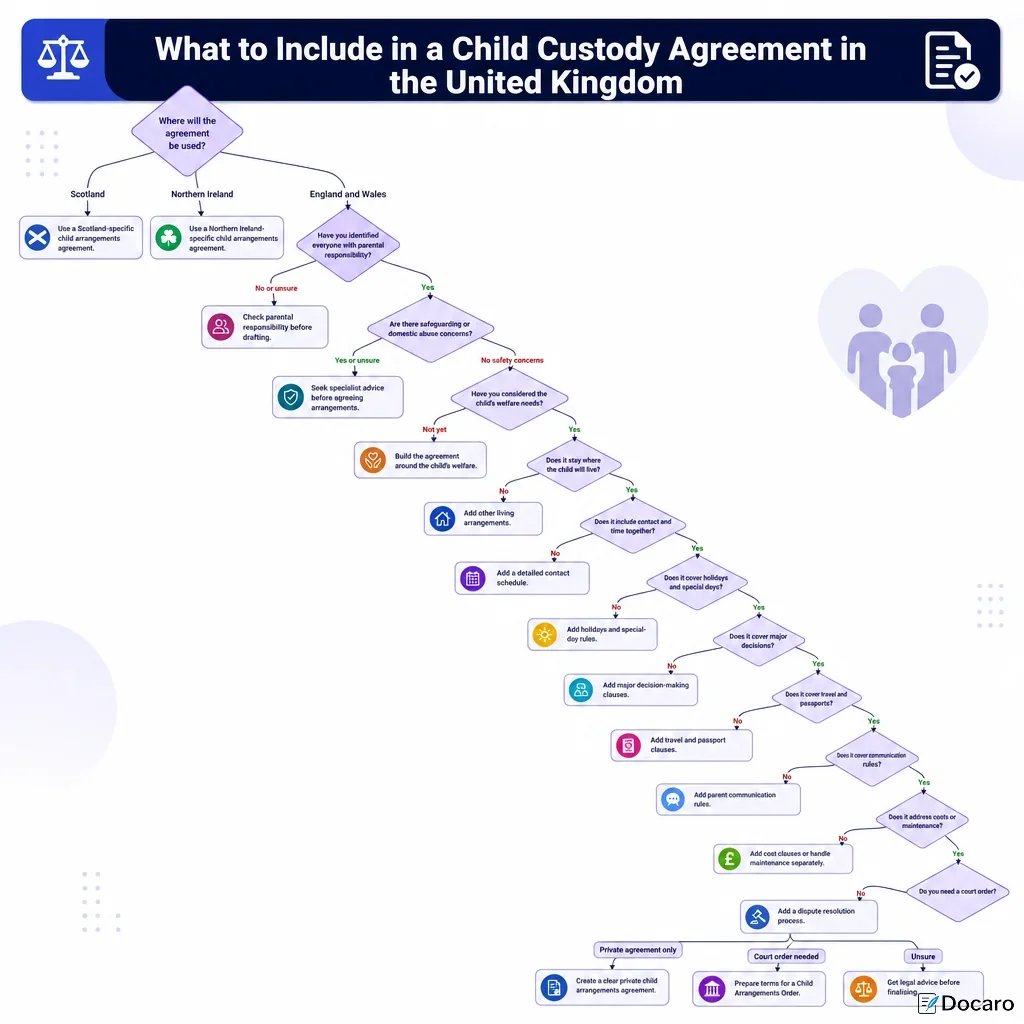
Which Child Arrangements Document Is Right In England And Wales?
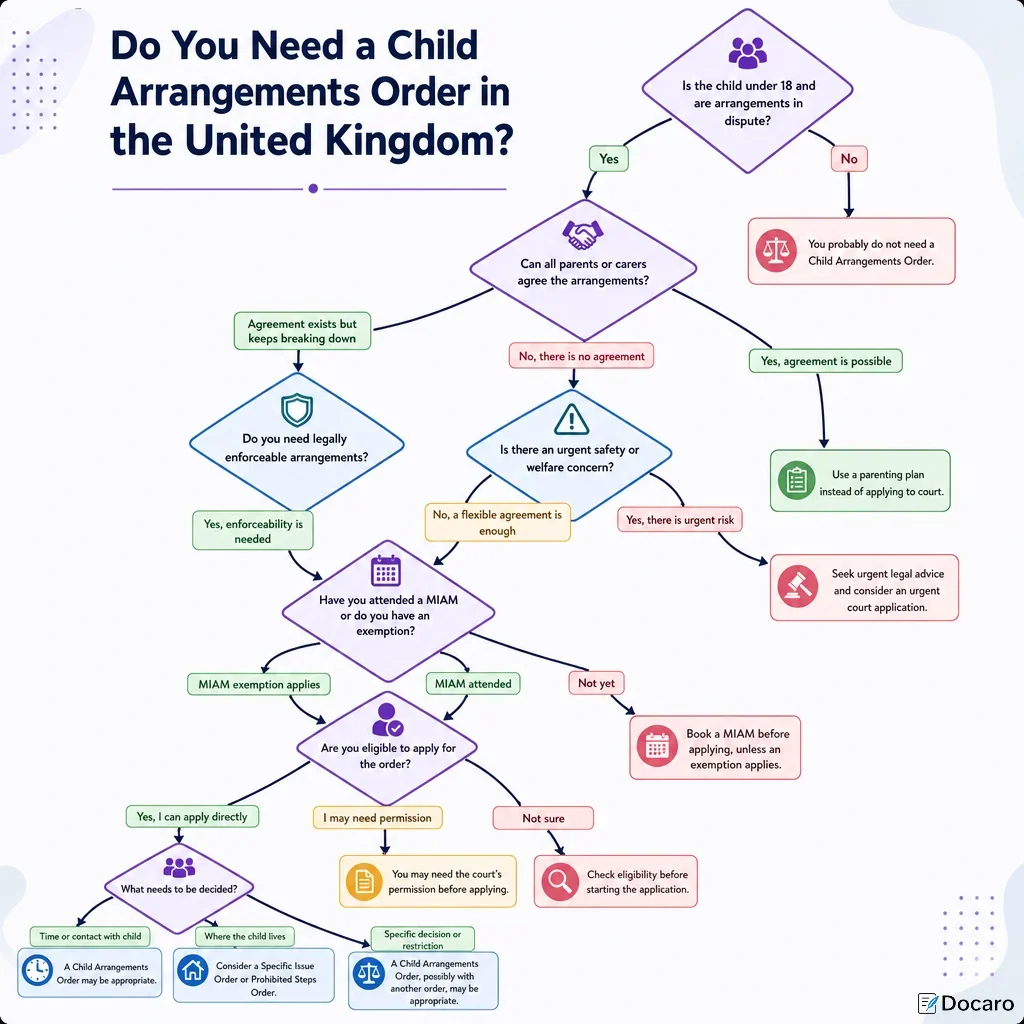
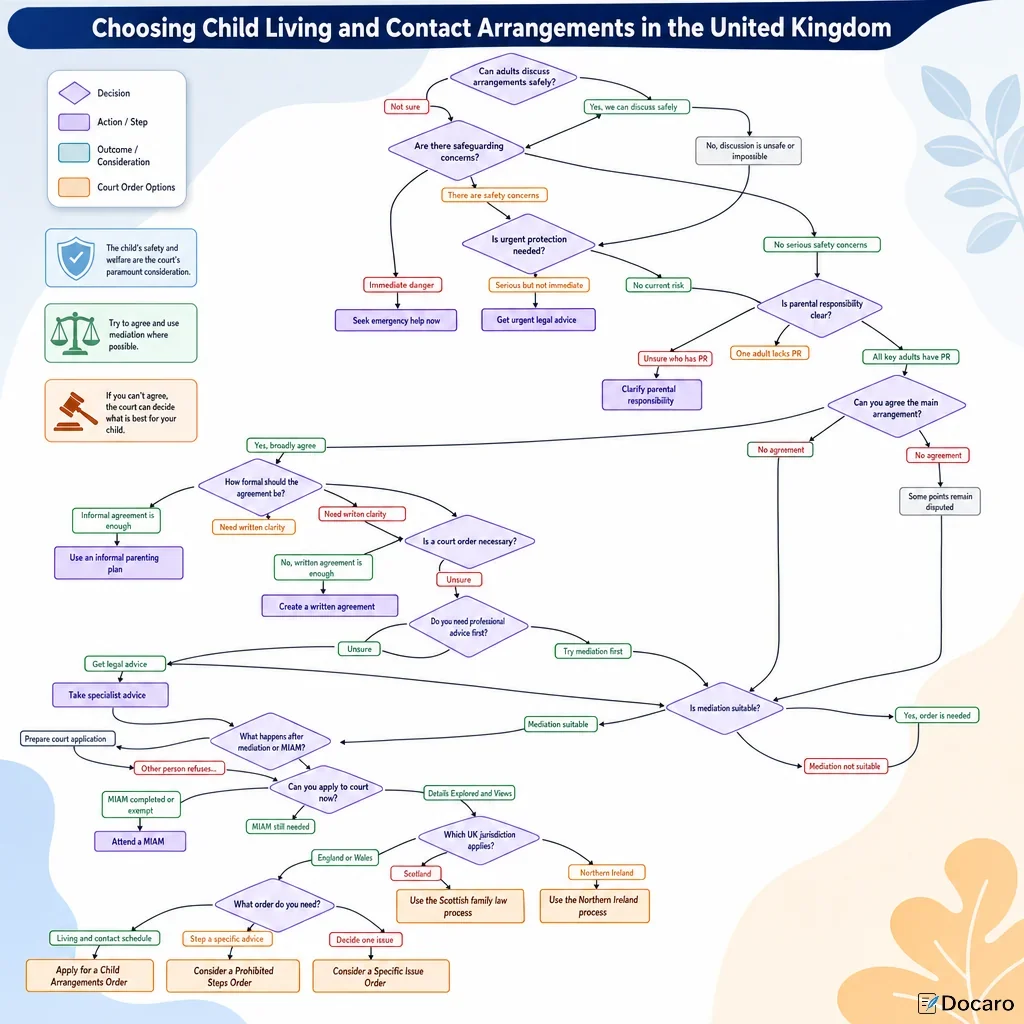
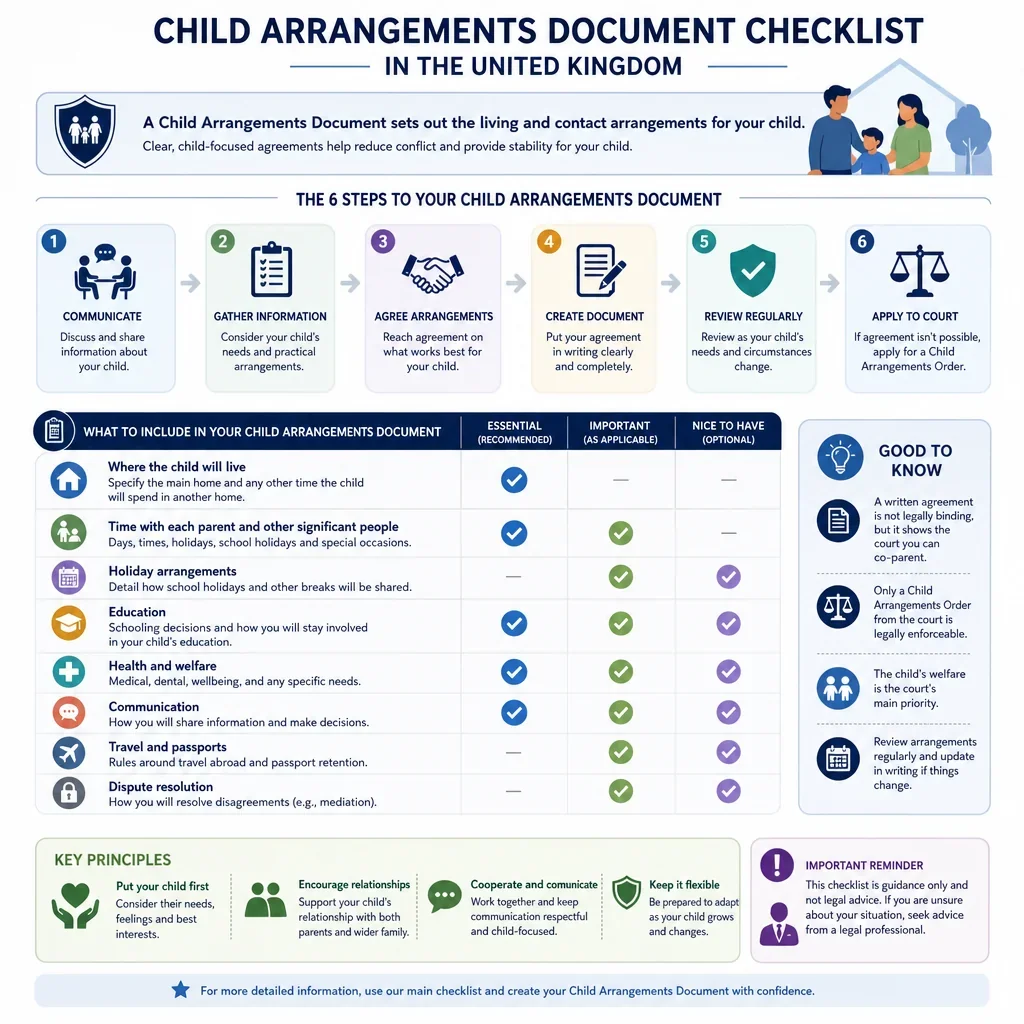
Private agreements and parenting plans are usually best where parents can cooperate and need a flexible written record, but they are not automatically court-enforceable. If enforceability is important, parents generally need a consent order or a Child Arrangements Order.
When Should Parents Consider A Consent Order?
A consent order is commonly used where parents agree the arrangements but want the court to approve them. The court will only make an order if it considers this better for the child than making no order, reflecting the Children Act 1989 welfare principle and no-order principle.
When Is A Child Arrangements Order Needed?
A Child Arrangements Order is usually appropriate where there is a dispute about who the child lives with, when the child spends time with each parent, or other arrangements that need a binding court decision. It can set out living and contact arrangements and may include warnings about enforcement.
What Should Parents Include In A Parenting Document?
- Day-to-day arrangements: school-week routine, handovers, holidays, birthdays and special days.
- Decision-making: education, health, religion, passports and travel permissions.
- Risk and safeguarding: supervised contact, indirect contact or supported handovers where there are safety concerns.
- Future-proofing: review dates, variation process and communication rules to reduce later disputes.
FAQs
You Might Also Be Interested In