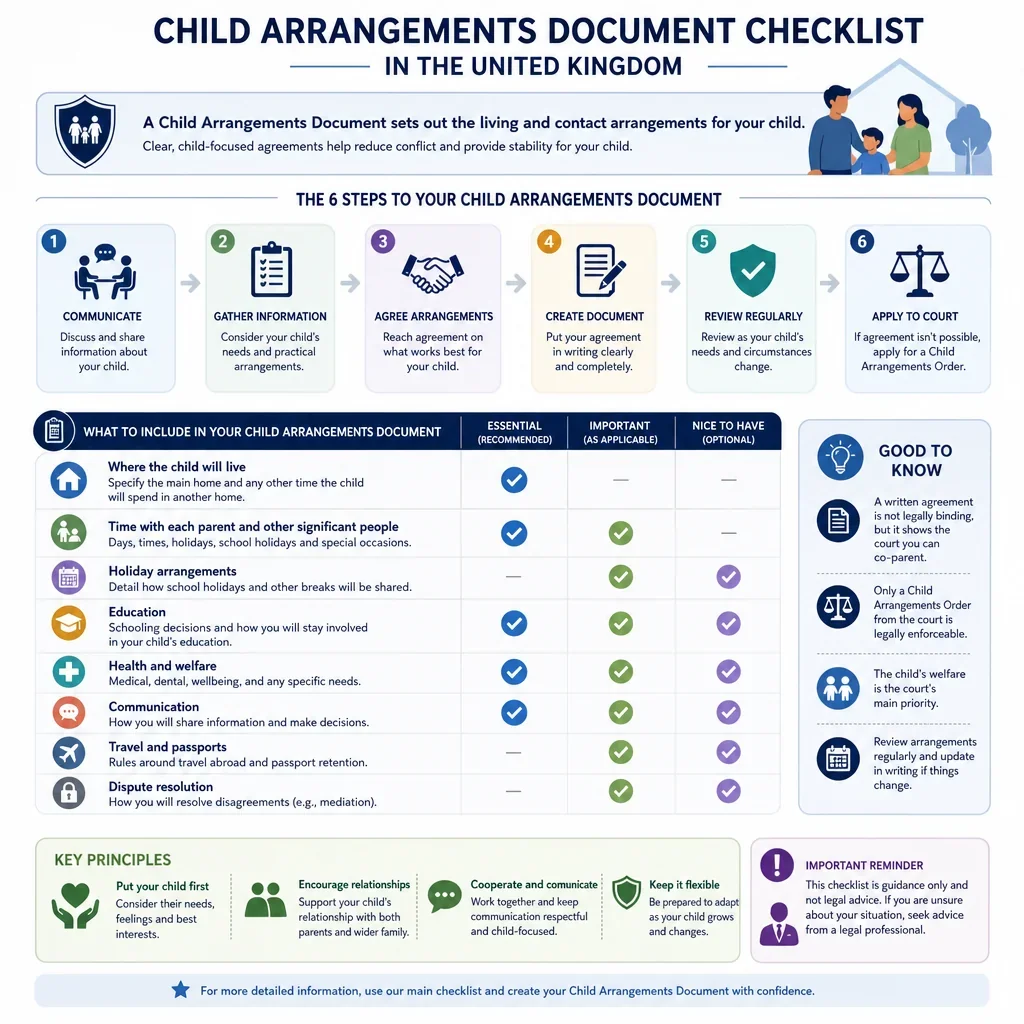
Child Arrangements Document Checklist In The United Kingdom
Checklist Item | Importance Level | Information Needed | Why It Matters | Preparation Stage |
|---|---|---|---|---|
Child details | ||||
Record each child’s full legal name | Essential | Full name as shown on the birth certificate or official record. | Avoids ambiguity about which child the arrangements cover. | Before drafting |
Record each child’s date of birth | Essential | Day, month and year of birth for each child. | Helps tailor arrangements to the child’s age and routine. | Before drafting |
Confirm each child’s usual home address | Essential | Current address and whether the child lives there full-time or part-time. | Establishes the child’s base and practical travel needs. | Before drafting |
Check nationality and passport details | Recommended | Nationality, passport holder, expiry date and storage location. | Supports clear rules for foreign travel and passport access. | Before drafting |
List medical conditions and medication | Essential | Conditions, allergies, prescriptions, GP details and emergency instructions. | Ensures both households can meet health and safety needs. | Before drafting |
Record SEND or disability needs | Essential | EHCP status, diagnoses, support needs and professional contacts. | Allows arrangements to reflect the child’s support and care needs. | Before drafting |
Note cultural, religious or language needs | Recommended | Relevant observances, dietary rules, language needs and family traditions. | Helps preserve continuity and respect the child’s identity. | Before drafting |
Consider the child’s wishes and feelings | Recommended | Age-appropriate views, worries and preferences, without pressure. | The welfare checklist includes the child’s ascertainable wishes and feelings. | Before drafting |
Parent details | ||||
Record each parent’s full legal name | Essential | Full legal names and any previous names used. | Identifies the parties to the agreement or proposed order. | Before drafting |
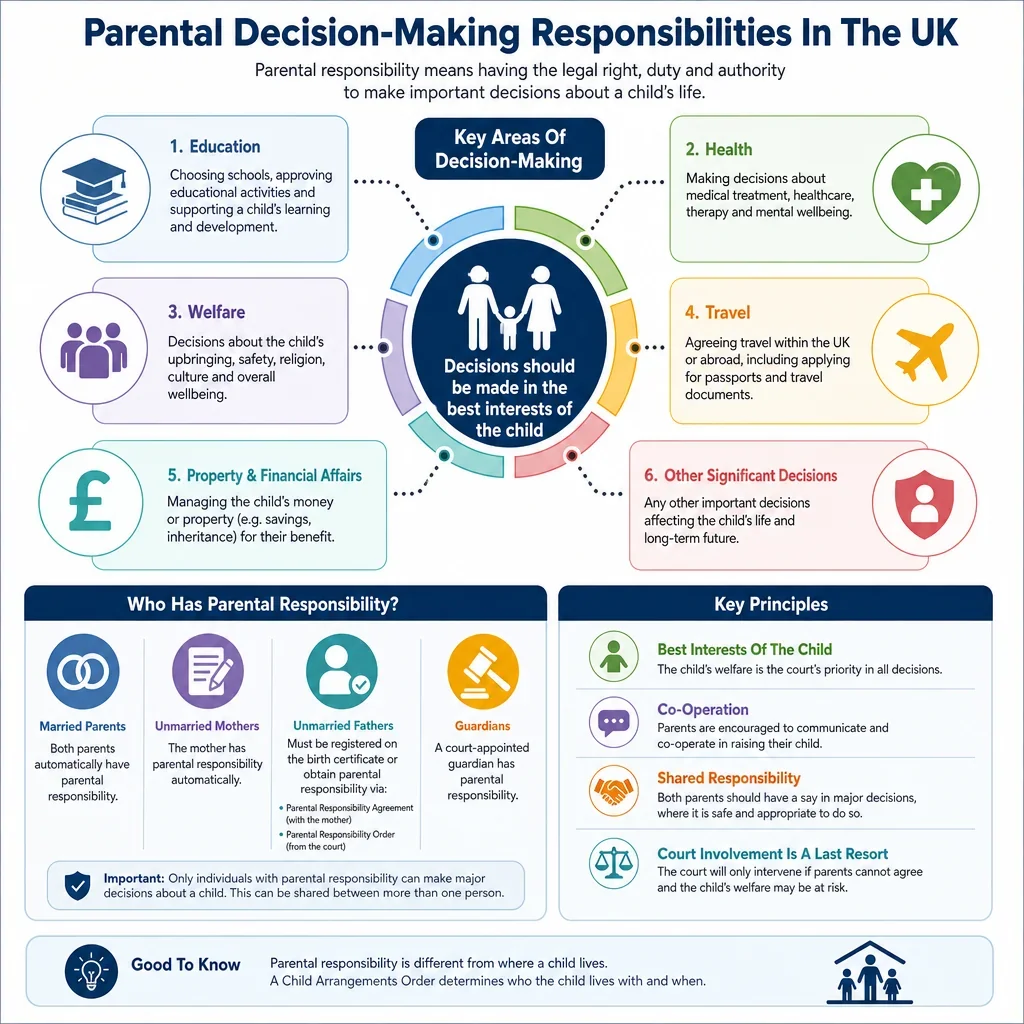
Confirm who has parental responsibility | Essential | Birth registration, marriage, PR agreement, order or other legal basis. | Parental responsibility affects decision-making authority for the child. | Before drafting |
Collect parent addresses and contact details | Essential | Home address, email, phone number and safe contact method. | Supports notices, emergencies and practical communication. | Before drafting |
Identify significant carers and household members | Recommended | Names, relationships and roles of partners, grandparents or regular carers. | Clarifies who may care for or collect the child. | Before drafting |
Disclose relevant safeguarding concerns | Essential | Domestic abuse, child protection, bail conditions or safety restrictions. | Unsafe arrangements may need protective terms or court involvement. | Before drafting |
Current arrangements | ||||
Gather existing court orders and agreements | Essential | Copies of child arrangements, prohibited steps or specific issue orders. | New terms must not conflict with existing binding orders. | Before drafting |
Map the current weekly routine | Essential | Where the child stays each day and overnight. | Shows the baseline and helps assess changes realistically. | Before drafting |
Record current handover times and places | Recommended | Usual handover locations, times and who attends. | Identifies practical issues or conflict points to improve. | Before drafting |
Document school or nursery routine | Essential | Start and finish times, term dates, clubs and transport. | Parenting time must work around education commitments. | Before drafting |
Note informal variations that already happen | Recommended | Regular swaps, flexible days, childcare cover and holiday practices. | Helps decide whether flexibility should be written into the document. | Before drafting |
Proposed schedule | ||||
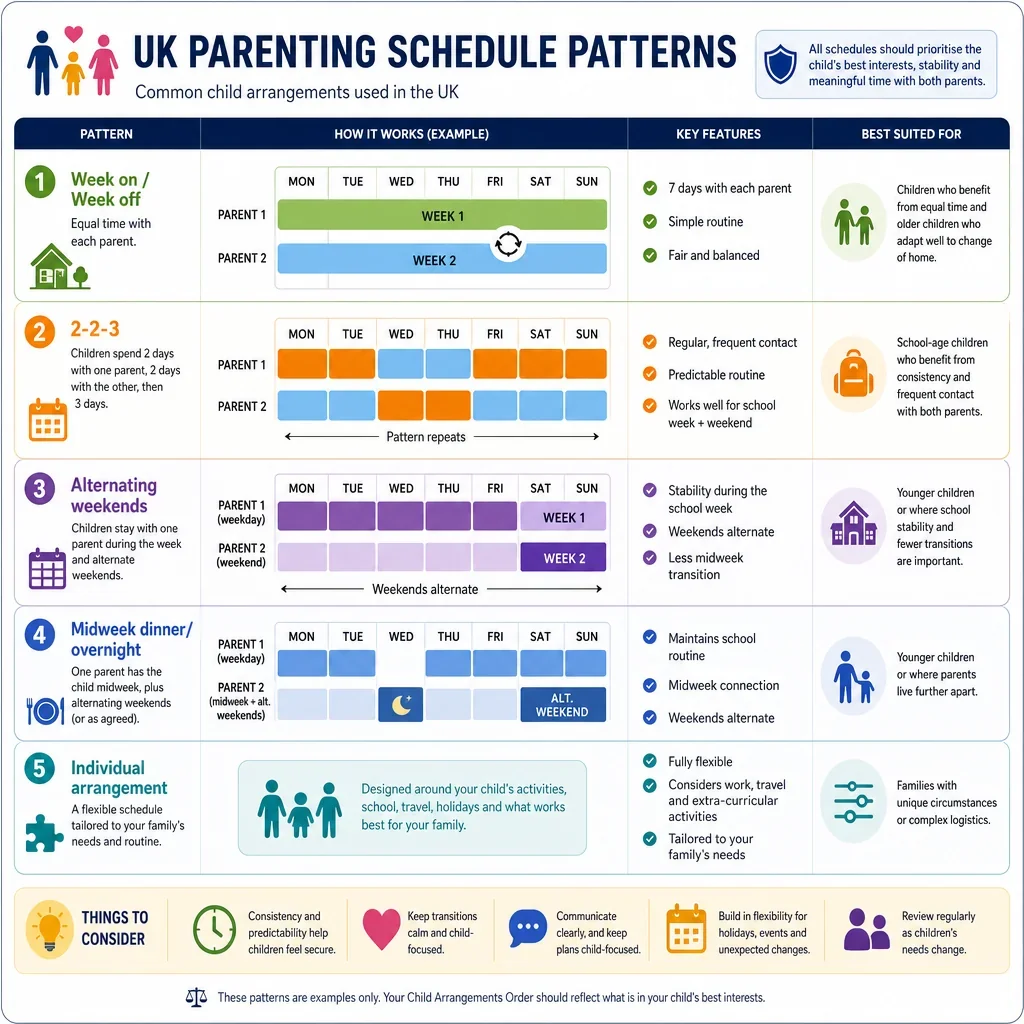
Set the ordinary weekly care schedule | Essential | Days, overnight stays, start times and end times. | Creates the core arrangement the document is built around. | During drafting |
Define weekend arrangements clearly | Essential | Weekend frequency, Friday or Saturday start, and Sunday or Monday return. | Weekend time is a common source of disagreement. | During drafting |
Decide any midweek contact | Recommended | Day, time, overnight status, transport and school-night limits. | Maintains continuity without disrupting school routines. | During drafting |
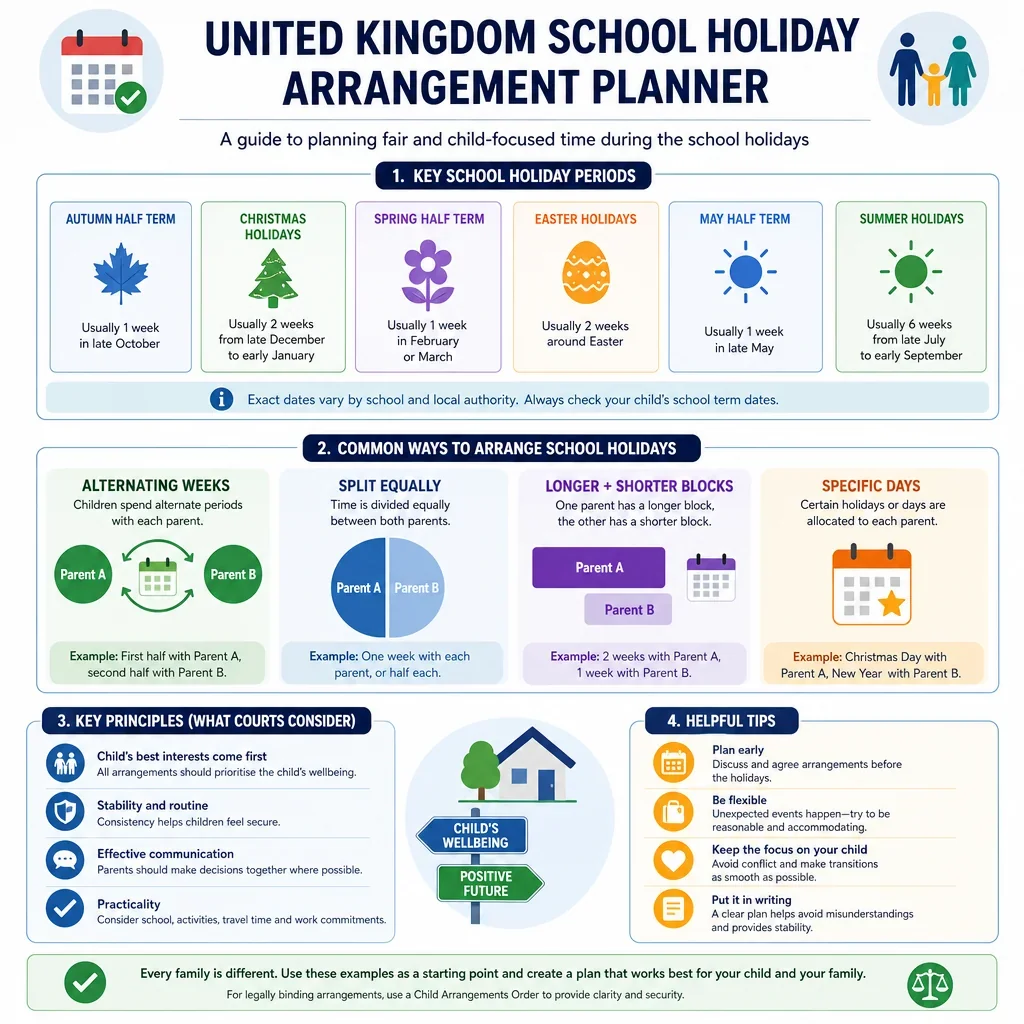
Allocate school holidays | Essential | Half-terms, Easter, summer, Christmas and holiday notice rules. | Holiday arrangements often override the normal weekly pattern. | During drafting |
Specify Christmas and New Year contact | Essential | Alternating years, handover times and priority over normal schedule. | Prevents disputes during emotionally important family periods. | During drafting |
Agree birthdays and special days | Recommended | Child birthdays, parent birthdays, Mother’s Day, Father’s Day and religious festivals. | Clarifies exceptions to the normal routine. | During drafting |
Set priority between term, holiday and special-day rules | Essential | Order of priority where schedules overlap. | Prevents conflicting clauses in the same document. | During drafting |
Decide whether missed time is made up | Recommended | When make-up time applies and how it is requested. | Reduces disputes after illness, travel disruption or cancellations. | During drafting |
Set rules for short-notice changes | Recommended | Notice period, acceptable reasons and confirmation method. | Balances flexibility with predictable care arrangements. | During drafting |
School and activities | ||||
Confirm school contact and information access | Recommended | Who receives reports, school emails and parent evening details. | Supports shared involvement in education. | During drafting |
Allocate school drop-off and collection duties | Essential | Who collects, who drops off, times and authorised adults. | Makes the weekly schedule workable in practice. | During drafting |
List regular clubs and activities | Recommended | Activity names, days, times, costs and transport needs. | Prevents contact arrangements disrupting established activities. | During drafting |
Agree consent for new activities | Recommended | When consent is needed for cost, travel or schedule impact. | Avoids one parent committing the other to impractical obligations. | During drafting |
Plan homework, uniform and equipment sharing | Recommended | How school bags, uniforms, devices and homework move between homes. | Reduces disruption to education and daily routine. | During drafting |
Update school emergency contacts | Essential | Parent and trusted adult contact details for school records. | Ensures the right adults can be reached in emergencies. | Before signing |
Travel and handovers | ||||
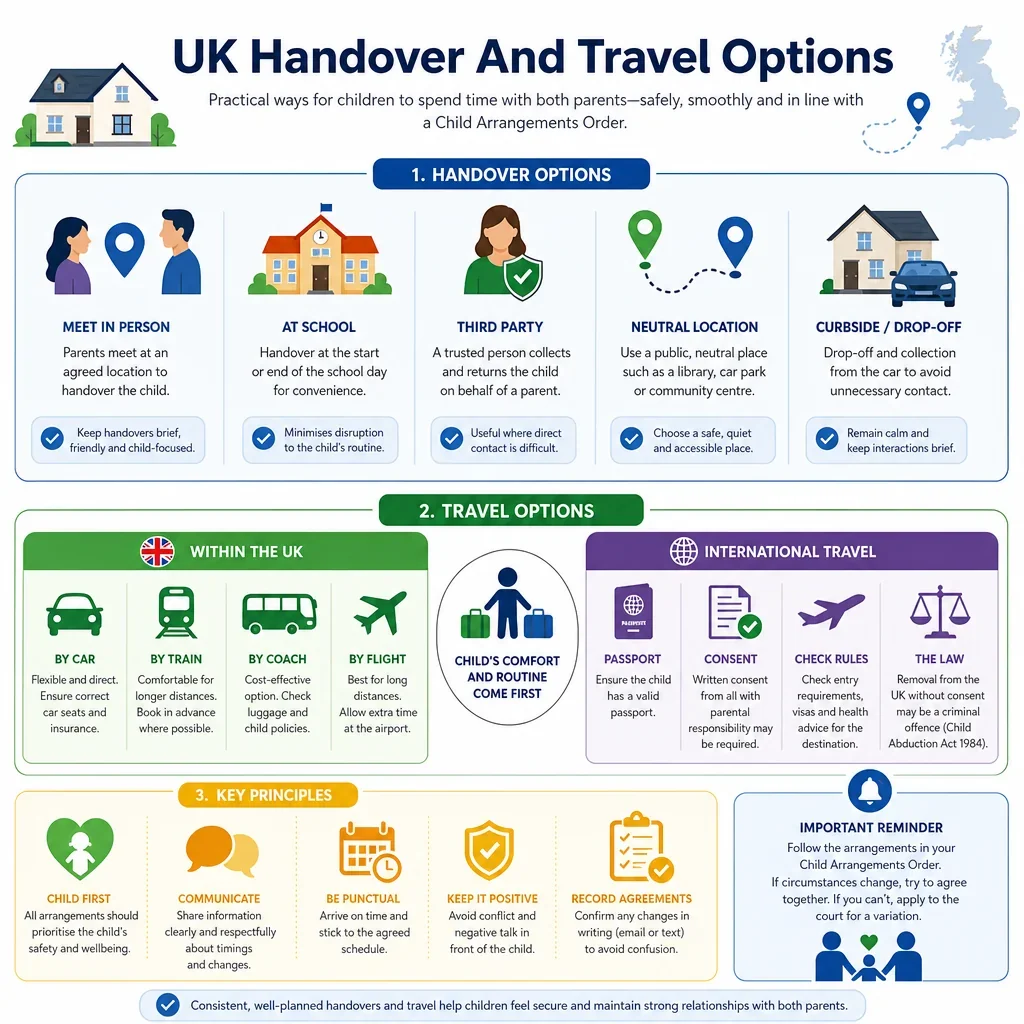
Specify handover locations | Essential | Exact address or public place for each handover. | Clear locations reduce conflict and lateness. | During drafting |
Allocate transport responsibility | Essential | Who drives, collects, pays fares or books travel. | Makes arrangements realistic and enforceable in practice. | During drafting |
Set lateness and delay rules | Recommended | Notice method, grace period and what happens after delay. | Prevents minor delays escalating into disputes. | During drafting |
Use safe handover arrangements if needed | Essential | Neutral venue, third-party help or staggered times where appropriate. | Protects adults and children from conflict or abuse at handover. | During drafting |
Agree UK travel and overnight trips | Recommended | Notice, destination details, accommodation and emergency contacts. | Keeps both parents informed about the child’s whereabouts. | During drafting |
Set rules for taking the child abroad | Essential | Consent process, destination, dates, flight details and travel insurance. | Taking a child abroad usually needs consent from those with parental responsibility. | During drafting |
Agree passport storage and release rules | Recommended | Who holds the passport and when it must be provided. | Avoids last-minute disputes before foreign travel. | During drafting |
Confirm child travel safety requirements | Essential | Car seats, medical travel needs and safe transport arrangements. | UK rules require appropriate child restraints in many vehicles. | Before signing |
Communication | ||||
Choose the main parent communication channel | Essential | Email, parenting app, text or other agreed method. | Creates a reliable record of arrangements and changes. | During drafting |
Set emergency contact rules | Essential | Who to call first, backup contacts and response expectations. | Ensures urgent health or safety issues are handled quickly. | During drafting |
Agree phone and video contact with the child | Recommended | Frequency, time windows, device use and privacy expectations. | Maintains contact between stays without disrupting routines. | During drafting |
Agree routine information sharing | Recommended | Updates about school, health, activities and emotional wellbeing. | Helps both parents make informed decisions for the child. | During drafting |
Set respectful communication boundaries | Recommended | Appropriate times, tone, topics and no-use of the child as messenger. | Reduces conflict and protects the child from adult disputes. | During drafting |
Define how major decisions will be made | Essential | Rules for education, health, religion, names and relocation decisions. | Major decisions usually need proper involvement of those with parental responsibility. | During drafting |
Include a dispute resolution process | Recommended | Steps such as discussion, mediation, parenting app review or legal advice. | May resolve disagreements without urgent court applications. | During drafting |
Review arrangements | ||||
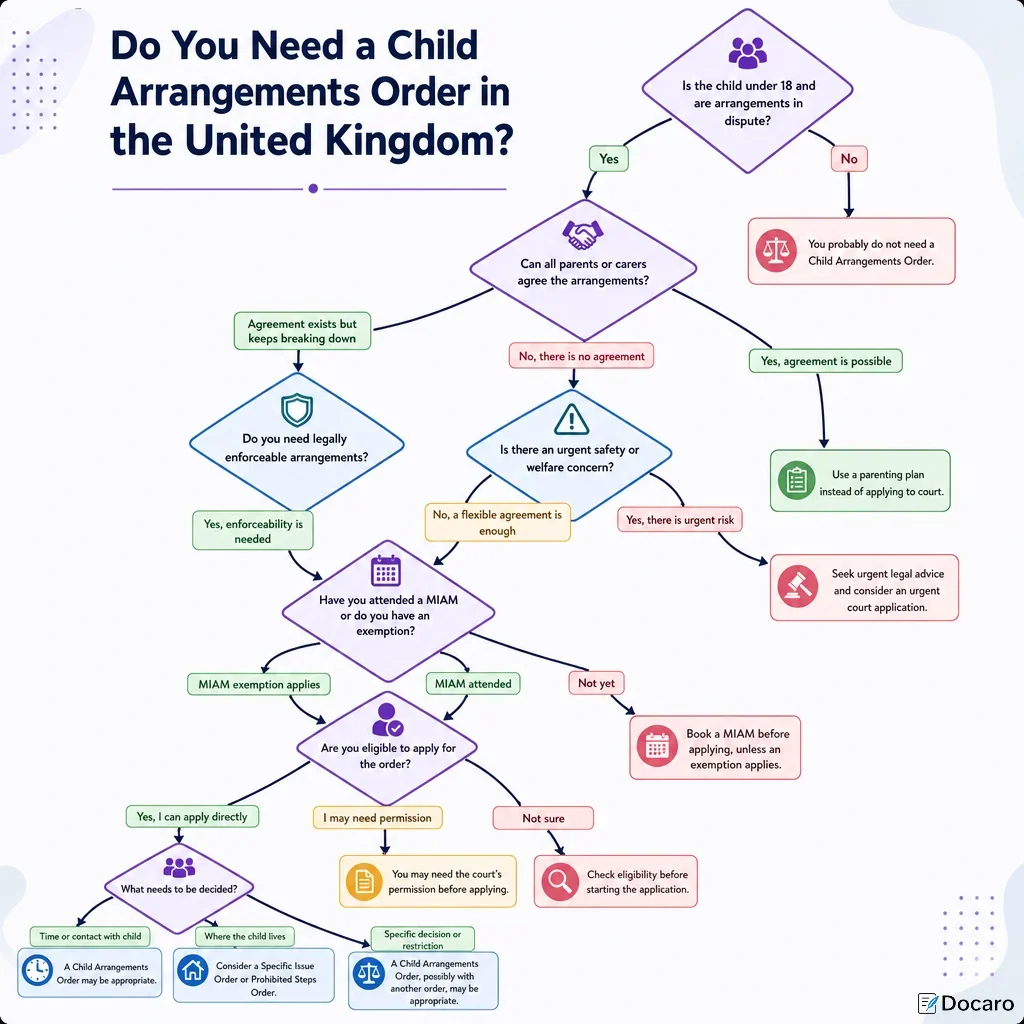
Check MIAM requirements before court application | Essential | Whether mediation information meeting attendance or exemption applies. | Many child arrangement applications require MIAM attendance unless exempt. | Before court filing |
Review the proposal against the welfare checklist | Essential | Child needs, wishes, risks, capability of parents and likely effect of change. | The child’s welfare is the court’s paramount consideration. | Before signing |
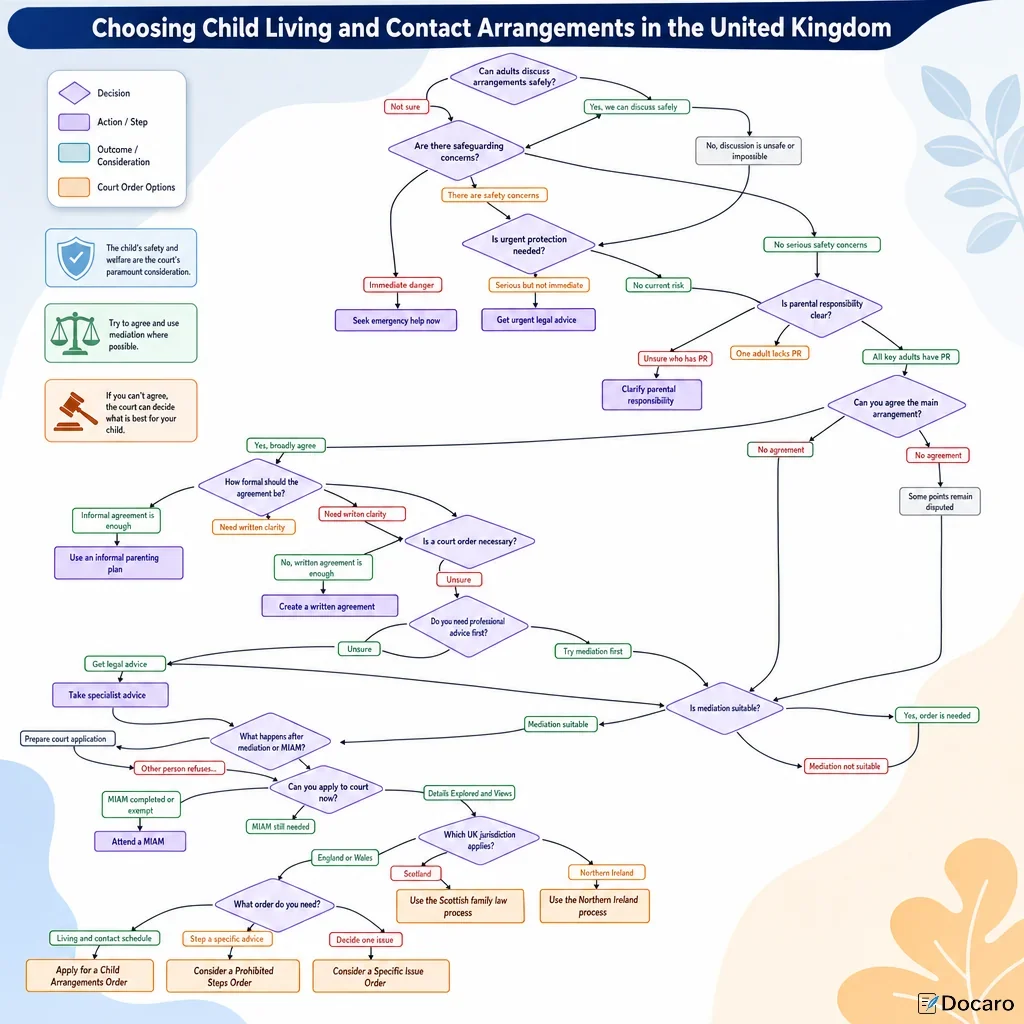
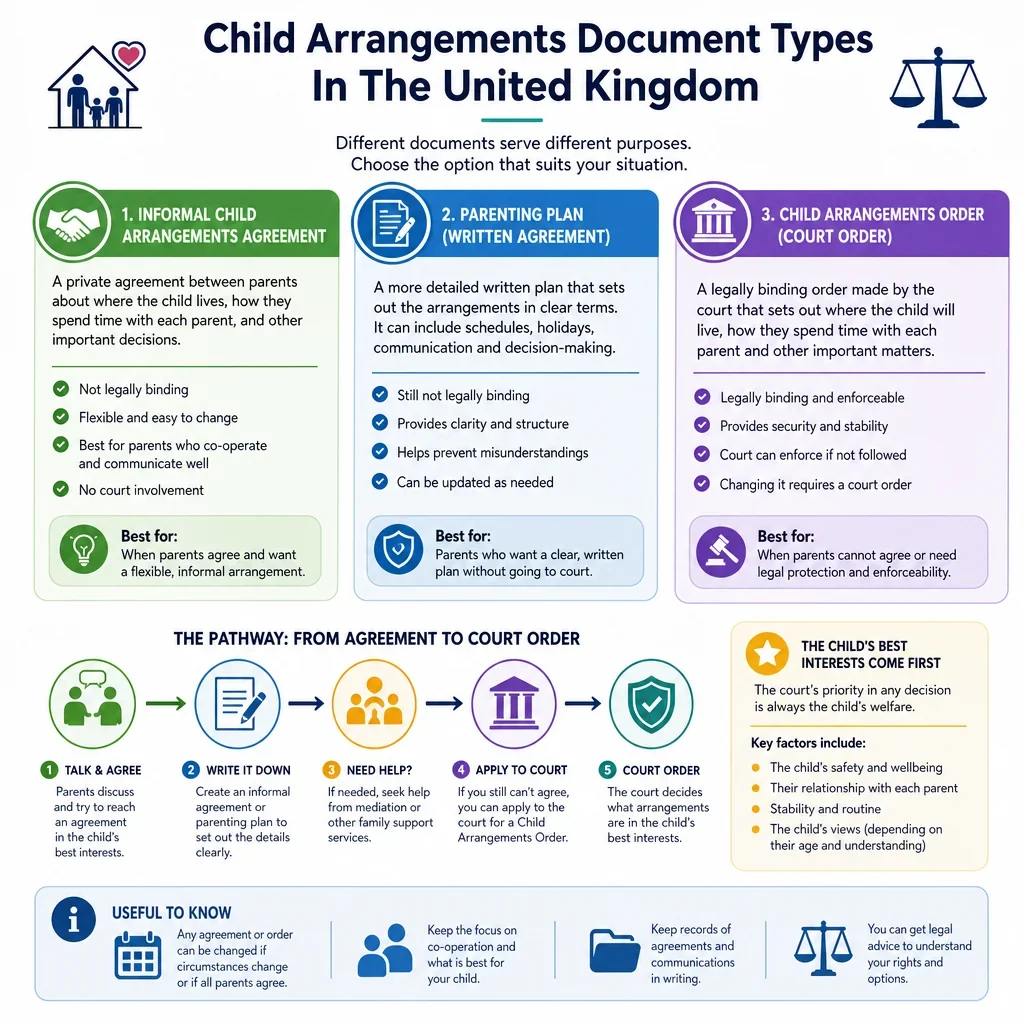
Consider whether a court order is necessary | Recommended | Whether an informal agreement is sufficient or enforceable order is needed. | Courts should not make an order unless it is better for the child than no order. | Before court filing |
Check all terms are clear and specific | Essential | Exact dates, times, locations, responsibilities and exception rules. | Vague terms are harder to follow, approve or enforce. | Before signing |
Keep child arrangements separate from child maintenance | Recommended | Any maintenance calculation or agreement handled separately. | Parenting time should not be made conditional on payments. | Before signing |
Set a review date | Essential | Date or trigger for reviewing the arrangements. | Allows the arrangement to adapt as the child’s needs change. | During drafting |
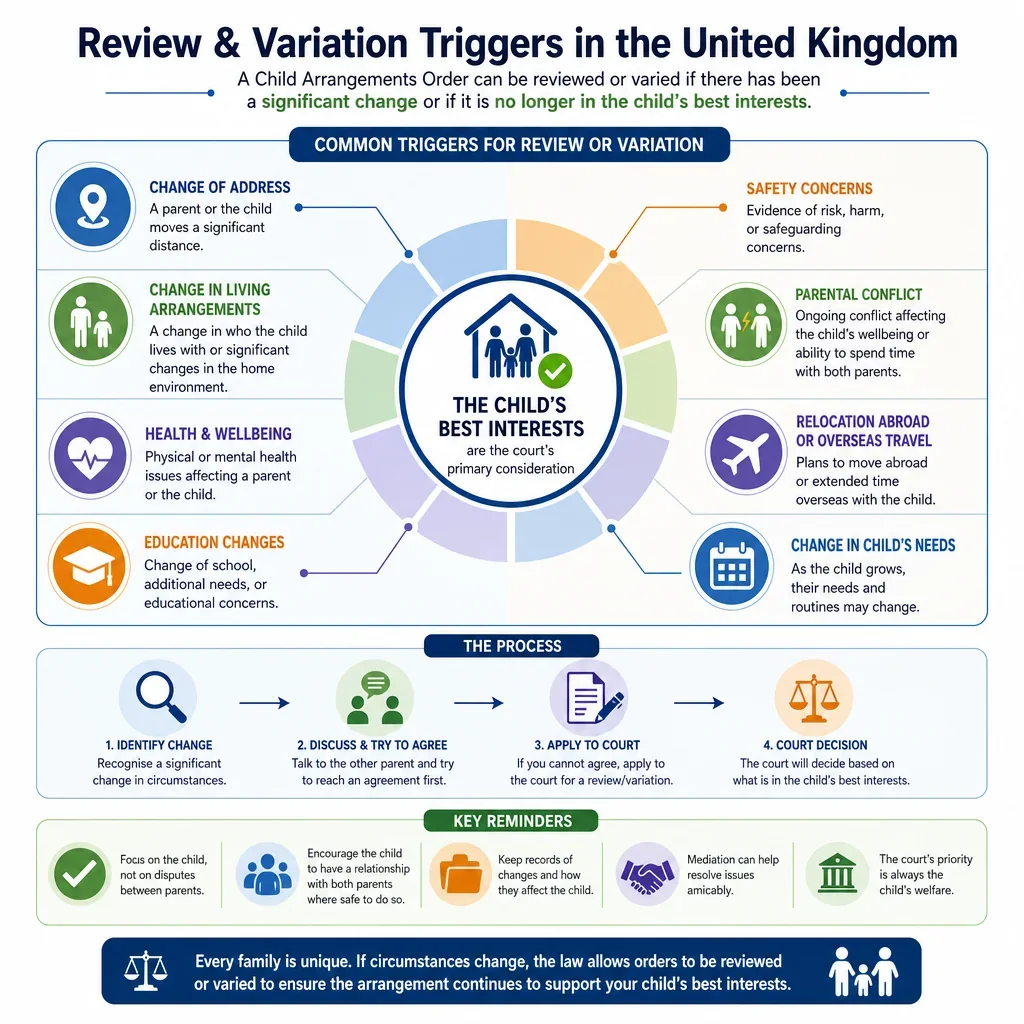
Identify triggers for changing the arrangement | Recommended | New school, relocation, work changes, health issues or child preference changes. | Prevents outdated terms from causing avoidable conflict. | Ongoing review |
Address relocation or significant moves | Recommended | Notice period, proposed address, school impact and revised contact plan. | Moves can materially affect schooling, travel and contact frequency. | During drafting |
Check final names, signatures and date | Essential | Correct party names, signature blocks and date of agreement. | Shows both parents agreed the final version. | Before signing |
Prepare the correct court application if needed | Essential | C100 form details, draft order, MIAM evidence or exemption. | The court needs the correct application route and supporting information. | Before court filing |
Prepare safeguarding allegations form if relevant | Essential | C1A details about harm, domestic abuse, risk or child protection concerns. | Safeguarding issues may affect contact, handovers and court directions. | Before court filing |
Keep records of agreed variations | Recommended | Written confirmation of swaps, missed time, travel and schedule changes. | Creates evidence of what was agreed if disputes arise. | Ongoing review |
Update arrangements when school term dates change | Recommended | New term dates, inset days, exam periods and holiday calendars. | Keeps holiday and handover rules aligned with the school year. | Ongoing review |
What Should You Prepare Before Drafting A Child Arrangements Agreement?
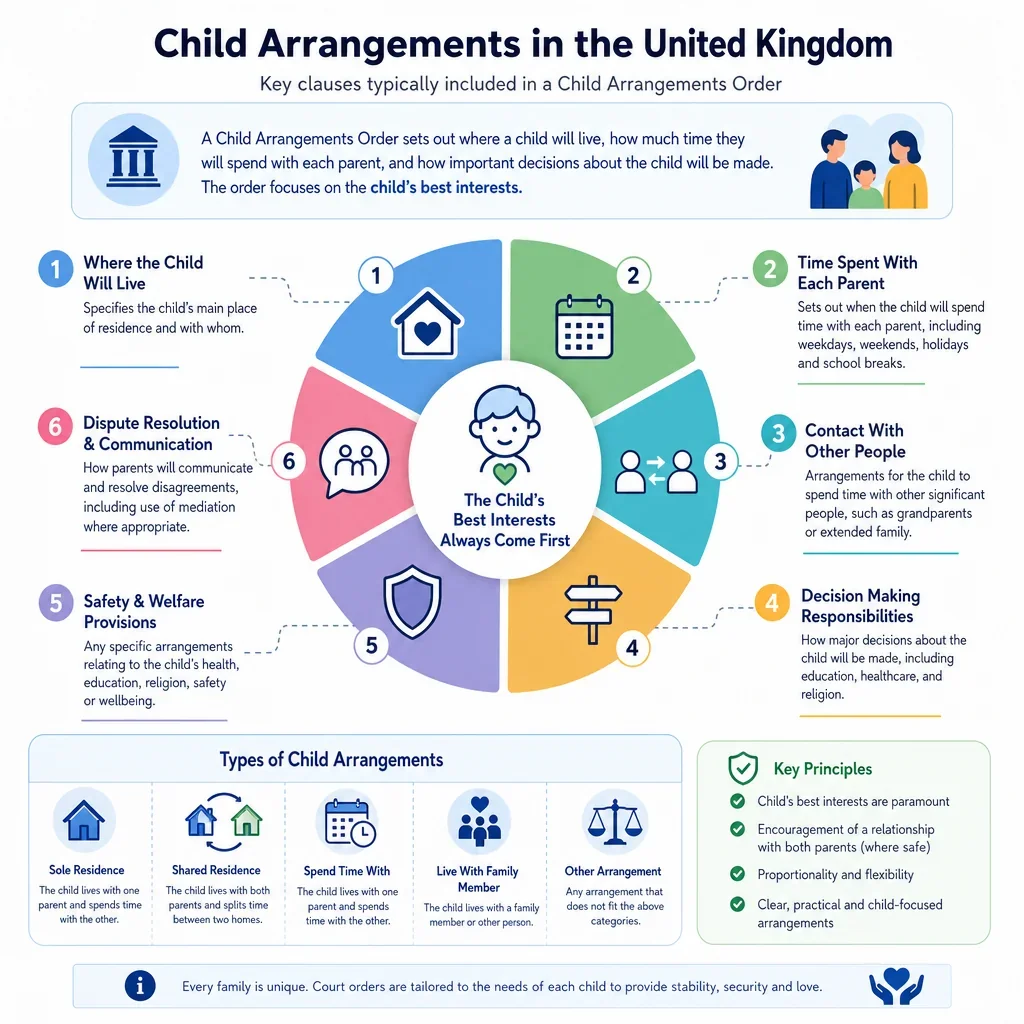
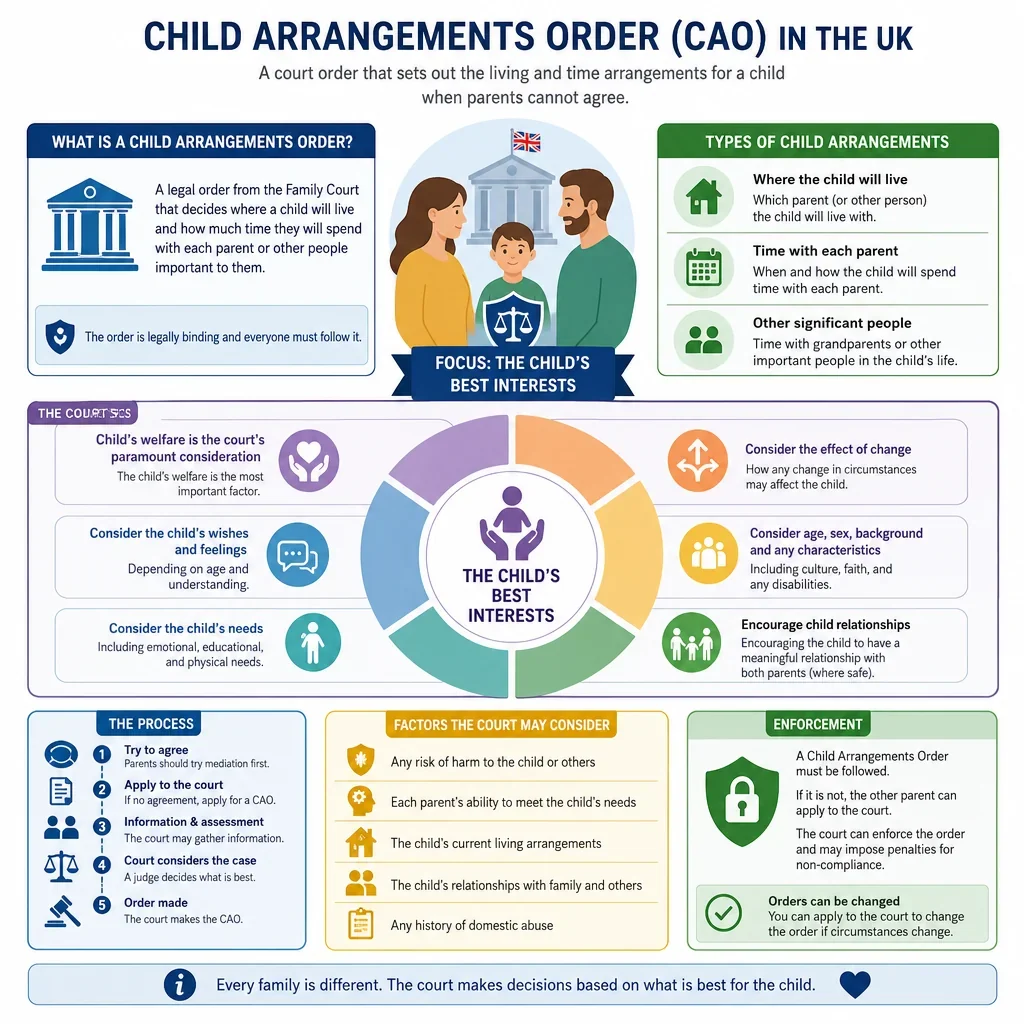
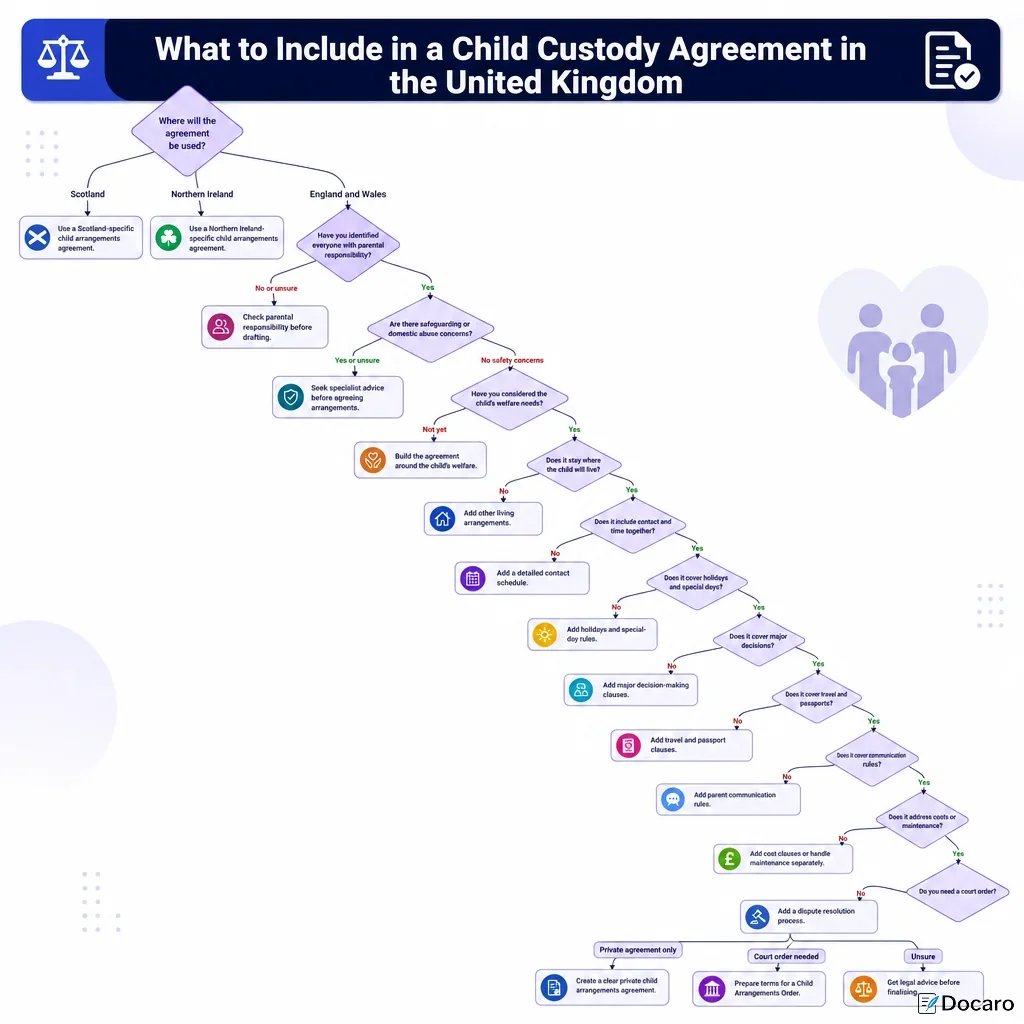
Prepare precise details about each child, each person with parental responsibility, the current care pattern, and the proposed weekly and holiday schedule before drafting. In England and Wales, a court’s paramount consideration is the child’s welfare, so the document should focus on practical arrangements that meet the child’s day-to-day needs rather than adult preferences.
What Details Make A Child Arrangements Document More Practical?
- Specific times and locations for handovers reduce later disputes.
- School, nursery and activity arrangements help the agreement work around the child’s real routine.
- Holiday, birthday and special day rules prevent uncertainty during high-conflict periods.
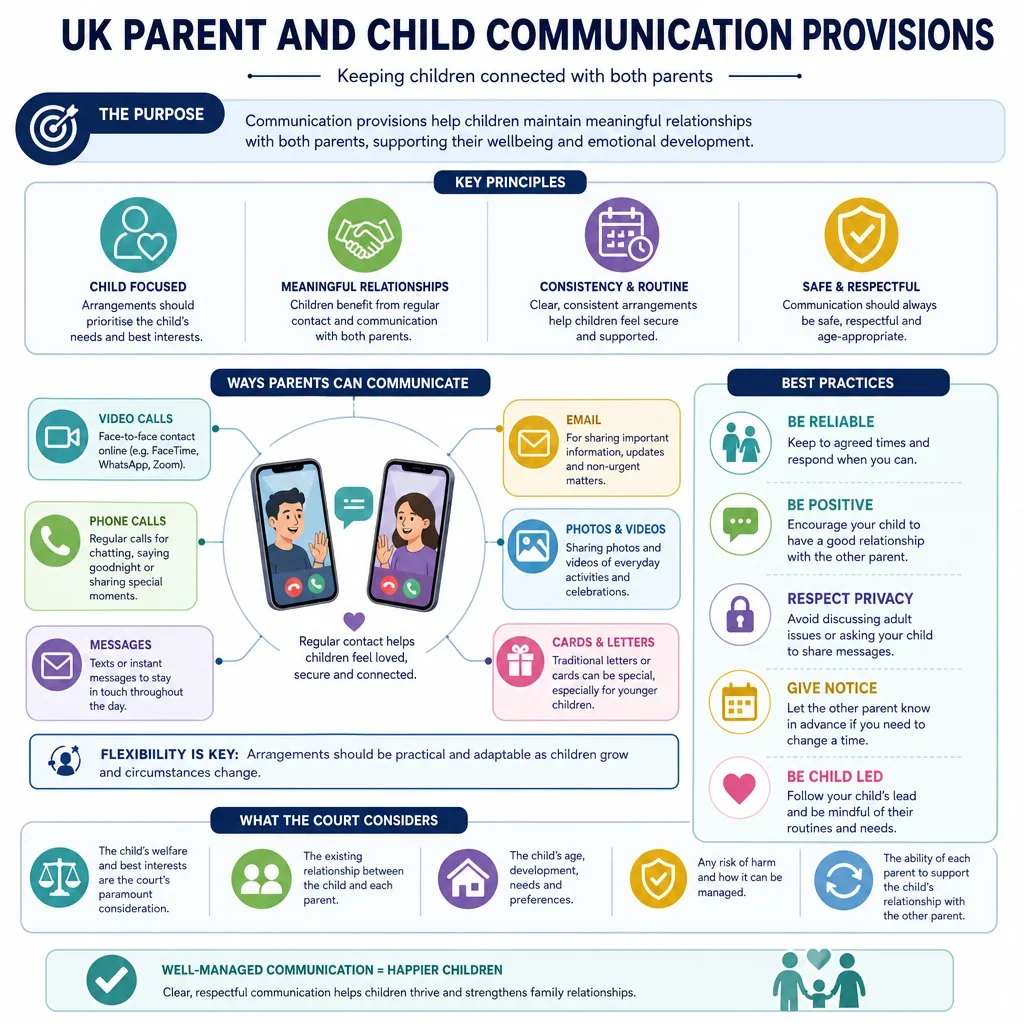
- Communication rules for parents and child contact help keep arrangements predictable.
- Review dates allow arrangements to adapt as the child changes school, grows older, or develops new needs.
When Might Court Filing Requirements Matter?
If the agreement is intended to become a court order, users should check whether a MIAM exemption applies, prepare the correct application route, and ensure the proposed order is clear enough for a court to approve and enforce. The court will consider the welfare checklist under the Children Act 1989, and may refuse arrangements that are vague, unsafe, or not in the child’s best interests.
FAQs
You Might Also Be Interested In