Pre-Drafting Questions For Cohabitation Agreements In Britain
Planning Question | Why Ask This | Helpful Information | Best Time to Consider | Question Importance |
|---|---|---|---|---|
Home ownership | ||||
Whose name is the home legally registered in? | Legal title is the starting point for recording property rights. | Land Registry title register and title plan. | Before drafting | Essential |
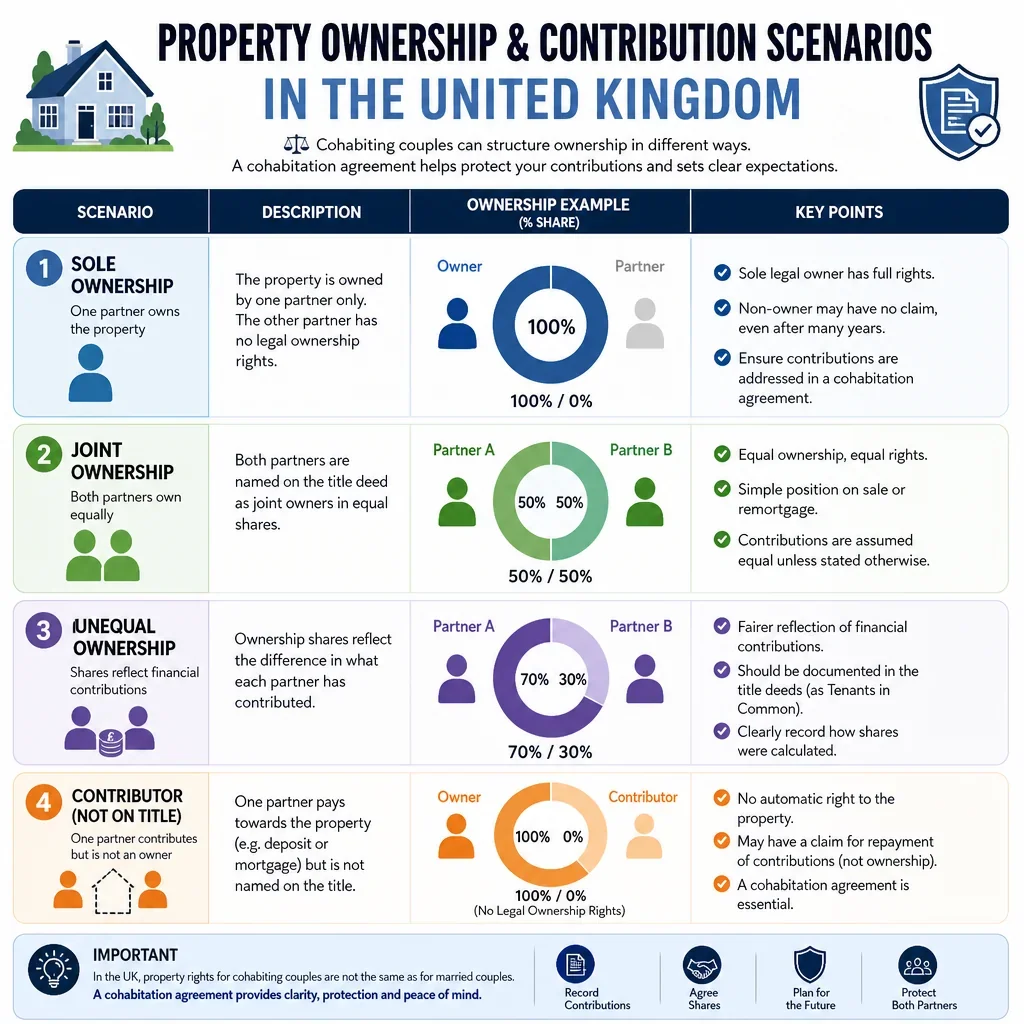
Do you intend to own the home in equal or unequal shares? | Prevents disputes about each partner's financial stake. | Declaration of trust, conveyancer notes and purchase completion statement. | Before drafting | Essential |
Is the home held as joint tenants or tenants in common? | Ownership type affects shares and what happens on death. | Transfer deed, title register and declaration of trust. | Before drafting | Essential |
Who paid the deposit and should it be protected or repaid first? | Large unequal payments often create later disagreement. | Bank statements, gifted deposit letters and completion statement. | Before drafting | Essential |
Were any contributions from family treated as gifts or loans? | Clarifies whether money must be repaid on sale or separation. | Loan agreements, gift letters and bank transfer records. | Before drafting | Essential |
Rent and mortgage | ||||
Who is legally liable under the mortgage? | Mortgage borrowers are usually jointly responsible for repayment. | Mortgage offer, mortgage deed and lender statements. | Before drafting | Essential |
How will monthly mortgage payments be divided? | Avoids uncertainty about ongoing financial responsibility. | Mortgage statement, income details and direct debit records. | Before drafting | Essential |
Home ownership | ||||
Will mortgage payments change either partner's ownership share? | Distinguishes occupation costs from equity-building contributions. | Declaration of trust, payment schedule and mortgage breakdown. | During drafting | Essential |
Rent and mortgage | ||||
How will mortgage overpayments be treated? | Overpayments can significantly increase equity or repay debt faster. | Overpayment records and lender terms. | During drafting | Detailed |
Future changes | ||||
What should happen if the home is remortgaged? | A remortgage may change payments, liability or released equity. | Current mortgage offer, broker advice and property valuation. | During drafting | Detailed |
Home ownership | ||||
Can either partner agree further borrowing secured on the home? | Secured borrowing can reduce equity and increase both partners' risk. | Lender terms, credit agreements and consent requirements. | During drafting | Detailed |
Bills and expenses | ||||
Who will pay for renovations, repairs and improvements? | Improvement spending may affect fairness and expected reimbursement. | Quotes, invoices, receipts and before-and-after valuations. | Before drafting | Essential |
Home ownership | ||||
Will paying for improvements increase a partner's property share? | Clarifies whether spending is reimbursable or changes ownership. | Improvement invoices, valuations and written contribution records. | During drafting | Essential |
Relationship breakdown arrangements | ||||
When can the home be sold if the relationship ends? | Sets a clear route if neither partner can agree later. | Estate agent valuations, mortgage redemption figure and title documents. | During drafting | Essential |
Should either partner have first option to buy the other's share? | Can avoid a forced open-market sale after separation. | Valuation method, mortgage capacity and proposed buyout timetable. | During drafting | Detailed |
How will the home be valued for a sale or buyout? | Prevents disputes over price and timing. | RICS valuation, estate agent appraisals and comparable sales. | During drafting | Detailed |
How will sale proceeds be divided after mortgage and costs? | Records the financial outcome after debts and sale costs are paid. | Ownership shares, mortgage balance, estate agent fees and legal costs. | During drafting | Essential |
Who can stay in the home immediately after separation? | Reduces conflict during the first practical stage of separation. | Children's arrangements, work needs, mortgage or tenancy terms. | During drafting | Essential |
Who pays mortgage, rent and bills after separation but before moving out? | Prevents arrears while living arrangements are unresolved. | Monthly budget, mortgage statement, tenancy agreement and bills. | During drafting | Essential |
Rent and mortgage | ||||
Whose name is on the tenancy agreement? | Tenancy liability depends on who is legally the tenant. | Tenancy agreement, guarantor agreement and landlord correspondence. | Before drafting | Essential |
How will rent be split between the partners? | Creates a clear monthly payment obligation. | Tenancy agreement, rent schedule and income details. | Before drafting | Essential |
Who paid the tenancy deposit and who receives any refund? | Avoids disputes when the landlord returns the protected deposit. | Deposit protection certificate, prescribed information and payment receipt. | Before drafting | Detailed |
Relationship breakdown arrangements | ||||
What should happen to the tenancy if the relationship ends? | Clarifies notice, replacement tenants and landlord consent. | Tenancy agreement, break clause and landlord contact details. | During drafting | Essential |
Bills and expenses | ||||
How will council tax be paid and apportioned? | Council tax is a recurring household liability. | Council tax bill, payment plan and occupancy details. | Before drafting | Essential |
How will gas, electricity, water and broadband bills be split? | Shows who pays each regular household cost. | Supplier bills, account names and direct debit records. | Before drafting | Essential |
Which household accounts are in one partner's sole name? | The named account holder may be pursued by the supplier. | Utility accounts, mobile contracts and subscription records. | Before drafting | Detailed |
How will food, cleaning items and everyday household costs be shared? | Defines routine spending that may otherwise be informal. | Monthly budget, receipts and shared account statements. | Before drafting | Basic |
Will expenses be split equally or according to income? | Records the agreed fairness basis for contributions. | Payslips, tax returns and monthly budget. | Before drafting | Essential |
Future changes | ||||
What happens if one partner's income significantly changes? | Allows contribution arrangements to adapt to job loss or promotion. | Employment contract, payslips and review trigger wording. | During drafting | Detailed |
Savings and debts | ||||
Will you use a joint bank account and for what purpose? | Joint accounts can create shared access and financial association. | Bank terms, account mandate and monthly budget. | Before drafting | Detailed |
How much will each partner pay into any joint account? | Clarifies funding for shared expenses. | Standing orders, salary dates and household budget. | During drafting | Detailed |
Relationship breakdown arrangements | ||||
How will any joint account balance be divided on separation? | Avoids withdrawals or disputes over remaining shared funds. | Bank statements and contribution records. | During drafting | Detailed |
Savings and debts | ||||
Which savings will remain personal and separate? | Protects savings that are not intended to be shared. | Savings statements, ISA records and premium bond records. | Before drafting | Essential |
Are any savings intended for a shared purpose? | Identifies money reserved for holidays, home costs or emergencies. | Savings account statements and agreed savings plan. | Before drafting | Basic |
What debts does each partner already have? | Separates pre-existing personal debts from shared obligations. | Credit card statements, loan agreements and credit reports. | Before drafting | Essential |
Can either partner take on debt for household purposes? | Controls when a debt is personal or shared. | Credit agreements, consent process and spending limits. | During drafting | Detailed |
Will any credit card be used for shared expenses? | Clarifies repayment responsibility for card spending. | Credit card statements and spending categories. | Before drafting | Detailed |
Has either partner lent money to the other? | Distinguishes loans from gifts or shared spending. | Loan agreement, messages, bank transfers and repayment records. | Before drafting | Essential |
Is either partner a guarantor for the other's rent, loan or mortgage? | A guarantor may have to pay if the borrower defaults. | Guarantee document, lender terms and tenancy guarantee. | Before drafting | Essential |
Personal belongings | ||||
Who owns each car and who pays running costs? | Car use, finance and ownership are often confused. | V5C, finance agreement, insurance schedule and purchase receipt. | Before drafting | Detailed |
Savings and debts | ||||
Who is liable for any car finance agreement? | Finance liability may not match everyday use of the vehicle. | Hire purchase, PCP or loan agreement and payment records. | Before drafting | Detailed |
Personal belongings | ||||
Who owns major furniture, appliances and electronics? | Makes division of valuable household items easier. | Receipts, warranties, photos and inventory list. | Before drafting | Detailed |
Which belongings did each partner bring into the relationship? | Identifies items intended to remain separate property. | Photos, receipts and personal inventory. | Before drafting | Basic |
Relationship breakdown arrangements | ||||
How will jointly bought belongings be divided if you separate? | Provides a fair method for shared purchases. | Receipts, contribution records and item list. | During drafting | Detailed |
Personal belongings | ||||
Are any sentimental items to be kept by a named partner? | Prevents conflict over items with emotional value. | Item list, photos and family ownership history. | During drafting | Basic |
Relationship breakdown arrangements | ||||
Who will keep any pets if the relationship ends? | Pets are treated practically as property, but care arrangements matter. | Microchip record, vet bills, insurance and pet purchase or adoption papers. | During drafting | Detailed |
Bills and expenses | ||||
Who will pay pet food, insurance and veterinary costs? | Pet costs can be regular and significant. | Vet invoices, insurance policy and pet budget. | Before drafting | Basic |
What home, contents, life or income protection insurance exists? | Insurance may affect protection of assets and ongoing affordability. | Policy schedules, beneficiary forms and premium records. | Before signing | Detailed |
Record keeping | ||||
Does contents insurance list valuable items and their owner? | Supports evidence of ownership and replacement value. | Contents schedule, valuations, receipts and photos. | Before signing | Basic |
Future changes | ||||
Do your wills reflect your intentions for the home and assets? | Cohabiting partners do not inherit automatically without planning. | Existing wills, title documents and beneficiary details. | Before signing | Essential |
Have you considered that intestacy rules may not benefit an unmarried partner? | The intestacy framework prioritises spouses, civil partners and relatives. | Will, estate plan and property ownership records. | Before signing | Essential |
Have pension death benefit nominations been checked? | Nominations may affect who receives discretionary pension benefits. | Pension statements and expression of wish forms. | Before signing | Detailed |
Bills and expenses | ||||
How will child-related household costs be shared? | Children can change housing, bills and support needs. | Childcare bills, school costs and child maintenance arrangements. | During drafting | Detailed |
Relationship breakdown arrangements | ||||
Does the agreement avoid replacing statutory child maintenance rights? | Child maintenance may be handled through statutory routes. | CMS guidance and any family-based arrangement notes. | Before signing | Essential |
Future changes | ||||
Have you considered the statutory child maintenance scheme if children are involved? | The statutory scheme may apply regardless of private adult arrangements. | Child Support Act 1991 guidance and CMS calculator information. | Before signing | Essential |
Record keeping | ||||
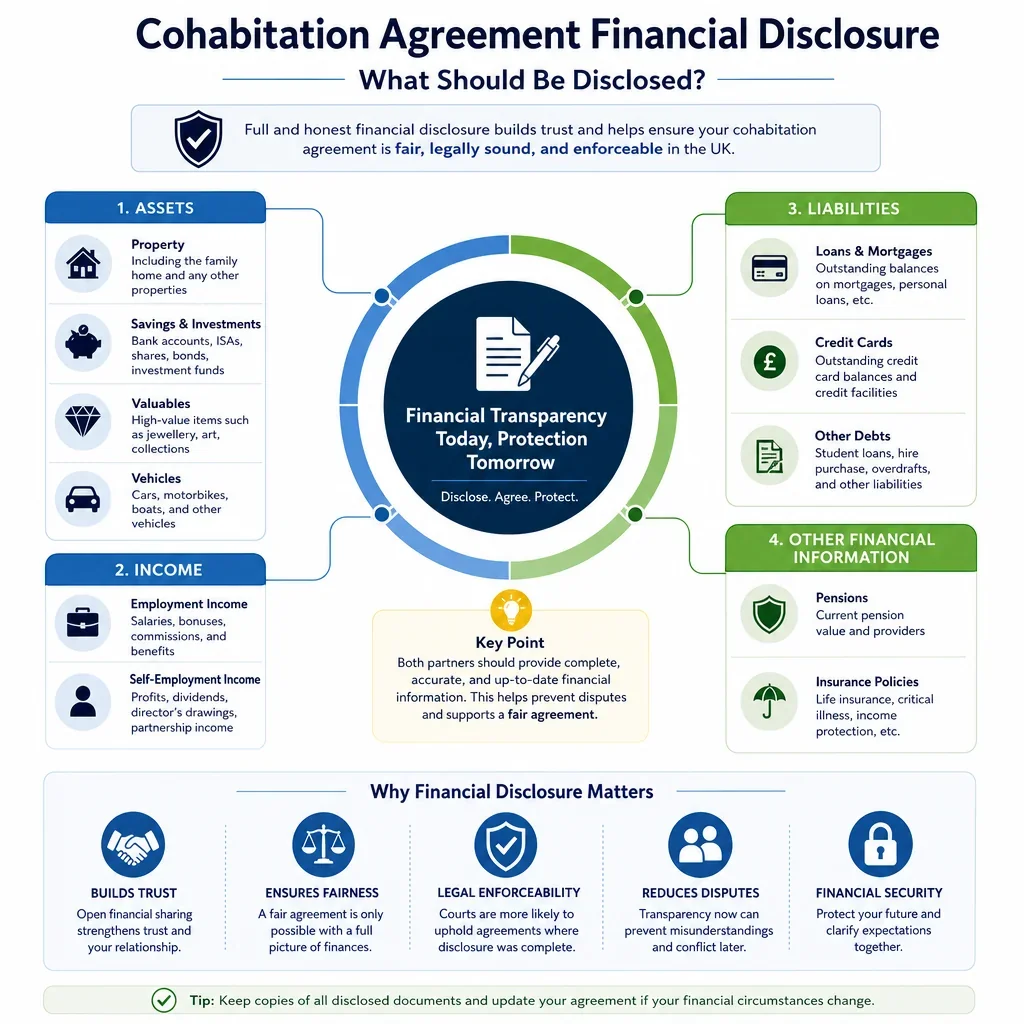
Have both partners disclosed their main assets, income and debts? | Full disclosure supports informed agreement and reduces challenge risk. | Asset schedule, payslips, bank statements and debt statements. | Before drafting | Essential |
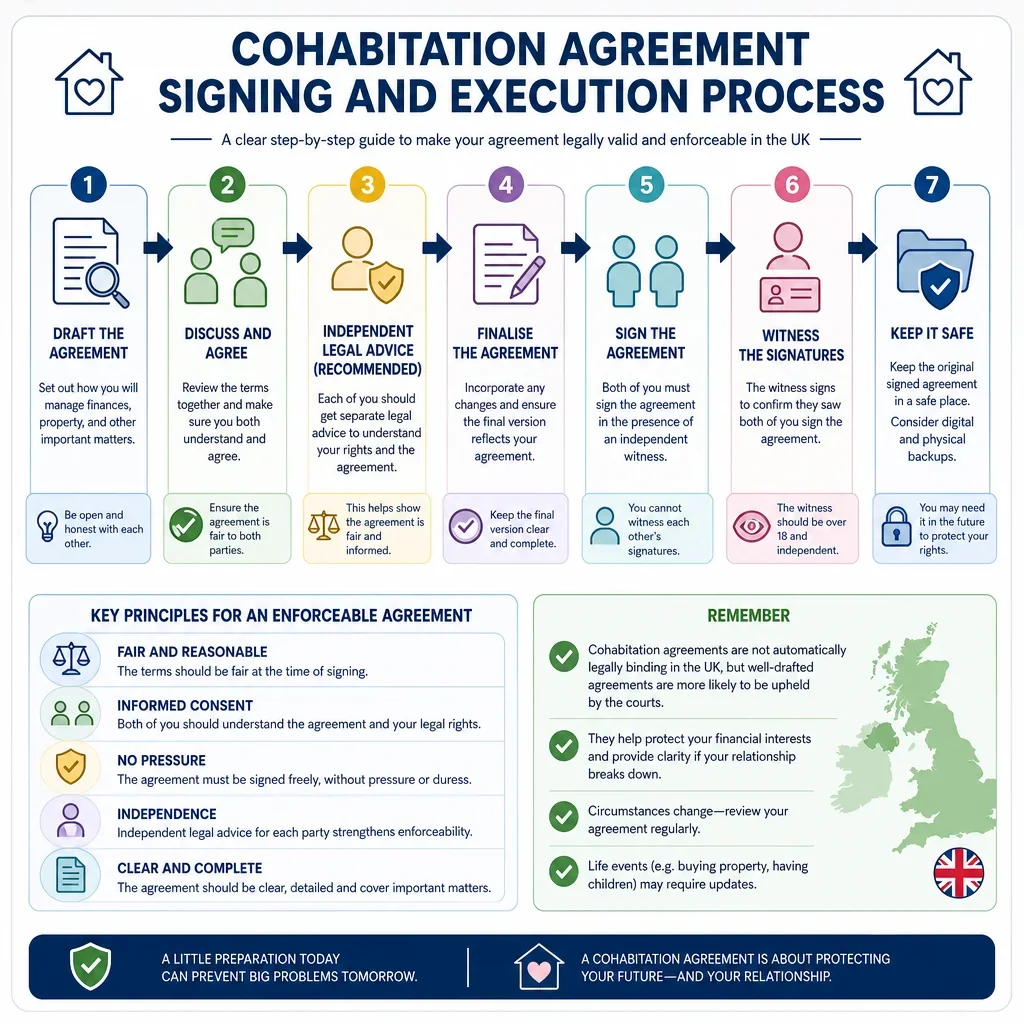
Will each partner take independent legal advice before signing? | Independent advice helps show informed and voluntary agreement. | Solicitor letters, advice certificates and draft agreement. | Before signing | Essential |
Has each partner had enough time to read and consider the agreement? | Reduces arguments about pressure or unfair surprise. | Draft circulation dates, email records and signing timetable. | Before signing | Essential |
Will the agreement be signed and witnessed correctly? | Execution method may affect evidential and contractual strength. | Final agreement, witness details and signing instructions. | Before signing | Essential |
Does any part of the arrangement need to be executed as a deed? | Some property-related documents require deed formalities. | Law of Property (Miscellaneous Provisions) Act 1989 section 1 and solicitor advice. | Before signing | Detailed |
Home ownership | ||||
Does any term create or transfer an interest in land? | Land contracts generally need written signed terms. | Law of Property (Miscellaneous Provisions) Act 1989 section 2 and property documents. | Before signing | Essential |
Is the cohabitation agreement consistent with any declaration of trust? | Conflicting documents can create uncertainty over property shares. | Declaration of trust, transfer deed and draft agreement. | Before signing | Essential |
Should a new declaration of trust be prepared alongside the agreement? | Property ownership terms may need a dedicated trust document. | Conveyancer advice, title register and agreed ownership shares. | During drafting | Essential |
Record keeping | ||||
How will contributions be recorded going forward? | Creates evidence for payments, reimbursements and ownership claims. | Shared spreadsheet, bank references and receipt folder. | During drafting | Detailed |
Where will signed copies and supporting documents be stored? | Ensures the agreement and evidence can be found later. | Original agreement, scanned copy and document index. | Before signing | Basic |
How often will asset, debt and belongings schedules be updated? | Keeps the agreement aligned with current circumstances. | Review dates, updated statements and inventory changes. | At review stage | Detailed |
Future changes | ||||
Which events should trigger a review of the agreement? | Major life events can make old terms unsuitable. | List of triggers such as property purchase, child, illness or inheritance. | During drafting | Essential |
What happens if you move to a new rented or owned home? | A new home may change ownership, rent and contribution terms. | New tenancy, purchase papers, mortgage offer or sale statement. | At review stage | Essential |
What should happen if you marry or enter a civil partnership? | Marriage or civil partnership changes legal and financial rights. | Review clause and advice on pre-nuptial or post-nuptial arrangements. | During drafting | Essential |
Should the agreement be reviewed if you have or adopt a child? | Children can affect housing needs and financial arrangements. | Review clause, childcare budget and parental arrangements. | During drafting | Essential |
How will inheritances or gifts received later be treated? | Later family money may be separate, shared or invested in the home. | Will, estate documents, gift letters and bank records. | During drafting | Detailed |
Savings and debts | ||||
Does either partner own a business that should remain separate? | Business assets and liabilities can affect personal finances. | Companies House record, accounts and shareholder agreements. | Before drafting | Detailed |
Are there any tax liabilities linked to property, business or investments? | Tax debts or liabilities may affect net values and affordability. | HMRC statements, accountant letters and tax returns. | Before drafting | Detailed |
Future changes | ||||
Could a later transfer or sale create capital gains tax issues? | Tax can affect the net outcome of property or asset transfers. | Property history, acquisition cost and tax advice. | At review stage | Detailed |
Relationship breakdown arrangements | ||||
How should disputes about the agreement be resolved? | Sets a practical route before court action is considered. | Mediation clause, solicitor details and notice procedure. | During drafting | Detailed |
Record keeping | ||||
Which UK jurisdiction's law should govern the agreement? | England and Wales, Scotland and Northern Ireland have different legal systems. | Home location, partner addresses and solicitor advice. | During drafting | Essential |
Savings and debts | ||||
Does either partner own property or assets outside the UK? | Overseas assets may need separate local advice or documents. | Foreign title deeds, bank statements and local legal advice. | Before drafting | Detailed |
Future changes | ||||
Does either partner's immigration status affect housing or finances? | Right to rent and income restrictions may affect arrangements. | Right to rent share code, visa conditions and tenancy documents. | Before drafting | Detailed |
Bills and expenses | ||||
Could living together affect benefits or Universal Credit claims? | Household status can affect benefit entitlement and budgeting. | Benefit award notices, income details and GOV.UK guidance. | Before drafting | Detailed |
Does either partner provide unpaid care affecting income or contributions? | Care responsibilities may justify unequal contributions or review triggers. | Carer's Allowance details, work hours and household budget. | Before drafting | Detailed |
Future changes | ||||
What happens if illness or disability affects earnings or housing needs? | Health changes can alter affordability and occupation needs. | Income protection policy, benefit details and review clause. | During drafting | Detailed |
What if one partner temporarily moves out for work, study or care? | Avoids uncertainty about continuing rent, mortgage or bill payments. | Work contract, study dates, care responsibilities and budget. | During drafting | Basic |
Home ownership | ||||
Can lodgers, tenants or family members live in the home? | Extra occupants may affect consent, income and household costs. | Mortgage terms, tenancy terms, insurer consent and lodger agreement. | During drafting | Detailed |
Bills and expenses | ||||
How will home working costs and business use be handled? | Business use may affect bills, insurance or tax treatment. | Employer policy, utility bills, insurance terms and HMRC guidance. | During drafting | Basic |
Personal belongings | ||||
Who owns or pays for shared digital accounts and subscriptions? | Digital services can include paid accounts, storage and purchases. | Account list, payment records and cancellation terms. | Before drafting | Basic |
Relationship breakdown arrangements | ||||
How will access to shared accounts be ended after separation? | Protects privacy and prevents continued use of shared services. | Account list, passwords process and cancellation dates. | During drafting | Basic |
How will separation be confirmed for the agreement's purposes? | Creates a clear date for payment, occupation and division terms. | Notice clause, email address and written confirmation process. | During drafting | Detailed |
What timetable should apply for one partner moving out? | Reduces conflict over occupation and practical arrangements. | Tenancy terms, mortgage terms, work needs and children arrangements. | During drafting | Detailed |
How and when will each partner collect belongings after separation? | Prevents disputes over access, timing and missing items. | Inventory, collection dates and key return process. | During drafting | Basic |
Who will update addresses, redirect post and close household accounts? | Avoids missed bills, privacy issues and account confusion. | Account list, Royal Mail redirection and supplier contacts. | During drafting | Basic |
Savings and debts | ||||
Will you maintain an emergency fund for shared housing costs? | Helps cover arrears, repairs or urgent expenses. | Savings target, account details and withdrawal rules. | During drafting | Basic |
Bills and expenses | ||||
When should one partner reimburse the other for shared costs paid alone? | Creates a simple process for settling imbalances. | Receipts, payment records and reimbursement deadline. | During drafting | Detailed |
What happens if one partner misses agreed payments? | Sets consequences for arrears before they harm credit or housing. | Payment calendar, grace period and default notice process. | During drafting | Detailed |
Savings and debts | ||||
Do you understand joint borrowing may create a financial association? | Financial associations can affect future credit applications. | Credit reports, joint account records and loan documents. | Before drafting | Detailed |
Relationship breakdown arrangements | ||||
How will joint accounts, cards or loans be closed or separated? | Limits ongoing shared liability after separation. | Bank closure forms, lender consent and outstanding balances. | During drafting | Essential |
Can either partner afford the home alone if the other leaves? | Determines whether buyout or continued occupation is realistic. | Income, mortgage balance, rent level and affordability calculations. | During drafting | Essential |
How will negative equity or sale shortfall be shared? | A sale may leave debt rather than proceeds. | Mortgage balance, valuation and lender shortfall terms. | During drafting | Essential |
Rent and mortgage | ||||
Who bears mortgage early repayment charges on sale or remortgage? | Charges can materially reduce net sale proceeds. | Mortgage offer, redemption statement and lender tariff. | During drafting | Detailed |
Bills and expenses | ||||
Who pays service charge, ground rent or estate charges? | Leasehold and estate charges can be significant recurring costs. | Lease, service charge demands and managing agent statements. | Before drafting | Detailed |
Home ownership | ||||
Does the lease restrict occupation, subletting, alterations or pets? | Agreement terms must not assume rights the lease forbids. | Lease, landlord consent letters and managing agent rules. | Before drafting | Detailed |
Is landlord, freeholder or lender consent needed for any arrangement? | Private agreement terms cannot override third-party consent requirements. | Mortgage conditions, lease, tenancy and consent correspondence. | Before signing | Essential |
Should any Land Registry restriction protect agreed ownership shares? | A restriction may help reflect trust arrangements on the register. | Title register, declaration of trust and conveyancer advice. | Before signing | Detailed |
Are property interests being held on trust for one or both partners? | Trusts of land may require clear written evidence. | Law of Property Act 1925 section 53, title register and trust deed. | Before signing | Essential |
Does a non-owner partner have any agreed right to occupy the home? | Clarifies expectations where only one partner owns or rents. | Title register, tenancy, mortgage terms and occupation clause. | During drafting | Essential |
Rent and mortgage | ||||
Will a non-owner make occupation payments, and are they rent or contributions? | Prevents payments being mistaken for ownership contributions. | Payment schedule, bank references and ownership clause. | During drafting | Essential |
If one partner pays rent to the owner, what are the terms? | Clarifies payment amount, review and no ownership intention. | Rent amount, payment dates and property cost breakdown. | During drafting | Detailed |
Personal belongings | ||||
Are there high-value personal items needing specific listing? | Reduces disputes over jewellery, art, tools or collections. | Valuations, receipts, serial numbers and photos. | Before drafting | Detailed |
Which work tools, equipment or devices belong to each partner or employer? | Separates personal property from employer-owned equipment. | Employer asset records, receipts and serial numbers. | Before drafting | Basic |
Should gifts between partners remain with the recipient after separation? | Clarifies treatment of valuable or disputed gifts. | Gift list, receipts and messages showing intention. | During drafting | Basic |
How should an engagement ring or similar conditional gift be treated? | Specific rules may apply to gifts made in contemplation of marriage. | Law Reform (Miscellaneous Provisions) Act 1970 section 3 and purchase receipt. | During drafting | Detailed |
Record keeping | ||||
Have you recorded emergency contacts and death-related practical wishes? | Cohabiting partners may not be recognised automatically by institutions. | Emergency contact forms, will, insurance and next-of-kin records. | Before signing | Basic |
Future changes | ||||
Do you need lasting powers of attorney for health or finance decisions? | A cohabiting partner may lack authority if capacity is lost. | LPA forms, attorney choices and medical or financial wishes. | Before signing | Detailed |
How can the agreement be amended, cancelled or replaced? | Prevents informal changes from creating uncertainty. | Variation clause, signing process and version history. | During drafting | Essential |
What fixed date should be used for regular review? | Ensures the agreement does not become stale. | Calendar reminder and review checklist. | At review stage | Basic |
What Should UK Couples Decide Before Drafting A Cohabitation Agreement?
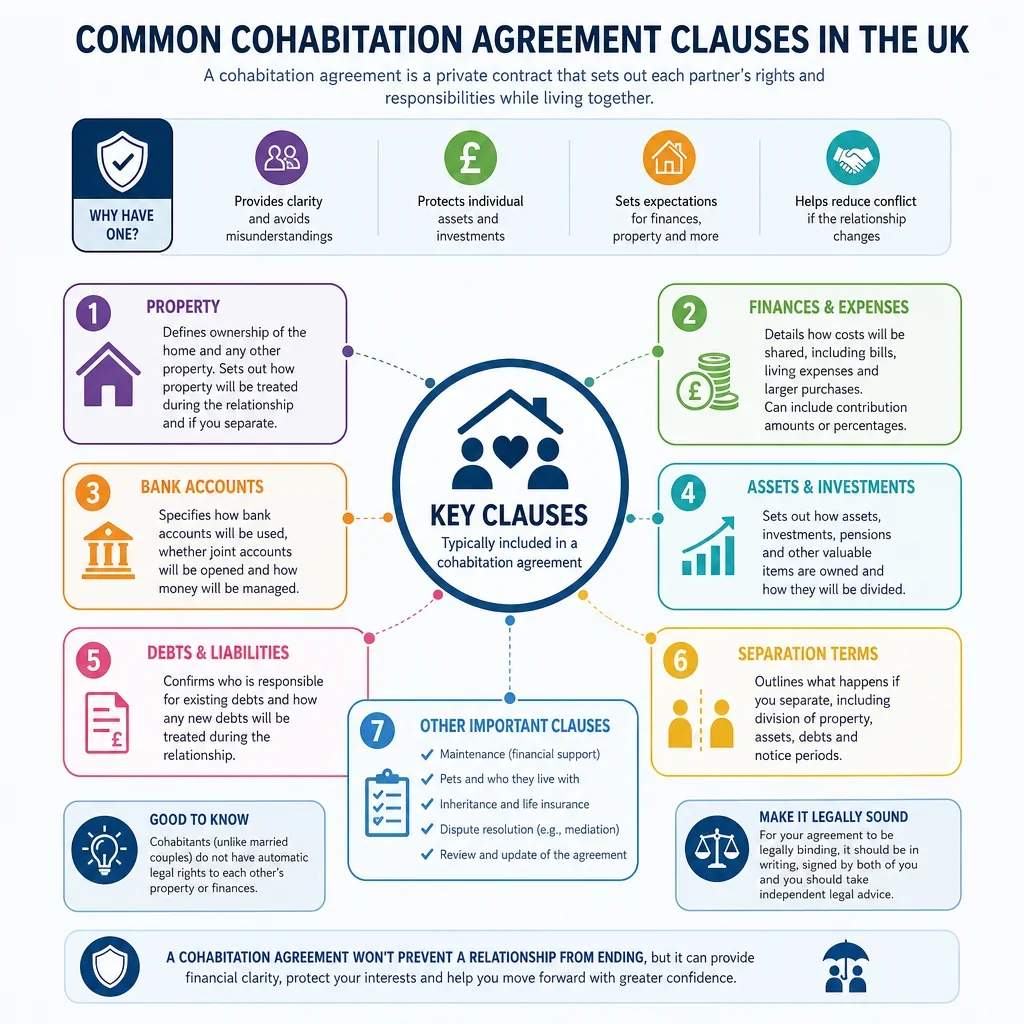
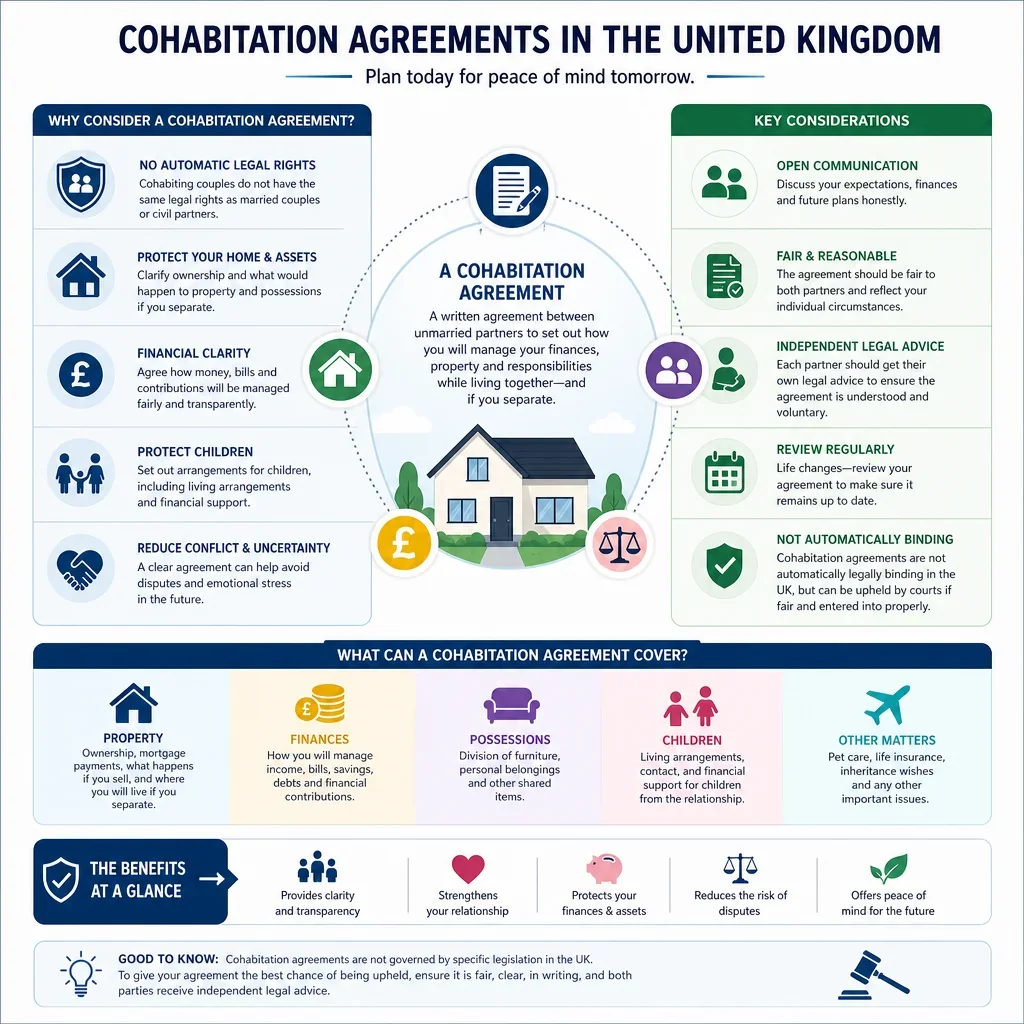
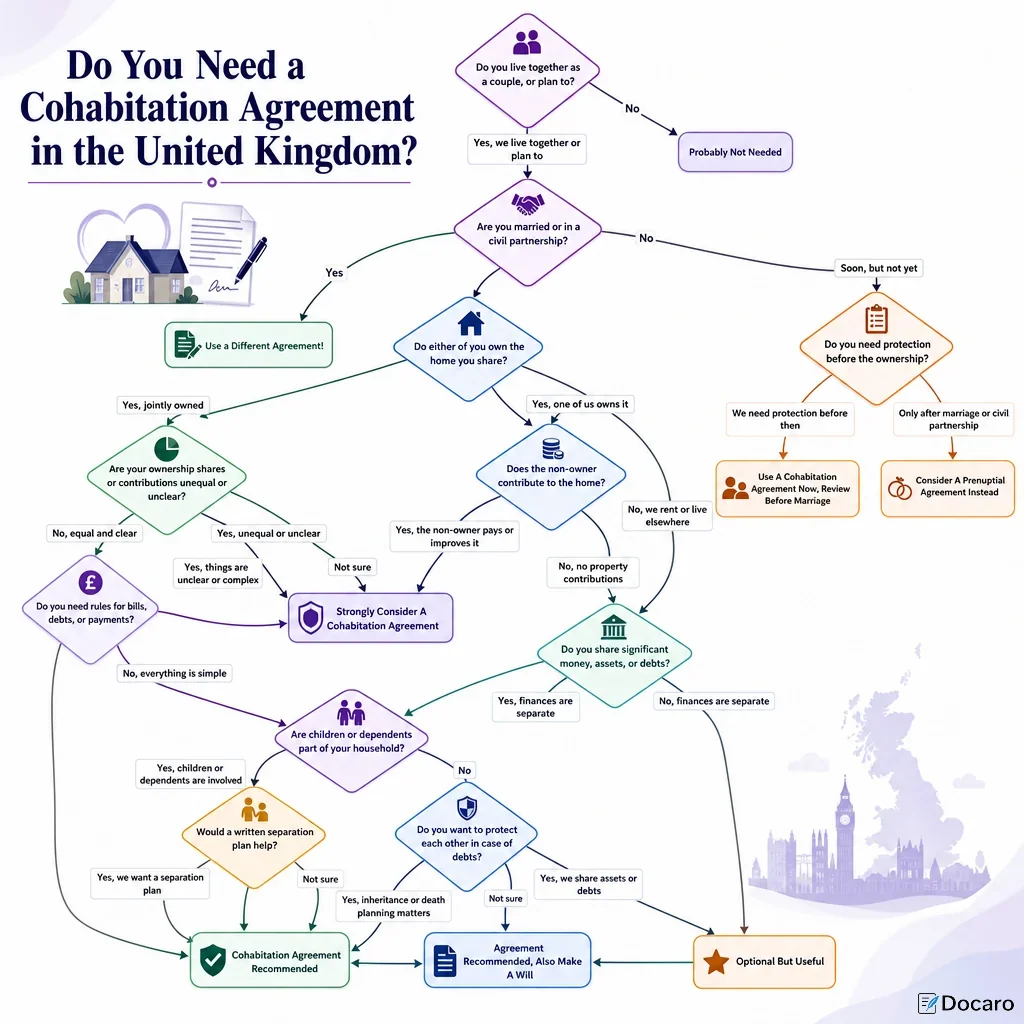
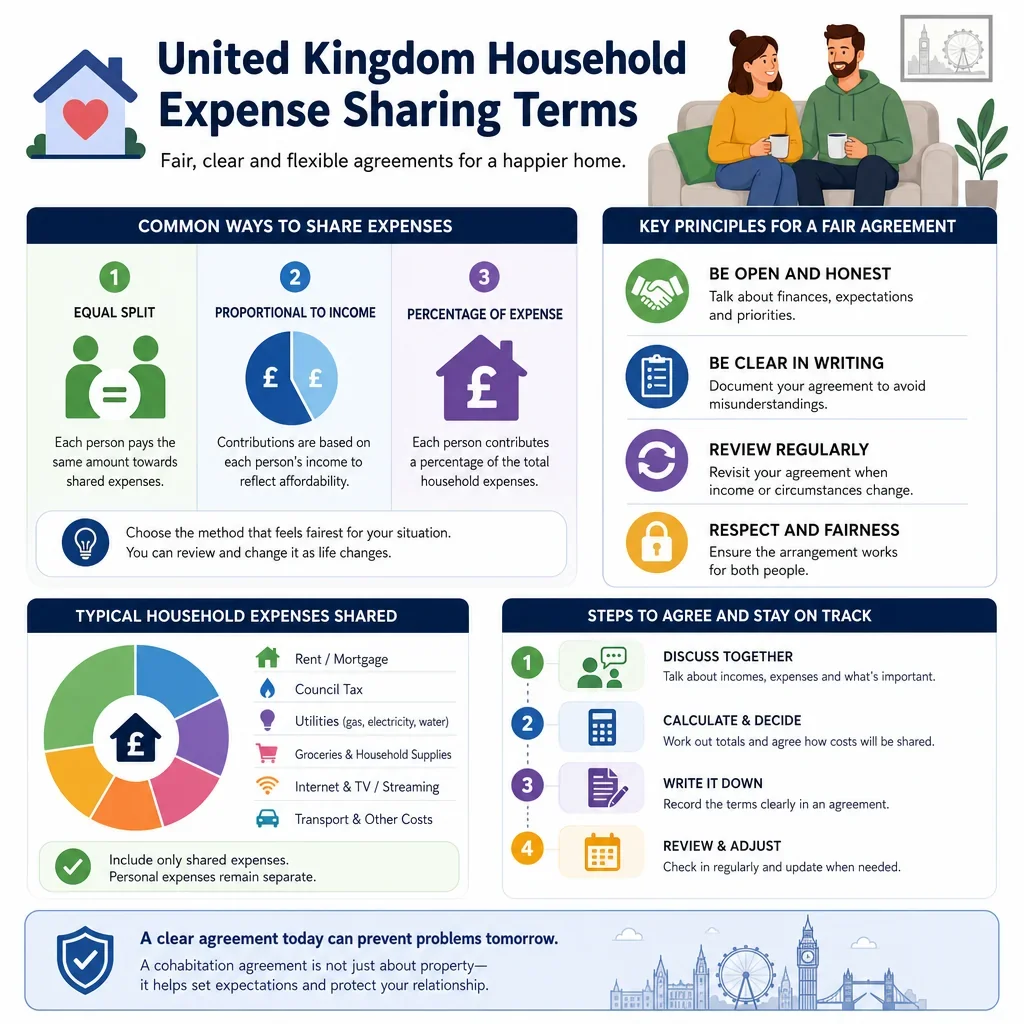
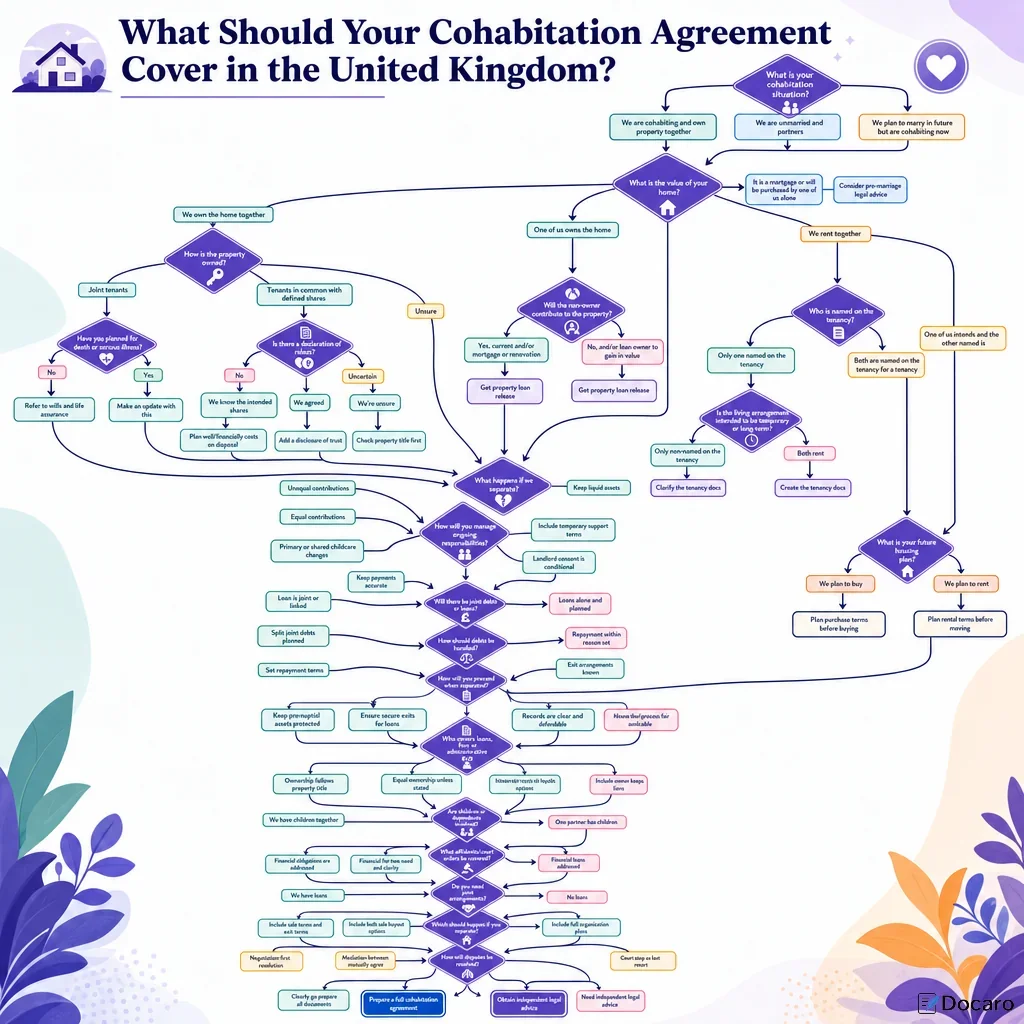
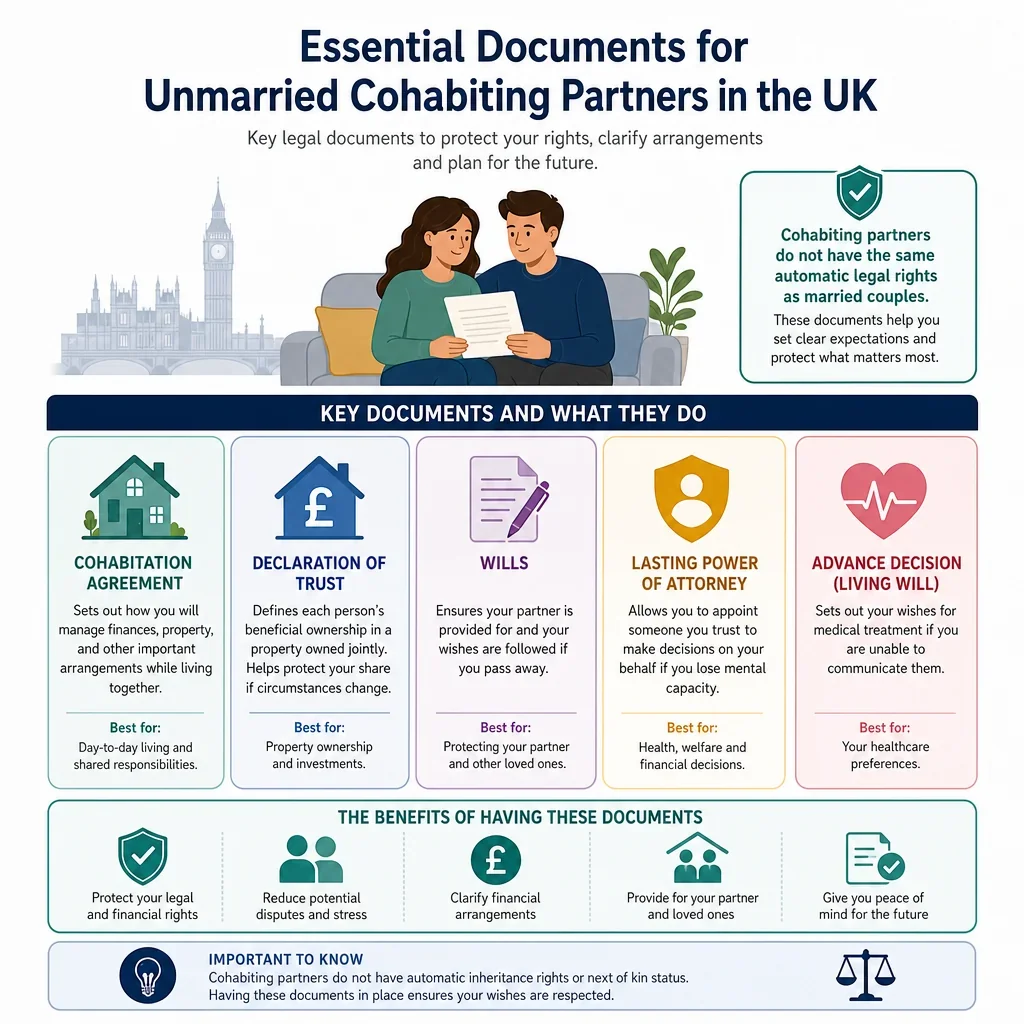
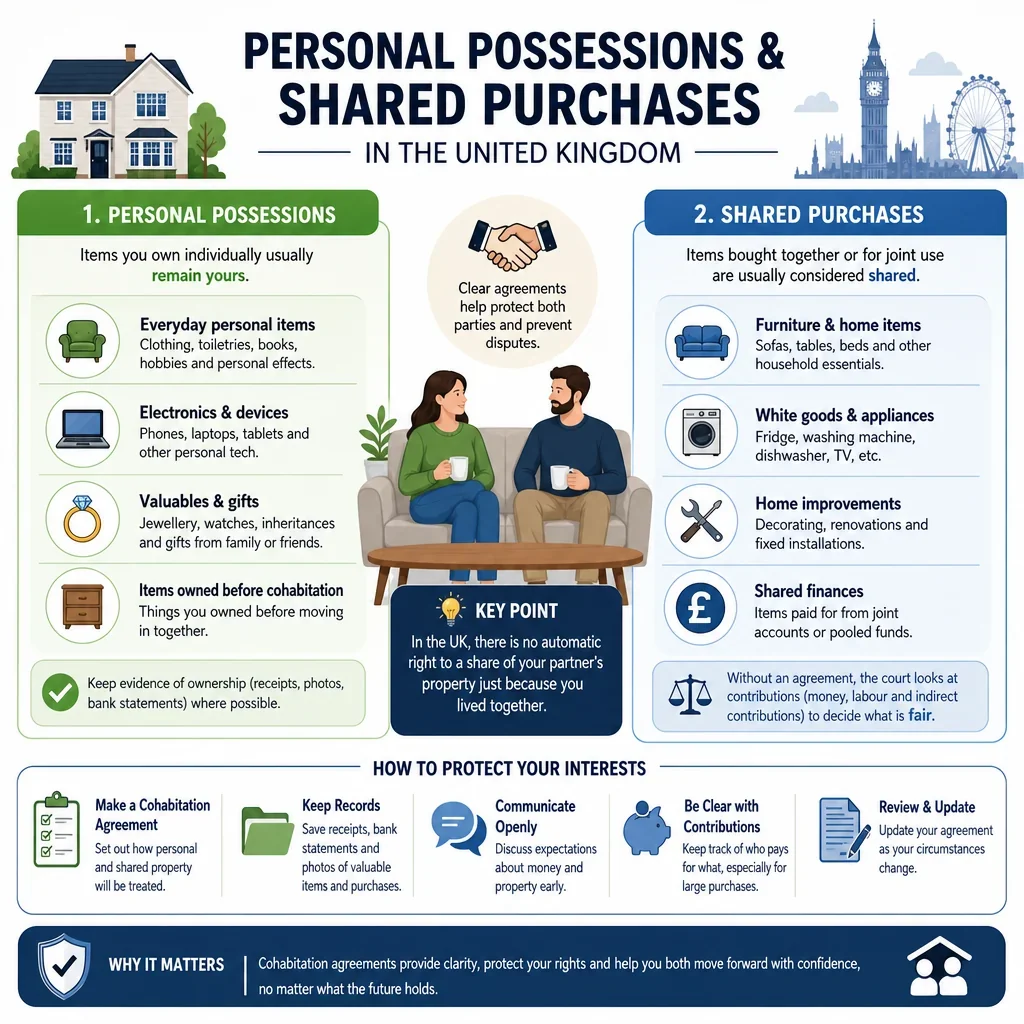
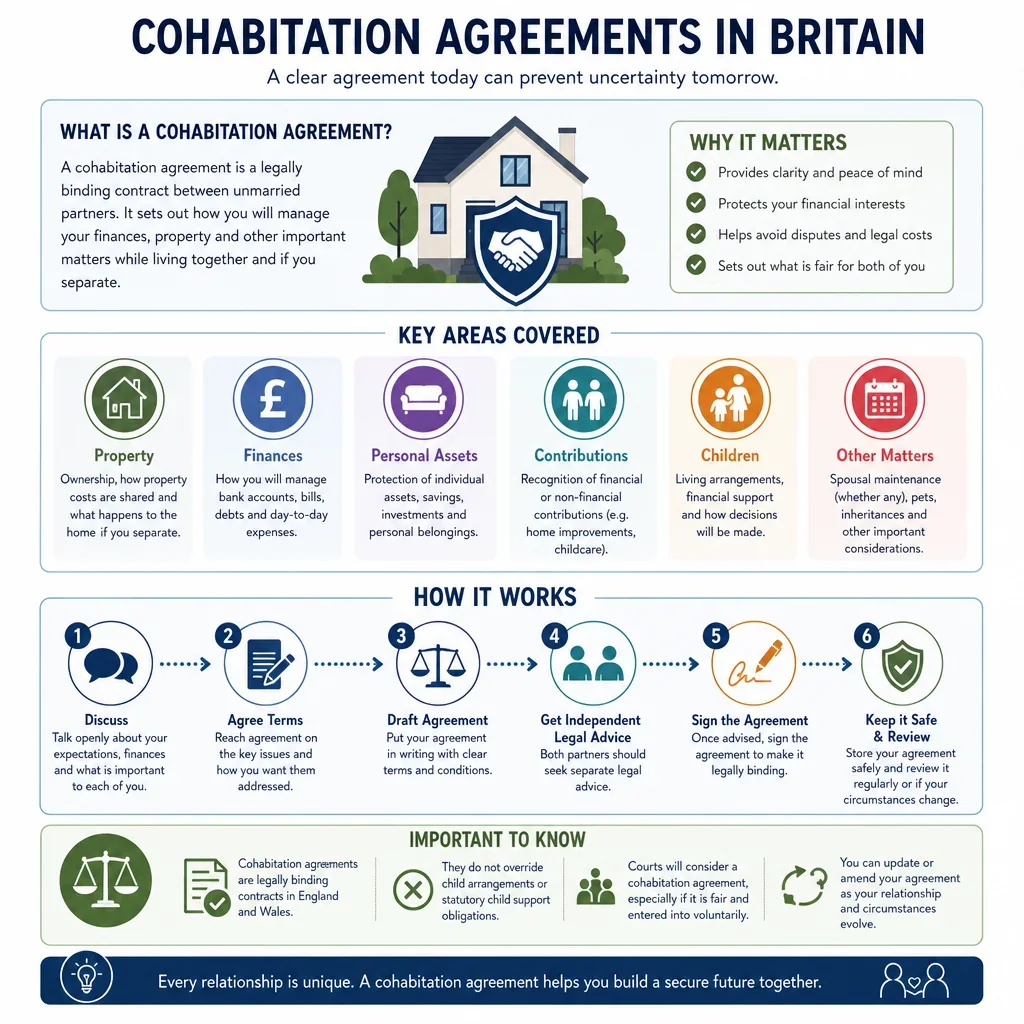
A clear cohabitation agreement usually depends on practical detail: who owns the home, who pays the mortgage or rent, how bills are shared, what happens to savings and debts, and how belongings are divided if the relationship ends. These questions help reduce uncertainty because, unlike married couples and civil partners, cohabiting partners do not automatically have the same financial claims on separation.
Why Is Home Ownership The Most Important Starting Point?
If one or both partners own the home, the agreement should reflect the legal title, any declaration of trust, mortgage responsibilities, and whether contributions to deposits, renovations or mortgage payments affect beneficial ownership. Land Registry title documents, mortgage offers and trust deeds are key evidence.
What Records Should Couples Keep?
Couples should keep bank statements, receipts, invoices, tenancy documents, mortgage statements and written records of transfers. Good records make the agreement easier to draft and can help avoid later disputes about whether payments were gifts, loans, shared expenses or ownership contributions.
When Should The Agreement Be Reviewed?
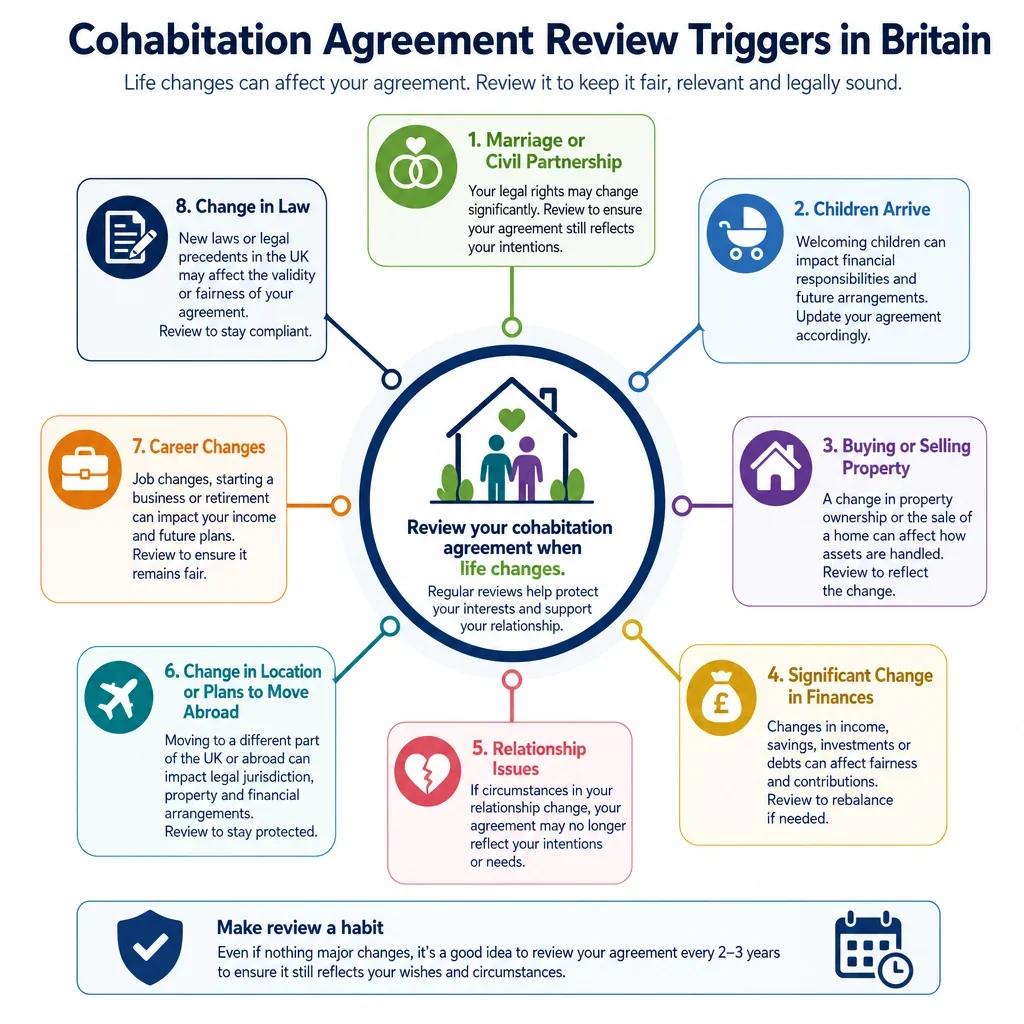
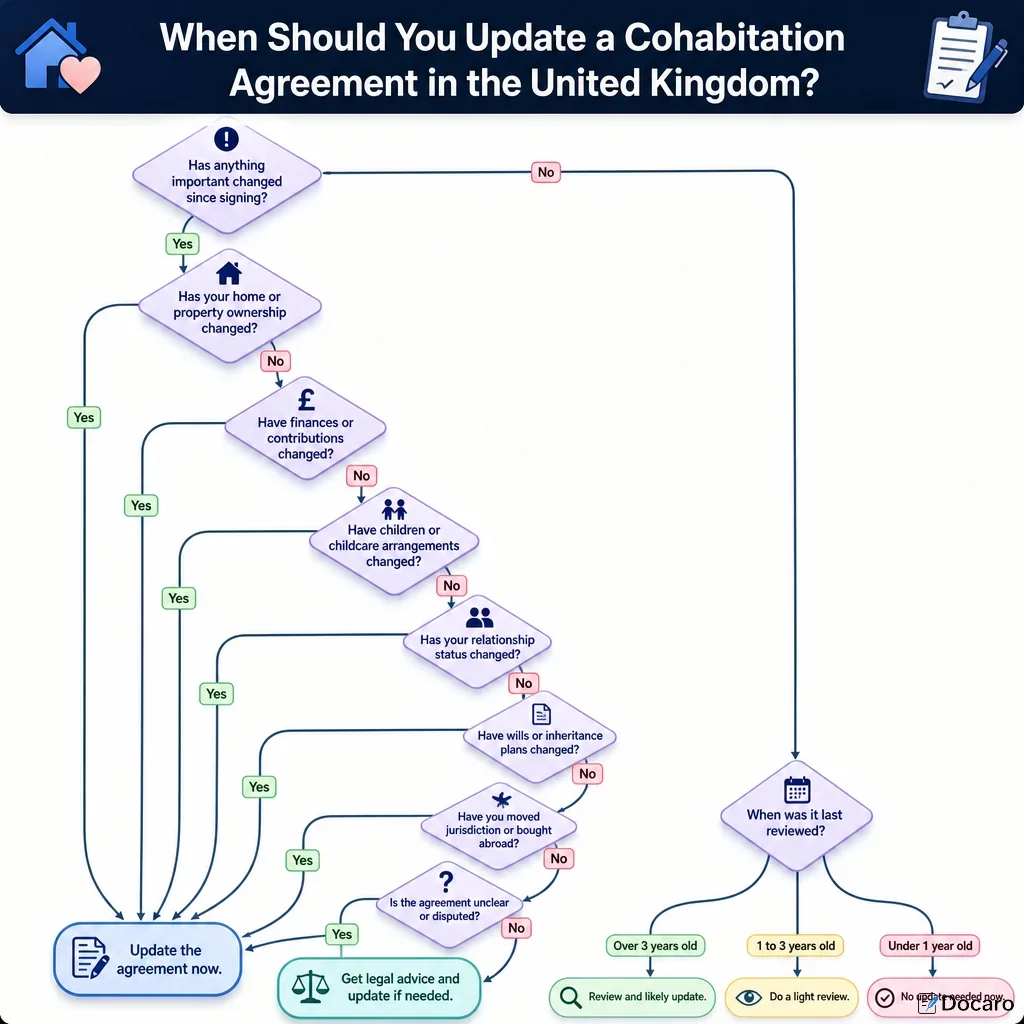
The agreement should be reviewed after major changes such as buying a property, having a child, receiving an inheritance, changing jobs, taking on debt, or making substantial home improvements. These events can make earlier assumptions outdated.
Why Should Each Partner Consider Independent Legal Advice?
Although a cohabitation agreement is a contract rather than a court order, its practical strength is improved where both partners give full financial disclosure, have time to consider the terms, and take independent legal advice before signing. This is especially important where property, unequal contributions or waivers of claims are involved.
FAQs
You Might Also Be Interested In