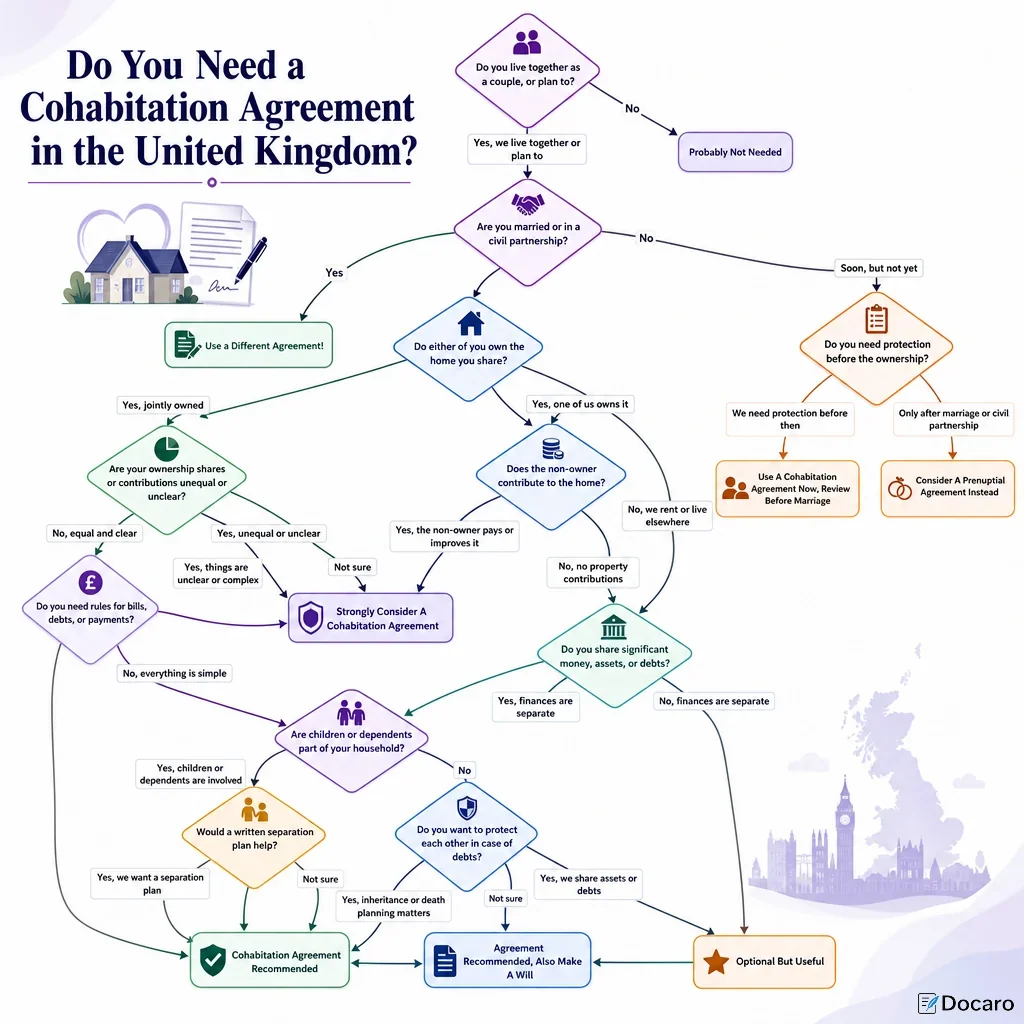
Do You Need A Cohabitation Agreement In The United Kingdom?
Do you live together as a couple, or plan to?
Do Unmarried Couples In The UK Need A Cohabitation Agreement?
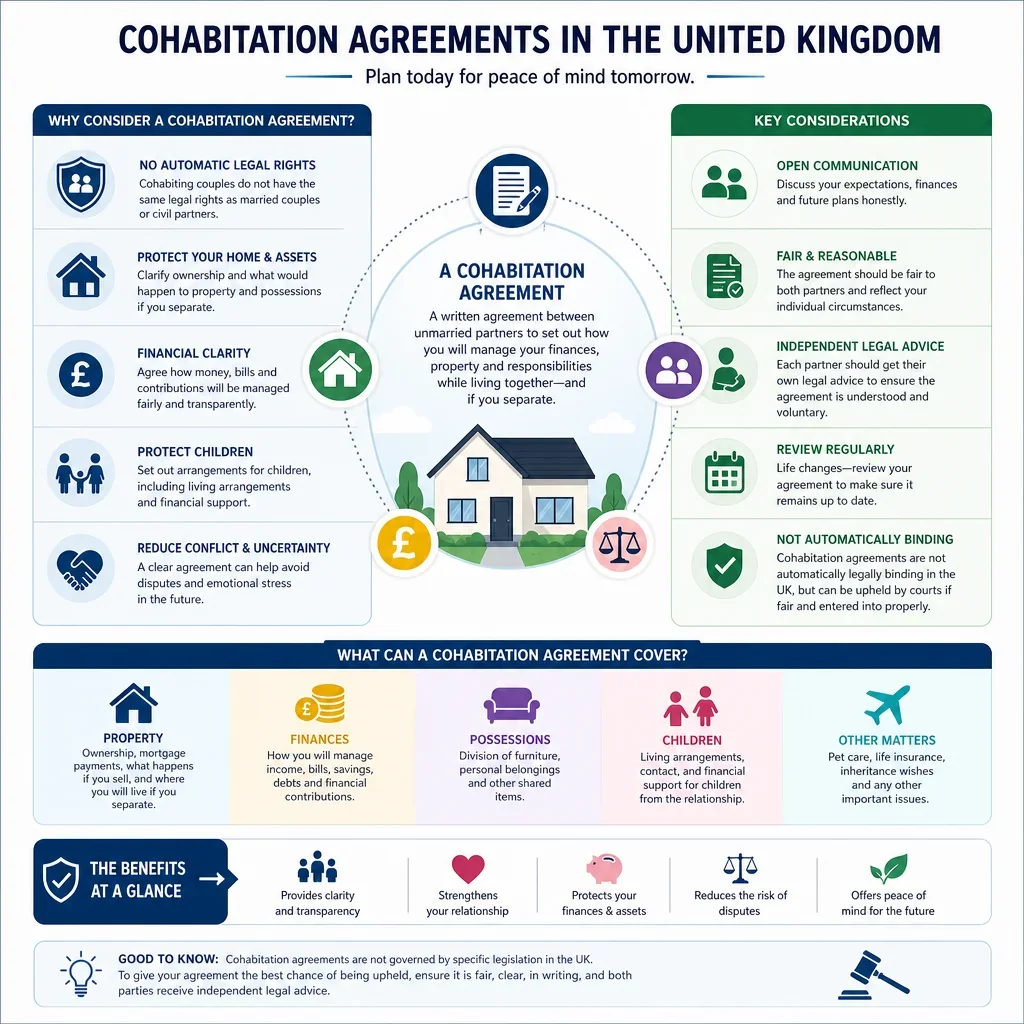
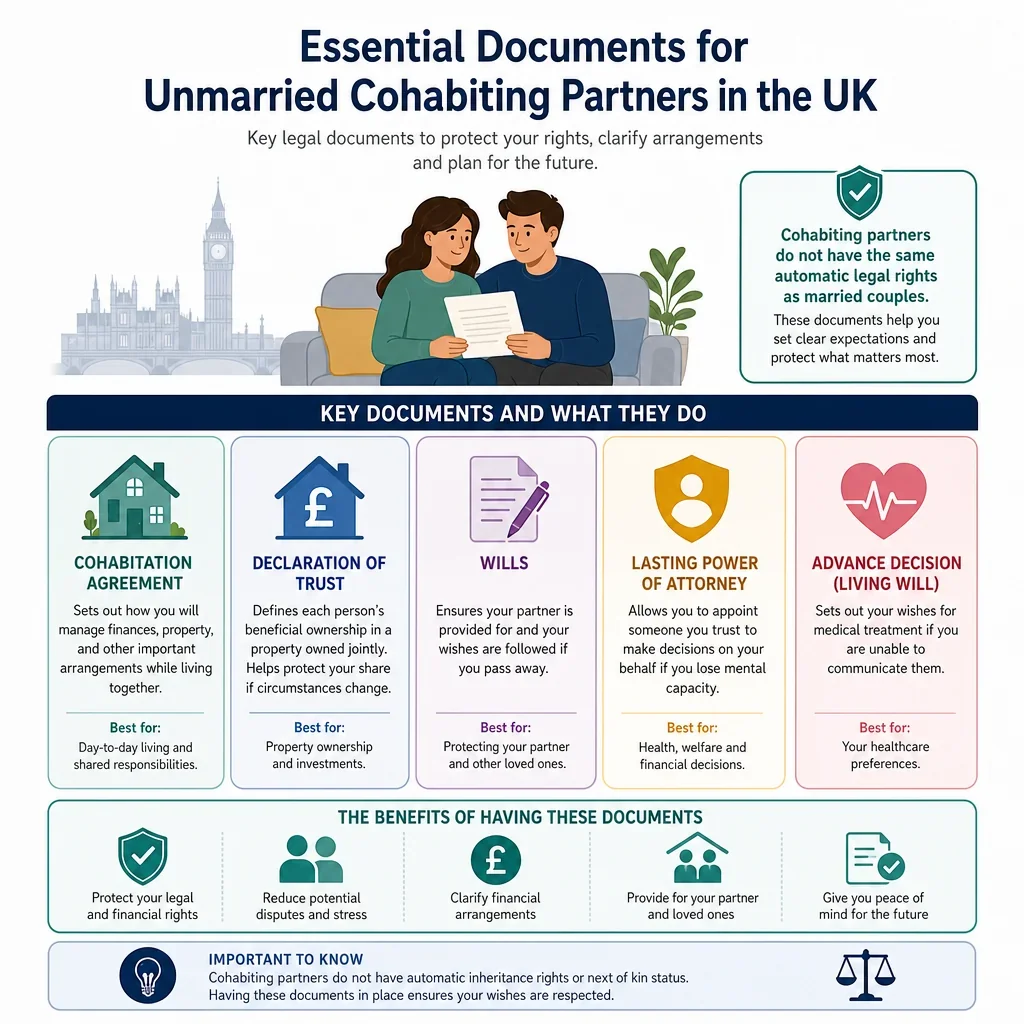
Making the right decision matters because unmarried couples in the United Kingdom do not automatically have the same rights as married couples or civil partners. The idea of a common law marriage is a common misunderstanding and does not give cohabiting partners automatic financial protection.
Why Can A Cohabitation Agreement Prevent Disputes?
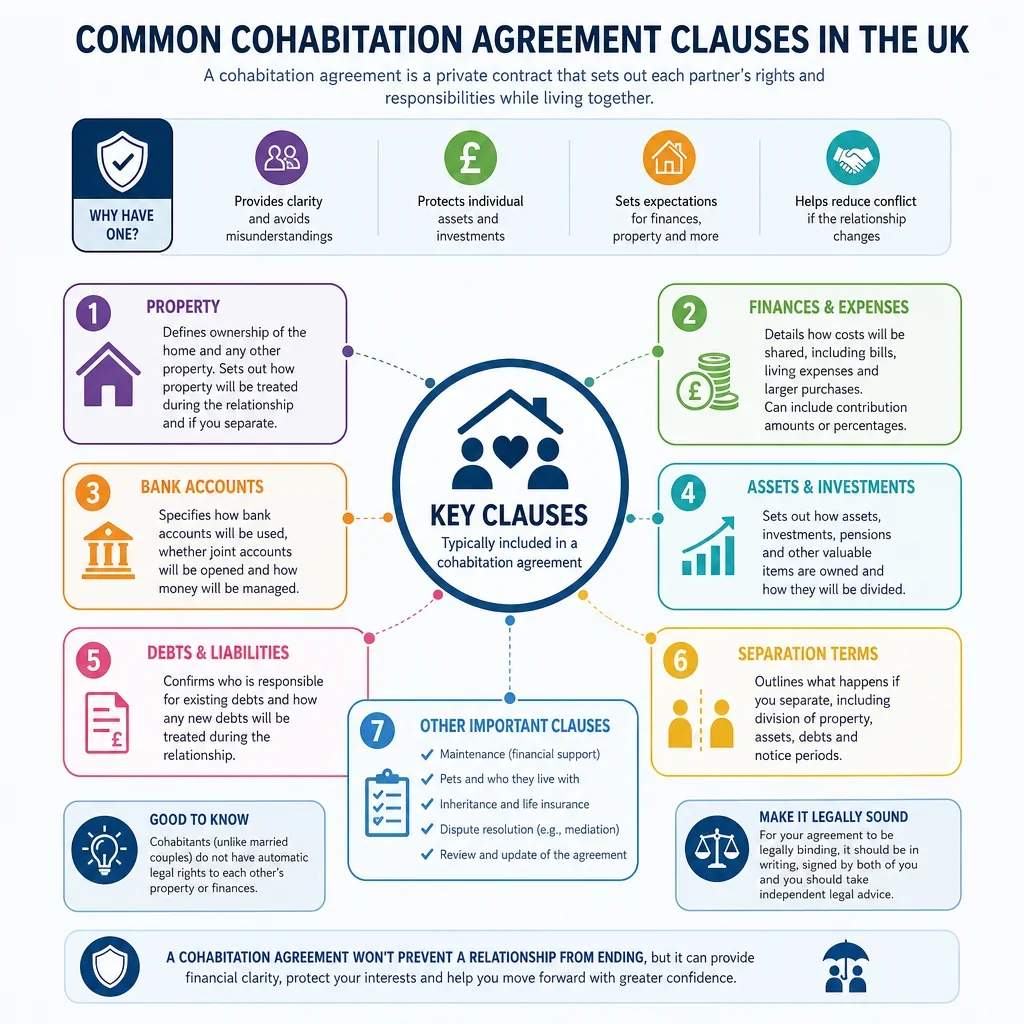
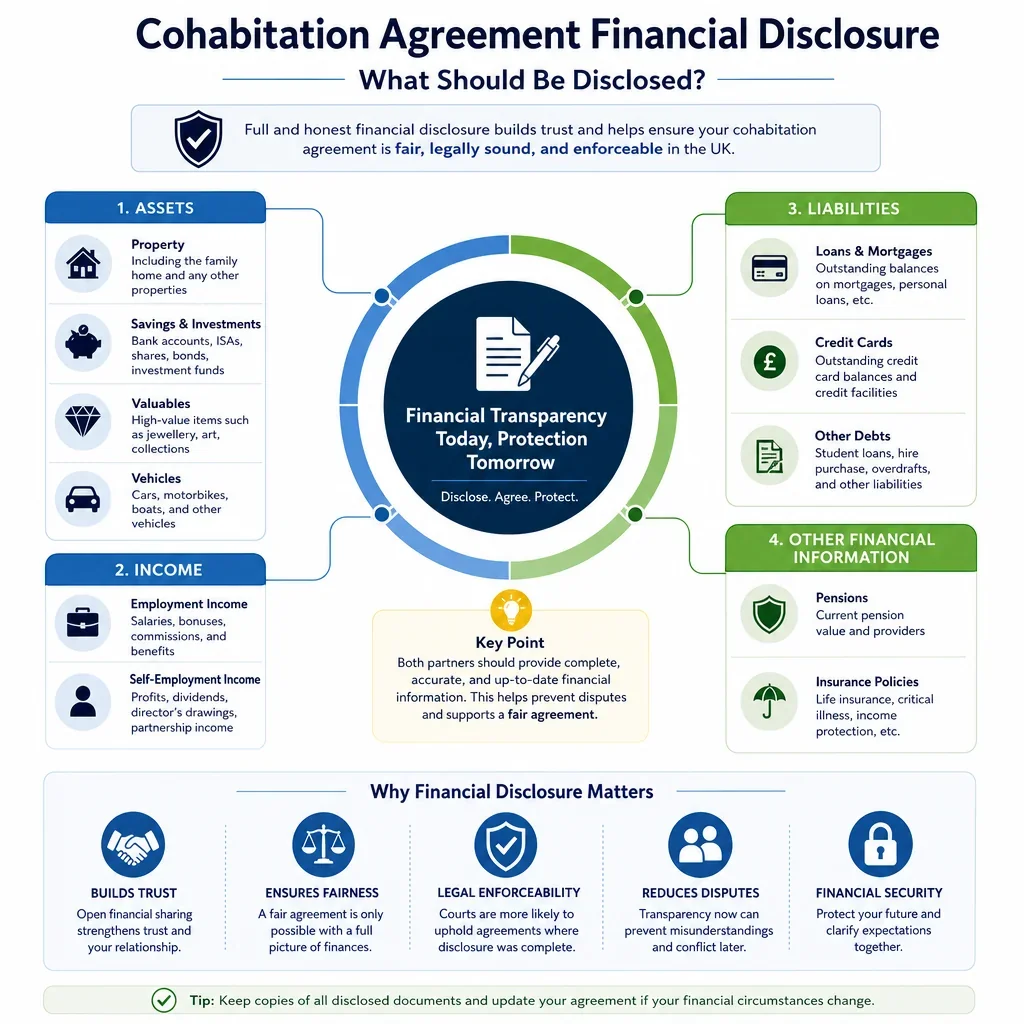
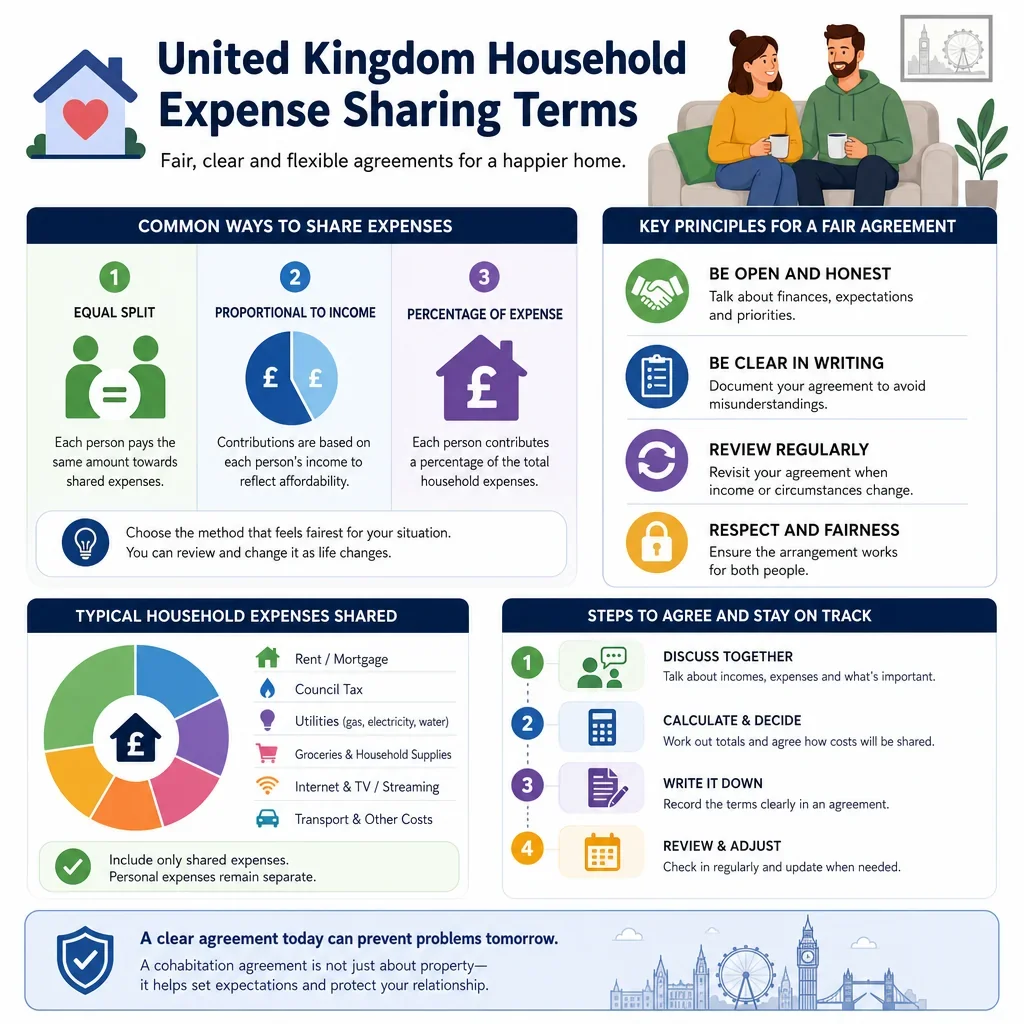
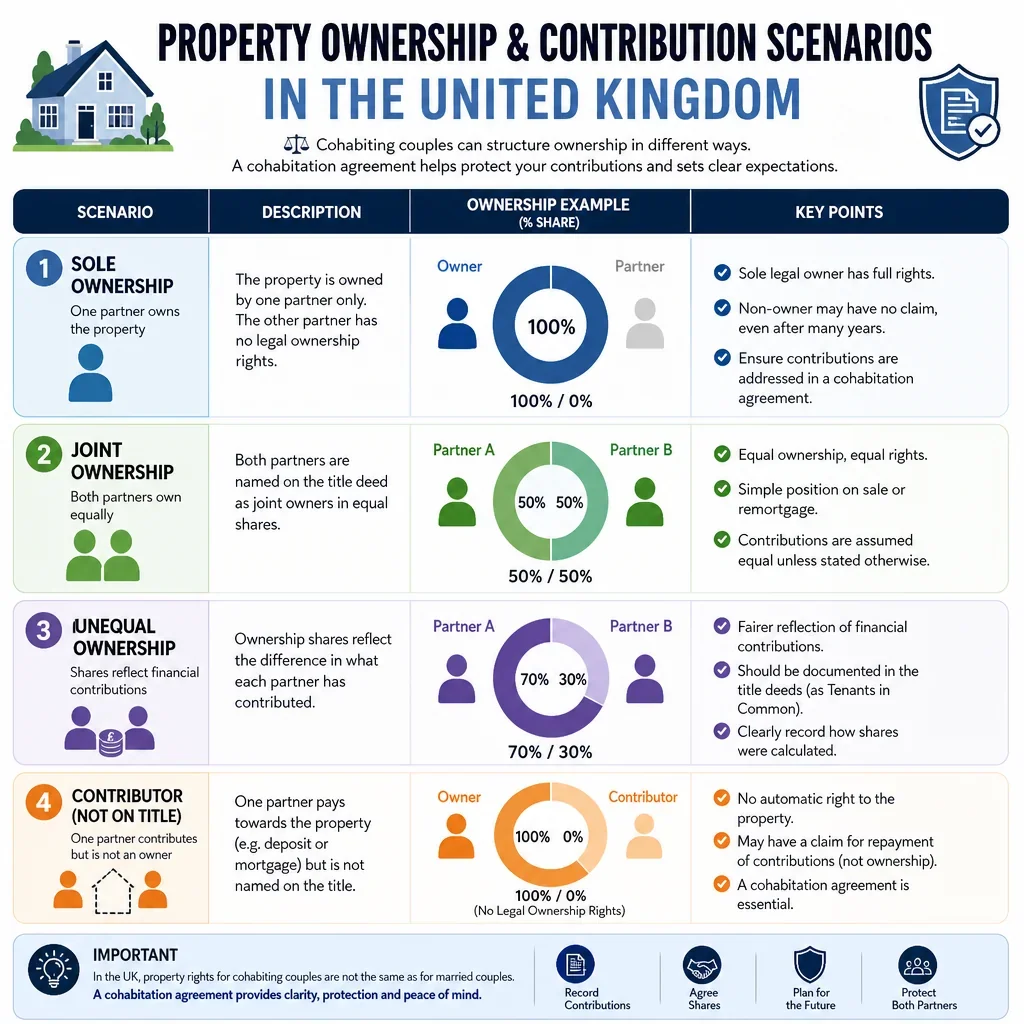
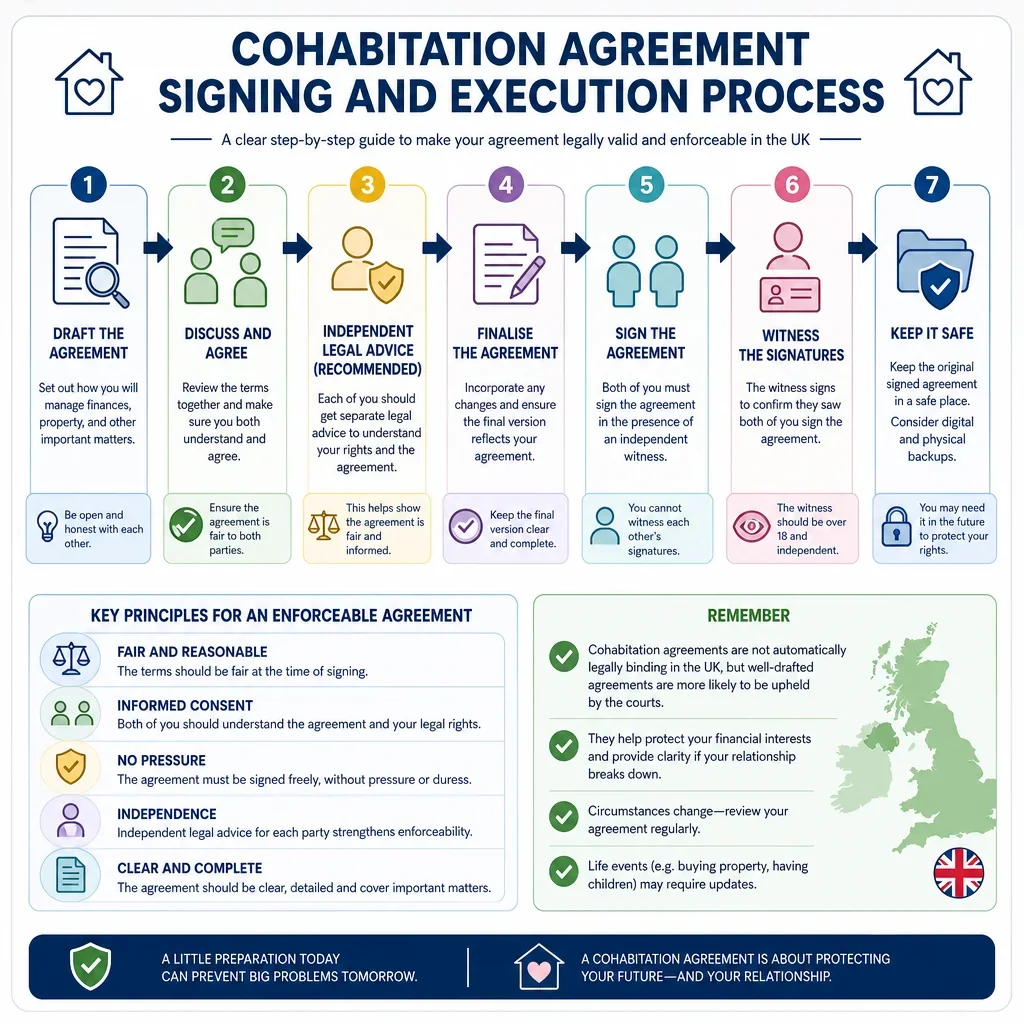
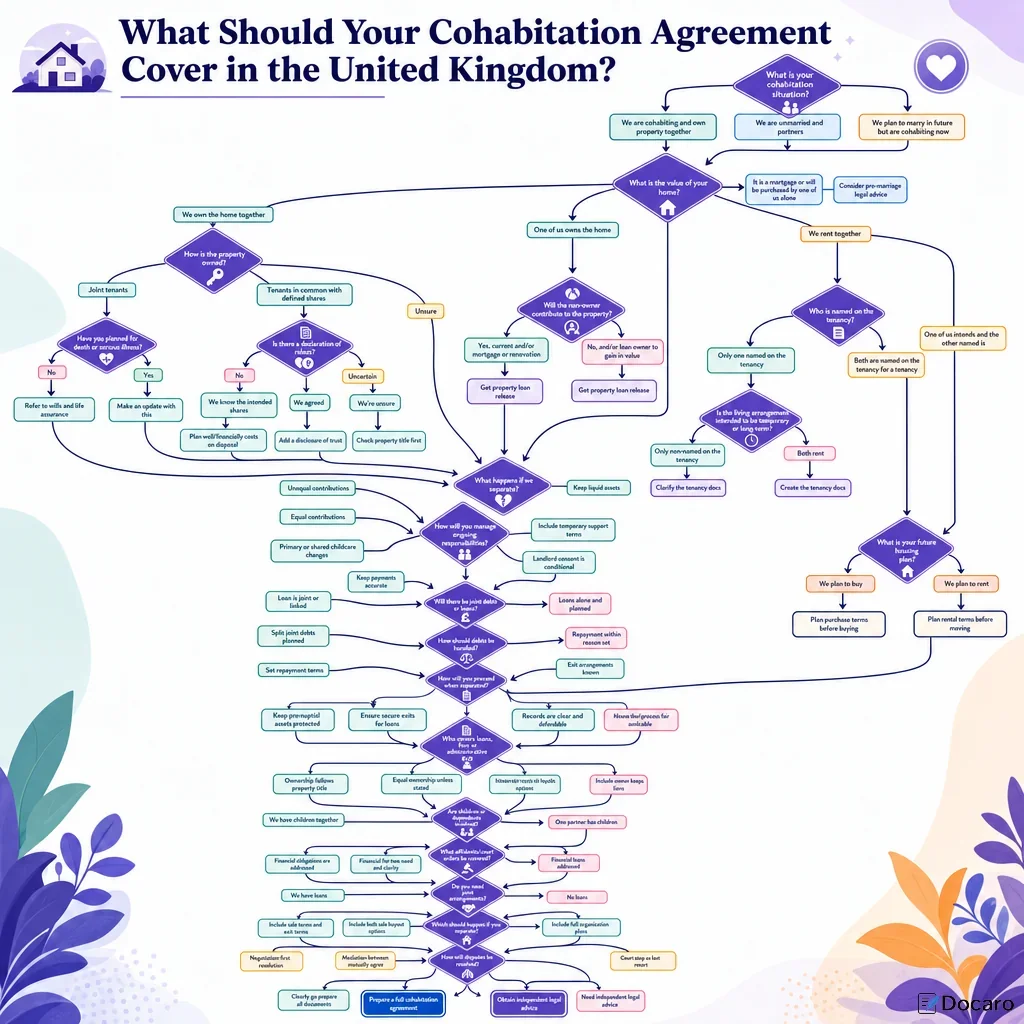
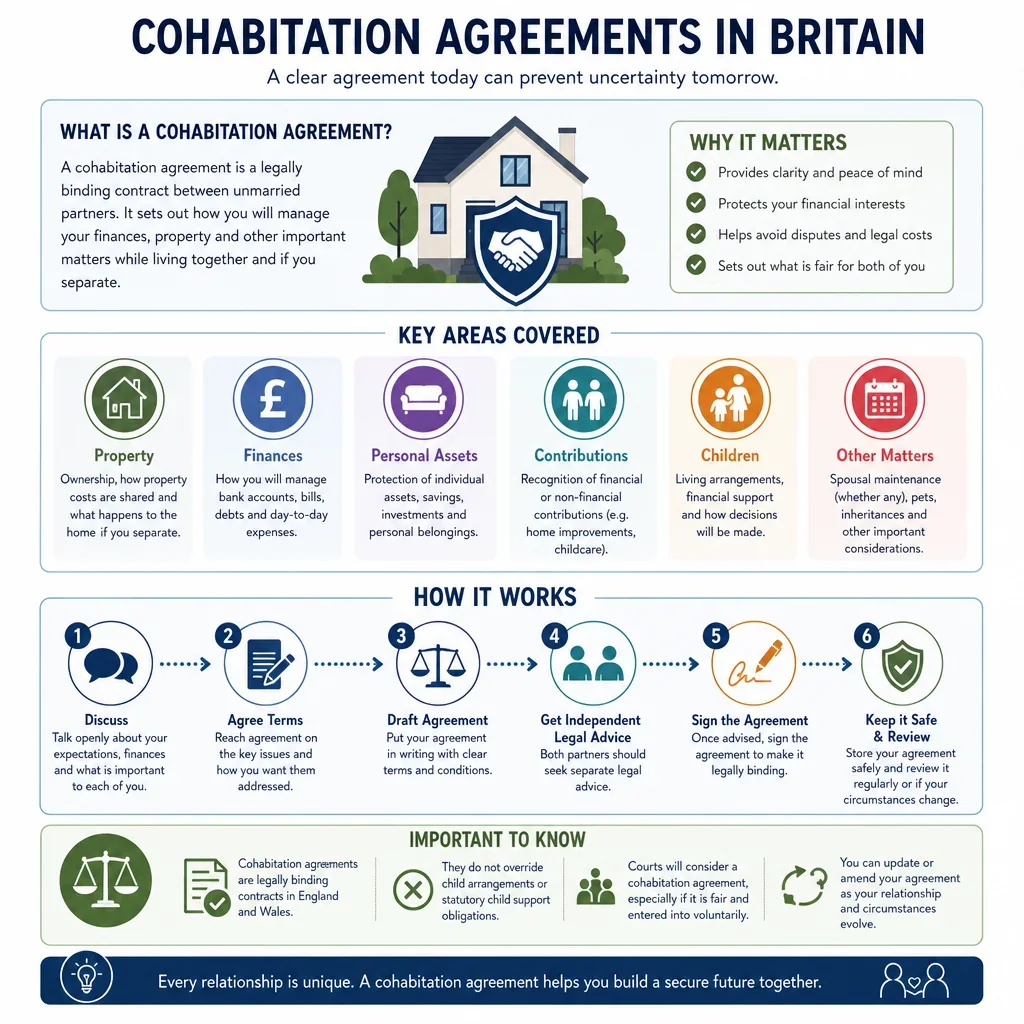
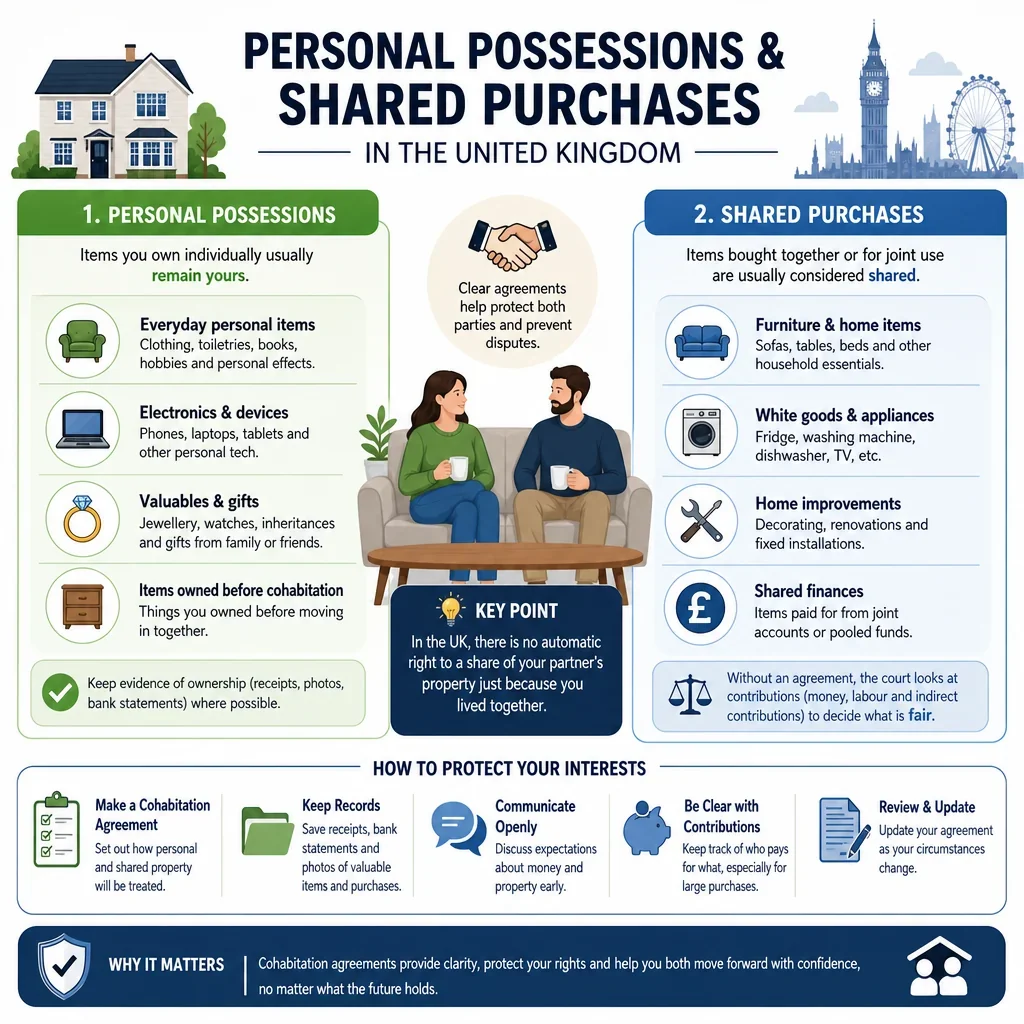
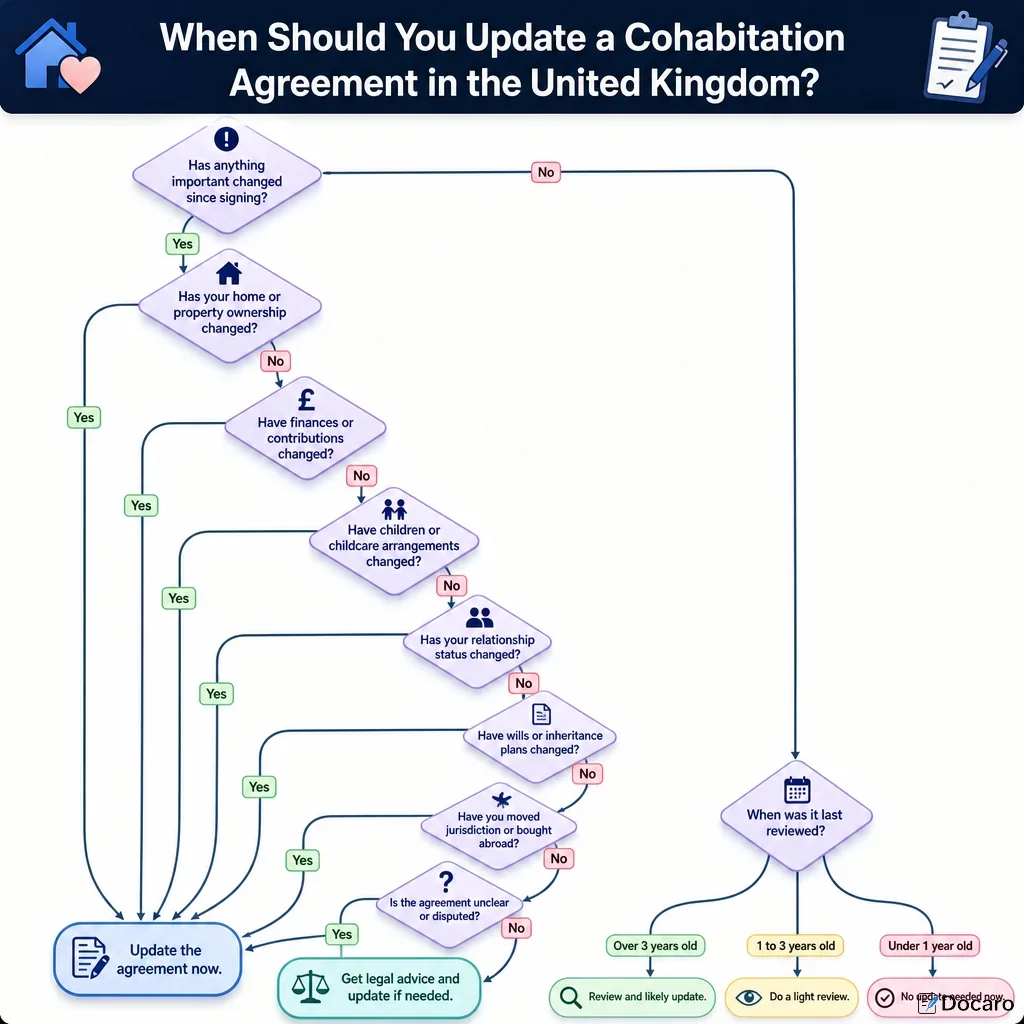
A cohabitation agreement can record how you own property, who pays household costs, what happens to savings or debts, and how you would deal with separation. This is especially important where one partner owns the home, where contributions are unequal, or where you are buying a property together.
What UK Issues Should Cohabiting Couples Think About?
- Property ownership: Your legal title and beneficial shares may not match your expectations.
- Mortgage and rent: A written plan can explain who pays and what happens if one person moves out.
- Children: Child maintenance rules still apply, but household arrangements can be made clearer.
- Death and inheritance: Unmarried partners should consider a will because intestacy rules may not protect them.
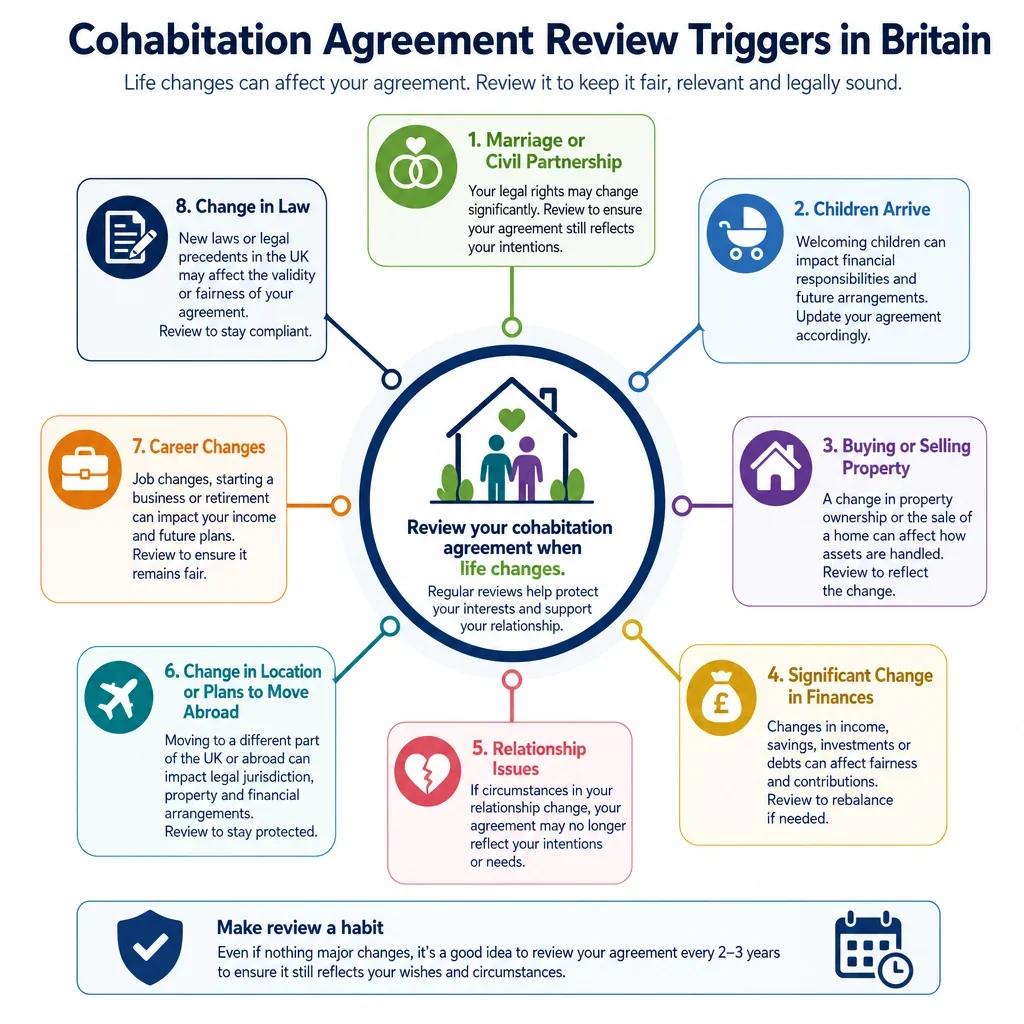
- Future marriage: If you plan to marry or enter a civil partnership, you may also need a prenuptial or pre-civil partnership agreement.
Where Can You Learn More About Cohabiting In The UK?
Useful high-trust guidance is available from Citizens Advice, GOV.UK on joint property ownership, and GOV.UK on making a will. If large assets, children, or property rights are involved, independent legal advice is strongly recommended.
FAQs
You Might Also Be Interested In