Cohabitation Living Arrangements And Agreement Considerations In The United Kingdom
Main Issue | Relevant Contributions | Possible Agreement Terms | Dispute Risk Level | Jurisdiction Relevance |
|---|---|---|---|---|
One partner owns the home | ||||
Non-owner may claim a beneficial interest if contributions and intentions are unclear. | Mortgage payments, lump sums, deposit help, major repairs, insurance, council tax. | State ownership, whether payments are rent, loan, gift or ownership contribution, and exit rights. | High | England and Wales |
Property rights depend on ownership, trust principles and evidence of shared intention. | Mortgage instalments, deposit payments, renovation costs, household bills, maintenance. | Confirm title ownership, repayment of contributions, occupation after separation and sale triggers. | High | Northern Ireland |
Former cohabitant may seek financial provision based on economic advantage or disadvantage. | Mortgage support, improvement works, childcare enabling payments, bills, capital contributions. | Record property intentions, reimbursement rules and waiver or management of cohabitant claims. | High | Scotland |
Regular payments may be disputed as rent, mortgage contribution or ownership investment. | Monthly payments to owner, utilities, groceries, council tax, broadband, service charges. | Label payments, exclude ownership rights if intended, set notice to leave and bill sharing. | High | UK-wide general relevance |
Deposit contribution may create repayment expectations or alleged ownership share. | Purchase deposit, legal fees, stamp duty or land tax, survey fees, mortgage fees. | State whether payment is gift, loan, unequal ownership contribution, or repayable on separation. | High | UK-wide general relevance |
Improvement spending can support a disputed beneficial interest or reimbursement claim. | Extensions, kitchen, bathroom, structural works, new roof, labour, planning costs. | Define consent, ownership effect, reimbursement formula, evidence needed and contractor liability. | High | England and Wales |
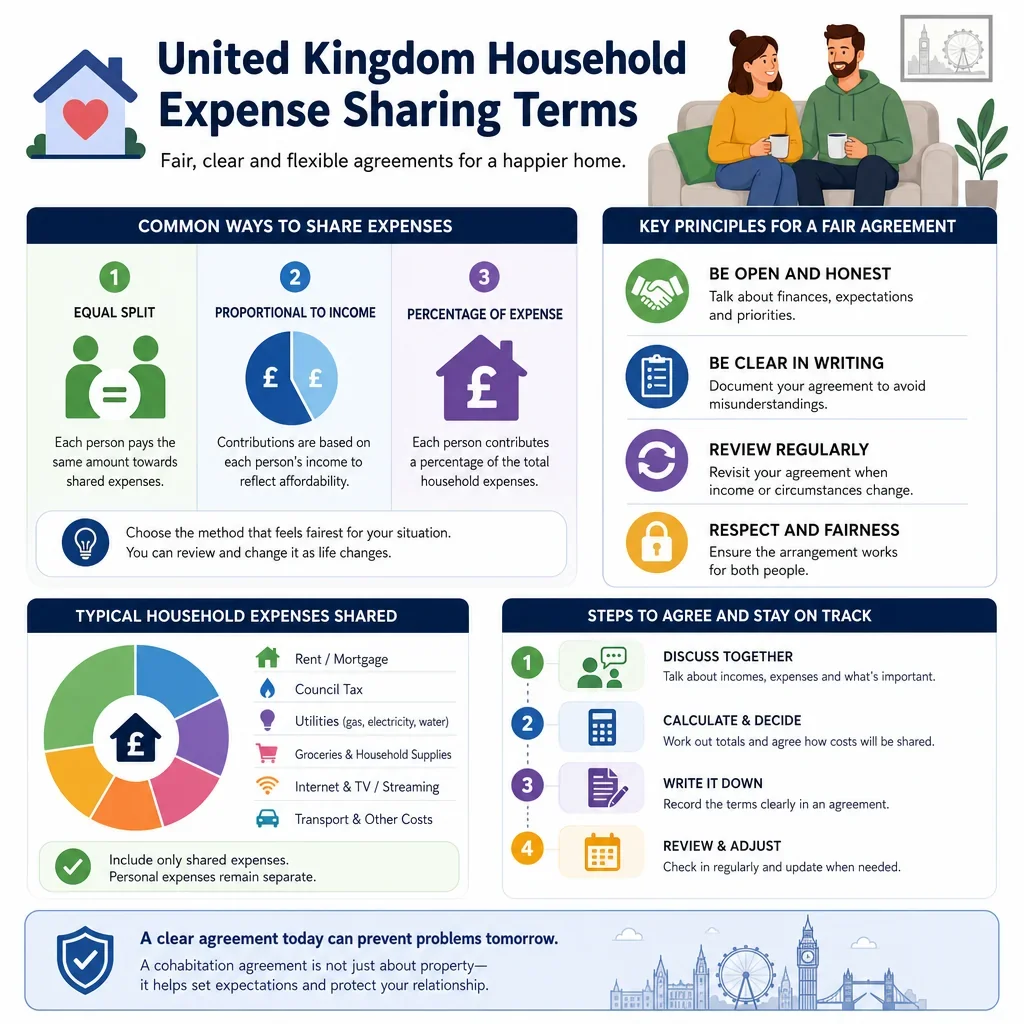
Running costs usually need clear separation from capital ownership contributions. | Utilities, council tax, food, streaming services, broadband, minor maintenance. | Confirm shared living expenses do not alter title or create repayment rights unless stated. | Medium | UK-wide general relevance |
Mortgage liability without matching title ownership can create serious imbalance and dispute. | Mortgage payments, arrears, fees, insurance, early repayment charges, remortgage costs. | Align title and debt, indemnities, buy-out rights and lender consent requirements. | High | UK-wide general relevance |
Both partners own the home | ||||
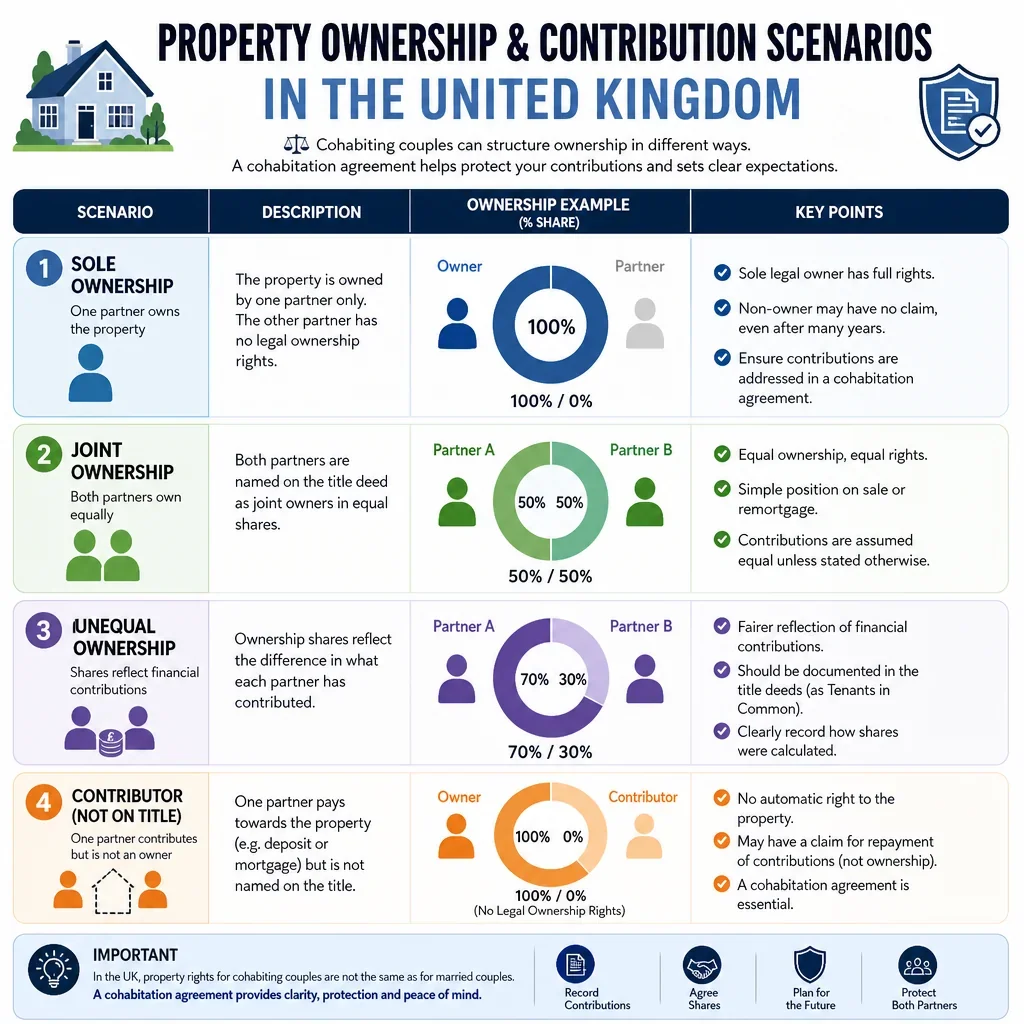
Joint tenants normally own the whole together and survivorship may override unequal contributions. | Purchase deposit, mortgage, repairs, service charges, insurance, overpayments. | Confirm joint tenancy, severance rights, sale process, mortgage responsibility and occupation. | High | England and Wales |
Unequal shares must be documented or sale proceeds may be disputed. | Unequal deposits, mortgage split, improvement costs, stamp duty, legal fees. | State percentage shares, declaration of trust, sale proceeds waterfall and valuation method. | High | England and Wales |
Equal title may conflict with unequal deposit expectations. | Deposit from savings, family gift, inheritance, mortgage arrangement fee, conveyancing costs. | Ring-fence initial deposits, define equity split and record family gift or loan treatment. | High | UK-wide general relevance |
Unequal mortgage payments may not automatically change ownership shares. | Monthly mortgage, overpayments, arrears payments, endowment or repayment vehicle payments. | Specify whether excess payments adjust shares, create a debt, or are non-repayable. | High | UK-wide general relevance |
Temporary payment imbalance can become a dispute about debt or equity. | Mortgage shortfall cover, arrears, bills, insurance, service charges, ground rent. | Set hardship period, repayment plan, interest, equity effect and review dates. | Medium | UK-wide general relevance |
One partner may want sale while the other wants to stay. | Mortgage, occupation costs, estate agent fees, legal sale costs, repairs before sale. | Set sale triggers, buy-out timetable, valuation process and interim occupation payments. | High | England and Wales |
Property shares and statutory cohabitant claims may both be relevant on separation. | Deposit, mortgage, renovations, childcare-related economic disadvantage, household bills. | Record title shares, economic advantage claims, buy-out terms and deadlines for claims. | High | Scotland |
Joint tenancy rental | ||||
Joint tenants are commonly liable for all rent and breaches, not just their share. | Rent, deposit, utilities, council tax, damage costs, cleaning charges. | Agree rent shares, arrears indemnity, deposit split, bill responsibility and damage allocation. | High | England and Wales |
Leaving a joint tenancy may require coordination and can affect both tenants' liability. | Rent, deposit, shared bills, council tax, repairs caused by tenants, removal costs. | Set notice procedure, replacement tenant rules, deposit return split and arrears responsibility. | High | Scotland |
A joint tenant may remain responsible for rent if the other leaves or stops paying. | Rent, deposit, rates where applicable, utilities, damage, replacement keys. | Agree payment shares, leaving process, deposit deductions and indemnity for unpaid rent. | High | Northern Ireland |
Deposit return can be disputed if ownership shares and deductions are unclear. | Tenancy deposit, holding deposit, cleaning, inventory deductions, damage charges. | Record each deposit share, lead tenant duties and how deductions are allocated. | Medium | England and Wales |
Early departure may not end rent liability or release the remaining partner. | Rent until replacement, reletting fees where lawful, utilities, removal costs, deposit deductions. | Set early exit notice, replacement tenant cooperation and reimbursement for extra rent. | High | UK-wide general relevance |
Equal legal liability may conflict with unequal use of rooms or parking. | Rent, parking permit, storage space, utilities, furnishings, broadband. | Set rent proportions, exclusive use areas, parking rights and review on room changes. | Medium | UK-wide general relevance |
One partner is the sole tenant | ||||
Non-tenant may have limited rights and sole tenant remains liable to landlord. | Rent contribution, bills, deposit contribution, furniture, cleaning, damage. | Confirm no tenancy transfer, payment basis, notice to leave and landlord consent compliance. | High | England and Wales |
Taking rent from partner may breach tenancy terms or create subletting issues. | Rent paid to tenant, bills, deposit, furniture, shared subscriptions. | Require landlord consent where needed and define licence, rent contribution and termination notice. | High | UK-wide general relevance |
Non-tenant may need to leave unless legal occupation rights apply. | Rent share, bills, moving costs, storage, replacement furniture, deposit contribution. | Set separation notice, moving-out timetable, possessions collection and repayment of deposits. | High | England and Wales |
Sole tenant has primary tenancy rights partner's ability to remain may be limited. | Rent share, deposit, utilities, council tax, furnishings, moving expenses. | Record permission to occupy, payment shares, departure notice and deposit reimbursement. | Medium | Scotland |
The partner not named on the tenancy may have weaker rights to stay. | Rent, deposit contribution, rates contribution, utilities, repairs caused by occupiers. | Clarify occupation status, payment terms, notice to leave and repayment of contributions. | Medium | Northern Ireland |
Deposit may be protected in tenant's name despite contribution by non-tenant. | Security deposit, holding deposit, inventory charges, cleaning or damage deductions. | Record contributor, repayment trigger, deduction allocation and evidence of deposit protection. | Medium | England and Wales |
Living with family | ||||
Occupation may be informal and dependent on family consent. | Housekeeping, food, utilities, council tax contribution, childcare, minor repairs. | Define payments as household contribution, no tenancy unless agreed, notice to leave. | Medium | UK-wide general relevance |
Informal rent may create confusion over licence, lodging or family contribution. | Weekly rent, bills, food, room furnishings, repairs, internet. | Record payment purpose, notice period, guest rules and no property interest in family home. | Medium | England and Wales |
Money spent on relatives' property may be disputed as gift, loan or investment. | Loft conversion, extension, bathroom, accessibility works, labour, planning fees. | Use written loan or contribution terms, repayment events and no ownership unless agreed. | High | UK-wide general relevance |
Savings, gifts and family loans for future purchase may be poorly evidenced. | Savings transfers, family gifts, loans, household contributions, future deposit payments. | Track savings ownership, family loan terms, gift evidence and future deposit shares. | Medium | UK-wide general relevance |
Unpaid care or reduced work may create economic disadvantage concerns, especially in Scotland. | Unpaid care, childcare, lost earnings, bills, transport, food, household labour. | Record non-financial contributions, support expectations and compensation or no-compensation terms. | Medium | Scotland |
Extra occupiers may affect tenancy terms, benefits, council tax or landlord permission. | Rent contribution, service charges, utilities, council tax, household expenses. | Require compliance with tenancy, benefit disclosure, payment records and leaving process. | Medium | England and Wales |
Temporary shared accommodation | ||||
Short stays can create disputes over booking liability and cancellation costs. | Booking fee, deposit, nightly charges, cancellation fees, damages, parking. | State payer, cost split, cancellation liability, damage responsibility and checkout obligations. | Low | UK-wide general relevance |
Platform booking terms may bind only the account holder. | Booking payment, cleaning fee, security deposit, service fee, damages, extra guest fees. | Allocate platform charges, damage claims, refund rights and responsibility for rule breaches. | Medium | UK-wide general relevance |
Informal occupation can blur guest, lodger and tenant status. | Short-term rent, bills, deposit, cleaning, household items, key replacement. | Set fixed end date, payment amount, no continuing right and belongings collection. | Medium | England and Wales |
Interim costs may affect future deposit savings and reimbursement expectations. | Short rent, storage, removals, bridging costs, mortgage fees, survey costs. | Track interim expenses separately from future purchase contributions and deposit shares. | Medium | UK-wide general relevance |
Emergency costs and possession storage can cause immediate disputes after breakup. | Short-term rent, hotel costs, storage, removals, pet care, utilities overlap. | Set who pays interim housing, storage, access to possessions and reimbursement timing. | Medium | UK-wide general relevance |
Pet damage, deposits and care costs may be charged to one booking holder. | Pet deposit, cleaning, damage, insurance, boarding, food, vet costs. | Allocate pet charges, damage liability, care duties and post-separation pet arrangements. | Low | UK-wide general relevance |
Both partners own the home | ||||
Service charges, ground rent and major works can create unequal payment disputes. | Service charges, ground rent, reserve fund, major works, insurance, managing agent fees. | Set payment shares, arrears responsibility, major works approval and sale deduction rules. | Medium | England and Wales |
One partner owns the home | ||||
Leasehold payments may be confused with capital contributions or ordinary occupation costs. | Service charge, ground rent, major works bill, insurance, mortgage, utilities. | State whether leasehold payments create reimbursement, rent, or no ownership interest. | Medium | England and Wales |
One partner may own a share while both contribute to rent and mortgage costs. | Mortgage, rent on unsold share, service charge, staircasing costs, deposit. | Define contribution effect, staircasing ownership, resale proceeds and housing provider restrictions. | High | England and Wales |
Housing needs of children may affect practical separation planning but not automatic ownership. | Child-related household costs, bills, furnishings, repairs, mortgage support, childcare. | Set occupation period after separation, child-related costs and no change to title unless agreed. | High | UK-wide general relevance |
Joint tenancy rental | ||||
Council tax liability may not match the couple's private bill-sharing agreement. | Council tax, rent, utilities, single person discount repayment, arrears. | Allocate council tax, require discount updates and indemnify for undisclosed occupancy changes. | Medium | England and Wales |
One partner is the sole tenant | ||||
Moving in may remove single person discount and create arrears if not reported. | Council tax, discount repayment, rent contribution, utilities, penalties. | Require disclosure of move-in date and split any increased council tax liability. | Medium | England and Wales |
Both partners own the home | ||||
Family-funded deposits can be disputed as gift to both, gift to one, or loan. | Parental deposit, family loan, gifted deposit declaration, legal fees, mortgage payments. | Identify donor, beneficiary, loan terms, repayment priority and ownership share impact. | High | UK-wide general relevance |
One partner owns the home | ||||
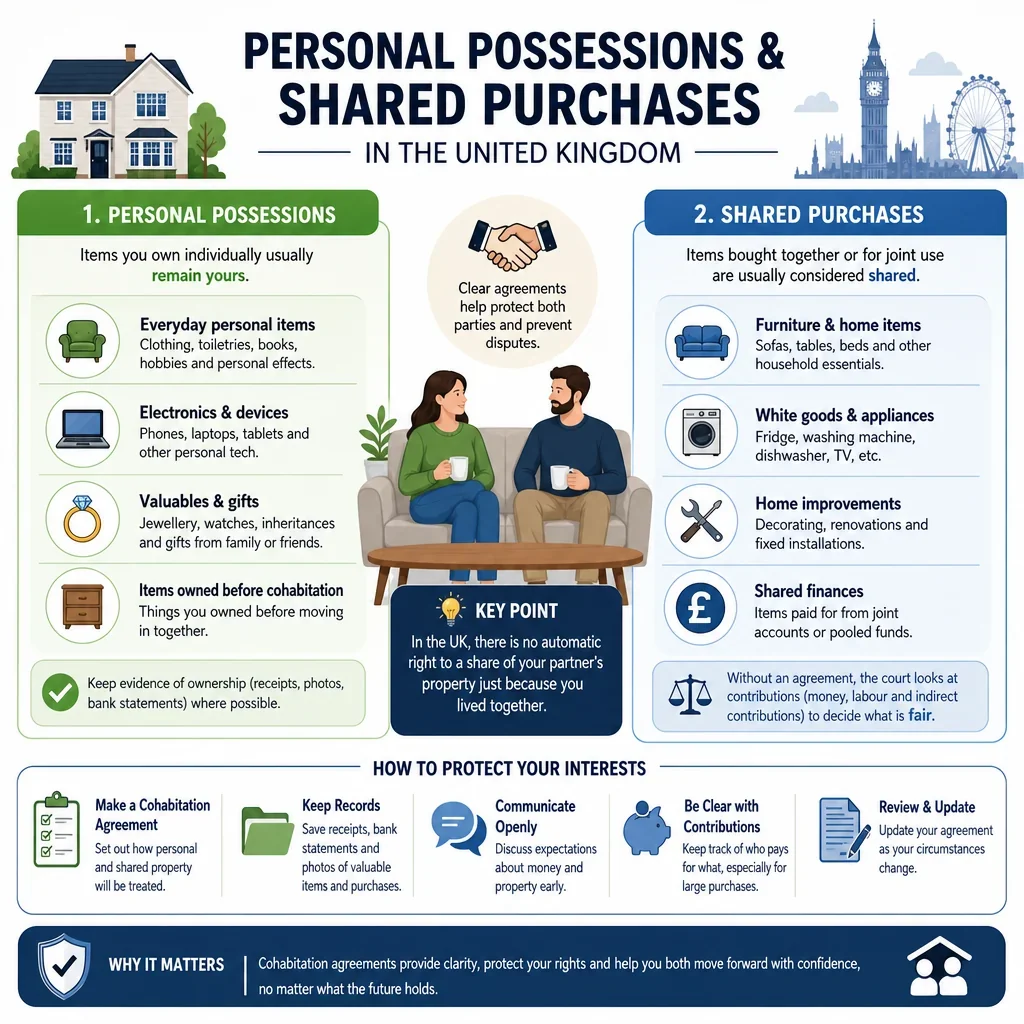
Furniture ownership and reimbursement can be unclear when one partner moves out. | Sofas, white goods, beds, appliances, curtains, garden equipment, electronics. | List owned items, shared items, buy-out values and removal rights after separation. | Medium | UK-wide general relevance |
Joint tenancy rental | ||||
Inventory damage deductions may be taken from a shared deposit. | Deposit, furniture damage, cleaning, missing items, appliance repairs, inventory costs. | Allocate damage responsibility, evidence photos, checkout duties and deposit deduction shares. | Medium | England and Wales |
One partner owns the home | ||||
Lender consent or occupier waiver may be needed for adult occupiers. | Mortgage, insurance, bills, occupation payments, legal waiver costs. | Require compliance with mortgage conditions and confirm occupier rights or waivers separately. | Medium | UK-wide general relevance |
Both partners own the home | ||||
Both borrowers may be pursued for mortgage arrears even if one stopped paying. | Mortgage arrears, default charges, legal costs, insurance, urgent repairs. | Set arrears indemnity, default notice, sale trigger and credit impact cooperation. | High | UK-wide general relevance |
Occupying partner may benefit while non-occupying partner remains liable for mortgage. | Mortgage, occupation costs, insurance, utilities, repairs, sale preparation costs. | Set occupation rent if any, bill responsibility, maintenance duties and buy-out deadline. | High | UK-wide general relevance |
Joint tenancy rental | ||||
Utility account holder may be chased despite agreed private split. | Gas, electricity, water, broadband, TV licence, council tax, final bills. | List accounts, payment shares, meter readings, final bill process and reimbursement deadlines. | Medium | UK-wide general relevance |
One partner is the sole tenant | ||||
Non-tenant may hold utility debt without housing rights. | Energy bills, water, broadband, council tax contribution, final meter charges. | Align account responsibility with occupation, reimbursement, account closure and final readings. | Medium | UK-wide general relevance |
Temporary shared accommodation | ||||
Stored possessions can be lost, withheld or damaged during short-term moves. | Storage fees, removals, insurance, replacement items, access costs, cleaning. | Inventory possessions, access dates, insurance responsibility and disposal notice requirements. | Low | UK-wide general relevance |
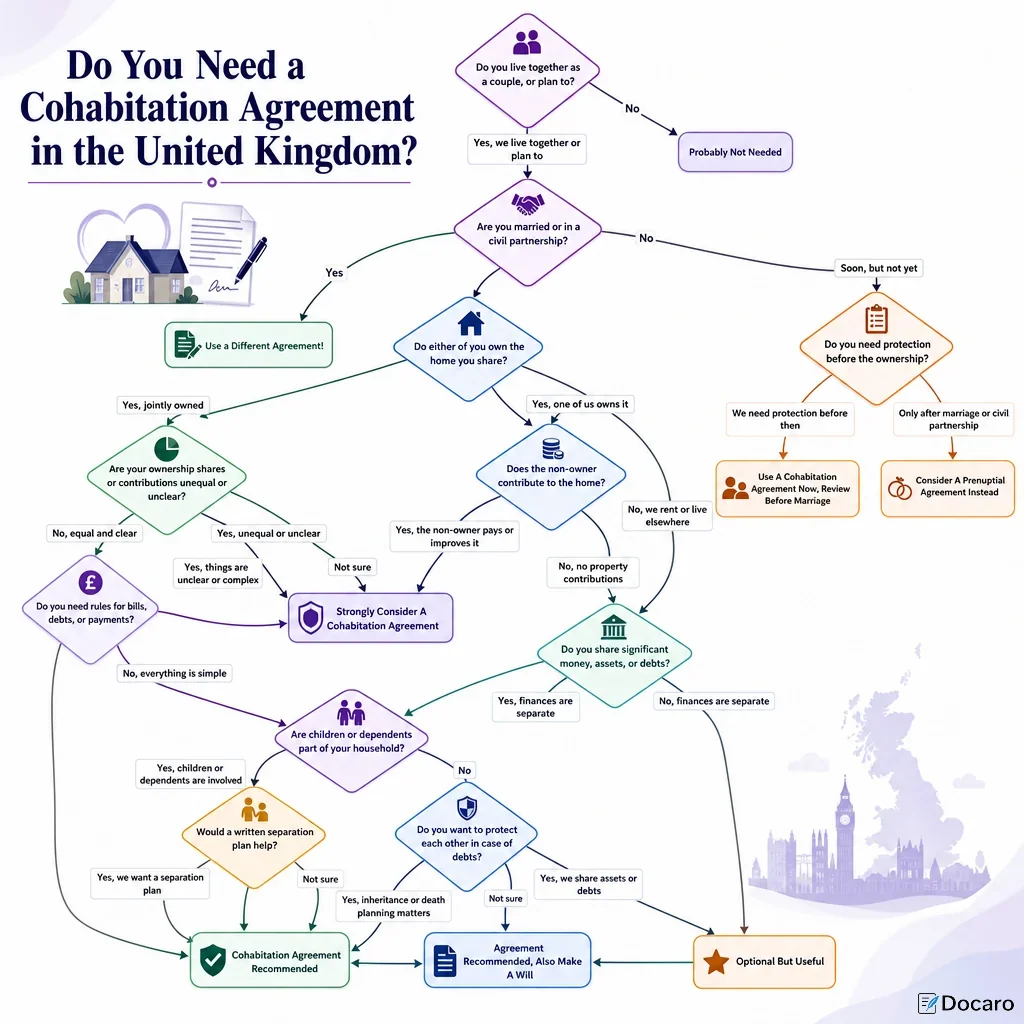
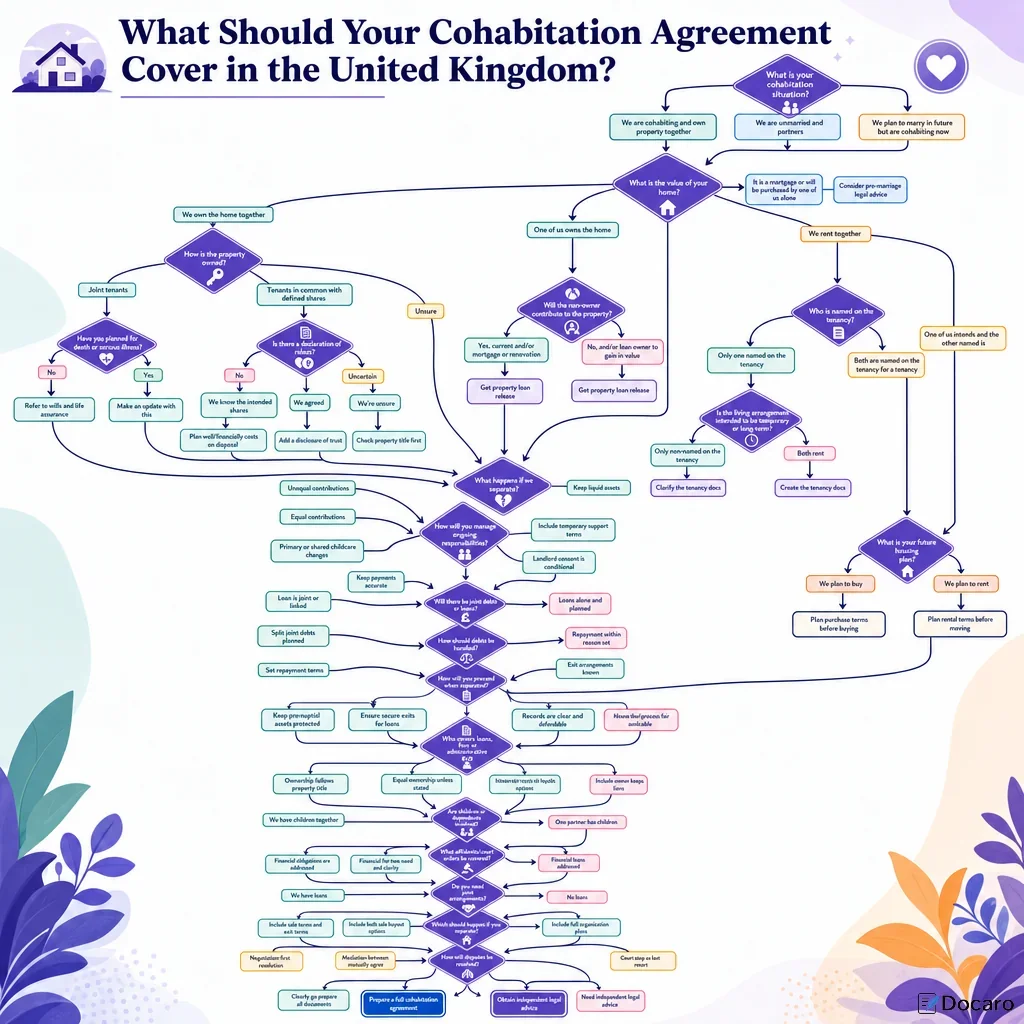
What Should A UK Cohabitation Agreement Cover For Different Living Arrangements?
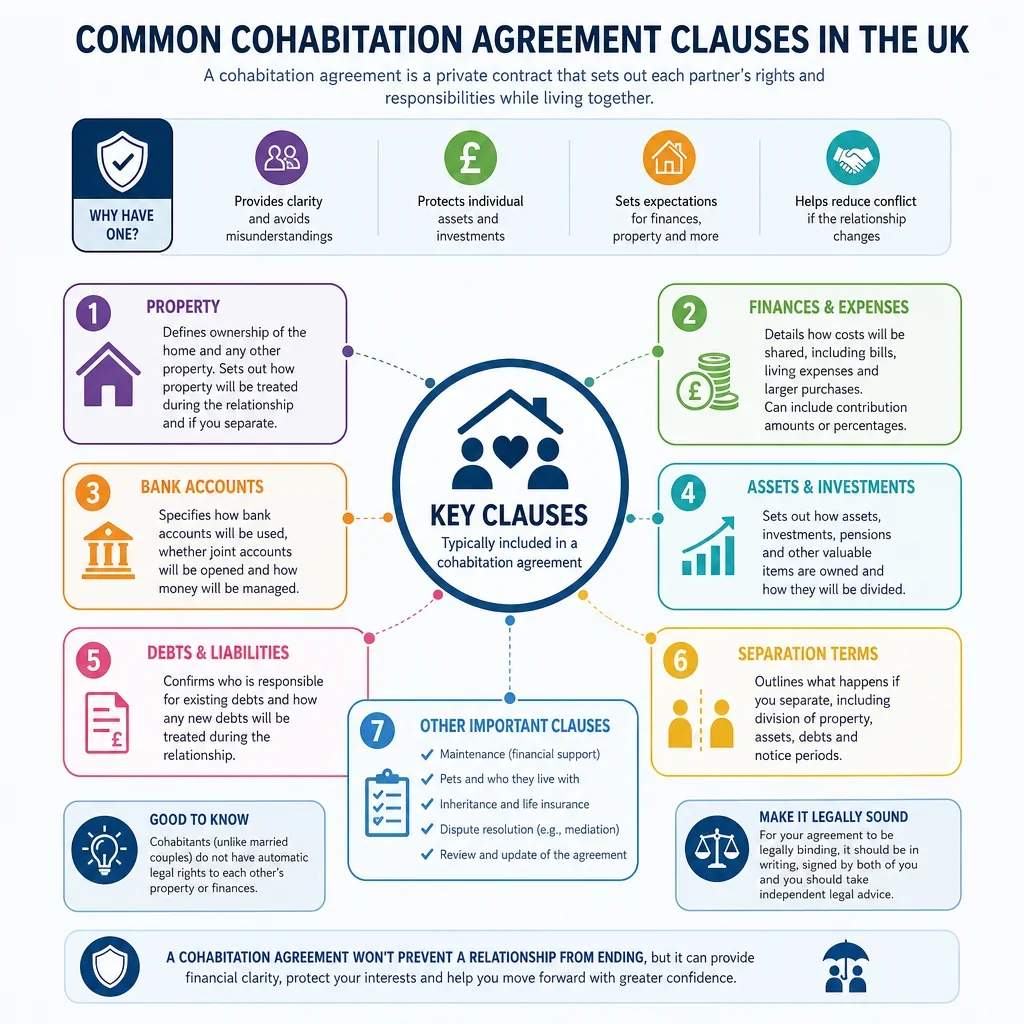
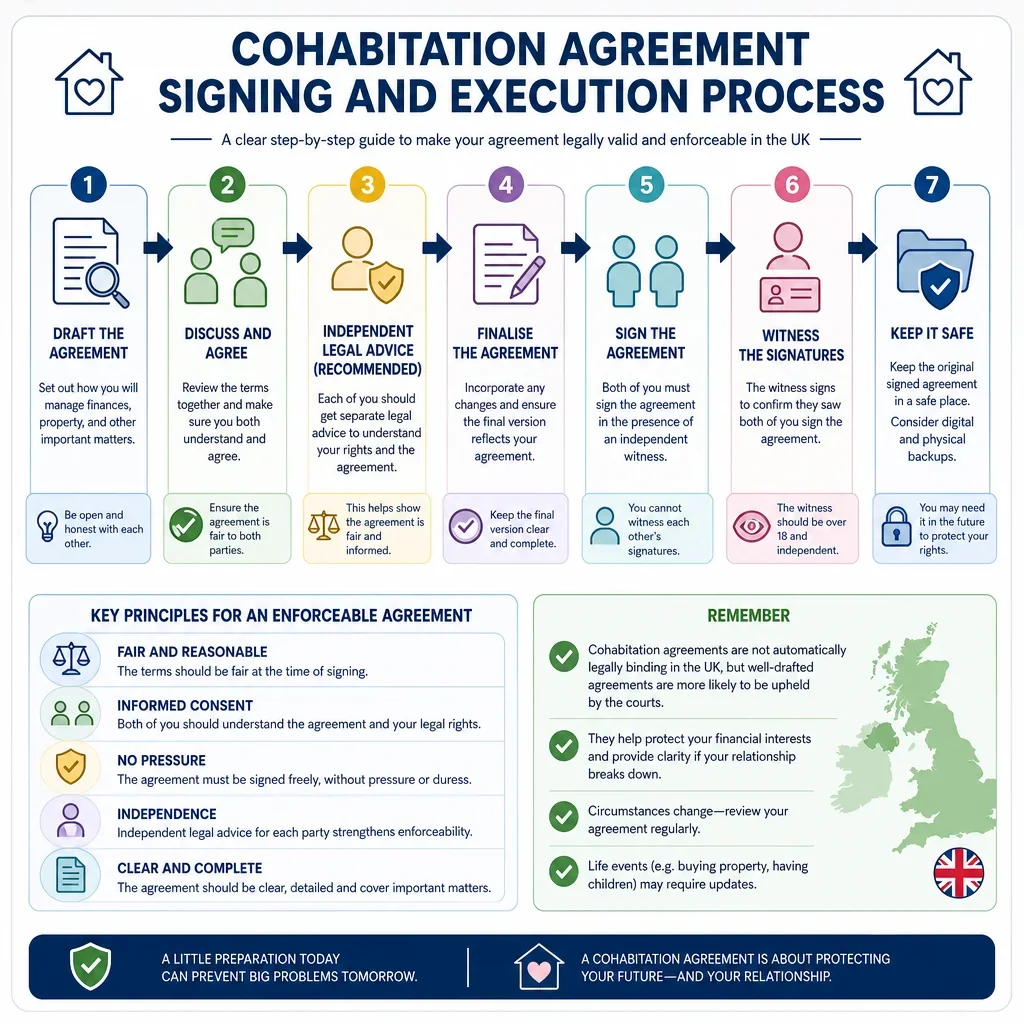
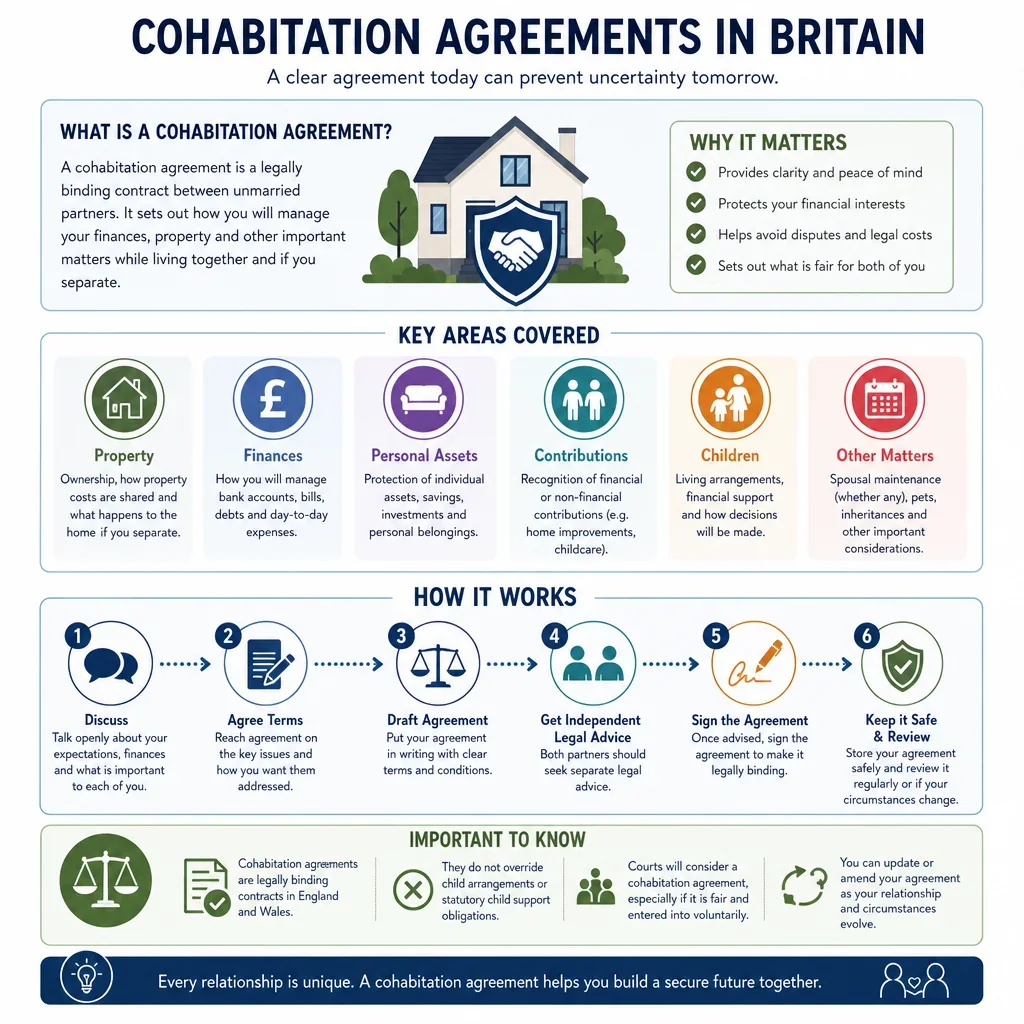
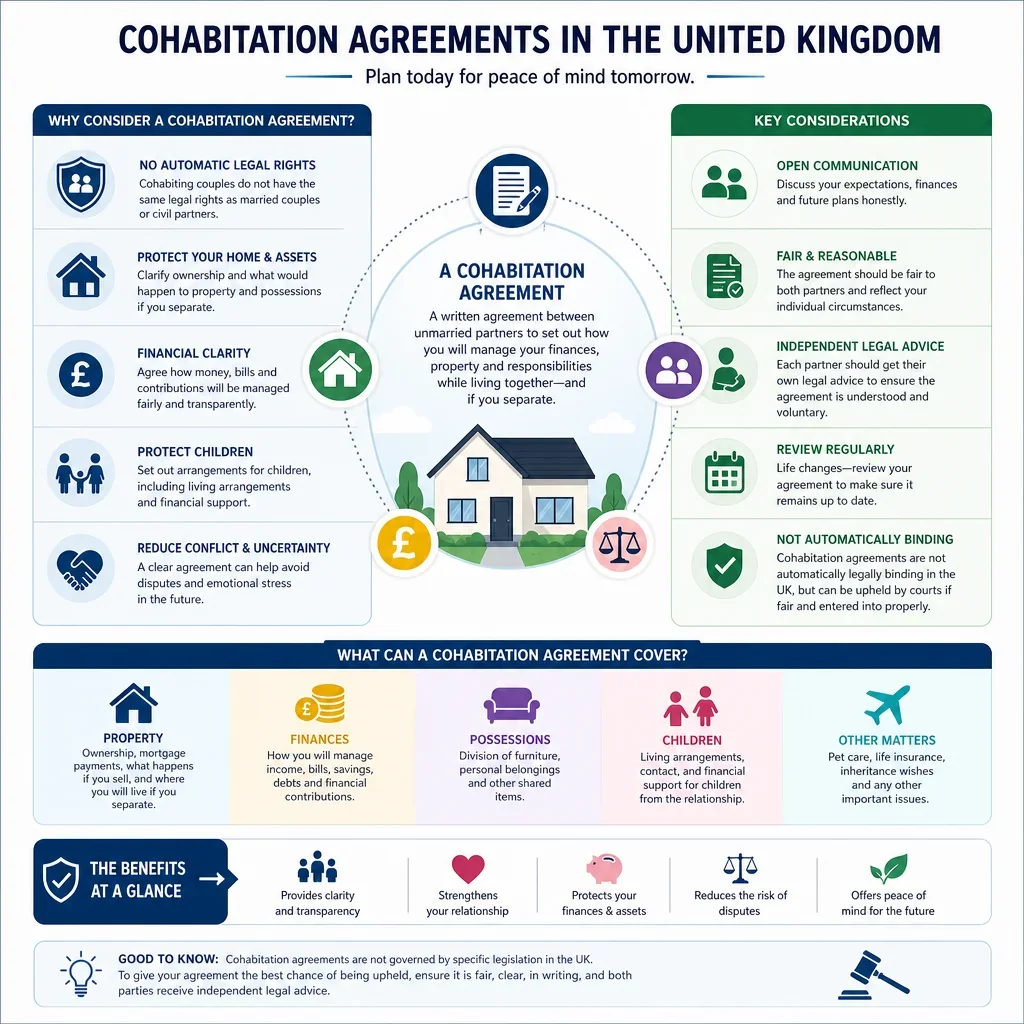
Ownership, tenancy status and contributions should be recorded separately. A partner paying towards a mortgage, deposit, renovations or major repairs in a home owned by the other partner may later argue that they have acquired a beneficial interest, especially in England and Wales and Northern Ireland. Clear terms can help show whether payments are intended as rent, household sharing, a loan, or a contribution to ownership.
Joint owners and joint tenants usually face higher practical risk if exit arrangements are unclear. A cohabitation agreement should address sale rights, buy-out valuation, mortgage responsibility, rent arrears, deposit deductions, utilities, notice periods and what happens if one person leaves before the other.
Scotland has distinct cohabitant claims. Former cohabitants in Scotland may be able to make financial claims under the Family Law (Scotland) Act 2006, so Scottish agreements should be drafted with that statutory context in mind and include records of economic advantage, disadvantage and property intentions.
Living with family needs extra care because the homeowner may not be a party to the relationship. Contributions to a parent\'s or relative\'s home, informal rent, bills or building works should be documented to avoid later disputes about whether money was a gift, rent, a loan, or an investment in the property.
Temporary shared accommodation should not be ignored. Even short-term arrangements can create disputes about deposits, damage, storage of possessions, early departure, guests and responsibility to the landlord or host.
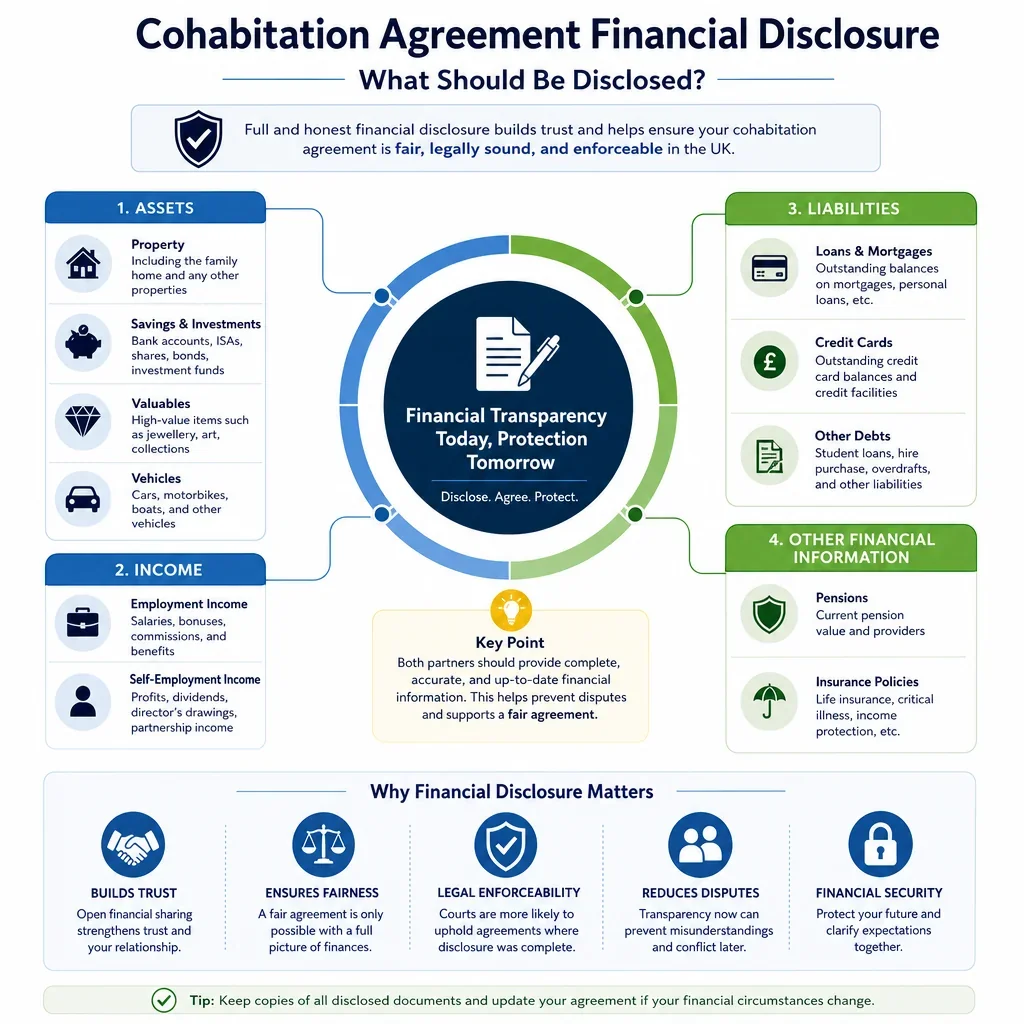
Which Records Matter Most Before Creating A Cohabitation Agreement?
- Whose name is on the title, mortgage, tenancy or licence.
- Who paid the deposit, rent, mortgage, bills, repairs and improvements.
- Whether payments create ownership rights, reimbursement rights, or no property interest.
- How either partner can leave, require a sale, recover a deposit, or buy out the other.
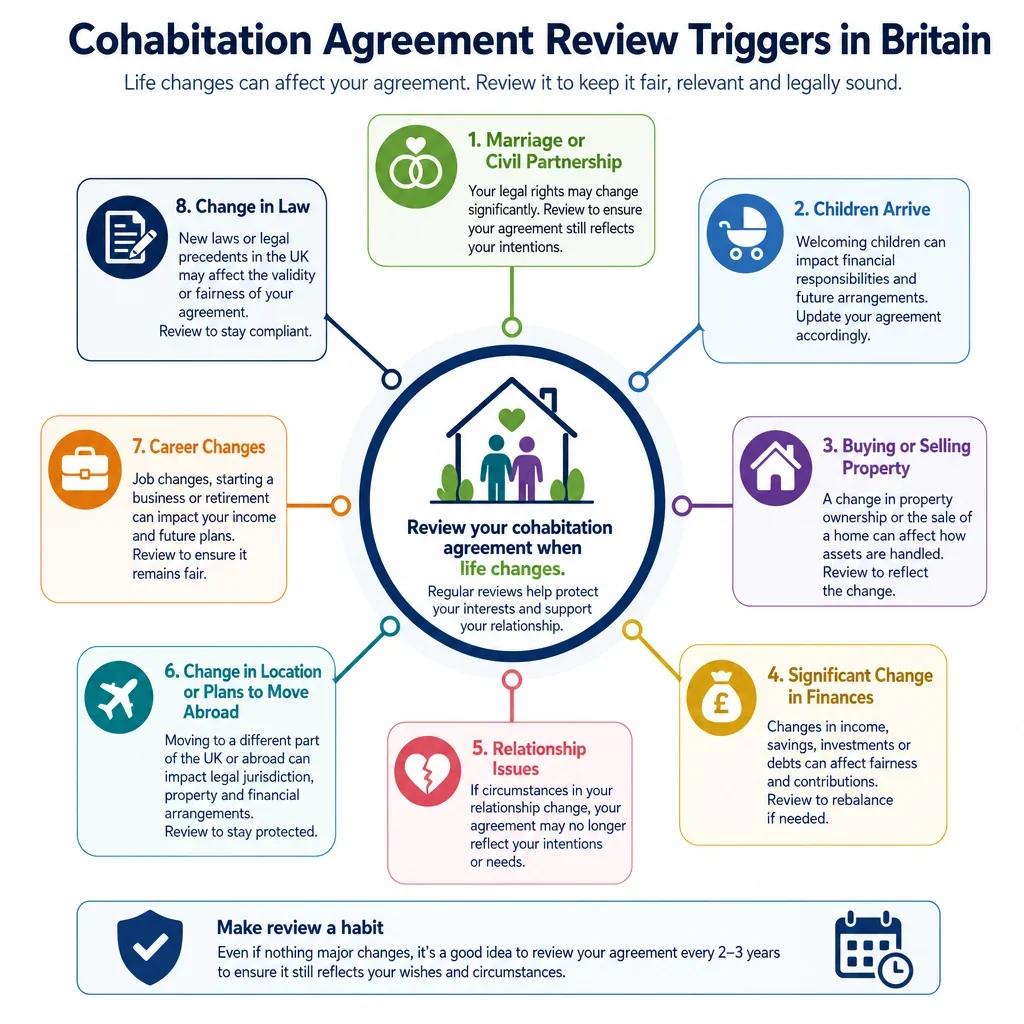
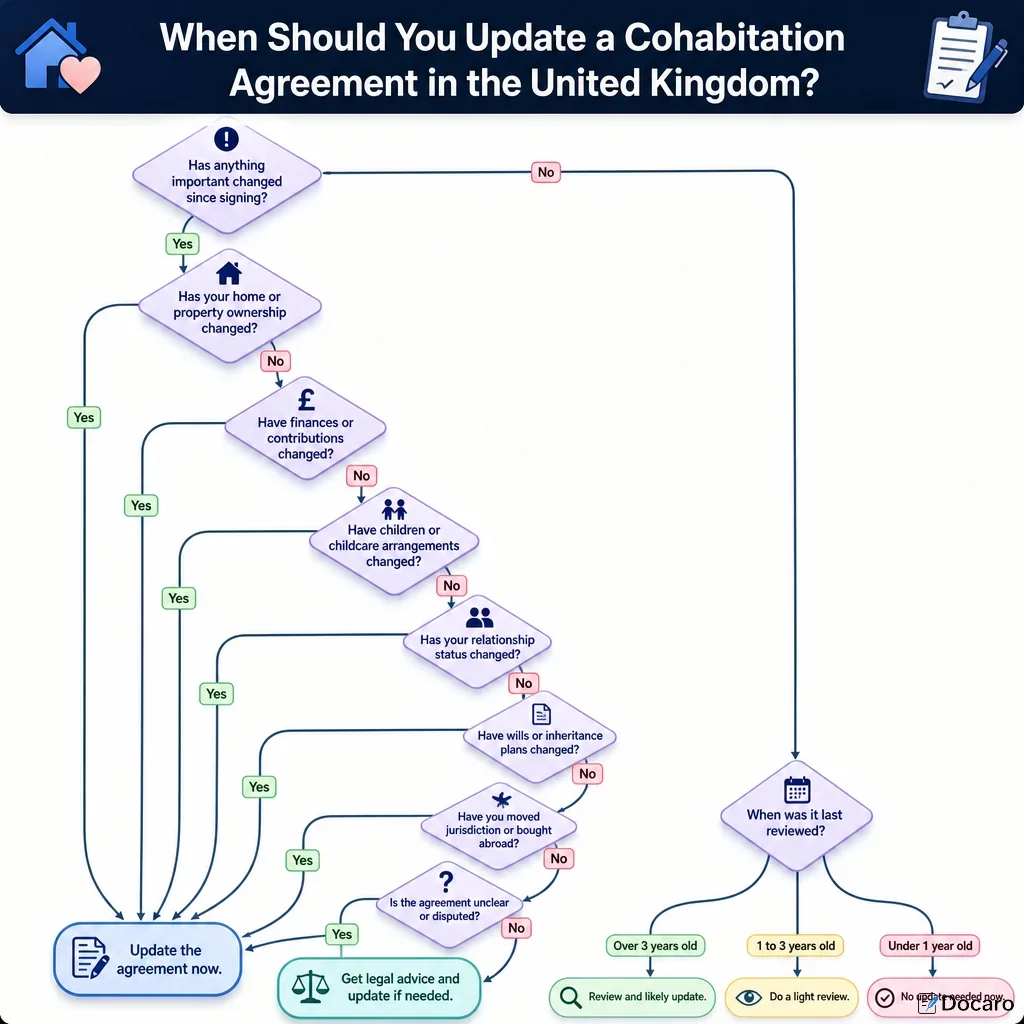
- Which UK jurisdiction applies, because England and Wales, Scotland and Northern Ireland do not treat all cohabitation disputes in the same way.
FAQs
You Might Also Be Interested In