Child Maintenance Payment Methods And Records In The United Kingdom
Practical Description | Benefits | Risks or Limitations | Record Strength | Recommended Payment Reference |
|---|---|---|---|---|
Standing Order | ||||
Payer sets an automatic fixed payment from their bank account on the agreed date each month. | Reliable, low admin, traceable, and easy to match to the agreement. | Does not automatically adjust if income, arrears, or agreed amounts change. | Strong record | Child maintenance [child initials] [month/year] |
Automatic weekly payment set to match the payer’s wage cycle or the agreement. | Useful where income is weekly and payments need to be predictable. | Missed if insufficient funds bank records may be harder to reconcile than monthly totals. | Strong record | CM [child initials] week ending [date] |
Separate automatic payment used to reduce agreed arrears over time. | Separates arrears from ongoing maintenance and shows a repayment pattern. | Can be confused with current maintenance if reference is unclear. | Strong record | Child maintenance arrears [child initials] instalment [number] |
Bank Transfer | ||||
Manual Faster Payment or bank transfer sent when each payment falls due. | Fast, traceable and flexible for one-off or changed amounts. | Relies on the payer remembering to make payment on time. | Strong record | Child maintenance [child initials] [period covered] |
Manual transfer used where amount changes under an agreed income-based formula. | Allows exact payment when income or shared care changes. | Needs supporting calculation records to explain the amount. | Strong record | CM [child initials] [month/year] variable amount |
Single large transfer used to clear arrears or cover an agreed period in advance. | Clear bank trail and useful for settling missed payments. | May be disputed as a gift or loan if not referenced and agreed in writing. | Strong record | Child maintenance arrears to [date] |
Transfer made to an agreed account used for the child’s regular costs. | Improves transparency if both parents agree the account and purpose. | May not count as payment to the receiving parent unless clearly agreed. | Depends on evidence kept | Agreed child maintenance to child account [month/year] |
Direct Debit | ||||
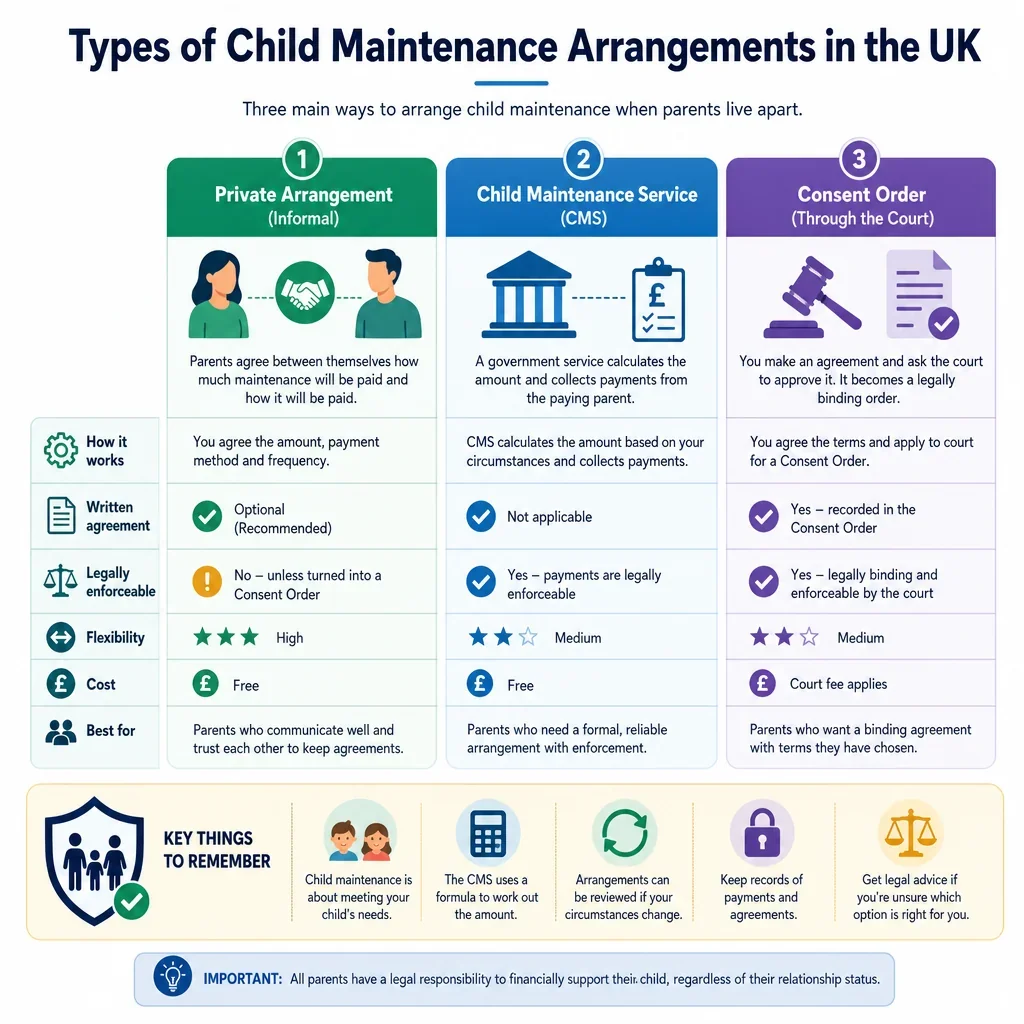
CMS collects payments from the paying parent and passes them to the receiving parent. | Official process with CMS payment records and enforcement route if unpaid. | Collect and Pay can involve collection charges for both parents. | Strong record | Use CMS case or payment reference |
CMS arranges regular collection that may include ongoing maintenance and arrears. | Creates official CMS records showing what has been collected and allocated. | Payments may include fees or arrears, so statements should be checked carefully. | Strong record | CMS case reference and arrears period |
A Direct Debit is set up with an organisation able to collect payments under a mandate. | Protected by the Direct Debit Guarantee and creates bank records. | Usually not available for a simple private payment between two individuals. | Strong record | Child maintenance account or case reference |
Cash | ||||
Cash handed over directly, with a receipt signed and dated by the receiving parent. | Immediate and may help where banking access is limited. | Easy to dispute if no receipt or independent evidence exists. | Depends on evidence kept | Receipt: child maintenance [amount] [period] paid in cash |
Cash is given without a written receipt or bank trail. | Simple and immediate. | High dispute risk hard to prove amount, date, purpose or recipient. | Weak record | Avoid if possible obtain a signed receipt immediately |
Cash is passed during child contact handover or through a relative. | Convenient where parents meet regularly. | Witnesses may disagree and child handover should not become a payment dispute. | Weak record | Signed receipt naming payer, recipient, child, date and period |
Cheque | ||||
Payer writes a cheque to the receiving parent for the agreed amount. | Can show payer, payee, amount and clearing through bank records. | Can be delayed, lost, stopped, bounced or uncleared. | Moderate record | Write child maintenance [child initials] [month/year] on cheque stub |
Cheque is posted to the receiving parent or their solicitor. | Useful where electronic payment details are unavailable. | Proof of posting is not proof the cheque was received or cleared. | Depends on evidence kept | Cover note: child maintenance [period] cheque no. [number] |
Cheque is paid to a solicitor to forward as agreed maintenance. | Professional correspondence may support proof and purpose of payment. | Can be slower and may incur professional costs. | Moderate record | Child maintenance for [child initials] [period] via solicitor |
Payment App | ||||
Money sent through an app to the receiving parent’s linked account. | Quick and convenient, often with in-app confirmation. | App records may be incomplete if notes, screenshots or statements are not kept. | Moderate record | Child maintenance [child initials] [month/year] |
Instant transfer made inside a banking or e-money app with an optional note. | Fast, searchable and often exports transaction history. | Changing phone numbers, app accounts or nicknames can make later identification harder. | Moderate record | CM [child initials] [period] not gift |
App used to reimburse an agreed child expense separate from regular maintenance. | Convenient for school trips, uniforms or medical costs agreed separately. | Should not be confused with regular maintenance unless both parents agree. | Depends on evidence kept | Extra child expense [item] not monthly CM |
Payment is sent to an app wallet before the recipient withdraws it to a bank account. | Provides in-app transaction evidence and time stamp. | Disputes may arise if recipient says funds were not received, withdrawn or accessible. | Depends on evidence kept | Child maintenance received in app wallet [month/year] |
Third Party Payment | ||||
CMS can require an employer to deduct maintenance from the paying parent’s earnings. | Strong official trail through employer payroll and CMS records. | Usually used for CMS enforcement, not a voluntary private arrangement. | Strong record | CMS deduction from earnings case reference |
CMS may require deductions from a paying parent’s bank or building society account. | Official collection route with clear enforcement records. | Applies in enforcement circumstances and may follow missed payments. | Strong record | CMS regular deduction order reference |
Payer sends funds to a solicitor who forwards them to the receiving parent. | Creates correspondence, client account and transfer records. | Can be slower, costly, and unsuitable for long-term routine payments. | Strong record | Child maintenance [child initials] [period] client matter reference |
Payer pays an agreed childcare provider directly instead of sending funds to the other parent. | Shows payment went to a child-related cost and may reduce disputes about that bill. | May not count as child maintenance unless the agreement clearly says it does. | Depends on evidence kept | Agreed child maintenance paid to [provider] [invoice/date] |
Payment is made directly to a school for meals, trips, uniform or fees by agreement. | Good invoice trail for the specific child-related expense. | Can be treated as an extra expense rather than maintenance if not expressly agreed. | Depends on evidence kept | School cost for [child initials] agreed CM contribution |
Payer pays a landlord, mortgage account or utility provider as part of the arrangement. | Can support stable housing for the child and creates third party records. | Purpose can be disputed unless agreement states it is child maintenance or housing support. | Depends on evidence kept | Agreed child maintenance housing support [month/year] |
Money is passed through a relative or trusted person to the receiving parent. | May help where direct contact is difficult. | Adds evidential gaps about receipt, timing and purpose. | Weak record | Written confirmation from intermediary and recipient for each payment |
Standing Order | ||||
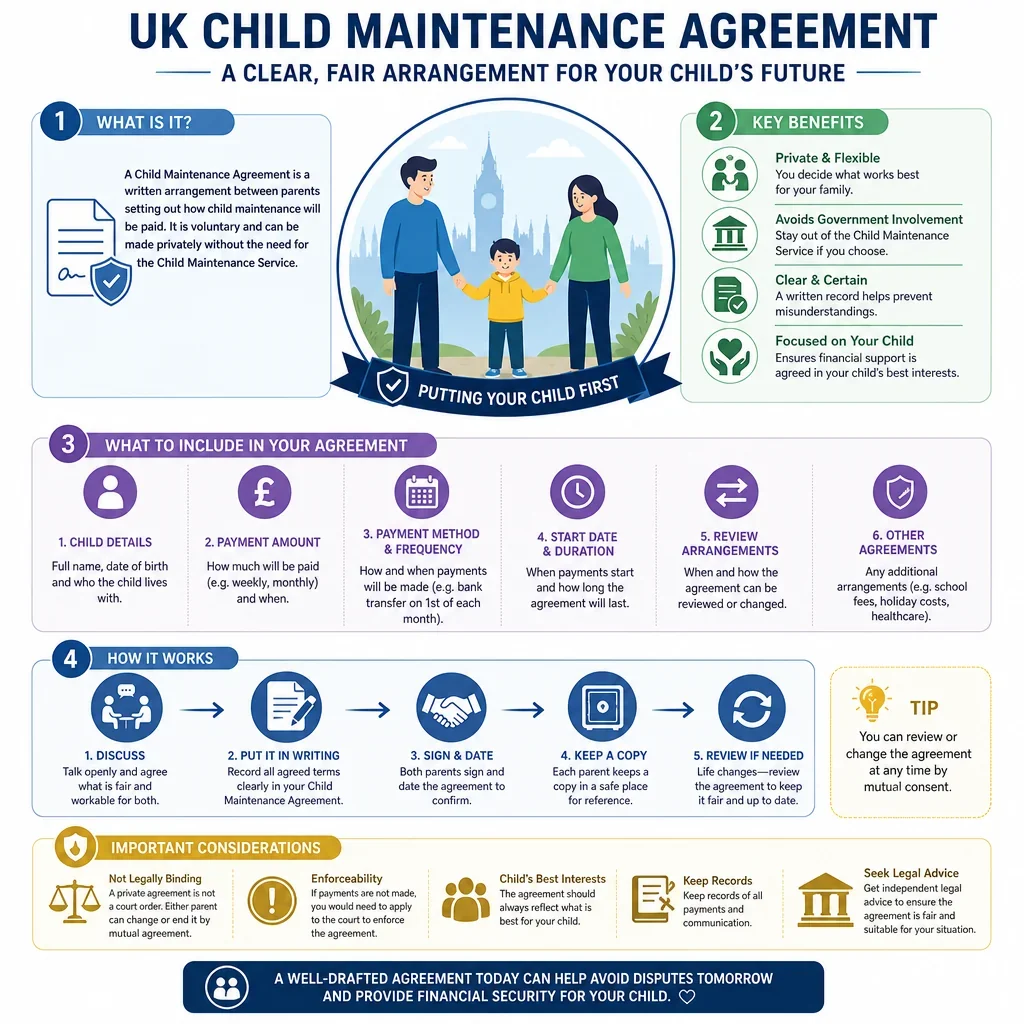
Standing order mirrors the amount, frequency and due date in a written private agreement. | Best fit for predictable family-based arrangements with clear documents and bank proof. | Private agreements are separate from CMS calculations and may need review if circumstances change. | Strong record | As per agreement: child maintenance [child initials] [month/year] |
Bank Transfer | ||||
Same-day bank payment sent to cover urgent child maintenance or missed payment. | Fast and provides timestamped evidence of prompt payment. | Urgency can lead to poor references or payment to old bank details. | Strong record | Urgent child maintenance [child initials] [period] |
Standing Order | ||||
One recurring payment covers all named children under the same arrangement. | Simple, predictable and easy to total annually. | Allocation may become unclear if one child ages out or circumstances differ. | Strong record | CM [child initials A/B/C] [month/year] |
Bank Transfer | ||||
Separate transfers are made for each child under the same or different arrangements. | Clear allocation if children have different needs, homes or end dates. | More admin and higher risk of missing one payment. | Strong record | Child maintenance [child name/initials] [month/year] |
Payment App | ||||
App payment sent with an informal note, emoji or no clear child maintenance label. | Convenient and still may show a dated transfer. | Informal notes weaken proof that it was maintenance rather than a gift. | Depends on evidence kept | Replace informal note with child maintenance [period] |
Cash | ||||
Part of the agreed amount is paid in cash and the rest electronically. | Can deal with short-term cashflow or banking problems. | Creates reconciliation issues unless both parts are recorded together. | Depends on evidence kept | Receipt and bank ref: split CM [amounts] [period] |
Third Party Payment | ||||
CMS calculates the amount, but the paying parent pays the receiving parent directly. | CMS calculation plus direct payment records, usually without Collect and Pay charges. | CMS may need proof if the receiving parent says payments were missed. | Strong record | CMS Direct Pay [case ref] [month/year] |
Bank Transfer | ||||
Payment is sent from an account with more than one account holder. | Bank trail exists and may be practical during separation transition. | Can be unclear who actually paid unless explained in writing. | Depends on evidence kept | Child maintenance paid by [payer name] [period] |
Standing Order | ||||
Recurring payments continue privately, noting that CMS may have jurisdiction for child support maintenance. | Predictable record if parents continue a private arrangement. | Court-ordered periodical child maintenance can be affected by later CMS involvement in many cases. | Strong record | Child maintenance under agreement/order [month/year] |
Cheque | ||||
Cheque is used as a replacement where a bank transfer failed or details were wrong. | Provides an alternative route while bank details are corrected. | Must be marked as replacement to avoid double-counting or dispute. | Moderate record | Replacement CM for failed transfer dated [date] |
Third Party Payment | ||||
Payments are made through CMS or private channels while parents retain evidence for any benefit or CMS query. | Clear records help answer official questions about maintenance received or paid. | Poor records may cause confusion about whether money was maintenance, gifts or shared expenses. | Depends on evidence kept | Child maintenance only [child initials] [period] |
What Is The Best Way To Pay Child Maintenance In The UK?
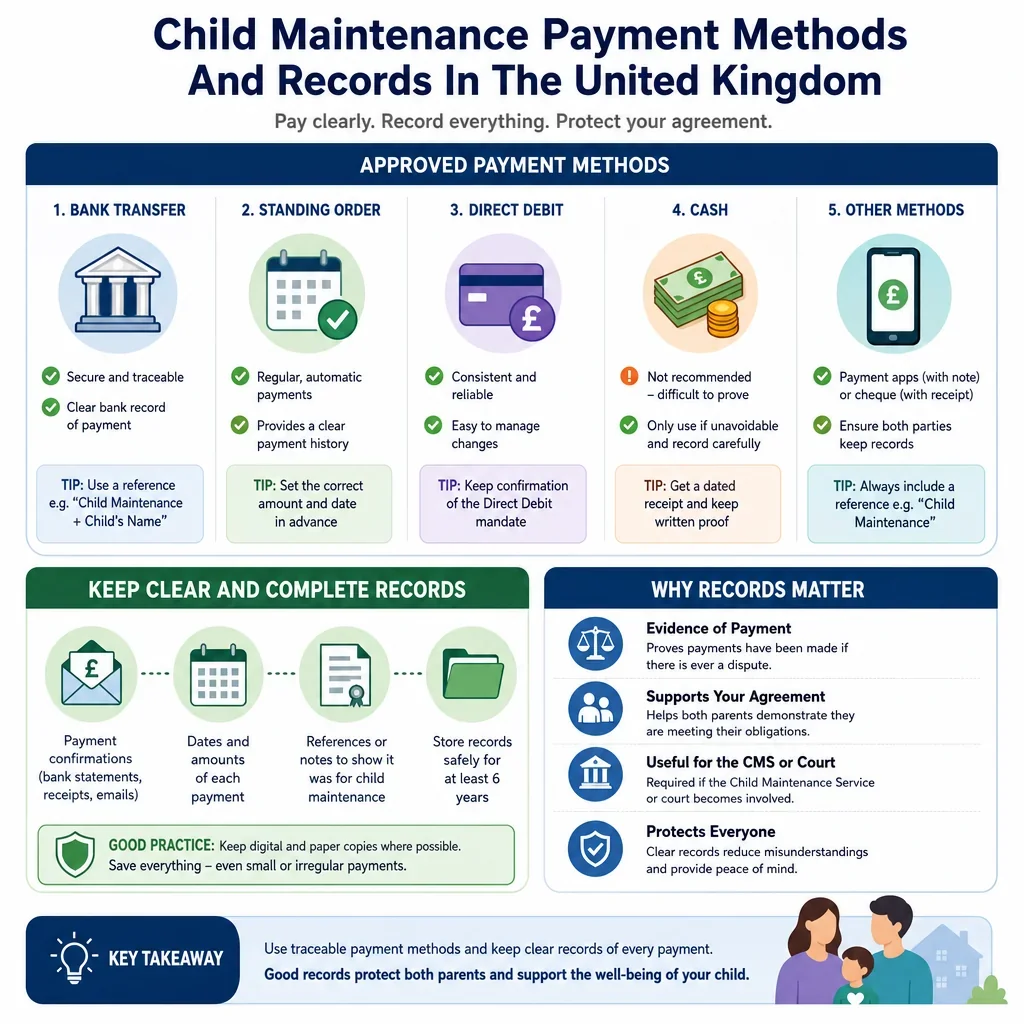
Standing order or bank transfer is usually the clearest option for family-based child maintenance because it creates a bank record and can include a specific payment reference. Use a consistent reference such as Child maintenance for [child initials] - [month/year].
Which Child Maintenance Payment Methods Create The Strongest Evidence?
- Strong records: standing orders, bank transfers, direct debits through official schemes, and properly referenced third party payments.
- Moderate records: cheques and payment apps, but only if statements, screenshots and confirmations are retained.
- Weak records: cash, unless a dated receipt is signed and both parents keep copies.
When Should Cash Be Avoided For Child Maintenance?
Cash should generally be avoided where there is any risk of disagreement, enforcement concern, or future Child Maintenance Service involvement, because it is harder to prove than traceable electronic payments. If cash is unavoidable, use a signed receipt stating the amount, date, child, period covered and that it is child maintenance.
Why Does The Payment Reference Matter?
A clear reference helps distinguish child maintenance from gifts, arrears, school costs, birthdays or other family payments. This is important because the Child Maintenance Service distinguishes ordinary maintenance payments from certain additional or voluntary payments when assessing what has been paid.
What Records Should Parents Keep?
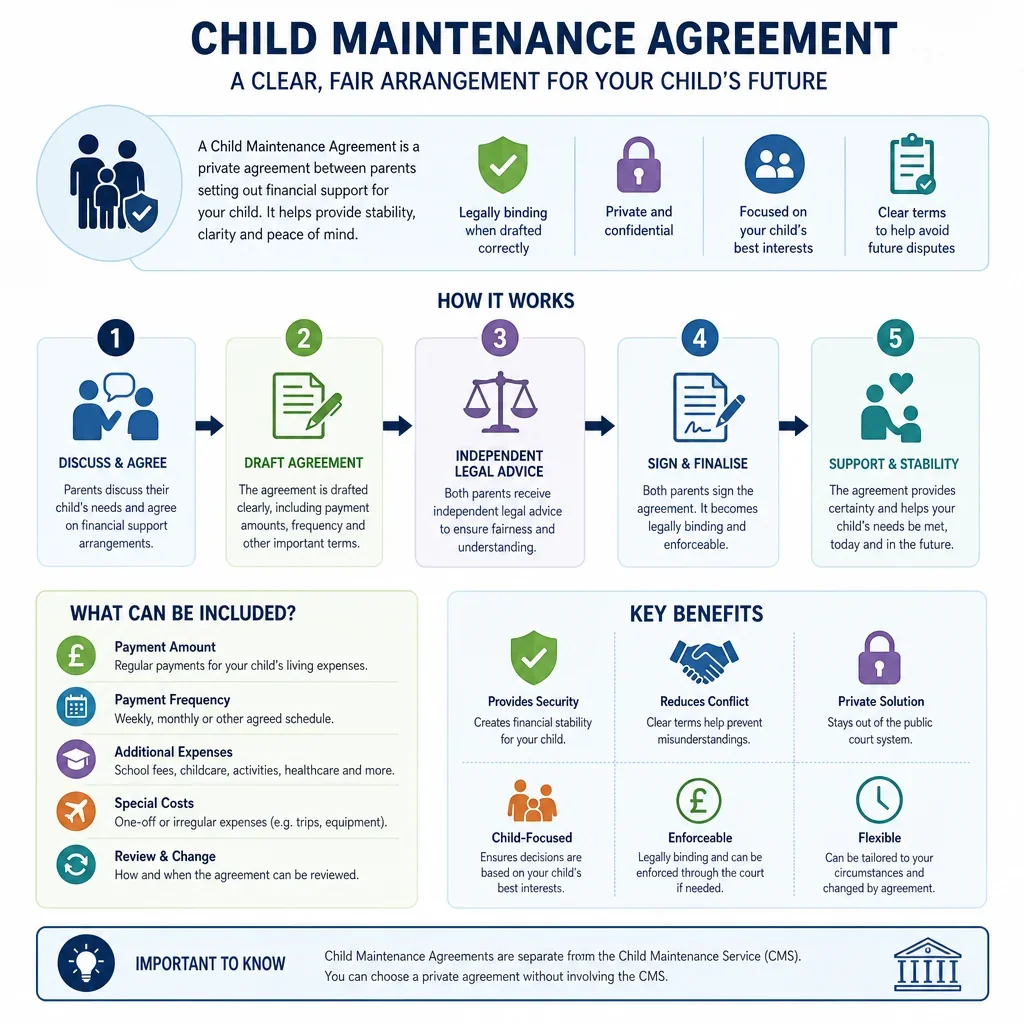
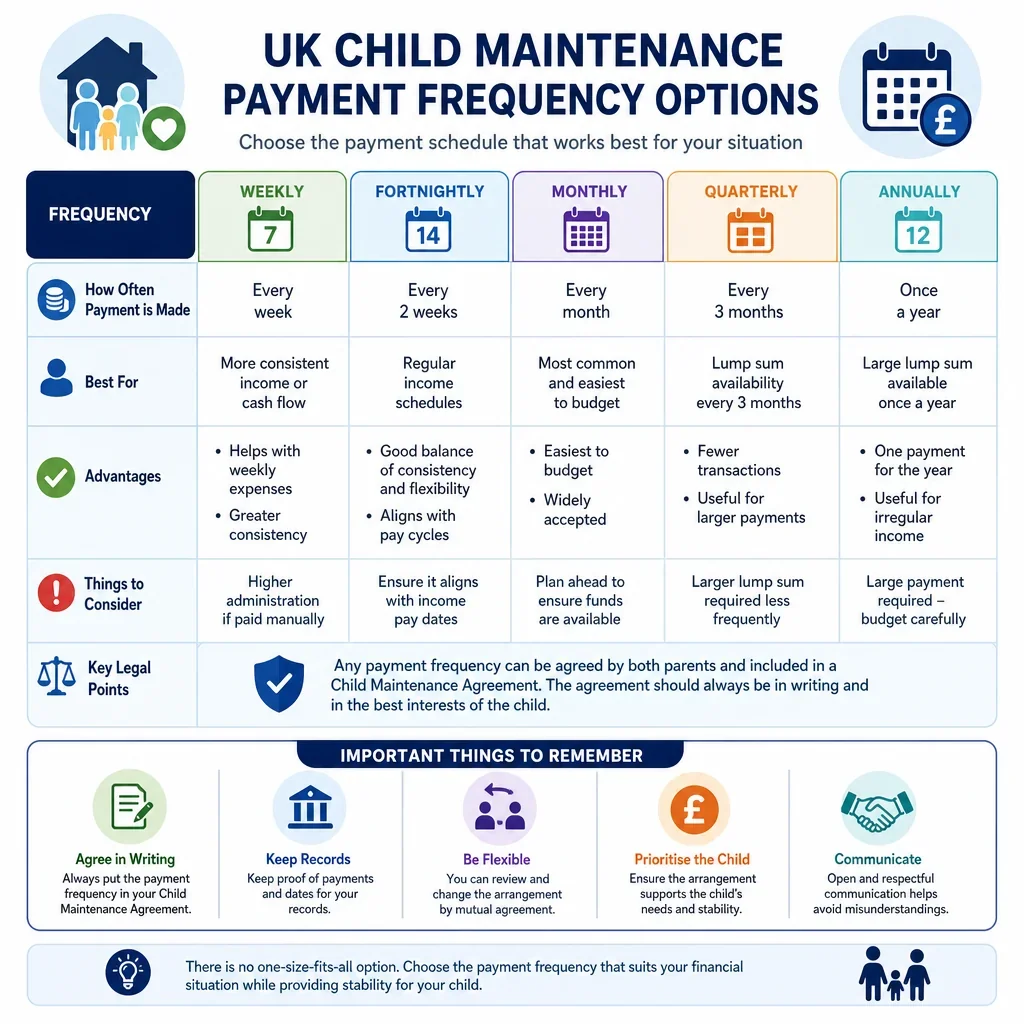
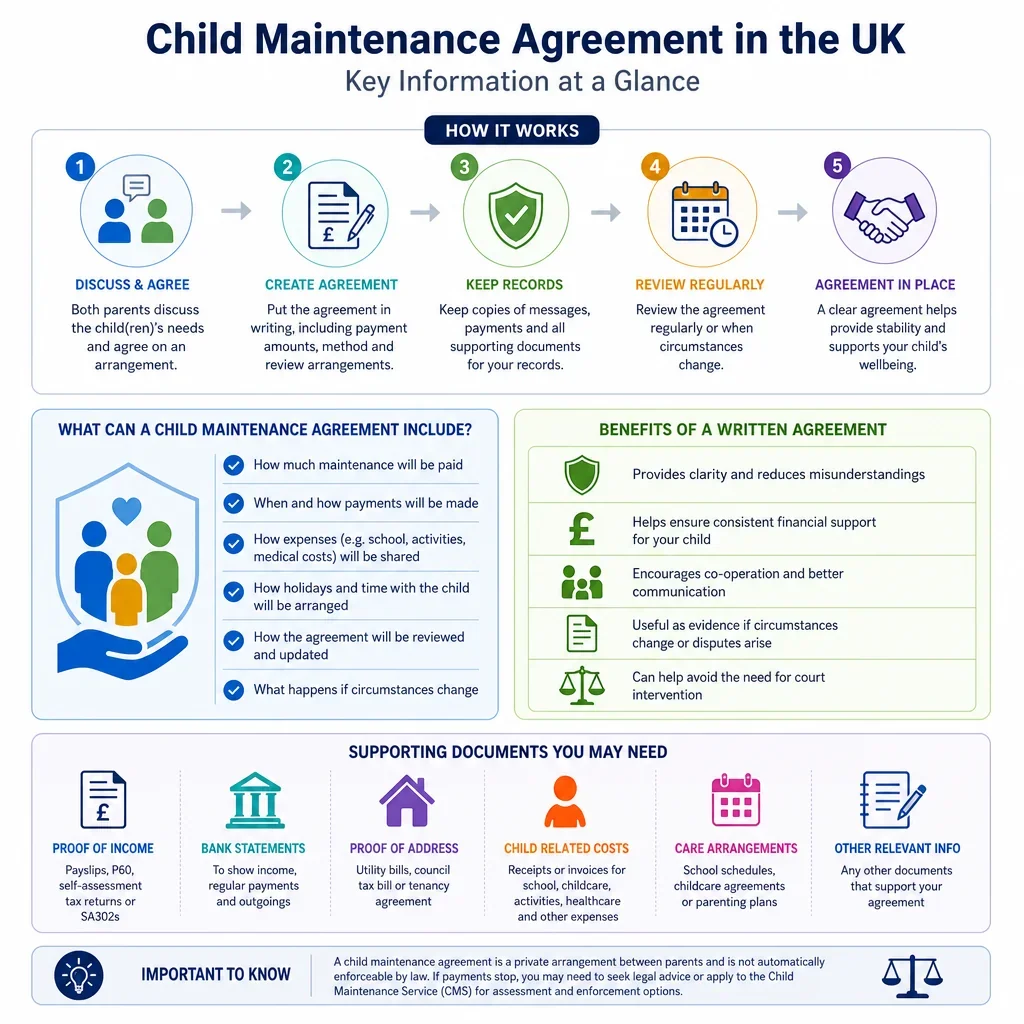
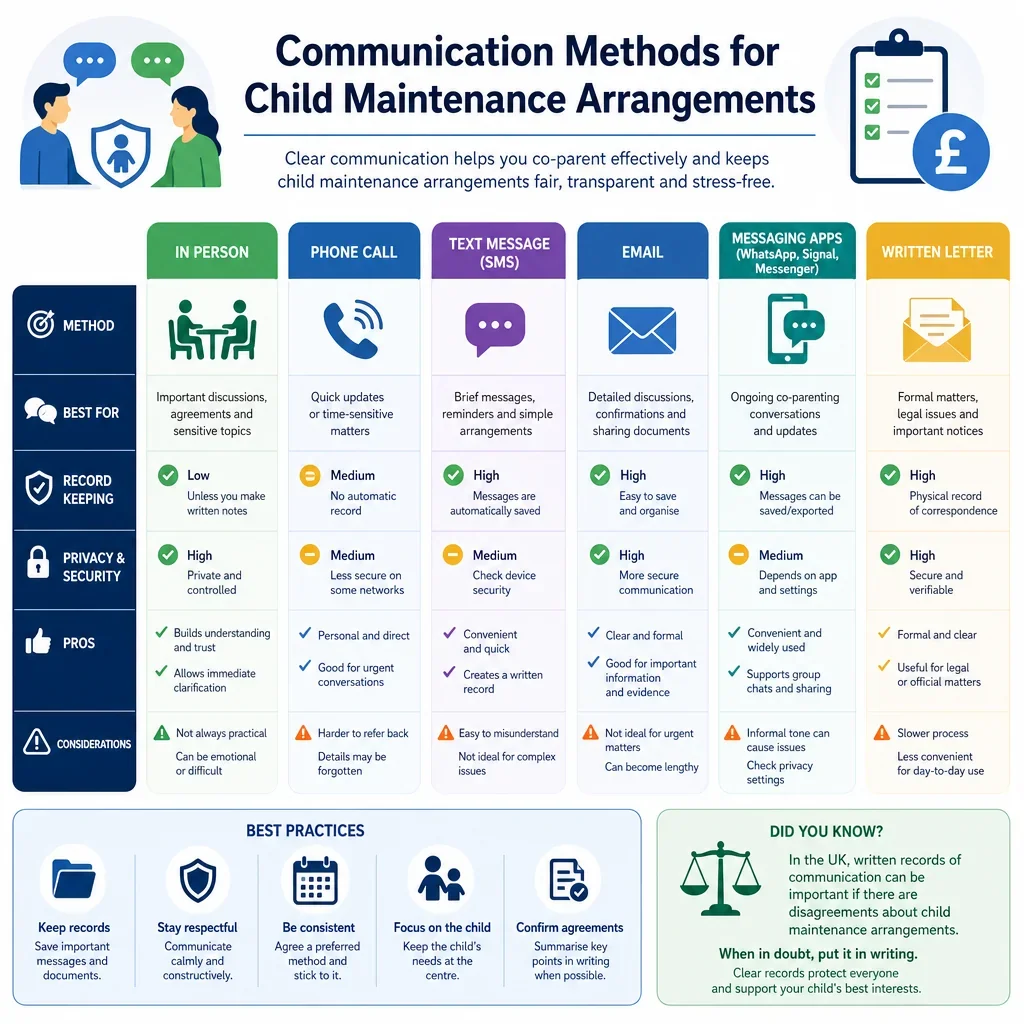
Parents should keep bank statements, payment confirmations, app screenshots, cheque details, receipts and any written agreement showing the amount, frequency and due date. Good records reduce disputes and make a child maintenance agreement easier to evidence if questions arise later.
FAQs
You Might Also Be Interested In