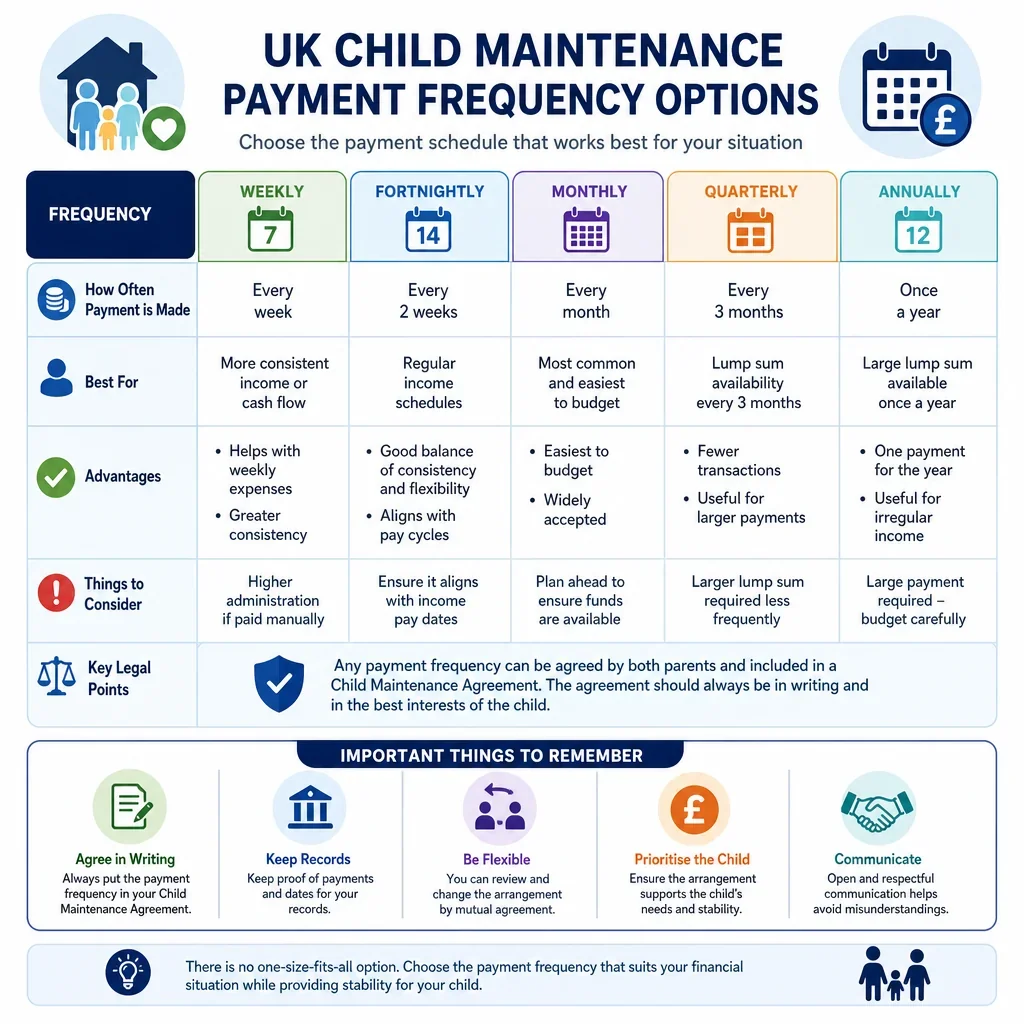
UK Child Maintenance Payment Frequency Options
How It Works | Advantages for Receiving Parent | Advantages for Paying Parent | Potential Drawbacks | Suitability |
|---|---|---|---|---|
Weekly | ||||
The paying parent makes a fixed payment once each week, usually by standing order on the same weekday. | Provides frequent cash flow for food, travel, childcare and other weekly child-related costs. | Can match weekly wages and reduce the burden of one larger monthly payment. | More transactions to monitor missed payments become apparent quickly and may create frequent disputes. | Best for regular salary Requires careful tracking |
Payment is made shortly after the paying parent receives weekly wages, often every Friday or Monday. | Helps the receiving parent budget in small, predictable amounts across the month. | Avoids saving maintenance from week to week and can reduce arrears risk for weekly-paid workers. | Bank holidays, changing shift patterns or variable overtime can disrupt payment timing. | Best for regular salary |
A smaller amount is paid every week instead of a larger sum at longer intervals. | Reduces gaps between payments and supports routine household spending for the child. | Spreads the cost evenly and may be easier to maintain on a constrained budget. | Requires clear records so both parents can prove the correct total has been paid. | Requires careful tracking |
Fortnightly | ||||
A fixed amount is paid every 2 weeks, usually on the same weekday by bank transfer. | Gives more regular support than monthly payments while reducing the number of transactions. | Can align with fortnightly pay cycles and makes each payment smaller than a monthly amount. | There are 26 fortnightly payments per year, so the annual total must be calculated carefully. | Best for regular salary Requires careful tracking |
Payments are made every other week, with the agreement stating the first due date and interval. | Helps bridge the gap between monthly bills and weekly child-related spending. | Balances budgeting control with fewer bank transfers than weekly payments. | Some months will contain 3 payments, which may surprise the paying parent if not planned. | Best for regular salary Requires careful tracking |
Four Weekly | ||||
A fixed amount is paid every 4 weeks, creating 13 payments over a full year. | Offers predictable support and can produce one extra payment compared with a calendar-month pattern. | Fits a 4-week payroll cycle and avoids timing problems caused by calendar months. | It is often confused with monthly payments the agreement must state the annual total clearly. | Best for regular salary Requires careful tracking |
Payments are made every 28 days rather than on a fixed calendar date each month. | Regular 28-day spacing can help with childcare, groceries and recurring child expenses. | Works well where salary, benefits or agency pay are received every 4 weeks. | Due dates move through the calendar, making rent or bill alignment less straightforward. | Requires careful tracking |
Monthly | ||||
The paying parent pays a fixed amount once per calendar month, usually on a set date. | Aligns with rent, mortgage, utilities and other regular monthly household costs. | Fits most UK monthly payroll arrangements and is simple to automate by standing order. | A missed payment can create a large shortfall for the receiving parent. | Best for regular salary |
Parents agree a monthly amount, payment date, bank account and review date in writing. | Simple to track and easy to compare with any Child Maintenance Service calculation. | Provides clear evidence of payment and predictable budgeting each month. | May be unsuitable if the paying parent has irregular income or frequent job changes. | Best for regular salary |
Payment falls a few days after the paying parent's usual payday to reduce timing risk. | Improves reliability because the payment is due when funds are likely to be available. | Reduces accidental missed payments caused by bills leaving the account first. | If payday changes, the agreement may need a variation or written update. | Best for regular salary |
The agreed monthly amount is split into 2 instalments within the same calendar month. | Provides support at more than one point in the month while keeping a monthly total. | Makes a monthly obligation easier to manage without changing the agreed monthly amount. | Both instalments must be tracked so neither parent mistakes a part-payment for full payment. | Requires careful tracking |
Termly | ||||
Payments are made at the start of each school term, usually 3 times per academic year. | Helps cover predictable school costs such as uniform, clubs, trips and equipment. | Connects payments to identifiable education expenses and may feel more transparent. | Does not provide regular support for everyday living costs unless combined with another frequency. | Best for school-related costs |
A termly contribution is paid in addition to normal maintenance for agreed school-related expenses. | Reduces pressure at expensive points in the school year, especially September. | Allows the paying parent to plan for larger education-related costs in advance. | Parents should define which costs are covered to avoid duplicate requests or disputes. | Best for school-related costs Requires careful tracking |
The paying parent contributes before each term when fees, tuition or activity invoices are due. | Improves cash flow where education costs are invoiced by term rather than monthly. | Can be linked to invoices or receipts, making the payment purpose clear. | Should not be confused with statutory maintenance unless the agreement explains the relationship. | Best for school-related costs Requires careful tracking |
Annual | ||||
One lump sum is paid once a year to cover the agreed annual maintenance contribution. | Provides a large upfront sum that can cover major planned costs or reduce debt pressure. | May suit annual bonuses, dividends or seasonal income received at a predictable time. | High risk if money is spent early or circumstances change before the year ends. | Best for variable income Requires careful tracking |
A yearly payment is made after a bonus, commission payment, dividend or profit distribution. | Can capture income that is not reflected well in monthly budgeting. | Avoids committing to a high monthly amount when income is genuinely seasonal or bonus-based. | The agreement should state what happens if the expected bonus or profit is lower than planned. | Best for variable income Requires careful tracking |
The paying parent pays a full year in advance, with the period covered stated clearly. | Removes monthly collection uncertainty and can help with long-term planning. | Simplifies administration and avoids repeated transfers throughout the year. | Needs a review clause for income changes, changes in care pattern or the child leaving full-time education. | Requires careful tracking |
Ad Hoc | ||||
Payments are made when a specific agreed expense arises, such as uniform, glasses or a school trip. | Helps with unexpected or irregular costs that ordinary maintenance may not fully cover. | Allows support to be targeted to identifiable expenses rather than increasing regular payments. | Can cause disputes unless requests, receipts and payment deadlines are documented. | Best for one-off support Requires careful tracking |
The paying parent contributes to urgent costs after discussion or written request from the receiving parent. | Provides flexibility for medical, travel, childcare or other urgent child-related needs. | Gives control over exceptional payments while still supporting the child when needed. | Unpredictable and unsuitable as the only arrangement for routine maintenance in most cases. | Best for one-off support Requires careful tracking |
Extra payments are made when business cash flow allows, often on top of a minimum regular amount. | May provide additional support during profitable periods or after invoices are paid. | Reflects irregular income without overcommitting during quieter trading periods. | Should be paired with a minimum baseline payment to avoid uncertainty for the child. | Best for variable income Requires careful tracking |
One parent pays an agreed expense first, then the other reimburses an agreed share by a deadline. | Allows necessary purchases without waiting for both parents to transfer money upfront. | Payment can be based on proof of cost, reducing uncertainty about what is being funded. | Requires invoices, receipts and clear rules on prior approval and reimbursement timescales. | Best for one-off support Requires careful tracking |
Monthly | ||||
A fixed monthly payment covers ordinary maintenance, with separate ad hoc payments for agreed extras. | Combines stable monthly support with flexibility for irregular child-related expenses. | Keeps the main obligation predictable while allowing specific extras to be agreed separately. | The agreement must define which extras are outside the monthly payment. | Best for regular salary Best for one-off support Requires careful tracking |
Weekly | ||||
Weekly payments cover routine support, with larger agreed school-cost contributions paid separately each term. | Supports everyday costs while avoiding a large school-expense burden at term starts. | Keeps routine maintenance manageable and makes education extras more transparent. | Needs separate tracking of ordinary maintenance and school-related contributions. | Best for regular salary Best for school-related costs Requires careful tracking |
Four Weekly | ||||
Payments are scheduled every 4 weeks, with the payment date and reference stated in the agreement. | Provides a regular pattern that is easier to reconcile than irregular transfers. | May match payroll and makes payment evidence straightforward through bank records. | The annual total should be checked because 4-weekly payments do not equal monthly payments. | Best for regular salary Requires careful tracking |
Fortnightly | ||||
Payments are made every 2 weeks, often timed around a regular care or contact schedule. | Can help fund recurring costs that arise between contact weekends or school weeks. | Creates a clear routine linked to family scheduling rather than calendar-month dates. | Changes to overnight care may require review of the agreed amount, not just payment timing. | Requires careful tracking |
Annual | ||||
A yearly amount is agreed for the school year and paid upfront or at a fixed annual date. | Can help plan uniform, clubs, devices, travel passes and other yearly child costs. | Provides certainty over the maximum annual contribution for agreed school-year expenses. | Should include a method for handling new costs that were not known when the sum was agreed. | Best for school-related costs Requires careful tracking |
Termly | ||||
Parents review and make payments around school term dates set by the relevant local authority or school. | Creates natural review points before new school-related costs arise. | Enables planning around known term dates and school notices. | Term dates vary across England, Wales, Scotland and Northern Ireland and by school type. | Best for school-related costs Requires careful tracking |
Monthly | ||||
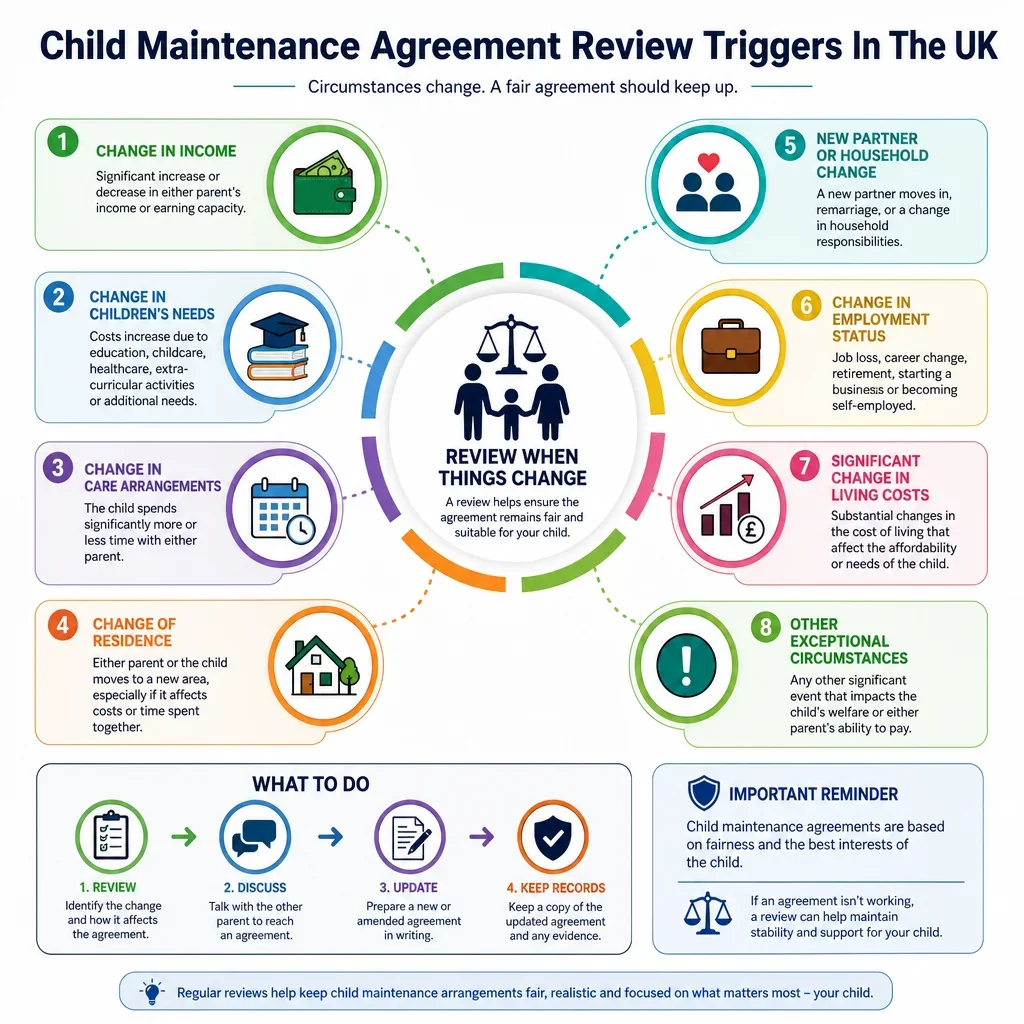
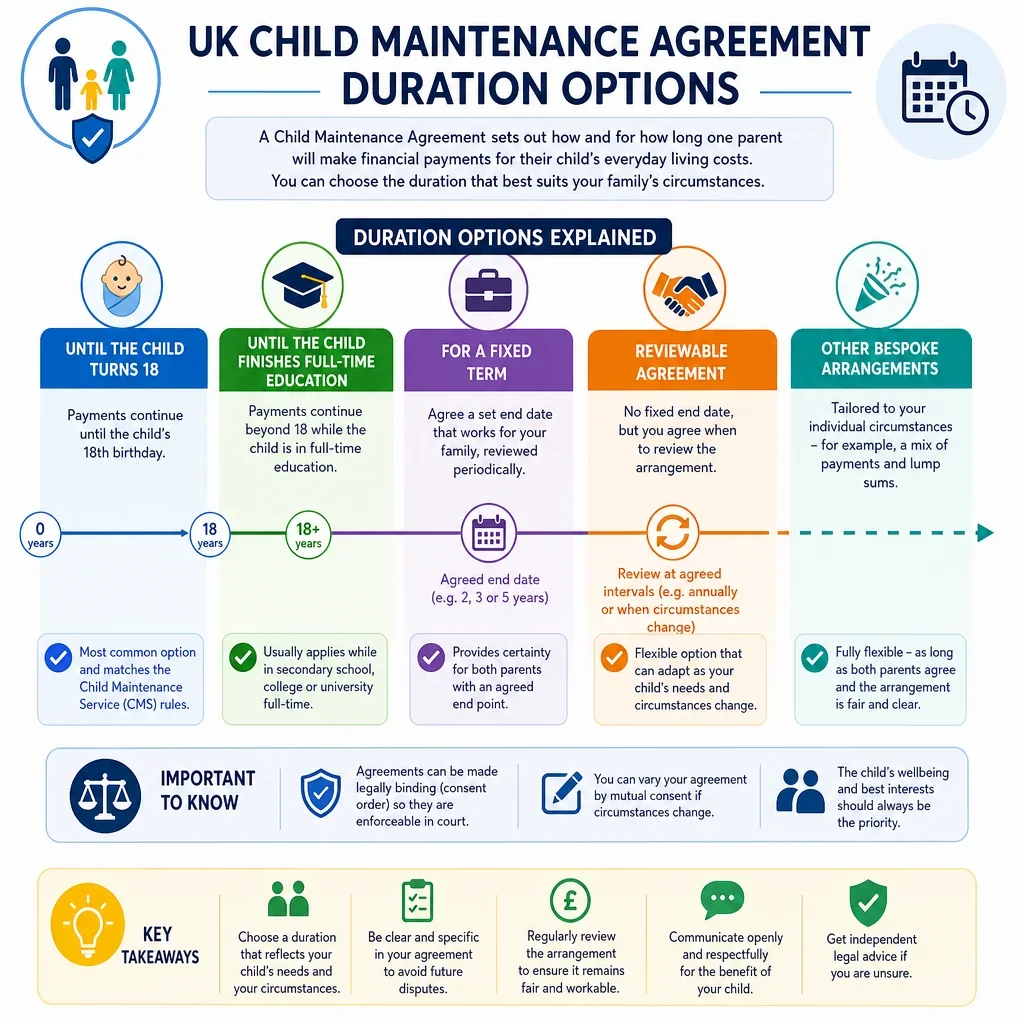
A monthly sum is paid until a review date or a specified change in income, care or child circumstances. | Provides consistency while allowing reassessment if circumstances materially change. | Reduces the risk of an outdated payment amount continuing indefinitely. | Disputes can arise if the agreement does not define when a review is triggered. | Best for regular salary Requires careful tracking |
What Child Maintenance Payment Frequency Works Best In The UK?
Monthly or weekly payments usually work best where child maintenance is intended to cover day-to-day living costs, because they align with common UK wage patterns and regular household bills.
Four-weekly payments can suit a paying parent paid every 4 weeks, but the agreement should explain how this differs from a calendar month to avoid accidental underpayment.
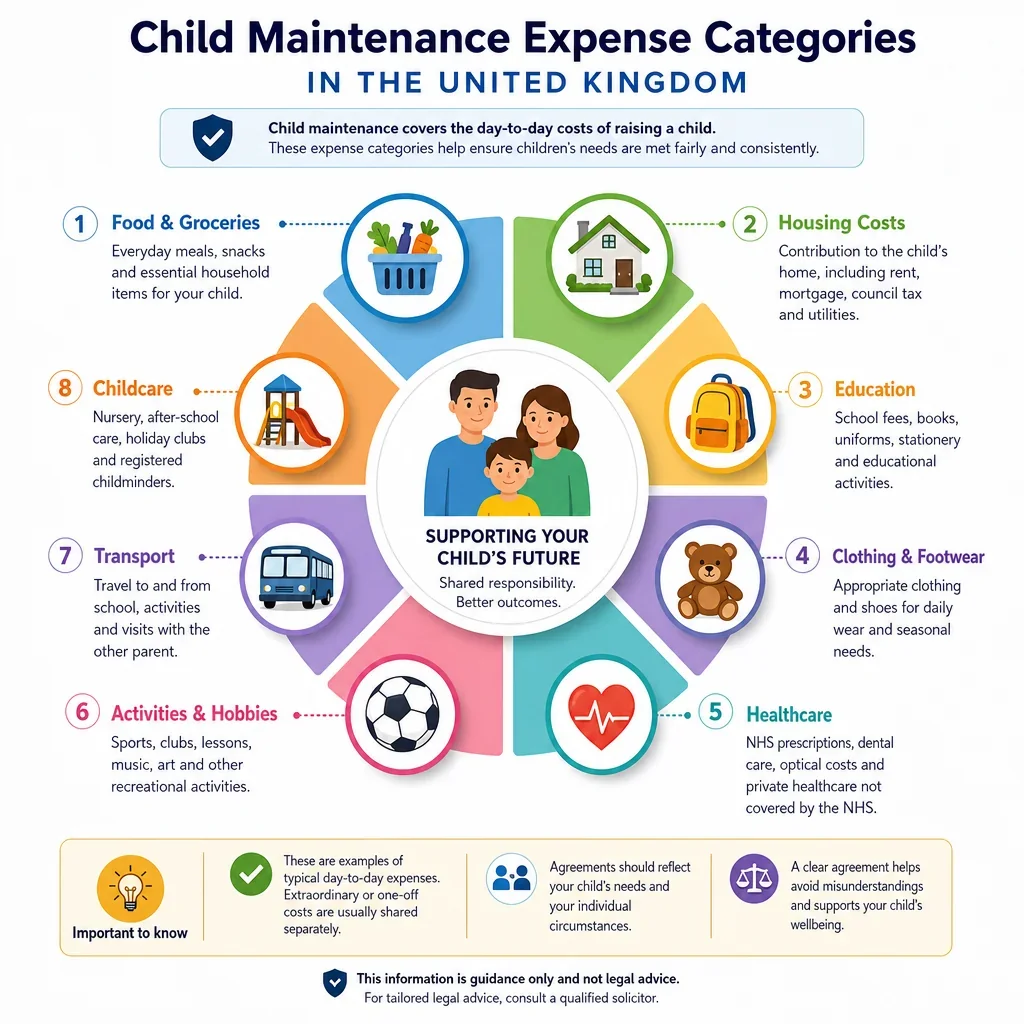
Termly or annual payments may be useful for school-related or predictable larger costs, but they should not leave the receiving parent without regular support for food, housing, clothing and routine care.
Ad hoc payments are best treated as extra support for specific expenses, not as the only maintenance method, unless both parents can carefully track payments and written evidence.
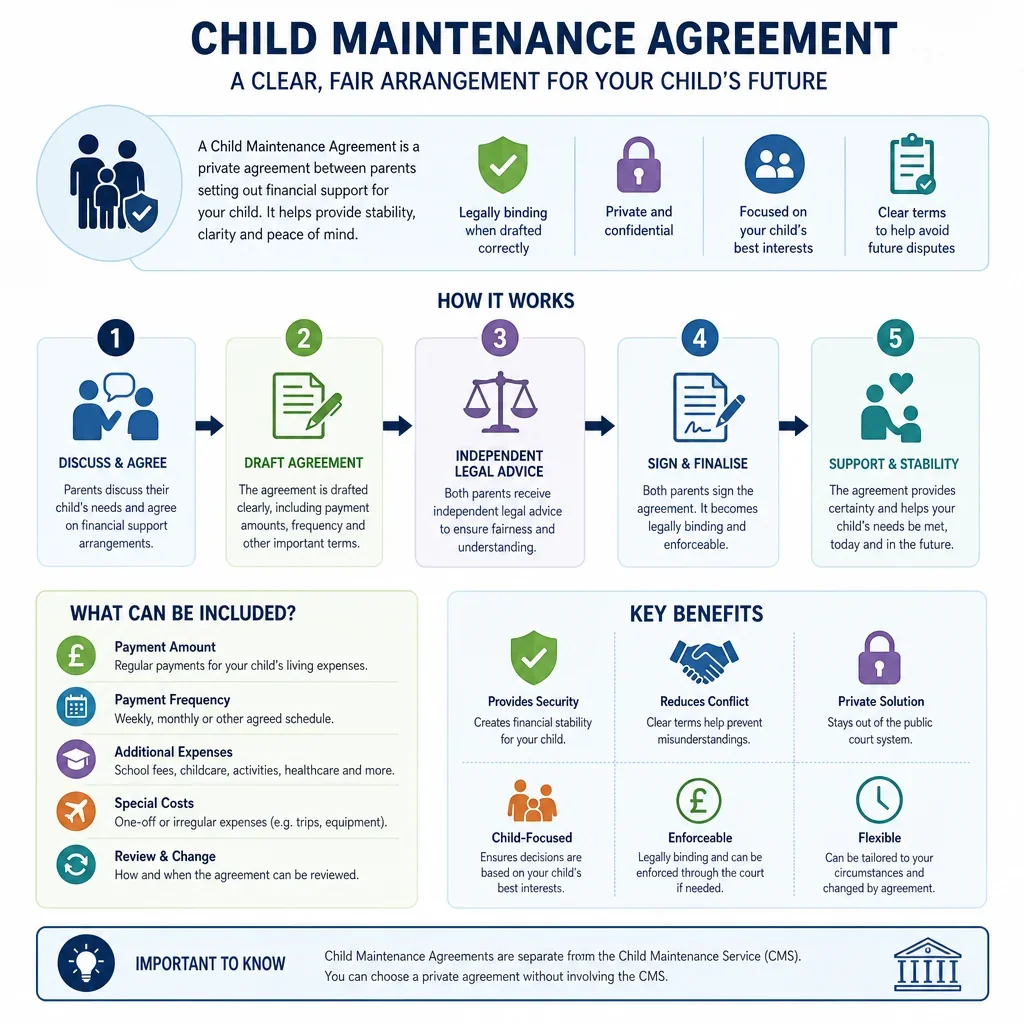
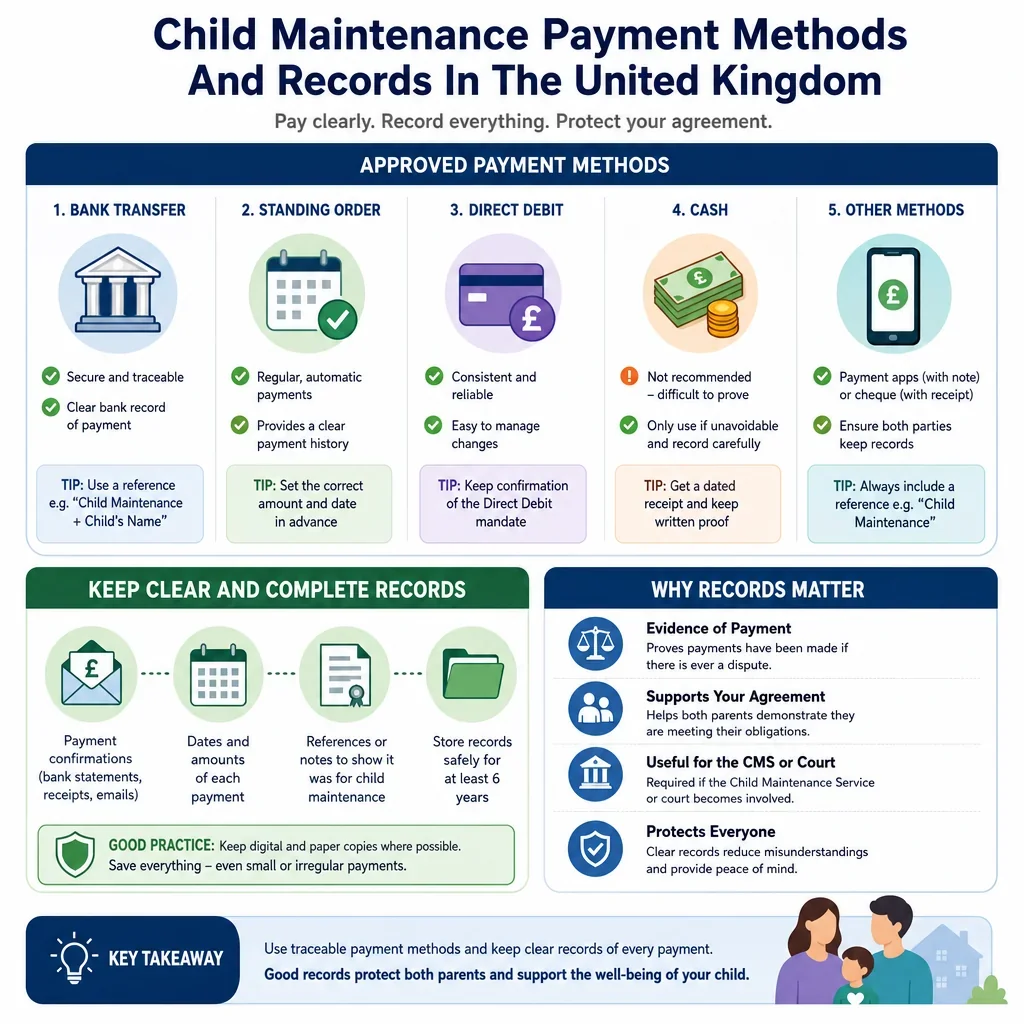
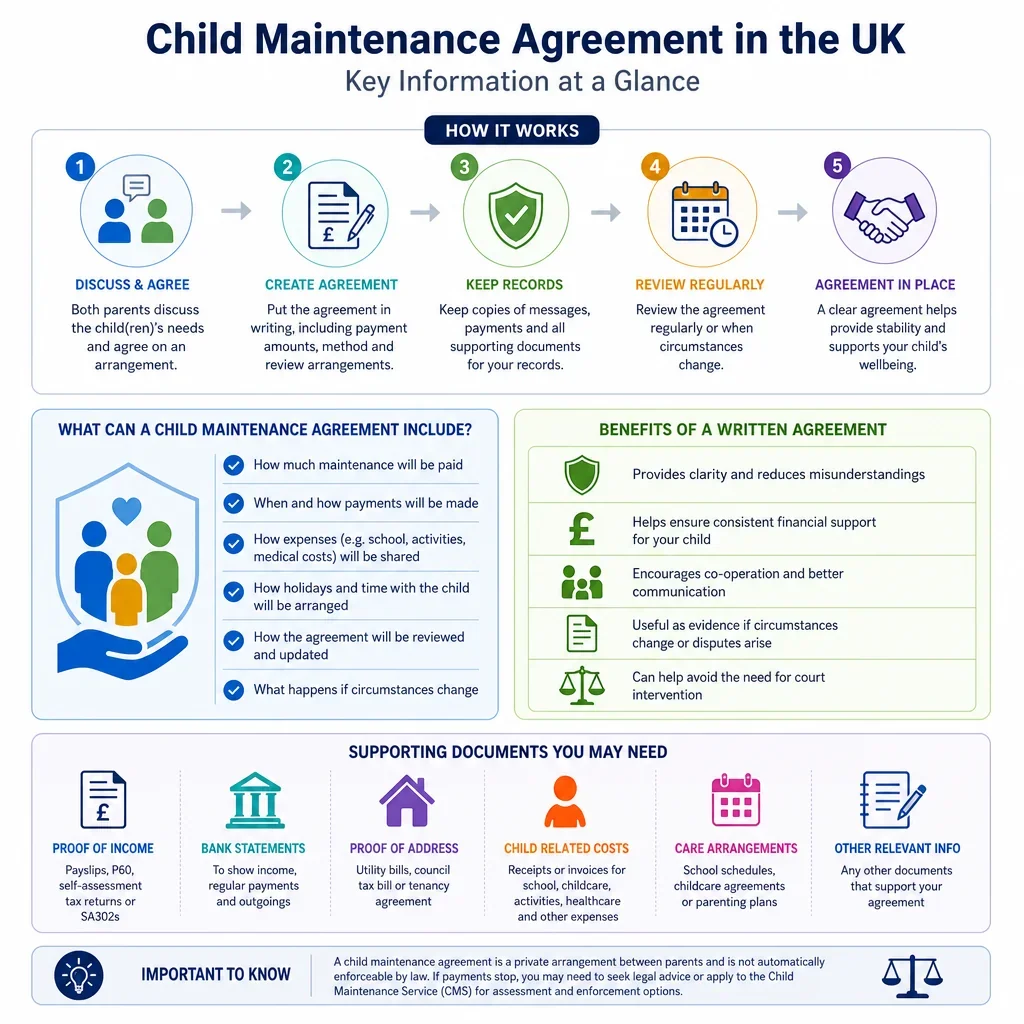
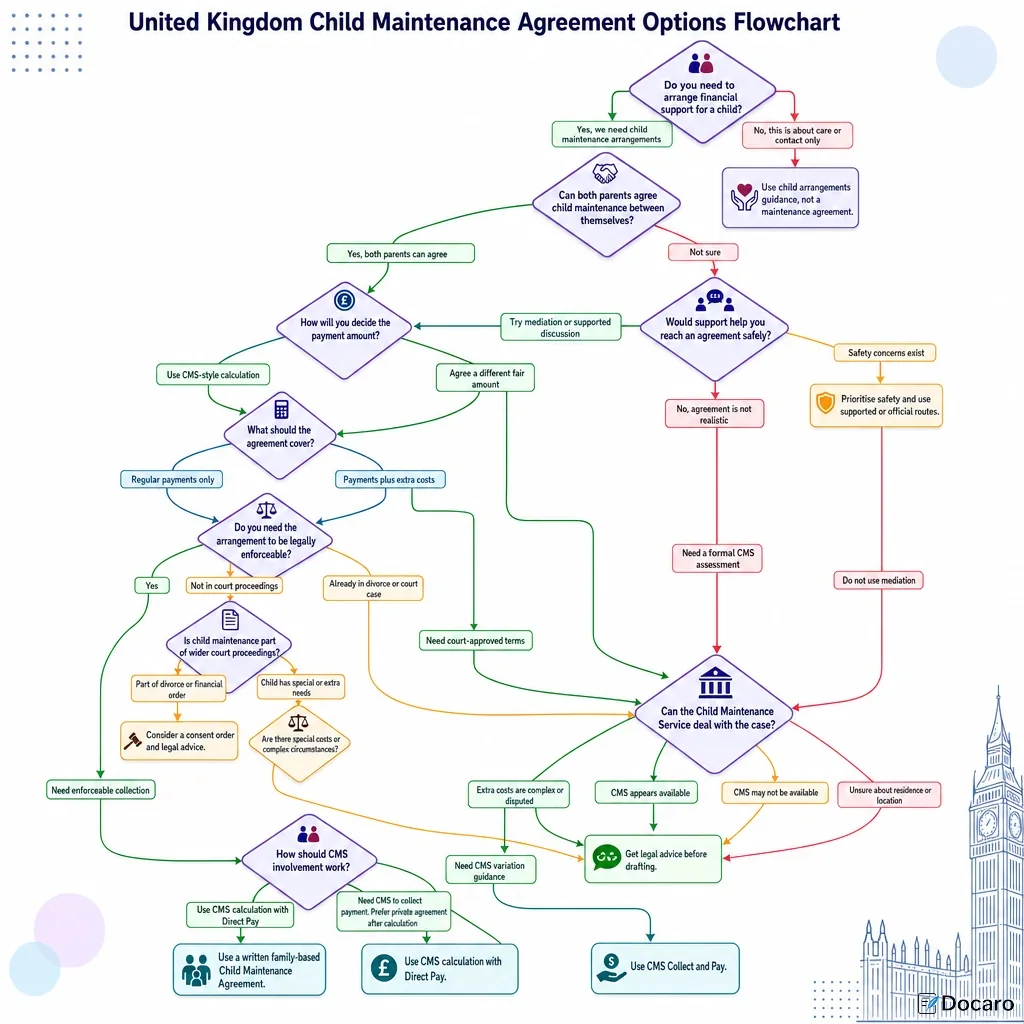
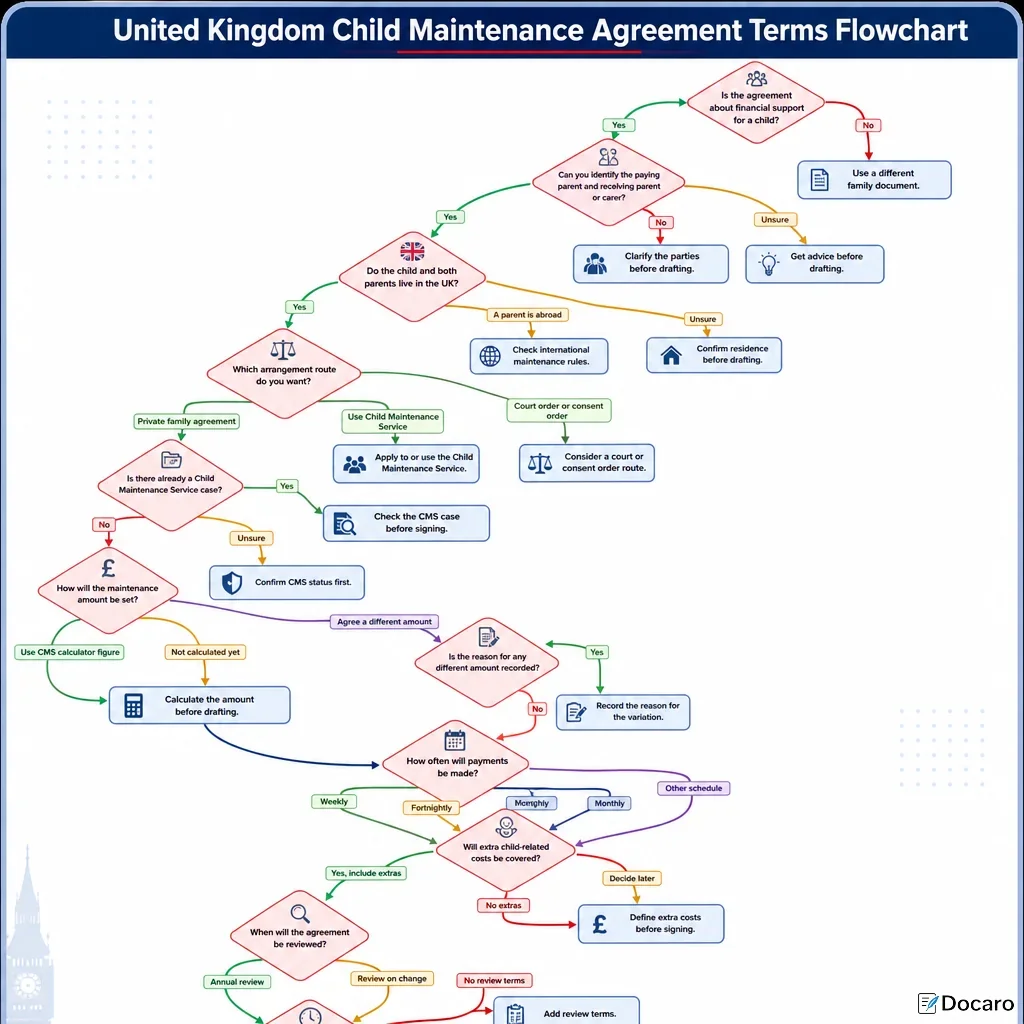
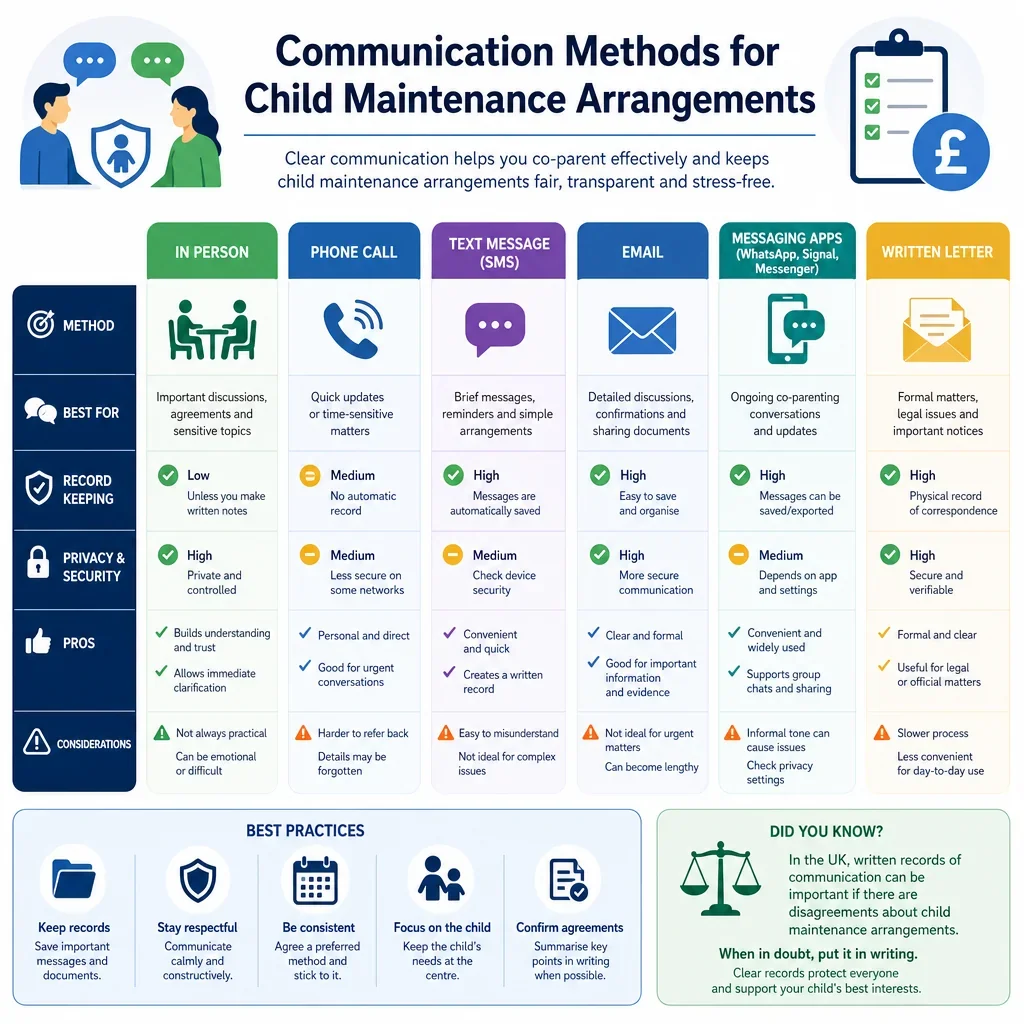
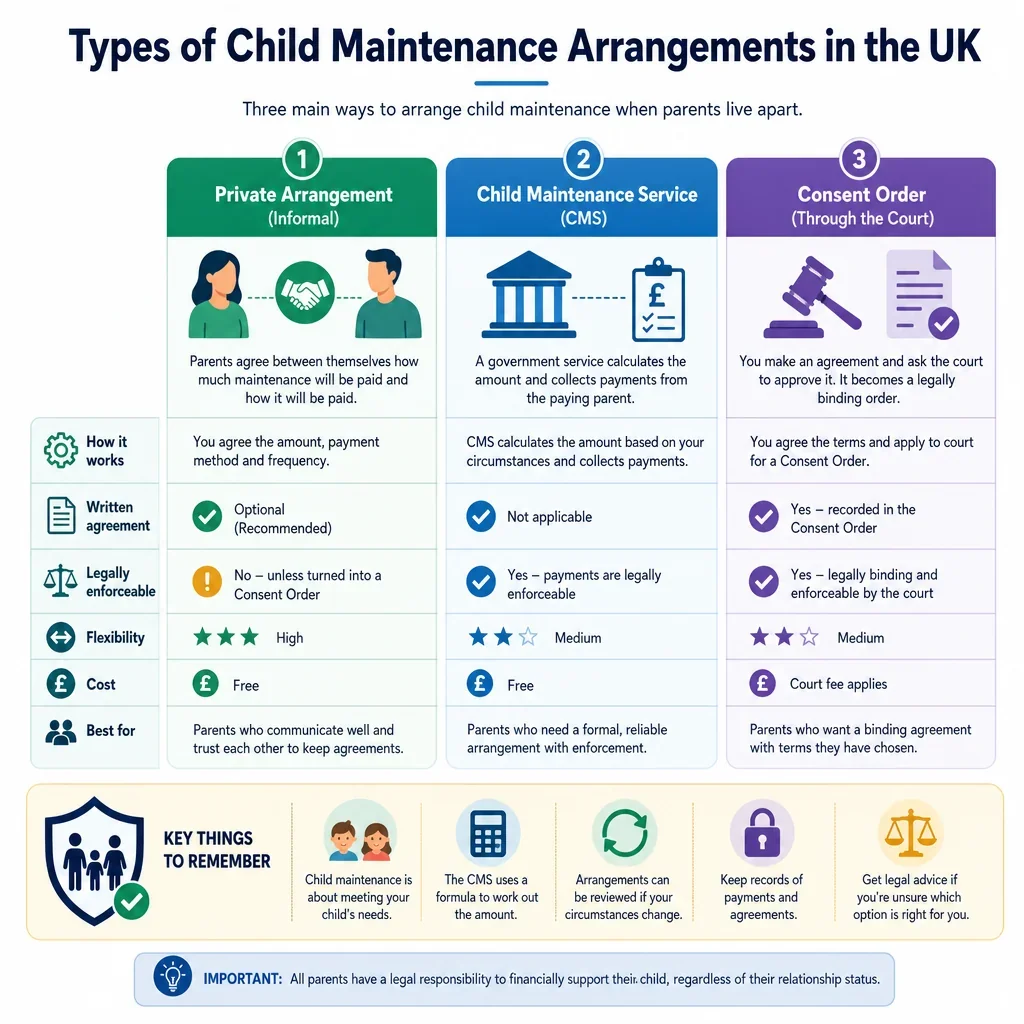
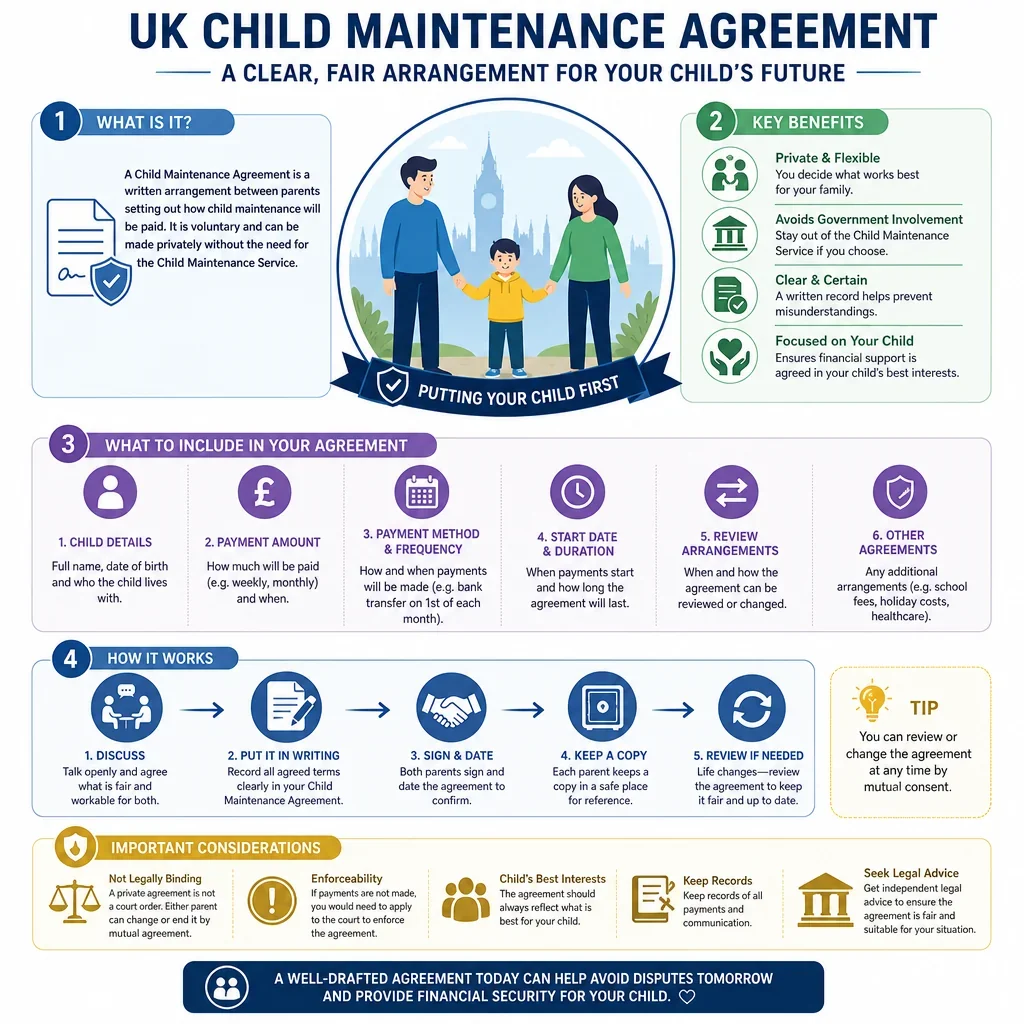
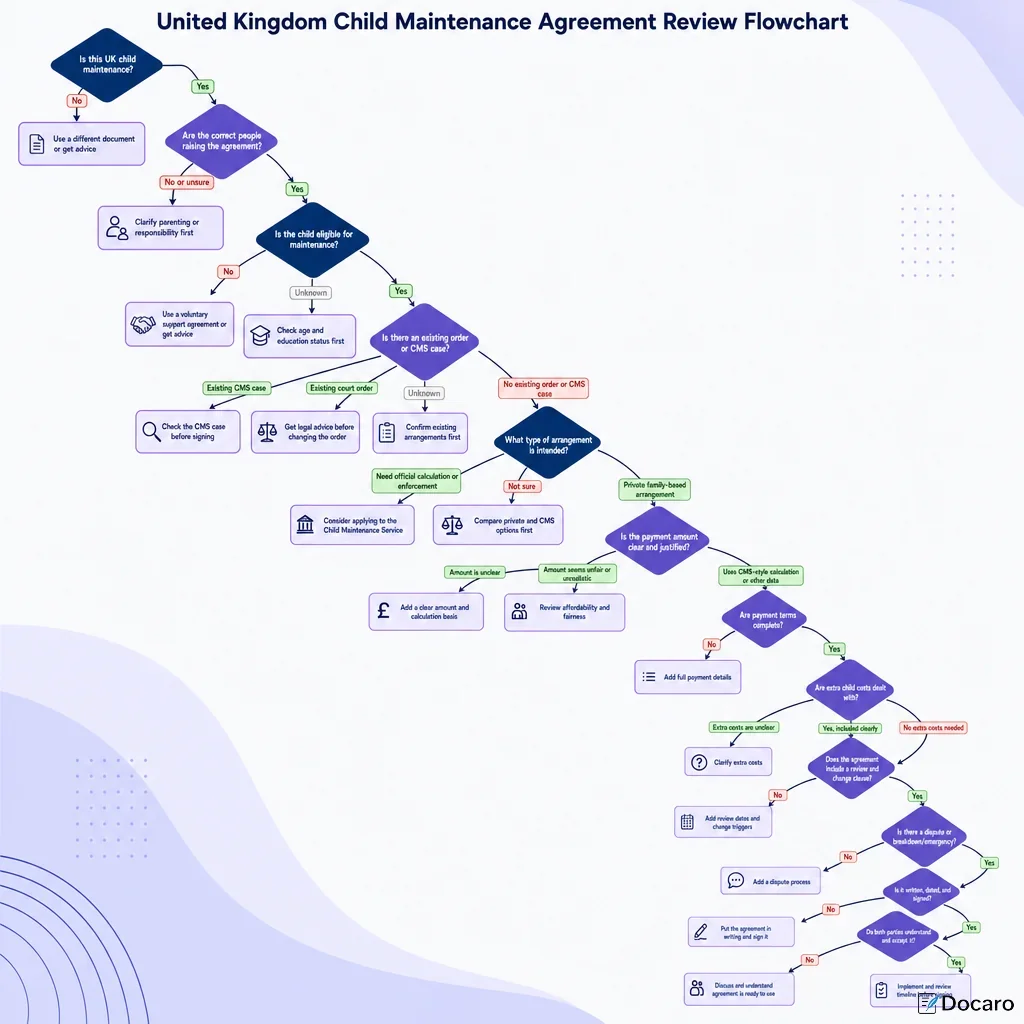
For UK agreements, parents should record the amount, frequency, due date, payment method, start date, review date and what happens if a payment is missed. If payments are arranged through the Child Maintenance Service, official guidance explains that payment arrangements may involve Direct Pay or Collect and Pay: https://www.gov.uk/child-maintenance-service/payments.
FAQs
You Might Also Be Interested In