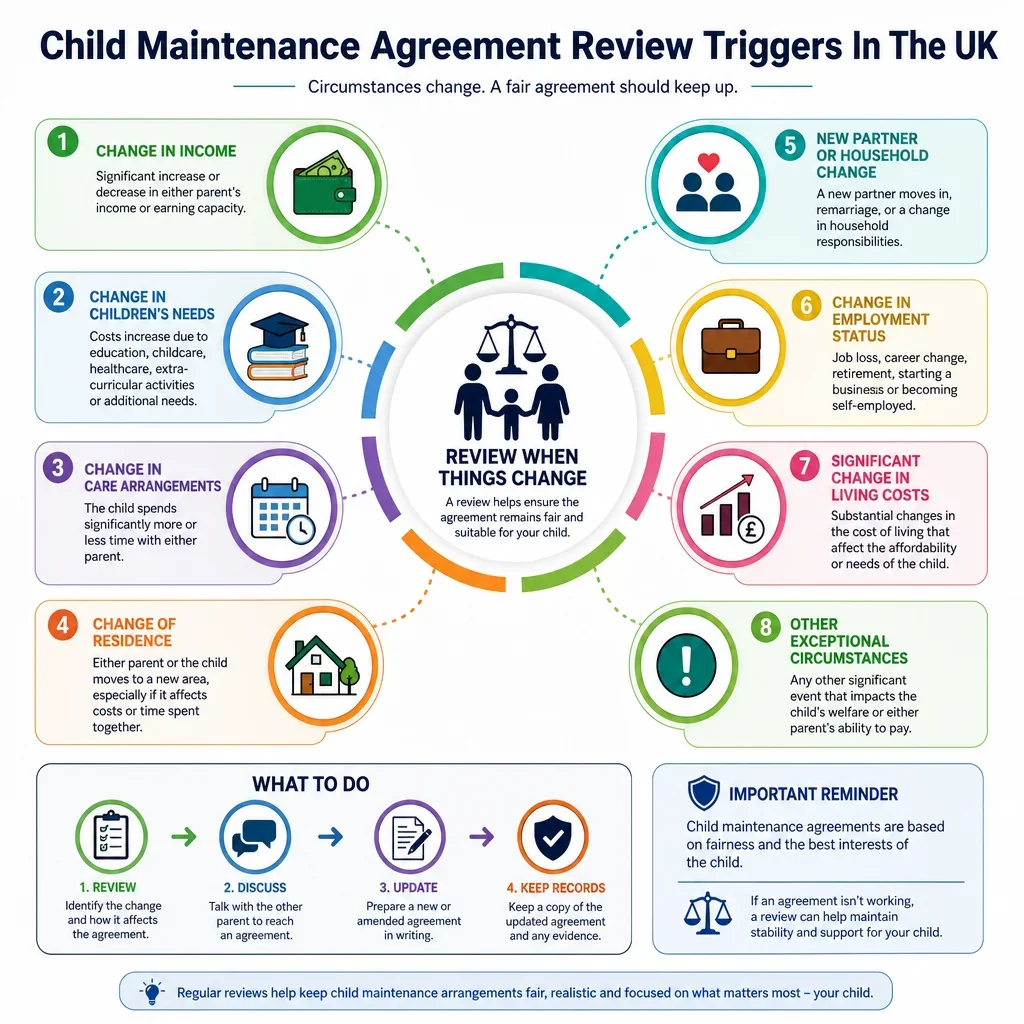
Child Maintenance Agreement Review Triggers In The UK
Review Trigger | Why It Matters | Information to Check | Suggested Review Timing | Likely Impact |
|---|---|---|---|---|
Income Change | ||||
Paying parent receives a significant pay rise | Higher income may justify a higher contribution to the child’s costs. | Recent payslips, employment contract, P60, bonus details. | Review within 30 days | High |
Paying parent has a significant pay cut | Lower income may affect affordability and the maintenance amount. | Payslips, employer letter, revised contract, bank statements. | Immediate Review | High |
Employment Change | ||||
Paying parent is made redundant | Loss of earnings may require a temporary or reduced payment plan. | Redundancy letter, final payslip, benefits claim, job search evidence. | Immediate Review | High |
Paying parent starts a new job after unemployment | New earnings may restart or increase maintenance payments. | Job offer, contract, first payslip, start date. | Review within 30 days | High |
Income Change | ||||
Paying parent receives large bonuses or commission | Variable earnings may make a fixed monthly amount unfair or inaccurate. | Bonus letters, commission statements, payslips, annual earnings. | Review at next scheduled date | Medium |
Regular overtime starts, stops, or changes materially | Regular overtime can materially change available income. | Payslips over 3 to 6 months, rota, employer confirmation. | Review at next scheduled date | Medium |
Self-employed parent’s profits change significantly | Business profits may rise or fall, affecting realistic contributions. | Tax return, SA302, accounts, management figures, bank statements. | Review at next scheduled date | High |
Company owner starts or stops taking dividends | Dividends can form part of available resources for maintenance. | Dividend vouchers, company accounts, tax return, bank credits. | Review at next scheduled date | Medium |
Paying parent substantially increases pension contributions | Large deductions may reduce take-home pay but need context. | Payslips, pension statements, scheme rules, reason for change. | Review only if requested | Medium |
Employment Change | ||||
Paying parent goes on maternity, paternity, adoption, or shared parental leave | Statutory or reduced pay may temporarily reduce affordability. | Leave dates, payslips, employer policy, statutory pay notice. | Review within 30 days | Medium |
Paying parent is on long-term sick leave | Sick pay may be far lower than normal earnings. | Fit notes, SSP or occupational sick pay details, payslips. | Immediate Review | High |
Paying parent retires | Income source and level may change from wages to pension income. | Pension statements, State Pension forecast, retirement date, savings income. | Review within 30 days | High |
Income Change | ||||
Paying parent starts receiving Universal Credit or other benefits | Benefit-based income may require a lower or flat-rate arrangement. | Universal Credit journal, award notices, income statement. | Immediate Review | High |
Receiving parent’s income changes significantly | May affect agreed extras, affordability, and cost sharing, though CMS focuses on paying parent income. | Payslips, benefits notices, childcare support, household budget. | Review only if requested | Low |
Living Arrangement Change | ||||
Paying parent has another child living in their household | Resources may need to support other children in the paying parent’s home. | Birth certificate, Child Benefit evidence, household details. | Review within 30 days | Medium |
Child moves to live mainly with the paying parent | The paying and receiving roles may change or payments may stop. | Written care agreement, school address, Child Benefit claim, calendar of nights. | Immediate Review | High |
Care becomes broadly equal between parents | Day-to-day costs are shared more evenly, so cash payments may change. | Shared care calendar, overnight records, travel and food costs. | Review within 30 days | High |
Child stays more nights with the paying parent | More overnight care may reduce the cash maintenance needed. | Overnight schedule, messages agreeing contact, school holiday pattern. | Review within 30 days | Medium |
Child stays fewer nights with the paying parent | Receiving parent may carry more daily costs. | Updated care calendar, contact records, reasons for change. | Review within 30 days | Medium |
Child moves into independent accommodation | Living costs and who pays them may change substantially. | Tenancy, bills, student finance, parental contribution plan. | Immediate Review | High |
Education Change | ||||
Child leaves full-time non-advanced education or approved training | Maintenance often depends on the child still being a qualifying child. | School or college leaving date, Child Benefit status, course details. | Immediate Review | High |
Child starts sixth form, college, or approved training | Education may extend maintenance and create new travel or course costs. | Enrolment letter, timetable, travel costs, equipment list. | Review within 30 days | Medium |
Child starts university or other advanced education | Statutory child maintenance may no longer apply, but voluntary support may be agreed. | University offer, student finance, accommodation costs, agreed support plan. | Immediate Review | High |
Parents agree or end private school fees | School fees can be a major additional cost outside basic maintenance. | Fee invoices, bursary letters, school contract, payment dates. | Review within 30 days | High |
School or college travel costs change significantly | Transport can materially affect weekly child-related spending. | Bus or train passes, fuel costs, school route, term dates. | Review at next scheduled date | Low |
Childcare Change | ||||
Paid childcare starts or increases | Nursery, childminder, or wraparound care costs may need separate sharing. | Invoices, provider contract, Tax-Free Childcare account, UC childcare element. | Review within 30 days | High |
Paid childcare ends or reduces | Reduced childcare may remove the need for an extra contribution. | Final invoice, new hours, school start date, childcare account statement. | Review within 30 days | Medium |
Government childcare support changes | Subsidies can reduce the net childcare cost parents must share. | Tax-Free Childcare statements, funded hours, Universal Credit childcare award. | Review at next scheduled date | Medium |
School holiday childcare needs change | Holiday clubs and cover can create seasonal cost spikes. | Holiday club invoices, work rota, holiday care schedule. | Review only if requested | Low |
Health or Disability Need | ||||
Child receives a disability diagnosis | Care, equipment, therapy, and transport costs may increase. | Medical letters, EHCP or support plan, DLA award, care costs. | Immediate Review | High |
Child’s disability benefit award changes | Benefits may offset some disability-related costs or signal higher needs. | DLA or PIP decision letter, care plan, mobility costs. | Review within 30 days | Medium |
Child develops recurring medical or therapy costs | Ongoing treatment costs may need a specific cost-sharing clause. | Invoices, prescriptions, referral letters, insurance cover. | Review within 30 days | Medium |
A parent becomes seriously ill or disabled | Income, care capacity, and extra support costs may change. | Medical evidence, benefits awards, care needs, work changes. | Immediate Review | High |
Cost of Living Change | ||||
Annual inflation or cost of living review date arrives | Child-related costs may rise even if income has not changed. | CPI or CPIH data, household budget, school and childcare costs. | Review at next scheduled date | Medium |
Essential housing costs rise sharply | Rent or mortgage increases may affect affordability and household stability. | Rent increase notice, mortgage statement, council tax bill, budget. | Review only if requested | Medium |
Child’s household faces unusually high utility costs | Higher energy costs can affect the child’s day-to-day living expenses. | Energy bills, direct debit changes, medical heating needs. | Review only if requested | Low |
Scheduled Review | ||||
Annual review date in the agreement | Keeps the arrangement aligned with income, care, and cost changes. | Updated income evidence, care calendar, school and childcare costs. | Review at next scheduled date | Medium |
New tax year begins | P60s, tax returns, and benefit rates often update around this time. | P60, tax return, benefit uprating, new childcare charges. | Review at next scheduled date | Medium |
CMS calculator estimate changes materially | A new benchmark may show the private agreement is out of date. | CMS estimate, gross weekly income, shared care nights, other children. | Review only if requested | Medium |
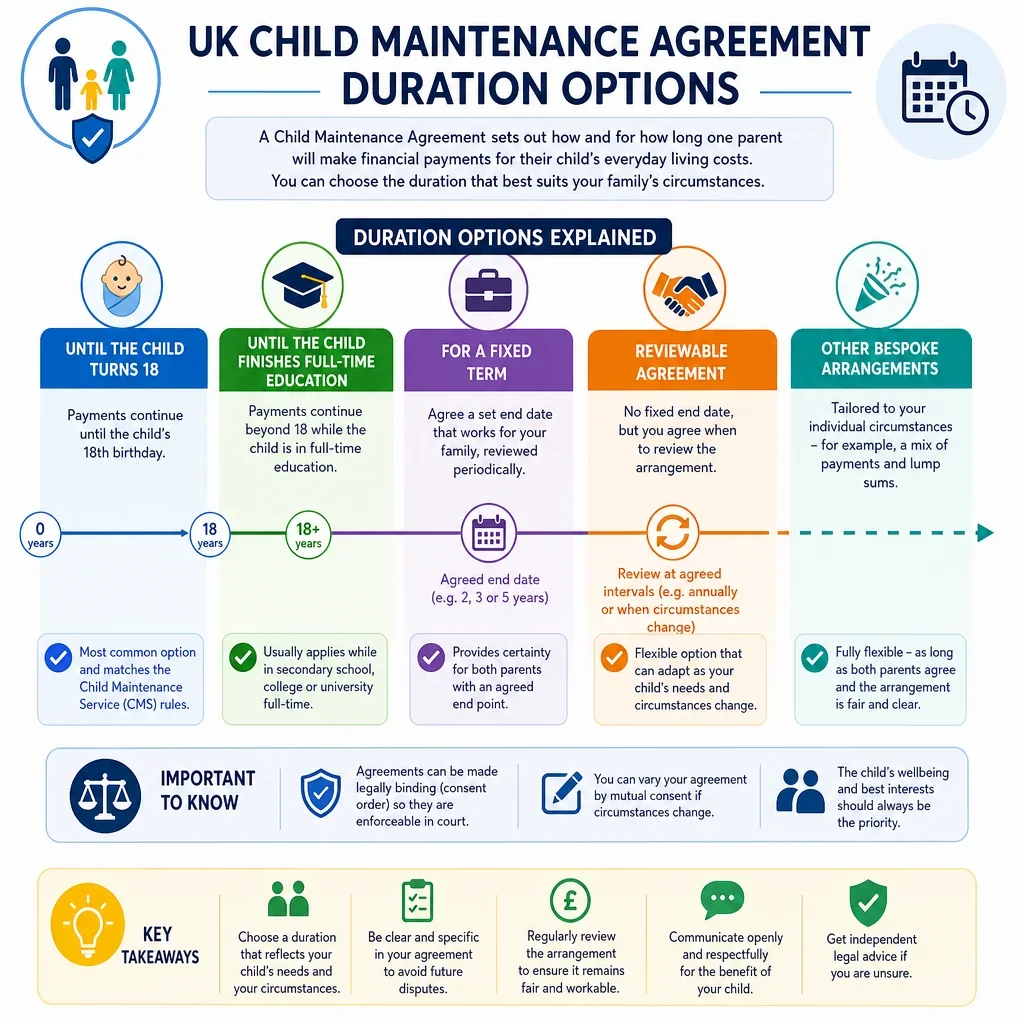
Child turns 16 | Eligibility may depend on education or approved training after 16. | Education plans, Child Benefit extension, college enrolment. | Review within 30 days | High |
Child turns 20 | Child Benefit and statutory maintenance eligibility usually cannot continue beyond this point. | Birth date, education status, final payment date. | Immediate Review | High |
Education Change | ||||
One child in a multi-child agreement ceases to qualify | Payments may need recalculating for the remaining qualifying children. | Each child’s age, education status, Child Benefit status, payment formula. | Immediate Review | High |
Living Arrangement Change | ||||
Either parent forms a new household with a partner | May affect household costs, but not usually the core CMS-style calculation. | Household budget, housing costs, children living in the home. | Review only if requested | Low |
A parent relocates, changing travel or contact costs | Travel costs may affect contact and how expenses are shared. | New address, travel receipts, contact schedule, school travel impact. | Review within 30 days | Medium |
Child or paying parent moves outside the UK | Jurisdiction, enforcement, currency, and payment method may change. | Country of residence, bank details, exchange rates, REMO options. | Immediate Review | High |
Other | ||||
Maintenance arrears start to build up | May show the amount or payment schedule is not workable. | Payment history, bank records, reasons for missed payments, repayment proposal. | Immediate Review | High |
Payment method becomes unreliable or costly | Changing payment method can reduce missed payments and disputes. | Bank records, standing order details, fees, payment dates. | Review within 30 days | Low |
Employment Change | ||||
Parent’s pay cycle changes | Weekly, four-weekly, or monthly pay may require adjusted payment dates. | Payslip dates, employer payroll calendar, standing order dates. | Review within 30 days | Low |
Other | ||||
Agreed extras such as clubs, uniforms, or trips change | Extras can cause disputes if not separated from basic maintenance. | Receipts, school trip letters, club invoices, prior written agreement. | Review only if requested | Low |
Education Change | ||||
Older child starts significant paid work | Work status may affect education status, Child Benefit, and support needs. | Employment details, hours, education status, Child Benefit position. | Review only if requested | Medium |
Child starts an apprenticeship | Some training qualifies for Child Benefit and maintenance paid employment may not. | Apprenticeship type, pay, hours, Child Benefit decision. | Immediate Review | High |
Other | ||||
A court order affecting child maintenance is made or varied | Court terms may affect enforceability, school fees, or agreed top-up support. | Sealed order, date made, maintenance clauses, variation terms. | Immediate Review | High |
Either parent applies to the Child Maintenance Service | A CMS calculation may replace or benchmark the private arrangement. | CMS application date, calculation notice, payment method, existing agreement terms. | Immediate Review | High |
Scheduled Review | ||||
Twelve months have passed since a consent order child maintenance term | After 12 months, a parent may usually apply to CMS for statutory maintenance. | Order date, maintenance clause, CMS eligibility, current payments. | Review at next scheduled date | High |
Other | ||||
A parent dies | Maintenance arrangements end or need replacing with estate, benefits, or guardian support. | Death certificate, benefits, will, guardianship, estate position. | Immediate Review | High |
Employment Change | ||||
Paying parent is imprisoned | Income and payment ability may stop or reduce sharply. | Sentence details, income, assets, expected release date, existing arrears. | Immediate Review | High |
Income Change | ||||
Paying parent becomes bankrupt or enters insolvency | Disposable income, debts, and payment reliability may change. | Bankruptcy order, IVA terms, income payments agreement, budget. | Immediate Review | High |
Paying parent receives substantial rental, investment, or asset income | Non-salary income may affect ability to contribute. | Tax return, rental statements, investment income, bank credits. | Review only if requested | Medium |
Living Arrangement Change | ||||
Child Benefit claimant changes | May indicate a change in main care or qualifying child status. | Child Benefit award, care schedule, school address, household evidence. | Review within 30 days | High |
Child is taken into local authority care | Neither parent may be meeting usual day-to-day care costs in the same way. | Care order, placement details, contact costs, local authority communications. | Immediate Review | High |
Safeguarding issue changes the child’s contact arrangements | Reduced or supervised contact may change care costs and travel responsibilities. | Child arrangements order, safeguarding letters, contact centre fees. | Immediate Review | Medium |
When Should A UK Child Maintenance Agreement Be Reviewed?
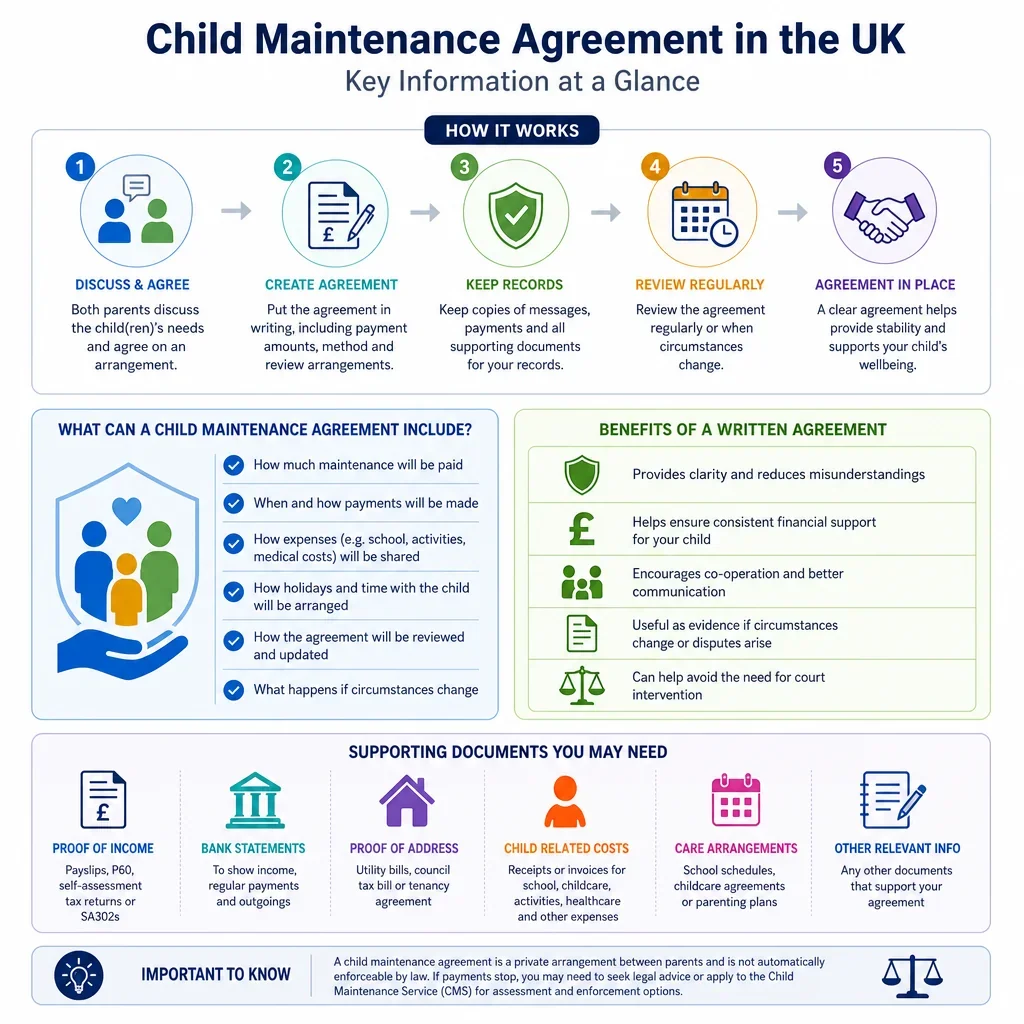
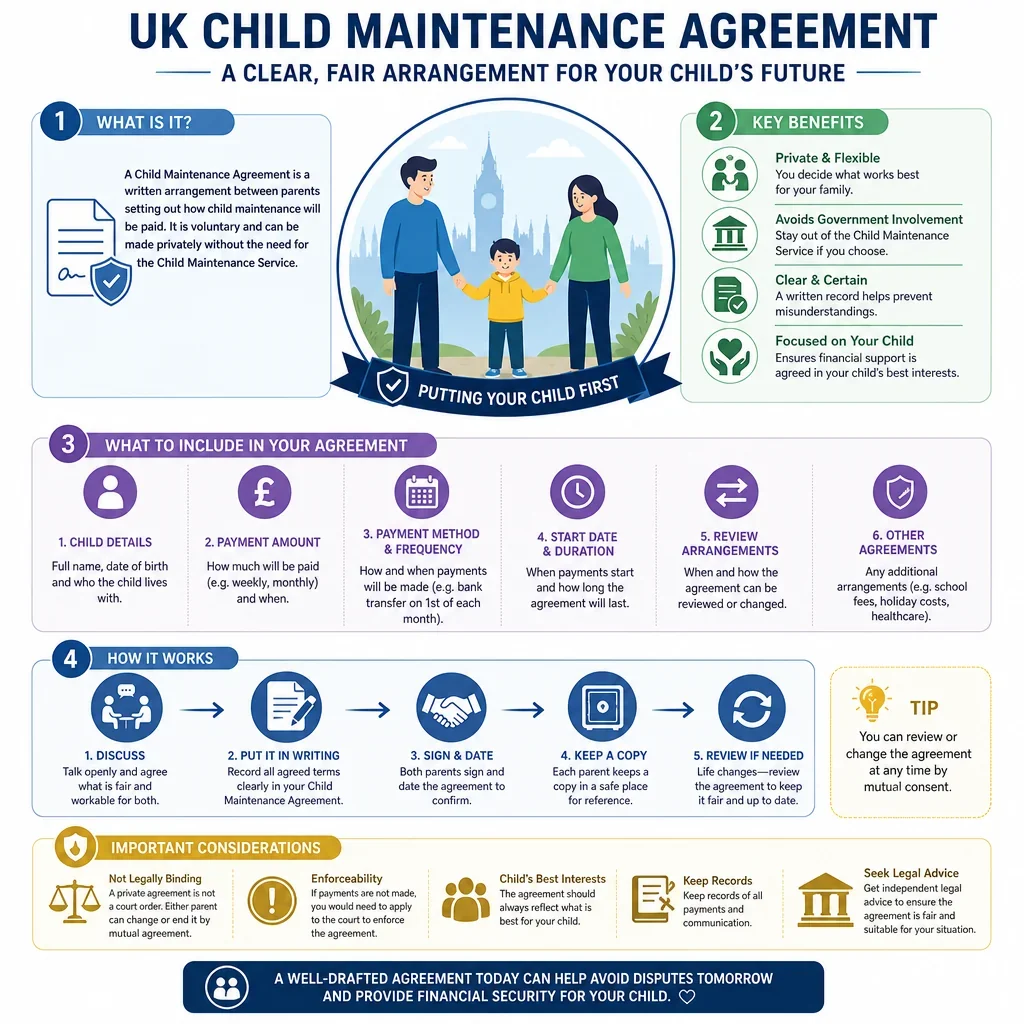
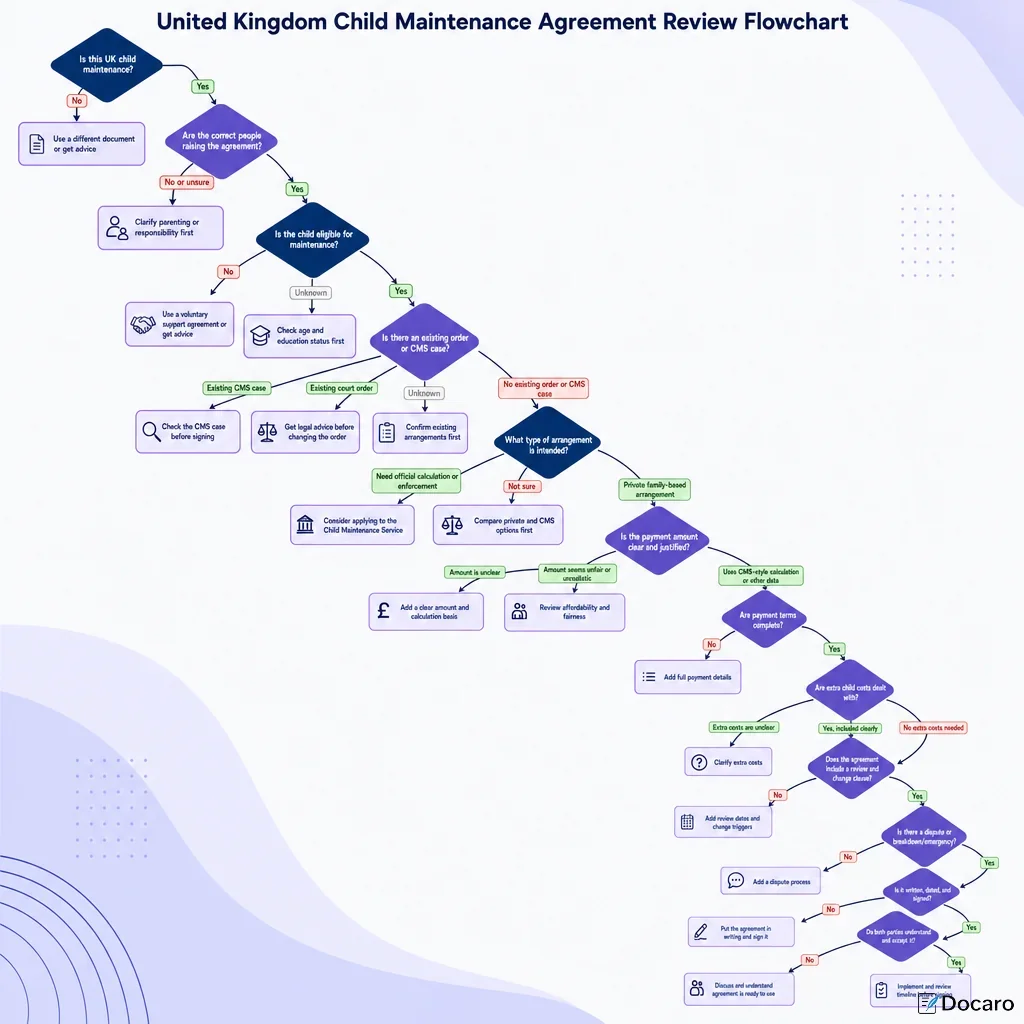
A child maintenance agreement should usually be reviewed promptly where the paying parent’s income, employment status, the child’s living arrangements, or the child’s needs change. These are the triggers most likely to affect the amount payable or who should pay it.
Which Changes Are Most Likely To Affect Child Maintenance?
- Income and employment changes, such as redundancy, a major pay rise, reduced hours, bonuses, or self-employment profits, can materially change affordability and the appropriate contribution.
- Shared care changes, including a child moving home or staying more nights with the paying parent, can alter how day-to-day costs are divided.
- Childcare, school, health, and disability costs may justify reviewing additional contributions beyond a basic maintenance figure.
- Scheduled annual reviews help keep a family-based arrangement aligned with tax-year income, benefit changes, school costs, and inflation.
What Evidence Should Parents Check Before Changing Payments?
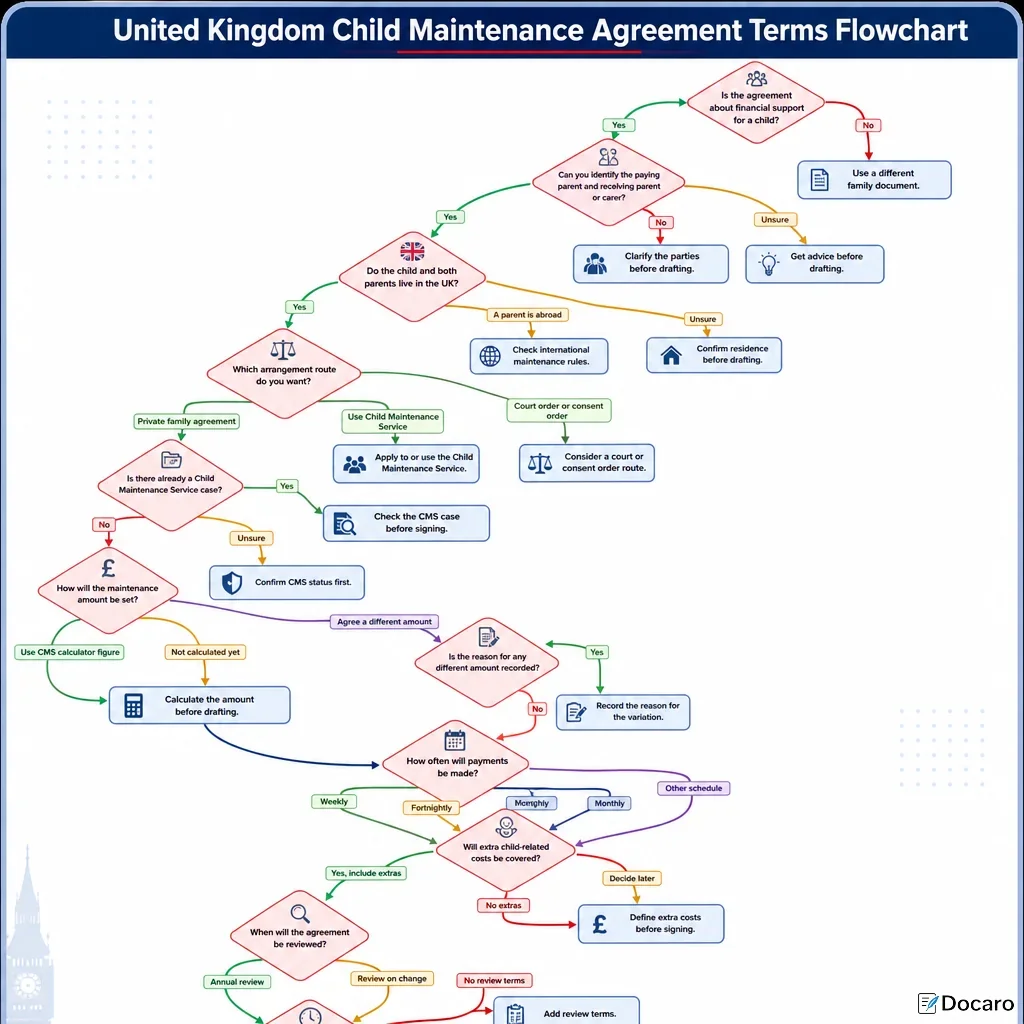
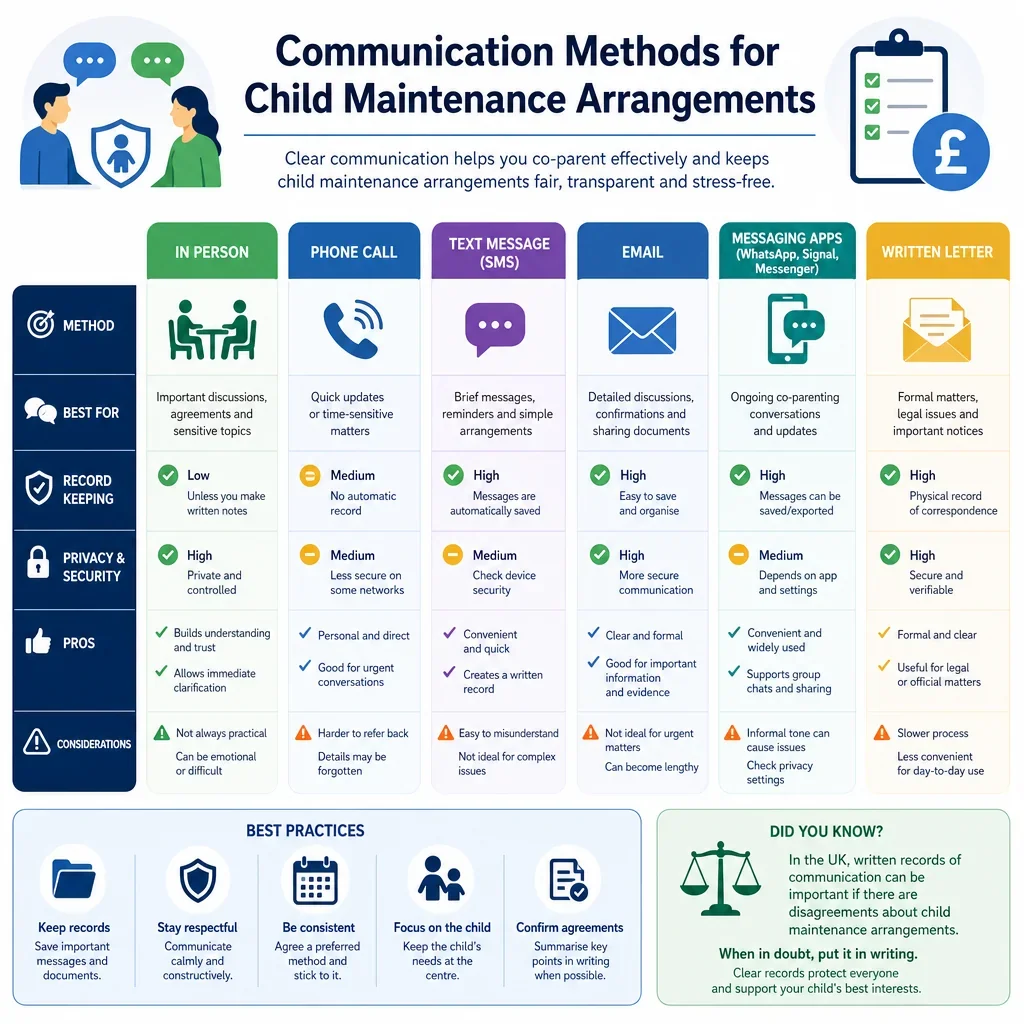
Useful evidence includes payslips, P60s, tax returns, Universal Credit notices, childcare invoices, school fee demands, medical evidence, tenancy or mortgage costs, and a clear record of overnight care. Keeping evidence reduces disputes and helps both parents make fair changes.
Can Parents Use CMS Rules As A Benchmark?
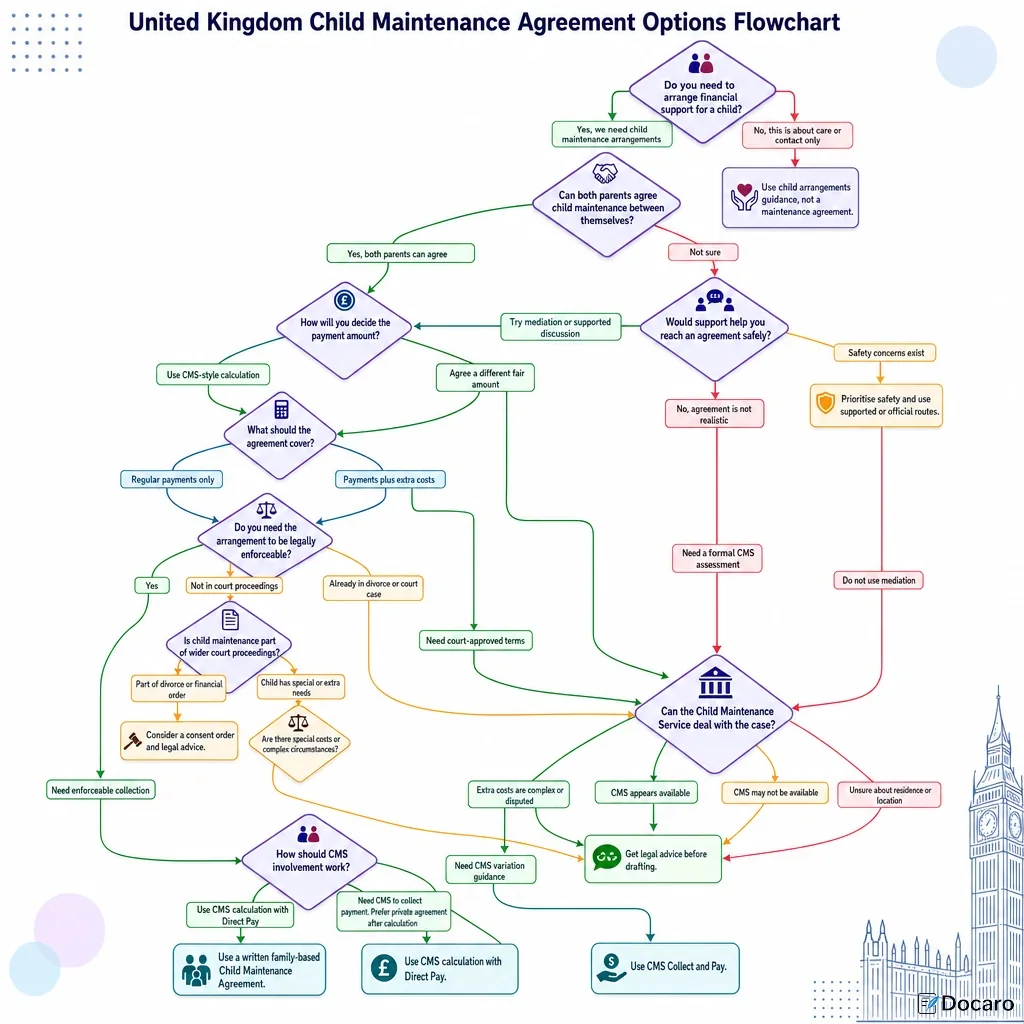
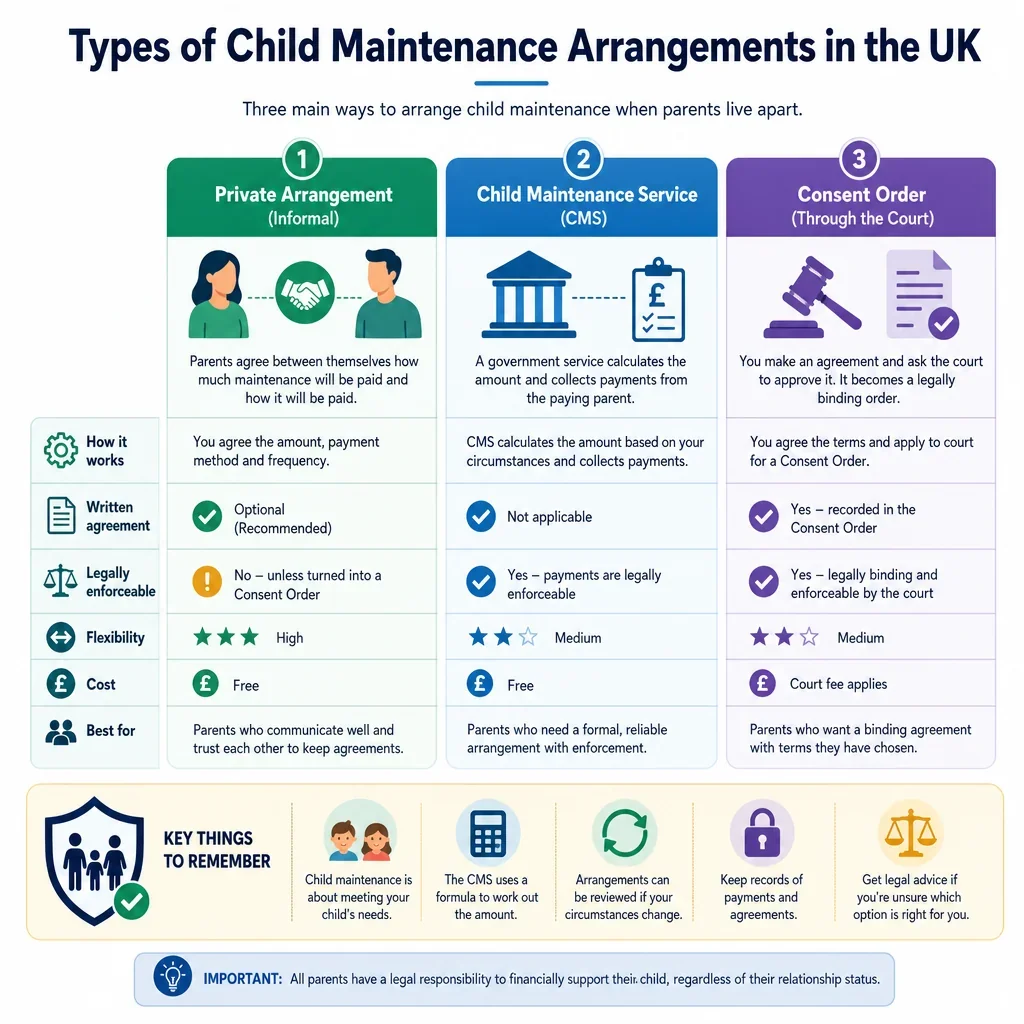
Many parents use the Child Maintenance Service calculation approach as a reference point, even for a private agreement. CMS calculations are based mainly on gross weekly income and can take account of other children, shared care, and certain income changes. See GOV.UK child maintenance calculator.
FAQs
You Might Also Be Interested In