UK Child Maintenance Agreement Preparation Checklist
Checklist Item | Why It Matters | Importance | Information Needed | Timing |
|---|---|---|---|---|
Parent Details | ||||
Record each parent’s full legal name. | Avoids uncertainty about who is bound by the agreement. | Essential | Full names as used on official documents. | Before drafting |
Record each parent’s current address. | Supports notices, records and identification. | Essential | Residential and correspondence addresses. | Before drafting |
List reliable contact details for each parent. | Enables payment queries and review notices. | Essential | Email, phone number and preferred contact method. | Before drafting |
State who pays and who receives maintenance. | Clarifies the direction of payments. | Essential | Main day-to-day carer and paying parent details. | Before drafting |
Note each parent’s parental responsibility status. | Helps distinguish maintenance from wider parenting rights. | Recommended | Birth certificate, marriage, agreement or court order details. | Before drafting |
Check for any existing CMS decision or court order. | Prevents conflict with current legal or administrative arrangements. | Essential | CMS letters, consent orders or court order copies. | Before drafting |
Child Details | ||||
List each child covered by the agreement. | Shows exactly which children maintenance covers. | Essential | Each child’s full name. | Before drafting |
Record each child’s date of birth. | Age affects eligibility, costs and review timing. | Essential | Dates of birth for all children covered. | Before drafting |
Record where each child mainly lives. | Supports identification of the receiving parent. | Essential | Main home, shared care pattern and school-week routine. | Before drafting |
Estimate annual overnight stays with the paying parent. | Shared care can affect maintenance calculations. | Essential | Calendar, parenting plan or usual overnight schedule. | Before drafting |
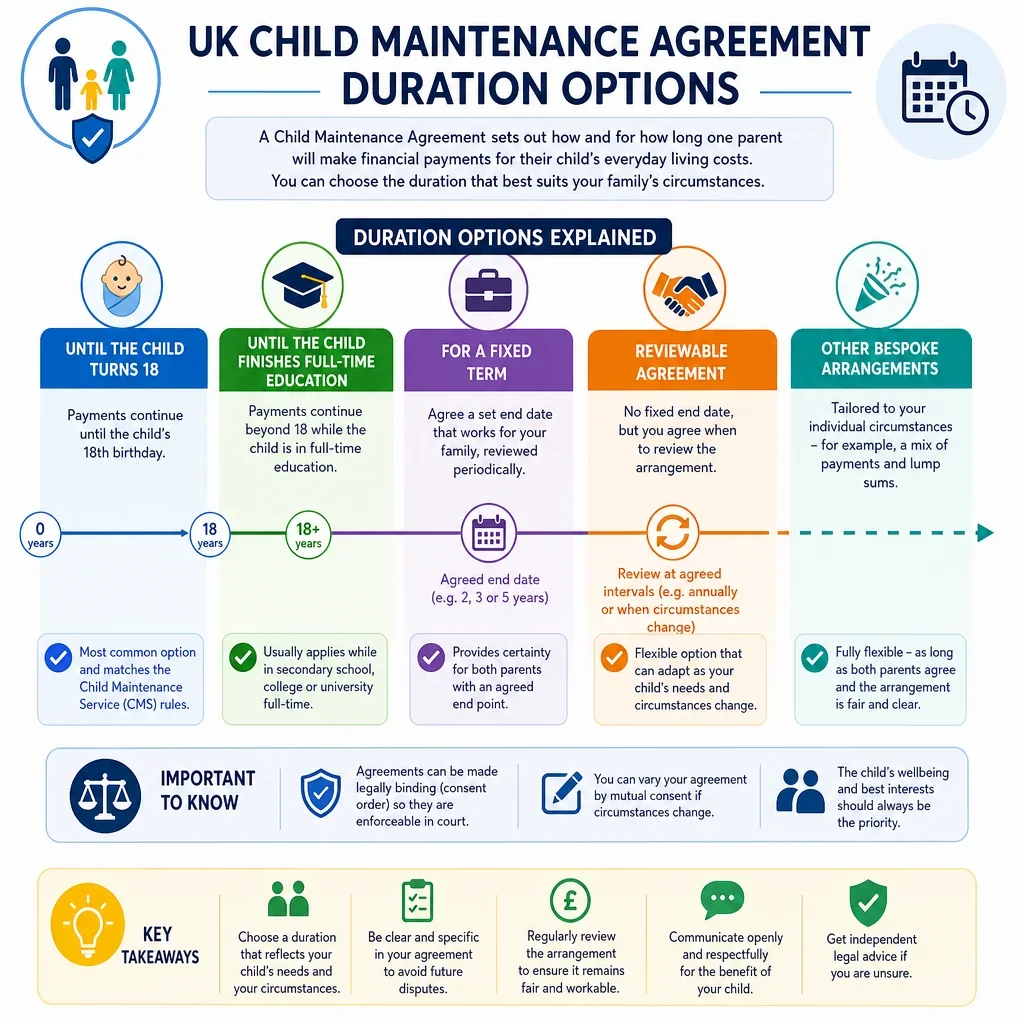
Confirm each child’s education or training status. | Maintenance may continue for qualifying education or training. | Essential | School, college, course and expected end date. | Before drafting |
Identify any disability or additional support needs. | Additional needs may affect expenses and review triggers. | Depends on circumstances | Care needs, disability benefits and recurring costs. | Before drafting |
Clarify whether any children are excluded. | Avoids confusion where parents have other children. | Recommended | Names of other children and reason excluded. | During drafting |
Payment Amount | ||||
Use the GOV.UK calculator as a benchmark. | Provides an official estimate for comparison. | Essential | Income, children, benefits and shared care details. | Before drafting |
Record the paying parent’s gross weekly income. | CMS calculations are based mainly on gross income. | Essential | Recent payslips, P60, tax return or accounts. | Before drafting |
State the date income evidence was checked. | Shows the figures used were current at drafting. | Recommended | Date of payslip, accounts or tax calculation. | During drafting |
Check self-employment or company director income. | Income may vary and include dividends or profits. | Depends on circumstances | Tax return, accounts, dividends and drawings. | Before drafting |
Identify whether the paying parent receives benefits. | Benefits can affect the applicable maintenance rate. | Essential | Benefit type, award letters and payment amounts. | Before drafting |
Record other children the paying parent supports. | Other supported children can affect affordability and calculations. | Essential | Names, ages, household status and support paid. | Before drafting |
State the exact maintenance amount. | Avoids disputes about what is owed. | Essential | Amount per week, month or other period. | During drafting |
Say whether the amount is total or per child. | Prevents errors when one child stops qualifying. | Recommended | Total amount and any per-child split. | During drafting |
Payment Schedule | ||||
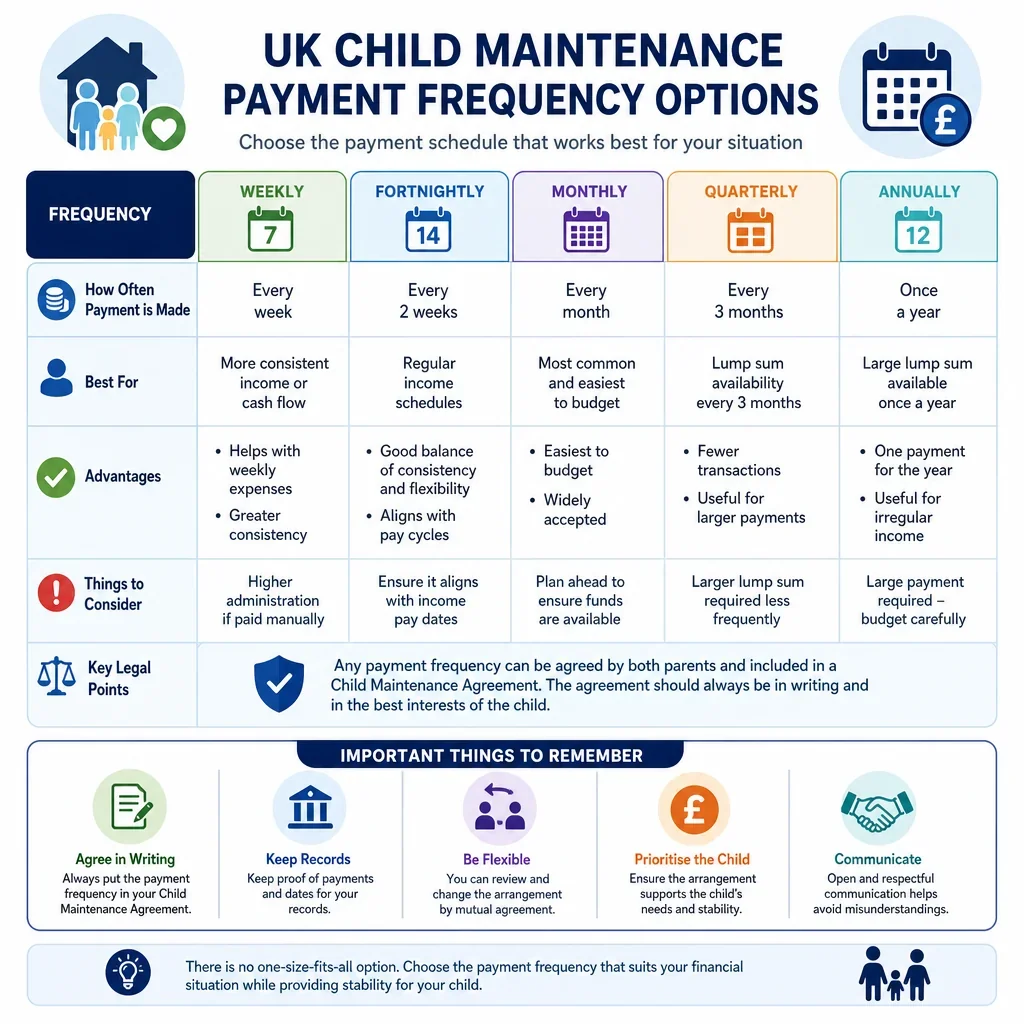
Set the maintenance start date. | Clarifies when liability begins. | Essential | First payment date and any backdated period. | During drafting |
Choose payment frequency. | Aligns payments with income and household budgeting. | Essential | Weekly, fortnightly, four-weekly or monthly schedule. | During drafting |
Specify the exact payment due date. | Makes late payment easy to identify. | Essential | Day of week or date of month. | During drafting |
Payment Method | ||||
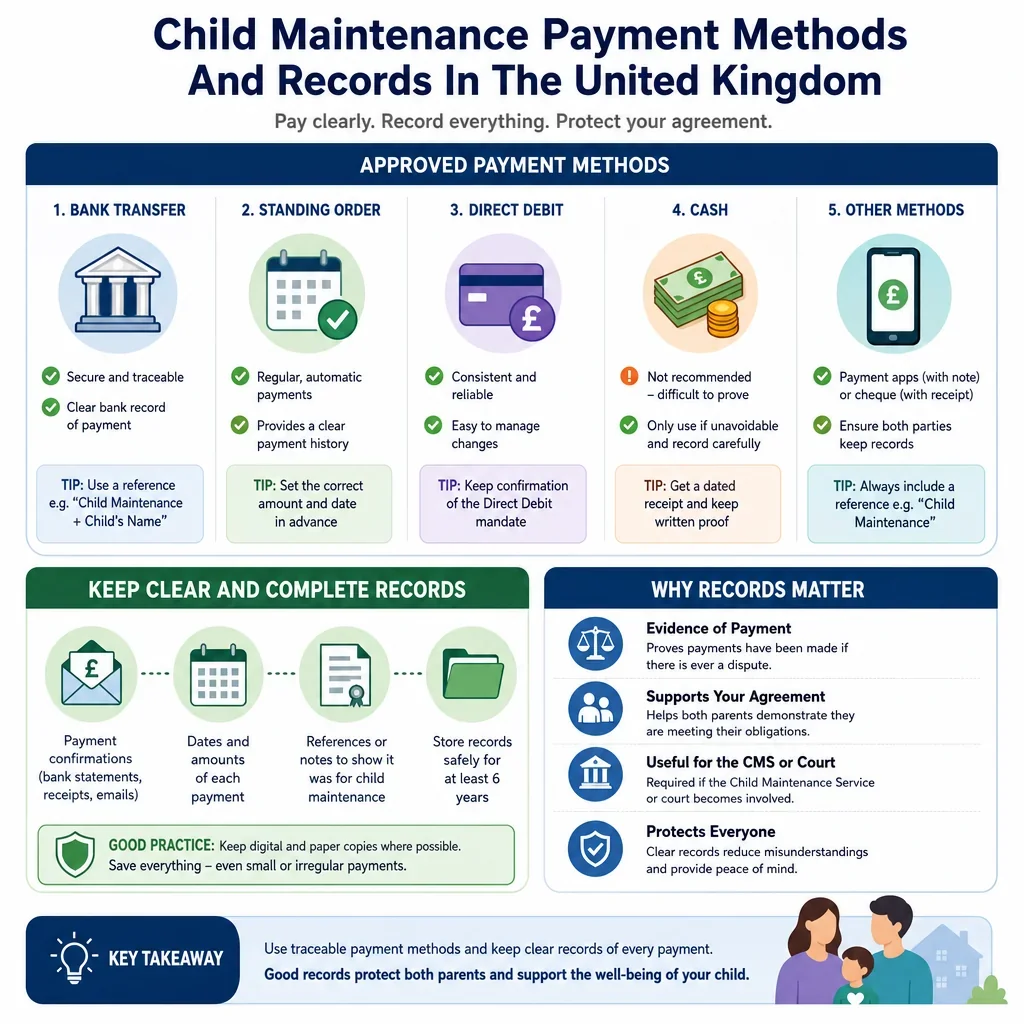
Use bank transfer or standing order where possible. | Creates a clear payment record. | Recommended | Account name, sort code and account number. | During drafting |
Agree a consistent payment reference. | Helps distinguish maintenance from other transfers. | Recommended | Reference such as child name and month. | During drafting |
Set receipt rules for any cash payments. | Reduces disputes about whether cash was paid. | Depends on circumstances | Receipt format, date, amount and signatures. | During drafting |
Payment Schedule | ||||
Agree what happens if a payment is missed. | Provides a practical process before conflict escalates. | Essential | Grace period, notice method and catch-up plan. | During drafting |
Explain how overpayments will be handled. | Prevents disagreement about credits or refunds. | Recommended | Credit, refund or adjustment method. | During drafting |
Payment Amount | ||||
Record any existing arrears or unpaid support. | Separates past debt from future maintenance. | Depends on circumstances | Amount owed, period covered and repayment plan. | Before signing |
Shared Expenses | ||||
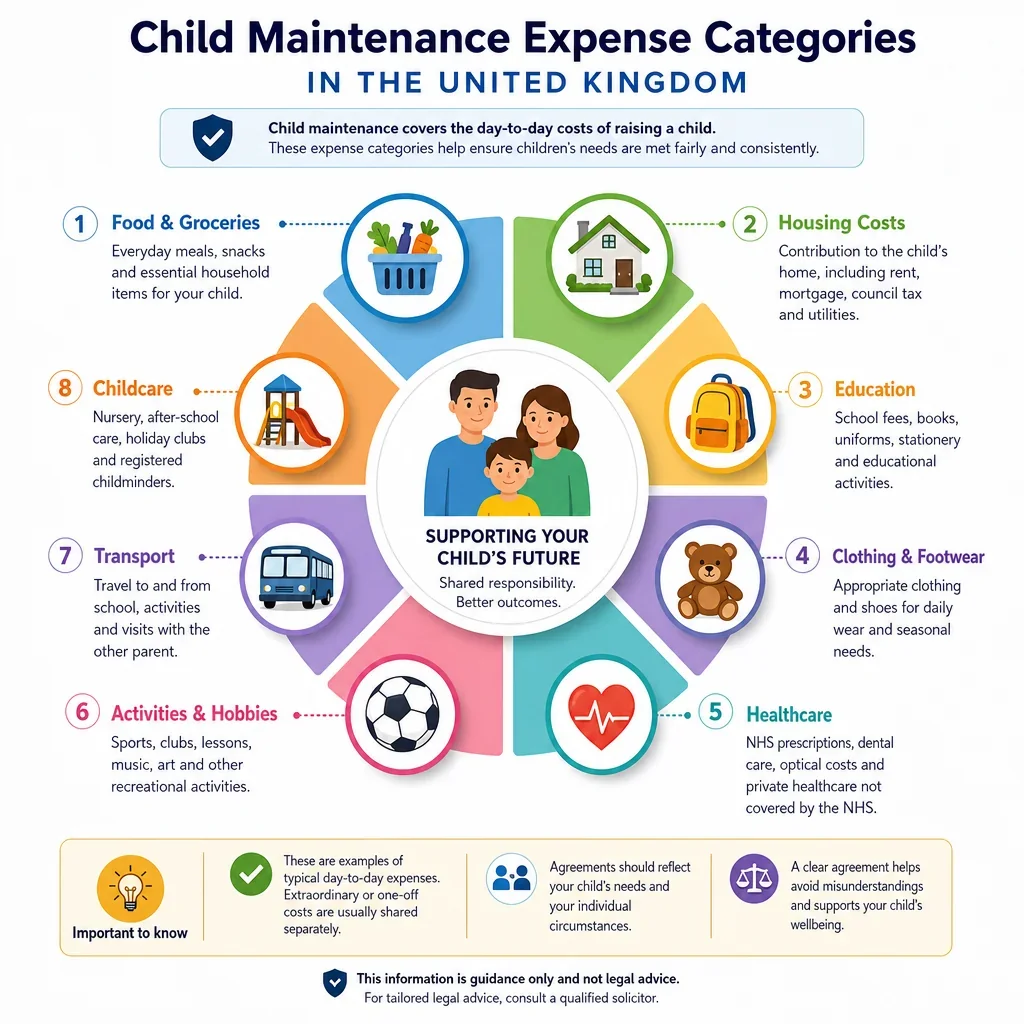
Decide how childcare costs will be shared. | Childcare can be large and variable. | Depends on circumstances | Provider invoices, tax-free childcare and parent shares. | During drafting |
Set rules for school-related costs. | Uniforms, trips and supplies often cause disputes. | Recommended | Expected costs, approval rules and contribution shares. | During drafting |
Address any private school fees separately. | Fees may require separate agreement or court consideration. | Depends on circumstances | Fee schedule, extras and payment responsibility. | During drafting |
Agree payment for medical, dental and therapy costs. | Health costs may be urgent or recurring. | Depends on circumstances | Insurance, NHS limits, invoices and consent rules. | During drafting |
Set rules for clubs, sports and activities. | Controls optional spending and prior approval. | Recommended | Activities, costs, equipment and approval thresholds. | During drafting |
Allocate travel costs for contact and handovers. | Travel costs can be significant after relocation. | Depends on circumstances | Distances, transport type and cost split. | During drafting |
Clarify holiday and special occasion costs. | Prevents assumptions about gifts, trips or events. | Optional | Holiday childcare, trips, gifts and contribution limits. | During drafting |
Define what regular maintenance is intended to cover. | Reduces double-counting of everyday expenses. | Recommended | Food, clothing, housing, utilities and ordinary costs. | During drafting |
Set prior approval rules for extra expenses. | Prevents one parent committing the other without consent. | Recommended | Approval method, spending limit and response deadline. | During drafting |
Review Terms | ||||
Include a fixed annual review date. | Keeps figures aligned with current circumstances. | Essential | Review month, documents and calculation method. | During drafting |
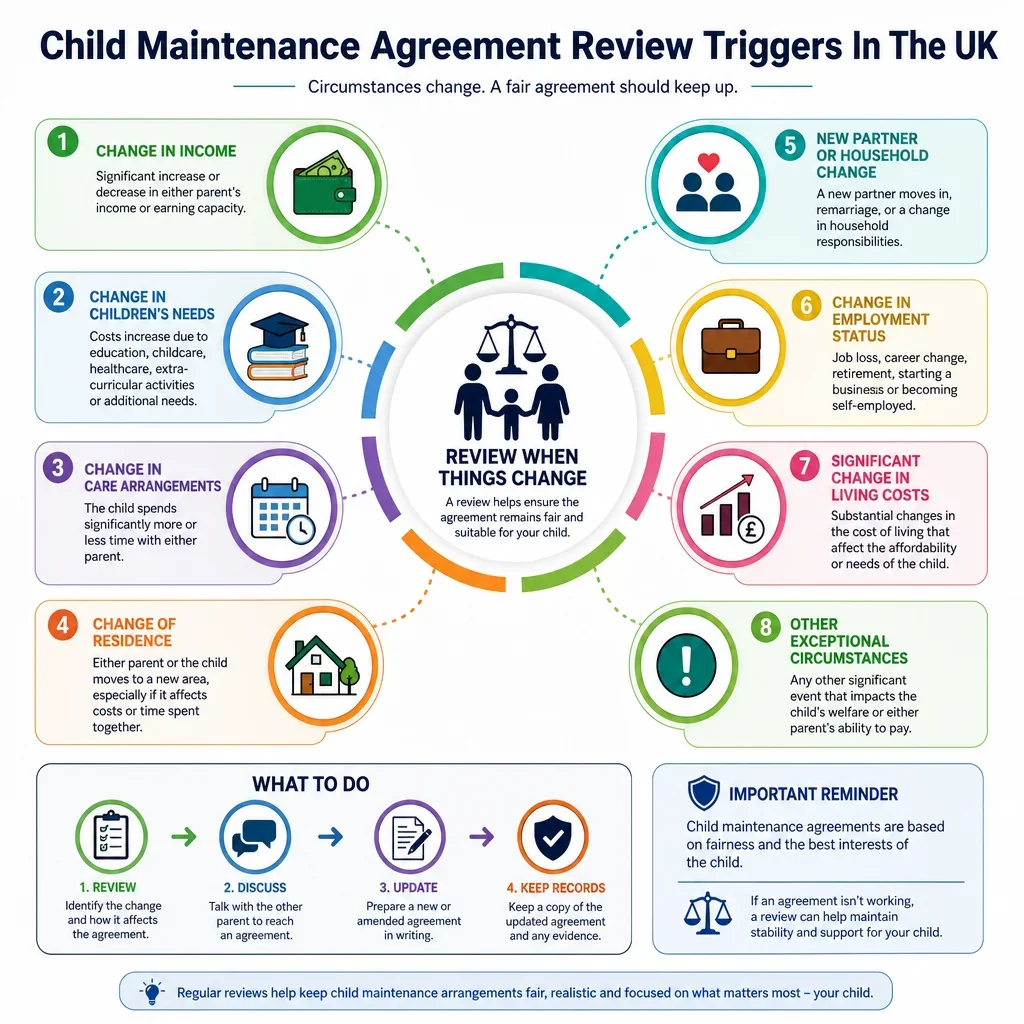
Add a review trigger for major income changes. | Income changes can make payments unfair or unaffordable. | Essential | Threshold percentage, evidence and notice period. | During drafting |
Add a review trigger for changed overnight care. | Overnight care can affect the fair payment amount. | Essential | New care schedule and date of change. | During drafting |
Set review rules when a child leaves education. | Eligibility may change when education or training ends. | Essential | During drafting | |
Add a review trigger for a new child in either household. | New dependants can affect household finances and calculations. | Recommended | Child’s birth date, household and support obligations. | During drafting |
Add a process for job loss or reduced hours. | Temporary income shocks need quick handling. | Recommended | Notice date, evidence and temporary payment plan. | During drafting |
Consider whether to include inflation adjustment. | Helps payments keep pace with living costs. | Optional | Index, adjustment date and cap if any. | During drafting |
Require changes to be confirmed in writing. | Avoids disputes about informal changes. | Essential | Email, signed variation or message record. | During drafting |
Records and Evidence | ||||
Keep a complete signed copy of the agreement. | Provides evidence of the agreed terms. | Essential | Final signed PDF or paper copy. | After signing |
Keep bank statements and payment confirmations. | Shows what was paid and when. | Essential | Statements, transfer receipts and references. | After signing |
Keep receipts for shared expenses. | Supports reimbursement requests. | Recommended | Invoices, receipts and proof of payment. | After signing |
Keep income evidence used for calculations. | Supports future reviews and recalculations. | Recommended | Payslips, P60s, accounts and tax returns. | After signing |
Maintain a shared care calendar. | Evidence of overnights helps resolve review disputes. | Recommended | Overnight dates, holidays and agreed changes. | After signing |
Communication | ||||
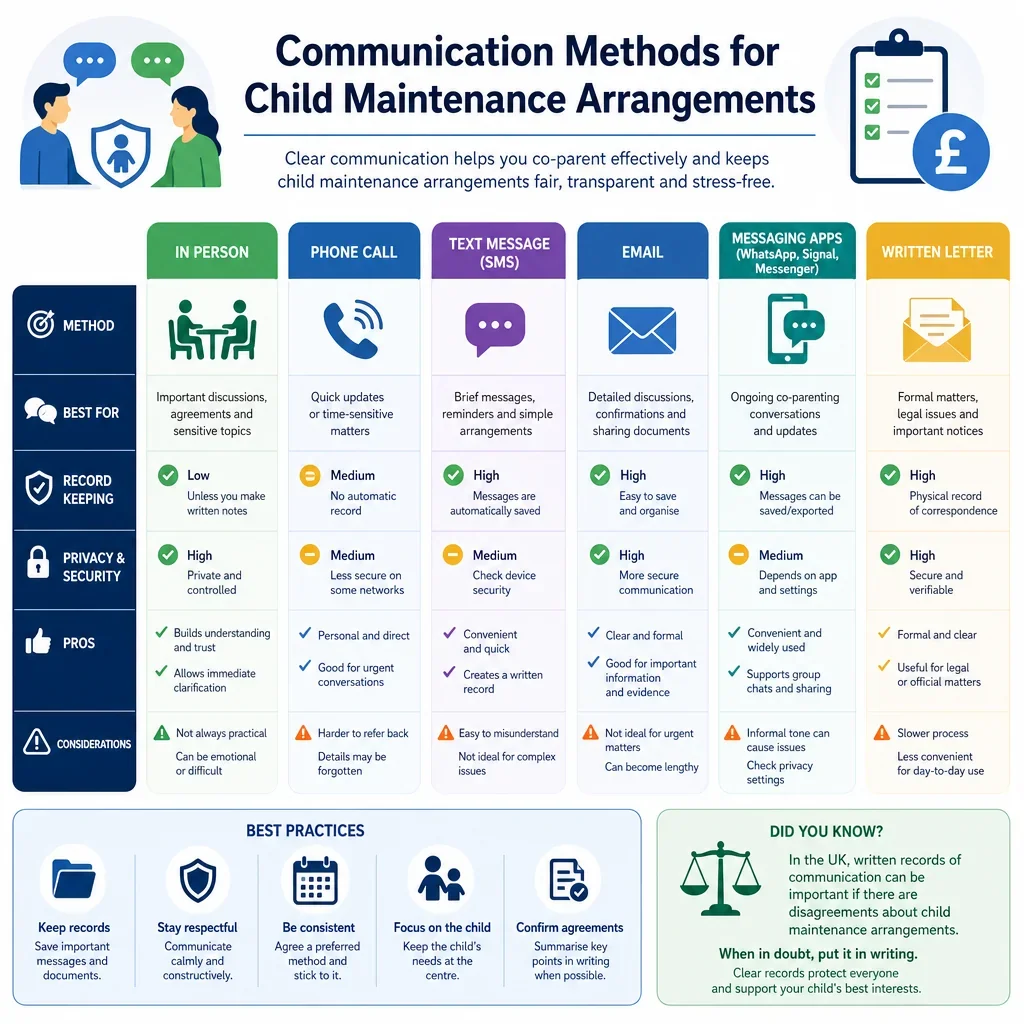
Choose a main communication channel. | Keeps maintenance discussions organised and traceable. | Recommended | Email, parenting app, text or letter preference. | During drafting |
Set notice periods for changes or reviews. | Gives both parents time to respond and budget. | Recommended | Notice period, required evidence and response deadline. | During drafting |
Include a dispute resolution process. | Encourages discussion or mediation before escalation. | Recommended | Discussion steps, mediation option and escalation route. | During drafting |
Acknowledge either parent may seek CMS help if eligible. | Avoids suggesting a private agreement removes statutory options. | Recommended | Before signing | |
Agree how financial documents will be shared and stored. | Protects sensitive income and bank information. | Recommended | Secure sharing method and retention approach. | During drafting |
Signatures | ||||
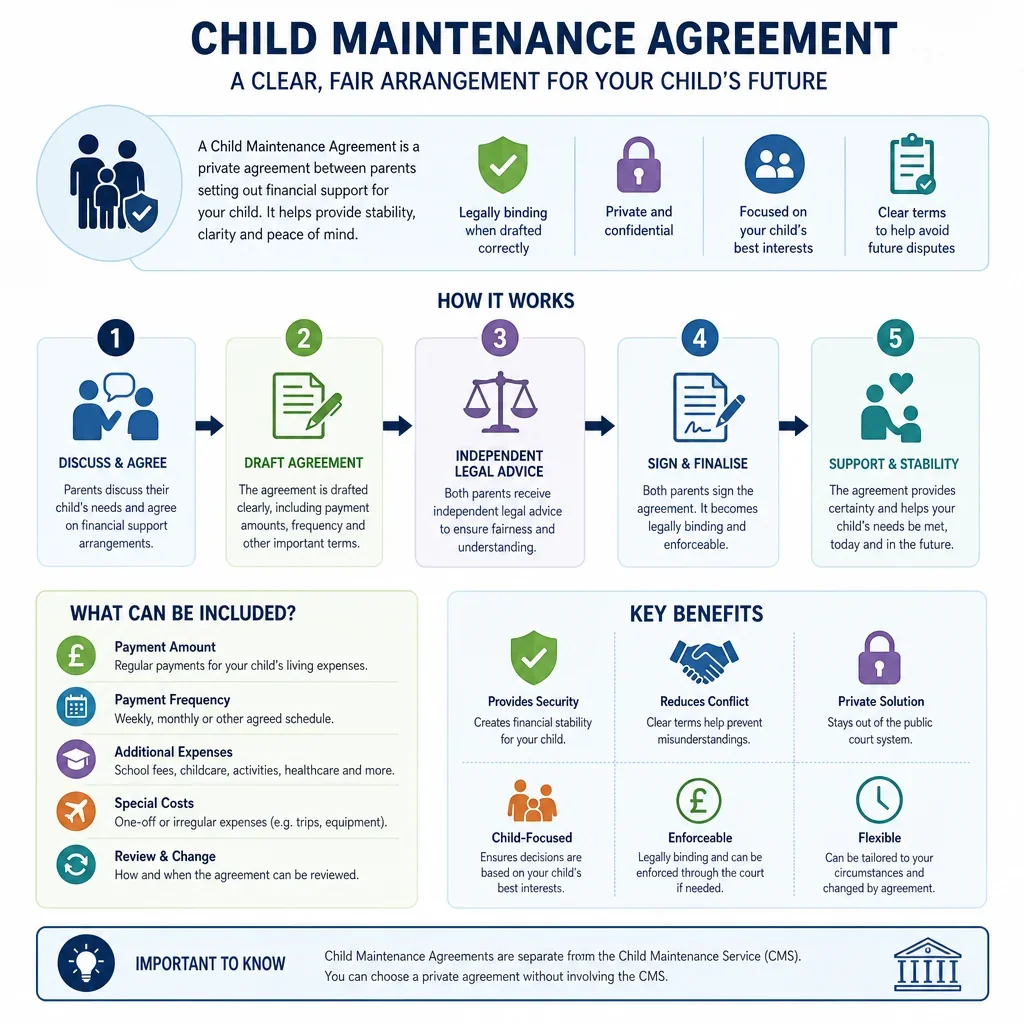
Consider independent legal advice before signing. | Helps parents understand legal effect and alternatives. | Recommended | Draft agreement and questions for adviser. | Before signing |
Check all names, dates, amounts and bank details. | Prevents avoidable mistakes in the final agreement. | Essential | Final draft and supporting documents. | Before signing |
Confirm both parents sign voluntarily. | Supports reliability of the written agreement. | Essential | Confirmation of understanding and no pressure. | Before signing |
Date each parent’s signature. | Shows when the agreement was made. | Essential | Signature date for each parent. | Before signing |
Consider using witness signatures. | Can help evidence authenticity if later disputed. | Optional | Witness names, addresses and signatures. | Before signing |
Decide whether electronic signatures will be accepted. | Clarifies signing method for remote parents. | Optional | E-signature platform or scanned signed copies. | Before signing |
Give each parent an identical final copy. | Ensures both parents rely on the same terms. | Essential | Signed PDF or paper copies. | After signing |
State whether terms start on signing or another date. | Avoids gaps between signing and first payment. | Essential | Signing date and effective date. | Before signing |
Parent Details | ||||
Confirm where in the UK the child and parents live. | CMS and court options can depend on location and eligibility. | Recommended | England, Wales, Scotland or Northern Ireland residence details. | Before drafting |
Check if either parent lives abroad. | International maintenance may require different enforcement routes. | Depends on circumstances | Country of residence and contact details abroad. | Before drafting |
Payment Amount | ||||
State the agreement covers child maintenance only. | Separates child support from spousal or property issues. | Recommended | Any separate financial orders or settlement documents. | During drafting |
Records and Evidence | ||||
Check whether payments affect benefit reporting duties. | Parents may need to report income or household changes. | Depends on circumstances | Benefits received and reporting requirements. | Before signing |
Signatures | ||||
Consider whether a court order is needed for wider financial terms. | Private maintenance terms may not resolve all separation finances. | Depends on circumstances | Divorce, civil partnership or financial settlement details. | Before signing |
Payment Amount | ||||
Be aware CMS calculations are governed by child support legislation. | A private agreement should not misstate statutory CMS rules. | Recommended | Awareness of Child Support Act 1991 framework. | Before signing |
Check if CMS formula concepts are being copied accurately. | Incorrect formula wording can create false expectations. | Depends on circumstances | Child Support Maintenance Calculation Regulations 2012 references. | During drafting |
What Should Be Checked Before Making A UK Child Maintenance Agreement?
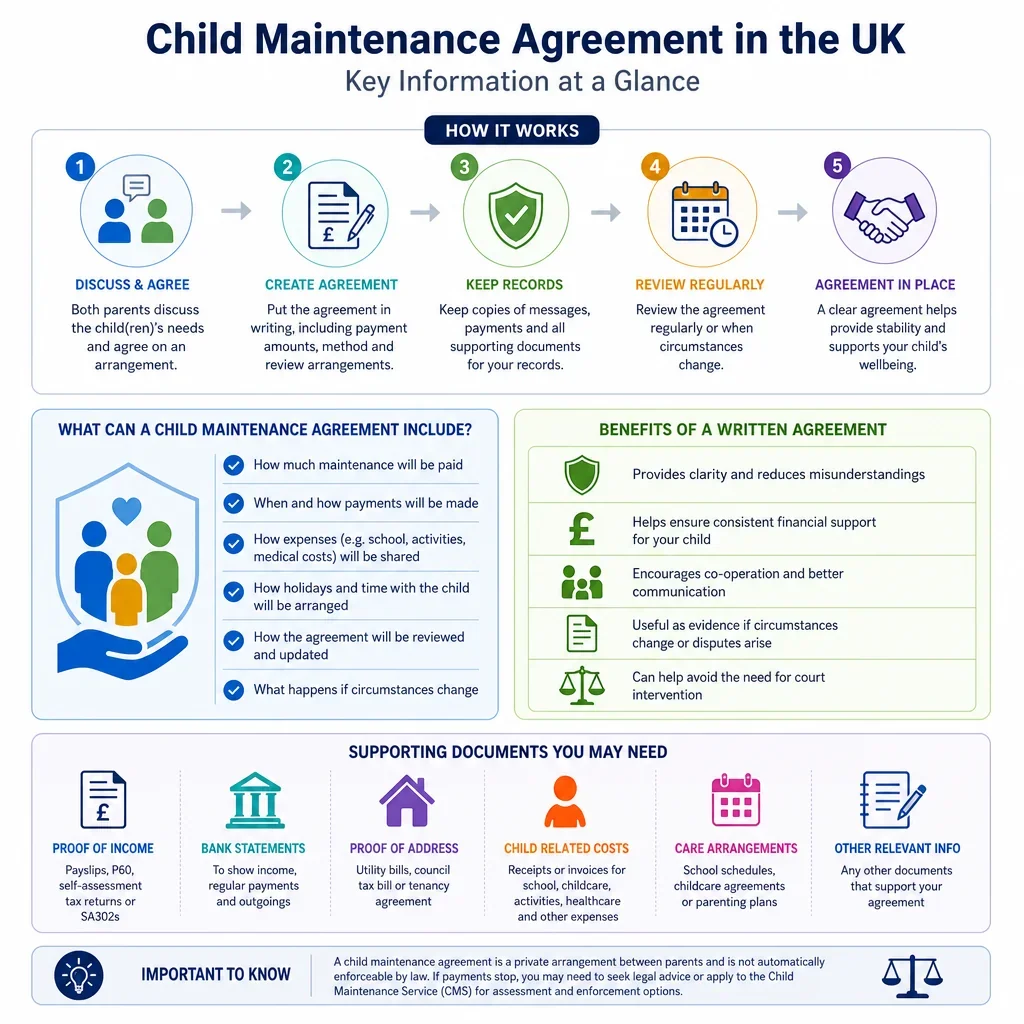
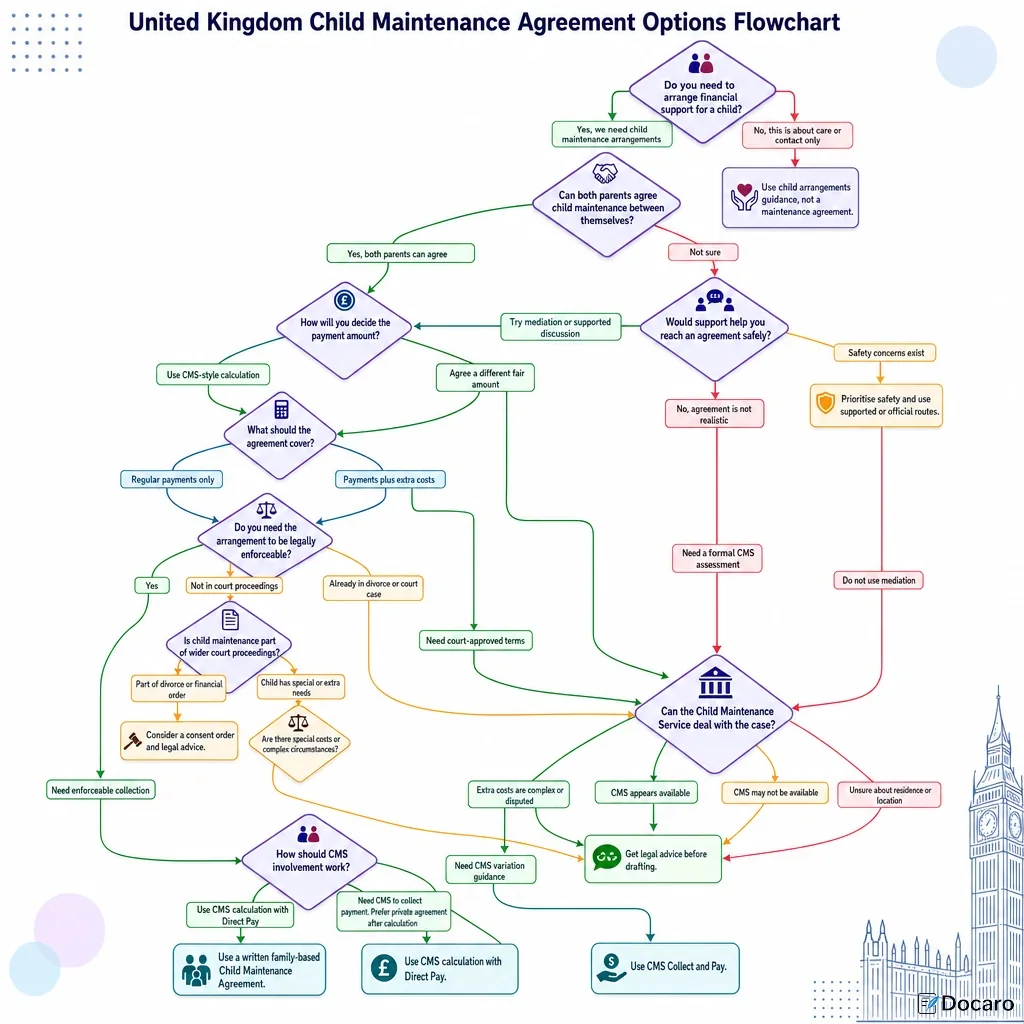
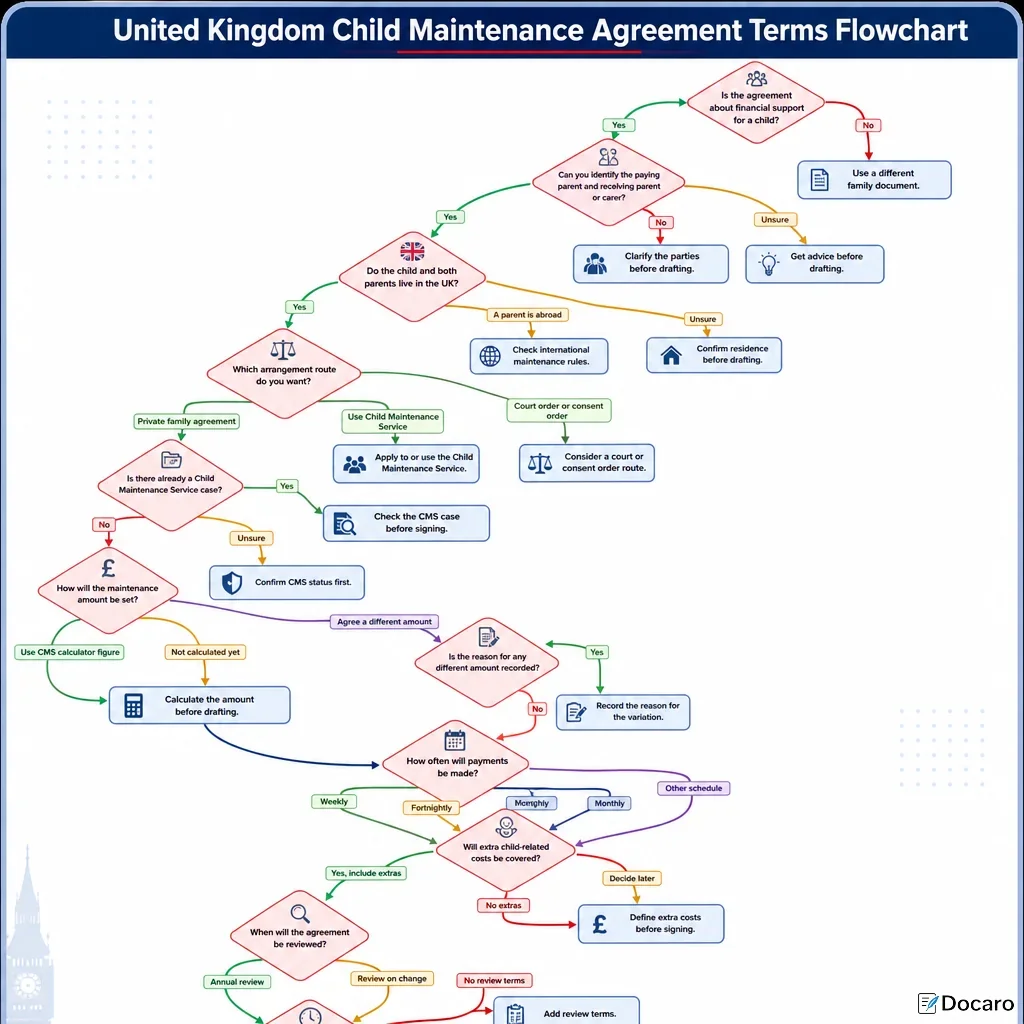
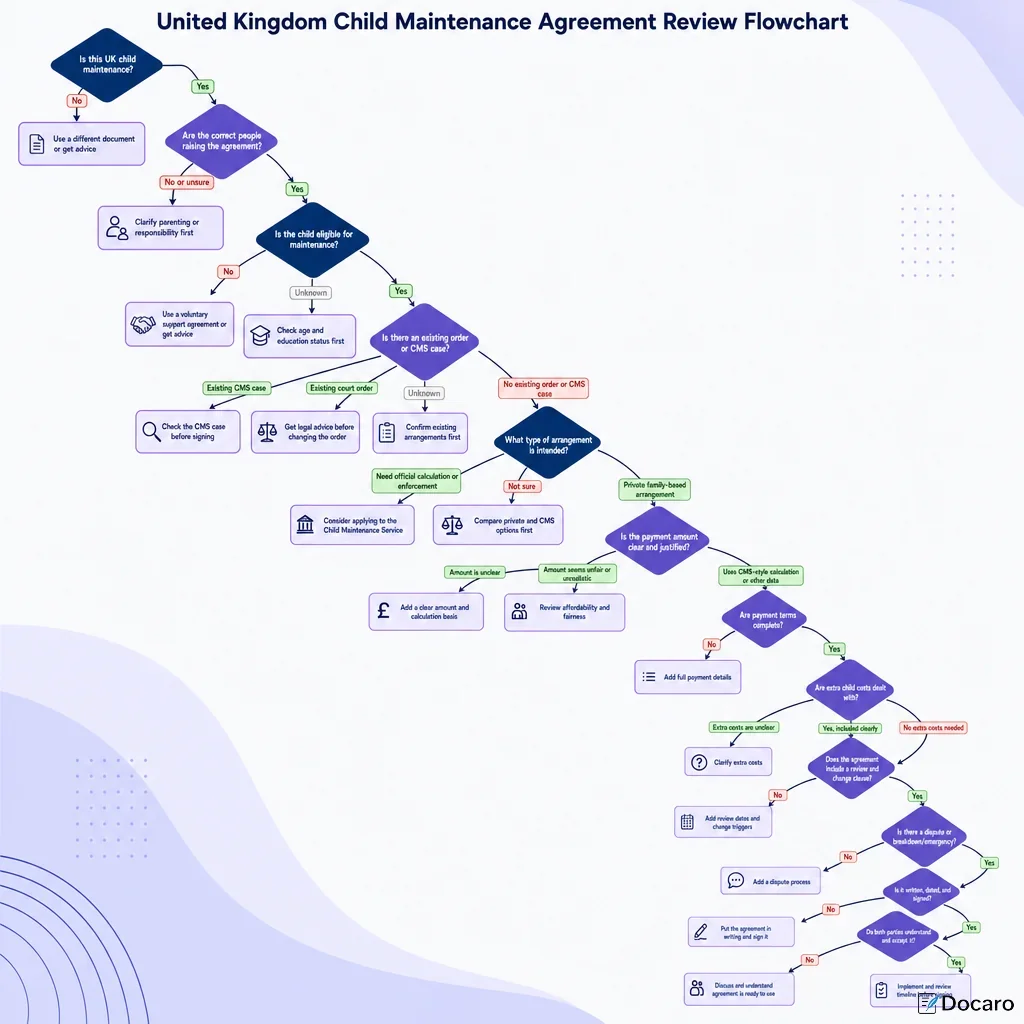
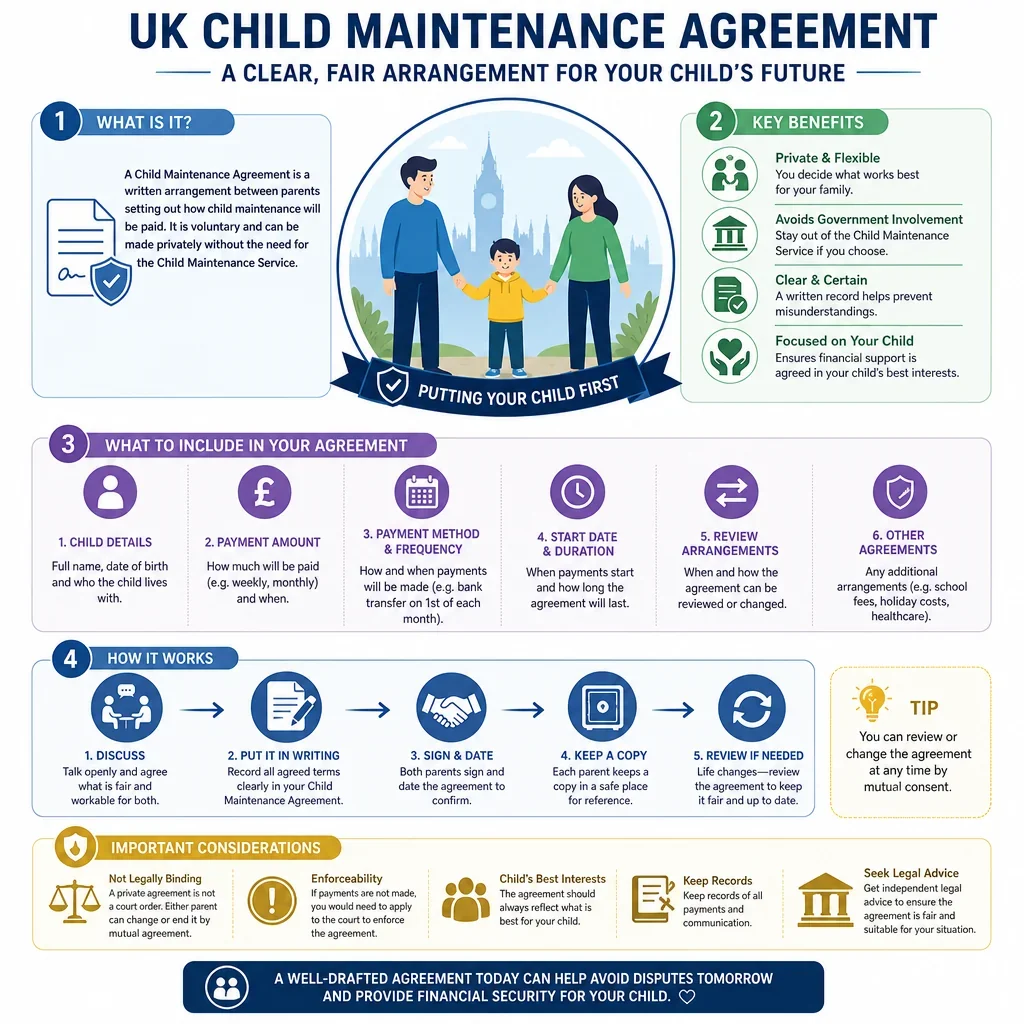
A workable child maintenance agreement should identify both parents, each child covered, the payment amount, how and when payments are made, and what happens with school, childcare, medical, travel and activity costs. In the UK, a private child maintenance arrangement can be flexible, but it is usually clearer if it mirrors key Child Maintenance Service concepts such as gross weekly income, overnight stays and other children supported.
When Should Parents Use The Child Maintenance Service Calculator?
Parents should normally check the GOV.UK child maintenance calculator before drafting or reviewing an agreement. The calculator can provide a useful benchmark, even where parents choose a private family-based arrangement. If benefits, self-employment, overtime, bonuses, pension contributions or shared care are involved, the figures should be checked carefully and reviewed regularly.
What Makes A Child Maintenance Agreement Easier To Enforce Or Evidence?
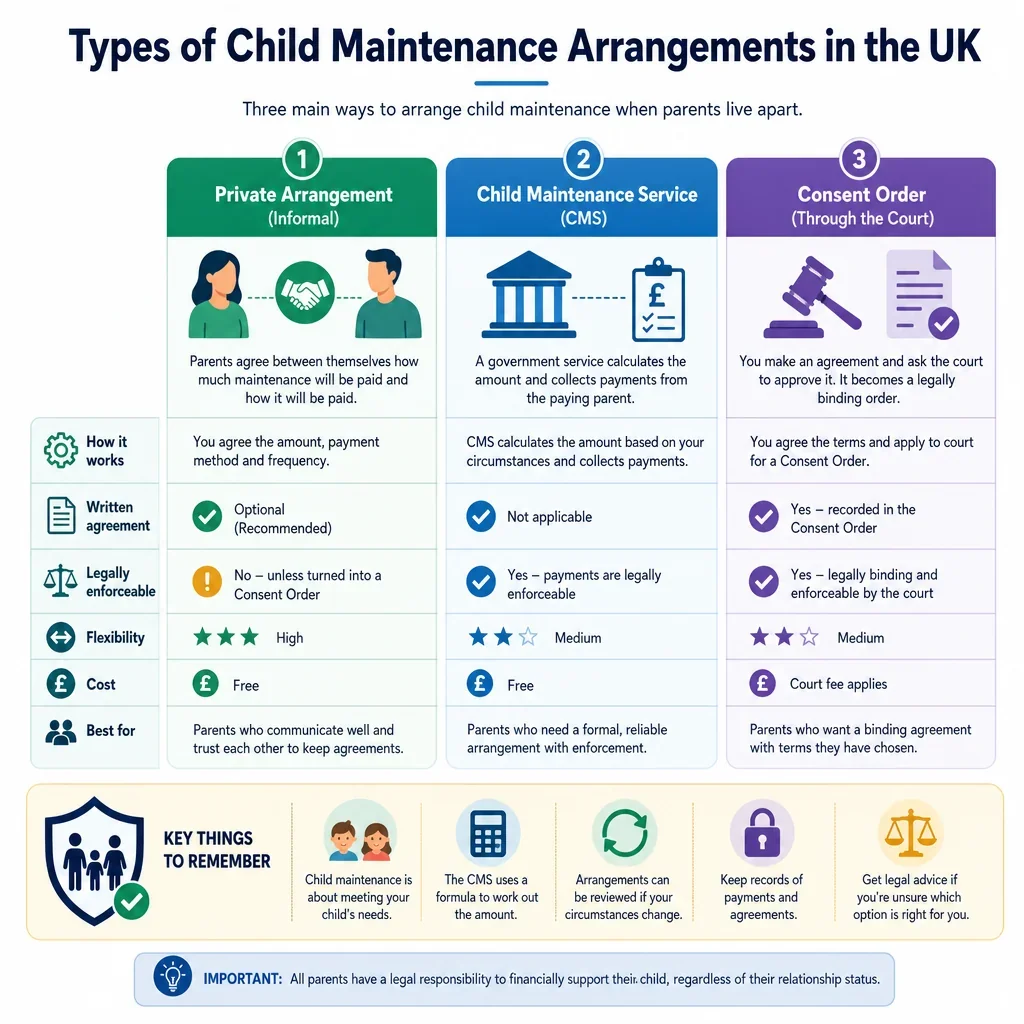
Parents should keep the agreement in writing, use traceable payment methods, record the payment reference, keep bank statements and receipts, and document any agreed variations. A private agreement is not the same as a Child Maintenance Service calculation or court order, so reliable records are important if either parent later asks the CMS, a solicitor, mediator or court to review what was agreed and paid.
How Often Should Child Maintenance Be Reviewed?
The agreement should include a fixed review date, commonly annually, and trigger reviews for changes such as income variation, a child starting or leaving education, a change in overnight stays, job loss, disability-related costs, relocation, or a new child in either household. Review wording reduces disputes because parents know when the amount or shared expenses may need updating.
What Should Parents Avoid In A Child Maintenance Agreement?
- Do not leave payment dates vague: specify a due date and frequency.
- Do not rely only on cash: bank transfer or standing order creates better evidence.
- Do not ignore shared expenses: specify which costs are included in maintenance and which are extra.
- Do not forget reviews: income, childcare and overnight care can change the fair amount.
- Do not assume a private arrangement overrides CMS rules: either parent may be able to apply to the CMS, subject to eligibility rules.
FAQs
You Might Also Be Interested In