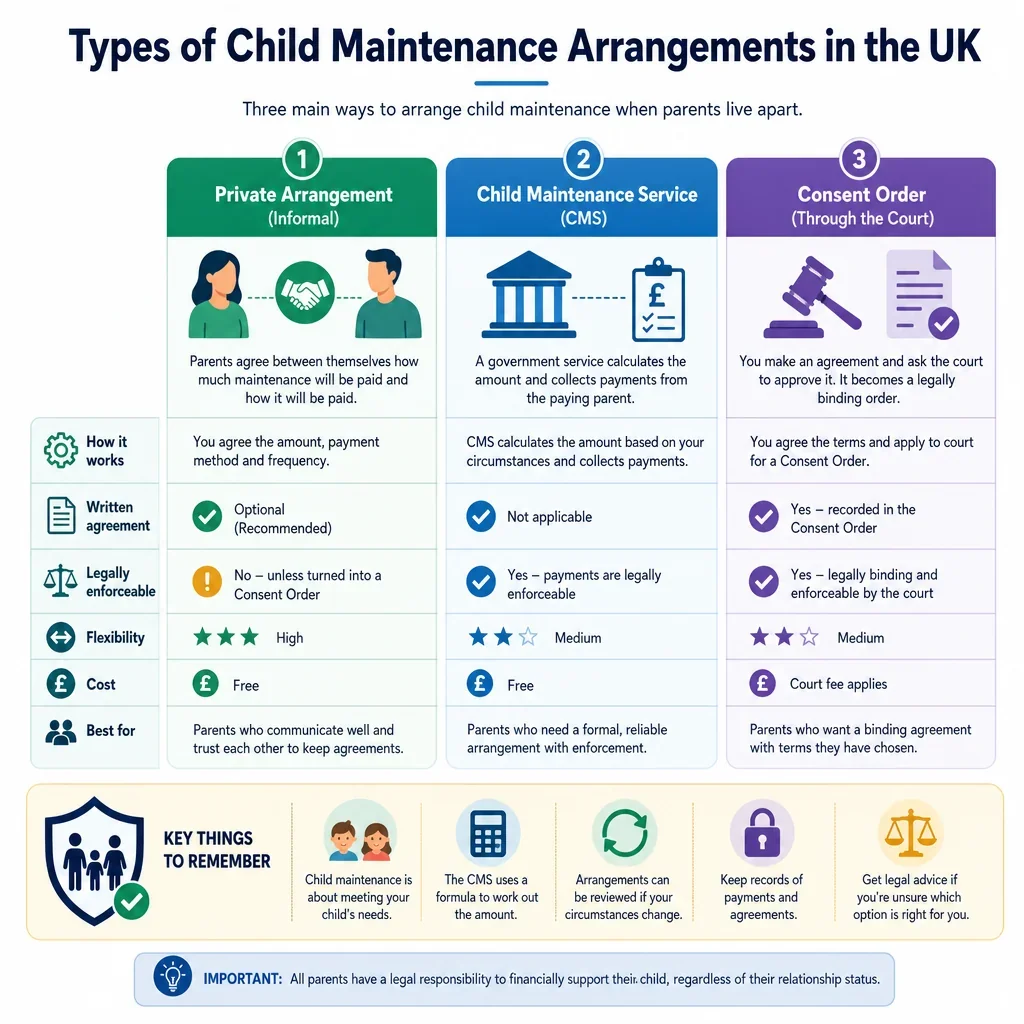
Types Of Child Maintenance Arrangements In The UK
Description | Formality Level | Flexibility Level | Typical Advantages | Typical Limitations |
|---|---|---|---|---|
Informal Verbal Arrangement | ||||
Parents agree maintenance verbally without a written document or formal service. | Low formality | High flexibility | Fast, free, private and easy to change if communication is good. | Hard to prove terms weak if payments stop or memories differ. |
Written Private Agreement | ||||
Parents record agreed payments, dates and responsibilities in writing. | Medium formality | High flexibility | Clearer than a verbal deal and useful evidence of what was agreed. | Usually not directly enforceable like a CMS arrangement or court order. |
Parents agree privately but base the amount on the official CMS calculator. | Medium formality | Medium flexibility | Provides a neutral benchmark and may reduce arguments about fairness. | Calculator estimates can change with income, benefits and shared care. |
A document setting a fixed monthly maintenance sum and payment date. | Medium formality | Depends on terms | Simple budgeting for both households and easy bank payment tracking. | May become unfair if income, care pattern or child costs change. |
Maintenance changes by a formula, income band or agreed review trigger. | Medium formality | Depends on terms | Adapts to changing earnings and can feel fairer over time. | Needs income disclosure and clear wording to avoid disputes. |
Payments reflect how many nights the child stays with each parent. | Medium formality | Depends on terms | Links money to the practical care pattern and child living costs. | Can cause disputes if overnight care varies or is not recorded. |
Parents agree basic maintenance plus extras such as childcare or uniform. | Medium formality | Depends on terms | Covers real child costs that a basic monthly sum may miss. | Needs clear rules on receipts, caps, approval and reimbursement dates. |
Parenting Plan with Maintenance Terms | ||||
A wider parenting plan includes child arrangements and payment terms. | Medium formality | High flexibility | Connects maintenance with routines, holidays, travel and communication. | May mix practical parenting issues with money disputes if unclear. |
The parenting plan allocates childcare, school and activity costs. | Medium formality | Medium flexibility | Useful where day-to-day parenting arrangements affect regular expenses. | Requires regular updating as the child changes school, clubs or care needs. |
Mediated Agreement | ||||
Parents negotiate maintenance terms with help from a trained mediator. | Medium formality | High flexibility | Structured discussion can reduce conflict and improve long-term cooperation. | Not suitable where there are safety concerns or one parent will not engage. |
A mediator records agreed maintenance proposals in a summary document. | Medium formality | Medium flexibility | Creates a clear basis for a later written agreement or consent order. | Mediation summaries are not automatically court orders or CMS decisions. |
Solicitor-Drafted Agreement | ||||
A solicitor prepares tailored child maintenance terms for parents to sign. | High formality | Depends on terms | Clear drafting, legal context and reduced risk of ambiguous wording. | Costs more and still may not stop a later CMS application. |
A formal agreement includes income evidence, review dates and variation triggers. | High formality | Depends on terms | Good for self-employment, bonuses, changing income or complex expenses. | Needs cooperation and updated financial information to work well. |
Court Order Including Financial Terms | ||||
Separated spouses or civil partners ask the court to approve agreed financial terms. | Court-linked process | Low flexibility | Can sit alongside wider divorce finances and provide formal certainty. | Ongoing child maintenance may later fall within CMS jurisdiction after time limits. |
The court orders payment of specific child costs, such as school fees. | Court-linked process | Low flexibility | Useful for defined expenses that may not be covered by basic CMS maintenance. | Court application can be costly, slower and fact-specific. |
A court makes financial provision for a child under Schedule 1 Children Act 1989. | Court-linked process | Low flexibility | Can address lump sums, property settlement and special child needs. | Not a simple substitute for ordinary CMS maintenance in routine cases. |
Court or international processes may be needed if a parent lives abroad. | Court-linked process | Low flexibility | May help where UK CMS cannot make or enforce a standard arrangement. | Jurisdiction and enforcement depend on countries involved and evidence available. |
Child Maintenance Service Arrangement | ||||
CMS calculates maintenance, but parents arrange payments directly between themselves. | Statutory process | Medium flexibility | Formal calculation without CMS collecting every payment. | If payments fail, the receiving parent may need CMS action. |
CMS collects maintenance from one parent and passes it to the other. | Statutory process | Low flexibility | Useful when direct payments are unreliable or there is poor cooperation. | Collection charges can apply to both paying and receiving parents. |
CMS may take enforcement steps when assessed maintenance is not paid. | Statutory process | Low flexibility | Provides stronger payment pressure than a purely private arrangement. | Can be slower, adversarial and dependent on tracing income or assets. |
CMS calculates child maintenance using the paying parent's gross weekly income. | Statutory process | Low flexibility | Uses a standard statutory method rather than parental negotiation. | May not reflect every expense, lifestyle factor or informal support. |
CMS reviews the calculation periodically using updated information. | Statutory process | Medium flexibility | Built-in review helps keep statutory maintenance current. | Changes may lag behind real-time income or care pattern changes. |
A parent asks CMS to adjust the calculation for relevant changes or grounds. | Statutory process | Medium flexibility | Allows formal updating when key circumstances change. | Requires evidence and may not cover every expense parents consider important. |
Written Private Agreement | ||||
Parents agree privately but state when either may apply to CMS. | Medium formality | Depends on terms | Encourages cooperation while recognising a formal fallback if payments fail. | Cannot usually remove statutory rights to seek CMS assessment. |
Parents agree some support is paid through direct costs or items. | Medium formality | High flexibility | Can suit practical needs such as clothes, travel, meals or equipment. | Harder to value and may not count as statutory maintenance under CMS rules. |
Parents agree how missed private payments will be caught up over time. | Medium formality | Depends on terms | Can restore payment discipline without immediate escalation. | Private arrears terms may be difficult to enforce if cooperation breaks down. |
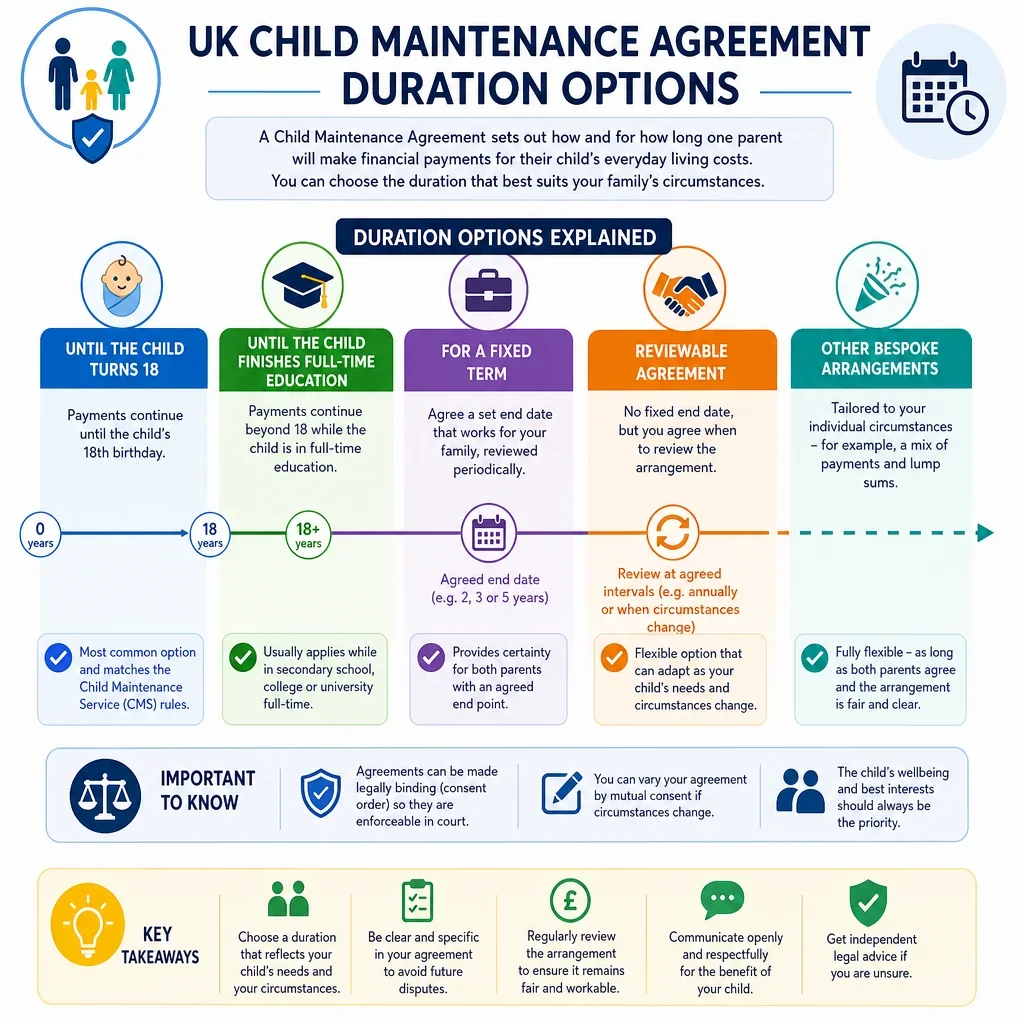
Temporary maintenance terms apply while parents finalise separation or CMS matters. | Medium formality | High flexibility | Prevents a payment gap during negotiation, mediation or application stages. | Needs an end date or review date to avoid uncertainty. |
Parents agree support for an older child beyond routine CMS child eligibility. | Medium formality | High flexibility | Can cover education, living costs and transitions not fully covered by CMS. | Eligibility and enforceability differ from ordinary child maintenance rules. |
Child Maintenance Service Arrangement | ||||
A statutory route is used where parents cannot negotiate safely or reliably. | Statutory process | Low flexibility | Reduces direct negotiation about the amount and can support enforcement. | Less tailored to family-specific extras or informal shared spending. |
Court Order Including Financial Terms | ||||
The court may make financial provision orders in matrimonial proceedings. | Court-linked process | Low flexibility | Can align child-related terms with spousal, property and pension issues. | Court powers over routine child maintenance are limited where CMS applies. |
Child Maintenance Service Arrangement | ||||
Maintenance is handled under the statutory child support framework. | Statutory process | Low flexibility | Provides a legal scheme for assessment, collection and enforcement. | Formula-based and may not mirror a family's preferred bespoke arrangement. |
Which Child Maintenance Arrangement Is Best In The UK?
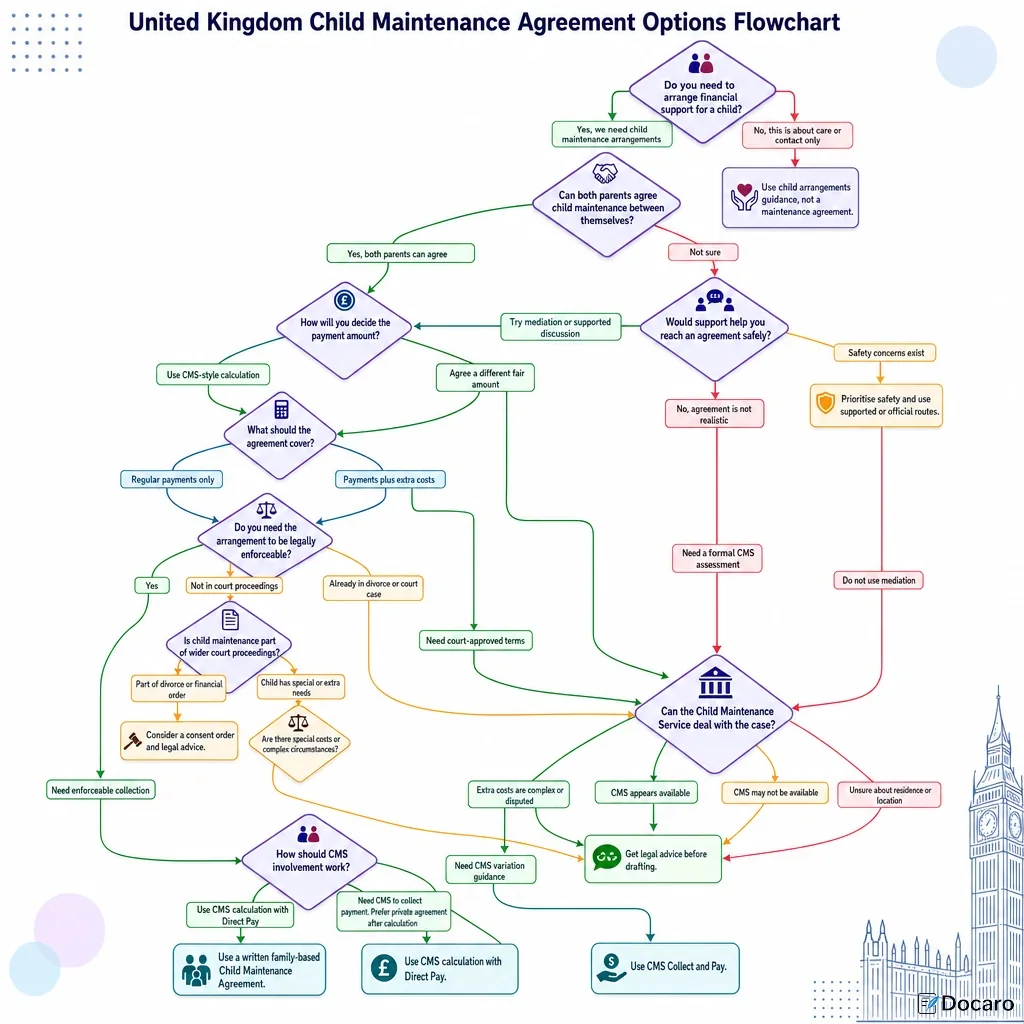
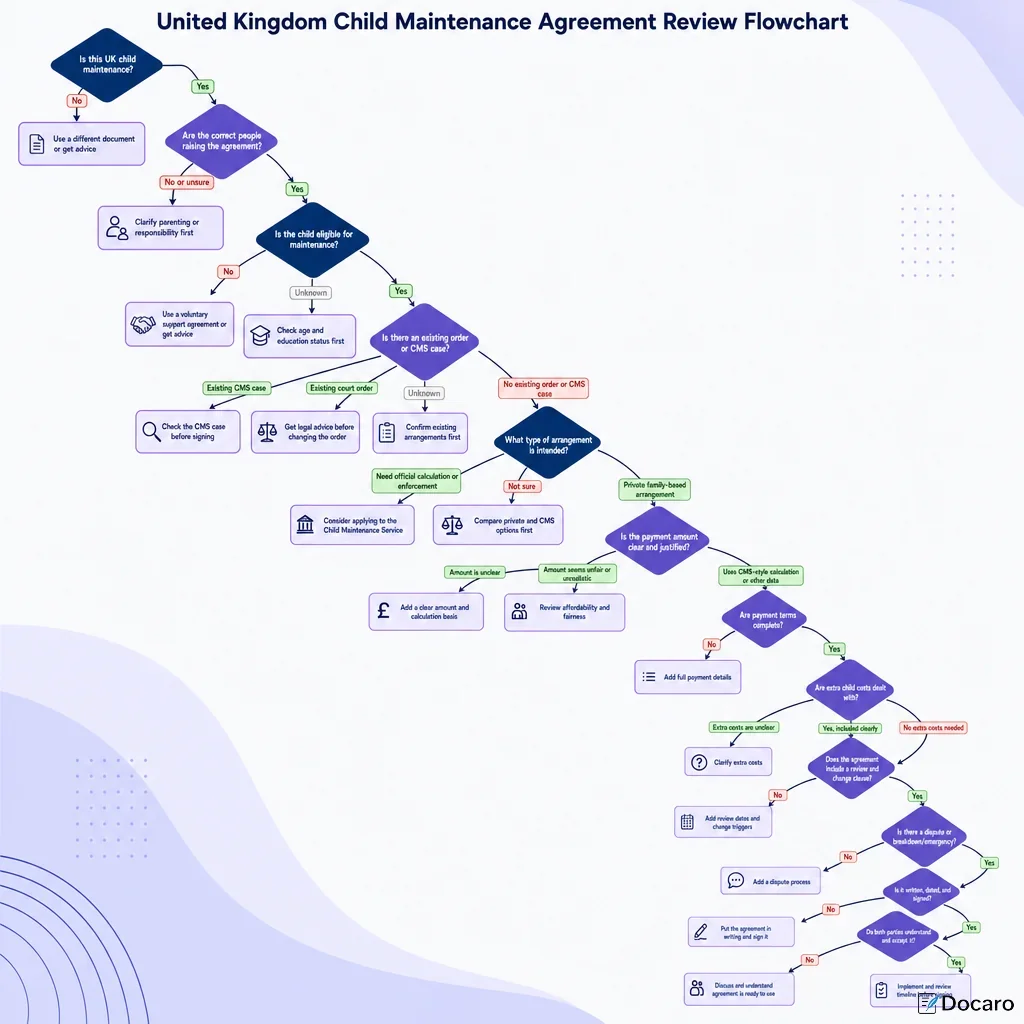
The best option depends on how much certainty, enforceability and flexibility parents need. Family-based arrangements, such as verbal or written private agreements, are usually quickest and most flexible, but they are not normally enforceable in the same way as a CMS calculation or a court order.
When Should Parents Use A Written Child Maintenance Agreement?
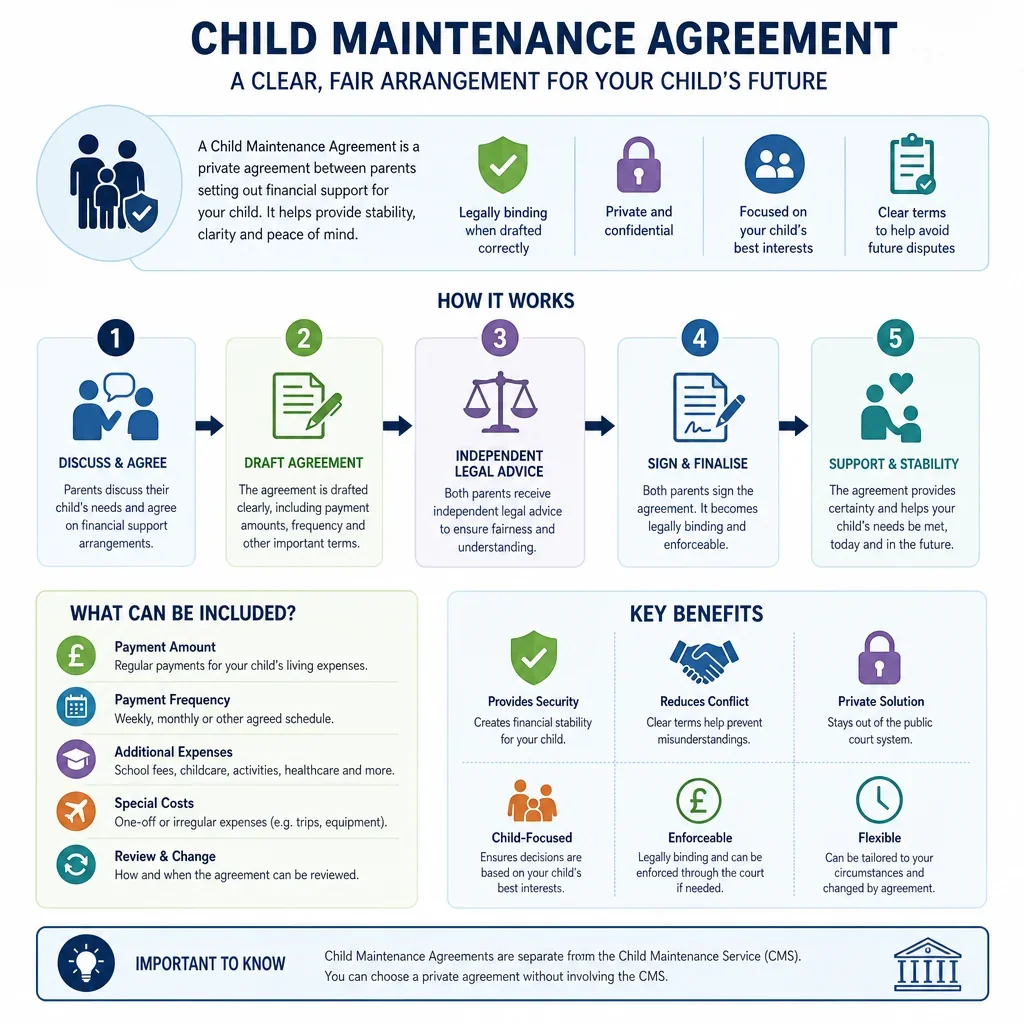
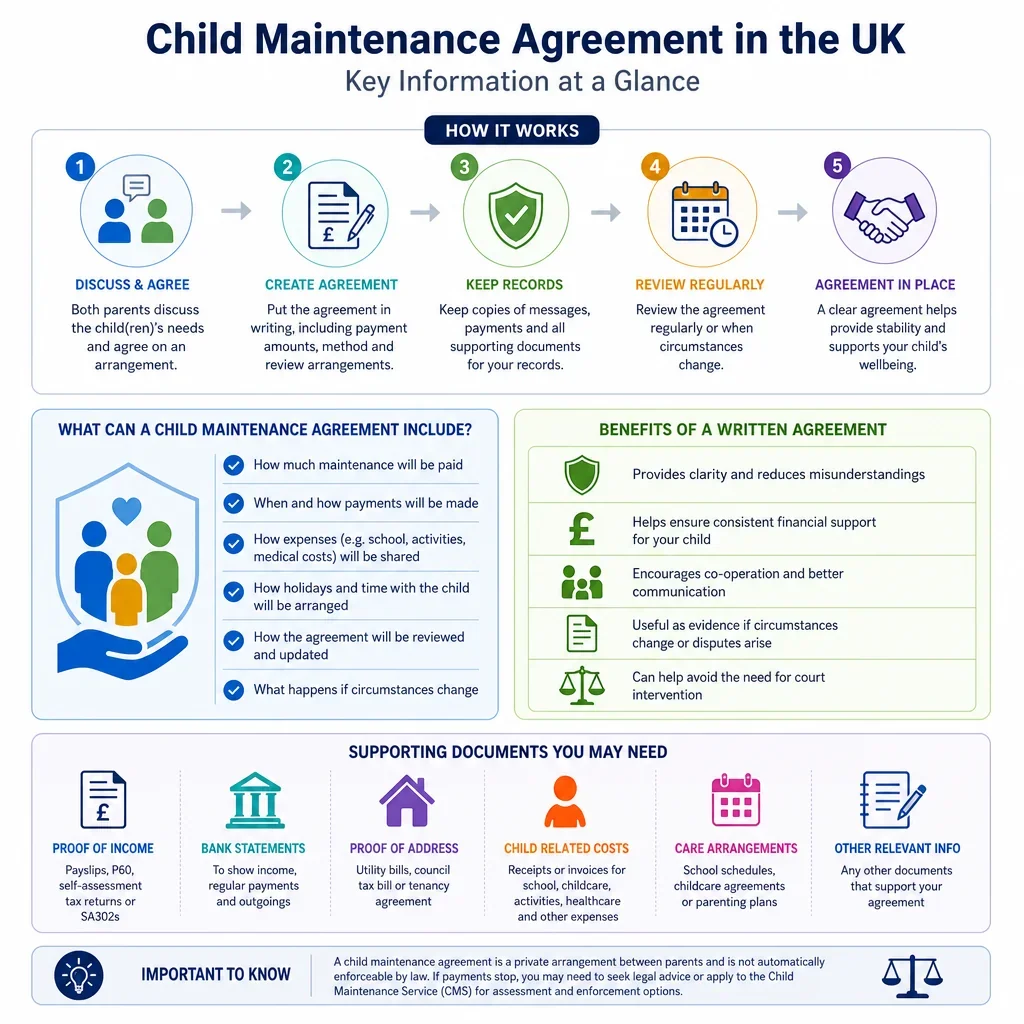
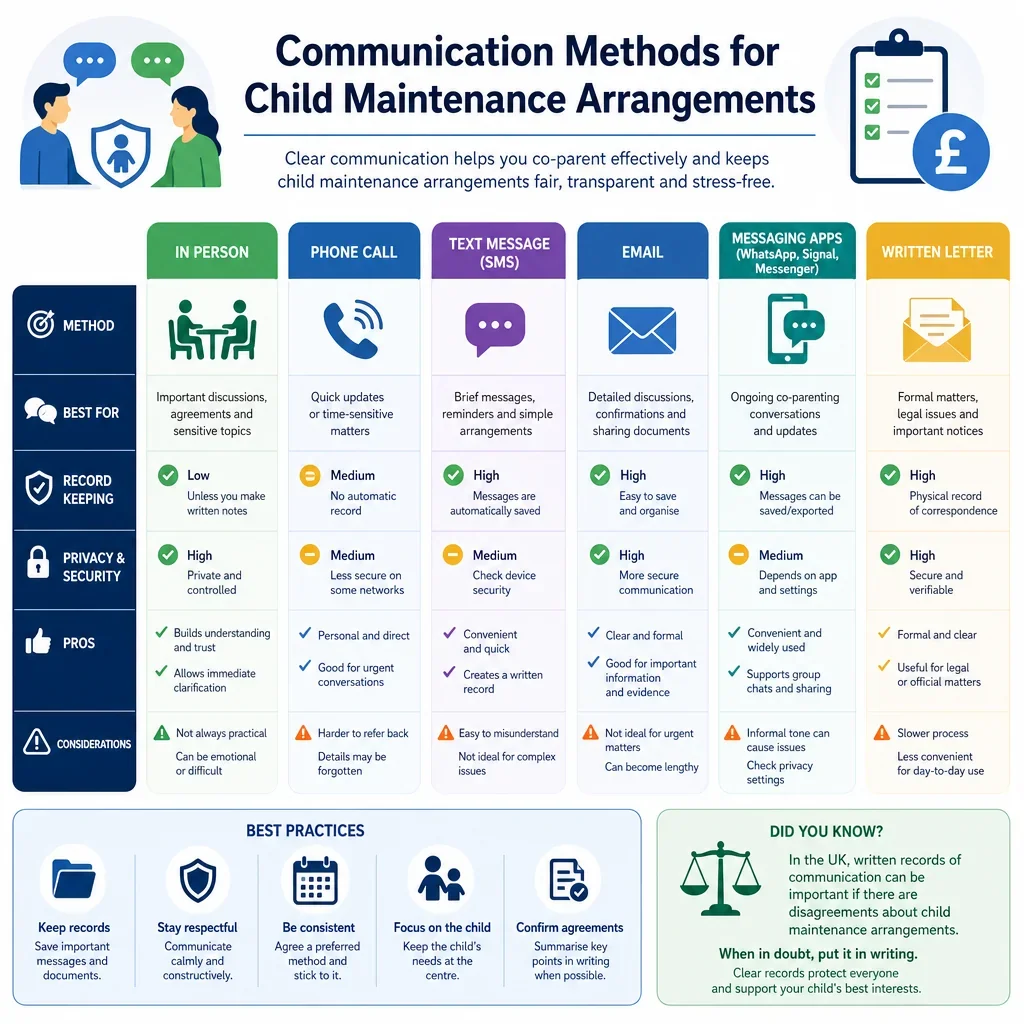
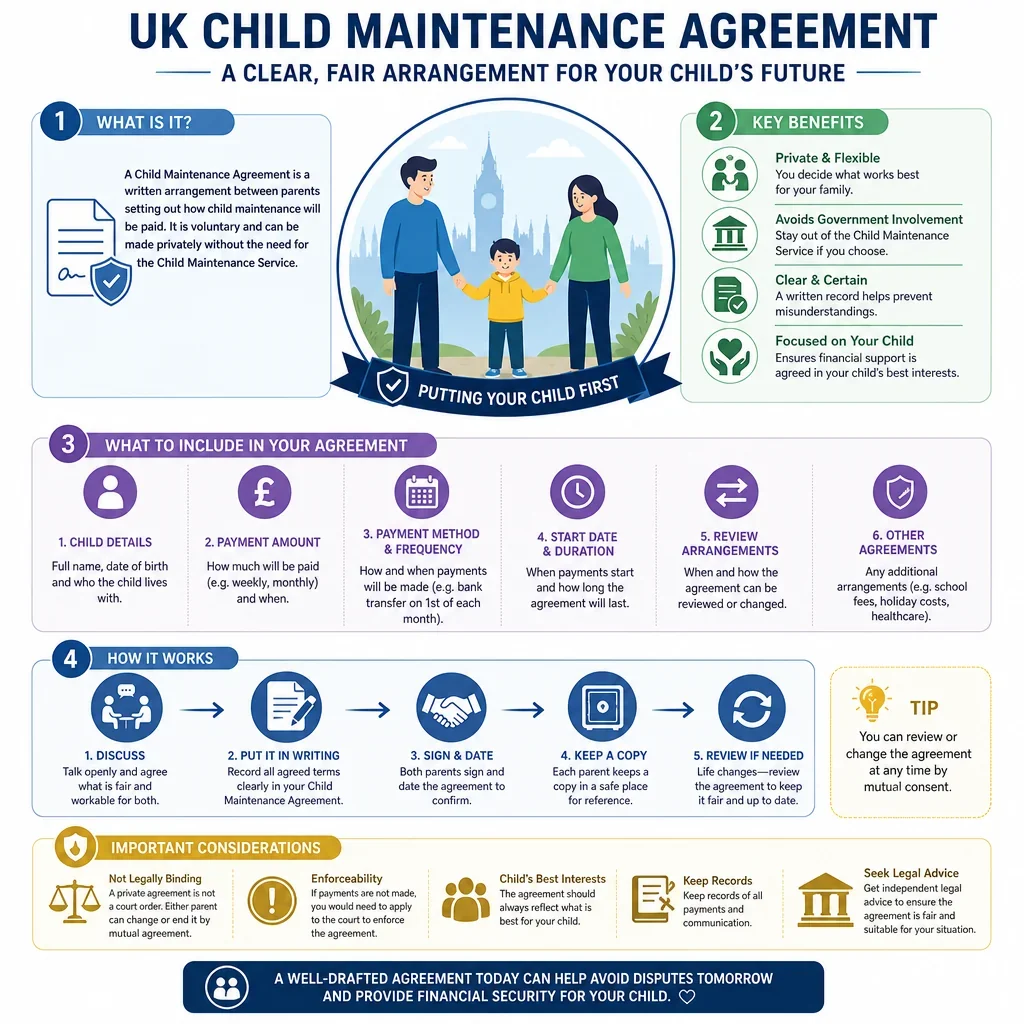
A written private agreement is often useful where parents broadly agree but want clarity on the amount, payment dates, review dates and extra costs such as school uniform, childcare or travel. It can reduce disputes, but parents should understand that a private agreement may not prevent either parent from applying to the Child Maintenance Service later.
When Is The Child Maintenance Service Needed?
The Child Maintenance Service is usually appropriate where parents cannot agree, payments are unreliable, or one parent needs a formal statutory calculation. CMS can calculate maintenance and, where necessary, collect and enforce payments, although fees may apply under the Collect and Pay service.
Can A Court Decide Child Maintenance?
In most ordinary cases, ongoing child maintenance is dealt with by agreement or the CMS rather than the court. However, court-linked financial provision may be relevant in specific situations, including consent orders, school fees, step-parent issues, children with disabilities, or cases involving parents or children outside the CMS jurisdiction.
What Should A Child Maintenance Agreement Include?
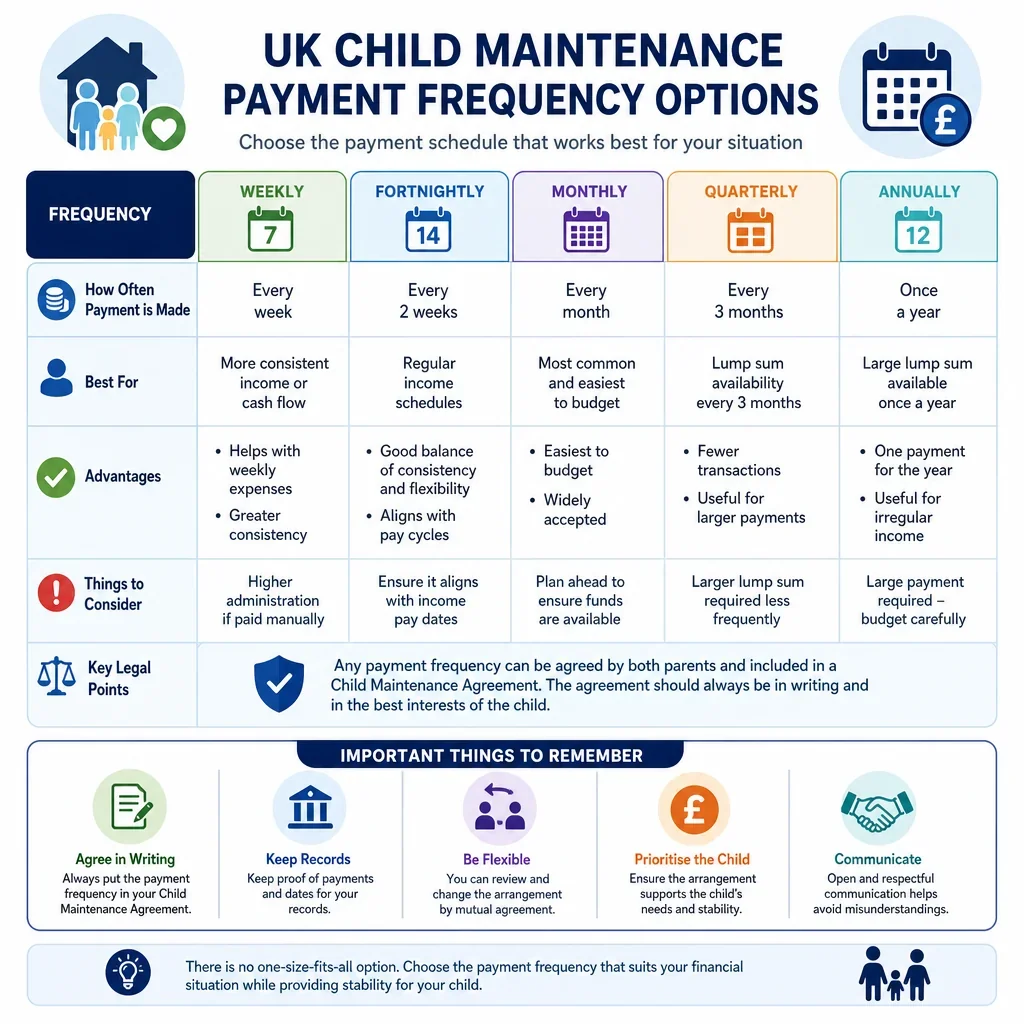
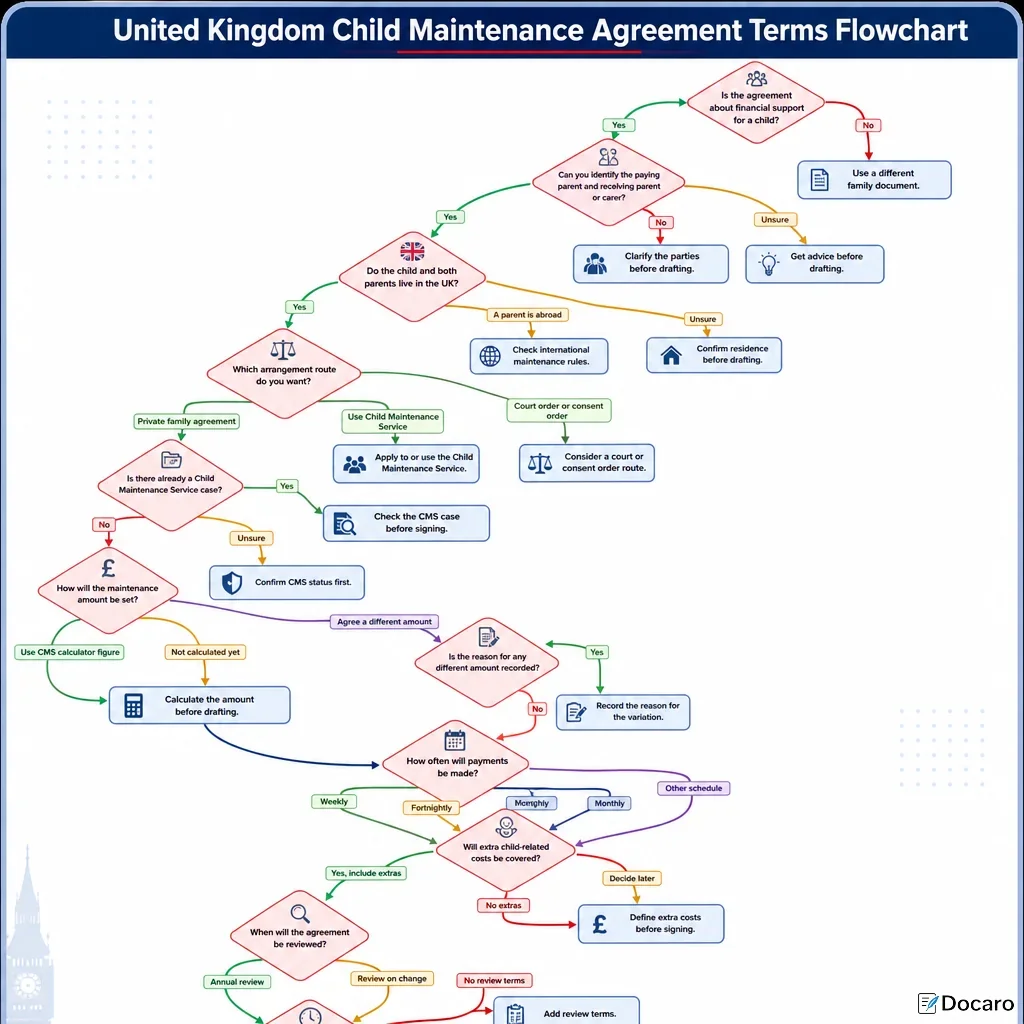
- Payment amount and frequency: weekly or monthly amount and due date.
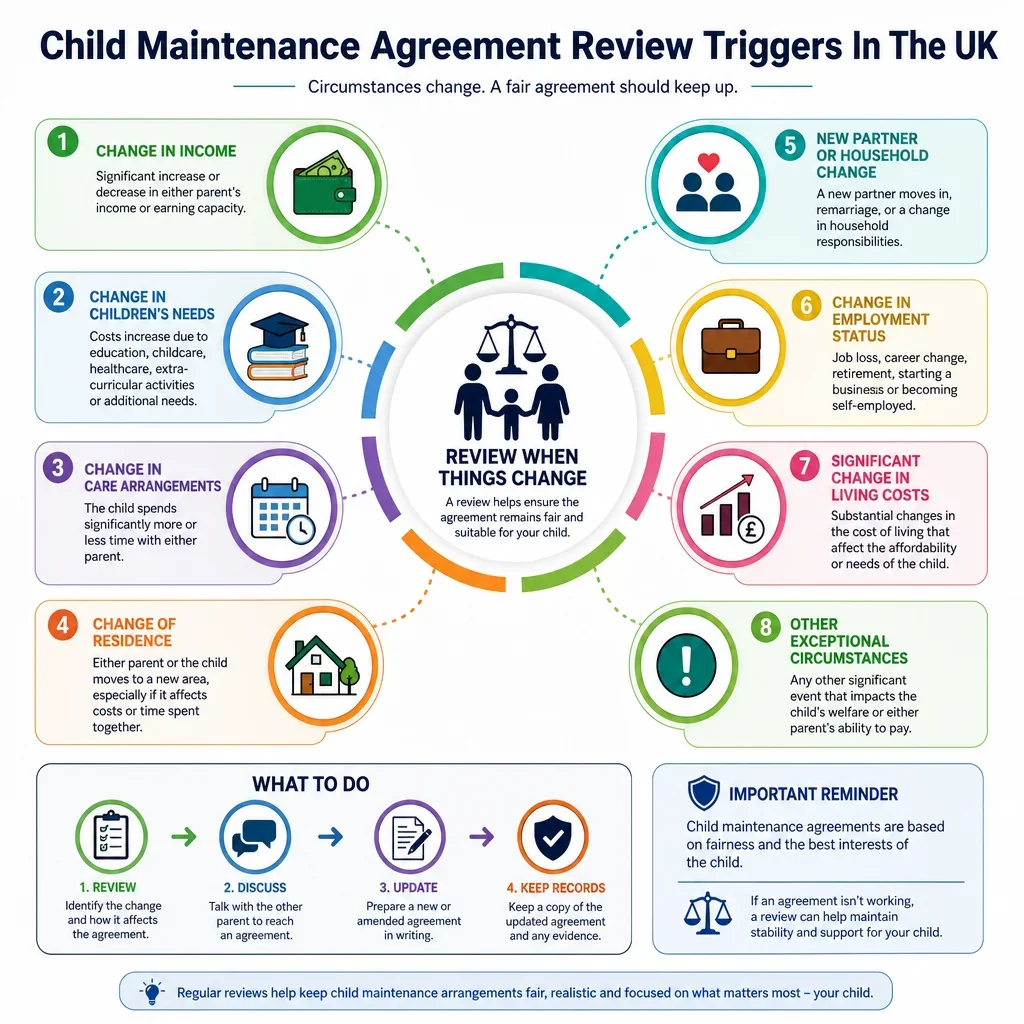
- Review mechanism: annual review, income change trigger, or changes to overnight care.
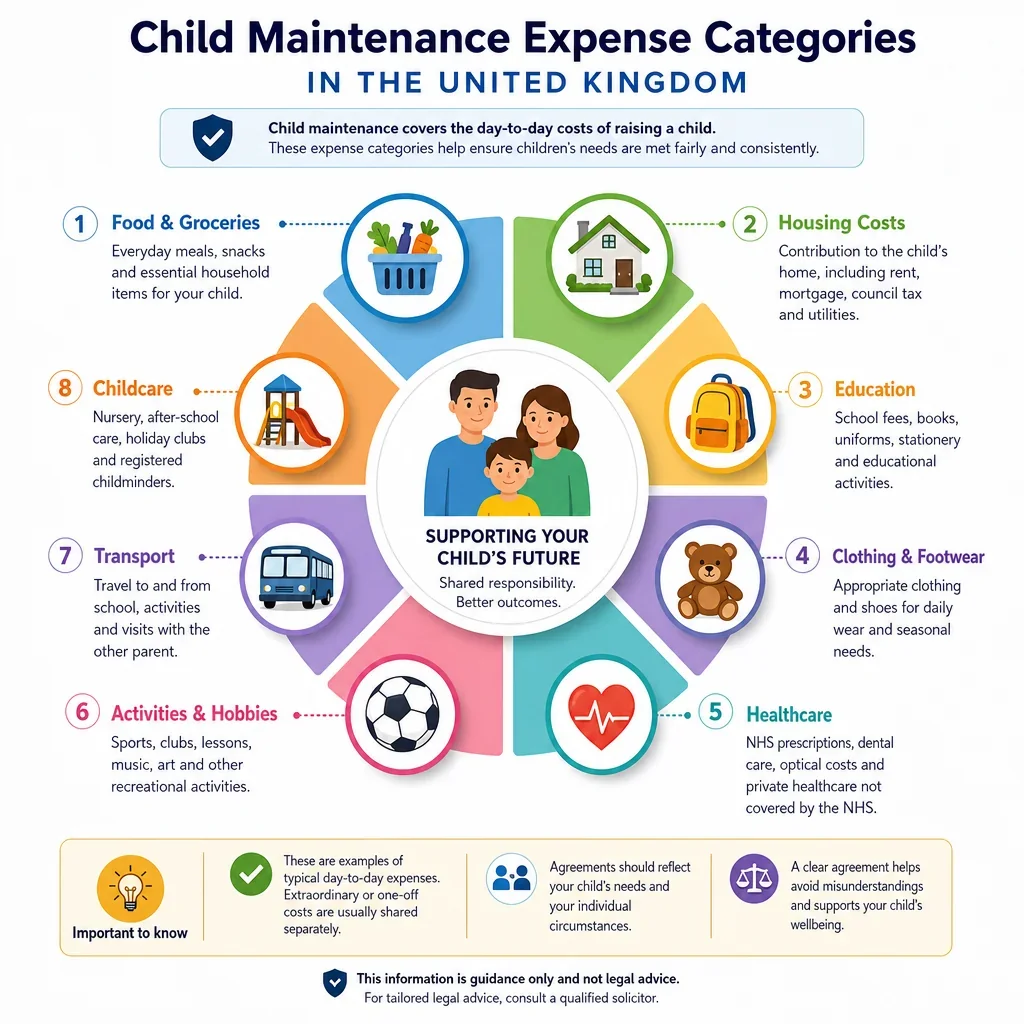
- Extra expenses: childcare, school costs, medical needs, clubs, travel and holidays.
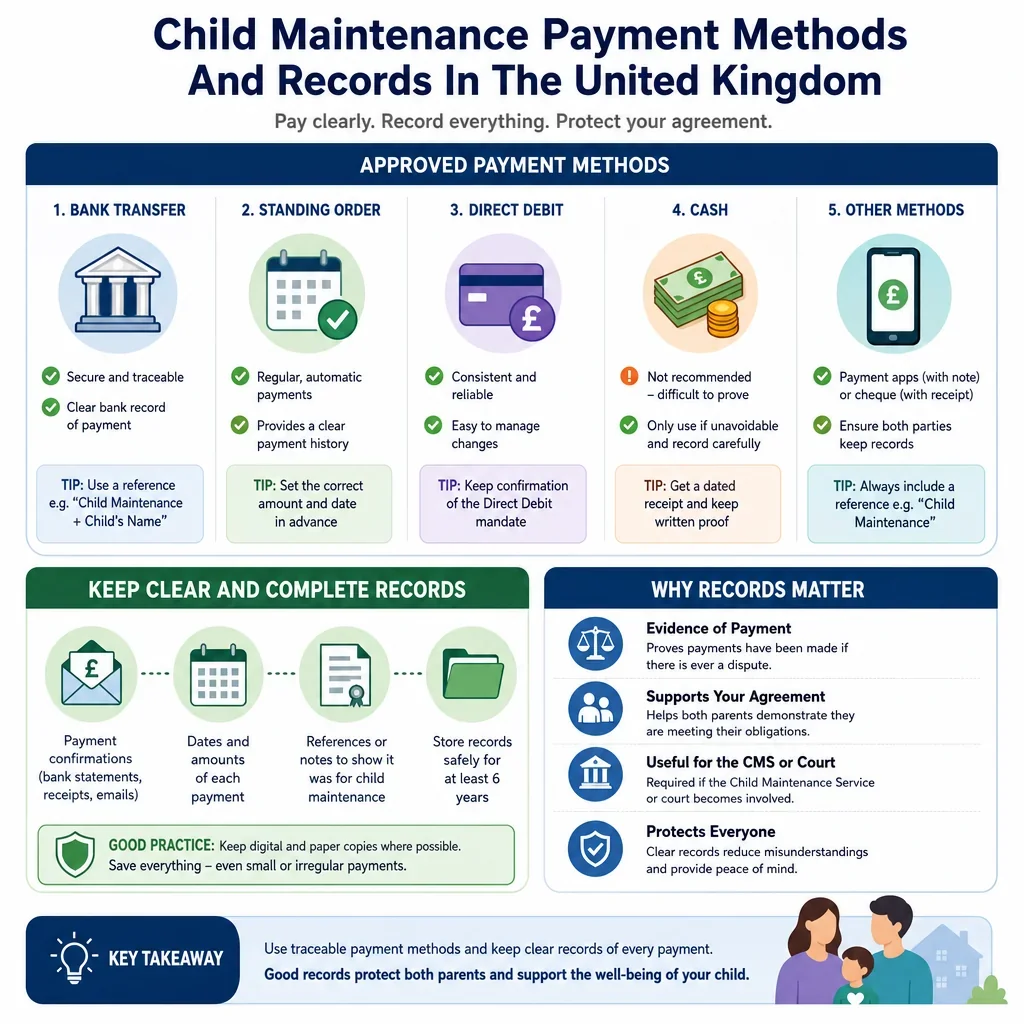
- Payment method: bank transfer with clear references to create a record.
- Dispute process: discussion, mediation or legal advice before escalation.
FAQs
You Might Also Be Interested In